Category Archives: History

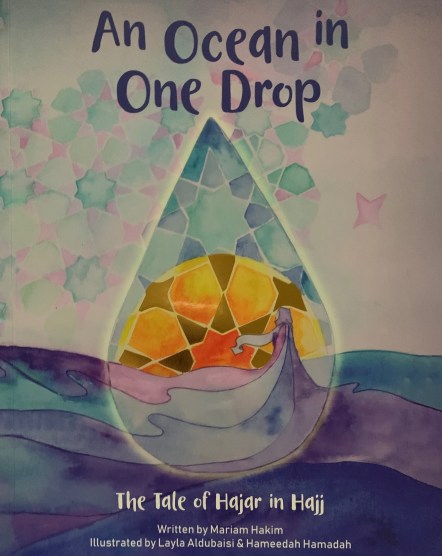
An Ocean in One Drop: The Tale of Hajar in Hajj by Mariam Hakim illustrated by Layla Abdubaisi & Hameedah Hamadah

Standard
An Ocean in One Drop: The Tale of Hajar in Hajj by Mariam Hakim illustrated by Layla Abdubaisi & Hameedah Hamadah

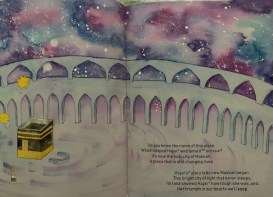
IMG_7027A story about Hajar (saa), about Zamzam, about Hajj, and how we are all connected through our faith in Allah.  In 32 water color adorned pages, the rhyming couplets tell a well-known historical story for children of all ages, with Hajar front and center.

IMG_7021

The book is framed with a young girl, Jamila sitting with her grandmother who has just returned from Hajj.  She is giving Jamila some Zamzam water as she tells her the story of Hajar, and how at the heart of our Hajj we honor and follow in Hajar’s footsteps.

IMG_7022

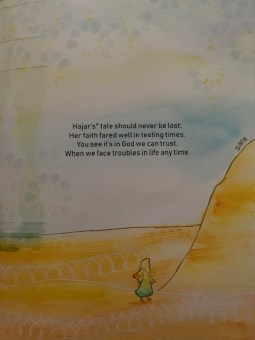
Left in the desert with her son Is’mail (as) she runs between two hills, Safa and Marwa looking for water and help. This step of Hajj, Sa’ee, is required by all pilgrims to perform as Hajar did. Grandma explains to Jamila, that after praying to Allah (swt) and after the seventh run, water appeared and still flows today, Zamzam.

IMG_7023

Jamila learns from her grandma the value of the water, and the power trusting Allah has in our lives.  She also learns how the well attracted people and is now the  city of Makkah.  “You see the sacred Sa’ee has many lessons within: Courage, patience, faith and love.” the grandmother tells Jamila before quoting Rumi and liking the desert water to an ocean of history.

IMG_7024

The book contains a two page Glossary of names and terms at the end as well as information about the author and illustrators.  As expected there is also an ayat regarding Prophet Ibrahim and his family from the Quran at the end, and somewhat surprisingly, Bible verses about Hagar.

IMG_7025

I’m not sure that the link to Rumi’s quote and hence the title of the book is smooth, it seems a bit forced.  Also, I’m not sure why the Bible verse and the Bible entry appearing in the Glossary is present.  It seems like an Islamic story for readers of all faiths to know what Muslim’s believe, so I’m confused why the interfaith angle at the end is there.  Perhaps, if there was an explanation or an Author’s Note or a tie-in to the story, but without any of that, it seems inconsistent and random.

IMG_7026

As far as the illustrations on the 8.5 x 11 thick soft bound pages are concerned, they are rather mediocre.  The anime’ style people, the texture, shimmery bits, and the flowing deserts, make me feel like I should love them, and there is truly nothing wrong with them,  I just wasn’t overly wowed by them.  I actually found the illustrations off for the story at hand.  I’m  certain everyone will disagree with me, and some really are gorgeous, but overall I found them collectively, to be just ok.


Jasmine Falling by Shereen Malherbe

Standard
Jasmine Falling by Shereen Malherbe

jasmine

This 184 page book about a girl figuring out her past, to accept her present, and plot her future. is not marketed, or perhaps even written as a YA novel, but I’m reviewing it because while the protagonist is in her 20s the book could be enjoyable to ages 15 or so and up, if they are willing to stop trying to understand a lot about the book and are content to just go along for the heartfelt ride.

SYNOPSIS:

Jasmine is half Palestinian and half British and when her wealthy mother passes but stipulates to claim her inheritance Jasmine must find her father, the book leaves England and heads to Palestine.  To further complicate things she has only 10 days to find a father who has been missing for years, in a land she has only visited once before many years ago.

Once in Palestine, the story takes her from one city to the next and one village to another with pit stops at various historical sites along the way.   With lots of fragmented memories, the shadow world of Jinns, and a race against time and around the obstacles of the occupation, Jasmine rediscovers Islam, her family history, and the fears that haunt her.  She also meets Josh, a character of questionable allegiances, motives, and background himself, that constantly finds himself able to help Jasmine and possibly himself.

From Jericho and Jerusalem and Batien, Jasmine hears stories about her father from people that know her family,  as she pieces it all together and reunites with her family members, she understands her past and works to determine what path her future should take.

WHY I LIKE IT:

I love the backdrop of Palestine and the history and the richness of culture that is brought to light in a surprisingly non political way.  The interaction of the different faiths among the villagers and the love of the land is truly palpable.

The part I struggled with was the holes in the story telling, for each page that brought Jasmine closer to answering her one question of where her father is, the reader was given 27 new ones that would never be answered.  Where did the wealth come from, how did Jasmine’s parents meet, what were the circumstances that made Jasmine’s dad leave, who is Richard, who was Ali, how old is Jasmine, why are there so many Jinns every where, why is there secret passages in the mountain, how come she trusted Josh, how could Josh get from one city to another in record time, why did the soldiers at the check points know of her family and specifically her father, and most importantly why every time she meets someone that knows her family, why does she run away.   It is incredibly frustrating that every time the story hints at what makes her father so famous, or sought after or memorable, or hint at why he disappeared, something interrupts them and the reader is left in the dark, only to have the book end and no really understanding conveyed.

I get why the story is told in pieces, but really the story is confusing in how it is told, and it doesn’t need to be.  The author can write and the last 50 pages are really great.  For as confused as I was so often, I kept reading because the story is good.  There is just a tad too much with diving in to the past to understand the present, the supernatural of the jinn, the reemergence of faded memories and dreams, the political climate, the letters from World War II, that the character dynamics are lost until the end.  I care about Jasmine and am curious about Josh, but a little more detail to the relationships the two main characters have with all the other minor characters that they encounter would really make the story soar, and clarify so much.

One thing I didn’t love was the presentation of Jinns, I know it is to add cultural richness and a bit of muddled confusion, but really the story I think is strong enough without the supernatural and character building could have benefited in its place. I also really, really, really wished there was a map and an afterward telling what parts about Palestine and history and the Holy Cities is fact, for those of us that have never been.

FLAGS:

Jasmine attempts suicide, jumping out a window.  Jasmine also gets drunk a few times in the book before deciding to stop drinking as she doesn’t like who she is when she does.  There is some violence and killing talked about but not overtly detailed.

TOOLS FOR LEADING THE DISCUSSION:

I don’t think I would do this as a book club book, but I definitely would encourage those with connections to Palestine to read the book.  And I am really hoping that someone, anyone, that has read the book will chat about it with me.  For all the questions I have, I’m optimistic that I just missed the answers and that they were in fact there.


The Night Diary by Veera Hiranandani

Standard
The Night Diary by Veera Hiranandani

night diary

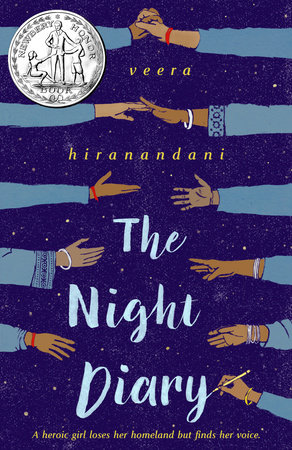
I was curious to see how partition would be presented in this book by an Indian Hindu author featuring characters who are half Hindu and half Muslim relocating to Hindu India.  Told in journal entries written by 12 year old Nisha to her deceased Muslim mother, the 264 page AR 4.5 book is wonderfully done, extremely compelling, and about so much more than the politics that birthed India and Pakistan.

SYNOPSIS:

Nisha and her twin brother Amil are opposites, yet they complete each other and care for each other in such a tangible and heart swelling way, that you can’t cheer for one while not rooting for the other one to find success and their place in the world as well.  As the twins turn 12 and Nisha is gifted with a journal from the families beloved cook Kazi, India and Pakistan too are about to come to fruition and Nisha’s journal entries detail her understanding of the larger events around her as well as her own struggles to come in to her own.

For Nisha words do not come easily.  She excels at school and loves to cook, but talking to people, or making friends eludes her and her longing for her deceased mother, make her a quiet reflective child.   She observes and  takes in so much around her, internalizes it, ruminates on it, and pieces it back together in a gifted way when she writes, that reading her entries, and the voice the author creates for her, is really amazing and fluid.  You feel like you really know Nisha and what makes her tick, what she fears, and how she thinks, you also get emotional attached to her and her world and find yourself surprised at how invested you are in not only her family’s successful migration across the new border, but also in her finding her voice and the confidence to use it.

Amil’s voice comes through Nisha, but her love for him and the way his strengths are her weaknesses and vice versa allows insight into the other family dynamics and attitudes to the two children.  Amil is an amazing artist, that suffers from dyslexia and does poorly in school.  He is weak and wiry, but fast, and he can talk and charm and ask all the questions that Nisha wants asked but can’t find the words for.  He and their physician father are rarely on good terms, as he isn’t the ideal strong boy with a medical degree in his future.

When it is decided that the family must leave their city where Muslims and Hindus and Sikhs live together and journey into Hindu India, the twins, their father, and their father’s mother, Dadi, must rely on each other to survive the riots and violence of the mass migration.  Nisha must also survive the understanding that with a Hindu father and Muslim mother there is so much about her own place in the world she doesn’t understand, and thus the journey is both an internal and external one, that will change Nisha forever.

WHY I LIKE IT:

I love that the protagonists voice is so steady and believable.  I truly fell in love with Nisha and felt her pain, happiness, anguish and overall got emotional for her, it was a rollercoaster.  The author does an amazing job of painting the politics of Jinnah, Nehru, Gandhi and Mountbatten in broad strokes, but believable ones to the understanding of a 12 year old.  She sees that one India held people of all faiths and that this breaking up of everything is leading to violence, upheaval, and horrors previously unimaginable.  She doesn’t understand why people had issues with her mother being of one faith and her father another, she loves her Muslim cook and loves listening to him pray five times a day as her paternal grandmother sings Hindu prayers in the other room.  She is both Hindu and Muslim and doesn’t see the contradiction within herself, suspending the reader’s own opinions on partition (if they have them), because how she sees it, does make sense for the story’s narrative.  The author takes Gandhi’s side of non violence and staying together, but balances very well and very intentionally that atrocities and humanity was seen from people of various faiths and political persuasions.  The role of British colonization and freedom from it, is slightly glossed over to the point of disservice, but again, being the target age of the reader and the age of the characters, I’m willing to over look it.  Families with Indian and Pakistani heritage will want to take the lacking information and help their children to fill in the blanks.

I love that the backdrop is the action of the story, but the relationship between the characters is truly the heart.  A lot of growth and compassion is conveyed very succinctly and powerfully.  Nisha wants so desperately to speak, but can’t, and her internal struggle and the pain she feels when she can’t speak up to help and participate in the world around her is gut wrenching.  As she confides in her diary, you realize that kids understand so much more than we adults often give them credit for.  The lesson is not lost on me.  I initially thought a book steeped in subcontinent history, with religious conflict and foreign words, wouldn’t appeal to a western elementary aged readers, after reading it, however, I now think this heartwarming story should be thrust upon them all.

FLAGS:

There is violence and death.  Not sensationalized, but detailed enough to set the tone of how serious the journeys were between the two countries when British rule stopped  There is some bullying and mention of the father smoking socially with friends.

TOOLS FOR LEADING THE DISCUSSION:

There is an Author’s Note, and a glossary at the back, and the inside covers have maps showing the journey the characters take.  I would absolutely do this as a Book Club selection for upper elementary, and will consider it even for middle school.  A lot of tools for teaching the book are available online, here are just a few:

Educator’s Guide: https://www.penguin.com/wp-content/uploads/2018/02/The-Night-Diary_Educator-GuideWEB.pdf

Children’s Discussion Questions: https://www.readbrightly.com/brightlys-book-club-for-kids-the-night-diary/

Classroom Bookshelf: http://www.theclassroombookshelf.com/2018/06/the-night-diary/


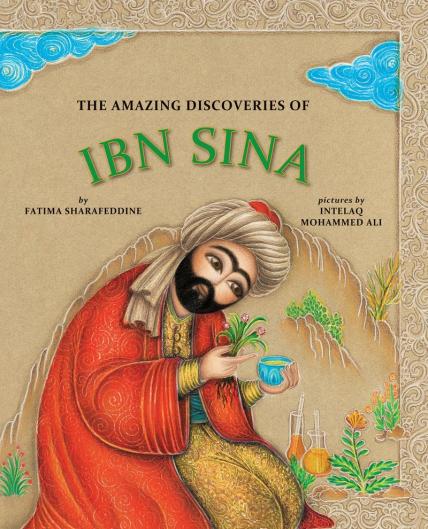
The Amazing Discoveries of Ibn Sina by Fatima Sharafeddine illustrated by Intelaq Mohammed Ali

Standard
The Amazing Discoveries of Ibn Sina by Fatima Sharafeddine illustrated by Intelaq Mohammed Ali

ibn sina.jpg

This non fiction, 32 page book is important in introducing 3rd graders and up to a very influential Muslim that shaped the world.  I try to keep to fiction reviews, but as someone who didn’t learn about Avicenna/Ibn Sina until college, I feel like the sooner we can inspire our Muslim children to know some of these remarkable historical figures and get their stories into western curriculums the better for us all.

IMG_5007

The book is told in first person and is translated from Arabic so parts are a bit awkward, such as when he is telling when he died, and parts do sound a little arrogant, but all that aside the book stays on task in describing Ibn Sina’s accomplishments and not getting distracted by historical, political, or cultural influences.  Some could argue that some context would be nice, but for 8 and 9 year olds, the facts are impressive enough and the streamline approach I think makes it something they can grasp.

IMG_5008

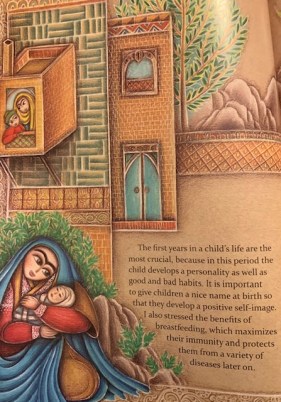
The book is beautifully done with a 9×12 hard cover and glossy pages.  The colored pencil pictures are beautiful and rich on most pages, with the neck and eyes a bit distracting on others.

IMG_5009

The book of course mentions his contributions to medicine but also includes his Islamic knowledge of memorizing the Quran and studying Islamic Law, cultural knowledge of knowing volumes of Persian poetry, architecture, literature, music as well as his extensive studying of philosophy, logic, linguistics, and more.

IMG_5010

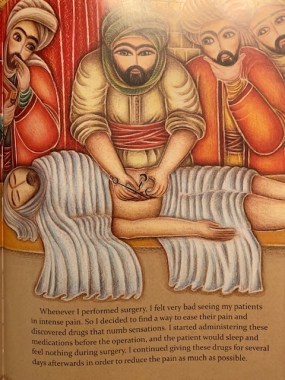
It also mentions some of his findings, which do a great job of showing readers how relevant and important his work was then and now.  Understanding how children should be educated, how infections passed, that light travels faster than sound, anesthesia for surgical patients, to name a very, very few.

IMG_5011

I checked out the book from the public library and made my kids all read it, well not the 3 year old, and I think Islamic school teachers and Muslim parents really need to try and expose their kids to his accomplishments, get them excited about how their faith promotes questioning and education and then work on getting historical figures such as Abou Ali al-Hussein ibn Abdullah ibn al-Hassan ibn Ali ibn Sina more widely known in the greater society.

What Am I? Book 2 ‘The What Race are we Series’ by Asiila Imani and Papatia Feauxzar illustrated by Juliana Paz

Standard
What Am I? Book 2 ‘The What Race are we Series’ by Asiila Imani and Papatia Feauxzar illustrated by Juliana Paz

IMG_4825.jpg

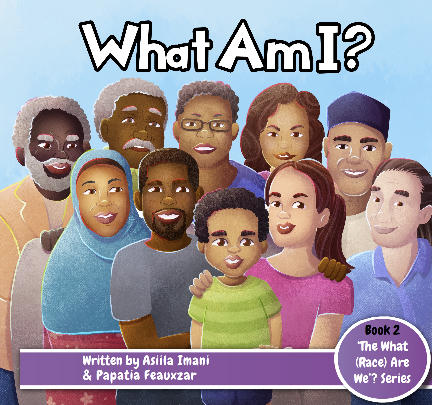
This incredibly important 37 page picture book highlighting a little boys heritage will speak to children who see themselves in his quest to answer what he is, as well as (hopefully) inspire them to search out their own family ancestry and unique make up.

IMG_4828

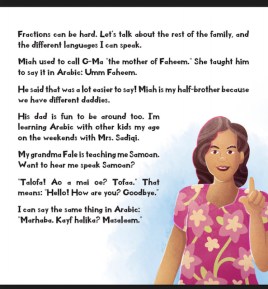
The book is not a traditional story book, in fact there isn’t much of a storyline, but the concepts presented show how beautiful and amazing multi-cultural and multi-ethnic families can be.  A lot of cultural information is conveyed and celebrated about Samoan and Pacific Island traditions as well as Islamic ones.

IMG_4831IMG_4832

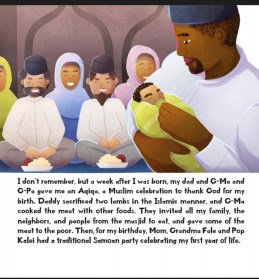
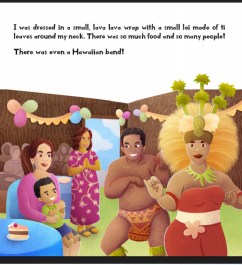
There is an aqiqa at the time of his birth as well as a Samoan party with a Hawaiian band.  Some members of his family cover, while other’s don’t.  He remarks how he has extra grandparents which equal extra blessings, and how he has a half brother because they have different dads.

IMG_4830

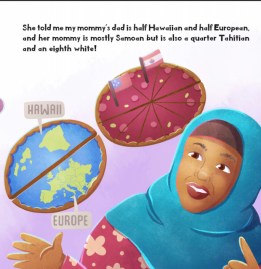
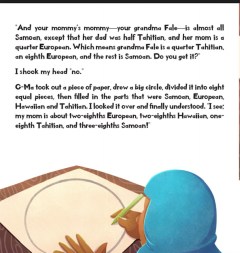
In addition to geography, there is also a STEM component as six-year-old Toa Idris learns he is a quarter this and half that through understanding fractions as visualized by slices of a pizza.  At one point Idris remarks that, “I can’t keep all those people and places straight,” and after reading the book half a dozen times, I honestly couldn’t either.  But, I think that is ok.  The point of the book is that being diverse is amazing, and having people love you is important, and culture and tradition and faith all make you richer.

IMG_4829 The text on each page is presented in a fun font, as are the pictures.  Really there is just one picture that makes Idris look angry and it is used in the story and the title page, which is unfortunate, I think it is supposed to have him look pensive, but it seems a bit off to me, where all the other pictures ooze with warmth and richness.

IMG_4826

I honestly don’t know what age group would benefit the most from the book.  Younger kids that may have been asked what their culture is will be empowered by having it reinforced that they are made just how Allah swt planned them to be, older readers will be able to create their own pizza slices, so to speak, and understand their own pieces, but I feel like both groups might need some coaching from an adult.  There are family trees at the beginning that almost become reference pages while reading the story and trying to keep everyone straight, that make the book almost interactive.  Muslim and non Muslim reader alike would learn about new cultures, and benefit from the “Extras” at the end.  Honestly, overall there is just a lot of information tossed around in the book, which isn’t a bad thing, it just might make it a bit more hit or miss if it will work for your child.

Mosque by David Macaulay

Standard
Mosque by David Macaulay

mosque1

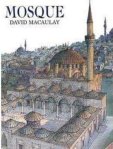
This 96 page “picture book” written on an AR 8.4 is not for everyone, but for those interested in architecture or structural engineering, or 16th Century Ottoman culture, or even Turkey in general, this book is fascinating, beautiful and most of all informative.  It first caught my attention when I was planning a story time to remind children of how they ought to behave in a mosque, needless to say it didn’t fit the occasion, but this fictionalized account of how a typical Ottoman mosque would have been built and why was perfect for my 7th grade daughter who loves legos and design and has been to Turkey.

IMG_4394

SYNOPSIS:

The story starts with a wealthy Turk realizing his own mortality and wanting to follow his Islamic faith in giving back his wealth and providing for his community before he passes.  Thus he commissions the building of a mosque, madrese (religious school and library), an imaret (a soup kitchen for preparation and serving of food), hamam (public bath) and a cesme (a public fresh drinking water fountain).  

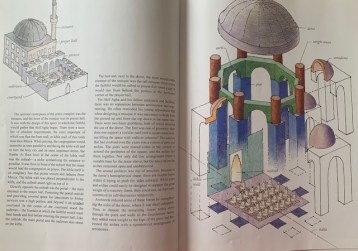
From there the book details how the foundation to the minarets are designed, crafted, erected and used.  Explaining how domes are supported to how stones are laid and stained glass windows constructed, so many details are illuminated and kept simple at the same time. 

Aside from the physical construction of the buildings, it really is incredibly remarkable and gives insights into how Islam shaped cultures, and similarly how Mosques became integral  parts of societies.

IMG_4393

WHY I LIKE IT:

The book is fact and historically based with a fictionalized story layered on top to move the information along.  The pictures are detailed and informative with labels and descriptions that make the technical jargon of the text visually understood.

If one has ever been to the Blue Mosque, even in its fiction, the book will explain the function and thought process behind the gardens and porticos and women’s spaces in a very satisfying manner.

I love that it mentions how even Jews and Christians contributed to building of such Mosques and how the all facets of the community took pride in the completed works.  I’m not sure why the author specified the blood of a ram being spread out, as it isn’t Islamic culture, but with my limited knowledge of 16th century Ottoman practices, I didn’t dwell on it too much.

IMG_4392

FLAGS:

Clean.

IMG_4391

TOOLS FOR LEADING THE DISCUSSION:

I feel like this book would be great in any middle school STEM class to just have to look at and thumb through, Muslim or not.  The author has written numerous books about different structures (Cathedral, Castle, City) and breaks down how they were constructed and why.  A great resource for anyone willing to ponder and marvel at the structures around them and take their understanding to the next level.

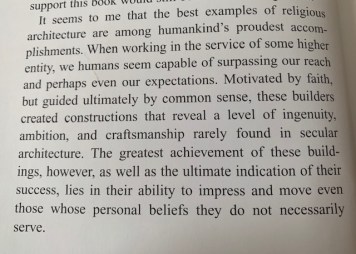
There is a Glossary at the end, and I really enjoyed the last paragraph of the Preface at the beginning:

IMG_4388

IMG_4390


Mansa Musa: The Lion of Mali by Kephra Burns illustrated by Leo & Dianne Dillon

Standard
Mansa Musa: The Lion of Mali by Kephra Burns illustrated by Leo & Dianne Dillon

mansa8

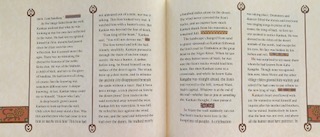
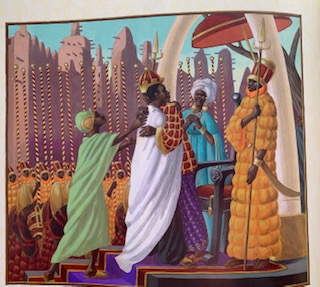
This beautiful work of historical fiction/folklore is both moving and visually breathtaking.  The 56 page book presents as a picture book, but with an AR 6.4 and the amount of text, it reads like a chapter book.  Thus, I’m going to review it as a chapter book, but keep in mind that it is hard bound, 11 x 9, horizontal and while there are frequent small story breaks, there are no chapter breaks.  

IMG_3078

SYNOPSIS:

There is little historical fact about Mansa Musa as a child, thus this story while rooted in fact about the time, about Mansa Musa as an adult, and about what is known regarding Mali and the Malinke and Tuareg tribes, is a work of imagined fiction.  The story begins with premonitions and dreams from Kankan Musa of the Kaba Kangaba tribe.  Kankan and his two brothers live with their mother, and do not know who their father was, a source of stress and teasing for the young boys.  Having just turned 14, Kankan is treated as an adult, but because he has yet proved himself as a hunter, he may sit with the adults, but not yet join their conversations.  Mali in the years after the great King Sundiata had passed away has begun to fade, but their wealth and hospitality still prospers in the desert. 

One day a desert nomad from the Tuareg tribe dressed in flowing blue robes appears and is welcomed by the village elders.  That night he regales stories about jinns, and the sea, and time spent in the desert, and fears he has for their King, when slave raiders tear through the night and kidnap Kankan.  When Kankan awakens days later, enslaved, the same mysterious man, Tariq al-Aya, again appears and buys him from the raiders.  Tariq vows to accompany Musa on his journey to learn who he is and the two spend seven years together learning about the desert, about the larger world, about themselves, in trial and test and challenges.

When Musa journeys back to his home, and Tariq disappears as mysteriously as he appeared, Musa must make himself known to the new Mansa of Mali and see if his wisdom and knowledge can ensure the success of Mali in the future.

IMG_3079

WHY I LIKE IT:

I’m not from Africa and my heart was cheering Musa on as if, my own families success was rooted in his growth and understanding of the world.  As a Muslim, I was proud to know of the success Mali found in Mansa Musa and the historical significance of his rule throughout time.   I wish there was more Islam in the book, his Hajj is well documented and thus tidbits of Mecca and his understanding of it is sprinkled through the story.  There is no talk about prayer or what Islam is, just that he is Muslim and that most of the villagers “had converted to Islam, but at the same time, they had not given up their traditional religious practices or their belief in the ancestors.”  It mentions at the end that he built mosques wherever he went, but prior to this it never mentions him spending any time in a mosque or worshiping in any way. 

I love that the story is told like all great stories, it makes you want to settle in and drink up the details and imagery and got lost in the pictures.  The author weaves in cultural phrases and descriptions, that hopefully readers can unravel from the context as there is not a glossary.  There is a map at the beginning, and author’s note at the end that reveals what is fact and what is fiction in the story.

IMG_3080

FLAGS:

None

IMG_3081

TOOLS FOR LEADING THE DISCUSSION:

This book should be in every school library and used in classrooms to learn about West Africa, cultures, 14th Century, Islamic history, culture, you name it.  I think this book would work wonderfully in home school environments, where the child could dictate how much to supplement, how much to cover, and the wisdom shared could really be understood.  This isn’t a book that most kids would pick up and read, they would need prodding and guidance, but be better for it.  

IMG_3082

The Prophet’s Faithful Friend: The Story of the Great Hijrah by RS Khan illustrated by A Saha

Standard
The Prophet’s Faithful Friend: The Story of the Great Hijrah by RS Khan illustrated by A Saha

prophets faithful friend.jpg

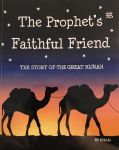
This book is written in verse, and while some of the 32 pages are overly heavy in text, it does for the most part stick to appealing to younger children, 4 years old and up.  I had hoped the book would be more about Abu Bakr as Sadeeq, but it really is just a simplified retelling of a part of the Hijrah.  There is nothing wrong with that, I just had hoped for more about their friendship.

FullSizeRender (58)

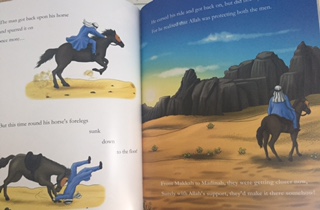
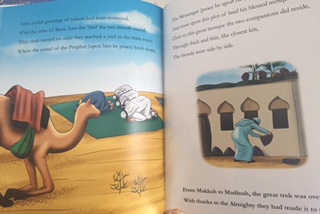
The only real specifics of the Hijrah are that of Suraaqah, and the inability he and his horse faced while trying to get close to the Prophet and his friend.

FullSizeRender (61)

The book is meant for Muslim children as it shows some of the fears that RasulAllah faced, ways Allah swt protected him, and gets children excited as the two reach Madinah safely.  There are Islamic and Arabic words sprinkled through out, without a glossary and children might night some help understanding Quraysh, migration, hastened, suspense, and companion.

FullSizeRender (59)

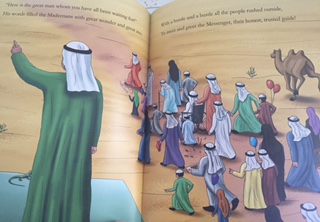
The pictures are bright and the book is printed on thick glossy paper.  There are no faces detailed, and Prophet Muhammad  and Abu Bakr are not pictured.  The pictures seem to get a little ahead of themselves as they show people holding balloons and in wheelchairs, not sure that they were invented or common yet, but perhaps.

FullSizeRender (60)

I know I have mentioned it before that there are surprisingly few stand alone books about Prophet Muhammad (AS) for younger children, so while this book isn’t the greatest book ever, it is pretty good amongst few other options.

Twenty-Two Cents: Muhammad Yunus and the Village Bank by Paula Yoo illustrated by Jamel Akib

Standard
Twenty-Two Cents: Muhammad Yunus and the Village Bank by Paula Yoo illustrated by Jamel Akib

22CentsCover

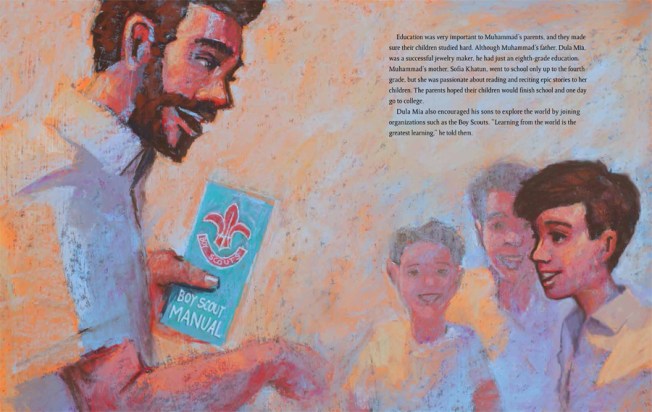
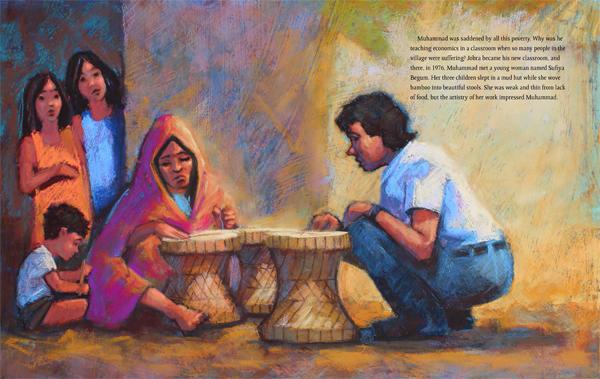
This 40 page biography written on an AR 6.5 level, tells the story of Nobel Prize winner Muhammad Yunus and his microcredit banking initiative.  The book topic is inspiring and for the most part the author does a good job of bringing it down to a middle school level. You can tell the author tries to flesh out Muhammad Yunus by starting the book with him as a boy, and relaying how he was raised and how his parents and boy scouts shaped him.  Despite her efforts however, at times it reads more like a resume, not a children’s picture book.

22_cents_3

Other than his accomplishments, and work history, I didn’t learn anything about him that made him relatable as a person, nor did I learn much about Bangladesh, or Islam.  And yes, I know it is a biography, but it felt like it was a void that needed filling.   I did learn about the program he started, a few of the obstacles that had to be overcome and I particularly liked that those receiving the microloans also had to learn about money, finance, and banking to pass a test before getting approved  And that 94% of those receiving the help have been women.  Grameen Bank is now a global bank, and the help he has given to so many is truly inspiring and something our youth should understand through humanitarian, economic, and compassionate lenses.

The title comes from the incident that brought Muhammad Yunus’ desire to help to fruition. He saw a woman weaving a beautiful basket, and learned that she could not afford the supplies to weave the basket, to sell in the market and as a result needed a loan.  Banks would not loan the equivilant of 22 cents because it was too small, and money lenders would charge so much interest, that after the basket sold, and the money lender repaid, there was scarce enough funds to purchase enough food for the family, let alone enough to buy new supplies, and thus the cycle was unbreakable.  He wanted to make her and those like her independent, not needing charity or the kindness of others to get her ahead, and thus the seven day course, test, and microcredit system evolved.

22 inside

The illustrations I think are both rich and well done.  The effect of the watercolors flesh out the text heavy pages with detail, but don’t create a distraction from the concepts and accomplishments being presented.  Following the story is a two page afterward telling additional awards and continuing the story of Muhammad Yunus with two real life photographs.


Khadijah: Mother of History’s Greatest Nation by Fatima Barkatulla

Standard

khadijah.jpg

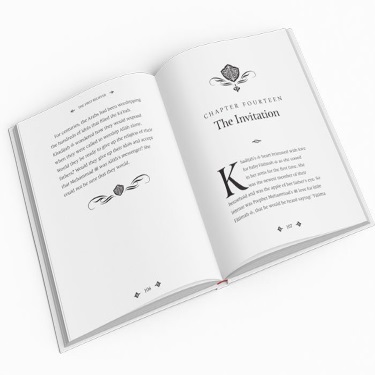
I depart from the Islamic Fiction that I enthusiastically seek out and read, to share and review a work of non-fiction that swept me off my feet.  Perfect for children eight and up, and particularly ideal for girls, this book is absolutely physically beautiful and the content is as well.  This 176 page book flows like a story not a history book, and at times a love story between Khadijah (RA) and our beloved Prophet (SAW).  The font and spacing invites young readers to absorb each word without feeling rushed or overwhelmed.  

SYNOPSIS:

The book is a biography of our mother, Khadijah bint Khuwaylid.  It starts just before she is made aware of Muhammad and ends with her death, followed by a few reflections of RasulAllah missing her.  For the most part the story keeps her at the focus and for the age group the slips into seerah are no problem.  But I wanted more about her.  I learned that she was married twice before she wed Prophet Muhammed, but I wanted to know more of her children with these other men.  I wanted to know if they ever accepted Islam.  I wanted to know of Khadijah’s childhood and her parents, and her tribe.  I wanted to know more about her sister who sounded like her, and if she had any other siblings.  It scratched the surface, and even my 10-year-old daughter wanted more, in a good way.

It covers their marriage, and it reads like a sweet fairy tale that is absolutely full of noor and love.  It shares how she supported the Prophet at every turn and the hardships of the boycott.  It drops names and places, but not in an over burdening way. In many places I actually wanted more detail as to how they all fit together in time and place. As she has children and grows ill and time passes, the story comes to an end.  Almost too quickly, as her day-to-day life as a mother and wife are missing, and I was hoping there would be more.  Yes the  growth of Islam and the plots of the Quraysh are so important, but I wanted more Khadijah, in a book claiming to teach us about our “legendary mother.”

WHY I LIKE IT:

Obviously the story is great, and really the way it is presented is how our kids need to know our history: with love and compassion and enthusiasm.  You feel the love between Khadijah (RA) and Prophet Muhammad (SAW) you see how patient and devoted she is in a very emotional way.  Truly the author has given life to a story many of us know, and filled us with a connection and relationship that is very personal and inspiring in nature.  When you finish the book, you feel like Khadijah is a friend, an amazing friend, but someone you know intimately and proudly, not just as a historical figure.

innerpages2_1024x1024

FLAGS:

None

TOOLS FOR LEADING THE DISCUSSION:

I would absolutely do this for like a 4th -6th grade book club.  I think it should be mandatory reading.  I would probably invite someone well versed in the seerah and Khadijah to answer the children’s questions.  How wonderous it would be to hear the kids discussing her life and offering parallels, lessons, and inspiration to one another from their new found knowledge of Khadijah (RA).