Category Archives: Elementary Fiction

Eliyas Explains: What was Prophet Muhammad (saw) Like? by Zanib Mian illustrated by Daniel Hills

Standard
Eliyas Explains: What was Prophet Muhammad (saw) Like? by Zanib Mian illustrated by Daniel Hills

Zanib Mian once again fills a void in the literary world for our children using her easy to read and relate to protagonist’s voice.  Over 149 pages, filled with illustrated doodles, details about our beloved Prophet Muhammad (saw) flow through the fictional framing of Eliyas and his family heading to the airport to pick up their Mamoo.  It starts with the standard introduction of characters that all Eliyas books have, so while it is part of the series it can be read as a standalone as well. But really if you have children 5-14, you should invest in the entire collection.  Also, as with the rest of the series, the book is checked by a Shaykh who is named at the beginning so that the reader can enjoy the Islamic details that are to follow. I know there is some debate about the cave and the spider, a story shared briefly within the pages, but I will leave it to those more knowledgeable to decide upon.  The book works well read aloud and independently, either way I’m confident children will enjoy the story, learn something new, and grow in their love of our Rasul Allah, alhumdulillah.

SYNOPSIS:

Eliyas’s dad’s uncle, Haroon Mamoo is coming for a visit, and while Mum wants to make sure they leave at a specific time to get to the airport, Dad isn’t stressed, he had a dream about Prophet Muhammad saw the night before and the kids want to hear all about it.  The story progresses weaving in things around them with Mum and Dad tying them to the sunnah.  From a fight at the airport, to a pigeon getting stuck, to Haroon Mamoo seeming to have gotten lost. The book is preachy, in the best way possible, as Eliyas and Aasiya banter, crack jokes, and learn along with the reader.

WHY I LIKE IT:

I love Eliyas’s voice and the weaving of a fictional story to convey the non fictional sunnahs that are truly the heart of the book.  The information presents in an easy way for children to hopefully remember it, and to also see how they should be behaving and acting in their own lives. The fun fonts, illustrations, and layout make it inviting to pick up and keep reading.

FLAGS;

None

TOOLS FOR LEADING THE DISCUSSION:
This book is not a journal, like some in the series are, but provides ample opportunity to discuss points on each page.  

The Last Resort by Sumayyah Hussein illustrated by Rania Hasan

Standard
The Last Resort by Sumayyah Hussein illustrated by Rania Hasan

Once I got over my disappointment that the no parking sign on the bottom left of the cover was a deer and not a unicorn (clearly it is a deer, no shade to the illustrator), the 149 page early chapter book with illustrations was a decent read.  The messaging about family time was a little didactic, but the twist of having the child want it, opens it up to be both reflective for kids also craving family routine, and those that don’t appreciate what they have.  I do wish that the climax of the “noise” was amplified and built upon to add some urgency and tension. And the resolution a little more explained as I don’t know that most target readers will quite grasp what was going on in the resolution.  I know I would probably complain if it was over explained, but here we are.  The book is not preachy in its portrayal of faith, the family is Muslim and they pray and worship as part of their daily routine. The text and spacing, along with the full page black and white illustrations that present once nearly every chapter, make the book accessible and inviting for 2nd and 3rd graders.  I know I sound like a broken record, but the book really just needed a bit more polishing to truly shine, it isn’t a bad read, but based on my own kids interaction with the book, once they put it down, they forgot about it, and just weren’t motivated to pick it back up.

SYNOPSIS:

Mahmoud’s family has recently moved to Edmonton, and everyone is busy.  It is summer vacation and he is already bored. When he finds out his one friend is going away all summer, he devises a plan to force his family to come together. He finds a hotel near Banff, marks the calendar, and hopes for the best.  The family comes together, but the hotel has broken beds, toilets that don’t flush, roaches in the kitchen, and an elevator that they are told is out of order, but is still in use.  The family starts to turn on Mahmoud, but when he explains how everyone is too busy to spend together, they decide to make the best of the situation.  Weird noises and details that don’t add up, send Mahmoud exploring and ultimately make it a vacation to remember.

WHY I LIKE IT:

The story is sweet, and I am always a sucker for kids that solve problems. I hope that one day, self sufficiency in fictional characters will rub off on readers, but alas it hasn’t happened to mine yet.  The book is fine, the pieces are there, the writing is decent, it just needs a bolt of energy to make this a book that kids really would gravitate to and read over and over again.

FLAGS:

None: maybe a little anxiety and gross factors, and a kid books a hotel without permission.

TOOLS FOR LEADING THE DISCUSSION:

The book should be on shelves in libraries (I wish Ruqaya’s Bookshelf Books were in public libraries), but definitely in school libraries, classrooms, and homes. I don’t think it has enough to discuss in a book club setting as it is a simple linear story with only one plot line. SPOILER kids may need a bit of help understanding what a front is and what was being done with the animals, and why a hotel in Canada outside of a National Park all came together to make it an ideal criminal headquarters for such activities.

Amina Banana and the Formula for Friendship by Shifa Saltagi Safadi illustrated by Aaliya Jaleel

Standard
Amina Banana and the Formula for Friendship by Shifa Saltagi Safadi illustrated by Aaliya Jaleel

img_8365-1

I have five children, I have taught second grade, I have shelved, recommended, and read aloud a number of early chapter books for the better part of the last 20 years, so when I say that this book changes the standard of what a book (series) for this demographic can and should be, I do not say it lightly. Yes, I am bias, the author is a dear friend, but Amina has layers, growth, insight, struggles, warmth, heart, and all the other glowing adjectives normally associated with beloved books and characters for older readers. This book is the first in a series of four, and each book is somehow better than the previous. At 126 pages with a robust backmatter that includes scientific extensions, a recipe for ful mdamas, and a note from the author, I am confident that children of all ages, everywhere, caregivers, parents and educators alike will all fall in love with Amina, cheer for her, laugh with her, and be enamored with her attitude, perseverance, and joy.

SYNOPSIS:
Amina loves having a plan, a formula in fact, and when she arrives in Indiana as a refugee from Syria she is determined to make friends in 3rd grade.  Things don’t always go as expected, but alhumdulillah Amina doesn’t stay down: classmates, family, and determination combine to help the clever, yellow-loving protagonist find a way to rework her experiments, accept what she can and cannot control, and succeed in making this new country feel a little bit like home.

WHY I LOVE IT:
I adore the humor, unapologetic Islam, the rich Syrian culture woven in, and Amina’s approach to life.  So often early chapter book protagonists are obnoxious, annoying, crude almost, bratty, arrogant, and repetitive, Amina is none of those things.  She is vulnerable and strong, confident, yet nervous, hopeful, but worried, she is tangibly real in a way that readers will see themselves and relate.  I love the humor of idioms being confusing, and the heart of seeing what the parents have sacrificed and are willing to sacrifice by starting over in a new place.  The illustrations add to the experience of drawing reluctant readers in and will help those transitioning from picture books to chapter books be immersed by the story.  As always the author’s writing is impeccable and the story well-crafted.

FLAGS:

There is some teasing, reflections on why Syria was left, the journey to America, and hardship.

TOOLS FOR LEADING THE DISCUSSION:
This book is ideal for classroom, library, and home shelves.  It would be a wonderful classroom read aloud and works equally as well at bedtime.  My children college to elementary have all read and loved Amina, and I highly encourage preordering so that your children will get a chance to fall in love with her too.


Folktales for a Better World: Stories of Peace and Kindness by Elizabeth Laird illustrated by Mehrdokht Amini

Standard
Folktales for a Better World: Stories of Peace and Kindness by Elizabeth Laird illustrated by Mehrdokht Amini

img_5848-1

The presentation, the tone, the vibe, the seven countries and stories selected, the illustrations and large size really make this book enjoyable.  With folktales from Ethopia, Sudan, Palestine, Yemen, Afghanistan, Syria, and Uighur, some contain Islam and Muslims, and some do not, but the messaging and lessons are for all.  Folktales are often used in classroom settings, and I appreciate that this book can be used in bits or all together.  Most of the selections are 6-8 pages, but contain large illustrations to help the readers engage with the lessons being conveyed. Having read a few books by the author, I think it is clear that the people represented in this collection is very intentional, and these old stories from the occupied, the oppressed, and the war torn in contemporary times, really show the universal humanity of stories, kindness and peace.

The introduction from the author sets the tone before the stories begin. The Dog Fight from Ethopia is a tale of conflict and perspective and pride.  Allah Karim from Sudan is trusting that Allah swt will provide, compassion for the homeless, and charity.  From Palestine, the folktale True Kindness shows the value of hospitality.  The Next Sultan from Yemen focuses on fairness and justice as does The Emir and the Angel from Afghanistan. From Syria the tale of The Woodcutter and the Lion focuses on friendship and being selfish, and finally The Nine Princesses of Kashgar, a Uighur story, shares a story of defending your land against occupiers.

Early elementary kids will enjoy the tales and relate to the lessons, they will get lost in the pictures, and recall the messages long after the book concludes.  This book reminded me of how few folktales I’ve read outside of teaching, and I look forward to sharing this at bedtime, story times, and gift it to teachers and librarians to do the same.  You can purchase the book here from Crescent Moon Store and save 10%.

Idrees and the New Old Shoes by Hoda Elmasry illustrated by Tiemoko Sylla

Standard
Idrees and the New Old Shoes by Hoda Elmasry illustrated by Tiemoko Sylla

img_4191-1

This sweet 28 page book keeps the text to a minimum while showing a boy with a lot of heart doing what he knows is right, even when he knows he will be laughed at.  I really love how the story draws readers in and conveys a lot, without over explaining.  Ages preschool and up will understand that Idrees wants new shoes, but second hand shoes are what are available.  That he wants to prove how fast he is at school, but that being a good neighbor is the right thing to do.  Based on the illustrations, the family is Muslim, mom wears hijab when out, but not at home, but there is nothing in the text that articulates the family’s faith.  The author is Muslim and the book is published by Ruqaya’s Bookshelf.

Idrees can’t wait for his new shoes so that he can beat Harris and be the fastest runner at Barton Elementary.  When mama comes home, she has shoes, but they are not new, they are hand-me-downs from the neighbor Mrs. Freeman.  Things are not the same as last year for Idrees and his mom, but with help from the neighbors they get by.  They also look out for Mrs. Freeman who is always forgetting something or another it seems.

Idrees doesn’t think he can beat Harris with these old shoes, and dreads being teased, but with some prodding from mama he tries on the shoes and heads out the door.  He gets to school in record time and things are looking up.  Harris has jokes when he sees the outdated sneakers, but Idrees is confident he can win the race.  When Mrs. Freeman shows up lost though, somehow the race just seem that important.

The book is available here at Crescent Moon Store where my initials ISL will save you 10% at checkout.

Idrees and the New Old Shoes

The Magical Moroccan Rug by Naveed Mir illustrated by Anisa Mohammad

Standard
The Magical Moroccan Rug by Naveed Mir illustrated by Anisa Mohammad

img_4186-1

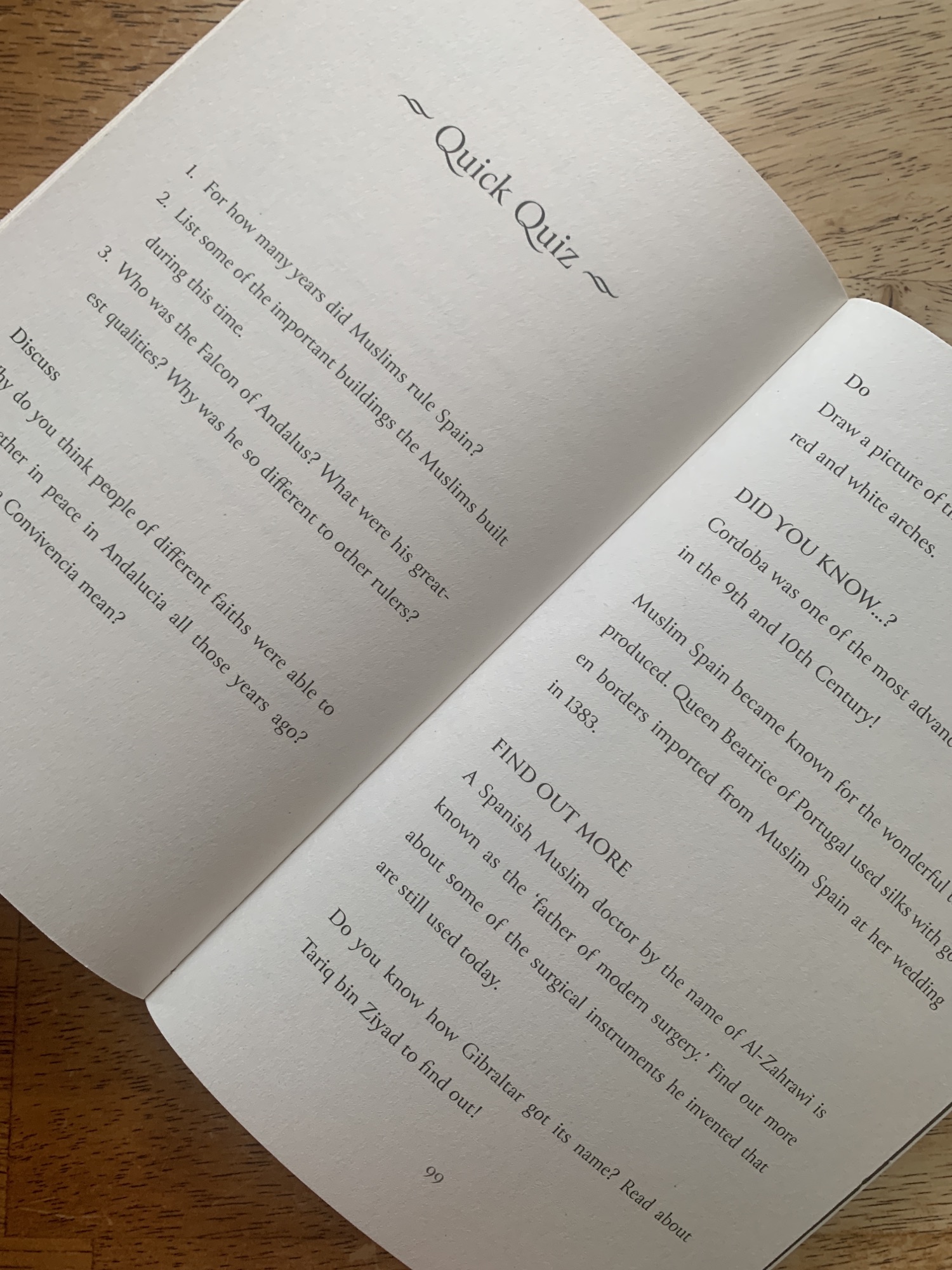
I really like the premise of the book, a Muslim Magic Tree House so to speak, two kids that magically go back in time, in this case to Andalucía. At times the book did make me smile, but really it feels like a missed opportunity.  The writing needs tightening, it feels early reader at 94 pages long with a few full page illustrations, but the vocabulary and text filled pages support the suggested reading level of middle grade.  It takes way too long to build up to the “action,” and when it gets to the plot it doesn’t seem to know what to do with itself.  It is a lot of walking this way only to turn around and walk back for no development, character growth, or enriching reason.  As an adult I had to force myself to keep reading, my eight year old who loves Magic Tree House books had basic foundational questions and couldn’t’ get past page 24.  Honestly it just needed some proof reading and some trimming, which is why I found it so frustrating; it really had so much potential.  Example, if the little boy is so excited to see his grandfather after 8 years, why didn’t he go with his dad to the airport, why did his elderly tired grandfather immediately go to a community event after arriving in the UK from Morocco, why wouldn’t Yusuf go with his beloved grandfather to the masjid.  And this is all within the first few pages.  If the logic isn’t there for the mundane set-up, it is hard to get on board for the fantasy aspect of a flying carpet going back in time.  The historical figures are introduced in passing and don’t leave much of an impression, so yes it is good to give readers a bit of information on people they may not have heard of before, but it doesn’t give them enough connection to make them memorable.  The backmatter sadly is not more information about the three historical figures presented: Abdur Rahman (The Falcon of Andalus), Lubna of Cordoba, and Abbas Ibn Firnas, it is a glossary and a Quick Quiz.  The answers to the quiz are not provided, there are additional facts shared but no sources given, and there is urging to find out more about Muslim Spain, but no directions, links, or book suggestions are provided.  The publisher should have proofed the book, it reads like a pitch, maybe a first draft, and our children and their purchasing adults deserve better.  We have growing options of stories with historical Islamic OWN voice framing, and unfortunately this book had a lot of potential, a few pages of interest, but not ultimately enough intrigue to win me, or my kids over.

img_4187-1

SYNOPSIS:

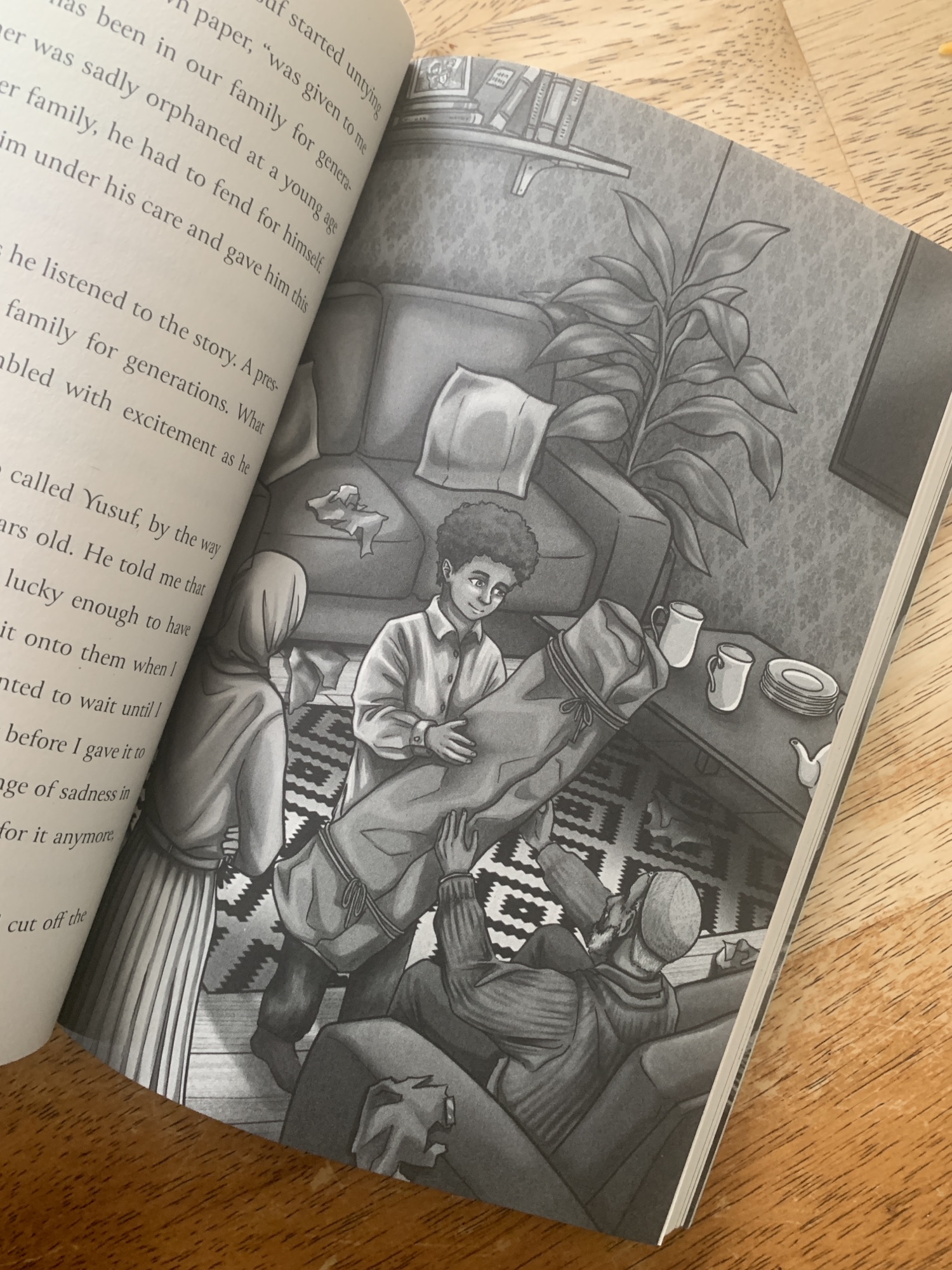
Yusuf and his friend Jack live in the same neighborhood, but don’t go to the same school.  They spend a lot of time together though, and have known each other since they were babies.  When Yusuf’s grandfather comes to visit from Morocco, he brings an old carpet and gifts it to his 10 year old grandson.  Unsure what to do with it, Yusuf puts it in his room, and feigns gratitude.  With a history project looming, and a dislike for historical study, Yusuf and Jack find themselves heading on a magic carpet ride into the past.

They arrive in Cordoba in 856 CE, disoriented and dizzy, Omar, their guide, greets them, walks them through the mosque answers one question then walks them back to the carpet to take them to a different time, 786 CE and they see diverse people living together peacefully.  They first observe “one of the greatest rulers that Andalus ever had,” The Falcon of Andalus, aka Abdur Rahman.  He is a humble leader that freely interacts with his subjects.  They then head to the 10th century to see Lubna with a crowd of scholars in Cordoba  learning from her in the library.

When Yusuf remembers his history project about flight, Umar guides them to 875 CE with a pit stop in CE 852 to see Abbas Ibn Firnas take flight, well fail and then eventually take flight in 875.  The boys then say their goodbyes and are whisked away home. Where they can’t believe what transpired, and are determined to figure out how to make it happen again.
img_4188-1

WHY I LIKE IT:

I like the concept, and that Jack is not Muslim, and Yusuf is unapologetically Muslim.  Seeing the two interact is enjoyable and both good modeling, and mirroring.  The heart of the book is truly not bad, it is the tangents that get long winded for no advancement of the story that take away from the flow.  As stated above the relationship between Yusuf and his grandfather doesn’t align with what is said and what is shown.  The end suffers the same lack of editing.  How can grandpa and Yusuf live in the same home, but they can never find a moment to talk.  Nothing is gained by delaying their conversation, so why delay it, and go on and on about delaying it?

If the point is to share not just with Yusuf and Jack about key historical figures, but with also the reader.  Then there needs to be more interaction with the characters, not just watching them from afar.  Interact with other observers or students or colleagues, convey information from a “personal level” not just drop a snippet here or there from what feels like a vague Wikipedia page.  If the book is not sourced, why not take some fictional liberties and flesh out Abbas, Lubna and Abdur Rahman, so that they are remembered. Include more information about the three real characters in the backmatter, reinforce the idea that a magic carpet is not real, but these remarkable people were, and they changed the world.

I don’t know that kids will have issues with how the carpet worked, but because the set up was so weak, I had a hard time going along with any of it.  I wanted to know why it had to be a grandson, not a son or daughter, how grandpa or his grandpa figured that out when it wasn’t a relative that gave the first Yusuf the carpet, but a storyteller.  How Umar knew to look for them at that moment.  Why did they go to 856 CE and then go to 786 CE why couldn’t they just meet Umar on the first stop? Seems unnecessarily dragged out, for no reason.  When was grandpa’s last trip? Could you get stuck out of your time? If no one can see or feel the rug, why do they keep hiding it? Can people see and hear them, or only their guide?

I like that Yusuf prays and Jack knows that Yusuf prays, and what a mosque is.   I didn’t like that they hear the athan, and went with everyone to pray, but then just left without praying.  The book seemed to do that a few times.  Have the kids walk through a crowd presumably toward something or for some purpose only to turn around and return to the place of origin having gained nothing, learned nothing, or seen anything, again just drags the book out and frustrates readers.

There really is not conflict in the book, no climax either, there is no really stress about getting back, stress about figuring out how to go on the next adventure, it is there, but not heightened, and it is unfortunate, because the book really could be adventure filled, and it just isn’t.

img_4189-1

FLAGS:
None

img_4190-1

TOOLS FOR LEADING THE DISCUSSION:
If you are learning about Abbas Ibn Firnas, or Lubna, or The Falcon of Andalus or Spain, and have access to supplemental material, the book has value.  I don’t know that if a kid picked it up off the shelf even with interest in history, that they would finish reading the book.  It doesn’t provide a solid feeling of learning or understanding about the time and place and people seen in the time travels, nor is it action packed on its own.  So if you can motivate a child to read it and then look further into it, the book would help connect the past as being interesting and engaging, but on its own, the book does not achieve that.
Sister Friend by Jamilah Thompkins-Bigelow illustrated by Shahrzad Maydani

Standard
Sister Friend by Jamilah Thompkins-Bigelow illustrated by Shahrzad Maydani

img_3521-1

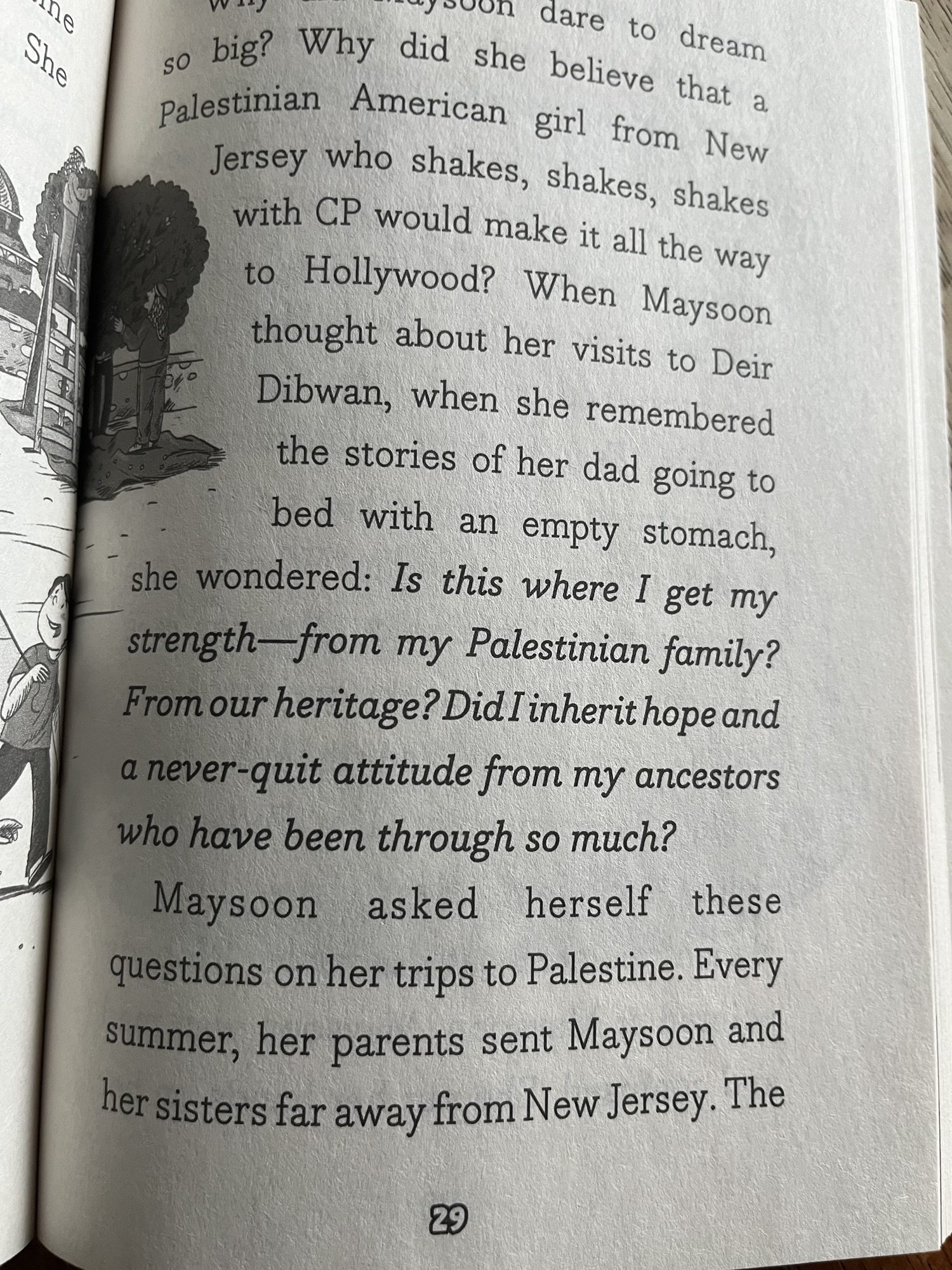
After years of teaching, librarian-ing, and mothering, my reviewers are for adults, but with kids in mind. I read in different environments and try and balance what children will think with my more critical literary impressions. But honestly, my first reaction when I see Jamilah Thompkins-Bigelow has a new book out, is not about the children, or their parents, it is incredibly selfish, and I want to read the picture book for me.  It has been about a year since I first read my all time favorite, Salat in Secret, and I still feel all the feels, every time I read the book. I even enjoy handing the book to people and watching them read it for the first time.  So, I was both excited, and nervous to read this new book, not knowing if it would measure up to my expectations or rather hopes, so to speak.  I needn’t have worried, subhanAllah, this book in it’s own right is moving, heartfelt, layered, powerful, hopeful, relatable, tender, and while staying on a kindergarten to second grade level is also unapologetic with its centering of Islam, race, and feeling invisible, being new, and making a friend.  The illustrations and words blend beautifully, and by the second page of the 40 page book, I was already emotionally attached to the little protagonist Ameena.  Good writing is good writing, and as a result this beautiful book works for all ages and will be appreciated on multiple layers even after dozens of readings, alhumdulillah.

img_3522-1

The book begins with Ameena playing a game by herself.  She always plays by herself at school, where she tends to be invisible.  Maybe it is her hair in twists or her brownness, she doesn’t know.  One day a new girl comes, her name is Sundus, she wears hijab like Ameena wears to the masjid.

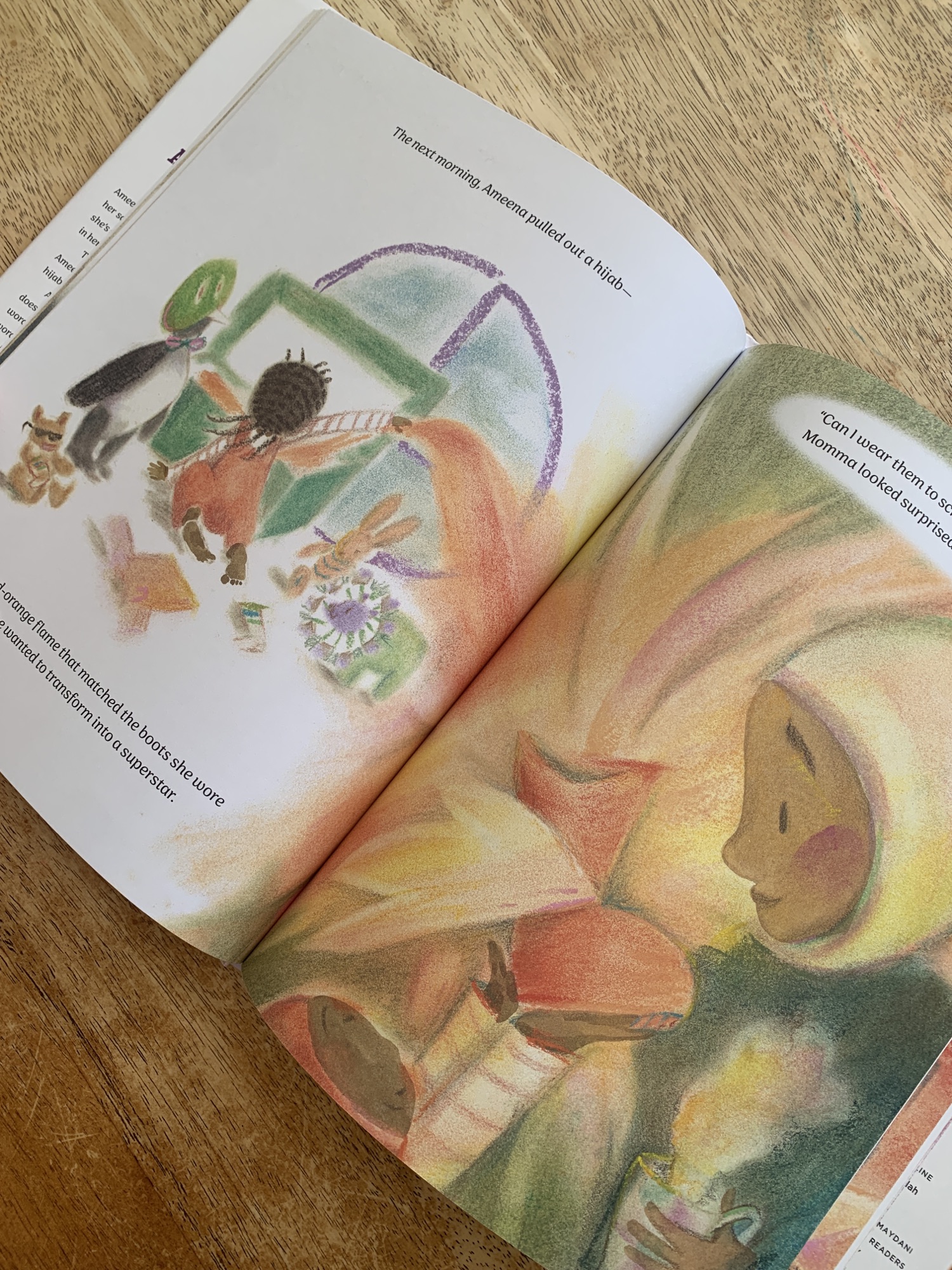
All day Ameena tries to talk to Sundus, but something always seems to keep them apart.  When they finally meet,  Ameena’s excited words get all tangled, and a misunderstanding occurs.  Ameena decides the next day to transform into a rockstar: red-orange hijab and matching boots. The other kids say she is copying the new girl.  Sundus doesn’t say anything.

img_3523-1

Ameena disappears again at school, but family night at the masjid is her happy place.  Where she doesn’t play alone, and there are lots of browns, and she is seen.  When Mama meets a new sister, and greets her with Assalamu Alaikum, Ameena sees how a greeting and a hug can be the start of sisterhood and friendship. And the next time Sundus and Ameena meet, they know just what to say.

img_3525-1

The joy at the end forces you to smile, just as Ameena playing alone at the beginning tugs at your heart.  It is a great book to see yourself and see others in a beautiful, authentic way.  The universal themes of not being seen, making a friend, and being the new kid, are woven in just as hijab, masjid and Assalamu Alaikum are, making the book powerful for Muslim and non Muslims alike.

img_3524-1

I particularly love that their is no glossary, and that the text uses the word masjid not mosque, hijab not scarf and Assalamu Alaikum not salam.  That the masjid is her safe place to laugh and play, and that this book is mainstream published and will find its way to public spaces and be widely accessible.

You can preorder your copy here on Amazon.

Come To Prayer by Salwah Isaacs-Johaadien illustrated by Zeynep Yildirim

Standard
Come To Prayer by Salwah Isaacs-Johaadien illustrated by Zeynep Yildirim

img_3530-1

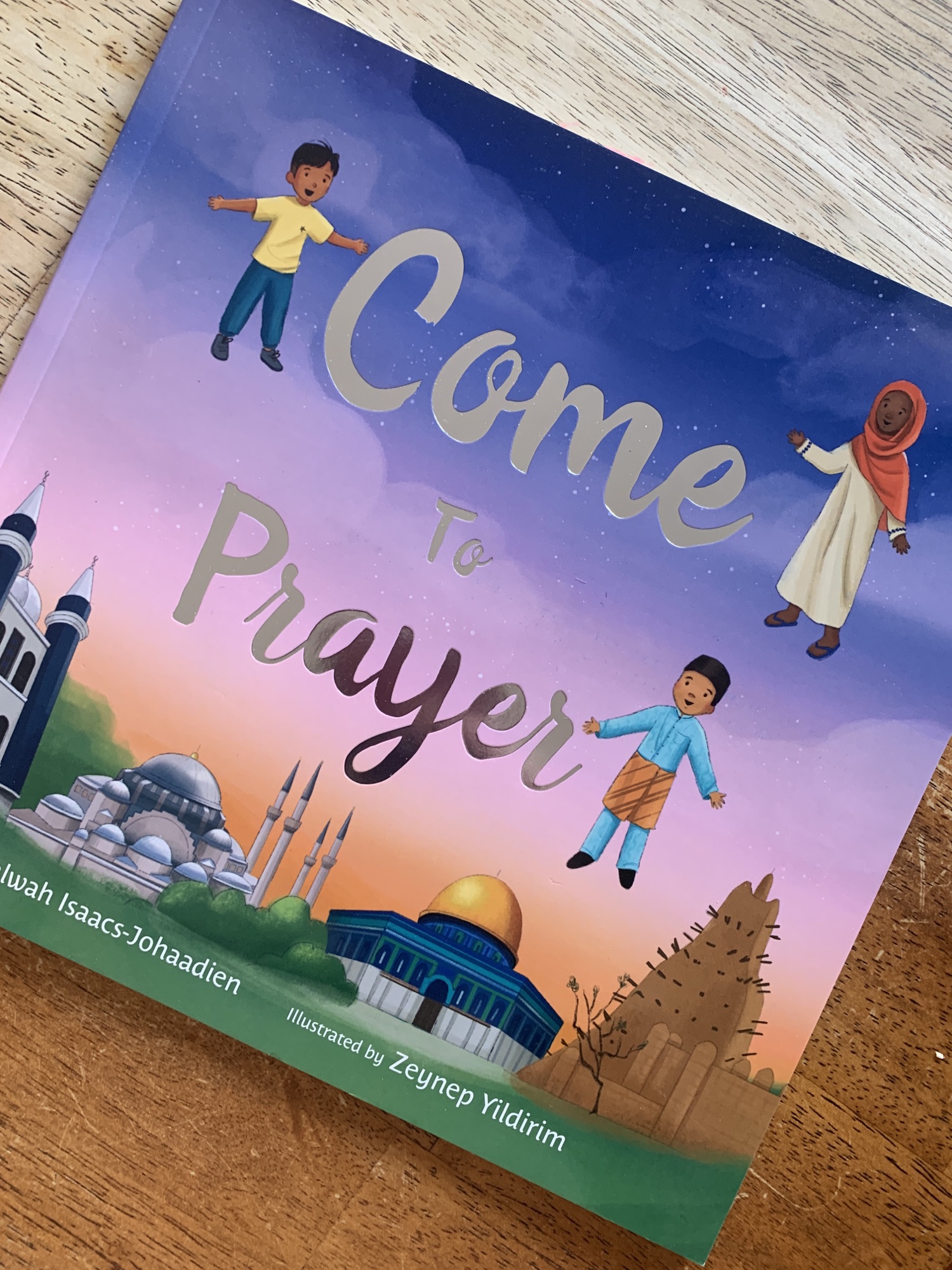
Framed around the five fard prayers, the rhyming 26 pages take readers all around the world with the refrain of “come to prayer, some to salah, come to success, come to falah” appearing after each two page spread.  Reykjavik, Honolulu, Rio, Timbuktu, Kuala Lumpur, and Makkah are shown as families gather to pray in each city.  It is hard to know if the locations were chosen for a specific reason, or to just help with the rhyming lines.  I appreciate the map at the end in showing 18 masjids in the world, but they are not the only ones pictured in the book, so honestly it was not intuitive why they were highlighted. Additional information about the masjids included and where they are located in the world would have been far more beneficial.  The rhyming at times is forced, but for the minimal lines on the pages, and the clear organization of the book, it didn’t bother me too much.  The illustrations compliment the text well and amplify the concept of Islam being a global faith through the connection of Muslims praying everywhere.  The Islamic fiction book is meant for toddlers to early elementary, and with the positive tone of salah being an invitation to success, I think it works well for the audience.

The book starts with little kids waking up in a snowy scene in Reykjavik and heading out with their parents to pray Fajr at the masjid.  Then it is rain in Honolulu that can’t stop a family of five from driving slowly to the masjid for Zuhr.  In Rio a family packs up at the beach to get to Asr salah on time.  For Maghrib, not even a sandstorm across the Sahara can keep a family in Timbuktu from getting to prayer.  And finally a family takes shelter in the masjid for Isha as thunder and lightning in Kuala Lumpur halt their tour. The story ends with everyone entering Makkah in ihraam to pray at the Kaaba.

The book is a thick paperback cover, with glossy 9 x 9.5 inch pages.  It works well for small group story times or bedtime.  It is available on Amazon here or from Crescent Moon Store here.

Not Yet: The Story of an Unstoppable Skater by Zahra Lari and Hadley Davis illustrated by Sara Alfageeh

Standard
Not Yet: The Story of an Unstoppable Skater by Zahra Lari and Hadley Davis illustrated by Sara Alfageeh

img_2890-1

Despite my initial hesitancy, the book really won me over.  The inspiration behind the story is impressive, but even if it was complete fiction, it would still be a cute book.  Over 40 pages, the illustrations and simple text introduce you to Zahra, a young girl in the UAE with big dreams and a lot of determination.  And that is before she even sets foot on the ice.  Four to eight year old kids will enjoy the humor, with the older readers appreciating what she was able to overcome and accomplish.  Adults will appreciate the authors’ and illustrator’s notes at the end and seeing their kids being inspired to pursue their dreams.

The book begins with Zahra watching a movie at a theater and being inspired by the skaters on the screen.  She slides across the floor in her socks that night when she gets home, and declares she is going to be a figure skater.  Her brother points out that she doesn’t know how to skate. When she asks her friend to make her a costume, it is revealed that she isn’t even taking lessons. It seems everyone wants to point out the flaws in Zahra’s plans.  To which she responds, “not yet.”

Luckily her dad supports her, and takes her to the only ice skating rink in the country, where she promptly falls over again and again.  But there is something to be said for not giving up, and the true story of Zahra Lari shows that sometimes you have to be the one to break the barriers and remove the “not yets” on the path to achieving your dreams.

I found this book at my public library, but it can also be purchased here.

An Eid Story: Husna and the Eid Party by Fawzia Gilani-Williams illustrated by Kulthum Burgess

Standard
An Eid Story: Husna and the Eid Party by Fawzia Gilani-Williams illustrated by Kulthum Burgess

img_3309-1

This 27 page book is old, published in 2007, and one that I kept an eye out for on occasion since reviewing a similar early chapter book by the same author, The Lost Ring, that I found in a public library in 2016.  Somehow it found its way to me in 2024, and I’m reviewing it because it has been a while since I’ve indulged in older books that shaped the foundation of Muslim literary representation so many years ago.  It is the epitome of Islamic fiction and what Islamic fiction looked like when I started teaching.  It has a Muslim protagonist, with a universal stress, framed in Islamic acts, perspectives, information, and morals.  It is unapologetic, it is at time preachy, and while the writing isn’t remarkable, an engaging story is laid out with numerous lessons along the way.  You may not want to rush out and purchase this book, but if you have it on your shelf, it would be worth pulling out, dusting off, and sharing with a child. At times the details feel a little dated, but there is a timelessness to stresses with friends, being left out, assuming the worst, and wanting to be included.  This book will offer a chance to be seen in the text and illustrations as Husna waits to be invited to her friend’s Eid party.  The book does not specify if it is Eid al-Fitr of Eid al-Adha, but it really isn’t impactful on the story, as it simply sets the time, mood, and draws all the threads together.

SYNOPSIS:
It is the week after Eid and students are back at their Islamic school, Husna has lots of friends, but Maryam is her favorite.  While on the playground, someone asks Maryam where the party is going to be, and she responds, “probably at the house.”  Excited Husna waits for her invitation, that unfortunately never comes.

WHY I LIKE IT:
Even though the book has a happy ending and is based on a misunderstanding, the feelings are very real.  I remember feeling left out, I’ve seen my own kids and students feel it, and that the book is a snapshot of that feeling from a Muslim perspective, really makes it hit home.  Husna makes dua in sujud at Maghrib and Fajr that she will be invited, conversations begin with As-Salamu ‘Alaikum and end with Barak Allahfi-ki, homework is learning Hadith and memorizing ayats, jumah is prayed, and every page is filled with Islam.

FLAGS:

None

TOOLS FOR LEADING THE DISCUSSION:
The book is an early reader, a text heavy one at that, but none-the-less meant for ages seven and up. I can see it being read today in small groups in an Islamic school or if you have a young one who is perhaps feeling something similar.  You might have to explain invitations in the mail, or calling on a house phone, but it still has relevance.