Tag Archives: Shifa Saltagi Safadi

Amina Banana and the Formula for Friendship by Shifa Saltagi Safadi illustrated by Aaliya Jaleel

Standard
Amina Banana and the Formula for Friendship by Shifa Saltagi Safadi illustrated by Aaliya Jaleel

img_8365-1

I have five children, I have taught second grade, I have shelved, recommended, and read aloud a number of early chapter books for the better part of the last 20 years, so when I say that this book changes the standard of what a book (series) for this demographic can and should be, I do not say it lightly. Yes, I am bias, the author is a dear friend, but Amina has layers, growth, insight, struggles, warmth, heart, and all the other glowing adjectives normally associated with beloved books and characters for older readers. This book is the first in a series of four, and each book is somehow better than the previous. At 126 pages with a robust backmatter that includes scientific extensions, a recipe for ful mdamas, and a note from the author, I am confident that children of all ages, everywhere, caregivers, parents and educators alike will all fall in love with Amina, cheer for her, laugh with her, and be enamored with her attitude, perseverance, and joy.

SYNOPSIS:
Amina loves having a plan, a formula in fact, and when she arrives in Indiana as a refugee from Syria she is determined to make friends in 3rd grade.  Things don’t always go as expected, but alhumdulillah Amina doesn’t stay down: classmates, family, and determination combine to help the clever, yellow-loving protagonist find a way to rework her experiments, accept what she can and cannot control, and succeed in making this new country feel a little bit like home.

WHY I LOVE IT:
I adore the humor, unapologetic Islam, the rich Syrian culture woven in, and Amina’s approach to life.  So often early chapter book protagonists are obnoxious, annoying, crude almost, bratty, arrogant, and repetitive, Amina is none of those things.  She is vulnerable and strong, confident, yet nervous, hopeful, but worried, she is tangibly real in a way that readers will see themselves and relate.  I love the humor of idioms being confusing, and the heart of seeing what the parents have sacrificed and are willing to sacrifice by starting over in a new place.  The illustrations add to the experience of drawing reluctant readers in and will help those transitioning from picture books to chapter books be immersed by the story.  As always the author’s writing is impeccable and the story well-crafted.

FLAGS:

There is some teasing, reflections on why Syria was left, the journey to America, and hardship.

TOOLS FOR LEADING THE DISCUSSION:
This book is ideal for classroom, library, and home shelves.  It would be a wonderful classroom read aloud and works equally as well at bedtime.  My children college to elementary have all read and loved Amina, and I highly encourage preordering so that your children will get a chance to fall in love with her too.


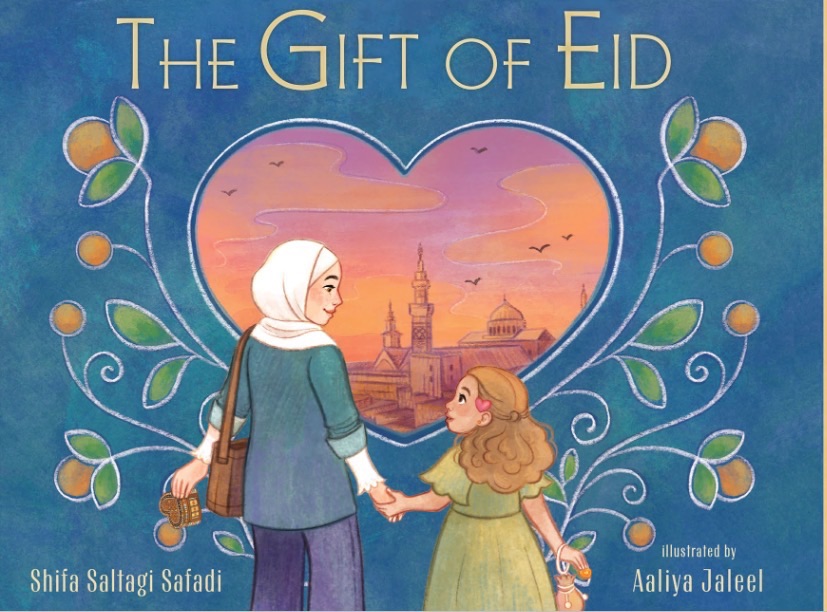
The Gift of Eid by Shifa Saltagi Safadi illustrayed by Aaliya Jaleel

Standard
The Gift of Eid by Shifa Saltagi Safadi illustrayed by Aaliya Jaleel

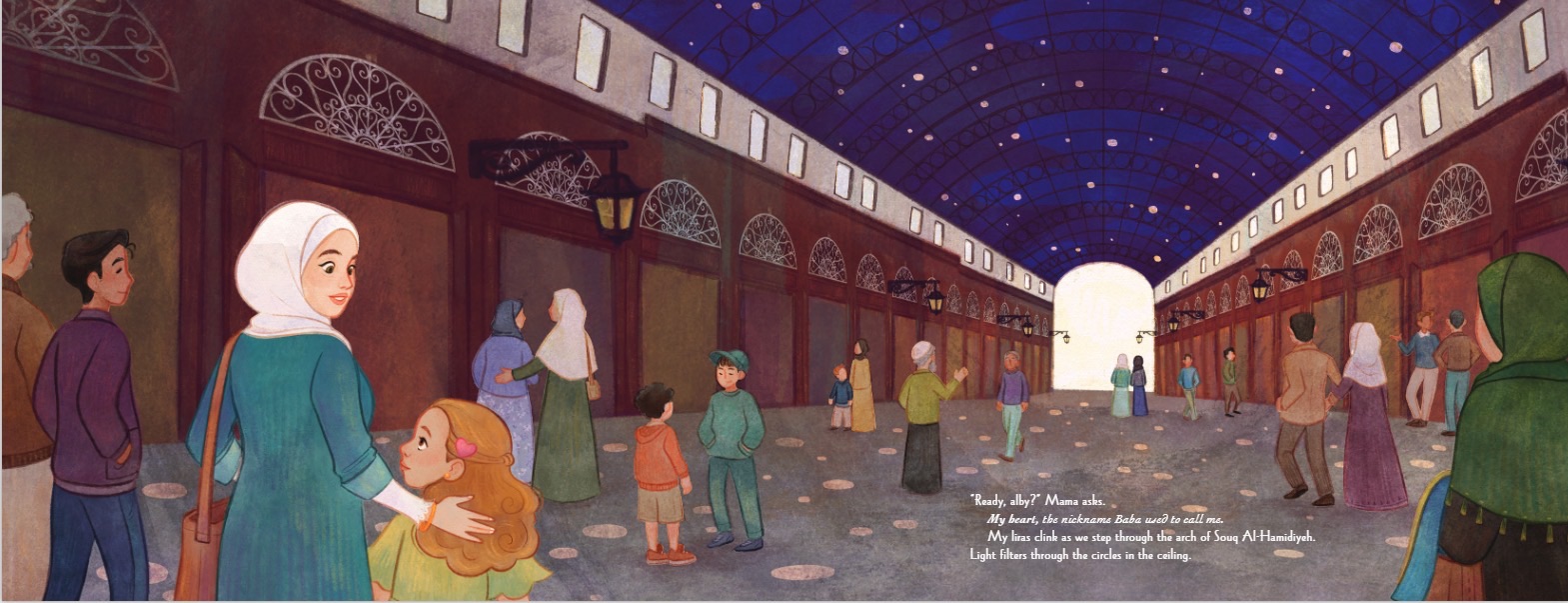
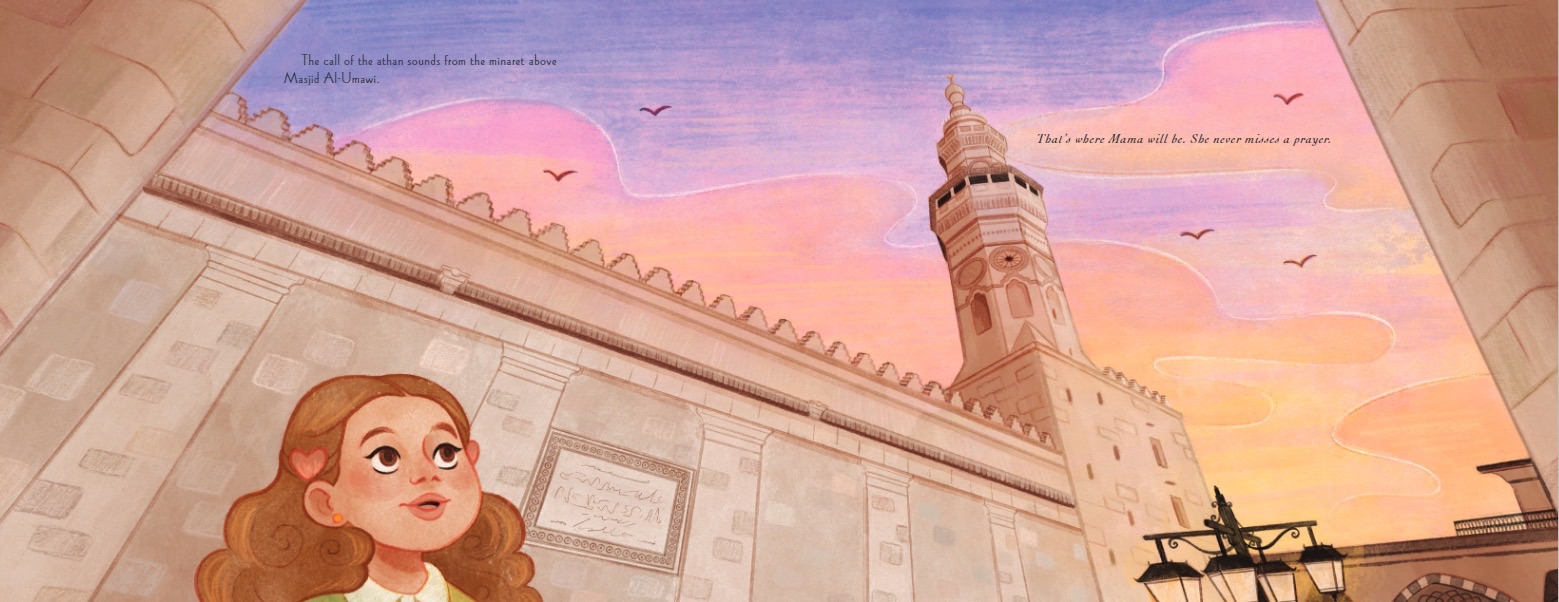
With heartfelt words and large two-page spread illustrations, this beautiful book shares a mother and daughter finding the perfect Eid gift for one another while bringing the reader into the Souq Al-Hamidiyeh, before sending them off to Masjid Al-Umawi for a warm hug.  A retelling of the classic, A Gift of the Magi, the story poignantly presents threads of love, gifts, loss, and Eid to fill the reader with joy, peace, and gratitude.  I’m admittedly very bias, as a close friend of the author, but this beautiful book doesn’t need lip service or marketing, it will appeal to all readers in all settings, and be cherished and asked for, over and over again, all throughout the year. Alhumdulillah.

The book starts with Yasmine and her mama entering the souq through the archway, and Yasmine remembering her father and her imagining the circles in the ceiling to be twinkling stars.  He is no longer with them, the magic is gone and money is tight now, but with liras jingling in her pocket, Yasmine is determined to find an Eid gift for her mother that will make her smile.

Yasmine looks around the shops as her mother counts out liras to buy za’atar, and tries to find something cheaper than sfeeha at the bakery.  She finally knows what to get her mother, but it is more lira than she has.  With determination and selflessness she makes a decision to get her mama the perfect gift.

The process separates the two, and when they reunite at the masjid for maghrib salat, it isn’t the gifts themselves, but rather what they mean, that make the laughter, tears, and love overflow.

I love the emotional depth the book conveys so deftly, never explaining or pulling the reader out of the story, thus allowing the connection to linger long after the book is closed, a rare treat in a picture book.

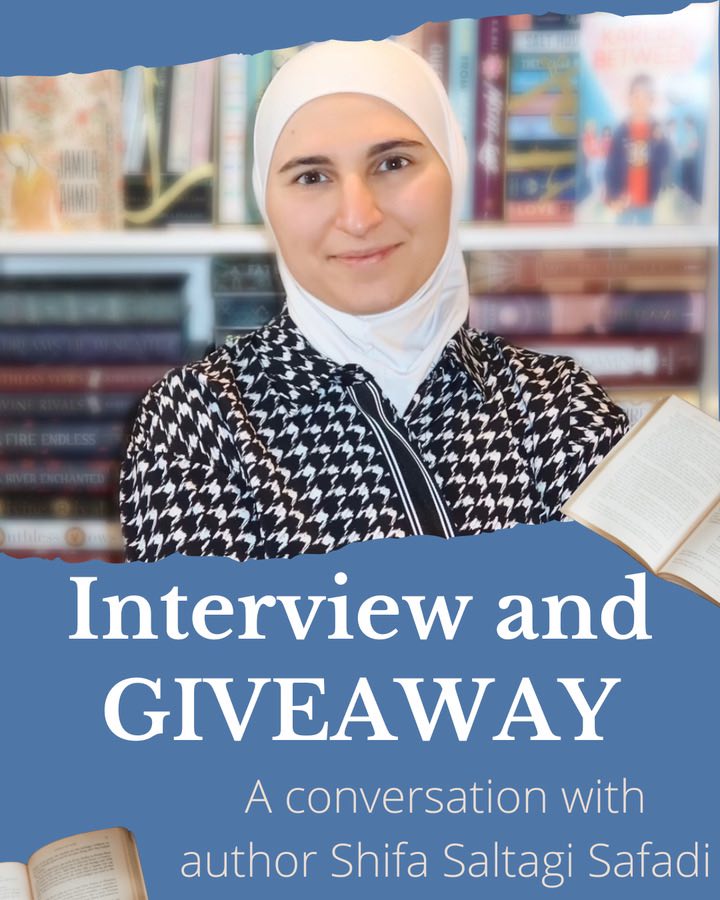
INTERVIEW with AUTHOR SHIFA SALTAGI SAFADI about her upcoming book KAREEM BETWEEN

Standard
INTERVIEW with AUTHOR SHIFA SALTAGI SAFADI about her upcoming book KAREEM BETWEEN

435393991_260556667139276_2666634549169627275_n

Assalamualaikum,

It is with great joy that I was able to ask my dear friend, and favorite author Shifa Saltagi Safadi a few questions about her upcoming book KAREEM BETWEEN and offer her answers, insights, and wisdom with all of you.  To sweeten the deal we also have an ARC to give away to one lucky US reader.
100,000 Bismillah Vector Images | Depositphotos

KIRIN: Kareem Between is a middle grade novel in verse that tugs at your heart without compromising action, relatability, and joy. It is in simple terms, a coming-of-age story of a boy between, as it says on the back of the book: “Between countries. Between friends. Between football, between family- and between right and wrong.” Yet, somehow it is so much more than all of that, what do you want readers to take away from the book?

SHIFA:  What a great question. 

There is absolutely so much for readers to find in Kareem in terms of themes, but the one that probably means the most to me is the one about belonging. I think we all have felt a little lost in this world at times, both as tweens in Middle School, and even as adults! And I want readers to know that it’s okay to not always fit in this perfect box- that being in the middle, being in between, can be a position of strength. The world seeks to categorize people into labels, and especially marginalized people- and in Kareem’s and my own case, Muslims and Syrians, can be put in this box of “outsider” and “foreigner”, and honestly, many times even “terrorist”. And I wanted to challenge these labels. Both in terms of what it means to be Arab, as in the character Fadi’s case, he is a Christian Syrian- and in terms of being American- what does it mean to be a citizen of this country. 

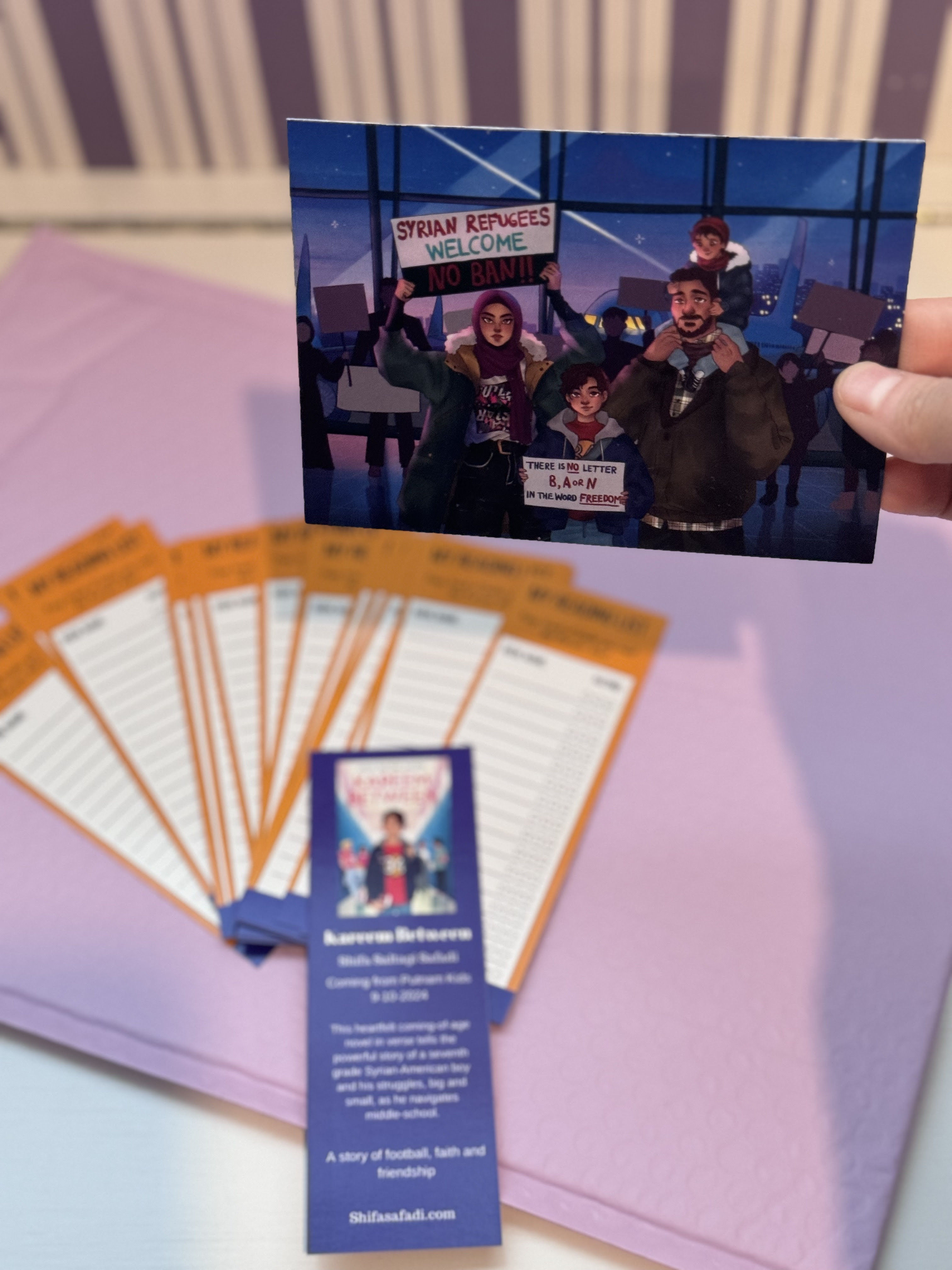
440341113_2133090993721514_84614182741726886_nUltimately, I want young readers to know that they can embrace the full complicated different facets of who they are without having to conform to peer pressure or labels. That even if it seems easier to step away from parts of yourself to fit in, it isn’t worth it when you erase your feelings. That pride in yourself and confidence in using your unique voice and story will be your asset in this world. And just as Kareem uses his voice at a protest in the O’Hare Airport against the Muslim Ban, and to speak on his local news outlet- I hope young readers use their own voices to stand up for justice, and stand up for themselves.

KIRIN: Many OWN voice writers often say they write the books they wish they had when they were younger, is this your motivation as well? What does authentic, OWN voice, unapologetic representation mean to you?

SHIFA:  Oh absolutely! Kareem contains so many different parts of me. I genuinely open up my own heart and pour my emotions onto the page when I write- it is very much an emotional experience and I cried while writing Kareem. And honestly, even every reread- I feel like I go through his character arc with him, especially with the recent news dehumanizing Palestinian lives and how it has become so controversial in some spaces to even call for a ceasefire!

Own voice representation is so important to me. As a reviewer, I often find myself flipping to read the Author’s note to check that the book is authentic. And as a reader- I find myself being moved so much more when the book is written from a writer’s heart.

But also, as a writer- I honestly think I was just tired of the same narrative I have seen my whole life as a Muslim growing up in America- the tired trope of “Islamist terrorist” that makes its way unto movies and media TO THIS day. Of this label that somehow being a practicing Muslim means you are dangerous, strict, mean, inhumane.

I want readers to meet Kareem. To see our humanity. To see how much peace Islam brings me. To take a pause- and maybe even cause a transformation inside of them on how they perceive Muslims and Arabs. To see that we are all connected in our humanity- that laws like the “Muslim Ban” are harmful because not only does it other a whole group of humans, but it strips part of the very principles that America claims to be founded upon.
unnamed

KIRIN: This is your first middle grade novel, what made you decide to write it in verse, and what was the process like? What was the most challenging part of the process?

SHIFA:  Interestingly enough- I didn’t start writing KAREEM in verse. It was very much a story in prose, about a kid who wants to make the football team and faces school bullies. I was taking a mentorship with Storyteller Academy (I am a huge fan of writing courses!) when my mentor Sage Blackwood told me the voice of my prose wasn’t working. And suggested trying another format. 

I have always adored verse, but I honestly did not think I was talented enough to try it! But I attempted a few pages, interestingly enough, from the middle of the book- and Sage immediately told me they clicked into place! (Thank you Sage). And so then I rewrote the whole book into verse! 

The most challenging part was to probably believe in myself- that I could actually write poetry- and once I got over that hurdle, the words just flowed!! 

I feel like the verse format was also helpful for me in crafting the emotional arc. I remember being SO SCARED when Trump won the 2016 elections. Being terrified for myself and my kids’ future. And I remember the devastation of the Muslim Ban and how it affected our communities, both here and abroad. And verse helped me with using language, as well as the empty space on the page, to really show these deep emotions of emptiness and loss, but in a way that wasn’t too heavy for children. 

The sparse verse on the page helps kids be able to digest these very real themes in a way that they can still find hope and life, and the lyrical language and words of poetry helped me infuse beauty even in the darkest moments of the book. And I wanted to be able to offer that lifeline to readers- that even when things get tough and difficult- the hope in those moments is in finding your words. 

KIRIN: Kareem is confident in his Muslim identity, praying at school is normalized, and while he loves his Syrian and American cultures, he does try and find his footing in being both.  Why was the distinction between faith and cultural identity important in the story and why is it important to you?

SHIFA:  Thank you for this question!

Faith is so important for me. Islam has been my lifeline, my rope of hope in this world, my very heartbeat that I live with. And being Muslim for me is very much a full complete experience, one I embrace with every facet of my being.

And I think part of the reason that Islam is so very important to me is probably a result of my feeling so between two cultures.

I was always between Syrian and American growing up- but I knew my faith and my Creator had space for my whole self, my imperfect, between, flawed heart. And that’s why Islam for me has always been a non-negotiable part of my identity. I am a Muslim. It is my life. I have never considered removing my hijab- even when it gets tough and I get stares. I have never considered not praying, even when I used to get weird stares at sticking my foot in sinks at school or praying in public view. This is me.

And Kareem is the same way. He prays, goes to Jummah, reads Quran, turns to Allah in duaa- and not for one second does he ever consider letting go of being Muslim. Because its who he is, and it’s the rope he holds onto in navigating his two cultures. 

It is very important for me to distinguish culture and faith for another reason. There is this common misconception that Muslims and Arabs are the same. But this is not true! So many Arabs are Christians, Jews, Druze, Armenian- and so many Muslims are South Asian, Eastern European, and even white!! The country with the most Muslim population is not even an Arab country. And I also have many white American friends who embraced Islam who tell me how much it hurts for them to feel like the world erases their own identity as Muslims as well. 

I wanted to challenge these labels, and especially when Kareem tells his dad that the Muslim ban doesn’t only affect Muslims, but would have affected Fadi, I wanted the reader to pause. To think. 

And to realize that othering and stereotyping is in its very essence flawed.

KIRIN: Most western middle grade readers in 2024 probably don’t spend much time thinking about Executive Order 13769, “The Muslim Ban” what do you hope Kareem and his family provide for readers in understanding how it impacted families.  

 SHIFA: When I started writing this book, I remember having one wish for it. That it gets published in 2024. And there was one reason for that- I wanted it out before the elections this year.

And the reason for my wish is because I want my book to make a difference. The closer we get to elections, the more this book feels so important for people to read. This year’s elections somehow feel just as stressful as the 2016-year elections, and the same issues of Islamophobia and Anti-Arab racism are propping up again everywhere on media and campaign speeches. And I want readers to really think on the very real effects of how American elections can impact marginalized groups in the world. 

I really wanted the book to be a peek into what it was like to be Muslim and Syrian in America in 2016/2017 to inspire readers to feel compassion, to think about how politics are automatically part of your identity when you are marginalized. 

I also wanted to take back the narrative. I want readers to be brave. Don’t feel silenced anymore- refuse the fear or helplessness of not being able to control who will be President. Because as 2017 showed us, when unfair laws based on racism are signed- WE DO HAVE POWER as citizens. We resisted the Muslim ban, we protested, Americans stood up for justice- and it proved that we can make change. 

And more than anything- that’s what I want readers to think about when it comes to the Muslim ban. It is about SO MUCH MORE than Executive Order 13769. It is about standing up for justice, whether that is against systemic racism, against book banning, against border deportations, against funding wars with our tax dollars.

It is about using our voice. I want young readers to know they are powerful, and to use their privileges to make change.
435276196_1518720458992981_8937728857071026337_n

KIRIN: Is this the end for Kareem? Do you see him making a cameo in future books perhaps? My kids read the book, and really want to know what Kareem is like in high school? Where he is going to college, what his future looks like. 

SHIFA:  As of now, I don’t have any future plans, but hey, if my editor and publisher request more, I would jump on that immediately!! 

As for Kareem’s future- he was actually born the day of the Superbowl in 2004 (obviously lol) – so February 1st. He’s now 20 years old in 2024! 

He’s in football training in college, in Chicago of course. And although he wanted to be the youngest player ever drafted to the NFL, he got beat by another former Chicago Bears player- Amobi Okoye, who played at 19!!

But it’s okay- life might not be perfect, but Kareem is still persevering towards his dream. And when he’s not organizing his MSA’s Jummah prayers or practicing football (or reading the latest books at his library), he’s at a downtown Chicago protest for  ine, holding up posters and using his voice to call for a ceasefire!

KIRIN: What are you currently working on, and what future books can we look forward to seeing from you?

SHIFA:  I have more books lined up in 2025- a picture book titled Gift of Eid coming in February, and a whole chapter book series titled Amina Banana coming mid-year! I cannot wait to share my sweet Yasmine (Gift of Eid) and my spunky, sassy Amina! I have a feeling readers are going to adore these books!

As for Middle Grade: 

I love writing novels in verse, and I am actually currently finishing up writing my second one, eeek- this one is a bit wild and fun, but still containing emotion and heart as well. And of course, using verse language and lyrical words on the page to create art.

I don’t want to spoil it, but it’s been such an experience to write and revise my second book, and I am excited and slightly scared about how it’s turning out. Will I ever kick imposter syndrome to the curb? 

It’s still not ready to share, so I won’t say anything more- but I am hoping I can share it with the world someday insha Allah!

JAK Kirin for interviewing me! Thank you so much for reading KAREEM over and over, your beautiful review, and all your support!

Be sure and check out Shifa’s website and sign up for her newsletter https://shifasafadi.com/

For GIVEAWAY details head over to INSTAGRAM  @muslimmommyblog and @islamicschoollibrarian

439223131_953031783226797_4732317873116172341_n

Giveaway ends and winner will be chosen and announced on Friday, Jummah May 3, 2024! Click here to enter.

KAREEM BETWEEN RELEASES SEPTEMBER 10, 2024

You can Pre Order Kareem Between here

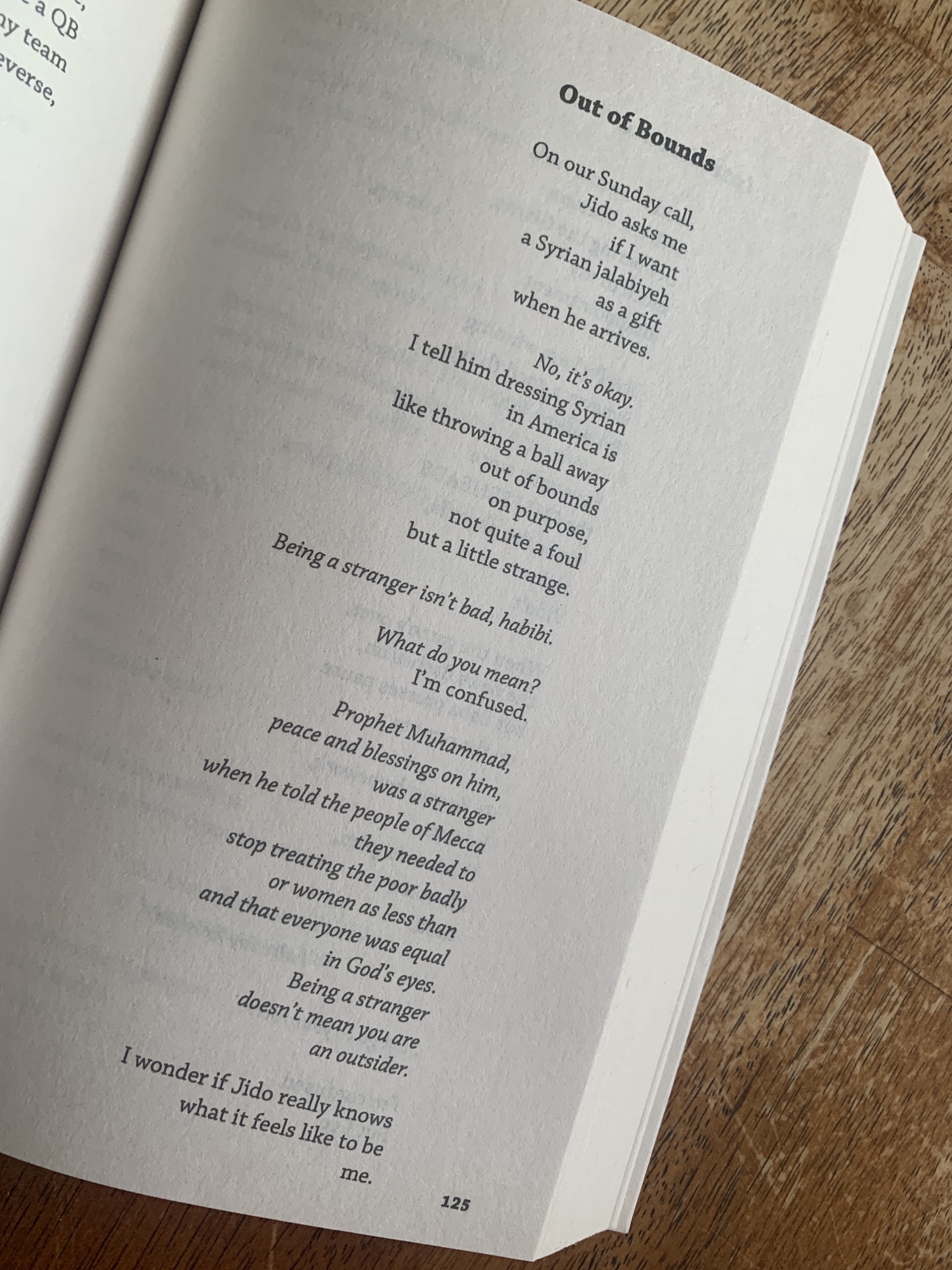
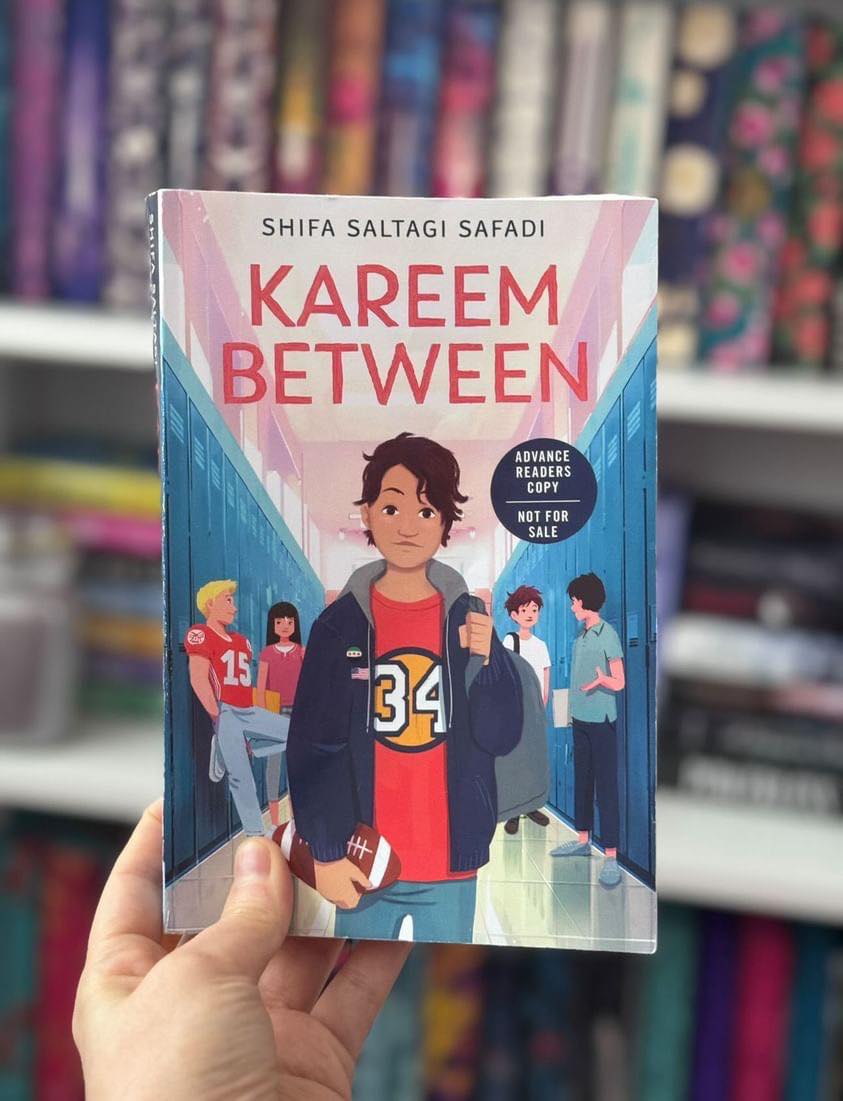
Kareem Between By Shifa Saltagi Safadi

Standard
Kareem Between By Shifa Saltagi Safadi

img_3395-1

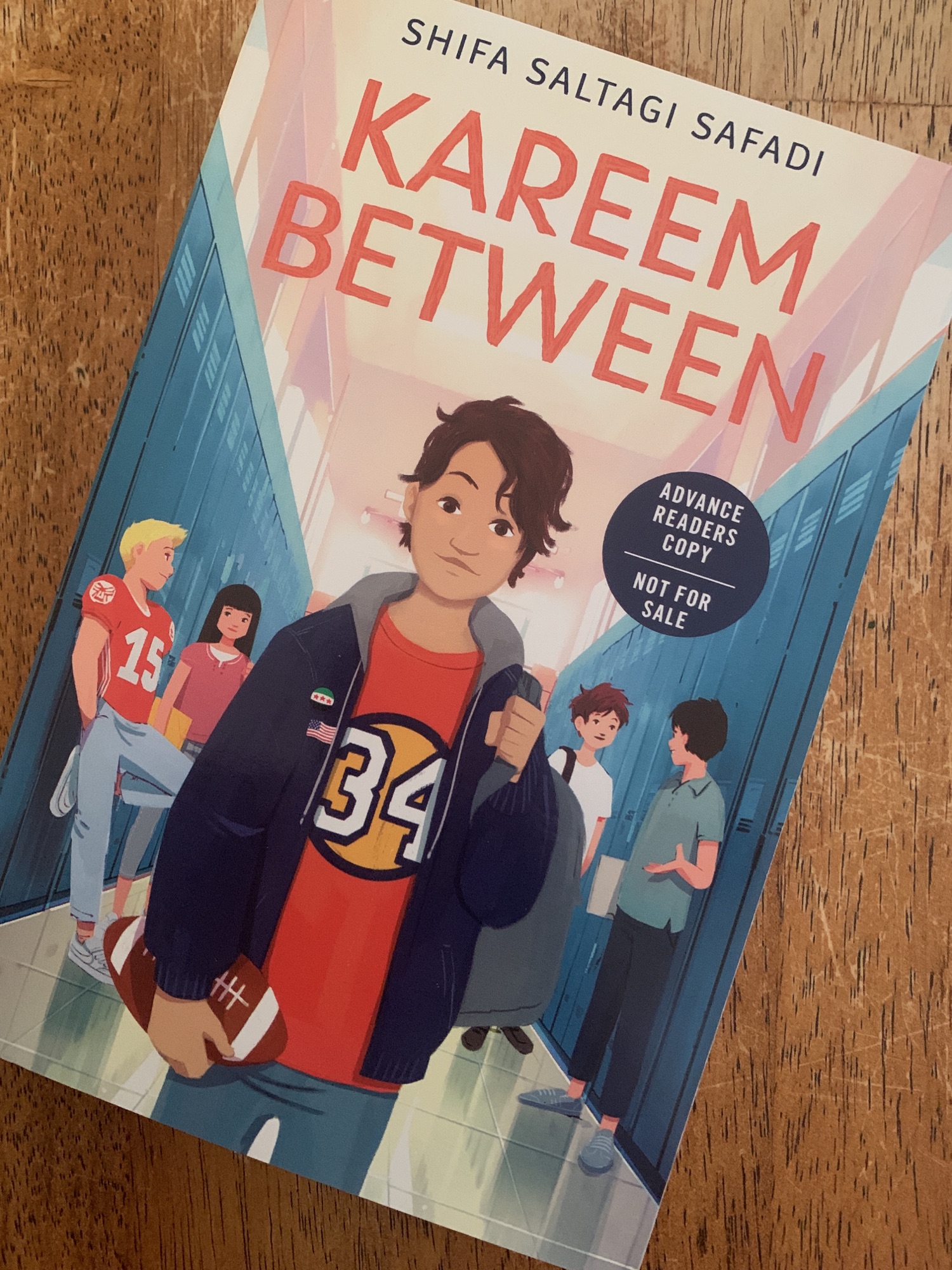
It doesn’t matter how many Word documents you read, Goggle docs you add comments to, and screen shots you revise; to hold a physical book in your hands that you have been blessed to observe from the sidelines through numerous revisions, is mind blowing.  Reading the final version from page 1 to page 324, plus the backmatter, has left me at a loss for words with tears streaming down my cheeks. I truly cannot imagine the book any other way. All past drafts and storylines, were just stepping stones to get the book to this version, and as a fan of literature my whole life, to see this metamorphosis in real time has added to my respect and admiration of authors.  Enough about me though, this review is of the middle grade novel in verse that tells the story of Syrian American Kareem, a loveable boy caught in between choices, siblings, friends, labels, and global acts beyond his control.  He makes mistakes, he tries to make things right, and at the center of it all is his Islamic identity, love of football, and genuinely good heart.  I am biased in that I have self appointed Kareem as my nephew, but even after dozens of readings, I was moved to tears three times during the course of this reading.  I made my teens read the book and they loved it, and like them, we hope we get more Kareem in the future.

img_3541-1

SYNOPSIS:

Kareem loves football, particularly the Bears, and dreams of seeing his Arabic name on an American jersey one day in the NFL.  Unfortunately, he hasn’t made the school team, his best and only friend Adam has moved away, and the coach’s son is offering to talk to his dad for Kareem in exchange for some school help.  Add in a new Syrian kid at school, his mom going to Syria to take care of his grandfather, and the fruition of Executive Order 13769 aka the Muslim Ban, and seventh grade has Kareem scrambling on every down to say the least.

img_3543-1

WHY I LOVE IT:

The football framing, the literary inclusions, the Arabic, the Islam, all combine with such tangible heart to create a seamless read both as a compelling story and as an example of literary craft.  The language is on point and intentional, that even if you don’t know the character or novel referenced, the Arabic words included, or football terminology used, you will be invested in the characters and plot, and find yourself cheering for Kareem.  Often debut authors show promise, but their stories have plot holes, or pacing issues, or inconsistencies, that is not the case with this book.  The crumbs are there that tie everything together, the depth of the characters’ personalities reveal how developed they are, and the timeline keeps the book moving forward.  There are no dry or slow spots in the entire novel, it is easily read in one sitting as you find yourself nervous for Kareem, and curious how it will resolve.

Boys and girls, Muslims and non Muslims, Arabs and non Arabs, all will find themselves drawn to this book, and thinking about the characters, particularly Kareem, long after the final page is read.

img_3544-1

FLAGS:

Some stress and anxiety with missing parents.  Death, bullying, cheating, fighting, lying, racism.

img_3540-1

TOOLS FOR LEADING THE DISCUSSION:

The book is a solid middle grade, but the quality of writing and engaging plot makes it work for a middle school book club read as well.  I cannot wait to share this book widely.

Preorders speak volumes and I truly hope if you are able that you will preorder a copy, you can do so here.  Requesting your local public library to shelve the book is also a tremendous help to signal to publishers what type of stories and OWN voice authentic representation consumers will support.

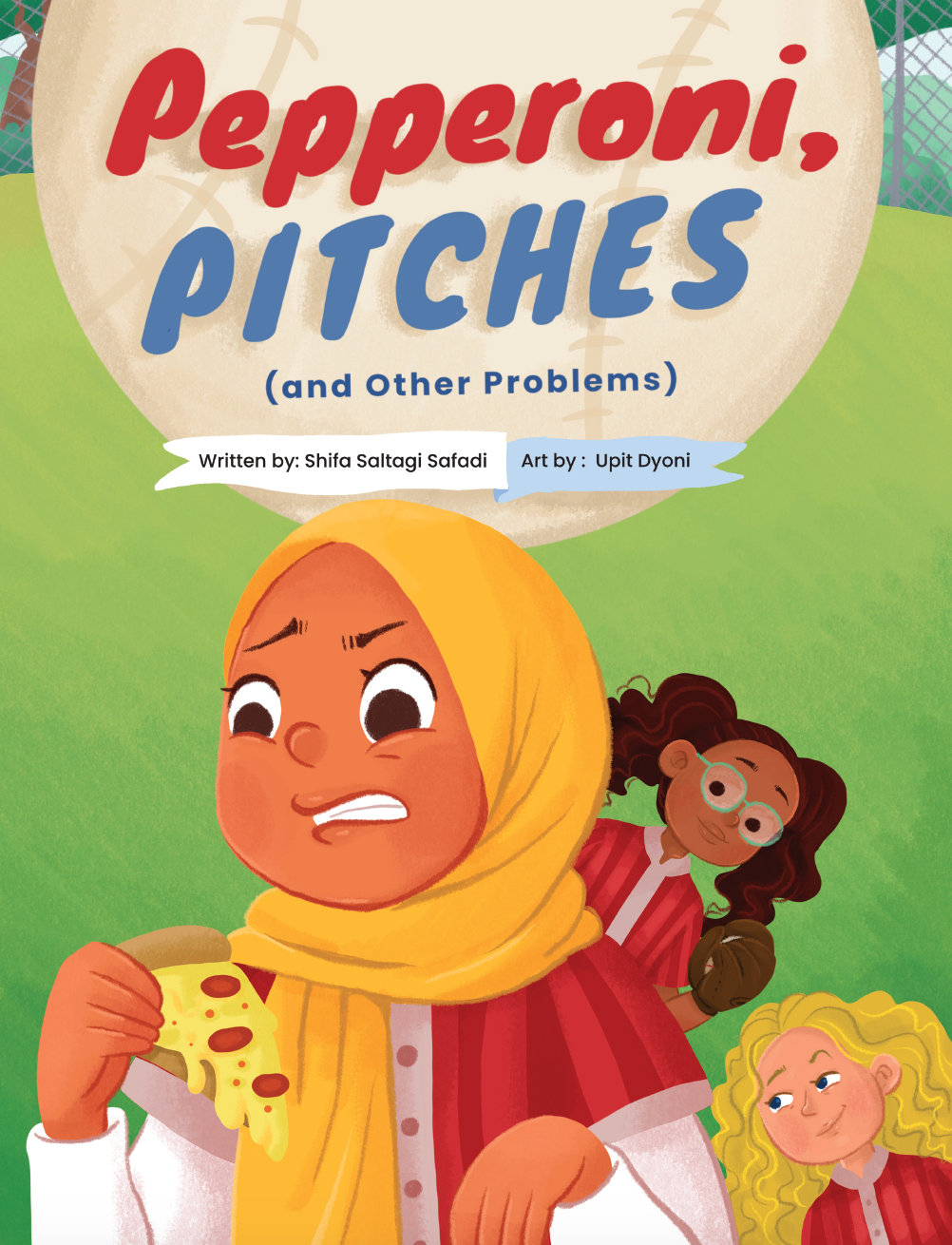
Pepperoni, Pitches (and Other Problems) by Shifa Saltagi Safadi illustrated by Upit Dyoni

Standard
Pepperoni, Pitches (and Other Problems) by Shifa Saltagi Safadi illustrated by Upit Dyoni

pitches

I absolutely love how smart this book is, and how it allows for elementary aged readers to feel that “aha moment” when they read it, get it, and realize that they need to remember the lessons because it could happen to them.  The illustrations are an added bonus and are perfectly aligned with the tone and text of the story.  My only issue, is the title.  Pitches reads as a euphemism for another word and since the book involves girl drama, teasing, and misunderstandings, it really is hard to not have that thought zap your brain when you see the title.  Perhaps if the “and Other Problems” would have used a bigger font on the word “Problems” the alliteration would have been more obvious, and hidden the word “Pitches” a bit.  If I’m alone in this, I apologize to the author and publisher, (I’ve mentioned my concern to them), but for others that saw the word and questioned the content, rest assured it is about baseball and the book doesn’t have even a speck of questionable content.

img_4682

Amira is at a new school, and luckily it is Tuesday, Pizza Tuesday to be exact, and she can’t wait to dive into a cheesy slice.  Unfortunately, Olivia takes the last cheese piece and when Amira asks if she will let her have it, Olivia says she had it first.  Stuck with an egg salad sandwich that smells, Amira sits alone and broods.

In gym they are playing baseball, but no one knows how good Amira is, and she is picked last.  When Amira is up to bat, Olivia is the pitcher and her pitches are terrible.  Amira still mad about lunch and afraid that the others will blame her for not hitting the unhitable balls, shouts, “you’re supposed to aim at my bat.”  Everyone laughs, but Olivia runs off clearly upset.  The new pitcher sends a decent throw and Amira hits a home run.  The captain of the team praises her, and Amira is hopeful she’ll have someone to sit with her at lunch.  After class, Amira sees Olivia crying in the bathroom and no one asking her if she is ok, Amira doesn’t feel so well, and doesn’t ask either. On the bus ride home Amira is greeted with cheers for her home run, but Elena the captain, isn’t among them.

img_4683

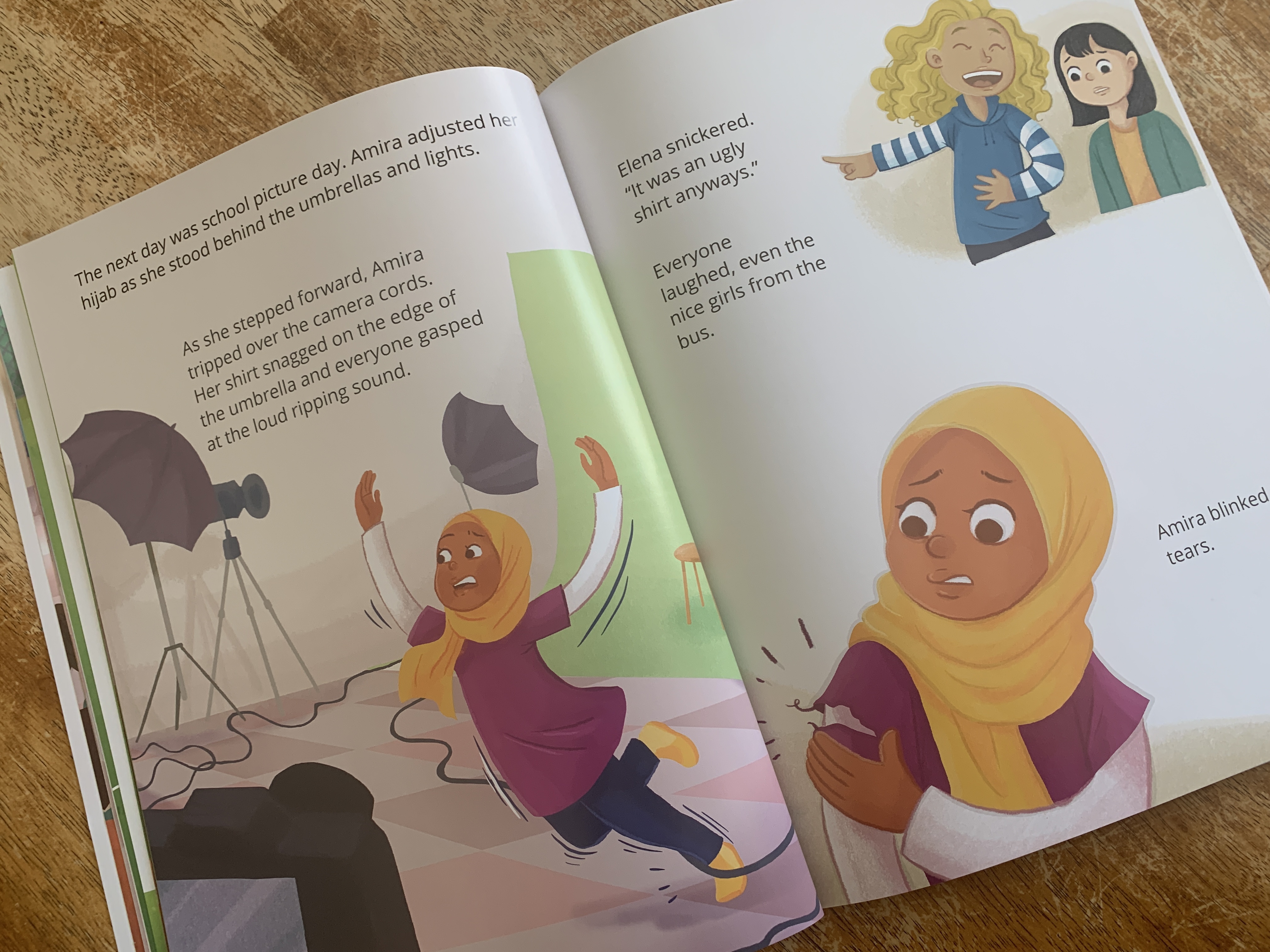
The next day is picture day, and Amira trips and rips her shirt.  Everyone laughs, Elena says, “it was an ugly shirt anyways.”  Only one person offers her help.  Could Amira have misread the whole class dynamics?  How should she move forward?

Sorry, I’m not going to spoil the ending, but the message about owning up to your choices is stressed, along with making kind decisions, and sometimes needing to take a step back and understand things from someone else’s perspective.

img_4684

Like nearly all Ruqaya’s Bookshelf books, the story is universal, but the characters, illustrations, and point of view is a relatable Muslim one that allows our young Muslim readers to feel seen and celebrated.  The reliable large glossy pages make the book a great deal for your money and is available on the publisher’s website: http://www.ruqayasbookshelf or from my favorite bookstore http://www.crescentmoonstore.com

img_4685

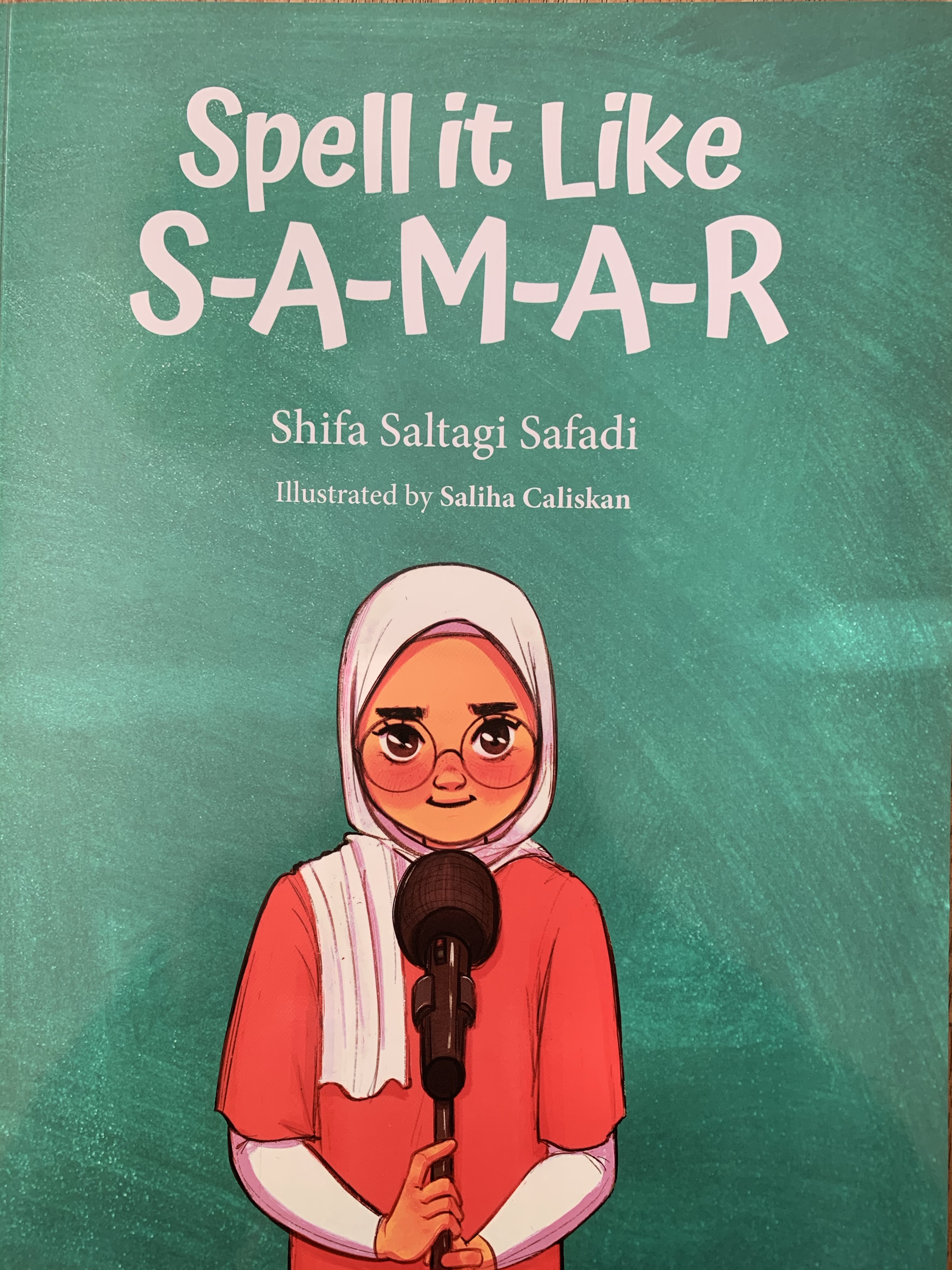
Spell it Like S-A-M-A-R by Shifa Saltagi Safadi illustrated by Saliha Caliskan

Standard
Spell it Like S-A-M-A-R by Shifa Saltagi Safadi illustrated by Saliha Caliskan

img_7225

This 36 page book for kindergarten and up shows the role perseverance, confidence, and believing in yourself can play in conquering bullies, carving out a space for yourself and finding success.  While the book is a little predictable on the surface, older kids will understand that by winning the spelling bee, Samar didn’t just benefit by standing up to the bully, but in proving to herself what she is capable of and ultimately being more confident of her place in a new country.  The book is presented on large 8.5 by 11 full color glossy pages and features discussion questions at the end.

img_7227

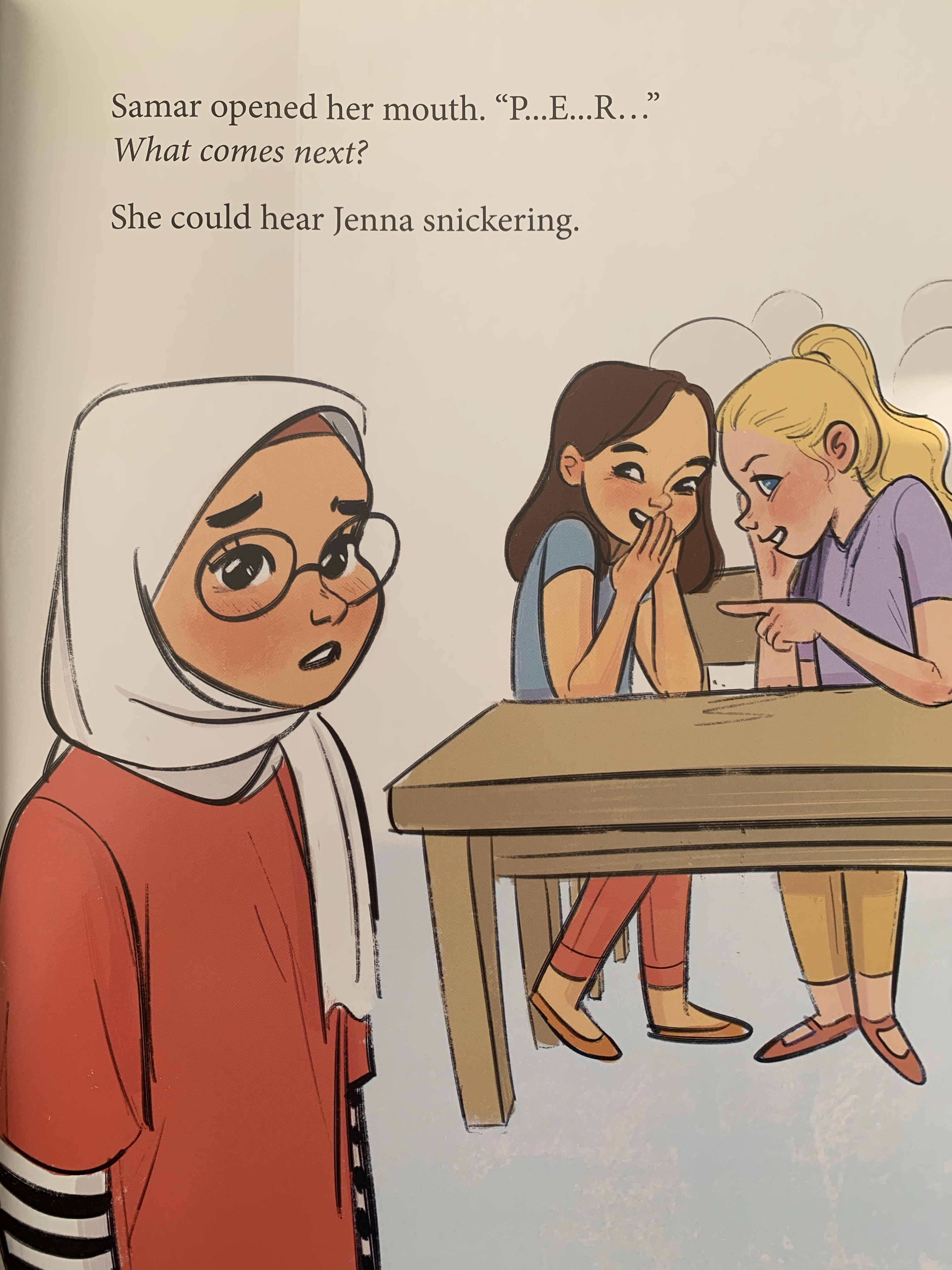
Samar is in 3rd grade after recently moving to America from Syria, where she was the best student in her class.  ESL wasn’t difficult, but mainstream class is proving to be a challenge, mostly because of Jenna, the class bully.

img_7228

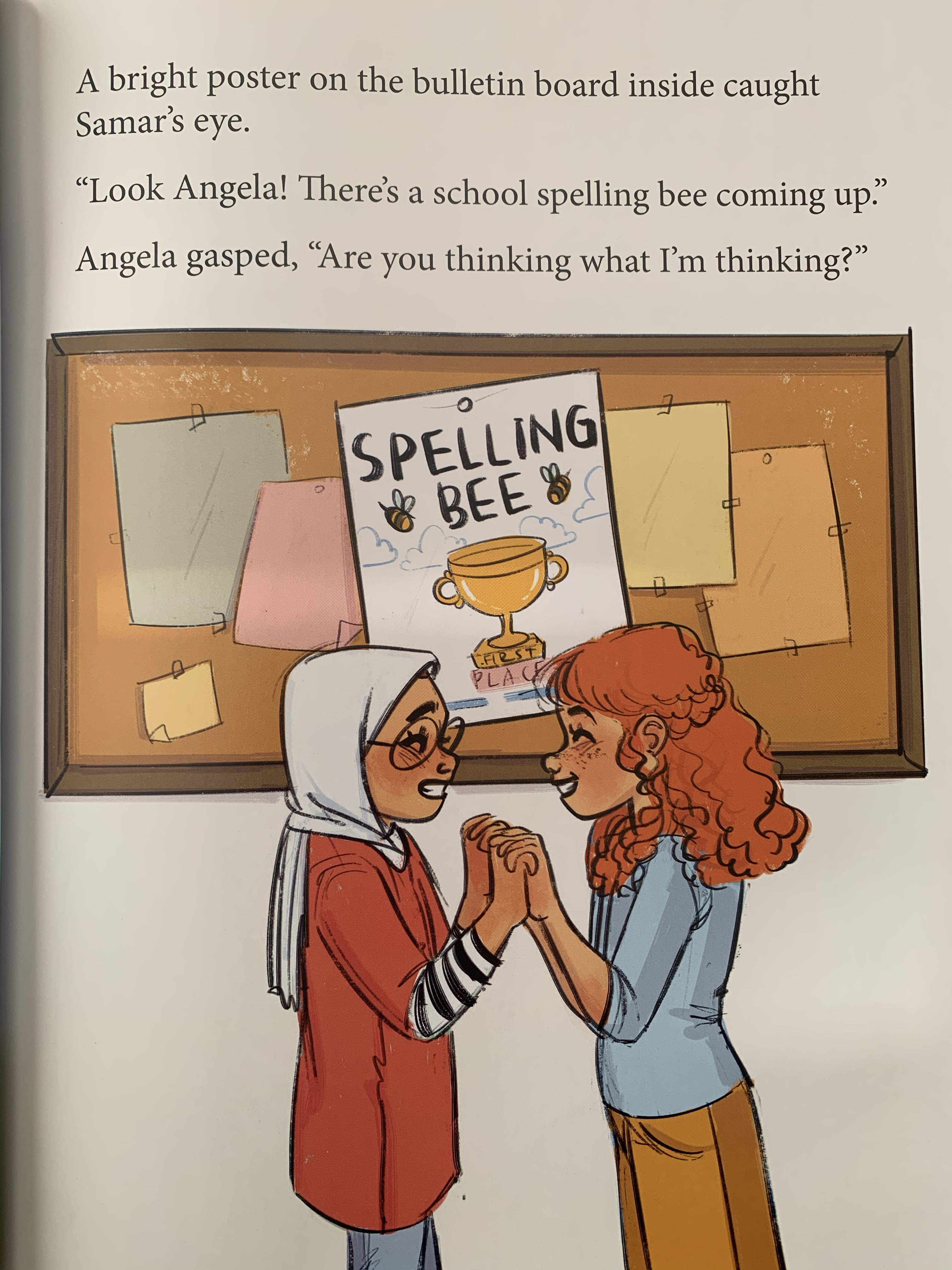
Jenna, snickers when it is Samar’s turn to spell words in front of the class, she teased her about her jump rope songs not being in English, and she makes fun of her for her accent.  With the help of a kind friend, Angela, the two girls decide the school spelling bee will be the best chance to prove how smart Samar is, by winning.

img_7229

The first step Samar must do is convince her teacher, Ms. Bryan to help her study.  To  show her commitment she offers to give up her recess to study.  The teacher agrees, but on the way home Jenna teases her saying she’ll never win when she can’t even speak English properly.  Deflated, when Samar gets home, she doesn’t study the flashcards and opts to watch cartoons instead.

img_7230

When later in the week her teacher quizzes her, Samar admits she didn’t study.  Ms. Bryan encourages her by sharing her own story of coming to America and having to learn English.  When Samar gets home she sees her mother, a former dentist in Syria, studying for the exams to be a dentist in America. This is the spark she needs and she studies hard, everywhere, and with anyone who will help.

On the day of the bee, Samar spells word after words correctly and after saying bismillah before spelling the final word, wins the competition and beats Jenna. The audience cheers and the next day Samar and Angela are jumping rope and Samar is singing in Arabic.

img_7231

I love that Samar and her mom wear hijab while out, but not at home, that they speaks Arabic, and Samar says bismillah.   Samar’s mom is clearly highly educated and determined and mom and dad are supportive.  I love that Samar’s drive, however, comes from her own determination, no one forces her or guilts her, it is her leading the way and understanding what her mother is going through and her teacher has gone through, and using that as inspiration.  I love that at the end she doesn’t rub it in Jenna’s face that she won, and the symbolism of Jenna just disappearing from the story makes this clear as Samar steps in to her own.  I truly love that for every Jenna in the wold there is also an Angela.  Be kind, be supportive, be a good friend!

I got this book from http://www.Ruqayasbookshelf.com and it can also be found at my favorite book store http://www.crescentmoonstore.com as well.  Happy Reading!