Tag Archives: reading

The Misadventures of Mina Mahmood: School Trip by Farhana Islam illustrated by Simran Diamond Singh

Standard
The Misadventures of Mina Mahmood: School Trip by Farhana Islam illustrated by Simran Diamond Singh

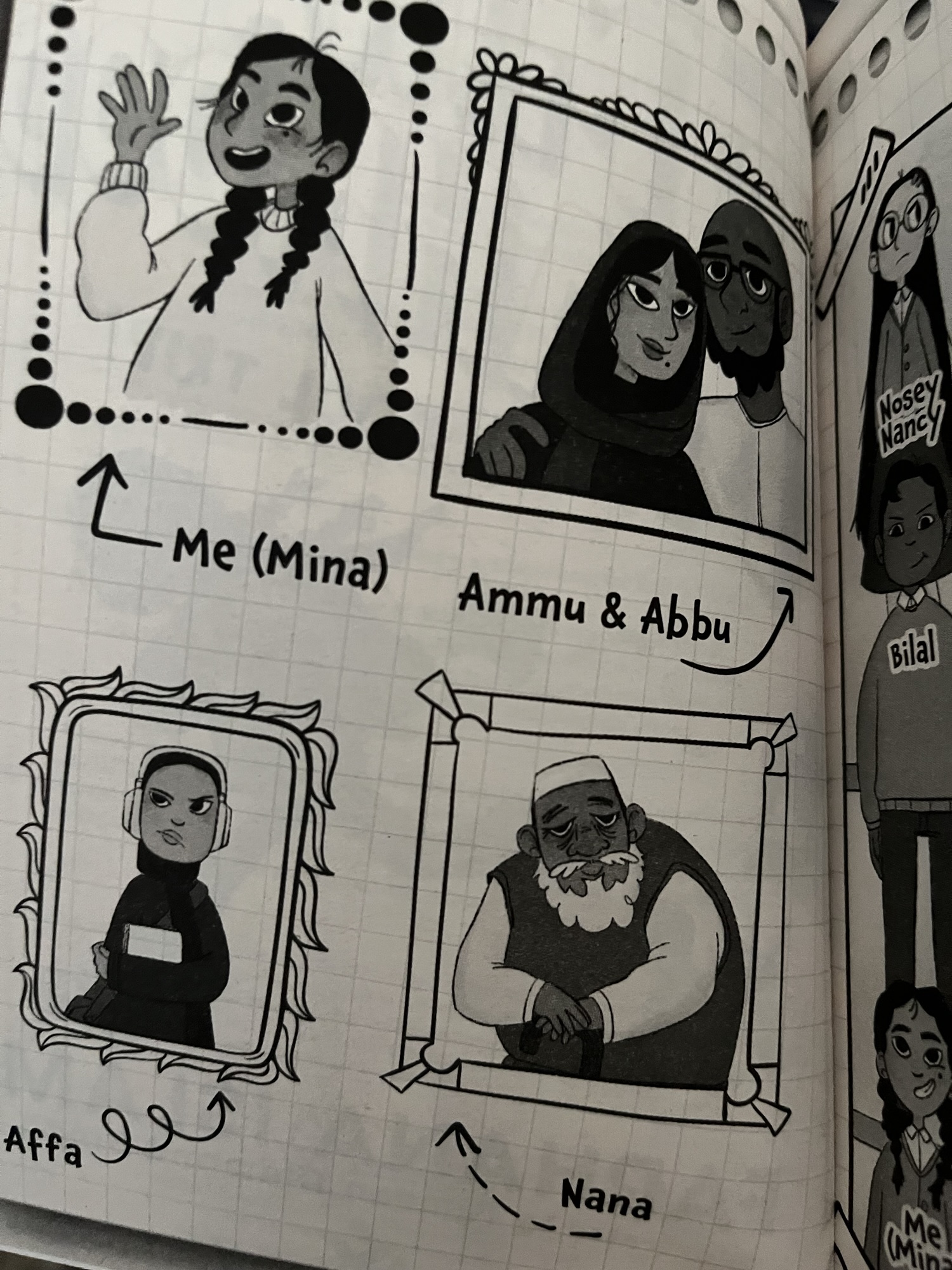
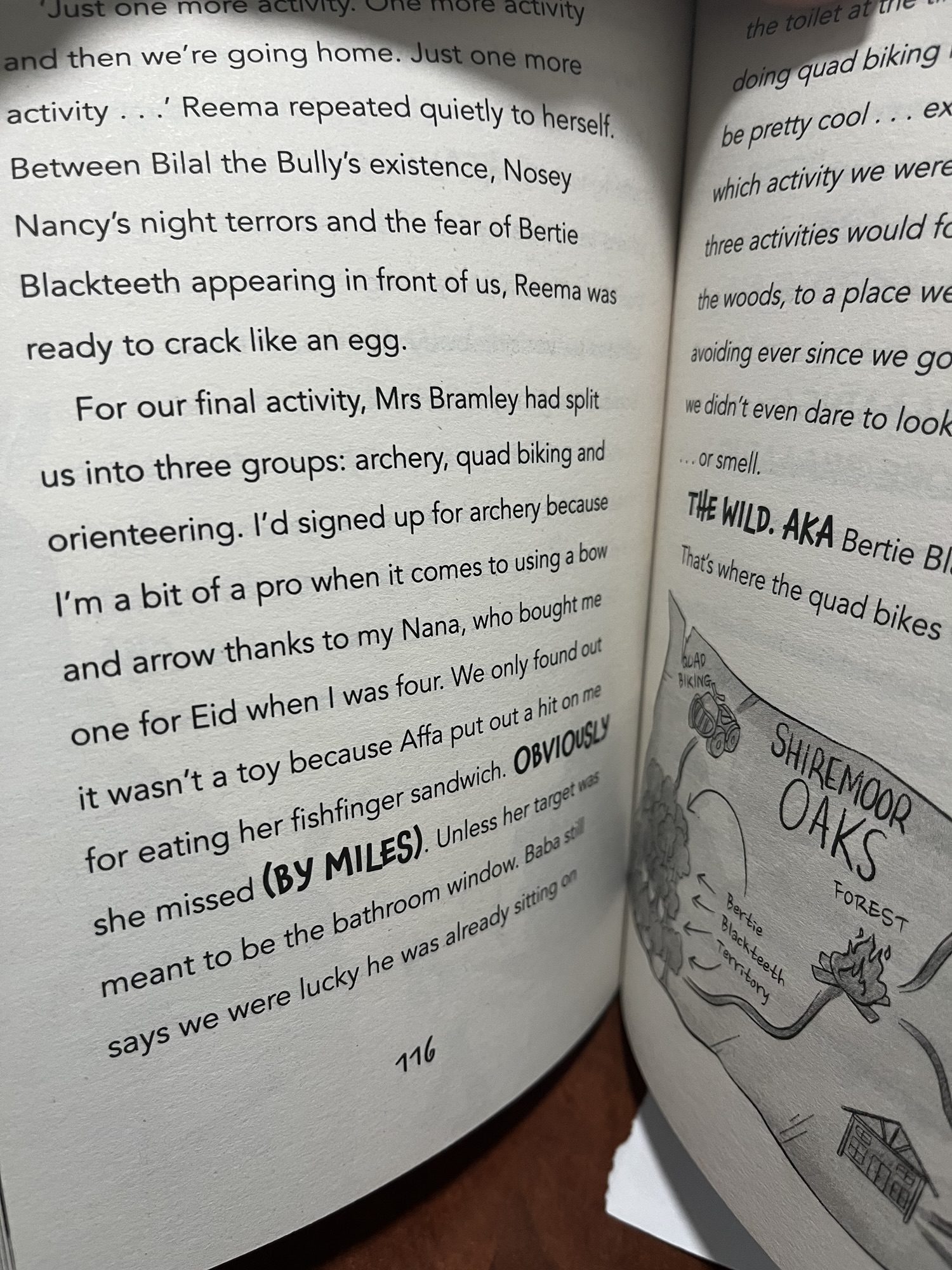
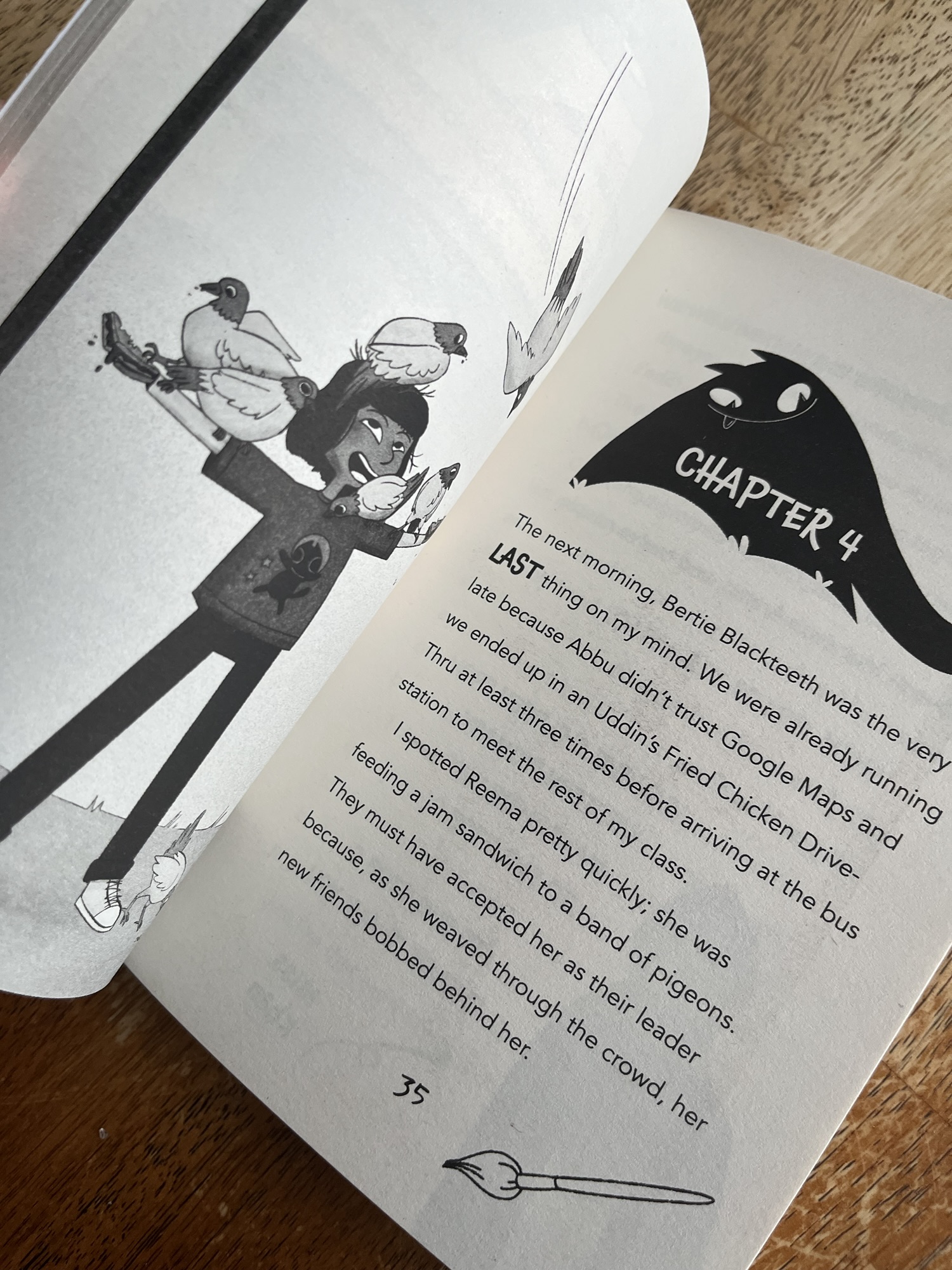
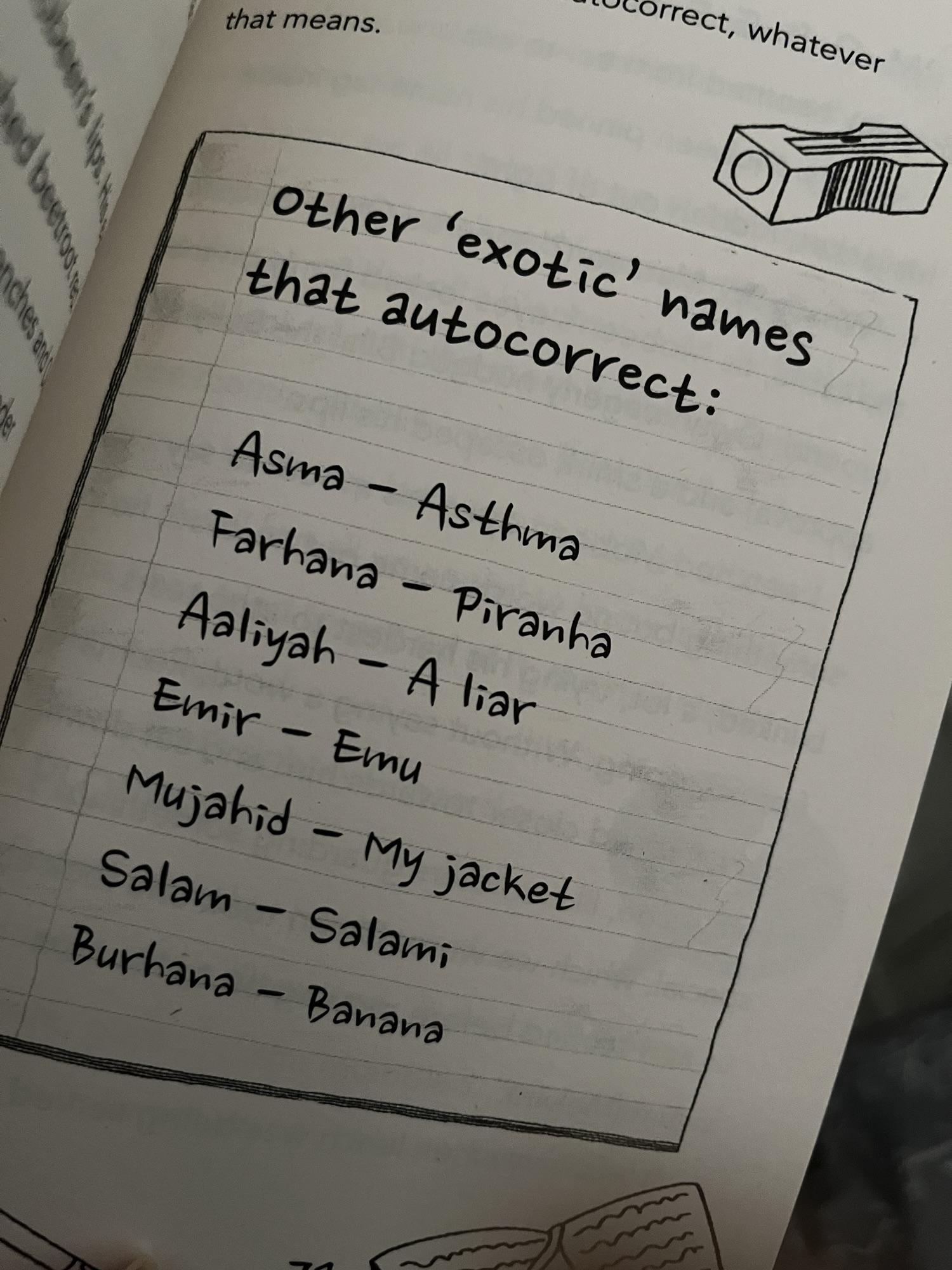
The illustrations in this book, by a Muslim author featuring Muslim characters, are impressively fun and complimentary to the story.  Yes, the 184 page book is highly illustrated.  The publisher says it is MG, and I can see that based on the length, but I think it is a solid second grade to fourth grade read.  The storyline is singular and surface level, and the scary silly bits are just meant to be funny and not taken too seriously.  I enjoyed the book, the normalizing of the Muslim kids in a non Muslim setting just living their life, and the main character’s voice had me smiling throughout.  A school camping trip is overshadowed by bullies and then consumed by the ever growing out of control scary story of Bertie Blackteeth.  An epic laser tag battle, quad adventures, and the comical banter of Mina and her friends, Mobeen and Reema, make for a light engaging read.  Sensitive kids might find the fright to be too much, but I think most will finish and be glad to learn there are more books to come in the series.
SYNOPSIS:

Mina Mahmood and her friends are ecstatic, it is finally their turn to head off on the annual camping trip to Shiremoor Oaks.  A weekend of laser tag, orienteering, archery, and quad biking without adults, well teachers, but no parents.  All Mina has to do before the fun begins is get through a family dinner with Auntie Selma and her cousins.  Mina doesn’t believe anything her cousin Abbas says, so when he mentions he went camping in school to Shiremoor Oaks and heard about a girl, Bertie Blackteeth who vanished there, Mina pays him no mind.  When her older sister Affa, also mentions that she heard the story, Mina starts to wonder if there could be some truth.  The next morning on the bus, when Bilal the Bully and his minions Owen and Brodie are also talking about Bertie Blackteeth and her need for a new body, Mina and the rest of the class are properly spooked. The fear hangs over all the activities, ruins the midnight snack extravaganza, and makes this a camping trip they will never forget.

WHY I LIKE IT:
I enjoy when Muslim kids drop mention of Eid and Ayatul Kursi in their adventures. When a character wears hijab, but she is the teacher, so the book isn’t about her identity, it is just a part of who she is.  I also really like when books are funny, characters are snarky, there is a plot, a climax and a resolution.  The book doesn’t have layers and heavy themes, sure you could discuss bullying, and fear and friendship.  At times Mina is tasked with saving Mobeen and other times advised to sacrifice him.  But considering he feels to young to be a father if the spider that just landed on him lays eggs in his eyebrows, it is probably best to just enjoy the story for what it is and not look to make it more.
FLAGS:
Could be a little scary, it is a little imaginative in the lies and embellishments of Bertie Blackteeth.  Bully and dealing with bullies.

TOOLS FOR LEADING THE DISCUSSION:
I handed it to my 10 year old and said enjoy, not much more than that is needed. A fun addition to elementary shelves, and one that will be picked up often.

Eliyas Explains: What was Prophet Muhammad (saw) Like? by Zanib Mian illustrated by Daniel Hills

Standard
Eliyas Explains: What was Prophet Muhammad (saw) Like? by Zanib Mian illustrated by Daniel Hills

Zanib Mian once again fills a void in the literary world for our children using her easy to read and relate to protagonist’s voice.  Over 149 pages, filled with illustrated doodles, details about our beloved Prophet Muhammad (saw) flow through the fictional framing of Eliyas and his family heading to the airport to pick up their Mamoo.  It starts with the standard introduction of characters that all Eliyas books have, so while it is part of the series it can be read as a standalone as well. But really if you have children 5-14, you should invest in the entire collection.  Also, as with the rest of the series, the book is checked by a Shaykh who is named at the beginning so that the reader can enjoy the Islamic details that are to follow. I know there is some debate about the cave and the spider, a story shared briefly within the pages, but I will leave it to those more knowledgeable to decide upon.  The book works well read aloud and independently, either way I’m confident children will enjoy the story, learn something new, and grow in their love of our Rasul Allah, alhumdulillah.

SYNOPSIS:

Eliyas’s dad’s uncle, Haroon Mamoo is coming for a visit, and while Mum wants to make sure they leave at a specific time to get to the airport, Dad isn’t stressed, he had a dream about Prophet Muhammad saw the night before and the kids want to hear all about it.  The story progresses weaving in things around them with Mum and Dad tying them to the sunnah.  From a fight at the airport, to a pigeon getting stuck, to Haroon Mamoo seeming to have gotten lost. The book is preachy, in the best way possible, as Eliyas and Aasiya banter, crack jokes, and learn along with the reader.

WHY I LIKE IT:

I love Eliyas’s voice and the weaving of a fictional story to convey the non fictional sunnahs that are truly the heart of the book.  The information presents in an easy way for children to hopefully remember it, and to also see how they should be behaving and acting in their own lives. The fun fonts, illustrations, and layout make it inviting to pick up and keep reading.

FLAGS;

None

TOOLS FOR LEADING THE DISCUSSION:
This book is not a journal, like some in the series are, but provides ample opportunity to discuss points on each page.  

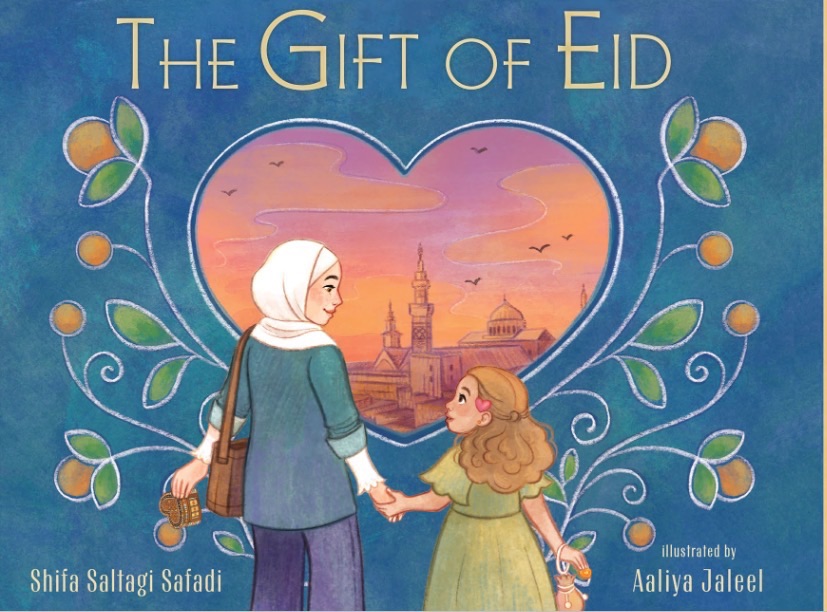
The Gift of Eid by Shifa Saltagi Safadi illustrayed by Aaliya Jaleel

Standard
The Gift of Eid by Shifa Saltagi Safadi illustrayed by Aaliya Jaleel

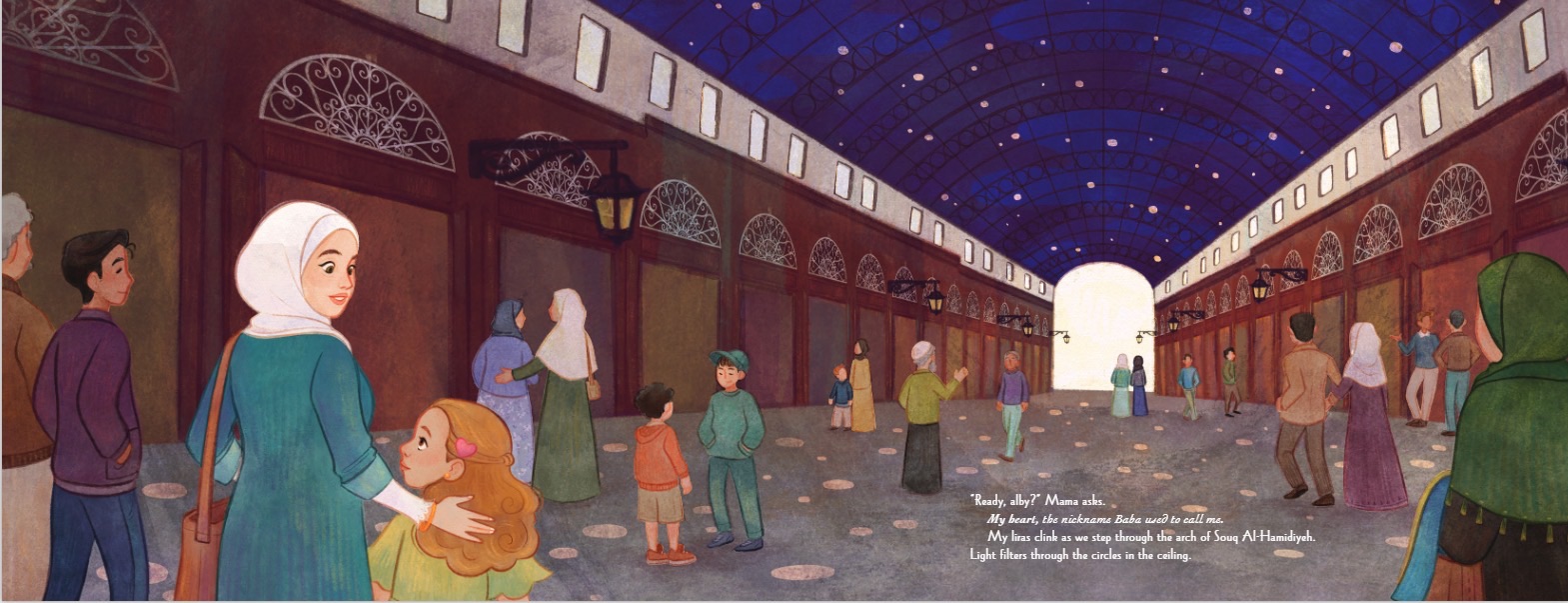
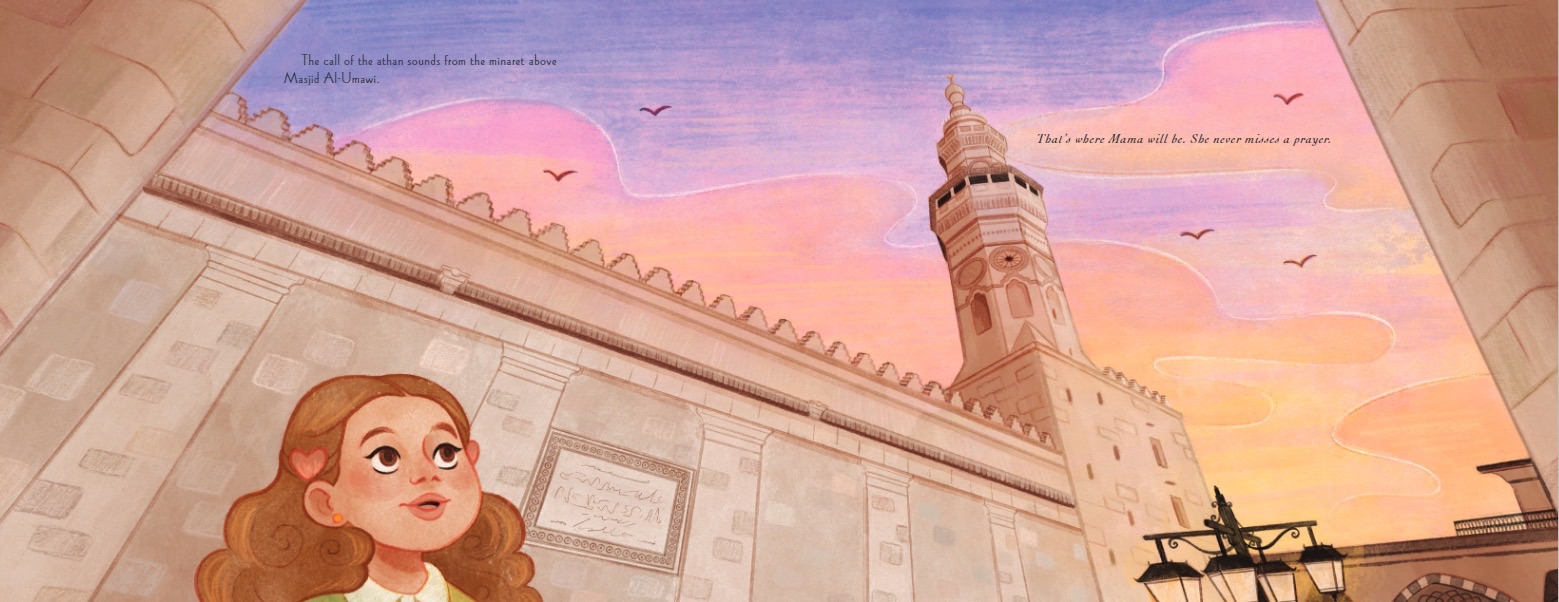
With heartfelt words and large two-page spread illustrations, this beautiful book shares a mother and daughter finding the perfect Eid gift for one another while bringing the reader into the Souq Al-Hamidiyeh, before sending them off to Masjid Al-Umawi for a warm hug.  A retelling of the classic, A Gift of the Magi, the story poignantly presents threads of love, gifts, loss, and Eid to fill the reader with joy, peace, and gratitude.  I’m admittedly very bias, as a close friend of the author, but this beautiful book doesn’t need lip service or marketing, it will appeal to all readers in all settings, and be cherished and asked for, over and over again, all throughout the year. Alhumdulillah.

The book starts with Yasmine and her mama entering the souq through the archway, and Yasmine remembering her father and her imagining the circles in the ceiling to be twinkling stars.  He is no longer with them, the magic is gone and money is tight now, but with liras jingling in her pocket, Yasmine is determined to find an Eid gift for her mother that will make her smile.

Yasmine looks around the shops as her mother counts out liras to buy za’atar, and tries to find something cheaper than sfeeha at the bakery.  She finally knows what to get her mother, but it is more lira than she has.  With determination and selflessness she makes a decision to get her mama the perfect gift.

The process separates the two, and when they reunite at the masjid for maghrib salat, it isn’t the gifts themselves, but rather what they mean, that make the laughter, tears, and love overflow.

I love the emotional depth the book conveys so deftly, never explaining or pulling the reader out of the story, thus allowing the connection to linger long after the book is closed, a rare treat in a picture book.

The Prophet;s Sunnah by Ayesha N. Rahmaan illustrated by Laila Ramadhani Ritonga

Standard
The Prophet;s Sunnah by Ayesha N. Rahmaan illustrated by Laila Ramadhani Ritonga

This joyful 20 page board book shows our littlest (and biggest) Muslims some of the Prophet’s sunnahs in a way that they can also do in their lives.  The adorable illustrations appeal to kids and the simple text showing the acts are relatable and engaging.  I did cringe at times with the changing size of the basic font and the perspective of some of the lines being told to the reader as “your” and others as “our,” but I’m a bit of a sucker for kid’s books about Rasulullah.  Some of the vocabulary might need some explaining, but overall my little ones enjoyed the book when I read it, and I have caught them looking through it on their own, so yes I’m aware that I’m over looking a few basics.

The book starts with a hadith on the dedication page and is then followed by an ayat in Arabic and English meaning of the translation about following Prophet Muhammad (saw) if you love Allah swt.  It  introduces Prophet Muahmmad saw to the little readers, not stressing the call to Prophethood and revelation, but him as a “neighbor, friend, father, husband, leader and teacher.” Starting with Bismillah, sharing, and helping, visiting the sick, being humble, some pages are filled with multiple images, and others a single scene.  Some have Arabic transliteration and one has Arabic script accompanying the English.

The illustrations show different sizes, colors, abilities.  Some of the girls wearing hijab, some not.  Readers are bound to find someone in the book that looks like them.  The binding quality and page thickness is well done and the 8.5 square size makes it great for story time or reading in small groups.

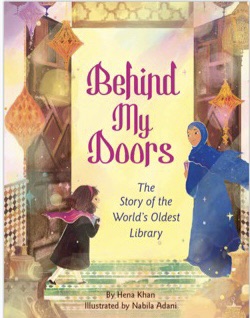
Behind My Doors: The Story of the World’s Oldest Library by Hena Khan illustrated by Nabila Adani

Standard
Behind My Doors: The Story of the World’s Oldest Library by Hena Khan illustrated by Nabila Adani

img_3557-1

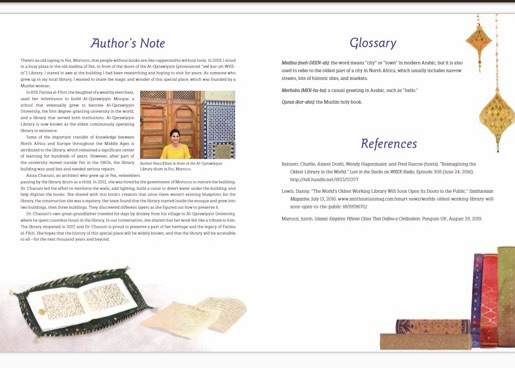
The world’s oldest library proudly stands in Fez, Morocco: started by a Muslim woman, restored by a Muslim woman, and in this 40 page book the library itself tells its own story in a book authored by a Muslim woman.  The personified library shares a few highlights from its early start as a corner in Fatima Al-Fihri’s masjid and university to collections spanning multiple buildings, from a bustling center of learning and knowledge to a place of disrepair and neglect.  Staying on an early elementary level, the informative author’s note and references make the book engaging for older readers as well, and an incredible addition to bookshelves everywhere.

img_3558-1

The book starts with the library introducing itself and welcoming the reader. “Merhaba! I am Al-Qarawiyyin Library–the oldest library in the world.” At over a thousand years old, the library begins at the hands of Fatima Al-Fihri in 859 who dared to dream big and created a space of learning and worship in Morocco.

img_3559-1

As the courtyards and collections grew, seekers of knowledge, from all backgrounds, gathered to discuss, debate, and learn.  Special rooms with special locks kept books safe: a Quran written on camel-leather, a philosophers drawings in gold ink.

img_3561-1

Nearly destroyed once by a fire, the library endured, but over time the rooms were no longer filled with the bustle of people.  One day a small girl, Aziza, paused at the door, but did not enter for many years.  When she did return, she came as an architect with a team to restore the library and invite people back in to read, learn, and dream.

img_3565-1

It delights me that such an important story is available to be widely learned from and appreciated.  You can preorder a copy here from Amazon.

img_3566-1

Razia’s Ray of Hope: One Girl’s dream of an Education by Elizabeth Suneby illustrated by Suana Verelst

Standard
Razia’s Ray of Hope: One Girl’s dream of an Education by Elizabeth Suneby illustrated by Suana Verelst

razia

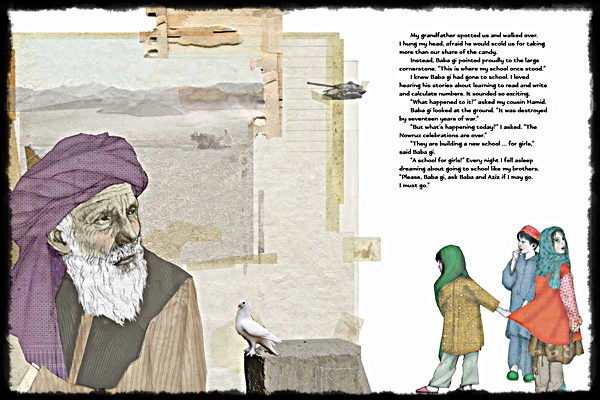
I usually love books about girls, and education and hope, but for some reason, I didn’t love this book.  I really like the pictures with their mixed media feel and textures, but I found small things annoying in the book, that based on other online reviews really put me in the tiny minority.  Most people seem to drool over this 32 page AR 4.1 picture book, I, however, think there are a lot of inspiring books about girls in Afghanistan dreaming of an education that one needs to do something different, and do it well to win me over.

So the basic premise, in this text heavy, tiny font, book, is that Razia learns they are building a new school close to her home in Afghanistan for girls, and wants to go.  Her grandfather also wants her to go, but one of her older brothers, Aziz, won’t allow it, so she isn’t allowed to go.  No historical lead up explaining why her grandfather talks about days when women were educated, and now it is a rarity.  No summation on the Taliban or the 17 years of war that the grandfather mentions.  So, unless the reader knows some background on Afghanistan, the story may not resonate with them or provide needed context for connection and appreciation.  Even the afterward, about the real founder of the school, offers very little context.  The brother’s decision is final until one day he falls ill and can’t read the medication directions, and Razia can, eventually he relents and she is allowed to go. The story hints that the rocks around the school are from the quarry he works at so he now feels confident she will be safe, and that his initial refusal was a concern for safety.  They hug and seem loving, and once school starts Razia has to learn as much as she can to be able to go home and teach Aziz and her mom.

razia1

I like that when she initially is told no, she doesn’t sit and assume a helpless manner, but rather goes to the school and meets the founder herself.  I find it odd, and irksome that the head of the school is also named Razia and it isn’t even noted. I get that is her real name, but why have the two main characters in a book have the same name and then not even acknowledge it? I didn’t get why the little girl couldn’t have a different name, seems distracting to me, and imply that every girl has the same name in Afghanistan.  I also didn’t get the hierarchy. The grandfather wants her to go, the father and uncles have legit concerns of where she is needed in helping the family farm and orchard, but why did the brother’s opinion trump them all? There is no mention of Islam, but they wear hijabs and burkas, so I think the stereotype is implied.  And that was another thing, they made it seem like she would be corrupted if she went out alone or without the burka on, but then Aziz shakes the headmistress’s hand, as if that isn’t against religious and custom norms. I felt that the kindness of the brother at the end was disjointed too, a bit too forced. The grandpa seemed kind, but the rest of the family seemed cold and rigid and not overtly concerned with Razia’s well being and growth.  Yes, they did have a jerga, to discuss and consider it, but I felt like Razia never had a voice, and while education is important, having a voice is too.  More has to change in society and in literature to give me real hope, and this book sadly fell short.

razia2