Tag Archives: race

Sister Friend by Jamilah Thompkins-Bigelow illustrated by Shahrzad Maydani

Standard
Sister Friend by Jamilah Thompkins-Bigelow illustrated by Shahrzad Maydani

img_3521-1

After years of teaching, librarian-ing, and mothering, my reviewers are for adults, but with kids in mind. I read in different environments and try and balance what children will think with my more critical literary impressions. But honestly, my first reaction when I see Jamilah Thompkins-Bigelow has a new book out, is not about the children, or their parents, it is incredibly selfish, and I want to read the picture book for me.  It has been about a year since I first read my all time favorite, Salat in Secret, and I still feel all the feels, every time I read the book. I even enjoy handing the book to people and watching them read it for the first time.  So, I was both excited, and nervous to read this new book, not knowing if it would measure up to my expectations or rather hopes, so to speak.  I needn’t have worried, subhanAllah, this book in it’s own right is moving, heartfelt, layered, powerful, hopeful, relatable, tender, and while staying on a kindergarten to second grade level is also unapologetic with its centering of Islam, race, and feeling invisible, being new, and making a friend.  The illustrations and words blend beautifully, and by the second page of the 40 page book, I was already emotionally attached to the little protagonist Ameena.  Good writing is good writing, and as a result this beautiful book works for all ages and will be appreciated on multiple layers even after dozens of readings, alhumdulillah.

img_3522-1

The book begins with Ameena playing a game by herself.  She always plays by herself at school, where she tends to be invisible.  Maybe it is her hair in twists or her brownness, she doesn’t know.  One day a new girl comes, her name is Sundus, she wears hijab like Ameena wears to the masjid.

All day Ameena tries to talk to Sundus, but something always seems to keep them apart.  When they finally meet,  Ameena’s excited words get all tangled, and a misunderstanding occurs.  Ameena decides the next day to transform into a rockstar: red-orange hijab and matching boots. The other kids say she is copying the new girl.  Sundus doesn’t say anything.

img_3523-1

Ameena disappears again at school, but family night at the masjid is her happy place.  Where she doesn’t play alone, and there are lots of browns, and she is seen.  When Mama meets a new sister, and greets her with Assalamu Alaikum, Ameena sees how a greeting and a hug can be the start of sisterhood and friendship. And the next time Sundus and Ameena meet, they know just what to say.

img_3525-1

The joy at the end forces you to smile, just as Ameena playing alone at the beginning tugs at your heart.  It is a great book to see yourself and see others in a beautiful, authentic way.  The universal themes of not being seen, making a friend, and being the new kid, are woven in just as hijab, masjid and Assalamu Alaikum are, making the book powerful for Muslim and non Muslims alike.

img_3524-1

I particularly love that their is no glossary, and that the text uses the word masjid not mosque, hijab not scarf and Assalamu Alaikum not salam.  That the masjid is her safe place to laugh and play, and that this book is mainstream published and will find its way to public spaces and be widely accessible.

You can preorder your copy here on Amazon.

Muhammad Ali and Malcolm X: The Fatal Friendship by Randy Roberts and Johnny Smith adapted by Margeaux Weston (A Young Readers Adaptation of Blood Brothers)

Standard
Muhammad Ali and Malcolm X: The Fatal Friendship by Randy Roberts and Johnny Smith adapted by Margeaux Weston (A Young Readers Adaptation of Blood Brothers)

bloodbrothers

A lot of us Muslims name drop Muhammad Ali and Malcolm X in discussions about civil rights quite often, and at least, speaking for myself, I thought I had the general idea about the relationship between these two iconic figures. I have read a fair amount of books in my quest to identify books that show how Islam shaped the men as opposed to those that tend to gloss over their eventual conversion to Sunni Islam, but I read this book as if it were fiction and I didn’t know what was going to happen next.  I have not read the original Blood Brothers, but this young readers adaptation is well done in conveying the politics, environment, struggles, and humanity of these two men.  Their flaws and growth, their tests, their friendship, it really is a compelling read. The focus on their friendship puts Nation of Islam as the focus, but the book does a good job of identifying it as being different than Islam.  As their friendship falters, Malcolm X goes for Hajj and is seen to change, and choices made by Cassius Clay show the men quite distant at the time of el-Hajj Malik el-Shabazz’s assassination, even though eventually their paths proved quite similar. The 240 page book is MG, but I think middle school readers (in classrooms, book clubs, and on their own) will better appreciate the intersection of these two giants, the events of their time, and the legacy they have left for us all.

SYNOPSIS:

The book is a snapshot in time, sometimes focusing on Malcolm X, sometimes on Cassius Clay, sometimes of their time together.  It starts with background insight and then shares the rise of both of them in their respective worlds, Nation of Islam and boxing.  Threaded through it all is the influence that Elijah Muhammad had on them, and key events they experienced that shaped their thoughts and opinions on race relations, politics, religion, and life.  It shows Malcolm X as the teacher, and leader taking in Clay and believing in him against the Nation’s wishes and thus when Muhammad Ali pushes him away the reader sees the Champ in a different light.  It shows deception and manipulation, as deep and riveting as the best fiction out there, but is very vulnerable in showing regret and both individuals’ ability to keep learning and growing.  The conclusion highlighting Muhammad Ali reaching out to Malcolm X’s daughter Attallah, and the forgiveness that took place in restoring the love between the two men and their families, really was a cathartic release that reminds readers that for as idolized as these two figures are in pop culture and history, they were very real people.  The book has a Biography at the end that breaks down sources by Government Documents, Archival Collections, Newspapers, Magazine Articles, Books, and Websites.  It is a “Selected Biography” that is seven pages long.

FLAGS:

Racism, manipulation, assassination, hate crimes, stereotypes, propaganda, oppressions, abuse, police brutality, assault, bombing, arson, attempted murder, fear, threats, killing.

TOOLS FOR LEADING THE DISCUSSION:

I have preordered a book for my own children to read and one for the school, I really think this book needs to be easily accessible for middle school students in libraries, classrooms, and homes.  I would love to do this as a middle school book club, I think the authentic perspective will give our youth who have heard of Malcolm X and think they know Muhammad Ali some insight into really spending time with what they did, what they faced, and how remarkable their friendship was.

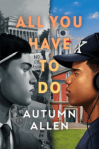
All You Have To Do by Autumn Allen

Standard
All You Have To Do by Autumn Allen

all you have

This historical fiction YA book was hard to put down.  While being invested in the characters and learning about the historical climate from an intimate account, I could feel my mind growing and my understanding deepening. The phenomenal writing quality, and the connection between the two fictional characters from two different times rooted in reality, allowed this thought provoking book to burrow into my mind, and makes me suggest it to high school English teachers to read with their students for a novel study.  Add in that the author is Muslim and that there is inclusion of side Muslim characters, makes me really really love this 432 page book.

SYNOPSIS:

Told from two perspectives: Gibran is a high school senior in 1995 at a prestigious New England, majority white prep school.  Being aware of the efforts his mother has made for him to have the opportunities he does, the incredibly bright boy isn’t content to sit back and let injustices go unchecked.  As he understands his position in his school, and perhaps in the world, he pushes to change how the system views him and on the cusp of the Million Man March he starts to get restless when others don’t support his efforts.

Kevin is at Columbia University in New York City in the wake of the Martin Luther King, Jr.’s assassination.  While the country pays service to the civil rights leader Kevin is witnessing the injustices at Columbia, and begins to question what his enrollment at the institution means and the hypocrisy it supports.  He also reflects back on choices his own family has made and what he would like his future to look like when opportunities to protest arise.

Kevin is Gibran’s uncle and their parallels show how little has changed in America.  The fears of the family, the institutionalized racism, the helplessness of a broken system.  The desire for two young men coming of age to decide for themselves where they belong, who they are, and what they are capable of in a world that wants to take that freedom away from them.

WHY I LIKE IT:

The power of this book is incredible, truly.  I really don’t have words.  I do have words about the side Muslim characters though.  Gibran’s sister is a hijab wearing convert and is respected and accepted by the family.  Kevin’s cousin and activist is also a convert and a powerful influence on the main character.  There are mentions of Muslims praying, and salams are given.  The book was beneficial to read, the Muslim characters and knowing that the author is Muslim, and reading the phrase, “In the Name of God the Most Gracious, the Most Merciful” before the dedication was just extra amplification of voices that this story brought to light.

FLAGS:

Racism, violence, police violence, incarceration, hatred, drugs, alcohol, sneaking out, partying, lying, stealing, segregation, oppression, language.  The reality of the situations discussed is not PG, but the book does not sensationalize anything for the sake of shock, it is rooted in reality and a YA audience will grasp that.

TOOLS FOR LEADING THE DISCUSSION:

Teachers, librarians, parents, teens: read this book.  Think about what you are reading, discuss what happened, what you understand, and how it makes you feel.  Preorder/order here

Stand Up and Speak Out Against Racism by Yassmin Abdel-Magied illustrated by Aleesha Nandhra 

Standard
Stand Up and Speak Out Against Racism by Yassmin Abdel-Magied illustrated by Aleesha Nandhra 

stand

The very first page of this practical Muslim authored, visible Muslim featured, how-to book draws you in with the author’s conversational tone and approach.  She presents life as being a mountain we all are born to climb and articulates that we are all given different tools to do so.  The book sets out to understand how race and racism affect the climb, how we can make it more fair, and uses questions from kids in the UK as the general organization of the 128 page book for middle grade readers and up.  As a Black Sudanese born, Australian raised, immigrant London woman who speaks Arabic, is Muslim, has authored five books, is an engineer and social justice advocate, she acknowledges privilege, and injects plenty of InshaAllahs, Alhumdulillahs, and global perspective to racism, its history, and what we can do to stand up and speak out about it.  I do wish the book was sourced, but the first person perspective, and her own intersectional identities, carry confidence and OWN voice power in making the world a better place for all.

SYNOPSIS:
The book starts with a section about how racism started, then moves into what racism looks like today and how it shows up and affects us all.  It then concludes with a focus on the action of standing up and speaking up.  The book spends time reassuring the reader that the contents might create strong emotions and to breathe acknowledge your feelings and find a safe way to express them. Chapter 6 discusses religions, even though the book is about race and says it does so because it is the same social construct of grouping a very diverse group together because of something “other” that they share.  It spends time on anti-Semitism, and Islamophobia.  The book doesn’t have to be read cover to cover, it can be read in sections, in any order, there is also a glossary and index at the back to find particular topics to look at.

WHY I LIKE IT:
As an American, I love that the book is global in focus and shows the effects of colonization and attitudes, and thus realities.  I also like that it takes time to discuss internalized racism, as well as interpersonal, institutionalized, and systemic.  Pointing out schools and how many of your teachers or principals look like you, really drives the points home.  I love that there is a whole page on hijab and truly that you see the author regularly bringing in Islam to the conversation which is great.  The action steps of what to do if you see racism, what to do if it is aimed at you, are well presented in metaphors that are easy for kids to see why the course of action suggested is doable, logical, and important.  It doesn’t shy away from acknowledging that pushing back on racism escalates the situation, and encourages individuals to be safe and do what they can. There are pull-out boxes, comic strip scenarios, bolded and bulleted text, and colorful engaging illustrations and infographics that connect with 9 year old and up readers independently or in small groups.

FLAGS:

The book discusses an emotional topic, but I don’t think there are any particular flags to be noted for 4th grade and up  There are important conversations to be had based on what is shared, but nothing is overly graphic or sensationalized.

TOOLS FOR LEADING THE DISCUSSION:

I think this book would be great to share with students regularly and often.  It should be on library and classroom shelves and should be used in small groups, large groups, and one-on-one.  The variety of methods that the information are conveyed make a useful tool when concerns arise, and a great reflective piece to encourage children to think deep, better themselves, and be aware at all times about the privilege and effects of their thoughts and actions.

Available for preorder on Kindle here https://amzn.to/3PH98u2

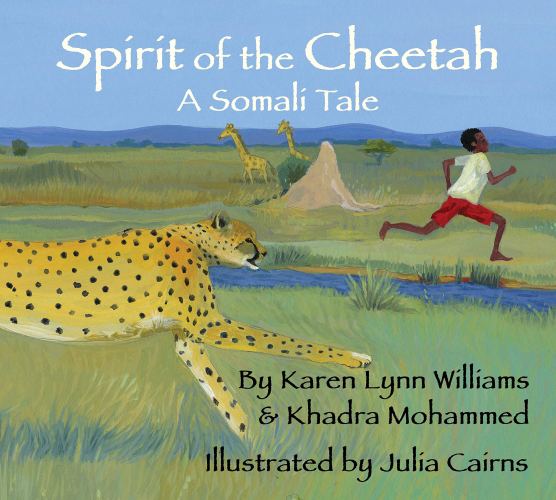
Spirit of the Cheetah: A Somali Tale by Karen Lynn Williams & Khadra Mohammed illustrated by Julia Cairns

Standard
Spirit of the Cheetah: A Somali Tale by Karen Lynn Williams & Khadra Mohammed illustrated by Julia Cairns

cheetah

This timeless 40 page tale of a young boy as he prepares for his right of passage into adulthood is rich with wisdom, culture, and tradition.  So many gentle lessons can be found in the book, as it leaves deeper understanding and connection to be felt and explored long after the book has been closed and returned to the shelf.  There are seemingly hijab wearing #muslimsintheillustrations, and the author’s name would suggest she is also a Muslim, but with the line, “Called on the spirit of Shabelle,” and talk of the “Spirit of the cheetah,” it is hard to know for sure if the main character is.

The story starts with Roblay running everywhere in preparation for an upcoming race where he hopes to place in the top three, and prove he is a man and no longer a boy.  On the day of the race he races his fastest, but he does not come out at the top.

img_6579

His grandfather, his Awoowo, tells him that to be successful he needs to capture the spirit of their people and leave his thumbprint on a cheetah’s coat.  His grandfather then tells him about the cheetahs long ago and how the river is named after them.  He explains that thumbprints on a cheetah’s fur honor those that have proven themselves.

Roblay trains and searches for many days.  He wonders if it is enough to mark a cub.  But his grandfather asks him if he wants to remain a cub.  This motivates Roblay to work harder.  When a year has passed and the race is about to take place again, he finally touches his cheetah.

img_6580

He lines up for the race strong, proud and sleek, and he has the chance again to prove he is a man and make his family proud.  Nope, not going to tell you how it ends.

img_6583-2

The book starts with an Author’s notes from both authors and concludes with Notes on the Cheetah.

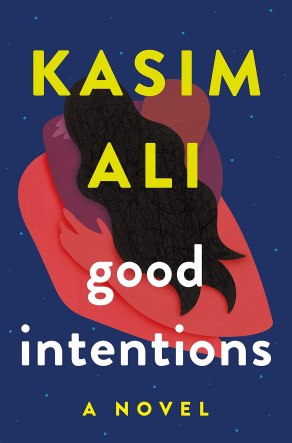
Good Intentions by Kasim Ali

Standard
Good Intentions by Kasim Ali

good intentions

There is a reason that I read juvenile fiction: from board books to YA, but lately the “New Adult” category has really been tempting me.  Muslamic romance novels, often really need the protagonist to be looking to get married to make the plot work with some authenticity,  which means the main character usually needs to be a bit older than in their teens.  I decided to start my tiptoeing into the genre with this book, because I was intrigued at the racial and mental health themes that the blurb teased.  Sadly after reading the 288 page story, I still was waiting for more racial and mental health insight or enlightenment or perspective or deeper appreciation or anything really.  I kept reading hoping for more character growth, and to find out if the relationship worked.  I understand after finishing, that the book was intentionally more subtle and nuanced, and part of me appreciates it, but I still felt the book ultimately provided too little in either regard for me to feel satisfied or content that I had spent time with the characters.  The abruptness and harshness of the first few chapters, seemed disjointed from the dialogue filled introspective remainder of the book that showed so much potential, but left me feeling strung along for no real purpose.  The book covers mature themes of sexuality, drug use, racism, co-habitation, relationships, culture, mental health, and more.  The characters’ identify as Muslim, but aside from Eid prayers, iftar, and mentioning once that they should pray more, there is nothing religious practiced, mentioned, or contained in the story.

SYNOPSIS:

Told in a variety of timelines that all follow the relationship of Nur and Yasmina, the story begins with Nur finally after four years getting up the nerve to tell his desi parents that he has a Black girlfriend, and wants to marry her.  He leaves out that they have been living together for years, and the book then flips back to how they met and bounces around filling in the gaps that bring them back to the big reveal.

While in college, Nur had just broken up with Saara, but still goes to her fairly regular house parties.  At one such party he meets Yasmina, as a small group at the party sneak off to smoke pot, and he is immediately crushing.  His hungover broken-hearted gay friend Imran calls him out on it immediately, and his roommate Rahat chastises him for going to his ex’s parties.  Nearly all the main characters are met early on, and the rest of the book focuses on Nur and Yasmina growing closer through college, after school, through their early years of jobs and grad school, and the overshadowing of the fact that Nur has yet to tell his family about Yasmina, while Yasmina’s family is fully aware and fully supportive that they are living together.

All the characters are Muslim, but practice is pretty minimally detailed.  Yasmina tells Nur at their first meeting that she wishes she prayed more, and later it is mentioned that her parents were raised strict so they have raised their own children less so.  It is possible that Nur’s mom wears a scarf, but not clear either way, and they don’t seem to be bothered that she is living with her boyfriend.  Nur on one of his visits home goes for Eid prayers with his father, his mother and sister do not go, and it mentions that they are fasting.  Rahat does not find dating is for him, and wants to have a traditional arranged marriage, but it does not disclose if this is because of religious or cultural views.  Imran discusses his family praying and that he had to square away his sexuality with Allah swt more or less.

Nur and Yasmina’s younger sister have mental health afflictions.  Nur has anxiety attacks, and Hawa severe depression.  It does not label or identify or diagnose, this is my assumption, it does detail their experiences though, and how they affect those around them.

WHY I LIKE IT:

I actually enjoyed the writing style and the ease in which it flowed-save the beginning of the book. The beginning was a little crass, almost like the author was trying too hard to get the characters’ environment to read that they were in college.  The crude talking about sex and them talking about their parents’ intimacy and smoking and drinking and being vulgar, was in such contrast to the very subtle nuanced rest of the book that tried to show the layers of Nur and Yasmina’s relationships and lives.  Once I got through it, I genuinely wanted to know if they could make the relationship work.  No I’m not going to spoil it, but that really is why I kept reading.

I was disappointed that the book didn’t draw mental health out in the open.   I also wanted some religious based push back on racism.  It is a big thing in our communities and the book really could have had the characters argue it and make their points, right or wrong, for the disconnect between faith and culture.  It didn’t have to be preachy, or even mean that anyone changed their opinions, but it mentions numerous times, something to the effect of Nur’s parents being racist, but doesn’t detail why that is the suffocating presence in disclosing his relationship.  In four years I would imagine the opportunity to correct his parents way of thinking would have arisen, and he could have challenged it.  I get that might negate Yasmina’s point that Nur is racist, but I think it should have been made more clear then that he didn’t speak up when opportunities presented, otherwise it just seems unexplored and we, the reader, are expected to just accept the characters on face value, when the book really very easily could have nudged us, to self reflect and look inward.

FLAGS:

There is sex, and drugs, and lying, and racism, and all the other flags that adult books often have.  There is one “steamy scene” between Nur and Yasmina, but the rest of the relationship is very mild.  Nothing else is graphic in detailing their day-to-day living, or the day-to-day relationships of the other characters in the book: gay or straight.

TOOLS FOR LEADING THE DISCUSSION:

No. Would never, could never encourage unmarried Muslims living together, fictionally or otherwise.

The Awakening of Malcolm X: A Novel by Ilyasah Shabazz and Tiffany D. Jackson

Standard
The Awakening of Malcolm X: A Novel by Ilyasah Shabazz and Tiffany D. Jackson

img_8312This historical fiction piece about Malcolm X follows him through incarceration with flashbacks to his childhood and teenage years.  Written by his daughter it is hard to know where this 336 page book is factual and where it takes artistic freedom with filling in the blanks. A few creative liberties are mentioned in the author’s note at the end, but some sources in the back would help clarify, as she was a toddler when her father was killed. The time frame of Malcolm X’s life and a large portion of the book covers his introduction and conversion to The Nation of Islam, but it never mentions even in the timeline at the end that he left it, or that they were responsible for his assassination.  The book is beautiful and heartbreaking at the same time, it is also so very humbling and empowering. I just don’t know that younger middle school readers (the stated intended audience is 12-18), will really grasp the content, his condition, and his searching, while trying to keep all the characters, time frame references, and slang straight.  With the mention of his girlfriend who he is/was sleeping with, as well as the drugs, the alcohol, and the abuses occurring in prison, older teens might be able to handle the book better, and be tempted after to dig deeper to learn about him going for Hajj, becoming Sunni, changing some of his views, and ultimately being gunned down in front of his family.

SYNOPSIS:

Malcolm Little is living between Roxbury and Harlem and going by the nickname Detroit Red.  When the story opens, Malcolm and his friend Shorty are about to tried for stealing a watch, a crime that he acknowledges he committed, but undoubtedly doesn’t deserve 8-10  years in prison for at age 20.  Nearly every chapter starts with a flashback to an earlier time and then concludes with the atrocities of prison life at hand.  As the narrative flips back and forth Malcolm’s story and awakening emerges.

Born in Omaha the Little family’s home is burned down by the Ku Klux Klan, they move a few times as the growing family grows closer together and establish themselves as followers of Marcus Garvey in advocating for Blacks.  Malcolm’s preacher father is killed when Malcolm is six years old and his mother institutionalized when he is 13, for refusing to feed her children pork amongst other things, and thus leaving the family grasping as they know she isn’t crazy, yet cannot get her released.  Malcolm is incredibly bright and attends a nearly all white prep school, but even after being class president, a teacher discourages him from pursuing his dreams of being a lawyer, and Malcolm drops out of school and ends up being a hustler.  His white girlfriend, a married woman in Boston and her friends convince him to rob some wealthy white neighborhoods and when he later takes a stolen watch to be fixed he is arrested and found guilty of grand larceny, breaking and entering, possession and more.  He is sentenced to Charlestown State Prison and day-to-day life is rough.

The guards at the overcrowded prison are aggressive, the food un consumable, and being put in the hole as punishment is beyond inhuman.  Malcolm is filled with anger and rage and is still trying to hustle people.  He learns his family has become followers of The Nation of Islam and he doesn’t want to hear it, he doesn’t want to hear about his prison mates preaching the Bible and he doesn’t want to hear about God.  He feels betrayed by God and feels guilty for not being a man his father would be proud of, the refrain: up, up, you mighty race! echoes throughout.

Throughout it all his family’s love is felt in visits, letters, and warm memories of life before his incarceration.  His flashbacks to events in his childhood that defined him, inspired him, molded him, show what a beautiful family he had and how racism in large part destroyed it.  His parents valued education and discipline and his elder siblings carry that torch and pass it on to the younger children, they are a large family and their love is palpable for each other and for the liberation of Blacks in America.

Little’s sisters write letters and eventually get Malcolm transferred to a much nicer prison, Norfolk, where he really channels his rage into reform, determined not to leave the same man he entered as.  He has access to a full library, he joins the debate team, he takes classes, converts to The Nation of Islam and then refuses to get a polio shot and is sent back to Charleston for the remainder of his sentence.

The book concludes with his release, and teases that members of his family are becoming uneasy with the Honorable Elijah Muhammad.  At the very very end, he meets Betty, the lady who will be his wife.

WHY I LIKE IT:

I love that this chunk of Malcolm X’s life shows the transformation of his thinking, how outside influences forced him to dig in to himself and reflect in such a profound way.  The book is as timely as ever as the systemic racism that is determined to see people of color fail is still running and growing.  There is a little mention of how veterans are treated better in other countries on the front lines than they are at home when they return that I wish was explored more, but there are so many characters that flit in and out of Malcolm’s prison world, it is hard to tell them apart as it is Malcolm’s story and his development that is being told.

Not surprisingly, I wish there was more about him converting to Sunni and going for Hajj.  The book stops before then and I am sure that most readers, will not understand the difference between The Nation, the Ahmadis mentioned, and Sunni Muslims.  This concerns me as the acceptance of Elijah Muhammad as a Prophet is hard to read.  I think some conversation with readers would be necessary as the book offers little if any to differentiate.

I like that each chapter starts with a direct quote of Malcolm X and the the fact that the relevance of his words in today’s world don’t need any explanations or context is devastatingly powerful.  I also appreciate how engaging and smooth the writing is.  You really feel the layers of Malcolm X the character, being pealed back and him coming into the proud confident leader that he is known to be.

FLAGS:

There is profanity, mention of him sleeping around, memories of kissing his girlfriend, alcohol consumption, cigarettes, drug use, violence, beatings, abuse.

TOOLS FOR LEADING THE DISCUSSION:

I don’t think I would do this as a book club for middle school.  Possibly if I was a high school teacher I would offer it as outside reading or extra credit when reading about the Civil Rights Era, or if I was teaching the Alex Haley, Auto Biography of Malcolm X.