Tag Archives: middle grade

Shiny Misfits by Maysoon Zayid and Shadia Amin

Standard
Shiny Misfits by Maysoon Zayid and Shadia Amin

img_4083-1

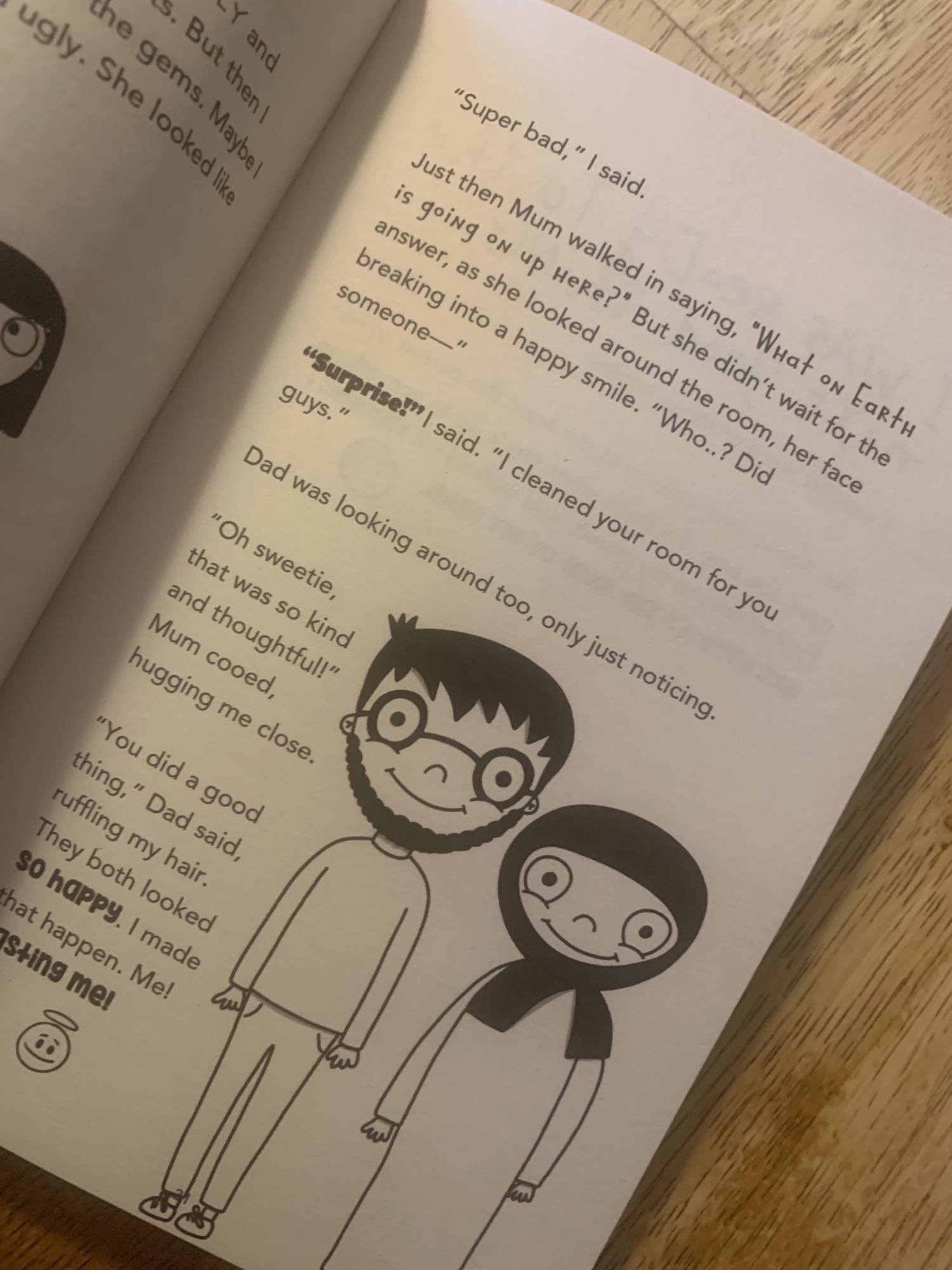
I admittedly wanted to read this book because the author is of Palestinian descent. I have seen clips of her standup and I’m not a huge fan, although I do appreciate that she doesn’t deny her culture and Islam, doesn’t let her cerebral palsy keep her from working toward her dreams, and that she is successful.  All good messages for a 256 page middle grade graphic novel that is not autobiographical, but draws on her life none-the-less.  I was surprised, though, that there are no Palestinian references in the book, very few Arab cultural touchstones either, and yet swearing on the Quran and not eating pork are presented fairly often, almost as “bits” to be laughed at.  I truly understand that the character is presented as culturally Muslim more than centering Islam in her identity, but perhaps because the protagonist, Bay Ann, is rather unlikeable, it just rubbed me the wrong way.  I love that the people in Bay Ann’s life do not caudle her, and that she is fierce and dramatic and driven, but she is an awful friend, her obsession with Alyee Maq (yes full names are used throughout) gets annoying, and I worry that some of the humor will be missed for the younger target audience and be taken as Muslim or Arab norms.  The presentation of a disability in a well illustrated graphic novel is empowering, an amazing Arab dad is nice to see, a divorced family co-parenting is important, but the foundation for much of the story is Bay Ann’s crush on Alyee Maq, he does kiss her on the cheek for social media likes, the book starts with Halloween Idol, features dancing throughout, and concludes with a Nondenominational Holiday Spectacular.  Bay Ann’s mom is not very kind or involved, and Alyee Maq’s mom, the only hijabi in the book, also is rather rough.  This is a book where I acknowledge my own overthinking, as both an adult reader and reviewer.  If you are ok with the (random) Islamic rep, kids will benefit from seeing Bay Ann as a fully capable person who happens to have a disability.  I’d suggest seeing if your local library has the book and looking through it first to see if you are comfortable passing it on to your kids.

SYNOPSIS:

Bay Ann is a tap dancer and with Halloween Idol coming up, she plans to win.  Her best friend Michelle is going to do her make-up as a zombie bride, and be her zombie bridesmaid with Davey Matt, the third in their trio, being the dead ring-bearer dog.  They can’t be her backup dancers because she is a one woman show, but she needs them to cheer her on.  When she wins, she has the spotlight stolen from her by Alyee Maq kissing her claiming he is making “a sick girls dream come true.” The clip goes viral, as Alyee Maq is a bit of a celebrity and the competition is on.  Whether it is science fair, social media posts, or the class debate, Bay Ann is determined to knock Alyee Maq down, claim the online spotlight, and  prove her talent is more than her disability.  With each attempt failing, her resolve grows stronger and her tunnel vision pushes those closest to her away, as she joins Alyee Maq with the hopes that if she can’t beat him, she will join him and achieve the fame she seeks.

WHY I LIKE IT:

I know the book is rather intentionally ridiculous, but I wanted to cheer for Bay Ann, and I never really liked her.  I don’t like how she treats Davey Matt, or even Michelle.  If she was better to them at the beginning, I think it would have shown how disconnected her mom Malak is as well as the school administrators, and made it more funny, but it truly just makes her seem like she is awful to everyone, and thus you don’t really find yourself invested in her stardom, her friendships, or her defining her own narrative.

I wish their was some Arab rep, not just a few Arabic words tossed in here and there.  I also wish there was more Islamic centering, or honestly even less. The swearing on the Quran really bothered me, Friday prayer is mentioned in passing, but there is no impact on the characters or the story, so it seemed misplaced.

The pacing of the story is rushed, and at times a bit chaotic.  I think it is intentional, but it makes it hard to connect to the characters or to grasp their motivations.  I don’t know that I truly ever understood why Bay Ann wants the spotlight, or why Alyee Maq is famous, or why Davey Matt hangs around Michelle and Bay Ann when they belittle him. It doesn’t need to be thoroughly explained, but when you finish the book, and feel exhausted, but can’t even articulate what the book was really about other than a girl that wants to be famous for her talent not her shaking, and won’t let anything or anyone get in her way, it seems like some opportunities were missed.

FLAGS:

Close male and female friendships with touching, an unwanted kiss, lying, manipulation.  Swearing on a Quran, disrespect. Using people.

TOOLS FOR LEADING THE DISCUSSION:

I don’t know that I would seek this book out to own, but in an Islamic school library if it found its way in, I would probably not object to it being shelved.

Eliyas Explains + Bite-Size Journal: Why Does Allah Let Bad Things Happen? by Zanib Mian illustrated by Daniel Hills

Standard
Eliyas Explains + Bite-Size Journal: Why Does Allah Let Bad Things Happen? by Zanib Mian illustrated by Daniel Hills

img_3601-1

The book stems from the genocide occurring in Gaza, but expands to cover the more general concepts of qadr (destiny), tests, and sabr.  The book assumes that what is happening in Palestine is known and does not discuss specific details, allowing the book to be both timely, yet universal.  As with all the books in the series, the conversational humorous approach appeals to children as foundational Islamic concepts are broken down and explained.  The book is 73 pages with the journal portion starting on page 33. In some of the other books, the journal feels more of a hands on to already shared information, or an accompanying workbook of sorts.  In this book however, I feel like the second half continues to explain the topic at hand, and convey key components in understanding why Allah swt, lets “hard” things happen, how we should view the tests, approach difficulties, and inshaAllah triumph. The book has been checked by a Shaykh, and I highly recommend this important book for elementary, middle grade, and even middle school children. The concept of qadr is difficult, I struggle to truly grasp what we can and cannot change, but this book helps readers focus on what we can change and how to view terrible things that happen to us and to others.

The book starts with Eliyas introducing himself and his family, and then wondering why “Israel is being able to do what they’re doing in Gaza.  Why isn’t Allah stopping it?” As with all Eliyas books, mom and dad are sought out, food is somehow worked in, and time and space are given to Eliyas and his siblings to be given an answer. His parents start by being glad that Eliyas’s heart is soft for the Palestinians and that he is bothered by what is happening to them, before explaining that a lot of understanding is trusting and truly believing that Allah swt knows best.

img_3625-1

The book uses hadith, ayats from the Quran, it even shouts out other Zanib Mian books, The Mindful Book of Wellbeing, for seeing the bigger picture and Eliyas Explains Why Should I Pray my Salat on how to make yourself strong to get through the struggles of this duniya.

The book talks about why Allah swt didn’t make everyone good, and it is clear in saying that being mad and sad are ok too, as long as we are not questioning Allah swt. There are prompts and questions (with answers) and the book is not heavy, despite the subject matter, the tone and approach stay on level and allow readers to connect, alhumdulillah.

You can get your copy here at Crescent Moon Store.

Kareem Between By Shifa Saltagi Safadi

Standard
Kareem Between By Shifa Saltagi Safadi

img_3395-1

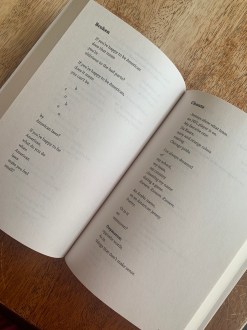
It doesn’t matter how many Word documents you read, Goggle docs you add comments to, and screen shots you revise; to hold a physical book in your hands that you have been blessed to observe from the sidelines through numerous revisions, is mind blowing.  Reading the final version from page 1 to page 324, plus the backmatter, has left me at a loss for words with tears streaming down my cheeks. I truly cannot imagine the book any other way. All past drafts and storylines, were just stepping stones to get the book to this version, and as a fan of literature my whole life, to see this metamorphosis in real time has added to my respect and admiration of authors.  Enough about me though, this review is of the middle grade novel in verse that tells the story of Syrian American Kareem, a loveable boy caught in between choices, siblings, friends, labels, and global acts beyond his control.  He makes mistakes, he tries to make things right, and at the center of it all is his Islamic identity, love of football, and genuinely good heart.  I am biased in that I have self appointed Kareem as my nephew, but even after dozens of readings, I was moved to tears three times during the course of this reading.  I made my teens read the book and they loved it, and like them, we hope we get more Kareem in the future.

img_3541-1

SYNOPSIS:

Kareem loves football, particularly the Bears, and dreams of seeing his Arabic name on an American jersey one day in the NFL.  Unfortunately, he hasn’t made the school team, his best and only friend Adam has moved away, and the coach’s son is offering to talk to his dad for Kareem in exchange for some school help.  Add in a new Syrian kid at school, his mom going to Syria to take care of his grandfather, and the fruition of Executive Order 13769 aka the Muslim Ban, and seventh grade has Kareem scrambling on every down to say the least.

img_3543-1

WHY I LOVE IT:

The football framing, the literary inclusions, the Arabic, the Islam, all combine with such tangible heart to create a seamless read both as a compelling story and as an example of literary craft.  The language is on point and intentional, that even if you don’t know the character or novel referenced, the Arabic words included, or football terminology used, you will be invested in the characters and plot, and find yourself cheering for Kareem.  Often debut authors show promise, but their stories have plot holes, or pacing issues, or inconsistencies, that is not the case with this book.  The crumbs are there that tie everything together, the depth of the characters’ personalities reveal how developed they are, and the timeline keeps the book moving forward.  There are no dry or slow spots in the entire novel, it is easily read in one sitting as you find yourself nervous for Kareem, and curious how it will resolve.

Boys and girls, Muslims and non Muslims, Arabs and non Arabs, all will find themselves drawn to this book, and thinking about the characters, particularly Kareem, long after the final page is read.

img_3544-1

FLAGS:

Some stress and anxiety with missing parents.  Death, bullying, cheating, fighting, lying, racism.

img_3540-1

TOOLS FOR LEADING THE DISCUSSION:

The book is a solid middle grade, but the quality of writing and engaging plot makes it work for a middle school book club read as well.  I cannot wait to share this book widely.

Preorders speak volumes and I truly hope if you are able that you will preorder a copy, you can do so here.  Requesting your local public library to shelve the book is also a tremendous help to signal to publishers what type of stories and OWN voice authentic representation consumers will support.

Eliyas Explians Ramadan by Zanib Mian illustrated by Daniel Hills

Standard
Eliyas Explians Ramadan by Zanib Mian illustrated by Daniel Hills

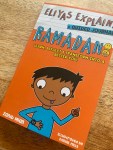
This is the fifth book in the Eliyas Explains series, and it really is what you would expect and hope, a book about Ramadan from Zanib Mian would be.  Eliyas’s voice is funny, relatable, engaging, and yet somehow manages to find a clear way to inform too.  The framing is fictional, but the book is meant to be lesson, moral, and information filled.  The voice did seem to break when Eliya’s didn’t know what “Ramadan Mubarak” meant, but it is clear that the book is meant to teach and remind middle grade kids about Ramadan from moon sighting to Eid, so I don’t think anyone other than an old reviewer would notice.  Parents might notice though that Eliyas loses his cool at one point and starts to presumably call his sister stupid, it stops at “st,” but then says he “started to cuss” which in America would be taken to mean a profanity much stronger than stupid, so just be aware, so you don’t panic if your child asks.  Overall the book is great, it is a solid 80 pages before the guided journaling begins and concludes at 115 pages.  The illustrations, changing font, and humor really make it perfect for the age group.  I gave it to my eight year old to read and I could hear him laughing, saying a few dua’as aloud, and he even came and asked me a few questions making sure he understood new information correctly.  This book would work as an independent read, a read aloud, or even an elementary reading assignment in an Islamic or weekend school.  The book is remarkable for the simple fact that it starts by naming the scholar that proofed the book, truly this is revolutionary, please can we normalize sourcing already.

The book is divided into chapters, with chapter one reintroducing Eliyas and his family to the reader. They are out on a bike ride and Eliya’s wants to know why everyone is so excited for Ramadan and giving up food and water.  Mom and dad explain taqwa and good deeds being multiplied and prayers being answered and big shaytans being locked up and Eliyas is excited (to put it mildly) to get closer to Allah swt and be a better version of himself.

Chapter two explains the moon, making intention, and waking up for suhoor.  With nine chapters before the journaling, the book discusses doing good deeds, fighting, forgiveness, shaytan being locked up, taraweeh, Laylatul Qader, and Eid.

The journaling guides readers through forgiveness, ibadah, goals, duas, kindness, feelings, connecting with Allah swt and more.  The beauty of this book is that it does pack a lot of information, but it shows a lot too, and gives kids a way to see Ramadan in action.

You can order your copy here at Crescent Moon store 

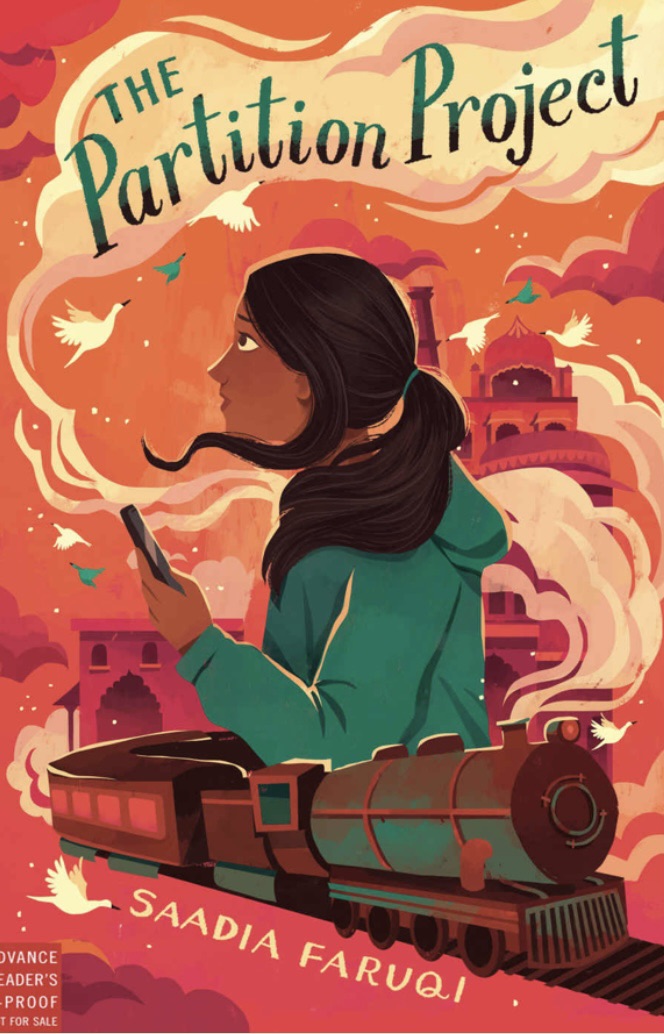
The Partition Project by Saadia Faruqi

Standard
The Partition Project by Saadia Faruqi

Screenshot

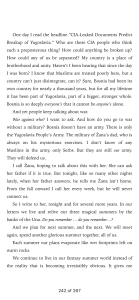
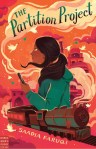
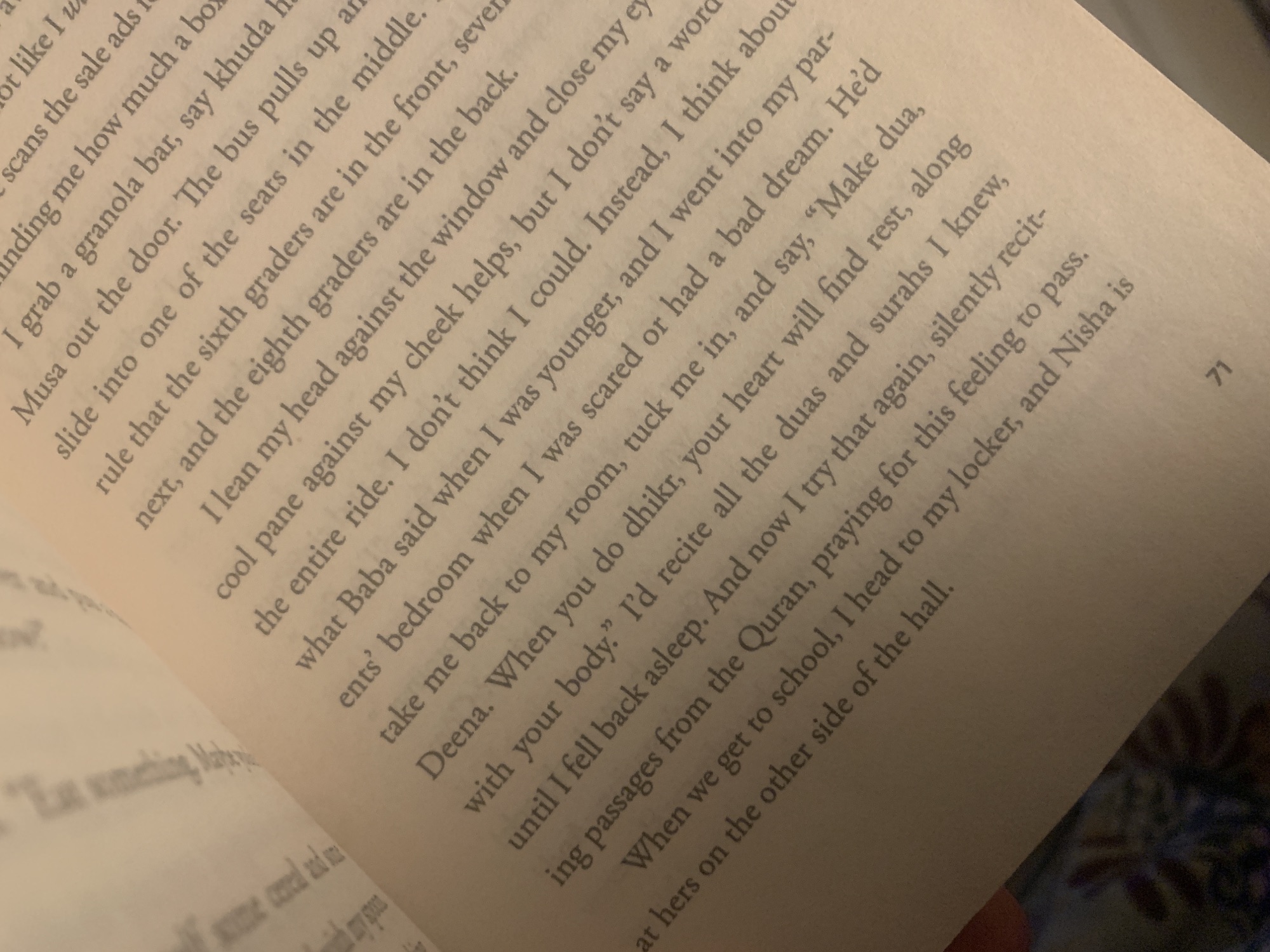
I have always maintained that my reviews are not personal, and for over 10 years, I kept to that. I recently made a public exception however, for Palestine. I cannot and have not checked every author, every illustrator, every publisher, or every agent, to see who has spoken up about the genocide, but there are a few prolific authors that are standards in the niche of Islamic fiction literature. Who have elevated our representation with a standard of quality and consistency across multiple age groups over the years, whose stature made their silence, seeming or actual, to the occupation, the apartheid, and the ongoing attempted erasure of a people and culture impossible to miss. No there is no standard or bare minimum, this is all emotion, and if you are thinking who am I to judge, or maybe I missed something, yes you are right. None-the-less it definitely caught my attention that an author who remained silent, wrote a 416 page middle grade book about partition, a historical event impossible to separate from colonization. I know the timeline for books to be published is not quick, but when I read the characters discussing that, “If we only read books by perfect authors, we’d read…nothing, I guess.” It felt a little defensive, and while I never set out to shame anyone, I have written this disclaimer to hold to my word, and to acknowledge that as much as I have set out to write the remainder of this review as I would review any book, my own disappointment in the author, may show through. Literary wise the book is moving, heartfelt even, but the performative othering, the internalized Islamophobia, and the catering to a western gaze, are subtle, but undeniably there. Perhaps the biggest example is the word “British,” the whole reason for partition, is only mentioned a grand total of six times.

SYNOPSIS:
Mahnoor, aka Maha, is in seventh grade, and her whole world has just flipped upside down. Her Dadi, her paternal grandmother, has just moved in from Pakistan, taking her room, and her free time. Plus Dadi is old and grumpy, and Maha is not amused. With parents that are too busy to spend time with her, Dadi slowly but surely starts to fill in a lot of pieces that Maha didn’t know were lacking in her life. Through food and stories and the start of Ramadan, Maha learns about Islam, Pakistan, friendship, and with a school documentary assignment, partition. A historical event she had never heard about before, starts to be all she can think about. It also seems to hang over everything she encounters from a book on a novel study English assignment list, to the train in their neighborhood, everyone at the senior center, and even Texas history. With dreams of being a journalist, Maha’s singular focus because almost obsessive, according to her friend Kim, but the more she learns, the more she changes. And the changes are for the better, even if there are some stumbles along the way, fighting with Kim, making Dadi runaway, calling out her parents preoccupation with work, missed fasts. The book has a happy ending though, as the unlikeable privileged Maha at the beginning, transforms to being someone the reader is cheering for at the end.

WHY I LIKE IT:
I am Pakistani-American, being half Pakistani and half American, the hyphen for me signals both my parents. So I was thrilled a year or so ago when I first heard about this book. I am a bit removed from partition because my father was the first in his family to be born in Pakistan, and my in-laws did not move from India until much later. That being said, I know it is a part of me, as all desis do, and was eager to read this middle grade book. Please note though, I am also white passing American (albeit with a hijab), so I can tell when I am being pandered to as well.

Do I feel the book did the topic justice? Absolutely not, by not discussing colonialism and British occupation, a huge part of the setup is conveniently ignored. It also is very placating of what the Muslims, Seikhs and Hindus seemed to want as Jinnah and Nehru are only name dropped once. Gandhi not at all. I get that the book presumably isn’t about that, but by ignoring it all together, there is some intent there, possible watering down for a white audience, that doesn’t sit right with me.

This book feels like it is written for non Muslims. The dialogues about being a good person even though they don’t follow Islam as they should, and pray and fast and eat halal, seem like internalized Islamophobia, that is trying to normalize not practicing. When the text goes so far as to call those that do fast all 30 days “ultra-religious” it seems to walk back the numerous passages of Maha loving fasting and finding peace in prayer. The takeaway for a Muslim reader will be a little self doubt, for a non Muslim reader it will reinforce the labels of “those Muslims” and “extremists.” It makes what many Muslims find basic faith requirements, come across as optional here in America, like taking off shoes when entering your house. With that being said though, the book does have a lot of heart, and in many places Islam and Pakistani culture are warm, but that warmth often comes through attempts to appeal to a non Muslim western lens. Similarly the stereotypes do as well. Pakistan is considered conservative, which is dismissed as meaning, “code for no swimsuits.” Wow, a whole culture and religion, so easily labeled and stereotyped. Stings a bit, not gonna lie.

Maha’s parents are not religious, so much of Maha’s knowledge of Islam is coming from what she sees her Dadi do, pray, fast, read Quran, etc. Except, Maha knows how to read Quran, and pray, she just needs practice. So explain, how she doesn’t know what inshaAllah means? This is just one example of inconsistency bumps in the text. At one point they eat iftar, and then a few hours later have dinner, I mean sure it is possible, but it seems weird. Her frail grandma runs away on a hiking trail? She wants the archive curators approval for her documentary and not her Dadi’s? Ahmed says he only eats hala, Maha is eating a non halal chicken salad and then they share it. Overall, Maha rarely reads like she is 12. At the start when she is whining, is about it, the rest of the book she reads much much older.

FLAGS:
Boy girl close friendships, angry mobs with guns, death, cholera, internalized islamophobia, talk of gods and demigods in Percy Jackson, mention of J.K. Rowling negative comments on trans community, fear.

TOOLS FOR LEADING THE DISCUSSION:
I cannot in good conscious purchase, recommend, or even check this book out from the library. I received an advanced digital arc, but my heart is too heavy by the author’s silence in the face of the atrocities occurring in front of us regarding Palestine.

Daughters of the Lamp by Nedda Lewers

Standard
Daughters of the Lamp by Nedda Lewers

img_2600-1

This 352 page middle grade fantasy grounded in Egypt and America didn’t initially impress me.  In fact the first few chapters felt a little forced, the voice a little off, and the threads of Islam were making me a little bit nervous, but I was advised to keep reading by a trusted friend (@muslimmommyblog), and so I did.  And I really don’t know when it happened, perhaps when Sahara finally got to Egypt, but truly the slow quiet book won me over.  It has a lot of heart and I found myself throughout the day thinking about the story, trying to sneak a few minutes here and there to read just a little bit more, and staying up past my bedtime to finish.  That isn’t to say the book is perfect, but it is a solid read despite some plot holes, and a 12-year-old protagonist who seems to not really practice Islam even though her dad and family do. If you do not feel that Islam allows for fantasy books with magic, then steer clear of this.  If you are fine with it or on the fence, know that the book quite often articulates that Allah swt is always the creator in charge of everything, but there are magical elements, fortunes told, and evil deception.  I’ve never seen anyone read tea leaves or coffee grounds, let alone believe in them, if it is something that culturally you have seen and find reflect sihr, know that it is present in the story, but it absolutely clarifies, that Allah swt is the one who controls the future.  I don’t think any reader of any age would think this story is or could be real.  I would be comfortable with middle graders reading this book.  It is long, and a bit dense for early middle graders, but it is clean, and really centers family, being a good friend, and working together to save the day.
SYNOPSIS:

Sahara Rashid is tired of being teased as being the only kid who hasn’t gone to Merlin’s Crossing, when 6th grade comes to an end, she is hoping the surprise her dad has for her is a trip to the amusement park.  Instead they are going to Egypt, her first trip there ever.  Her maternal uncle is unexpectedly getting married and her dad and her haven’t been back since her mother died giving birth to Sahara.  Shocked by the news and desperately disappointed, Sahara goes to bed and dreams of her mother. When she awakes, her aunt, her father’s sister and mom’s friend, has a necklace for her and a message that matches her dream.  Interspersed with Sahara’s story is Morgana’s.  A girl long ago who is a servant to a mawlay, Ali Baba, who has been tasked to guard treasures: lamps, apples, flying carpets, and the like.

When Sahara gets to Egypt her adventures begin, she meets her cousins, Fanta and Naima, and Sittu, her grandma, who she has always feared blames her for her mother’s death, but finds instead a loving matriarch who welcomes her wholeheartedly.  She also meets the bride-to-be a woman named Magda, a woman the cousins call, El Ghoula, the witch.  When someone tries to break into the family’s grocery store, Sahara’s necklace goes missing, and El Ghoula starts to act suspicious, Sahara and Naima formulate a plan that backfires tremendously and will test their trust, determination, and ability to save the day.

WHY I LIKE IT:
I love that Islam is woven in, but I truly do not understand how Sahara’s dad prays five times a day, her aunt in the USA who lives with them prays, but not regularly, but Sahara doesn’t pray.  Her mom wore hijab, but she doesn’t know much about hijab, yet is incredible self-conscious that she doesn’t wear it, while simultaneously being comfortable in shorts.  She also questions her dad why she needs to cover her head in front of the imam, and she brings it up a lot with her cousin Naima, who does cover.  It feels like it comes from a place of love and respect, and probably real conversations, but it seems stilted and vague which I feel like some sensitivity reading perhaps would have helped with.

The beginning of the book really sounds outdated, but I’m not sure why.  It reads like an older person trying to write a young protagonist contemporary voice and it doesn’t work, it is even cringey at times.  Once the action picks up, the voice and tone and pacing is fine, but truly the first few chapters of Sahara are cumbersome.  I do not understand why Sahara is constantly homesick.  She is on vacation and is not going to be in Egypt for two weeks, and the regular insertion that she is missing home and counting down days, is very odd.  If she was suddenly living there, or staying months, perhaps it would make sense, but truly it initially really makes liking Sahara yet another obstacle in the early chapters, that has to be overcome.  By the end, she is very likeable, but those early chapters don’t connect her to the reader which is unfortunate.

The story and action are fun, the relationship building with the family is very tender and sweet.  Her helping her cousin in a street dance battle and feeling the love from her grandma are cathartic and memorable.  Plot wise there are some holes, like how did all the sleeping victims get home, where is the dad’s family, why didn’t the mom know the family secret, why did the family let Sahara’s mom leave, how did Sahara’s mom and her paternal aunt know each other, and why doesn’t Sahara pray and why hasn’t she ever heard the fajr athan before?

FLAGS:
Magic, lying, music, dancing, evil, plotting, scheming, killing, murder, dying, theft, poisoning, attempted kidnapping, slander.

TOOLS FOR LEADING THE DISCUSSION:

This would be a fun book to read aloud in a classroom setting during lunch when it is too cold to go outside.  I think it would be fun for an upper elementary book club as well.  I think kids will reach for it, and with a recommendation will get through the first few chapters to be swept away on a magic carpet,  enjoying the story.

Tagging Freedom by Rhonda Roumani

Standard
Tagging Freedom by Rhonda Roumani

20801TaggingFreedom

This 282 page OWN voice middle grade book weaves together two points of view that shed light on the recent events in Syria and life as a Syrian American without self-othering or over-explaining.  The characters are Muslim and while yes, I wish there was more Islam woven in,  when it did present itself in more than just a passing “inshaAllah” or “ya rab” it was heartfelt and sincere.  The book has a few plot holes, a plethora of underdeveloped characters, and the religion and cultural components take a backseat to the tropey MG themes of finding your voice, friendships, crushes, fitting in, and having hope. Despite my critiques though, I still found the book focused around graffiti and spirit squad, engaging and hard to put down.  The pacing makes for an easy read, and while the adult reviewer in me wishes there was more depth, insight, consequences, and Islamic references, I definitely appreciated the emotion and framing of this story.  The book does contain a lot of lying, crushes, sneaking out, “vandalism,” breaking laws, and mentions bombings, disappearing, and fear.  The connection though of what has been left behind and experienced in Syria is moving, and I’m glad that a book so relatable to western kids is widely available to be shared with them.

SYNOPSIS:

The chapters alternate between Kareem and his cousin Samira, aka Sam. At the beginning of the book Kareem is in Syria, spending time with his friends graffitiing in protest of Bashar al-Assad and in support of the boys from Dara’a.  They are covering their tracks, sneaking out to join rallies and finding their strength in their art, common goals, and the change that is taking over the country.  Unfortunately, his parents don’t see it that way and decide he needs to be sent to live with his uncle’s family in Massachusetts for his own safety.

Sam is Kareem’s cousin, she is great at reciting Quran, she has a best friend Eleanor who lives across the street, and is an amazing artist.  She sees people as fonts, and dreams of being a part of the school spirit squad.  Her only real problem is Cat, a girl that has bullied her for years and spread rumors about her in the past.  It is never quite articulated what was done and how bad it was, but the fact that Cat is the head of spirit squad, the daughter of influential parents, and the twin sister of Sam’s crush Dylan, has Sam trying desperately to fit in.

When Kareem arrives, he is not happy to be in America.  He calls Sam out for her inability to speak up and with Sam and her bff Ellie on the outs, Sam heads off to her new friends that have allowed her into spirit squad, and Kareem and Ellie start sharing their art around town.

Kareem’s character arc is more subtle, but Sam/Samira, finds herself with the help of her cousin as she channels the yearning of Syrians to set her free in America.

WHY I LIKE IT:
I love that it is Syrian American OWN voice MG, the news cycle has moved on, but stories are so critical to reminding the privileged outsiders what has occurred and continues to endure, so just that this book exists, is a positive for me.  I like that the code switching of being Samira and speaking Arabic at home is so clearly contrasted with Sam at school.  I struggle with the idea of dating not being a religious, but rather a cultural no-no, and her being so obsessed in the beginning with Dylan and then Amari is a bit of flag. By the end they feel like friends, but it is definitely a big part of the first half of the book that could have used some context, same with when she goes out in a tank top.  I wish there was a Muslim conscience that enters the story, to see Sam grappling with who she is from a faith perspective would have been nice.

I love that Kareem comes to America and starts school, it doesn’t have him being meek, or struggling to transition, it really is empowering that he breaks that stereotype just by allowing him to be seen from the very first day as strong and fully fleshed out.  Yes, in real life and in some books the adjustment is a plot point, but in this book it is not, and the author seems to not indulge in it deliberately.

I struggled with a few plot holes. I get that Kareem was frustrated and wanted to educate and be heard, and when Sam can’t stick up for herself and he calls her out, they are both annoyed, but to go from that to graffitiing is a big step.  A few instances of maybe trying to talk about Syria being shut down by teachers, or friends, would have made it a more logical leap.  I worry a little that there wasn’t enough hand holding regarding graffiti as a whole seeing as it is an MG book.  I understand it is expression and art, but there is some element of vandalism to it as well, and because it didn’t connect the dots that street art was the only way to be heard, I bring it up for awareness.

I needed closure on Cat, I didn’t like that we didn’t know more specifics about her torment or her thoughts at the end.  I know the story is not about her, but she was important for much of the story and to have her fade seemed a little short sighted.  I liked Ellie, but her wanting to sticker everything seemed in contradiction to her environmental activism.  Sam’s parents are barely a blip on the radar, and even some details about the supporting cast, really would have made the story that much better.

FLAGS:

Crushes, immodest clothing, lying, sneaking out, boy/girl friendships, boy/girl hugging, vandalism, breaking the law. Hearing about bombings, being taken away by the police, death.

TOOLS FOR LEADING THE DISCUSSION:

I don’t think I would use this for book club, but I would have it on the library and classroom shelf.

Drawing Deena by Hena Khan

Standard
Drawing Deena by Hena Khan

This 232 page middle grade read with a beautiful cover, has a beautiful heart as well.  A Muslim girl in a Muslim family is struggling with anxiety and family financial stresses, remarkably the book avoids tropes of blaming immigrant parents, culture, or religion.  It also doesn’t have any relationship crushes, or catty friends, bullies, or annoying sibling squabbles.  It was refreshing to see a strong character that seemed to not lack a voice, really find her voice,  advocate for herself and those she loves, apologies when in the wrong, and be surrounded by friends and family members that truly love one another.  I also appreciate that a licensed school psychologist was consulted and named in the backmatter.  As with nearly all Hena Khan chapter books, there is Islam and culture, but as an Islamic school librarian, I long for more.  There are a few inshaAllahs, mashaAllahs, salams, and references to praying, there is one solid paragraph that mentions dua, dhikr, and the Quran, but that is about it in a book that focuses a lot on fashion, make-up, social media, drawing portraits and hanging them in the home.  The protagonist is in middle school, but this is a solid middle grade read that teachers and librarians can feel confident having on the shelves and sharing with students.

img_2301-1

SYNOPSIS:

Deena loves art and to draw, she’s also really good at it.  She longs to take extra classes outside of school, but she knows it isn’t a priority with her bite guard already causing a lot of stress on the already financially strapped family.  Overhearing her parents fights about money adds to her anxiety and makes her nauseous every morning before school.  Determined to help her mom grow her basement clothing boutique, and increase the family income, she dabbles in social media, designs a logo, and sets up a website.  One of the new customers is a real life artist, who encourages Deena to look at art differently, and offers to take her under her wing to teach her about the power of art and decolonizing her mind. Things are starting to look up for Deena, but a disagreements with her cousin Parisa, feeling like she let a close friend down, and being overwhelmed at an immersive Van Gogh exhibit culminate with her having a panic attack at school.  The school counselor wants her to attend some therapy sessions at the school, but first Deena will have to convince her parents that this is something she needs and wants.

WHY I LIKE IT:

I mentioned a lot of my likes and loves above, but really it is a solid middle grade read where the character just happens to be Pakistani American and Muslim.  I like that Deena is just a sweet girl.  I think a lot of kids that have the emotional intelligence to know how fortunate and privileged they are, often push down their emotions and troubles, because they know others have it worse, don’t want to worry their parents, and/or seem ungrateful, and that this book can normalize getting help, advocating for yourself, and communicating with your parents, is really quite impressive.  Deena has a diverse group of friends, religion doesn’t come up much or seem to shape her perspective which is unfortunate, but it doesn’t make things harder for her either.  She isn’t bullied, there is no Islamophobia, or self-othering or stereotypes.  Deena is who she is, with a good head on her shoulders, and throughout the book you find yourself cheering for her and her success.

FLAGS:

She does draw faces, and they talk of hanging up the images in the living room.  There isn’t lying, but it kind of skirts the line at times. Anxiety.

TOOLS FOR LEADING THE DISCUSSION:

For even a young middle school book club, I think this book would be a quick read, but open the door for some quality discussion about anxiety that would benefit middle graders and up.  The book on the shelf will tempt readers, and handing it to kids will yield results.

The book goes on sale February 6, 2024 and you can preorder/order it here.

Safiyyah’s War by Hiba Noor Khan

Standard
Safiyyah’s War by Hiba Noor Khan

safiyyah

A.M.A.Z.I.N.G! SubhanAllah the subject matter is incredible, but the characters, writing, and Islamic inclusion really make this 327 page book a must read for all upper middle grade and lower middle school aged children everywhere. The book is historical fiction, set in Paris during WWII, the Nazis are invading and the Muslims at the Grand Mosque of Paris are covertly helping, hiding, and saving their Jewish neighbors.  Based on real facts, the book does not get lost in politics, or propaganda, or the enemy, the story stays on level for an MG reader with character arcs that are not confined to the atrocities at hand. The familial love, the friendships, the bravery of so many, really lingers long after the last page is read. Knowing that Muslims in France did this and that their stories have by-and-large been lost over time, makes this book all the more important to share with our own children.  This book fills such a void for children in Western countries wondering why WWII lessons in school never mention Muslims, and that this is traditionally published in the UK, soon to be in the USA, really is a benefit to us all.  I do wish the book was more strongly sourced, there are Historical Notes at the end, but I’d love to know where to go to get more facts about it all.  Little kid me would have been obsessed, adult me can’t wait to share this book with teachers and book clubs to discuss, teach, enjoy, and be inspired by, alhumdulillah.

SYNOPSIS:

Safiyyah lives in the apartments in the compound of the Grand Mosque and while Muslims are more-or-less safe from the imminent threat of the Nazi’s, because of their connections to North Africa, their world is still changing quickly. Safiyyah loves maps, helping run errands for her father, Ammo Kader, and Ammo Imam, and spending time with her Setti.  She also loves spending time with her best friend, Isabelle at school and on weekends.  When the Nazi presence is no longer avoidable, Isabelle and her family leave, errands are no longer safe and Setti’s beloved oranges are harder and harder to get. To top it all off, her father starts acting secretive and Safiyyah starts sneaking around to find out what is going on, unraveling a clandestine network helping those needing to get away.  Her family has no intention of involving her, but when soldiers start getting suspicious of the Muslims assisting the Jews, Safiyyah takes on dangerous roles that just maybe a young girl can accomplish without drawing too much attention to herself, the cause, and the Muslim community’s commitment to helping the innocent.

WHY I LIKE IT:

I love that the book is fast paced and the fear of being caught is always present, yet the book is able to flesh out relationships, character growth, and religious understanding.  Little details weave in and out, and the confidence that the writer is in control of all the threads allows the reader to be swept away, completely. The interfaith aspects are not just check marks, the story shows the ease in which the communities work together and their connections are tangible.  There is no internalized Islamophobia or othering, and the way that Islam emboldens the characters’ actions is so beautiful: from the larger commitment for justice, to the personal internal reflections of wearing of hijab, praying, listening to the athan, making duas for the deceased, etc..  Spending time to ruminate on the idea that breaking an unjust law to save lives through an Islamic lens is empowering, and knowing that this is the risk that real Muslims in Paris took is so very humbling. I love that the conflict of France and Algeria is not left out as the Kabyle protagonist and her grandmother note that they are now supporting those wearing French uniforms to fight the Germans.

FLAGS:

Wish making, lying, death, fear, occupation, war, destruction, oath taking on a Quran, tasbeehs, working with wine barrels and smugglers.  There is a strong familiarity with Christian and Jewish holidays, some crossover celebration.  Some Christian angel imagery being used by Safiyyah for Ammo. Sneaking, hiding, forgery, skipping school.

TOOLS FOR LEADING THE DISCUSSION:

Having only ever read one other book on this topic, The Grand Mosque of Paris, that would definitely be a reference I would present when introducing the book.  Whether in a classroom, a library, a home, a book club, I hope this book gets read, passed around, shared, and discussed.  Muslims and non Muslims alike will fall in love with persistent over-eager Safiyyah and hopefully remember the resistance the characters in the book and real life sought with courage and dedication for the good of humanity.

I own my UK copy and have preordered US copies for myself, my mom, my teacher friends and hope you will do the same (you can preorder here).  Please also request your local public libraries to shelve this important book.

Stand Up and Speak Out Against Racism by Yassmin Abdel-Magied illustrated by Aleesha Nandhra 

Standard
Stand Up and Speak Out Against Racism by Yassmin Abdel-Magied illustrated by Aleesha Nandhra 

stand

The very first page of this practical Muslim authored, visible Muslim featured, how-to book draws you in with the author’s conversational tone and approach.  She presents life as being a mountain we all are born to climb and articulates that we are all given different tools to do so.  The book sets out to understand how race and racism affect the climb, how we can make it more fair, and uses questions from kids in the UK as the general organization of the 128 page book for middle grade readers and up.  As a Black Sudanese born, Australian raised, immigrant London woman who speaks Arabic, is Muslim, has authored five books, is an engineer and social justice advocate, she acknowledges privilege, and injects plenty of InshaAllahs, Alhumdulillahs, and global perspective to racism, its history, and what we can do to stand up and speak out about it.  I do wish the book was sourced, but the first person perspective, and her own intersectional identities, carry confidence and OWN voice power in making the world a better place for all.

SYNOPSIS:
The book starts with a section about how racism started, then moves into what racism looks like today and how it shows up and affects us all.  It then concludes with a focus on the action of standing up and speaking up.  The book spends time reassuring the reader that the contents might create strong emotions and to breathe acknowledge your feelings and find a safe way to express them. Chapter 6 discusses religions, even though the book is about race and says it does so because it is the same social construct of grouping a very diverse group together because of something “other” that they share.  It spends time on anti-Semitism, and Islamophobia.  The book doesn’t have to be read cover to cover, it can be read in sections, in any order, there is also a glossary and index at the back to find particular topics to look at.

WHY I LIKE IT:
As an American, I love that the book is global in focus and shows the effects of colonization and attitudes, and thus realities.  I also like that it takes time to discuss internalized racism, as well as interpersonal, institutionalized, and systemic.  Pointing out schools and how many of your teachers or principals look like you, really drives the points home.  I love that there is a whole page on hijab and truly that you see the author regularly bringing in Islam to the conversation which is great.  The action steps of what to do if you see racism, what to do if it is aimed at you, are well presented in metaphors that are easy for kids to see why the course of action suggested is doable, logical, and important.  It doesn’t shy away from acknowledging that pushing back on racism escalates the situation, and encourages individuals to be safe and do what they can. There are pull-out boxes, comic strip scenarios, bolded and bulleted text, and colorful engaging illustrations and infographics that connect with 9 year old and up readers independently or in small groups.

FLAGS:

The book discusses an emotional topic, but I don’t think there are any particular flags to be noted for 4th grade and up  There are important conversations to be had based on what is shared, but nothing is overly graphic or sensationalized.

TOOLS FOR LEADING THE DISCUSSION:

I think this book would be great to share with students regularly and often.  It should be on library and classroom shelves and should be used in small groups, large groups, and one-on-one.  The variety of methods that the information are conveyed make a useful tool when concerns arise, and a great reflective piece to encourage children to think deep, better themselves, and be aware at all times about the privilege and effects of their thoughts and actions.

Available for preorder on Kindle here https://amzn.to/3PH98u2