Tag Archives: Loss

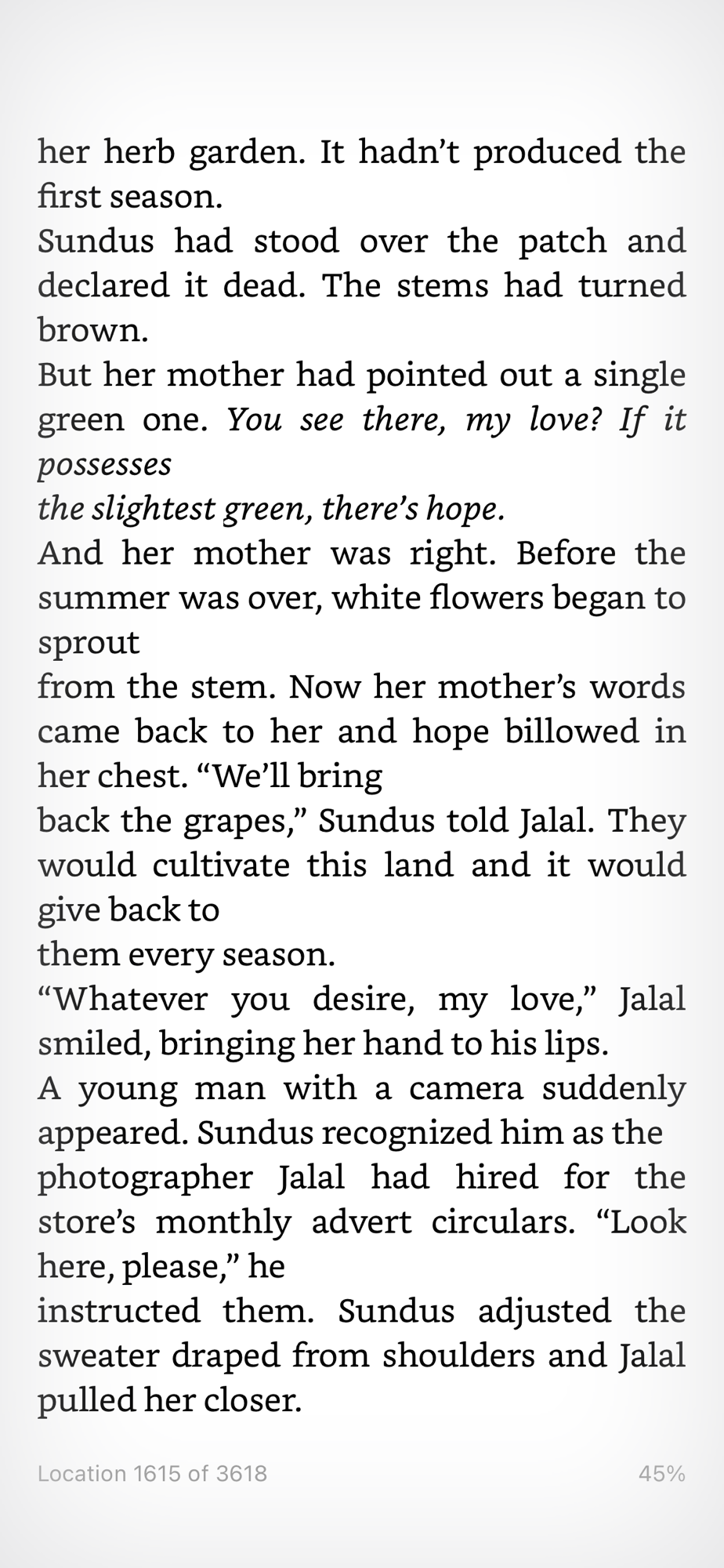
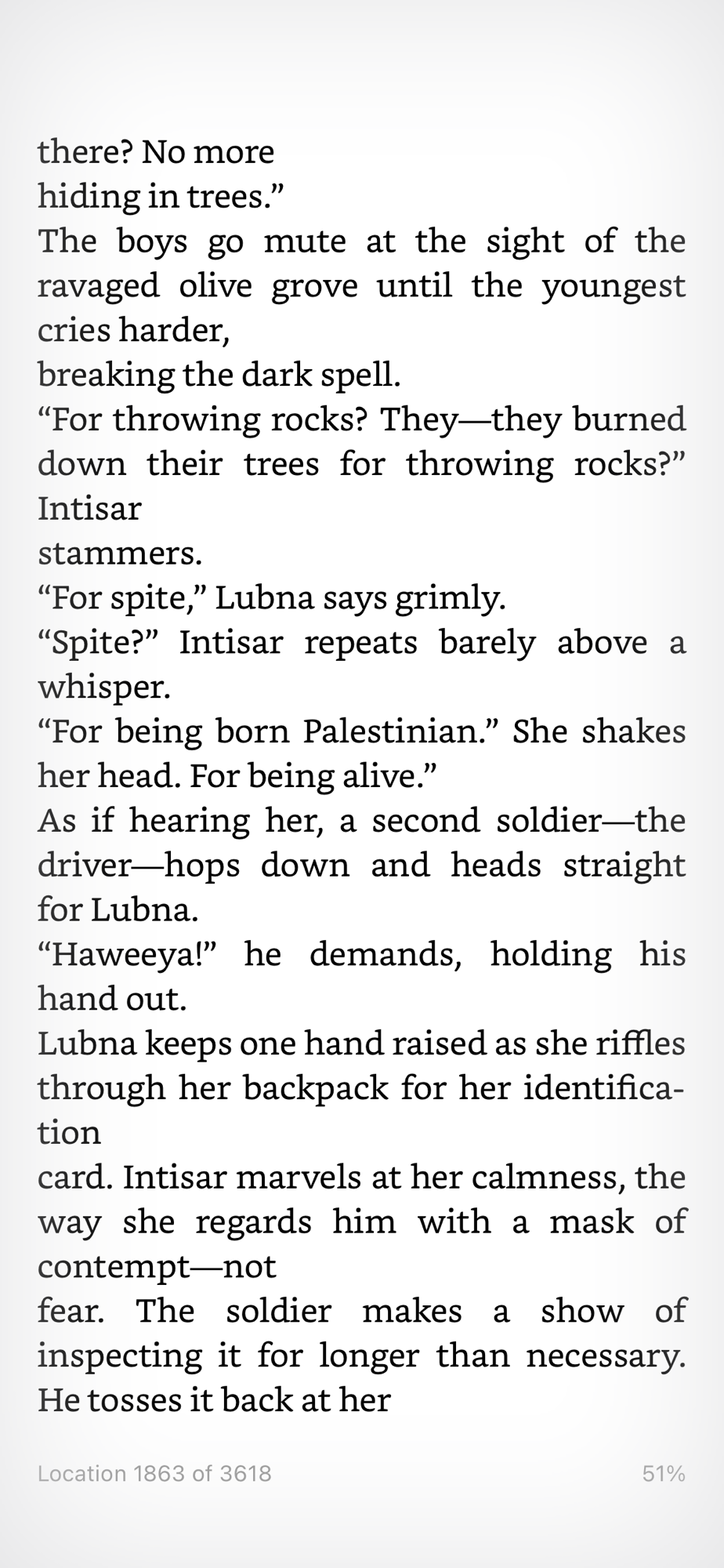
The Slightest Green by Sahar Mustafah

Standard
The Slightest Green by Sahar Mustafah

This adult multi generational novel weaves a narrative that will stay with the readers for the warmth and depth it explores of a fictional family that over the course of 248 pages becomes very real, and in many ways familiar through its personal focus. The book is deliberately slow as it glides through different members of the family, their backstories and different points in time. The prose highlights the plight of Palestinians but not in a didactic or call to action sort of way. The characters and their stories, and their trauma and dreams are very tied to Palestine and the occupation, but the focus on the individual and the ripple effects is what will linger. I do not know when the book was written, (it is published in November 2025) as I read a digital arc which had very minimal backmatter, but this book is set before the recent genocide and is all the more important for today’s readers in pushing back against attempted erasure of Palestinian voice, culture, and history.

Intisar is a nurse in Chicago, the only daughter of divorced parents. She lives with her mother and has not seen her father in over 20 years. Not since he left the family to return to his home in Palestine, join the resistance and after a fateful mission is forced to serve a life sentence in Gahana Prison. When he is released to live his final days before he succumbs to cancer, Intisar heads overseas to see him one last time. Her grandmother Sundus additionally needs Intisar, the only heir, to fight for her to keep her land and home, a task that Intisar is not willing to pursue. As family history is shared, daily atrocities witnessed, Intisar starts to see herself differently, and considers if she could feel at home in her father’s homeland.

Again I read an arc, but there are a few sentences that really have me hoping line edits will still occur before the final version. The book is adult, it has a Muslim drinking and serving alcohol, there is assault, sexual and physical mentioned, and yet I didn’t feel like it was sensationalized, actually felt that the author was deliberately holding back to keep the story about the family and not the larger issues. Their is quite a bit of Islam, not from every character, but it is woven in and not an identity issue. Actually one line used frequently is my only real gripe with the book. “Pray to the Prophet,” is regularly said by a few characters, so I though perhaps it is something unique to them, up until about the midpoint, where many characters start to say it and I don’t like it. It makes it clear other places that Allah swt is One and who we pray to, it has the shahada in English and verses from the Quran, so I’m guessing it is a colloquialism perhaps, or maybe a poor translation, I honestly don’t know, but it bothered me, so I am sharing.

Yours, Eventually by Nura Maznavi

Standard
Yours, Eventually by Nura Maznavi

It has been a while since I’ve read Austen’s Persuasion, and I should probably remedy that, but alas, here I am reviewing another adult, Desi-fied, Muslim tinged retelling, and am embarrassed to admit I was absorbed and invested, as if I had no idea how it would play out. Sure there were author liberties, but the heart of the story hits the same beats (that I recall) and works so well when adapted for our faith and culture. It isn’t halal halal, nor is it Muslim focused, the culture and cultural expectations are definitely more centered for the Pakistani American Muslim cast. The characters are all Muslim, a few wear hijab, they abstain from alcohol, date with intent to marry, attend Bismillahs, but they aren’t shown praying, or viewing life through an Islamic lens, or Muslim conscience. There are a few kisses and hand holds, and male/female close friendships, but for an adult read, the Muslim authored 400 page novel is pretty notably clean.

SYNOPSIS:
Asma is in her final year of Emergency Medicine residency and the pressure to get married is ever mounting. With her father making poor financial choices, he and Asma’s oldest sister Iman, are moving out of their Palo Alto mansion and heading back to Sacramento. Culture won’t let Asma live alone, so she is forced to crash on an air mattress at her youngest sister, Maryam’s house in the room of her three year old twin nephews. Asma feels it is her responsibility to take care of everyone since her mother passed away, but with the family splitting up, she has to decide for once, what she wants. Eight years ago she did what she was told and broke off her engagement with Farook. Unfortunately, she has regretted it every day since and never moved on. When of all people, Farook’s sister moves into Asma’s old house, a chance encounter brings the two face to face. When Farook starts courting Maryam’s sister in law, things get particularly tense. Throw in a dozen or more side characters, amp up the drama, and settle in to see how it all unfolds.

WHY I LIKE IT:

If my recollection of the original source material holds, it takes a while to get all the characters in their desired place and position for the story to sweep the reader away, and this version does the same. At times I worried that threads and characters were being overlooked, but by the end, most everything felt resolved. I did feel Fatima’s story was underdeveloped and showed Asma as being a bit of a bad friend, and there is no way three year olds would recognize someone from a picture taken 8 years earlier, but I know, romance books require some suspension of reality to work. The premise of the plot is even a bit shaky, but once you are rooting for the characters you aren’t too worried about why they need a second chance. For the most part the writing is fairly smooth, a fair amount of characters the author managed to keep annoying, but not completely unredeemable, and I appreciated the restraint. The pacing at times was a little sluggish, with a lot of characters that the reader needed to connect with resulting in telling and not showing, so I was a bit disappointed that end felt rushed. I wanted to bask in the resolution of all that angst, longing looks, and obstacles being overcome.

There is quite a bit of commentary about pushing back on stereotypes, expectations, and cultural weight. There are aunties doing the match making and gossiping, and plenty of folks chasing wealth above all else, it doesn’t weigh down the storyline, but it at times does get a bit repetitive and shallow.

FLAGS:

Romance, kissing, hugging, holding hands, lying, death, pyramid scheme, alcohol, consumerism,

TOOLS FOR LEADING THE DISCUSSION:
I might let this be in a school library, it is clearly adult with the characters nearly 30 years old, but high school romance lovers will enjoy this, and it isn’t overly mature for ages 16 and up.

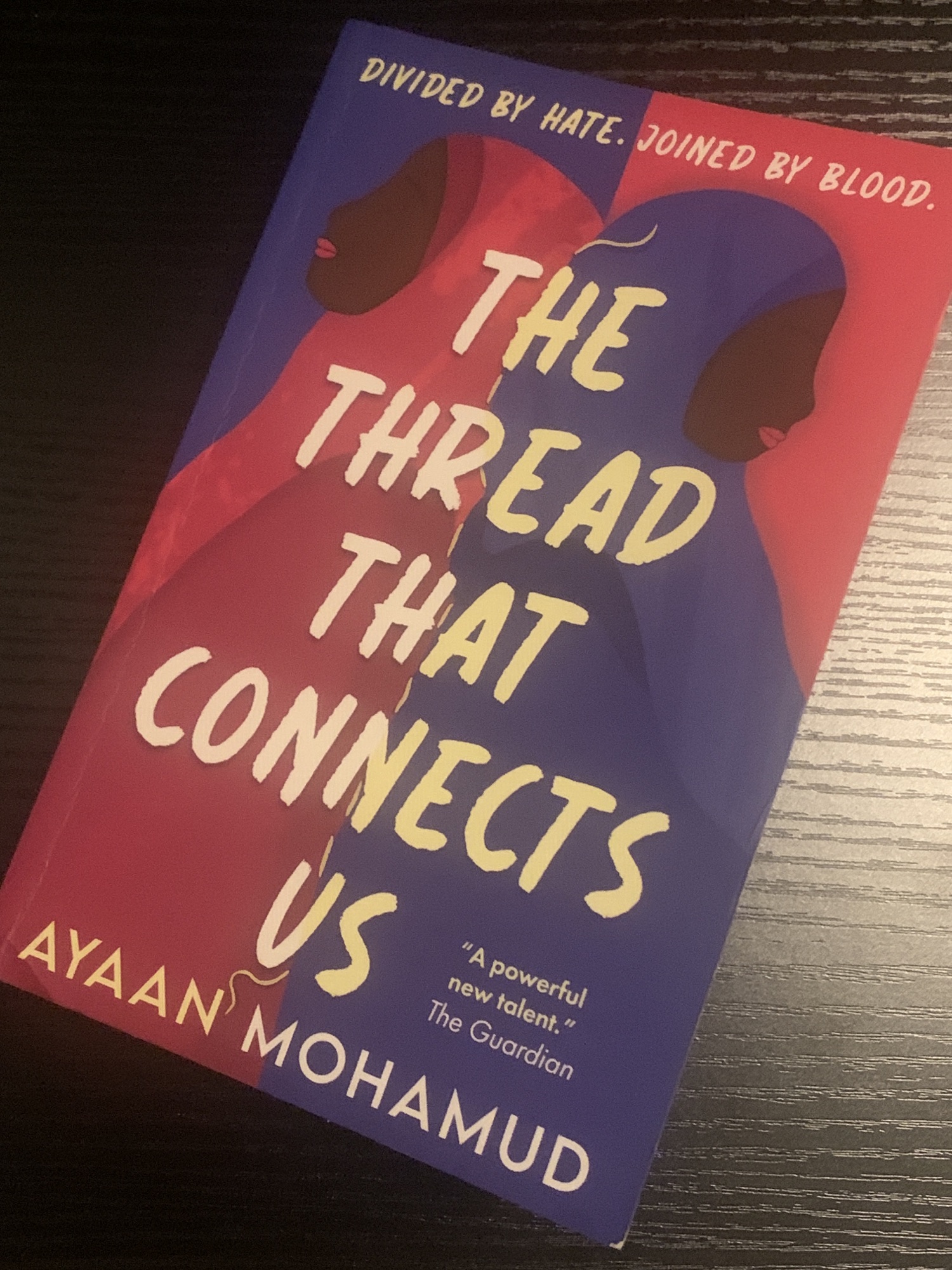
The Thread that Connects Us by Ayaan Mohamud

Standard
The Thread that Connects Us by Ayaan Mohamud


At just over 400 pages this book expertly blends the stresses of school, bullies, and friends in the UK with the twists and secrets of broken families, shattered hearts, and a past that needs to be reckoned with.  Told in dual perspectives from girls thrown together by the actions of their parents, Safiya and Halima maintain distinct voices that are rich with Somali culture, Islam, vulnerability, and ultimately love and hope.  The book is YA, but the premise is a bit mature and is better suited to older teens in my opinion, I think a high school book club would be wise to consider this book, as once you start reading, it is difficult to put the book down. 

SYNOPSIS:

Safiya is mature beyond her years.  Since her father abandoned her and her mother five years prior, she has managed the bills, the upkeep of the home, and for the most part her grades. Hooyo checked out and is rarely more than a silent being curled up unable to care for herself, much less her daughter.  With the the help from the community, particularly her best friends and neighbors Muna and Yusuf, Safiya has a found family that helps her weather the tough times.  When her dad moves back to London with his new family from Somalia, Safiya is forced to deal with not only all the painful memories of her past, but also the very real presence of her family living in her neighborhood, showing up to Eid prayers, and taking over the safe haven that school has often served as when home life has been so cold and lonely.

Halima’s father died when she was young, and life with her Hooyo in Mogadishu was good until her mother remarried, Safiya’s dad.  Her two younger half brothers that came further added to the rift between her and her mother, and now that they are moving to England with the husband, despite her protests, has her plotting a way to return to her home.  The language, the culture, the weather, are all added stresses to finding her way, and are compounded when she gets paired up to have Safiya show her around and help translate for her in school.  

The two girls hate each other, at least they have that in common, but their inability to avoid each other forces them to interact more than either wish to do.  As questions, and secrets are voiced, the two girls realize that they might have to work together to get what they want, and figure out their past.

WHY I LIKE IT:
I really enjoyed the owning of the characters’ language and culture and faith and how easy it was to be invested in their world.  Nothing pulls you out of the story, it is rich and lush and the reader can figure out why even though there is a crush, nothing is going to happen, and why they are wearing hijabs, and waking up to pray fajr, the balance is both inviting and educating, without the reader even realize it is happening, because hello, we are to busy trying to figure out what these two girls’ parents have done. 

The story has layers, and the emotional attachment I feel to both these girls, made me glad the story was over, they deserve some peace, but also desperate to know that they are going to be ok in the future too.  I can’t say too much without the risk of spoiling, but the writing is strong, the plot solid, the details intentional and relatable, and the characters very real.

FLAGS:

Lying, bullying, fighting, assault, crush, drug use, arrest, accusation, gossip, abandonment, relationships, edibles, affairs.

TOOLS FOR LEADING THE DISCUSSION:
This would be such a great upper high school read, the way the story unfolds will keep readers hooked from the first page and motivate those that start, to finish.  Students will see themselves in the characters, and be sleuths themselves trying to uncover what secrets are true and how do the pieces of the puzzle fit together.


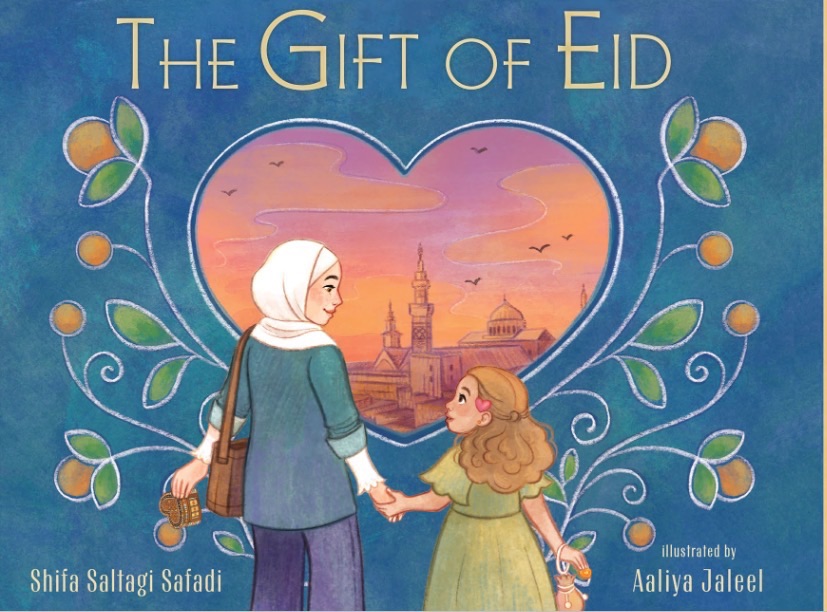
The Gift of Eid by Shifa Saltagi Safadi illustrayed by Aaliya Jaleel

Standard
The Gift of Eid by Shifa Saltagi Safadi illustrayed by Aaliya Jaleel

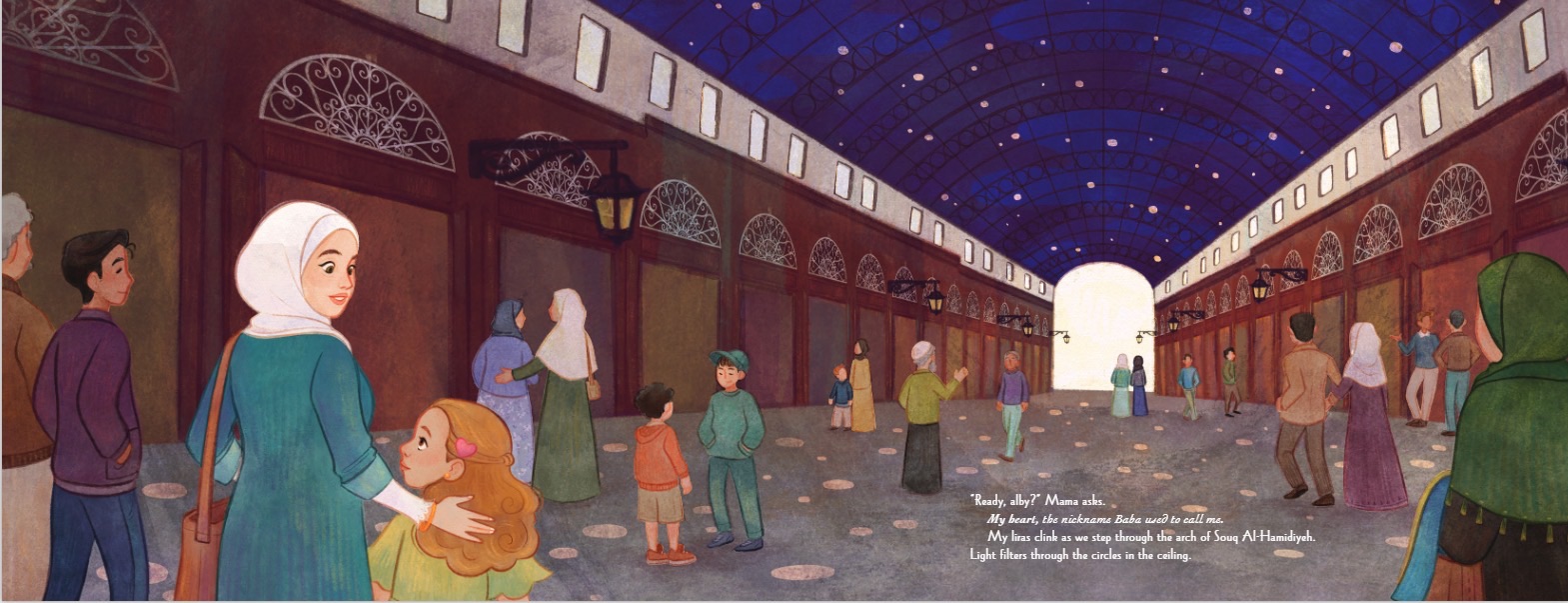
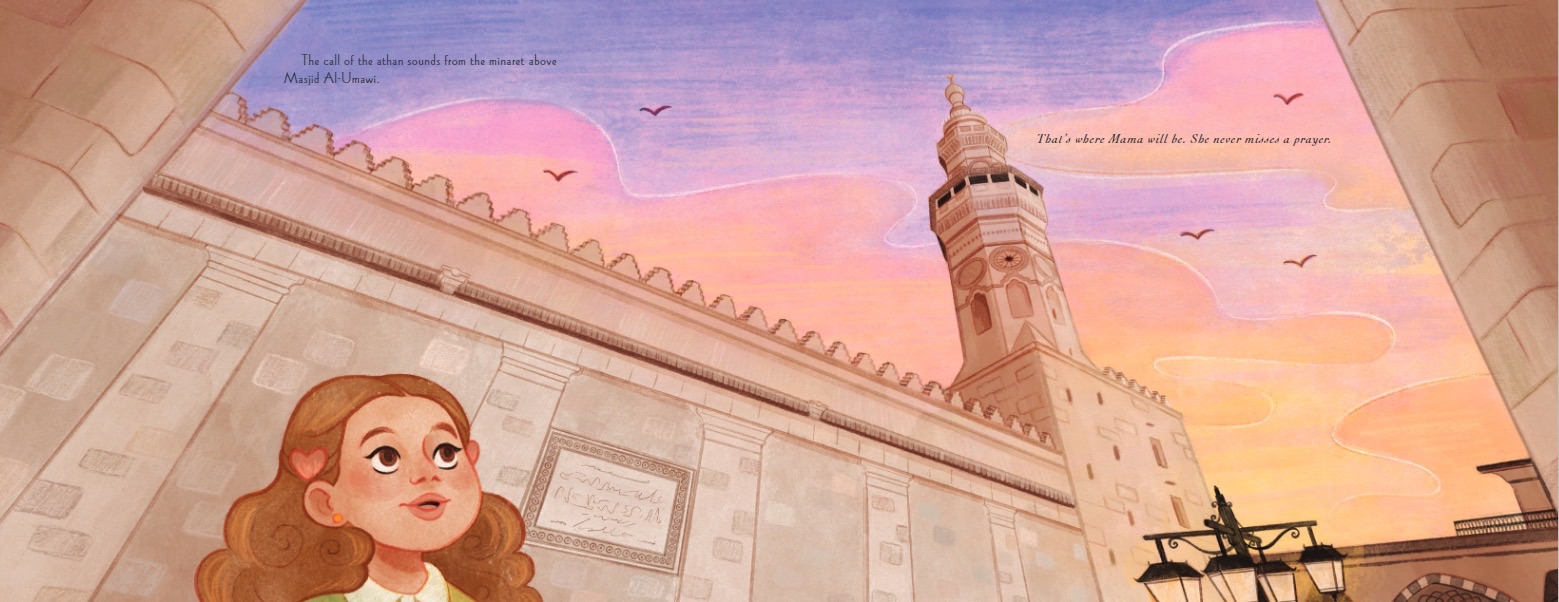
With heartfelt words and large two-page spread illustrations, this beautiful book shares a mother and daughter finding the perfect Eid gift for one another while bringing the reader into the Souq Al-Hamidiyeh, before sending them off to Masjid Al-Umawi for a warm hug.  A retelling of the classic, A Gift of the Magi, the story poignantly presents threads of love, gifts, loss, and Eid to fill the reader with joy, peace, and gratitude.  I’m admittedly very bias, as a close friend of the author, but this beautiful book doesn’t need lip service or marketing, it will appeal to all readers in all settings, and be cherished and asked for, over and over again, all throughout the year. Alhumdulillah.

The book starts with Yasmine and her mama entering the souq through the archway, and Yasmine remembering her father and her imagining the circles in the ceiling to be twinkling stars.  He is no longer with them, the magic is gone and money is tight now, but with liras jingling in her pocket, Yasmine is determined to find an Eid gift for her mother that will make her smile.

Yasmine looks around the shops as her mother counts out liras to buy za’atar, and tries to find something cheaper than sfeeha at the bakery.  She finally knows what to get her mother, but it is more lira than she has.  With determination and selflessness she makes a decision to get her mama the perfect gift.

The process separates the two, and when they reunite at the masjid for maghrib salat, it isn’t the gifts themselves, but rather what they mean, that make the laughter, tears, and love overflow.

I love the emotional depth the book conveys so deftly, never explaining or pulling the reader out of the story, thus allowing the connection to linger long after the book is closed, a rare treat in a picture book.

Amir and the Jinn Princess by M.T. Khan

Standard
Amir and the Jinn Princess by M.T. Khan

amir

This 304 page middle grade fantasy book is a quick fun read.  There is no religion in this Muslim authored book, jinn are not portrayed as creatures from Islamic doctrine, and with the exception of Quranic decorations hanging in a room and Zam Zam water being mentioned, once each, in passing, there is nothing hinting or signaling religion.  Even the jinn come across as characters who just happen to be jinn, who have control over fire and live in an alternate world, the book uses their fantasy elements to create an added layer, but the heart of the story is making choices, doing what’s right, being a good friend, and changing injustice when you can. This is a companion book to Nura and the Immortal Palace, and even with the lacking religion, I think I enjoyed this book more.  The plot is clearer, the characters are relatable, the thread of the missing mother is emotional, and the commentary on corporations and labor practices are awesome to see in a middle grade book.  

SYNOPSIS:
Amir is wealthy, really wealthy, and arrogant, and unlikeable, and yet, the over the top framing of him being all these things, makes even the target audience reader realize, that he is also a 12-year-old little boy who is grieving his missing mother, longing for friends, wanting to be seen in his competitive family, and ultimately smarter and more emotionally intelligent than he will ever force himself to admit.  Until, a cat, or rather a jinn princess in the shape of a cat, shakes up his world, by convincing him to come to hers.

Shamsa strikes a deal with Amir, she will help him look for his mother, if he helps her battle against her siblings to be the next heir of the Kagra Kingdom.  Amir knows she is a trickster, it is her nature, but he wants, no needs, to find his mother, so he is willing to pose as her slave and do her bidding.  There are three tasks to test the future heirs physicality, artistry, and diplomacy, and the irony that Amir does not want to be heir to his own fortune, while helping Shamsa claim hers, is not lost on him and will in fact force him to make choices about who he wants to be and what he wants to stand for.

WHY I LIKE IT:
I like that the book discusses monopolies and business and corporations and systemic gatekeeping.  It stays on level and articulates the points it wants the reader to explore with Amir, but does so without taking away from the story.  Also the ability to see all that Amir has, because he is wealthy, also allows the reader to see what he is also missing, and this is done with a little more subtly, some self-awareness, and some quality writing which results in making Amir a little more relatable.

I do wish there was some Islam, jinn are Islamic based and to not have any signaling seems a bit lacking.  Perhaps it kept it so that accuracy or rep was not a factor, I don’t know, but when Amir says that he thought only the uneducated believe in such creatures, it rubbed me the wrong way, just like when he makes a comment that, “those are the kinds of games God like to play with me.” The lines are minor, but when that is the only religion mentioned and it is done in a negative trivial, dismissive way, they carry more weight than perhaps intended.

I like that the characters and plot are solid.  It doesn’t feel like Amir is free-falling through a crazy chaotic world, there is direction and purpose.  There really isn’t a lot of world building or even Pakistani culture, it really is about the characters and their arc of growth and coming in to their own.

FLAGS:

Fantasy, jinn, lying, sneaking, death, abuse, manipulation, plotting, casinos, fears of water, abandonment, abuse.

TOOLS FOR LEADING THE DISCUSSION:
Probably wouldn’t do it as a book club, there are teachable moments and concepts that would be fun to discuss perhaps with economic or business tie-ins, but I don’t know that there is that much to discuss outside of what the book offers.  I do plan to shelve this though, so my own kids have easy access to pick it up and read and hope teachers, librarians, and parents will as well.


Three Summers: A Memoir of Sisterhood, Summer Crushes, and Growing Up on the Eve of the Bosnian Genocide by Amra Sabic-El-Reyess with Laura L. Sullivan

Standard
Three Summers: A Memoir of Sisterhood, Summer Crushes, and Growing Up on the Eve of the Bosnian Genocide by Amra Sabic-El-Reyess with Laura L. Sullivan

three summers

It is difficult and probably rather inappropriate for me to offer a “review” of a memoir, after all who am I to have opinions on someone’s lived experience.  And this non fiction book in particular is so desperately needed and important, as OWN voice middle grade literature about Bosnia is fairly non existent. So continue reading my thoughts with a grain of salt, suffice it to say, that I enjoyed the book, and loved the author’s YA book The Cat I Never Named, but ultimately I struggle to suggest this for the intended audience of 8-12 year olds.  As a child my family was involved with Bosnian refugees in the 90s, as an adult I understand that Islam, and being Muslim, is not a monolith, as someone who can empathize with loss and heartache, I couldn’t put the book down.  Yet, I truly doubt that many fourth graders will feel the emotional climaxes that are not shown, but told.  That they will understand the timeline and what is about to happen if the book were to continue.  That they will feel a connection to the characters who read so much older than them.  If the book was fiction, I would say the characters read YA, with the bikinis and details of body growth, kissing, making out, having boyfriends, and dancing at the discotheque, cigarette smoking, backless dresses, noting which neighbors are having affairs, and trying to become their “truest self,” but the book is a memoir, this is the author’s life when she was 11, 12, and 13.  In an environment where her maturity is noted as being heightened because of the loss of her brother and her personality, the book shows cultural norms, that will still strike contemporary reader as being much more adult in nature. Islamically, the label of Muslim and Bosniaks, is ever present.  Bosniaks were massacred for being Muslim, period.  The book never shows them praying, or mentions Allah swt or the Quran, covering is something only the older generations did, they do drink alcohol on occasion, but they have a cow slaughtered Islamically and burials are done in accordance with Islamic principles.  There is kissing, having boyfriends is not problematic unless they are Serb, the only imam mentioned does weird black magic type things.  So while the label of “Muslim” may feel to Muslims readers more like a cultural marker at times, it is none-the-less incredibly empowering to see that Amra takes pride in her Bosniak identity and doesn’t shy away from it. Other flags/triggers are domestic abuse, bullying, physical violence, attempted drowning, accidental drowning, death of a sibling, kidnapping, imprisonment, threat of war, racism, Islamophobia, music, fortune tellers, lying, threatening.  The backmatter offers a timeline and thus gives some information about the rape, torture, genocide, abuse, and destruction.

SYNOPSIS:

The book starts with a visiting fortune teller giving Amra and her family hope that her older brother Amar will be pain free soon. Amar suffers from Marfan syndrome, and is frequently weak, teased, and in pain.  But he is also wise and patient, brilliant and gentle, and beloved by so many, and Amra is broken when he passes away.  To help break her from her debilitating grief, her parents reach out to a cousin in Belgrade, who has long been estranged for marrying a Serb, to come visit for the summer.  Zana and her younger sister Vedrana, engulf Amra in warmth and adventure and the summer on the River Una is just what Amra needs.  The next summer Zana and Amra resume their idyllic adventures of swimming, make-up, crushes, and coming of age, with only a hint of fracture based on religious lines creeping in the final days.  The following summer Amra is starting to mature on her own and understand the world around her.  Her father has lost his job, been kidnapped essentially and tortured, and while nights dancing at the discotheque give laughter and light, the girls final summer, is the end of peace, and innocence for all Bosniaks.

WHY I LIKE IT:

I love the end, that there are real life updates of the people in the book.  It made me cry.  It is also so timely to what is occurring in Gaza and how no matter how clear it is that it is genocide, and it is oppression, and it is racism, some just cannot see it.  The book is joyful, but the reality of the backmatter is heavy, and real, and important.

I like that the book shows Bosnia and the culture and the traditions, the few books I’ve read focus on the war, and the rich culture and deep history doesn’t get to shine like it does here.

I do wish the book was more showing than telling.  I know it is a memoir, but at times it was just too advanced commentary and insight.  I fully believe the author is brilliant, and at 11 years old was pondering her life, but most readers just aren’t at that age, and the tangents keep the readers at arms length.  The book says it is about crushes, so I don’t want to keep harping on it, but it really is Amra and Zana and a gaggle of other female cousins quite often worrying about boys, and crushes, and kissing.  It doesn’t get obnoxious, but it isn’t a line here or there, it is the bulk of the book.

FLAGS:

Domestic abuse, bullying, physical violence, attempted drowning, accidental drowning, death of a sibling, kidnapping, imprisonment, threat of war, racism, Islamophobia, music, fortune tellers, lying, threatening, death, loss, grief, affairs, cheating, racism, bare bodies, crude jokes, crushes, kissing, making out, sneaking out, smoking, drinking, developing bodies, bullying, internalized Islamophobia, kidnapping, imprisonment, dancing, black magic imams.  The backmatter offers a timeline and thus gives some information about the rape, torture, genocide, abuse, starvation, and destruction during the Bosnian genocide.

img_4254-1

TOOLS FOR LEADING THE DISCUSSION:

I think with some context about war, about communism, the Ottoman empire even, this book could be used in a teaching setting to allow the time frame to be seen from those living it, but, for more mature middle school to early high school readers.  It is a lot for MG and that it is non fiction makes me want it to be understood and appreciated and I don’t know that for the intended demographic, even with context and guidance it would be achieved. There really isn’t a plot, it is a memoir, and the pacing and assumed context knowledge I feel like, just wouldn’t be there for the typical western middle grade reader.

Always Sisters: A Story of Loss and Love by Saira Mir illustrated by Shahrzad Maydani

Standard
Always Sisters: A Story of Loss and Love by Saira Mir illustrated by Shahrzad Maydani

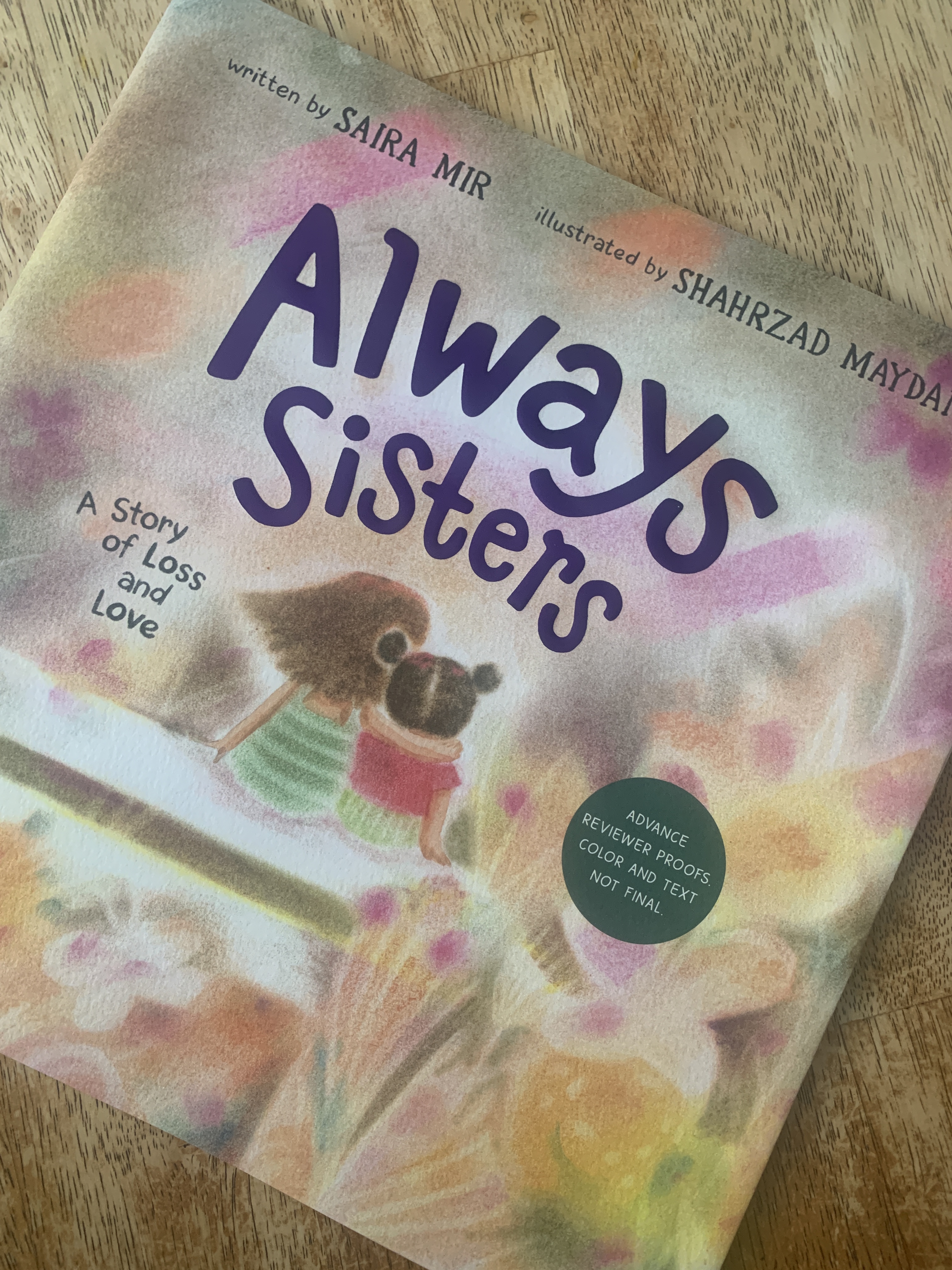
This 32 page picture book for early elementary children addresses an important topic of pregnancy loss and grief through the eyes of a young girl excited and then devastated by the loss of her unborn sister.  The author is Muslim, but their is nothing religious in the text, it is a universal and poignant story from an OB-GYN who has counseled patients and experienced it in her own family.  The book is a story that can benefit children needing reassurance or simply provide a way to have heartfelt conversations.  The soft illustrations and gentle steps the character takes to help with the big feelings inside will allow readers of all ages to feel less alone, and see that support is available.

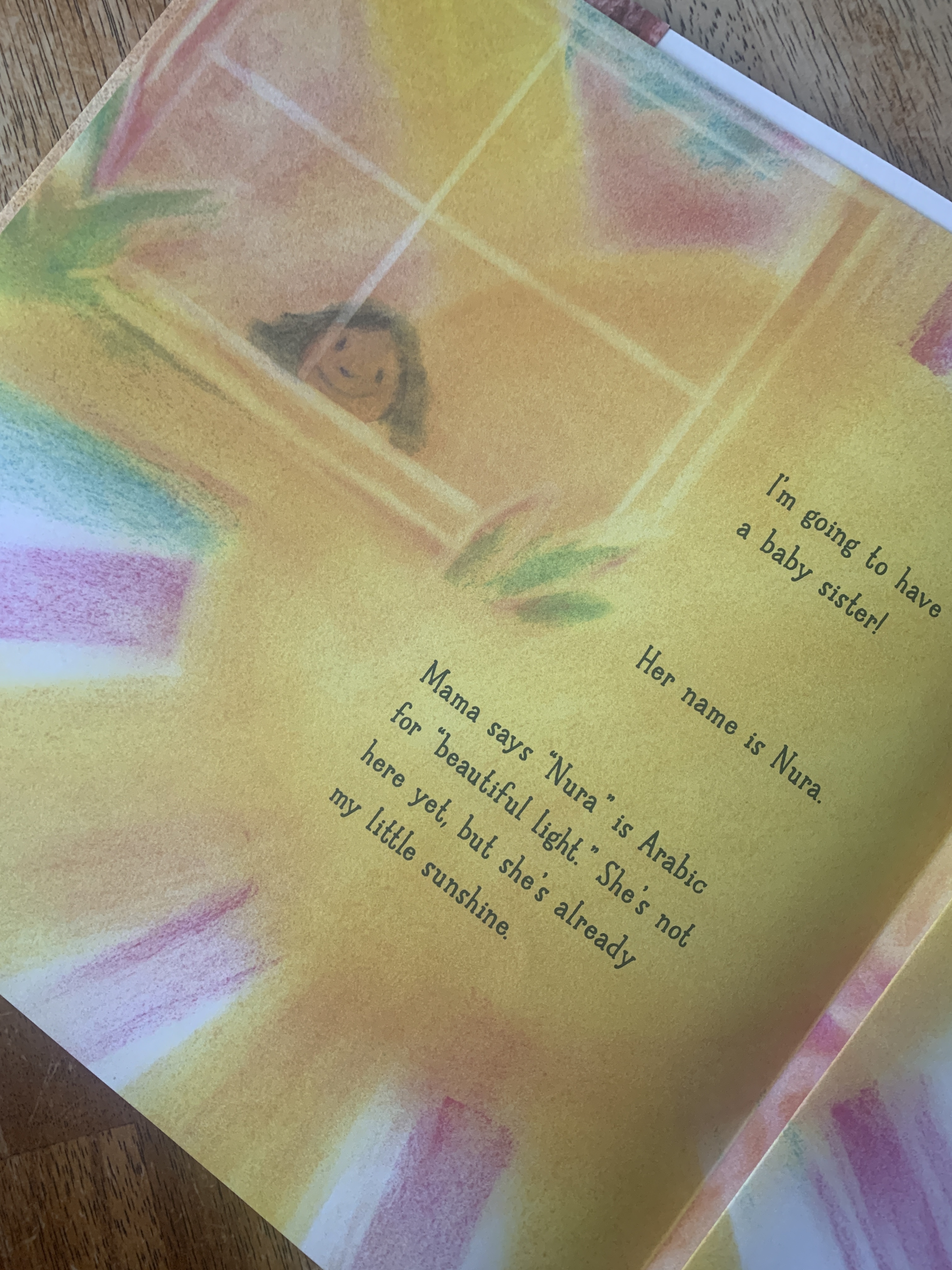
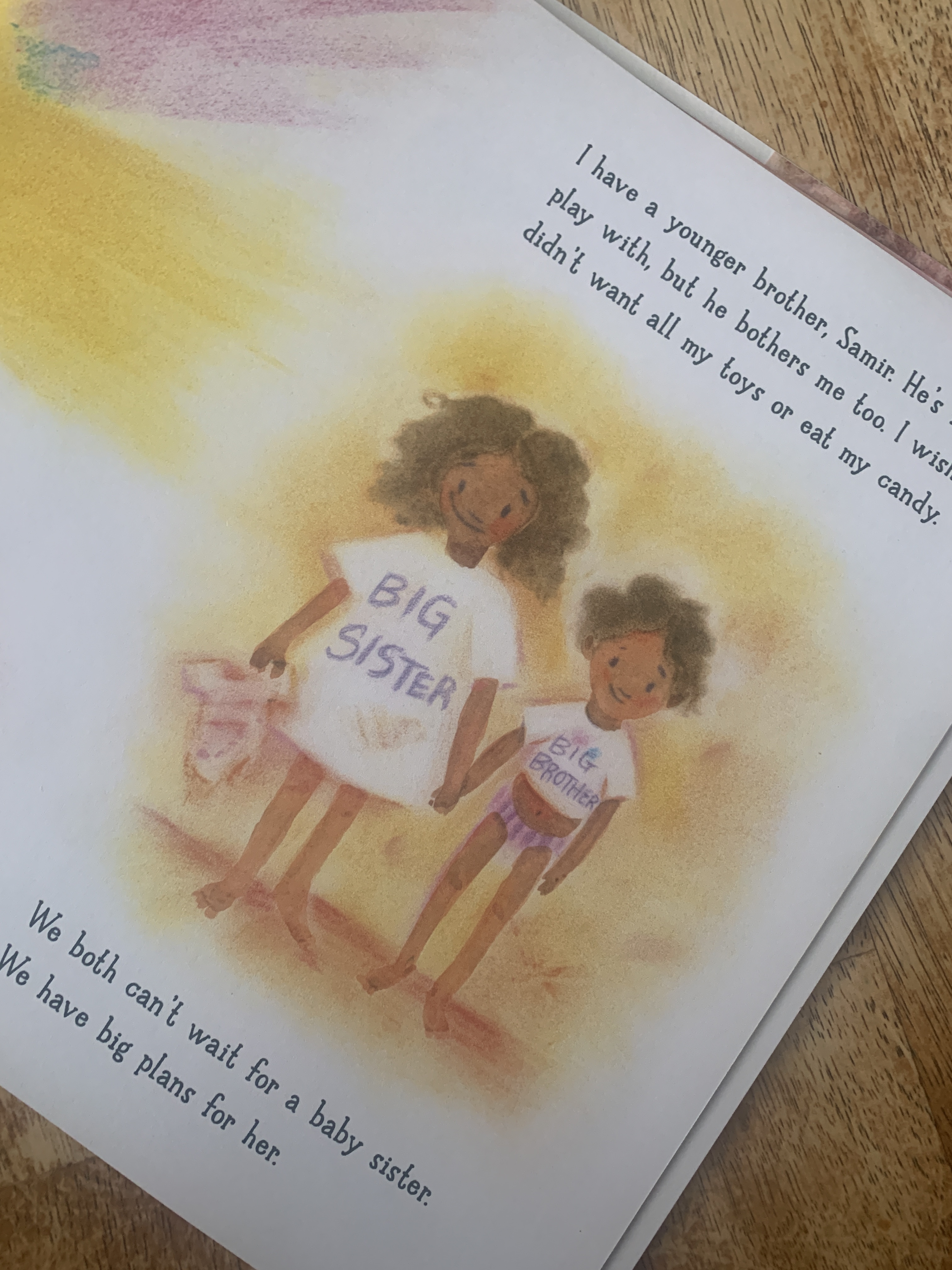
Nura is not born yet, and Samir is a fun little brother, but Raya has big plans for a baby sister.  They will run through sprinklers in matching bathing suits, and she’ll pass on her ballet costumes for her to wear, she’ll love chocolate and dolphins and they’ll share everything. Raya even hopes they will share a birthday, that would be the best present ever.

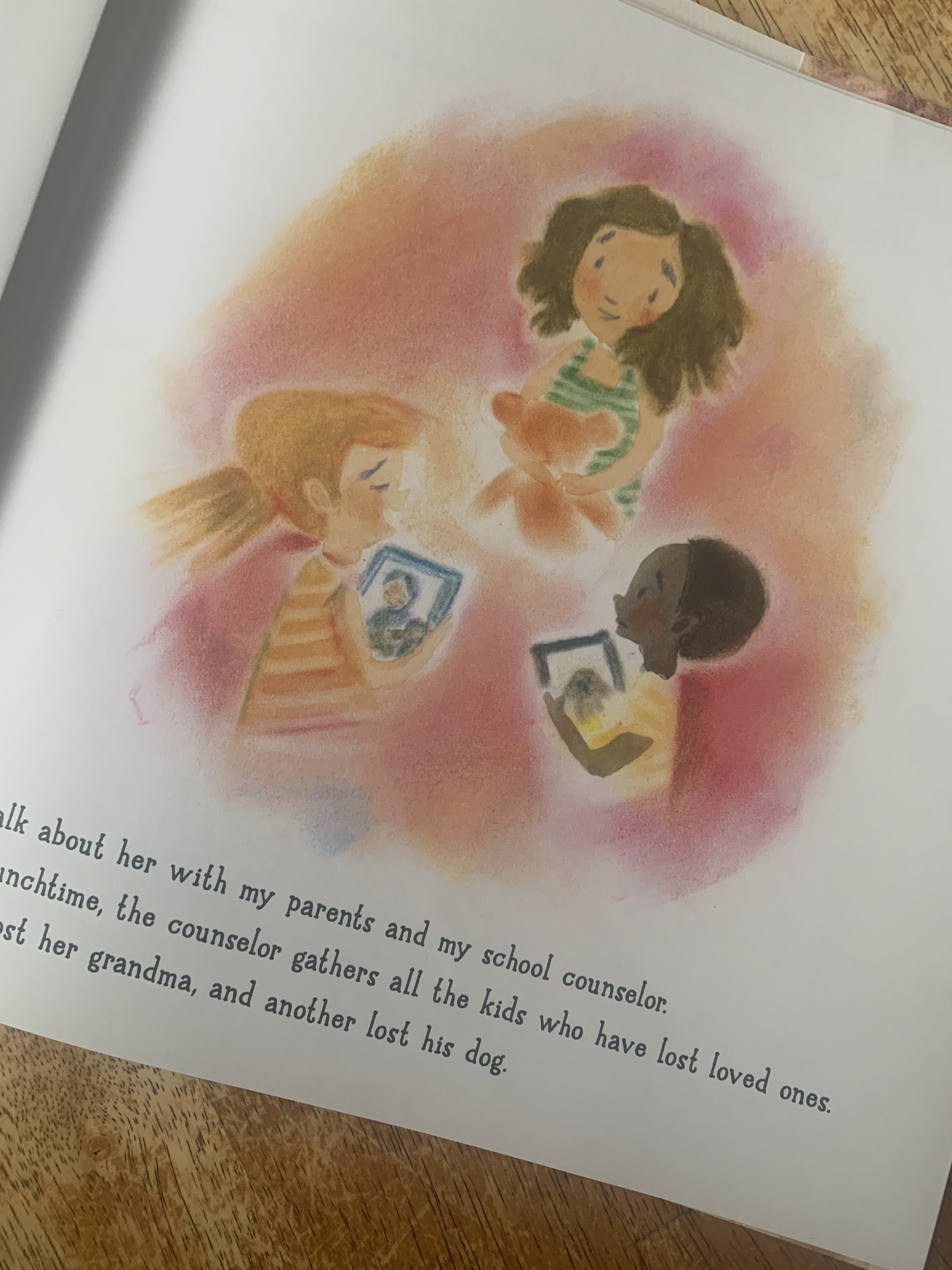
One day Mama goes to the doctor for a checkup, but when she comes back she looks like she has been crying.  She tells Raya, Nura won’t be coming home.  Nura is confused and sad.  There is an ache in her heart.  She talks to her parents, draws pictures, meets with the school counselor.  The family plants a tree and they talk about her and remember.

I like that you see the joy and anticipation the little girl has for the arrival of her little sister and the painful aftermath when she is not going to get to see her dreams materialize.  The book isn’t just a resource, it has literary elements as well that make the book valuable for those who can relate and even those that have been spared from such a loss.  The book can be preordered here. 

The Kingdom Over the Sea by Zohra Nabi

Standard
The Kingdom Over the Sea by Zohra Nabi

kigdom

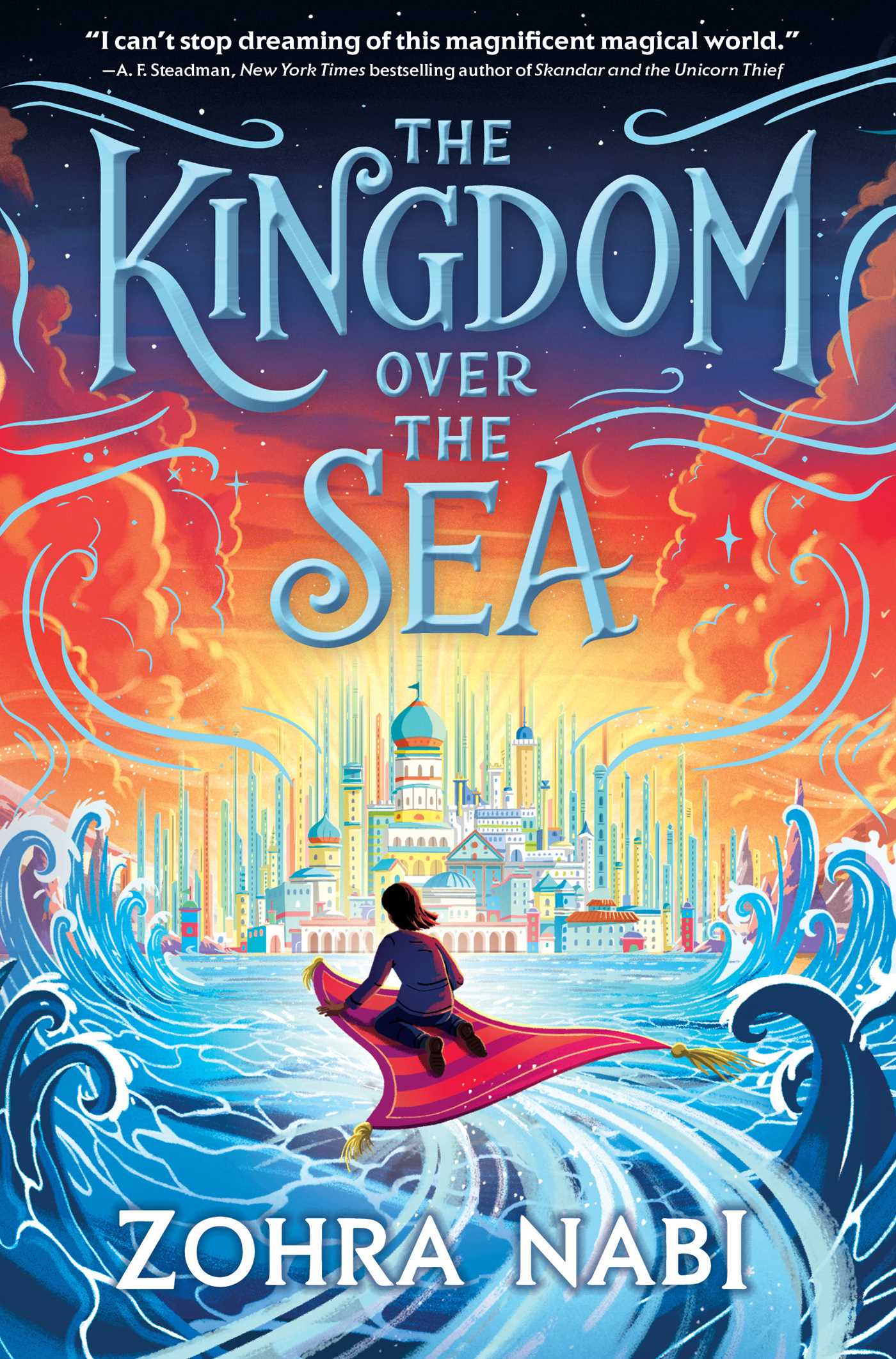
This 336 page middle grade fantasy book had a lot of promise for me, but ultimately fell a little flat.  The protagonist was likeable, there was emotion, the story was compelling, and I know it is widely said that debut novels tend to be a little weak or be underdeveloped or having pacing problems, yet I hesitate these days to use this as an excuse.  I’ve been around the industry a few years and it seems many author’s debut novel, is not, in fact, the first book they’ve written or even the first book they’ve “sold.” Books are written and finalized years before they are released for some genres particularly of late, so I’m trying not to let myself get caught up in the author’s writing journey (I’m sure I’m all sorts of wrong about what I think it would be anyway), and just review the book in front of me. This book has no religion, and I don’t know if the author identifies as Muslim.  There are a hodgepodge of Arab and Desi cultural references in the characters’ names, and in the sprinkling in of salwar qamis, abaya, head scarf, sambusak, and there is a ma’a salama at one point along with the presence of jinn (not religiously referenced). There is also mention of medicinal wine, magic, a lady who has a crush on another lady in her youth, music, and dancing. The book held my interest as I wanted to see how it unraveled, and I recognize that there is a book two, so some of my thoughts might be premature, but I struggled with the premise of the protagonist trying to understand the journey her deceased mother has sent her on, and how the person she was supposed to find for the answers simply won’t talk, even though the two are living together.  It made the story really drag in places and seem underdeveloped.  The world building, the backstories, the adventure at hand, really is imaginative, but the development of the relationships in the story are absolutely non existent, and the book overall suffers because of it. Also the ease in which rising action is resolved is often the kids just throwing an idea out and it being right.  I read and review through a critical lens and many recent middle grade fantasy books have been absolutely incredible, perhaps it isn’t fair to compare, but this book just came up short for me in developing memorable characters and plot, even though all the elements were present, capitalizing on bringing it all together stayed just out of reach unfortunately.

SYNOPSIS:

Yara’s mother has died and when she finds a letter with instructions of what to do and where to go should this moment arrive, she decides to dodge her social worker and journey to a world of magic across the sea.  Unsure of her own background, she thinks she might be Iraqi, but doesn’t speak Arabic, she longs to find a place to belong, and when she arrives in Zehaira and hears the language of her mother, she is hopeful that this Leyla Khatoun, who lives in the third to last house on Istehar Way, will provide her with answers. But alas Leyla is not there, the Sultan’s alchemists are, and Yara is now on the run in a foreign land.  Help finds her and with a little magic she finds Leyla.  Leyla begrudgingly takes her in, but refuses her any insight into her past, her relationship with her mother, or why the letter directed Yara to her.  As the alchemists poison the sorcerers, Leyla and some other kids (friends?) have to find a way to save the settlement and magic in the land.

WHY I LIKE IT:

Yara as a character is likeable, she is plucky, resourceful, determined, and despite her circumstance does not want or need pity or handouts.  She advocates for animals, the poor, is a grassroots organizer, and unapologetic in how she carries herself.  I love that she isn’t whiney or helpless, and that she trusts herself to problem solve and isn’t afraid to think outside the box, while maintaining her kindness and appreciation for those around her.

As someone who doesn’t like Alice in Wonderland type stories, this book grounded the world building in an easily consumable way, so even though it is Yara leaving the UK and stepping into a new world, the functioning of the new world didn’t feel random or surprising.  While this was beneficial for someone like me, it made the focus of the story more on the characters’ relationships in enhancing the plot, and the book wasn’t strong in showing those connections.  Yara meets a map maker for a moment and a cat, and months later recalls the cat and the map maker by name and face.  A boy, Rafi, who is also studying magic and Yara don’t get along, yet are friends because it says so, the book doesn’t show us their bond.  Rafi meets some great uncle and the great uncle is painfully underdeveloped (along with his “friend”) and the tangent weak in reinforcing the major climax. The relationship between Yara and Leyla is the center of the story and so glossed over, there is no tangible connection, or cathartic release when details emerge, it was very disappointing to say the least. Yara and Ajal, the jinn, what is that relationship even, she frees him à la Aladdin freeing the Genie, but they are friends, not friends, he looks out for her, but doesn’t like her, the telling and the showing don’t align.  Even Yara’s relationship with the settlement and the inhabitants is disconnected from the plot of saving magic.  The climax is weak because we, the reader, don’t feel any connection to any magical folk.  The emotion of the mother dying at the beginning and the slight retrospection (I’m not going to spoil it) of the mother’s love at the end, was developed and made me invested in Yara, that same energy did not present itself, sadly, in any other relationships in the book.


FLAGS:

Death, loss, poison, imprisonment, magic, mention of medicinal wine, one line mention of a female character liking another female character as more than a friend, dancing, singing, jinn, torture, male and female friendships, destruction, lying, sneaking.

TOOLS FOR LEADING THE DISCUSSION:

I wouldn’t use this as a book club selection and wouldn’t go out of my way to shelve it in the school library or classroom library.  I will probably read the second book though and see where the series goes and reevaluate. I will also probably read future works from the author as the sparks of good story telling and writing definitely show promise for the author even though this particularly book wasn’t “magical” for me.


Amir’s Blue Jacket by Sarah Musa illustrated by Rania Hasan

Standard
Amir’s Blue Jacket by Sarah Musa illustrated by Rania Hasan

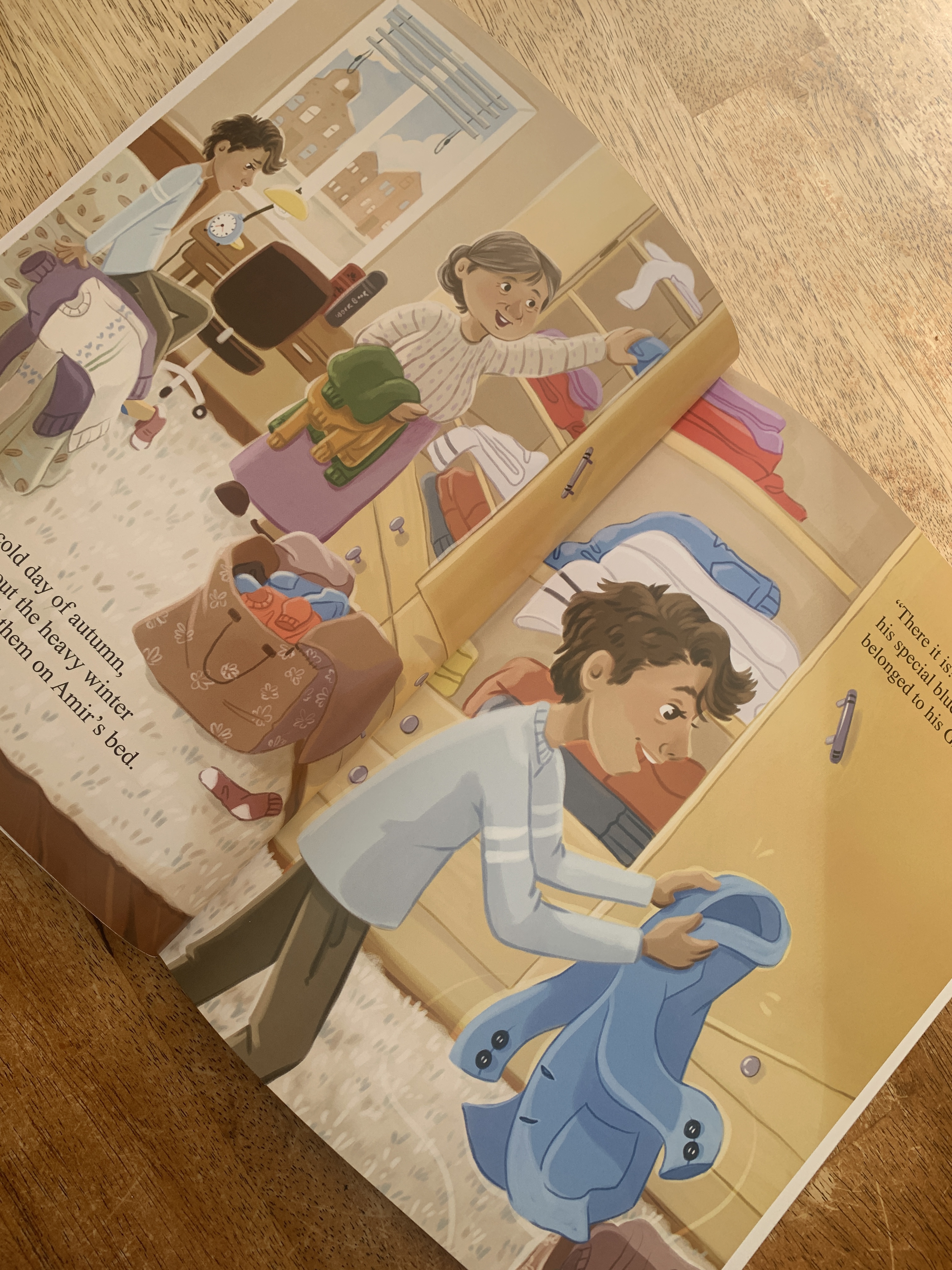
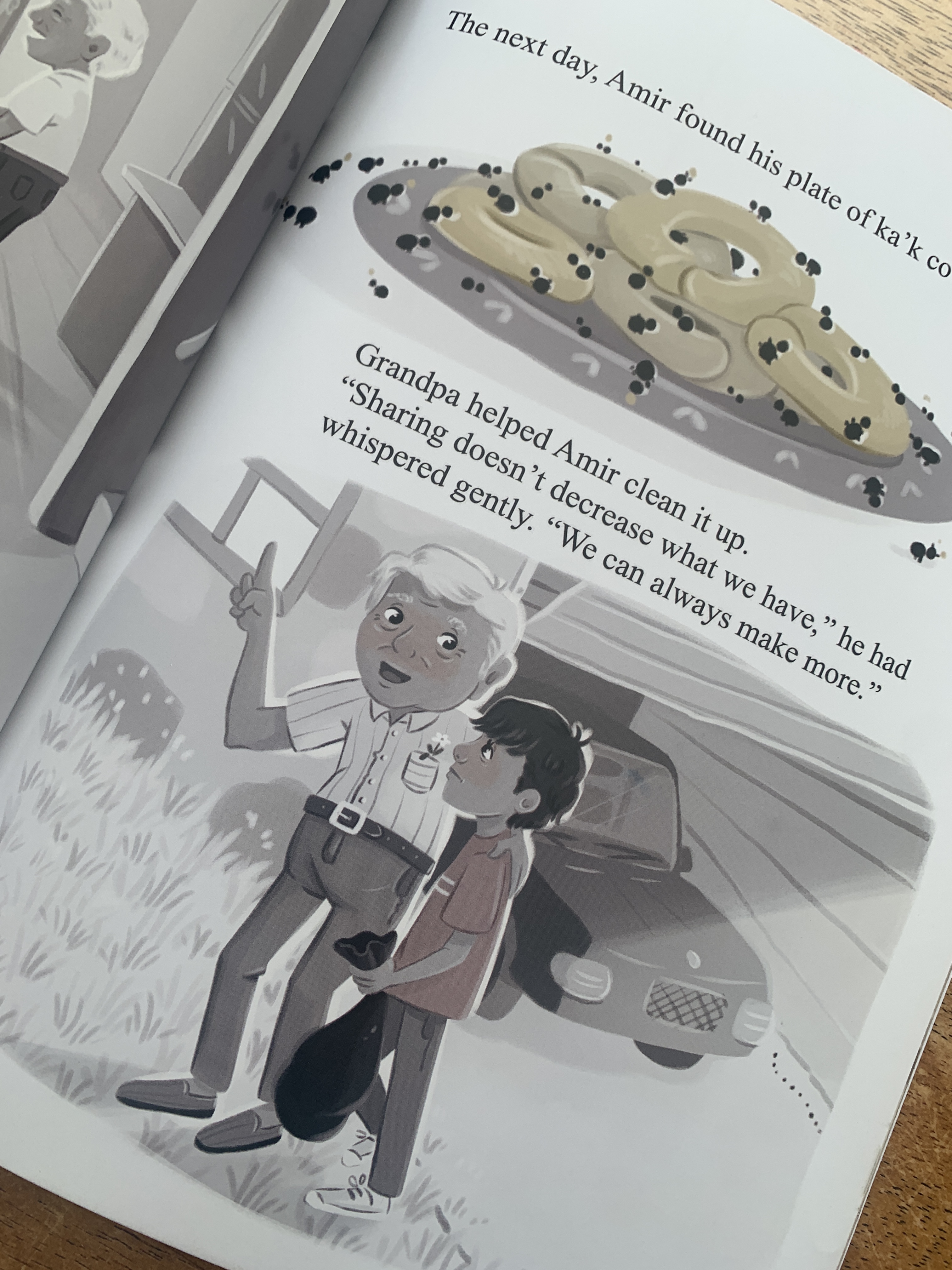
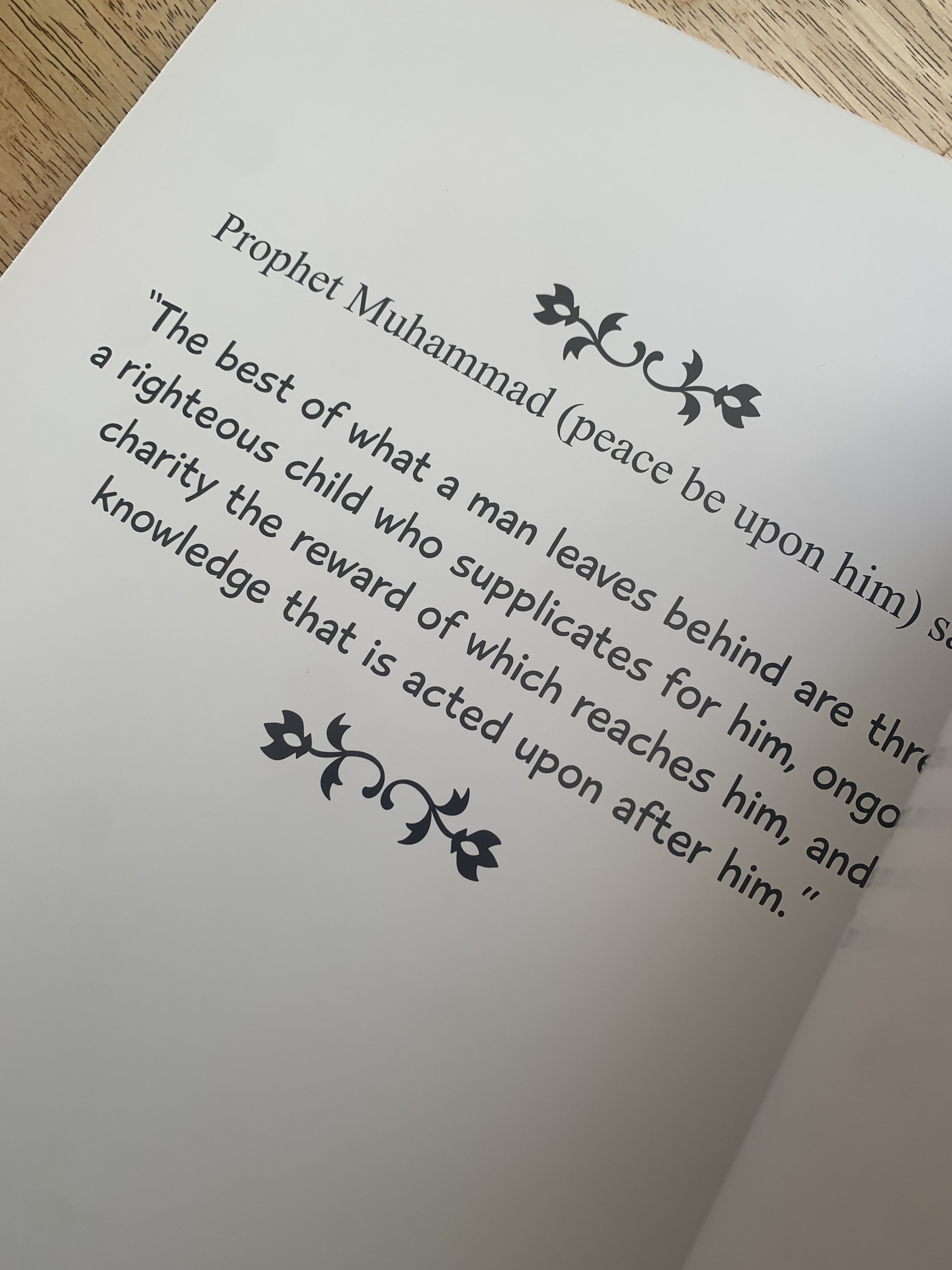
This heartfelt elementary picture book does a remarkable job of drawing the reader in to the emotions of the main character, his relationship with his grandfather, and imparting a moral message without being preachy. The illustrations are lovely on their own, but the way the muted tones convey the memories and illustrate the text really ties the book together. Whether it is for a larger story time or a one-on-one bedtime read, the book will offer discussion, comfort, guidance, and a little surprise at the end for Muslim and non Muslims alike. The slightly allegorical book does conclude with a widely known hadith (it is attributed to Prophet Muhammad saw, but is not further cited/sourced) and the family is clearly Muslim with their names mentions of Eid and God, and a hijab clad woman, but the book is universal and a lovely addition to any book shelf.

The book starts with Amir finding his Grandpa’s old blue jacket and recalling wrapping himself in it the day after his beloved Grandpa died. With it smelling like mothballs, he tosses it in the washing machine, but unfortunately when it comes out it has clearly shrunk. Amir is in denial, he says it fits fine and he has no desire for a new one. It is Grandpa’s jacket, and Amir is going to wear it, no matter how tight it is. Amir storms off to sit under the apple tree and recalls picking apples and making applesauce the year before for the whole neighborhood. Grandma shares that she used to keep grandpa’s cane but when someone needed it, she let it go.

Grandma stirs another memory in Amir when she pulls the tray of ka’k out of the oven, of him trying to sneak a whole plate for himself only to have his hiding spot taken over by ants. When he is asked this time to share a plate, every step to the neighbors house reminds him even more of making the trip with his grandfather. Slowly he starts to realize that his memories are with him, not in his grandfather’s things, and Amir makes a decision that would make his grandfather proud, and (inshaAllah) give him more good deeds, even though he is gone.

The idea of sadaqah jariyah is understood through the story, and present in the hadith at the back, but it is never mentioned outright. Just as God is used, not the term Allah (swt). As Amir feels denial, frustration, and eventually peace, nothing is really told, it is shown, which really opens the book up to be a tremendous tool in sharing it with children and asking them to discuss what they understand, what they feel, and what they took away from Amir and his Grandpa’s blue jacket story.

The book is available through the publisher Ruqaya’s Bookshelf as well as HERE at Crescent Moon Bookstore where code ISL will save you 10%.

A Bit of Earth by Karuna Riazi

Standard
A Bit of Earth by Karuna Riazi

earth

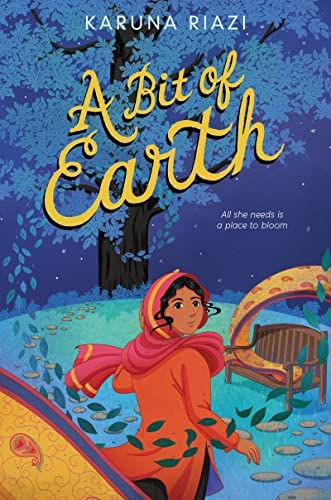
This Secret Garden retelling mixes the heart of the original with a dash of modernity, the flavor of desi culture, and the lyricism of a good writer.  Over 368 pages the slow plot but rich imagery will draw readers in, hold their attention, and leave them thinking about the characters they have been fortunate to spend time with on Long Island.  Islam is practiced and normalized and naturally woven into the Muslim characters’ daily lives without othering or over explaining.  I did struggle a bit trying to keep the relationships of who was supposed to be caring for the protagonist at various points since her parent’s died clear, but once I abandoned stressing about it I was able to be swept away.  I recently reread The Secret Garden with my own children and the original is not plot heavy, nor action packed, but I watched as my own children were drawn to the slower, more grounded (pun intended) nuanced tale, and I think this book, in the same vein, will find its way in to the hearts of middle grade readers.  The book is clean, there is a possible crush hinted very slightly at the end, periods are also endured, and I do have reservations of the terrible marital relationship between Mr. and Mrs. Clayborne, but it establishes that change will occur, so at least it isn’t normalized.  There are sprinkles of magic implied regarding the house, but it is always framed without clarity and in a subtle way to set the tone and the emotions the characters are feeling more than centralizing something rooted (see I did it again) in fantasy.

SYNOPSIS:

The book updates and mirrors the original fairly well with an obstinate orphan arriving at a sprawling house, finding a prickly boy, and setting off to form a tentative toleration of one another with friendly neighbor kids in a garden that is unquestionably off limits.

Maria Latif arrives from Pakistan against her will to be taken in by a distant relative (I’m not sure how she is related), but Asra has been called away and she is forced to stay with Lyndsay, the new wife of Mr. Clayborne.  The first wife was a friend of Maria’s family, but Lyndsay is just as emotionally overwhelmed and lost as the child in her charge.  With Mr. Clayborne away on businesses, his mother Charlotte keeps them all on edge.  When Colin Clayborne is expelled and returns home, more tension erupts and the two children find themselves in an off limits garden trying to make the most of a difficult situation.

WHY I LIKE IT:

I love the mix of poetry and standard novel format.  It is beautifully written and clearly the author does a remarkable job of making her very unlikeable characters worm their way in to the reader’s heart.  Both Maria and Colin are thorny and difficult, stubborn and rude, but you seriously cheer for them, and I did shed a few tears at the end.  With the author’s writing ability apparent, I’m still not sure why the foundation of the relationships and getting Maria to the Clayborne home is so cumbersome.  It is too muddled and it drags the book down every time it is revisited.  The Dadi having the aunt’s phone number was too easy, the inconsistency of the neighbors having no relationship to the Clayborne’s for so long and Lyndsay not even pausing to think another Bangladeshi family living a few houses down might be my husband’s first wife’s friends, seems inconsistent.  Honestly Lyndsey in general needed to read like a competent woman struggling, not a teenager in over her head. I disliked her and Mr. Clayborne’s relationship and I would hate to think any reader would find it ok or normal.

I love the Islam and how it presents when the character has to pray, she goes and prays, it is part of the story and it is seamless.  I don’t think the culture is handled quite as well.  Lyndsay is a foot writer who is always cooking, yet knows nothing of desi foods? If Colin’s mom is desi, wouldn’t she at some point tried to cook familiar foods for him.  Half the neighborhood is Bangledeshi, so it seems everyone has a parent or step parent or distant relative that is desi and I loved the normalizing, but it seemed a bit assuming.  I don’t think kids will wish it was more clear, but as an adult reading it, I felt like it needed to be interjected more without explanation, or if left as is, adding some context. I also wanted to know what Maria’s parents did and a little introspection from Maria.  Again as an adult I see how her anger and grief changes how she remembers them, but from them always being away, to such soft poignant memories at the end, I think kids will need a little hand holding to understand the grief process and her understanding of them.  As it is, they just seem terrible and then all of the sudden great, and the pacing gets thrown off in the process.

FLAGS:

It seems to hint at the end that Maria might have a bit of a crush on Colin, I honestly thought up until a single line that they were making a chosen family with the people who cared for them, but that line seemed to suggest it might be more of a romantic feeling than friend or brotherly.  I read an early copy, so this is subject to change.

Maria gets her period and it is detailed what she is feeling.  I think boys and girls can and should read it.  It is presented on age and appropriately: cramps, achy, dry about blood leakage, having it start young like her mother, etc..

Implied magic (possibly), music and musical instruments being played, milaad, lying, sneaking, being kicked out of school for physical assault, close male and female friendships, ADHD stigma.

TOOLS FOR LEADING THE DISCUSSION

I think this book would work in a classroom and would appeal to readers in an Islamic or public library.  I would consider it for a middle school book club, I think readers will connect and feel empathy for Maria, Colin, and Lyndsay and be better for it.

I preordered my copy HERE and I hope you will do the same