Tag Archives: life

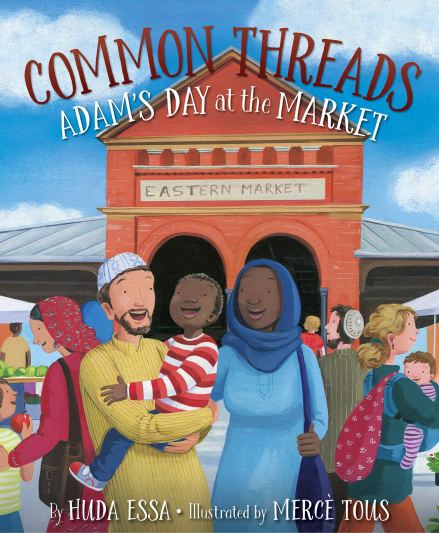
Common Threads: Adam’s Day at the Market by Huda Essa illustrated by Merce’ Tous

Standard
Common Threads: Adam’s Day at the Market by Huda Essa illustrated by Merce’ Tous

Common-Threads-Book-Cover.jpg

A lot of story is conveyed in this 13 word book for preschoolers about diversity, similarities, and love.  In 32 picture rich pages you meet a little family at an outdoor market, see Adam lose track of his parents as he follows a bird, and meet a lot of kind people as he mistakes them for his parents based on the clothing they are wearing.

A7AC0F6A-D891-4F4F-A537-0A10BA8F19A4

Naturally it has a happy ending, and it appears all the characters come together to get to know one another.  The pictures are beautiful and radiate with light and colors.

The market in general is diverse and the characters Adam meets show clothing similarities.  His mother wears hijab and he mistakes a nun in a habit for her, and then a lady in a kanga.  He thinks he sees his father, but it is a man with a yarmulke and a gentleman in a similar color shalwar kameez looks a lot like his dad’s kurta, but isn’t him either.

This is truly a picture book with sparse words of “Mama?” and “Baba?” being the bulk of the text.  It is visual and conversation sparking in its minimal and simplistic text.  By not having the author fill in the conversation, a preschooler gets to do it themselves, and hopefully broaden their mind in the process.

The beginning of the book has a beautiful Note to Readers urging children and adults to engage in diverse collaborations to increase empathy, innovation, social justice, and understanding to the benefit of us all.

6304D0EE-6710-44B9-9CF1-F6E5AD9359DC

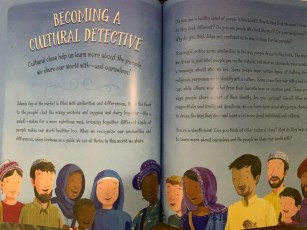
The book concludes with a challenge to children to become cultural detectives.  It notes that what we wear sends a message about who we are, but it is just what you see on the outside.  It encourages us to ask questions respectfully and kindly to learn about one another.

E48812D3-A399-40B9-B903-3D366414827A

The Proudest Blue by Ibtihaj Muhammad & S.K. Ali illustrated by Hatem Aly

Standard
The Proudest Blue by Ibtihaj Muhammad & S.K. Ali illustrated by Hatem Aly

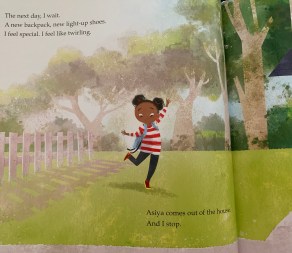
blueLOVE! Yes, usually when I’m so anxious for a book it disappoints, but not this one, it warmed my heart and soul and made me smile.  In 40 pages surrounded with absolutely adorable illustrations, the reader feels the love between siblings, the strength of self confidence, the power of being true to yourself, the beauty of hijab, and the awesomeness of light-up sneakers and five cartwheel recesses.

C7E95032-E080-4057-BC93-6B25CBCAAA29

It is the first day of school for sisters Asiya and Faizah, and Faizah’s first day of wearing hijab.  The book starts out with the girls and their mom picking out a new scarf at the store.

677BD5F0-0C6E-472A-B086-05F93D4F17CC

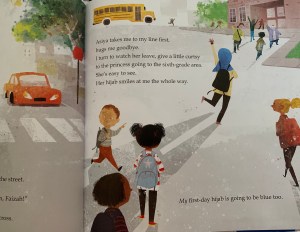
The first day of school has the girls walking to school hand in hand, Asiya in her beautiful blue scarf, and Faizah in her new shoes admiring her sister as if she were a princess.

DB80D90A-289E-4F35-A763-24526723E650

In line a classmate whisper asks Faizah about her sister, and Faizah has to find her voice to speak up about her hijab.  She then likens the blue hijab to the sky, special and regular before recalling that their mom had told them “The first day of wearing hijab is important. . . It means being strong.”

DFA253F0-16BC-464A-B630-BB93AFBFCF94

Throughout the day at school Faizah checks on her sister, sees other kids make fun of her, liken the blue to something beautiful, and then recall something their mom has told them to give her solace and strength.

06E90E71-3375-4E26-9F0A-F31DCA8058C4

As Faizah puts into practice the lessons from her mom about being strong, knowing who you are, and not carrying around hurtful words, she, like her sister finds strength.  A strength which radiates to those around them, and further connects the two girls.

C62B2893-3E2B-4628-BAAE-C195FBD3AB7A

Faizah has an amazingly sweet and authentic voice as she counts her light up steps and looks up to her older sister.  I love that the story stays on track and has its own rhythm of a school incident, a strong declaration about blue, a lesson remembered from Mama and a resolution.  With lots of mini climaxes the reader sees the strong perseverance and how being authentic will be challenged repeatedly.  The subtly of the hijab being whispered about and then proclaimed loudly is really tender and emotion filled.  Little reminders why OWN Voice stories are so important.

The illustrations are absolutely amazing on their two page spreads: the colors, tone, expressions, are perfect and a huge part of the narrative.  I love that when a boy points at Asiya, not just Faizah, but Asiya’s friends too are unhappy with the boy.  I also like that the boys being mean are not depicted clearly, but rather are shown in the shadows, furthering the point that mean words and those that spout them are not worthy of your time.

There are Authors’ Notes at the end and a picture of Ibtihaj  and her two sisters Asiya and Faizah. I think the book should be on every shelf, truly.  To be yourself and be proud of who you are is universal, as is kindness. The book does not discuss religion or mention Islamic reasons for her covering, and girls and boys alike will benefit from multiple readings of the book.


Towers Falling by Jewell Parker Rhodes

Standard
Towers Falling by Jewell Parker Rhodes

towers falling


I realize the inherent difficulty of writing books for middle grades about the events of September 11, 2001: the author lived through it, the readers did not.  Yet, it seems like at some point a book regarding it, will just feel right, and I don’t think for this age group, I’ve found it yet.  This AR 3.3, 228 page book is a quick read, and while some of the characters have spunk and personality, a few of the storylines seem incredibly forced and the overall timeline and holes in the story will be ultimately disappointing for most readers.

SYNOPSIS:

Deja is starting a new school now that her family has gotten a room at a homeless shelter.  Immediately her fifth grade classmates are given an assignment about home, with the end goal that eventually this project will transform in to being about the change of New York’s skyline fifteen years ago.  The details regarding the attacks of September 11, are not given forthright and as Deja knows nothing about the attacks, and the fall of the towers, her inability to get answers adds to her frustration at home and school.

Deja is angry as she bares a lot on her young shoulders.  Her dad can’t hold a job, and his moods and ill health put caring for her younger siblings on her.  Her mom works as a waitress and is always tired.  They lost their house, lived in their car for a while, and now occupy one room in a shelter.  Deja refuses to lie about her home life and thus her aggressive attitude is always on guard.  Another new kid, Ben, joins the class and he and Turkish American popular girl, Sabeen, all quickly become really good friends.  Each have something brewing beneath the surface that they are dealing with, but their friendship helps them cope and bonds them together.

As the trio of kids work on their projects together, Ben finally shows Deja online footage of the attacks and clues her in to what everyone else in their Brooklyn class seems to know and has failed to tell her.  Deja links her father’s declining health to that fateful morning and decides she needs to go to Ground Zero and get some answers.

She doesn’t really get answers, but at least it is the catalyst for an overdue conversation with her and her father, and hopefully a start on the road to healing the family rifts.

WHY I LIKE IT:

Much like the book Nine, Ten there seems to be the token Muslim girl in the story to offer her perspective on the Islamaphobia that occurred after the attacks.  In this case Sabeen doesn’t detail anything specific happening to her, other than a clerk at a store telling her to go back to Saudi and her uncle getting screened regularly at the airport.  Of all the characters I feel like Sabeen gets the short end of the stick.  She is incredibly flat, stereotyped and undeveloped.  Her family is Turkish, she is wealthy, her mom wears niqab and they are all overly kind and sweet, which is great, but when Deja goes over for lunch, they ask her if she prays, which seemed so random and off to me.  A lot of the basics about the character the author got right, she says that the terrorists were Muslim, but they weren’t, sharing a sentiment many of us Muslims feel. She wears hijab, and takes it off when she gets home.  I don’t like that the mom speaks English, Arabic and Turkish, but is first introduced having Sabeen translate for her with another parent.  Seems incredibly pretentious and misleading.  Ultimately her storyline is just overly forced.  She has to leave Ben’s house when they talk about September 11, because she is so affected by it.  She wasn’t even alive when it happened, and I get that when it is discussed us Muslims are on guard, but the author makes it seem like it is her whole world and influences everything around her.  If you live in New York, especially, I’d imagine at some point you’ve had to come to terms with it, no?

That’s why I also struggled with Deja’s dad.  He is so debilitated by the events of 9/11 he can’t function, yet they happened 15 years ago, presumably before he met Deja’s mom and they started a family.  So, really she fell in love with him in his current condition and thought having three kids with him was a good idea? He was fine and then wasn’t? For 15 years he hasn’t been able to get some sort of help for his PTSD type symptoms?  Seems like a stretch in the timeline, and one that is hard to excuse even for 3rd and 4th graders.

I really like how Deja’s homelessness is brought out and hopefully readers can learn some empathy from her.  Unfortunately the entire 5th grade class is so idyllic that I don’t know that most if any kids reading the book will relate to such a well behaved, so accepting, forgiving and generous group of kids. I mean yeah that’s the goal, but its way too overdone.  Ben, Sabeen, and Deja are best friends after the first meeting even though Deja is rude, mean, and doesn’t like them.  I’m not even sure what Ben and Sabeen get out of being friends with Deja?  Deja undoubtedly benefits from them, but there aren’t a lot of compelling reasons given why they’d be so drawn to her.

And finally, I struggled with the theme of how being “American” united them all.  It makes sense when discussing it as a class, that it doesn’t matter their color, income, life experience, whether they were immigrants or born in America, but the concept comes up again at a critical point when Ben and Deja are on the subway and seems so misplaced to me.  On the subway there would be plenty of tourists and visitors, that wouldn’t be American, no?

FLAGS:

The book is clean, it does mention some drunk people at the shelter, but nothing specific, just in passing.

TOOLS FOR LEADING THE DISCUSSION:

I wouldn’t do this as a book club selection because the target age is lower than who I meet with.  But, even despite some of my criticisms I’d recommend this book be in classrooms and school libraries as it does offer up a perspective on historical fiction that hopefully could lead to a slightly deeper understanding of the events at a young age.



Leila in Saffron by Rukhsanna Guidroz illustrated by Dinara Mirtalipova

Standard
Leila in Saffron by Rukhsanna Guidroz illustrated by Dinara Mirtalipova

leila

I had really wanted to love this book about a young Pakistani girl living outside of Pakistan learning to love all her different parts.  Unfortunately, the book was so scattered that no point was made, no message conveyed, and sadly, no excitement at being represented in literature really felt, .

IMG_6403

This 32 page book isn’t bad, it just really isn’t memorable.  It starts out with Leila arriving at her Naani’s house for dinner as her parents and her do every Friday.  Her maternal grandmother comments that she likes Leila’s saffron buttons.  Leila beams at this because she doesn’t know that she always likes being herself.

IMG_6404

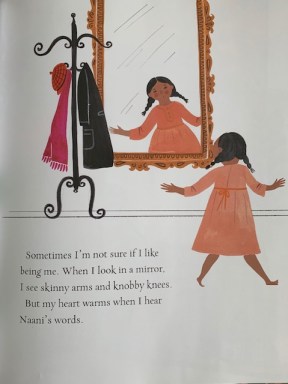
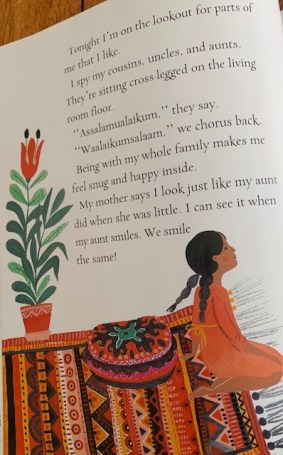
Tonight, they are joined by lots of extended family and Leila is on the lookout for parts of herself that she likes.  She feels safe with her family, and likes being told she looks like her aunt when she smiles.
IMG_6405

The book then kind of abandons the theme of finding parts of oneself to like, and moves on to cultural trinkets to enjoy.  She identifies camels on shelves and Arabic books too, and can’t wait to go on her first trip to Pakistan someday to get her own “Arabic books” and “special ornaments.”  I’m not sure why they books aren’t in Urdu, but none-the-less without any written connection to Islam, they are in Arabic, thus giving, erroneously, the reader the impression that is the language of Pakistan.
IMG_6406

Leila then helps her Naani cook which almost seems like an additional theme of the book: the passing on of traditions.  The book doesn’t really stay here though either, and has Leila running outside to get cilantro from the neighbor Miguel.  Possibly another theme in addressing multicultural neighbors or just how to be a good neighbor, is now being brought up, but nope, the book bounces back to dinner with the family.

IMG_6407

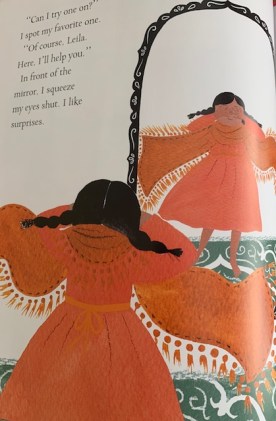
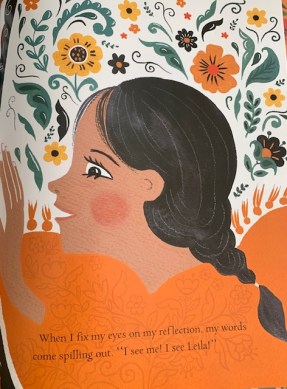
When it is time to leave, Naani invites Leila upstairs while her parents wait to leave.  Here she goes through fabric and scarves rich in color and textures and likens them to ethnic foods.  She then tries on her favorite one, but acts like she has never tried it on before or seen it before, I’m really not sure, the language is a bit awkward to me.  Anyway she opens her eyes in a surprise and likes what she sees, she likes her self, all her parts.

IMG_6408

I wish this book for preschool and kindergarteners, would have streamlined the message it wanted to convey most.  I like finding pieces of yourself and liking the completed you, but I don’t know what the pieces really are in the book.  Yes I could assume and figure it out, but I’m not 5 years old.  The book should have articulated it clearly.  Or if the book wanted to celebrate culture and family traditions, it should have stuck to that.  It really seems all over the place no matter how many times I read it.

IMG_6409

The illustrations are rich and vibrant.  They definitely give a lot to look at and the expressions on the characters faces will probably make the little ones giggle.  There are a few Urdu and Arabic words used in the story that are defined on the back cover.

IMG_6410

The characters aren’t identified as Muslim, none of them wear hijab, but they say Salam and have Arabic books, so one can assume. I picked up the book at the library and don’t regret it, but I probably wouldn’t buy it or unfortunately, check it out again.

The Sign of the Scorpion by Farah Zaman

Standard
The Sign of the Scorpion by Farah Zaman

scorpion

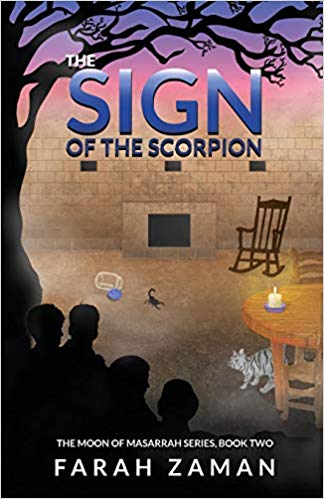
This is the second book in the Moon of Masarrah series, but can be read as a stand alone book if you are looking for a linear story with fast paced action, intense twists, decently developed characters and quality writing that brings the sleuthing of Muslim characters to life.  At 229 pages including the glossary, the book reads to me as a middle grades book, but the last 50 pages place a lot of emphasis on accusations of a character molesting servants in the castle and another character having an affair, which might be more appropriate for older readers.  Perhaps middle school readers would be a better target audience, but I’m waiting to hear back from the author regarding who she had in mind when she wrote it.  The author said she wrote it for Young Adult, ages 12 and up in mind.

SYNOPSIS:

Brother and sister, Adam and Layla are reunited with their friends, siblings, Zaid and Zahra after last summers intense adventure involving a diamond.  This summer as a result, they are the honored guests of Shaykh Sulaiman at his dessert home, Dukhan Castle. They arrive to find out that the Shaykh is bedridden from a stroke after learning his son has died.  With a house full of relatives with reasons to want their claim to the Shaykh’s fortune, the four teenagers start putting odd occurrences of a ghoul in white, a hooded horseman, a gypsy woman’s tale, and the idea that there has been foul play, together to try and arrive at the truth of what is going on.  As they piece more and more together about the tutor, the cousin, the fiance, the grandson, and a mysterious mole-man following them, they themselves get tangled in the sinister plot of revenge and must keep an eye out to figure out who the scorpion, Al-Aqrab, is before one of them ends up dead.

WHY I LIKE IT:

Set in a fictious land, the detail is the perfect balance between setting a stage and over describing it.  The book did not drag for me at any place, nor did I find myself confused about what was going on and why.  Granted I probably could not tell Adam apart from Zaid and Layla from Zahra, but the book is about their adventure and figuring out whats going on, not about their relationships or back story.  And with the focus on all the possible perpetrators and their motives taking center stage, having four people gathering clues makes the information come easier and smoother.

All the characters are Muslim.  Some of the women cover and some do not, some stop to pray and make regular references to Islamic hadith or Quranic Ayats, and some are suspects.  For example when they are exploring the dungeons beneath the castle, they liken the caves to the Sleepers in the Cave mentioned in Surah Kahf.  The book never gets anywhere near preachy, nor do the few references ever get annoying, they just flesh out that the characters are Muslim, and thus they see the world through that lens.

FLAGS:

The book has murder, lying, deception, all the ingredients for a good who done it.  And while the details are all clean regarding how the four teens interact with the opposite genders, the climax of the book is the coming to light of allegations of molestation and a failed marriage is attributed to a presumed affair.  No definition of the words is given, and I reread many of the passages and I don’t know that there is even enough context clues to decipher what the word molest means in the text.  Most kids however, could easily ask Siri or Hey Google or whatnot and may have more questions about what it means to sexually assault a person, specifically a woman or child, and why someone would do it.  I leave that for parents to decide at what age those in their charge can grasp such a word and concept.

TOOLS FOR LEADING THE DISCUSSION:

I’m torn on teaching the book as the linear telling might not appeal to older kids, but the motive and revenge isn’t appropriate for younger kids.  I think if used to discuss broader issues the book could be really powerful, and not just a fun read.  I could see discussing with 9th graders or so the seriousness of false accusations, drawing on the Me Too movement and how sexual crimes and transgressions should be handled and treated.  I think the book could be a springboard for those discussions and seeing the effects of believing or not believing, and perhaps suspending judgement until research can be done.  In the case of the book, it would not have been difficult to pursue the allegations, while protecting any potential victims.


NOTE:

The first book in the series, The Moon of Masarrah, was originally published under the title, The Treasure at Bayan Bluffs, some changes have been made in the new printing, so while I don’t normally review second books in a series, I felt this book might bring attention to the new title of the first book and drum up interest for the upcoming third book in the series.  No, I don’t benefit in any way and I purchase my copies just like you, the stories are just really well done and I want readers to give them a try.  Happy Reading!

What Happened to Zeeko by Emily Nasrallah illustrated by Maha Nasrallah Kays

Standard
What Happened to Zeeko by Emily Nasrallah illustrated by Maha Nasrallah Kays

zeeko

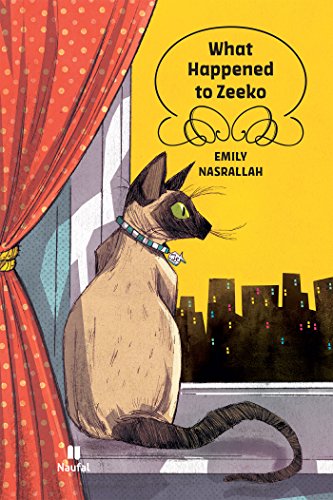
Told from a cat’s perspective about living through parts of the 1982 war in Beirut, this translated from Arabic young adult book is 121 pages.  It reads to me more like a middle grades book, and while the story is fairly monotone and anticlimactic, I find myself oddly thinking about it and wondering about everyday events from different perspectives.

SYNOPSIS:

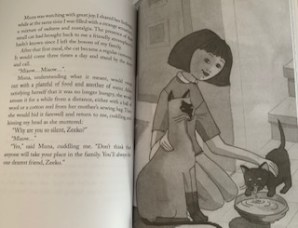
Zeeka as a young kitten is taken from his cat family and placed with a new human owner, Muna, a young girl who loves and cares, and seemingly understands her new furry friend.  The relationship between Muna and Zeeko is really the crux of the book as they get to know one another, trust one another, vacation in the mountains together and then seek refuge in the basement shelter of their building when the shelling starts and the bombs destroy the neighborhood.  

Through the relationship details, the reader learns a lot about what kind of person Muna is and why Zeeka is willing to perform a heroic act to try and help her escape the danger, while sacrificing his own comfort.  

WHY I LIKE IT:

I don’t know that I loved the book, but it was a quick read that I don’t regret spending time with.  It is translated from Arabic, so there are some hiccups, but nothing that impairs the story continuity or comprehension.  It almost starts out like an early chapter book with each chapter being two pages long.  But then all of a sudden a neighborhood cat is murdered by a group of naughty boys, and you realize that it is not for younger children. 

How the book handles war however, is very removed and not really detailed at all.  Much like The Cat at the Wall for about the same age group, the use of an animal to simplify the absurdity and details of war is used to show a different perspective, however, in this book there is no information given about the war.  The reader is never told who is fighting, why they are fighting, what sparked the fighting, nothing.  All we know is that there is fighting.  

There is no mention of religion in the book, and I have no idea of the author’s faith, there really isn’t much culture in the book either. I didn’t learn much about Lebanon or the food or traditions.  I got the book from www. crescentmoonstore.com/ so I thought to review it as it seems available on Islamic websites.  Every dozen pages or so there are illustrations and sometimes there is a blank page before each new chapter and sometimes not.  There is a table of contents at the end of the book.

IMG_5938.jpg

FLAGS:

Murder of a cat, violence in general in terms of bombing and micro level of bullying and threatening.  

TOOLS FOR LEADING THE DISCUSSION:

I wouldn’t do this as a book club book, but I think if you are looking to learn more about Lebanon or point of view this book would have a lot of potential with guidance.  From a literary creative writing perspective the book would be a great tool to present complex events in simplified ways, it also would be a great read to get students to just look at things from different points of view.  If you have students that love cats and can handle the war aspects, this book would be fun for them.  In a social studies class if you are discussing affects of war or learning about Beirut in the 80’s the students will be able to fill in the gaps historically and politically.

IMG_5937.jpg


Allah Tells Me… by Ali Gator (Firhana & Ahmed Imam)

Standard
Allah Tells Me… by Ali Gator (Firhana & Ahmed Imam)

Allah Tells Me - web-500x500

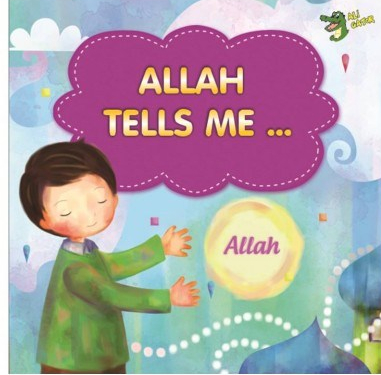
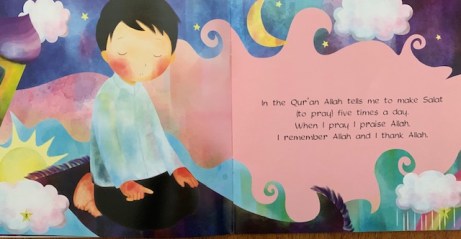
This 28 page, thick glossy full-color book for 3-8 year olds, introduces and describes the five pillars of Islam in an age appropriate manner.

IMG_5648.jpg

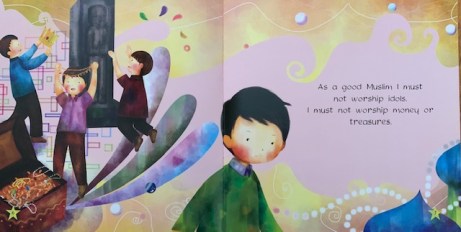
The book is fact based and informative, but the illustrations and voice of the text reads in a gentle inviting tone that will appeal to small children.  There is no story, but rather a boy that takes you each of the pillars and talks to the reader.

IMG_5649.jpg

The short paragraphs about shahada, salat and wudu, fasting, zakat, and hajj are detailed and will need some additional explaining if used to teach kids.  If you are using it to just introduce general concepts, the pictures and sentences will suffice.

IMG_5650.jpg

The book is in English but does use Arabic words to describe each tenant with in-text translations in parenthesis, as well as footnote translations on occasion.

IMG_5651.jpg

The book is set up as a tool for parents and teachers to use when educating young Muslim children and thus some hadith and ayats are present at the beginning and end, as well as some directions, games and activities.

IMG_5652.jpg


The Tower by Shereen Malherbe

Standard
The Tower by Shereen Malherbe

the tower

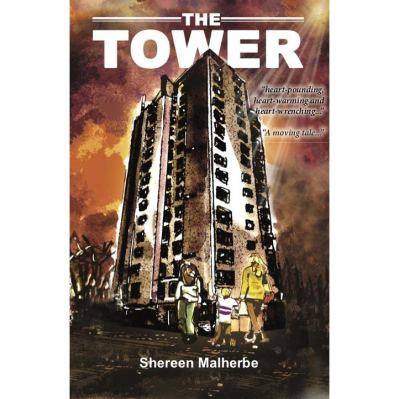
At 246 pages I’m not sure if this book would be classified as Young Adult, but I think it could be, as its message, focus and presentation makes it a valuable thought provoking read.  And the cleanliness of everything being resolved so neatly might almost be too coincidental for older, more jaded readers, where I personally wasn’t too bothered by how much emotional action was packed in to the book and how quickly it was resolved as the characters were compelling and the pacing made it an enjoyable quick read.

SYNOPSIS:

The story follows two women, Reem and Leah as their very different worlds and circumstances come together when they move in to the same apartment building.

Reem is a Syrian refugee whose past is presented in bits and pieces as her fragmented memories surface in the story.  She is searching for her 10 year old brother Adar, as well as trying to create a future for her self in London.

Leah has recently lost her husband, left her training as a doctor, and is trying to make a life for her and her son, Elijah, away from her parents’ shadow of expectation and demands.

When the two ladies meet, neither is completely settled or functioning, yet the desperation each is feeling causes Reem to ask for Leah’s help, and Leah agreeing.  The two become friends as they share parts of their world with one another and slowly start to heal.

Then Reem’s secret pregnancy comes to light, her abusive husband finds her, Leah’s posh friends abandon her, and their apartment building, the tower, catches fire.  Granted it doesn’t all happen that quick and there are lots of details that make their pasts, their friendship, and their goals for the future believable and inspiring, as well as making the pain for those lost in the fire emotionally wrenching.

As the two women once again try and survive hardship, this time together, they make progress before a terrorist attack on the mosque again sets them back.  Through all these major plot points details about how Reem got to England, and the atrocities she suffered that her mind blocked out are made clear.  Additionally, more about Leah and her families involvement in the tower fire and their friends’ involvement in human trafficking all tie the lose ends up. In the final pages there is hope and resilience and respect from the reader for the brave characters brought to life and their determination to persevere.

WHY I LIKE IT:

I love that it is a very personal, character driven story about a horrific fire, reminiscent of the Grenfell fire which claimed the lives of over 70 people.  I also absolutely love how Islam is presented.  The Muslim characters are tangibly real.  Reem wants to fast because it is Ramadan, but has the excuse that she is pregnant, but tries anyway.  She prays, she covers, she meets a Muslim that doesn’t cover, but they pray together at the mosque later and become great friends.  Leah is interested in Islam and asks questions and when she cooks for her Muslim friends she gets halal meat.  There is an amazingly helpful character Mo in the story who Leah is crushing on, but he refuses to be alone with her, or touch her, and when she tells him of her feelings, he says that everything she likes isn’t him it is his religion.  Leah and Reem discuss how the sunnah’s of the Prophet influence Mo and his brother and it is quite detailed.  Quranic ayats are quoted in character’s dialogues in natural presentations, not preachy or misplaced.  It hints at the end, when Leah has joined Doctors Without Borders and is in the Middle East that perhaps she has taken shahada, but it isn’t a plot point and isn’t mentioned explicitly.

My biggest complaint about the book is the random foreshadowing that pulls out from the story to hint that something more is going to happen between certain characters or be of more importance later.  I think it happened three times, and each time completely unnecessary. The story and characters and writing are clear and done well enough that needing the hint sells it all short and it wasn’t just annoying and irritating, it really kind of made me mad.  Here I was feeling an attachment for a character or what they were experiencing only to be reminded that there will be more, rather than letting me go along for the ride with the character.

I also was bothered by the font and spacing.  It is really tight on the pages, but with big margins, that a little breathing room would have been nice.  So, much happens in the book, that I wanted to be able to relish in each event and often I felt the presentation made it rushed and I found myself skimming, more than I would have liked.  I would have also liked to know what parts, if any, were based on or inspired by real events: the tower fire, human trafficking, stealing organs, artifacts coming out of Syria, refugee treatment in London, etc.

FLAGS:

There are memories of war and dead bodies.  The stealing of organs and dumping of bodies into the ocean.  There is a lot of death after the fire and after the shooting at the mosque.  There is a lot of blood, a terrorist act, a baby being delivered, a drunk man at a party.  Nothing is overly sensationalized, but it is a gripping book with some intense moments.

TOOLS FOR LEADING THE DISCUSSION:

I don’t know if middle school can handle the book, the characters are older, so it won’t resonate with them like a traditional YA book would, but I’m tempted to have my almost 13 year old read it so we can discuss.  I will most definitely suggest it to the high school book club adviser as there is a ton to discuss and relate to in this action packed book.

Author’s website and Q and A: https://shereenmalherbe.com/


More to the Story by Hena Khan

Standard
More to the Story by Hena Khan

more to the story.jpg

For a book written by an accomplished author for 3rd to 7th graders focusing on a Muslim family, I was surprised at how despite wanting to absolutely love this book, I only kind of liked it.  For the first 100 of 271 pages, I really kept hoping there was going to be more to the story.  Luckily the story did pick up, but I couldn’t get passed how much crushing all the sisters were doing on the one boy in the story, and how much stronger I wanted the main character to become.

SYNOPSIS:

Told from Jameela, “Jam’s” perspective, the second of four daughters living with their parents in Georgia, the story focuses on the interpersonal relationships of the members of the family and their parents’ close friends who’s nephew has moved in with them from England, Ali.  All the kids are close in age and of Pakistani ethnicity, and are Muslim.  As the reader gets to know Maryam, Jam, Bisma, and Aleeza, you see the characters develop pretty well and their quirks and personalities emerge.  Jam is more tomboyish than the gorgeous Maryam who likes to bake.  Jam and Bisma share a room and are closer than Jam and Aleeza, the baby of the family who Jam finds is becoming a brat.  Jam also enjoys watching football and eating spicy food with her dad and desperately wants to be an award winning journalist like her grandfather.  She puts out a family newsletter and is ecstatic to be named the feature’s editor as she starts 7th grade.  Ali is a year older and has moved to stay with his aunt and uncle until his mom and sister can join them.  He spends a lot of time with the sisters and in Little Women inspired fashion the little ones want his attention, Jam is a little jealous to learn he finds himself tongue tied when talking to the beautiful Maryam and Maryam in 9th grade is drawn to Ali, but doesn’t vocalize it too much.  And then as the story picks up speed, Jam says, “In a matter of weeks, Baba got a new job and moved across the world, Bisma got sick and has to be in the hospital, and I messed up everything with Ali and the paper. How did my whole life get turned upside down so quickly?”  

The rest of the book is dealing with Baba working in the Middle East, Bisma being diagnosed with lymphoma, Jameela learning some journalistic basics, and Ali and Jameela becoming a bit more than just friends. 

WHY I LIKE IT:

I love that a Muslims desi family is being represented in an own voice novel that mentions religion as a natural part of their life, and doesn’t apologize or overly explain it.  That being said, I feel like the book is trying to present “us” to the outside so to speak, rather than empower our own.  And I point this out, because I feel like it could have done both.  Dialogue between Ali and Jameela about how they might date as they get older, how Ali can’t see any of the sisters having an arranged marriage.  How when Maryam gets asked to a dance her mom doesn’t mention any religious reason her daughter should say no.  None of the girls wear hijab, and they mention that they don’t wear hijab, at one point Jam knows she should get up and pray, but doesn’t.  I don’t expect a fictional story to teach our upper elementary age kids how to behave that is a parent’s job, but to have some basic Islamic tenants brushed aside after being mentioned is worth noting.  Had the book just been more cultural, maybe I wouldn’t be so critical, but Muslim girls are going to be excited to see themselves in this book and some of the messages might tilt a little more liberal than some parents would expect.  It is one thing when our girls read a book with a romantic twist and we say that, that is not for us, but when a book celebrates us not just crushing, but vocalizing those crushes and moving in to a gray area (they hug but it could be an innocent friend hug) and they make a point to be next to each other, Muslim parents should be aware.  In the larger society it wouldn’t even register on the radar, hence I point it out.

Another thing that kind of bothered me and was again related to Jameela and Ali’s relationship was that when Jameela cut her hair in support of Bisma losing hers with chemo treatments, she seems to need Ali’s approval.  I get that she wanted him to see her and all that, but I really wanted her to be strong enough in and of her self that even if she looked awful she would own it and not let it define her and not let a boy’s opinion about her physical appearance weigh that heavily on her.  Again I know 4th grade girls start noticing boys and having crushes and middle school is only worse, but I just was hoping that her strength and confidence would come from her own growth arc, not from someone else, let alone someone she likes. Side-note here too about the hair, it is donated to make a wig, which I know might also be a sensitive subject regarding if that is allowed in Islam or not.

In terms of the cancer and the sister’s rallying together all that I thoroughly enjoyed and found the most interesting passages in the book.  I think the understanding of a real subject and finding a way to help and deal with this was executed expertly and powerfully without sensationalizing the concern or simplifying the experience either.

FLAGS:

The book is clean, but there is a lot of mention of how Ali affects the girls.  And potentially depending your own opinions on the hair being donated.

TOOLS FOR LEADING THE DISCUSSION:

I wouldn’t do this as a book club book, I’m actually hesitant in even recommending it to my 12 year old daughter.  I know she has read worse, but again me handing her a book about Muslim girls might make her understanding of what we expect regarding boy/girl interactions to be a bit muddled.


Mommy Sayang by Rosana Sullivan

Standard
Mommy Sayang by Rosana Sullivan

sayang.jpeg

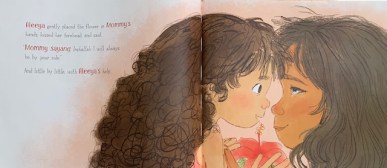
A Pixar Animation Studios Artist Showcase book which beautifully illustrates the bond of a mother and daughter.  Set in Malaysia, this diverse book shows a rich culture that readers will learn about, as well as relate to in 48 large 9 x 11 pages.

IMG_4975

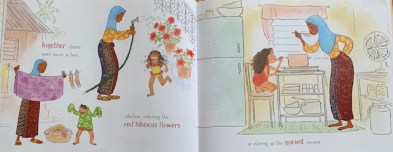
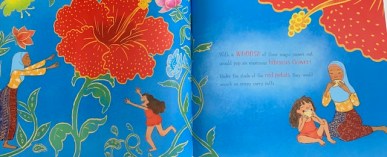
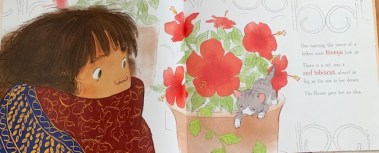
The simple text shows Little Aleeya watching her dear mother, Mommy sayang, pray five times a day, them doing chores together, cooking side by side, eating with friends and family, and smiling through it all.  Little Aleeya even dreams of her and her mother at night among the hibiscus flowers.

IMG_4976

Mommy Sayang, however, gets ill and Aleeya waits and waits for her to get better.  Day after day Aleeya grows sadder and sadder until one day she gets an idea of how she can help her mother.

IMG_4977

The change of perspective from Aleeya needing her mom, to her mom needing Aleeya is sweet and empowering.  The book doesn’t detail what makes her mom sick or why up until Aleeya’s idea takes form is she not able to hang out in her mother’s room with her.

IMG_4978

Listeners as little as 4 or 5 will enjoy the story and the tone provided by the minimal text and illustration style, older independent readers up to 2nd grade or so will learn new vocabulary and get a peek at a possibly new culture.

IMG_4979

I like that the mom wears hijab when they are out and about doing chores or people are over, but that when she is home in her bed she is not covered.  The illustrations are fabulous and gentle, as is the message.

IMG_4980

There is a small glossary of four words on the dedication and copyright page and there is a bit about the author, her inspiration, and what movies she has worked on at Pixar at the end.