Tag Archives: Family

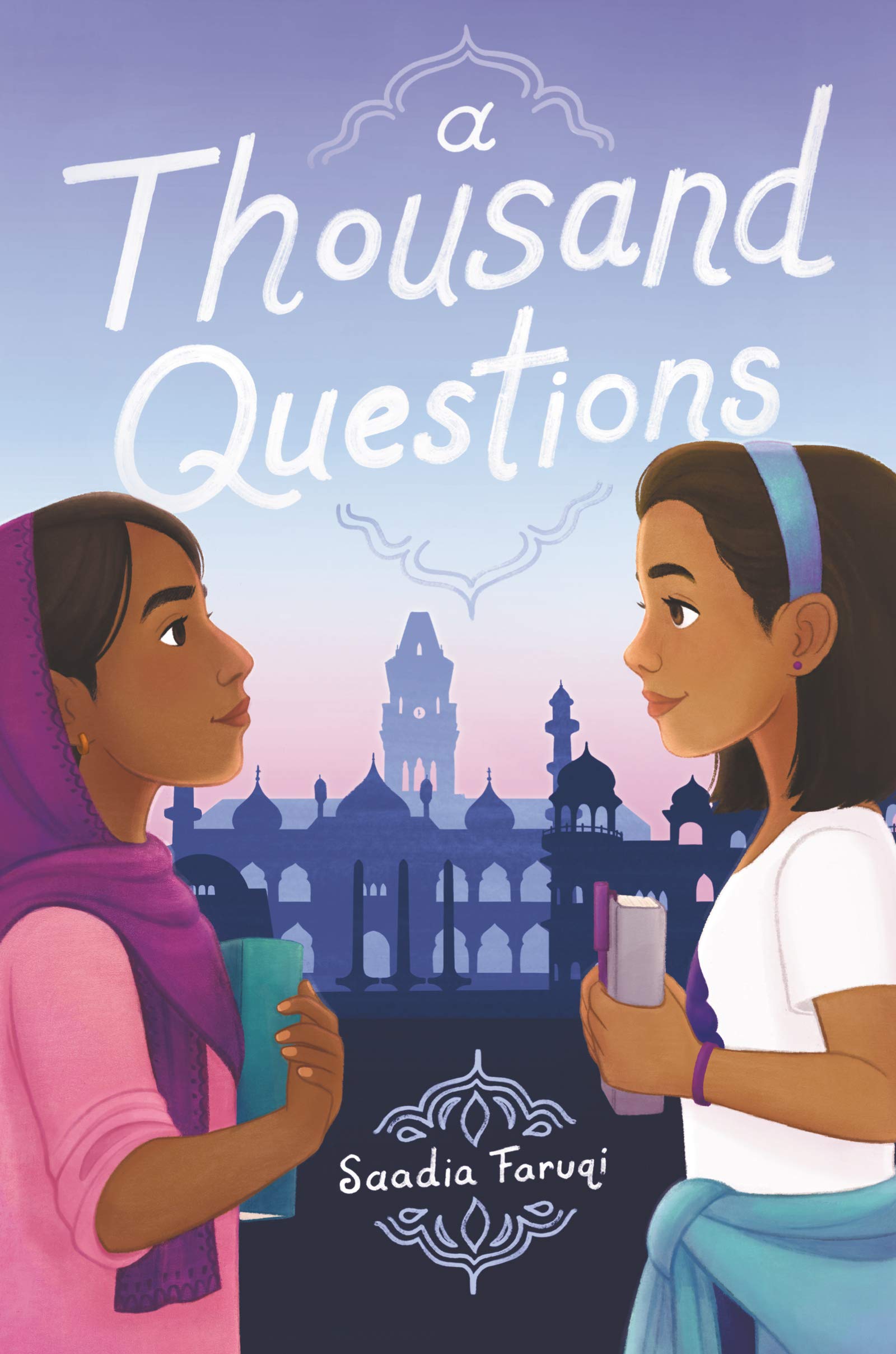
A Thousand Questions by Saadia Faruqi

Standard
A Thousand Questions by Saadia Faruqi

This 320 page middle grade novel with alternating point of view chapters engulfs you like a warm genuine hug. It does not have a clear climax, it is predictable, and some characters and cultural touch points could have used more detail, but honestly, I couldn’t put it down. As a half American kid who spent my summers in Karachi, so much of the author’s love of her homeland flows so effortlessly from the pages and took me back to my childhood and how the transformation of comparing the two countries moves to seeing the best in both causes growth within your heart and makes leaving so devastatingly hard. Readers of all backgrounds will seamlessly fall in to the story and enjoy the growth of the main characters, while learning a bit about a culture and the similarities of people.

SYNOPSIS:

The back drop is the sweltering heat of a Karachi summer in the middle of elections. Mimi, Maryam, is visiting Pakistan for the first time in her life. It is her mother’s home land, but her grandparents, and her mom aren’t close. They didn’t approve of Mimi’s dad and mom getting married, and even though they have been divorced for years and he has left, Mimi’s mom hasn’t been home in 12 years.

Sakina narrates the other chapters. She is the daughter of Mimi’s grandparent’s cook. She dreams of going to school, but needs help with her English to pass the admissions test. And even if she passes her family needs her income to survive, and her father’s failing health means that she has to take over his job too.

When Mimi arrives at her grandparents home, it is awkward at best. She doesn’t really know her grandparents, she has never had servants before, and her mother is rarely around. That leaves her to get to know Sakina. Sakina finds this odd as the owners of the home rarely “chat” with her and here this American girl wants to get to know her and is fine with helping in the kitchen. The two strike a tentative friendship as Mimi agrees to help Sakina with her english, and Sakina with the permission of Mimi’s grandmother and with the use of the driver, agrees to show her some of the city.

As Mimi takes in the traditional tourists sites she gives Sakina her first taste of ice cream and soda and other “luxuries” she has never experienced. Sakina introduces her to bun kabobs and other local foods. The budding friendship isn’t smooth, mostly because Mimi constantly compares Pakistan to America and Sakina doesn’t understand why Mimi doesn’t have a father. When the girls find out that Mimi’s dad, a journalist, is in Karachi covering the elections, the girls work together to try and find him.

Throughout all of this, Mimi keeps a journal and the entries are letters to her father.

WHY I LIKE IT:

I love that the girls have to navigate their friendship without and often despite interference from adults. I also like that while societal wise one girl is seen as economically privileged and one is not, the book gives enough for even elementary aged children to see that in America Mimi and her mom are financial struggling, but in Pakistan they are not and how that disparity is arbitrary. They also see that family and safety and security are also a part of life’s quality and not country specific. Things that one girl takes for granted are envied by the other, and it goes both ways.

Even for a middle grades book, there were some plot holes. If Mimi had been late night googling and plotting on a secret map all the places her dad had been writing articles from, she should have had a heads up about Pakistan. She knows so little about Islam and has like one shelwar kamees, so it seems a bit of a stretch that she speaks urdu pretty proficiently. I feel like some stumbling with the language or some back story on that would have been great.

Religion is handled as a cultural touch point, neither girl prays, but both find solace in visiting a masjid. Various characters are in sleeveless tops, the athan is heard in the back ground. I wish there would have been a bit more finding of Islam as Mimi found her culture too, but alas it isn’t there.

The majority of the book takes place within the grandparent’s home with the elections being a big part of why they can’t go out, yet the mom goes out a lot, which really rubbed me the wrong way. She took her daughter shopping once to meet an old friend and that is it. Who travels across the world to spend zero time with her kid. I didn’t like the mom at all, and wish there was some background or even some growth on her part. A lot of the minor characters seemed to fizzle as well in terms of having some depth.

There are some cultural and country facts at the end of the book, but within the text I was surprised that more wasn’t shared. I like that it mentioned Karachi was the original capital, but it should have also in the same sentence mentioned that Islamabad is the current, I think readers would assume that Karachi is still the capital of Pakistan.

The book is an OWN voice through and through and the value of that is felt in every sentence. It isn’t all positive and rosy, but it is genuine. The author loves what she is writing about and it shines through leaving the reader with a favorable sense of Pakistan: the country, the culture and the people.

FLAGS:

The book is clean, possibly some tense moments when Sakina’s family is robbed. There is also discussion of marrying someone your parents don’t approve of, divorce, and Mimi’s mom possibly having a boyfriend. Mimi’s mom is an artist and paints pictures of people. There is lying and scheming.

TOOLS FOR LEADING THE DISCUSSION:

I think the book would be a fine choice for an elementary book club, I think any one older will find the book a tad bit predictable. I plan to have my children read it so we can discuss points of view, experiences, universal traits and social economic classes. There are a lot of wonderful lessons wrapped up in a heartfelt story that I can see 4th and 5th grade children benefiting from over and over again.

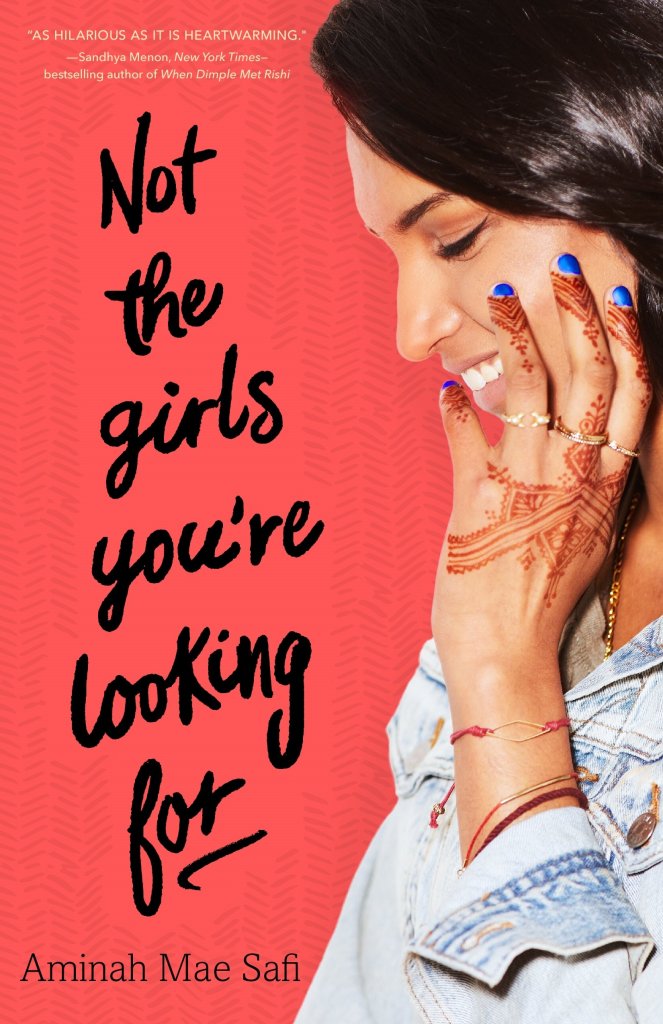
Not the Girls You’re Looking For by Aminah Mae Safi

Standard
Not the Girls You’re Looking For by Aminah Mae Safi

This book did not work for me. Despite the fact that the main character is Muslim and it is Ramadan, no matter how much I wanted to connect with this multicultural lead and her friends, and see myself in her as she navigates high school, I just could not. The writing was choppy 3rd person which distanced the main character for me, the crude language on every page, the drugs and alcohol in every scene, the detailed sexual encounters throughout, the lacking growth of the characters and the muddled point of the book in general made the book difficult to read. The book is an AR 4.9 but content wise is more suited for mature 18 year olds. Even this review might be a little too much, I’ll do my best to keep it clean. Ultimately this book missed the mark for me in showing females defining themselves, celebrating friendships and diversity, or even just creating characters to cheer for as they navigate life.

SYNOPSIS:

Leila is half Iraqi Muslim from her dad’s side and half American Catholic from her mother. She doesn’t know how to pray as her father isn’t religious, but celebrates Ramadan and Christmas and defines the world on her own terms. She is fearless and owns herself, hence she hates her name and goes by Lulu instead. The book opens with her making out with a boy in a closet which she kind of regrets and then goes to join up with her friends at the party to drink and get high and attack one another for their poor choices resulting in drama. In this instance Lulu’s anger pushes a boy in the pool, and then the four friends devise a way to get home and work out the lies they will need to tell to the parents involved. This scenario with only slight variations repeats five or six times in the book.

Lulu is the fearless one, Lo, short for Delores, is the leader, Audrey is an alcoholic math whiz and Emma, not to be underestimated and often is forgotten (literally) is coming out in her first lesbian relationship. Yes these labels are limiting and stereotypical, especially in a book calling for girl power or what not, but sadly that is really the only space they flesh out, not a whole lot more is known about them. The girls defend each other fiercely to outsiders, but are truly awful and angry to one another all the time. They break apart and Lulu doesn’t really know why, so the path back to one another isn’t really cathartic. They pull a prank to get back at a boy that crossed the line with Lulu, but it fizzles when the threat of what the prank could do is enough to keep him away and they don’t have to complete it completely.

Between the parties there are some sub plots that weave in and out. Lulu has to spend time with Iraqi family friends who don’t accept her and are critical, in Arabic, of her mother. This gives some cultural layer to the story, but the characters are pretty flat and petty and hypocritical. The bombings in Paris a few years earlier, and the resulting bullying by classmates hardened Lulu, but there isn’t much info on how awful they treated her or how it defined her, so not much sympathy is garnered by the event nor does it help the reader get inside Lulu’s head. There is also a sweeter love story brewing than the one night stands that define Lulu, but then she goes with her mother to get birth control so she can sleep with him all while making it clear that he isn’t her boyfriend, she just wants to have sex with him- which she does on her seventeenth birthday.

Eventually the girls are back together and gushing with tales of sorrow and personal growth and vows that they will always be like sisters.

WHY I LIKE IT:

I don’t mind the premise so much as the execution of it. I get that people practice Islam differently, but I really don’t get the need to even bring her religion in to such a story. Culture maybe, but even that is a stretch. I don’t know if the story would be better if it was first person, I would like to think so, as not connecting with the main character was such an obstacle for me. I wanted to see her grow and change or at least have clarity in her decisions even if I didn’t agree with them or couldn’t relate to them. I wanted to feel her remorse or the weight of her decisions, but was often just told in passing that something scared her or was hard for her, not shown it. The theme of not belonging anywhere is a legit one, but I don’t know that this book explored it, it just sort of brushed by it almost as a trial to see if the emotions would stick. Which for a character built up to be unapologetic and unafraid to suddenly want a victim label without any real emotional ties, didn’t work for me. There are such holes in the story, that at times things didn’t seem believable or details were so specific with no context that I didn’t get their purpose. I would have loved to know more about her brothers and the tests they went through, or why her family was so loyal to the Arabs around them. I desperately wanted something that showed a different side of Lulu not just the anger and “F everyone who wants to change me” mantra. People are scared of her and she enjoys that power, but I don’t get why they are scared and why she enjoys it. It seems like a big part of her story and of the book in general to miss. Yes she is independent, and I get that can be misread, but she almost seems one dimensional and flat which defies the concept of defining yourself on your own terms and carving out where you want to belong among groups that see you as other, right?

The character is pretty open that she knows little about Islam, she also claims she isn’t interested. She fasts not so much because it is a commandment but more to appreciate poor people. She says this, but actions don’t seem to back it up. She tries not to drink during Ramadan but she still smokes, gets high, makes out, and lies once the sun goes down. At one point she calls a bride and her mother whores, and refuses to apologize, so her dad gets a fatwa issued. Lulu’s mom mentions that something went all Shiite on the situation, so I’m not sure if the fatwa issuing for such a specific thing is a shiite thing or something I’m just not aware of or familiar with as a tool for handling family dramas.

FLAGS:

The whole book really. Sex, drugs, alcohol, sexual assault, lying, cheating, blackout drunk, vaping, talk of orgasms and going down, lesbian relationship, hetero relationships, sexual encounters, language etc etc etc.

TOOLS FOR LEADING THE DISCUSSION:

Would never cross my mind to share or suggest this book. Even religion representation issues aside, I don’t know that there is really a single “healthy” relationship highlighted among the main characters, some of the side characters maybe, but not enough information is given to really make that case. The characters just all seem so angry, not saying teenage years aren’t angry and messy, but this one doesn’t seem to add much perspective to that singular thought unfortunately.

My Friend the Alien by Zanib Mian illustrated by Sernur Isik

Standard
My Friend the Alien by Zanib Mian illustrated by Sernur Isik

This adorable 96 page book is a great early reader for second graders and up. The play on the concept of being an “alien” is filled with a lot of heart, humor, and thought provoking concepts on what it means to be human, have feelings, and be a good friend. There is nothing religious in this book by a Muslim author meant for all children, but with the name Jibreel and him being a refugee (“alien”) many Muslim children might assume and relate to his plight a little stronger.

SYNOPSIS:

Maxx the alien has come to Earth to understand human feelings. His trip was ok and landing successful, but he hasn’t heard from home and the Filandoo Sperk is broken. Told in diary form, the fart jokes start rights away as he lands in a cow pasture. He heads to a city disguised as a human and discovers chocolate. He also discovers Google and uses it to help him understand human emotions.

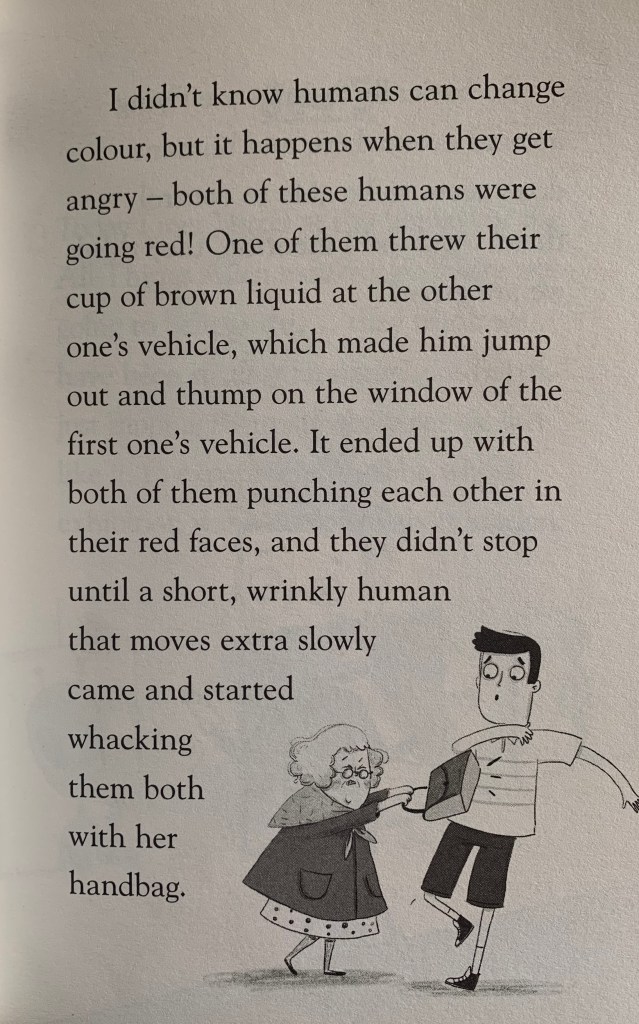
As he gets on public transportation he finds that humans smell different, and some are not so nice. At the park he finds how humans talk about baby dogs, he forgets the name for those, very odd, and love very gross. On Day 4 he makes a friend, Jibreel, who is looking at books and magazines about Aliens. He knows he isn’t supposed to talk to humans, but since no one from home is talking to him, he figures it might be ok. When the boys head outside they see two grown men fighting about a parking space and turning red, they punch each other and don’t stop until an old lady whacks them with her purse. Emotions are flying around everywhere and Maxx hopes Jibreel can help him understand it all.

Maxx and Jibreel head to the library the next day for the “All Things Alien Exhibit” and boy do we have it all wrong. As Maxx tries to correct the exhibit and explain the truth about aliens, Jibreel just finds him funnier and funnier, not believing that Maxx is from outer space.

The two boys become good friends and when bullies from Jibreel school start giving Jibreel a hard time, Maxx learns about hugs, and helping a friend out. Maxx starts having feelings. When the boys get called aliens and Maxx makes them both go invisible, Jibreel realizes Maxx is an alien from another planet and Maxx learns that Jibreel is a refugee. He also learns that Jibreel’s misses his mom who wasn’t able to escape with Jibreel and his brother, and is still back in their country.

Maxx makes the bullies look foolish to help Jibreel, but Jibreel is not happy and Maxx has to learn about being kind even when you really want to be mean. Now that Maxx is having all sorts of feelings, he too confides in Jibreel that he is worried about not hearing from home and Jibreel offers to help him fix the Filandoo Sperk.

The only problem is the spaceship after the initial tour, goes missing. And so are the bullies. I won’t completely spoil the ending, but there is a surprise and happy ending for everyone.

WHY I LIKE IT:

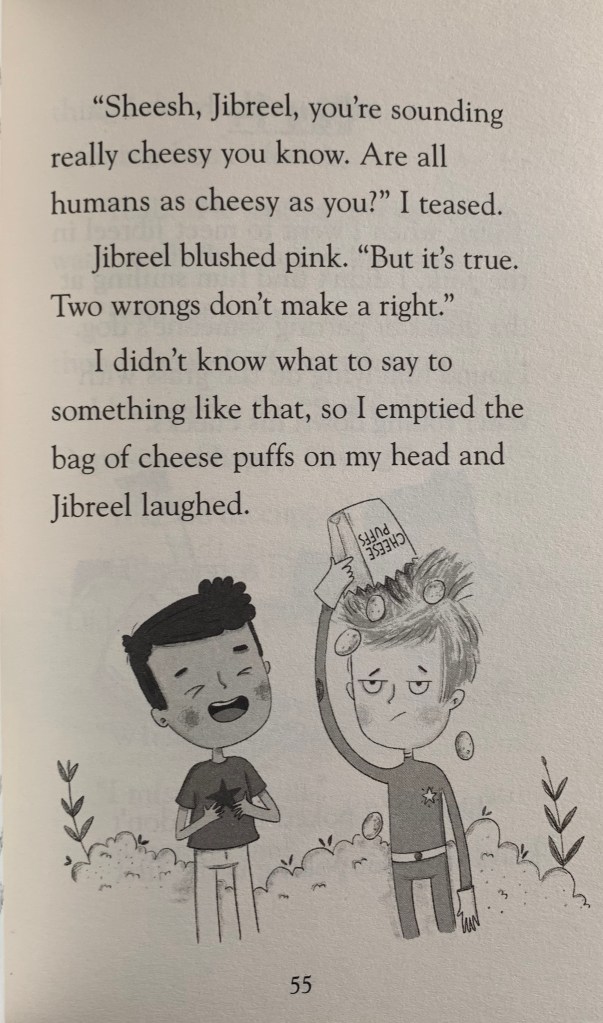
Oh I love how the story weaves feelings and emotions in with bullies and friendship in such a smart way. The book is silly with the fart humor and assumptions about aliens, but it really is clever. The vocabulary doesn’t talk down to the reader with words such as abomination and the observations of someone new to Earth offer the reader a chance to add their own silly persepective to the fictional set up. American children might need a bit of help with the British jokes, like the name of the chocolate bars, but it really is such a universal story that will stick with adults and kids alike.

The end has some questions and activities to do with the book, and with the exception of Jibreel’s name being spelled wrong on one these last pages, they do a good job of helping make sure kids grasp the story.

FLAGS:

There are fart jokes, and mention and illustrations of kissing on the cheek as being gross. Bullying, being mean, and two men fighting.

TOOLS FOR LEADING THE DISCUSSION:

The book is great for 2nd and third graders to read and discuss. I don’t do a book club for that age, but I did have my 2nd grade nephew read it to start a conversation about feelings and emotions with him and it worked great. We talked about how things make us feel, understanding when we see other people acting a certain way how they might be feeling. We discussed how even if we think someone deserves something, our own integrity needs to come first. We talked about being a good friend and how being away from our mom and family would make us feel. From top to bottom this little chapter book, packs a lot of discussion options under its silly superficial layer.

Yusra Swims by Julie Abery illustrated by Sally Deng

Standard
Yusra Swims by Julie Abery illustrated by Sally Deng

yusra

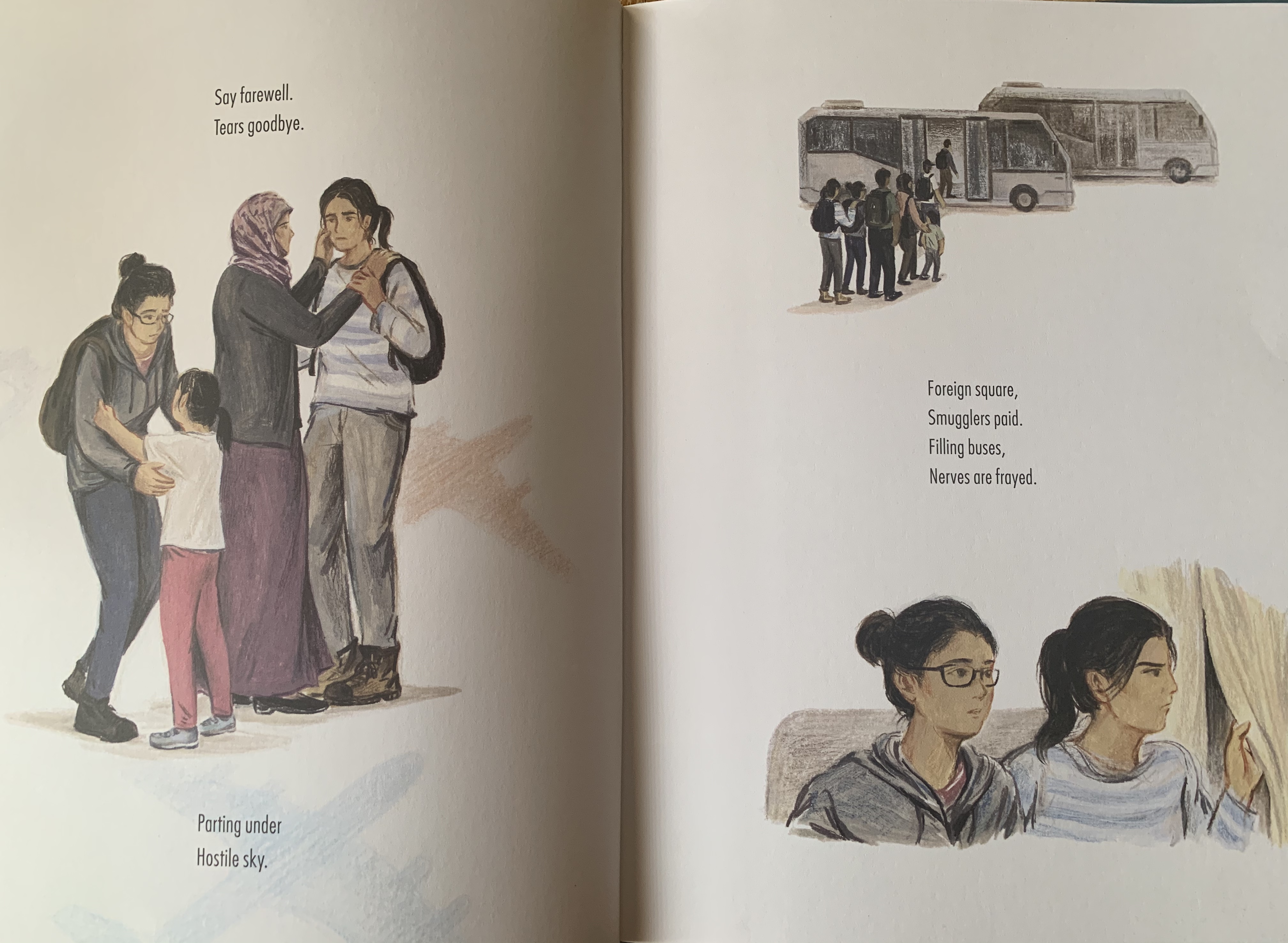
This 32 page biography told in sparse rhyme about Yusra Mardini is powerful in its minimal text and realistic illustrations.  Children as young as six could easily read it, but I think older kids will be more moved by the story of a 17 year old girls Olympic swimming dreams being derailed by war, and the difficult journey her and her sister took to escape.  With no more than 10 words on each two page spread, the vocabulary is more suited to perhaps third grade and up.

Yusra lives in Syria and dreams of the Olympics.  She trains even as conflict grows in the country.  When it gets bad, she has to flee, her father can only afford to send her and her sister.  Smugglers are paid and they leave.  They take on the open sea, and her and her sister steer the boat through the water when the engines stall.  Once they reach land, and pray, they are stared at.  A kind stranger offers her shoes. They continue on land by foot, bus and train.  They finally reach Berlin.

Once settled, she resumes her training, and a fact page at the end shares how the International Olympic Committee invited her in 2016 to join the Refugee Olympic Team and compete in Rio de Janeiro.  And thus she achieved her dream and was able to swim in the Olympics.

83175260-2878-4DDF-AA9F-3618FEEF41A5

There is nothing religious in the book, except when she is leaving and is hugging a woman in hijab.  Presumably it is her mother, and thus I’m assuming that she too is Muslim. When you google it some articles say she grew up in a muslim family while others say she is Christian, so I really have no idea.

DCAB592B-C32C-4FDB-AF1D-8CF13F36F164

Playing Atari with Saddam Hussein: Based on a True Story by Jennifer Roy with Ali Fadhil

Standard
Playing Atari with Saddam Hussein: Based on a True Story by Jennifer Roy with Ali Fadhil

atari

This 165 page AR 3.9 book about the 42 days in 1991 that Iraq was at war with the United States is told from an 11 year old half Kurdish Christian boy’s perspective, but he mentions that he has friends that are Muslim and culturally and historically the book is relevant, important, and engaging as well.  I had my 9, 11, and 13 year old read it to gain perspective of the Gulf War, the difference between politics and people, and to see diverse religions co-existing despite stereotypes, especially in the middle east.

SYNOPSIS:

Ali gets the highest score on his Atari console the day that the bombs start falling.  Ali and his brothers Shirzad and Ahmed, and sister Shireen along with their parents retreat to the safest room in the upper middle class home to hopefully stay safe.  With experience of surviving the Iran-Iraq war which ended just three years earlier, the kids camp out at night in the room farthest from the nearby school and spend their days playing soccer in the abandoned streets.  The safe room was determined by knowing that Saddam uses his own people as human shields and places military installments in public service locations so that he can use propaganda to try and convince people that the enemy is bombing schools and hospitals intentionally to harm the innocent.

When the electricity goes out and the water cuts off, the family is forced to accept government rations.  Their dad is a dentist, but as he is essentially property of the state, he is forced to work as a medic and is often absent from home.  The family lives in Basra, which is in southern Iraq and near to the invaded Kuwait, thus all the troops pass through the city and the children spend their days keeping up their house, playing soccer with their friend Mustafa and trying to avoid the bullies Omar and Umar who’s father is in Saddam’s Ba’ath Party.

Ali speaks English because of his love of American TV and feels that if he can meet some US soldiers he will convince them that he should be in America not in Saddam’s Iraq.  He loves Superman, video games, soccer, his family, and his country, but the people, not the leader, he loathes Saddam, even though he knows he can’t ever speak ill of him.

A trip to get rations results in Ali seeing public executions and a colleague of his math professor mother’s getting hauled away.  A visit from their cousin gives them news that their father is missing. Life is not easy for the family, and yet they know they have it better than a lot of other people.  After the war, once again the family will have to put back together their lives and carry on.

The book concludes with a 14 year jump and Ali translating at the trial of Saddam Hussein where the leader who has been hiding is found guilty and sentenced to be killed by hanging.

WHY I LIKE IT:

I love that Ali is so relatable, he could really be a kid anywhere which makes what he sees and hears and experiences all the more intense.  The way that the book shows how the soldiers are forced to be soldiers, the citizenry at the mercy of the government, and the inability to speak freely so very real and frightening, is strong, but not traumatizing to the reading audience.  Even Ali being forced to observe the killing of  people in the street is handled with the target audience in mind.  They are Kurdish and had to deal with that within Iraqi society, which is a nice added layer to understanding that Iraqis are not a single monolith.  I love how the family had to go to the governor’s house and how nice his son was, even though, they are all Ba’ath Party members and part of the larger oppressive system.  It shows that things aren’t always black and white, and to convey all this to eight and nine year olds so clearly is quite remarkable.

I also like that the book holds up over time.  My kids had no idea what Atari is or was, but they could understand that it is a video game, and that it was an escape during the night for Ali to imagine he was playing a game trying to catch the falling bombs as a way to be brave and endure.

FLAGS:

Execution, death.

TOOLS FOR LEADING THE DISCUSSION:

I would consider this for a middle school book club, it is a bit short and definitely more middle grades, but it would allow kids to identify and imagine and discuss war through the fictional characters and voice their understandings of an authoritarian government structure, which would be interesting.

Author’s Reading Guide: http://www.jenniferroy.com/wp-content/uploads/2017/05/Playing-Atari-Teacher-Guide.pdf


The Bee Tree by Stephen Buchmann and Diana Cohn illustrated by Paul Mirocha

Standard
The Bee Tree by Stephen Buchmann and Diana Cohn illustrated by Paul Mirocha

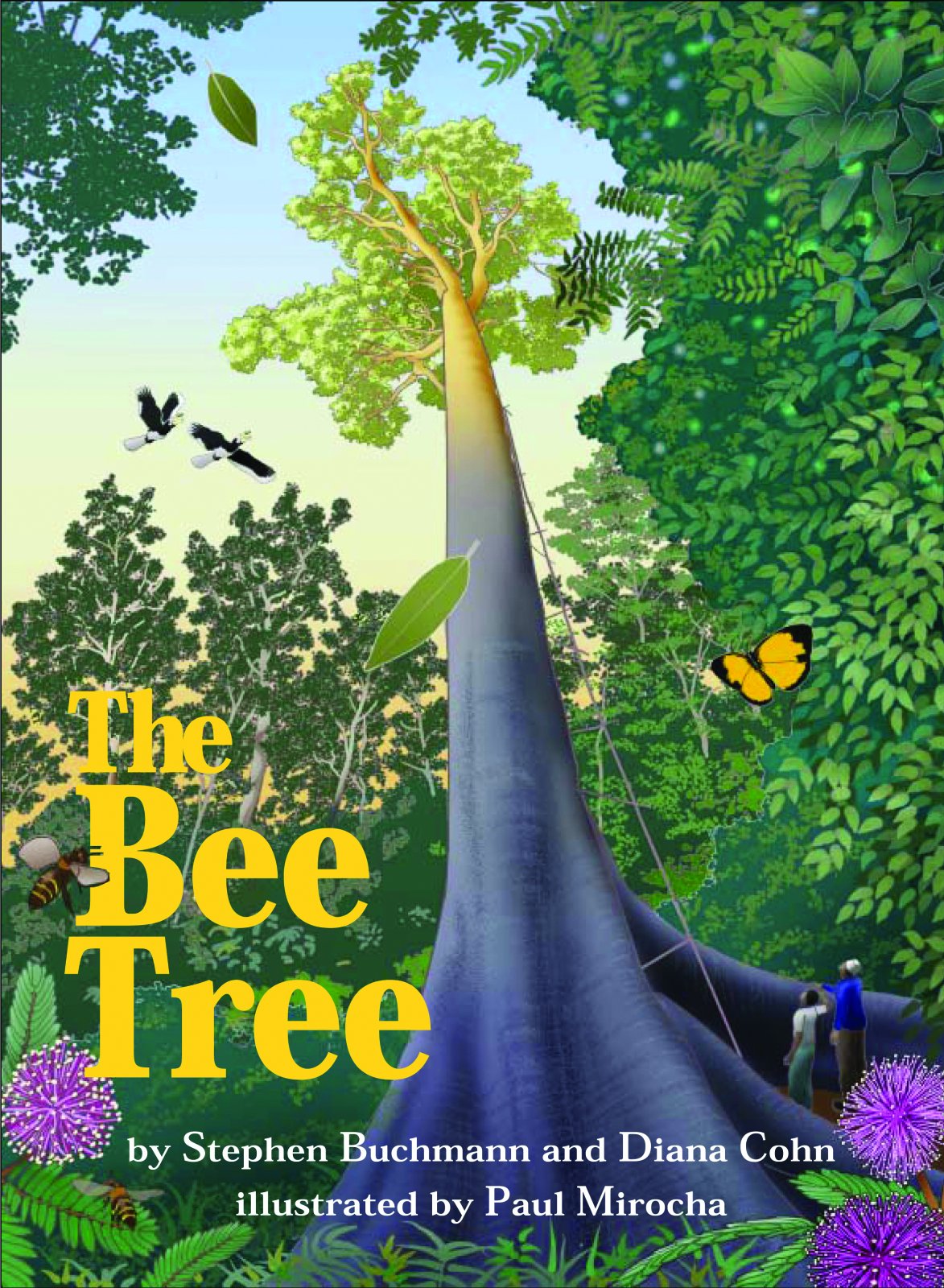
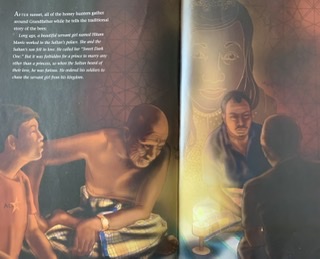
bee treeThis is one of those books that it is hard to know who the target audience is and who would most enjoy the text heavy 40 pages about a boy coming of age in Malaysia by harvesting honey in a traditional manner.  The two page spread illustrations are rich and inviting, and with an AR 5.7 level, the book would work well for children that enjoy other cultures, honey, insects, or children that you hope will be inspired to start seeing the world a little differently than they are used to doing.
5BD37914-E9B7-4D0B-BB0A-1286A8BC4C72

The story starts with a boy talking about his grandfather and how every year he goes to collect the honey from the tualang trees.  The bees travel hundreds of miles and arrive just as the rainforest starts to bloom.  The trees that they build their nests in are higher than the eye can see and grandfather, known as Pak Teh, is the leader of the honey hunting clan.

7CA311E6-B1B6-40E7-B735-FAACAD76597F

He tells everyone what their jobs will be: some will carry ropes, others pails, others torches.  One day, he tells them, someone will have to take his place as the one who climbs all the way up to the top to gather the honey.  He believes Nizam, the narrator, is the one.

To prove himself, Nizam has to practice climbing 120 feet into the sky.  Nizam and grandfather spend a lot of time together praying five times a day and walking through the dense rain forest.  He reminds Nizam that the forest doesn’t belong to them, but to the unseen protector. They enter the forest as if they are visiting a neighbors home.

837003A0-ED16-4CA9-9CD8-3CEBA7846D0A

At night all the hunters sit together and Grandfather tells the traditional story of the bees.  A story that involves a beautiful servant girl named Hitam Manis who worked in the Sultan’s palace and how the Sultan’s son and her were in love.  When the Sultan found out he ordered the girl run out from the kingdom.  As she and her loyal friends fled she was hit by a metal spear.  She did not die, but her and her friends were magically transformed into a swarm of bees.  Because it was metal that harmed her, she ruled that metal was never allowed to touch the honey.  Hence, when the bee hunters harvest they use a bone knife, leather pouches, and a wooden ladder.

2637F18A-FB0A-424D-AACF-58285BE31EC5

When it is time to enter the forest, it is pitch dark with no moonlight.  The hunters tap their glowing torches against the trees sending light sparks to the ground to tempt the bees and leaving their nests free for Nizam to collect the honey from.  For seven nights they climb the trees, and then they return home.  With greetings of salam, peace be upon you, Grandfather informs the family that when he can no longer climb the tree, Nizam will carry on the tradition.

908CAC37-2CCE-477A-93BC-B3EEF723C2BF

The book ends with factual information about Malaysia, the rainforest, giant honey bees, honey hunters, and the future.

Betty Before X by Ilyasah Shabazz with Renee Watson

Standard
Betty Before X by Ilyasah Shabazz with Renee Watson

betty

This 248 middle grades (AR 4.9) fictionalized biography of Betty Sanders, later to be Betty X and then Betty Shabazz, is the early years of her life in Detroit during the 1940s and how she understood her place in her family, and in the community.  Written by her daughter, the book hops around to major events in her life and doesn’t detail a lot of the whys, but rather keeps an 11 year-old-perspective, allowing readers to identify with her family stresses and anger at the racial discrimination and violence that is rampant.  Showing disagreements within the black community allows young readers to broaden their horizons and not see the civil rights as a monolithic point on a timeline, but something that is still ongoing and part of culture still today.  There is nothing Islamic in the book, as this is a glimpse of her childhood long before Nation of Islam, her conversion to Sunni Islam or her Hajj, in fact the majority of the book focuses on her involvement in the Bethel African Methodist Episcopal Church.

SYNOPSIS:

Betty was born in Georgia, as the story goes, but before she was even a year old, Betty’s grandma took her away from her mother and gave her to her aunt, Fannie Mae, to raise.  Having seen a bruise on the baby girl’s neck Grandma Matilda didn’t feel that the young mother was capable to care for Betty.  Fannie Mae showered Betty with love and consistency and treated her like her own daughter.  Betty saw her first lynching while in Fannie Mae’s care and the image stayed with her her whole life.  When Betty was seven her aunt died and Betty went to live with her biological mother, Ollie Mae, in Detroit.

In Detroit, Ollie Mae has married and has three daughters with her husband, Arthur, who also has two sons.  A full house that is religious and disciplined, but for Betty not full of love.  She prays that her mother will look at her the way she looks at her sisters, but that never seems to happen. The family attends Bethel AME church and at age 11 that is when the story gets going.  Betty and her friends sneak out of church to get candy and the cost will probably be a whipping.  Luckily a few of the church ladies like Betty and realize how hard Ollie Mae is on her.  They work to get Betty permission to hang out with girls her own age and try and convince her mother to let her join the Jr. Housewives’ League.  Ollie Mae doesn’t agree with the work of the Housewives, a strong group of women that work to convince others to only support businesses that hire Negroes.  This organization is a major division within the community and the church.  Mrs. Malloy and Mrs. Peck are leaders in the organization, and one of Betty’s friends is for it, while another is against it. This rift affects Betty in many ways.

At age 11 Betty leaves home to go and live with the Malloy family.  A husband and wife who have no children and own a shoe repair shop.  One night turns into two and then she is living there full time and only seeing her siblings and mom at church on Sunday.  She even gets to calling Mrs. Malloy, Mother.  As she comes of age with a new family, and splintering friendships she seeks to make her own family with those that love her, and seeing violence targeted against blacks when a young boy is shot by police in the back, and working with civil rights activists- the icon and leader we know Betty Shabazz to be, is shaped and inspired.

WHY I LIKE IT:

I love that she gets her own story and own voice, not just to be left as someone’s wife.   She is a force before she meets Malcolm and after he is murdered.  Her story is shaped by so many outside influences, but ultimately it is her own and even in her early years the reader feels that.  She seeks out those that love her the way she should be loved, but she doesn’t give up on those that try and leave her either.  She fights for her mother’s praise and doesn’t abandon friends that believe differently than her, which is powerful to see from an 11 year old.  She sees the world around her and takes a stand against that which is wrong, she feels and hurts and doubts, but she gets back up.

I like that she questions if what she is fighting for will make a difference, while simultaneously doesn’t want to take racism quietly.  The day-to-day nuances flesh out the struggle of the civil rights and give a unique perspective that biographies that cover adult lives or larger portions of one’s life don’t necessarily spend time on.  Seeing activism affect a young girl’s friendships will stay with readers,  as well as how desperate she is for her mother’s love, just as seeing how she is treated on a shopping trip will create a sense of universal struggle that make equality in society resonate as being the responsibility of us all, not just those that are being oppressed.

FLAGS:

Racism, violence, murder, lynching, abuse, Betty being born out of wedlock.

TOOLS FOR LEADING THE DISCUSSION:

The book would work for a book club, and would definitely be a great historical fiction touchpoint to bridge with the Black Lives Matter movement.  A classroom discussing Civil Rights and Malcolm X would perhaps get more value from it than a half hour lunch chat, but either way the book should be read, the ideas discussed, and people made aware of Betty Shabazz’s life.


The Girl and the Ghost by Hanna Alkaf

Standard
The Girl and the Ghost by Hanna Alkaf

ghost

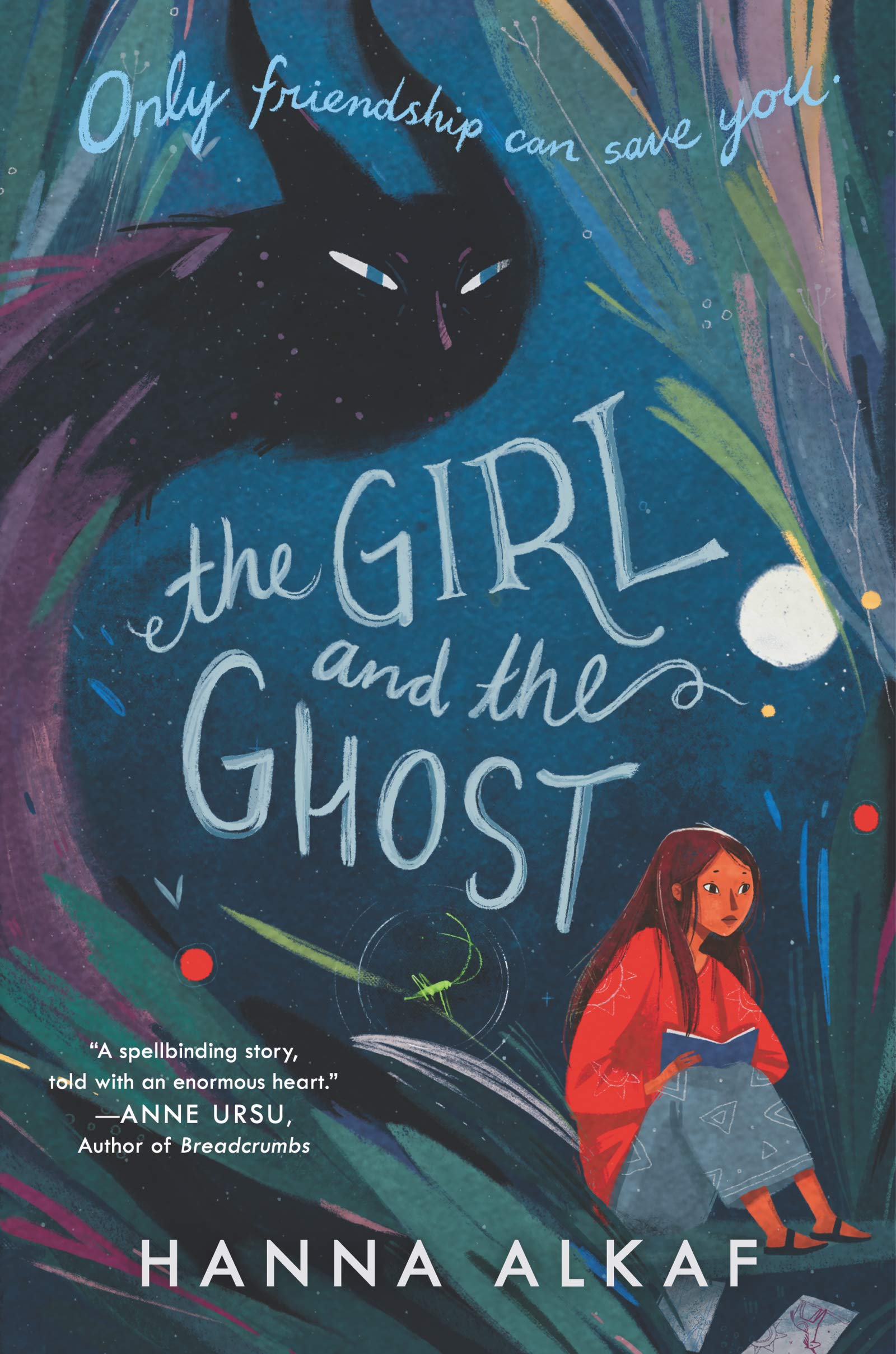
A book meant for middle grades, 8-12 year olds, that has depth and layers and culture and strength is not something you find very often.  Over 275 pages, the book is at times dark and haunting, but what is truly remarkable is that it doesn’t talk down to young readers and with its pop cultural references and relate-ability,  the book is not dreary.  In fact, the true “haunting” occurs after the book is finished and the concepts of friendship, being alive, and forgiveness stick around and require thought and consideration.  The book is based on a Malyasian folktale, how much is a fleshing out, or simply a starting point, I do not know, but I do know that the characters are memorable, the concept thought provoking, the writing flawless, and the intertwining of Malay culture, Muslim characters and the supernatural, a combination that makes for an enjoyable read.

SYNOPSIS:

When an old witch dies, her pelesit, her ghostly demon, is passed on to her granddaughter Suraya.  Suraya lives with her mother, a teacher, and is lonely and emotionally neglected.  An adventurous girl, the pelesit, keeps the small girl safe, but waits to reveal himself to her in the form of a grasshopper when she is older.  When he does reveal himself to her, she asks him his name, and he doesn’t know it, so she names him Pink.

Suraya and Pink become best friends, and he provides company for her as she receives very little from her mother and has no friends.  Suraya had no knowledge of her grandmother and Pink modifies the stories to leave out how evil, cruel and vindictive she was through him.  As an evil being with no heart these acts never bothered him, although he stopped enjoying them long before she died.  With Suraya however, he feels things.  He is sad that she is unloved by her mother, teased by the other children, and that she doesn’t have the things other kids have.  Suraya is kind, and forgiving, and tries so hard not to let things bother her.  Pink however, with a twitch of his antenna can make things happen.  Bad things.  Things that might at first seem like a part of life, but when Suraya catches on, she scolds Pink.  She makes him promise never to use his magic to hurt people, ever.  He reluctantly agrees, she is his master after all.  Unfortunately he doesn’t keep his promise.

On Pink’s prodding, Suraya makes friends with a new girl at school, Jing, and their friendship makes Pink jealous.  He harms Jing and Suraya decides she no longer wants to be his master.  As a result Pink is determined to make Suraya’s life miserable.  As desperation mounts, Suraya tells her mom about Pink and a pawang is called in to separate the spirit from Suraya.  Something seems off about the pawang, and when Suraya investigates, she realizes that she must save Pink from him.  Together with Jing, Pink and Suraya are off on an adventure against the pawang and might just learn more than Pink’s backstory in their efforts along the way.

WHY I LIKE IT:

I love that Suraya and her family are Muslim and that Jing is not and they are best friends.  Suraya and her family pray, celebrate Eid, give salams when at the graveyard, but obviously also believe in magic and ghosts, and somehow in the story it doesn’t seem to be contradictory or odd.  I love Suraya’s strength.  None of the relationships in her life are good.  Yet, she is good, and she forgives and fights to make those close to her better.  Pink is manipulative and controlling and abusive, but she still fights for him to be treated better and that says more about her, than whatever he is.  Suraya’s mom is distant and neglectful, but yet, there is still realistic hope that their future can be and will be better.  I love that all these layers are there and yet are subtle too.  Kids are smart and they will bring their own experiences, understanding, and expectations to decipher these relationships, and that is amazing.  I love that the characters in the story may be so different than the typical western reader, but they will still see themselves in this poor Malay girl from a small village, in her best friend Jing who lives and breathes Star Wars, or even in the religions pawang who is a power hungry charlatan; toxic friendships and family secrets make the book universal.

FLAGS:

Pink makes it look like blood is on a girls back side, implying a girls fear of leaking, but it isn’t explicit or named.  There is death and dying and supernatural and lying.

TOOLS FOR LEADING THE DISCUSSION:

I am thinking strongly about using this as a book club book, as the discussion would be delicious and varied among the participants.

Interview with the author: https://thequietpond.com/2020/08/20/our-friend-is-here-an-interview-with-hanna-alkaf-author-of-the-girl-and-the-ghost-on-writing-friendship-malaysian-childhoods-being-true-to-your-stories/


The Battle by Karuna Riazi

Standard
The Battle by Karuna Riazi

the battle

This claims to be a companion book to The Gauntlet, but it does rely heavily on details from the first to make sense of who some of the characters are as this book does little to explain them and advance their story.  In reality the book is very similar to the first book, but sadly not as fun.  I was disappointed in the 295 page AR 5.2 book, but my fourth and fifth grade boys enjoyed it as they had few expectations and the fast pace kept the book fun.

SYNOPSIS:

It has been four years since Bengali American Ahmad Mirza has left the game world, Paheli, with his sister Farah and her friends.  The old board game has been destroyed and the reboot focuses on a new video game setup.  This time around Ahmad is the main character and with his ADHD he finds himself getting in trouble a lot in school and desperate for a friend.  When a mysterious package holding a video game shows up and Winnie sticks up for him, things are possibly looking up. When all of New York freezes at the insertion of the game, however it clearly is not.  Winnie and Ahmed are off to battle the Architect and MasterMind to unfreeze their beloved city and escape Paheli.

Different battles and characters inch the duo closer to winning, but facing their fears and  being sidetracked by remnants of the last game trying to return make everything complicated.  Ahmed’s uncle returns to the game, giant mice try and help, crazy monkeys distract, and flying rickshaws populate the eastern inspired world filled with Bengali, and Arab references.

WHY I LIKE IT:

I love that it is a Muslim kid with some struggles at the helm, but there is really so very little character building that it ultimately doesn’t count for much in the long run.  Just like the first book, the characters are taken from the “real” world and transported to a game world and they must win the game to return home.  The book is fast paced and fantastical, but I constantly felt confused.  The challenges were disjointed, there wasn’t a clear objective, Ahmed didn’t recall being there before or that Vijay bhai had somehow come back with them, the mice help and then they are absent, and there wasn’t really a big reveal or explanation resolving any of it.  It felt all over the place and with little world building I didn’t feel like I could even picture what Paheli looked like, so forget feeling what the characters felt or imaging the intensity that that the game was running on.  It seemed like an updated version of the first book, but not done as well at all.

FLAGS:

Pretty clean, some intensity, some fighting/battling, death, nothing detailed nor grotesque.

TOOLS FOR LEADING THE DISCUSSION:

I think the book is great to have in a classroom or on a home book shelf especially if the Gauntlet was enjoyed, but I wouldn’t use it as a book club book because it doesn’t offer much to talk about.  There isn’t a cathartic release or even an under current of family and friendship and loyalty, it really is just surface level story telling.

Leila and the Sands of Time by Shirin Shamsi

Standard
Leila and the Sands of Time by Shirin Shamsi

shirin shamsi

This 127 page book has a lot of potential, but ultimately didn’t win me over.  It is one of those that needs a good editor to encourage the author to flesh out the characters, take advantage of a potentially cathartic resolution, and fill the gaping holes in the story.  Meant for ages 8-12 the tiny font, and tight spacing, make the book really dense and intimidating to look at and read.  The book, as written, should be well over 200 pages, if spaced appropriately for the target audience.  Once you accept the presentation and get in to the story, it isn’t an awful read, it just could have and should have been so much more.  I hope the author revisits it and polishes it up- the time travel, the science DNA component, and the death of the protagonist’s parents, offer a lot for Muslim and non Muslim readers to sink their teeth in and be swept away by, but ultimately, I don’t know that most readers will be motivated to finish the book, and those that do, won’t remember anything about it.

SYNOPSIS:

Laila’s dad has recently died, and with her mother having died years earlier, Laila is now 13 and an orphan living with her stepmom and baby sister.  Feeling resentful that her dad remarried and had a child that took time away from her in his final span of life, doesn’t make Laila a very kind person at home.  Her best friend Beth, even points out how cold she is to her family.  With school vacations approaching, Laila is headed for Umrah with her dad’s brother, her uncle, and his wife.  While making tawaf, Laila loses her aunt and uncle in the crowd and finds herself transported to 7th century Arabia.  She hears a baby crying and learns that the baby’s life is in danger.  To save her, she must get the baby, the baby’s mom and baby’s sister from Makkah to Yathrib.  The only way to do that is to join a caravan, and they can only join a caravan if they have a male escort.  So Laila chops off her hair, acts like a boy, and gets them in the caravan.  They meet bandits along the way, but nothing too scary, they arrive in Medina and right before they meet RasulAllah, Laila finds herself back in the present.  She is in a hospital, but the doctors do not know what is wrong with her so they release her.  She returns to the US, relays the story to Beth, and decides that at an upcoming field trip to study DNA, she is going to submit the baby’s hair that she still has for dating.  The results show it is from 1400 years ago and a family heirloom of her step moms reveals that the baby is a great great great great… grandmother of her’s.  Resolved to open her heart to her family, Laila is a changed person, alhumdulillah.

WHY I LIKE IT:

I love the premise, it is like Sophia’s Journal and When Wings Expand  thrown together and scrambled.  Laila is struggling with her faith and is trying to find it, while also finding a way to move forward after losing her father.  There are just a lot of things that aren’t answered, are contradictory, or don’t make sense.  It says she learned Arabic because her mother spoke it, her dad is desi, but really no hiccups speaking in 7th century Arabia other than forgetting the word for scissors?  She at one point said she was a cousin from the north, but while on the caravan mentioned that she had never travelled through the desert.  There really should have been more action with the thieves and the regrouping when the men came back.  Similarly, her gender reveal should have been a bigger deal than it was.  I was hoping there would be a mention of if her hair was long or short when she awoke in the hospital, I don’t think I missed it, but maybe, or maybe it wasn’t there.  Once back home, there really needed to be a reunion scene with Laila and her stepmom and half sister, I mean the whole point of the time travel was to save a baby. Really? Nothing? I was disappointed that it was glossed over and mentioned as a retelling to Beth and pushed aside.  The second climax is when the DNA testing is being questioned, but I didn’t get the need for the babysitter and everything to be rearranged for a two second conversation with the principal accusing Laila of theft, a phone call should have sufficed, plus when Laila and Beth mention it to the scientist, it seems everyone was questioned, but Beth wasn’t, something wasn’t consistent there either.  Overall, the book needed more action for a book that involves time travel and more emotional attachment and character connection for a book that involves a newly orphaned young teen girl.

I like the conveying of Islamic facts and information and history in a fairly smooth way.  At the beginning, Umrah being explained was a little text bookish, but it smoothed out as the book progressed.  I love the little flashbacks at the beginning of each chapter, I wish there would have been some information about the remarriage of her father and her emotions on the matter at that time.  It is one thing to be grieving, but really she is a brat to her step mom, and if the uncle and aunt live right there, not sure where they live, someone should really be working on getting them all some family therapy, not a quality situation for anyone.

FLAGS:

none

TOOLS FOR LEADING THE DISCUSSION:

I wouldn’t use the book as a book club selection, nor would I think it would get read if on a classroom shelf.  I might use the premise of going back in time to meet Prophet Muhammad, as a writing prompt though.  Would be a good assignment with factual and Islamic references to get kids stretching their imagination to make it all come together and work.