Tag Archives: coming of age

Sasquatch in the Paint by Kareem Abdul-Jabbar and Raymond Obstfeld

Standard

sasquatch

My tween boys read the first two books in the Streetball Crew Series and recommended I read book one because there is a Muslim character and I’m a fan of the basketball all-star author who draws on his own life and experiences growing up in the story.  It is 265 pages, an AR 4.5, and while the story is decent, and I enjoyed the majority of it, I didn’t love it.  I was not thrilled at the choppiness of the story telling and ultimately the way Islam was presented.  Obviously there are plenty of Muslims that will occasionally eat pork and who get violent as they get more religious, but I don’t think it is the norm and definitely isn’t a message most middle grade Muslim readers would identify with, nor want non Muslims assuming about Muslims as a whole.  The book randomly has a sudden Muslim chapter toward the end and attributes some threats on the main character as being from Muslims becoming more devout.  The main character is not Muslim, this is a side character and her family, and you don’t find out til the book is nearly over that she is Muslim. I worry how younger readers will be affected by the negativity toward Islam, as it really isn’t explored or even part of the story.  There is enough going on in 8th grade Theo’s life with out the insertion of religion.  I was glad I read it so that I could discuss it with my boys, but I would encourage the book for more middle school aged kids, if at all.  The book involves basketball as a subplot, but has larger life lessons and developments away from the game.  Do be aware one of the young characters smokes cigarettes, there is female objectification talk among the male characters, racism is discussed, there is some physical assault, and beer, R-rated movies, tattoos, branding, and dating are mentioned in this coming of age book.

SYNOPSIS:

Theo is 13, in 8th grade, and over the summer has grown six inches.  He identifies as a science nerd and a geek and is on the Academic Olympic team at his school.  He now, however, finds himself on the school basketball team, and has no idea what he is doing.  Towering over everyone, he is assumed to be good, but his lanky body and new found size brings him ridicule and teasing. His life long best friend, a fellow geek, can’t figure out why he won’t just quit the basketball team, but Theo is oddly enough,  enjoying the concept of team, and suddenly being recognized in the halls.  When he joins a pickup game to improve his skills however, he gets in a fight with another kid, get’s threatened by some guys on motorcycles, and teased by a weird girl named Rain.

Outside of school it is just Theo and his police officer dad. Theo’s mom has recently passed away and the two are creating a new normal, that is until Theo finds out his father is giving online dating a try.   After the first abysmal basketball game, Theo is forced to go visit his cousin in LA who is a tiny bit older than him, but much rougher.  He constantly teases Theo and puts him down.  He claims to be a great musician, but no one has ever heard his music, and suddenly on this visit, he seems a bit more insightful, which has Theo confused. 

With Theo being pulled in multiple directions, he risks being kicked off the basketball team, moved down to alternate on the Brain Game Team, killed on Friday by the motorcycle gang and to top it all off, a CD of his cousins music has been stolen from Theo’s backpack and band has gone viral with one of the songs.

WHY I LIKE IT:

I like that it is a coming of age book for boys.  I feel like there are a lot of girl books out there, but this one really does get into a young males head.  It isn’t always pretty, and while women/girls are at times objectified in his thoughts and while chatting with his friends, I think he realizes it and doesn’t treat or talk to women in a negative way.  I like that race is discussed as he is one of 14 black kids in his school of 600.  There are times when he or his family are treated different for their skin color, but his mom never allowed him to accept it to be a reason for not being the best ‘you’ and she would make them put money in a jar any time they blamed race for something bad happening, a tradition they continue even though she has passed.  I like the pop cultural references, a lot of books overdo it, this book makes it pretty smooth and relatable.

*Spoiler Warning* So Rain, turns out to be Matar, Arabic for Rain, she has convinced her aunt and uncle to let her change schools while her parents are in Iraq (her mom is Iraqi, her father a Quaker from Pennsylvania) and call her by her American name and let her wear American clothes (no hijab).  The motorcycle villains, are her cousins, who were trying to find her and were threatening  Theo to try and find out where she was.  Their frustration with her behavior and dress is what prompted them to hit Rain which made her run.  Rain and Theo discuss why after September 11, she was tired of being accused of being a terrorist and so she wanted a fresh start.  Her uncle and aunt are noted as being nice, but clearly the devout Muslim cousins are what will be remembered.  She also discusses sometimes eating pork, that hijab is modesty in the Quran, not a requirement to cover your hair, and that she is Muslim, but doesn’t know if she will be when she is older.

The book didn’t find its flow for me until nearly half way through, maybe about page 100 or so.  It seemed to struggle to get all the characters introduced, flesh them out, and then decide what the book should be about.  Once it got through all that it flowed better, but still left me confused as to why there was a spontaneous breakfast party, why a lawyer would so quickly get involved in the music case, why Theo was withdrawing from his friends, why Rain wouldn’t just talk to Theo, how Rain had friends she could stay with after just starting at the school, how Rain could switch schools without her parents there. Really the Rain character in general seemed really forced.

FLAGS:

I listed most of the potential concerns in the opening paragraph so that anyone, like me that would think, ‘oh fabulous a middle grade sports book by a Muslim author’ would be aware that there are a few potentially concerning elements.

TOOLS FOR LEADING THE DISCUSSION:

I wouldn’t do this as a book club selection, it is a little all over the place, my 11 year old disagrees and thinks it would be a great book club read, so I’ll leave it to you to decide.

Video interviews with Kareem Abdul-Jabbar about the book:

https://video.disney.com/watch/sasquatch-in-the-paint-with-kareem-abdul-jabbar-4e8f920a40dec5fcc9be6a5d


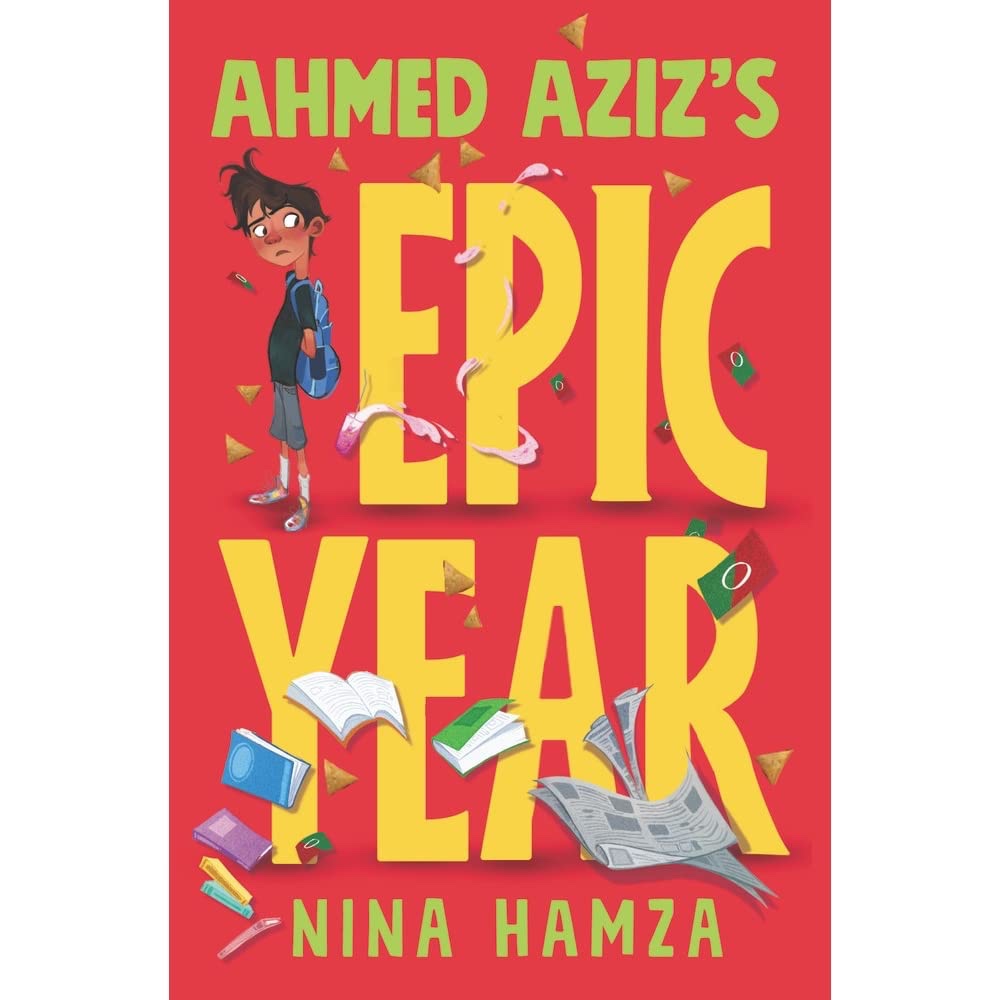
Ahmed Aziz’s Epic Year by Nina Hamza

Standard
Ahmed Aziz’s Epic Year by Nina Hamza

img_7992

There is such a shortage of male Muslim protagonist middle grades books that I have been waiting quite impatiently to get my hands on this one, and alhumdulillah, it didn’t disappoint.  I’m not sure if it qualifies as OWN voice, being it has a female author, but the authenticity in the little religious and cultural details would suggest that it should.  The 320 page book is meant for ages 8-12, but the weight of Aziz’s father’s illness, the plot pivoting around three classic books (Holes, Bridge to Terabithia, and From the Mixed-Up Files of Mrs. Basil E. Frankweiler), and the clever reflections of Ahmed along with his quick wit and thoughtful choices, might make the book’s sweet spot be 5th to 7th grade readers (as well as us moms who are suckers for elementary literary references, teachers who are heroes, and kids realizing their potential).  The book has a bully, but is clean and wonderful, and I thoroughly enjoyed it.

SYNOPSIS:

Twelve-year-old Ahmed is leaving the only home he has known in Hawaii to move to Minnesota.  His dad has Cirrhosis, a result from a rare genotype of hepatitis C, and Minnesota is one of the top options for treatment.  The family is nervous to move in general, but more so to move to Minnesota.  It is where Ahmed’s dad Bilal grew up, and where his dad’s younger brother passed away at age 12. Ahmed’s younger sister, Sara, is perhaps the only one excited for the new adventure.

The family arrives and is greeted by Bilal’s old friends, and when school starts he realizes one of his dad’s best friends, is his English teacher, and somewhat of a legend at the school in getting kids to try and beat her at an end of the year quiz show like competition.  The school is also where Bilal and his brother Muhammed went to school and a picture of Muhammed hangs right above Ahmed’s locker.  The biggest stress at school is Jack. Jack who lives a few houses over, Jack who rides the same bus, Jack who is in Ahmed’s English group, and Jack who has a lot of followers at school.  Jack is a bully.  One who makes Ahmed’s life miserable at every turn, not just socially, but even the police.

Ahmed is a laid back kid that doesn’t like to read, but loves words, who wants to blend in yet is the only brown kid in a sea of white, who enjoys attending  Jummah salat, but ultimately hates going because of the shoe chaos afterwards.  Ahmed has no intention to read the books assigned in class, but some how the three classic books assigned do get read, and  Holes, Bridge to Terabithia, and From the Mixed-Up Files of Mrs. Basil E. Frankweiler tie together and weave in and out of Ahmed’s epic year.

I don’t want to spoil much, but Ahmed’s dad is in the hospital a lot, there is a lot of plotting to survive being bullied, as well as getting revenge on the bully in Ahmed’s own way without involving parents.  Ahmed slowly grows to love Minnesota, his small circle of friends, and his school while learning about his uncle and the kind of person he wants to be as he grows up.

WHY I LIKE IT:

Ahmed is Muslim and while his mom prays five times a day and his dad is an occasional prayer it doesn’t specify how often Ahmed prays or how he feels about religion, other than going for Jummah.  At first Ahmed thinks he is being bullied by Jack because he is brown, his mom is an immigrant from India, his father the son of immigrants from India, but learns that Jack picks on anyone new.  I like that for as much as Ahmed hates stereotypes and assumptions, he acknowledges that he makes them too.  I like that Ahmed doesn’t like to read, but is smart, and eventually comes around to reading.  He is tech smart and very mature in how he views the world and himself in it, cares for his sister and parents, handles things on his own, and builds others up.  Ahmed is a good kid, not in that he doesn’t make errors or is a teacher’s pet, but in that he has a really good heart and a good head, and I think would make anyone better for knowing him.  I love that the book is smart too.  If you have read the three books mentioned you will love the discussions and questions about the books, if you haven’t read them, you will be tempted to after you finish this book.  I wish there was a tad more religion, there is a sprinkling of culture, primarily the mom’s tragic cooking, but a bit more religion in a book that has illness and death would seem natural to me.  The storytelling is superb, I was so curious where the father’s parents were, but alas it did answer that, I would have liked it sooner, but I was glad it made it in none-the-less.  I would have liked a bit more from the parents about why they wanted Ahmed at his dad’s old school, or how they were comfortable constantly leaving the two kids home alone at night, but Ahmed like I said is pretty mature.  I particularly love the brother sister relationship.  Ahmed is a good older brother and it reminded me in some ways of my older brother, which made my heart warm, good siblings are a blessing.

There are multiple climaxes, but while I expected the dad’s health to be a big one and Jack getting what was due to be a close second along with the outcome of the literary contest, I was not prepared for the level of Jack’s torture to climb to, and was pleasantly surprised by the unresolved thread of Jack and Ahmed’s future relationship.  Things in life don’t magically resolve and I love when middle grade novels keep that in mind.

FLAGS:

None

TOOLS FOR LEADING THE DISCUSSION:

I would absolutely do this in a heartbeat for a middle school book club selection.  Even if the book is more middle grades, I think the students will enjoy it and be surprised by the emotional investment the dad character extracts.  I think they will also benefit from the literary references, relatable characters, and the overall great storytelling.

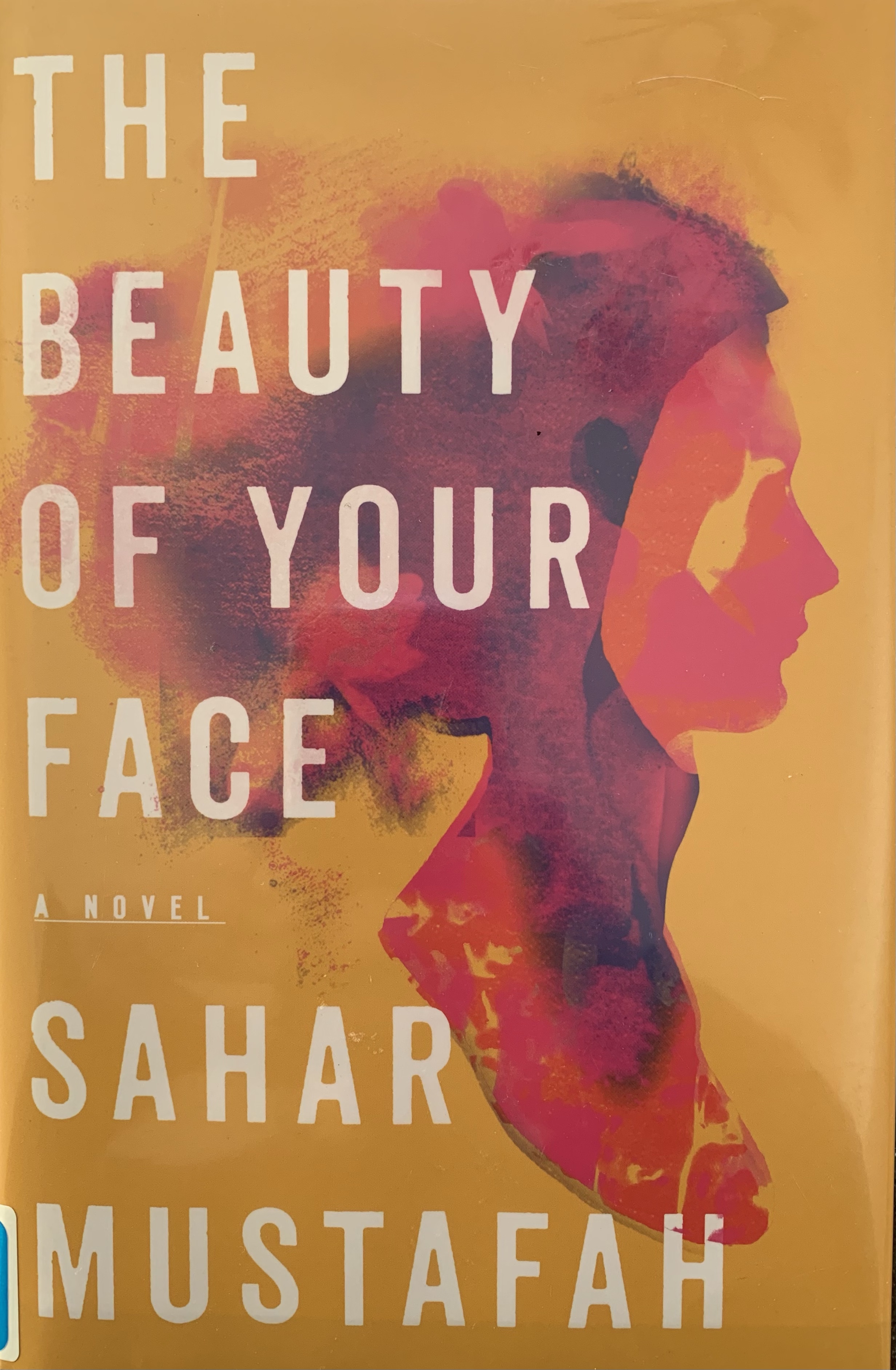
The Beauty of Your Face by Sahar Mustafah

Standard
The Beauty of Your Face by Sahar Mustafah

img_7145

I had debated picking up this book knowing that it isn’t labeled YA and I’m painfully behind on a stack of books I want to review, but after reading @muslimmommyblog’s review I opened the first page: that was 24 hours ago, I couldn’t put it down.  I’ve seen a lot of comments about this book being more YA than adult fiction because it tidies everything up so precisely at the end.  I’ve also seen critiques from non Muslims that it is overly preachy at times.  Many Muslims are so swept away by the rawness and presence in Islam in the book that they are making their teens read it.  So I wanted to read it and review it to determine if it is appropriate from my perspective for teens, and offer my take on it.  Ultimately I think while much of the Palestinian-American protagonist’s life story in the book occurs as a child and young adult coming of age, that the “flags” are so critical to the story and so numerous, that no matter how deftly and non specific she handles these issues and moments, that the book really is meant for more mature readers. I’ll detail it more below in the FLAGS section but to highlight a few mature spots mentioned in the book to varying degrees:  extra marital affair, alcohol, making out, groping, nudity, sex, voyeurism, killing, shooting, physical abuse, profanity, suicide attempt, bigotry, etc.  The writing is absolutely superb, and it isn’t sensationalized, but it is there and provides understanding as to why the characters often are as they are to a point that you need to understand them with a certain clarity.  I would think this 298 page book would most appeal to early college age readers where one is hopefully open minded enough to understand the characters relationship with religion whether they are Muslim or not, old enough to have some of their own life to reflect upon, and on the cusp of a new chapter that they realize the role their choices can make as they move forward.

SYNOPSIS:

Afaf’s life story unfolds out of order and with occasional interruptions from an outside point of view.  It opens with her at work, as a principal of an Islamic girls high school in Chicago as we see her dealing with parents upset with things taught at the school and the balance she tries to achieve in guiding her girls to be strong, confident, well-informed Muslims in a diverse America.  It then flips back to 1976 and begins the tale of Afaf’s life with her parents, immigrants from Palestine, her older sister and younger brother.  Not ever feeling like she fits in at school, she loses any sense of normalcy at home when her 17 year old sister Nada goes missing.   There were problems at home before: her mother never being happy, Afaf never feeling her mother’s affection, her father having having an ongoing relationship with another woman, but as days and months go by, and no clues can find Nada, it will be the event that seemingly tore the family apart.  Afaf’s mother has a mental breakdown, Afaf’s father takes to drinking, and thus Afaf and her younger brother Majeed have to navigate much of their life on their own.  In high school Majeed finds baseball and becomes the ideal student and son.  Afaf lets white boys feel her up and has a reputation for being easy.  She doesn’t cross the line, but her reputation and name on the back of bathroom stalls is fairly accurate.  When their father is involved in a car accident, he finds Islam.  The family is very cultural, but not religious at all.  Eventually Afaf and her brother accompany their father, much to their mother’s protests to the Islamic Center and while Majeed has no interest in religion let alone Islam and never returns, Afaf feels an instant peace and the opportunity to redefine herself and continues to go and study Islam.

The book jumps regularly in sections, not every other chapter, and at some point it shows Afaf as an elementary school teacher making the commitment to wear hijab and preparing to wed a Bosnian man with a broken war filled past.  It jumps and has her brother home from law school visiting and her mother attempting suicide by drinking drano and being found laying naked in a bath tub.  After recovering, her mother returns to Palestine and never returns.  In yet another vignette, it has Afaf and her husband and father preparing to go for Hajj, where her father passes away, and has her returning to find she is expecting her third child a little girl.  There are other surprises that I’ll not reveal, but some of these jumps are interrupted by a voice of a radical alt right mant who walks into the girls school and starts shooting, finding himself face to face with the principal, Afaf.

WHY I LIKE IT:

I am seriously blown away at the quality of writing, and the interweaving of religion and culture.  It is a main stream book and it has a lot of religion in it.  It isn’t so much long passages of preaching, the father would like it to be that way, but the other characters keep him in check.  But the quiet transformation of Afaf and having Islam save her from a life she was not content with.  I love that it has joy and happiness despite all the tests and obstacles.  The book could have been really heavy and drag, but it wasnt, it was compelling and hard to put down.  The characters will be with me a while and I can see myself rereading the book just to visit them again.  

I was a little confused with Afaf’s limited Arabic and her mom’s limited English.  How did they communicate? I get that perhaps it was symbolic of their broken relationship, but seriously when Afaf is seven and not understanding Arabic and her mom is not understanding the police and neighbor in basic English, something is a bit off.  I like that insight is given as to why Afaf is fooling around with any boy that wants her and that it shows it isn’t about the acts themselves.  I also like how it showed her conflicts in reporting an Arab child in her class being abused at home by her father and how the response was so sad by the community.  While Islam saves her and holds her to a higher standard, it doesn’t appeal to her brother, it doesn’t remove the hypocrisy of people who are Muslim: abuse, owning liquor stores, and it doesn’t make everything better for her.  She has to suffer consequences of her choices, she just feels that Islam gives her the tools to persevere and understand and have hope.  

I love the food, oh man, hearing all the dishes being cooked and served and cleaned up after, really made me very hungry.  The cultural elements of the music and songs and oud really ground the book and make the OWN voice value ring so true and strong.  The racism and bigotry feels very real as well.  The author is the daughter of Palestinian immigrants and the way that she articulates such pointed examples of not being given the chance to move up in the elementary reading group, side comments the high school coach makes to her, and the general stereotypes thrust upon her, are very powerful.

FLAGS:

So there is a lot, as stated in the intro, but I want to articulate a bit of why I maintain older teens for the book even though it isn’t overtly sensationalized. I’ll walk through some of the major flag themes.:

Take the drinking. The father is an alcoholic, but the mother and children hate it, Majeed drinks beer with his friends, but isn’t Muslim, yet the Khalti is somewhat religious and they pour amber drinks at Thanksgiving. So there is some moral lesson, which I think you could argue is fine in YA or even middle grades.

Relationships/sex/body: The father is having an affair with a much younger woman, they refer to her as sharmoota and everyone knows about it, no other details are given. Afaf lets boys touch her naked body, but draws the line at intercourse, she says she on some level doesn’t want to do that to her parents or something of that nature. Right before proposing marraige, her and Bilal do kiss. Once they are married it mentions them making love in the mornings. It mentions masterbating and blow jobs. The shooter and his girl friend have sex, the shooter watches an Indian neighbor nurse her baby through the door and sees her exposed breast with some detail and then goes home and masterbates. When the mother is pulled out from the tub after attempting suicide it doesn’t just mention she was naked, it comments on her pubic hair.

Violence: An Arab Muslim male classmate, drives Afaf away from her bike and the slaps her telling her basically that she should not be such a slut. Afaf punches another girl in a fight at school. A child in Afaf’s class is being hit by her father. Mother lashes out at Afaf, she ends up burned. The climax is a mass shooting where 14 students and a teacher are gunned down and killed. Self harm: car crash while drunk, suicide attempt with drano.

Minor: Yeah there is music, and Halloween,

TOOLS FOR LEADING THE DISCUSSION:

This would make a great book club selection for those in their early 20s and up. It is well done, just not for younger readers. The book is very popular and numerous author interviews can be found with a quick Google search.

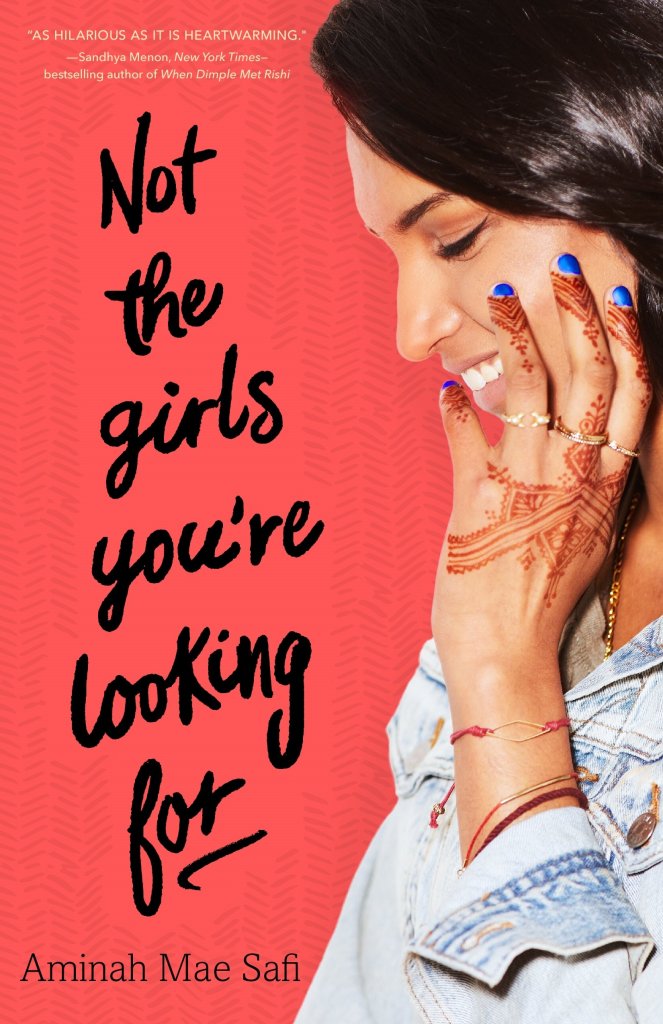
Not the Girls You’re Looking For by Aminah Mae Safi

Standard
Not the Girls You’re Looking For by Aminah Mae Safi

This book did not work for me. Despite the fact that the main character is Muslim and it is Ramadan, no matter how much I wanted to connect with this multicultural lead and her friends, and see myself in her as she navigates high school, I just could not. The writing was choppy 3rd person which distanced the main character for me, the crude language on every page, the drugs and alcohol in every scene, the detailed sexual encounters throughout, the lacking growth of the characters and the muddled point of the book in general made the book difficult to read. The book is an AR 4.9 but content wise is more suited for mature 18 year olds. Even this review might be a little too much, I’ll do my best to keep it clean. Ultimately this book missed the mark for me in showing females defining themselves, celebrating friendships and diversity, or even just creating characters to cheer for as they navigate life.

SYNOPSIS:

Leila is half Iraqi Muslim from her dad’s side and half American Catholic from her mother. She doesn’t know how to pray as her father isn’t religious, but celebrates Ramadan and Christmas and defines the world on her own terms. She is fearless and owns herself, hence she hates her name and goes by Lulu instead. The book opens with her making out with a boy in a closet which she kind of regrets and then goes to join up with her friends at the party to drink and get high and attack one another for their poor choices resulting in drama. In this instance Lulu’s anger pushes a boy in the pool, and then the four friends devise a way to get home and work out the lies they will need to tell to the parents involved. This scenario with only slight variations repeats five or six times in the book.

Lulu is the fearless one, Lo, short for Delores, is the leader, Audrey is an alcoholic math whiz and Emma, not to be underestimated and often is forgotten (literally) is coming out in her first lesbian relationship. Yes these labels are limiting and stereotypical, especially in a book calling for girl power or what not, but sadly that is really the only space they flesh out, not a whole lot more is known about them. The girls defend each other fiercely to outsiders, but are truly awful and angry to one another all the time. They break apart and Lulu doesn’t really know why, so the path back to one another isn’t really cathartic. They pull a prank to get back at a boy that crossed the line with Lulu, but it fizzles when the threat of what the prank could do is enough to keep him away and they don’t have to complete it completely.

Between the parties there are some sub plots that weave in and out. Lulu has to spend time with Iraqi family friends who don’t accept her and are critical, in Arabic, of her mother. This gives some cultural layer to the story, but the characters are pretty flat and petty and hypocritical. The bombings in Paris a few years earlier, and the resulting bullying by classmates hardened Lulu, but there isn’t much info on how awful they treated her or how it defined her, so not much sympathy is garnered by the event nor does it help the reader get inside Lulu’s head. There is also a sweeter love story brewing than the one night stands that define Lulu, but then she goes with her mother to get birth control so she can sleep with him all while making it clear that he isn’t her boyfriend, she just wants to have sex with him- which she does on her seventeenth birthday.

Eventually the girls are back together and gushing with tales of sorrow and personal growth and vows that they will always be like sisters.

WHY I LIKE IT:

I don’t mind the premise so much as the execution of it. I get that people practice Islam differently, but I really don’t get the need to even bring her religion in to such a story. Culture maybe, but even that is a stretch. I don’t know if the story would be better if it was first person, I would like to think so, as not connecting with the main character was such an obstacle for me. I wanted to see her grow and change or at least have clarity in her decisions even if I didn’t agree with them or couldn’t relate to them. I wanted to feel her remorse or the weight of her decisions, but was often just told in passing that something scared her or was hard for her, not shown it. The theme of not belonging anywhere is a legit one, but I don’t know that this book explored it, it just sort of brushed by it almost as a trial to see if the emotions would stick. Which for a character built up to be unapologetic and unafraid to suddenly want a victim label without any real emotional ties, didn’t work for me. There are such holes in the story, that at times things didn’t seem believable or details were so specific with no context that I didn’t get their purpose. I would have loved to know more about her brothers and the tests they went through, or why her family was so loyal to the Arabs around them. I desperately wanted something that showed a different side of Lulu not just the anger and “F everyone who wants to change me” mantra. People are scared of her and she enjoys that power, but I don’t get why they are scared and why she enjoys it. It seems like a big part of her story and of the book in general to miss. Yes she is independent, and I get that can be misread, but she almost seems one dimensional and flat which defies the concept of defining yourself on your own terms and carving out where you want to belong among groups that see you as other, right?

The character is pretty open that she knows little about Islam, she also claims she isn’t interested. She fasts not so much because it is a commandment but more to appreciate poor people. She says this, but actions don’t seem to back it up. She tries not to drink during Ramadan but she still smokes, gets high, makes out, and lies once the sun goes down. At one point she calls a bride and her mother whores, and refuses to apologize, so her dad gets a fatwa issued. Lulu’s mom mentions that something went all Shiite on the situation, so I’m not sure if the fatwa issuing for such a specific thing is a shiite thing or something I’m just not aware of or familiar with as a tool for handling family dramas.

FLAGS:

The whole book really. Sex, drugs, alcohol, sexual assault, lying, cheating, blackout drunk, vaping, talk of orgasms and going down, lesbian relationship, hetero relationships, sexual encounters, language etc etc etc.

TOOLS FOR LEADING THE DISCUSSION:

Would never cross my mind to share or suggest this book. Even religion representation issues aside, I don’t know that there is really a single “healthy” relationship highlighted among the main characters, some of the side characters maybe, but not enough information is given to really make that case. The characters just all seem so angry, not saying teenage years aren’t angry and messy, but this one doesn’t seem to add much perspective to that singular thought unfortunately.

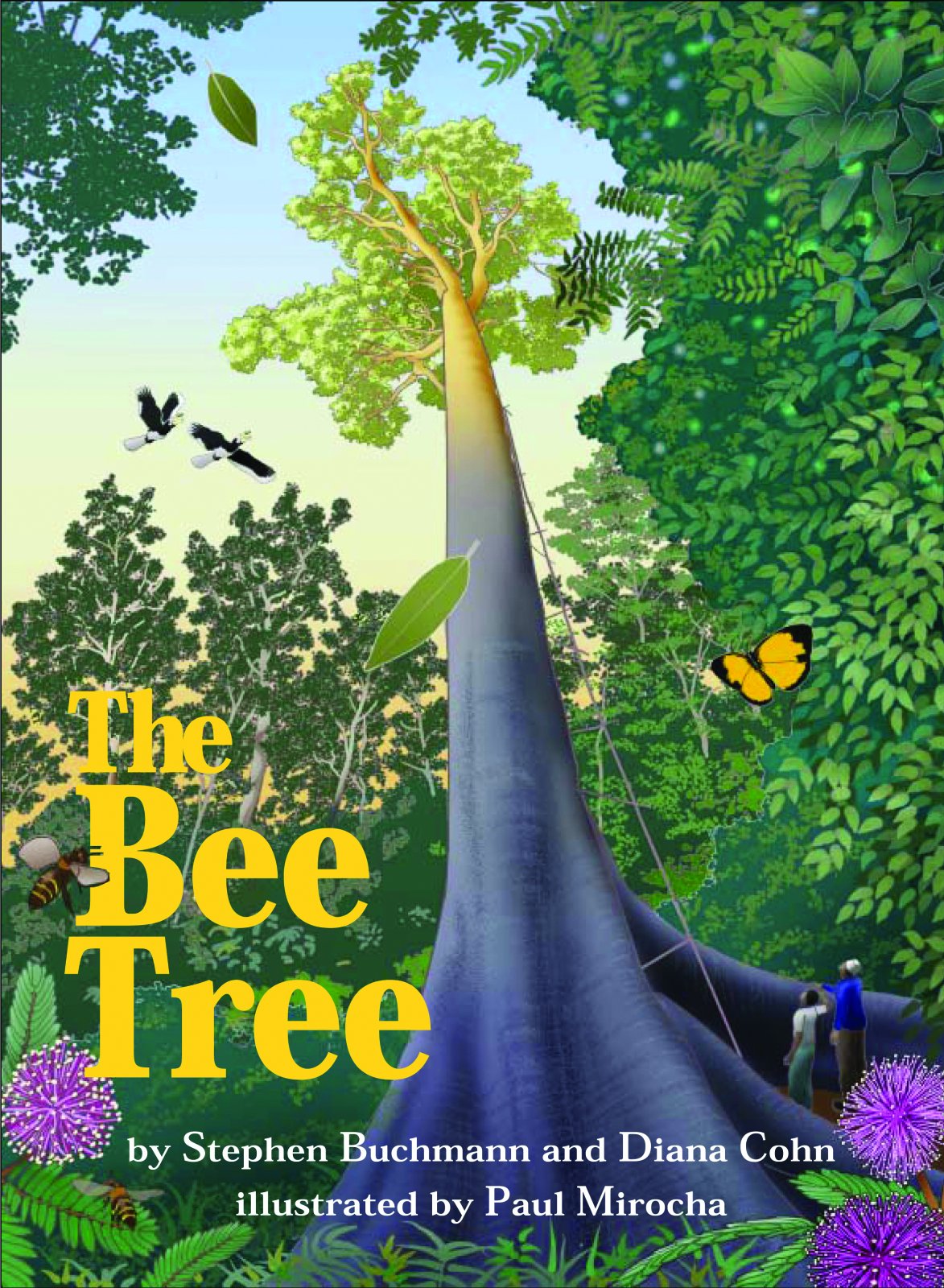
The Bee Tree by Stephen Buchmann and Diana Cohn illustrated by Paul Mirocha

Standard
The Bee Tree by Stephen Buchmann and Diana Cohn illustrated by Paul Mirocha

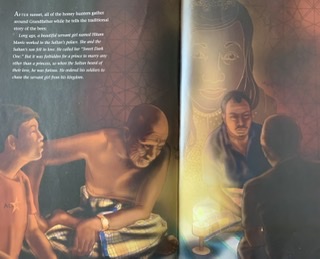
bee treeThis is one of those books that it is hard to know who the target audience is and who would most enjoy the text heavy 40 pages about a boy coming of age in Malaysia by harvesting honey in a traditional manner.  The two page spread illustrations are rich and inviting, and with an AR 5.7 level, the book would work well for children that enjoy other cultures, honey, insects, or children that you hope will be inspired to start seeing the world a little differently than they are used to doing.
5BD37914-E9B7-4D0B-BB0A-1286A8BC4C72

The story starts with a boy talking about his grandfather and how every year he goes to collect the honey from the tualang trees.  The bees travel hundreds of miles and arrive just as the rainforest starts to bloom.  The trees that they build their nests in are higher than the eye can see and grandfather, known as Pak Teh, is the leader of the honey hunting clan.

7CA311E6-B1B6-40E7-B735-FAACAD76597F

He tells everyone what their jobs will be: some will carry ropes, others pails, others torches.  One day, he tells them, someone will have to take his place as the one who climbs all the way up to the top to gather the honey.  He believes Nizam, the narrator, is the one.

To prove himself, Nizam has to practice climbing 120 feet into the sky.  Nizam and grandfather spend a lot of time together praying five times a day and walking through the dense rain forest.  He reminds Nizam that the forest doesn’t belong to them, but to the unseen protector. They enter the forest as if they are visiting a neighbors home.

837003A0-ED16-4CA9-9CD8-3CEBA7846D0A

At night all the hunters sit together and Grandfather tells the traditional story of the bees.  A story that involves a beautiful servant girl named Hitam Manis who worked in the Sultan’s palace and how the Sultan’s son and her were in love.  When the Sultan found out he ordered the girl run out from the kingdom.  As she and her loyal friends fled she was hit by a metal spear.  She did not die, but her and her friends were magically transformed into a swarm of bees.  Because it was metal that harmed her, she ruled that metal was never allowed to touch the honey.  Hence, when the bee hunters harvest they use a bone knife, leather pouches, and a wooden ladder.

2637F18A-FB0A-424D-AACF-58285BE31EC5

When it is time to enter the forest, it is pitch dark with no moonlight.  The hunters tap their glowing torches against the trees sending light sparks to the ground to tempt the bees and leaving their nests free for Nizam to collect the honey from.  For seven nights they climb the trees, and then they return home.  With greetings of salam, peace be upon you, Grandfather informs the family that when he can no longer climb the tree, Nizam will carry on the tradition.

908CAC37-2CCE-477A-93BC-B3EEF723C2BF

The book ends with factual information about Malaysia, the rainforest, giant honey bees, honey hunters, and the future.

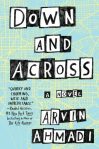
Down and Across: A Novel by Arvin Ahmadi

Standard
Down and Across: A Novel by Arvin Ahmadi

down and across

This 320 page book featuring an Iranian American lead written by an Iranian American is a coming of age story written on an AR 5.2 level, that I don’t think most reading this blog would want their child to identify with.  It is an OWN voice book from what I can gather in the author’s interviews online, and sure many Muslims definitely receive the label of “Muslim” more from others than from their own self identity, but I don’t know that many would want their children seeing themselves in the main character who runs away from home, hangs out in bars getting drunk, picks up girls as a challenge, and basically tells one lie after another, especially while being completely endearing and quirky and someone you really find charming.

SYNOPSIS:

Sakeet Ferdowsi aka Scott, is an only child of Iranian immigrants who really love him and want him to do well in life.  The story opens with 16 year old Scott chatting with his dad at McDonalds about his lack of direction, his lack of interest in his summer internship, and his parents leaving him alone for the summer as they journey to Iran.  Sakeet’s dad tells him of a professor at Georgetown University who writes about “grit” and how grit, not wealth or IQ is the greatest predictor of success.  With a track record of not seeing things through, Scott is told he needs to find some grit and some direction in life.  Drawn to this idea, Sakeet lasts a few days at his mouse poop research internship before become obsessed with grit, jumping on a greyhound bus and heading from Philadelphia to Washington, D.C. to get help face-to-face with Professor Cecily Mallard.

On the bus, he tries to position his backpack to prevent having a seatmate, but a college girl, calls his bluff and forces him to chat with her.  Fiona is not like most people with her free spirited ways and her love of crossword puzzles, and with her now in his life, Scott’s four week DC adventure is set to be memorable.

While in DC Scott learns a lot about himself from the people he meets, the situations he finds himself in, and in general the freedom from his parents.  He is mistaken as a college student and keeps the ruse running to everyone he meets outside of Fiona, Professor Mallard, and Trent.  Trent saves Scott after he crashes a stolen bike (he didn’t know it was stolen) and is being chased by its owner.  They quickly discover they both know Fiona and the big hearted southern helps Scott get a fake ID to get in to bars, and a job working behind the bar to pay for his time in DC.   Trent dreams about working with his favorite senator, which is a big part of the climax, as is the fact that he has been cut off by his well-to-do family because he is gay.  Throw in an ultra conservative “girlfriend” who Sakeet picks up on a dare at the National Zoo and Sakeet to discover if in fact he has grit.

WHY I LIKE IT:

The book reads really easy and smooth, hence the middle grade AR level, but I don’t think any elementary kids should read it, or even middle school for that matter.  As a coming of age book, early high school would probably be the best fit, but with such a focus on drinking and bars, and sex I kind of feel like the rave reviews are coming from adults who find the antics quaint and idyllic as a way for Scott to grow, not as something they would want their own child to identify with.  Online reviews praise the person of color protagonist and the Muslim representation, but really I don’t find either of them overtly influential in the story.  Yes, Scott is straddling two worlds as a child of immigrants and must balance parental expectation with his own mysterious wants (he doesn’t know what he wants), but I don’t know that culture or religion shape him other than his parents not letting him go to overnight camps growing up.

When he is called a terrorist by a drunk guy, or dumped by a girl for being Muslim, he takes it, he doesn’t deny it, but he doesn’t let it really rile him either.  At one point Scott amends Fiona’s statement of calling him a Muslim.  “‘ish,’ I said.  ‘A long time ago I asked my parents what religion I was, and accepted what they told me.  Haven’t gotten around to reevaluating it or whatever.'”  Other’s call him a Muslim, but I don’t know that he every really says it himself, which ironically I kind of appreciate.  In a few phone conversations with his parents he says “Salam” or “inshaAllah,” but there is no Islamic practice or conscious or even expectation in the book.  I think for readers they will respond to Sakeet and his faith based on where they are in life.  For Muslims, they may find such a careless label frustrating and belittling, or possibly relatable.  Non Muslims may understand Sakeet’s practice means Islamic rules are not followed, and those that do follow them more “extreme.”   Islam is fluid and we are all flawed, so I don’t expect a fictional or real character to be perfect, I’m just pointing out what my concerns would be to have this book in an Islamic school library.  As a reader, I appreciated that the author had the character articulate that he is Muslim-ish only, and have other people call him Muslim and have him not constantly use his faith and culture to set himself apart.  He is fallible and growing and he has a lot of parts to his persona not just these markers.  Incidentally the parts he is exploring and questioning and learning about himself as he looks to his future don’t involve Persian culture or Islam.

FLAGS:

Alcohol, getting drunk and hungover, cursing, some violence, theft, nudity, kissing, talk of sex, sexting, talk of making out, a gay character, lying, drug addiction, getting high.

TOOLS FOR LEADING THE DISCUSSION:

I wouldn’t use this book as a book club selection because of the themes and inconsistency of values, also because of the inconsistency of topics and writing style.

Author’s website: https://www.arvinahmadi.com/

Interviews with author:

https://mashable.com/article/mashreads-podcast-down-and-across-arvin-Ahmadi/

https://ew.com/books/2017/08/03/the-hate-u-give-author-angie-thomas-interviews-arvin-ahmadi/

https://www.npr.org/2018/01/27/580837850/a-puzzled-teen-seeks-answers-and-finds-crosswords-in-down-and-across


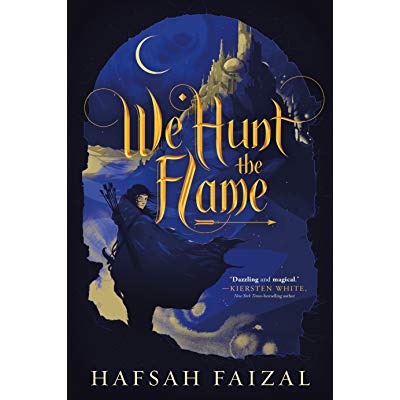
We Hunt the Flame by Hafsah Faizal

Standard
We Hunt the Flame by Hafsah Faizal

we hunt the flame.jpg

A mature upper middle school/high school aged fantasy romance, written by a nikabi and filled with ancient Arab imagery and Arabic words.  Story-wise it read to me like a mashup of Hunger Games and Ember in the Ashes, and while the overall story is good, the first 60 pages of world building were utterly confusing to me.  I told myself I would read at least 100 pages and then decide if I wanted to continue, luckily before I hit 100 pages I found a glossary of terms, characters, and places online, and the story moved from world building to character development and I enjoyed the rest of the ride.

SYNOPSIS:

In a world that is slowly being taken over by the dark magic that is the Arz, a deadly forest that surrounds the country of Arawiya, one girl in one of the five Caliphates, Zafira, dares to venture into the darkness to hunt game and prevent her people from starving.  Unfortunately the Caliph of her state looks down upon women and this regular heroic act must be done with her impersonating a man and keeping her efforts as covert as possible.  Life for Zafira is hard as she not only juggles this masquerade, but her father has recently been killed, her mother is mentally absent, her best friend is getting married, the Arz is growing, and the people around her are starving.

In more or less alternating chapters we also learn of Nasir, the ‘Prince of Death’ who is an assassin for the Sultan who has also now taken over as Caliph of Sarasin.  Forced to kill innocent people by his heartless father, Nasir also is mourning the loss of his mother,  as he tries to earn his father’s approval and find some validation for his current life.

The two characters come together when an immortal witch summons Zafira to retrieve a magic book from a cursed island beyond the Arz and Naisr’s father sends him to intercept her.  The majority of the book takes place on the island of Sharr, an island that is not only a location, but a living consuming character, and involves a variety of other enchanted beings from the various states.  An immortal Safin, Benyamin, one of nine elites, Kafirah, and Altair, a general from Sarasin that weaves them altogether and complicates everything.   This group, the zumra, must work together to save Arawiya, while constantly evaluating how much they can trust one another, as well as themselves.

WHY I LIKE IT:

I love the detail and was pleasantly surprised with the pacing.  The chapters are short and kept the plot from dragging for 471 pages.  Having read it and enjoyed it, I don’t know that I can properly discuss it though.  There are things that I just accepted and moved on with without pondering over, because I don’t know if I understood it well enough to even ask the question aloud.  That being said, I feel like I got the story and I understood where the characters were coming from and I closed the book feeling satisfied and willing to read the next one in the series.  The characters grow and develop and they have a satisfying arc without being overly cliche or predictable.  I think Nasir grows much more than Zafira and knowing that the next book is more focused on him, intrigues me.  Altair is by far the most fascinating character and I hope to see more of him as well.

There is a map at the beginning of the book that I referenced A LOT, and truly I have no idea why the glossary and character list was not included in the book, as it is desperately needed. There are a lot of Arabic words and I would like to get an Arabic speaker’s perspective on how knowing what the terms meant affected the story comprehension. 

I like that Zafira has to find confidence in shedding her cloak and stepping in to herself, but I felt it told it more than it showed.  Some of the states are governed by women, the founders are women, that I didn’t feel her fear in hiding her gender.  Similarly, I wanted more information on who/what exactly the Lion of the Night was/is and where the affinities come from.  Perhaps minor points, but details that kept me from immersing myself in this fantastical land and kept me feeling like an outsider peering in and trying to connect with events just out of reach.

FLAGS:

There is a lot of killing, and some of it gruesome.  There is abuse and details of branding and a tongue being cut out.  There is alluding of sexual acts but nothing defined, random comments between characters and implications of girls in a room in the morning.  There is kissing and an intense makeout session that is used to achieve a battle goal, but it is detailed and the characters reflect on how it made them feel in terms of desire, longing, wanting, etc.  So, while it is there, it is there for a purpose other than titillation, that is why I think mature middle school could handle it.  There is a scene in a bar, but none of the main characters drink.  There is some language, albeit not in English.

TOOLS FOR LEADING THE DISCUSSION:

I don’t think I could do this with 6th graders in my middle school book club, but I will definitely suggest it for the high school one.  I think there are a lot of ways things can be interpreted and because it is a fantasy there is no right or wrong which would make the discussion fascinating.  The romance I think makes the book lean to being more female oriented, but I think there is enough action that boys will also enjoy it overall as well.

Book Website: https://www.wehunttheflame.com/

The book just came out, so I’m sure in the next few weeks and months there will be more tools, more interviews, and more details of what is to come in the series.


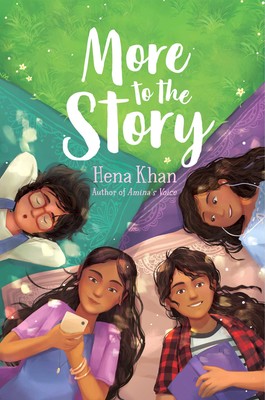
More to the Story by Hena Khan

Standard
More to the Story by Hena Khan

more to the story.jpg

For a book written by an accomplished author for 3rd to 7th graders focusing on a Muslim family, I was surprised at how despite wanting to absolutely love this book, I only kind of liked it.  For the first 100 of 271 pages, I really kept hoping there was going to be more to the story.  Luckily the story did pick up, but I couldn’t get passed how much crushing all the sisters were doing on the one boy in the story, and how much stronger I wanted the main character to become.

SYNOPSIS:

Told from Jameela, “Jam’s” perspective, the second of four daughters living with their parents in Georgia, the story focuses on the interpersonal relationships of the members of the family and their parents’ close friends who’s nephew has moved in with them from England, Ali.  All the kids are close in age and of Pakistani ethnicity, and are Muslim.  As the reader gets to know Maryam, Jam, Bisma, and Aleeza, you see the characters develop pretty well and their quirks and personalities emerge.  Jam is more tomboyish than the gorgeous Maryam who likes to bake.  Jam and Bisma share a room and are closer than Jam and Aleeza, the baby of the family who Jam finds is becoming a brat.  Jam also enjoys watching football and eating spicy food with her dad and desperately wants to be an award winning journalist like her grandfather.  She puts out a family newsletter and is ecstatic to be named the feature’s editor as she starts 7th grade.  Ali is a year older and has moved to stay with his aunt and uncle until his mom and sister can join them.  He spends a lot of time with the sisters and in Little Women inspired fashion the little ones want his attention, Jam is a little jealous to learn he finds himself tongue tied when talking to the beautiful Maryam and Maryam in 9th grade is drawn to Ali, but doesn’t vocalize it too much.  And then as the story picks up speed, Jam says, “In a matter of weeks, Baba got a new job and moved across the world, Bisma got sick and has to be in the hospital, and I messed up everything with Ali and the paper. How did my whole life get turned upside down so quickly?”  

The rest of the book is dealing with Baba working in the Middle East, Bisma being diagnosed with lymphoma, Jameela learning some journalistic basics, and Ali and Jameela becoming a bit more than just friends. 

WHY I LIKE IT:

I love that a Muslims desi family is being represented in an own voice novel that mentions religion as a natural part of their life, and doesn’t apologize or overly explain it.  That being said, I feel like the book is trying to present “us” to the outside so to speak, rather than empower our own.  And I point this out, because I feel like it could have done both.  Dialogue between Ali and Jameela about how they might date as they get older, how Ali can’t see any of the sisters having an arranged marriage.  How when Maryam gets asked to a dance her mom doesn’t mention any religious reason her daughter should say no.  None of the girls wear hijab, and they mention that they don’t wear hijab, at one point Jam knows she should get up and pray, but doesn’t.  I don’t expect a fictional story to teach our upper elementary age kids how to behave that is a parent’s job, but to have some basic Islamic tenants brushed aside after being mentioned is worth noting.  Had the book just been more cultural, maybe I wouldn’t be so critical, but Muslim girls are going to be excited to see themselves in this book and some of the messages might tilt a little more liberal than some parents would expect.  It is one thing when our girls read a book with a romantic twist and we say that, that is not for us, but when a book celebrates us not just crushing, but vocalizing those crushes and moving in to a gray area (they hug but it could be an innocent friend hug) and they make a point to be next to each other, Muslim parents should be aware.  In the larger society it wouldn’t even register on the radar, hence I point it out.

Another thing that kind of bothered me and was again related to Jameela and Ali’s relationship was that when Jameela cut her hair in support of Bisma losing hers with chemo treatments, she seems to need Ali’s approval.  I get that she wanted him to see her and all that, but I really wanted her to be strong enough in and of her self that even if she looked awful she would own it and not let it define her and not let a boy’s opinion about her physical appearance weigh that heavily on her.  Again I know 4th grade girls start noticing boys and having crushes and middle school is only worse, but I just was hoping that her strength and confidence would come from her own growth arc, not from someone else, let alone someone she likes. Side-note here too about the hair, it is donated to make a wig, which I know might also be a sensitive subject regarding if that is allowed in Islam or not.

In terms of the cancer and the sister’s rallying together all that I thoroughly enjoyed and found the most interesting passages in the book.  I think the understanding of a real subject and finding a way to help and deal with this was executed expertly and powerfully without sensationalizing the concern or simplifying the experience either.

FLAGS:

The book is clean, but there is a lot of mention of how Ali affects the girls.  And potentially depending your own opinions on the hair being donated.

TOOLS FOR LEADING THE DISCUSSION:

I wouldn’t do this as a book club book, I’m actually hesitant in even recommending it to my 12 year old daughter.  I know she has read worse, but again me handing her a book about Muslim girls might make her understanding of what we expect regarding boy/girl interactions to be a bit muddled.


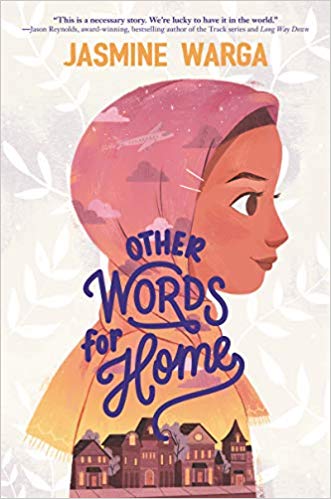
Other Words for Home by Jasmine Warga

Standard
Other Words for Home by Jasmine Warga

other words for home.jpg

Three hundred and forty pages written in verse that beautifully consume you and leave you emotionally changed and vulnerable and humbled all at once.  The book claims it is for middle grades, but I think middle school will appreciate it more, and I sincerely hope everyone of all ages will take a couple of hours to fall under the spell that is woven to tell a story of a refugee leaving home and starting anew in America.

SYNOPSIS:

Jude is a 12 year old girl living on the beach in Syria, watching American movies with her friends and hanging out at her dad’s store.  With an older brother and a little sister on the way, life as told from her own perspective is pretty good.  Until it is not.  Until the crimes they only hear about happening in Aleppo and Damascus start to hit closer to home.  Until her brother starts sneaking out to meetings with other youth hoping to change the politics of their country.  Until a raid almost catches Jude and her brother and her parent’s decide it is time for Jude and her mother to journey to America, for a little while, to visit her mom’s brother and deliver the baby.

America is not like it is in the 90’s movies that Jude loves: Pretty Woman, Legally Blond, Miss Congeniality.  Her American aunt and her Uncle that seems to have forgotten his Syrian upbringing, are gracious and welcoming and their daughter, Sarah, who is less than a year older than Jude waxes and wanes in her approach to her cousin.  Adjusting to school, life without baba and her brother, and all the other adaptations that moving to a new country entail are brought to life through Jude’s eyes and understanding of the world around her.  As she comes of age and decides to wear hijab, as Islamaphobia shakes her sense of justice, and her little sister is born, the reader sees her grow and change and mature and find themselves hoping that she will soar.

WHY I LIKE IT:

I love that the style of the story telling somehow gives life to so much.  With verse some things are highlighted in detail and other things skimmed over and yet at the end, not only do you feel like you understand Jude, but a lot of the side characters as well, which caught me off guard.  Truly the writing is strong and deliberate.  A lot of the politics and war crimes occurring in Syria are not detailed, and I have to assume that is because the point of view is a 12 year old girl that is blissfully in her own world.  I imagine this is also why the target audience is listed as 8-12 year olds, because it simplifies a truly horrific situation.  Also because despite moments of raw vulnerability, the book stays pretty optimistic and hopeful.  

I like that the characters are Muslim, and that the mom scolds her brother for not going to the mosque.  The book does talk about Jude’s period starting and thus Jude starting to wear hijab, which is one of the reasons I feel like early middle school might be a bit more appropriate age group.  There isn’t too much talk about faith and Islamic beliefs, but a few tidbits are sprinkled in, prayer, not eating pork, modesty.  The book is not gender exclusive, but I think girls will gravitate much more to Jude’s perspective, experiences and voice.

The only thing I found a bit off is that the book takes place in modern time, present day, yet none of them have cell phones or social media.  Jude Skypes her dad, yet writes letters to her friend back in Syria and is distraught when they don’t have a forwarding address to send them to after her friend also leaves home.  It seems that social media, email, a cell phone number, something would be available for them to all keep in touch.

FLAGS:

There is mention of Jude and her friends having to sneak in to see Pretty Woman because Julia Roberts is a prostitute, and mention of blood between one’s legs and periods starting.  The book otherwise is pretty clean.  It hints at her kind of crushing on a boy that is in the play with her, but nothing more than friendship is explored.  Violence mentioned is minimal and language is clean even when dealing with hate crimes in America.

TOOLS FOR LEADING THE DISCUSSION:

There is a good chance that next year the students joining the middle school book club will be all girls, so if that is the case and the school counselor feels all the girls can handle the puberty aspects mentioned I would totally do this book.  The book reads very quick and might be a good way to get new kid to give a book club a try as well.

Author’s website: http://jasminewarga.com/about

Q & A with the Author: https://www.publishersweekly.com/pw/by-topic/childrens/childrens-authors/article/80127-q-a-with-jasmine-warga.html

Interview with the Author: https://www.hbook.com/2019/04/authors-illustrators/publishers-previews/spring-2019-publishers-preview-five-questions-for-jasmine-warga/


Shadow Magic by Joshua Khan illustrated by Ben Hibon

Standard
Shadow Magic by Joshua Khan illustrated by Ben Hibon

shadow magic.jpg

This book is fun and enchanting, whether you read all 321 pages and fall in to the occasional illustrations and pour over the map, or listen to the audio and get swept away.  It is an AR 4.1, and the first in the three part series.  Told by the point of view of two characters, the book’s short chapters and high action speed are expertly crafted to keep suspense and interest high, while maintaining solid world building events and making the character’s history come alive.  There isn’t anything Islamic in the books, save some critical and cleverly named characters and ideas, but the author in interviews has said he is Muslim, and that is enough for me to share a book I thoroughly enjoyed on this blog!

SYNOPSIS:

Thorn is a fugitive kid, on the run from something left intentional vague and possibly the son of an outlaw.  Raised on the edge of Herne forest (earth), he is good with animals, feels comfortable in nature, has a soft heart for doing what is right, and isn’t afraid of hard work.  He finds himself being sold as a slave to the executioner of Gehenna, Tyburn, and is off to Castle Gloom where he will meet and befriend the new ruler of House Shadow (death/darkness), Lily.

Lillith Shadow’s parents and brother have been murdered and she is now the ruler of Gehenna.  She is also still a child and events around her require her to grow up fast.  To end hostilities with House Solar she is to wed Prince Gabriel, a pompous idiot, who she despises in principle and in person.  

When an attempt is made on Lily’s life, Thorn and an unexpected ally, K’leef a Prince from the Sultanate of Fire, must work together to figure out who is trying to kill Lily, possibly who killed her parents, where Thorn’s father is, who is raising an army of zombies, and now how to get out of this wedding without causing continued war.

The history of the six founding houses that make up this world, and their elemental magical rules and limitations as magic dies out with each passing generation, come together and a tale is told that contrasts easy everyday language in a mystical proper world of royalty and dukes, colored by the dark of death and necromancy and shadows, while somehow remaining light, and funny, and completely relatable as the kids come of age and learn who they are and what they are capable of doing and accomplishing.

WHY I LIKE IT:

I love that the book is clean and that it has both Thorn and Lily’s perspectives to move the story along and give insight into the characters.  I love the world building and how the history of each of the houses is so well thought out and clear.  

“The whole idea of House Shadow is based on the Middle-East. Lily’s dad’s name is Arabic for the devil. Her mother’s the great villainess of the Old Testament and Lily is Lilith, a Hebrew demoness. The view people have of House Shadow mimics the fear the West has of East, and specifically Islam. For that reason all of House Solar is named after archangels. . . Some houses were easier to establish than others. House Djinn was fire as djinns are (out of Arabic lore) beings of smokeless fire. Herne’s an ancient English forest deity, so again a pretty easy fix” (http://www.cybils.com/2017/03/interview-with-joshua-khan.html).

A big plot point is that Lily is magical, and it is against ancient laws, meaning all six houses agree, that women cannot practice magic.  The irony is great, in that even kids can pick up on the fact that the six brothers and founders of the magical houses acknowledge that the source of their magic comes from their mother, a woman, and the hypocrisy of it all is frustrating.  I love that three very different characters have to work together, and pick their battles, it really is a testament to the strength of friendships even with people so very different than yourself.

FLAGS:

Pretty clean, not recalling anything cringeworthy as we listened to it in the car (kids ages 3, 8, 9, 12).  The book is dark in that it takes place in Gehenna and there is talk of the undead and bringing the dead back to life and they really celebrate Halloween in their own dark way.  There is murder and death and assassinations, but it isn’t overly morbid or gory or violent.

TOOLS FOR LEADING THE DISCUSSION:

I think I’ve already 90% decided to start next years middle school book club off with this book.  It is fun and engaging and the discussions would connect this fantasy story to so much in the kid’s lives and greater world that I get giddy just thinking about how fun a discussion it will be.  Sadly the school year is wrapping up and I’ll have to wait until fall.  Here are some of my favorite interviews online with the author:

http://www.cybils.com/2017/03/interview-with-joshua-khan.html

https://www.greenhouseliterary.com/authors/joshua-khan/

Author’s Website: http://www.joshuakhan.com/