Tag Archives: beautiful

Far Away from Here by Ambata Kazi

Standard
Far Away from Here by Ambata Kazi

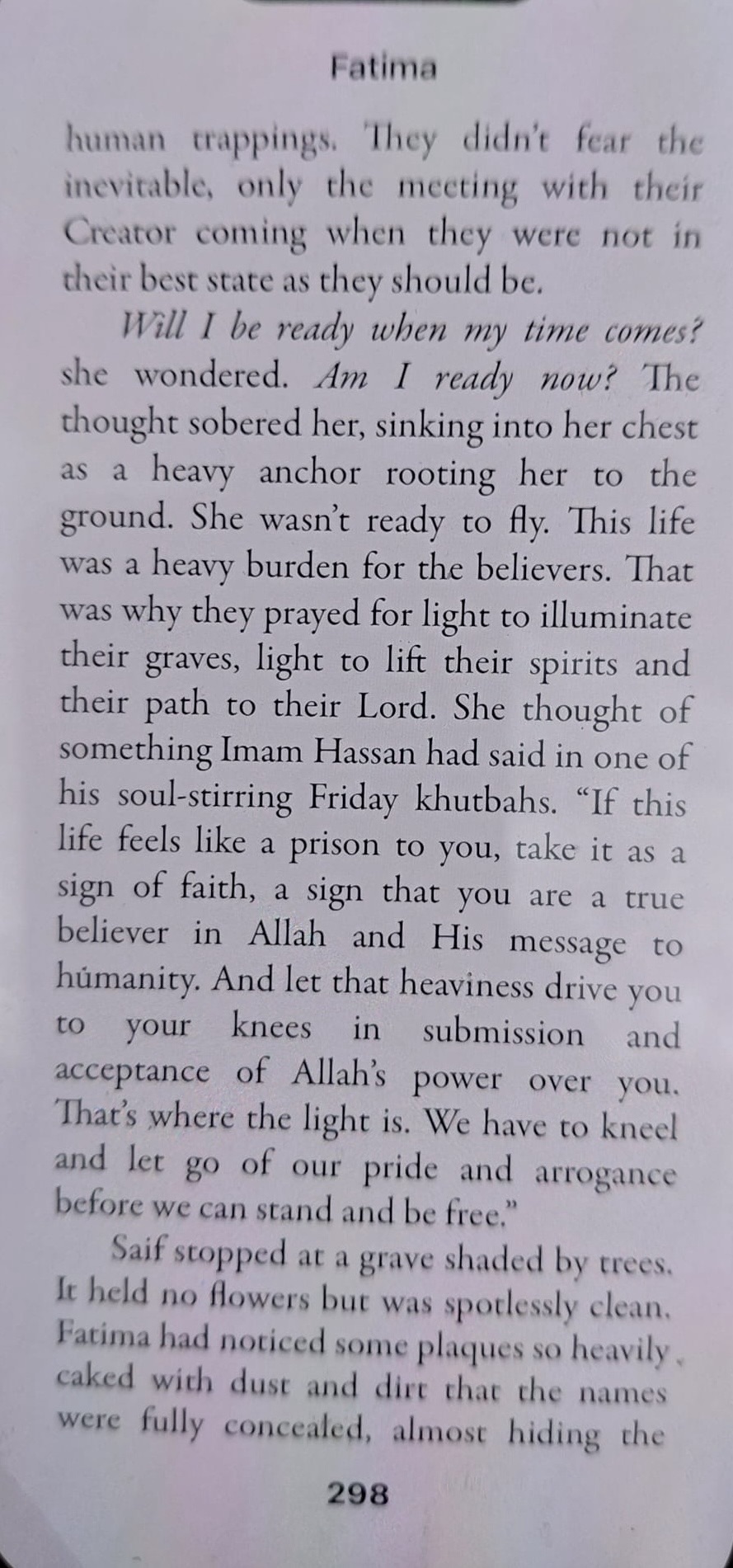
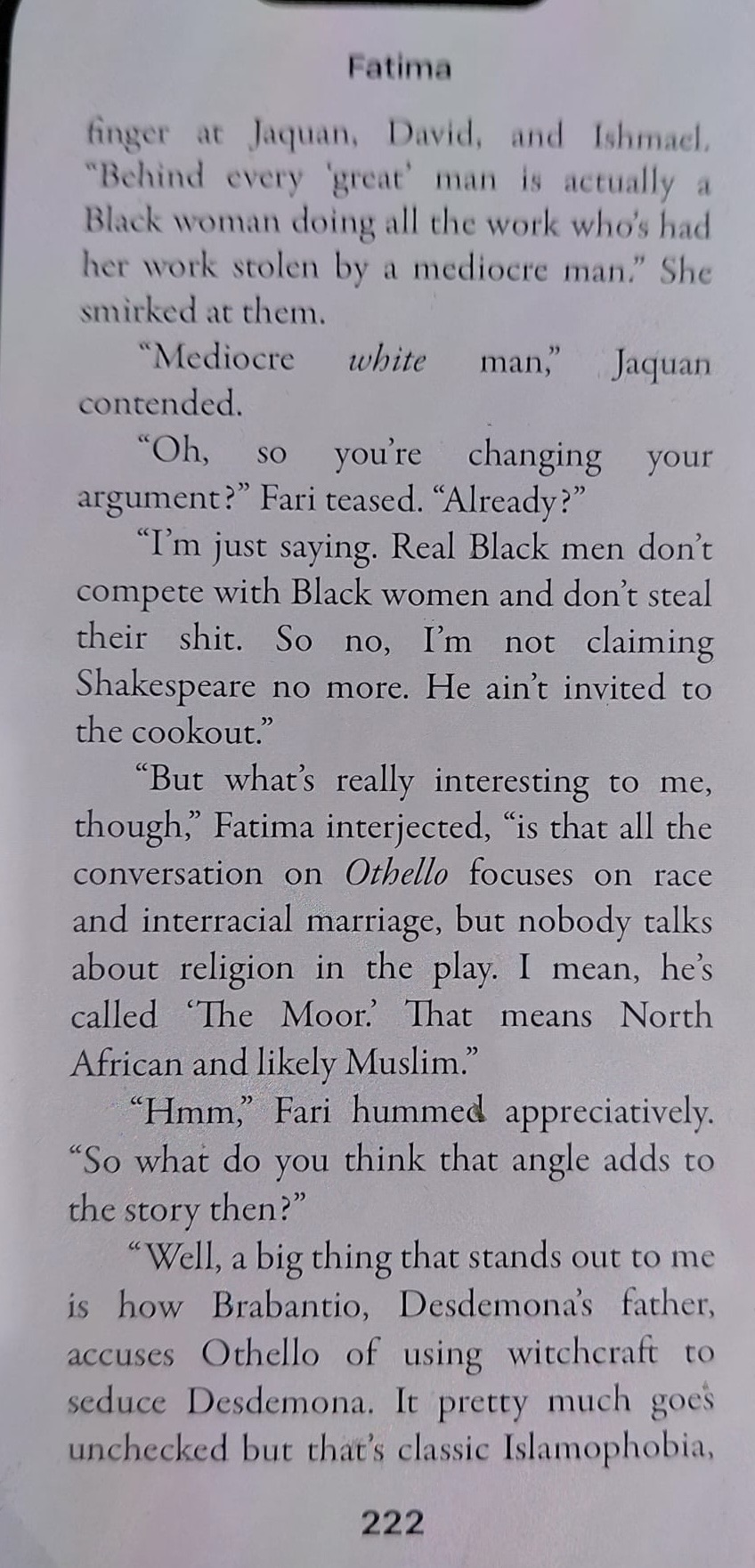
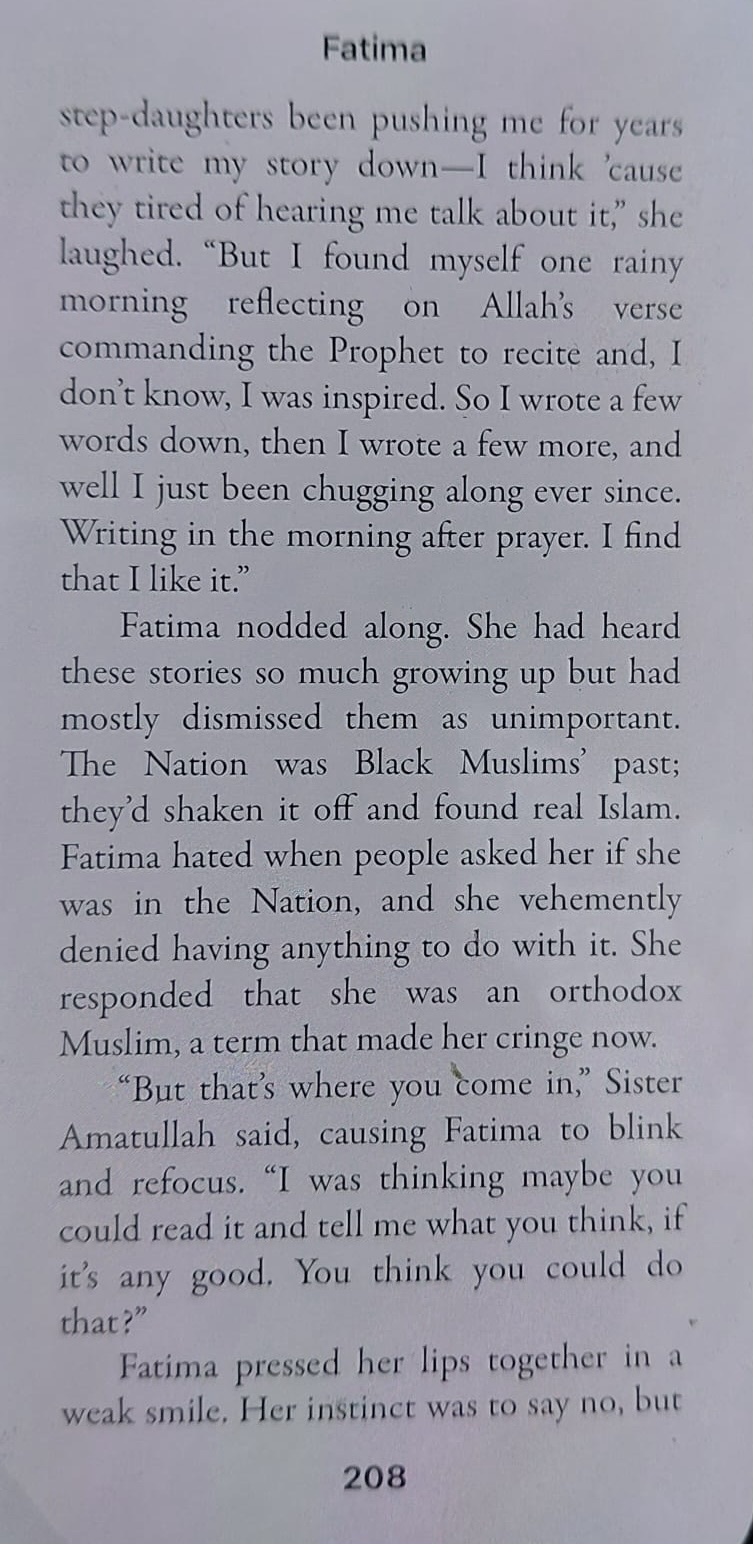
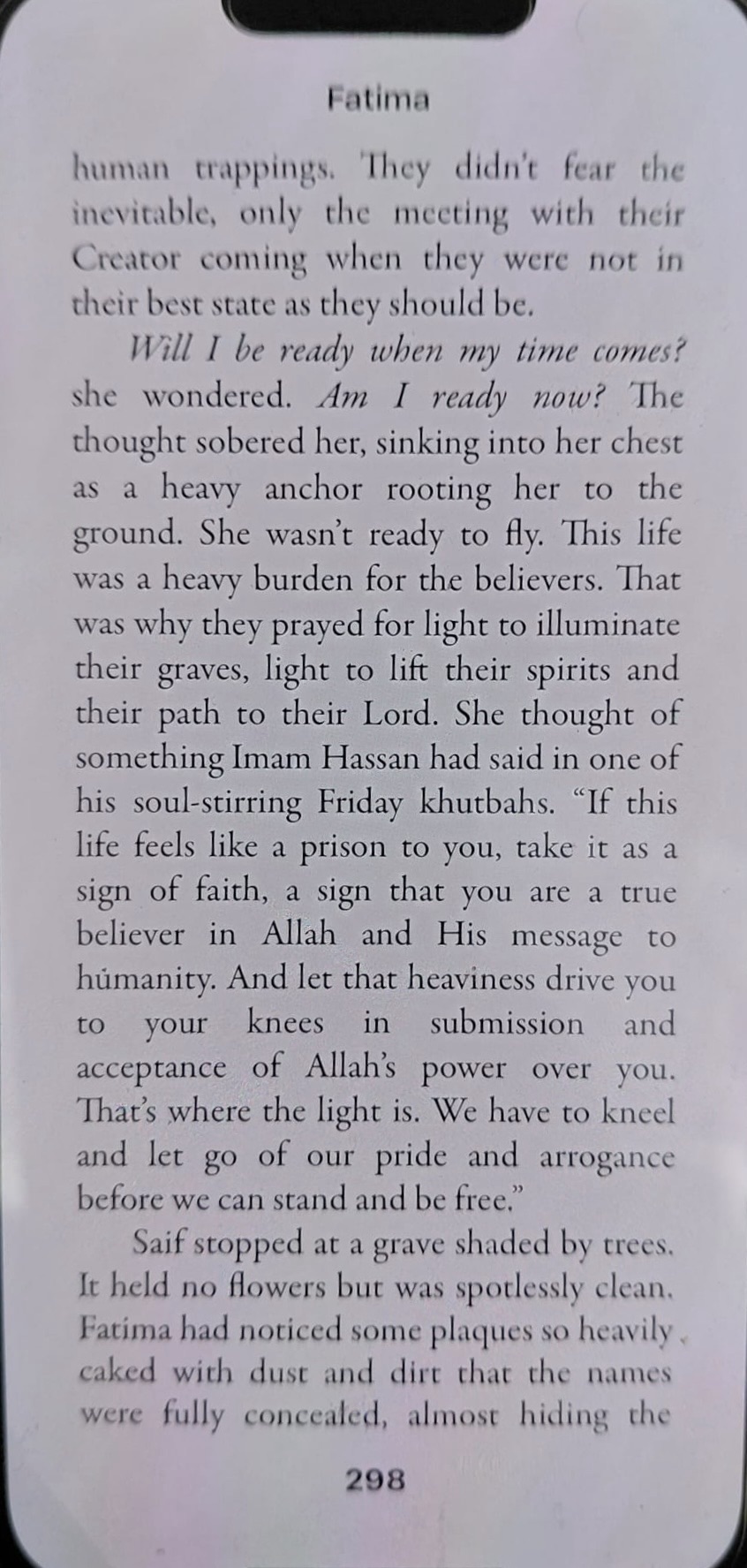
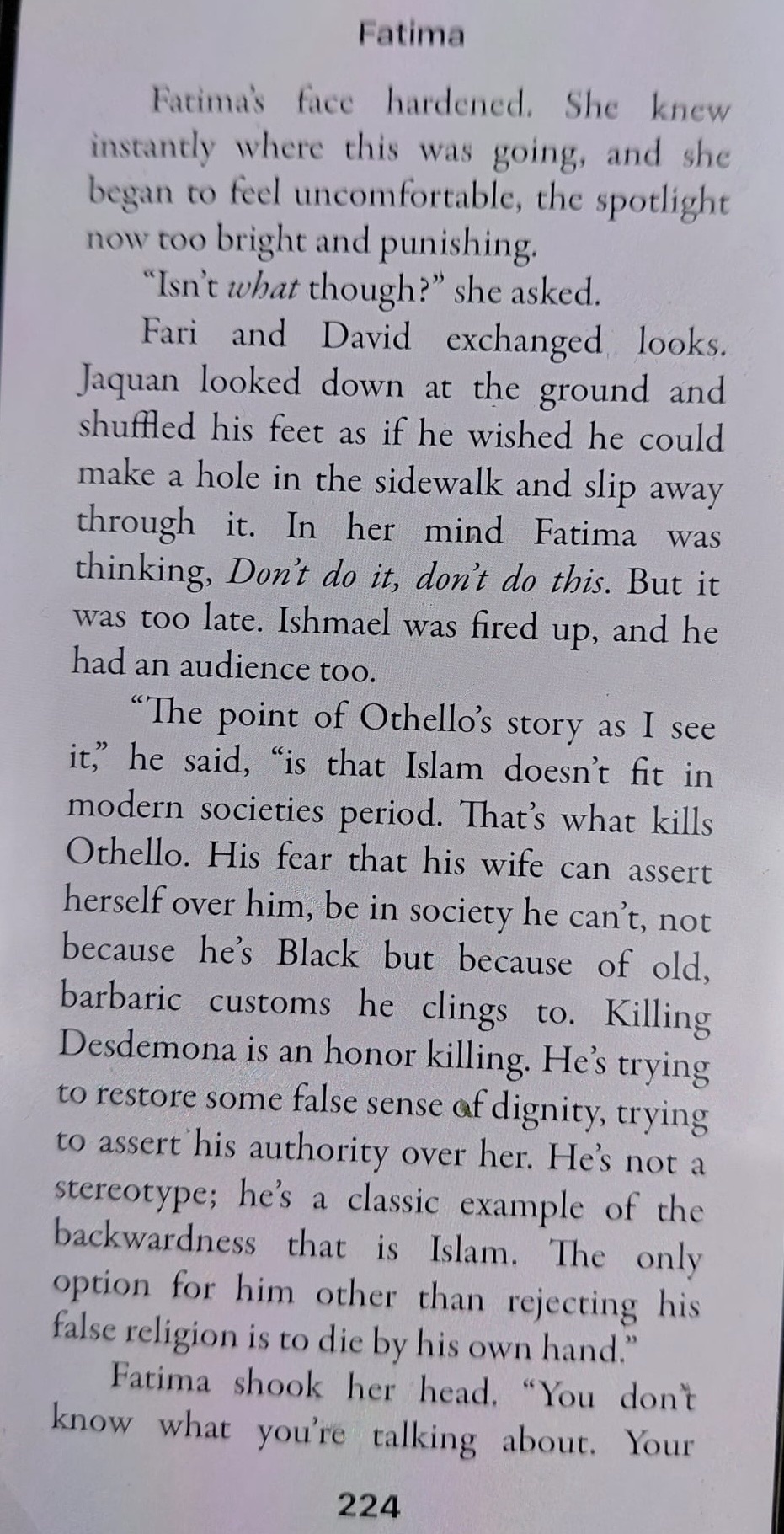
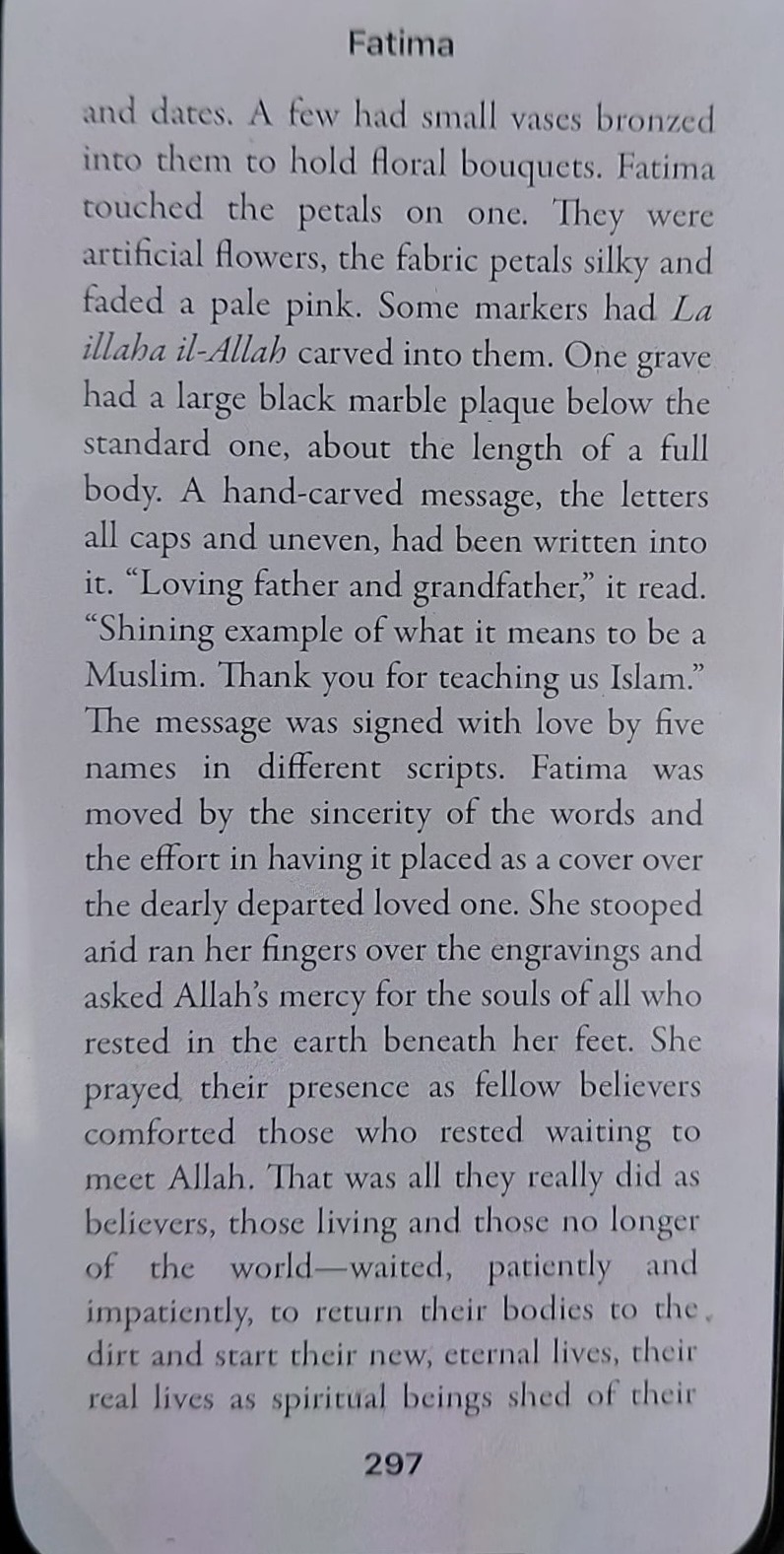
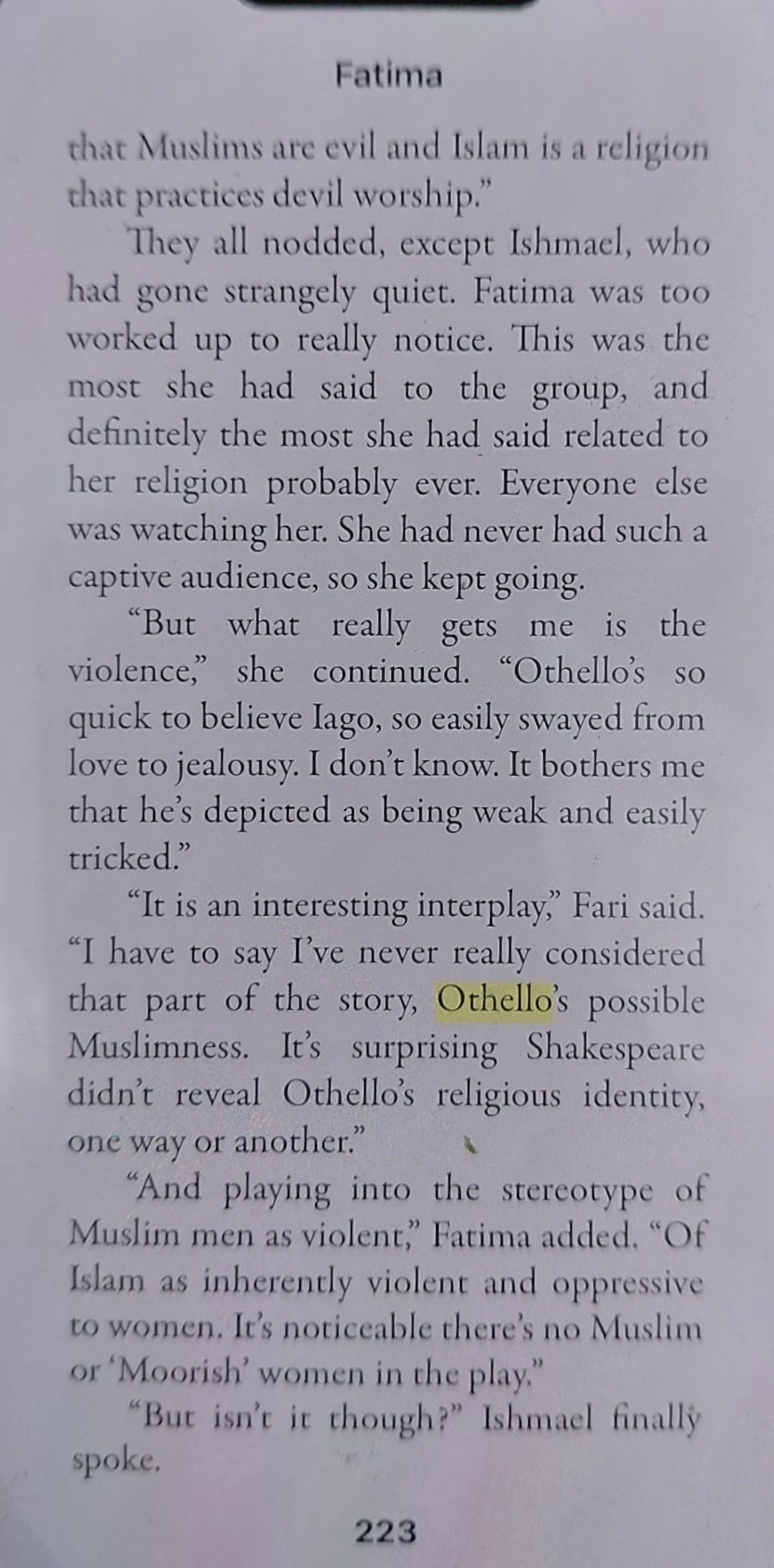
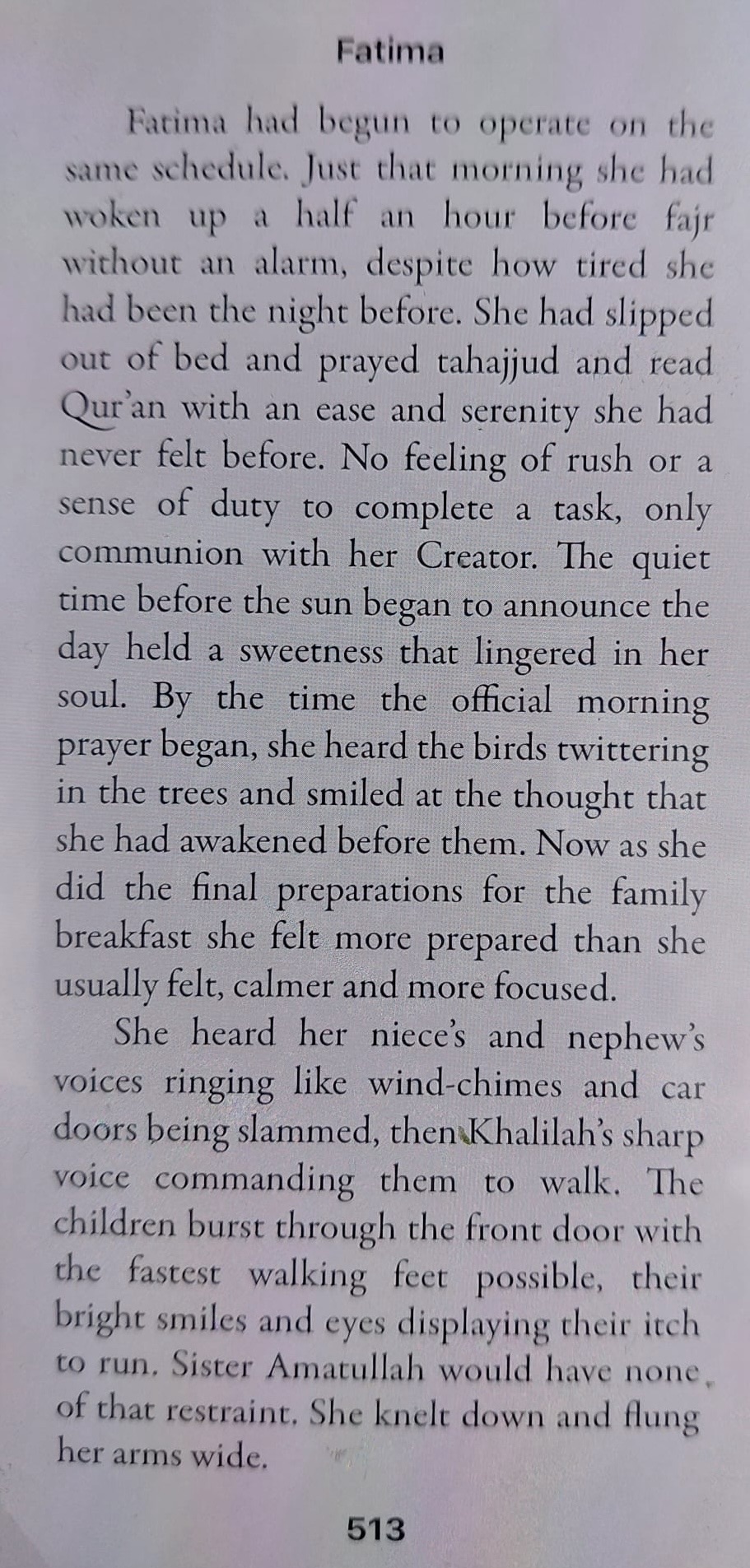
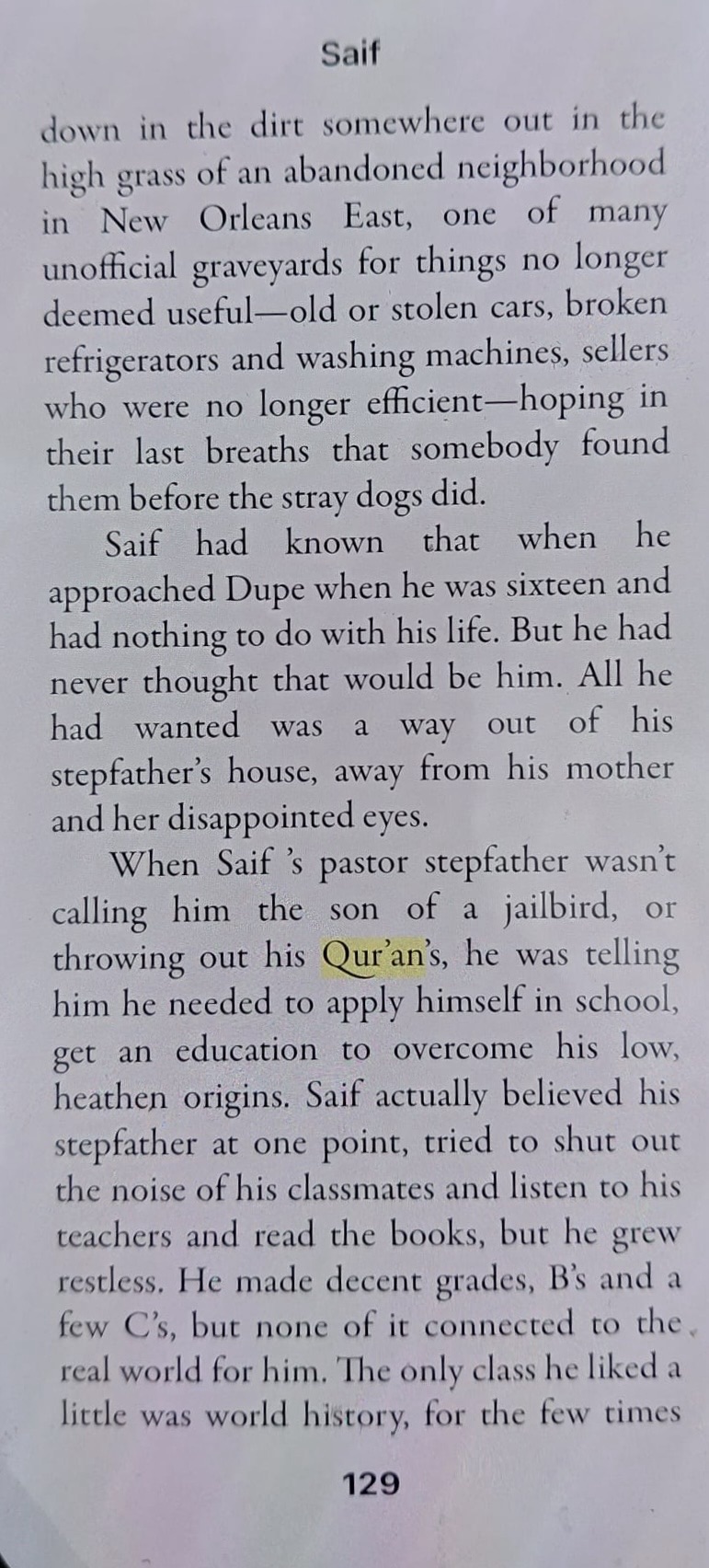
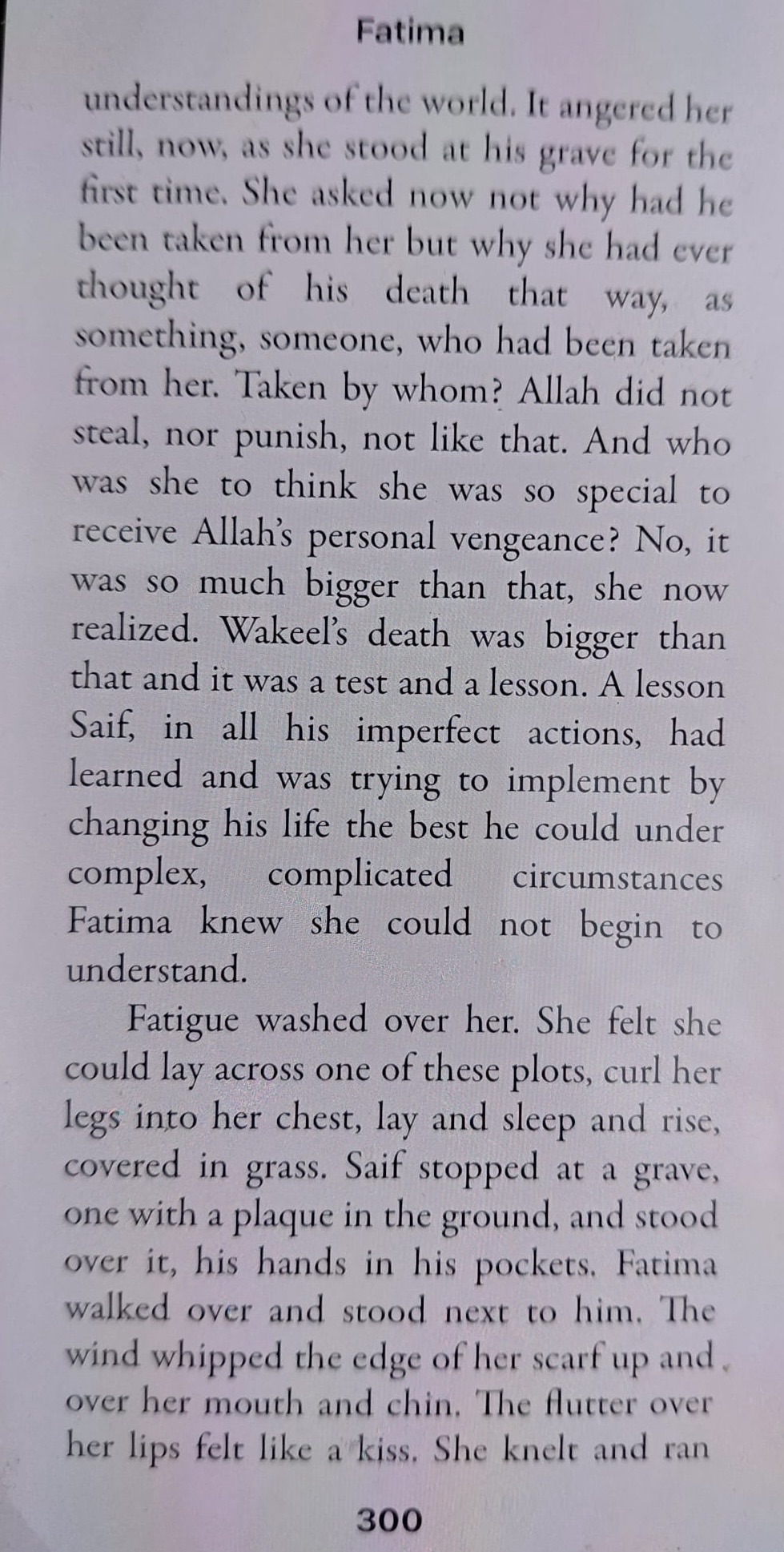
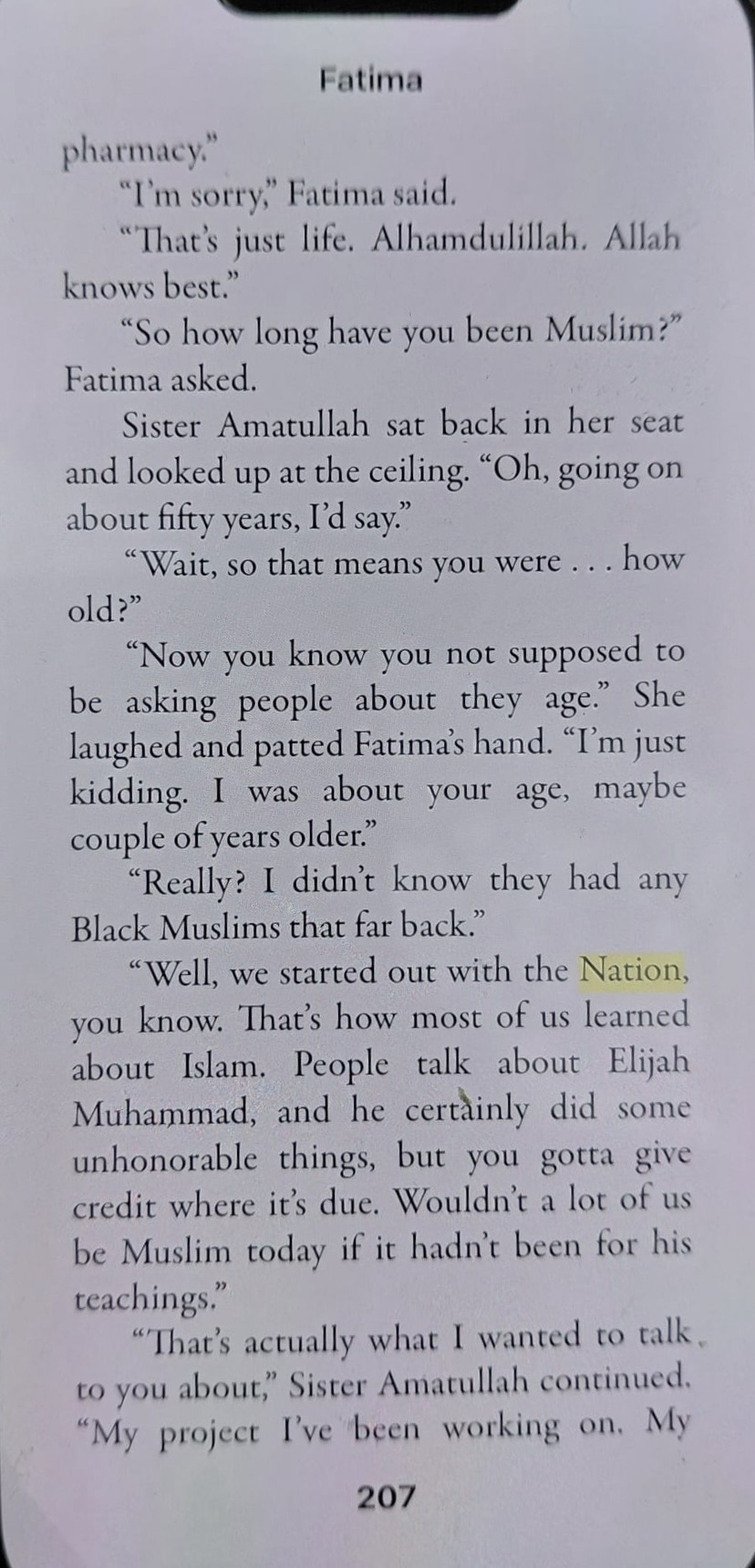
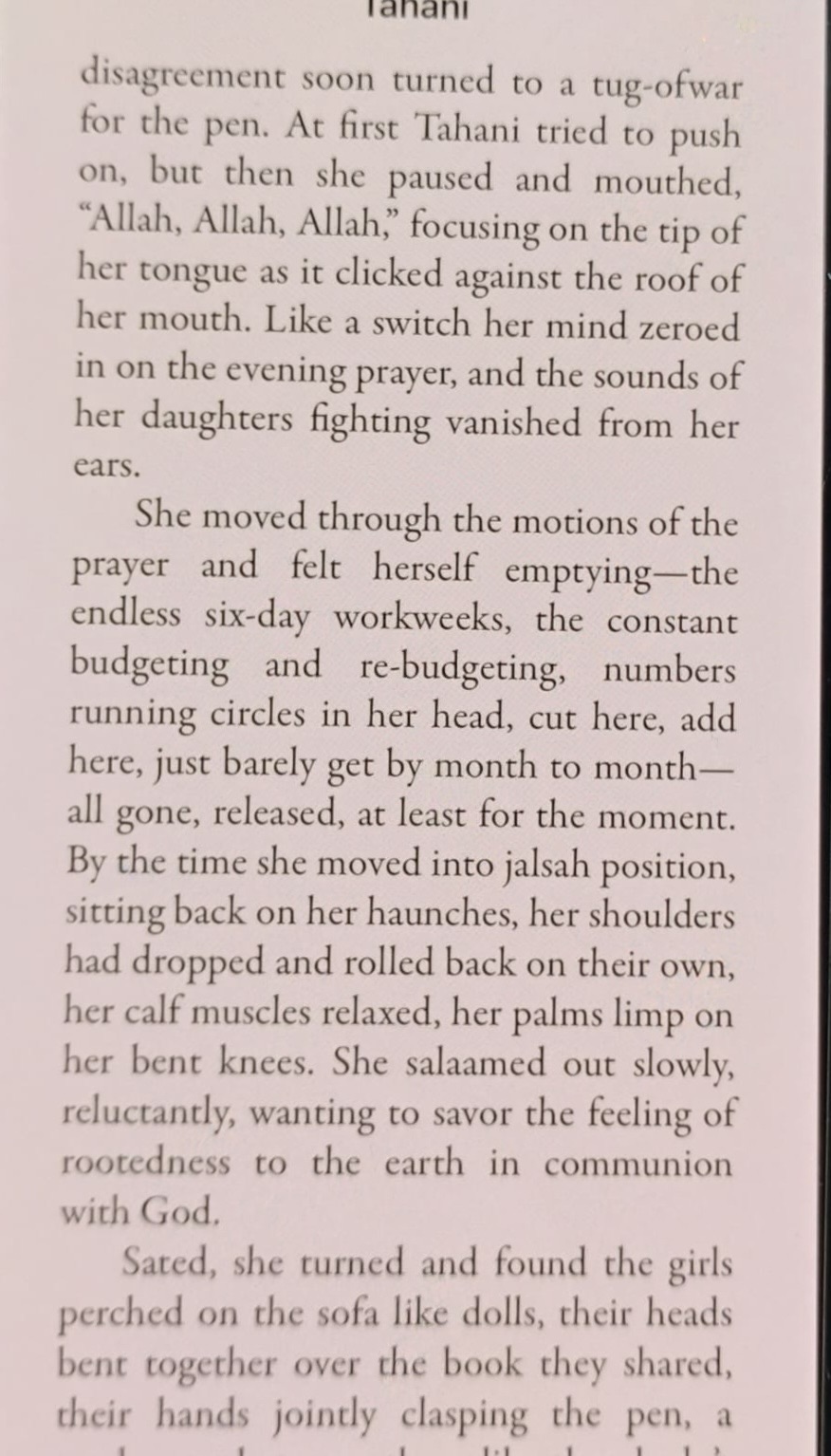
This character centered book takes the lives of three young adults, and through their own interwoven points of views shares their trauma, their choices, their dreams, and their fears in a poignant book that centers Islam and the characters relationship with their faith, their masjid community, and the concept of home.  The Islam in this OWN voice love letter to New Orleans is so much a part of the characters’ lives that I found myself snapping pictures on every page to share before quitting because it was taking me out of the story. The pictures I’m sharing, as a result are arbitrary as so many beautifully spoke to me. This adult book intentionally or not, forced me to confront my own assumptions, stereotypes, faults, and guilt, while tugging at my heart to see the growth and future possibilities for Fatima, Tahani, and Saif. The three distinct pov narratives feel real, the Black Muslim perspective so important, and the living breathing role of Islam so beautifully conveyed, that I’m just in awe of this book, and didn’t want to miss a beat recommending it to others.

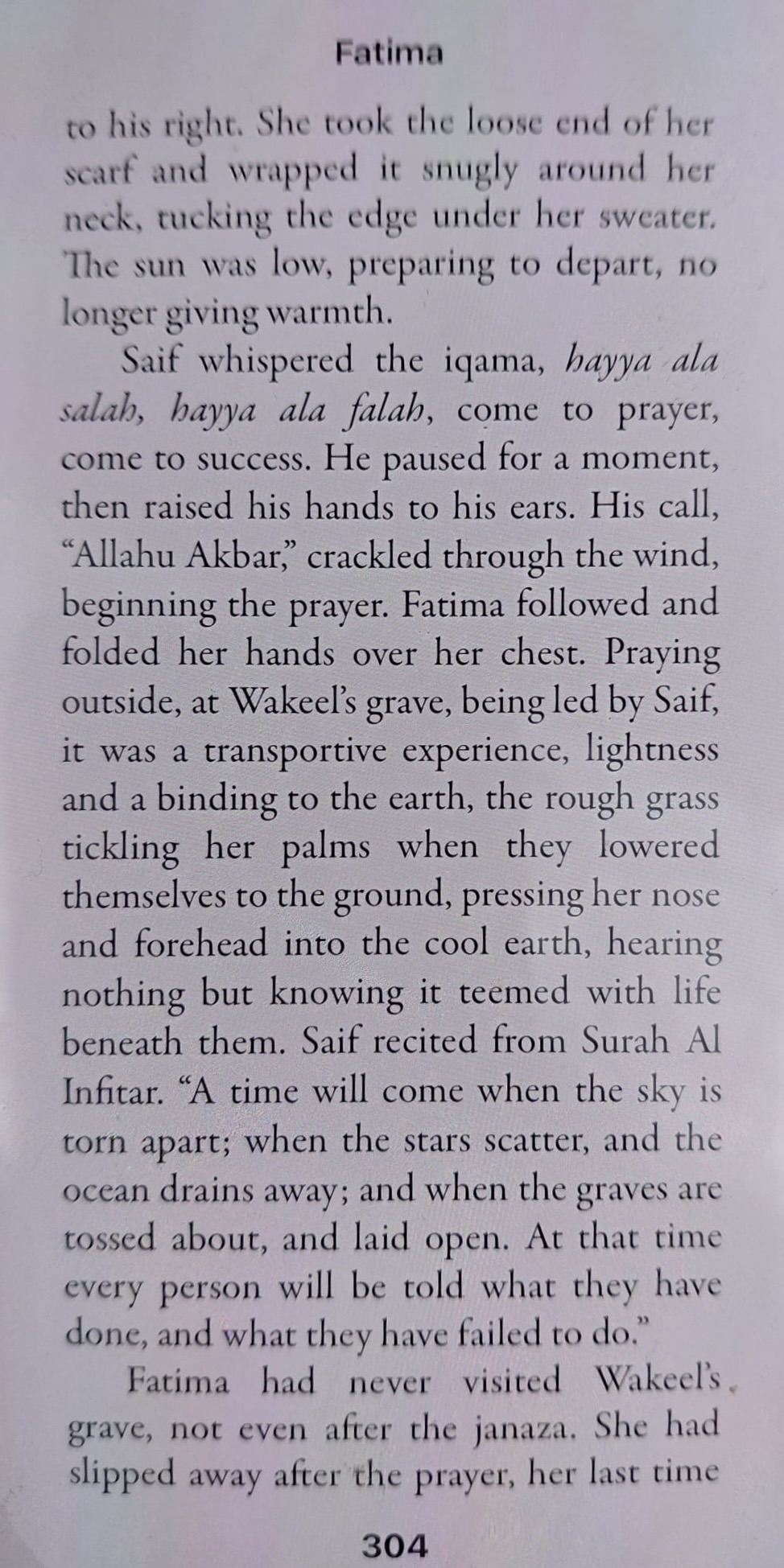
SYNOPSIS:

The book opens from Fatima’s perspective as she leaves Atlanta for New Orleans.  She is returning to the place of her childhood and heartache, to care for her ex fiance’s mother in her final days.  Entering the home, reliving the memories of how Wakeel was killed, and facing Mama Tayyibah’s looming death, highlight her weakened faith and force her to confront the community and friendships she left behind.

Tahani, the only daughter in a large family of boys finds herself a single mother to two little girls when she rebelled against her mother and made her own choices.  She never really left Islam though, and the community who raised her is still a part of her life, even though her own family is not.  As she tries to chart her own career dreams and balance her daily survival, she is surprised to find her childhood friend Fatima once again part of her life.

Saif, straddles two worlds: the young man learning his deen as a respected member of the masjid community, and a seasoned criminal unable to stop selling drugs.  He blames himself for Wakeel’s death, and everyone else seems to agree that it should have been him gunned down, but Allah swt is All Forgiving and with Fatima’s return, perhaps if she can find a way to forgive him, he can forgive himself.
WHY I LOVE IT:
Oh my heart. The characters and their dichotomies brought tears to my eyes multiple times.  The drug dealer teaching the hijabi grappling with Allah’s will how to do tayammum, the young mom in revealing clothes waking up for fajr and taking her girls regularly to the masjid. What is in one’s heart is for Allah swt alone, and this message forced me to face my own assumptions, stereotypes, and judgmental paradigms without didactically calling me out, and I love the book for the fictional shaking.

The beauty of the convert stories, the history of Black Muslims in NOLA, the warmth and found family of the community, completely broke me in the best way possible.  None of the characters are having identity crisis as most literature depicts it, they are fighting their nafs, and other’s expectations, and to be shown their struggles, and yearning, in the proses gentle manner warmed my heart.

I wanted some epilogue space for Baba Kareem, and I honestly tried and failed to figure out the time line as the story circles around itself numerous times in its telling. But, I hope this author keeps writing and telling the stories we need as an ummah and larger community to hear, but to also feel so deeply.
FLAGS:

There is nothing sensationalized, but there are themes of drugs, killing, shooting, death, illness, dating, rebelling, rape, children out of wedlock, disowning, judging, fear, racism, Islamophobia.

TOOLS FOR LEADING THE DISCUSSION:

This is too adult for middle school, I do think upper high school could handle it, but it is solidly that “New Adult” category, with characters in their twenties.  At times they have some adult stresses, or coming of age options, and/or youthful possibilities. Often in multitudes they vacillate with what they have to face, and the limited experiences they have, with family expectations and independent choices.

The Land of La La La by Sana Saghafi illustrated by Azam Vazehimogadam

Standard
The Land of La La La by Sana Saghafi illustrated by Azam Vazehimogadam

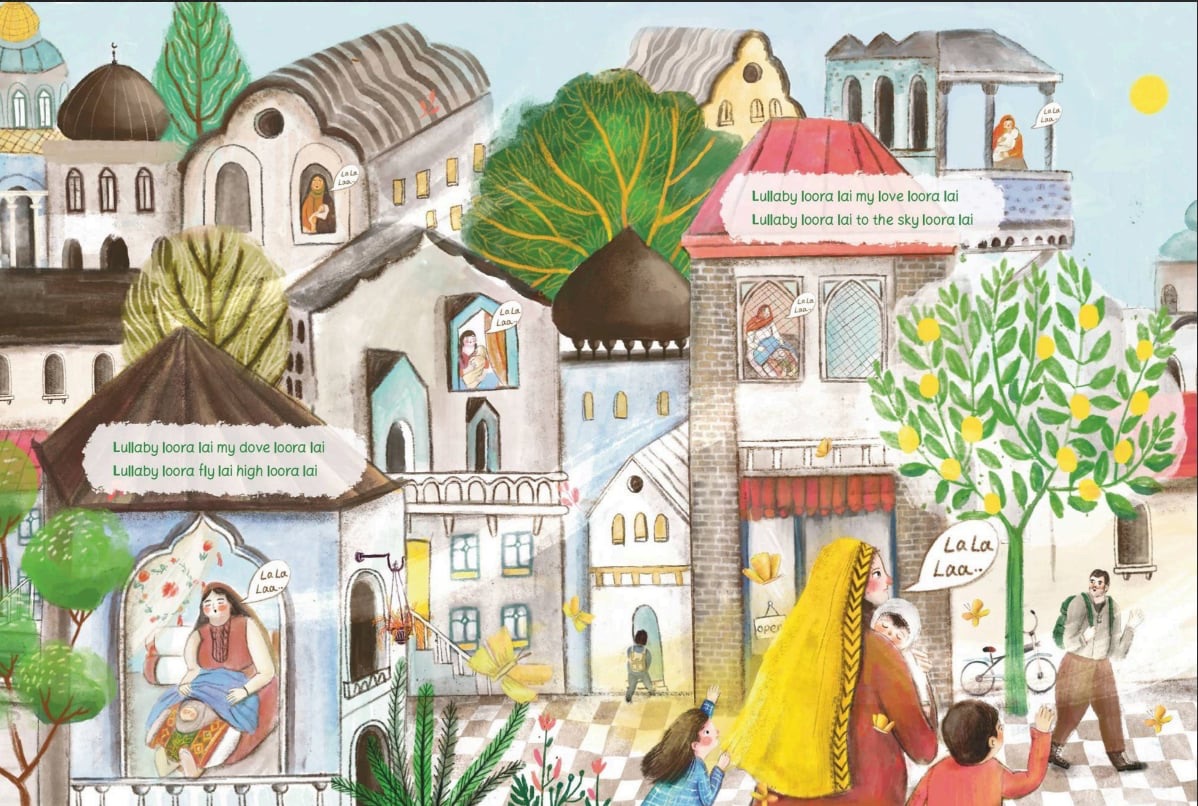
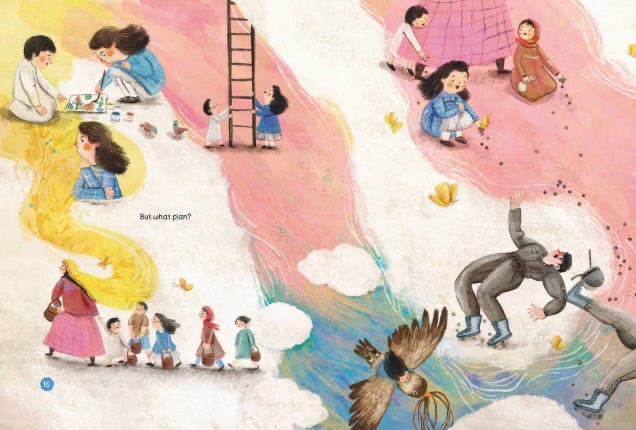
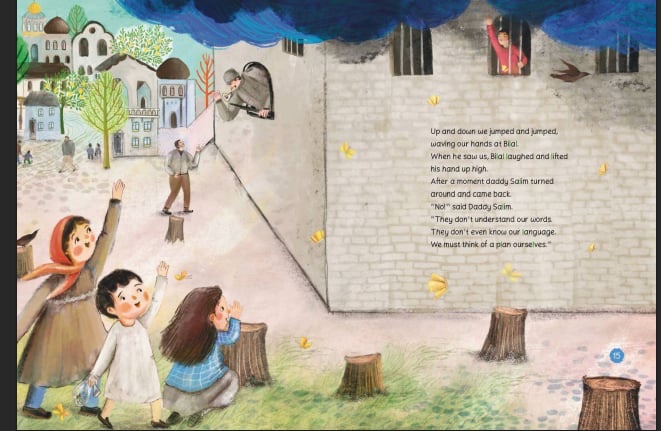
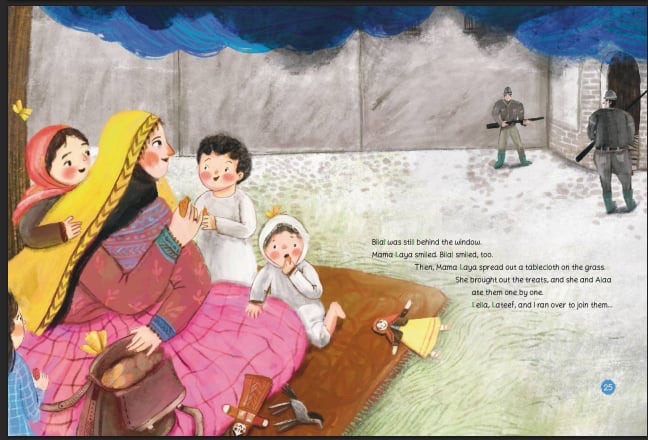
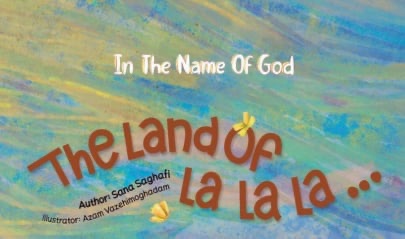
This gorgeous and powerful 36 page picture book goes back in time to a Palestine where the struggles of today are still found, along with the resilience of the people, determination of the women, ingenuity of the children, love and hope.  The book is so strongly unapologetic in its portrayal of marbles representing strategy of kids to battle the giants aka soldiers, of children being imprisoned, of the occupiers being outsmarted by the people, and the joy that persists despite the attempts of erasure. The story within a story…within a story(?), doesn’t name Palestine until the very end, after the stories at hand have wrapped up, and doesn’t disclose that it is based on a true story, except for in the blurb.  It is also worth highlighting that the book is not OWN voice or sourced.  I still am sharing though because it is positioned as happening long ago, and thus hopefully not further erasing a Palestinian voice, but rather sharing a story to prevent it from being lost.  I do not know the author, illustrator, or publishers’ intent, this is simply my view and I am happy to be corrected if I have arrogantly overstepped.  


The book starts with a lullaby lilting through the air, the la la las, connecting the women caring for their children. Mama Laya is busy so Big Brother Bilal is playing with the children, marking which soldiers have been defeated on the paper that matches the marble game in the lane. When the giants take him away the children run to find Daddy Salim.

The searching children and family find Bilal in prison, and the giants don’t speak the language of the people to be reasoned with, so they must figure out a way to free him on their own.  Mama and the children have a picnic outside the prison and secret filled lullaby conveys the plan right under the giants’ noses. With Bilal free, the women gather to teach each other a secret way to communicate, to resist, to hope, in the lullabies that they sing.

There is no religion mentioned, but the title page begins, “In the Name of God,” and numerous characters are depicted wearing hijab.  I read a digital arc and I hope the printed version has backmatter to highlight that the author is not Palestinian, when this would have taken place, and if it is accurate.  Authenticity and accuracy are important, and I hope the book clarifies what is real, what is imagined, an where the information came from.


Steet Puppy, Masjid Cat by Moniza Hossain illustrated by Wastana Haikal

Standard
Steet Puppy, Masjid Cat by Moniza Hossain illustrated by Wastana Haikal

I was a little nervous opening the book, I didn’t know if it was going to be a “Lady and the Tramp” type retelling, and I was unsure how dogs would be presented, but I sure was not prepared for the absolute adorableness that unfolded.  The simple rhyming lines contrasting the street puppy’s life to that of the pampered cat in the masjid, to their meeting, and the sweet imam leading with kindness warmed my heart.  The real chef’s kiss is the backmatter that doesn’t source, but references the sunnah of “acts of charity to every beast alive,” and notes that dogs, unlike cats, are not allowed in the mosque for religious reasons.  I love that “masjid” is in the title, that the author’s note and glossary explain adhan, imam, and the Quran, and ultimately that friendship amongst differences is the takeaway for all readers.  I don’t love that the adhan in the text is described as ringing and the imam as singing, but I acknowledge my pickiness.  And while I love that Prophet Muhammad saw is mentioned in the author’s note, I do wish salutations were given afterward.  The illustrations on every one of the 32 pages are delightful, and I love that the image on the jacket is different than the one on the book itself.  For ages 3 and up, and even emerging readers, this book has a lot of heart, and my 6 year old has read it aloud so many times, I just might have it memorized.

The book starts with simple rhyming lines showing the contrasting life of the cat and the dog, from their daily activities, to how other’s treat them.  When they meet, the cat is not too welcoming, but the imam shows the puppy kindness and the cat follows suit.  As simple as sharing and giving each other a chance, creates a friendship between the two animals, and a beautiful conclusion even the littlest children will understand.

The book is not didactic, and the role of the imam and setting of the masjid, for Muslim kids will be such a spark of joy, but in no way will it limit non Muslim children from connecting with the story.  The benefit for all is seeing a masjid environment and a Muslim in action, normalizing both, and inshaAllah reminding us all to be a little kinder to our animal friends.

Zamzam for Everyone: Sharing Water at Hajj by Razeena Omar Gutta illustrated by Bassent Dawoud

Standard
Zamzam for Everyone: Sharing Water at Hajj by Razeena Omar Gutta illustrated by Bassent Dawoud

This joyful 32 page picture book is both adorable and educational. Layers of Hajj and Zamzam threaded through with the global reach of Islam, generosity, food, language, and a little girl with a big smile brightening every encounter, is heartfelt and tender. Each reading has me smiling and marveling at the illustrations, amount of information simply conveyed, and the way it all comes together to offer both a window and a mirror for readers of all ages, particularly 3 and up.  The robust backmatter allows older readers to benefit, and with pronunciation guides, cultural and religious oversight noted, this book will be a favorite at bedtime and story times in Islamic and public schools, libraries, and gatherings.  SubhanAllah, the book is really well done and such a gift to us all to see Hajj and Zamzam unapologetically and proudly presented through little Mariam’s eyes.  It will leave children feeling like they just had a warm hug, and inshaAllah making dua’a that they too will be invited to Hajj soon.  

The book starts with Mariam feeling blessed to be one of the millions of people at Hajj. Her mother encourages her to be good, share, and be grateful all while staying hydrated, as it will be tiring.  She tries to come up with what she can do to get blessings, in addition to smiling, when she realizes sharing her Zamzam water will be the most beneficial. 

She helps an old lady find a seat and gives her some Zamzam, the Pakistani lady says, “shukria” and gives her dates in return. When she shares with some Indonesian sisters and is told “Terimah Kasih” she is handed some pandan cookies in gratitude.  This continues all throughout her Umrah with pilgrims and workers from different countries thanking her in different languages and sharing something back with her.  

It carries on through the steps of her Hajj, even when Makkah is far away. And even when she returns to her home, she shares the Zamzam to bring a part of Hajj to those that stayed at home.

The backmatter tells the story of Zamzam, information about the treats mentioned from around the world, information about Hajj with a glossary as well as the steps of Umrah and Hajj, information about the author and illustrator, and who helped insure accuracy of all the cultural and religious content included.

The book comes out in January 2026, and appears to be available in both hardback and paperback, please preorder to show support.


Dark Nights and Light Hearts: A Muslim Book of Opposites by Hena Khan illustrated by Mehrdokht Amini

Standard
Dark Nights and Light Hearts:  A Muslim Book of Opposites by Hena Khan illustrated by Mehrdokht Amini

Every few years, for the last 13 or so, we get a new title in this series, and each one warms my cynical heart with its unapologetic Islamic representation and vibrancy.  The heartfelt rhyming lines, the Islam centering, and the enveloping illustration make these books timeless, sought after, and beloved.  This installment covers opposites, previous books in the series focused on colors, shapes, and numbers. From the BIG ummah to a SMALL baby’s aqiqah, HOT oud to COLD rain bringing barakah, SLOW honey full of shifa to FAST cars heading to Jummah, the book uses two page spreads per each term in the opposite pair with rhyming couplets in large clear font to introduce/remind, describe, and highlight an Islamic tradition.  As both opposites and Islam are conveyed, the cadence and illustrations pull Muslim and non Muslim children in and make the book delightful at storytime, in small groups, at bedtime, and for kids to look through on their own, over and over again.  Alhumdulillah.

The book is 36 pages with a Glossary of Islamic words at the end with an Author’s Note.  It is available wherever books are sold and a great reminder that well done Islamic books can make it from traditional publishers.


Your Friend From Palestine by Nabila Adani

Standard
Your Friend From Palestine by Nabila Adani

This book is absolutely gorgeous, from the raised text on the cover, the sweeping illustrations with tangible details, the Islamic threads, and the heart, but…yeah you knew something critical was coming, the rhyme is not consistent, and the biggest hurdle for me, is that there is no backmatter.  I can’t say that I’m “bringing this up again,” because I don’t know that the debate ever dies down: can you write a book about something personal that you have not lived through? In this case can a non Palestinian write a book from a Palestinian perspective? As a former journalist and long time reader, I still maintain that you can, but backmatter detailing your own limitations, what efforts were made to have the book verified by those with OWN voice experience, and background information on why this is pertinent and relevant are mandatory. And this book does not offer them.  Nothing feels off about the contents, and anyone with a heart, has seen and felt everything on the pages about our brothers and sisters living under occupation and through genocide. So is it a good book, yes. Do I think it has value, yes. But, is it authentic? Is it accurate? Is it enough? Does the focus on hardship and destruction open eyes or diminish Palestinian joy? Why wasn’t a Palestinian brought in to cowrite the book with the author illustrator? Was it sensitivity read? I am not able to answer these questions, I simply bring up my concerns for you to decide for you and your children. While the book ends on hope for a free Palestine, and a safe Gaza, the oppressor is unnamed.

The book starts with children on a beach playing when they find a message in a bottle.  The message is from Khalid, a child in Gaza telling the finder about his life and asking about theirs. He likes to play football, but sometimes it isn’t safe, he likes to read stories but often can’t because there are no lights, and he dreams of swimming in a swimming pool, because they often don’t even have water to drink.

Khalid then tells the finders of the bottle, and thus the readers, to not lose hope, “to hold on to your imaan.” And it highlights what we can all do to help.  “You can pray for us! Send charity! Spread the news!” and tell people about Palestine. So that one day we can meet at the Dome of the Rock, pray at Masjid Al-Aqsa, and be together in a free Palestine, inshaAllah.

The illustrations are beautiful and the framing effective in connecting with readers, and highlighting the similarities before revealing the obstacles. Again why I wish there was backmatter, so that it didn’t feel simplistic, but rather bringing it down to a younger audience level.  With dialogue, explanation, and context, the book can be powerful, but on its own, I feel the lacking authenticity, transparency, and details about Palestine, make the book in need of an update before future reprintings.

Dear Moon: Inspiration from the Beautiful Wisdom of the Qur’an by Zayneb Haleem

Standard
Dear Moon: Inspiration from the Beautiful Wisdom of the Qur’an by Zayneb Haleem

img_8075-1

At 128 pages, this hard back 7.5 x 8.5 inch book is a beautiful book from start to finish.  If you follow the artist online (@idotdoodle), you know her style and her incorporation of an ayat from the Qur’an or an Islamic sentiment with her signature young girl and nature embellished scenes.  But holding the book in your hands, and pausing on the two page spreads to reflect, and ponder, and be reminded to connect with the love of your creator, is truly a treat. Whether you read it from start to finish, or dip in and spend time with just a few pages at a time, the book will capture the attention of all ages and be enjoyed over and over again, alhumdulillah.

The book starts with a welcome to the reader from the artist, introducing herself, her connection to Islam, her love of art, her expression of emotions through her illustrations, how she picked the verses, where her own thoughts and reflections emerged from, and what she hopes the book will accomplish. 

The book releases in February 2025 and is available wherever you purchase your books.  I hope you will consider preordering to show your support.

Any Way You Look by Maleeha Siddiqui

Standard
Any Way You Look by Maleeha Siddiqui

img_3416-1

If you feel that hijab is like salat and that it should be done no matter what, even if you are being forced, your heart is not in it, or you are doing it to appease someone other than Allah swt, than this book might not be for you.  I am not a scholar, I should not be giving anyone Islamic advice or suggestions, but after sitting with this book, having read all 250 pages in one go, this is the crux that I have come up with regarding who will be the target Muslim audience for the book.  The Islam flows and the central Islamic message is the importance of one’s relationship with Allah swt.  So whether the fictional characters are wearing hijab, considering hijab, removing hijab, I was not overly bothered, they were still praying, going to the masjid, attending halaqas, and spending time thinking about their relationship with Allah swt at present, and what they hope it will be in the future.  The niqabi mother never forces her view on her daughters, the book does not get preachy, nor does it only show one perspective, as a result the reader is allowed to appreciate the other themes of the book and the impeccable writing.  That being said, did I wish there was more sitting on the prayer rug conversing with Allah swt about what to do? Yes.  Do I wish that everyone’s hijab journey, both real and fictitious, was easy? Yes. Do I wish we lived in a world that women were respected no matter how they dressed? Absolutely.  This book is middle grade and it takes on numerous sensitive topics, and in my very biased opinion does an incredible job.  The book contains sexual harassment, judgement, peer pressure, stereotypes, gender roles, bullying and so much more.  I truly couldn’t put the book down, the tears of being seen kicked off the book, and then tears of strength concluded the book.  Muslim and non Muslim readers alike, will be better for reading this unapologetic, OWN voice book.

SYNOPSIS:

Ainy’s life is busy: school is wrapping up, summer plans with her best friend Safiya are being made, the family has moved into the basement of her crush Izyaan’s house, her father is in Pakistan caring for an ill grandma, and Amma’s clothing store, Naseerah’s Almari, is getting busy.  Ainy begs to work at the shop as Bajjo takes on a second job to help the family make ends meet, and when her Amma finally agrees, Quratulain’s best laid plans to learn how to be a designer, and have the best summer ever, are about to be challenged.

Before she can design, she has to learn how the shop works, the frustration and time involved make her unable to fulfill her plans with Safiya causing a widening rift with the life long friends.  Bajjo who has always been Ainy’s role model starts shutting her out, and Izyaan’s cousin Yasir seems to be everywhere Ainy is. She is not comfortable with him showing up at her work, bumping in to her all over town, messaging her at night, and while she knows he is in the wrong, she starts to wonder if it is a result of something she has done.  With no one to talk to, Ainy is left to handle the Yasir problem on her own, and the relentless anxiety, isolation, and fear begin to change Ainy and everyone is too busy to notice until all the threads combine: a big wedding order from Yassir’s mom, hijabs being taken off and put on, and Ainy taking a stand.

WHY I LIKE IT:

The book hits close to some events I have experienced in my life, to the point that I had to check if the book had the typical disclaimer that the characters are a work of fiction and any resemblance is coincidental.  The characters feel that real, and their emotions that relatable, that even at my old age, I was moved, invested, and unable to look away.

I love that the author provides a lot of perspectives about hijab, but does not make a heavy handed judgement, the title of the book hints that women should be respected, and valued, no matter how they dress, and the mom in the book does a great job of setting that tone as she asks her clients how they feel in different clothes, as she models how her daughter’s choice to wear or not wear hijab is a reflection of their relationship with Allah swt, as her decision to wear niqab is hers.

There is no internalized Islamophobia, no othering, no watering down.  The book is solid and I think even if you don’t agree with the choices the characters make, the writing is strong enough that you can see why the characters do what they do for them.

My only real critique is the cover.  I don’t know why, but I don’t love it.  It doesn’t scream fashion and Islam, and the strength of the writing, the characters, and their summer together deserve a better visual representation, sorry.

FLAGS:

Triggers for those who’ve experienced unwanted attention and sexual harassment. Does have boys and girls being friends, crushes mentioned, hijab, backbiting, bullying, stereotypes, peer pressure.

TOOLS FOR LEADING THE DISCUSSION:

While I can see why some people would not “approve” of the book, and some will love the book, I think in an environment of discussion and someone qualified (not me) to guide young readers, this book would be an incredibly empowering, book to think about, enjoy, and relate to in an Islamic school book club setting.

Please consider preordering/ordering this book.  It is available here on Amazon.

Dear Muslim Child by Rahma Rodaah illustrated by Aya Ghanameh

Standard
Dear Muslim Child by Rahma Rodaah illustrated by Aya Ghanameh

img_2280-1

The flow, poignancy, and lyrical verses force you to slow down, take a deep breath, and immerse yourself in the concepts and ideas so beautifully presented in the text, and illustrated on the pages.  Whether you are reading it alone, snuggled up with a little one, or in a boisterous story time, this book pulls you in as it speak directly to the reader (or listener), burrowing inside and inspiring reassurance and confidence.  The tone of the text melds with the illustrations making the book appeal to those looking to understand, be seen, or to be empowered.  The short stanzas with the opening refrain of, “Dear Muslim child,” are a delight to read and share again and again, alhumdulillah.

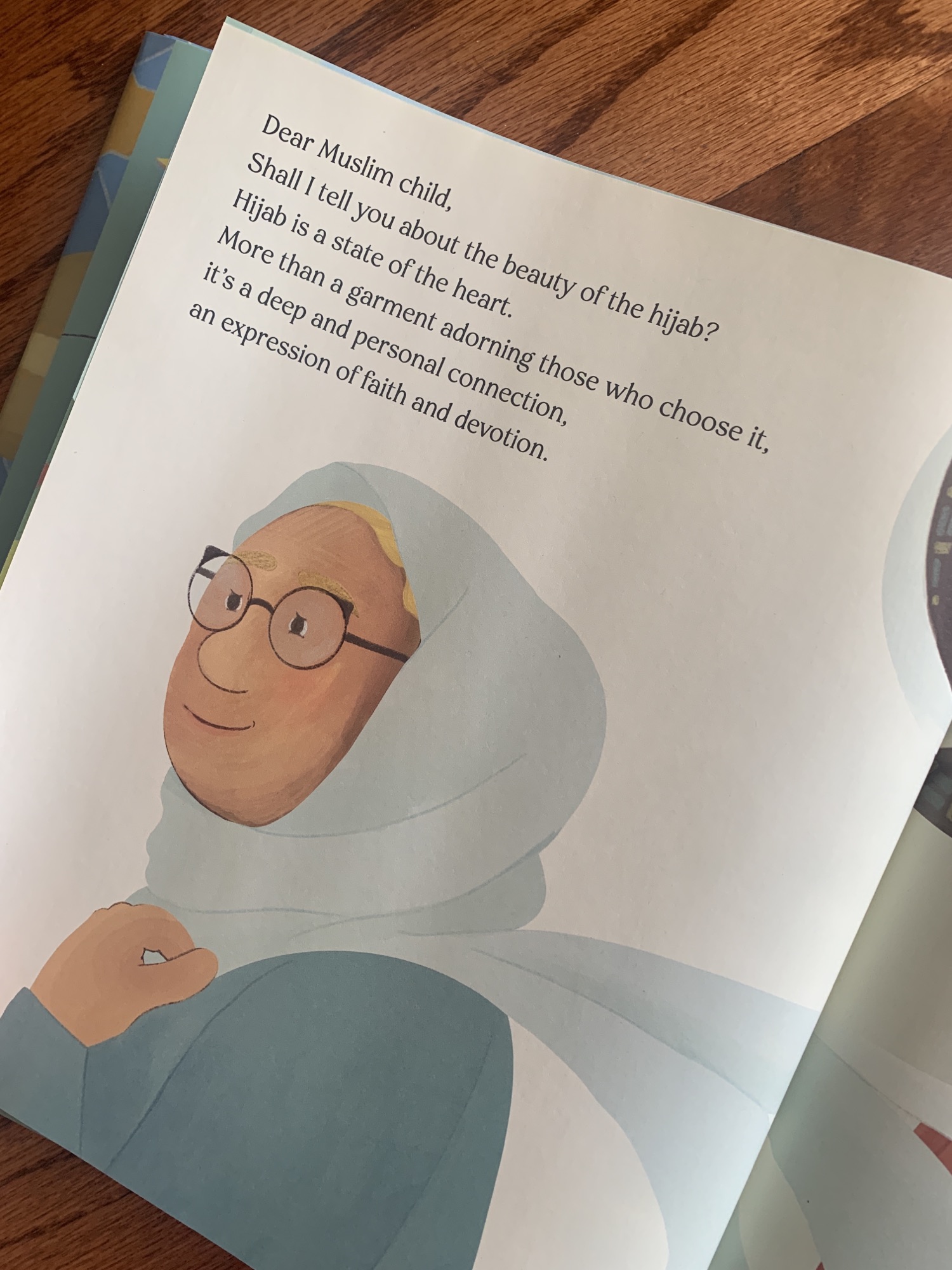
The book does not have a story or a plot, but has an organization that keeps the pace moving in a poetic way. It starts by mentioning that we were meant to be, even “before Allah spoke the universe into existence.”  It then tells us about Islam, nur, names, the power of words, purifying our hearts (with wudu), listening to the adhan, and praying.  It talks of the beauty of hijab, and community, and purpose and mattering.

img_2282-1

The centering of Allah (swt) is not shied away from, yet the book is not preachy or overly religious.  For example wudu is shown, but not named; adhan is named but not defined.  If you wish to discuss each page, there is a lot to unfold, but if you want to just read the surface it is beautiful just the same.  The book is traditionally published, and a true accomplishment of the author, and the authors that have come before that this book, this type of book, is widely available for us all to enjoy.

img_2284-1

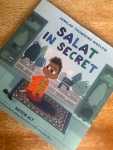
Salat in Secret by Jamilah Thompkins-Bigelow illustrated by Hatem Aly

Standard
Salat in Secret by Jamilah Thompkins-Bigelow illustrated by Hatem Aly

img_8430

It is quite remarkable in the course of 40 pages that so many themes, layers, emotions, windows, mirrors, and relevance can radiate with ease and entertainment for children four and up.  The authenticity of the text and illustrations create tangible feels in this book, that months after reading it for the first time, I am still moved to tears, both inspired by joy and as a cathartic release of being seen.  The true mastery is that even if you are not Muslim and cannot relate to the nervousness of praying publicly, you understand Muhammad’s hesitancy and feel for him as he battles not just finding a place, but watching onlookers reactions to his father, police proximity, and being brave enough to push yourself even when you are scared.  Usually when asked what my favorite book is, I stumble to narrow it down to just one, but truly this book has raised the bar of not just traditional publishing representation, but Islamic/Muslim literature across the board.  It is a gift to read, to share, to enjoy, and a blessing that such an unapologetic book is available so widely for our children to connect with, and our non Muslim friends to see us through.  Please spend time with this book and make it available to your children, your students, your community, it really is that good, alhumdulillah.

img_8431

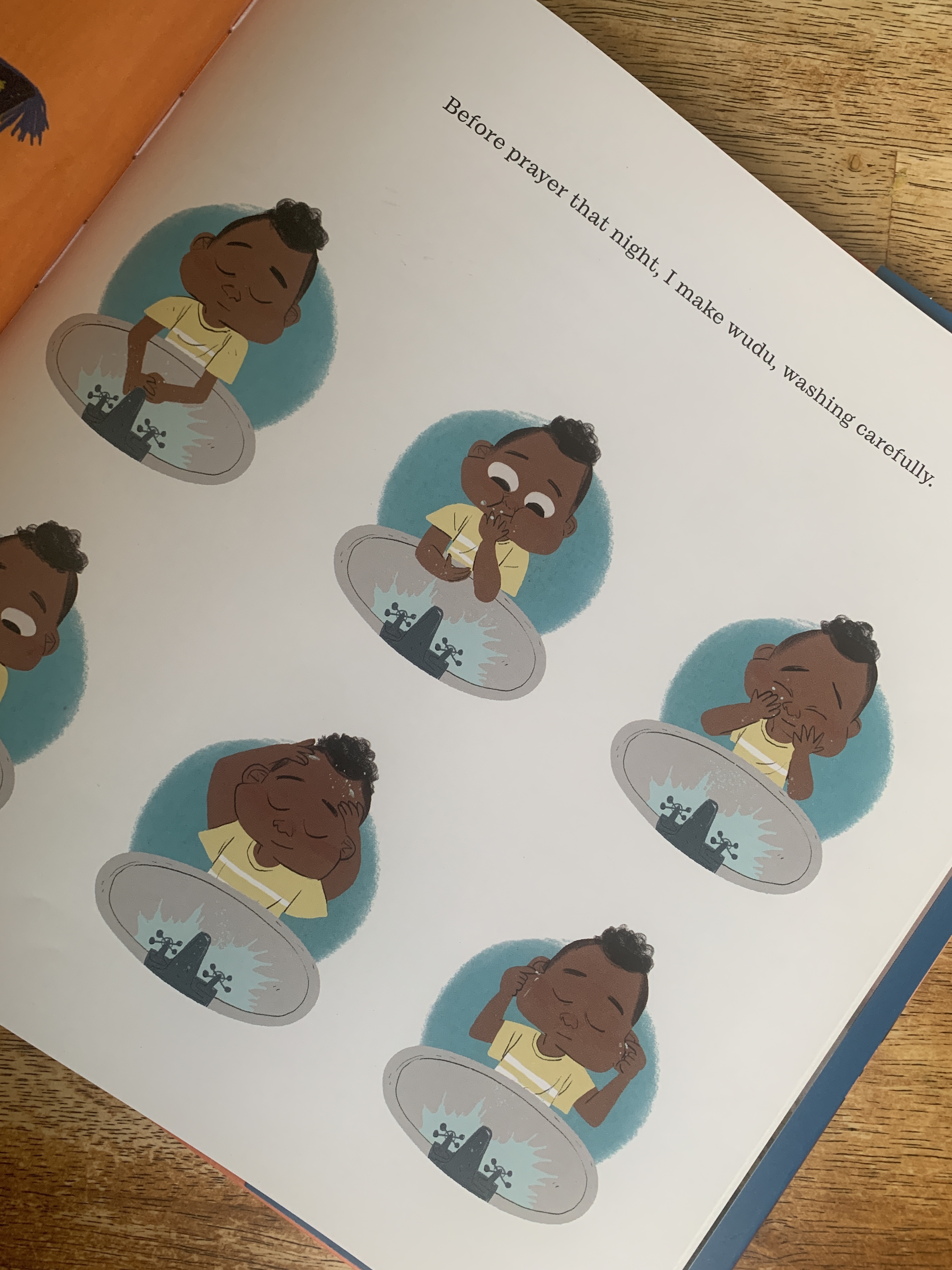
It is Muhammad’s birthday and he is seven, “Old enough to pray five times a day,” his father gifts him a prayer rug, and  Muhammad is ecstatic.  He makes wudu that night and offers salat with full attention.  He says the Sunday school words and shares his most wished for wishes to Allah swt, not even letting little sister, Maryama distract him.

After Fajr the next morning, he is determined to find a secret place at school to pray Dhuhr. Daddy doesn’t need secret places, if prayer time comes he pulls his ice cream truck over and prays on the sidewalk, “never delay salat.”  At school, Muhammad heads to Mrs. Baker to ask for a place to pray, but his confidence waivers and he returns to his seat.

img_8432

Anxiety about where to pray has him looking for spots throughout the morning, but when recess comes he finds he can’t take the prayer rug out from under his jacket.  He lingers when everyone returns to class and rushes through the words and motions in the coat closet.

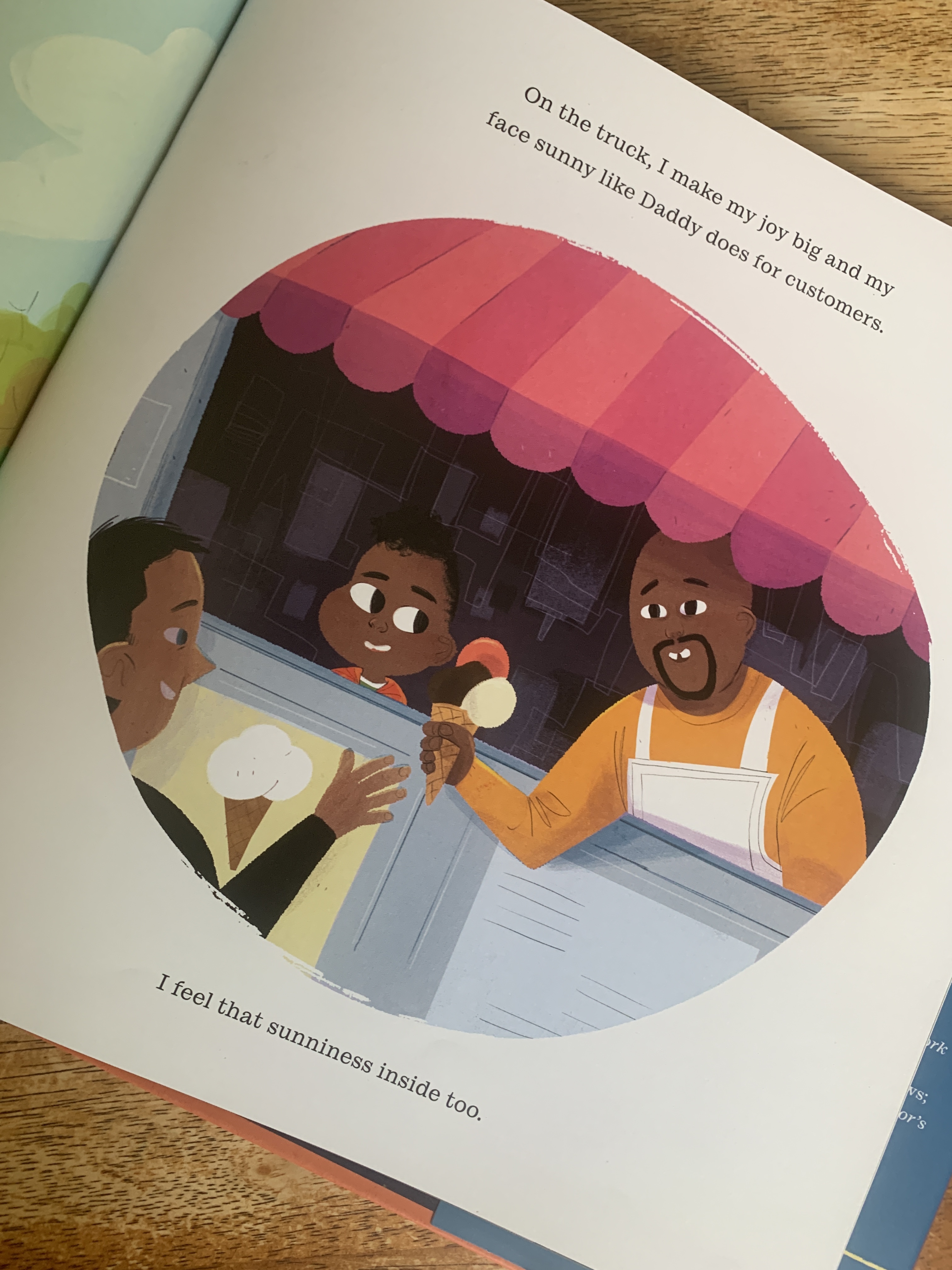
That evening he is with his daddy in the ice cream truck and the sunshine and smiles pour out of the two.  When the sun sets it is Maghrib time and Daddy heads to the sidewalk to pray, reassuring Muhammad that he can pray at home.  Muhammad watches his dad and various events spur him to make his decision.

img_8433

I love love love the way salat is approached with love and excitement and that the dad embodies safety and joy and does not pressure or force Muhammad.  The relationship is beautiful and allows for worship to be seen as both personal, as well as obligatory and merciful.  The duo also show a great parent child dynamic that warms the heart.

img_8434

I like that there really isn’t any “hate” given to anyone praying, it is hinted at, people do not understood, but the focus is not on the outside bystanders- it is what Muhammad thinks and feels.  I’m fairly certain every Muslim who has prayed in public has encountered a wide variety of responses, and this book keeps the gray to reflect and spark conversation.  It is often met with ignorance, with hate, with aggression, but it is also met with respect, apathy, and curiosity which the text and illustrations allow for.

img_8435

There is so much love and joy in the book as well as identity, that I don’t mind one bit that my littles ask me to read it over and over.  It is perfect for groups, one-on-one, and I cannot wait to share it in a story time, there is also an incredibly informative and heartfelt Author’s Note at the end.  If you haven’t preordered it yet, the book releases on June 6, 2023, please pre order it and signal the support for this book and future books that center authentic Muslim joy, Black Muslim representation, and OWN voice author and illustrator accuracy.  Request it at your library, put it on hold at your library, check it out, read it.  If you cannot preorder it, still purchase it when you can, inshaAllah it will be a beloved book in your home as well.