Category Archives: Toddler

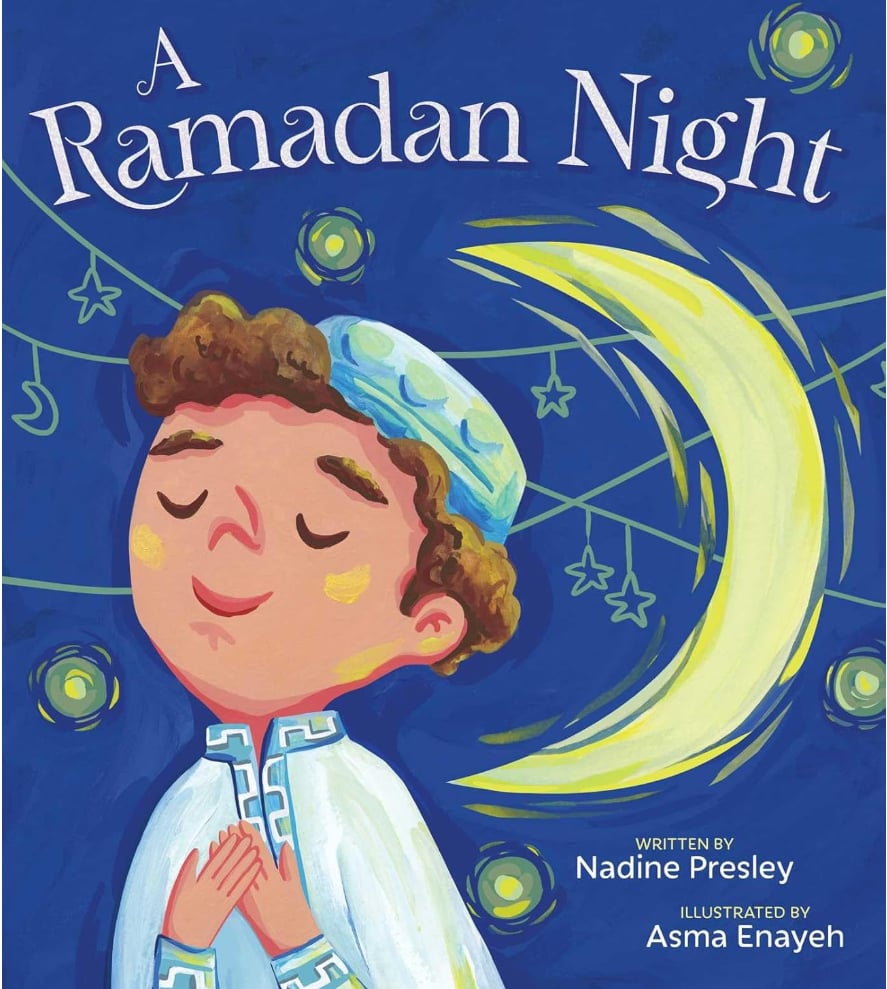
A Ramadan Night by Nadine Presley illustrated by Asma Enayeh

Standard
A Ramadan Night by Nadine Presley illustrated by Asma Enayeh


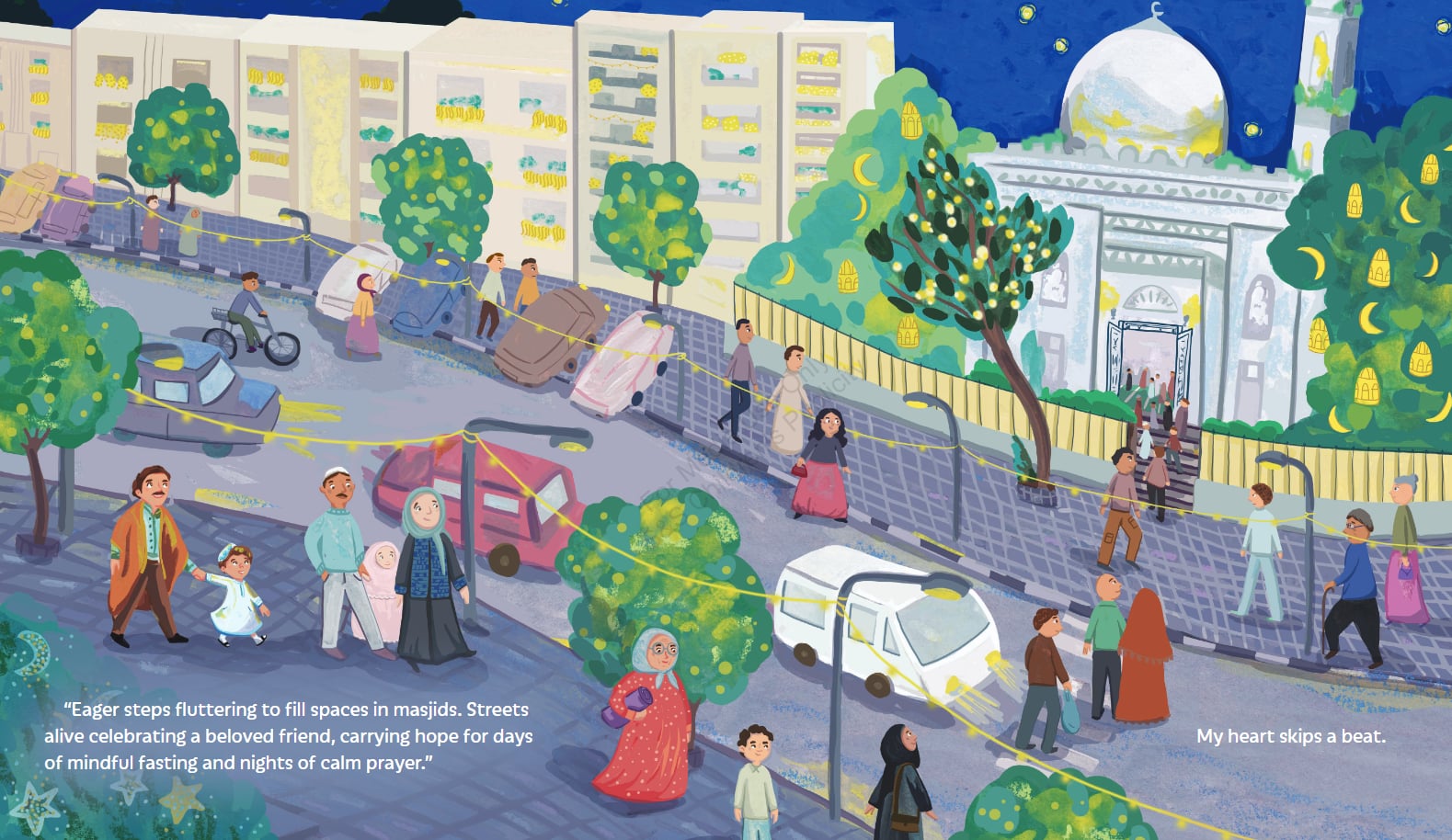
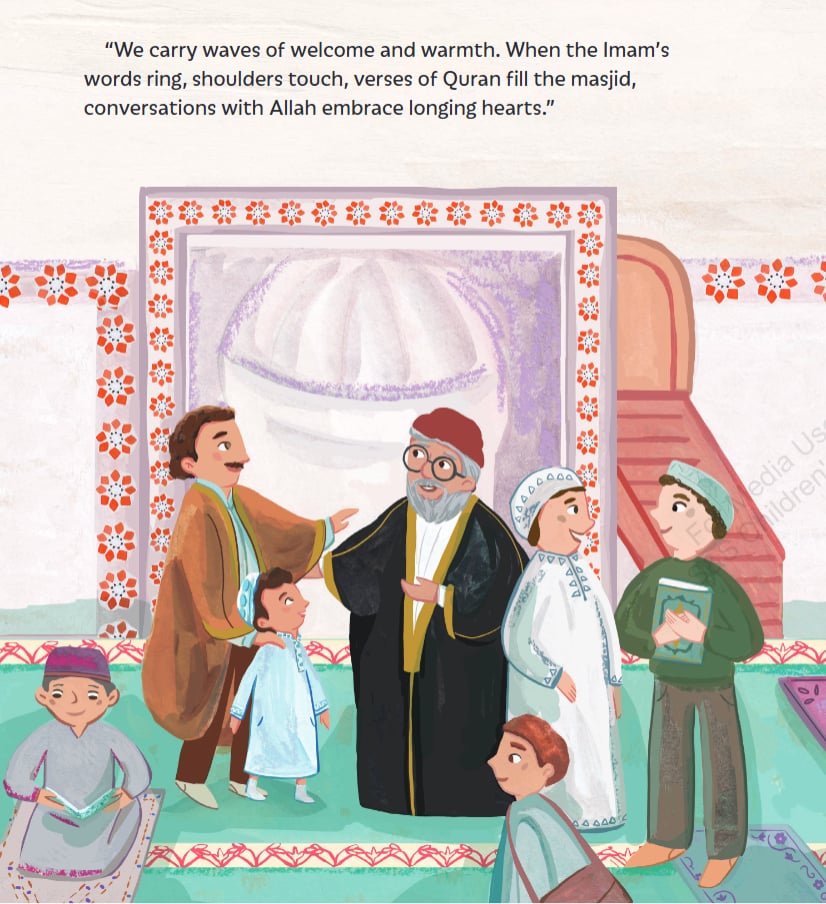
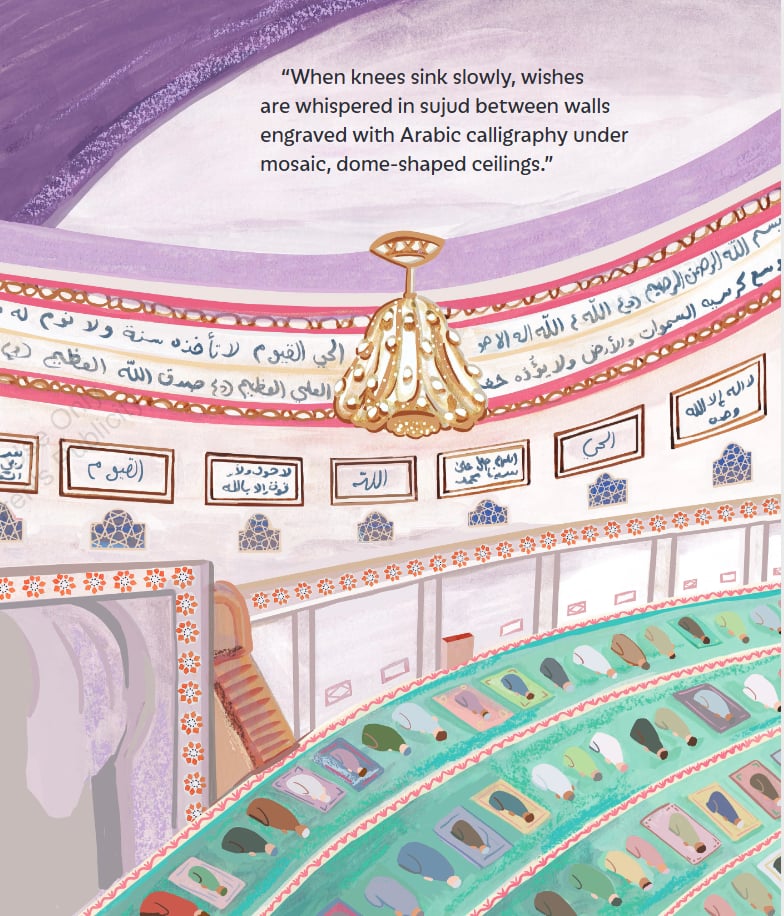
This 40 page picture book balances prose and lyrical language with touchpoints that young children will recognize and relate to.  Using the senses of sound, sight, and smell, a young boy, Sami, seeks to understand what his father means by his remark, that it “feels like a Ramadan night,” as they head off for Taraweeh at the masjid.  The silliness of the little boy asking the moon, the sidewalk, the echoes, the carpet, and more personified inanimate objects, unearths a deeper more resonate layer of faith, community, and connection. The joy felt in Ramadan through acts of fasting all day, praying all night, giving charity, and being with others, is not easy to articulate. And this book not only takes you on a journey through Sami finding his answers, but with a little prodding, will urge Muslim children, and adults, to try and describe their own emotional attachment to the blessed month, while at the same time, also being a wonderful choice to share with non Muslims who often cannot understand that even children are genuinely excited for the worship in Ramadan, that is not yet required of them.  The bright engaging illustrations and the culminating universal climax of sweets, brings the occasionally overly flowery language back to a child’s level and grounds it.  Sami finds his answer as the night unfolds moving the story along and with the unapologetic Islamic centering of the religious month, I can’t wait for my physical preorder to arrive, so that I can share it with my community this Ramadan.  The book releases in a few days and I hope you too will preorder, or request from your library, to signal to the publisher that we want unapologetic Islamic representation, and will support the books that are well crafted, appealing, and Islam centered. 


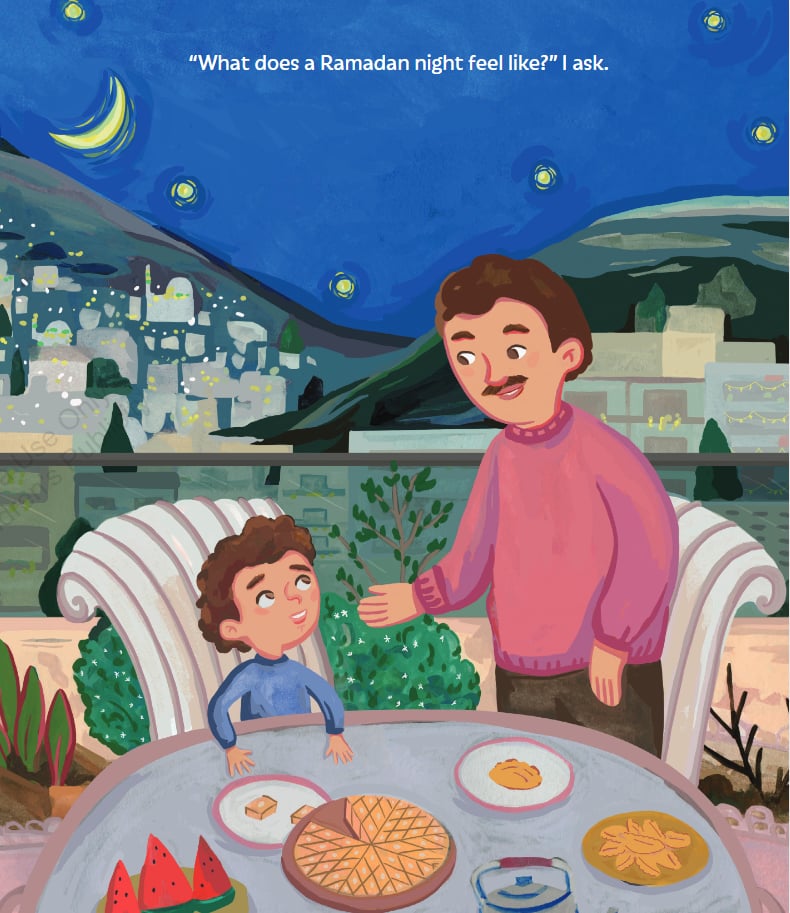
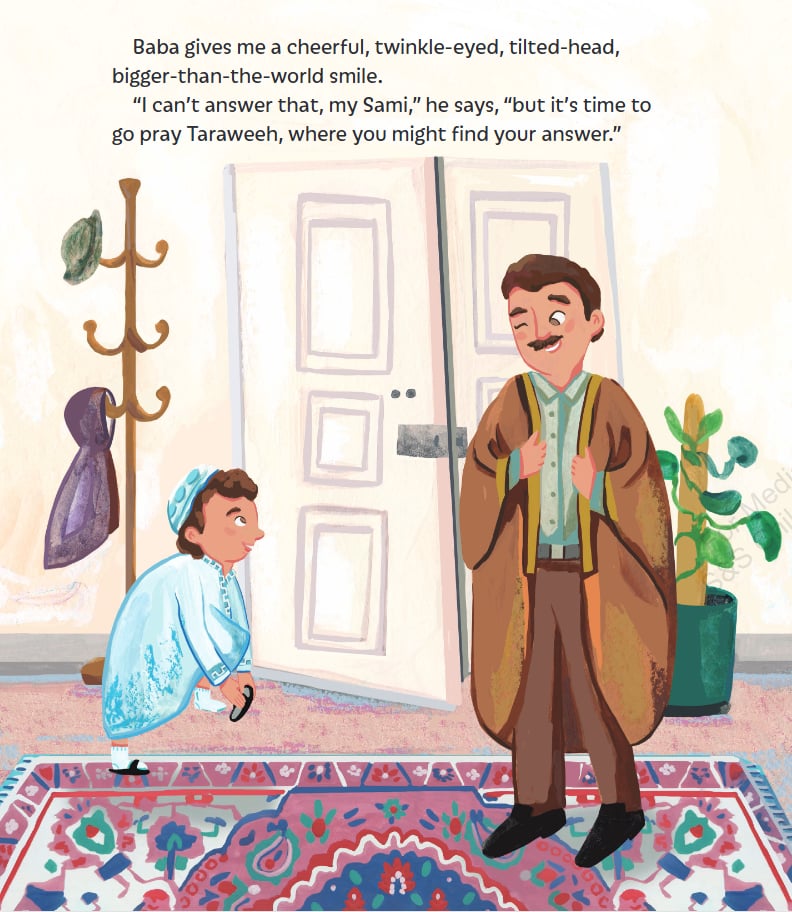
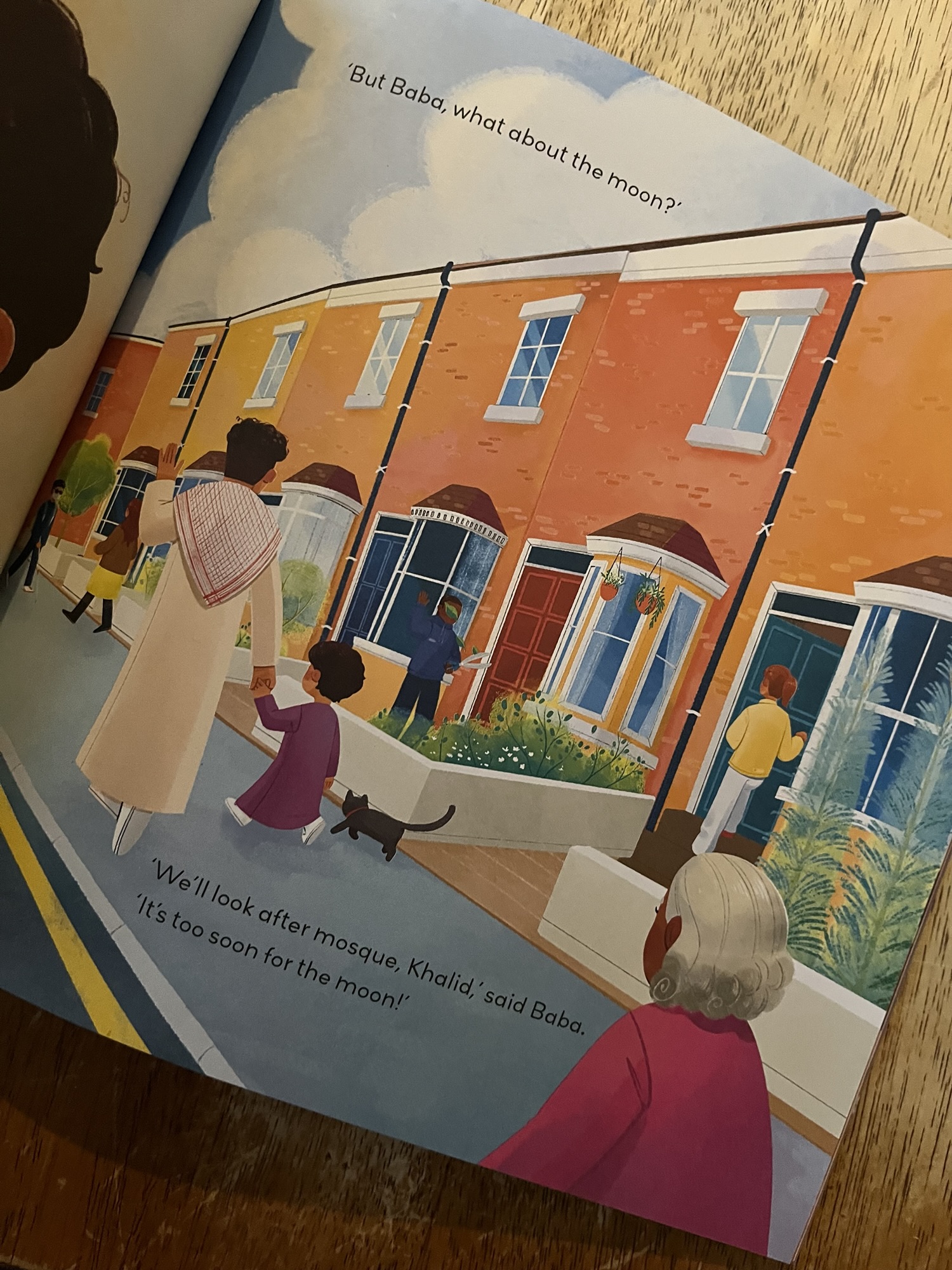
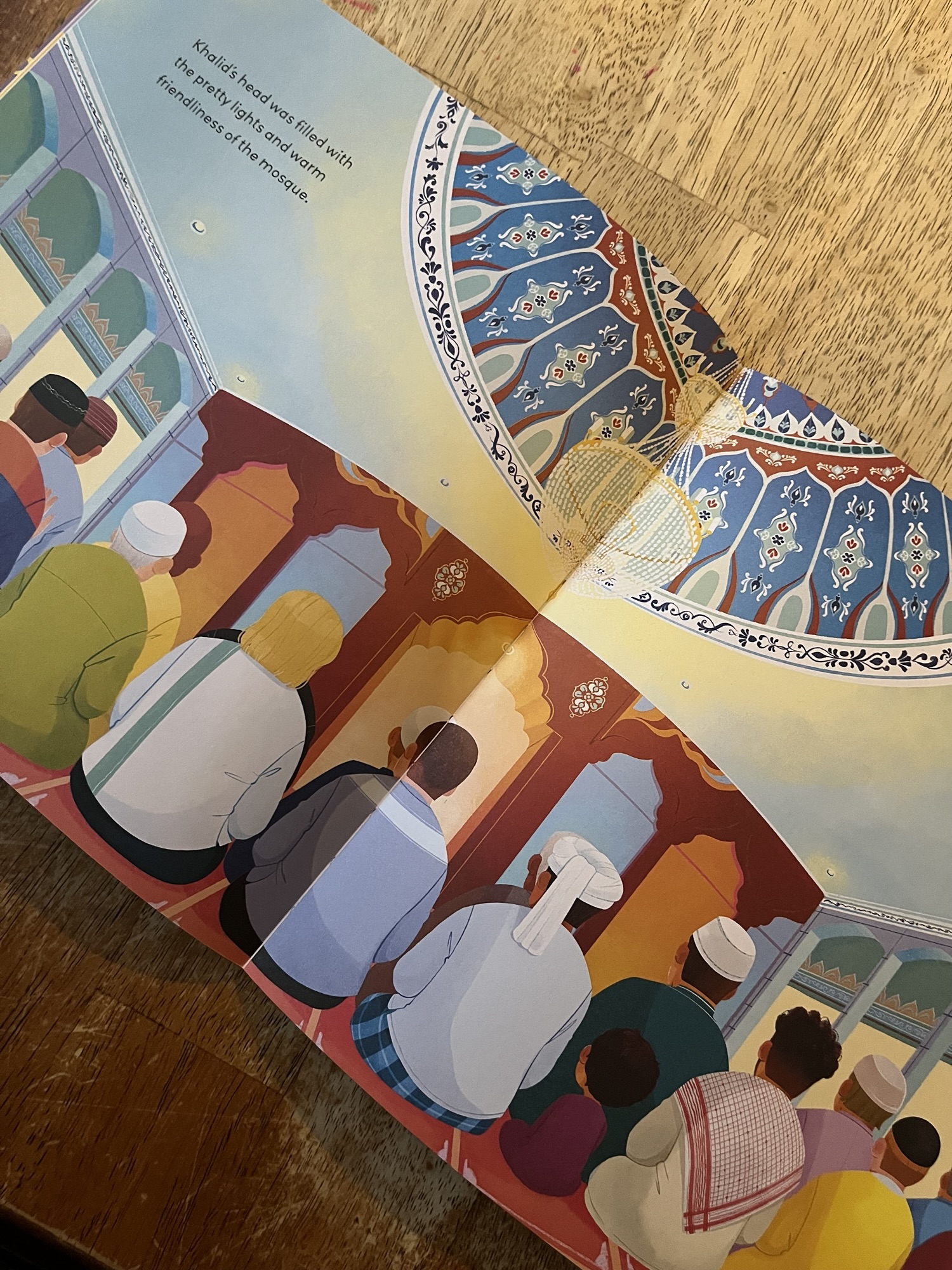
Set in Syria, the book starts with Sami and his father sitting outside eating together, when Sami’s father says that it “feels like a Ramadan night.” Sami isn’t so sure, but his father isn’t about to offer a simple reply, and instead urges him as they head out the door to Taraweeh, to find his own answer.  So Sami asks the crescent moon, who tells him that, “Ramadan nights are lights.” Sami isn’t so sure, but but he sees the golden lanterns glittering, and faithful hearts shining and eyes twinkling as his foot steps make noise on the sidewalk. This has him ask the sidewalk next.  Where he is made aware of the eager steps, and celebrating streets full of hope. His own feet bring him closer to the masjid where echoes of laughter are heard.  The echoes, when asked, speak of peace, and so Sami’s journey continues through salat, playing outside, and delighting in sweets, before returning to his “hug of a home” and knowing in his heart what a Ramadan night feels like to him.


The heartfelt warmth, contentment, and love of Ramadan radiates through the book’s language and illustrations. The melding of story, with Islamic centering, and a little boys journey makes the book authentic and delightful, alhumdulillah. 

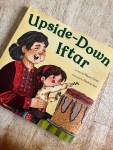
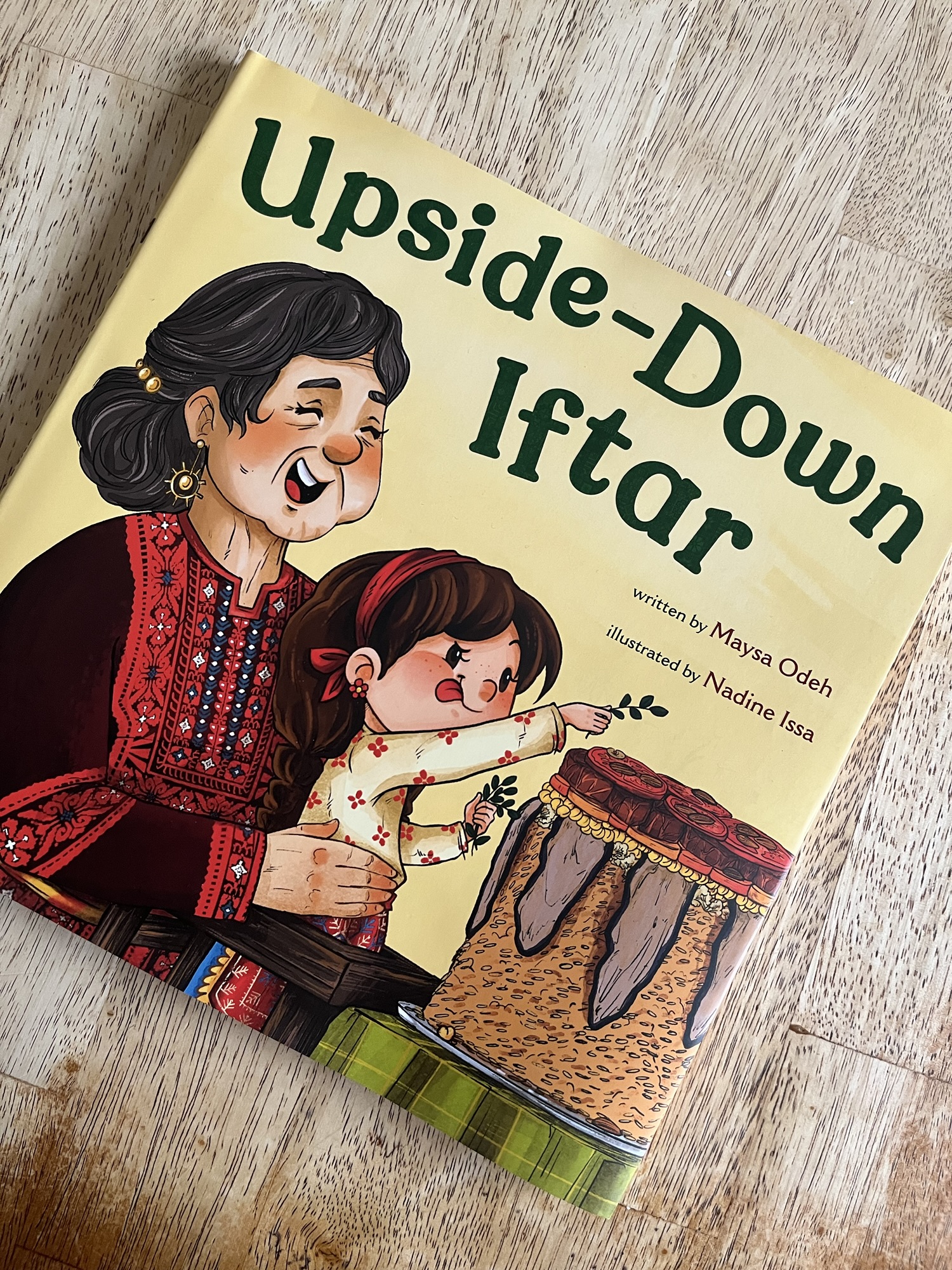
Upside-Down Iftar by Maysa Odeh illustated by Nadina Issa

Standard
Upside-Down Iftar by Maysa Odeh illustated by Nadina Issa

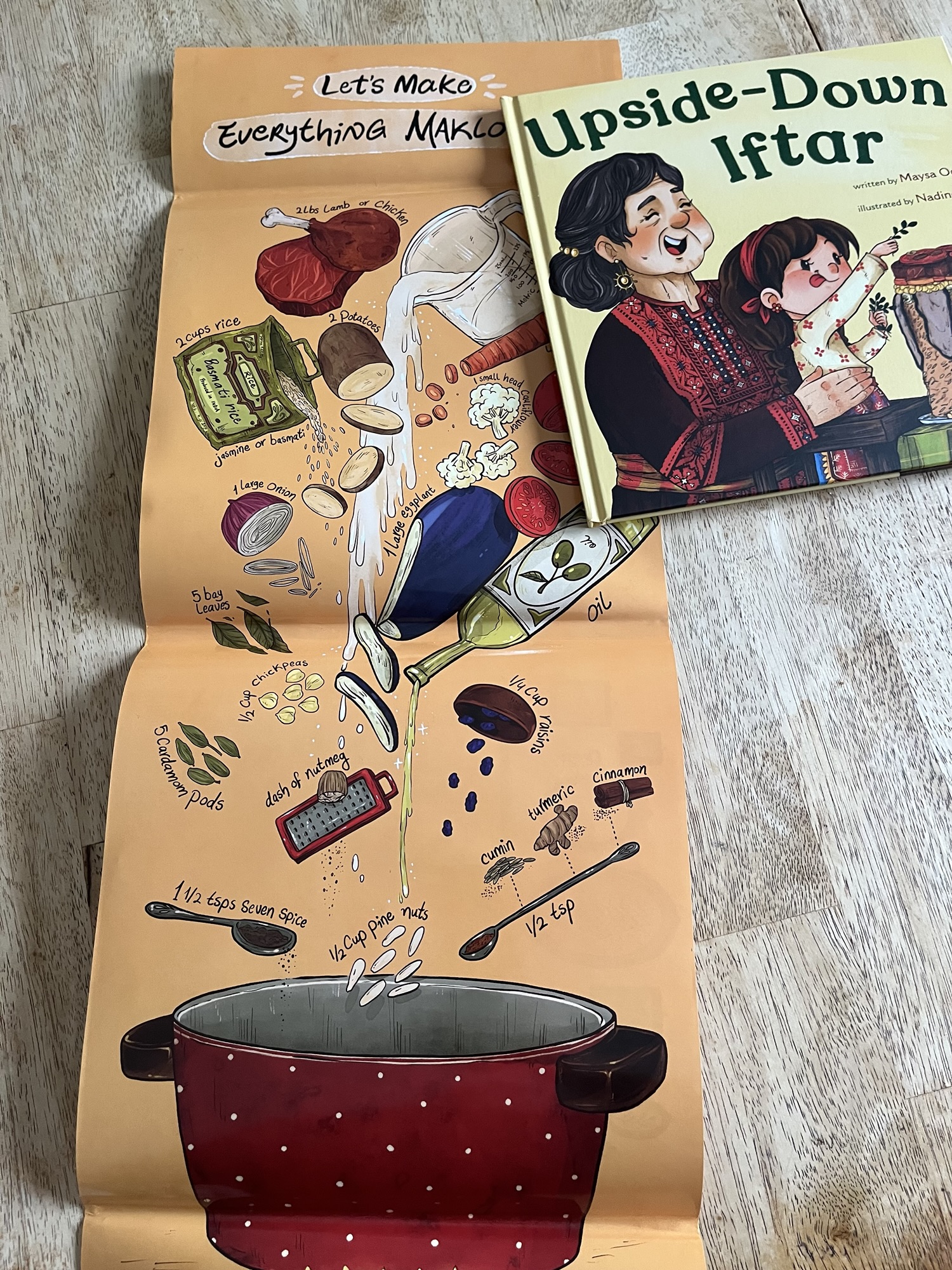
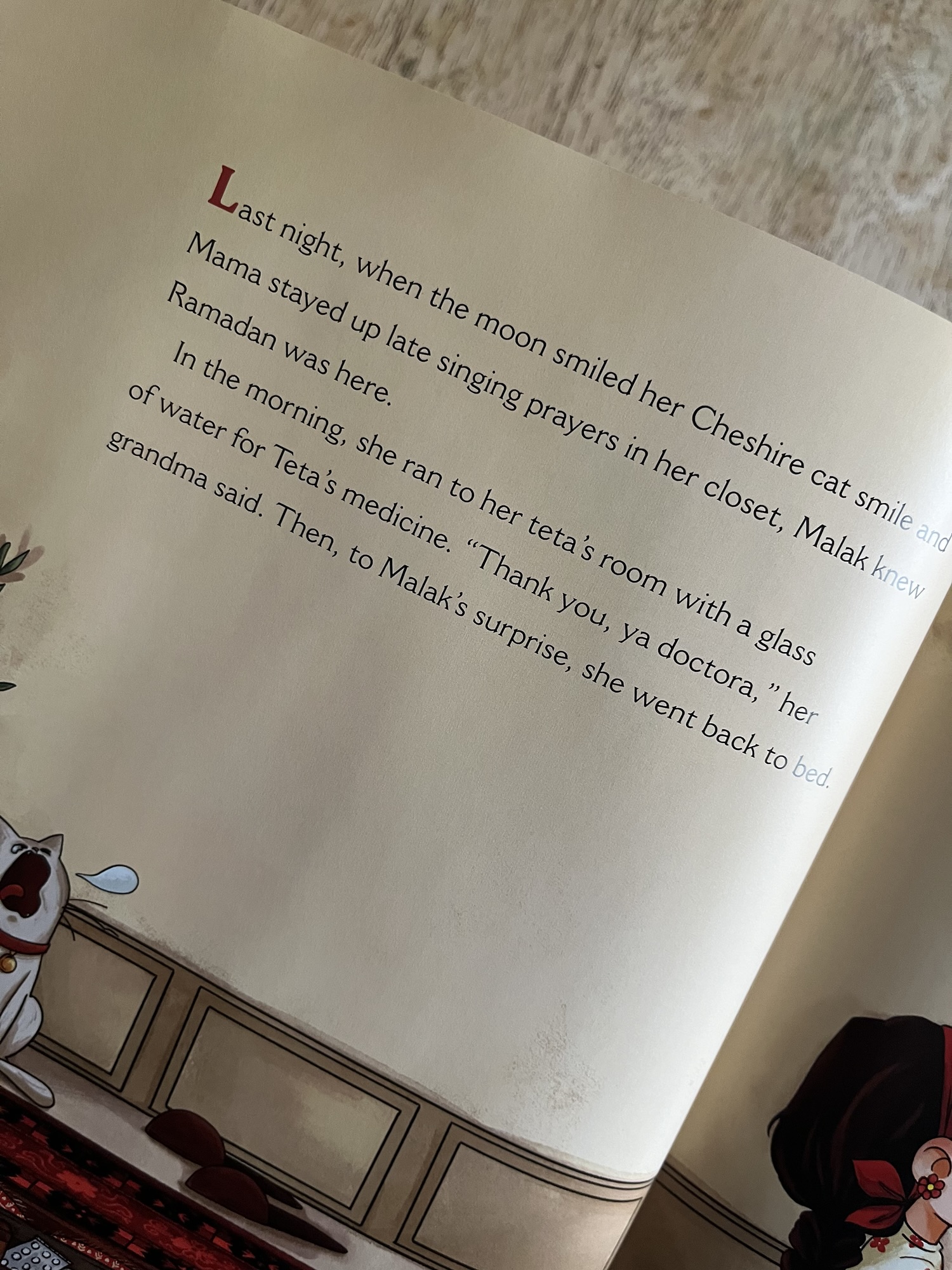
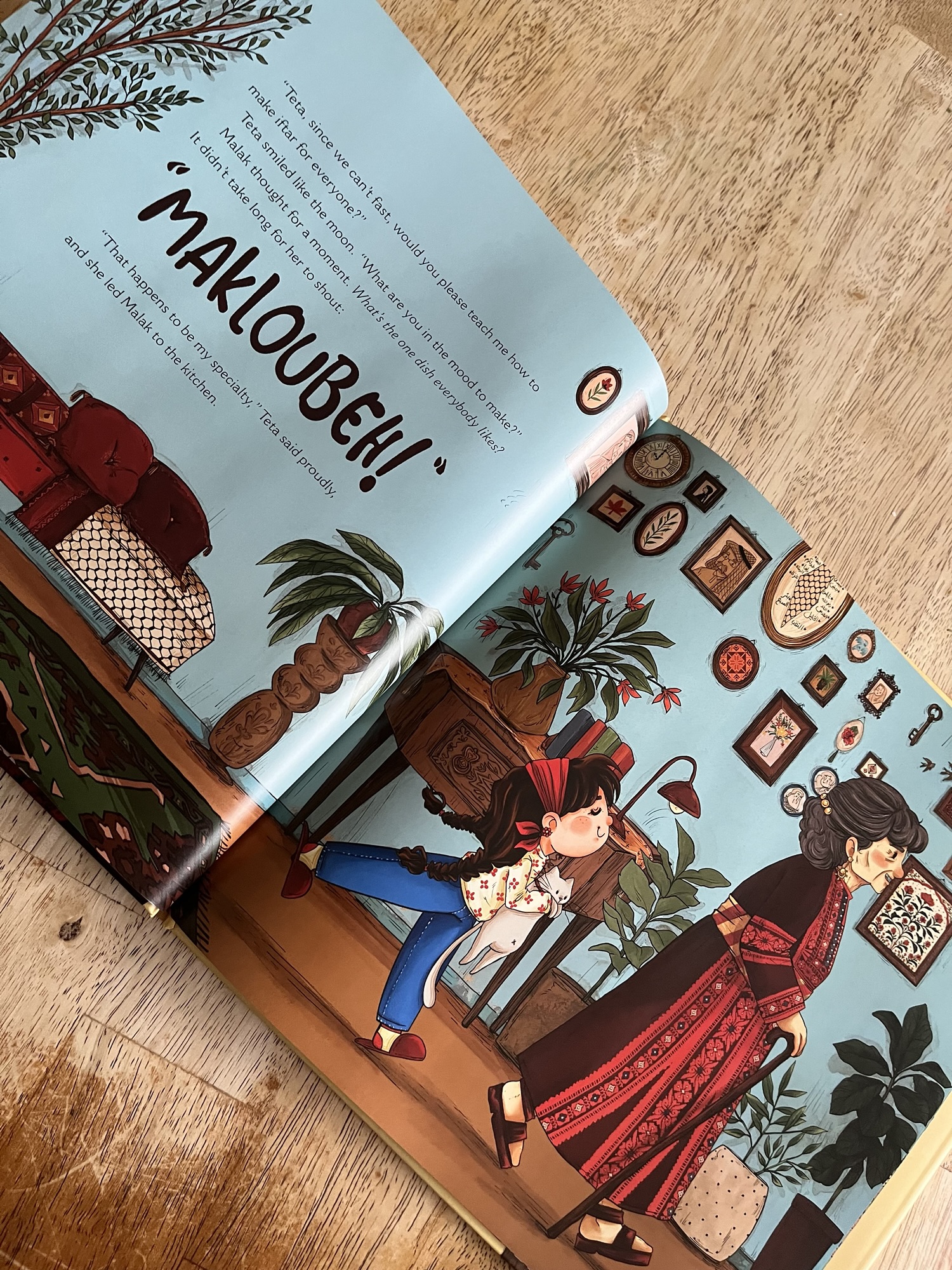
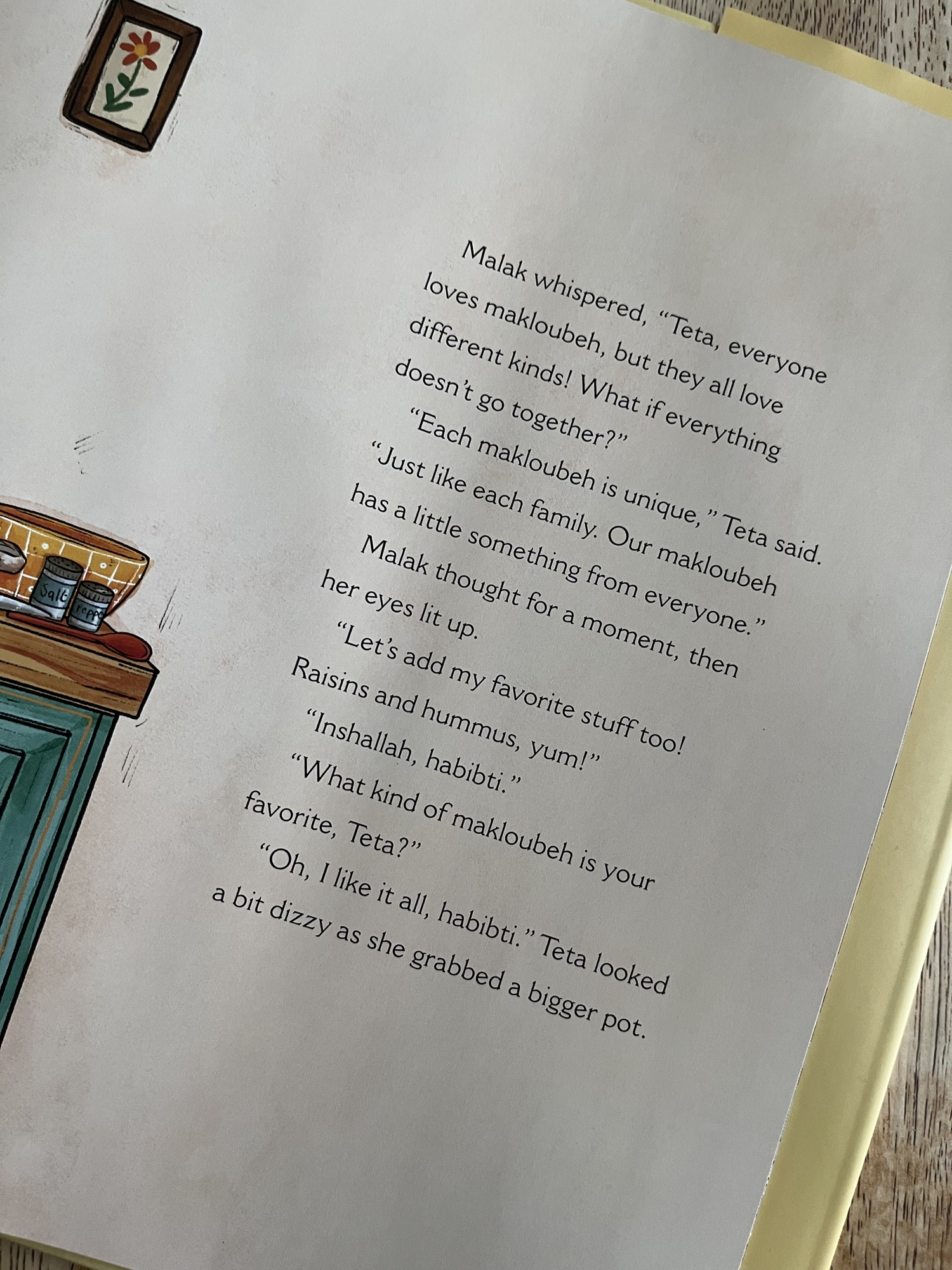
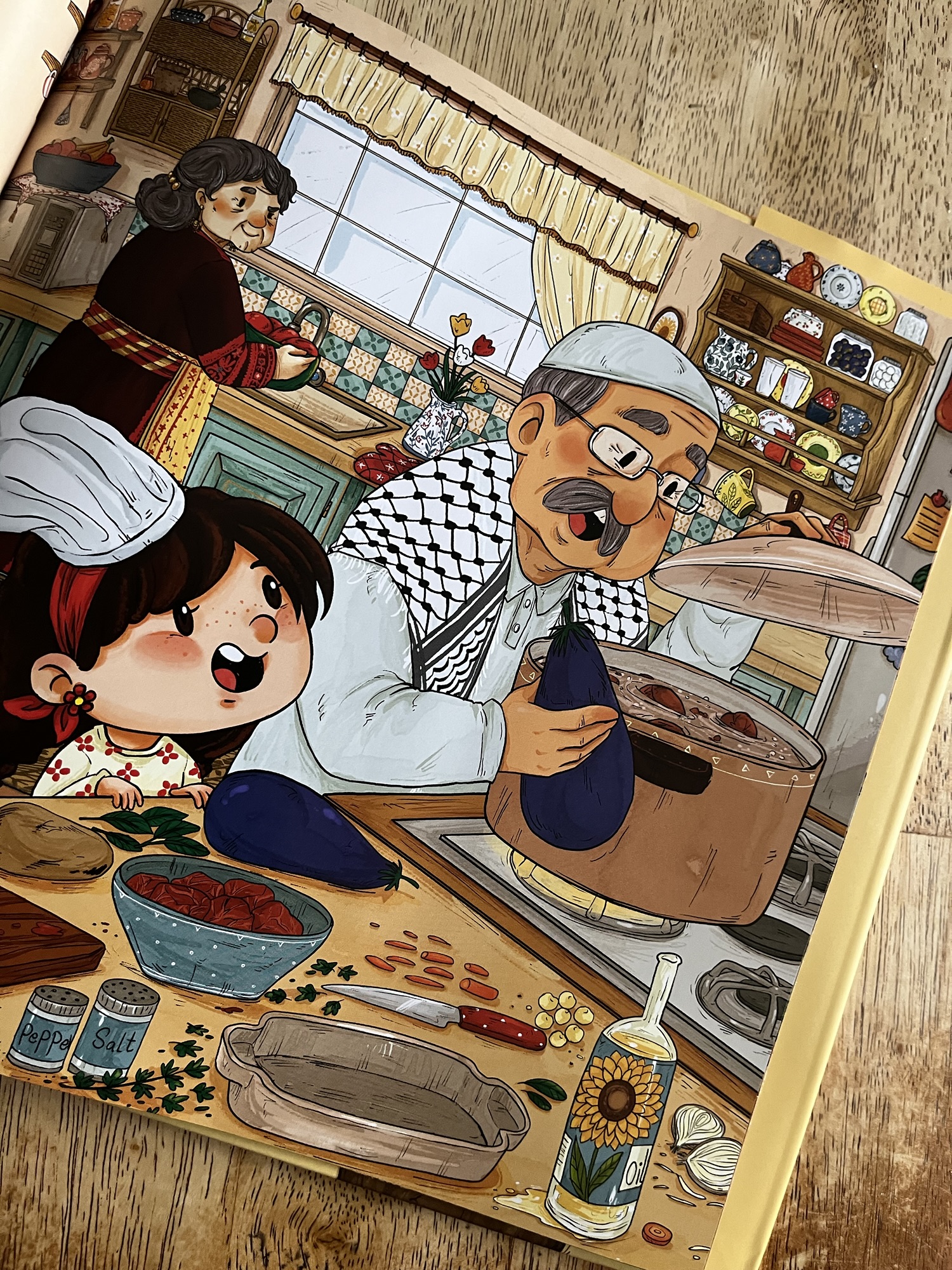
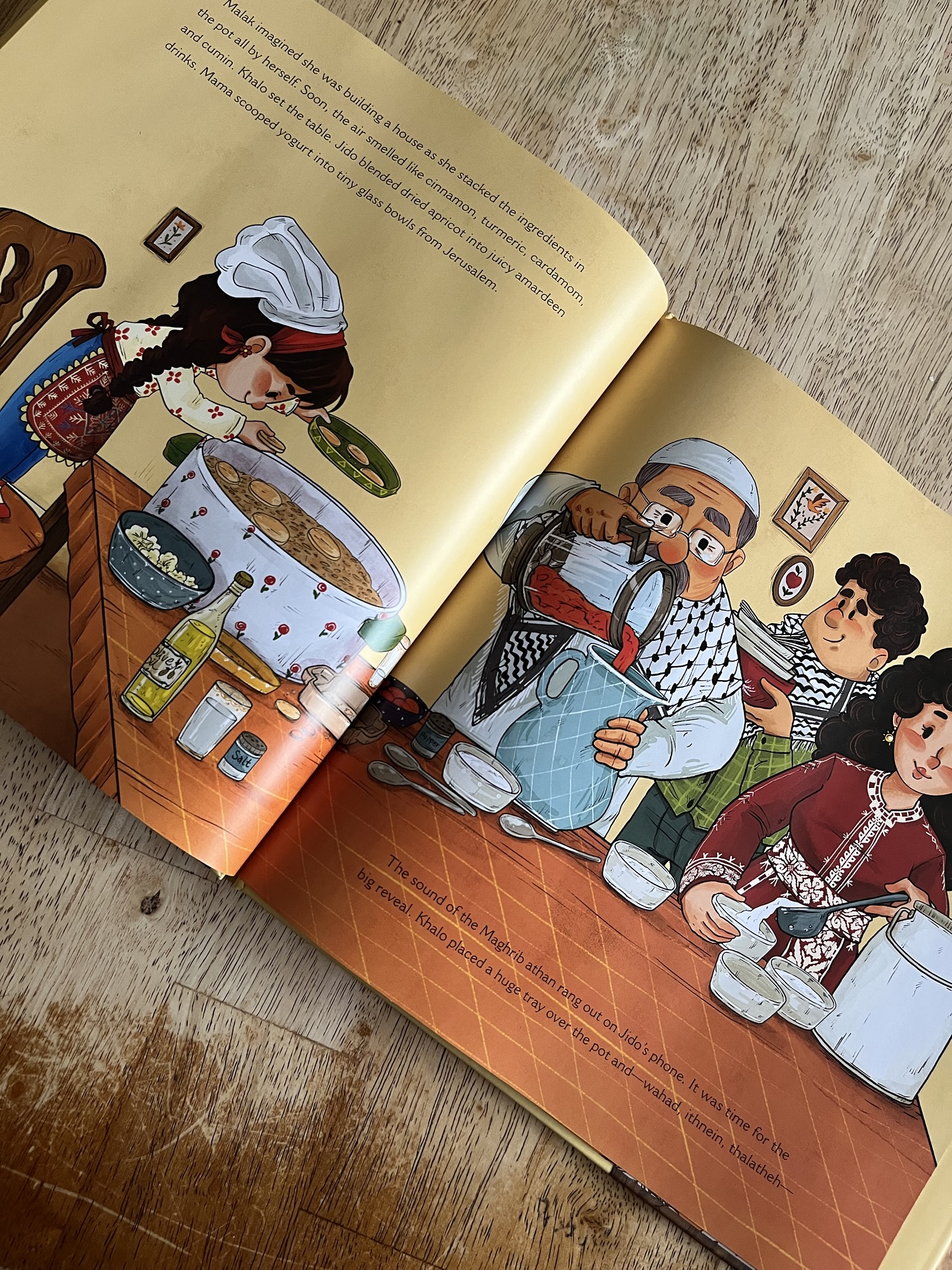
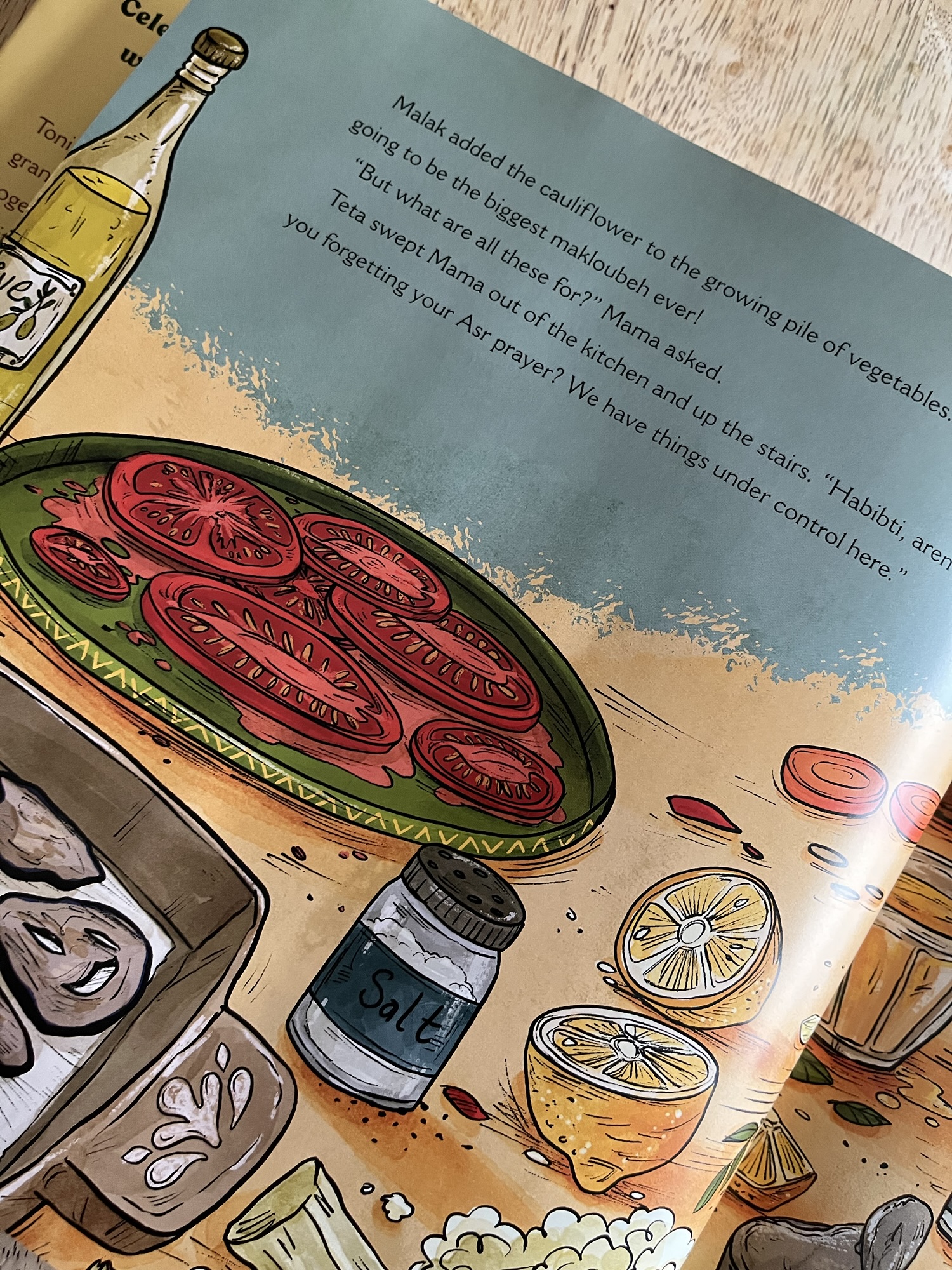
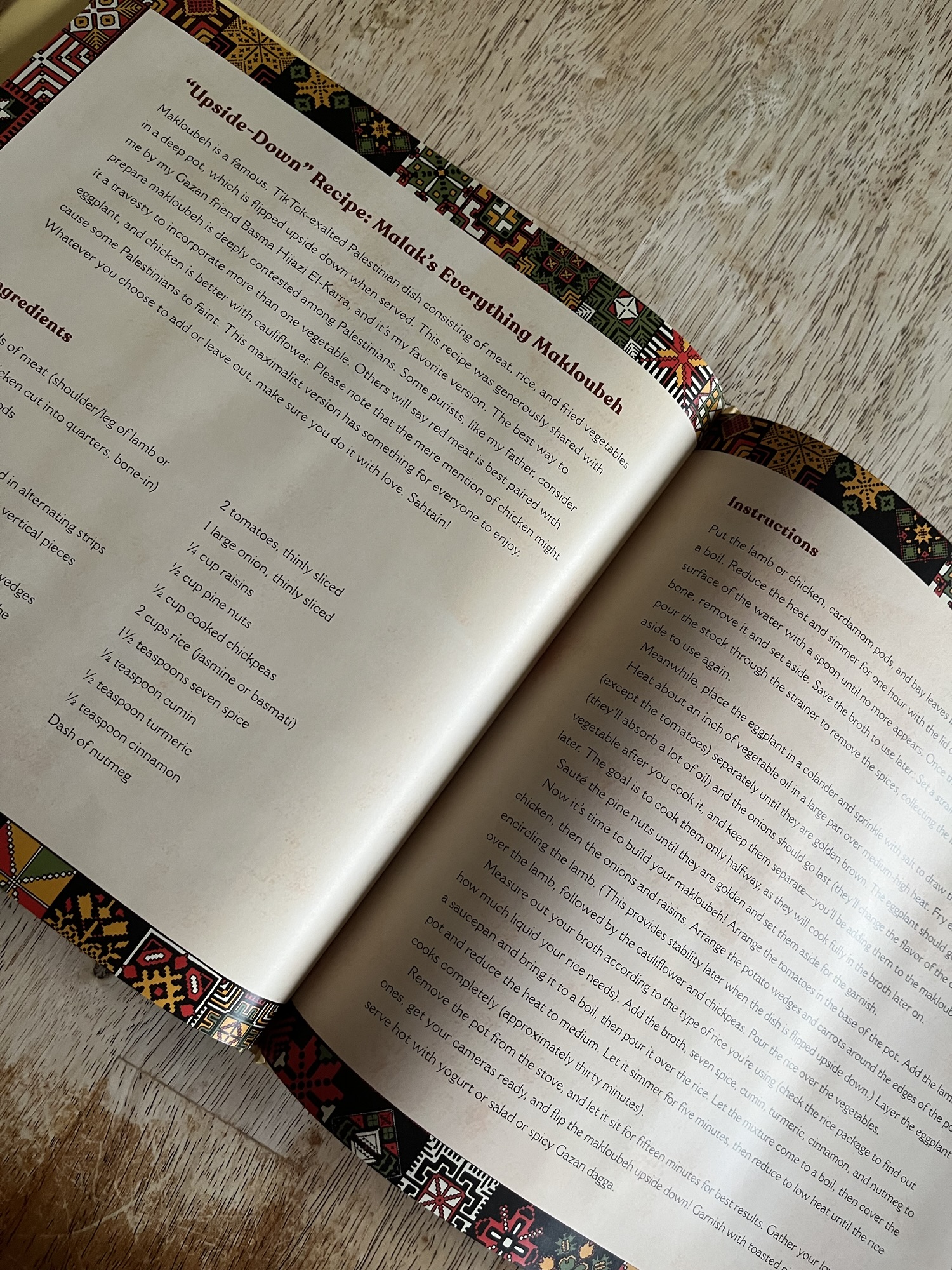
This 32 page picture book is beautifully illustrated and set in Ramadan with the premise being Teta can’t fast because of a new medication she is on, so Malak, who is also not fasting, and her are going to make makloubeh for iftar.  From there the story follows most food centered books with everyone adding their favorites until the iftar meal is one of a kind and brings the family together.  The Palestinian rep in the illustrations, and the mention of asr and maghrib salat, along with the refrain of “inshallah” and Arabic phrases threaded throughout make for a joyful read any time of the year. Unfortunately the first page was hard for me to get past.  Why is Mama staying “up late singing prayers in her closet” a sign for the little girl that it is Ramadan? Why is she singing prayers? Why is she in a closet? Alhumdulillah, the rest of the story was less awkward and I love that it highlights that sometimes ailments and medications make fasting not possible.  The messaging that every family is unique, just like makloubeh is relatable and easy for kids to grasp as well.  The backmatter contains a recipe, the dust jacket slips off to show a vertical filling of the pot with “everything Makloubeh” and the detailed illustrations will both introduce some kids to the popular dish, and celebrate a favorite familiar meal for others.
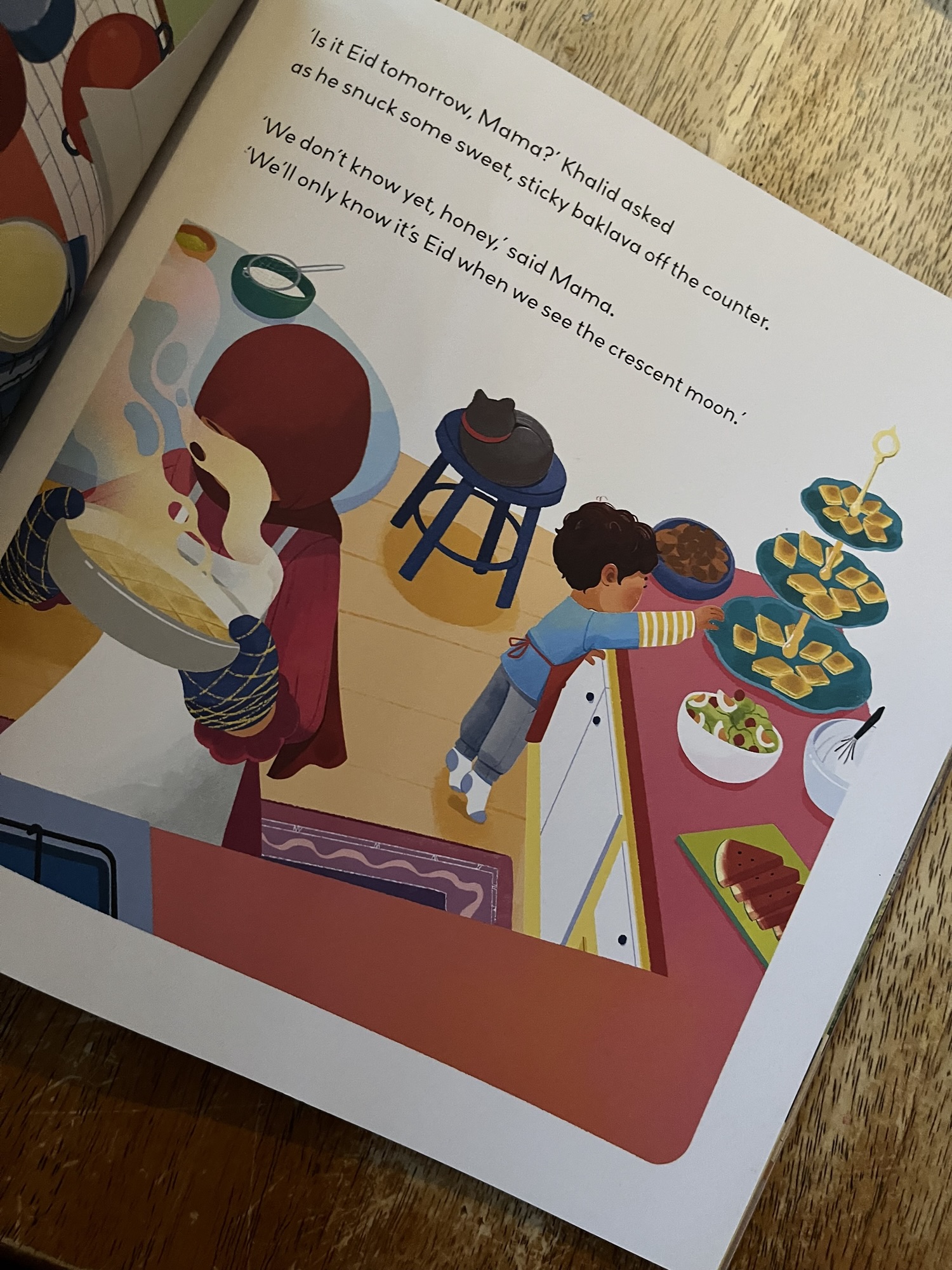
The book starts with the moon smiling her Cheshire cat smile and Ramadan beginning.  This is the first year that Teta is not fasting, and Malak decides she will have Teta teach her how to make iftar, but not just any iftar, upside down Makloubeh!

It starts out with Teta explaining the process and getting started, but then Jido comes in and wants eggplant added. Then khalo sneaks in to let them know that he likes potatoes in his. When Mama gets home from work with cauliflower, she is swept off to pray asr, and Malak decides she wants to add her favorite to the mix.

When Maghrib athan time comes, the big reveal, the flip, and then the first bites take place, revealing a “makloubeh with a little bit of everything.” A dish so yummy that Teta and Malak might be making iftar every night.
Our Neighborhood: Radiant Ramadan by Marzieh Abbas illustrated by Anoosha Syed

Standard
Our Neighborhood: Radiant Ramadan by Marzieh Abbas illustrated by Anoosha Syed

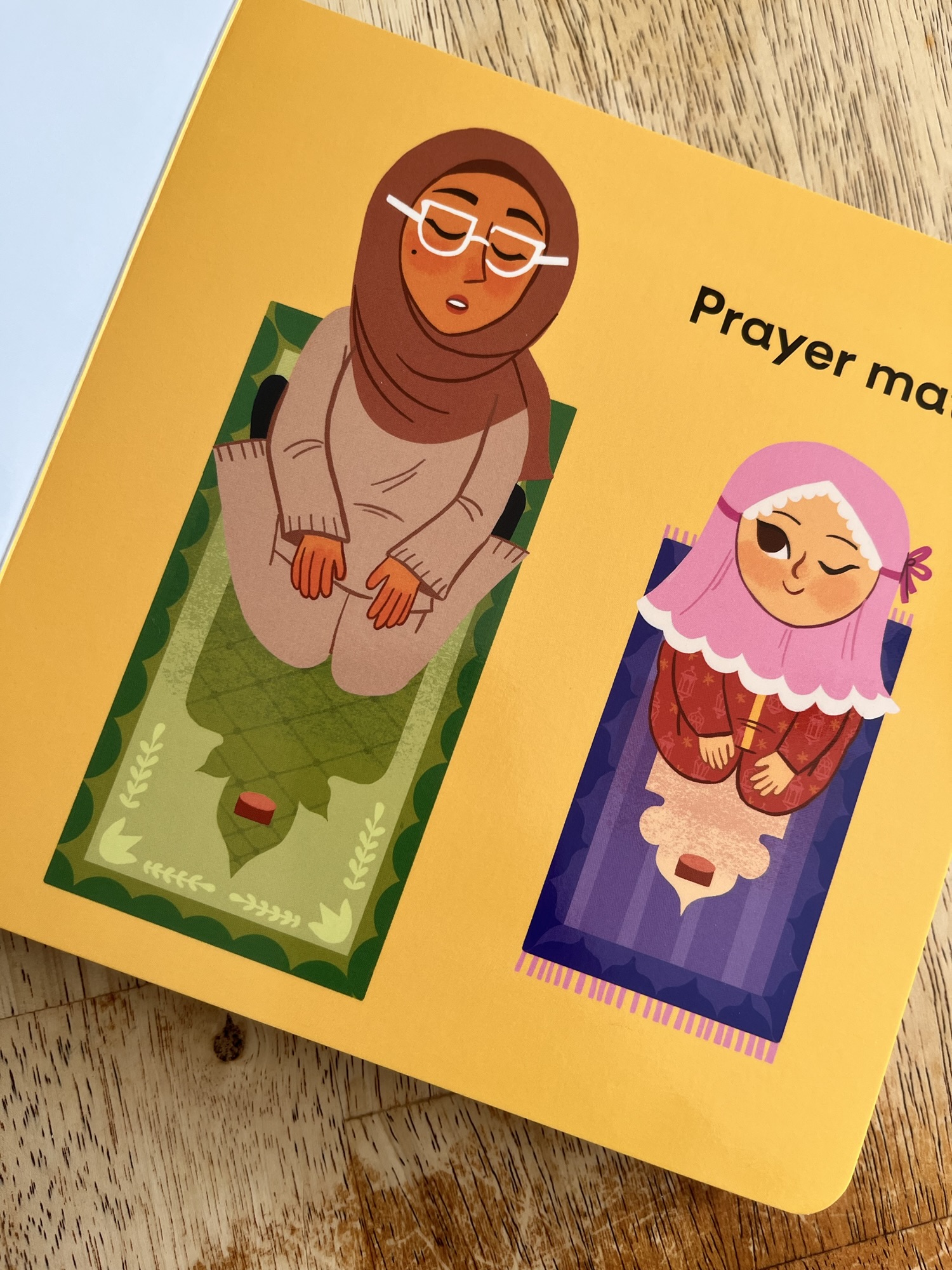
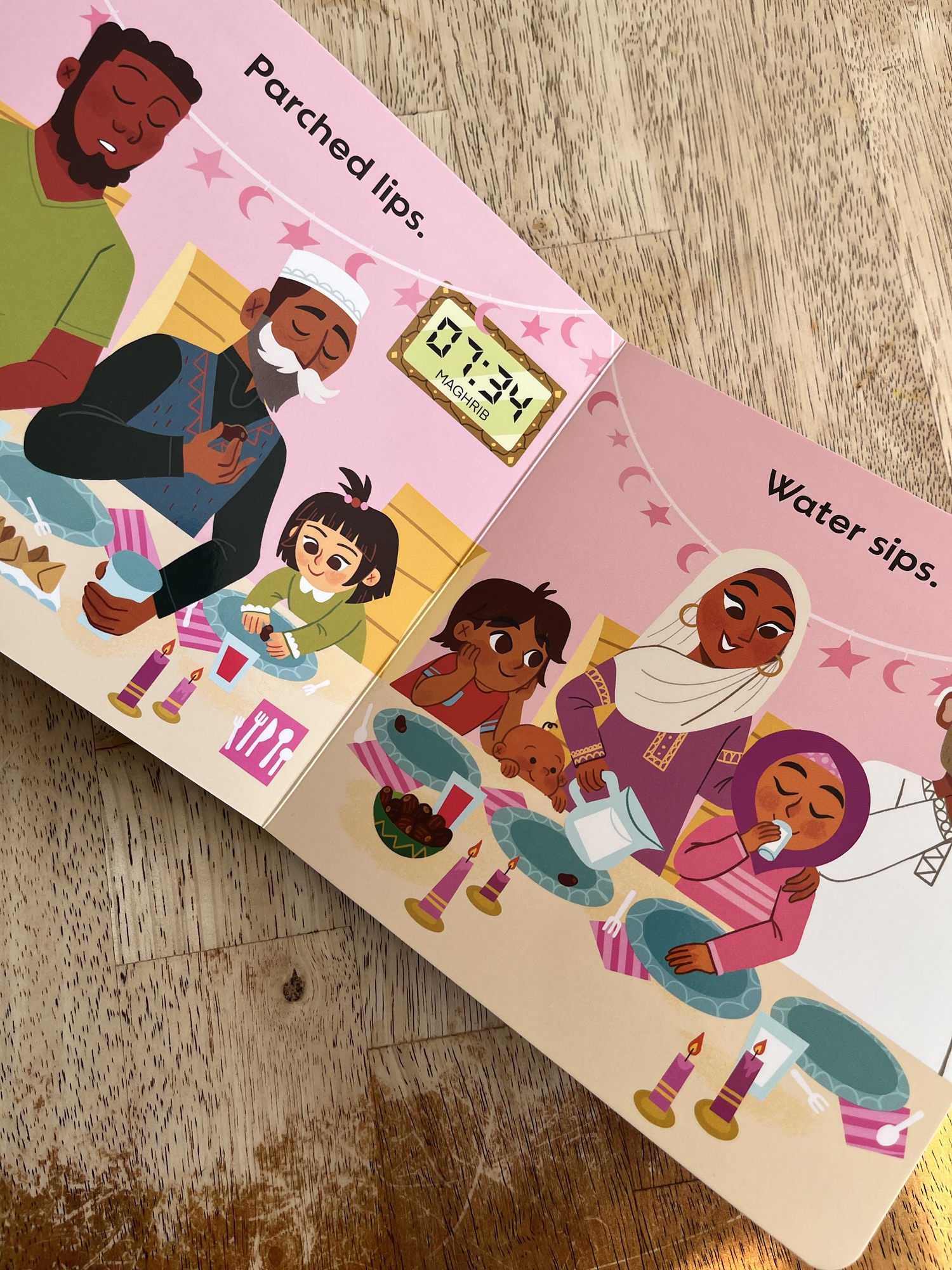
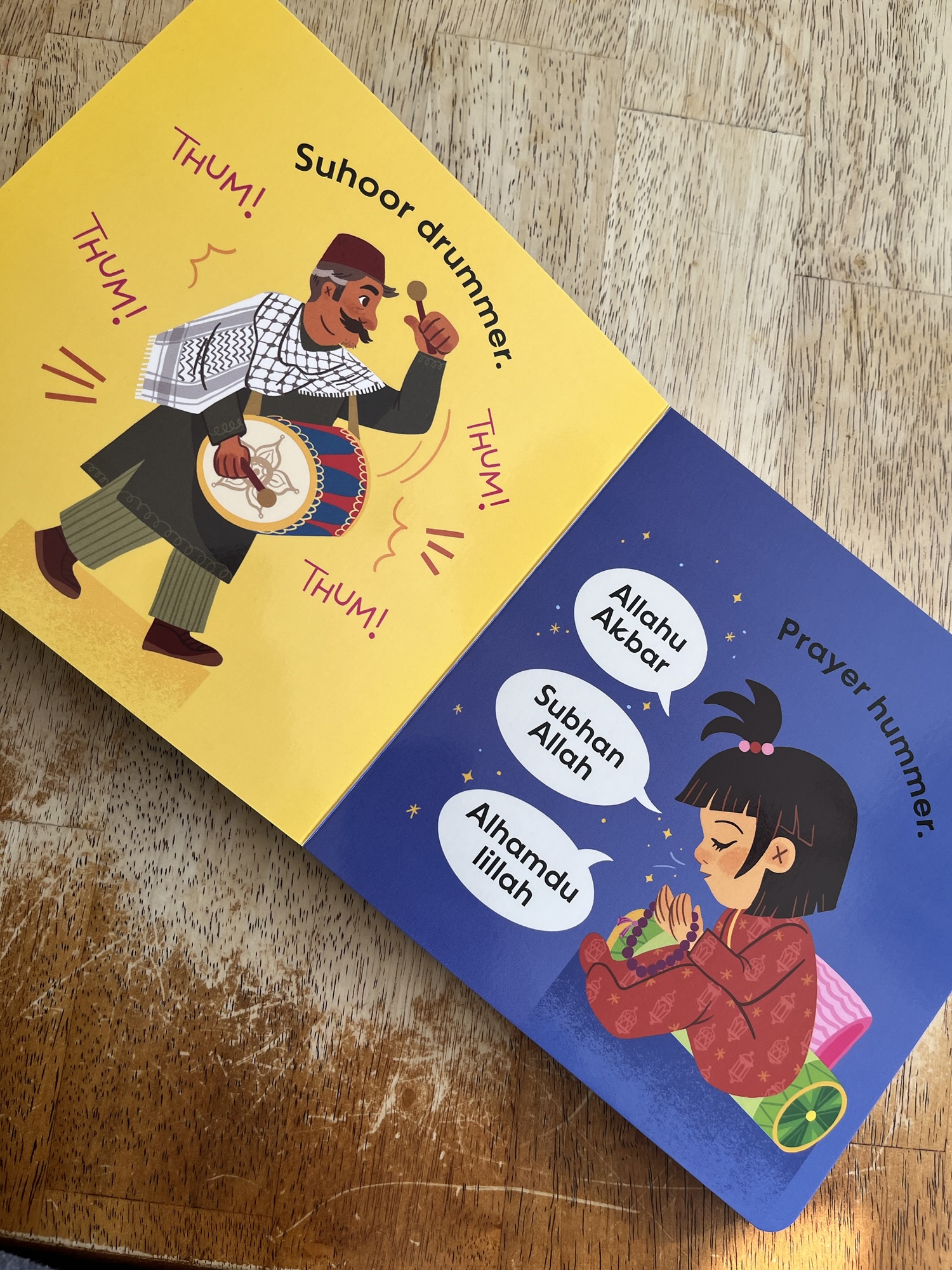
This adorable 26 page board book rounds out the Celebrating Islam representation in the Our Neighborhood Series and the simply rhyming words do an excellent job of conveying the joy, worship, togetherness, and daily aspects of the glorious month. Some of the lines feel a bit forced, but I really enjoyed the size and tone of the book. The illustrations are equally well done with a keffiyeh shown on a drummer, different skin tones on the characters, and smiles throughout. It is perhaps worth noting that the prayer page does seem to have the Shia rock that is used, I missed it initially thinking it was just a design on the prayer mat, but it is hard to unsee once it is pointed out. The other Islamic books in the series by the same author and illustrator are Friday Fun and Excited for Eid.
Here’s Our Religion by Jenny Molendyk Divleli illustrated by Dasril Iqbal Al Faruqi

Standard
Here’s Our Religion by Jenny Molendyk Divleli illustrated by Dasril Iqbal Al Faruqi

This HUGE 14 page board book is such an engaging, teachable, and shareable book for toddler to early elementary aged children.  Similar to the author’s First Words in the Qur’an I can see this book being shared at story times and in classrooms regularly.  Each two page spread is literally a board book in and of itself.  With headings of: Ummah, Shahadah/Qur’an, Salah, Ramadan, Zaqat/Sadaqa, Hajj, and Prophet Muhammad (saw)/ Sunnah, kids will be able to deduce from the pictures and simple captions how the details relate to the theme, learn new information, review what they already know, and delight in the illustrations.

I don’t know that I would sit down with a toddler or preschooler and just read the book straight through very often, but when I was doing multiple story times a week, I had planned books for every theme highlighted in this book. I would have loved to be able to pull it out after a few stories had been read and used it as a review, where I could point to a picture and the kids could holler out what the illustration was teaching.  The large size would have saved me from having to make story board pieces, and the critical thinking would encourage comprehension and retention.  Example: learning about salah, and then opening to the salah spread, kids could see the vacuuming child and decode that we pray in clean places, that the picture of four people praying together is to learn/remind/teach that it is better to pray together.  


Sameer and Snazzy: Kindness Counts by Emma L. Halim illustrated by Herry Prihamdni

Standard
Sameer and Snazzy: Kindness Counts by Emma L. Halim illustrated by Herry Prihamdni

The 32 page faceless picture book for toddlers and up, is set in Australia and follows Sameer and his cat Snazzy on a bushwalk.  At first I felt like it might be a little bit like the classic, “And to Think that I Saw it on Mulberry Street,” but the structured story with a repetitive refrain adds in Islamic phrases, silly encounters, and examples of kindness that make it unique.  Add in a fun surprise at the end, and like many other books by the author, be prepared to have it memorized as your little ones ask for it over and over again.

The book starts with Sameer look forward to his grandpa coming to visit, but wishing he had something exciting to share with him.  Snazzy suggests he shares that he can talk to animals, but Sameer knows no one would ever believe that, so the two set off on a bushwalk to find something exciting.

When they hear an “A-choooooo!” in the trees, the fun is just getting started with Miss Koala sneezing and making eucalyptus leaves fall. The duo finds a way to help, but the fallen leaves mean ants are stuck in their home and can’t get out.  Once again, Sameer and Snazzy, find a way to help.  After each episode the refrain of, “‘Imagine if I told Grandpa this!”‘ I say to Snazzy.  ‘He’d never believe you! he smiles.  ‘NO-ONE WOULD!’ We laugh together and continue along the path, when suddenly…”

The book ends with a surprise, that I won’t spoil. The backmatter has a reference to Surah An-Naml and explains that Prophet Sulayman peace be upon him, really could speak to animals.  There is also a glossary of the Islamic phrases and a QR code to continue to the fun after the story ends.

The book is a bit more text heavy than some of her others, but the illustrations are fun, and will keep kid’s attention.  It does not rhyme, but has a cadence that makes reading it aloud easy. The small size makes the book better suited to bed time, but could work in a story time, and would be wonderful tuned into a story board/felt board read aloud.  The book is a universal story, but at some point in Islamic fiction self published and small published books, I think we will need to have open dialogue and discussions if having characters that are not the same race as the author or illustrator is appropriate and beneficial, or is misleading and better to avoid.

***EDIT: The author reached out to me asking me to remove this generalized opinion of me calling upon the need to have discussion, I opted to amend, as I think we need to have conversation and believe intention and purpose in whatever one decides is a benefit.  So, to avoid errors in interpreting her ask, I will simply post the screen shots, and my response.  Please note I did not tag the author in my Instagram post, she reached out to me.  I purchased the book, it was not gifted.

Steet Puppy, Masjid Cat by Moniza Hossain illustrated by Wastana Haikal

Standard
Steet Puppy, Masjid Cat by Moniza Hossain illustrated by Wastana Haikal

I was a little nervous opening the book, I didn’t know if it was going to be a “Lady and the Tramp” type retelling, and I was unsure how dogs would be presented, but I sure was not prepared for the absolute adorableness that unfolded.  The simple rhyming lines contrasting the street puppy’s life to that of the pampered cat in the masjid, to their meeting, and the sweet imam leading with kindness warmed my heart.  The real chef’s kiss is the backmatter that doesn’t source, but references the sunnah of “acts of charity to every beast alive,” and notes that dogs, unlike cats, are not allowed in the mosque for religious reasons.  I love that “masjid” is in the title, that the author’s note and glossary explain adhan, imam, and the Quran, and ultimately that friendship amongst differences is the takeaway for all readers.  I don’t love that the adhan in the text is described as ringing and the imam as singing, but I acknowledge my pickiness.  And while I love that Prophet Muhammad saw is mentioned in the author’s note, I do wish salutations were given afterward.  The illustrations on every one of the 32 pages are delightful, and I love that the image on the jacket is different than the one on the book itself.  For ages 3 and up, and even emerging readers, this book has a lot of heart, and my 6 year old has read it aloud so many times, I just might have it memorized.

The book starts with simple rhyming lines showing the contrasting life of the cat and the dog, from their daily activities, to how other’s treat them.  When they meet, the cat is not too welcoming, but the imam shows the puppy kindness and the cat follows suit.  As simple as sharing and giving each other a chance, creates a friendship between the two animals, and a beautiful conclusion even the littlest children will understand.

The book is not didactic, and the role of the imam and setting of the masjid, for Muslim kids will be such a spark of joy, but in no way will it limit non Muslim children from connecting with the story.  The benefit for all is seeing a masjid environment and a Muslim in action, normalizing both, and inshaAllah reminding us all to be a little kinder to our animal friends.

Dark Nights and Light Hearts: A Muslim Book of Opposites by Hena Khan illustrated by Mehrdokht Amini

Standard
Dark Nights and Light Hearts:  A Muslim Book of Opposites by Hena Khan illustrated by Mehrdokht Amini

Every few years, for the last 13 or so, we get a new title in this series, and each one warms my cynical heart with its unapologetic Islamic representation and vibrancy.  The heartfelt rhyming lines, the Islam centering, and the enveloping illustration make these books timeless, sought after, and beloved.  This installment covers opposites, previous books in the series focused on colors, shapes, and numbers. From the BIG ummah to a SMALL baby’s aqiqah, HOT oud to COLD rain bringing barakah, SLOW honey full of shifa to FAST cars heading to Jummah, the book uses two page spreads per each term in the opposite pair with rhyming couplets in large clear font to introduce/remind, describe, and highlight an Islamic tradition.  As both opposites and Islam are conveyed, the cadence and illustrations pull Muslim and non Muslim children in and make the book delightful at storytime, in small groups, at bedtime, and for kids to look through on their own, over and over again.  Alhumdulillah.

The book is 36 pages with a Glossary of Islamic words at the end with an Author’s Note.  It is available wherever books are sold and a great reminder that well done Islamic books can make it from traditional publishers.


Your Friend From Palestine by Nabila Adani

Standard
Your Friend From Palestine by Nabila Adani

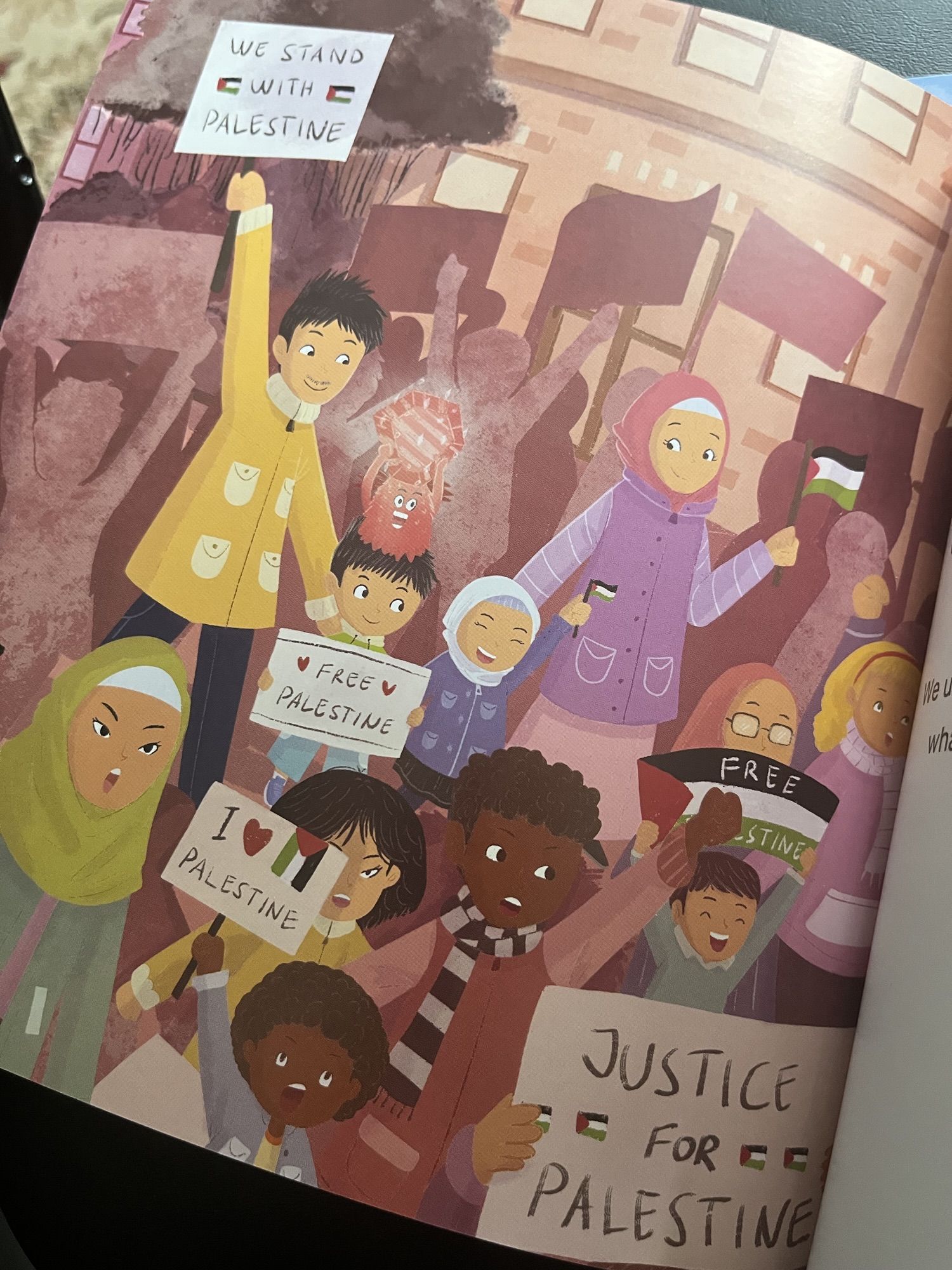
This book is absolutely gorgeous, from the raised text on the cover, the sweeping illustrations with tangible details, the Islamic threads, and the heart, but…yeah you knew something critical was coming, the rhyme is not consistent, and the biggest hurdle for me, is that there is no backmatter.  I can’t say that I’m “bringing this up again,” because I don’t know that the debate ever dies down: can you write a book about something personal that you have not lived through? In this case can a non Palestinian write a book from a Palestinian perspective? As a former journalist and long time reader, I still maintain that you can, but backmatter detailing your own limitations, what efforts were made to have the book verified by those with OWN voice experience, and background information on why this is pertinent and relevant are mandatory. And this book does not offer them.  Nothing feels off about the contents, and anyone with a heart, has seen and felt everything on the pages about our brothers and sisters living under occupation and through genocide. So is it a good book, yes. Do I think it has value, yes. But, is it authentic? Is it accurate? Is it enough? Does the focus on hardship and destruction open eyes or diminish Palestinian joy? Why wasn’t a Palestinian brought in to cowrite the book with the author illustrator? Was it sensitivity read? I am not able to answer these questions, I simply bring up my concerns for you to decide for you and your children. While the book ends on hope for a free Palestine, and a safe Gaza, the oppressor is unnamed.

The book starts with children on a beach playing when they find a message in a bottle.  The message is from Khalid, a child in Gaza telling the finder about his life and asking about theirs. He likes to play football, but sometimes it isn’t safe, he likes to read stories but often can’t because there are no lights, and he dreams of swimming in a swimming pool, because they often don’t even have water to drink.

Khalid then tells the finders of the bottle, and thus the readers, to not lose hope, “to hold on to your imaan.” And it highlights what we can all do to help.  “You can pray for us! Send charity! Spread the news!” and tell people about Palestine. So that one day we can meet at the Dome of the Rock, pray at Masjid Al-Aqsa, and be together in a free Palestine, inshaAllah.

The illustrations are beautiful and the framing effective in connecting with readers, and highlighting the similarities before revealing the obstacles. Again why I wish there was backmatter, so that it didn’t feel simplistic, but rather bringing it down to a younger audience level.  With dialogue, explanation, and context, the book can be powerful, but on its own, I feel the lacking authenticity, transparency, and details about Palestine, make the book in need of an update before future reprintings.

Mustafa’s Mithai by Sana Rafi illustrated by Nabi H. Ali

Standard
Mustafa’s Mithai by Sana Rafi illustrated by Nabi H. Ali

On the surface this 32 page OWN voice authored and illustrated book is absolutely adorable, a little boy who wants to share mithai’s with his friends and saves a gulab jamun for himself. As a mother of a child named Mustafa, who didn’t have a wedding cake a hundred years ago but flew in gulab jamuns from out of state, this book should be close to my heart, except the story makes no sense. The cultural rep is great, it isn’t religious, but mentions eid, shows Nani in a hijab, and the word Allah in Arabic appears in one of the illustrations on a wall decoration, but take that all away, and the story doesn’t add up.  The first few spreads establish how sad Mustafa is because he can’t eat his beloved mithai as all the holidays, birthdays, and Eid have passed, and mithai is only eaten in celebration.  This is particularly devastating since they have a huge box of leftover mithai. No idea why such a forced build up, but the take away would suggest that wasting leftovers is better, which makes no sense. No worries, Ammi says every day is a celebration, but Mustafa doesn’t acknowledge or build off of what his mother tells him, sticking with his original assessment he decides to have his non Desi friends over for a party to eat the leftovers. Ok, I’ll play along, maybe just the framing is awkward. Nope, after a pizza dinner he picks out a different mithai for each of his friends…and starts with Falooda, a jelly and ice cream drink! Mithai means sweets, so technically it could be a mithai, even if not commonly referred to as one, but surely not a left over one what would still be good, and definitely not one from the box. Another assigned sweet for a friend, is kulfi.  Kulfi is a frozen dessert akin to ice cream, and often served on a stick.  Again, no way it is from the leftover box and not really in the same classification of ladoo, chum-chum, jalebi, and rasmalai.  The illustration shows an apple in the leftover box, and the author’s note seems to suggest a more generalized use of the term, “mithai,” but craft wise, why have the boy build up the framing of when a cultural food genre is consumed, only to walk it back and have it contradict? Why have foods that wouldn’t be leftovers served? I know, I’ll be the minority and I’m over thinking it, but why go through all the effort of trying to be a window to a culture and its foods, having it beautifully bound and illustrated, only to skimp on the actual story part?

The book as stated above, starts with Mustafa wanting mithai, and being sad that nani and nana have left, eid and Baba’s birthday are over, and sweets are only eaten in celebration. Mustafa decides to have some friends over in celebration to eat the left overs and Ammi says “Mithai is always sweetest when shared.”

The kids all arrive and when they look in the big pink box they aren’t sure what they are looking at, Mustafa explains the variations and his friends are at a loss at what to pick.  To solve the dilemma Mustafa offers to match everyone up with a mithai after playing and dinner.

One by one he assigns a sweet to a friend, saving a gulab jamun for himself.  They all want more, and in round two the emboldened guest pick their own making sweet memories indeed. The backmatter is the author’s note explaining mithai, where they come from, the prevalence of dairy, and the role sweets have in Desi culture.

My First Book about Charity: teachings for Toddlers and Young Children by Sara Khan illustrated by Ali Lodge

Standard
My First Book about Charity: teachings for Toddlers and Young Children by Sara Khan illustrated by Ali Lodge

The newest board book in the My First Book series is a gentle and wonderful introduction to charity, both sadaqah and zakat. Sourced with ayats from the Quran, there is also backmatter that has Facts about Charity and Questions and Answers. I’m always amazed at how much information the series consistently contains in the 26 pages for our littlest Muslims.  With soft illustrations and smiling joyful faces, each page radiates warmth, information and simplicity in a way that grows with toddlers, to preschoolers, to early elementary aged readers, alhumdulillah.

The book starts with affirming that Allah has given us more blessings than we can count, and some of us have more than others.  To help those that have less, Allah wants us to give charity.  The book briefly explains that Zakat is one of the pillars that is required, and sadaqah is an extra reward that is not just money.

It talks about the sunnah of giving charity, and numerous ways that kindness can be carried out.  It shows respect and helping and concludes with Allah’s names of All-Knowing and All-Hearing before the final supplemental spread.

I don’t know how many books are planned for the series, but I love looking at them all lined up.  I share them with my own children and now that there are accompanying puzzles and a boxed set, I’m positive I’ll continue gifting them, not just to new parents as I’ve done in the past, but to toddler and preschoolers as well.