Category Archives: Story Time

Today I’m Strong by Nadiya Hussain & Ella Bailey

Standard
Today I’m Strong by Nadiya Hussain & Ella Bailey

strong

I really liked the way Nadiya Hussain’s book My Monster and Me discussed anxiety and was so eager for this book.   Unfortunately, I didn’t feel as connected to the characters, the little girls dread of dealing with a bully, or the resolution of channelling her imaginary tiger to find her voice strong enough.  With discussion I think the book would be a wonderful way to get young children, to open up about what is upsetting them, but on its own I feel like a bit more is needed to transition from thinking to action, from nerves to confidence, and from understanding what is bothering the little girl to understanding what needs to be done.

img_6852

The story starts with a small girl going back and forth on whether she loves school or doesn’t and revealing that the tiger listens to her and doesn’t say a word.  It then starts the next few pages with the same line: “I love to go to school.  I do,” and detailing what parts of school make her happy.

img_6853

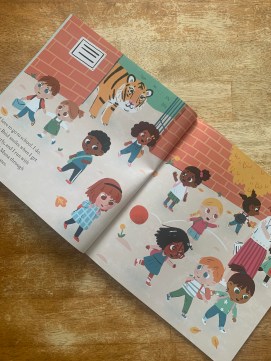
It then transitions to sharing why some days, the little girl doesn’t like school so much.  Days when her voice disappears, Molly laughs at her, or blocks her way to the climbing frame, or takes her cake.

img_6854

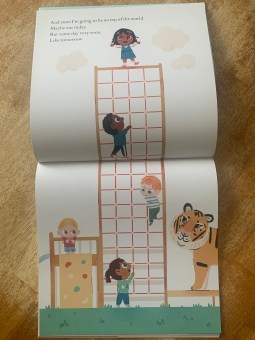
She then reinstates that she likes going to school most day, but not always, and then one day when Molly is mean, the little girl, thinks of the tiger, and knows what to do.  How to find her voice, and stand up to Molly. She then carries through on it, and realizes that soon she can be on top of the world.

img_6855

The messaging is universal and great, and while there is no religion shown, it is great to see a brown protagonist dealing with mental health.  The author is Muslim and I’m sure most everyone knows at least of her from the Great British Bake Off.

img_6856

Spirit of the Cheetah: A Somali Tale by Karen Lynn Williams & Khadra Mohammed illustrated by Julia Cairns

Standard
Spirit of the Cheetah: A Somali Tale by Karen Lynn Williams & Khadra Mohammed illustrated by Julia Cairns

cheetah

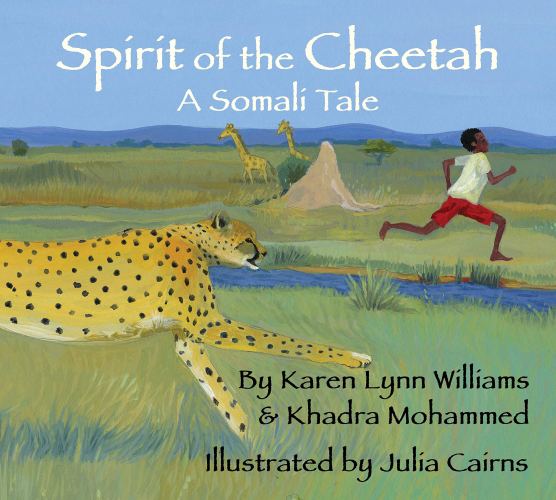
This timeless 40 page tale of a young boy as he prepares for his right of passage into adulthood is rich with wisdom, culture, and tradition.  So many gentle lessons can be found in the book, as it leaves deeper understanding and connection to be felt and explored long after the book has been closed and returned to the shelf.  There are seemingly hijab wearing #muslimsintheillustrations, and the author’s name would suggest she is also a Muslim, but with the line, “Called on the spirit of Shabelle,” and talk of the “Spirit of the cheetah,” it is hard to know for sure if the main character is.

The story starts with Roblay running everywhere in preparation for an upcoming race where he hopes to place in the top three, and prove he is a man and no longer a boy.  On the day of the race he races his fastest, but he does not come out at the top.

img_6579

His grandfather, his Awoowo, tells him that to be successful he needs to capture the spirit of their people and leave his thumbprint on a cheetah’s coat.  His grandfather then tells him about the cheetahs long ago and how the river is named after them.  He explains that thumbprints on a cheetah’s fur honor those that have proven themselves.

Roblay trains and searches for many days.  He wonders if it is enough to mark a cub.  But his grandfather asks him if he wants to remain a cub.  This motivates Roblay to work harder.  When a year has passed and the race is about to take place again, he finally touches his cheetah.

img_6580

He lines up for the race strong, proud and sleek, and he has the chance again to prove he is a man and make his family proud.  Nope, not going to tell you how it ends.

img_6583-2

The book starts with an Author’s notes from both authors and concludes with Notes on the Cheetah.

Jamal the Giant and the Largest Lesson by Mariam Hakim illustrated by Nesba Yoosef

Standard
Jamal the Giant and the Largest Lesson by Mariam Hakim illustrated by Nesba Yoosef

jamal

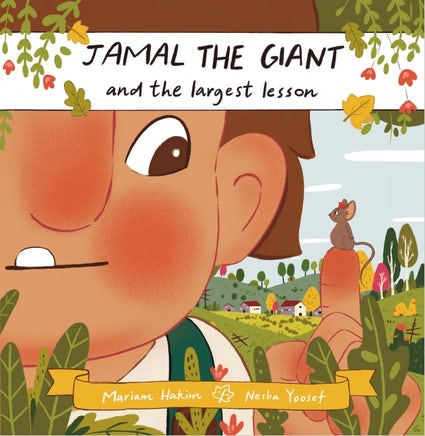
My initial thoughts of this 32 page Islamic fiction, fable-style book, is that it needed to be tested on children, lots and lots of children.  It should have been read aloud to catch all the grammar, syntax, and diction errors, and young readers and listeners should have been asked what they learned or understood from the story, BEFORE, being published.  The message is sweet, the illustrations cute, but it feels unrefined and reads underdeveloped: pictures and concepts are not enough to carry a book if the writing is poor.

I have looked forward to obtaining the book since its launch, so as soon as it was available from a US stockist (@crescentmoonstore), I didn’t even hesitate to purchase it.  I knew the book was available for free online as a read aloud on YouTube, but because I truly love supporting Muslim authors and publishers, I wanted to wait until I had a physical copy in my hand.  These opinions are my own, all my reviews are.  I mean no malicious will to anyone, I’ve spent my money on something, and once I’ve done so, I am completely justified to have an opinion.  You don’t have to like it, or agree with it, but it isn’t personal.  I’ve given reasonings for my opinions, and I stand by them.

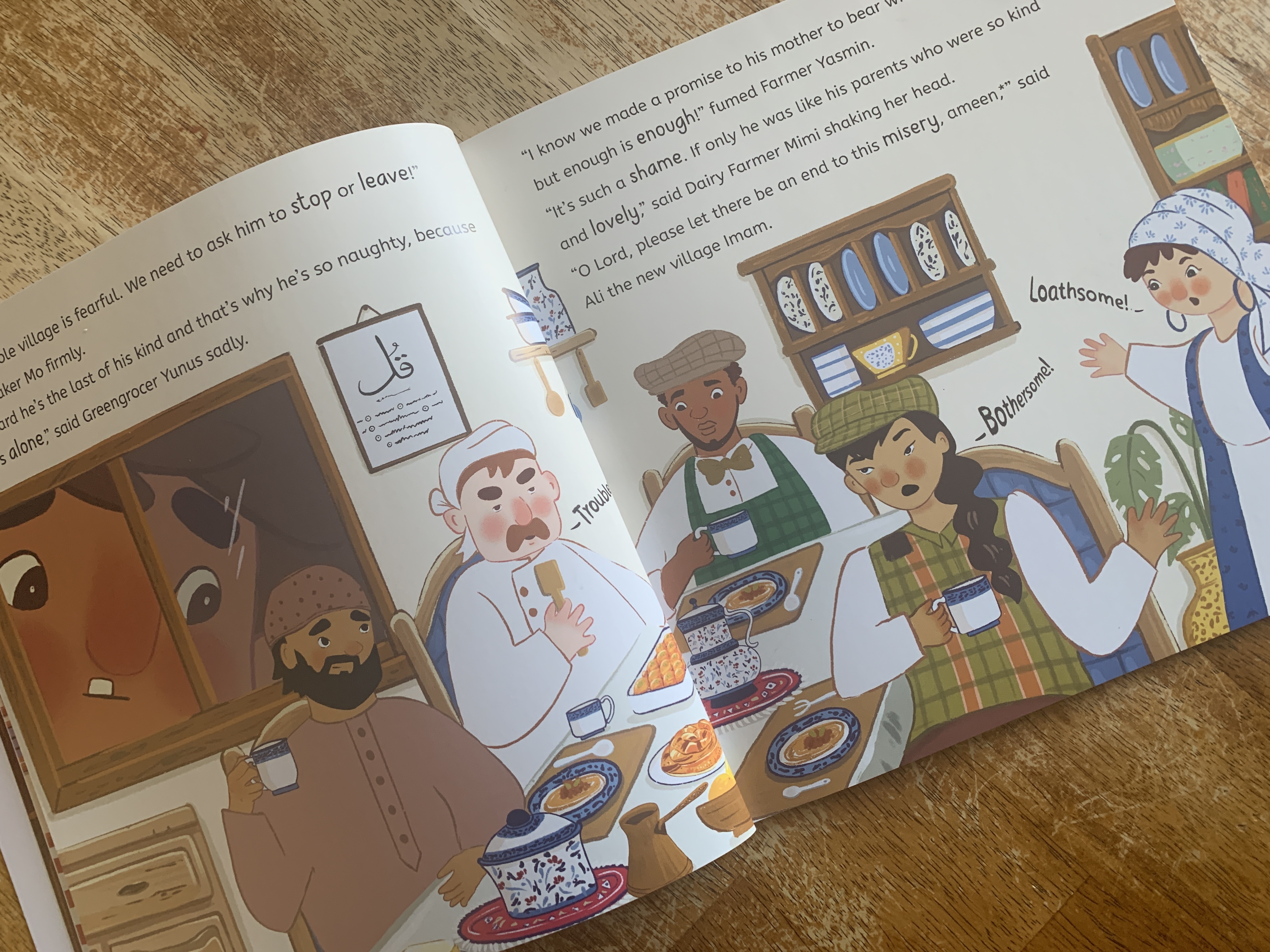
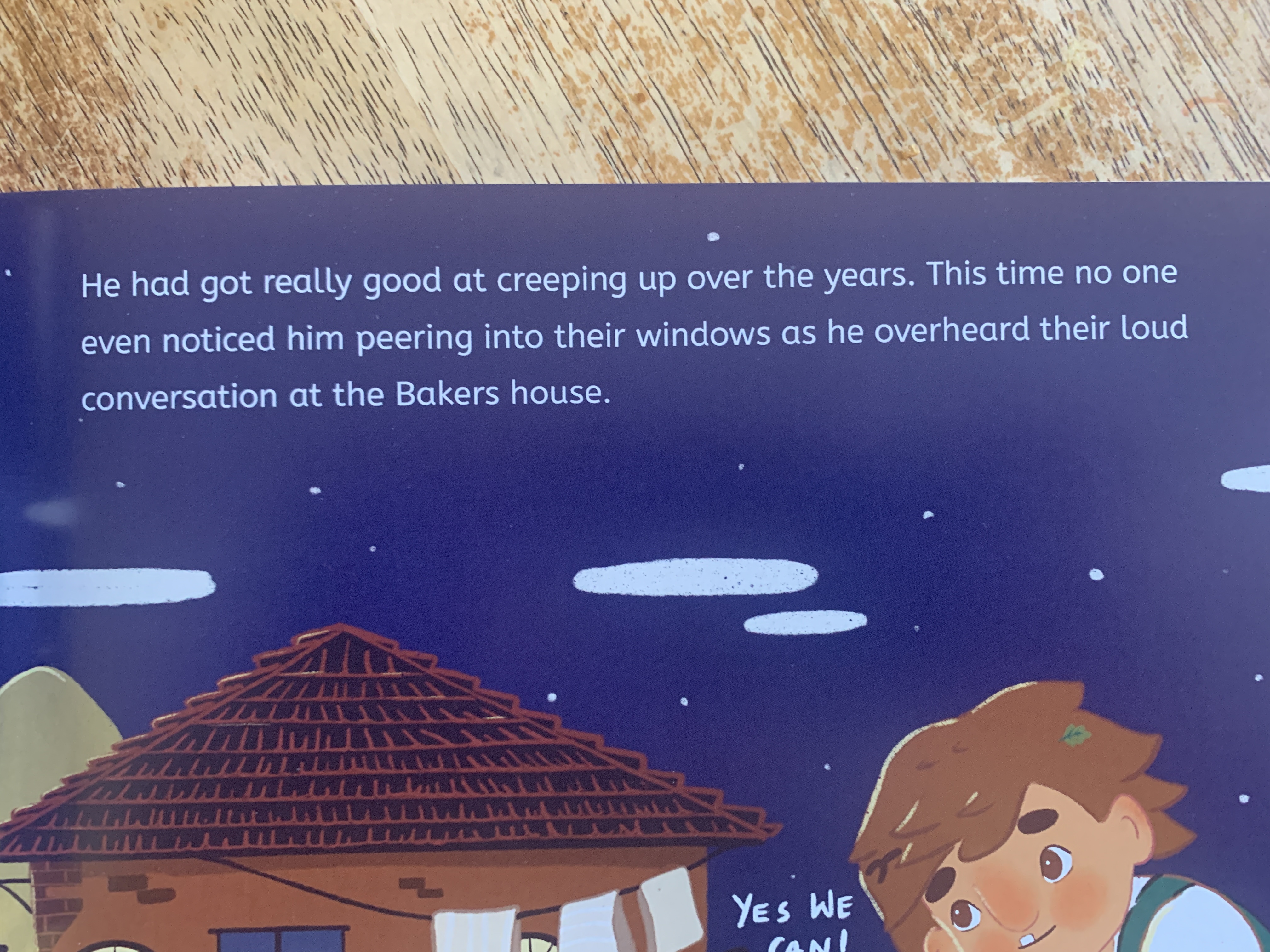
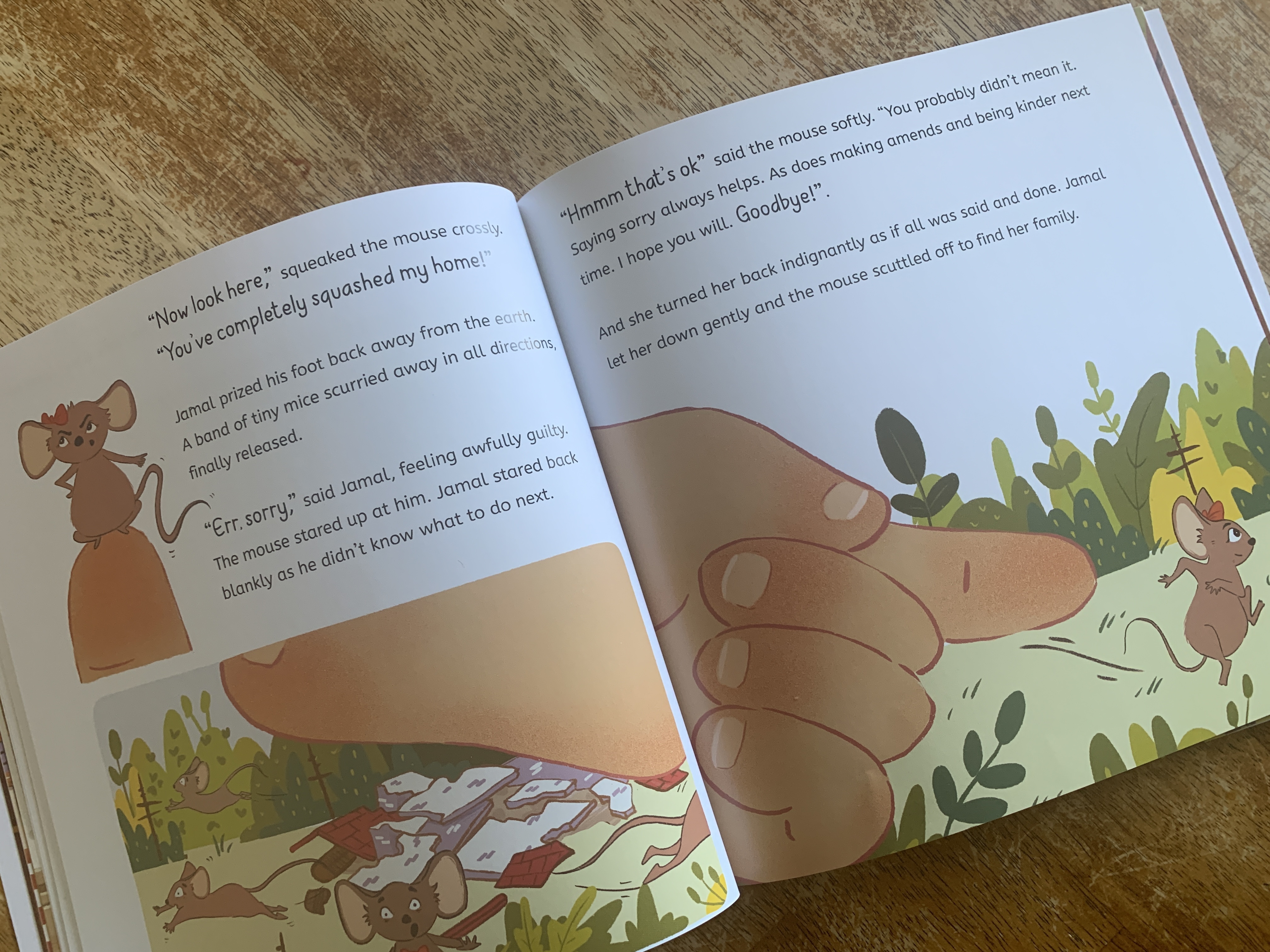
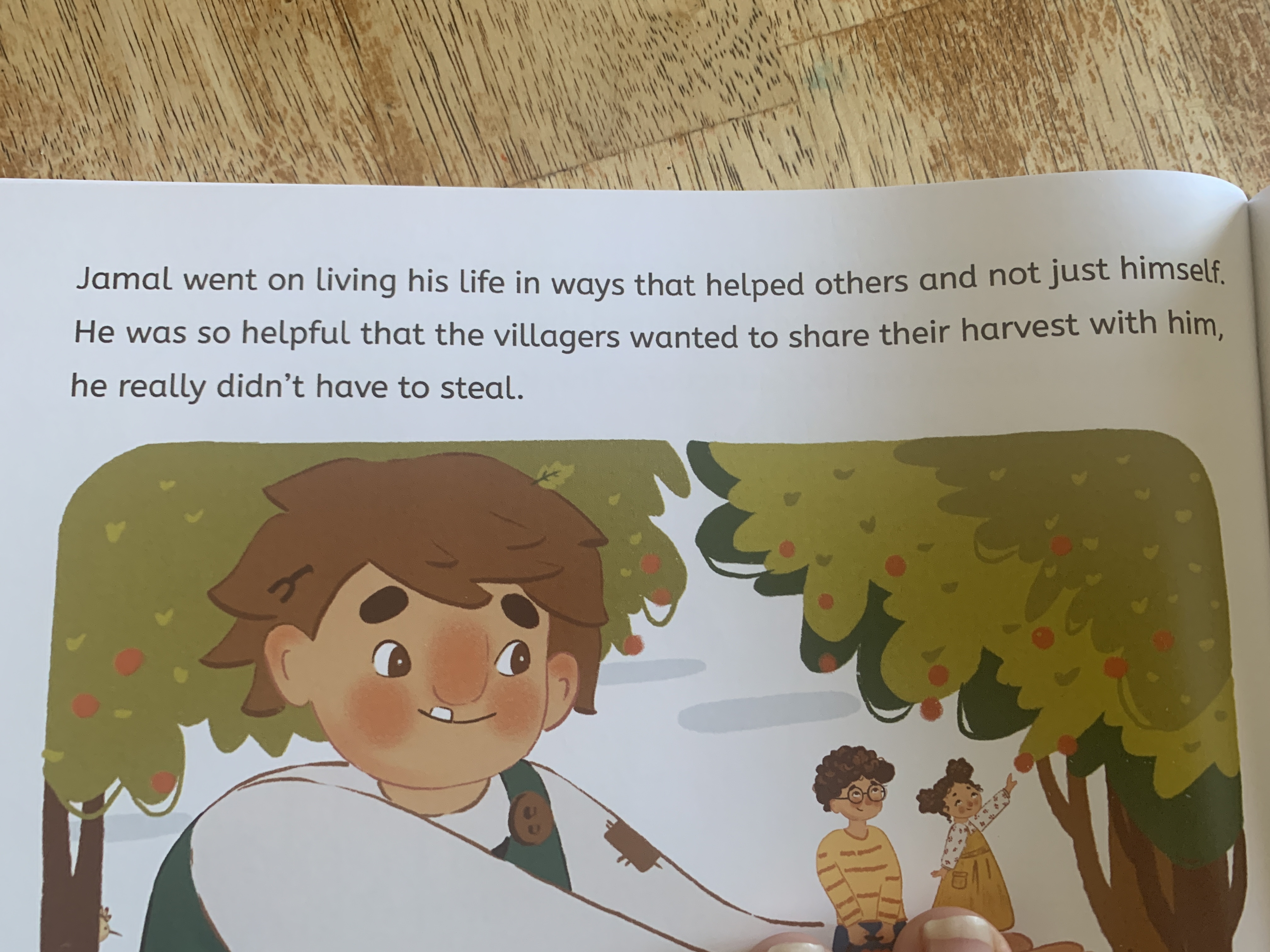
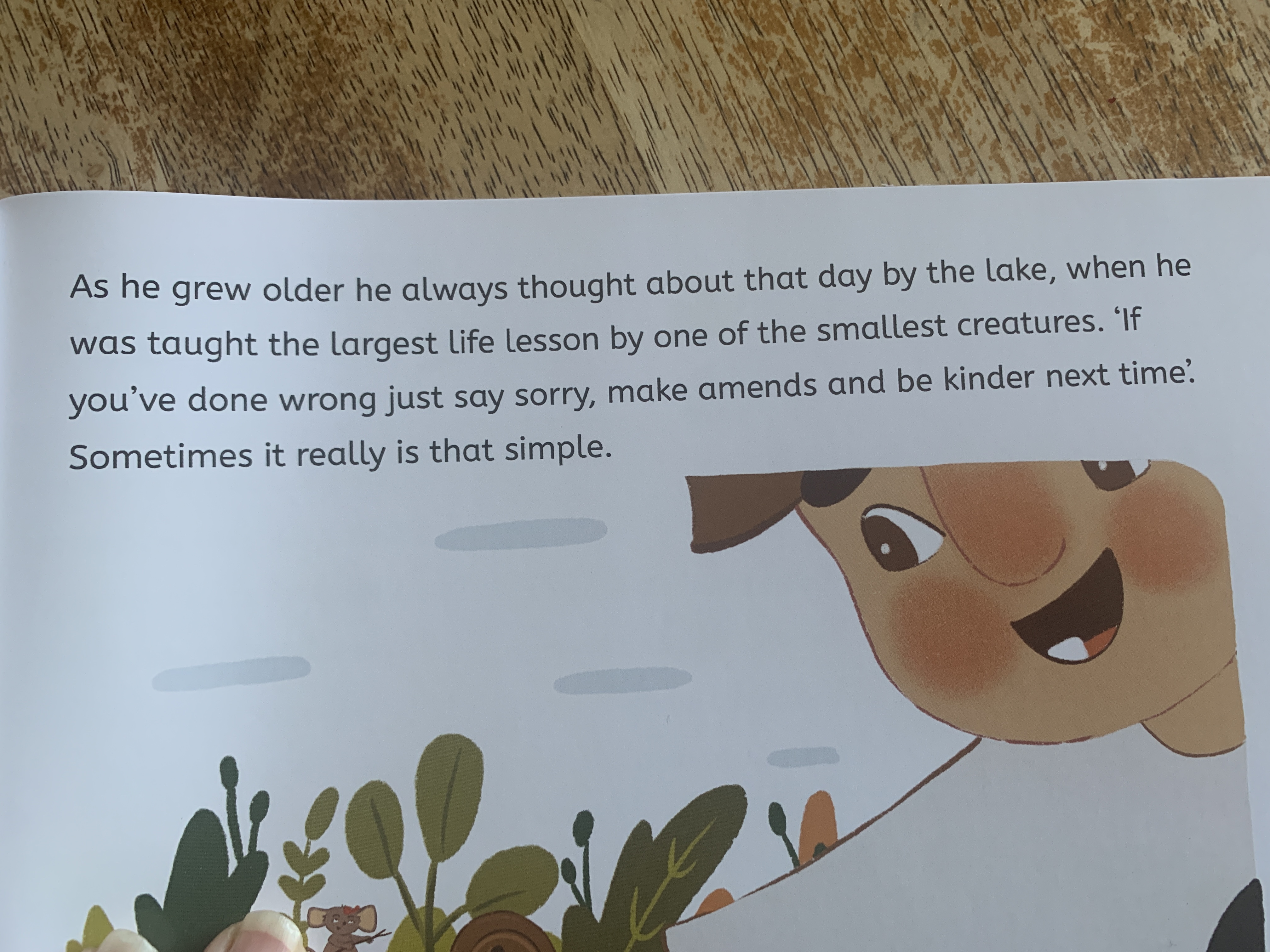
Jamal the Giant isn’t necessarily mean, but he is careless, young, and selfish.  He scares the animals in the woods, destroys their homes, ruins farmers’ crops, and steals from the village.  One night, he wants to steal some juice and in the process overhears the community members discussing how different he is from his kind parents, and that he must be forced to leave.  He tries to mend his ways before he is driven from his home, but to no avail.  Unsure how to fix things, it is the advice of a tiny mouse that sets his reform in motion and conveys the message from the Quran, surah 11 ayat 114, “Good deeds cancel out bad deeds.  This is a reminder for the mindful.” He learns he must apologize, make amends and be kind.

The message is accurate, but I have some concerns at how it is conveyed.  Why was the responsibility on the giant to learn how to behave.  Yes if he knew better, he should do better, but it is made clear that he is the last of his kind and his parents died when he was really young.  If the villagers aren’t going to try and teach him, who is?  It isn’t necessarily victim blaming, but if you don’t know better, and have no one to teach you, you definitely are a victim of neglect in some ways.  To have them going from enabling him out of a promise to his parents to threatening to kick him out from his home, is a little abrupt.

Story-wise there are some points that gave me pause.  Why is there an owl flying off in the daytime, sure there are some diurnal owls, but most kids are taught owls are nocturnal, why not change it to a woodland bird that is active in the day, don’t confuse kids.  It doesn’t specify a timeframe that the story takes place in, but it feels like a fable with talking animals a giant and a clear message.  There is a baker, a farmer, an imam, a greengrocery, it is all very quaint, but then the imam is holding a cell-phone, wait what? I do appreciate that the farmer is female though, and that some of the women cover and some do not, it seems representative.

I’m curious who taught the giant to read, and how come he writes his “s” backwards, there seems to be a bit of disjointedness to the upbringing of the giant, his age, even in giant terms.  A lot it seems the author assumes the reader knows about giants or their stereotypes perhaps, because the book doesn’t address them, and the result isn’t a fun moral story, but one that seems to miss things.

The little mouse teaching the big giant, carries some Lion and the Mouse-Aesop fable vibes, but really it is the proof-reading of the book that is disappointing.  When you read it aloud, commas are abundantly missing (even in the online reading pauses are placed where commas are not written).  Why is the B in Baker capitalized, and if it is the Baker’s house, as in last name is Baker, then an apostrophe is missing.  Many of the lines are just awkward and halting, even if not particularly erroneous.  The diction is questionable at times, Jamal “always” thinks about that day at the lake, woah, doesn’t reflect on it, but it haunts him “always.”  Jamal “‘really’ didn’t have to steal,” seems to imply he was justified in stealing a little, this should be a black and white issue in a children’s book, no?

There are questions at the end of the book, and a whole page of information about the author and illustrator as well.  In a case like this I don’t know if the publisher didn’t do justice to the author’s work, or if the author should have refined it more, before coming to the publisher, but it is unfortunate because clearly a lot of effort went in to the illustrations and promoting of the book.

What if Dinosaurs Were Muslims? by Rabia Bashir illustrated by Laila Ramadhani

Standard
What if Dinosaurs Were Muslims? by Rabia Bashir illustrated by Laila Ramadhani

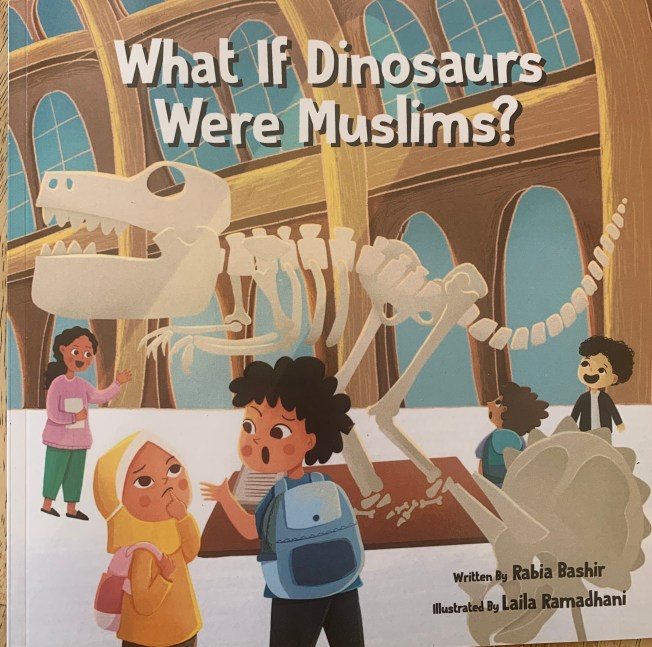
This rhyming Islamic tale wonders what dinosaurs would do if they were Muslim and alive today.  For littlest Muslim readers this repetitive tale ponders how they would eat, pray, love their mothers, respect their neighbors, dream, and feel, by tying all those things back to how Muslims behave.  The adorable illustrations kept my 6 year old glued to the story and the simple text held my 2 year old’s attention.  A fun book with wonderful supplements at the end to engage children in activities that everyone does compared to those that just Muslims do, a Fun Fact about (Muslim) dinosaurs and mums in Islam.  As well as extra activities, valuable information, and details about donations made with the purchase of this book.

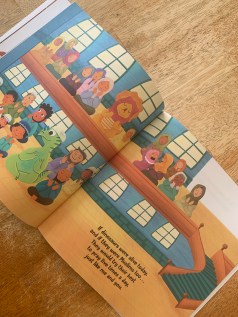
The book takes place in London and imagines if dinosaurs were alive and if they were Muslim what day-to-day life would be like.  The refrain starts out “If dinosaurs were alive today and if they were Muslims too,” before stating what they would do and having it conclude with “just like me and you.”

In a similar vein as the ever popular How do Dinosaurs series by Jane Yolen, the book teaches kids how to behave by teaching the dinosaurs.  The book is short, and the humor comes from the illustrations, primarily the facial expressions of the parents, more than from the text, but I think the wildness of Dinosaurs living today will get most little kids smiling.

The only real concern I have with the book is the text when they are in the masjid praying and it reads, “they would try their best to pray five times a day.”  I know we don’t demand our littlest ones to pray all five salat, but I don’t know if it would imply that trying to pray is sufficient even when you are older.
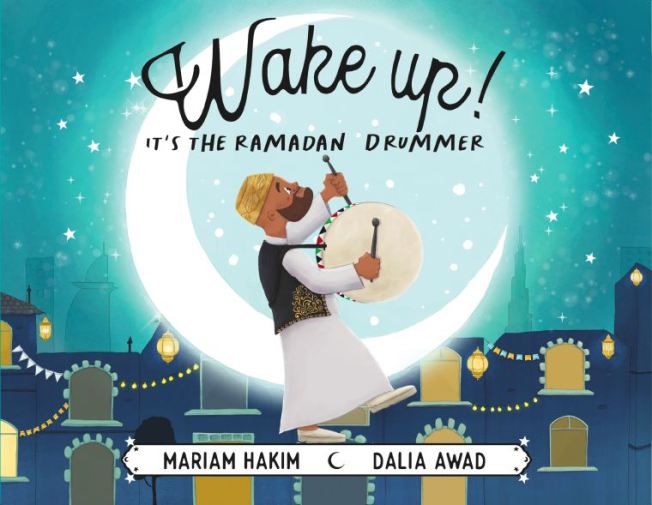
From start to finish I found myself smiling while reading this book aloud to my kids, even after the fourth time in a row, alhumdulillah.
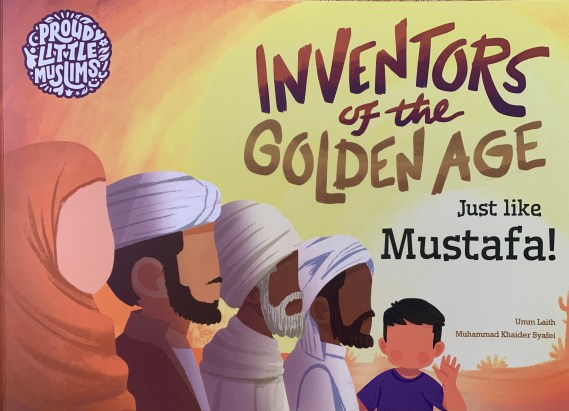
Inventors of the Golden Age (Just like) by Umm Laith and Muhammad Khaider Syafei (Proud Little Muslims)

Standard
Inventors of the Golden Age (Just like) by Umm Laith and Muhammad Khaider Syafei (Proud Little Muslims)

img_6450

Usually when you purchase a personalized book, the charm is that you get to see a name of your choosing in the story, and that you can make the main character look a certain way.  So imagine my surprise when this book arrived, and yeah sure my son’s name and likeness was included, but the story and information contained was also really well done and engaging.  This book, even without the personalization, is a solid story highlighting Fatima al-Fihri, Abbas ibn Firnas, al-Zahrawi, al-Idrisi, and their skills of generosity, persistence, kindness, and adventure as they shaped the world as we know it.

img_6418

The fourth wall is broken as the book speaks to the reader encouraging them to come on an adventure in to the Golden Age.  A time when scientists, engineers, explorers, doctors, and astronomers were making remarkable advancements.

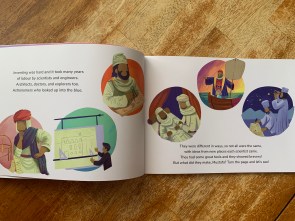
The first stop is Morocco to learn about Fatima al-Fihri and how she established the first university.  Her generosity in building and creating a place of Islam and learning is what set her apart and made her so remarkable.  It is then on to Abbas ibn-Firnas in Spain and his attempts at flying.  He failed often, but his mistakes helped him as he persisted and continued to learn and understand and make flight of humans possible.

img_6419

Al-Zahrawi, the surgeon, is who is detailed next, as his knowledge, skill, and inventions he made are still used today.  His regard for his patients fear and nerves and his kindness is what the book stresses before moving on to the mapmaker al-Idrisi.  Al-Idrisi was adventurous as he traveled the world making his maps and switching the poles.

img_6420

The book then focuses on the reader encouraging them to be generous and adventurous, kind and persistent, in making the future better like those mentioned from the past.

The book is horizontal, the pages thick, the faceless illustrations warm and detailed and the rhyming text flowing and appropriate for preschool aged children and up.

img_6421

Birmingham Boy by Kate Rafiq

Standard
Birmingham Boy by Kate Rafiq

birminghamboy

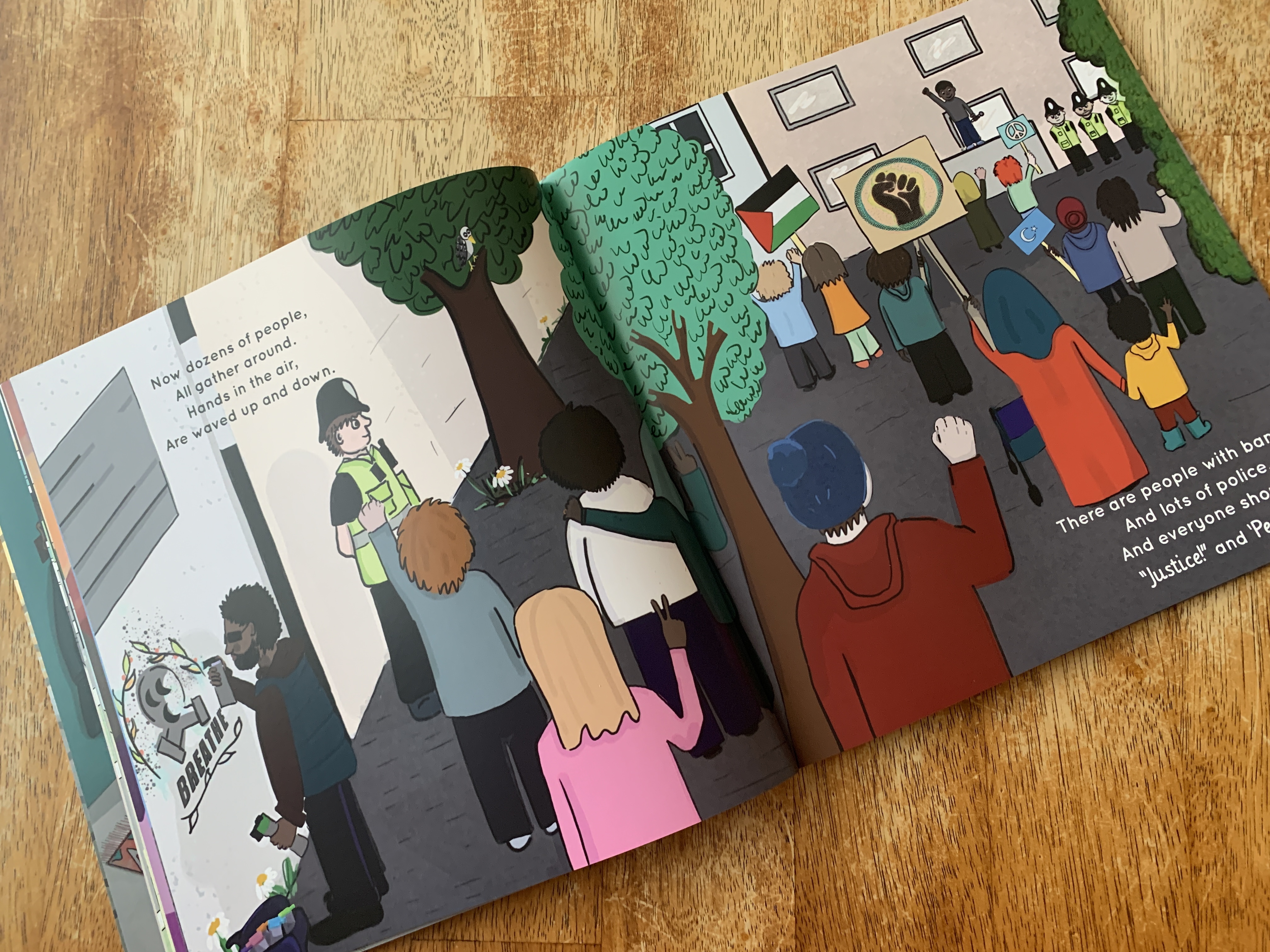
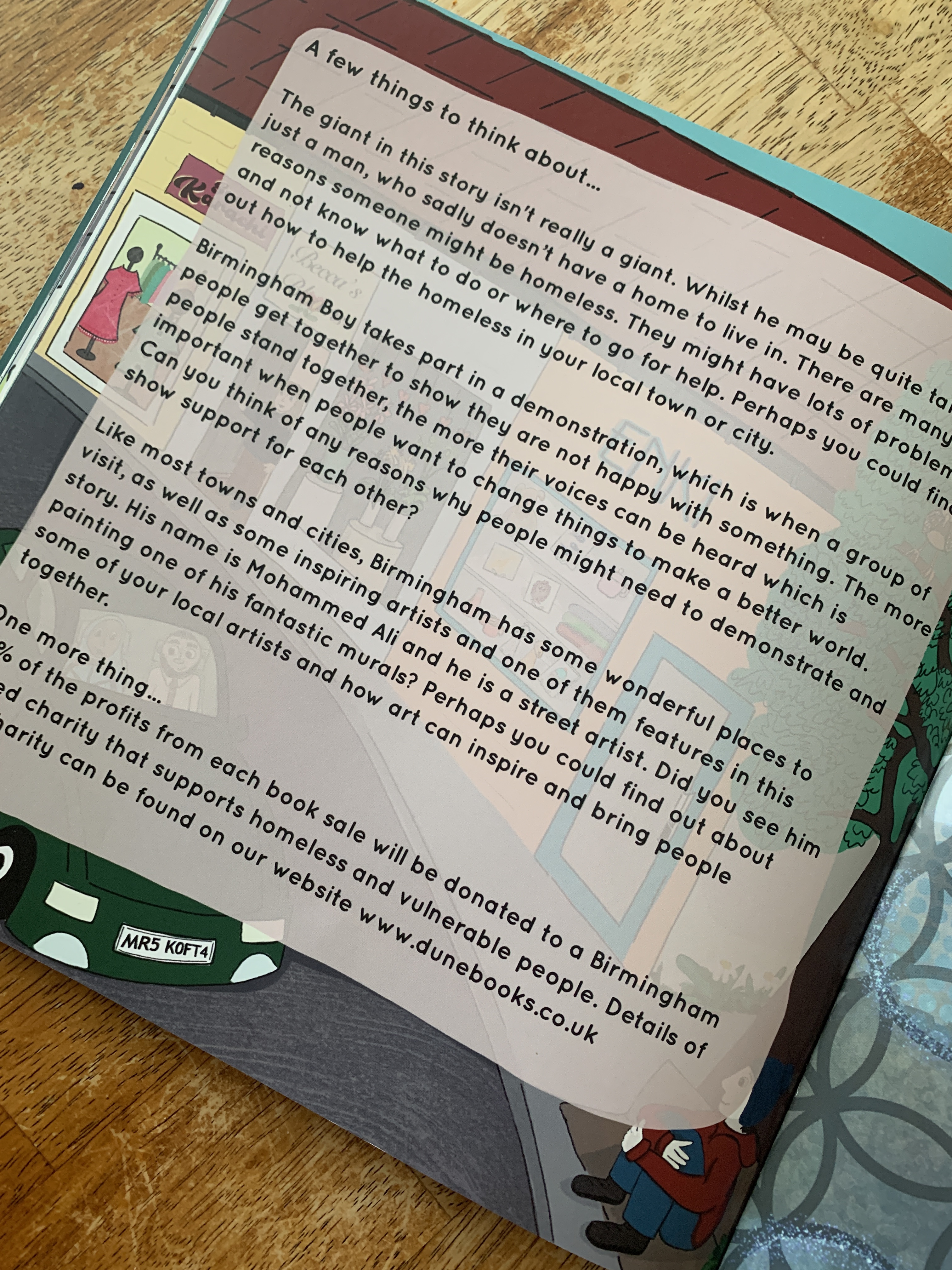
This 36 page ‘day-in-the-life-of’ book, follows a young boy and his mom on a day out and about in his city of Birmingham, England. Told in rhyme a few Urdu words are sprinkled in as general city observations are made, fun is had, and kindness is shown. The book touches on homelessness and protests, and the illustrations take the story deeper and show support for Black Lives Matter and Palestine, multiple hijab wearing women (#muslimsintheillustrations) throughout the city (including a burkini swimming mama), storefront signs acknowledging a diverse community, street artists, and different races, religions, and cultures everywhere.

img_6412

The book starts off with Birmingham Boy waking up, based on the Arabic signage in his room, I’d guess his name is Zakariya, everything is quiet and still- except for a giant that he sees outside his window.   He refers to the homeless man throughout the story as a giant, it doesn’t seem to be a negative description, nor is the boy scared, he shares food with him at one point, it is just what he refers to him as. 

img_6413

He then heads downstairs for breakfast of toast and dudhu (milk), before getting in a pram and heading out in the town.  They go past the deli and the flower show, and the giant on his cardboard mat.  They see someone getting their hair cut at the barbershop and they arrive at the swimming pool.

img_6414

The mom and son swim and play and Birmingham boy takes a nap in his stroller as his mom and he head off to their next location.  He wakes up to the sounds of the masjid and sees his mom praying.  He plays and then joins her in salat.

img_6415

After the masjid it is off to a cafe for cakes and tea, which they share with the giant, before they head off to a rally for justice and peace.  The book carries on in this sweet style of visiting places and interacting with the community until ending with a bath and dinner and getting tucked in to bed for the night.

img_6416

Being American and living in Birmingham, Alabama, my kids and I also learned about the sights of a different Birmingham and they got to learn some British words such as pram and wellies.  I loved the inclusion of Islam in their daily life and the joyful illustrations.

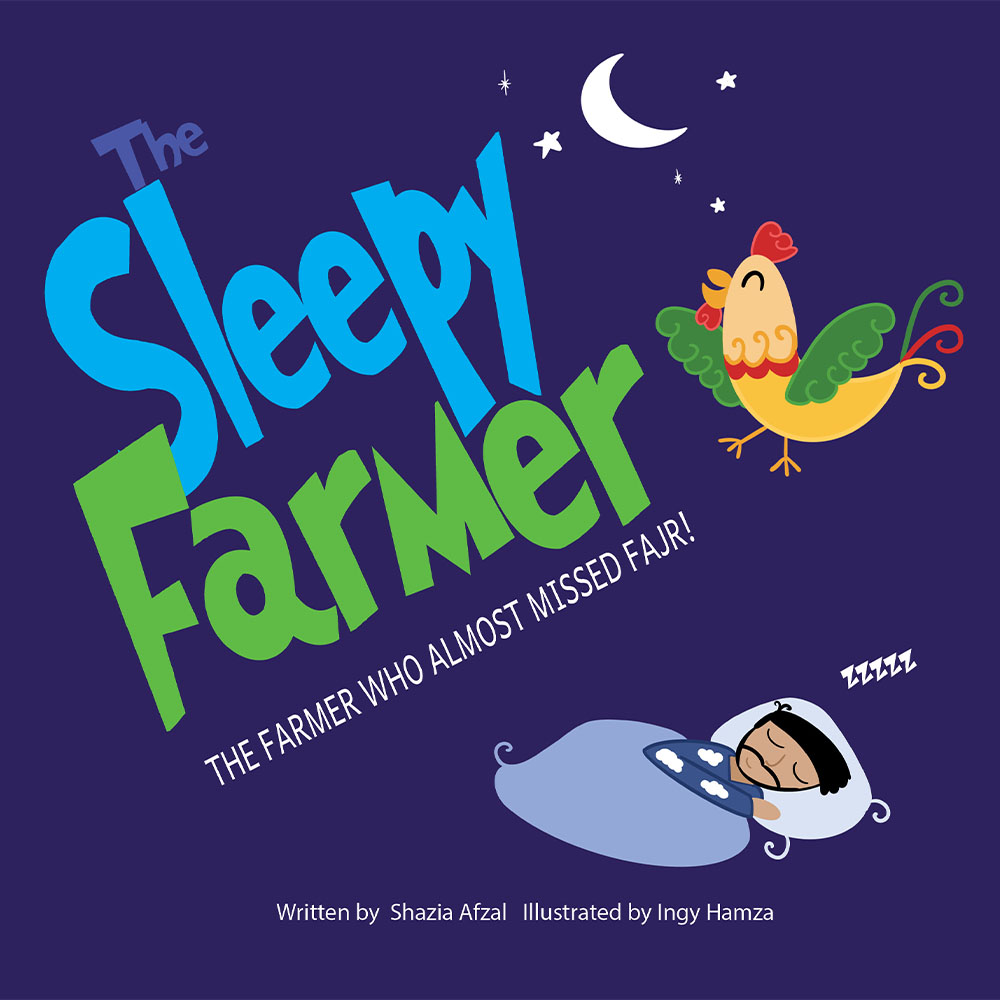
The Sleepy Farmer: The Farmer Who Almost Missed Fajr by Shazia Afzal illustrated by Ingy Hamza

Standard
The Sleepy Farmer: The Farmer Who Almost Missed Fajr by Shazia Afzal illustrated by Ingy Hamza

The Sleepy Farmer_

This adorable board book combines animal sounds, team work, appreciation, and getting to the masjid on time for fajr.  Oh ya, and it is silly too.

img_5554

Farmer Salman stayed up late and doesn’t wake up in the morning when the rooster crows. The crowing wakes the hen who starts to cluck, the clucking wakes the horse who starts to neigh…and before you know it, it awakens the entire farm.

img_5553

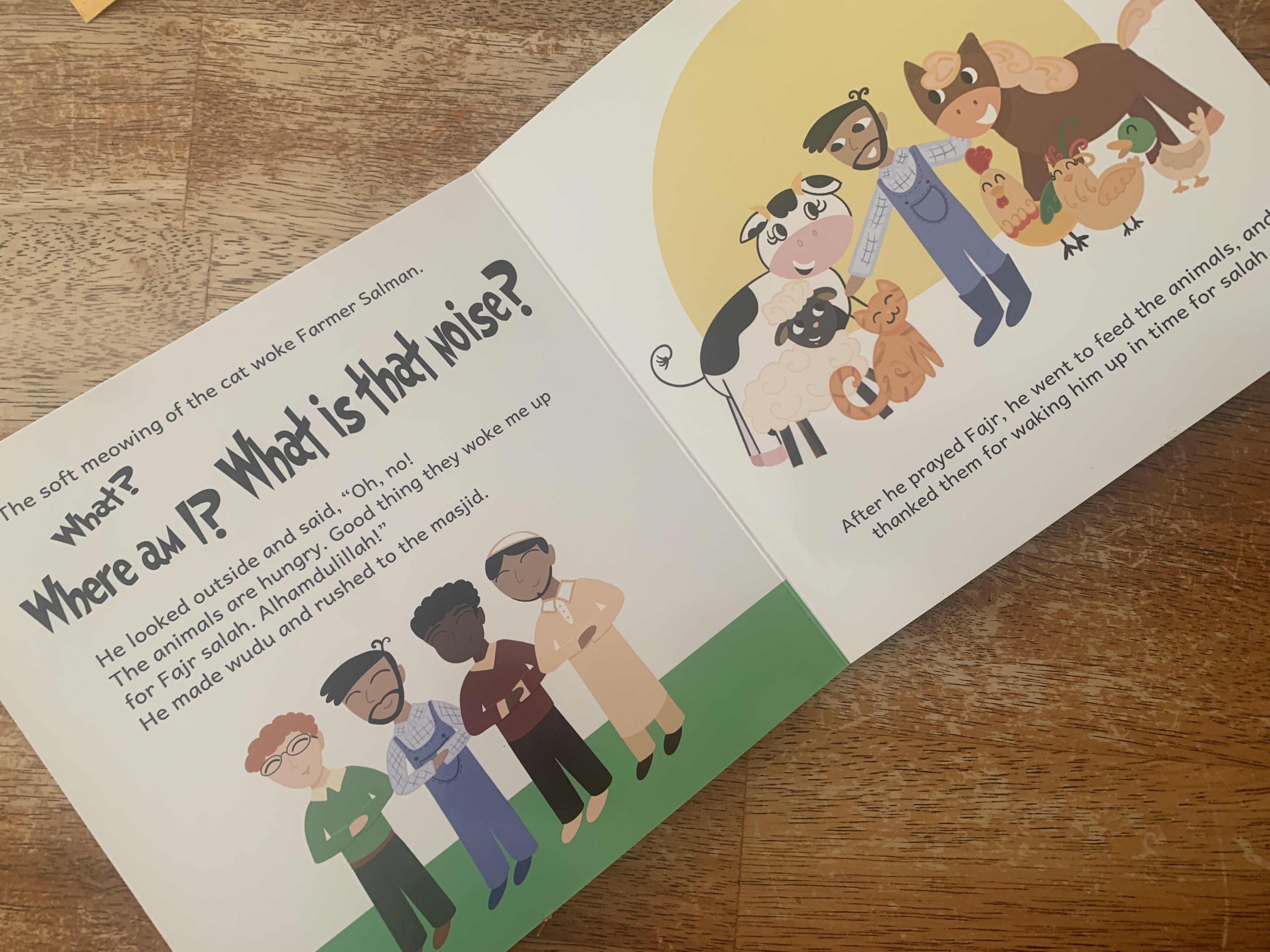
But, Farmer Salman still doesn’t wake up, so the animals get louder, and louder, and finally the cat in the house wakes up and meows in the farmer’s face.  The meowing wakes Salman up and he makes wudu and heads to the masjid, just in time for fajr salat.

img_5555

He returns from the masjid, thanks the animals and gives them their breakfast, alhumdulillah.

The book is only 10 pages and some pages are text heavy.  I think a few more pages to reduce the text on some of the pages would really make an already fun book, incredible.

Nana Asma’u by Aaliyah Tar Mahomed illustrated by Winda Lee

Standard
Nana Asma’u by Aaliyah Tar Mahomed illustrated by Winda Lee

nana asmau

This book may only have 14 pages of text and be meant as an introduction for early preschool aged children and up, but I learned so much, or rather was made aware of so much that I knew nothing about, that I’m now eager to research her and the Sokoto Caliphate and the impact of Jajis.  The beautiful, bright, engaging pictures, the simple deliberate text, and the inspiring content matter make this a great book to share with little ones, and to keep on the shelf for repeated readings and reminders to learn more about this remarkable woman for older children.  My only wish was that there were some reference notes or sources included to give that extra reassurance of authenticity.

img_6076

The book tells about Nana Asma’u’s life starting from being a curious child and asking questions to the wise women in her community.  By the time she grew up she had memorized the Quran and spoke four languages amongst many other things, and Nana loved to write poetry.

img_6077

During this time, there was a lot of conflict in Western Africa, and Nana’s father, Shehu Usman resolved the issues and created the Sokoto Caliphate.  With peace, Nana wanted to help educate the people. She thought long and hard about how to do it.

img_6078

She eventually brought together women from different regions of the Caliphate and taught them through poetry, she then sent the women back to their homes to share what they had learned.  These women were known as Jajis, and this tradition still exists today.

img_6079

I didn’t love the phrasing that she had learned all about Islam, seeing as one can always learn more.  And I would have like Prophet to have been capitalized and salawat given for respect.  Overall, a great book that alhumdulillah I was able to purchase from Crescent Moon Store.

Pizza in his Pocket: Learning to be Thankful to Allah by Jawaad Abdul Rahman illustrated by Natalia Scabuso and Johera Mansura

Standard
Pizza in his Pocket: Learning to be Thankful to Allah by Jawaad Abdul Rahman illustrated by Natalia Scabuso and Johera Mansura

pizza in his pocket

I didn’t think the old version was falling short, but I had to have the new one, because well, I’m a mom.  And sometimes songs that have stood the test of time really do translate perfectly to story books that are engaging, memorable, and so fun.  I can’t get through it without singing it, but the new pictures do force me to slow down and look at the maps and the points of interest that have been included.  Ages two and up will love the book, older kids will enjoy the nostalgia, parents will beam at the words getting stuck in everyone’s head and the lessons making their way in to real actions.

img_4980

The new book is slightly different than the original, but more inline with the online videos by Zain Bhikha and his son.  The back of the book has an ayat from surah Al-An’am and reinforces that while the song is fun, the foundation of not wasting and sharing with the poor is an important part of Islam.

A great book to read over-and-over again and one that is universal enough to be shared with Muslim and non Muslim children alike.

Room for Everyone by Naaz Khan illustrated by Merce’ Lopez

Standard
Room for Everyone by Naaz Khan illustrated by Merce’ Lopez

room for everyone

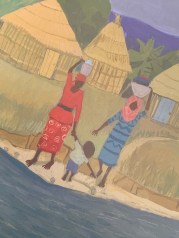
I started to read this book to myself, abruptly stopped, gathered my children around, and began again aloud.  This 40 page early elementary picture book isn’t just counting up and down with silly scenarios and outrageous details, it is familiarity with a culture often not represented with universal humor, appeal, and anticipation. This rhyming book begs to be shared: one-on-one, at story time, or in a classroom.  There is so much joy and connection that I’m ready to felt-board the story, march into my kid’s school and demand an audience.  I found mine at the library, but I think I am going to order it because it definitely deserves a place on the bookshelf to be read again and again.

Musa and Dada get in a daladala and are off to the crystal blue waters of Zanzibar.  But it is hotter than peppers out and the kind driver is offering everyone a ride.  First is the old man with his seatless bike, then it is two little goats and their herder, next is vendors with their three baskets of fruits.  Each time Musa cries and protests that there is not room for anyone else, let alone their stuff.  Yet when everyone wiggles and scoots and smooshes, there seems to be room for everyone.  This continues until there are ten scuba divers joining the smelly fish and stinky chickens, umbrellas and milk pails.

Alhumdulillah, they reach the beach.  Then one by one they all get out at Nungwi beach.  Giggles and wiggles and Musa and Dada are off the minibus and swimming in the cool waters. Alhumdulillah indeed.  The book concludes with a glossary and an author’s note.

“Find me on Twinkl’s list of best children’s books of 2021!”