Category Archives: romance

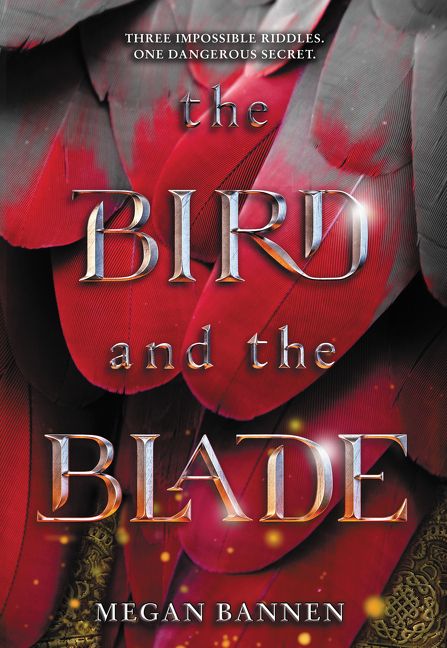
The Bird and the Blade by Megan Bannen

Standard
The Bird and the Blade by Megan Bannen

bird

I didn’t know what to expect as I opened this 416 page book: it was recommended to me, my library had it, and I wanted a break from reading on a screen, so I dived in.  The map, the character list, and the setting of 13th century Mongol empire had me bracing for a complex read. I gave myself a goal of a few chapters to see if I could connect, but by page 20 I was completely absorbed and not to be disturbed.  The character driven plot is written in a rather contemporary manner, although the setting is historical fiction (with a lot of noted liberties) it reads really quickly and easily.  It is definitely 16 and up, romantic YA and has triggers of suicide, murder, drowning, death, war, abuse, misogyny.  While reading it, there often felt like there were holes in the plot as the story builds on itself in quiet layers- the story is fairly linear just broken up and rearranged in time, but the informatio

n shared is gently teased out, and nearly every hole filled by the final page.  I think if someone told me about the book in detail, I would not have read it.  There are many things that I feel like I shouldn’t like about it, but truth be told, I enjoyed the story.  The tokenish Islam found a way to convince me it was done intentionally, the (few) main characters present held my intention at all times, the backmatter detailing the research and liberties just all combined masterfully, that I feel compelled to share the story on my platforms even though the Islamic rep is only slightly more that the YA equivalent of a #muslimsintheillustrations tag.

I tried really hard not to include spoilers, so forgive some of the vague sentiments.

SYNOPSIS:

The story without any spoilers is quite simple- a slave girl, Jinghua, is mourning her dead brother and comes across Prince Khalaf, son of Timur, the ruler of the Kipchak Khanate, while working in the family’s service.  Shocked by his kindness, and persona, she falls hopelessly in love with him and when his family is exiled she decides to stay with the prince and the khan rather than flee.  They journey together and their feelings grow.  To save his family’s rule, however, Prince Khalaf decides to attempt to wed the daughter of the the Great Khan.  Princess Turandokht is exceptionally beautiful, wise, and powerful.  She refuses to wed and has set up a test for any prince wishing to try and marry her.  She has three riddles, each one to be answered in seven minutes, anyone who answers wrong is immediately put to death.  Numerous suitors have been killed.  When Khalaf sneaks off in the night to test his wits, the story of how how intertwined Jinghua and Khalaf’s stories are comes to light before the final riddle is answered.

WHY I LIKE IT:

It is not OWN voice, it is researched and based on a tale from The Thousand and One Days, but having very little to no knowledge of Mongol history (I’ve read the book Ghenghis Khan and the Making of the Modern World years ago, but that is about it), and have never seen or read the opera, poetry, or stories that this tale has presented as, I have nothing to compare it to. The book does not need knowledge of the story or time frame to make sense, but the backmatter is well done and makes the process of the story more fulfilling.

For the majority of the book, Islam and the khan and prince being Muslim is just a label occasionally remarked upon when the khan praises the Eternal Blue Sky, instead of Allah swt, and that is about all.  In fact Allah swt I don’t think is ever mentioned in the book.  Based on the information in the back about Mongol’s and a few dialogues in the book it seems that many practices were a hodgepodge of many faiths and traditions, especially by leaders to unite their subjects.  A few ayats from the Quran are mentioned as are some hadiths loosely, which are sourced at the end.  Khalaf gets drunk, and acknowledges that it is haram, and sleeps next to Jinghua for warmth which he also notes is haram.  It mentions a few times that he prays.  There is a weird emphasis on his turban, but it could be culturally Muslim (?), so I let it slide.

The first person voice really sets a good pace for the story, and all of its twists and turns, but does make the love, crush, infatuation theme seem very naïve in the beginning, with more telling than showing.  I think it is accurate for Jinghua, but does require the reader to just accept it and keep reading.  It seems at times she is also rather helpless and so desperate to be seen that the stereotype is a bit cringe, particularly at the end.  I get that appearance and women’s worth is tied to the time and setting, but it still doesn’t completely absolve how triggering the main character’s portrayal can be.

Jinghua’s religious beliefs of the Song Dynasty made me understand the offerings made to her ancestors and the ghost of her slain brother to be religious in context, not literary fantasy.  Many places have labeled this a fantasy romance book, but I don’t know that the world building was fantasy as much as it was historical reimagining.  Either way, there are ancestral ghosts that the main character dreams about and often sees, the epilogue pushes this element, but in my mind still adheres to the same point of ghosts and ancestors being a religious thread.

A found the fear of water story detail a little forced as she was not scared of water when washing out the bloody clothing in the river alone, but then was terrified to stand near a river.  Perhaps a minor detail, but one that I noticed none the less.

My favorite character is the the cantankerous old goat, I’m not going to say much about him other than if at first you hate him, stick around, he might win you over.

FLAGS:

There are multiple suicides and it is glorified, seen as a mercy, and shown as an act of desperation.  There is cruelty and classism along with misogyny and reducing a woman to her appearance.  There is talk of penises and them being seen when urinating, as well as one scene of an erection being felt.  There is killing, war, battle. murder, death, that is fairly detailed.  There is language and crudeness.  There is talk of rape, and affairs, and fornicating.  There are a few kisses, one while a character is drunk, one forced upon a nonconsenting woman. Jinghua disguises herself as a boy. There are theological concepts present and ghosts.  Alcohol and wine are consumed. Nothing is over the top or overly stressed to the point of being obnoxious, but it is present and older YA readers can probably handle it.

TOOLS FOR LEADING THE DISCUSSION:

I would love to discuss with readers, but not my students, I don’t think it would work for an Islamic school book club selection.  The “Muslim” character gets drunk, kisses two different women, has an alter to honor the dead, places offerings of wine.

Love from Mecca to Medina by S.K. Ali

Standard
Love from Mecca to Medina by S.K. Ali

mecca to medina

This book is a game changer, or better yet: an industry changer.  It is about Muslims, for Muslims, by a Muslim- but it is MAINSTREAM and a huge panoramic window for anyone and everyone to see a “halal” fictional Muslim love story in action.  With every page proudly mirroring various Muslim experiences this sequel-ish standalone-ish book is unapologetically real, without compromising good storytelling, interesting characters, and engaging plot points.  In much the same way Reem Faruqi’s Golden Girl raised the bar for upper MG/lower YA, this book shows that upper YA Muslamic stories can be told.  That the publishing world isn’t always limiting OWN voices, and that it is up to us, the consumers, to purchase these particular books, pre-order them when announced and spread the word so that the message is loud and clear that we want more books like this.  I have no doubt S.K. Ali had to fight for her vision and advocate for her book at every turn, but now that it is here, we need to step up and show support with our purchasing power.  I’ve pre-ordered mine, and I hope you will do the same before the book releases on October 18, 2022, if you cannot, please purchase it when you can, and if that is not an option please request your libraries to shelve the book (and all of her books) and put them on hold so that the gate further opens for mainstream Islamic fiction.

Preorder link on Amazon

SYNOPSIS:

Adam and Zayneb are back after falling in love in Love from A to Z and getting their nikkah done.  They aren’t living together yet, though, and they are worlds apart with Adam jobless in Doha, and Zayneb homeless in Chicago.  When communication breaks down, exes show up, and a trip to Umrah is underway with the couple divided into gender segregated groups, the couple might fall apart in the same fashion that brought them together in the first place.  The steps of Umrah are beautifully highlighted and experienced, and characters from Misfits and A-Z come back to tie it all together and help the couple, keeping hope alive.  Throw in some marvels and oddities, artifacts and interpretive labels, a unifying cat, and a whole lot of love, and you have a sweet conclusion to a Muslamic love story.

WHY I LIKE IT:

So, I obviously love the standard of unapologetic Islam that this book offers on every page while still being accessible to the larger audience.  It took a little bit for me to be sucked in to the 352 page story, but by page 100 or so, I couldn’t put it down.  The steps of Umrah brought tears to my eyes and the awesome Sausun is fierce feminist friendship goals.  I honestly didn’t love the cat narrative that frames the story, but luckily it is sparse so I could see past it. I love that this book exists, I think I love the Misfit based duology a tiny bit more, but loved that this book had crossover characters and gave many of them a final bow of sorts as well. I read the book in two days and will probably re-read it when I receive my physical copy.  It really is remarkable how much Islam is present in a fictionalized story: not a oppressed Muslim story, or biographical memoir, or refugee story, but in a solid fiction story.   There is no “othering,” this is us, and this a love story about a Muslim couple trying to make it work with outside support and stresses, and beautiful writing.  Alhumdulillah, very well done.

FLAGS:

I’d encourage mature, older YA because the characters are married and sexually active and while it isn’t graphic or depicted it is often just the words mentioning them kissing, and sleeping together and sexting.  Nothing titillating or anywhere near inappropriate, but I think a bit of maturity would help it better reflect the values of Islamic marriages and relationships.  There is some minor language and hate speech.

TOOLS FOR LEADING THE DISCUSSION:

I would absolutely use the book for high school book club if it is mostly juniors and seniors.  I think it gives a good look at what a relationship can look like; the characters’ religious lens and lives will resonate with Islamic school students.

Hungry Hearts: 13 Tales of Food and Love edited by Elsie Chapman and Caroline Tung Richmond

Standard
Hungry Hearts: 13 Tales of Food and Love edited by Elsie Chapman and Caroline Tung Richmond

hungry hearts

Occasionally I get asked about short story and/or essay from a collection that a college or high school student is hoping to share with a class that doesn’t take long to read, but shows Islamic representation.  And I never have a suggestion.  The middle grade collection Once Upon an Eid is amazing, but for younger readers.  When I learned about this collection that features two known Muslim authors, Karuna Riazi (The Gauntlet series) and S.K. Ali (Saints and Misfits, Love from A to Z), and involves food, I thought to take a look and see if I might finally have a suggestion.  Sadly, no.  None of the 13 stories wowed me, or really impressed.  A few I started then skipped, and none were really memorable.  The premise is unique: all the stories take place in the same neighborhood, feature food, and crossover characters, but some are love stories, others redemption, some have super heroes, others murder and gang violence, some really keep the food central, and others just mention it as being present.  There is familial love, romantic straight, lesbian, and trans love, there is friendship and food from many cultures served up to varying effects.  I admittedly read few short story collections, but even with that taken in to consideration, I think skipping this 353 page YA/Teen book is probably the best option.

SYNOPSIS:

I’ll only summarize the two Muslim authored stories.  A few of the others are culturally Indian, but they eat pork, so I’m assuming they are not Muslim, and the Persian one by Sara Farizan features alcohol and a lesbian romance, so since in a past book of hers I noted that I didn’t know if she or her characters identify as Muslim, I will skip reviewing hers as well.

Hearts a’ la Carte by Karuna Riazi:   Munira works at her families food cart, King of Kuisine and serves up Egyptian food to the people on Hungry Heart Row.  When a guy falls from the sky, she finds her self also falling hard for Hasan, as he regularly starts coming to eat and visit, but when it is revealed that he is a super hero (the Comet) and the reason her families cart is destroyed, Munira is not willing to pursue things further.

A Bountiful Film by S.K. Ali: Hania and her family have recently moved to Hungry Heart Row, where her father grew up and grandma Valimma lives.  Irritated that she had to leave her school, her job at Daily Harvest and friends behind, Hania is hoping to lose herself in putting together her film for the upcoming competition and beating her long time rival Gabrielle Rose.  With no clear idea of what her film should be about she starts with interviewing Valimma and her friends, which turns up a bit of an unsolved mystery involving a missing boy that keeps showing up on the security footage from local businesses.  Hania decides to pursue it, but finds herself being watched, and filmed in the process.

WHY I LIKE IT:

I like that the stories are interconnected, I don’t know that it works, but I like the idea of it.  As for the two Muslim authored stories, I like that Islam and culture are included slightly, but that the story is much more than that, and the characters have more pressing issues to figure out.  I wish in both of these two stories, food was more fleshed out.  They seemed to be lacking the magical food premise that many other stories in the collection had.

img_7244

FLAGS:

See above paragraph for some collection flags.  Riazi’s story has crushes and a budding romance, but nothing overtly “haram.” Ali’s story is clean.

TOOLS FOR LEADING THE DISCUSSION:
I wouldn’t probably even shelve the book in our Islamic school library, it doesn’t offer much in my opinion.

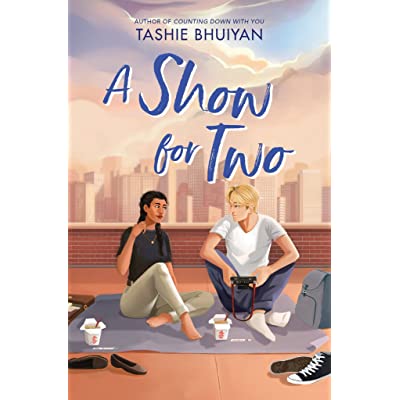
A Show for Two by Tashie Bhuiyan

Standard
A Show for Two by Tashie Bhuiyan

a show for two

I didn’t love the author’s debut novel, but wanted to see what a second novel would offer, and sadly it really is a lot of the same: light funny romcom surface story featuring a Bangladeshi Muslim character lead mixed in with layers of mental health, a toxic family, high school stress, and cultural expectations driving the plot.  There is crude language, hetero, lesbian, bi, and pansexual relationships discussed, but nothing more than kissing is detailed in any of the scenes.  There is a lot of cultural trauma from the parents and to the book’s credit, it does establish pretty early on that the main character is not religious, but that she does believe in Allah swt.  Similarly, there is a Bangladeshi loving family in the story, so it is not making a critique on the entire culture, it is just the character’s family that is cruel.  Ultimately, at 416 pages I was surprised that there were gaps in character arcs and plot.  I never really liked the protagonist, Mina, but because of how underdeveloped and pivotal the best friend and younger sister were, when it all came to a climax, I found myself rooting for her, which is a very shallow reasoning in an OWN voice book. Additionally, the parents are terrible, and had I dnf-ed it (I was tempted until about 30% through it) I doubt I would have ever known that there was a time that they weren’t terrors.  The peeling back of the layers of the family came too late, too slow, and the progression was muddled.  I probably will not actively seek out further books from this author if the same themes and tropes are present, if she changes it up, I probably could be persuaded.  The book is marketed 7th grade and up, but with the triggers, hate, language, content, genre, language, length I would say 17 and up, if at all.

SYNOPSIS:
Samina “Mina” Rahman is waiting to leave New York and her hateful parents, and start her life at USC as a film student.  All she needs to do is win the Golden Ivy Film Competition, and get excepted to USC.  Her parents dismissing her dreams, passions, and abilities agree to only let her leave if she wins the competition, doubting that it would ever happen, they even put it in writing.  Co-president of the high school film club and best friend, Rosie is equally determined to win, there is just one big problem, every year the winning film has a cameo by a famous actor.  Cue accidental meeting of Mina and Emmitt Ramos, up and coming indie movie heart throb that is cast in the new Firebrand blockbuster.  Sent to Mina’s high school to research for his upcoming role, Mina is tasked with convincing him to make an appearance in their film.  It is a romance story, so you can see where it is headed in this enemies to lovers book.

As family, friends, and college admission stresses mount, the simplicity of what Mina wants and how to go about getting it will be called in to question as her walls crumble and she will have to evaluate people in her life and how they will be affected by her actions.

WHY I LIKE IT:

I like that the story is based on real events in the author’s life, not just the religion, culture, mental health threads, but that an actor came to her high school in preparation for a part: Tom Holland.  I also like that while her parents don’t value her, she has found a support group of sorts that do.  At times Mina reads a lot older than she is, particularly when she is admonishing the freshman, but at other times she storms off pouting and seems to be very childish.  I vacillate between this being intentional and it being an inconsistency in the writing. The younger sister Anam is painfully written.  She is bold and confrontational, yet at the same time so clingy and needy and all over the place.  At one point I thought she perhaps was suicidal and was braced for a really dark twist in the story, but no it was just Anam being Anam, I suppose, and the stress was never revisited let alone resolved.

I truly dreaded the passages about Mina’s home life and her family, they all were just awful to each other and rather than taking Mina’s side because I was shown, I found myself questioning what I was missing in the before and after dynamic.  It is clear they are wretched, the victim doesn’t need to justify the abuse. The transformation of the family dynamic just felt lacking and in fiction when parts are explored it could have really showed some of the micro aggressions and changes that existed and made the relationship salvageable so that the reader would understand why saving and fixing the family were no longer options.  Generational trauma is real and serious and a little more attention I think could have provided an amazing mirror to readers dealing with similar elements.

If the book was half the length I would assume that details would be glossed over, but this book had room, and I don’t understand why so few photography and director references seem to find their way into the text to show that these characters truly are passionate about what they are claiming to desire.  I know the story isn’t a film story or a culture story, but they don’t spend hours editing the film or working on props? Emmitt is regularly pulled away from shoots, but always seems to have enough photos to choose from?  Mina talks of her dad cooking, but foods aren’t detailed, the connection of food to love to family and that being severed seemed like a gaping hole in the crumbling home scenes.  If halal food and no pork can make it into a love relationship, that much cultural/religious depth should have made it inside a families home.

As mentioned in the intro, it didn’t bother me from a religious perspective that Mina was off kissing a boy, that Anam had boyfriends, etc. because Islam was accounted for and the characters are not practicing, so I do appreciate that it didn’t become a stereotypical rebelling against religion book.  Truly, thank you.

FLAGS:

Language, relationships (straight, bi, lesbian, pan), kissing, making out, hand holding, lying, mental health, hate, deception, cruelty, emotional abuse, angry ex boyfriend, triggers.

TOOLS FOR LEADING THE DISCUSSION:
Would not shelve or encourage young readers at our Islamic school to read this.

Lowriders to the Rescue by Cathy Camper illustrated by Raúl Gonzalez III

Standard
Lowriders to the Rescue by Cathy Camper illustrated by Raúl Gonzalez III

lowriders

This is my first Lowriders book, so admittedly there was a lot going on that I really don’t feel confident that I understood, but even with that, it was a sweet story of first love (crush), Arab and Latinx joy, humor, social activism, environmentalism, gentrification, and fun.  I don’t know that the other books in this middle grades series explain the characters or their world any more or less, so I think it can be read as a standalone book, and I think the 140 page detailed illustration filled pages will tempt even the most reluctant readers to give it a try.

SYNOPSIS:

Sokar is an Arab Muslim monarch butterfly, and the fires have taken so many of her family, and cut the survivors off from being able to safely migrate.  She comes to town with a broken wing and in desperate need of help, only to find prejudice against her at every corner, until she meets the Lowriders:  Lupe, Flapjack, and Elirio.  Lupe is an impala, Elirio a mosquito, and Flappy a land octopus with brand new glasses who falls for Sokar at first sight.  Sokar, however, has concerns with the environmental impact the lowrider car has knowing that the fires and pollution are all related.  Add on that the Upscale Business Association gentrifying the neighborhood, and everyone is going to need to work together to save the monarchs, the neighborhood, the environment, and a tender friendship.  As characters find connections between Arab and Latin foods, Arabic and Spanish words, the readers will find similarities from the real world with this crazy one with people, animals, insects, and flying cars.

WHY I LIKE IT:

The author saw my review of Arab Arab All Year Long! and let me know that this book also had Islamic representation, and that I should check it out.  I love that there are Islamic phrases (inshaAllah, salam), a possible hijab on Sokar, connections to Moors of Spain, and Arab culture.  Part of me doesn’t love the love interest, crush thread, but it is between a land octopus and a butterfly and there is only a kiss on the cheek, so, I’m not sure it is that big of a deal.  I love that environmental concerns, discrimination and activism are the heart of the story, yet somehow it doesn’t read preachy.

The similarities of words, foods, and my favorite throwing of a chancla/throwing of a shabashib are all amazing for readers of all backgrounds to see and be made aware of.  I love the teamwork, altruism, and compassion that so many of the characters show, while not sacrificing the humor and quirkiness of it all.

I was a bit concerned with the posters going up everywhere, that seems like a lot of waste and excess, in every other instance they were so mindful: making the car solar powered, reducing plastic in the ocean, etc..

FLAGS:

Racism, discrimination, crush, kiss on the cheek, death, loss, destruction.

TOOLS FOR LEADING THE DISCUSSION:

I don’t think this would work for a full on book club selection, but I think it would be a popular book to give to a kid to read and then chat about it with them when they finish.  The book has a lot to discuss and maybe in small groups it would be a good selection.  I’m hoping to get it in the library when it releases and I’ll come back and report on how it works with reluctant readers, avid readers, and in getting the kids reading, thinking, and laughing.  You can pre-order yours to show support for the author by clicking HERE.

All My Rage by Sabaa Tahir

Standard
All My Rage by Sabaa Tahir

rage

The hype is correct: this book is moving, impactful, powerful, reflective, all the feels.  The writing superb, the plot gritty, the characters seem real, so real.  One of my all time favorite authors is John Irving because every word seems deliberate in his books, not every plot point or every paragraph, every. single. word.  And it has been a long time since I’ve read a book that strikes me in that same vein of the author being so in control of the story, and my (the reader’s) emotions being so completely at the mercy of the words to come.  I think I could read this book five more times and each time peel back a new layer and see something I hadn’t seen, or understood, or felt before.  I cried, I cheered, I sighed and unclenched my jaw, and I am still haunted by the lives of the characters.  Not just the “main” ones.  All of them, they all are real and fleshed out and have character arcs and live in shades of gray.  There are no checkboxes for skin tone or religion or sexual preference they each are more than a label, they are complex and real.  I could easily be convinced that they are in fact real people and that their world and stories are not fiction at all.  That is how well it reads, that is how hard it is to close the window on the world they let us see.  The book is YA (374 pages) and with the drugs, abuse, alcohol, relationship, complexities of it all, I would think 16 year old’s and up can, strike that, should, read this book.  The characters are Muslim, but it never even goes near being preachy, these are complex characters and stories, and remarkably there is no internalized Islamophobia or watering anything down, each character deals with faith, like everything else, in their own way.

SYNOPSIS:

The story bounces between the past in Lahore, Pakistan and the present in Juniper, California.  In Lahore it is Misbah’s story and in the desert it is her son’s, Salahudin and a girl she has taken under her wing, Noor’s.  When the book starts we see Sal with a drunk father dropping him off at school where his girlfriend is waiting, and his best friend, Noor, not speaking to him for the last few months after she confessed to bein in love with him.  Noor lives with her uncle after her entire village in Pakistan was destroyed when she was 6, and he wants nothing to do with Pakistan, Islam, or Noor going to college.  He owns a liquor store and makes Noor work there.  Sal’s mom is sick and has always been there for Noor, so when she takes a turn for the worse, Noor and Sal are brought back together, Noor’s uncle is enraged that she is missing shifts, and Sal’s father is constantly searching for the bottom of a bottle.  Things are bad, but they are about to get a whole lot worse.  Sal’s mom dies, the motel Sal’s family owns is in severe debt and the options for saving it are less than ideal.  The small town starts to feel familiar as everyone’s stories are fleshed out in Juniper and Lahore and two star-crossed narrators are forced to confront both the stresses of high school and impending adulthood, and deep, dark realities of abuse, loss, and generational trauma.

WHY I LIKE IT:

The book could have been a thousand pages, and it still would have felt too short.  Much like her fantasy writing, the book seems to start with world building and roping the reader in to thinking that they can handle what is about to come, then much like a band-aid being pulled off, the pain hits, and the wound starts bleeding again.  Somehow despite it all, you can’t look away, you can’t stop reading, there is hope.  Hope for the characters, hope for happy endings, hope for survival and peace.

I absolutely love the quality of writing, things dangled early on, come back, often with subtly and restraint that you could easily miss them.  When discussing the book with @muslimmommyblog, I felt like we both were finding threads we had possibly not considered and connections that added nuance and staying power to the plot.

So often, the more religious a character in literature is, the stricter they are presented, the less kind they are seen, but in this book it was the opposite, the loving couple were the imam and his defense attorney wife, the glue that radiated kindness to Sal, Noor, and so much of the town is a hijab wearing strong woman.  So many tropes and stereotypes were uprooted, tossed aside, and reimagined.  There is compassion for a Muslim alcoholic, a liquor store being the employment of a Muslim, consequences for dealing drugs, yet nothing “haram” is really ever glorified, it is gritty and repulsive, but there is no judgement, there is only understanding and sadness.  Palpable despair that rattles your bones and makes you wish the world was different.

I don’t want to spoil the book, I was able to read it largely not knowing what the plot would delve in to. In many ways the trigger warning at the beginning was the only thing that braced me for what was to come. The level of religion and how it was woven is through the gentleness of some of the characters and hatred of others, was expertly done.  There are not ayats in the Quran quoted or speeches given, there is love, and faith and hope that manifest as duas and longing and finding ways to be Muslim in action, not just in appearance. When the characters start to make-out their Islamic conscious is drawn in, when they grapple with their hope and future- trust in something bigger is considered. It is not a Muslim book, not even an Islam centered book, perhaps Muslamic, but really about characters who are Muslim and dealing with the cards they have been dealt.

FLAGS:

Alcohol use, drug use, relationships, kissing, touching, longing, language, physical assault, physical violence, domestic violence, hate, racism, stereotyping, Islamophobia, there are mentions of a lesbian relationship and a bi relationship, a child out of wedlock, death, addiction, sexual assault, repressed trauma, bullying, teasing, lying, music,

TOOLS FOR LEADING THE DISCUSSION:

I have a 15 year old daughter, and I probably will have her read the book this summer, I think there is a lot to discuss and I think in the right hands the book could be used for a high school book club.

Available to purchase here on Amazon or here from Crescent Moon Store

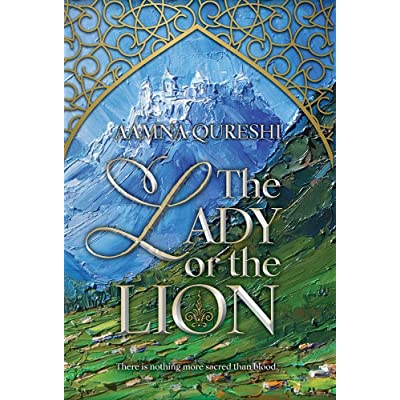
The Lady or the Lion by Aamina Qureshi

Standard
The Lady or the Lion by Aamina Qureshi

lion

I was kind of surprised how well done this YA culture rich 350 page romance story was in holding my attention.  I don’t know that I had any expectations, but I was genuinely engaged in the growth of the protagonist as she began to emerge from her naive political state, and I look forward to some resolution from the cliffhanger conclusion of this the first book in the Marghazar Trials series.  The characters are practicing Muslims who pray and mention Allah swt regularly, they also acknowledge when they make extreme departures from basic Islamic tenants such as drinking, dancing, murdering, exhibiting racist attitudes, and mixing freely with the opposite gender.  It doesn’t stop any of the characters from behaving as they wish, but at least it is noted. The Urdu words and Pakistani setting in this fictional reimagining is filled with warmth and love, and while there are some steamy scenes and outright cruelties, I think 15 year olds and up can handle the contents, and recognize the suspension of reality and moral laxities for the sake of telling a story.

SYNOPSIS:

The book makes clear from the onset that “In the very olden time, there lived a semi-barbaric king. . . This is not his story.” This is the story of 18 year old Durkhanai, an orphaned princess raised by her grandparents, the King and Queen of Marghazar.  Marghazar is a prosperous country that is waging war on two fronts and does not let outsiders in, ever.  When the book begins it is doing so begrudgingly to avoid war with the neighboring districts that are working to unify and have recently been attacked.  With ambassadors arriving to determine the guilt or innocence of the one district unaffected by the terrorist attacks, the foreigners are seeing the inner workings of the kingdom for the first time.  All the ambassadors are females of various ages and experience, save the one from Jardum.  Asfandyar is young, dark, and handsome, and immediately discriminated against by the Badshah for his complexion.  Additionally Shehzadi has been warned by many to stay away from Asfandyar, which naturally makes him a great character for her to be swept away by.  She holds out for a while, but with her people mysteriously getting ill, her betrothed melting in to the background, and cracks in her country making themselves obvious, Durkhanai will find herself struggling to understand her heart, her country, her family, and her future, and with the cliff hanger ending, no simple answers will be given to her, or the reader.

WHY I LIKE IT:
I love that there is a map at the beginning, and lots of supplemental offerings at the end.  There are a lot of Urdu words and phrases and while I am moving away from feeling like all OWN voice books need to include glossaries, I think non Desi readers will be appreciative in this particular book to have one available.  For someone with some knowledge of the language the inclusion of the titles and relations and phrases between the languages is expertly done and delightful. There is also an author Q & A, as well as reader discussion questions.  There is a content warning at the beginning alerting the readers to physical and sexual assault as well as racist behavior and language and makes clear that it is contained to the characters and the story and is not the reflection of the author and publisher.  I like that it is there, and I like that the princess makes a stance against the racism and the sexual assault that she witnesses.

The high school girls at our Islamic School are always wanting “halal” romance books.  Ok so really they just want romance books, but I try and keep their pickings halal, and so I am forever reading these books trying to find new titles to recommend.  The book is very 1990s Bollywood in terms of romance flags.  There is a lot of proximity and caressing of necks and longing, and familiar obligation.  There is some snuggling and kissing, so maybe 2000s Bollywood, but the characters thus far don’t cross “that” line.

I really appreciated that Durkhanai was fleshed out and relatable.  Even though the setting is long ago, and the genre is romance, she didn’t wait to be rescued, even when she was hurting or pining, she was still maintaining her obligations and moving forward.  I also love that it showed some depth to her emotions.  She recognized that Asfandyar would let her speak and would show his support by being there, but he pushed back on her and challenged her too.  Rashid on the other hand would speak for Durkhanai and would fawn over her in a very superficial way almost.  Sure neither relationship was ideal, but from her perspective at least she was able to see how various presentations made her feel.

I was a little lost in some places, but I was reading quick and had distractions so I’m not entirely sure if it is my carelessness or plot holes or if gaps will be filled in future books.  I needed more reasoning though, for why Durkhanai’s cousins, Zarmina and Saifullah, truly hated Asfandyar as much as they did, or what exactly Saifullah was plotting and how it connected to ratting out the princess.  For all that is seemingly going on, the Badshah and Wali always seem available to chat and are often just lounging around.  I know it is not their story, but the negotiations, the plotting, everything seems to be done very slowly and could really use some fleshing out to show some depth to the side characters.  Other than a few voices, the side details are lacking.

FLAGS:
Lying, killing, racism, sexual assault, physical assault, plotting, murder, kissing, manipulation, touching, caressing, sneaking around, theft, cruelty, cursing, romance.

TOOLS FOR LEADING THE DISCUSSION:

The book is not an Islamic story or even a moral one, it is entertainment and it could possibly be used for a book club if the participants relish in these kind of books, but it probably wouldn’t have wide enough appeal and would alienate nearly all the boys from joining.

Moonlight Hope: A Muslim American Coming of Age Story by Nora Salam

Standard
Moonlight Hope: A Muslim American Coming of Age Story by Nora Salam

moonlight hope

This 354 page New Adult read is truly Islamic fiction, and as long as you know what you are getting in to, you probably will thoroughly enjoy it.  It is Islamic centered, it is preachy, it is idyllic, it counters many stereotypes about Muslims and various cultures, while simultaneously falling into other tropes that define the genre, it has mature framing that is not suitable for younger readers, but doesn’t detail anything that is super “haram.”  If you are looking for a potentially halal romance between YA and Adult ages with Islamic messaging this book is a solid choice.  If however, you will be annoyed by any of the aforementioned labels, this book will not hold your attention or beg to be finished.  It reminds me a lot of Umm Zakiyyah’s If I Should Speak and A Voice books where the story has its own twists and character arcs but it spends a lot of time preaching and setting itself up to tout an Islamic perspective, or concept as well.  I wanted to read two books in the “New Adult” category and see if I could spread my reviews to include them, and with this being the second,  I think I should resist the temptation, and stick to what my library background familiarized me with.

SYNOPSIS:

Told in alternating voices of Intisar and Majed, two individuals in New York City, at different places in their life, but finding that when they hit rock bottom, Islam is the answer.

Intisar is graduating nursing school when the story opens and has only one goal in mind, get married.  She has strict Sudanese parents and has put all of her dreams on finding freedom in the perfect spouse.  She meets a guy at a friend’s house and they secretly date, kiss, and hold hands.  When he ghosts her, she is devastated and reluctantly finds herself agreeing to marry a much older man of her parent’s choosing.  Loosing herself in the idea of marriage, she finds herself heartbroken, ostracized and falling apart.  She starts to put herself back together slowly by finding Islam, her confidence, and some much needed perspective.

Majed has a famous family: his mother a model, his father and siblings singers, and he manages their careers.  After passing out from drugs and alcohol more than once he really starts to examine his life and the road he is on.  He sneaks away to rehab and in the process stumbles on to Islam.  He is Egyptian, but the family is not religious at all, and infact stop talking to him when he converts.  The trials of being a Muslim in New York with no family are not easy, but he feels it is worth it and his journey to Hajj and through loss brings him closer to Allah (swt).

The two stories are parallel and collide slightly in the periphery, but the book ends with them finally coming together and the ever dreaded words of “to be continued,” leaving the reader hanging.

WHY I LIKE IT:

I do like that the story shows struggles when one comes (back) to Islam, it isn’t always a walk in the park, it has challenges and stresses.  The book starts each chapter with a verse from the Quran and is very open about what it is.  So, while at times, the preachiness did get to me, it was very clear what type of book it was from the beginning and I kept reading.

Some of the side characters I felt needed to be fleshed out a bit.  I didn’t understand many of the random friends, how they affected the main character often seemed off, or completely underdeveloped in what was revealed about them: particularly Izzedine, Parita, the girl that married Mansour, the uncle at the Masjid that thought Majed was a spy, etc..  I also really struggled with the presentation of Uncle Munir and his calling Majed, baby, and how he just happened to bump in to him outside the bar, and the kisses.  I’m guessing it was meant to show him as over the top affectionate, but it just read as odd.

I like that the book addresses hypocrisy, mental health, and expectations.  It doesn’t paint all Muslims as good or bad, nor society at large.  The book reads as a journey, and many characters are given a chance to correct their errors and be seen in a new light.

The majority of the book is written well, but right away the book gave me pause as Intisar and her friends chat all through the Jummah khutbah, I get that it is trying to show her disregard for intentional practice of her faith and her “boy crazy/marriage” obsession, but you cannot speak during the khutbah, it isn’t just dirty looks, you truly cannot talk for it to count, and it isn’t even remarked upon, and it made me skeptical of the book for a while.  There is a word missing from a sentence on page 161 and at one point a brother in the prayer hall aims a shoe to throw.  But you wouldn’t be wearing shoes in the room where you pray, and the mosque has hallways and a glassed off section for women, so this seemed like an obvious oversight that should be fixed.

FLAGS:

Drugs, alcohol, lying, overdose, sneaking out, kissing, hooking up, physical affection, violence, temptation, sexual predatory behavior, it is an adult book, so I’m not going to continue listing everything. Nothing haram is overtly detailed or glorified. Ages 17 and up, could handle it.

TOOLS FOR LEADING THE DISCUSSION:
Too mature for my book club crew, but I wouldn’t mind it on a shelf in the school library.

You Truly Assummed by Laila Sabreen

Standard
You Truly Assummed by Laila Sabreen

We need more diverse books, especially within Islamic rep stories.  So I was so excited to receive an arc of this 352 page YA/Teen Black Muslim authored and featured OWN voice story.  I was prepared for rawness and grit and insight and all the feels.  Sadly to say, it is not that.  It is surface level plot points that are unexplored, disjointed, emotionless, and overshadowed by poor writing, contradictory details, and errors. Admittedly I saw an early copy and there is hope that the spelling errors, continuity mistakes and numerous contradictions can be fixed, but I highly doubt the narrative, character arcs, and holes, will or can be rewritten.  It is such a shame, because every time I was ready to put the book aside and claim I could not finish it, a powerful beautiful paragraph or sentence would pull me in and give me hope that the book would turn around and be what its own blurb claimed the book set out to do: “shatter assumptions” and “share truth.” In full disclosure, this book centers the intersection of being Black and Muslim, an experience I do not share firsthand nor claim to know in all of its multitudes and complexities.

SYNOPSIS:

Sabriya, Zakat, Farah: three Black female Muslim 17-year-olds in different parts of America, with different passions, different life experiences, and different dreams, take one alternating chapter at a time to tell their stories with occasional blog posts scattered between.  A terrorist attack in the in the D.C. metro, lots of serendipitous technology events, and a need to find community and the girls come together to create a blog that gathers followers and haters alike in the summer before their senior year.

Sabriya “Bri” is a ballet dance, and often one of two black ballerinas in class.  The book opens with her preparing for the summer intensive audition process when news of the nearby metro attack makes time stand still.  Her mom cannot be reached, and multiple people are killed and many more injured.  Bri and her younger sister Nuri identify like their father, as Muslim, but their mother is not.  It doesn’t seem to be much of an issue, except in that Bri’s mother often cannot relate to experiences her daughter is going through.  Bri asks Allah swt to keep her mom safe, but throughout the entirety of the book it does not mention her praying salat or actively showing she is Muslim aside from wearing an Allah swt necklace and her sorting through her desire to prove to others she is a Muslim versus eventually being content to be enough for her own self.  She does at one point refuse to cook bacon, but she does have a love interest, and Islam reads more of a label to her, than a practiced way of life.  Bri journals as a way to let off steam, and her younger sister Nuri encourages her to move to an app to blog.  Reluctantly Bri agrees, after being reassured that she can keep it private, she names her journal/blog ‘You Truly Assumed’ and accidentally sets it to public.

With the city reeling, the family commits to volunteering every day to provide food to those directly affected.  Bri is placed in a group with her father’s new boss and Hayat, a Muslim boy that she thought was a popular showoff, but is quickly falling for.  The micro aggressions from her father’s boss, who is also the volunteer group leader elevate, and the more she learns about him and his connection with an alt right group, the more she writes about in her journal.  By the time she realizes that it has all gone public, she decides based on the comments that she should keep it up, recruit more contributors, and get someone on board that is tech savvy.

Farah Rose lives in California with her mom.  Even though she knows who her father is, she has never had a relationship with him.  When her mom decides that this summer she should go to Boston to meet him and get away from the tensions following the DC attacks, she reluctantly agrees.  With a passion for tech, Tommy, her father persuades her by registering her for an intro computer science college course and a chance to meet her siblings.  Farah is nervous to leave her boyfriend, and worries about being a summer babysitter, but out of love to her mother, agrees to go.  When she learns about the blog, she joins to help with the tech side.

Once in Boston she struggles to connect with her father and his wife, but is immediately drawn to the children.  Her story provides some insight into the concept of privilege within black communities.  Her father and his family are not Muslim, nor did they seem to know that she was. Presumably the only reason it even comes up is when they serve bacon at breakfast and she mentions she is Muslim and a pescaterian  Farah meets a lesbian Muslim girl in her college class and learns that there has a been a hate crime and taken the life of her new friend’s friend.  Farah offers to help with the vigil and her commitment to the blog increases as hate crimes, and Islamophobes seem to be on the rise.

Zakat “Kat” seems to present the more “conservative” Muslim.  She lives in an idyllic town and attends an all girls Islamic school.  There is also an all boys Islamic school and they are big rivals of the public high school.  Kat loves art and often takes art classes in the Islamic school with music pumping through the halls, unfortunately her parents don’t want her majoring in art at school.  They were the victims of predatory college loans and want her to be more pragmatic in her chose of school and direction of study.  She is more sheltered and even has to go behind her parents’ backs to be a part of You Truly Assumed.  She shares her sketches and comics and art work and loves knowing that people are connecting with her work and messages.

When her quaint town becomes the victim of hate crimes, she has to decide if she is going to step up and use her voice, or blend in as she has always done.  Zakat prays regularly, often at the gender neutral mosque behind a female identifying imam, wears hijab, and deals with jealousy as her best friend becomes friends with a girl who years earlier bullied Kat.

The three girls’ stories intertwine as they become friends, share their own personal lives with one another, and thus the reader, and create a space to be seen and heard through the blog.

WHY I LIKE IT:

The book honestly reads sloppy.  I don’t know why it seems the growing trend is to not properly edit these Islamic OWN voice YA novels, but this is another book that indicates a troubling trend.  I love that these voices are emerging, but it sadly feels that editors are nervous or afraid to question things and demand better.  The book is so much telling and so little showing.  I don’t want to be told that the blog posts are powerful, and moving, I want to read them and feel moved.  I don’t want to read that you had to understand that you had to stop proving your religiosity to others and just live for yourself, I want to see the incidents and reflection that brought on that growth. I don’t want to be told that you are becoming friends with the other two bloggers, I want to see that they understand you when no one else does.  The whole premise of the book is to connect with the reader, but the emotion isn’t in the pages, so there is nothing to connect with unfortunately.  Saying there is a terrorist attack, saying that hate crimes are occurring, does not bring forth an investment to the story if details, context, and cathartic releases are not also included.

There are some basics errors.  Wudu is described in the wrong order, Zakat talks of living in Georgia in a fictitious town, but the landmarks and colleges are all accurate until she mentions looking out over Lake Erie.  I Google mapped it, there is no Lake Erie in Georgia (just the Great Lakes one on the Canada US border), it is only mentioned once, so presumably an oversight, not a fictitious landmark.  There are some spelling errors and grammar errors as extra words enter a few sentences (3%), dinner replace the word diner.  At one point it mentions the girls meeting on a Zoom call, and then the next line refers to it as a Skype call (54%).  The plushness of the Georgia mosque is often commented on, but they have to put down their prayer rugs to pray, this is pre covid, so a little off.

The book contradicts itself at 11% saying that they can drive to North Carolina or New York for auditions, while the rest of the chapter is convincing Bri to volunteer because they cannot. One of the reasons Farah left California was because of the tensions, but Boston is closer to the place of the attacks and also a large diverse bustling city.  When Farah is wanting to talk to Tommy and his wife about the vigil, she walks in to a room and comments on who is there, in the next line, it mentions that it isn’t a good time to have the conversation since Jess is not there.  Jess was just mentioned as being there and the conversation does end up taking place (84%).  When Bri has a blow up with her dad’s boss, Hayat is worried that she hasn’t been delivering meals all week as a result, later in the chapter it mentions that the conversation happened yesterday (77%).   When Bri introduces her friend to Hayat she doesn’t mention that the two girls know his little sister very well, and it seemed unnecessarily awkward.  Zakat stares off in to space and imagines a sketch and remarks that she has never shared a sketch before and it is something she wants to explore.  This is 81% of the way in to the book, she has been sharing her sketches on the blog since she joined.

In terms of Islamic representation, Zakat’s mosque has one entrance and doesn’t divide based on gender, there is a female imam, the steps of wudu are in the wrong order, the girls all seem to focus on their “Islamic” necklaces or rings as if they are such an integral part of the religion.  The girls never pause or hesitate to have boyfriends, kiss them, bring them around their Muslim family.  Even Zakat who reads really naive and young and goes to an all girls Islamic school decides that a logical event is to have a mixed gender party with music and none of the parents have an issue.  It is even held in a Muslim girl’s basement. There are very few salams or mashaAllahs or inshaAllahs, or bismillahs in the book.  There is music, dancing and dating.  Not naive to say that Muslims don’t participate in all these activities, but to not offer any pause, reflection, or clarification, in a book trying to show the life of some one who identifies as Muslim is a little puzzling.  At the beginning it mentions that Black Muslims are “othered” in Islamic gatherings, and I really wish this thread would have been a larger part of the book.  To see where the larger community is racist and lacking, to see where the engagements occur and where they fall short is a very unique lived experience that the book seemed to tease, but ultimately abandoned completely.

Plot points were not fully developed, a book of secrets was not built up or stressed and then became a huge issue without sufficient understanding as to why offered.  The hate crime in Boston that took the life of a young black Muslim girl was also not given enough weight in the story, or how she helped organize the galvanizing vigil.  The blog aspect was just not believable, so much happening by happenstance and then the material not being shown.  Show us the comics, the sketches, the passages.  Let us read the comments and show us your texts back and forth to see your friendship growing.  I loved the parts about Bri and her dad’s boss, about Farah’s father’s family and her interacting, the parts that mentioned Juneteenth and bean pie.  I wanted more immersion in to these characters lives.  To know their back stories and their struggles.  I wanted to feel like I was seeing something that for too long has not been given the space to be authentic and real, but ultimately I finished the book just glad it was over and I no longer needed to exhaust myself trying to imagine the book that it could have been.

FLAGS:

Domestic terrorism, hate crimes, death.  Relationships mentioned, straight and queer.  Transgendered and ungendered masjids, female imams.  Boyfriends both Muslim and non Muslim.  Mixed parties, dancing, music, art with faces, lying, cursing.

TOOLS FOR LEADING THE DISCUSSION:

I don’t think there is enough content to discuss in a book club setting, neither to relate to nor open ones’ eyes to.  I would like to discuss the book if any one has read it, if I am simply so ignorant of the Black Muslim female experience that I don’t get the book, I am happy to learn and listen and change, inshaAllah.

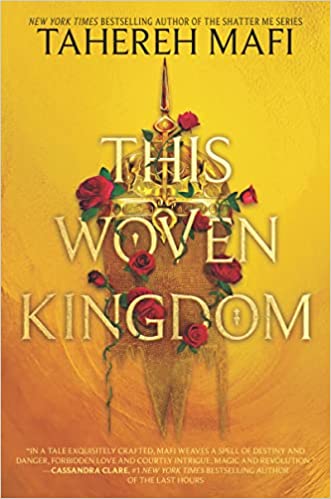
This Woven Kingdom by Tahereh Mafi

Standard
This Woven Kingdom by Tahereh Mafi

woven

At 512 pages this teen/YA fantasy book immerses you in the lives of two characters pitted against one another that are inevitably, drawn to each other.  The world building is slow, as it seems to spend more time character building and shaping the magical Jinn filled world around the characters, through their eyes, and their interactions, than simply building a world, and then dropping characters in it.  It never seems to drag, but the rising action is not concluded, it in fact ends on a cliff hanger raising the expectation for the next book in the series to take the story toward more action, emotion, and twists.  I absolutely love and applaud the author’s note that articulates and clarifies that this book is not religious in nature and that threads of Islam and Persian culture are just reference points for this completely fictionalized tale.  There is a passionate kiss, and violence, but this book is remarkably clean and an enjoyable read for ages 14 and up.

SYNOPSIS:

The story opens with Alizeh sitting by the fire sewing.  She is freezing, she is always freezing, she is a Jinn, but her veins are ice.  Completely alone, she is working as a maid, but as she is on probation, she lodges in a tiny closet away from the other service members, and is deathly afraid of the dark.  Her loving parents raised her and nourished her, she is educated and strong, but since their deaths she has been on the run, trying simply to survive in a world where Clays forbid Jinn from using their magic.  Alizeh is no ordinary Jinn though, the earth has chosen her to be the future Queen, her ever-changing eyes prove it, but for now, she has no kingdom, no family, no friends, no hope to lead.  Only cryptic riddles given to her by Iblees that she dreads and fears, but warn her of impending dangers.

Kamran is the second storyline that builds the world of Ardunia.  As the crown prince, and future king, he has returned from touring the country and has had his eyes opened to the forces threatening the empire, the inevitable war that is looming, and the shortage of resources that threaten them all.  He is irritable and brooding and acting out of character when he intervenes in an altercation in the streets between a servant girl and a young boy.  This sets off a series of events that will bring Alizeh and Kamran into direct conflict as their worlds intertwine and their passions build.

WHY I LIKE IT:

I love the clarification at the beginning, stating that this is not Islamic and that religious and cultural inspiration was just that, inspiration. It allowed me to get comfortable and enjoy the tale for what it is.  I wasn’t worried about checking things, or worrying about religious impressions and accuracy, it was so freeing, thank you.  I really hope that there is a map in the final physical copy, because I just really like maps.  I liked the Persian numbers and script on the chapters and the references make the book that much richer and fleshed out.

I am admittedly fairly new to fantasy, so I enjoyed the slower pace and character building.  I found it enveloping and smooth, there were small conflicts, but the subtle world building through understanding the characters, and their perspectives, was a nice framing for a story that very easily could have dragged, but in reality flew by.  The only point that I found unrefined, was how much Alizeh knew of her past and the impact it had on her current situation.  There seemed to be a bit of a disconnect in teasing that thread.  The reader knows who she is, so I’m not sure why she seems to not know, and then proves that she does, there is no subtlety in that regard.  And the only character, that seemed underdeveloped was that of Hazan, his banter with the Kamran grated on my nerves, and I didn’t understand the abruptness of his and Alizeh’s relationship, it seemed forced.  Nearly everything else in the book was very organic and gently referenced and established very deliberately, but it almost seemed like I missed a chapter or two, when all of a sudden Hazan emerges as being such a main character in Alizeh’s life.  Undoubtedly it was a surprise for the reader, but some nuance in the revelation through Alizeh’s eyes, would have assisted in the continuity of the character and tone of the book.

FLAGS:
A kiss, and attraction, talk of illegitimate children.  There is killing and violence, attempted assault: physical and sexual, not detailed, but referenced as a fear as she walks alone at night.  There is darkness and talk of the devil, deceit, lying, plotting.  Nothing an early teen could not handle.

TOOLS FOR LEADING THE DISCUSSION:

I would have to delay deciding if I could do this as a book club selection until I read the next book.  There is so much potential, that I truly hope that I can introduce the series to young readers to enjoy, get lost in, and discuss.