Category Archives: preschool

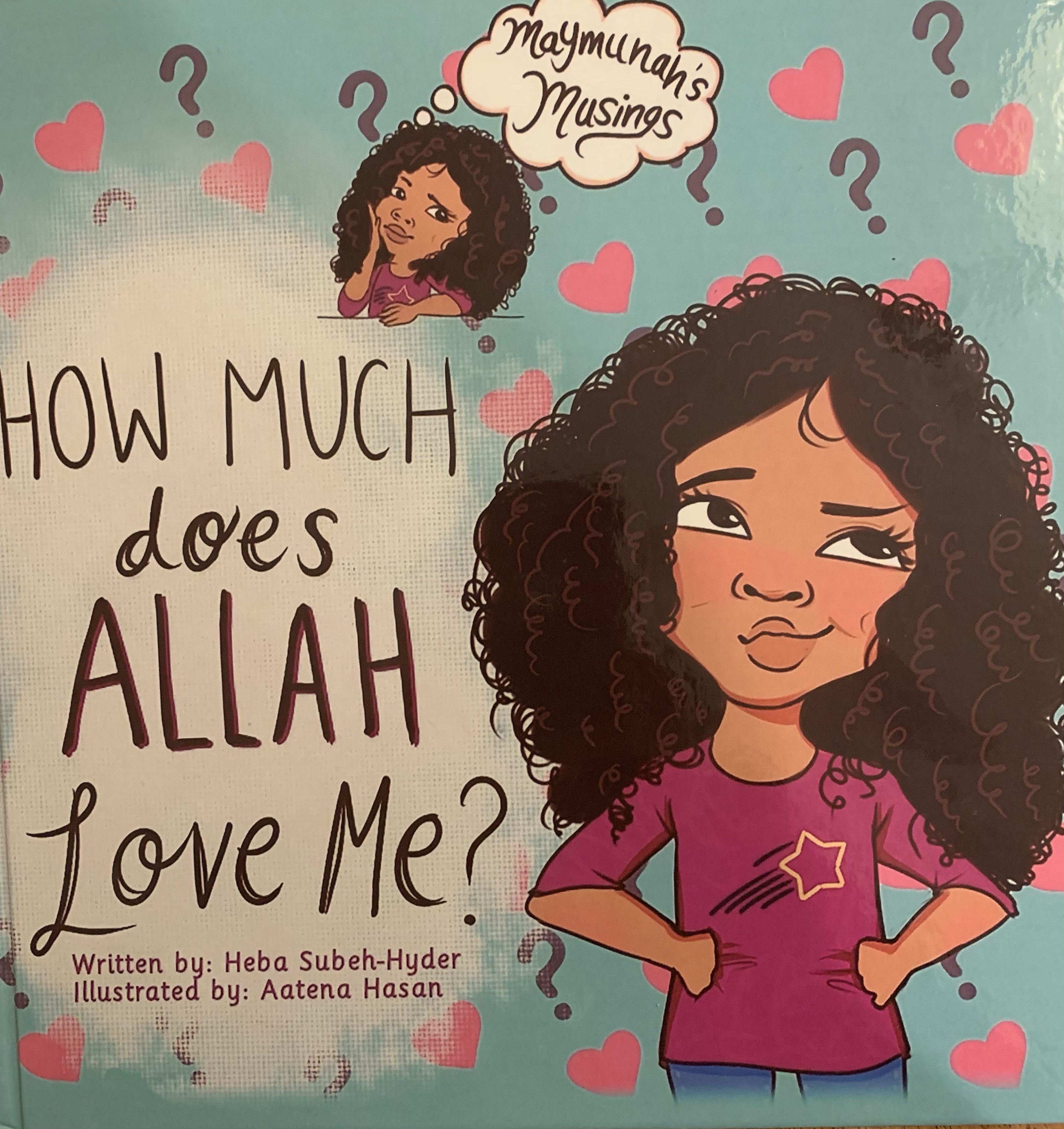
How Much Does Allah Love Me? by Heba Subeh-Hyder illustrated by Aatena Hasan

Standard
How Much Does Allah Love Me? by Heba Subeh-Hyder illustrated by Aatena Hasan

img_6988

I waited to review this book to see if my initial response would change, and before I got around to writing up the review, the second book in the Maymunah’s Musings has come out.   So I am admittedly a bit late and quite a bit behind, and based on other people’s review I’m in the minority on my opinions.  This 40 page book is wonderfully presented with a multicultural girl asking her mother about Allah’s love for her.  I wanted to absolutely love the text as much as the playful illustrations, but I felt like it was a bit wordy in places, a bit out of order in the mom’s explanation to the little girl making it somewhat repetitive, and ultimately I wanted a bit more.  More ayats or references or even specific examples.  There is truly nothing wrong with the book, but at its price point I was a bit disappointed.

img_6989

Maymunah is looking out the window and thinking about Allah swt: what she has learned in Sunday school and about His remarkable creations.  She recalls the amazing animals, the vast number of stars in the sky, the different type of trees, and her family.

img_6991

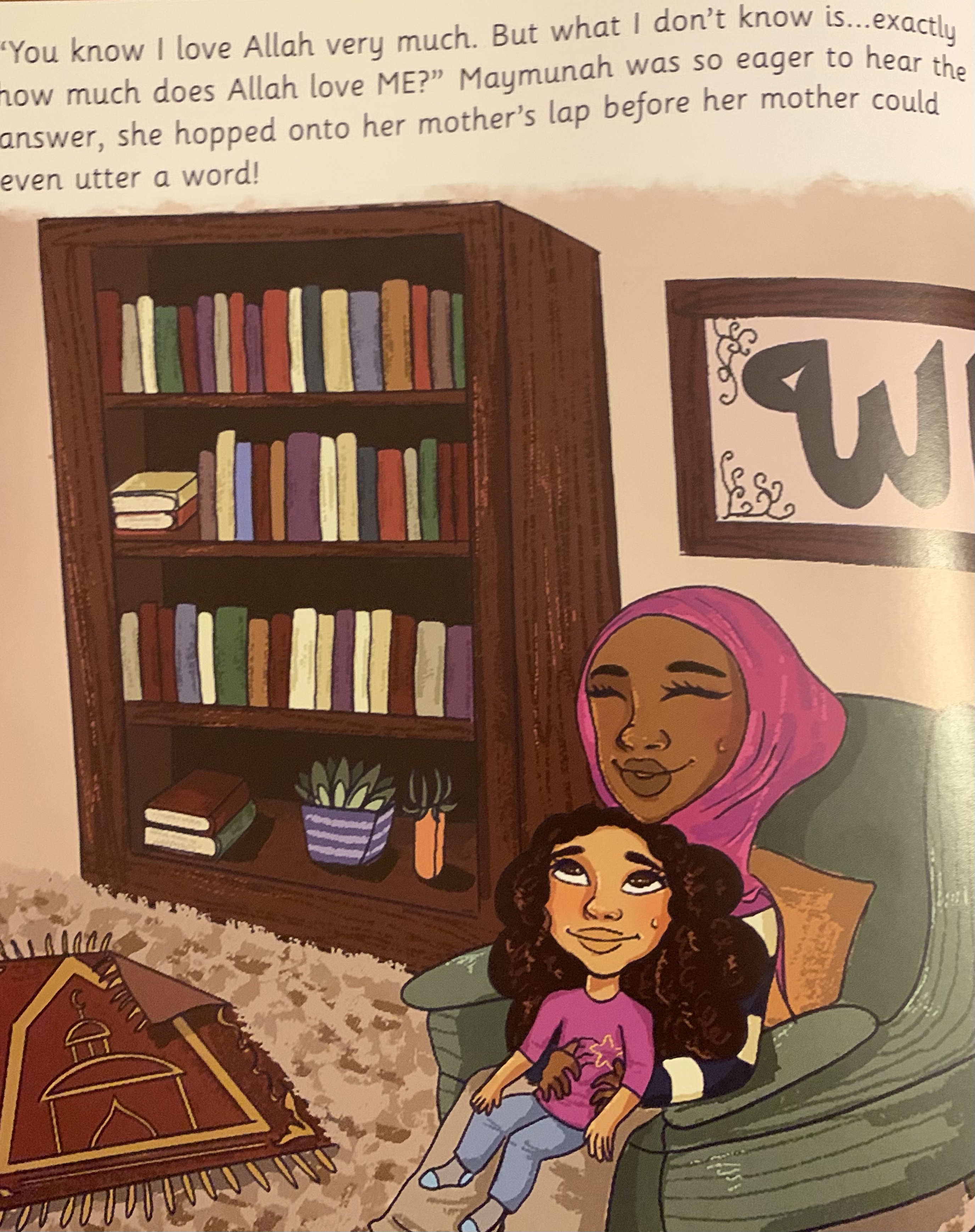
She loves Allah, and wants to know how much He loves her.  So she rushes to find her mother, the only person that can answer that question (I’m not sure why no one else can).  Her mother lovingly and patiently situates herself with Maymunah in her lap to answer the important question.

img_6990

Maymunah’s mom explains that Allah loves her more than the billions of stars in the sky, more than all the fish in the ocean, more than all the raindrops that fall, more than the billions of people in the entire world, more than all grains of sand on the beach, and blades of grass in the meadow.

img_6993

Then Maymunah’s mom asks her if she knows how much Mama loves her. Maymunah repeats back all the examples her mother has just given for how much Allah loves Maymunah.  The mom then says and Allah loves you more than that.  

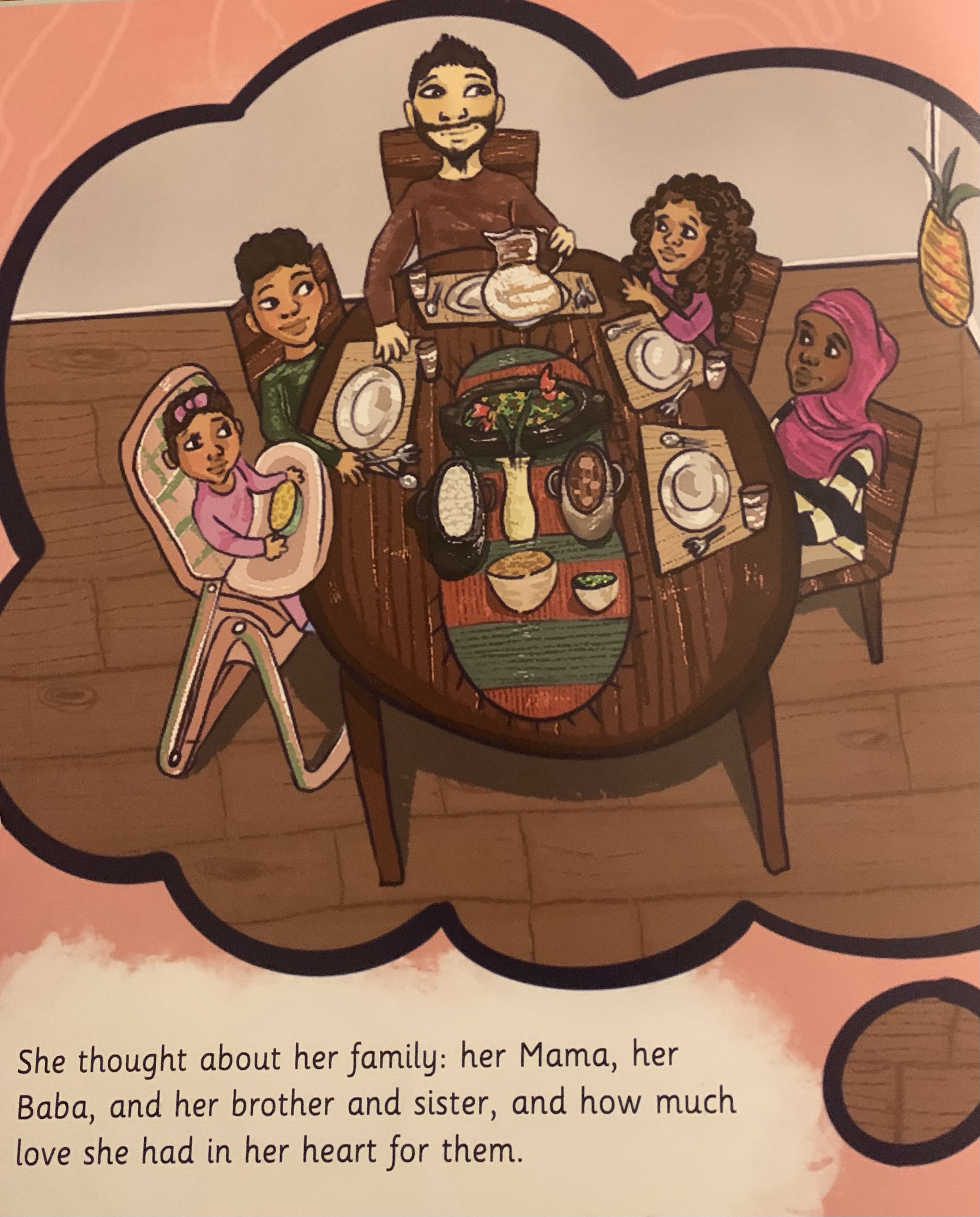
Maymunah is satisfied and reflects on how much Allah loves her and then remarks that her love for her mother and her mother’s love for her is bigger than the whole wide world. The last page of the book mentions that her love for Allah is more than that and that Allah’s love for her was even bigger, but it seemed muddled to me as it started stressing how big a mother and child’s love is.   

img_6992

I felt like the natural order would be to explain to a child how much a mother loves them, then say Allah loves you even more.  Not tell all the ways Allah loves you, then talk about how much Mama loves you with the exact same examples and then say Allah loves you more.  It doesn’t even say Allah loves you ‘the most.’  

If you don’t read it over and over and take it on the surface it is probably fine, and I realize I might be overly harsh, but with only a single ayat at the end, I really wanted to feel that a child’s curiosity would be satisfied with this book, and I think it ultimately fell short for me and my children.

Ultimately, despite all this, I don’t regret buying the book from the wonderful Crescent Moon Book Store, and I will be buying the new one too inshaAllah.  I hope this review helps you to determine if this book is right for your toddlers and preschoolers.  

Watermelon Madness by Taghreed Najjar illustrated by Maya Fidawi

Standard
Watermelon Madness by Taghreed Najjar illustrated by Maya Fidawi

watermelon

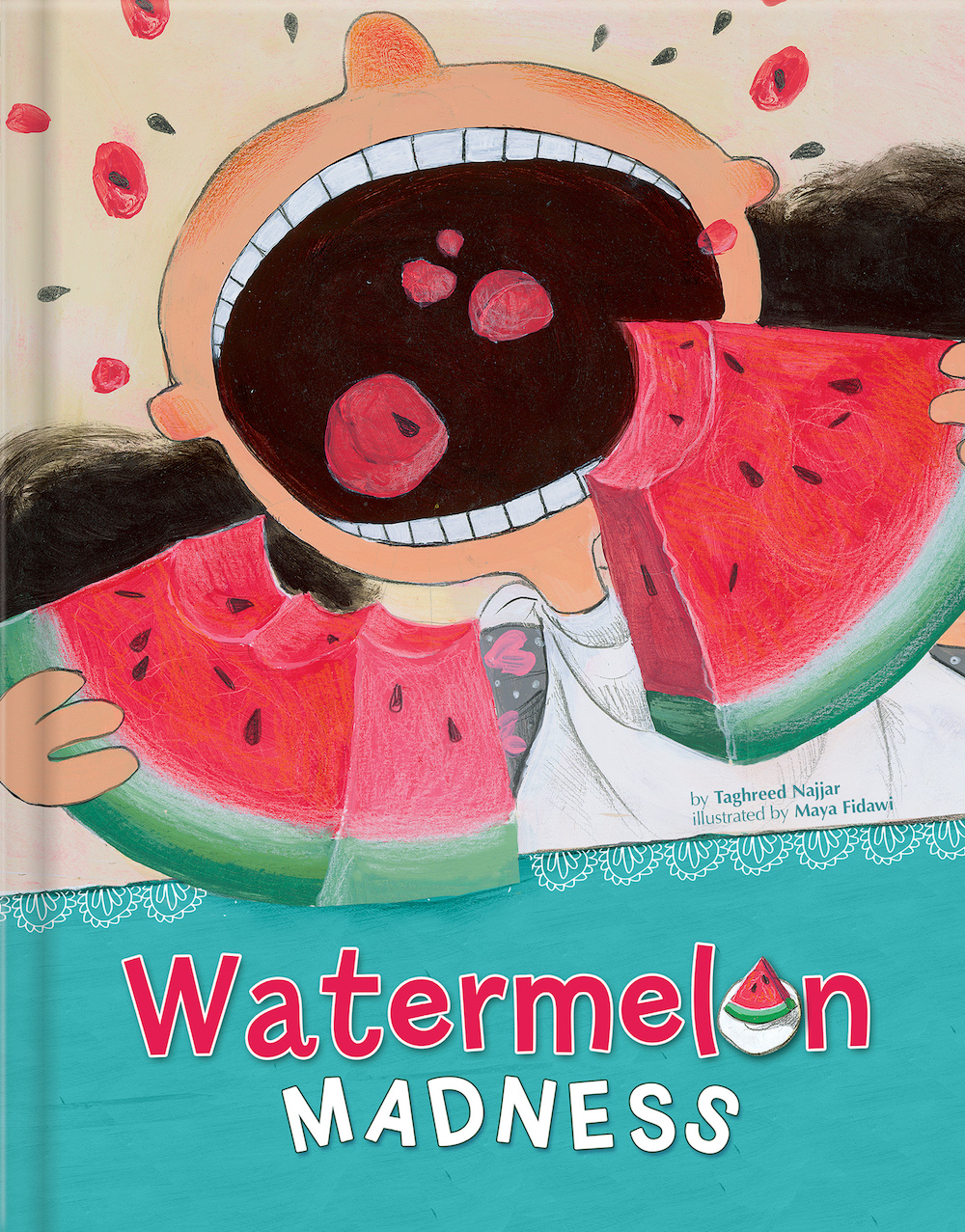
This 32 page picture book for preschool and up is silly and fun.  There is nothing Islamic in the text or illustrations by this Muslim author, but there is Arab culture as it mentions molokhiya and zaatar. The large 8.5 x 11 hardback book is wonderfully illustrated with detail, color and expression.  The playful font and text makes reading it fun and enjoyable for little ones, who will get the message, and laugh along the way.

4E8AC43F-8392-44DF-A6DF-C9C37601C69B

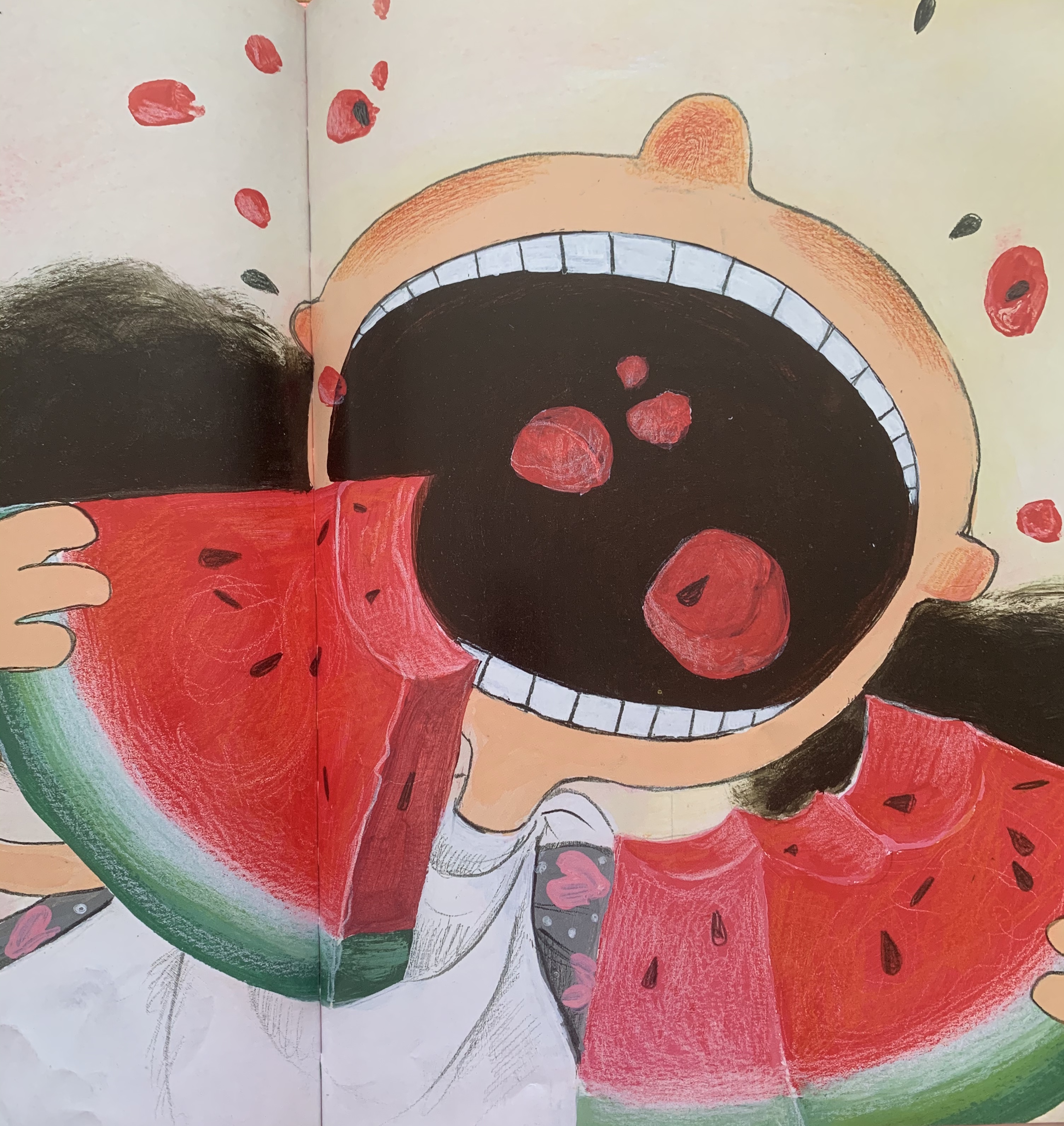
Noura loves watermelon. She eats it in the morning and in the afternoon and in the evening too.  At dinner she doesn’t want to eat her chicken, rice and molokhiya, she just wants watermelon. 

3F1BEF48-B723-4654-A0F4-9D14D36B8D2F

That night after dinner she sneaks to the kitchen, sees a huge watermelon on the table, and decides to take it up to her room to enjoy all by herself.  She puts the watermelon under her bed, and dreams wonderful watermelon dreams.

9BCAB418-5387-4965-BD7E-08E23A60FEBC

The watermelon gets bigger and bigger, and there is a door! She goes inside the watermelon and eats until her hearts content.  But as she gets bigger, the watermelon gets smaller.  She is trapped and her tummy is hurting.  

E420F713-D3EB-4B28-A013-A15E5E2345C6

Her mother rushes in to find a watermelon under the bed and Noura screaming from a bad dream.  Resolved to deal with the magic watermelon in the morning, Noura goes back to sleep having learned her lesson (without being reprimanded), and happily eats her breakfast of a fried egg and zaatar.  

B4149161-55C2-46E8-87AB-E8BD937DB47D

The book concludes with some information about watermelons and info about molokhiya and zaatar.  

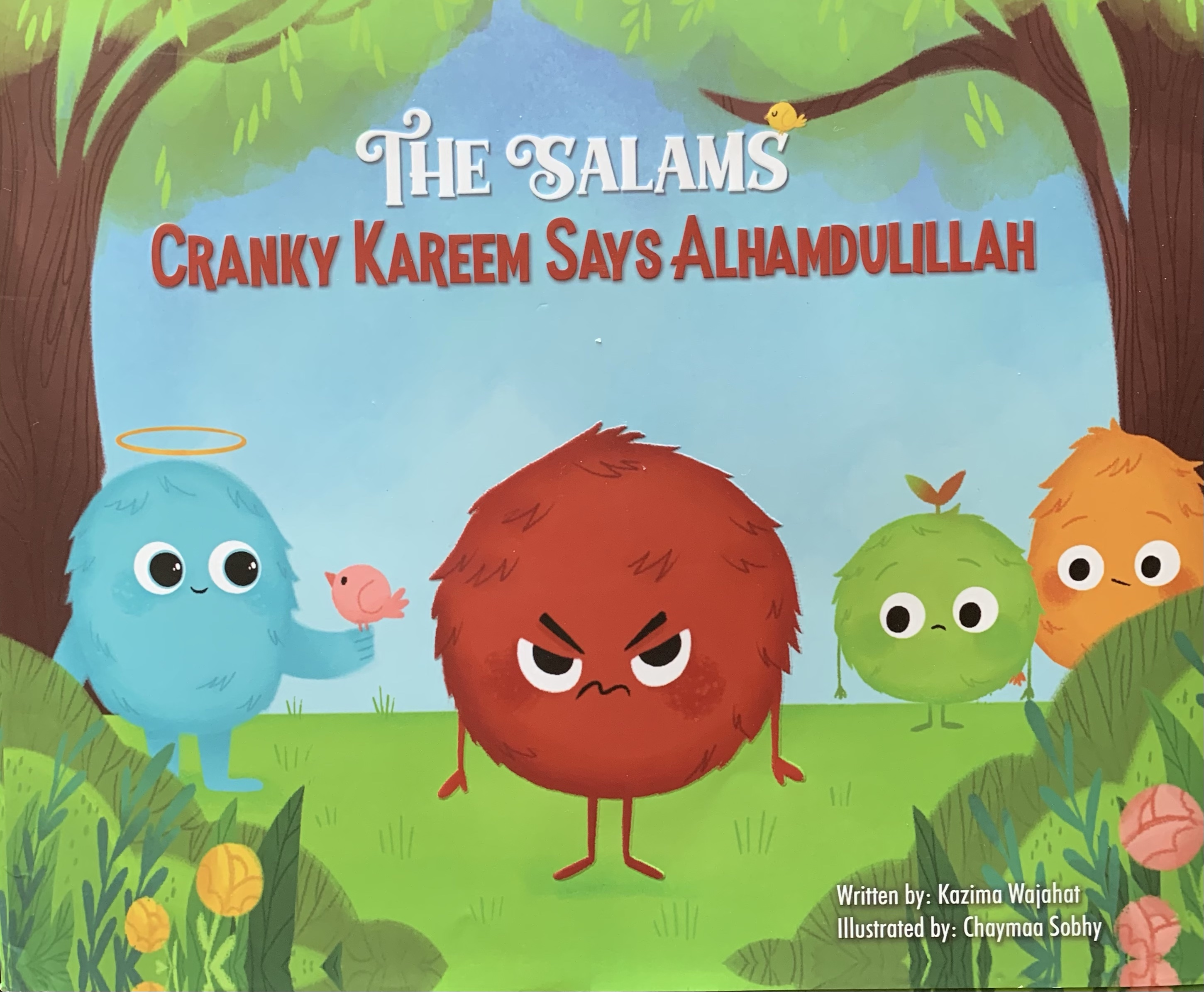
The Salams: Cranky Kareem Says Alhumdulillah by Kazima Wajahat illustrated by Chaymaa Sobhy

Standard
The Salams: Cranky Kareem Says Alhumdulillah by Kazima Wajahat illustrated by Chaymaa Sobhy


img_6616

Part of me is tempted to channel my own Cranky Kareem and say how awful this book is, just because I know that the author reads my reviews of her books with bated breath, but alas I cannot lie even in jest as the book is truly adorable.  This 40 page book in a new series highlights and starts to fill the gap in children’s Islamic fiction that is so needed.  There are a number of books and series for toddlers teaching them to say Bismillah, Assalamualaikum, and MashaAllah and all the praise-filled Islamic expressions, but they are very basic, this book, and hopefully the rest of the series, goes a bit deeper.  It shows how to truly mean what you say, how to glorify Allah not just in your words, but in the way you think about things, handle stresses, and carry on.  The concepts and amount of text probably will most appeal to mature kindergarteners to early second graders at bedtime or in small groups.  I do wish that Cranky Kareem apologized to Happy Hamdi after he relentlessly attacked him at the masjid, but in much the way Oscar the Grouch gets away with being so negative, the characters in the book and the readers alike will have to settle for Kareem finally learning the lesson, in this case, of being grateful to Allah (swt) for everything.

img_6611

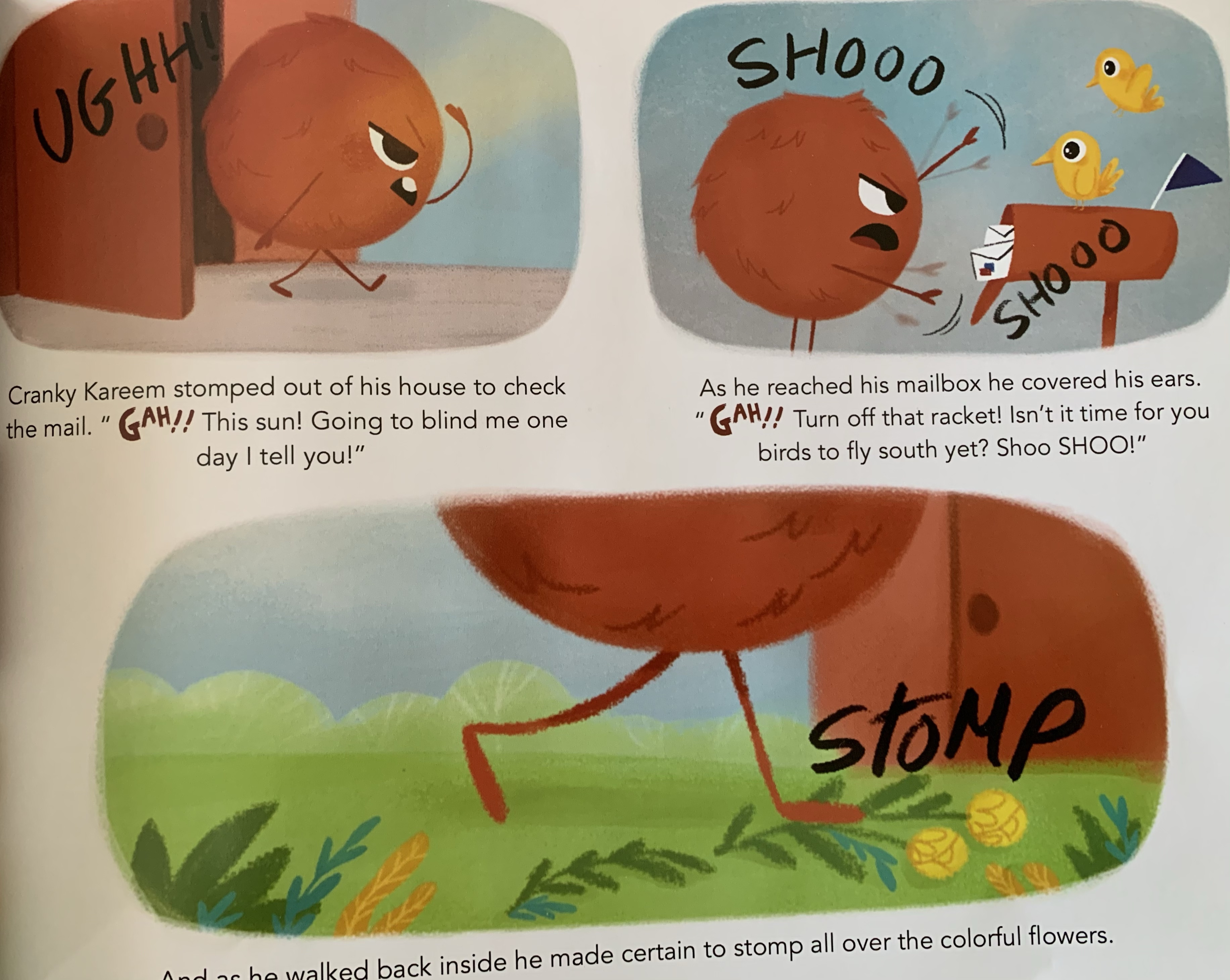
The book starts out with Happy Hamdi waking up in Salamville and praising Allah in appreciation of the fresh air, birds, flowers, and allergy medicine that works.  Across town Cranky Kareem is having the opposite kind of morning.  The sun is blinding, the birds annoying, coffee bitter, and he’s out of milk for his cereal.

img_6612

When Kareem finally finds some peace and quiet on a bench at the park he is disturbed by Happy Hamdi and all his happiness.  As Hamdi and bounces off to talk to Greedy Gamal and Healthy Hassan, Cranky Kareem gets an idea.

img_6614

When Happy Hamdi heads to the masjid, Cranky Kareem sticks out his foot to trip him.  Hamdi falls and gets a bruise on his nose, but still says Alhumdulillah. He then knocks sticky baklava on him and again he responds with Alhumdulillah, he then dumps a bucket of ice water on Hamdi, and Happy Hamdi says Alhumdulillah once more.  When he leaves the masjid, Hamdi’s car is not working and he has to walk home.

img_6613

Kareem can’t take it anymore and confronts Hamdi.  Happy Hamdi explains that he was hungry and didn’t mind the syrup, then the water washed the syrup off and now that he is walking home, his fur is drying.  Flabbergasted by Happy Hamdi, Cranky Kareem stomps off.

img_6615

Convinced that Hamdi’s happiness is an act, Kareem pauses to ponder how his plan failed.  Healthy Hassan jogs by and bumps in to him, knocking him off the train track and causing Kareem to twist his ankle, just before a train goes swooshing by.

Realizing that the bump saved his life, Cranky Kareem expresses his appreciation to Allah swt by saying Alhumdulillah.

I love the illustrations and the horizontal layout of the book.  The book is cute and I can’t wait to share the rest of the series with my kids.  Thank you to Crescent Moon Store for having this, and so many wonderful books available.


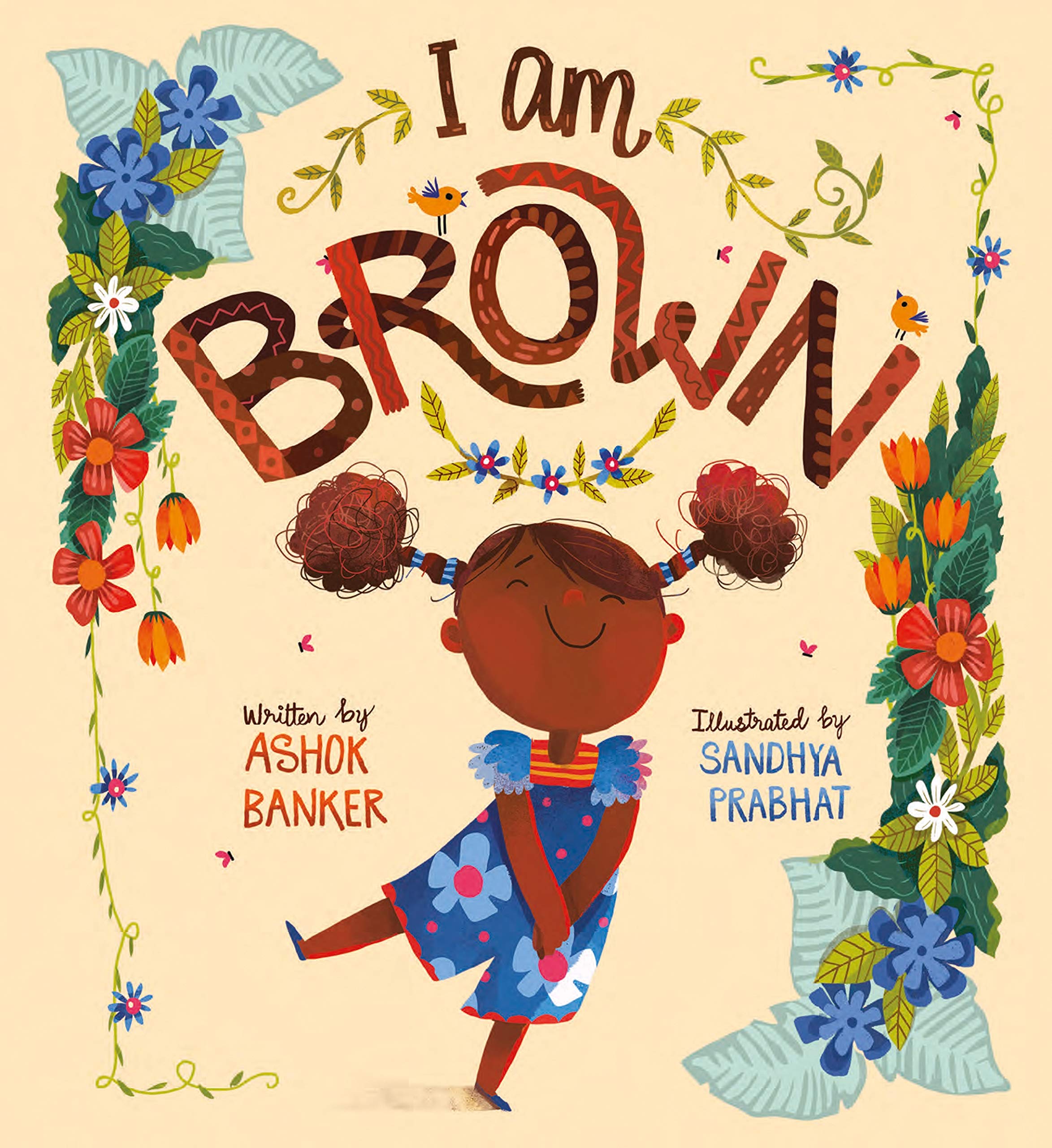
I am Brown by Ashok Banker illustrated by Sandhya Prabhat

Standard
I am Brown by Ashok Banker illustrated by Sandhya Prabhat

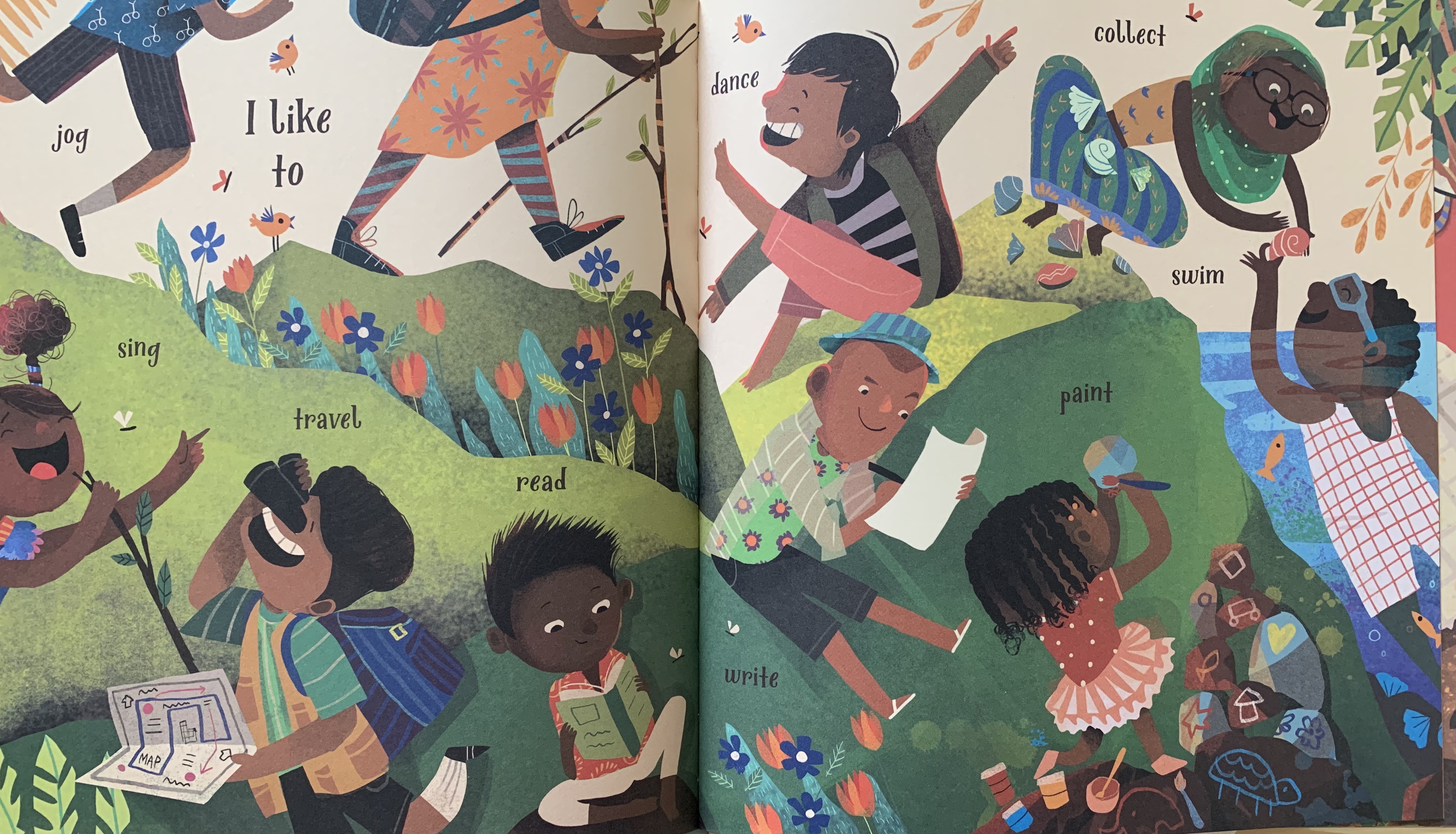
This 40 page celebration of diversity within the label “brown” is a sweet and powerful book that shows how the color of our skin is beautiful and perfect while at the same time making it clear that who we are and what we can be is not defined by our appearance.  The book shows adorably illustrated brown children finding strength in different cultures, clothing, religions, languages and dreams, which will hopefully empower children everywhere (and of all colors) to take labels that may have negative connotations and turn them in to positive affirmations of identity and strength.  There isn’t a story with a plot, but with the regular inclusion of a girl with a scarf on, and the mention of a mosque, I thought to highlight it.  The book is perfect for preschool and up.  

img_6226

The book starts with a little girl identifying herself as brown, beautiful and being perfect.  It then stretches to her being love, friendship and happiness.

img_6228

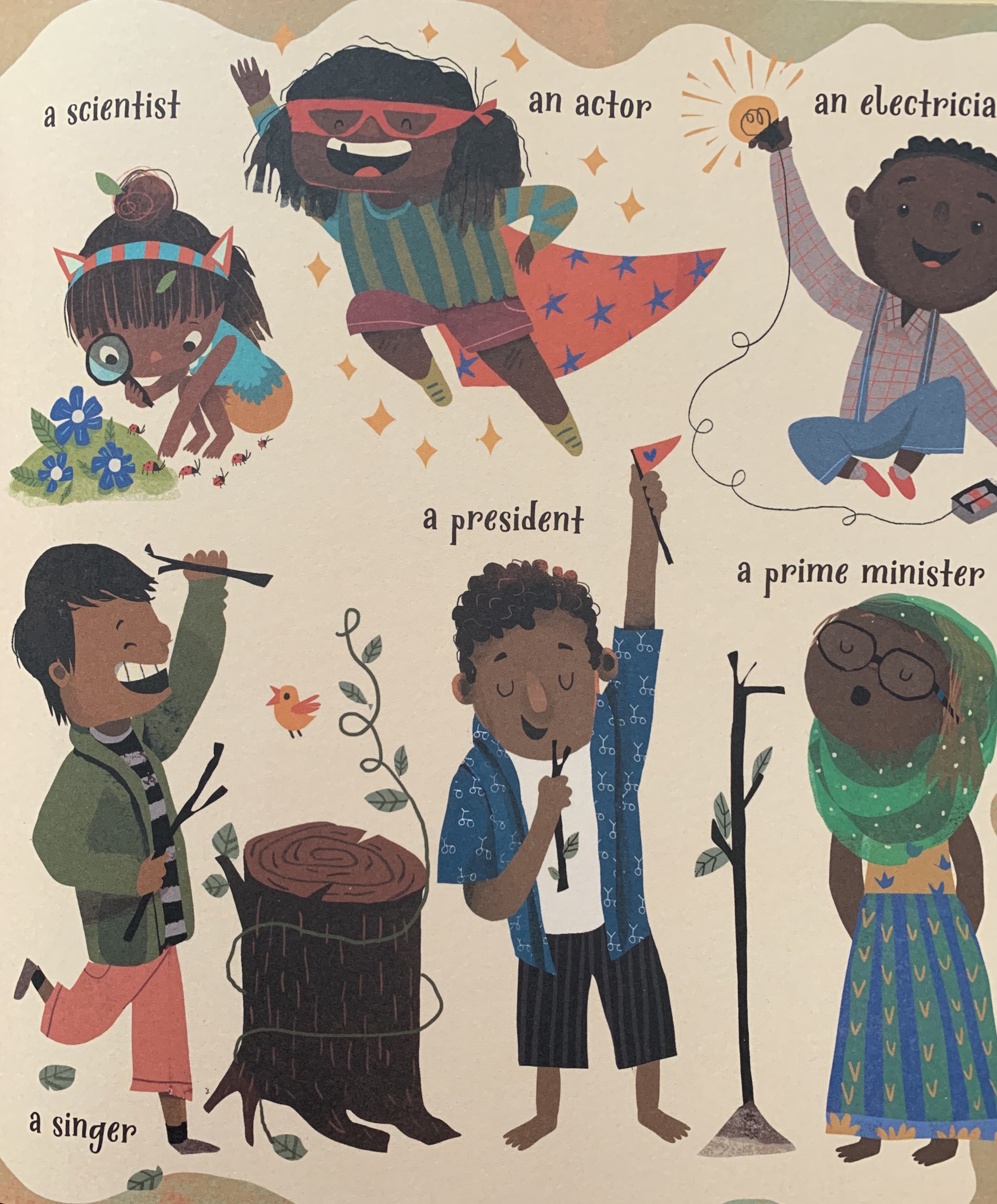
From there it branches out to a whole cast of kids identifying the variety of things they can be, from a writer to an electrician to a prime minister. the same kids then do and make and work on things before identifying where they come from and what languages they speak.  

img_6227

The kids all have different hair on their heads and faces and even no hair at all. They live in different dwellings, they like to do different things. 

img_6229

Brown people are not a monolith, the kids show that they eat different foods in different ways, that they wear different clothes.

img_6230

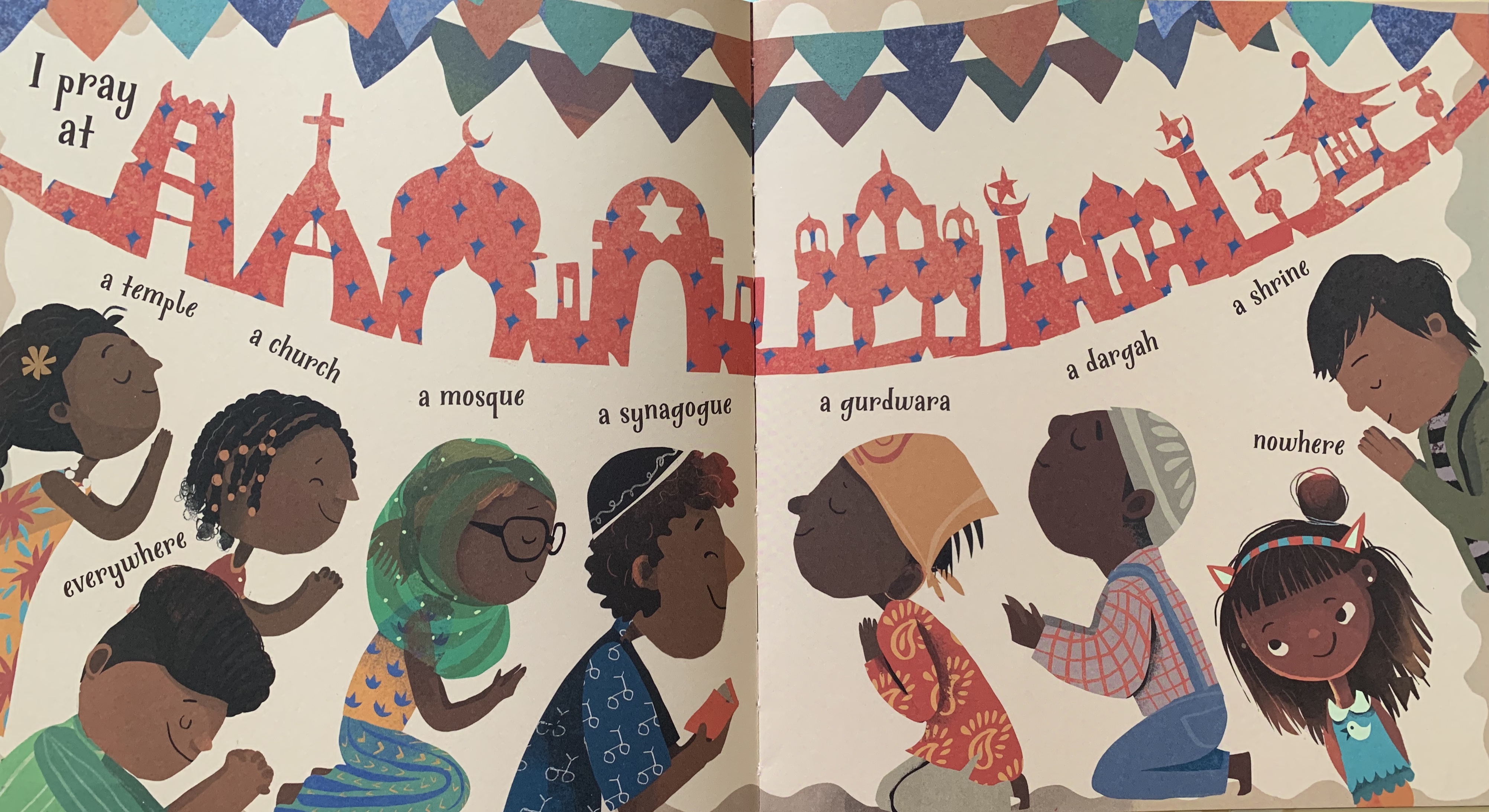
People with brown skin are roommates and teachers and friends and classmates.  Some go to temple or church, others a mosque or shrine, some not at all. 

img_6231

The book ends with a close up of three smiling faces proclaiming, “I am brown.  I am amazing.  I am You.”

img_6232

I’m sure people will argue that if you switch out white for brown the book would be deemed racist, and you are correct it would be.  But as a group that is marginalized as “other” and often the darker brown you are with in the brown subset moves you “value” and “worth” down, makes a book celebrating the strength and beauty of “brown” so necessary and heart warming.  I personally am the lightest “brown” imaginable being only half Pakistani.  So, believe me I have privilege in the desi community, but I don’t find this book offensive at all.  I’ve read this book at least a dozen times and my impressions alternate between beaming with pride and tears that so many beautiful people feel less than because of skin color and yes, anger too,  that people are MADE to feel less than.   May we all be more inclusive, more loving, and more open to the diversity of the human being. Ameen.

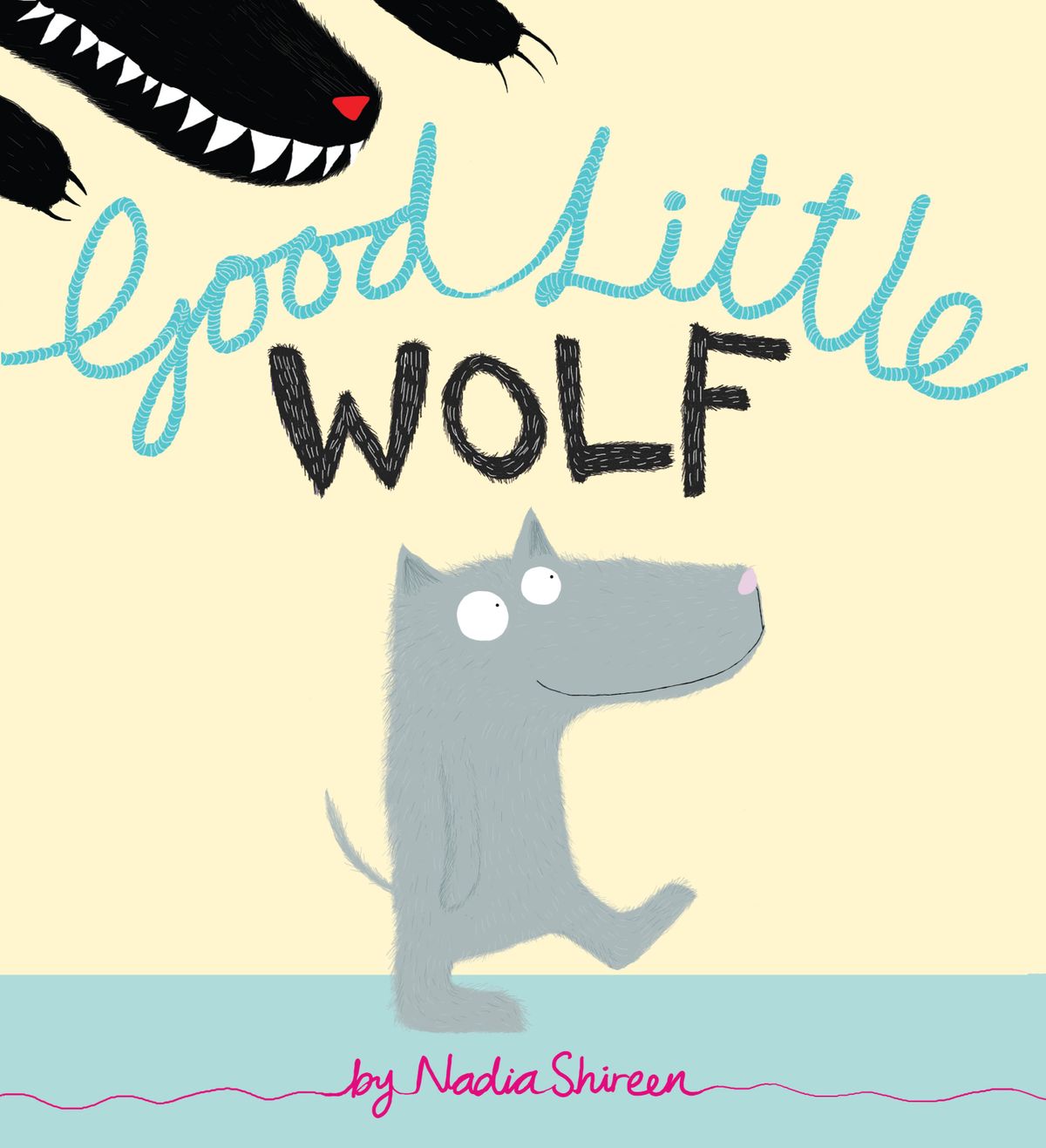
Hey, Presto! by Nadia Shireen

Standard
Hey, Presto! by Nadia Shireen

presto

This 32 page picture book about friends learning to appreciate each other is both silly and sweet.  An AR 2.6 the book is great for preschool through third grade and gives lots of teachable moments along the way if you want to make it more than just a fun book.  There is nothing religious, but I believe the author, who is also the illustrator, is Muslim.

3D98CA51-5683-4B47-AA1D-D2D59EC0534B

Presto and Monty are best friends.  Presto is a brilliant magician and Monty is good at singing, eating ice cream and making funny faces.  When the carnival comes to town the two decide to put on a show and become famous.

A14B6C11-5B00-402D-AC0B-6471AD953433

Monty suggests they take turns being the star of the show, and Monty decides to go first.  Monty isn’t a magician, so Presto stays behind the scenes to make sure the tricks work.  Somehow, this is how it ends up going night after night after night.  Presto never gets his turn.

BD1712A8-2E13-4AA5-9E7A-902456DD1820

Monty gets bossier and bossier, demanding things of Presto and being rude.  Presto is no longer having fun.  When Monty signs a contract to go on TV with his magic show, Presto has had enough and leaves.

C0366580-AF19-4A17-A787-22C33A3CBF90

When showtime rolls around, Monty realizes Presto has left and has to try and learn magic real quick.  The show doesn’t get off to a good start when none of the magic tricks work.  As the show goes from bad to worse Monty realizes how bad of a friend he has been.

5DF12A03-2366-4EE7-A7F9-FA6BD355C730

Presto watching from home can no longer bare it and rushes to save the day.  Monty promises things will be different and the two of them cook up a new act and realize together their show is perfect.

1A295E46-CE70-46DF-AC17-976B023930AA

My Monster and Me by Nadiya Hussain and Ella Bailey

Standard
My Monster and Me by Nadiya Hussain and Ella Bailey

This adorable 32 page book about facing worries, anxiety, and fears is told in story format and meant for ages four and up. The personified monster isn’t scary, but he is big, and the little boy learns to talk about him to get him to shrink. The book is engaging, fun, and powerful. I had my teenager who has anxiety read it and she loved it, a few days later as she was forcing herself to get out of the car, she mentioned that she needed to make her monster small. Normalizing mental health, feeling like you aren’t alone, finding the words to explain to others how you feel, having empathy for those that are facing challenges, are all things the book conveys without being preachy or condescending. I think every child, parent, and caregiver, needs to be aware of what children are facing and find ways to be like the gran in the book and listen, so that children suffering aren’t doing so alone. The fact that the author is a Muslim celebrity chef in Britain and the protagonist is a boy with brown skin, makes the message that much more universal.

The book starts out with an unnamed boy introducing himself and his much bigger monster. He doesn’t know when the monster arrived, but it seems he has always been there, and the monster knows all about him.

The monster is big, and when he stands infront of the little boy, the little boy can only see his tummy. At night he snores too. When he asks his mom or dad or brother to take the monster away, the monster hides.

Over time the monster has gotten bossier. When the little boy is getting dressed or brushing his teeth or when he wants to play, the monster is always there, blocking him.

One day after school the monster was there and the little boy tried to lose it, but couldn’t. Gran asked what was wrong when he showed up crying, and the little boy told his grandma all about his monster.

Gran listened quietly and the more the little boy talks, the smaller the monster gets. Pretty soon the boy realizes he can make his monster go away. When he finds the monster later, the little monster is confused, so the boy puts him in his pocket.

The monster is always there, but the little boy can make him behave and he isn’t scary any more. At the end the boy is big, and the monster is little.

I love that the boy finds someone to talk to, and that he accepts that the monster may never leave. Even if you don’t have anxiety or worries, the book is a great metaphor that even little kids can understand to help them cope when stresses do occur. I love the large size of the book, the minimal text and the bright illustrations. Truly a great book that needs to be in classrooms and homes and anywhere kids are.

The Ghoul by Taghreed Najjar illustrated by Hassan Manasra

Standard
The Ghoul by Taghreed Najjar illustrated by Hassan Manasra

the ghoulThis 36 page book for ages five through eight is a cute story about being brave, facing your fears, challenging your perceptions, celebrating differences and giving friendship a chance.  Recently translated and published in English, this Arabic inspired folktale is timeless and important for readers of all ages to learn from.

8B5F2DF2-9E4D-41B0-B9CE-3220C01849D3

Hasan the Brave is a young boy that lives in a mountain village.  The children are told not to laugh out loud, the adults tiptoe to their fields, and the fear of being eaten by the ghoul that lives in a cave on top of the mountain consumes them all.

397BB0D0-FE53-491D-997C-F0A69FA851BE

But Hasan isn’t buying it and starts asking questions. Why is everyone afraid of the ghoul, he asks his aunt one day in the olive grove? She tells him because he is covered in hair, has one eye, long claws, sharp teeth and his favorite food is little boys and girls.  Unconvinced Hasan asks his dad if anyone in the village has been hurt by the ghoul.  His dad can’t think of anyone.  He asks his mom if the Ghoul ever ate anyone in the village? She can’t think of anyone, but has heard plenty of rumors and wants him to not disturb the ghoul none-the-less.
BA9EE74E-0AEA-4418-8265-146E1DFF7682

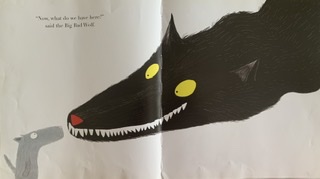
Hasan is tired of being scared and decides he will climb the mountain.  Everyone in the village tries to warn him against it, but he is Hasan the Brave after all and is determined to go.  When he gets to the top of the mountain and relishes at the beautiful view he proclaims that he is fearless and that he won’t be afraid of the ghoul.  Then he sees the ghoul, and after the ghoul sizes him up, the ghoul runs away.

76499216-F79A-45D1-8BD5-E7559269F315

Hasan goes to investigate why such a monster is scared of him and learns that the ghoul is scared of people because they have two eyes instead of one, they do not have thick hair like him, they have strange hair, small teeth, and they eat ghouls.  Ghouls, Hasan finds out are vegetarians.

A3D05D5F-10FB-42D3-866F-5863CEEDE484

The two laugh at their assumptions, and run off to play together.  From that day on the two are best friends and the people in the village pass on stories to remind future generations to celebrate differences and not let fear rule them again.

There are a few women in hijab, the villagers say inshaAllah, but there is nothing religious in the book.  The illustrations are detailed and colorful in a muted manner.  Overall a fun book with a great lesson.


Yeti and the Bird by Nadia Shireen

Standard
Yeti and the Bird by Nadia Shireen

yeti

What a sweet story about assumptions, loneliness, friendship and kindness.  An AR 2.0, this 32 page simple picture book tells the story of an accidental meeting, making friends, and the opening of hearts of the forest critters as a result.  Written and illustrated by a Muslim author, the adorable illustrations make the story come to life and provide smiles for kg-2nd graders along the way.

84128316-9DAA-4B13-9391-E41C19804A57

Yeti is the biggest, hairiest, scariest beast anyone has ever seen.  So no one comes near him, making him very lonely.  But one day a lost bird thunks him on the head.  The Yeti growls, but the bird doesn’t get scared. At all. Instead the little bird tells Yeti about her journey and how she was headed to a hot tropical island for the winter.

9794A3B4-1DEF-4183-B784-67190ED94037

Yeti doesn’t know what to do with the sad little bird, so he picks her up and takes her home.  The next day the two play and laugh.  The forest animals look on in surprise and curiosity.

51FA79D6-1ABE-4C09-8E2B-31023FC4E69A

As it gets colder, Yeti knows his new friend will need to leave so he studies the map and helps give her directions for the long journey ahead.  Once she leaves, Yeti is even lonelier than before.

41A015EF-3798-41D6-BEF9-395197E9401B

But, alas, new friends are ready to play and the little bird stops by to play when she can.

587A7DA5-DE9A-4270-B8B4-202C6943F846

Cute and fun and great for littles, to be brave and give a new friend a chance.

Let it Go: Learning the Lesson of Forgiveness by Na’ima B. Robert and Mufti Menk illustrated by Samantha Chaffey

Standard
Let it Go: Learning the Lesson of Forgiveness by Na’ima B. Robert and Mufti Menk illustrated by Samantha Chaffey

let it go

1AA90D6C-5528-4766-B486-219F31FF7AEC

This 32 page rhyming book follows a little boy around as he is weighed down by a lot of things not going his way.  He doesn’t want to forgive until he is the one that hurts someone else and realizes we all make mistakes, forgiveness is not a weakness, and we all feel angry at times.  The book breaks from the story to ask the reader to think about their emotions in various situations, and encourages the reader to talk about their feelings.  The framework is Islamic and the repenting to Allah swt is part of the message. I found it awkward to read independently, but I read it to a small group of my own kids and their cousins, seven in all, ages four to thirteen, and it worked very well to discuss what the boy was feeling and how they would react.  I think this book would be great in a classroom or as a book an adult reads to a child at bedtime to encourage conversation.  I had to point out to the little ones, that the knapsack was getting bigger with the little boys anger, and explain what it was, but as a tool to foster dialogue it was incredibly powerful.

AF3C685C-9745-42B2-96C3-53F2B28B50B7


The book starts out with a poem/du’a by Mufti Menk that sets the tone for the book.  It makes clear that we are all human and feel things and that this book is a tool to understand and emotionally grow from.  No one is going to get in trouble or be reprimanded.

997B392B-E053-4EB3-AAAE-B40023247F90

The story stats with the little boy waking up happy and ready to have a wonderful day.  But then when he comes down for breakfast, his sister has eaten the last piece of toast.  The book asks the reader, “how do you feel when things don’t go your way?” and asks the little boy to let sorry make it better so that he can let it go.  But the little boy doesn’t want to let it go, he wants to hold on, and as a result it makes his heart feel heavy.

71B6DCC3-5B85-423E-A3F7-6F1F3DC80136

This pattern is followed throughout the book giving examples when the boy doesn’t get included in a game at school with his friends, when his friend kicks his football (soccer ball) in to the road and it gets popped by a passing car, and at dinner when his older brother laughs at him.

5BAA4271-891B-4D25-8451-B1A787D4C1F9

He then picks on his sister at bedtime, and doesn’t even know why he is doing it, and realizes that he too has made a mistake.  He learns that “it takes a strong person to let it go,” and that “forgiving is like taking off a heavy bag that I’ve been carrying all day long.”

4D498CEE-6886-40ED-925B-6D230205CB6C

The book ends with some verses and hadith about forgiveness.  Has some facial expressions with emotions to discuss, and space to write down things that make you feel angry, hurt, or sad as well as a place to share what makes you happy, grateful, and safe.  There is also a glossary of Islamic Arabic terms on the inside back cover.

D5E111E7-2791-466B-9343-B362E7D4EB23


Our Favorite Day of the Year by A.E. Ali illustrated by Rahele Jomepour Bell

Standard
Our Favorite Day of the Year by A.E. Ali illustrated by Rahele Jomepour Bell

favorite day

A great book about inclusion for back to school, except well with Corona, we aren’t doing things how we always have.  None-the-less this book about the first day of kindergarten for Musa and the friendships and celebrations of diversity (Eid al-Fitr, Rosh Hashanah, Las Posadas, Pi Day) that will take place over the school year, connect the kids and their cultures in a beautiful and heartwarming way.  The book is 40 pages with engaging illustrations and text perfect for 5-7 year olds.

EDFC15B2-0A7C-4B7F-ACAD-E019DBDEDEC4

It is the first day of school and Ms. Gupta tells the class it is her favorite day of the year.  She also tells the children that the people around them will become their best friends.  Musa doubts this as he looks around at the strangers at his table.

EFE30123-CA0D-41E9-BAFB-2ADFA7CE811F

He also wonders how the first day of school can be any ones favorite day, clearly Eid al-Fitr is the best holiday.  Luckily, every show-and-tell will be about someone’s favorite day, so that the class can join together in celebrating it.  Moises can’t believe that Christmas isn’t the most fun until he learns that not everyone celebrates it.

011E4F77-4479-412E-AF9E-D37B9B870308

When it is Musa’s turn to teach about Eid, his mom and he bring in food and decorations and teach the kids to say Eid Mubarak.  They learn what Eid is like and can see why it is his favorite.

6B5884B2-A9ED-42D1-A624-B8100CE0D160

Up next is Mo’s turn.  He tells everyone about Jewish New Year and how to say Shanah Tovah.  On Rosh Hashanah they light candles and share food with friends and family.

DAC82C2A-06CC-485B-B589-F34682F0914E

Moises explains how Las Posadas is how his family celebrates Christmas.  It lasts nine days and there are songs and pinatas and presents.

2CECB33E-AFBD-4118-B893-8B9D2B81385C

In the spring it was Kevin’s turn and he shared his love of Pi Day as his family celebrates science.  On March 14 (3.14) they make different pies and learn about scientists and their discoveries.

A657B13B-02A0-4E75-95D0-25513C8788F6

On the last day of school, the children are sad, but their teacher hopes they will remember each other always throughout the year as she hands out calendars for them to keep.

83CC82E2-4045-4F02-8202-D6E6124A0E5F

The book concludes with information about each of the four holidays mentioned. It is possible that on the Rosh Hashanah page the family is two gay men with two children, but it could be just two men as well, and doesn’t say anything in the text that suggests who and how the family is comprised.

731DE17E-FCD5-4B41-9209-3EEB21052101