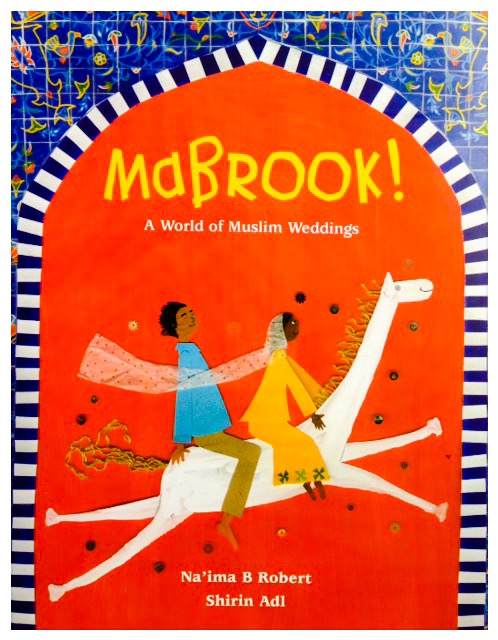
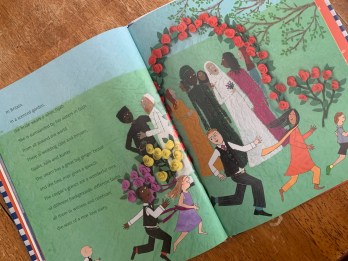
This 32 page lyrical 9 x 11 hardback book with playful illustrations is a celebration on the similarities of all Muslim weddings and the cultural distinctions that make them unique. Four countries are highlighted: Pakistan, Morocco, Somalia, and Great Britain, and I really wish there were more. The book is written on an early elementary level, but would make a great wedding present, or even a text to be shared at interfaith gatherings that focus on traditions and women’s rights. It is joyous and informative complete with a glossary and info blurb at the end.
The book starts out with verse 30:21, Chapter ar-Rum in the Holy Qur’an and then jumps in to jubilations of mabrook, congratulations. It establishes what countries will be explored and that Muslims get married sharing religious rites, but different celebrations.
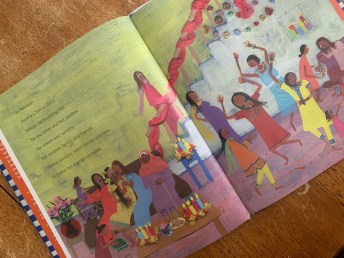
In Pakistan there’s a henna party and the groom rides in on a horse. The brides are adorned with bangles of gold and guests enjoy biriyani and rasmalai.
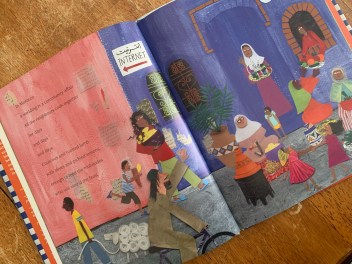
In Morocco the entire neighborhood helps prepare couscous and roasted lamb with olives and pickled lemons. At the waleemah the bride is carried in on a chair, and changes outfits seven times.
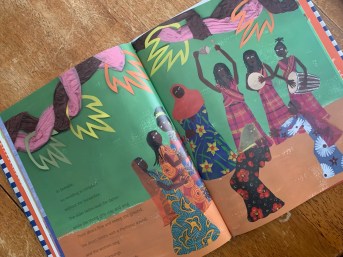
In Somalia, buraanbur is danced and blessings are sung to the mother of the bride.
In England the ginger bearded imam marries the groom to his hijab wearing bride in white. There are people of all faiths and backgrounds there to celebrate and wish them well.
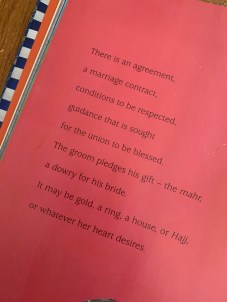
But before all of that, there are meetings with families, prayers, important conversations, agreement to the marriage contract, the woman is given a mahr and guidance is sought.
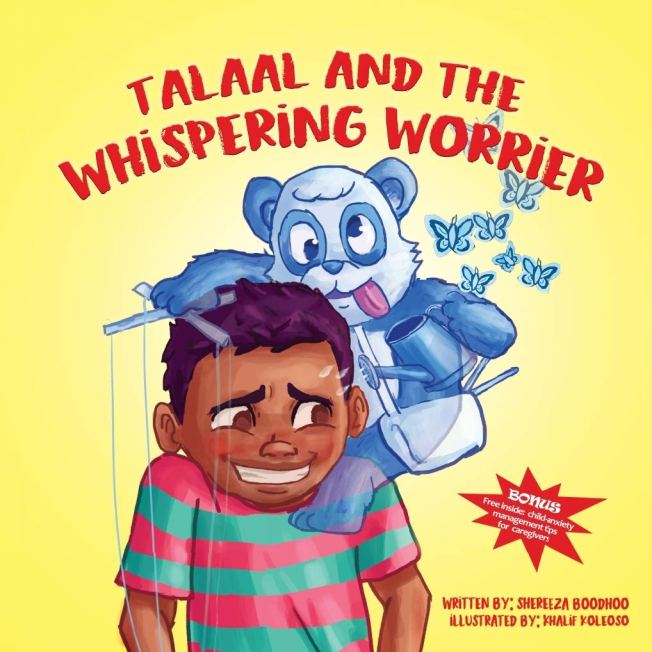
This 38 page book addresses anxiety and self confidence with Islamic tips and tools to help kids cope and feel less alone in their struggles. The rhyming text on some pages is flawless, and elsewhere falters and distracts from the text. Similarly, the panda that personifies the “Whispering Worrier” is at times a compliment to the story, and at other times seems to muddle the seriousness being discussed (I don’t understand the ever-present watering can). The book is long and the text small, but overall the message is good and presentation sufficient. Books like this by qualified professionals are incredibly valuable and important. The use of Quran and trust in Allah swt to feel confident and at ease is something we need to share with our young ones early, often, and regularly.
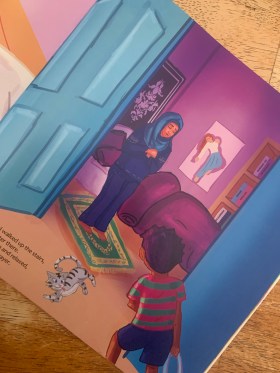
Talaal comes home from school and declares that he feels sick and is not going back to school. His parents can’t seem to find anything wrong and send him to go do his homework. He passes his older sister who is praying and seems so relaxed, when she is done she comes and talks to him. He explains how he felt when the teacher asked them to share and how the fear and nerves felt like his heart was being beat on. She reassures him that she feels the same way at times and that a Whispering Worrier whispers unhelpful thoughts to tear us down.
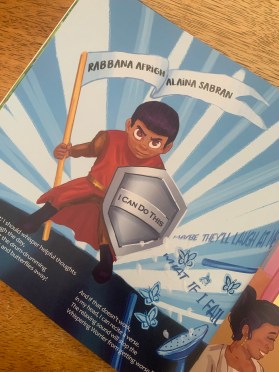
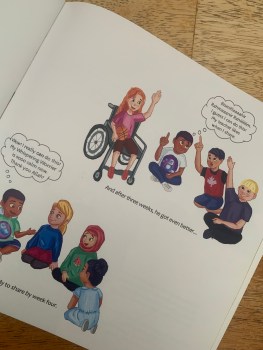
She suggests countering the negative thoughts with helpful positive ones. She also suggests reciting Qur’an. She then has him practice some ayats. He recites the begining of Surah Ikhlas, and starts to feel better. Talaal excitedly goes to tell his parents what is going on, and the suggestions his sister has given him for coping and overcoming his stresses. They let him know that they too get nervous. His mom, goes a bit off topic and explains various wonders that Allah swt has created and they reassure Talaal that he too is beautifully made. Talaal starts practicing and finds over time, in different situations, he starts to calm his Whispering Worrier.
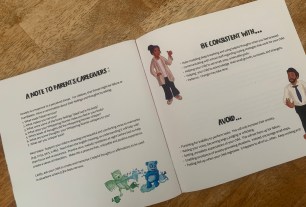
I like that the advice is rooted in Islamic concepts and that his sister, not an adult, is who coaches him and guides him, making it seem normal and not a punishment. I like that it isn’t an instant fix, but something to work out and be consistent with over time. The end has a note to caregivers and some tips. I think reading the book and having discussions is the first step and inshaAllah if your child or student is struggling that professional help will be sought, so that children don’t have to suffer needlessly.
I read this to a group of early elementary students to try and normalize the topic and encourage them to talk to a parent or teacher if they felt similar to Talaal. Unfortunately, the book had a hard time keeping their attention and I think, in retrospect, it might be a better selection for smaller groups or one-on-one so that discussion and feedback can safely occur.
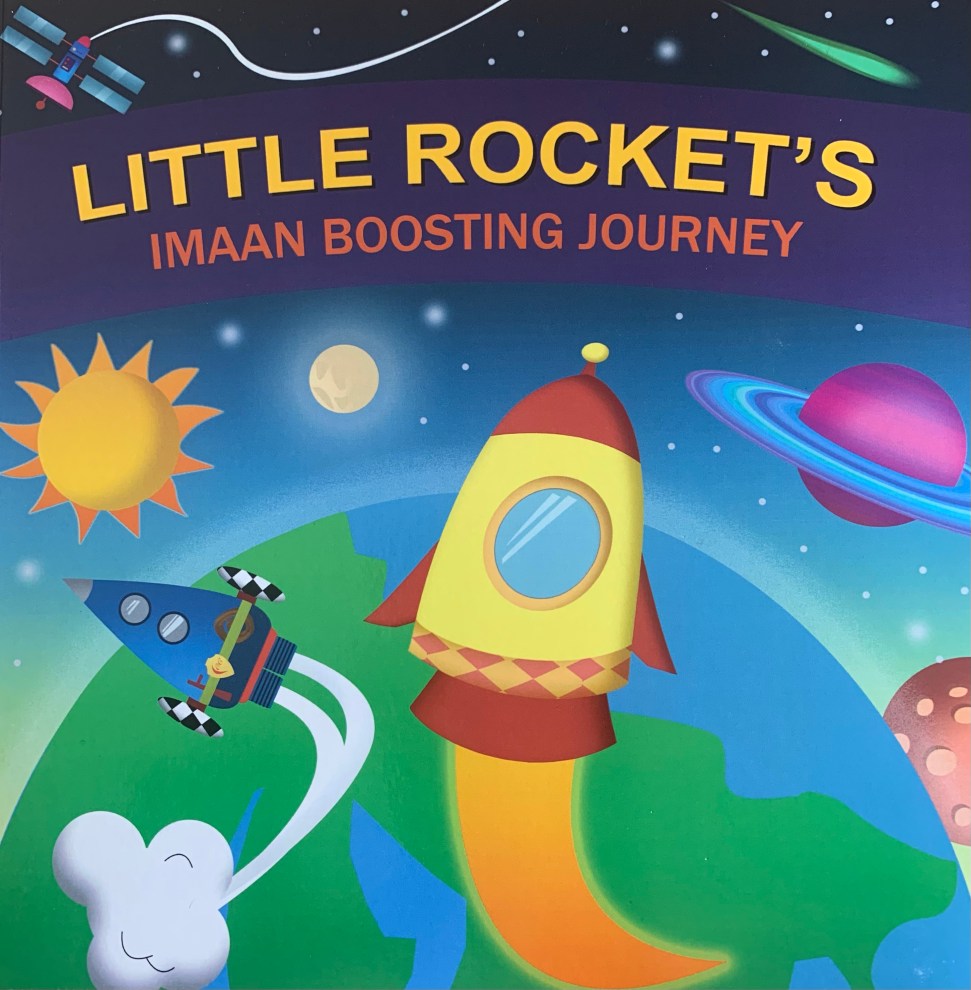
This 32 page toddler to first grade picture book at first appears to be just another book praising Allah’s creation from the ground level up to the heavens as the main character is a personified rocket ship. However, I was delighted to see that after a few pages the book goes deeper in both Islamic messaging and in literary action. Told in rhyme, Little Rocket will face dangerous comets, make desperate humbled duas for help, be rescued by Officer Cosmo, show gratitude, and grow in his imaan and understanding of Allah’s creation and mercy. With a guide at the end to further involve children in the lessons of the book, and a glossary; the bright glossy illustrations will give little Muslims important well woven in lessons in a fun story packaging.
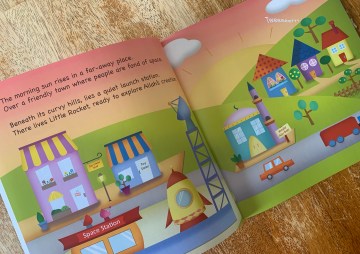
Little Rocket is about to take off from his little town, it is his first flight, so he is a little nervous. A little dhikr calms his heart and bismillah he is off. He prayers for courage as he looks down and sees so many of Allah’s creations.
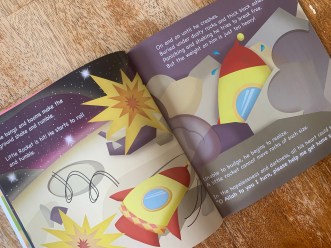
As he enters space the colors of Earth become the dark sky full of stars and planets that do not fall. Careful not to get too close to the burning sun. Little Rocket wants to keep heading toward Neptune, but needs to take a rest on a rocky moon. As he drifts off to sleep in the quiet of space he is abruptly awoken by comets hitting the surface.
Little Rocket is hit and the ash is thick from the destruction. He gets stuck from falling debris and prays to Allah swt for help. A brave blue rocket, Officer Cosmo, hears something, and comes to Little Rocket’s aid. SubhanAllah Officer Cosmo is able to save a very grateful Little Rocket.
Little Rocket heads home feeling closer to Allah swt then he did when he left that morning and knows that “There is none worthy of Worship, but Allah.”
The power of Dua saved the day and with concepts and vocabulary of space all combined in a story with a sweet plot, this book will be requested over and over, and inshaAllah help little ones to appreciate and trust Allah always.
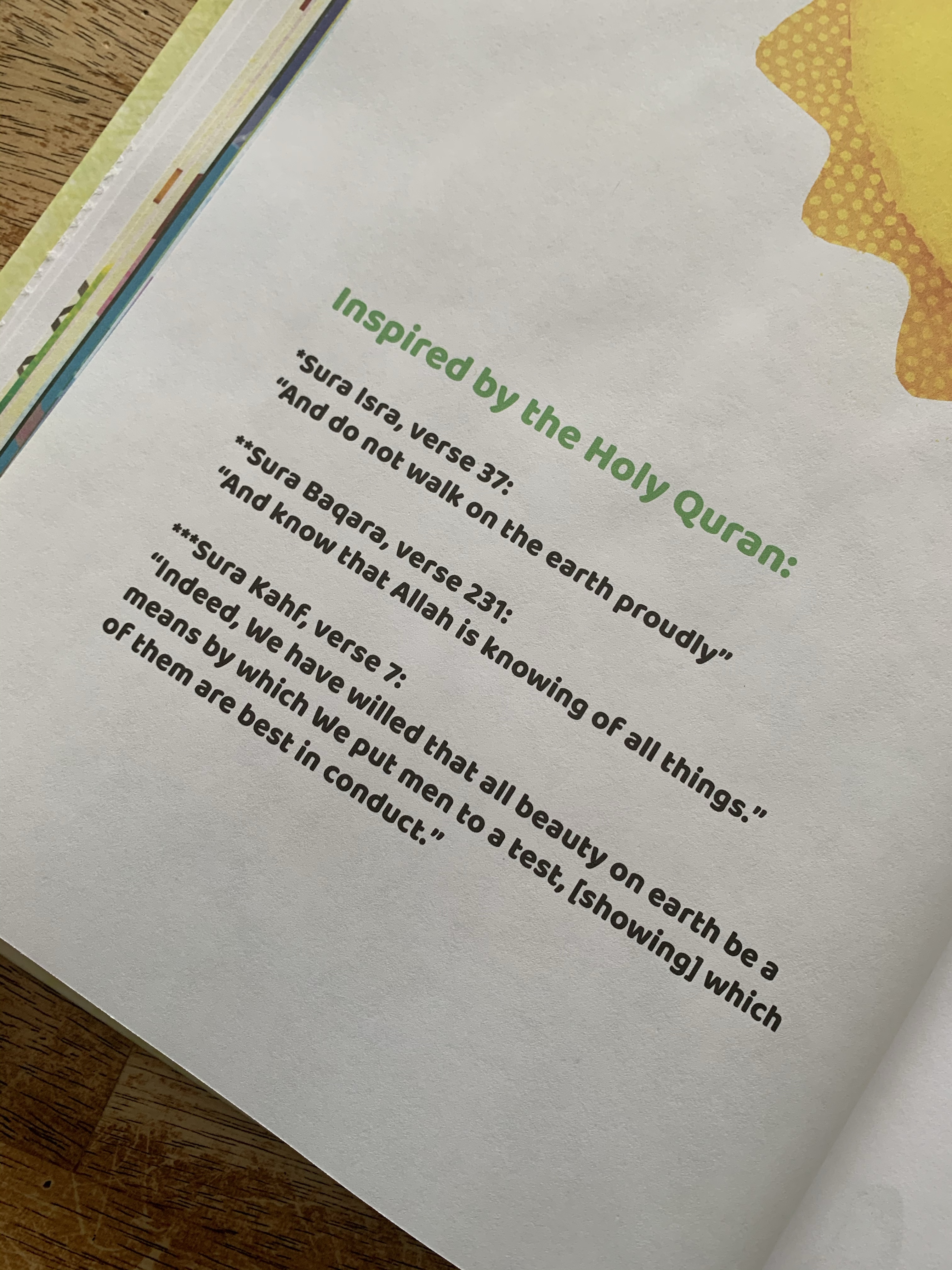
The book has a solid premise, although it reads a lot like The Very Greedy Bee, and has lovely 8.5 by 11 pictures on its 24 pages, but unfortunately the text is all over the place. The story contradicts itself, it is overly wordy, and way to rhymy. Yeah, rhymy isn’t even a word, but if it were, this book, would be a great example. I struggled with the font as well, the lowercase f looks like a capital F, and no matter how many times I read it, I’d get tripped up thinking an interior word was being capitalized. The book says that it is based on the ayat in the Quran that reads, “And do not walk on the earth proudly,” and even has two other ayats listed at the end as inspiration, but really it is a single page and a single character that blurts out the ayats from the Quran that talk about walking on the earth proudly and this world being a test. While the illustrations are fun, it just isn’t enough to make the book a solid read to convey humbleness and gratitude. Children will be lost in the text, confused by the inconsistencies, and disappointed in the super quick resolution.
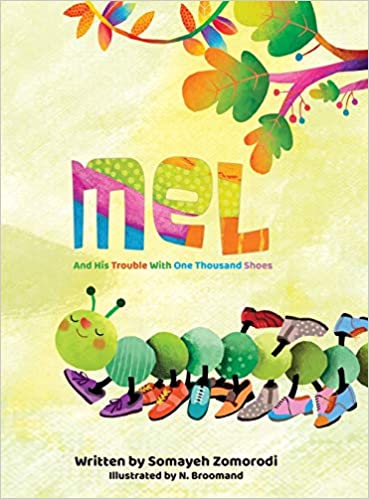
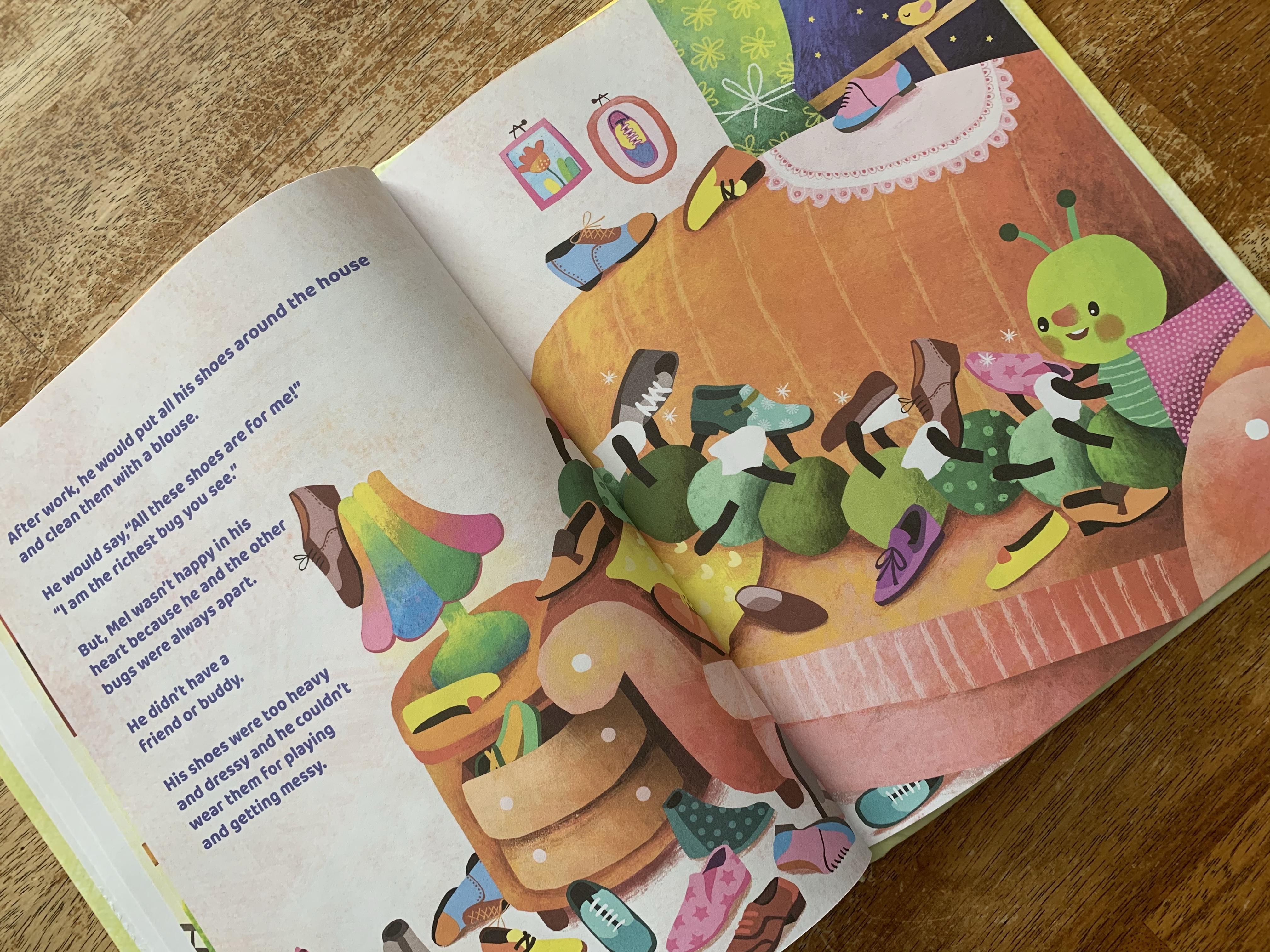
Mel the millipede lives in a farm next to a well. He has one thousand feet and although he doesn’t need shoes, he likes to collect them. He has 950 and is working to find the remaining 50 to complete his collection.
It says, “No one was as happy as Mel; one could tell.” Then on the next page as he cleans his shoes with a blouse it is revealed that he isn’t happy in his heart because he is always alone. But the picture stills shows him smiling.
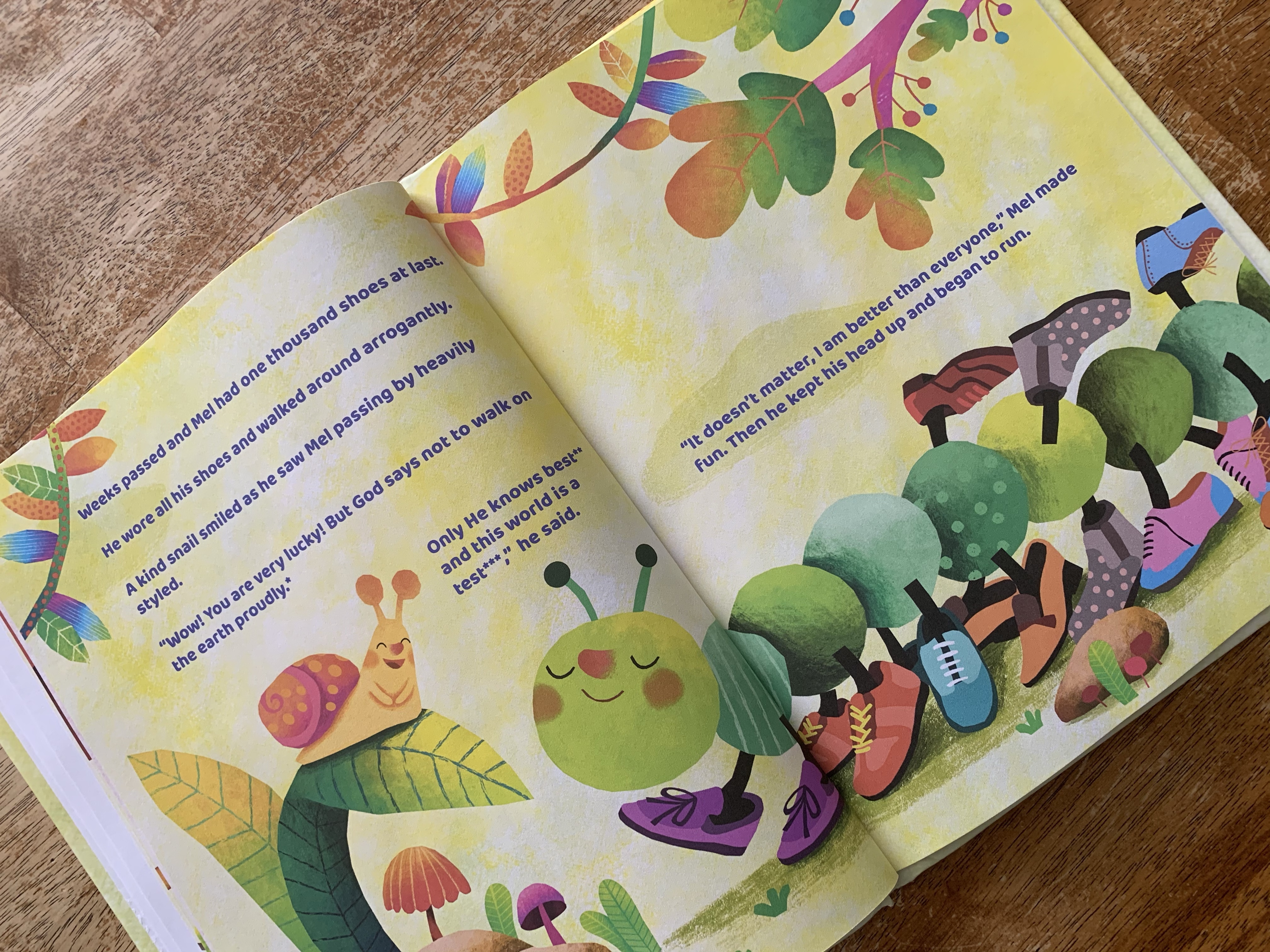
He finally has his 1,000 shoes, we don’t know how or where he got them, when a small snail tells him that “God says not to walk on the earth proudly. Only He knows best and this world is a test.” There is no explanation, Mel just says “it doesn’t matter, I am better than everyone.”
This whole time walking, Mel has been wearing his shoes although it has mentioned that he can’t wear them because they are heavy and he doesn’t want to get them dirty. As he watches the other bugs fly kites and balloons he is sad that he can’t play because his shoes are too heavy. But he has been walking outdoors and is on a mushroom lamenting with his shoes on. Those flying kites aren’t moving much…one is a worm, one a snail, very inconsistent.
One night a moth knocks on his door warning Mel of a flood. Mel ignores the frantic urgings, fearing that it is a trap to get his shoes. He thinks everyone is jealous of his shoeing. The flood waters sweep him and his shoes out of the house and throughout the night he risks his life multiple times to save his beloved shoes.
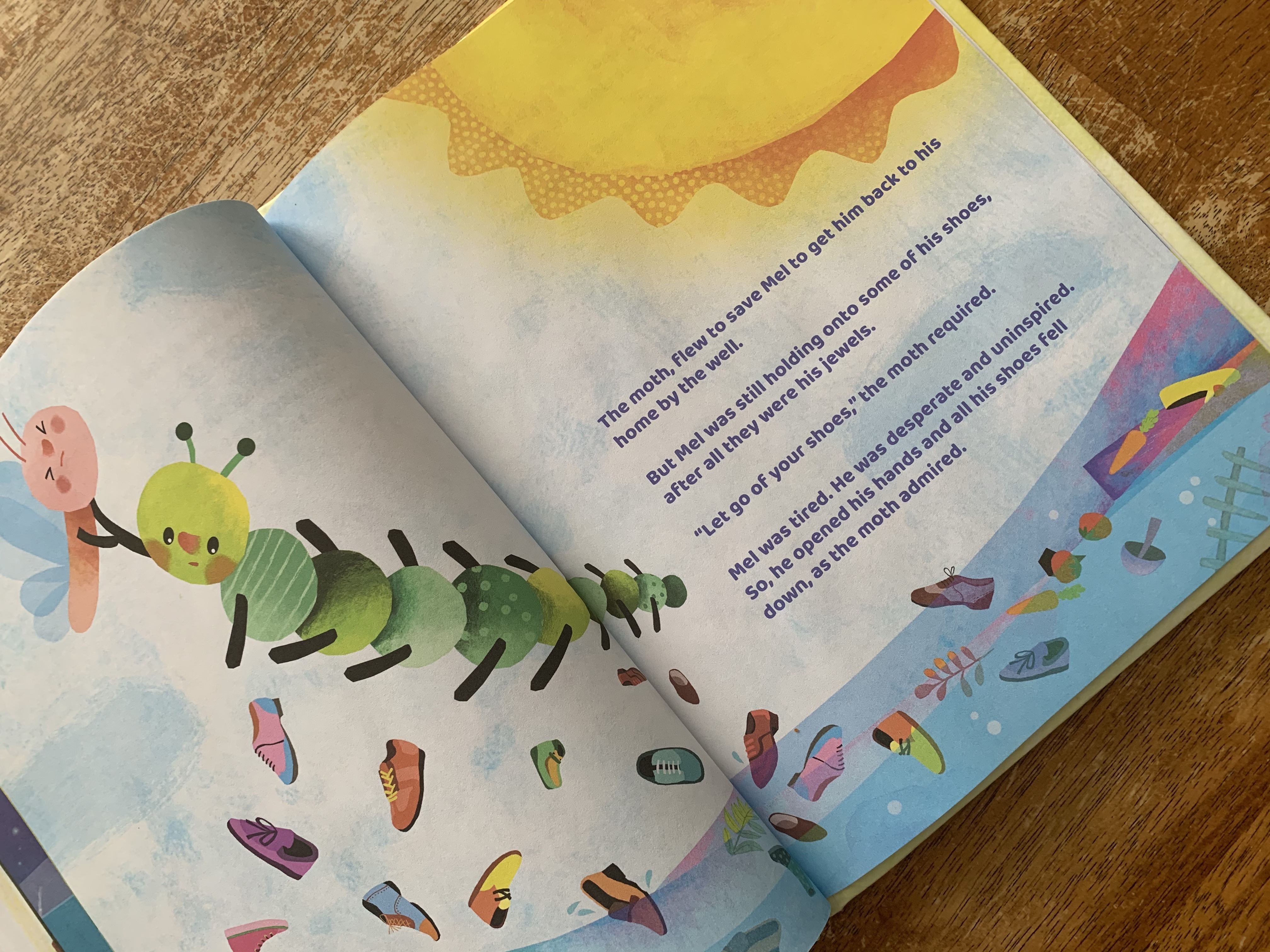
When morning arrives, he is still trying to save his shoes, when moth, attempts to save Mel. To get Mel back to his house, he will have to convince him to drop his shoes. Mel is tired and desperate and uninspired so he drops his shoes and is brought to dry land. I don’t think uninspired is the right word, shouldn’t be be grateful and willing to change to save his life? But even that notion is a stretch because in the illustrations he is so close to land. He could just swim over, shoes or no shoes, moth doesn’t need to be flying him to safety. Additionally, when the water recedes, won’t his shoes still be there?
The conclusion is Mel hugging moth and apologizing to the bugs. I’m not sure what he is apologizing to them for, nor is it explained. Since the book claims to be based or inspired by ayats, I feel like this would have been a good place for a moral cathartic lesson, but alas, it just says, “the end.”
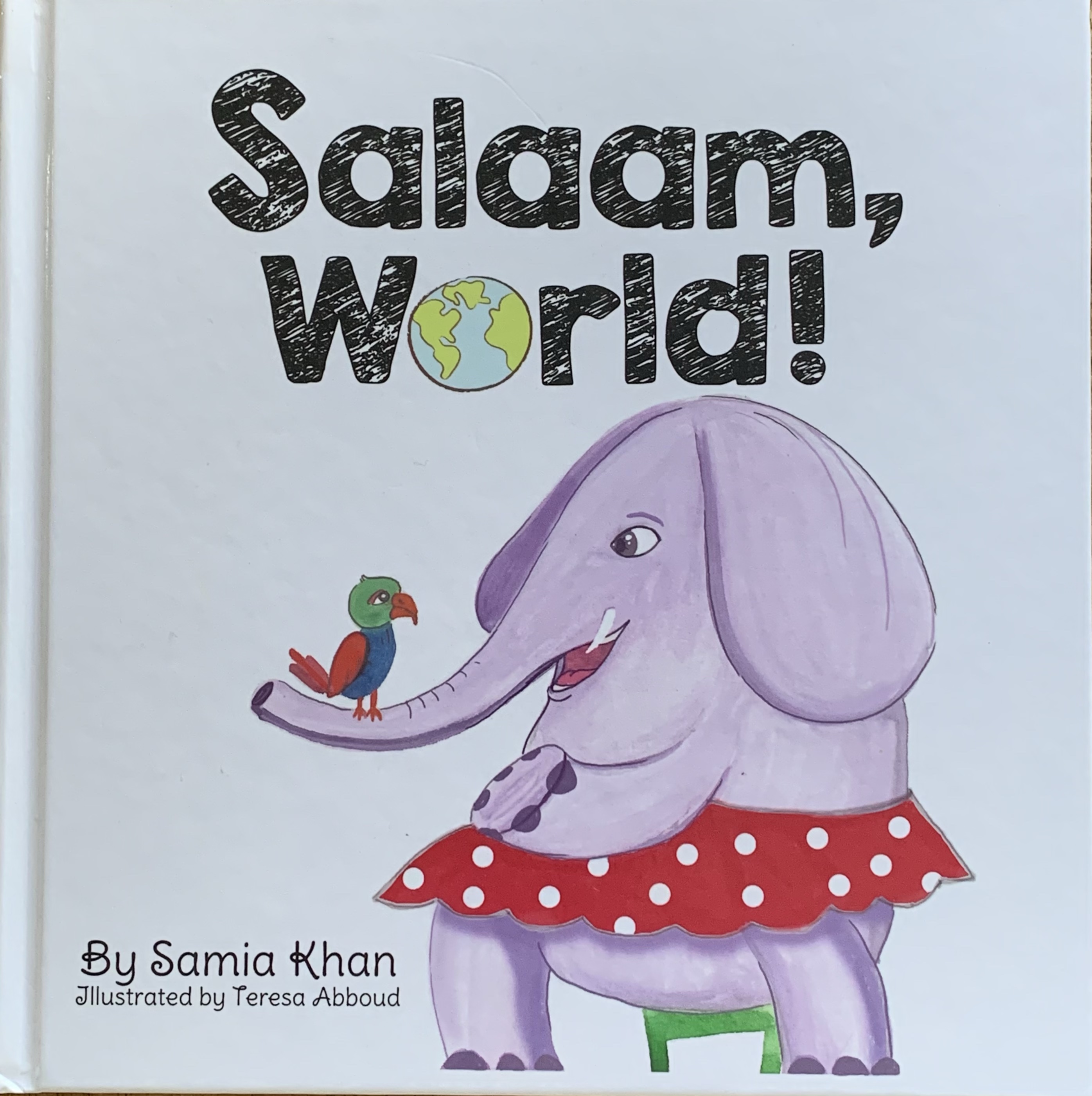
This 26 page rhyming picture book starts out basic enough with salaam being said from various locations, but it digs a little deeper as the book progresses to explain what salaam means, and how to respond. A good introduction to the greeting of peace for ages three and up. The pictures are jungle animals testing out the word and the 10 by 10 size is sufficient for bedtime and in small groups. My picky critiques are I don’t like the font as I think it is hard for early independent readers to decipher when capitalized, words such as “catastrophic” and “salutation” are a bit advanced for the demographic, and I wish there was a bit more Islam in the book, but overall it is sufficient, and an effective tool to helping get little ones to say salaam.
“Salaam from above, salaam from below, salaam from the mountaintops covered in snow,” is how the book begins as a cat hanging from a tree and braving the elements offers his greetings. A donkey then asks us to hold up and explain what the word means.
Salaam is defined as meaning peace in Arabic and a word that Muslims use that is like ‘hello’ only kinder. It is sending peace to those you say it to, and a show of respect. The animals say it to others before noting that you can say it short or long: Salaam or Assalamualaikum.
The book then asks how to respond before teaching us to say walaikum-assalam and telling us not to be alarmed the next time we hear the greeting, but to return it and spread it.
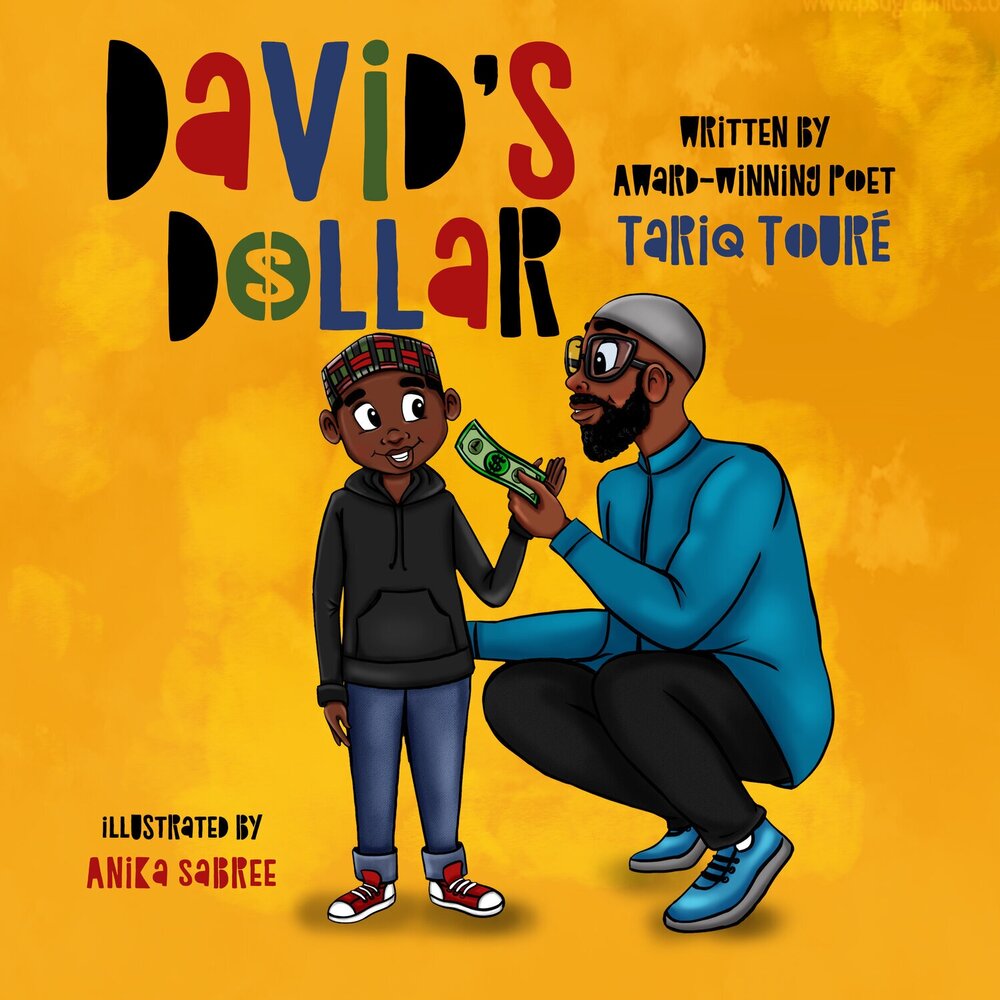
This early elementary 20 page story is an entertaining, yet informative look at community and economics on a kid’s level. It features black Muslim characters, business owning women of color, commerce, charity, and relevance. I loved the cadence of the book, the illustrations, and the simple text. Sure, maybe a dollar isn’t much and it is a transparent simplistic view, but it makes the point of how when you shop local everyone benefits, and how the path money takes impacts everyone it touches.
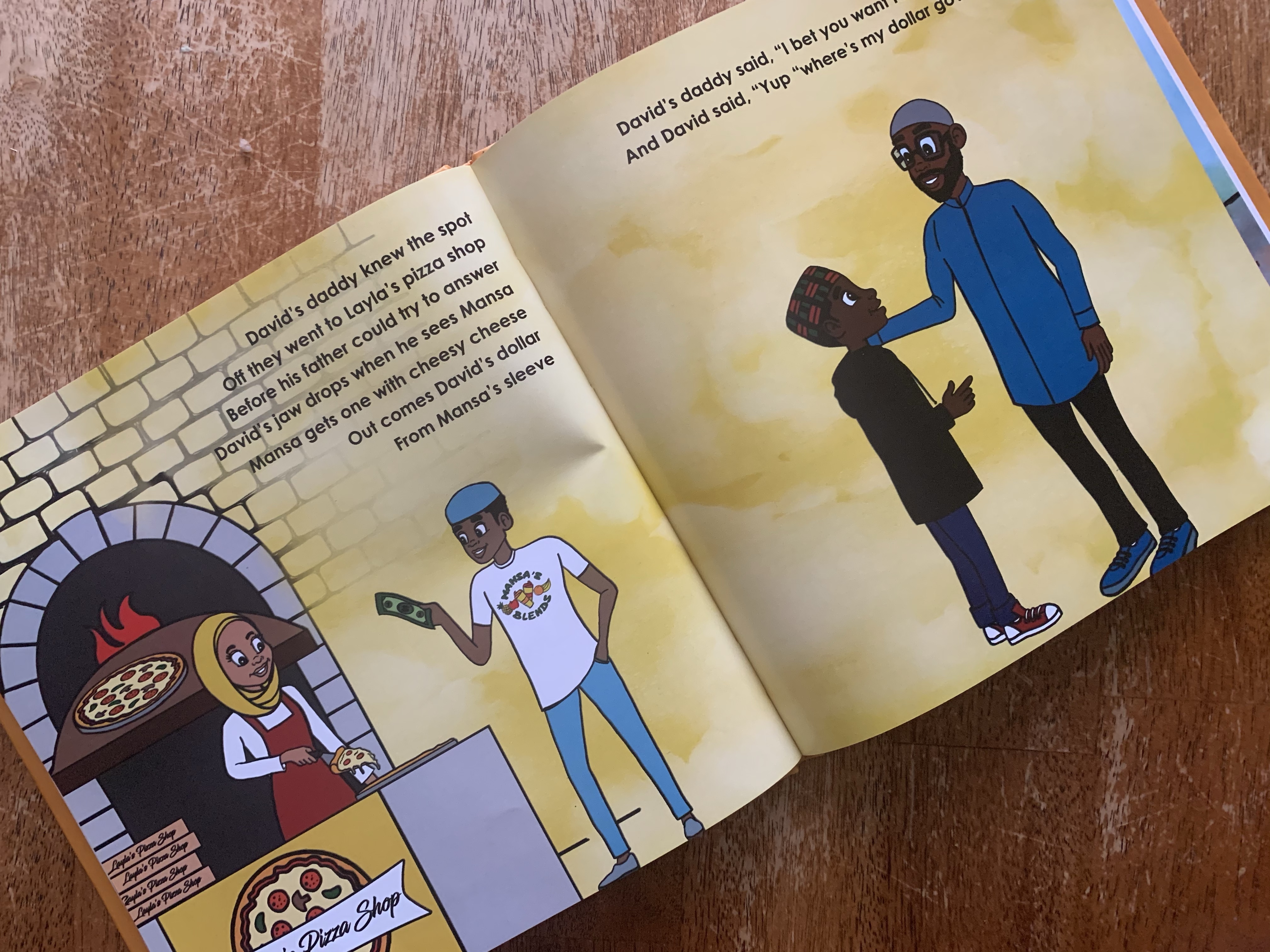
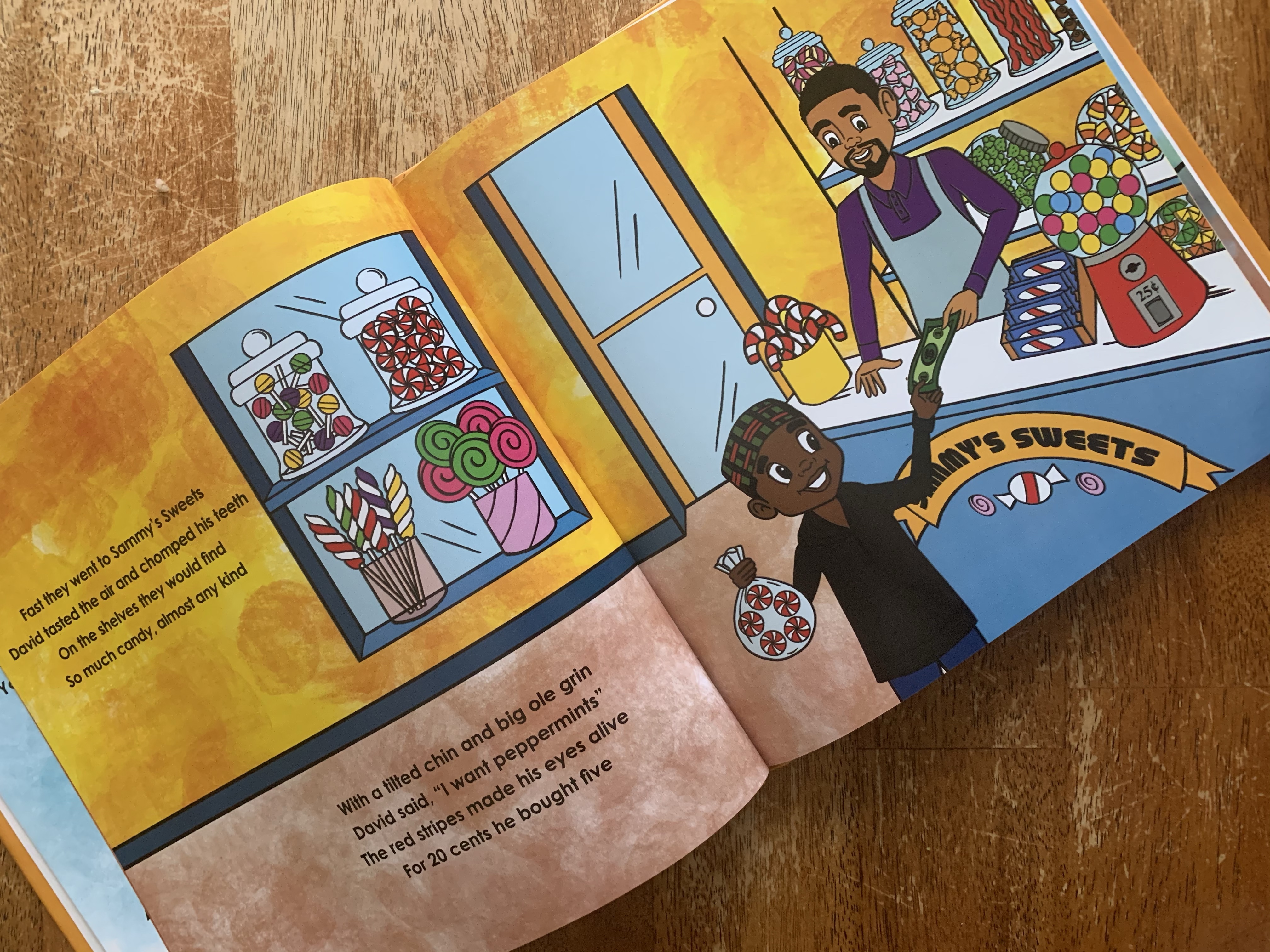
David is getting his dollar after doing his chores, and he is ready to head to the candy shop to see what to spend it on. At Sammy’s sweets, he decides to get five peppermints, and just like that his hard earned money is gone. He asks his dad where the money went and off they head to Mansa’s juice shop. When Sammy comes in and buys a drink, out comes David’s dollar and now it is in Mansa’s hands.
David and his Daddy follow the money and see it change hands at Layla’s Pizza Shop, and then Madame C’s Braids, before heading to Uncle Kareem’s hardware store where the dollar too has ended up. It is time to pray so Uncle Kareem, Daddy, and David head to the mosque.
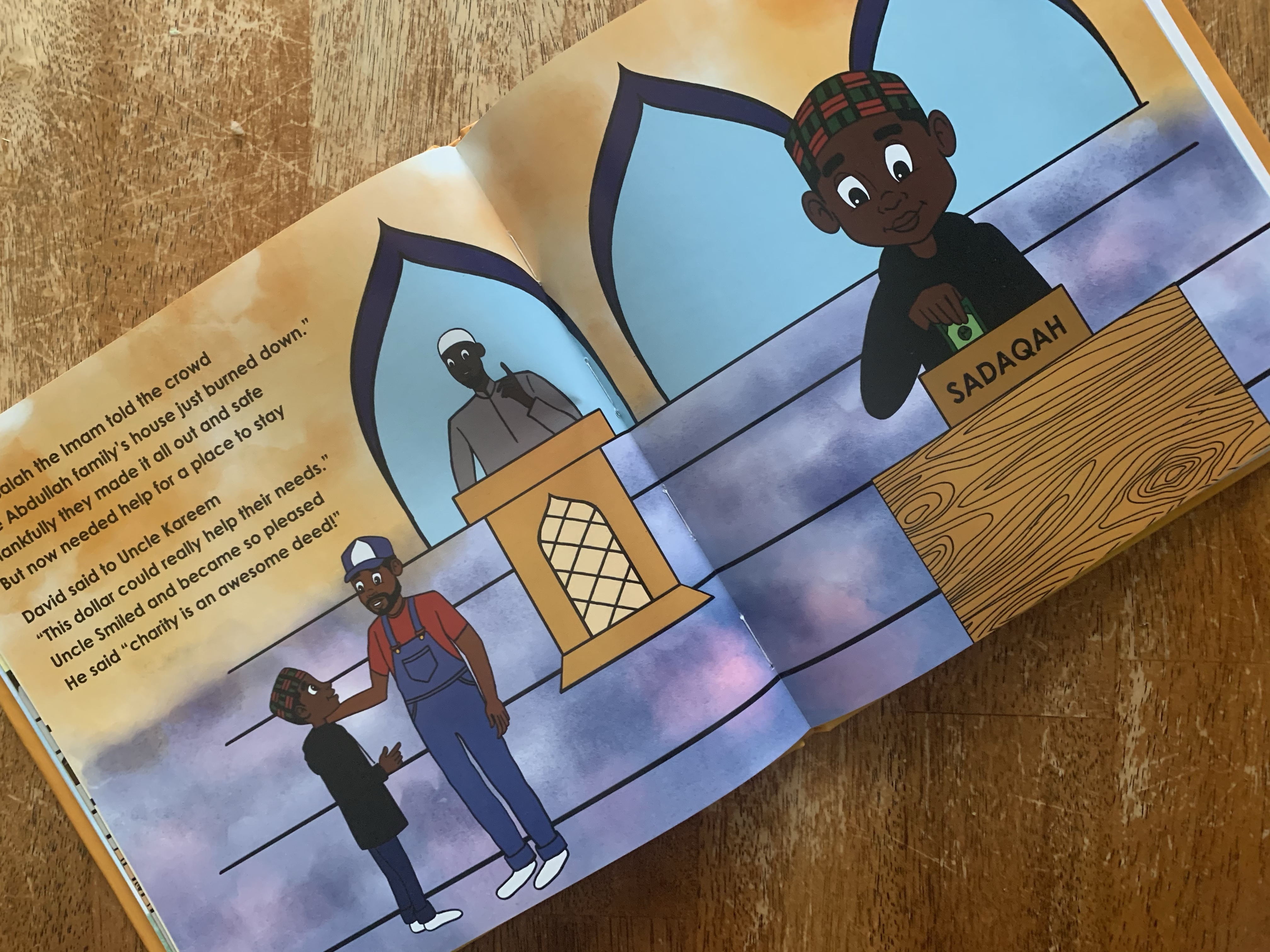
After Salah the Imam tells the crowd that a family’s house has burned down and they are collecting sadaqah. David tells Uncle Kareem that that dollar should go to the family. At night, David recalls all the places his dollar traveled and resolves to learn more math.
The book starts with a beautiful heartfelt gratitude message to Allah swt and the community of supporters. The end of the book features a detailed bio of the book’s poet author and his successes and praises.
The story is rooted in an Islamic community, but is for all readers of all faiths. There is no preaching or details about belief. many women have hijab on, there are Islamic names, they go to the mosque, they pray, and they give sadaqah.
I think I’ve loved every Bismillah/Precious Bees book I’ve ever read, and this book is no exception. It is only the second children’s book I’ve ever seen on the subject of Islamic bathroom etiquette and I think combined with My First Muslim Potty Book, our little Muslims and their potty trainer adults are in a great position to explain, teach, laugh, and be successful in getting our little ones out of diapers and adopting Islamic Sunnahs and hygiene. I love that this book is inspired by the author’s real life experiences, that it starts with a few WHO facts about the lack of access people have worldwide to a proper toilet with a portion of the book sales going to help those who lack hygienic facilities, and that the book is approved by a Sheikh. Additionally, I love that there is a song that goes along with it (it isn’t posted yet, but will be shortly inshaAllah), that there are questions and games at the end with informative pages about istinja and the duas to be said, it is silly, the illustrations adorable and expressive, and overall just oh so relatable. The book is perfect for ages three and up, and a great reminder resource for older kids that may need a nudge to stay on top of their bathroom behavior and feel normalized by seeing themselves in the pages.
It is a big day for mom and dad and Rayyan and Ridhwan. Rayyan is going to start using the potty. They have practiced entering the bathroom, but now they are going to do it for real: saying Bismillah and entering with the left foot first. Only he uses his right, so they do it again, and it happens once more, and now mom and Rayyan are laughing and dancing. The third time is the charm and in they go.
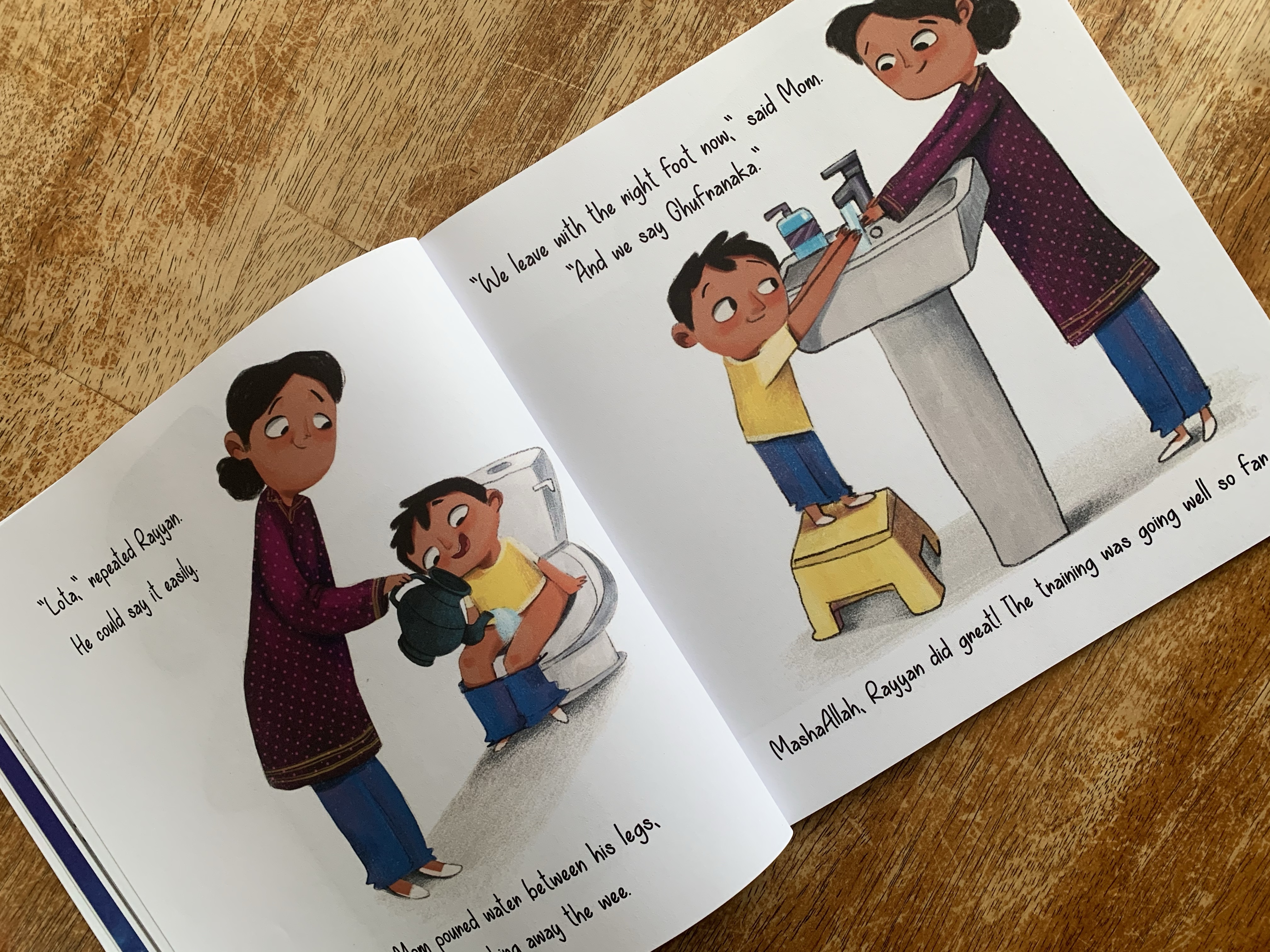
He sits on his little potty, and he goes, hurray, but when he starts to stand up, Mama explains that he must clean himself, all Muslims do. Rayyan asks if that is a teapot when Mama lifts up what she calls in Bengali a bodna and his Urdu speaking father calls a lota.
Lota sticks and Rayyan is washed and ready to clean his hands before heading out the door with his right foot and saying Ghufranaka. So far so good, but it isn’t a one time thing. There are a lot of days of accidents, but over time it gets better so the family decides to head out. When all of a sudden Rayyan has to go, the family runs to a halal restaurant to borrow their restroom.
Phew they made it just in time, and instead of a teapot looking lota they have a watering can which makes his dad have to stand really far away to help him wash. Rayyan notices different places have lotas that look different than his does at home. At a wedding they had to use a plastic cup, the mosque has a mini shower, at the park Mama pulls out a plastic bottle from her purse. Rayyan decides he wants his own little bottle too, so they pick one out that he can keep in his backpack.
One year later it is a big day for Ridhwan, he is about to start potty training, like kids all over the world. There is then a two page spread about many words different languages use to call the vessel that they use to wash themselves in the bathroom. There are questions to talk about regarding the story, a maze to get to the restroom in time, the Muslim Potty Training Song to the tune of the Hokey Gokey, which I’m assuming in America is the Hokey Pokey, a page answering What is Istinja?, Duas when using the toilet, the story behind the story, information about the illustrator and about the author. All-in-all 48 pages.
I purchased mine on Amazon, I think the local stockists will have it shortly and I would assume the bismillahbees.com website will as well. I know the author recently had her father pass away, inna lillahi wa inna illayhi rajioon, so please make duas for her and her family, and be patient on the QR code and song which inshaAllah are forthcoming.
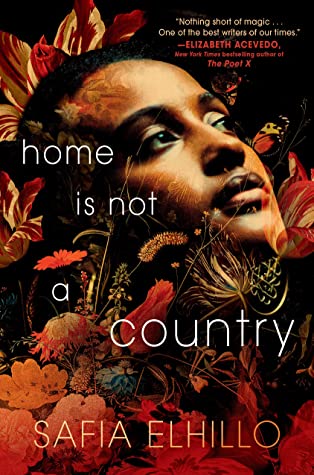
This upper middle school/high school 224 page novel told in verse touches on familiar themes of finding yourself and wondering about what could have been, but is anything but predictable. Through magical realism, religion, culture, and phenomenal imagery, this book is haunting and powerful as it sweeps you into the possible alternate reality of a young 14 year-old-girl yearning to be someone else, consumed by a life that could have been, desperate for the other half of her mirrored existence, and for a home that she does not know, but so desperately longs for. As a Muslim child of an immigrant, the daughter of a single mother, and nearly invisible at school, readers will feel her story, more than know it, and find themselves in her own awakening.
SYNOPSIS:
Nima feels like she exists in pieces. No one understands her and she doesn’t feel comfortable in her own skin. At school she is invisible, she is foreign and teased for it. She has one friend, Haitham who is always there for her at home, but just a familiar wave in public. At home Nima enjoys old Arabic songs and movies, hobbies she is teased for at weekend Arabic school, her hardworking mother is graceful and beautiful, Nima is neither. Her world is the aunties and family in her building, but her Arabic is weak and she doesn’t fit in anywhere. Her father passed away before she was born in a country she has never known. Her twin sister died before birth, one for each parent in each world. Nima imagines if she wasn’t Nima, but Yasmeen instead. If she was bright and loud and loved and confident. The name she was nearly given, an alternate life she has become obsessed with.
When Haitham and her get in a fight, when her mother removes her headscarf and the bullying intensifies, Haitham ends up in the hospital, assaulted, barely hanging on and Yasmeen appears to help a floundering Nima escape a meal she can’t afford, a man that intends to assault her, and a world where she might find answers. The two girls travel to the homeland in the photographs to understand their parents, to understand why their mother left and Nima to the realization that only one of the girls can truly exist.
WHY I LIKE IT:
I love that I had no idea where the story was going and how much would be spelled out and how much would be left for the reader to interpret. It affected me in a way that I wasn’t expecting and reminded me of the blurred lines of reality from books like Beloved (Toni Morrison) and Her Fearful Symmetry (Audrey Niffenegger). I love that the Arabic script is present and often not translated. The unapologetic connection to the character and author is powerful and beautiful to see in a deeply introspective book. I enjoyed that the “country” wasn’t named as it added to the concept of not knowing you home, it was frustrating, but for all the right reasons.
There isn’t a lot of practiced Islam mentioned, she doesn’t talk about praying, but does talk about the athan and longing for it. Her mother wears hijab, but takes it off and wears a hat instead. The daily life of living in two worlds is taken to mean something very literal and the journey to both worlds is remarkable and memorable.
FLAGS: There is physical assault, theft, lying. Nima has to escape a man that intends to rape her, his intention isn’t detailed, but Yasmeen helps her escape when he brings her to a hotel. Haitham’s dad has an affair with his mom and she is pregnant with him when the story flips back to the past and the couple are not married. There is singing and music and dancing throughout. I think 14 and 15 year olds will be able to grasp the intensity of such situations while also not being shocked by them.
TOOLS FOR LEADING THE DISCUSSION:
I am on the fence if I could do this as a middle school book club, I might suggest it to the high school advisor. There is so much to unwrap in the lyrical text that will draw the students in and force them to reflect on their own impressions to understand Nima’s reality. I think there would be so many conflicting thoughts that the discussion would be amazing.
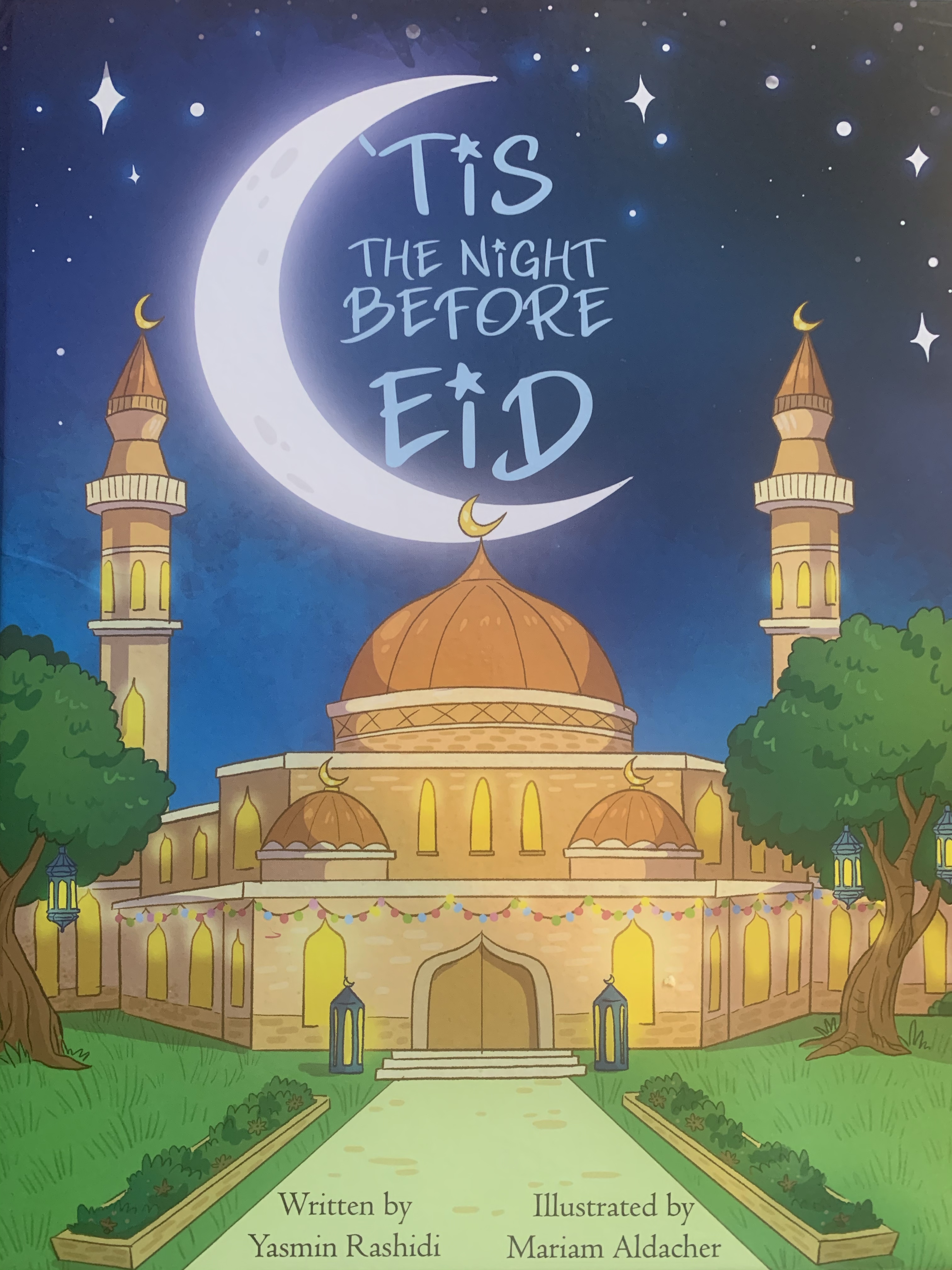
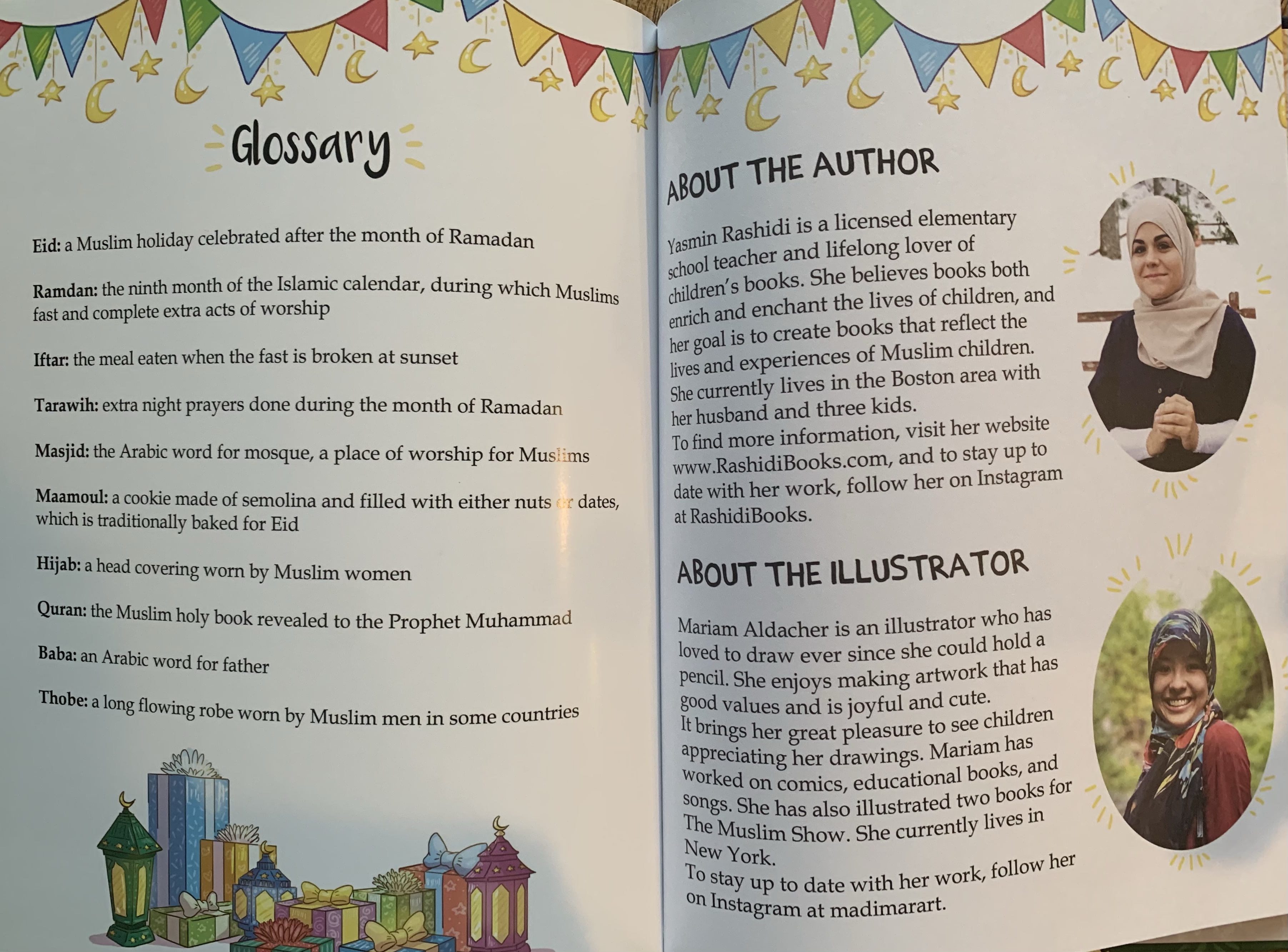
On the surface this 32 page inspired re-imagining of the classic Christmas poem might not seem that impressive, but it is really quite effective in highlighting general key points of Ramadan, the mix of sadness that Ramadan has gone too quickly with the excitement of Eid, and showing the diversity of Muslim families and communities. The large 8 x 10 hard bound pages showcase fun and relatable illustrations that would help inform those unfamiliar with the holiday, while also mirroring and encouraging Ramadan and Eid excitement. It is already a favorite at our house and with simple rhyming lines, the book can lend itself easily to more in-depth discussions (there is a glossary at the back) or be kept as a sweet flowing story that you don’t mind reading repeatedly at the prodding of toddlers and preschoolers alike.
The story starts with it being the night before Eid. Ramadan has flown by, iftar eaten, dishes are put away, trips to the masjid for Taraweh have concluded and now it is time to prepare for Eid. The house is cleaned, clothes ironed, sweets prepared and dreams of gifts filling the kids minds.
The narrative bounces back to Ramadan to explain that fasting is not eating til sundown for 30 days, that Quran was revealed during the blessed month and that we hold on to the lessons of Ramadan all year long.
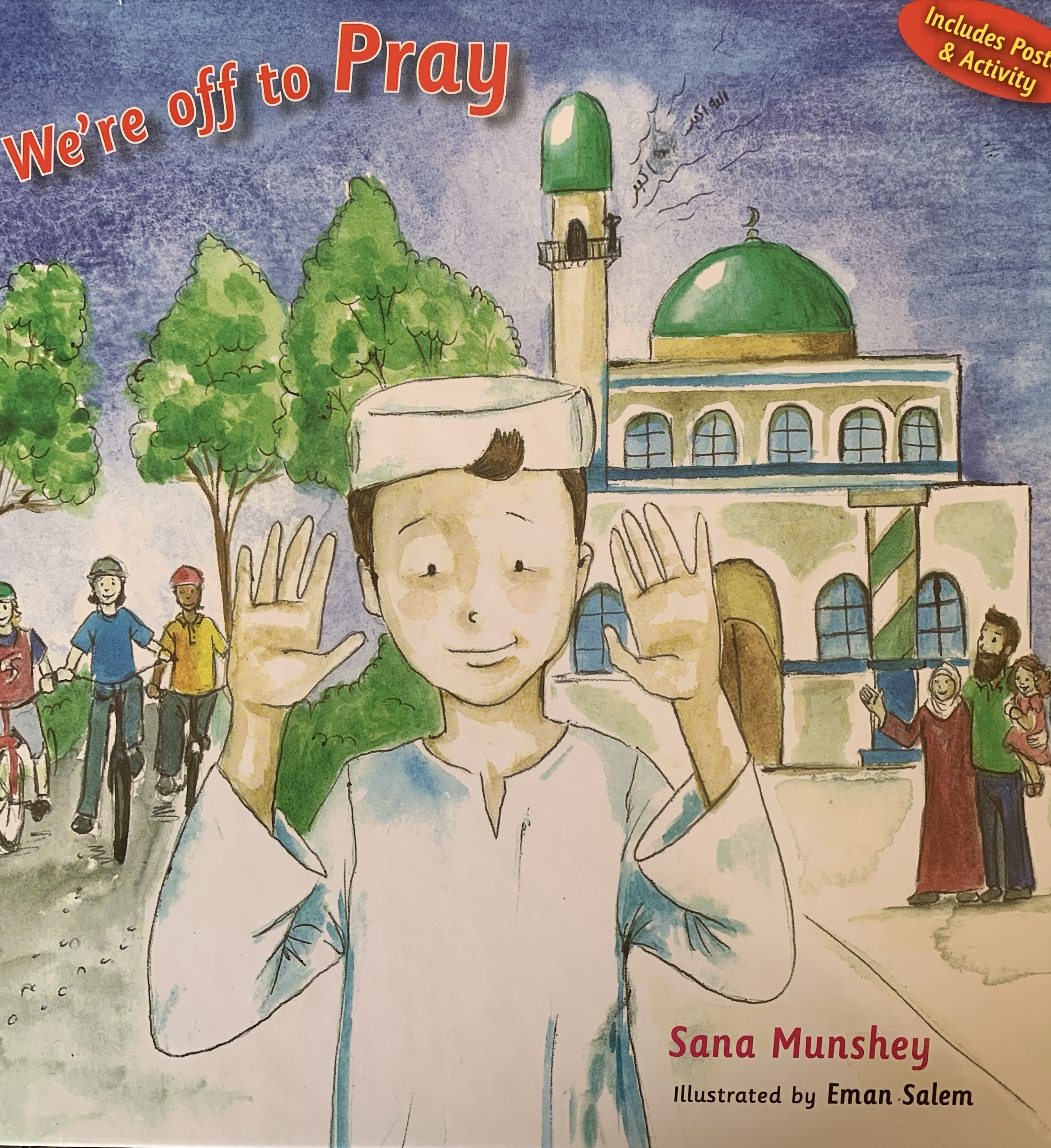
This 8×8 hardback rhyming book for ages 4 and up is filled with detailed pictures that will remind children of all ages how important salat is despite how tempting it often is to neglect it. I think six and seven year olds will benefit the most from this 30 page book that also has an activity poster included, as they start to take on the responsibility of praying on time and making good choices. The gentle parents, the relatable scenario and the adorable little sister, bring this story to life, and will hopefully be a benefit for young muslims and their families.
A small family of a mom, a dad, a brother and a sister are out working in the garden when the athan is heard. The five prayers are mentioned as they set off to pray just like the Prophet (saw) did.
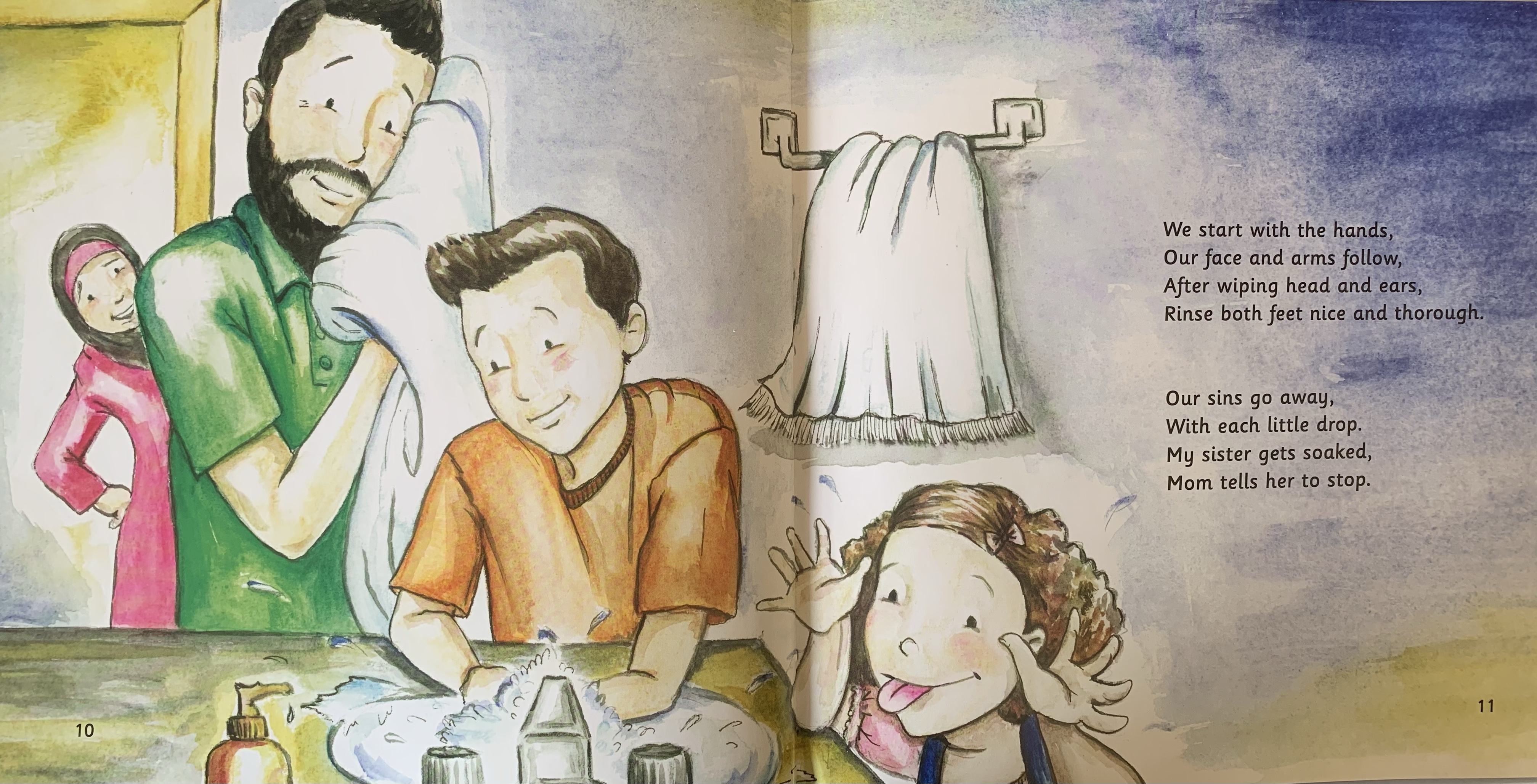
They all head in to make wudu as wudu and salah go hand in hand. They start with bismillah before going through the simplified steps to wash their sins away. They are about to start, when the doorbell rings.
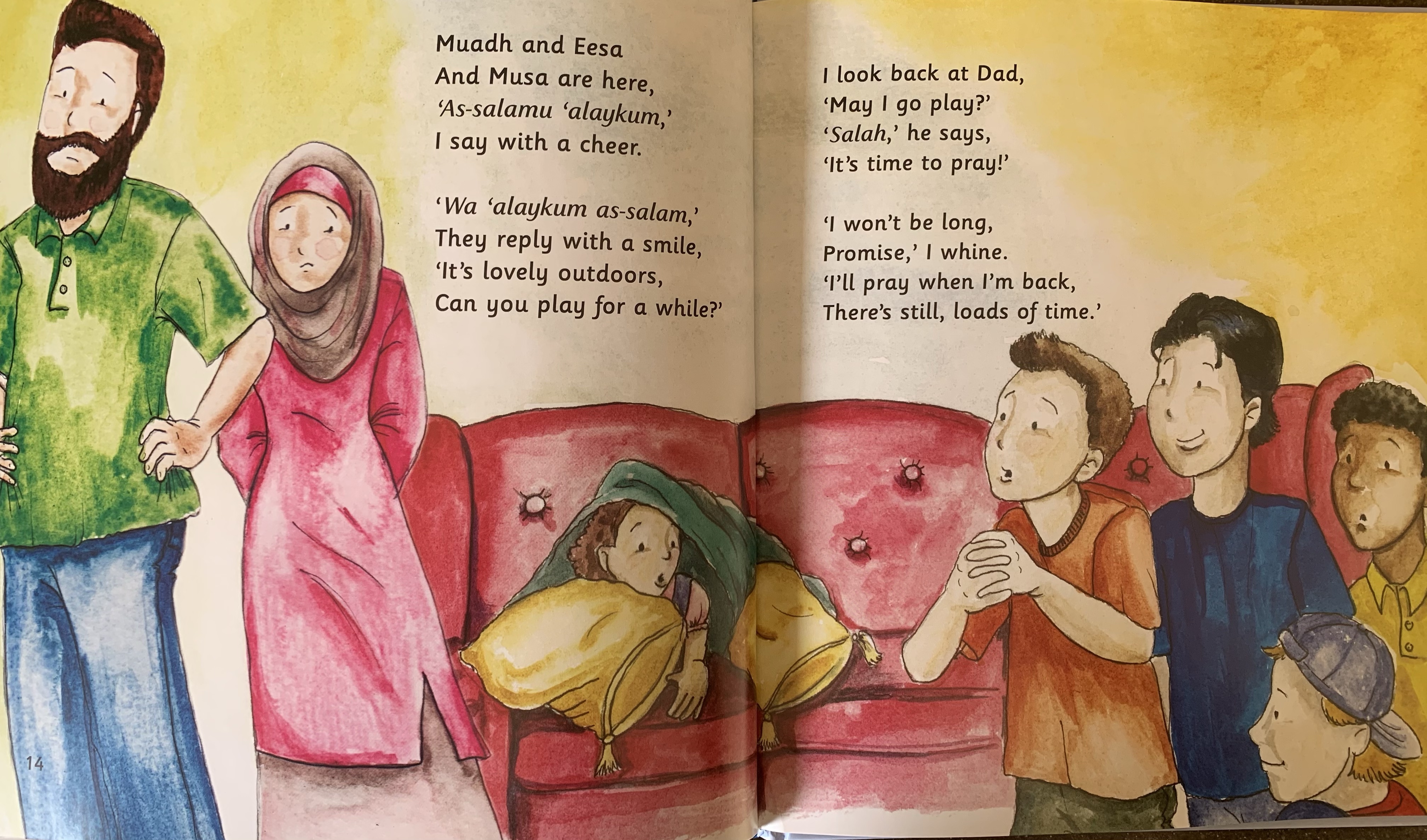
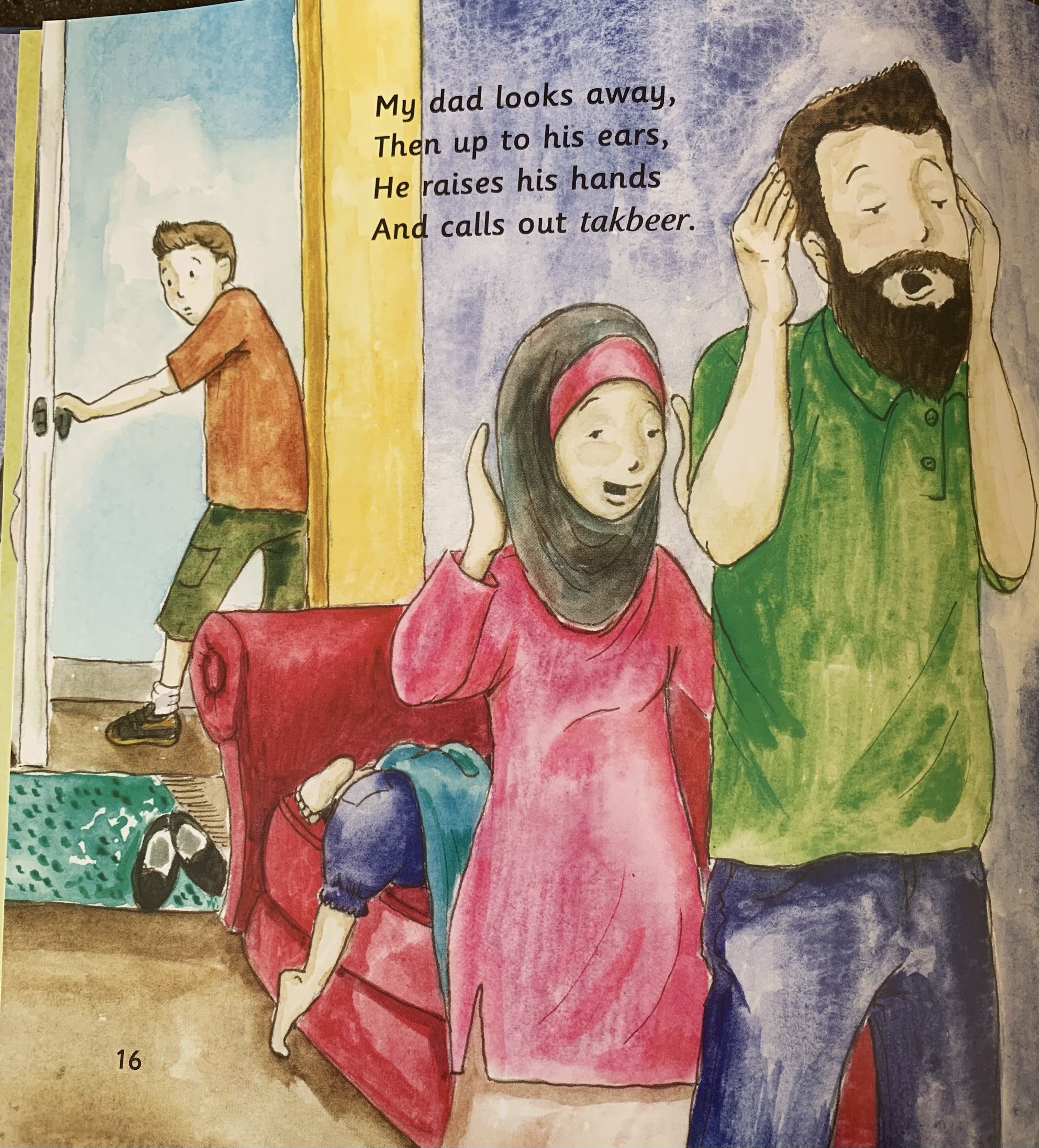
Friends have come to play. Mom and dad tell the boy to pray. The boy says there will be time after they play. Once takbeer is called, the boys slip out on their bikes. The boy wants to have fun, but something is nagging at him and he wonders what the Prophet (saw) would have done.
Whispers urge him to enjoy the beautiful day, but he realizes what he must do, and when his friends ask what is wrong he suggests they go pray. Aqeemus salah!
They head back to the boy’s house, make wudu and pray together. The steps are named and explained and after concluding he sees his proud parents watching.
There is a glossary at the end and the poster has the steps of wudu and salat as well as an activity to put the steps in order.






















 The story starts with it being the night before Eid. Ramadan has flown by, iftar eaten, dishes are put away, trips to the masjid for Taraweh have concluded and now it is time to prepare for Eid. The house is cleaned, clothes ironed, sweets prepared and dreams of gifts filling the kids minds.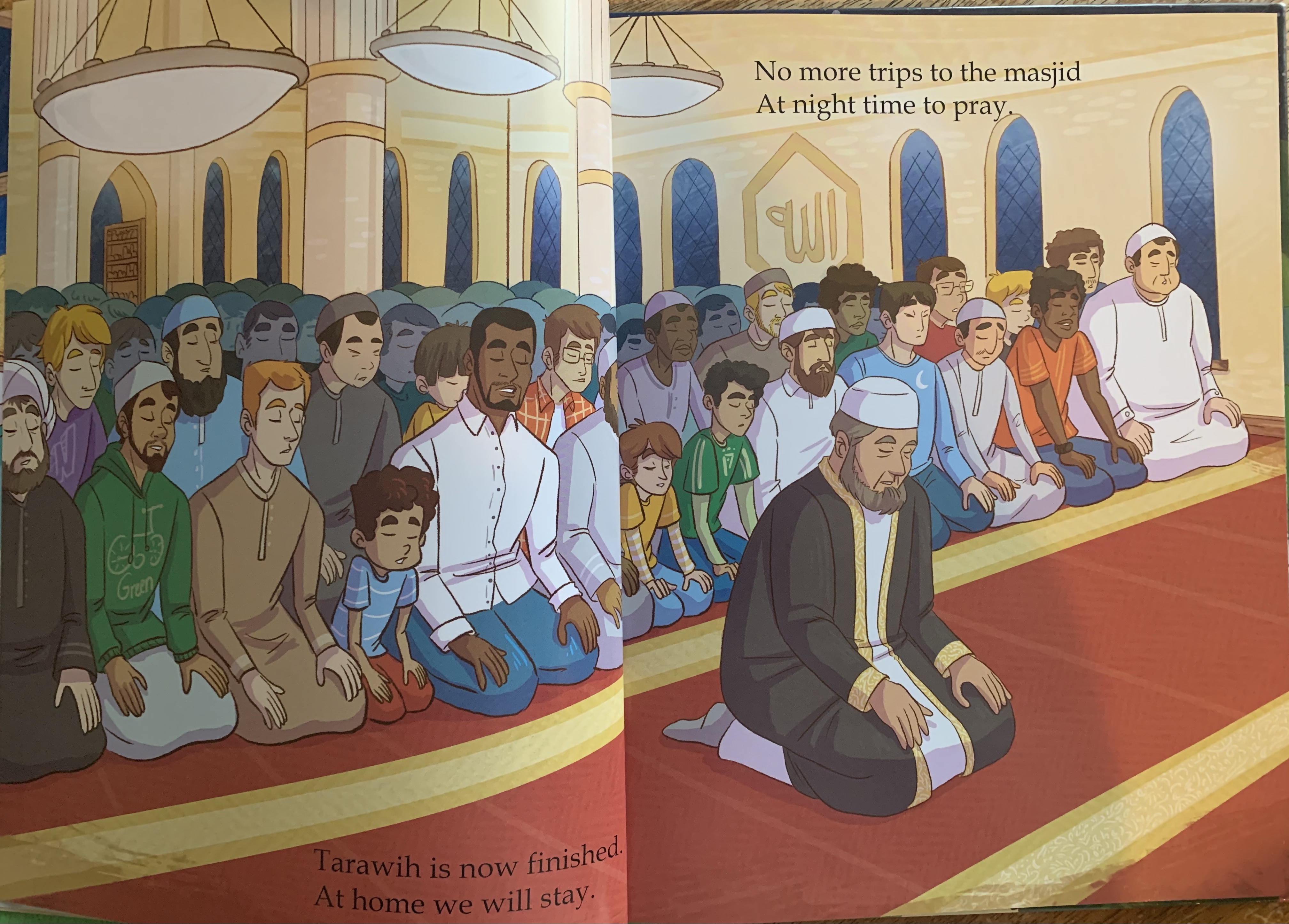





 Islamic School Librarian