Category Archives: Muslim Bookstagram Awards

I AM: A-Z of Positive Affirmations for Muslim Kids by Barakah Kemi Hassan illustrated by Mariam Poppins

Standard
I AM: A-Z of Positive Affirmations for Muslim Kids by Barakah Kemi Hassan illustrated by Mariam Poppins

img_7168-1

This alphabet framed book combines the English alphabet with correlating affirmations, but then also ties the sentiment in with one of Allah’s swt 99 names.  The names do not correlate with the alphabet, but ground the book by building on that connection to Allah swt and the peace and reassurance of knowing He is there.  The faceless illustrations are colorful and warm, blending wonderfully with the text, as does the font and style of the large soft cover picture book.  After the alphabet there are tips on how to use the book along with the 99 names in Arabic, English, and the meaning in English. The book was nominated for the Muslim Bookstagram Awards 2024 and had it not been, I don’t know that I would have spent time with it.  I can see this book working really well in a classroom setting, in addition to in a home. I’ve seen my own children’s teachers use affirmations, and to have this Islamic centered, alphabet organized one, really is a great tool for building our little Muslims up and strengthening their awareness of Allah swt in all we do.

My Olive Tree by Hazar Elbayya

Standard
My Olive Tree by Hazar Elbayya

img_7154-1

I love that this author illustrator traditionally published book shows the ways that olive trees and their fruit connect people.  The little girl, Salam, can’t wait to grow her very own tree, but it takes a while, and when it finally sprouts, it is trampled by soldiers.  Heartbroken to lose her plant, her community shows her how they are like their beloved olive trees: their roots are deep, and they are a part of the land.  The tender illustrations, the poignant symbolism, and the love and unity that radiates through, makes this book an important read for children and adults of all ages and backgrounds.  There are no countries mentioned in the text (Palestine appears only in the author’s note), nor any religion, there are visible Muslims in the illustrations, even the soldiers are unnamed, but the setting is clear.  Picture books take years to be published and that it released at this point in history, shows how long the struggle for freedom has been taking place, and how strong and resilient Palestinians are.  This book that will be read over and over, shows even in the sadness, the feeling of hope abounds.

The book starts with Salam noting how old her grandpa is, and that only the olive trees are older than Sido.  Sido then explains to his granddaughter how the olive trees connect them all: farmed, picked, pressed, oil used to cook, olives sold to eat, added to dishes, and made into soap.  Salam goes to plant her seed and be part of the connection. She waters it and waits, but it doesn’t seem to be growing.

Finally a spout, and then a little plant, and then the soldiers march into their lands and destroy everything in their path, even Salam’s olive tree.  Sido reassures her that she will plant more olive trees in her lifetime, but Sido also wants to show her that she is not alone.  Friends, family, and neighbors, come together to show her, “just like the olive trees, when they try to break us, we grow back stronger.”

A truly beautiful hopeful book, subhanAllah.

img_7144-1


Fledgling: The Keepers Records of Revelation by S.K. Ali

Standard
Fledgling: The Keepers Records of Revelation by S.K. Ali

fledgling


This 544 page science fiction dystopian fantasy is in my humble opinion S.K. Ali’s best work, and that is saying something.  A lot actually, especially considering I am a Muslim book reviewer and there is no Islam featured in the book. As my author friend Shifa Safadi articulately put it, “it is Muslim coded,” a much more succinct term to describe my rambling thoughts of how Islam seems to be just below the surface, never breaking through, but making the book seem OWN voice and authentic. The book is for ages 14 and up and stays fairly clean, allowing for complete immersion in to the story, the world, the future, and the characters’ lives, without any fear that something drastically detailed and haram, would suddenly appear and pull me out of the flow of the story.  There is a bride market where women can be bought and mention of lovers being taken, but it isn’t normalized, it is for a purpose, and the acts are not detailed.  From start to finish this book is a gift to readers.  The writing quality is superb. The book is told from nine (?) points of view,  and I never once felt the need to flip back to see who was speaking, as each voice is clear and unique. The twists, the heartache, the triumph is all palpable and griping.  The mix of genres works because the characters have multitudes and incredible storytelling made the lengthy book, not nearly long enough. I can’t wait for the second part of the duology, from the Underground to Upper Earth, the world was not one I left willingly, and I look forward to returning for the conclusion.

SYNOPSIS:

I really am not sure how to summarize the book without giving much away, I’m actually surprised myself that I’m writing a full review for a book by a Muslim author with no Islam present, so here we are.  As with all S.K. Ali books, this book starts with a possible “romantic” relationship, in this case though, it is an arranged couple meeting, and it isn’t going well.  But where comedy and faith might normally then enter the story, this book, veers from her norm, drastically.  Set in a dystopian future where scalplinks and mind control allow the “enlightened” to live a vastly different life than those on Lower Earth who’s resources have been plundered, the union is to be between Raisa, of Upper Earth, and Lein the crown prince of Lower Earth as an attempt at achieving peace.  Politics, greed, loyalties, love, all add in to the mix of a rebellion and the hope that comes from the Fledgling.

WHY I LIKE IT:

The book starts with a character list which is an incredible tool for readers as the first half of the book is forced to simultaneously balances character development, world building, and plot progression with a lot of moving parts. The style of memory records, announcements, current events, flashbacks, and changing povs keep the book’s pacing moving, but it really took about until the midpoint for me to be unable to put the book down. What at times early on could be perceived as cumbersome, became truly what makes the book stand out.  To see each character through their own eyes, through their own lived experiences, and to see their thoughts and feelings grow and change, really pulls you in and brings the humanity to life in a book that could have become more plot than character. It also emotionally ties you to the characters and the twists and revelations and loss, hurt a little more than I would have expected as days later I am unable to stop my head from returning to parts of the story that still have a hold on me.

FLAGS:

Death, torture, abuse, killing, murder, hunting, manipulation, lying, a love scene between a coded married couple, oppression, colonization, bride markets, misogyny, cheating, it is YA dystopian, fantasy, sci fi, romance, adventure, so there is some grit at times, but not for sensational vulgarity, it is always for a point and not taken lightly.

TOOLS FOR LEADING THE DISCUSSION:

This book would be incredible to read in a high school class: Islamic school, home school, public school, private school, you name it.  There is so much to discuss about colonization, oppression, rebellions, politics, and yet none of it comes at the expense of good story telling.  I would love to hear students discuss their favorite characters, opine on their motivations, and argue right vs wrong with citings from the text.  No two people would feel the same, I would almost guarantee it.

INTERVIEW with AUTHOR SHIFA SALTAGI SAFADI about her upcoming book KAREEM BETWEEN

Standard
INTERVIEW with AUTHOR SHIFA SALTAGI SAFADI about her upcoming book KAREEM BETWEEN

435393991_260556667139276_2666634549169627275_n

Assalamualaikum,

It is with great joy that I was able to ask my dear friend, and favorite author Shifa Saltagi Safadi a few questions about her upcoming book KAREEM BETWEEN and offer her answers, insights, and wisdom with all of you.  To sweeten the deal we also have an ARC to give away to one lucky US reader.
100,000 Bismillah Vector Images | Depositphotos

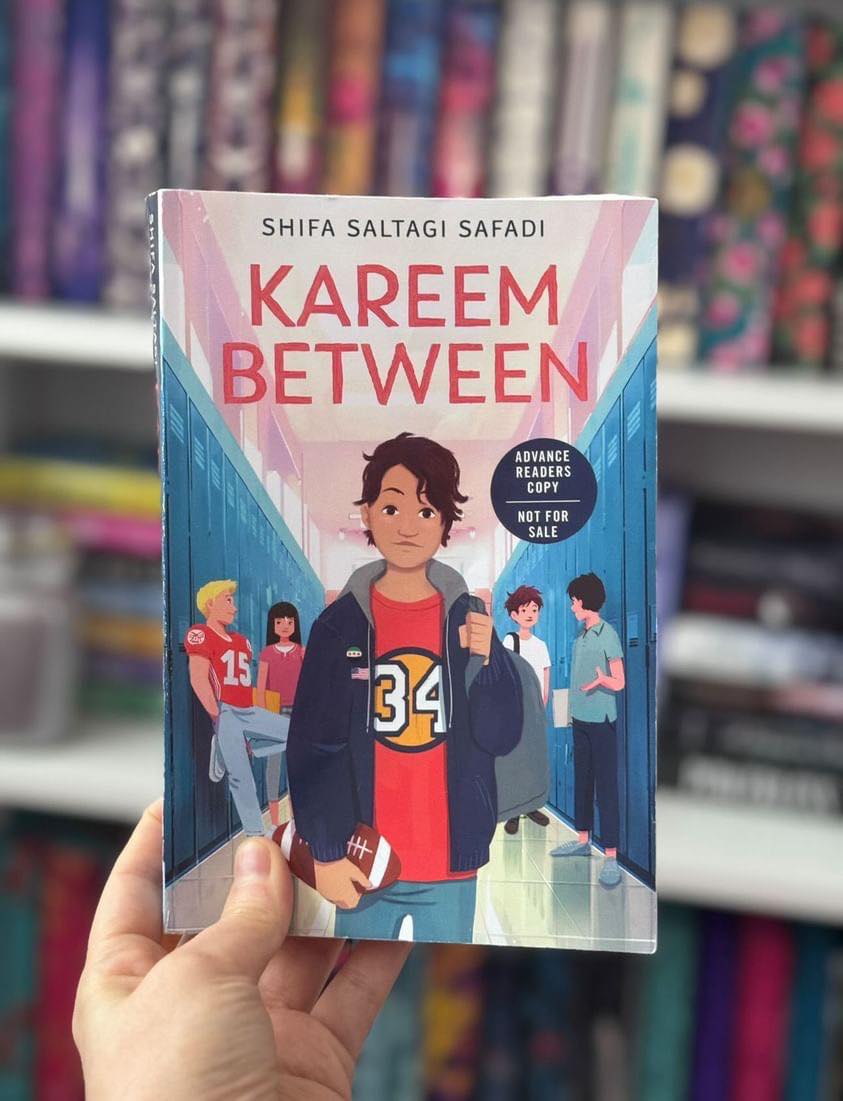
KIRIN: Kareem Between is a middle grade novel in verse that tugs at your heart without compromising action, relatability, and joy. It is in simple terms, a coming-of-age story of a boy between, as it says on the back of the book: “Between countries. Between friends. Between football, between family- and between right and wrong.” Yet, somehow it is so much more than all of that, what do you want readers to take away from the book?

SHIFA:  What a great question. 

There is absolutely so much for readers to find in Kareem in terms of themes, but the one that probably means the most to me is the one about belonging. I think we all have felt a little lost in this world at times, both as tweens in Middle School, and even as adults! And I want readers to know that it’s okay to not always fit in this perfect box- that being in the middle, being in between, can be a position of strength. The world seeks to categorize people into labels, and especially marginalized people- and in Kareem’s and my own case, Muslims and Syrians, can be put in this box of “outsider” and “foreigner”, and honestly, many times even “terrorist”. And I wanted to challenge these labels. Both in terms of what it means to be Arab, as in the character Fadi’s case, he is a Christian Syrian- and in terms of being American- what does it mean to be a citizen of this country. 

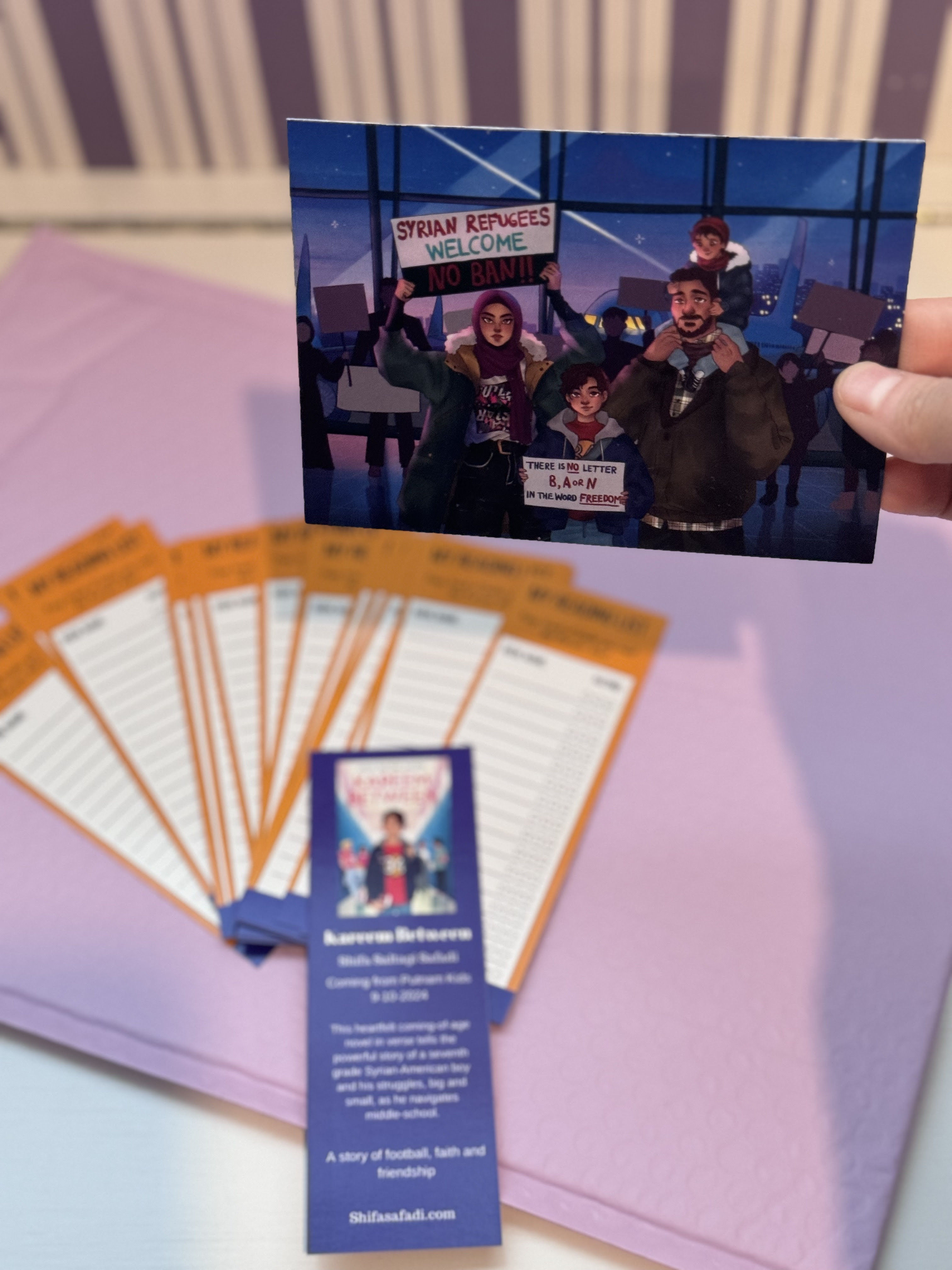
440341113_2133090993721514_84614182741726886_nUltimately, I want young readers to know that they can embrace the full complicated different facets of who they are without having to conform to peer pressure or labels. That even if it seems easier to step away from parts of yourself to fit in, it isn’t worth it when you erase your feelings. That pride in yourself and confidence in using your unique voice and story will be your asset in this world. And just as Kareem uses his voice at a protest in the O’Hare Airport against the Muslim Ban, and to speak on his local news outlet- I hope young readers use their own voices to stand up for justice, and stand up for themselves.

KIRIN: Many OWN voice writers often say they write the books they wish they had when they were younger, is this your motivation as well? What does authentic, OWN voice, unapologetic representation mean to you?

SHIFA:  Oh absolutely! Kareem contains so many different parts of me. I genuinely open up my own heart and pour my emotions onto the page when I write- it is very much an emotional experience and I cried while writing Kareem. And honestly, even every reread- I feel like I go through his character arc with him, especially with the recent news dehumanizing Palestinian lives and how it has become so controversial in some spaces to even call for a ceasefire!

Own voice representation is so important to me. As a reviewer, I often find myself flipping to read the Author’s note to check that the book is authentic. And as a reader- I find myself being moved so much more when the book is written from a writer’s heart.

But also, as a writer- I honestly think I was just tired of the same narrative I have seen my whole life as a Muslim growing up in America- the tired trope of “Islamist terrorist” that makes its way unto movies and media TO THIS day. Of this label that somehow being a practicing Muslim means you are dangerous, strict, mean, inhumane.

I want readers to meet Kareem. To see our humanity. To see how much peace Islam brings me. To take a pause- and maybe even cause a transformation inside of them on how they perceive Muslims and Arabs. To see that we are all connected in our humanity- that laws like the “Muslim Ban” are harmful because not only does it other a whole group of humans, but it strips part of the very principles that America claims to be founded upon.
unnamed

KIRIN: This is your first middle grade novel, what made you decide to write it in verse, and what was the process like? What was the most challenging part of the process?

SHIFA:  Interestingly enough- I didn’t start writing KAREEM in verse. It was very much a story in prose, about a kid who wants to make the football team and faces school bullies. I was taking a mentorship with Storyteller Academy (I am a huge fan of writing courses!) when my mentor Sage Blackwood told me the voice of my prose wasn’t working. And suggested trying another format. 

I have always adored verse, but I honestly did not think I was talented enough to try it! But I attempted a few pages, interestingly enough, from the middle of the book- and Sage immediately told me they clicked into place! (Thank you Sage). And so then I rewrote the whole book into verse! 

The most challenging part was to probably believe in myself- that I could actually write poetry- and once I got over that hurdle, the words just flowed!! 

I feel like the verse format was also helpful for me in crafting the emotional arc. I remember being SO SCARED when Trump won the 2016 elections. Being terrified for myself and my kids’ future. And I remember the devastation of the Muslim Ban and how it affected our communities, both here and abroad. And verse helped me with using language, as well as the empty space on the page, to really show these deep emotions of emptiness and loss, but in a way that wasn’t too heavy for children. 

The sparse verse on the page helps kids be able to digest these very real themes in a way that they can still find hope and life, and the lyrical language and words of poetry helped me infuse beauty even in the darkest moments of the book. And I wanted to be able to offer that lifeline to readers- that even when things get tough and difficult- the hope in those moments is in finding your words. 

KIRIN: Kareem is confident in his Muslim identity, praying at school is normalized, and while he loves his Syrian and American cultures, he does try and find his footing in being both.  Why was the distinction between faith and cultural identity important in the story and why is it important to you?

SHIFA:  Thank you for this question!

Faith is so important for me. Islam has been my lifeline, my rope of hope in this world, my very heartbeat that I live with. And being Muslim for me is very much a full complete experience, one I embrace with every facet of my being.

And I think part of the reason that Islam is so very important to me is probably a result of my feeling so between two cultures.

I was always between Syrian and American growing up- but I knew my faith and my Creator had space for my whole self, my imperfect, between, flawed heart. And that’s why Islam for me has always been a non-negotiable part of my identity. I am a Muslim. It is my life. I have never considered removing my hijab- even when it gets tough and I get stares. I have never considered not praying, even when I used to get weird stares at sticking my foot in sinks at school or praying in public view. This is me.

And Kareem is the same way. He prays, goes to Jummah, reads Quran, turns to Allah in duaa- and not for one second does he ever consider letting go of being Muslim. Because its who he is, and it’s the rope he holds onto in navigating his two cultures. 

It is very important for me to distinguish culture and faith for another reason. There is this common misconception that Muslims and Arabs are the same. But this is not true! So many Arabs are Christians, Jews, Druze, Armenian- and so many Muslims are South Asian, Eastern European, and even white!! The country with the most Muslim population is not even an Arab country. And I also have many white American friends who embraced Islam who tell me how much it hurts for them to feel like the world erases their own identity as Muslims as well. 

I wanted to challenge these labels, and especially when Kareem tells his dad that the Muslim ban doesn’t only affect Muslims, but would have affected Fadi, I wanted the reader to pause. To think. 

And to realize that othering and stereotyping is in its very essence flawed.

KIRIN: Most western middle grade readers in 2024 probably don’t spend much time thinking about Executive Order 13769, “The Muslim Ban” what do you hope Kareem and his family provide for readers in understanding how it impacted families.  

 SHIFA: When I started writing this book, I remember having one wish for it. That it gets published in 2024. And there was one reason for that- I wanted it out before the elections this year.

And the reason for my wish is because I want my book to make a difference. The closer we get to elections, the more this book feels so important for people to read. This year’s elections somehow feel just as stressful as the 2016-year elections, and the same issues of Islamophobia and Anti-Arab racism are propping up again everywhere on media and campaign speeches. And I want readers to really think on the very real effects of how American elections can impact marginalized groups in the world. 

I really wanted the book to be a peek into what it was like to be Muslim and Syrian in America in 2016/2017 to inspire readers to feel compassion, to think about how politics are automatically part of your identity when you are marginalized. 

I also wanted to take back the narrative. I want readers to be brave. Don’t feel silenced anymore- refuse the fear or helplessness of not being able to control who will be President. Because as 2017 showed us, when unfair laws based on racism are signed- WE DO HAVE POWER as citizens. We resisted the Muslim ban, we protested, Americans stood up for justice- and it proved that we can make change. 

And more than anything- that’s what I want readers to think about when it comes to the Muslim ban. It is about SO MUCH MORE than Executive Order 13769. It is about standing up for justice, whether that is against systemic racism, against book banning, against border deportations, against funding wars with our tax dollars.

It is about using our voice. I want young readers to know they are powerful, and to use their privileges to make change.
435276196_1518720458992981_8937728857071026337_n

KIRIN: Is this the end for Kareem? Do you see him making a cameo in future books perhaps? My kids read the book, and really want to know what Kareem is like in high school? Where he is going to college, what his future looks like. 

SHIFA:  As of now, I don’t have any future plans, but hey, if my editor and publisher request more, I would jump on that immediately!! 

As for Kareem’s future- he was actually born the day of the Superbowl in 2004 (obviously lol) – so February 1st. He’s now 20 years old in 2024! 

He’s in football training in college, in Chicago of course. And although he wanted to be the youngest player ever drafted to the NFL, he got beat by another former Chicago Bears player- Amobi Okoye, who played at 19!!

But it’s okay- life might not be perfect, but Kareem is still persevering towards his dream. And when he’s not organizing his MSA’s Jummah prayers or practicing football (or reading the latest books at his library), he’s at a downtown Chicago protest for  ine, holding up posters and using his voice to call for a ceasefire!

KIRIN: What are you currently working on, and what future books can we look forward to seeing from you?

SHIFA:  I have more books lined up in 2025- a picture book titled Gift of Eid coming in February, and a whole chapter book series titled Amina Banana coming mid-year! I cannot wait to share my sweet Yasmine (Gift of Eid) and my spunky, sassy Amina! I have a feeling readers are going to adore these books!

As for Middle Grade: 

I love writing novels in verse, and I am actually currently finishing up writing my second one, eeek- this one is a bit wild and fun, but still containing emotion and heart as well. And of course, using verse language and lyrical words on the page to create art.

I don’t want to spoil it, but it’s been such an experience to write and revise my second book, and I am excited and slightly scared about how it’s turning out. Will I ever kick imposter syndrome to the curb? 

It’s still not ready to share, so I won’t say anything more- but I am hoping I can share it with the world someday insha Allah!

JAK Kirin for interviewing me! Thank you so much for reading KAREEM over and over, your beautiful review, and all your support!

Be sure and check out Shifa’s website and sign up for her newsletter https://shifasafadi.com/

For GIVEAWAY details head over to INSTAGRAM  @muslimmommyblog and @islamicschoollibrarian

439223131_953031783226797_4732317873116172341_n

Giveaway ends and winner will be chosen and announced on Friday, Jummah May 3, 2024! Click here to enter.

KAREEM BETWEEN RELEASES SEPTEMBER 10, 2024

You can Pre Order Kareem Between here

Allah Made Me Different by Maryam Abbas

Standard
Allah Made Me Different by Maryam Abbas

img_3535-1

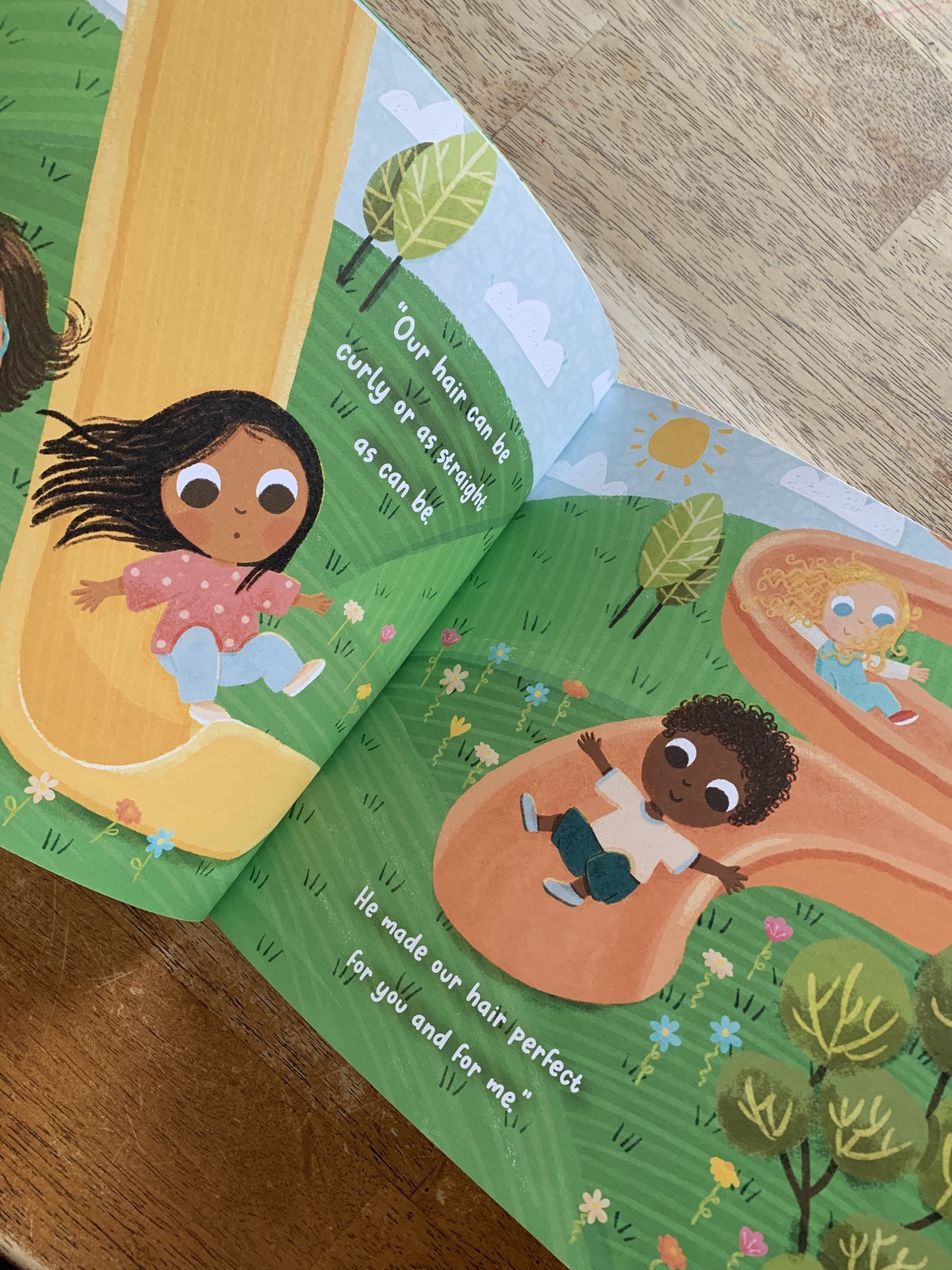
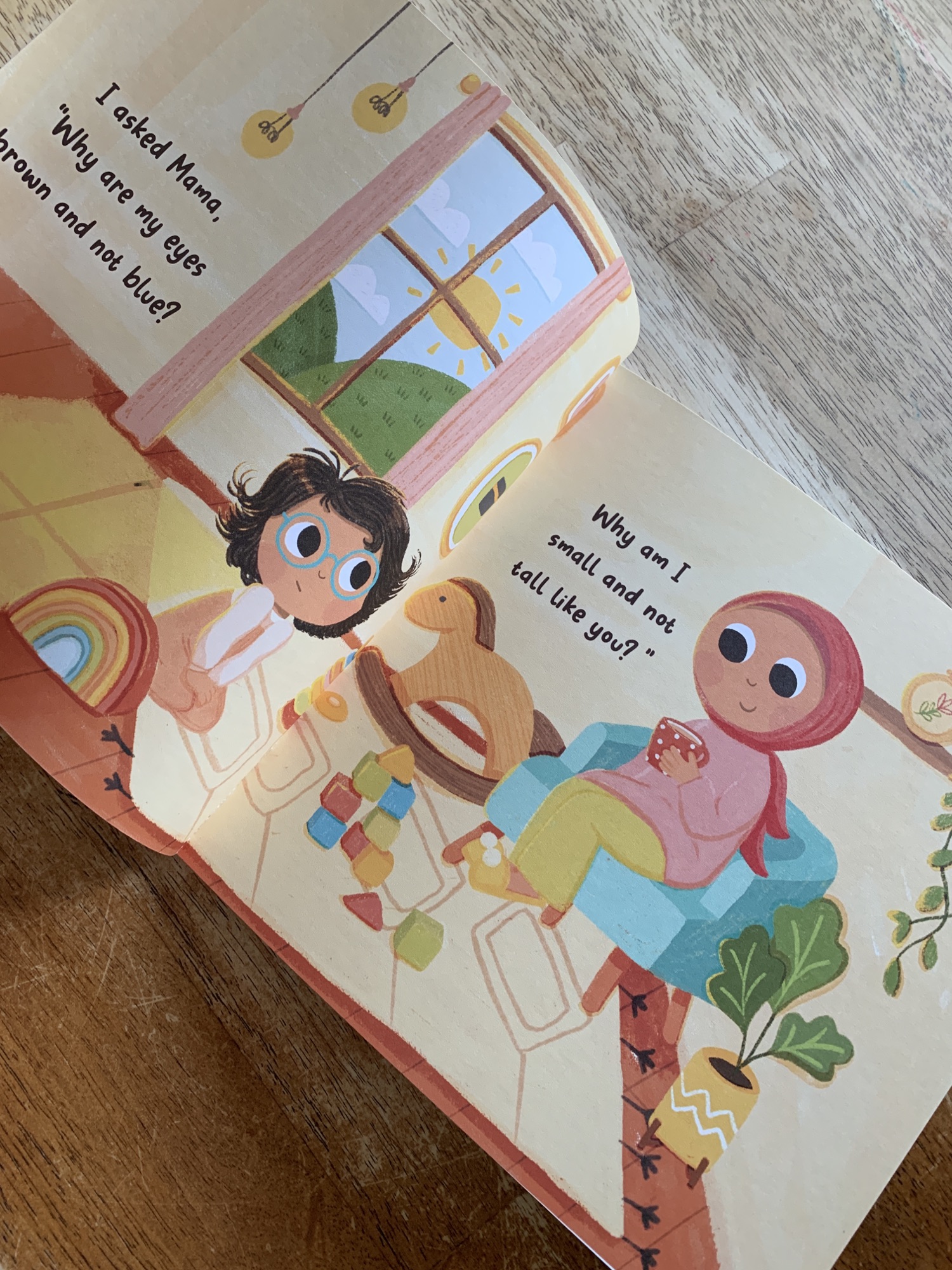
There is nothing revolutionary about this 24 page picture book, but it answers a basic question that children always ask from an Islamic perspective in an engaging and adorable way.  Toddlers and preschoolers will enjoy the rhyming lines, thick pages, and playful illustrations as they learn why they might look different then others. The book concludes with a dua for gratitude and circles back to the reassurance that Allah swt made us each perfect every few pages.  After multiple readings the pages do crease open, and thus I wish it was a board book.  The small size of 8.5 x 8.5 also makes it a little difficult to read to groups, but ideal one-on-one with little Muslims, alhumdulillah.

img_3536-1

The book starts with a child asking mama about the color of eyes and height.  Mama responds that, “Allah made you how you were meant to be.” The remainder of the book is reassurance that He made us with eyes right for us, hair perfect for us, etc..

img_3537-1

That we are different colors, speaking different languages, as Allah made us all unique, but with hearts to be kind.  Celebrating our differences and our similarities both in the text and illustrations.

You can purchase the book here on Amazon or at Crescent Moon Store.

img_3538-1

Letters from a Prophet by Zimarina Sarwar illustrated by Giorgio Bacchin

Standard
Letters from a Prophet by Zimarina Sarwar illustrated by Giorgio Bacchin

I’m not a fan, as a general rule, of lift the flap books for toddlers (they just tear them), so imagine my delight when I was completely captivated with a lift the flap book for middle grade and up! And the flaps are not trivial, they reveal letters from Prophet Muhammad (saw), maps, interesting facts, and make an already impressive, beautiful non fiction picture book, feel interactive and somehow even more enticing.  The book gives context and information for four letters sent by RasulAllah to Emperor Heraclius, Al-Muqawqis, King Chosroes, and Al-Nijashi.  Each section has the story of the letter and then a two page spread that details lessons we can learn.  The book itself starts with an introduction, a section about the seal and where the ideas to send the letters came from.  It concludes with final thoughts and a bibliography.  I do wish the book was perhaps checked by a scholar, but at least it has sources at the end.  Truly, I learned so much from reading this book and discussing it with my kids, I’m even thinking I might need to gift my mom a copy for Eid. It works for adults and kids alike, a few pages at a time at bedtime, in a classroom setting, as a resource.  I hope books like this become the norm for teaching Islamic history to our children, it really has raised the bar, alhumdulillah.

The book starts with the cover, the large 55 page hardback book with raised images, really sets the tone that this is going to be an experience.  The introduction starts with the basics explaining the value of lettering writing in history, it then establishes where the idea came from to reach out to Byzantium, Egypt, Persia, and Abyssinia.

It gives a brief timeline of the life of Prophet Muhammad saw, tells about the value of seals and what the Prophet’s seal looked like before starting the letters.  Then the four sections begin, the first being to Heraclius the Emperor of Byzantium, then Al-Muqawaqis also known as the Ruler of Egypt: Jurayj ibn Mina-Kiolos, Leader of the Copts, then King Chrosroes also known as the Shah of Persia Khosrow al-Parvaiz II, and then finally Al-Najashi also known as King Negus of Abyssinia As’hama Ibn Abjar.
The Final Thoughts discuss the impact even though most did not convert and offer the reader different aspects to consider while looking at the bigger picture.

The book won the Muslim Book Awards 2023 Non Fiction category and is available for purchase here at Crescent Moon Store.

Mimi & Unicorn Get to Know Allah by Zanib Mian illustrated by Laila Ramadhani

Standard
Mimi & Unicorn Get to Know Allah by Zanib Mian illustrated by Laila Ramadhani

img_3480-1

Creating understanding and love of Allah swt is perhaps the most important type of Islamic fiction book available for young children, so I love that we have options to choose from. The framing of this book is nothing new, a child asking various people about Allah swt to learn about Him, is found in numerous books.  But, this 32 page book is particularly engaging because of the large brightly illustrated pages, and the author’s signature style of conveying facts in a simple relatable manner.  The comic relief of the unicorn and the adorable protagonist are great, and the added layer of it being checked by two named scholars really make this one of the best in a very populated category.

The book starts with Mimi wondering about Allah swt after hearing people say things such as, “Allah will take care of it,” and “Allah knows.”  She asks her imaginary friend, Unicorn, but she doesn’t know either, so they head off to ask different family members.

img_3484-1

Summaya, Mimi’s big sister tells her that  “if you know Allah, you love Him, and He loves you.” It is followed up with details that Allah swt knows us, because he made us. From Nana, Mimi and Unicorn learn that Allah swt is One, and he explains why we don’t know what he looks like.  From Nani we learn that “Allah swt has no beginning and no ending.” Baba explains that we turn to Allah swt when we need help, Unicorn wonders if we need a phone or Imam to do that. Finally she talks to her Mama who explains trusting Allah’s plan.

Each stop is beautifully articulated and examples are given, resulting in a Mimi who’s heart becomes light and warm, and who works to know more about Allah swt every single day.

The backmatter includes notes from the author and illustrator and various bookish people sharing their early understanding of Allah swt and his attributes.

img_3487-1

The book is available from muslimchildrensbooks.co.uk in the UK and here from Crescent Moon Store in the USA (she ships globally)

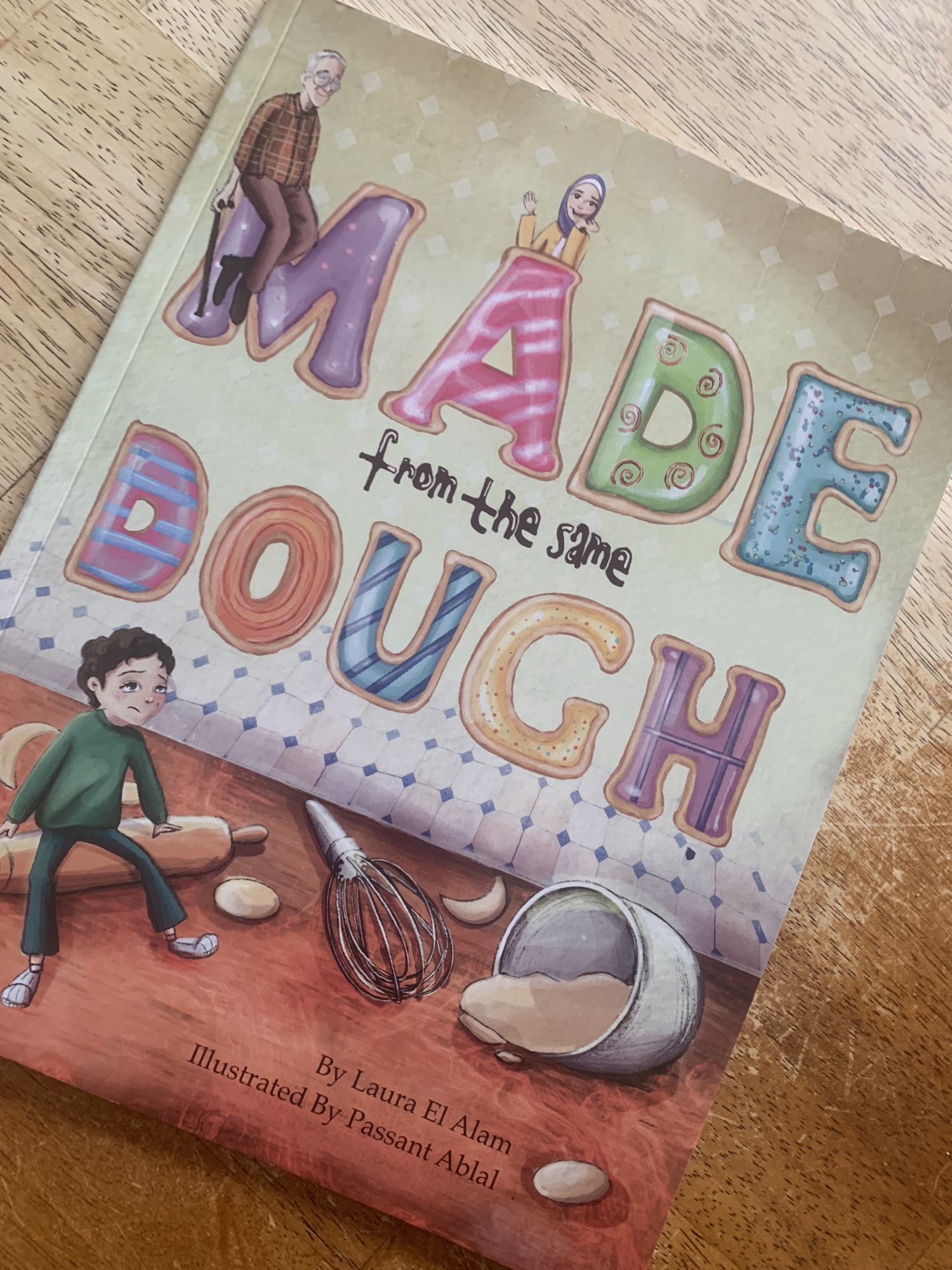
Made from the Same Dough by Laura El Alam illustrated by Passant Ablal

Standard
Made from the Same Dough by Laura El Alam illustrated by Passant Ablal

img_3052-1

Not all books about Ramadan have to be lists of facts. It is ok to show Ramadan and Islamic elements in stories that have their own plots, character arcs, conflicts and resolutions that are not just about abstaining from food and water, or losing your temper.  This book set in Ramadan is a story about a  Muslim boy and his Christian grandfather, and a whole lot of heart.  As a child of a convert, this book spoke to me, and I saw myself in that relationship, not only as a child, but even as an adult bringing my grandparents to my kids Islamic schools, friends’ lunches, and asking them to wait on the side while we pray.  I absolutely love the perspective of the protagonist, that he is worried about what Muslims will think of his grandfather not fasting or praying, as opposed to the often shown character worrying about what non Muslims think about us. The paradigm shift is subtle, but empowering to Muslim readers to see that they are not “other” in any environment.  The authenticity and how it all comes together in the clear text of the book is beautiful, but I must say, I really struggle with the illustrations.  I know art is subjective, and I am no artist, but yikes, I feel like the pictures actually distract from the story unfortunately.

The book starts with Papa coming over to his daughter’s family home and smelling something cinnamon-y delicious.  He dives in to the harira soup and recalls the cinnamon Christmas cookies they used to make.  Rayan wonders if Papa even remembers that the rest of them are all fasting.

Mama invites him to join the family at Auntie Hana’s for iftar the next night, and Rayan worries what Papa will do when they all pray, or if his friends will wonder why he came to iftaar if he is not fasting.

img_3054-1

Papa agrees and offers to make cinnamon cookies to share.  Rayan doesn’t like the idea of Christmas cookies at iftar and tells grandpa that Santa won’t be there.  The next day when Grandpa comes over to bake, Rayan refuses to help. Part scared, part frustrated, part anxious, Rayan hears everyone having fun, but stays in his room.

When they arrive at the iftaar potluck, Rayan reminds Papa to take of his shoes and then devises a plan to keep the Christmas cookies from causing any embarrassment. Only his sister Aliya foils his plan and Rayan will have to face his own feelings and make things right.

I’ve read this book easily close to twenty times, since ordering it, evaluating it for the Muslim Book Awards 2023, (it won the Holiday category), writing this review, and reading it to my littles at bed time, and it still hits close to the heart every time.  It reminds me of my own grandpa, who has been gone almost exactly a year, who may not have always understood our actions as Muslims no matter how often we tried to explain them to him, but never loved us any less.

img_3056-1

You can purchase your copy here at Crescent Moon

We Know What to Say: Phrases Commonly Used by Muslims by Sabria Chao

Standard
We Know What to Say: Phrases Commonly Used by Muslims by Sabria Chao

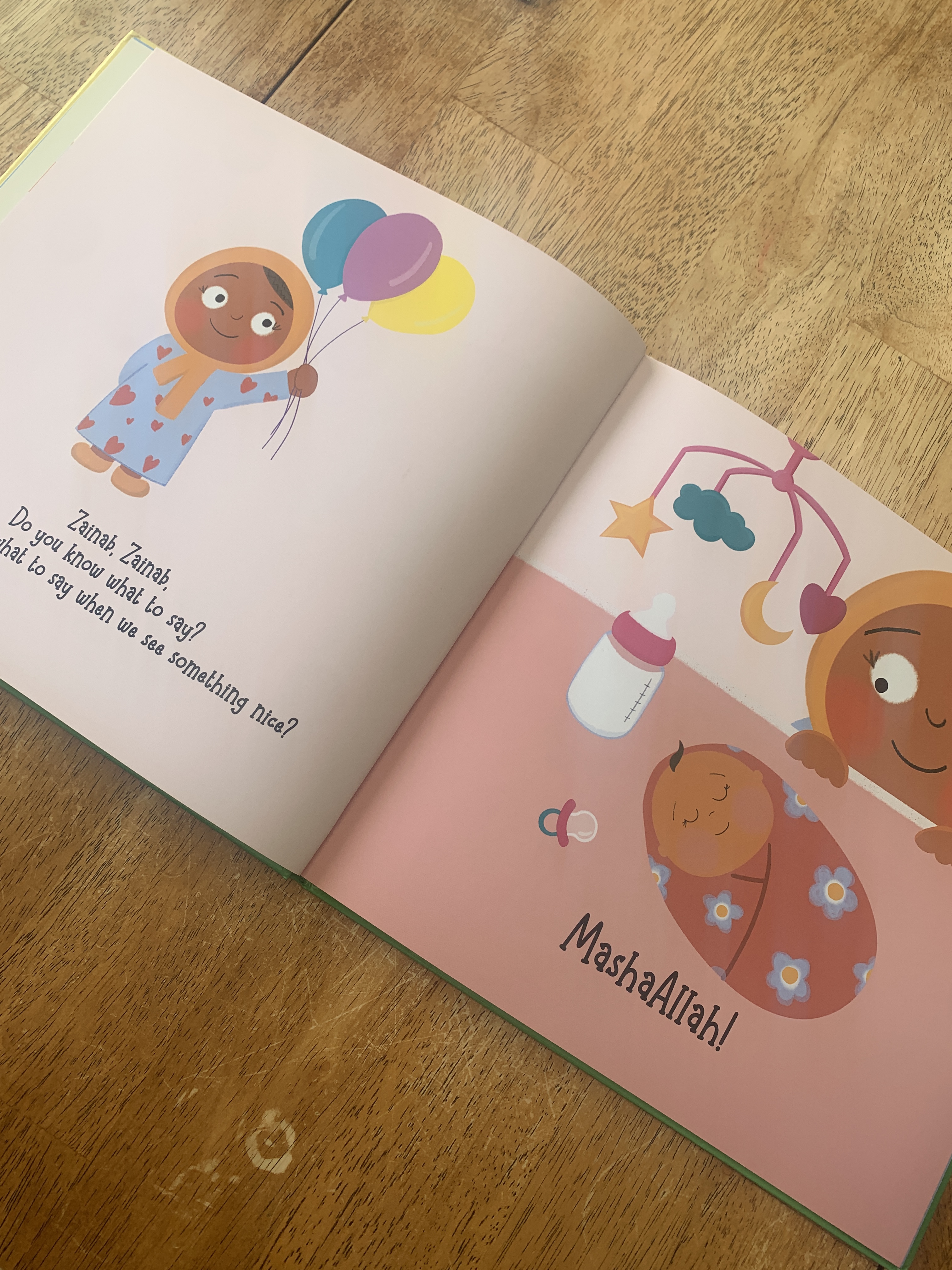
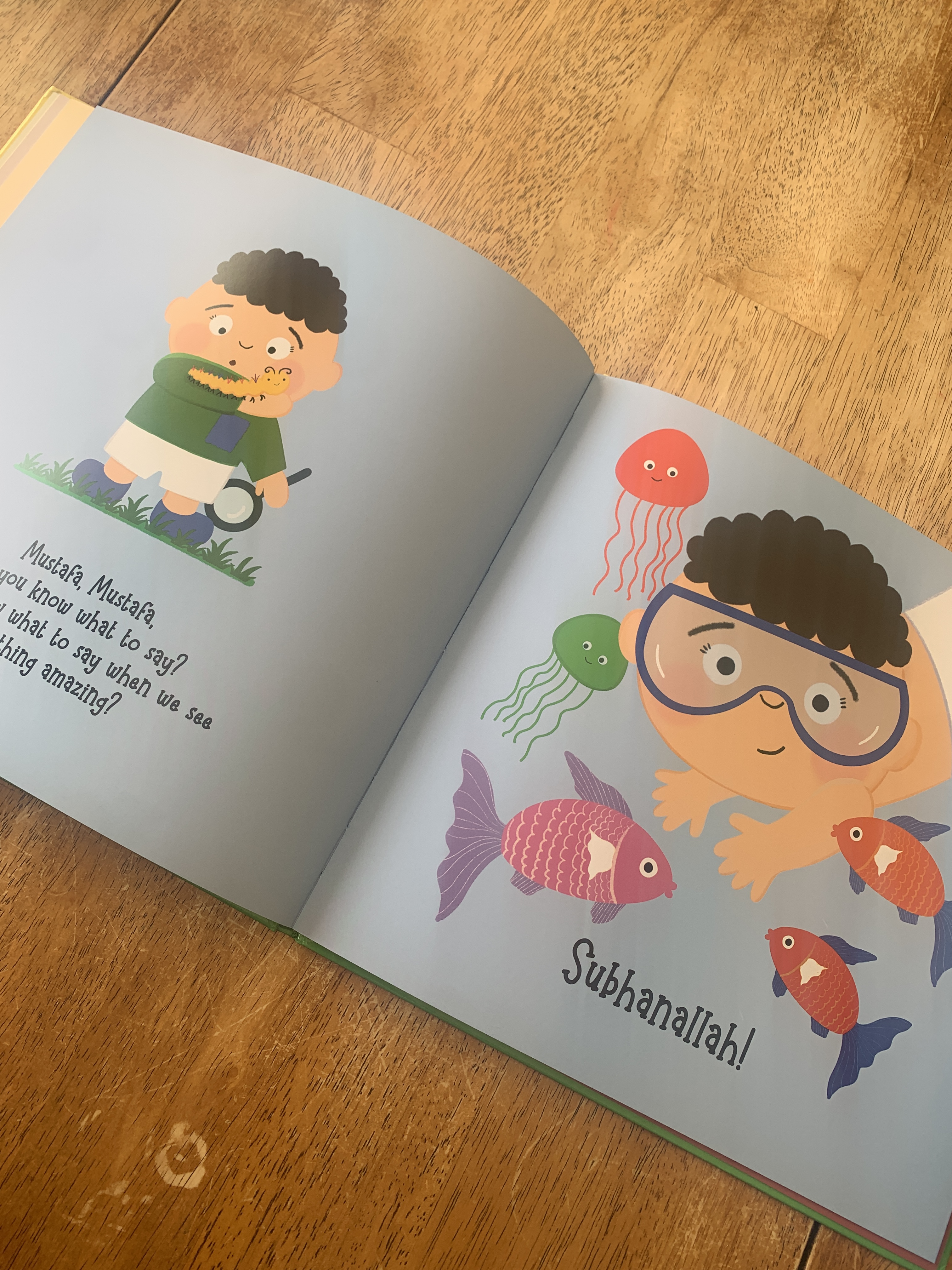
The concept behind this 42 book is really nothing new, but the presentation is wonderful.  The large hardback size, the clear inviting illustrations, and the repetition allow the book to be a delight at story time and bedtime alike.  Each Islamic term is introduced by a diverse character with a common Muslim name being asked if they know what to say in a situation.  The child gives the word, the following two-page spread restates the term and when to use it. All the terms are shown at the end in a two page spread along with a glossary and a Note to Parents.

I love the relatable scenarios: zoom calls, rain, getting sick, etc..  I also like the rhythm of the book, it reminds me a little bit of Brown Bear, Brown Bear.  The bright colors, the simple engaging illustrations and the big size make me ecstatic to share this at story time.  So many of the books that focus on Islamic terms for toddler to preschool level are small board books.  They serve a purpose, but we have long needed a large clear book for groups of children to learn, practice, and review together.

This book was nominated for the 2023 Muslim Bookstagram Awards, but you can purchase a copy here

Nadia and Nadir Eid Surprise by Marzieh A. Ali illustrated by Lala Stellune

Standard
Nadia and Nadir Eid Surprise by Marzieh A. Ali illustrated by Lala Stellune

img_7058

This is another holiday book in the Nadia and Nadir series for early readers, this one focusing on Eid al Fitr, but also celebrating Muslim American athletes Ibtijaj Muhammad and Muhammad Ali, sadqa, and the love of grandparents.  The 32 page book with four chapters shows Desi American siblings enjoying both their Pakistani and American cultures while consistently embodying their Islamic faith.  They pray salat, wear hijab, discuss sadqa, and say Salam and Eid Mubarak.  I am not sure why they pray Eid prayers at home, and not in a community congregation, no it is not a Covid set book, they then go to the mall, but the pride in their faith, culture, and family is enjoyable.  Early readers will enjoy the colorful pages, large illustrations, and relatable story situations.

img_7062

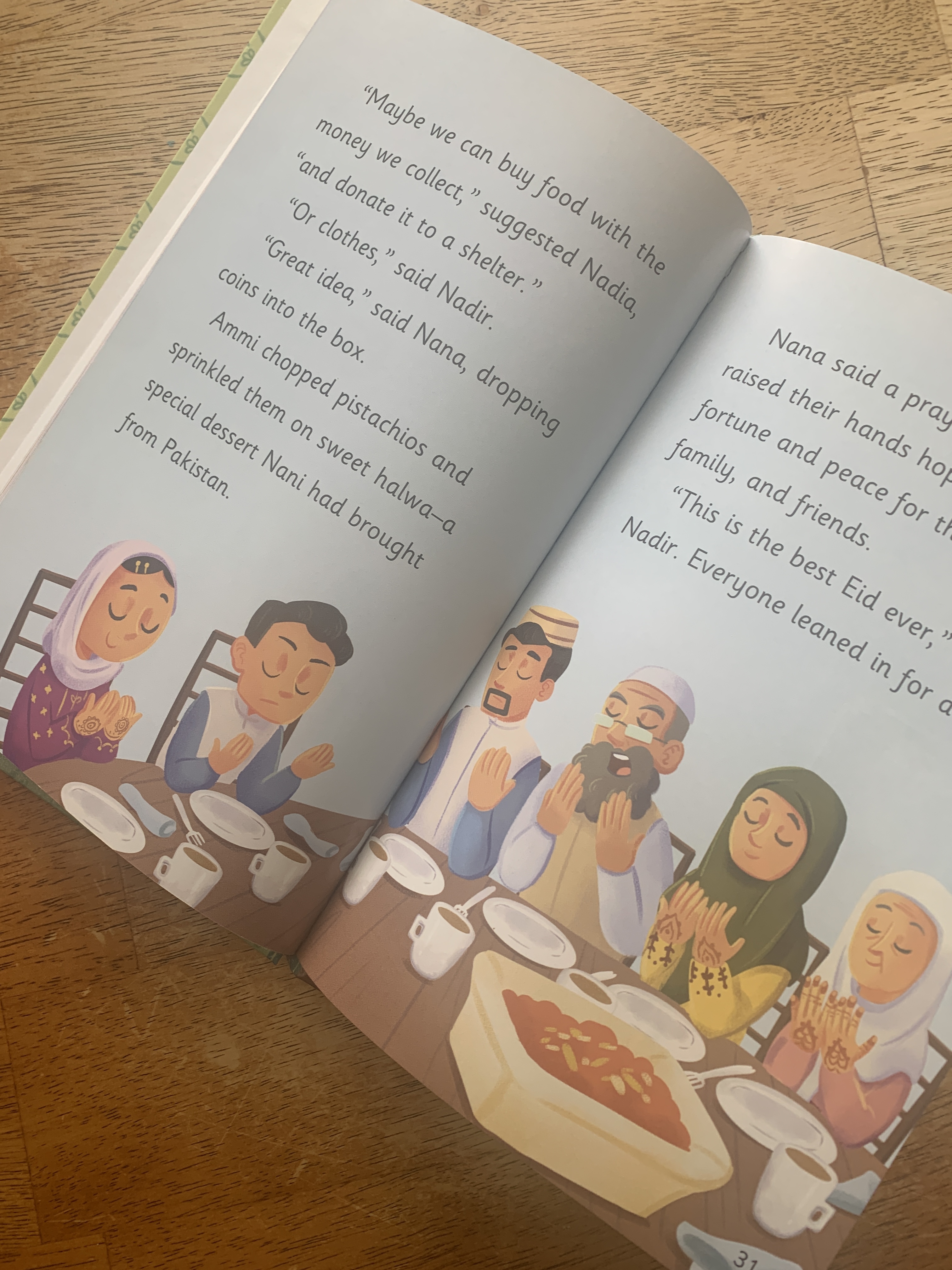
The book starts with the siblings hearing laughing downstairs, then seeing suitcases, and being surprised by their Nani and Nana coming from Pakistan to surprise them on Eid.  The family eats paratha and chai together before praying and making duas.

img_7061

After presents are passed out, the kids receive eidee and are off to the mall to pick out a toy.  Nadia sees an Ibtihaj doll, and Nadir points out that she is wearing a hijab just like his sister.  Nadia recognizes her and shares some facts since she has read her books.  Nadir wonders if Ibtihaj knows it is Eid and the family reassures him that Muslims everywhere in the world are celebrating.

img_7060

When it is Nadir’s turn to choose what to buy, he picks some boxing equipment with marketing images by Muhammad Ali.  Nana fills him in on the activism and accomplishments of Ali and how impressive his fearlessness really was.  When the change is given after paying, the kids and their grandparents discuss sadqa, charity, and this gives Nadia an idea.

The book concludes with a glossary of new words and information about the illustrator and author.  You can purchase your copy at all major retails such as here at Amazon, or you can support small business owners like Crescent Moon store and purchase your here.