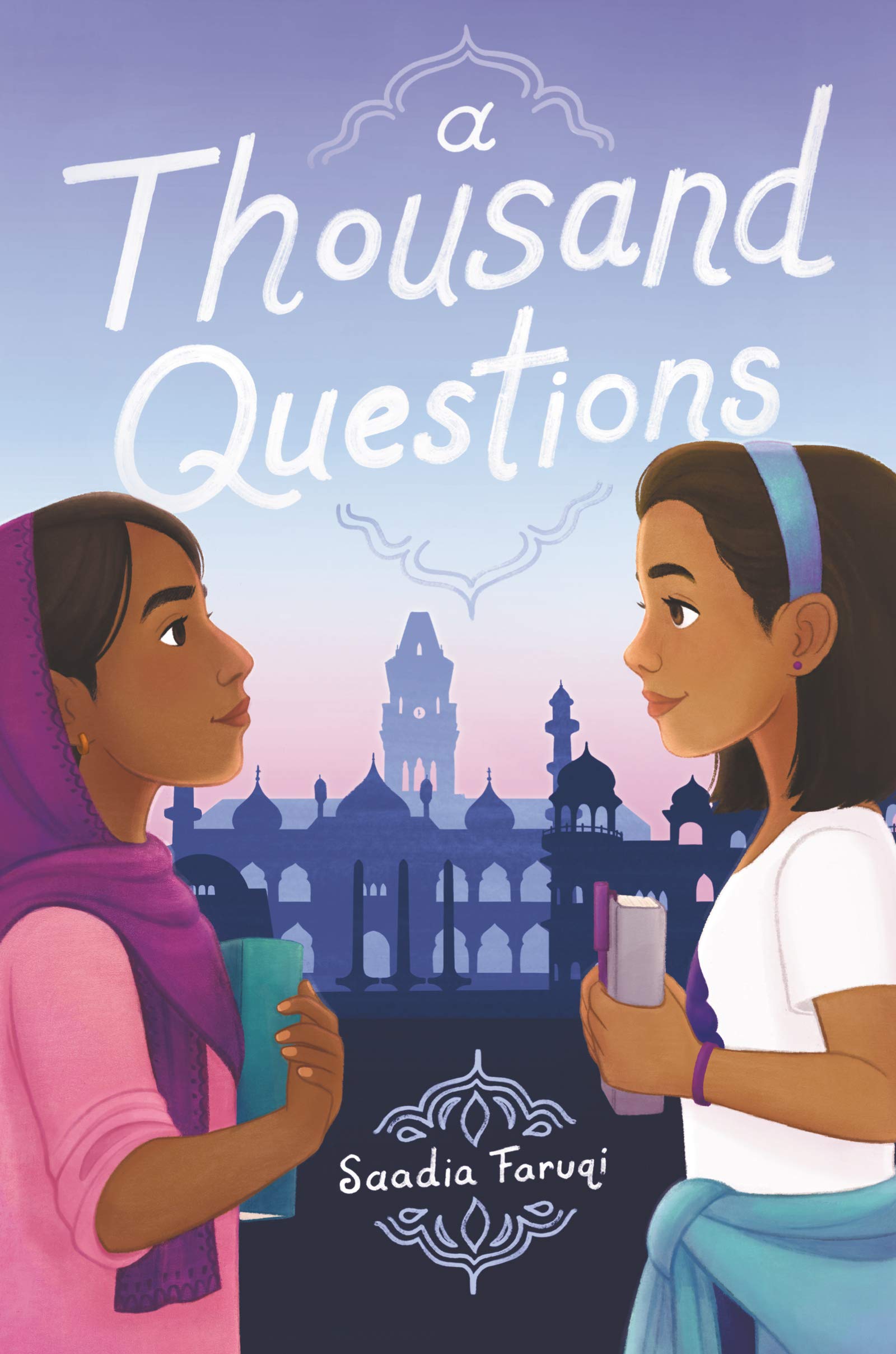
This graphic novel jammed pack with sleuthing, friendship, and diversity is perfect for ages 8 and up. The inclusive cast shows motive and growth keeping anyone from being entirely good or completely villainous and strikes a wonderful balance of insight, community building, and relatable fun. From the main character’s mom wearing hijab, and random hijabis in the background panels, to characters of color, and characters with social obstacles, there are also bullies, cancer survivors, a character with two moms, working parents, and a missing gecko all coming together over 221 pages to leave the reader waiting for the next book in the series.
SYNOPSIS:
Jamila has just moved to the neighborhood and with older brothers as role models, she just wants to spend her summer shooting hoops and taking it easy. Her mom, on the other hand, wants to send her off to science camp. Shirley, is incredibly perceptive and wants to spend her summer solving neighborhood crimes, the ones adults won’t or can’t help with, but her mother has signed her up for dance camp. When the girls cross paths at a yard sale, Shirley uses her wits to convince her mom and Jamila’s mom to let them spend the summer together at the basketball courts, thus both girls get what they want. The two girls aren’t exactly friends, but the arrangement benefits them both, and the days go smoothly, until a gecko goes missing and Shirley and Jamila have to decide to break their parents’ rules to leave the courts and venture to the swimming pool to investigate. Jamila and Shirley hit a snag in their understanding of one another and realize they want to be friends, something neither of them currently have. As they work Oliver and Vee’s case to find Enoch the gecko, the reader meets lots of neighborhood characters, from life guards to daycare informants. And as the clues come together so do a group of kids, all needing friendship, kindness, and a little understanding.
WHY I LIKE IT:
I love the Nancy Drew, Great Brain, Encyclopedia Brown, vibe of the story. It is funny and plausible and about so much more than just the case. It is quick and well drawn, and really just a joy overall. I love the diversity and teamwork and innocence of a summer and some good old fashion kids using their brains to save the day.
Other than the mom wearing a scarf when out of the home and a few hijabis in the background there is no textual mention of religion. The mom at one point says something in Urdu and the family has Muslim names.
FLAGS:
One of the side characters mentions that she has two moms. It is mentioned once, it isn’t dwelled on, and in many ways I think a great way to explain to your kids, if they mention it, that they might have friends and classmates with different family structures. I love that fiction allows for this conversations to occur in the abstract so to speak, you can guide your children how to handle these differences while talking about fictional characters, and imparting your families view of such matters in an open and hopefully non judgmental or hateful way.
TOOLS FOR LEADING THE DISCUSSION:
As always with graphic novels, they just aren’t the best format for book clubs as they are usually quick reads. The target audience for this is middle grades as well and while middle schoolers might enjoy it, they would read it in less than a half an hour and there really wouldn’t be much to discuss once the case is solved. I would highly recommend checking your local public library for the book, that is where I found my copy, and happy reading!
This engaging and fun early middle grades detective story set in England, features a female protagonist of Pakistani origin who stumbles on a crime at her cousins mehndi party. Over 231 pages with illustrations and flourishes, Agent Zaiba along with her younger half brother Ali and best friend Poppy will have to solve a case, avoid a nosy cousin, try not to ruin their clothes and so much more while stuffing their pockets with samosas and pakoras, and making sure they make it back for all the traditional events as well. There is nothing Islamic in this culture rich book, but with names like Fouzia, Samirah, Tanvir, Mariam, Maysoon, and Hassan, Muslim children or readers with sub continent familiarity, will feel an immediate reflection of themselves in the story. I have no idea what religion the author identifies as either, but from what I can Google, it seems to be an OWN story book and the richness and integrity of the minor details would suggest first hand knowledge. Anyone looking to see a strong minority female lead with good friends, an open mind, and impressive sleuthing skills, should hold on tight as the agents assemble to get to the bottom of a theft and save the day for a beloved cousin.
SYNOPSIS:
Zaiba idolizes her Aunt Fouzia who is a real detective and owner of the Snow Leopard Detective Agency in Karachi, Pakistan. Aunt Fozia’s daughter Samirah is getting married and with the Eden Lockett mystery books Zaiba inherited from her mom when she passed away, this party at The Royal Star Hotel is the perfect venue to test out her observation skills and other lessons she has learned from devouring the famous books.
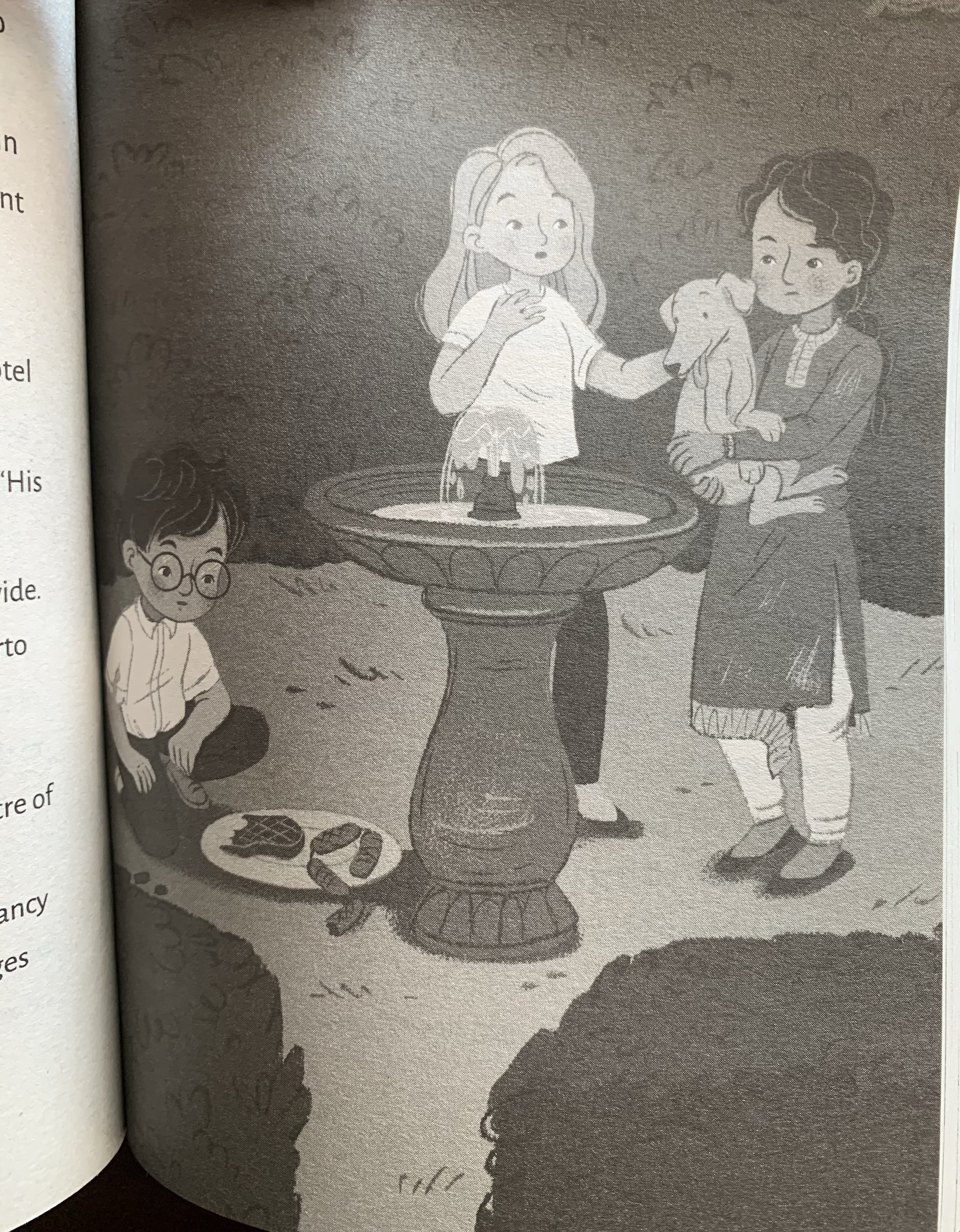
When Zaiba, Ali, and Poppy learn that there is a VIP guest staying in the same hotel, the team gets a chance to explore the hotel and find out who the guest is. What starts out innocently enough quickly elevates when a secret staircase is discovered, the VIP’s dog is set off his leash, and a jewel encrusted dog tag goes missing. The three kids work together and set off to find the dog that has terrified Sam and ruined her mehndi, once that is done, the stakes get higher as Maysoon explains that the good luck charm is not just expensive, but a lucky token she needs to move her career from singing and hosting, to acting. As the children work to find the diamonds and work their way through the list of suspects at the hotel, they have to make sure not get in too much trouble for missing key events of their cousins big day and getting in trouble with the tattling cousin Mariam.
WHY I LIKE IT:
I love that it is really for younger readers, second through early fourth grade, and shows the fun bits of a culture to a larger audience without being daunting. I love the idea of a mehndi as a back drop for a whodunit, seriously, it has the perfect energy and vibe. The family is amazingly supportive, Zaiba has a step mom, Jessica, that she adores, and a half brother that she loves. Aunt Fouzia and Sam encourage Zaiba to go solve the crime and give her respect when she does her big reveal to the police. It really is empowering to see the grown ups support. I love that Zaiba grows even in such a limited time as she learns about her mom and we even see Zaiba’s heart soften for Mariam.
Maysoon is a celebrity that is really flat and weak and whiney, at the end she shines a bit, but I really felt she was lame and under developed. I’m not sure what a champagne reception is, but the fact that Maysoon is having one would suggest she isn’t Muslim, not sure, I guess I’ll have to keep searching for clues.
The end of the book has a whole section to test the reader if they have what it takes to join the Snow Leopard Detective Agency: an excerpt from Eden Lockett’s book, her detective tips, things to practice, code writing, and info about the Agency, including Aunt Fozia’s record amounts of chai consumed.
FLAGS:
There is lying and stealing, it is a mystery after all, and the presence of champagne, both as part of the mystery solving and at the celebrity’s celebration.
TOOLS FOR LEADING THE DISCUSSION:
I don’t think I’d do it as a book club book, because there wouldn’t be a lot to discuss. I do, however, plan to suggest and gift the two book series to some young mixed ethnic Pakistani girls I know that would love to see a strong desi girl in the lead.
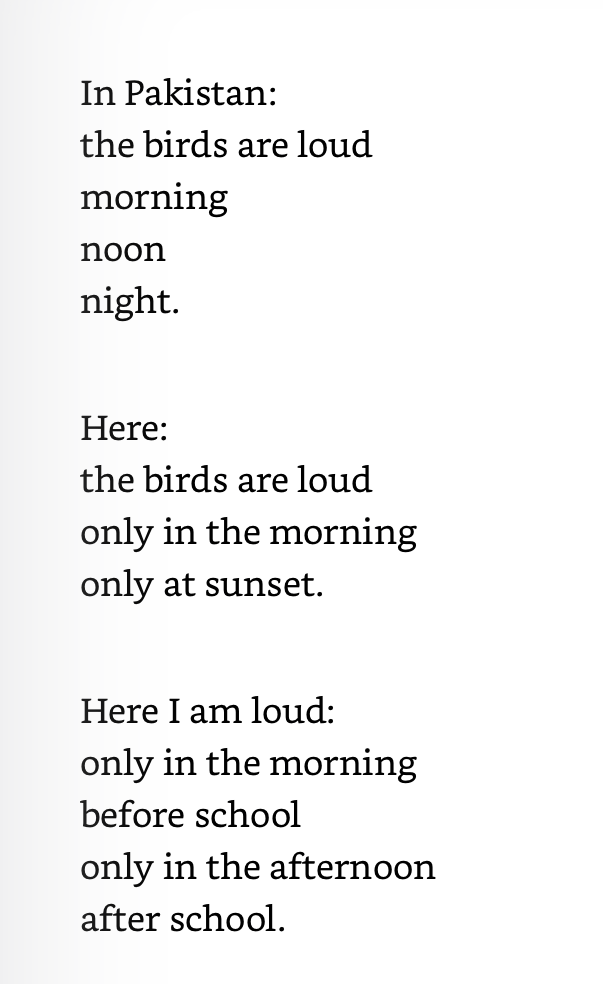
This middle grades, upper elementary book is a character driven contemporary story of two friends with their own fears coming together: one a native of Tampa, the other one a refugee from Syria arriving in the US on the day Trump’s ‘Muslim Ban’ goes in to effect. In 272 pages of alternating narratives, two 12 year old girls find strength and kindness in themselves, in each other, and in many around them. Islamaphobia is focused on in the story, but the inclusion of diversity, Black Lives Matter, anti semitism, mental health, social justice, and US immigration makes the book relatable to everyone and interesting to explore. The book is remarkably similar to another book published this year, A Galaxy of Sea Stars, and I wish I had not read them so close together. Both are well done, and I honestly don’t know if one is better than the other, but space them out so you don’t find yourself comparing them. I got my copy from Scholastic, and I’m always happy when the school market shows accurate strong Muslims, so if you see this in the book order forms that come home or book fairs and are wondering if you should get it, do it, it is worth your time and your child’s, inshaAllah.
SYNOPSIS:
Noura’s family has escaped Syria and had been living in Turkey when they learn they have been granted assylum in Tampa, Florida, USA. When the book opens Noura is practicing controlling her fear of water as the plane flies over the ocean. Her twin brother, Ammar, her parents and baby brother Ismail are greeted with protesters when they land. Whisked away by a church group and local Muslims, the family is given support and assistance in a new country.
One of the members in the church group that have volunteered to help the Alwan family, is Jordyn and her mother. Jordyn is going to be Noura and Ammar’s Student Ambassador at Bayshore Middle School and Jordyn’s mom has offered to help Noura’s mom learn English. Jordyn is the state title holder in swimming, but while she was swimming her fastest race, her mom was having a miscarriage, and both have a lot to work through to function as they once did.
The two girls immediately hit it off, and the families follow. Noura’s love of birds is mirrored in Jordyn’s love of water and fish, and both have their fears and mental health coping skills to bond and confide in with one another about. The girls and Ammar are assigned a Social Studies assignment and Jordyn getting close to the Alwans is not well received by Jordyn’s close friend Bailey who’s brother was killed while fighting in Afghanistan. Other classmates also show bigotry and with the real incidents of 2017 incorporated in to the story of a mosque being burned, Jewish cemeteries being ransacked, pedestrians being run-over in France, and more, the Alwans are questioning their new country, and their friends are wondering how America has gotten this way.
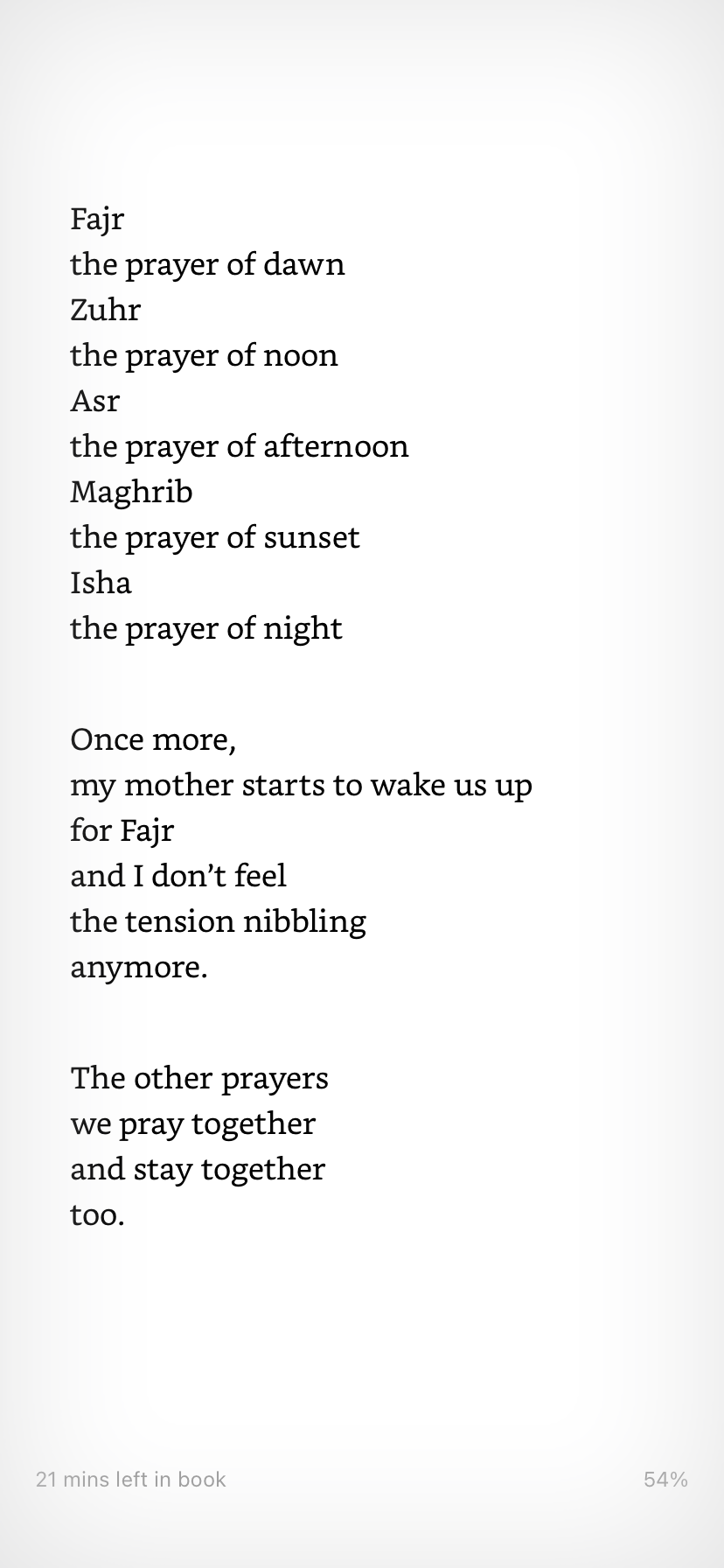
While praying at school Ammar and Noura are constantly harassed no matter where they relocate to, and finally ask the administration if there is a safe place they can worship. Florida law says a space can be set aside for all faiths to have the same access as clubs do (I’m overly simplifying), and many different and diverse students come together to turn an old closet into a place of peace, worship, freedom, reflection, and meditation. As expected, the space is destroyed, the culprits never caught and complaints to the school board mount. The ultimate climax involves the kids speaking up about what the space means to them, and waiting to see what the final school board vote is. Along the way there are smaller victories, such as Jordyn teaching Noura to swim, Ammar speaking about the white helmets saving him, and Jordyn and her mother working together to heal.
WHY I LIKE IT:
I love that the Muslim Ban is discussed in a way that it is personal, not political. By highlighting a fictional manifestation of refugees affected by such policy, even people that don’t know anyone affected, I’m certain would feel a connection to a concept and its affects in a very real way. I love that N.H. Senzai was brought on to make the story’s Islamic elements ring true and that the prayer room, a very American Muslim construct ends up being at the center of the story. Noura and her family eat halal, wear hijab, and pray. I enjoyed that other diversity and acceptance issues were carried in to the story by the supporting cast including a Jewish boy, a Cuban girl, a Hindu and more. Overall the book is well written and solid, the mental health and coping skills are so beautifully normalized. Both girls have sought help and found success with it, and both are brave in addressing their fears and opening up about them to those around them. It really is empowering.
The end of the book features more information about the real Syrian children heroes mentioned in the book: the ten year old model builder Muhammad Qutaish, the Olympic swimmer Yusra Mardini, and education activist Muzoon Almellehan. There is also information about the two authors and how their collaboration came to be.
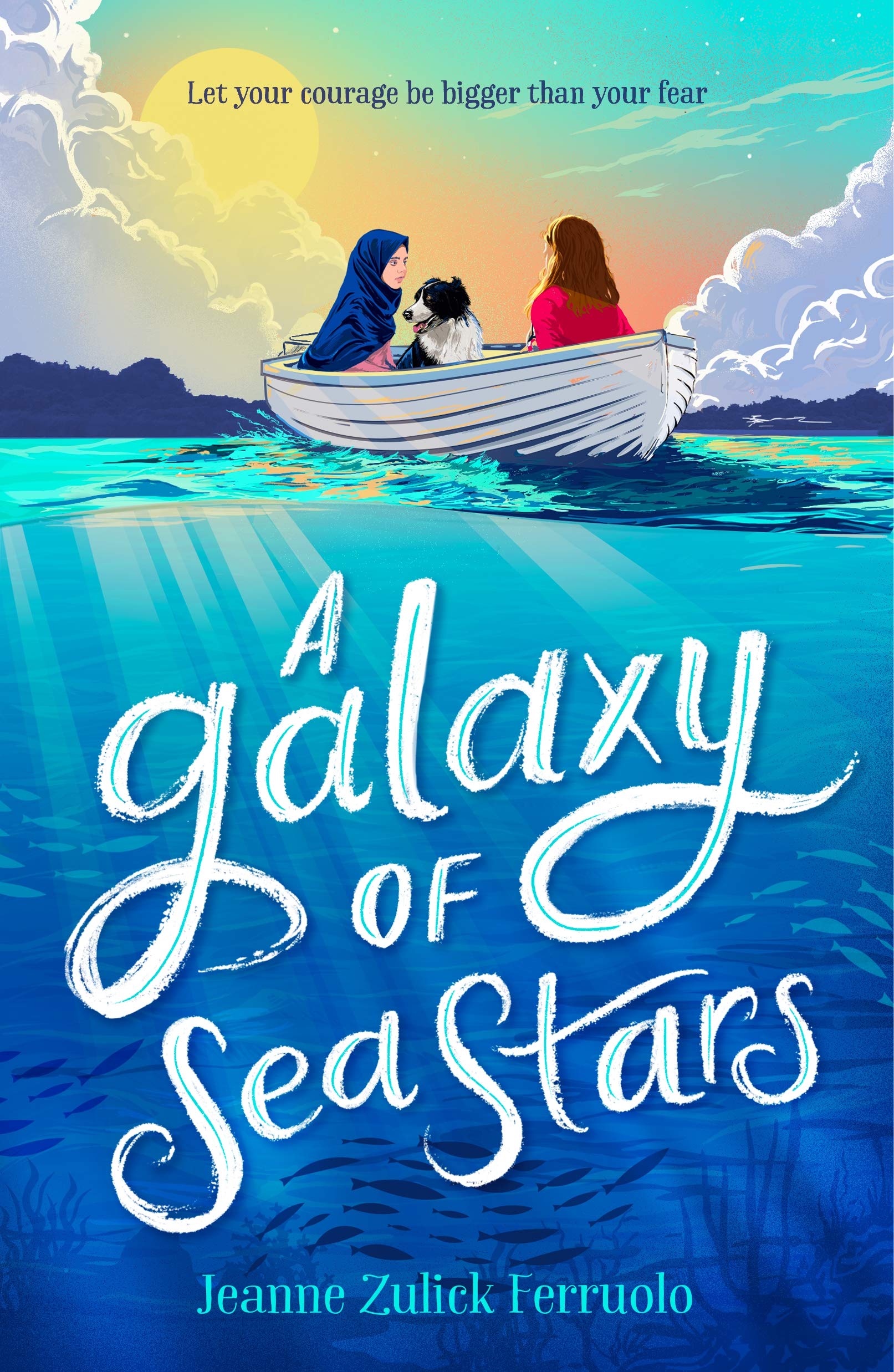
I would love to not compare this book to A Galaxy of Sea Stars, but just to highlight a few of the near exact similarities would prove my point that had these two books not been published the same year, one would definitely be accused of copying the other. Both feature middle school girls, both have a refugee arriving to a coastal town with their families (one Afghan one Syrian), both have the American born protagonist loving water, being an only child, and have mothers going through their own life changing crisis. Both have two side kick friends, one that is very anti Muslim and one that is on the fence. Neither have a completely resolving happy ending with the three girls’ friendship and there is doubt in both books of friend’s possible involvement of hate motivated actions. Both feature a side character’s brother being killed in conflict in a Muslim majority country. Both feature an amazing teacher that is very involved in opening minds and facilitating growth regarding prejudice. Both feature PTSD issues, and fear of water issues as well as a major hobby being destroyed by an angry classmate character. The ‘ethnic mom’ in both stories is rather one dimensional but loves to cook and feed everyone. Sure they also have their differences, one alternates point of view and is tied closely to current real events, but both have remarkably similar themes of friendship, overcoming fear, and finding similarities over differences.
FLAGS:
Some mention of violence as the Alwans recall the destruction and fear of war in Syria. Mention of a cartoon drawn by a classmate mocking Jordyn getting her first bra, but it isn’t detailed. The swimming coach is a lesbian and she mentions her wife at one point.
TOOLS FOR LEADING THE DISCUSSION:
I would definitely encourage elementary teachers to have this book on their shelves and encourage students to read it and respond. I think it would be too predictable for middle schoolers to read in a critical manner, however, they would probably enjoy it as a light read. With Covid 19 still keeping me from starting up book clubs again, I have been asked to consider helping put together some side reading lists/suggestions, and this book would definitely find its way on that.
This middle grade, 330 page book is an easy read that touches on concepts of change within friendships and families with the back drop of life in a coastal town, finding courage, and Islamaphobia. While early middle school readers might find the book a bit predictable and cliche’, the characters, lessons, and fluid storytelling would still make the book worth their time.
SYNOPSIS:
Eleven year old Izzy spends her summer days in Rhode Island on her skiff mapping out the floor of the pond that runs next to the ocean. Fearful of the open ocean, she is, however, confident and independent in her abilities to navigate the calmer water and understand what is beneath the surface. Her father has recently returned from Afghanistan and with his post traumatic stress disorder making him angry and not the same as before. Izzy is further thrown into turmoil when the family moves out of their house and into the marina, her mother extends her already summer long absence to Block Island and middle school at a new regional school is about to start. As always she hopes to lean on her fellow sea stars, Zelda and Piper, best friends since kindergarten, however, things with them don’t quite seem the same either. Add in that her father’s translator from Afghanistan and his family have just moved in upstairs with their two young boys and 11 year old daughter Sitara, and Izzy has a lot to handle and navigate.
Piper and Zelda decide to take television production class first period to make sure they have at least one class together, Izzy is incredibly shy and while she appreciates that this has all been arranged she isn’t confident that it is a good fit for her. Dragged along, as it seems she often is by her much more confident friends, It is arranged that Sitara will also be in the class. Right away Piper and Zelda decide that they don’t like Sitara and her hijab and her “different-ness” and exclude her and by extension Izzy from their lives. As Sitara and Izzy get closer and start to learn from one another, Piper and Zelda lash out and go from ignoring to being mean to Izzy and Sitara. Sitara explains to people on the announcement show why she covers and helps Izzy to understand that her father was in danger after helping the Americans and that they had to leave Afghanistan. The anniversary of 9/11 however, turns many students into verbally berating Sitara and her having her hijab pulled off in the lunchroom. When Izzy figures out that her former sea stars were involved in the planning she is devastated and must take the lessons from Sitara and her Czech Grandma to have more courage than fear, find her voice, and do something to make things right.
WHY I LIKE IT:
I love that Izzy has a lot going on in her life and in many ways Sitara has been through a lot, allowing them to encourage each other to keep moving forward. There are some parallels in losing their homes and dealing with change that they comfort each other with, but the two characters combined show readers that strength and bravery occurs when you are afraid, and that most people aren’t truly fearless. I really feel for Izzy, her friends may have been there for her on occasion, but by and large they seem kind of dismissive of her and her fears. I think she sees them as equal, but I don’t get the feeling that they see her that way, they may be protective of her, but they kind of bully her in to doing what they want. Every few chapters is a flashback to a pivotal point in the sea stars friendship and even before Sitara enters the dynamic, I started to question Piper and Zeldas sincerity. Their best friend just moved, her dad came back from serving in Afghanistan, and her mom is not coming home, they should be concerned, not belittling her for liking art and wearing old clothes. The mom is another painful plot point, like lady I get that you have stuff going on in your life, but really you are just going to leave your child? Ya, I wasn’t a fan of hers.
I like that the story addresses Islam and Islamaphobia, and while it is very much in the story, it isn’t really about it. Izzy is front and center, and even she takes a while to warm up to Sitara. I love that it shows what Afghanis that helped fight against the Taliban went through and how painful it is for them to resume life after doing so. I think this point is so lost in mainstream understanding whenever there is a terrorist attack, that this is what the refugees are leaving, that people in Afghanistan and Iraq and Syria are running from, and when they get called terrorist it hurts that much more, because their whole lives and people they care for have suffered from the real terrorists.
I really wish there was a map, I wanted to visualize better the breachway and had I not lived in Rhode Island for a few years I probably wouldn’t have understood Block Island’s location to to the mainland. Like with so many middle grade novels I wish there was some more depth to the characters, but I truly appreciated that there wasn’t a completely happy ending, and that growth occurred in so many characters, but at different rates. It really made it clear that we all need to continuously work to get to know one another, find our voice, our courage, and be willing to change.
FLAGS:
Clean.
TOOLS FOR LEADING THE DISCUSSION:
I don’t do an elementary book club, but I think this would be a great recommendation for those that do. There is a lot to discuss and explore that kids can relate to. The majority of the characters are female, but I think the themes are universal enough that boys will enjoy the book as well. I’m confident all readers will learn something new about sea stars and possibly even television production in this sweet story.
This 320 page middle grade novel with alternating point of view chapters engulfs you like a warm genuine hug. It does not have a clear climax, it is predictable, and some characters and cultural touch points could have used more detail, but honestly, I couldn’t put it down. As a half American kid who spent my summers in Karachi, so much of the author’s love of her homeland flows so effortlessly from the pages and took me back to my childhood and how the transformation of comparing the two countries moves to seeing the best in both causes growth within your heart and makes leaving so devastatingly hard. Readers of all backgrounds will seamlessly fall in to the story and enjoy the growth of the main characters, while learning a bit about a culture and the similarities of people.
SYNOPSIS:
The back drop is the sweltering heat of a Karachi summer in the middle of elections. Mimi, Maryam, is visiting Pakistan for the first time in her life. It is her mother’s home land, but her grandparents, and her mom aren’t close. They didn’t approve of Mimi’s dad and mom getting married, and even though they have been divorced for years and he has left, Mimi’s mom hasn’t been home in 12 years.
Sakina narrates the other chapters. She is the daughter of Mimi’s grandparent’s cook. She dreams of going to school, but needs help with her English to pass the admissions test. And even if she passes her family needs her income to survive, and her father’s failing health means that she has to take over his job too.
When Mimi arrives at her grandparents home, it is awkward at best. She doesn’t really know her grandparents, she has never had servants before, and her mother is rarely around. That leaves her to get to know Sakina. Sakina finds this odd as the owners of the home rarely “chat” with her and here this American girl wants to get to know her and is fine with helping in the kitchen. The two strike a tentative friendship as Mimi agrees to help Sakina with her english, and Sakina with the permission of Mimi’s grandmother and with the use of the driver, agrees to show her some of the city.
As Mimi takes in the traditional tourists sites she gives Sakina her first taste of ice cream and soda and other “luxuries” she has never experienced. Sakina introduces her to bun kabobs and other local foods. The budding friendship isn’t smooth, mostly because Mimi constantly compares Pakistan to America and Sakina doesn’t understand why Mimi doesn’t have a father. When the girls find out that Mimi’s dad, a journalist, is in Karachi covering the elections, the girls work together to try and find him.
Throughout all of this, Mimi keeps a journal and the entries are letters to her father.
WHY I LIKE IT:
I love that the girls have to navigate their friendship without and often despite interference from adults. I also like that while societal wise one girl is seen as economically privileged and one is not, the book gives enough for even elementary aged children to see that in America Mimi and her mom are financial struggling, but in Pakistan they are not and how that disparity is arbitrary. They also see that family and safety and security are also a part of life’s quality and not country specific. Things that one girl takes for granted are envied by the other, and it goes both ways.
Even for a middle grades book, there were some plot holes. If Mimi had been late night googling and plotting on a secret map all the places her dad had been writing articles from, she should have had a heads up about Pakistan. She knows so little about Islam and has like one shelwar kamees, so it seems a bit of a stretch that she speaks urdu pretty proficiently. I feel like some stumbling with the language or some back story on that would have been great.
Religion is handled as a cultural touch point, neither girl prays, but both find solace in visiting a masjid. Various characters are in sleeveless tops, the athan is heard in the back ground. I wish there would have been a bit more finding of Islam as Mimi found her culture too, but alas it isn’t there.
The majority of the book takes place within the grandparent’s home with the elections being a big part of why they can’t go out, yet the mom goes out a lot, which really rubbed me the wrong way. She took her daughter shopping once to meet an old friend and that is it. Who travels across the world to spend zero time with her kid. I didn’t like the mom at all, and wish there was some background or even some growth on her part. A lot of the minor characters seemed to fizzle as well in terms of having some depth.
There are some cultural and country facts at the end of the book, but within the text I was surprised that more wasn’t shared. I like that it mentioned Karachi was the original capital, but it should have also in the same sentence mentioned that Islamabad is the current, I think readers would assume that Karachi is still the capital of Pakistan.
The book is an OWN voice through and through and the value of that is felt in every sentence. It isn’t all positive and rosy, but it is genuine. The author loves what she is writing about and it shines through leaving the reader with a favorable sense of Pakistan: the country, the culture and the people.
FLAGS:
The book is clean, possibly some tense moments when Sakina’s family is robbed. There is also discussion of marrying someone your parents don’t approve of, divorce, and Mimi’s mom possibly having a boyfriend. Mimi’s mom is an artist and paints pictures of people. There is lying and scheming.
TOOLS FOR LEADING THE DISCUSSION:
I think the book would be a fine choice for an elementary book club, I think any one older will find the book a tad bit predictable. I plan to have my children read it so we can discuss points of view, experiences, universal traits and social economic classes. There are a lot of wonderful lessons wrapped up in a heartfelt story that I can see 4th and 5th grade children benefiting from over and over again.
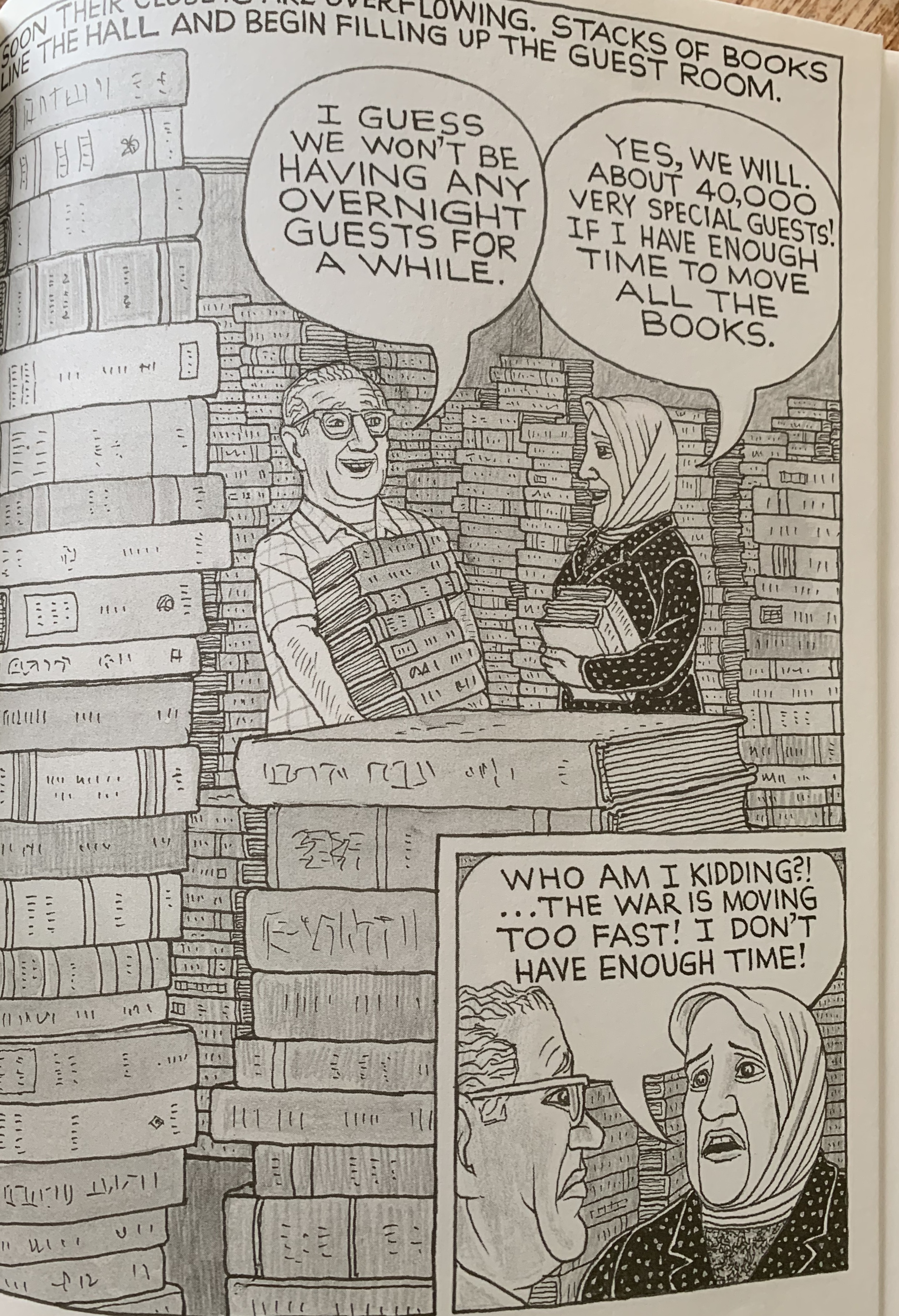
Based on the true story of Alia Muhammed Baker, the Basra librarian who saved 30,000 books in 2003 from the destruction during the Iraq War, this 32 page graphic novel, is an AR 3.9 and while it isn’t a chapter book and isn’t just a picture book, it works well for 2nd through 4th grade readers that will enjoy a bit of history, a lot of excitement, and detailed panels that make the story come to life. The story, as it is based on fact, is very similar to The Librarian of Basra, but with it’s different presentation style, might appeal to a larger audience to appreciate and celebrate what she did to save such precious books, naturally, I’m a huge fan!
SYNOPSIS:
Alia is the Chief Librarian of Basra Central Library and has always loved books and learning. As war draws closer, she tells her husband she is worried that the library could be bombed or set ablaze. She goes to the government to voice her concerns and ask that the books are relocated, but her request is denied. So she takes matters in to her own hands, and starts smuggling books under her shawl and in to her car, and stacks them in her home. Every day she does this for a week, soon closets are over flowing and she starts stacking the books in her guest room. Worried that she isn’t making fast enough progress, she gets the restaurant owner next door to help her when looters start taking the pencil sharpeners and furniture from the library. She has a plan to have everyone possible come together to move the books, and many people come to help.
Eventually the library is set on fire, the news gives Alia a stroke. When she recovers she learns she saved 30,000 books, and up next for this real life super hero? Building a new library, inshaAllah.
WHY I LIKE IT:
I love that it shows the value of libraries and books, the determination of one person, and the support of a community. People are awful during a war, yet, sometimes they are pretty amazing too. The illustrations are detailed and varied, with inviting text and clear concise language. It really is well done.
FLAGS:
Destruction of property, sneaking, looting.
TOOLS FOR LEADING THE DISCUSSION:
I think it would be great to have kids read this story and the librarian of Basra and discuss
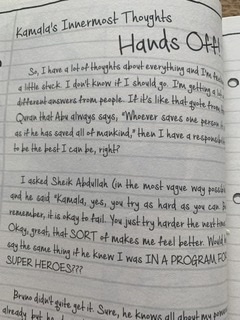
This is the first book in a new middle grade Marvel series told from Kamala Khan’s perspective. Part graphic novel, part screen shots, emails, diaries, fan fiction and doodles, the book features a diverse group of young marvel characters and even some quotes from the Quran. At 175 pages the book has action, humor and themes of team work, self improvement, friendship, second chances, and balancing life that will appeal to boys and girls that are fans of comics, but might be a little scattered for those that only know the main superheroes from pop culture.
SYNOPSIS:
Kamala Khan aka Ms. Marvel is doing a good job keeping villains out of her New Jersey neighborhood, but she is also causing damage to property in the process. When she gets caught on camera destroying a building, a letter from Captain Marvel follows with an invitation to join the Avengers Institute. Already balancing school, her writing of fan fiction and her super hero obligations, Kamala worries if she can handle one more thing and if she is up for making new friends. But, it is Carol Danvers asking, so she reflects on a quote from the Quran her dad always says and talks to Sheikh Abdullah, and ultimately decides to give it a try.
At the Institute she makes friends with Miles Morales (Spiderman) and Doreen Green (Squirrel Girl). The three of them are assigned to be a team for the Academic Decathlon at the end of the semester and to succeed they have to learn about trusting each other, team work, making smart decisions and communicating. Their biggest and most sinister rivals are Max Frankenstein, Kid Immortus, Death Locket and Kid Apocalypse. with the group leader, Kid Immortus being focused on Ms. Marvel and convinced that if he can clone her atoms he too can engorge. Kid Apocalypse however, has a class with Kamala and the two of them are kind of becoming friends. Throw in teachers like Beast from X-Men, Lockjaw teaching interdimensional travel and diplomacy, and an independent study class with Ant-man and there is a lot of fan girling going on.
WHY I LIKE IT:
I love that they are super heroes, but the book is about everyday real world struggles. The book doesn’t have a plot or climax so to speak, but more lays the foundation for the rest of the series and gives young readers a lot to relate to with new school awkwardness. There are strong themes of being a good friend, a good loser, seeing the good in others and really understanding what it takes to make a team work. There are some great lines, “politicians don’t have anything on aunties,” that speak to Kamala’s desi environment and I absolutely love that Kamala Khan mentions an imam, quotes the Quran twice, has a friend that wears hijab, and a mom that does too.
FLAGS:
The book is pretty clean.
TOOLS FOR LEADING THE DISCUSSION:
I don’t think it would work as a book club selection, but I think readers 3rd or 4th grade and up that love super heroes will enjoy the fun dynamic read.
This 248 middle grades (AR 4.9) fictionalized biography of Betty Sanders, later to be Betty X and then Betty Shabazz, is the early years of her life in Detroit during the 1940s and how she understood her place in her family, and in the community. Written by her daughter, the book hops around to major events in her life and doesn’t detail a lot of the whys, but rather keeps an 11 year-old-perspective, allowing readers to identify with her family stresses and anger at the racial discrimination and violence that is rampant. Showing disagreements within the black community allows young readers to broaden their horizons and not see the civil rights as a monolithic point on a timeline, but something that is still ongoing and part of culture still today. There is nothing Islamic in the book, as this is a glimpse of her childhood long before Nation of Islam, her conversion to Sunni Islam or her Hajj, in fact the majority of the book focuses on her involvement in the Bethel African Methodist Episcopal Church.
SYNOPSIS:
Betty was born in Georgia, as the story goes, but before she was even a year old, Betty’s grandma took her away from her mother and gave her to her aunt, Fannie Mae, to raise. Having seen a bruise on the baby girl’s neck Grandma Matilda didn’t feel that the young mother was capable to care for Betty. Fannie Mae showered Betty with love and consistency and treated her like her own daughter. Betty saw her first lynching while in Fannie Mae’s care and the image stayed with her her whole life. When Betty was seven her aunt died and Betty went to live with her biological mother, Ollie Mae, in Detroit.
In Detroit, Ollie Mae has married and has three daughters with her husband, Arthur, who also has two sons. A full house that is religious and disciplined, but for Betty not full of love. She prays that her mother will look at her the way she looks at her sisters, but that never seems to happen. The family attends Bethel AME church and at age 11 that is when the story gets going. Betty and her friends sneak out of church to get candy and the cost will probably be a whipping. Luckily a few of the church ladies like Betty and realize how hard Ollie Mae is on her. They work to get Betty permission to hang out with girls her own age and try and convince her mother to let her join the Jr. Housewives’ League. Ollie Mae doesn’t agree with the work of the Housewives, a strong group of women that work to convince others to only support businesses that hire Negroes. This organization is a major division within the community and the church. Mrs. Malloy and Mrs. Peck are leaders in the organization, and one of Betty’s friends is for it, while another is against it. This rift affects Betty in many ways.
At age 11 Betty leaves home to go and live with the Malloy family. A husband and wife who have no children and own a shoe repair shop. One night turns into two and then she is living there full time and only seeing her siblings and mom at church on Sunday. She even gets to calling Mrs. Malloy, Mother. As she comes of age with a new family, and splintering friendships she seeks to make her own family with those that love her, and seeing violence targeted against blacks when a young boy is shot by police in the back, and working with civil rights activists- the icon and leader we know Betty Shabazz to be, is shaped and inspired.
WHY I LIKE IT:
I love that she gets her own story and own voice, not just to be left as someone’s wife. She is a force before she meets Malcolm and after he is murdered. Her story is shaped by so many outside influences, but ultimately it is her own and even in her early years the reader feels that. She seeks out those that love her the way she should be loved, but she doesn’t give up on those that try and leave her either. She fights for her mother’s praise and doesn’t abandon friends that believe differently than her, which is powerful to see from an 11 year old. She sees the world around her and takes a stand against that which is wrong, she feels and hurts and doubts, but she gets back up.
I like that she questions if what she is fighting for will make a difference, while simultaneously doesn’t want to take racism quietly. The day-to-day nuances flesh out the struggle of the civil rights and give a unique perspective that biographies that cover adult lives or larger portions of one’s life don’t necessarily spend time on. Seeing activism affect a young girl’s friendships will stay with readers, as well as how desperate she is for her mother’s love, just as seeing how she is treated on a shopping trip will create a sense of universal struggle that make equality in society resonate as being the responsibility of us all, not just those that are being oppressed.
FLAGS:
Racism, violence, murder, lynching, abuse, Betty being born out of wedlock.
TOOLS FOR LEADING THE DISCUSSION:
The book would work for a book club, and would definitely be a great historical fiction touchpoint to bridge with the Black Lives Matter movement. A classroom discussing Civil Rights and Malcolm X would perhaps get more value from it than a half hour lunch chat, but either way the book should be read, the ideas discussed, and people made aware of Betty Shabazz’s life.
A book meant for middle grades, 8-12 year olds, that has depth and layers and culture and strength is not something you find very often. Over 275 pages, the book is at times dark and haunting, but what is truly remarkable is that it doesn’t talk down to young readers and with its pop cultural references and relate-ability, the book is not dreary. In fact, the true “haunting” occurs after the book is finished and the concepts of friendship, being alive, and forgiveness stick around and require thought and consideration. The book is based on a Malyasian folktale, how much is a fleshing out, or simply a starting point, I do not know, but I do know that the characters are memorable, the concept thought provoking, the writing flawless, and the intertwining of Malay culture, Muslim characters and the supernatural, a combination that makes for an enjoyable read.
SYNOPSIS:
When an old witch dies, her pelesit, her ghostly demon, is passed on to her granddaughter Suraya. Suraya lives with her mother, a teacher, and is lonely and emotionally neglected. An adventurous girl, the pelesit, keeps the small girl safe, but waits to reveal himself to her in the form of a grasshopper when she is older. When he does reveal himself to her, she asks him his name, and he doesn’t know it, so she names him Pink.
Suraya and Pink become best friends, and he provides company for her as she receives very little from her mother and has no friends. Suraya had no knowledge of her grandmother and Pink modifies the stories to leave out how evil, cruel and vindictive she was through him. As an evil being with no heart these acts never bothered him, although he stopped enjoying them long before she died. With Suraya however, he feels things. He is sad that she is unloved by her mother, teased by the other children, and that she doesn’t have the things other kids have. Suraya is kind, and forgiving, and tries so hard not to let things bother her. Pink however, with a twitch of his antenna can make things happen. Bad things. Things that might at first seem like a part of life, but when Suraya catches on, she scolds Pink. She makes him promise never to use his magic to hurt people, ever. He reluctantly agrees, she is his master after all. Unfortunately he doesn’t keep his promise.
On Pink’s prodding, Suraya makes friends with a new girl at school, Jing, and their friendship makes Pink jealous. He harms Jing and Suraya decides she no longer wants to be his master. As a result Pink is determined to make Suraya’s life miserable. As desperation mounts, Suraya tells her mom about Pink and a pawang is called in to separate the spirit from Suraya. Something seems off about the pawang, and when Suraya investigates, she realizes that she must save Pink from him. Together with Jing, Pink and Suraya are off on an adventure against the pawang and might just learn more than Pink’s backstory in their efforts along the way.
WHY I LIKE IT:
I love that Suraya and her family are Muslim and that Jing is not and they are best friends. Suraya and her family pray, celebrate Eid, give salams when at the graveyard, but obviously also believe in magic and ghosts, and somehow in the story it doesn’t seem to be contradictory or odd. I love Suraya’s strength. None of the relationships in her life are good. Yet, she is good, and she forgives and fights to make those close to her better. Pink is manipulative and controlling and abusive, but she still fights for him to be treated better and that says more about her, than whatever he is. Suraya’s mom is distant and neglectful, but yet, there is still realistic hope that their future can be and will be better. I love that all these layers are there and yet are subtle too. Kids are smart and they will bring their own experiences, understanding, and expectations to decipher these relationships, and that is amazing. I love that the characters in the story may be so different than the typical western reader, but they will still see themselves in this poor Malay girl from a small village, in her best friend Jing who lives and breathes Star Wars, or even in the religions pawang who is a power hungry charlatan; toxic friendships and family secrets make the book universal.
FLAGS:
Pink makes it look like blood is on a girls back side, implying a girls fear of leaking, but it isn’t explicit or named. There is death and dying and supernatural and lying.
TOOLS FOR LEADING THE DISCUSSION:
I am thinking strongly about using this as a book club book, as the discussion would be delicious and varied among the participants.
This 127 page book has a lot of potential, but ultimately didn’t win me over. It is one of those that needs a good editor to encourage the author to flesh out the characters, take advantage of a potentially cathartic resolution, and fill the gaping holes in the story. Meant for ages 8-12 the tiny font, and tight spacing, make the book really dense and intimidating to look at and read. The book, as written, should be well over 200 pages, if spaced appropriately for the target audience. Once you accept the presentation and get in to the story, it isn’t an awful read, it just could have and should have been so much more. I hope the author revisits it and polishes it up- the time travel, the science DNA component, and the death of the protagonist’s parents, offer a lot for Muslim and non Muslim readers to sink their teeth in and be swept away by, but ultimately, I don’t know that most readers will be motivated to finish the book, and those that do, won’t remember anything about it.
SYNOPSIS:
Laila’s dad has recently died, and with her mother having died years earlier, Laila is now 13 and an orphan living with her stepmom and baby sister. Feeling resentful that her dad remarried and had a child that took time away from her in his final span of life, doesn’t make Laila a very kind person at home. Her best friend Beth, even points out how cold she is to her family. With school vacations approaching, Laila is headed for Umrah with her dad’s brother, her uncle, and his wife. While making tawaf, Laila loses her aunt and uncle in the crowd and finds herself transported to 7th century Arabia. She hears a baby crying and learns that the baby’s life is in danger. To save her, she must get the baby, the baby’s mom and baby’s sister from Makkah to Yathrib. The only way to do that is to join a caravan, and they can only join a caravan if they have a male escort. So Laila chops off her hair, acts like a boy, and gets them in the caravan. They meet bandits along the way, but nothing too scary, they arrive in Medina and right before they meet RasulAllah, Laila finds herself back in the present. She is in a hospital, but the doctors do not know what is wrong with her so they release her. She returns to the US, relays the story to Beth, and decides that at an upcoming field trip to study DNA, she is going to submit the baby’s hair that she still has for dating. The results show it is from 1400 years ago and a family heirloom of her step moms reveals that the baby is a great great great great… grandmother of her’s. Resolved to open her heart to her family, Laila is a changed person, alhumdulillah.
WHY I LIKE IT:
I love the premise, it is like Sophia’s Journal and When Wings Expand thrown together and scrambled. Laila is struggling with her faith and is trying to find it, while also finding a way to move forward after losing her father. There are just a lot of things that aren’t answered, are contradictory, or don’t make sense. It says she learned Arabic because her mother spoke it, her dad is desi, but really no hiccups speaking in 7th century Arabia other than forgetting the word for scissors? She at one point said she was a cousin from the north, but while on the caravan mentioned that she had never travelled through the desert. There really should have been more action with the thieves and the regrouping when the men came back. Similarly, her gender reveal should have been a bigger deal than it was. I was hoping there would be a mention of if her hair was long or short when she awoke in the hospital, I don’t think I missed it, but maybe, or maybe it wasn’t there. Once back home, there really needed to be a reunion scene with Laila and her stepmom and half sister, I mean the whole point of the time travel was to save a baby. Really? Nothing? I was disappointed that it was glossed over and mentioned as a retelling to Beth and pushed aside. The second climax is when the DNA testing is being questioned, but I didn’t get the need for the babysitter and everything to be rearranged for a two second conversation with the principal accusing Laila of theft, a phone call should have sufficed, plus when Laila and Beth mention it to the scientist, it seems everyone was questioned, but Beth wasn’t, something wasn’t consistent there either. Overall, the book needed more action for a book that involves time travel and more emotional attachment and character connection for a book that involves a newly orphaned young teen girl.
I like the conveying of Islamic facts and information and history in a fairly smooth way. At the beginning, Umrah being explained was a little text bookish, but it smoothed out as the book progressed. I love the little flashbacks at the beginning of each chapter, I wish there would have been some information about the remarriage of her father and her emotions on the matter at that time. It is one thing to be grieving, but really she is a brat to her step mom, and if the uncle and aunt live right there, not sure where they live, someone should really be working on getting them all some family therapy, not a quality situation for anyone.
FLAGS:
none
TOOLS FOR LEADING THE DISCUSSION:
I wouldn’t use the book as a book club selection, nor would I think it would get read if on a classroom shelf. I might use the premise of going back in time to meet Prophet Muhammad, as a writing prompt though. Would be a good assignment with factual and Islamic references to get kids stretching their imagination to make it all come together and work.