Category Archives: Kg-2nd

My Own Special Way by Mithaa Alkhayyat retold by Vivian French translation by Fatimah Sharafeddini illustrated by Maya Fidawi

Standard

FullSizeRender (83).jpg

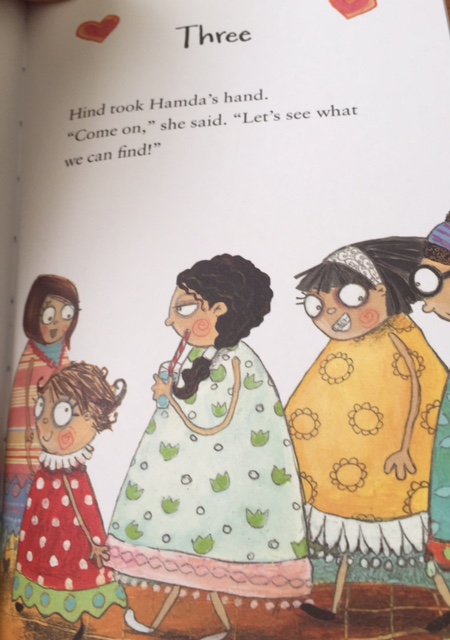
A mainstream Early Reader book with a cute little muhajaba on the cover and a premise that she’ll be a big girl when she wears hijab seemed like a book I should adore.  And while it isn’t bad, and I’m glad it was in the library,  really I’m not sure how I feel about it.

In someways, I’m just confused.  Why would you pick one of the characters to be named Hind, in a book urging readers away from picture books and into chapter books, it isn’t going to be pronounced with a short i sound, it is going to be pronounced like a “be-hind,” umm not so good for the age demographic you are trying to show another culture to, there will just be giggles and jokes.  Also, many of the illustrations are cute, but what is wrong with the dad and with Jamila’s sleepy eyes, they kind of border on creepy. And not the creepy, in a cool way, more like creepy in an awkward way.  And finally, with an author, a retold by, and a translator, and presumably a ton of editors and proofers at Orion Children’s Books, I found veil to be a very formal word to use throughout.  It does say it is a scarf at one point, but the word of choice throughout is veil, and I think to be culturally accurate, hijab would have been a better choice.  Even for English readers, scarf would have been a better fit.

The book is 62 pages, there is no glossary and it is not AR, but is a transition early reader book for kindergartener and first graders.

SYNOPSIS:

Little Hamda wants to spend time with her four big sisters, but they all say she is little and have other plans.  When her mom reminds her that they were small at one time too, she realizes that when they were small they didn’t wear hijab, or in this book, a veil, and now they are big and where one when they go out.  So, in her mind, once she starts wearing one, she too will be big, and thus the challenge of finding a way to wear it comfortably begins.  She is helped and supported by all her family and finally she finds her own special way to wear her veil.

I like that it is a mainstream book trying to include some diversity.  The family is relatable and the themes universal even if portrayed in a minority muslim framework.

FullSizeRender (80)

WHAT I LIKE ABOUT IT:

I love the premise of the book and that it is very clearly Hamda’s idea to wear a veil, no one is forcing her.  The text and illustrations align to show the girls cover when they go out, not in the home.  The dad needs help at one point finding his shoes to go to the mosque.  However, it doesn’t tell what a mosque is, or explain that the family is Muslim and wearing hijab is an Islamic act, which might be a comprehension block for young readers.

I really go back and forth on the illustrations.  On the first reading I thought they were creepy, when I went back to write the review they were kind of cute.  When I asked my kids, two said they were fine, and one said they were ugly and was positive I am the only one to have ever checked out the book.  Yeah.

FLAGS:

Fine, and Islamically nothing erroneous.

TOOLS FOR LEADING THE DISCUSSION:

Obviously not a book club level book, but I would be very interested to have some first and maybe even second graders read it and give me feedback, like I said I’m on the fence with this one.  Check to see if your library has it, read it, have your kids read it, and let me know.
FullSizeRender (82)

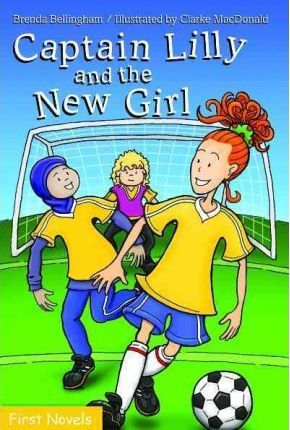
Captain Lilly and the New Girl by Brenda Bellingham illustrated by Clarke MacDonald

Standard
Captain Lilly and the New Girl by Brenda Bellingham illustrated by Clarke MacDonald

lilly.jpg

This book is part of First Novels, a collection of books in Canada that focuses on easy to read early chapter books that encourage kids to transition from leveled readers, while getting to know a single character in a realistic contemporary world.  There are a lot of Lilly books, but this one caught my attention because of the hijab wearing girl on the front, presumably the “new girl.”  At an AR 2.8 this 64 page book is great on so many levels, and really does meet the First Novel goal of presenting a simple theme and showing the main character grow.

SYNOPSIS:

Lilly is changing soccer teams, and only finds solace when many of her school friends will also be joining.  While each of the girls has different opinions and levels of enthusiasm about the team, they all are committed to one another as the “Wolves” stick together in a pack.  This loyalty is tested when a new girl is brought in to fill in for an injured wolf.  The foreigner, from America, wears a scarf, and just like with soccer, there are a lot of differing thoughts on the matter.  The reader see what Lilly feels as it is told from her perspective, which makes the issue not so much about the hijab itself, but about how a 9 or 10-year-old thinks and processes new concepts.  Ultimately, the Wolves as individuals and a team, have to decide what to do when an opposing team says that Sara has to take off her hijab if she wants to play.  
WHY I LIKE IT:

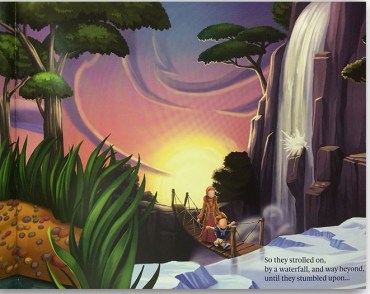
I love that the book is real, with strong independent girls.  The side characters aren’t cookie cutters of each other, they all have personalities and quirks, and I love that they don’t all agree, yet they all can make it work.  The book’s catalyst is the hijab, but it isn’t preachy and it is presented and understood through a non-muslim elementary-age character.   I don’t think Islam or Muslim is even mentioned, nor any culture, she is American, and the book takes place in Canada.  It addresses safety regarding the hijab, comfort in wearing sweats and not shorts, and being hot in a long sleeve shirt, issues that any reader can understand and ponder about.  The book isn’t gripping, but for the age group and the intent, it is spot on.  The font, spacing, size of the book, and simple illustrations, urge kids to read a “chapter book” and think about something they may not have ever thought about before.

FLAGS:

Clean, it does say words like “suck,” but it isn’t disrespectful.

TOOLS FOR LEADING THE DISCUSSION:

I wouldn’t use this as a Book Club book, because the kids can read it fairly quick, but I would probably read it aloud to kids and have them discuss, or have them somehow read it in groups and discuss.  There are a few websites that can help facilitate the discussion, but kids would definitely have opinions on how the situation was handed, how they might handle it, and what they think of the team’s sponsor.  

https://www.teachingbooks.net/tb.cgi?a=1&tid=40533

Click to access FirstNovels_Series_ActivityGuide.pdf

http://www.formac.ca/firstnovels


Jameelah Gets Dressed by

Standard
Jameelah Gets Dressed by

FullSizeRender (62)

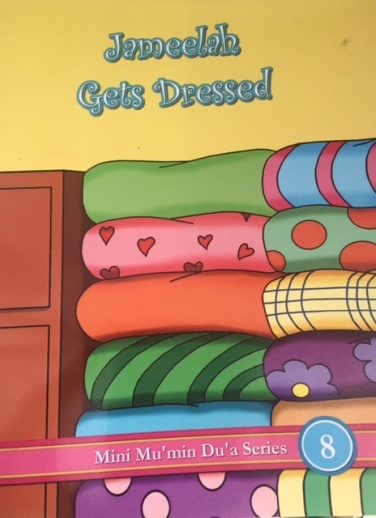
These books in the Mini Mu’min Dua Series are a great way to introduce familiar concepts in an Islamic framework to preschoolers and teach them the accompanying duas for them.  I previously reviewed Sajaad is Sick, which pleasantly surprised me, and this book proved that the series has consistency and value.

FullSizeRender (63)

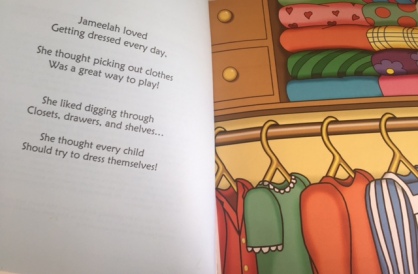
The pictures are colorful, but basic, there are no faces or people included.  The text rhymes, yet has a nice cadence that doesn’t seem overly forced throughout the 38 pages.  The book is large, 8×10, with a glossary cover, and decent weight and binding.

This book includes a few footnotes: defining hijab, giving the ayats for the commandment to draw your veil over your bodies, the hadith about starting with your right, etc.  There are four duas included, the one for getting dressed, the one for wearing something new, the dua for when someone else wears something new, and the dua for getting undressed.

FullSizeRender (64)


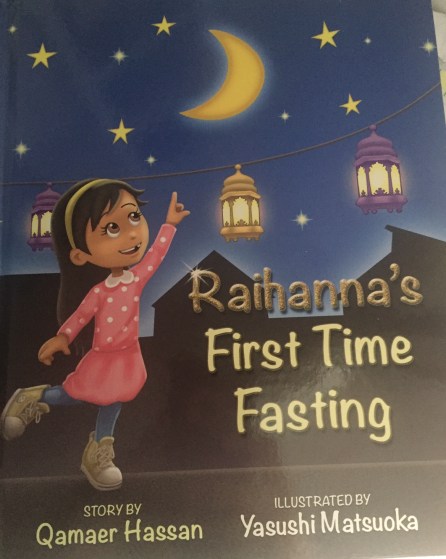
Raihanna’s First Time Fasting by Qamaer Hassan illustrated by Yasushi Matsuoka

Standard
Raihanna’s First Time Fasting by Qamaer Hassan illustrated by Yasushi Matsuoka

FullSizeRender (94)

By this time in Ramadan I’ve read a lot of very similar books that all seem to have slightly different takes on presenting the basics with various degrees of turning them into a fictionalized story.  Each have their own flavor and approach and this story in many ways is for mature little kids and works to bring a slightly deeper understanding to Ramadan and helping the less fortunate.  At 36 pages long, most of the pages are heavy on text, but not overly preachy or dense.  Dialogue and emotion fill the paragraphs, and the book works to establish Raihanna as an actual character, not just a foil to move from one Ramadan fact to another. This is also apparent, as a new Riahanna book has just come out, Raihanna’a Jennah, in making her the lead in a series.

FullSizeRender (95)

Raihanna is excited to be fasting this year, after establishing that the crescent must be sighted and that suhoor is the meal to start the fast, Raihanna puts on her hijab to pray.  She asks for forgiveness for being deceitful to get another cookie and asks Allah to make her and her friend able to go ice skating.  At bedtime it also mentions that she says her three kuls before going to sleep.  

FullSizeRender (98)

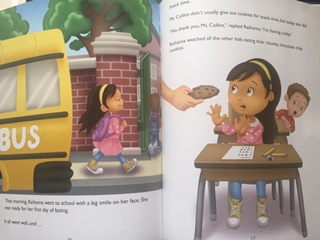
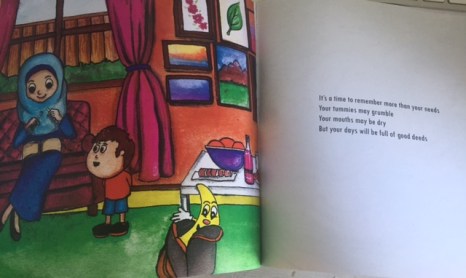
All her excitement starts to falter at school, however, when the teacher hands out chocolate chip cookies for snack and Raihanna has to explain she is fasting.  By the time she gets home from school she is not sure she even knows why she is fasting as her stomach rumbles and her mood is pretty sour.  Mom jumps in to action and takes her to a soup kitchen where the two of them, along with others, serve food to the homeless. 

FullSizeRender (97)

At iftaar time Raihanna understands how blessed she is to be surrounded by family and food, and makes a more heartfelt dua.  The book ends with letting the reader know that Raihanna spends the next 29 days loving Ramadan and being appreciative.

I love that it really picks one specific aspect of Ramadan and focuses on it in a tangible way, the poor and hungry.  Yes, she prays and recites Quran and all, but establishes that she probably does that every day out side of Ramadan as well.  I like that the author also shows that it is ok that Ramadan is hard.  There is a bit more insight and understanding in this book than just the typical list of facts.  I think ages kindergarten through 2nd grade, kids that are starting to fast will get the most of it, and relate the most to Raihanna.  It could work for non Muslims, with a bit of context of belief or just read a different Ramadan book first, but the target audience is Muslim kids.

FullSizeRender (96)

The beautiful cartoonish pictures are bright and engaging.  I have no idea why it bothered me that the characters wore the same clothes everyday, or at least the two days that the story covers, but it kind of did. I like that the dad sets the table and helps in the food prep and parenting.  The list of family members and all the dishes seems unnecessary, but with the glossary at the back it does offer a bit of culture to be conveyed.  There is also a little reader response at the end.   

Owl & Cat Ramadan Is. . . by Emma Apple

Standard
Owl & Cat Ramadan Is. . . by Emma Apple

owl and cat ramadan.jpg

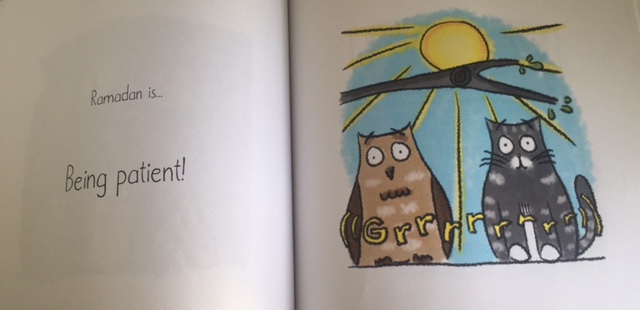
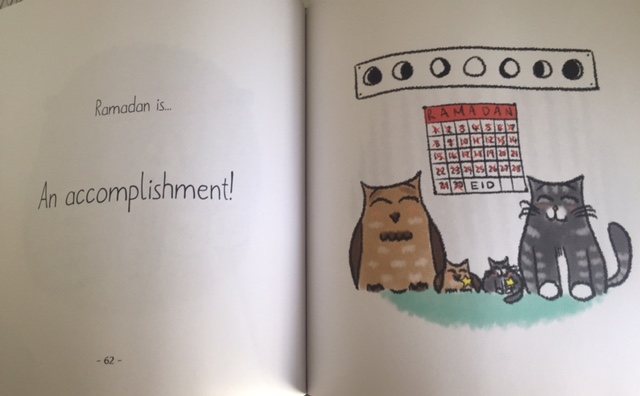
Seventy-four pages, with about that many words, conveying what Ramadan is, and how it is practiced to the youngest of listeners. Emma Apple once again in her simple, yet colorful drawings of Owl and Cat holds toddlers’ interest as she effectively conveys the feeling of what Ramadan is like to muslim and non muslim children.  With so many factual based books about Ramadan and how it is practiced, this nice change of pace shows a lot of the feels and activities in an incredibly streamlined way.

FullSizeRender (75)

The book starts with an opening page that tells about Ramadan before establishing the rhythm of each page starting with “Ramadan is…” and then concluding the sentence with one, two or four words to describe the blessed month.

FullSizeRender (77)

The illustrations show the two characters doing the things mentioned with their little owl and cat friends, praying, eating, learning, taking naps, etc.. The book is heartfelt, funny, and informative with its sparse wording and simplicity.

FullSizeRender (78)

I was thrilled to find it in the public library, and glad to know that there are now more books in the series, alhumdulillah, as well as a workbook to accompany this one.

FullSizeRender (76)


Mr. Gamal’s Gratitude Glasses by Asmaa Hussein illustrated by Nuria Tomas Mayolas

Standard
Mr. Gamal’s Gratitude Glasses by Asmaa Hussein illustrated by Nuria Tomas Mayolas

IMG_0059

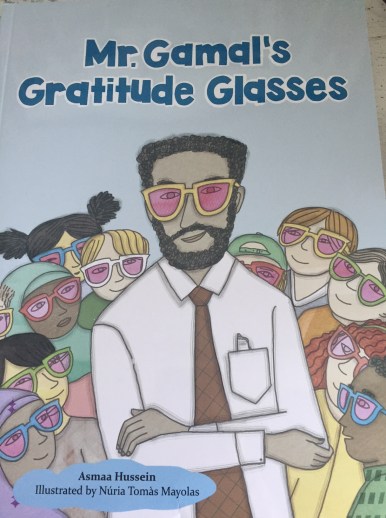
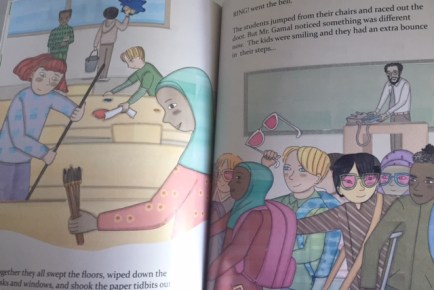
Asmaa Hussein over at Ruqaya’s Bookshelf has put out two new books, and this gem of a book is one of them.  Mr. Gamal’s class is angry, about lots of little things getting out at dodge ball, the wrong color grapes, having to wait their turn, and it is making for restless, grumpy students.  On a trip to the dollar store, the teacher is struck by inspiration when he sees some oversized pink lensed glasses.  With a pair for each student, the kids have a week  to try out there “gratitude glasses” and report back on their success.

FullSizeRender (68)

In 36 pages readers ages 5-8 will get to know some of the stresses felt by kids they can relate to, and ways to find “good things, even in tough situations.”  They will also learn that the real secret isn’t the glasses, but their own brains discovering “new ways to think about stuff!”

FullSizeRender (67)

While the kids learn a lesson, Mr. Gamal does too, and so do the readers, alhumdulillah.

FullSizeRender (66)

The book would be great fun to read in a group accompanied by glasses to hand out and test Mr. Gamal’s idea with.  I also think it is great to have on the bookshelf to remind kids that they need to find the positive and break out of their slump.

FullSizeRender (65)

The kids all have “islamic” names and a few wear hijab (some do not), but there is nothing religious in the book.  It would work well in any environment and does a good job of showing diverse characters.  The pictures are adequate, I don’t love them, but they compliment the story and set the tone fairly well.  The book is a great size for story time (8.5 x 11) and with a thick cover and shiny pages, should hold up to repetitive use.


Mr. Ramadhan Moon by S.R.M. illustrated by Haleema Tahir Gul

Standard
Mr. Ramadhan Moon by S.R.M. illustrated by Haleema Tahir Gul

mr moon.jpg

This little 26 page paperback book is not a lot to look at, and it really isn’t substantial in your hands either….but it comes with this little guy, who is Awesome!
IMG_0077.JPG

And once Mr. Ramadhan Moon smiling at you, and you open the book, the only real complaint you’ll have is how can we support this book so that the book can become hardback, the pages bigger, and the font spaced out more.  Yeah, it is fun, really fun.

FullSizeRender (70)

Told from Mr. Moon’s perspective the story covers the basics about Ramadan, fasting, charity, praying, and Eid, but also incorporates the searching of the moon in both the Ramadan month sense, and in the hiding of the toy and finding it around your house activity gimmick. Much like the Christmas game of “Elf on the Shelf,” Mr. Ramadhan Moon wants to be found each day of Ramadan, and can also be found on each page of the book.

FullSizeRender (69)

The book is written in rhyme, which often is forced, but its ambition is appreciated as a lot of information is conveyed.  There is even a glossary of terms in the back.

FullSizeRender (71)

The book is ordered through Etsy and I think will be a blast for kids toddler to 3rd grade.  I’m planning to hide him daily this Ramadan and I’ve already read the book to my children who can’t wait to start a new Ramadan tradition.

Zak and His Little Lies by J. Samia Mair illustrated by Omar Burgess

Standard
Zak and His Little Lies by J. Samia Mair illustrated by Omar Burgess

zak and lies

In the first Zak book, Zak had good intentions that just never went his way and we, as the readers, really felt bad for him.  In this new book, it takes a few pages to feel sympathy for Zak as his little lies get him in trouble, but sure enough when he finally changes his ways, it is cause for relief, celebration, and a great lesson to teach kids something that they do without much thought.

ZakLies2

The book claims to be for 3 to 7 year olds, but I think it works best for 3rd graders who seem to be testing honesty out.  Yes, it is great to introduce it to younger kids, and you really should, but like the first Zak book, the pages are a bit text heavy and the concept really should be understood without too much hand holding.  For me, the power of the book is the way that Zak’s little lies snowball in to a habit, and the climax really is something that you want the child to feel from within, not as just an adult once again telling them to be honest and not lie and to listen.

zak lies 1

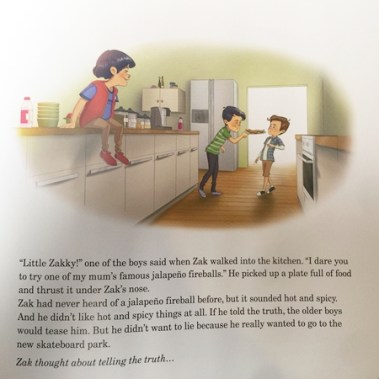
Zak starts the book with one more chore to do until he can go to the skate park with his Baba to play.  But, he gets caught in a lie about his bearded dragon, Dwayne, and the stage is set for him to get through the day honestly.  The next test doesn’t involve lying to his parents, but rather some kids from school that tease him, he doesn’t tell the truth and consequences ensue.  Next up he lies to his sister, again a great addition in showing that honesty is not just important when dealing with parents or adults, but that it needs to be the standard in all our dealings.  At the end, it is his sister getting in trouble for something that he has done that forces his to come clean about his whole day and to learn that truly, “Nothing in the earth and in the heavens is hidden from Allah” (Surah Al-Imran 3:5).

The hardback book is 29 pages with the last two pages being Discussion Questions and more information about the Quran Ayats and Hadiths mentioned.  The illustrations are not too busy, but the characters facial expressions are spot on, and often where the emotional cues for the text are found.

The Prophet’s Pond by Zaheer Khatri

Standard
The Prophet’s Pond by Zaheer Khatri

prophets-pond.jpg

Based on the hadith as narrated by Saheeh Al-Bukhari, “Remain patient until you meet me by the pond.”  The book follows a little boy (and his mom) searching for the pond mentioned in hadith as the place Prophet Muhammad (saw) will be waiting for us in the hereafter.

the_prophets_pond_2.jpg

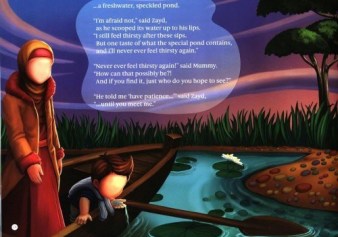
The beautiful, faceless pictures, radiate with beauty and light as they journey from pond to pond in search of one that has all the characteristics of the one described to us.  One that takes a month’s journey to cross one of the sides, one that is whiter than milk, smells better than musk, is colder than ice, is sweeter than honey, that has as many cups to drink from as stars in the sky, and one that if you drink from it you will never be thirsty again.  theprophetspondinside3.jpg

The mother is brought along on this journey to help, and it takes her a few ponds to figure out who her son is hoping to meet in this 23 page hardbound book.  But alas, the rhyming stanzas come to an end and she advises her boy, and the reader, to live the way the Prophet instructed to, inshaAllah, in the akhira meet him by his pond.

The book is perfect for 3  to 7 year olds, with older children enjoying a reading or two as well.  

the_prophets_pond_3.jpg

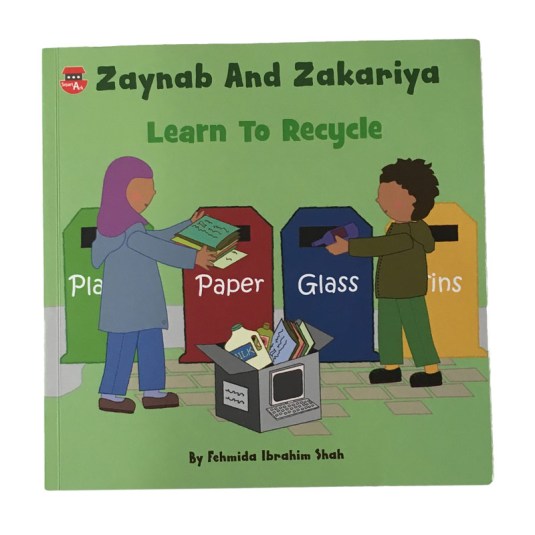
Zaynab and Zakariya Learn to Recycle by Fehmida Ibrahim Shah

Standard
Zaynab and Zakariya Learn to Recycle by Fehmida Ibrahim Shah

ZAYNAB-AND-ZAKARIYA.jpg

I’ve seen a few other environmentally inclined children’s books in Islamic School libraries over the years, but this one is one of the better ones in terms of its comprehensive thoroughness, proactive nature and presentation. 

Zaynab and Zakariya help each other learn about recycling paper, tin, glass, and then reach out to their parents at the library to learn exactly how recycling works, what happens to trash, and how they can do their part to help the Earth.  I like that the kids, don’t just drop a few items in a bin, flip off a light, and turn off the water, they actually help their mom start to compost, they seek out items made from recycled materials at a store to purchase, and learn about catching rainwater with their father.  The text is a bit heavy and is probably more suited for at least 1st grade and up if read in a group setting, younger kids would enjoy it in bits and pieces, and would absolutely benefit if some hands on activities could be incorporated.  

The book is 28 pages, sturdily bound and has a glossary of terms in the back.  The book is small, about 9×9 and the pictures feature no faces.  The story line is framed in an Islamic context and Quranic verses are highlighted and mentioned in the story.