Category Archives: High School

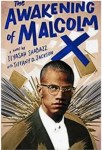
The Awakening of Malcolm X: A Novel by Ilyasah Shabazz and Tiffany D. Jackson

Standard
The Awakening of Malcolm X: A Novel by Ilyasah Shabazz and Tiffany D. Jackson

img_8312This historical fiction piece about Malcolm X follows him through incarceration with flashbacks to his childhood and teenage years.  Written by his daughter it is hard to know where this 336 page book is factual and where it takes artistic freedom with filling in the blanks. A few creative liberties are mentioned in the author’s note at the end, but some sources in the back would help clarify, as she was a toddler when her father was killed. The time frame of Malcolm X’s life and a large portion of the book covers his introduction and conversion to The Nation of Islam, but it never mentions even in the timeline at the end that he left it, or that they were responsible for his assassination.  The book is beautiful and heartbreaking at the same time, it is also so very humbling and empowering. I just don’t know that younger middle school readers (the stated intended audience is 12-18), will really grasp the content, his condition, and his searching, while trying to keep all the characters, time frame references, and slang straight.  With the mention of his girlfriend who he is/was sleeping with, as well as the drugs, the alcohol, and the abuses occurring in prison, older teens might be able to handle the book better, and be tempted after to dig deeper to learn about him going for Hajj, becoming Sunni, changing some of his views, and ultimately being gunned down in front of his family.

SYNOPSIS:

Malcolm Little is living between Roxbury and Harlem and going by the nickname Detroit Red.  When the story opens, Malcolm and his friend Shorty are about to tried for stealing a watch, a crime that he acknowledges he committed, but undoubtedly doesn’t deserve 8-10  years in prison for at age 20.  Nearly every chapter starts with a flashback to an earlier time and then concludes with the atrocities of prison life at hand.  As the narrative flips back and forth Malcolm’s story and awakening emerges.

Born in Omaha the Little family’s home is burned down by the Ku Klux Klan, they move a few times as the growing family grows closer together and establish themselves as followers of Marcus Garvey in advocating for Blacks.  Malcolm’s preacher father is killed when Malcolm is six years old and his mother institutionalized when he is 13, for refusing to feed her children pork amongst other things, and thus leaving the family grasping as they know she isn’t crazy, yet cannot get her released.  Malcolm is incredibly bright and attends a nearly all white prep school, but even after being class president, a teacher discourages him from pursuing his dreams of being a lawyer, and Malcolm drops out of school and ends up being a hustler.  His white girlfriend, a married woman in Boston and her friends convince him to rob some wealthy white neighborhoods and when he later takes a stolen watch to be fixed he is arrested and found guilty of grand larceny, breaking and entering, possession and more.  He is sentenced to Charlestown State Prison and day-to-day life is rough.

The guards at the overcrowded prison are aggressive, the food un consumable, and being put in the hole as punishment is beyond inhuman.  Malcolm is filled with anger and rage and is still trying to hustle people.  He learns his family has become followers of The Nation of Islam and he doesn’t want to hear it, he doesn’t want to hear about his prison mates preaching the Bible and he doesn’t want to hear about God.  He feels betrayed by God and feels guilty for not being a man his father would be proud of, the refrain: up, up, you mighty race! echoes throughout.

Throughout it all his family’s love is felt in visits, letters, and warm memories of life before his incarceration.  His flashbacks to events in his childhood that defined him, inspired him, molded him, show what a beautiful family he had and how racism in large part destroyed it.  His parents valued education and discipline and his elder siblings carry that torch and pass it on to the younger children, they are a large family and their love is palpable for each other and for the liberation of Blacks in America.

Little’s sisters write letters and eventually get Malcolm transferred to a much nicer prison, Norfolk, where he really channels his rage into reform, determined not to leave the same man he entered as.  He has access to a full library, he joins the debate team, he takes classes, converts to The Nation of Islam and then refuses to get a polio shot and is sent back to Charleston for the remainder of his sentence.

The book concludes with his release, and teases that members of his family are becoming uneasy with the Honorable Elijah Muhammad.  At the very very end, he meets Betty, the lady who will be his wife.

WHY I LIKE IT:

I love that this chunk of Malcolm X’s life shows the transformation of his thinking, how outside influences forced him to dig in to himself and reflect in such a profound way.  The book is as timely as ever as the systemic racism that is determined to see people of color fail is still running and growing.  There is a little mention of how veterans are treated better in other countries on the front lines than they are at home when they return that I wish was explored more, but there are so many characters that flit in and out of Malcolm’s prison world, it is hard to tell them apart as it is Malcolm’s story and his development that is being told.

Not surprisingly, I wish there was more about him converting to Sunni and going for Hajj.  The book stops before then and I am sure that most readers, will not understand the difference between The Nation, the Ahmadis mentioned, and Sunni Muslims.  This concerns me as the acceptance of Elijah Muhammad as a Prophet is hard to read.  I think some conversation with readers would be necessary as the book offers little if any to differentiate.

I like that each chapter starts with a direct quote of Malcolm X and the the fact that the relevance of his words in today’s world don’t need any explanations or context is devastatingly powerful.  I also appreciate how engaging and smooth the writing is.  You really feel the layers of Malcolm X the character, being pealed back and him coming into the proud confident leader that he is known to be.

FLAGS:

There is profanity, mention of him sleeping around, memories of kissing his girlfriend, alcohol consumption, cigarettes, drug use, violence, beatings, abuse.

TOOLS FOR LEADING THE DISCUSSION:

I don’t think I would do this as a book club for middle school.  Possibly if I was a high school teacher I would offer it as outside reading or extra credit when reading about the Civil Rights Era, or if I was teaching the Alex Haley, Auto Biography of Malcolm X.
Counting Down with You by Tashie Bhuiyan

Standard
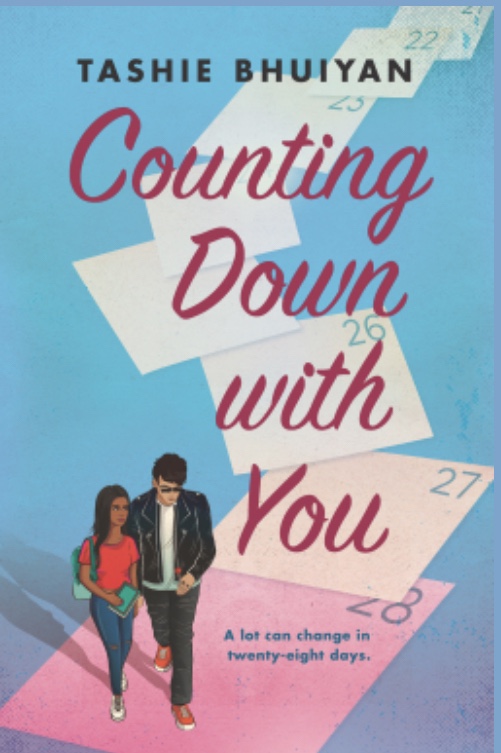
Counting Down with You by Tashie Bhuiyan

img_7940

I have to be honest that this book really held my attention and was hard to put down for about two-thirds of the 416 pages.  I was genuinely invested in the characters and wanted to see how it all resolved.  Sadly, by the end, I was disappointed with the conclusion, the predictability, the stereotypes, and the cliche’ of it all.  The author mentions in the forward that she is representing her story, not a representation of all Bangladeshi- Muslim American girls, but for an OWN voice book with such a clever premise, I really wanted to be shown more than I was told, I wanted to feel the protagonists strength, and cheer her on as she found her happiness on her terms.  But alas I felt that she let other’s fight her battles and she really only threw her religion and culture around as weighted plot oppressors, not as strands of her life that she had to decide to embrace or understand in the process of growing into herself.  There was a lot of potential to discuss mental health and family expectation, but the end unraveled all that the book could have been.  Undoubtedly the author is a good writer, and brown Muslims are not a monolith, but I feel like sometimes we need to square away who we are before we just clamor for what we want.  This book has relationships, it is a romance novel afterall, but whether the characters are straight or LGBTQ+, there isn’t more than kissing and hand holding and would probably be fine for 9th grade and up if you are ok with a Muslim lead lying to her parents and having a boyfriend.

SYNOPSIS:

Karina Ahmed is 16 and expected to be a doctor when she grows up.  Her conservative Muslim parents are immigrants from Bangladesh and very over protective of their oldest child.  Samir her younger brother, a freshman, is a robotics nerd and the pride of their family.  Karina loves English and wants nothing more to major in English in college, but her parents are insistent and despite her struggles with math and science she is determined she has no choice in the matter and must make them proud by being a doctor.  This inability to be what her parents want has caused tremendous anxiety within Karina and when her parents leave for a vacation to Bangladesh for a month, she is hoping to be able to relax and enjoy life for 28 days with her Dadu, paternal grandma, and her friends, Cora and Nandini.

The only extracurricular activities Karina is allowed are Pre-Med Society and tutoring, where she helps others with English.  Her teacher asks her to tutor a classmate one on one to prepare for the end of the year exams, and reluctantly she agrees.  Very reluctantly.  The classmate is brooding resident bad boy Ace Clyde, a beautiful slacker that seems to not care about much.  In Karina’s efforts to get Ace to study and taking advantage of limited parental supervision, Karina goes with Ace to a sweetshop and even ends up at his house where she meets his family.  Ace is not ready to admit to his incredibly wealthy family that he is seeking help from a tutor and instead introduces Karina as his girlfriend.  Ace’s older brother Xander, the Student Body Class President, isn’t buying it, so Ace announces it on social media and shows up the next day with coffee for Karina as he walks her to class determined to convince everyone that they are indeed a couple. Karina is not ok with this, but he does promise her a dozen books a week and he is aware that the “relationship” can only last 28 days, so she is in.   Karina’s friends predict that they will fall hopelessly in love and they are pretty correct.  Over the course of the next three and half weeks the two grow closer, he even comes over and spends time with Dadu and Samir.  She encourages him to fix his relationship with his family, and he encourages her to fix hers.  And somewhere in the midst of pretending they decide to make it real and then Karina’s parents return.  She at this point has been cheered on to stand her ground on confronting them about not wanting to be a doctor by Ace, Cora, Nandini, Dadu and Samir.  The conversation does not go well and Karina goes into a two week slump pushing everyone out before she *spoiler alert* resolves to date Ace in secret as long as he respects her lines, and Dadu stands up to her parents for her.  The story concludes with her going to Jr. Prom and her resolved to just stay strong for a little while longer until she is “free.”

WHY I LIKE IT:

I like that I really didn’t know if the book would turn cliche until it ultimately did.  I really liked the realness and rawness of Karina coping with her anxiety and her friends supporting her in Googling coping mechanisms and helping her test them out.  I feel like it was a missed opportunity for Karina’s parents to not reach out to her, or for Karina to even mention that they were missing it.  I think readers that see themselves in Karina would have hoped to see that story thread play out and give them hope of getting help and support or at least getting it out in the open to normalize it.  I love the growth of Samir once Karina make him aware of the double standard, but I feel like he doesn’t read with a consistent persona.  He has a job, he has friends, he likes a girl, but he reads like he is clueless and maybe 10 years old at best, not in high school.  A bit off for me.  And of course you have to love Dadu, a wise old woman who supports her grandchildren and sticks up for them.  I wish Karina would have taken her cues from her beloved grandmother and stood up to her parents with Dadu in the room rather than let Dadu fight the fight and just stand there.  I thought the big climax would be Karina standing up to her parents, so I felt let down when she let someone else fight her fight.  Yes Karina tried and failed, but I think her grandmother should have backed her up in round two, not taken over.

Karina throughout says she is Bangladeshi-Muslim and uses it as a reason to fear her parents and feel obligated to not date or study English.  She does say she isn’t against religion, and actually likes being a Muslim and praying and knows Allah loves her, but that it is the tradition that blindly is followed that gives her trouble.  Her maternal grandfather is an Imam and her mom is much stricter than her father, but he follows her lead in raising the kids.  My critique isn’t so much to argue with the author’s perspective about religious standards, but more a literary one, when the character says she is Muslim and uses that to reason why she has lines, but yet is never seen praying or wresting with what she wants and what she believes.  Never asking Allah for help with her anxiety or confronting her parents or anything for that matter.  As soon as her parents leave she is in a crop top, so where is the religious line and where is the cultural one?  Where is her understanding of her culture and where it fits in her life and where she wants it to fit in her future? Is she Muslim because her parents are or because she believes it? She won’t eat ham, and eats halal, but later eats meat at Ace’s house? Everyone, even fictional characters, get agency, but in a book where the premise is a fake relationship turned real turned rebellious because of religion and culture, a little introspection seems warranted.

The conclusion after hundreds of pages of being called lionhearted and brave and strong seemed diminished when going to prom and lying to parents and having grandma fight your battle is the happy ending.

FLAGS:

Relationships: The main couple hold hands and kiss. There is a supporting character that is bisexual as is a cousin, one is gay, they hold hands and kiss as well. Nothing more than that or detailed. There is lying and deception.

TOOLS FOR LEADING THE DISCUSSION:

I don’t think I would do this as an Islamic School book club selection because it would imply agreement with lying and going behind your parents backs.  Granted her parents are difficult and her grandma is aware and ok with the situation, but I still think it would send the wrong message to endorse such behavior from a religious school perspective.

The City of Brass by S.A. Chakraborty

Standard
The City of Brass by S.A. Chakraborty

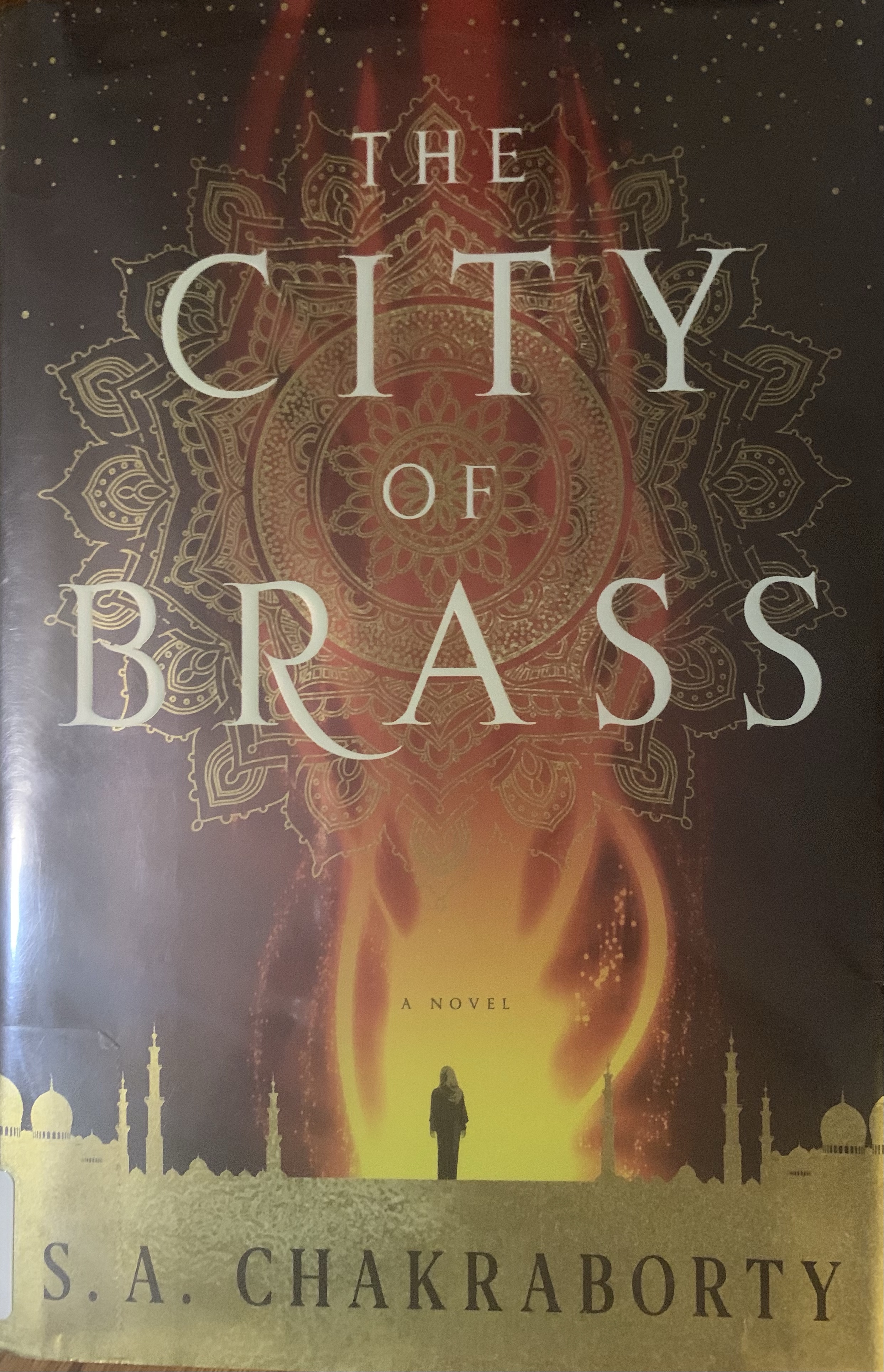
This series is adult fantasy written by a Muslim author for her ummah and contains Muslim characters. I think the series as a whole is definitely not YA, as the main characters would age out of the target demographic, but I think that book one could qualify. I’ve contacted the author to get her perspective on the matter, and will update this if I hear back. So why am I reviewing it? Because it is so good, and I’ve heard of a lot of people letting/encouraging their teens to read it, and honestly, I did as well. There is complex world building, implied physical interactions, one hinted at gay romance, alcohol, concubines, violence, djinn, ifrits, killing and one kiss/slight make out session. There is also Middle Eastern culture, Islam, and a fiery protagonist that make the 530 pages in the first book fly by. I’m only reviewing the first book, and I think 14 years and up can handle it, I know my 14 year old and I haven’t stopped talking about it, and it has been quite fun to fan girl with her over it.

SYNOPSIS:

Nahri is living in 18th Century Cairo. She is completely alone and always has been. To survive she relies on her healing abilities and her ability to steal, cheat, and con her way to food and shelter. She knows nothing of her past, but is able to pick up any language after hearing a few words. At a performance to con a family needing help healing their daughter, she accidentally summons a djinn, Dara, which in turn awakens a graveyard full of ifrit, and sends Nahri on the run. Not trusting Dara they are travel companions none-the-less as they make their way to Daaevabad, a protected home of the fire beings, and the only place Dara thinks she will be safe. Along the way on the month long journey, Nahri tries to learn about the djinn, called Daeva, and the creatures they are running from. She also learns that she is the last surviving Nahid, healer, and while she may be a shafit, a half blood, she has powers and lineage the kingdom desires. Dara isn’t forthcoming with information, as a result his dark past and incredible powers keep Nahri on edge. She is constantly plotting her escape from the magic carpet carrying them and the future that she doesn’t understand let alone know if she wants.

The book is told from Nahri’s perspective and from Ali’s as well. Ali is the second born son to the king of Daevabad and has been raised away from the palace at the citadel. With a soft spot for the shafit, second class citizens of Daevabad, he gets tangled up in a plot to free child slaves and gets called back to the palace to be watched and tested as his brother’s future Qaid, the top military official that he has been preparing for his entire life. Ali is already an outcast to his family, as a devout Muslim in practice, belief, and actions, unlike his family who identify as Muslim for political unity.

Once Nahri and Dara cross in to Daevabad and the two narratives come together, the politicking, deception, deceit, and historical complexities get intense. The king demands that Ali get to know Nahri so that she can be persuaded to marry the emir, Muntadhir, but Nahri is in love with Dara and struggling to learn how to be a healer in the mythical world. To say that the story gets messy with the djinn tribes, and the manipulation of power and historical atrocities would be a simplification. But the writing is superb, and the world building encompassing. The book doesn’t drag and even after reading all three volumes, you’ll find yourself thrilled to know that the author has some additional points of view online.

WHY I LIKE IT:

The author takes a lot of liberties with Prophet Suleiman’s story, but it is fiction and I don’t think that anyone would be mislead by the information given about him and his control over the djinn. The “Islamic” elements in the book are really just that, elements, they aren’t plot lines, or more than just a layer to the setting and the characters. The history and the cultural richness is made more complete by the foods, clothes, and salat times mentioned, but there is nothing Islamic fiction about the text.

I love the writing. Period. It is engaging and doesn’t lag or feel repetitive. The characters are very fleshed out: no one is good or bad, the entire cast is shades of gray, and their motives and intentions are often debatable. My daughter and I have argued and I don’t think we have tried this hard to convince each other about characters since Harry Potter, and it is so great!

FLAGS:

SPOILERS: Dara and Nahri have chemistry and they kiss and long for each other, but it isn’t the bulk of the story line. Ali starts to fall for Nahri, but he has poor judgement so it is by and large dismissed. Muntadhir is always drinking wine and courting courtesans and is never in his own bed, nothing is detailed, it is said in passing, or implied. It is also hinted that Muntadhir is in love with his best friend, a male, and pretty much everyone knows, and they just look the other way. It does not state anything explicitly about them, but it is hinted at, implied, and mentioned by the other man’s father that the prince has broken his son’s heart numerous times.

Wine is always present, as is stealing, and lying. There is a lot of violence, not overt gore, but occasionally graphic as Nahri is a healer and there is a war simmering in the current time line, and a historical one that wiped about a whole tribe that is discussed throughout.

TOOLS FOR LEADING THE DISCUSSION:

I wouldn’t be able to do this for middle school, but perhaps closer to the end of the school year, I would suggest that the high school book club consider it. There is a ton online for this award winning debut novel, so I’ll just include the author’s website: http://sachakraborty.com

Happy Reading!

Punching the Air by Ibi Zoboi and Yusef Salaam

Standard
Punching the Air by Ibi Zoboi and Yusef Salaam

img_7268

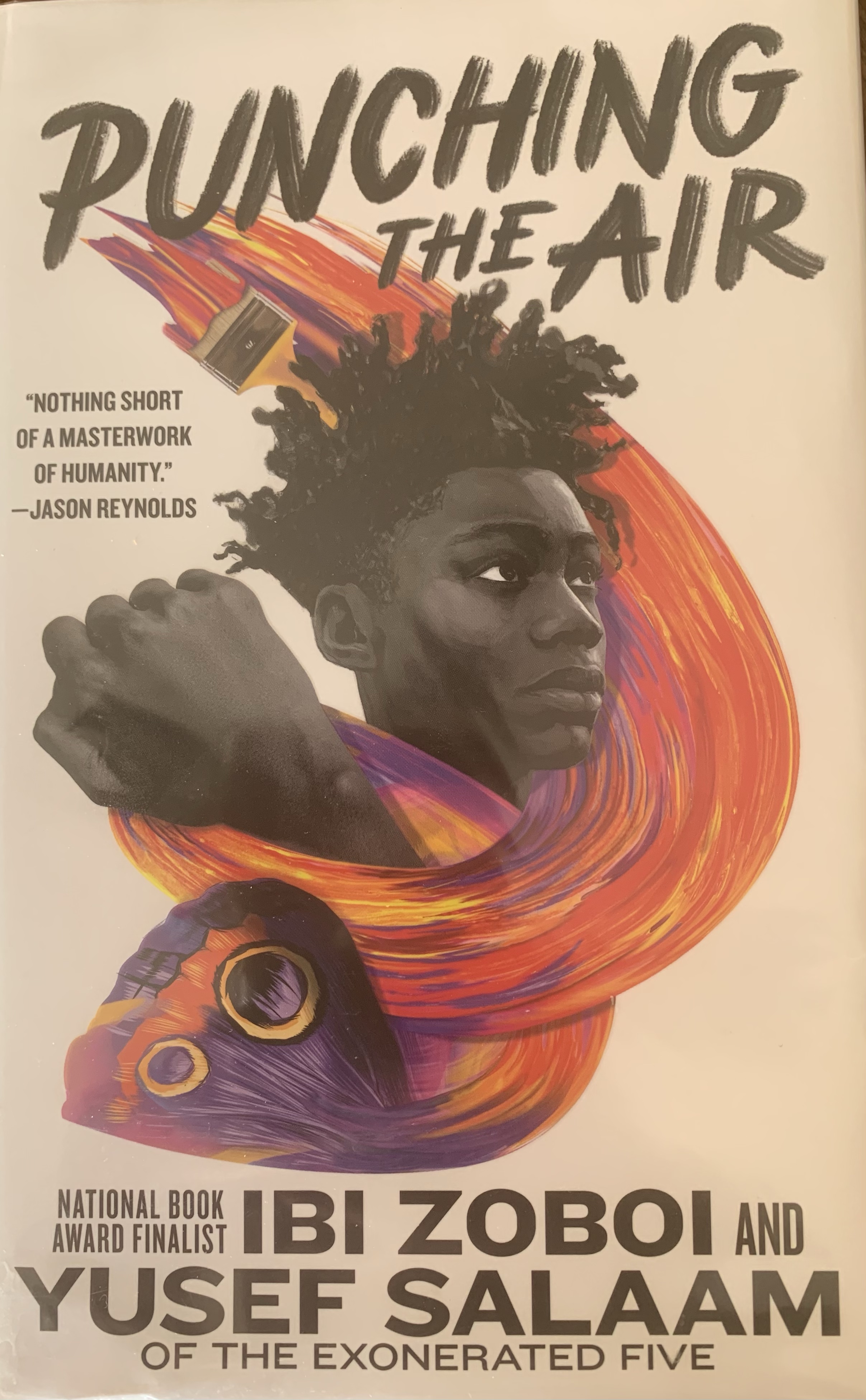
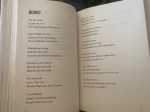
Four hundred pages of painfully powerful verse that you will have to force yourself to slow down and not rush through.  Yes, you want to know what happens to the young, black, muslim teen writing his truth, but to read it too quickly will deprive you of feeling and contemplating and absorbing the message that if, you, like me are a white (ish) person of privilege, need to surround yourself regularly with to understand.  The OWN voice narrative is co-written by one of the Central Park Exonerated Five and should be required reading for everyone 14 and up.

img_7263

SYNOPSIS:

Amal Shahid is 16 years old, and maintains he is being wrongfully accused of a crime that has left a white boy unconscious.  He acknowledges he threw the first punch, but is adamant that he didn’t throw the last.   From his trial to his incarceration in a juvenile detention facility, the narrative pushes forward as he adapts to confinement with flash backs to pivotal moments in his life.  He is a gifted artist and writer and his creativity and ability to express himself is what will hopefully provide him a way to survive.

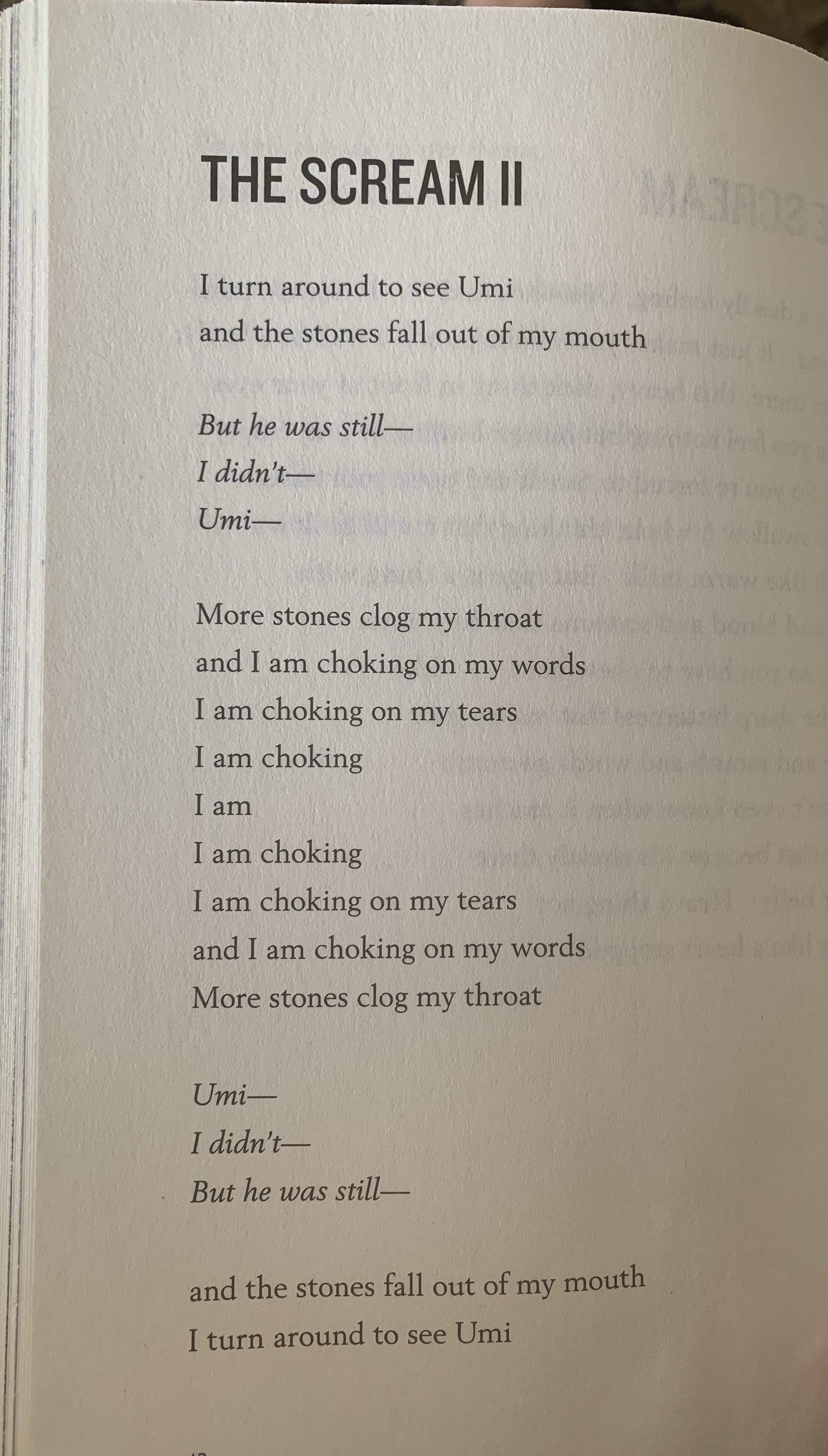
I know I’m leaving this vague, because truly I cannot do it justice.  I started taking pictures of powerful sections, and when I found myself taking pictures of nearly every page, I realized that the book is something to be experienced in its entirety and will include just a few internal pages to tempt you.


WHY I LIKE IT:

The book is impactful in that it claims only to share the protagonist’s truth, it doesn’t get off tangent from that, but allows for the reader to add to the narrative their own understanding to make it personal and resonate most profoundly.  His situation involves so many injustices plagued upon him only because of his skin color, and a system that is designed to keep racism alive and powerful.  He was at the wrong place at the wrong time perhaps, but while the book is heavy, hope is ever present.  I’d like to believe it is because of those that refuse to give up on Amal. I was swept away by the power of a mother’s love.  Truly, what strength for a young man in Amal’s situation to have the world betray him so often in his young life, to find unflinching love, support, belief, and determination in his mother.  

I love that his mother is a practicing Muslim, his grandmother attends church, and he loves them both and values their spirituality.  Allah, the Quran, and Islam are mentioned regularly.  It never is preachy, or gives much doctrine, but it is present, and is a tangible part of how Amal sees the world.

img_7266

FLAGS:

There is language and violence.  He has a crush on a girl and she writes him letters, nothing obscene.  There is racism, bullying, racial slurs.

img_7261

TOOLS FOR LEADING THE DISCUSSION:

There is so much to discuss in this book, and so many resources online.  I think the book might be too mature for my middle school book club, but I am suggesting it to the high school book club.  This book needs to be read, discussed, breathed in, and experienced.  Plus the author’s real life experiences should be incorporated into the discussion as well as the student’s understanding of how present racism is and how they can use their voices and influence to create real, lasting, change, inshaAllah.

The Theft of Sunlight by Intisar Khanani

Standard
The Theft of Sunlight by Intisar Khanani

img_7254

Breathe, deep breaths, exhale, phew.  This book is good, like really good, but it ends on a cliff hanger and I was not prepared for it because I read a digital copy and didn’t think 528 pages had gone by.  Needless to say I was not emotionally prepared for there not to be a resolution.  Then the afterward said it was a duology, and I may have freaked out and contacted the wonderfully patient author and had her talk me down, because such words could imply that Thorn was book one.  Also, when I’m frantic I don’t read clearly, but now all is well, she assured me there will be a conclusion, inshaAllah, to Rae’s story.  Picking up chronologically where Thorn left off, this book is a companion in the Dauntelss Path series, but follows a different protagonist and while I highly suggest reading Thorn first, it is not necessary to understand this original tale.  So, phew, I am breathing again, and happy to venture back to Menaiya to share my review of a lovely story, written by an amazing Muslim who once again weaves such an engulfing tale that doesn’t drag or have holes in the narrative, is filled with strong female characters, and text that reads so effortlessly it just sweeps you away.  Truly it is fun for middle school and up (13+), and clearly I’m not passionate about books and fictional characters and don’t need to get a reality check.  

SYNOPSIS:

The book opens in a small village where Rae is in the market with her littlest sister Bean and their friends, Ani and Seri, when the unspeakable happens: Seri goes missing.  This isn’t a tale of a child who has wandered off, it is about a child taken by the snatchers and the materialization that the rumors and horrors they have been hearing of children being taken, becoming very real.  Niya, Rae’s middle sister is a secret mage who tries to track Seri, but can’t break through the mark that keeps her hidden.  As the townsfolk exhaust all resources and resolve she is just another child lost, Rae gets an opportunity to find answers.  Her pregnant cousin has invited her to spend the summer at the royal court and attend the wedding of Prince Kestrin and Princess Alyrra.  Convinced that the palace must have more information about the snatchers, Rae reluctantly agrees to go and investigate what is being done to stop the country’s loss of children.  Rae is nervous to leave her horse ranch, afraid of the teasing she will receive because of her twisted clubbed foot, but above all desperate to help her friend’s family.  

Everything about Tarinon baffles Rae: the extreme poverty on the outer skirts of the palace, the vacant stares of the children, the ignorance of the courtiers, the politicking and secrets.  She doesn’t get much time to ease into this new role though, because she is thrust head first in to it when asked to be one of Princess Alyrra’s attendants. She once again reluctantly agrees, with the hope of getting answers to help recover Seri and other lost children.  After tests to gage if the princess can trust Rae, the two join together to secretly unravel what is going on.  This work in and of itself is incredibly dangerous as those that ask questions often go missing.  Her work is compounded when the princess sends her to get information from the head of a thief ring, Red Hawk, and his informants.  The closer Rae gets to answers, the more perilous situations she gets in and out of, often having to count on her bravery, determination, and wit to stay alive.  She finds an unlikely ally in Red Hawk’s right hand man Bren, help and friendship in an employee in the tax office, Kirrana, and the need for favors from a Fae mage and his Cormorant.  As the investigation progresses, it leads to battles with neighboring thief rings, Rae held hostage at one point, getting her finger chopped off at another, the Circle of Mages seeming guilty, and royalty within the palace duplicitously involved.  All this while a week long royal wedding is underway and the princess’s brother is attempting to kill the princess.  No wonder 500 plus pages still ends with a cliffhanger, eh?

WHY I LIKE IT:

I love the world building and detail and speed of the story, but I’ve really delayed writing this review as I try and pinpoint and articulate what it is about the characters that I truly am invested in.  And the answer is, I really don’t know, it probably it isn’t just one thing.  They are believable, and flawed, yet so very strong.  Rae in particular has her own self doubt and questioning, but she is a force and she makes mistakes, yet is still gracious and humble, she really is well rounded. There might be some romantic twinges between Rae and Bren, but she isn’t going to compromise one bit of who she is for him or anyone for that matter, which doesn’t mean though that she isn’t still growing and learning.  The book absorbs you right away, there aren’t dull parts that you skim over, or character’s that you mess up and have to go back and clarify.  Unequivocally, the writing is superb.    

The snatchers are inspired by the slave trade and child trafficking that unfortunately is not fiction and is all too real.  I think the edginess and intensity is heightened when that realization occurs for the reader to see that it isn’t just a fictitious conflict within a fantasy plot.

There is nothing Islamic in the book, the characters have their own religion that pops up as Speakers are involved in healing the recovered children and Alyrra goes to pray at one point, but it doesn’t detail what that looks like.  The author is Muslim.

FLAGS:

The book is remarkably clean, especially for the genre.  It does mention that some of the girls snatched end up in brothels, and the guards sent to investigate take advantage.

TOOLS FOR LEADING THE DISCUSSION:

I think I would absolutely do this for a middle school book club book.  To open the students eyes to quality writing, taking a real problem and nesting it in fiction to be sorted out, and just to see their response to the journey that Rae under takes would make for a great lunchtime discussion.  The book has not been released yet, so there aren’t a lot of reader’s guides or author interviews about it, but I suspect there will be soon.

That Can Be Arranged: A Muslim Love Story by Huda Fahmy

Standard
That Can Be Arranged: A Muslim Love Story by Huda Fahmy

arranged

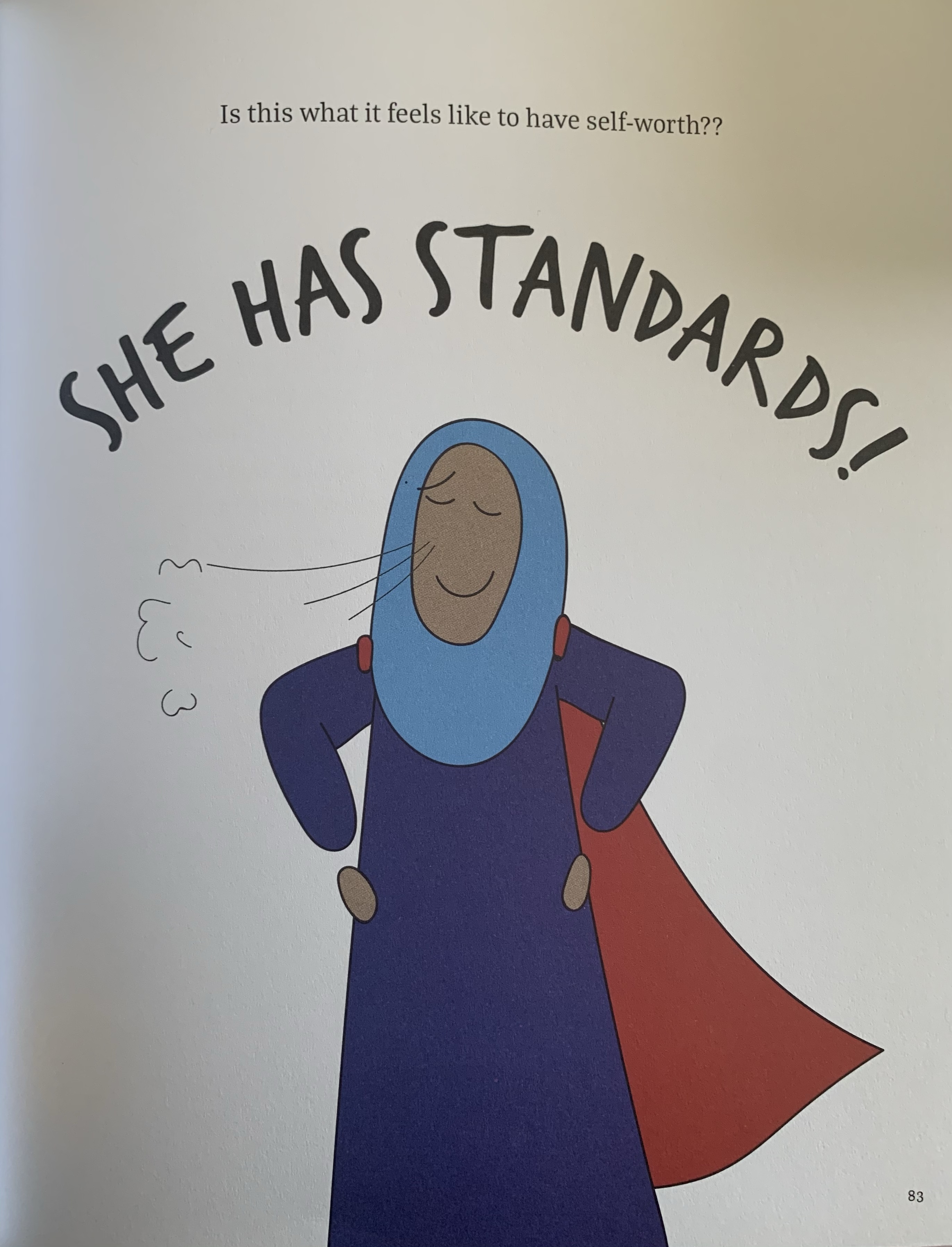
I’m not entirely sure why I didn’t review and highlight the first book, “Yes, I’m Hot in This: The Hilarious Truth About Life in a Hijab” I really should have, so to cut to the chase if you don’t follow the author/illustrator on social media you really should and you should read both her books.  Both are for all ages and while meant for adults, teens and tweens love it as well, I should know I’ve purchased and gifted over a dozen of them. I find my kids thumbing through both books a lot: my (early) teen girl and my tween boys.  Part of is it because the comics are funny, relatable, but more importantly as I’m learning from my kids, because they are curious.  In this book particularly, it is a great example of how Muslim marriages can happen, sure my kids know how my husband and my marriage was “arranged,” but they are constantly surrounded by ideas of dating and crushes and even divorce that I never realized that a book like this, featuring Muslims, actually Islamically contextualizes some of their gleamed information.  The fact that the book is hilarious and clean and rings with such honesty, makes it easier for them to articulate their questions and removes some of the taboo as well.  So, buy it for yourself to enjoy and if you have kids 11 and up in your home, you are ok to let them read it too.

img_6586

SYNOPSIS:

It isn’t a chapter book, it is part comic book, part story, part info-graphic, and all biographical.  The book opens with an ayat about spouses from the Quran and follows with an informative and funny message to the reader.  Seriously, I laughed as she explained about drawing herself with hijab in bed and noting that most people don’t read the notes to the reader at the beginning. There are also a list of helpful terms before the introduction begins.  Her story is broken up in to sections to pace and move the story along.  It starts with the ground work of expectations and cultural norms and then tells her story of how she eventually met and married her husband.  Not that it is straight forward, the book is 192 pages.  There is a decent amount of explaining Islam and the role culture plays in the many pitfalls and big decisions along the way.

img_6587-1

WHY I LOVE IT:

I think any female, born Muslim, over the age of 20 will relate to a lot in this, lots of others will as well, but that demographic specifically will find parts very reflective of their own experiences.  I love that it shows the banter between the protagonist and her mother, truly that to me was the heart of the story.  I love that it shows female empowerment and vulnerability at the same time within an Islamic context and unapologetically.  This book is by a Muslim for Muslims, but non Muslims will enjoy it as well.  It dispels and illustrates what an “arranged marriage” can mean for Muslims and shows that there is more than one way to understand the label.

I love the size of the book, the binding and the page quality.  I had no problems with “Yes, I’m Hot in This,” but after seeing the larger size of this book 7 x 8 and the thicker pages, I really preferred this presentation.

img_6589

FLAGS:

Clean

TOOLS FOR LEADING THE DISCUSSION:

Obviously not really a candidate for a book club, but I think teen girls would enjoy reading this and laughing about it with a group of friends.

img_6590

So fun and so good, alhumdulillah.

Not the Girls You’re Looking For by Aminah Mae Safi

Standard
Not the Girls You’re Looking For by Aminah Mae Safi

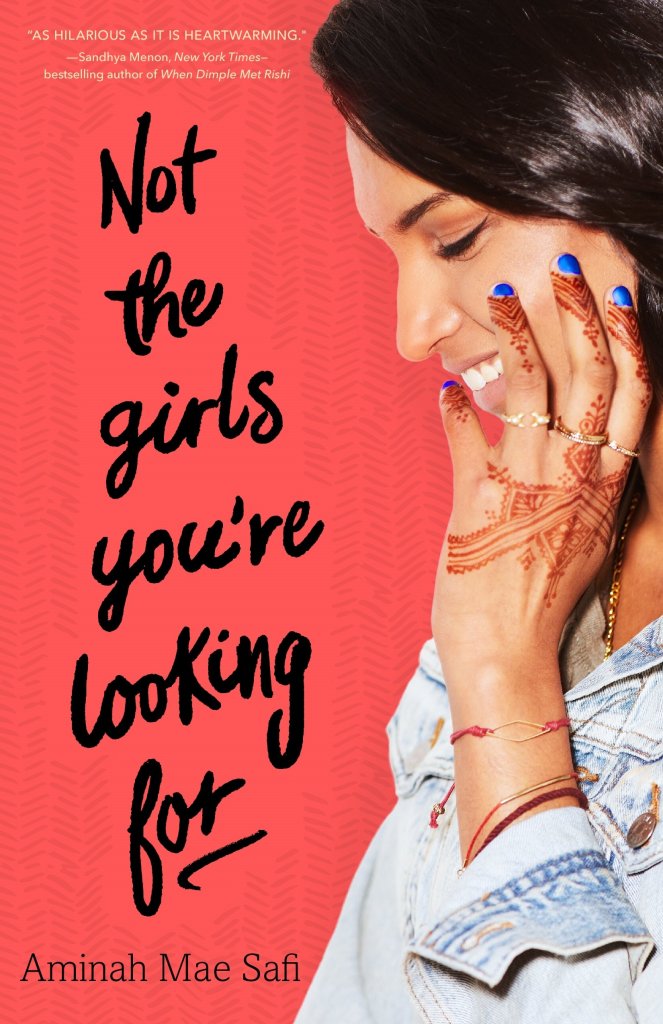
This book did not work for me. Despite the fact that the main character is Muslim and it is Ramadan, no matter how much I wanted to connect with this multicultural lead and her friends, and see myself in her as she navigates high school, I just could not. The writing was choppy 3rd person which distanced the main character for me, the crude language on every page, the drugs and alcohol in every scene, the detailed sexual encounters throughout, the lacking growth of the characters and the muddled point of the book in general made the book difficult to read. The book is an AR 4.9 but content wise is more suited for mature 18 year olds. Even this review might be a little too much, I’ll do my best to keep it clean. Ultimately this book missed the mark for me in showing females defining themselves, celebrating friendships and diversity, or even just creating characters to cheer for as they navigate life.

SYNOPSIS:

Leila is half Iraqi Muslim from her dad’s side and half American Catholic from her mother. She doesn’t know how to pray as her father isn’t religious, but celebrates Ramadan and Christmas and defines the world on her own terms. She is fearless and owns herself, hence she hates her name and goes by Lulu instead. The book opens with her making out with a boy in a closet which she kind of regrets and then goes to join up with her friends at the party to drink and get high and attack one another for their poor choices resulting in drama. In this instance Lulu’s anger pushes a boy in the pool, and then the four friends devise a way to get home and work out the lies they will need to tell to the parents involved. This scenario with only slight variations repeats five or six times in the book.

Lulu is the fearless one, Lo, short for Delores, is the leader, Audrey is an alcoholic math whiz and Emma, not to be underestimated and often is forgotten (literally) is coming out in her first lesbian relationship. Yes these labels are limiting and stereotypical, especially in a book calling for girl power or what not, but sadly that is really the only space they flesh out, not a whole lot more is known about them. The girls defend each other fiercely to outsiders, but are truly awful and angry to one another all the time. They break apart and Lulu doesn’t really know why, so the path back to one another isn’t really cathartic. They pull a prank to get back at a boy that crossed the line with Lulu, but it fizzles when the threat of what the prank could do is enough to keep him away and they don’t have to complete it completely.

Between the parties there are some sub plots that weave in and out. Lulu has to spend time with Iraqi family friends who don’t accept her and are critical, in Arabic, of her mother. This gives some cultural layer to the story, but the characters are pretty flat and petty and hypocritical. The bombings in Paris a few years earlier, and the resulting bullying by classmates hardened Lulu, but there isn’t much info on how awful they treated her or how it defined her, so not much sympathy is garnered by the event nor does it help the reader get inside Lulu’s head. There is also a sweeter love story brewing than the one night stands that define Lulu, but then she goes with her mother to get birth control so she can sleep with him all while making it clear that he isn’t her boyfriend, she just wants to have sex with him- which she does on her seventeenth birthday.

Eventually the girls are back together and gushing with tales of sorrow and personal growth and vows that they will always be like sisters.

WHY I LIKE IT:

I don’t mind the premise so much as the execution of it. I get that people practice Islam differently, but I really don’t get the need to even bring her religion in to such a story. Culture maybe, but even that is a stretch. I don’t know if the story would be better if it was first person, I would like to think so, as not connecting with the main character was such an obstacle for me. I wanted to see her grow and change or at least have clarity in her decisions even if I didn’t agree with them or couldn’t relate to them. I wanted to feel her remorse or the weight of her decisions, but was often just told in passing that something scared her or was hard for her, not shown it. The theme of not belonging anywhere is a legit one, but I don’t know that this book explored it, it just sort of brushed by it almost as a trial to see if the emotions would stick. Which for a character built up to be unapologetic and unafraid to suddenly want a victim label without any real emotional ties, didn’t work for me. There are such holes in the story, that at times things didn’t seem believable or details were so specific with no context that I didn’t get their purpose. I would have loved to know more about her brothers and the tests they went through, or why her family was so loyal to the Arabs around them. I desperately wanted something that showed a different side of Lulu not just the anger and “F everyone who wants to change me” mantra. People are scared of her and she enjoys that power, but I don’t get why they are scared and why she enjoys it. It seems like a big part of her story and of the book in general to miss. Yes she is independent, and I get that can be misread, but she almost seems one dimensional and flat which defies the concept of defining yourself on your own terms and carving out where you want to belong among groups that see you as other, right?

The character is pretty open that she knows little about Islam, she also claims she isn’t interested. She fasts not so much because it is a commandment but more to appreciate poor people. She says this, but actions don’t seem to back it up. She tries not to drink during Ramadan but she still smokes, gets high, makes out, and lies once the sun goes down. At one point she calls a bride and her mother whores, and refuses to apologize, so her dad gets a fatwa issued. Lulu’s mom mentions that something went all Shiite on the situation, so I’m not sure if the fatwa issuing for such a specific thing is a shiite thing or something I’m just not aware of or familiar with as a tool for handling family dramas.

FLAGS:

The whole book really. Sex, drugs, alcohol, sexual assault, lying, cheating, blackout drunk, vaping, talk of orgasms and going down, lesbian relationship, hetero relationships, sexual encounters, language etc etc etc.

TOOLS FOR LEADING THE DISCUSSION:

Would never cross my mind to share or suggest this book. Even religion representation issues aside, I don’t know that there is really a single “healthy” relationship highlighted among the main characters, some of the side characters maybe, but not enough information is given to really make that case. The characters just all seem so angry, not saying teenage years aren’t angry and messy, but this one doesn’t seem to add much perspective to that singular thought unfortunately.

No True Believers by Rabiah York Lumbard

Standard
No True Believers by Rabiah York Lumbard

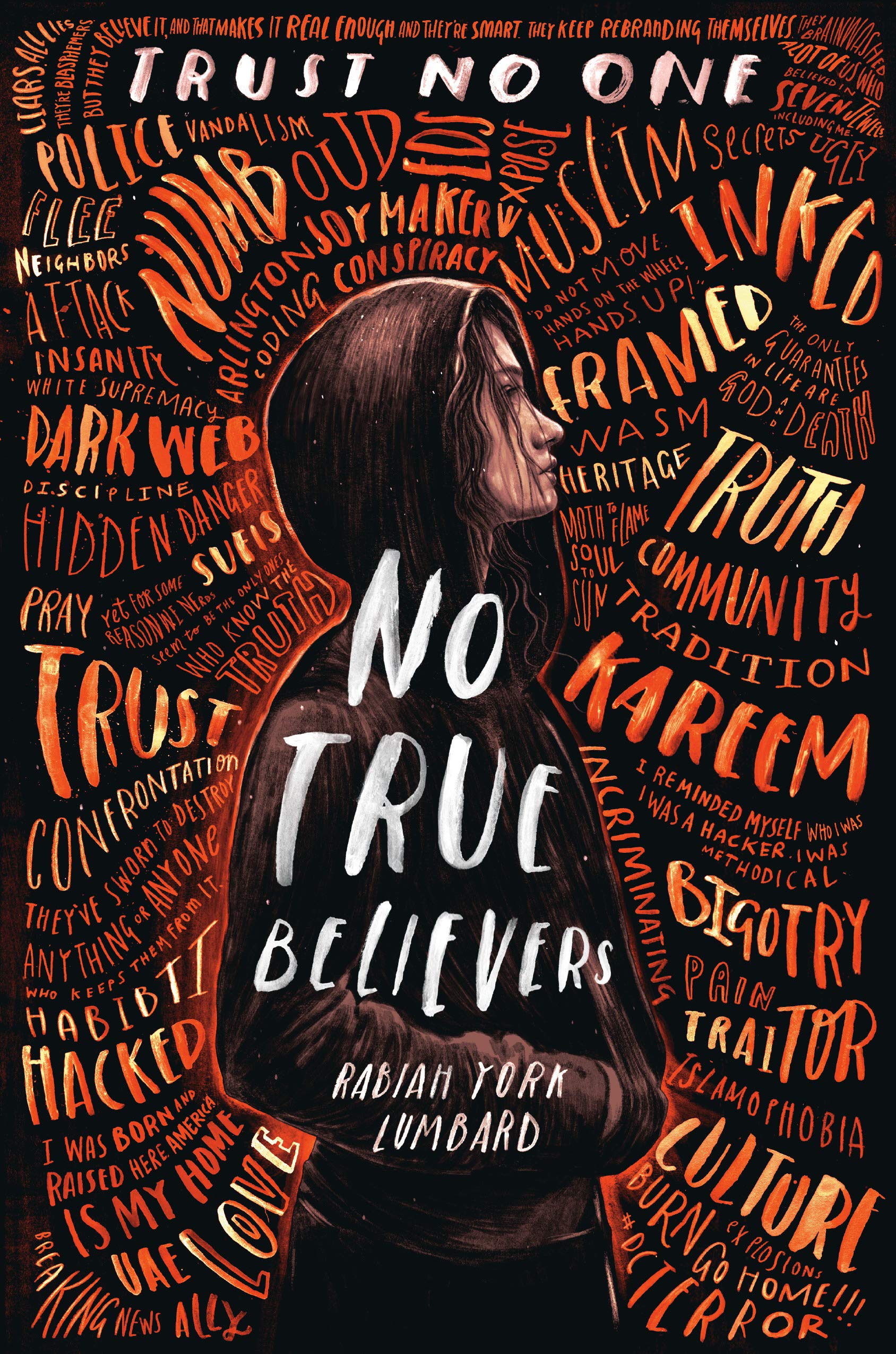
believers

This YA Fiction book by a Muslim author filled with many Muslim characters has a lot going for it, and while I didn’t love it, and felt that it was trying to do too much in 304 pages, I think most early high school readers will enjoy the cyber hacking plot, the islamaphobia and white supremacy themes that keep the book fast paced, relatable and timely.  The main character is a Muslim and has a Muslim boyfriend and all family members are fine with it, she also gets a tattoo with her mother’s permission and breaks the law, but usually with worthy motives.

SYNOPSIS:

Salma Bakkioui is the high school aged daughter of a North African father and convert mother.  They go to the mosque a few times a year, but don’t really practice, it is more heritage than actual intentional praying five times a day, yet somehow ayats from the Quran and hadith do float in and out of the story.  It is Ramadan, and the Muslims in the book are fasting except for Salma, who suffers from EDS (Ehlers-Danlos Syndrome) a connective tissue disorder, her best friend Mariam, who lived next door has just moved away because her father’s chiropractic business was failing due to racism and Islamaphobia.  Salma tried to use her hacker skills to send him more business, but ultimately they moved to the UAE.  Amir, the supportive boyfriend, oud player, and fellow Edward Norton fan is steady and good and constant.  As are her partying friend Vanessa, her physical therapist and her daughter, unfortunately, things are about to get really crazy, really fast.

When Salma and Amir go over to meet the new neighbors that have moved in to Mariam’s old house the blaring TV broadcasts a terrorist bombing nearby in DC.  The neighbors seem nice, but something is off about them, and Salma can’t quite figure it out.  From the dad and son’s matching number tattoos, the mom’s nervous behavior, and snippets of overheard conversations, it becomes apparent that something infact fishy is going on.  Salma and her younger siblings start getting bullied by classmates, and teachers and administrators turn a blind eye, cops interrogate Salma at school, and illegal snooping on the dark web reveal that the neighbors aren’t as innocent as they claim. As more and more is uncovered about the neighbors, Salma learns that she better have a plan to get out, as she is about to be framed for a lot of destruction as the new face of Islamic extremism.

WHY I LIKE IT:

I like that Salma is relevant and relatable, and while I know a lot about her family and friends, and illness, for some reason I don’t feel invested in her, and I am totally willing to conceded that that is on me, and others would really identify with her, but for some reason as much as I wanted to connect with her, I didn’t.  The supporting cast is fairly fleshed out, I’m not entirely sure why Dora and Boots are highlighted so much and I didn’t feel a tug on the emotional heartstrings of Mariam leaving, of Amir leaving, of Salma possibly saying good-bye.  I felt like even Salma and Amir being a couple and being connected through Edward Norton and Fight Club was a bit forced.  I didn’t feel it was organic or natural, it was almost like the author was trying to make a point of Muslim youth having relationships, and finding imams that were ok with tattoos. Rather than it being a plot point it seemed like it was trying to voice the author’s perspective whether it fit smoothly into the storyline or not.

I do like the tech and and the parallels between extremism whether Islamic or Christian, foreign or domestic, that drove the action of the book.  The unraveling of pieces and connections seemed a bit rushed, with unnecessary tangents affecting the pacing overall of the book, but at least there were answers to help it all make sense at the end, and make the story feel complete.

Having never written a book, I don’t know if some of the hiccups are first novel related, but I really hope the author keeps writing and keeps changing up what the mainstream Muslim protagonist lead consists of.  I love that Salma is smart and level headed and aware of her world, while still growing and owning up to her faults.  It isn’t a coming of age story, but she sets a great precedence for continued growth, loving your family and trusting yourself too. I particularly like the nuances in racism.  Some of the kids at school are jerks and bullies, some staff and teachers are bigoted and prejudice, but the right wing conspiracy groups are actively working, and their level of hatred and intelligence to mask it is great to see in a YA book.

FLAGS:

Relationships, kissing, references to marijuana brownies being consumed, violence, cursing, lying, illegal activity.

TOOLS FOR LEADING THE DISCUSSION:
I can’t use this book as a book club selection since the two main characters are making out in the first chapter, but the book really is more than a relationship story and I would be ok with my young teen reading it.  The illegal hacking is more problematic then helpful in the end, and the language, and other deviant behaviors exhibited aren’t done for shock value alone, I think a discussion after the book would be great: privacy, hate, conspiracy, faith, religion, friendships, etc.


More Than Just a Pretty Face by Syed M. Masood

Standard
More Than Just a Pretty Face by Syed M. Masood

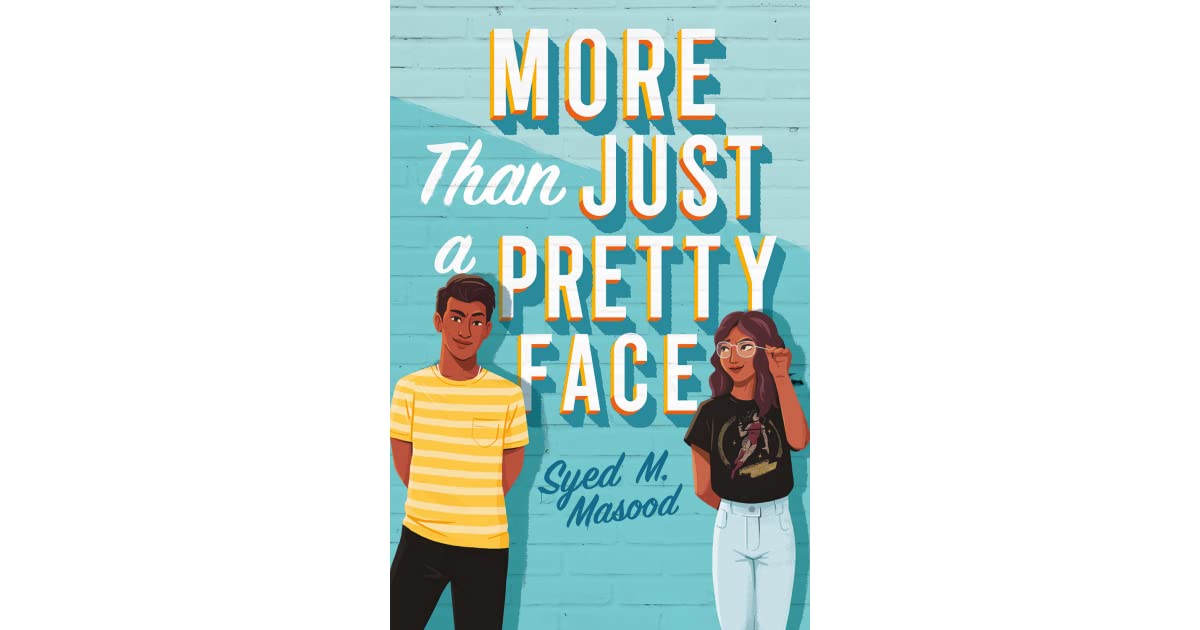
more than just a pretty face

This book is a Muslim YA romcom OWN voice written by a Muslim male.  Woah, right? And the actual story, sigh (blush) I enjoyed it, and part of me is disappointed in myself for how much I enjoyed it.  Most of the characters are Muslim and all over the spectrum in their religiosity so to speak, there are a lot of jokes at the expense of tenants in Islam and trivializing of certain concepts which really isn’t something to celebrate, but it reads real and there is a lot of Islam that is front and center and deep and though provoking. For most non Muslim readers, I’m sure 15 or 16 and up would be fine with the content and 353 page length, but as a former Islamic School Librarian, I’d have to reserve recommendations to college age.  The protagonist is 19, there is talk of sex, but not crass, the main female character has a past that includes a sex tape, and there is a lot of language, but its also really funny and really relatable and really sweet and takes place in high school.

SYNOPSIS:

Danyal is a pretty face, but he isn’t very bright.  He goes to an elite private school though somehow, and while he is admittedly dingy, he is also very kind, innocent and generous.  He was held back at some point in school and is 19 as a senior in high school.  He works in a French restaurant and dreams of being a chef.  He has no desire to go to college and as the only son of Pakistani immigrants, they are not thrilled with their son’t future plans.  Danyal is pretty chill about it though and his mom wants to arrange his marriage, and he is willing, although he is crazy in love with his friend’s twin sister.  He is religious and hasn’t really broken any of the Islamic relationship rules, he prays fajr, and just kinda floats through life doing the best he can and forgiving himself and others when they mess up.

When his mom arranges a meeting with Bisma he is willing to get to know if they are a match.  She however, fully discloses her past to him when they head out for coffee, which involves her rebelling, once a few years earlier, against her father and going to a party, further rebelling and getting drunk and then making the poor and regrettable choice to sleep with someone.  To make matters worse, the event was video taped and spread around the community forcing the family to move.  Bisma is pretty religious and really studious and really sorry, but her father and most community people don’t let it go.  Danyal thinks that is stupid, one mistake shouldn’t haunt her forever, unfortunately he doesn’t think chivalry and pity are enough of a reason to marry her as he doesn’t think they are meant for each other.  Basically, he is still really crushing on Kaval.  So he and Bisma decide to be friends.

When Danyal’s history teacher in a fit of spite nominates Danyal for a prestigious Renaissance Man competition, Danyal calls on Bisma for help.  The topic is Winston Churchill, the beloved British leader, but Danyal quickly learns he is not beloved by most Indian subcontinent people.  Kaval offers to help so that Danyal can win the competition, impress her parents and then maybe give them a chance.  But, suddenly Danyal doesn’t know if that is what he wants.  He wants to be himself, he wants to be accepted, he wants Bisma.

WHY I LIKE IT:

You know how it is going to end, you don’t know entirely how it is going to get there, but you know where it is headed, yet the book is still compelling and fun.  Between the banter of the religious friend, and the no longer religious friend, the advice the French Chef bestows on Danyal and Danyal’s complete and utter cluelessness to everything, the book is really warm and the characters really like-able.  I dislike the stereotype of the “religious” character, but the other side characters are better developed.

On occasion I think Danyal’s stupidity is over done, he isn’t an idiot, he just isn’t book smart. So when he doesn’t know what “break a leg” implies for example, it seems a tiny bit off.  I know his friends say he isn’t funny, but I think he is hilarious, especially with his commentary on the Desi community.  “It is the curse of brown boys everywhere.  We either die young or we live long enough to see ourselves become uncles.”

The role of Islam is incredibly prominent, and the characters understand what it means to be Muslim differently.  Sometime I agreed with them, sometimes I didn’t, sometimes the characters didn’t agree with each other, sometimes they did.  There is a lot to think about: destiny, Allah’s mercy, Qalb-e-saleem (a pure heart), caring for the less fortunate.  Even politically there is a strong thread of colonialism, which the characters wrestle with and with being immigrant’s children.   There is a lot packed in, but it flows so smooth and the writing rich with authenticity, that quite often I would laugh out loud and read various lines to my young children.

FLAGS:

Talk of sex and losing virginity, but not detailed, just stated.  The chef is a lesbian.  There is lots of language including the F word, not thrown in effortlessly, usually for a reason, and often reprimanded.  There are a few kisses on the cheek and lips between Danyal and Bisma, but in a Disney princess movie sort of way.

TOOLS FOR LEADING THE DISCUSSION:

Not for middle or even high school book club. I don’t think that it is a completely “halal” romance story, but I think I wouldn’t be concerned if juniors and seniors were reading it, I think they would love it, and I might just have a few that I want to suggest it to…


Mad, Bad, and Dangerous to Know by Samira Ahmed

Standard
Mad, Bad, and Dangerous to Know by Samira Ahmed

mad bad

I really should give up reading Samira Ahmed books.  This is the third one I’ve read, and while she is definitely getting better, I still don’t know why her editors don’t fix her flat notes.  Like in Internment, the premise in this book is amazing, but other parts are just cringe-y and painful and really, really unnecessary.  My guess is, she would identify herself as a romance YA author, and yet consistently in her works, that is the most lacking part: the character building and forced romances.  The art history mystery, the inspiration and “real” life of the characters from the past, the setting of Paris in the summer, the fight for woman to be heard are all so well done and compelling and interesting that this romp that blurs fact and fiction might deserve a read, but you have to overlook the forced love triangle, excessive kissing, be willing to suspend reality regarding Alexandre Dumas, Eugène Delacroix, and Lord Byron, artifacts and sleuthing, but if you can do all that, this 337 page book for 9th grade and up, is definitely fun and hard to put down.

SYNOPSIS:
The protagonist is 17-year-old French-Indian-Muslim-American Khayyam, who is spending her summer in Paris with her professor parents like they do every year.  But this year is different as she is being ghosted by her boyfriend Zaid back in Chicago and has just been humiliated by her poor research attempts to link a missing painting from artist Delacroix to author Dumas in an entrance essay competition to her dream school.  Khayyam’s story is really just beginning though as she steps in dog crap and bumps into a descendent of Alexandre Dumas as she wipes it off.  A cute descendant, who shares the name with his distant grandfather, and viola’ the two of them are off on a whirlwind adventure of clues and attraction and mystery solving.

Khayyam’s story is interwoven and told between small glimpses of Leila’s story.  Leila is a Haseki, a chosen concubine of the Pasha in Ottoman Turkey, but the lover of Giaour and friend of the jin.  As we learn her story from 200 years earlier and her struggle to break free of her gilded cage in the harem, only to be defined by the artist and poets and author men around her, her story and Khayyams collide.

WHY I LIKE IT:

I know precious little of art history, I can name drop a few artists and paintings, but that is being generous, so the fact that I have no clue what is real and what is fake and what is possible, made this story all the more fun and engaging.  Yes, I researched, aka Googled, stuff as I read and am perfectly content to accept the fictional what ifs that the book offers.  I love how the art world and literary world are one in the book and that they inspired each other. The way the sleuthing, the finding of artifacts, and unraveling of it all is presented is indeed a romp.  Realistic? Not a chance, but fun.  I also love how both Khayyam and Leila had to define themselves and ultimately not do it in the reflection of a male.

The rest of the book, is a bit of a stretch.  Leila’s story naturally has holes in it as it is told in broken pieces, but Khayyam’s story does too.  I just didn’t care about her past boyfriend/ex-boyfriend/friend, whatever Zaid is or was, and clearly after moping about him for 300 pages and then not even giving him a proper goodbye, means that the author and character didn’t really care either, which made the already forced, cringe-y annoyingness all the more grating.  As for the relationship, the other piece in the triangle, with Alexandre, was fine in that there was angst, but they put it aside to solve the mystery, so it didn’t bother me too much.  Of course the fact that Khayyam is a practicing Muslim who seems to have no problems with boyfriends, and making out and that her parents don’t mind either, makes the faith aspect all the more befuddling.  I guess practicing might be a stretch, her mom and her go to Jummah prayer on Friday, thats about the extent, and she mentions she doesn’t drink.  Zaid, sets up a tutoring program at the masjid, but his instagram has him hanging all over girls too, so not sure why the characters are even Muslim.  I suppose it is good to have that diverse representation, but it doesn’t seem to make much necessary sense to the overall story.

FLAGS:

Implied concubine activities, with the Pasha and the lover.   Lots and lots and lots of kissing, nothing graphic, but annoying amounts of it being mentioned.

TOOLS FOR LEADING THE DISCUSSION:

I want someone to discuss it with me and point out where the facts end and the speculation starts and when the full on fiction takes over.  I don’t think I could use this book as a book club book because of the center stage of the haram romances in both Khayyam’s time and Leila’s.  But if you have read it, talk to me about it, I’m curious!

NPR’s Review: https://www.npr.org/2020/04/11/831873365/in-mad-bad-dangerous-romantic-sleuths-uncover-a-byronic-secret