Category Archives: 1st through 3rd

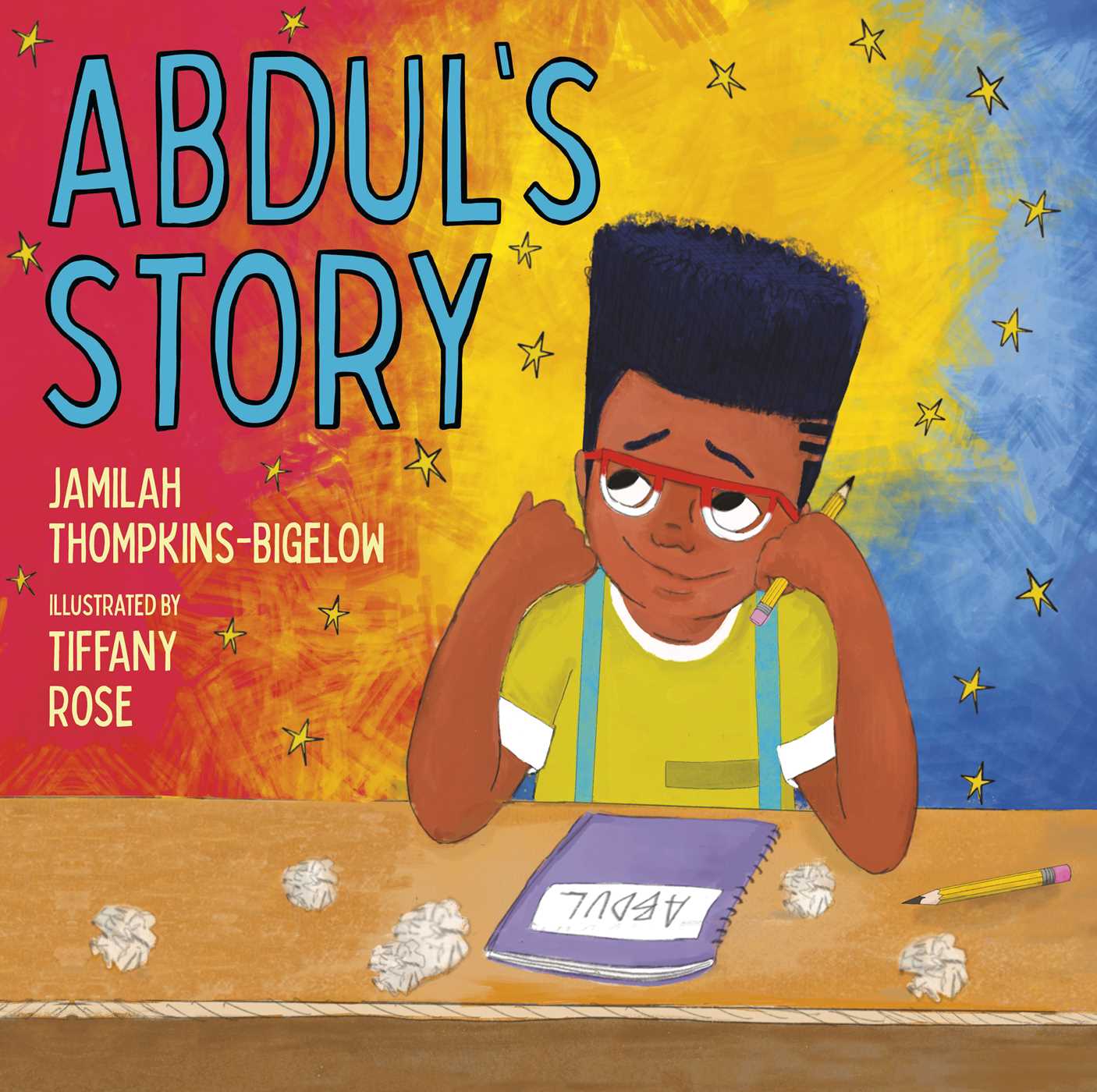
Abdul’s Story by Jamilah Thompkins-Bigelow illustrated by Tiffany Rose

Standard
Abdul’s Story by Jamilah Thompkins-Bigelow illustrated by Tiffany Rose

abduls story

I really don’t know what more you could want from a 40 page brightly illustrated picture book for ages 5 and up.  I felt seen, I got a little emotional, I was inspired, I smiled, I felt compassion and empathy, hope and nervousness.  I was reminded of the power of role models, of getting down on a child’s level, literally.  I was reassured that we all make mistakes, learn differently, and can still thrive. Suffice it to say the book is moving.  The OWN voice lyricism will resonate with children of all colors, but that the messaging is from a Black Muslim boy and is so unapologetic and proud and beautiful, makes the emotions Abdul feels palpable.  Every classroom bookshelf needs this book, every child needs to hear it, read it, and explore the layers contained within.  Alhumdulillah.

img_8766

The book starts out with absolute joy.  Abdul loves to tell stories.  Writing stories, however, is something else.  The letters are tricky, they get turned around, they aren’t straight and crisp like the one’s the barber cuts.   His pages don’t look like the neat lines of his classmates.

He decides that maybe his stories aren’t for books.  It isn’t like he even sees stories like his in books:  stories about the people and places that he knows.

img_8767

Then one day a visitor comes to class, Mr. Muhammad, and he is a writer.  He encourages the children to, “write new stories with new superheroes.”  Abdul tries, but he keeps making mistakes, and then he has to erase, and before long his paper is covered in smudges and holes.

img_8768

Mr. Muhammad encourages Abdul to keep trying and fix the messes later, Abdul has an idea, and with a “bismillah,” he gives it another go.  There is no perfection, there is just determination.  The struggles, success, and support of his peers and Mr. Muhammad, just might change Abdul’s mind about his stories.

img_8769

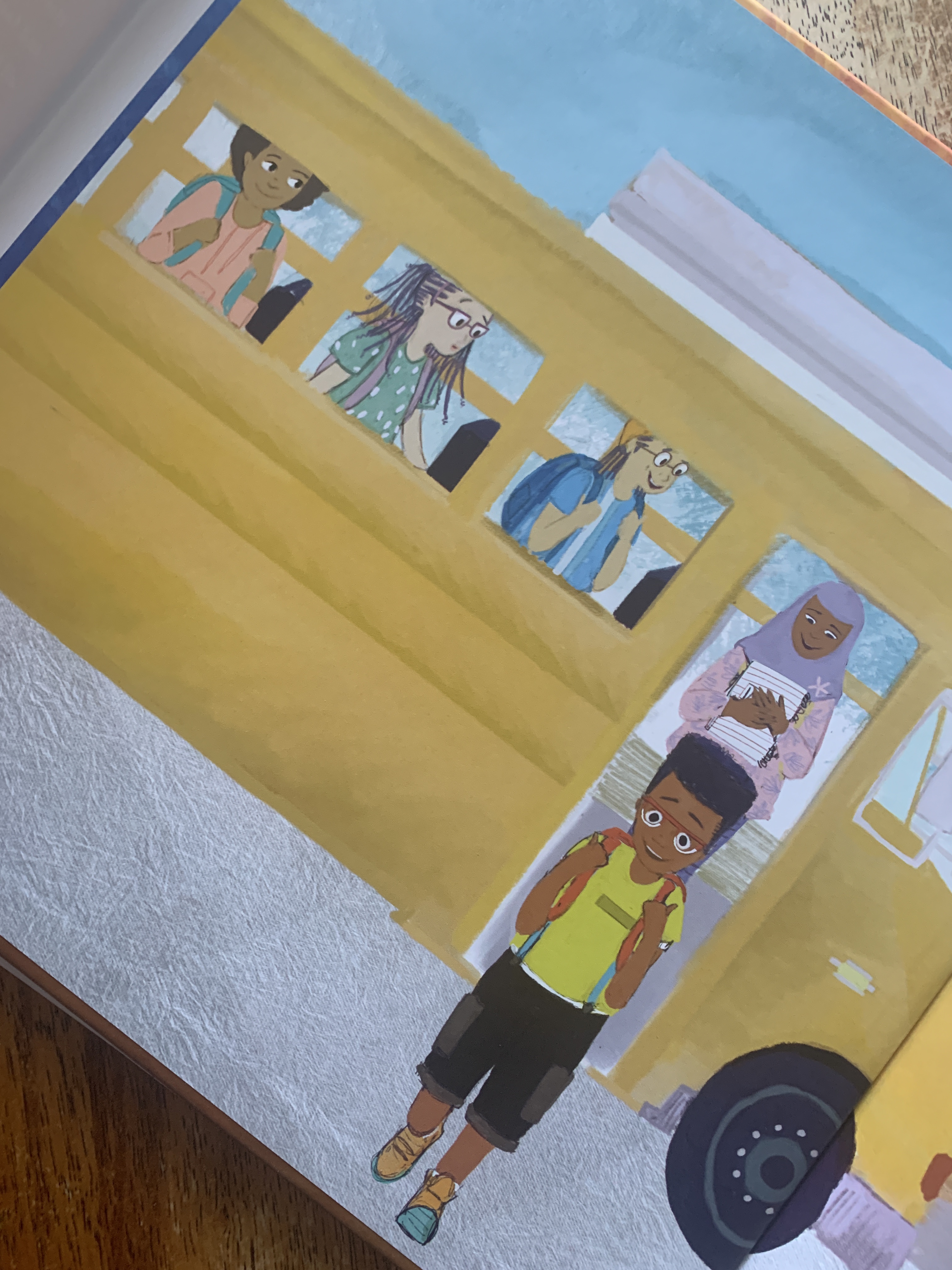
I love that the book is Black centered and Muslim centered.  There is praying salat, mention of bean pies, a classmate in hijab, and saying of Bismillah.  I’ve read the book seven or so times and it has yet to get old.  The characters burst with personality, even the side ones, that I’m positive it will be a favorite at story time and bedtime alike.

img_8770

Can be purchased at Crescent Moon Store or Amazon

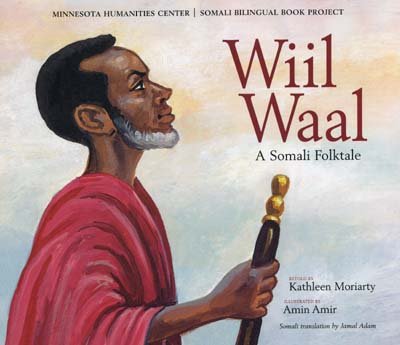
Wiil Waal: A Somali Folktale retold by Kathleen Moriarty illustrated by Amin Amir and Somali translation by Jamal Adam

Standard
Wiil Waal: A Somali Folktale retold by Kathleen Moriarty illustrated by Amin Amir and Somali translation by Jamal Adam

wiil

This bilingual (English and Somali) book tells the folktale of a wise leader challenging the men in his province with a riddle, and it being solved by a poor farmer’s eldest daughter.  Based on a real Sultan from the mid 19th century, the book does not claim the story to be true, and leaves it up to the reader to form their own impression.  The lesson however, is rich with culture, insight, charm, and perhaps surprise.  There is no Islam present or hinted at, but the illustrator’s and translator’s names suggest that they are Muslim as the majority of Somali’s are, and the picture at the back of the book of members of the Somali Book Project show multiple females in hijab- so I’m sharing it on my platform to inshaAllah encourage often rarely seen, in western literature, cultures and traditions to be brought to more peoples’ attention.

The book starts with an author’s note explaining the tradition in East Africa of having a nickname and that Wiil Waal was the naanay of Garad Farah Garad Hirsi, a man who was a sultan for a brief time.  He was known to be a great leader who was brave, and clever, and used riddles to unite people.  Like all folktales though, this doesn’t claim to be a true story, but one filled with wisdom.

img_6966

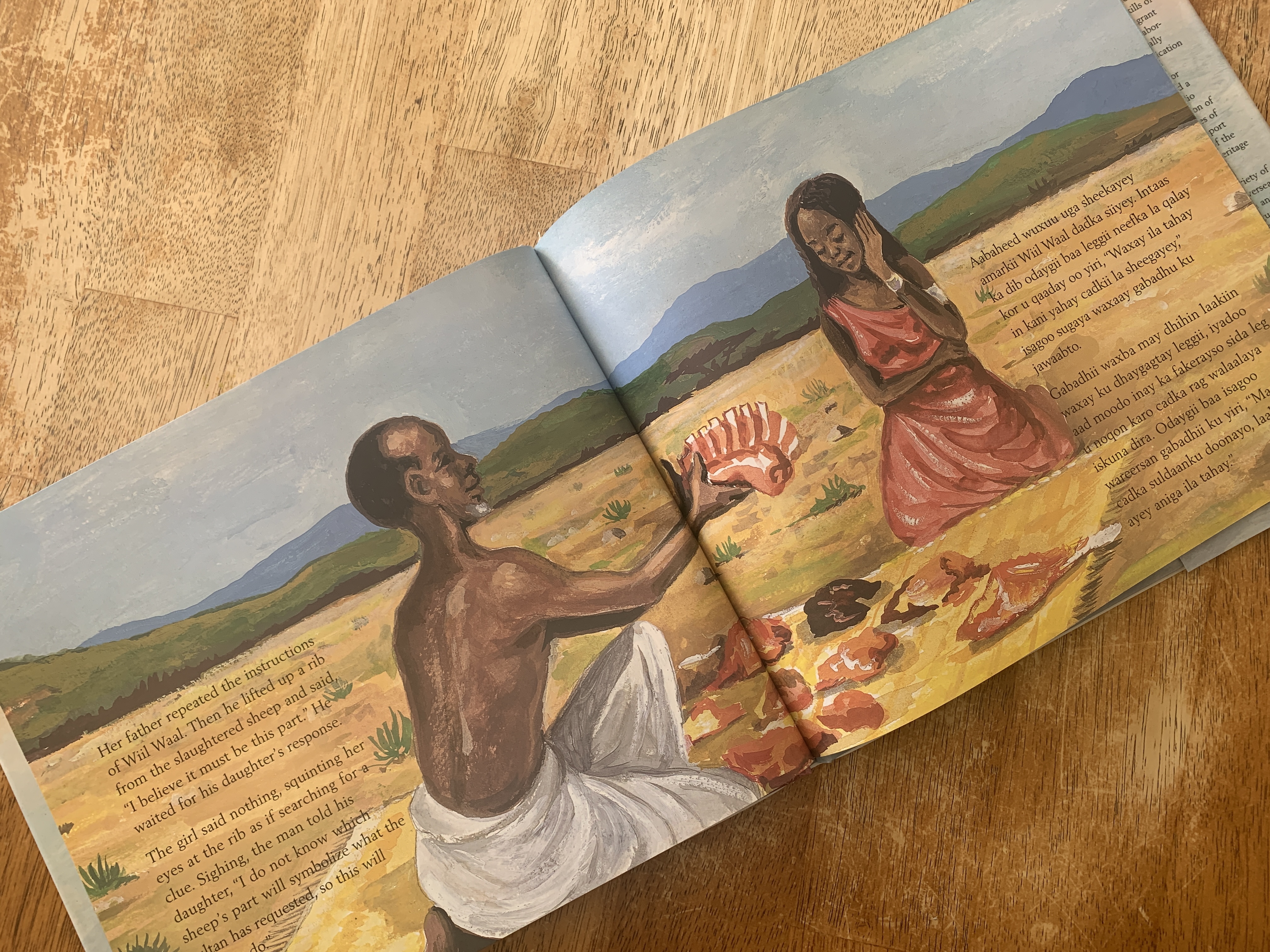
Long ago Wiil Waal set forth a riddle, “bring me part of one of your sheep.  The sheep’s part should symbolize what can divide people or unite them as one.”  The one who can do so will be honored as a wise man.

img_6968

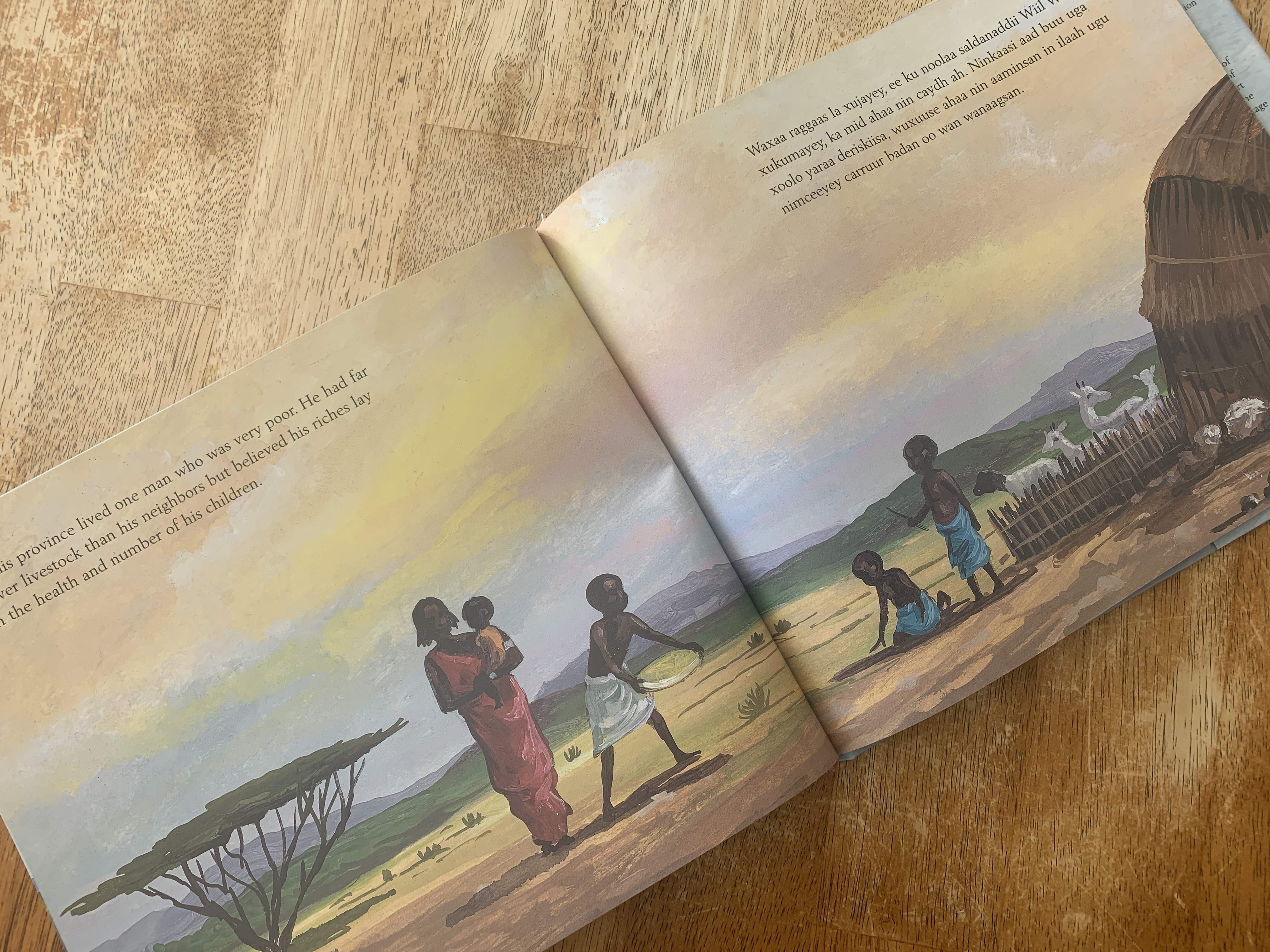
The men pick different parts to bring to the sultan with little success:  a rib, a liver, a shoulder of meat.  In a distant province a poor farmer who had few sheep and many children half heartedly prepared to slaughter his finest animal to present to Wiil Waal.  His oldest daughter comes to help him, and he tells her the riddle.  They work through it, and she thinks she is certain she knows the answer.

img_6969

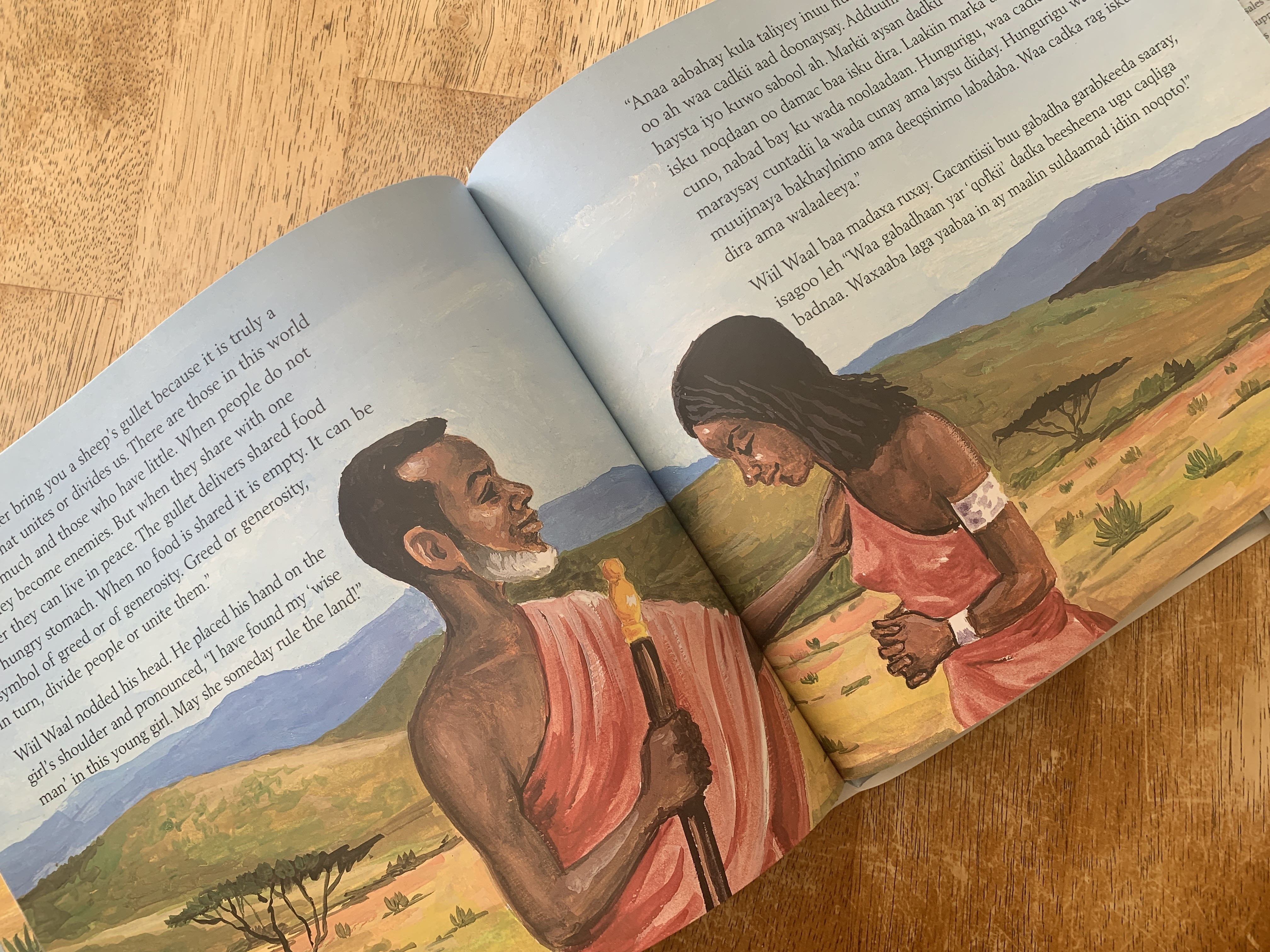
Trusting his daughter the farmer presents the sultan with what his daughter recommended.  Quick to see that the farmer is not confident, he asks who solved the riddle and the story of the daughter’s intelligence is conveyed.

The book ends hinting that she is a future leader of Somalia.  And no, I’m not going to tell you the answer.  Go read the book!

img_6972

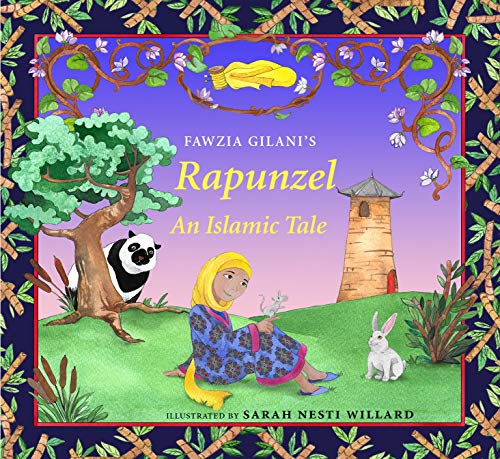
Rapunzel: An Islamic Tale by Fawzia Gilani illustrated by Sarah Nesti Willard

Standard
Rapunzel: An Islamic Tale by Fawzia Gilani illustrated by Sarah Nesti Willard

rapunzel

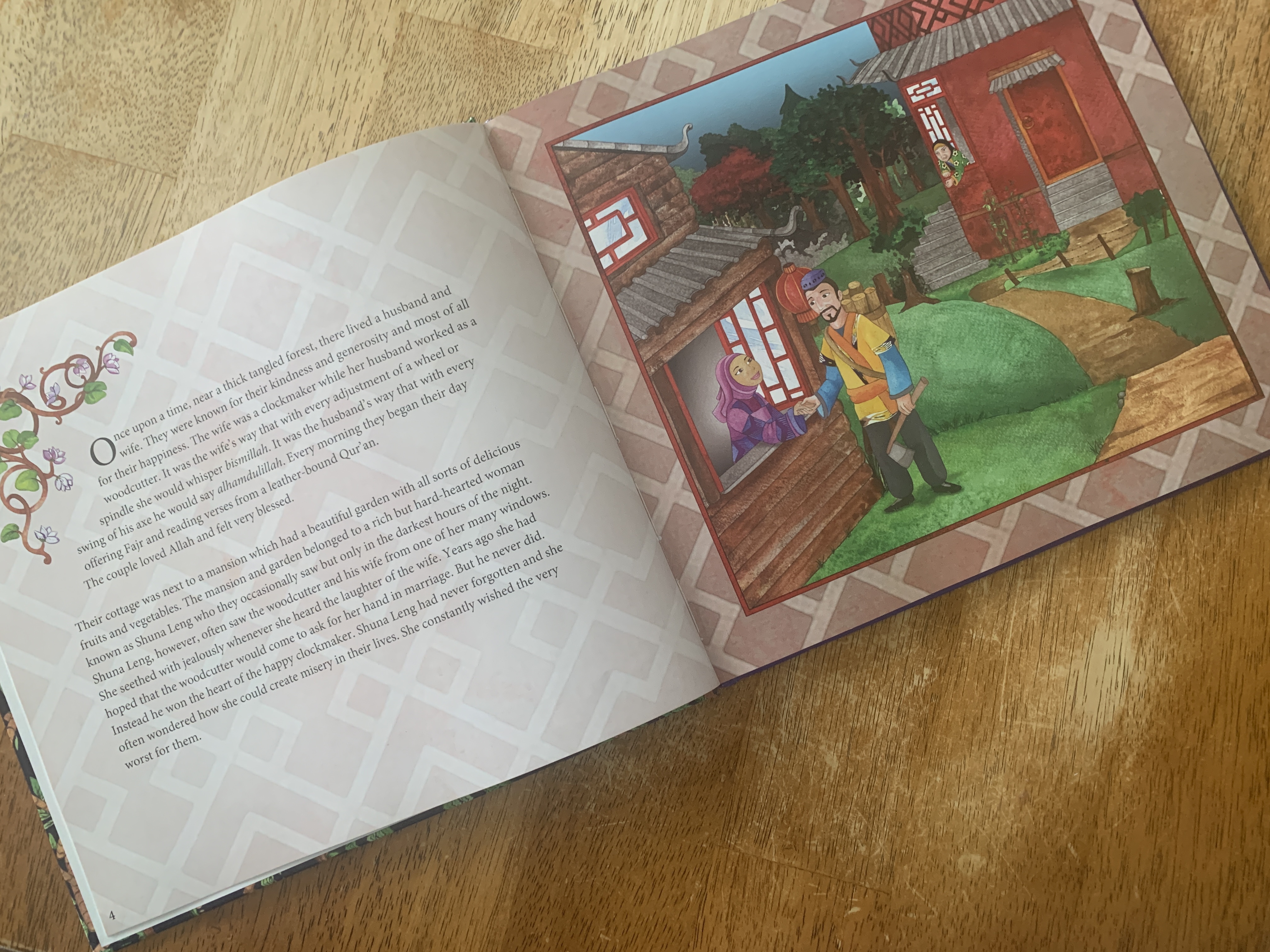
Having read the other “princess” retellings by Fawzia Gilani I didn’t rush out to acquire this book, but when a friend said it was available at the public library, I was surprised and admittedly curious.  This book just like the others in the series are very much in my eyes “Islamic fiction” for how centered Islam is for the characters and how it is used to frame the story toward a religious message.  The fact that a small city library in a Southern state purchased and shelves it, is pretty impressive.  As for the story, well it is really long, and wordy, and every page is filled with tiny text filled lines that I doubt most kids will be able to sit through.  The Islamic content is very present, the Uyghur setting appreciated, but wow do the 41 pages pack a lot of text in to a fairytale re-telling. There is a lot of Islam and Quran and at times it fits well, at other times incredibly forced.  The book claims it is for ages 5-8, but truthfully I don’t know that any age would be able to sit through it and be engaged.

img_7479

In a tangled forest lives a wife and her husband, a clockmaker and a woodcutter.  Before they married, the wealthy and cold Shuna Leng had hoped to marry the woodcutter, but he never asked, and she never forgot.  As a result seeing her neighbors happy keeps her jealous heart plotting and conniving to bring the couple misery and pain.

img_7481

One day, while pregnant, the wife has a strong craving for rapunzel greens.  Some just happen to grow on Shuna Leng’s property.  The husband is nervous to ask, but when his wife falls weak he makes an effort.  She doesn’t answer, so he picks some growing along the path and leaves coin for payment.  This wife regains her strength and then begins craving them again.  He decides to do what he did last time, but is caught.  The evil woman agrees that he can have all the rapunzel greens he wants but if the baby is a girl she shall be given in payment.

img_7480

Once born the baby is taken and kept hidden from her parents.  Various governesses are employed over the years to tend to Rapunzel and who teach her Islam and kindness.  Ever so often they have to up and move and abandon their routine when people start asking questions, but the lessons learned from the Quran stay with Rapunzel and she endures what she must.

img_7483

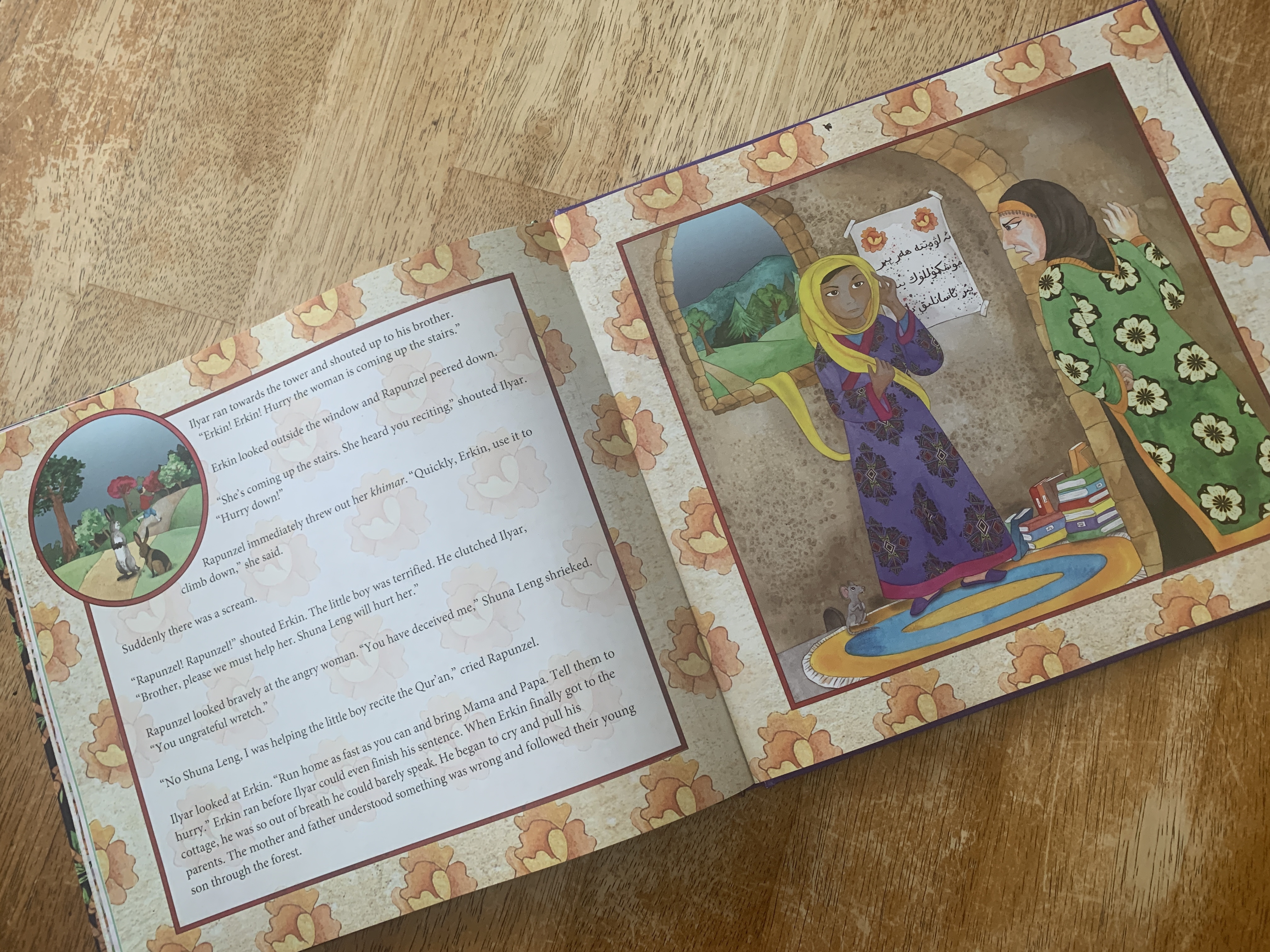
Eventually she ends up in a tower, she offers to help a stray boy recite Quran, and the evil plot of keeping her locked up unravels.  Yes SPOILER she is returned to her parents.

It is a decent retelling in theory, it just is really long, and there isn’t quality character building to invest the reader to the side stories being presented.

img_7482

The Clever Wife: A Kyrgyz Folktale by Rukhsana Khan illustrated by Ayesha Gamiet

Standard
The Clever Wife: A Kyrgyz Folktale by Rukhsana Khan illustrated by Ayesha Gamiet

the clever wife

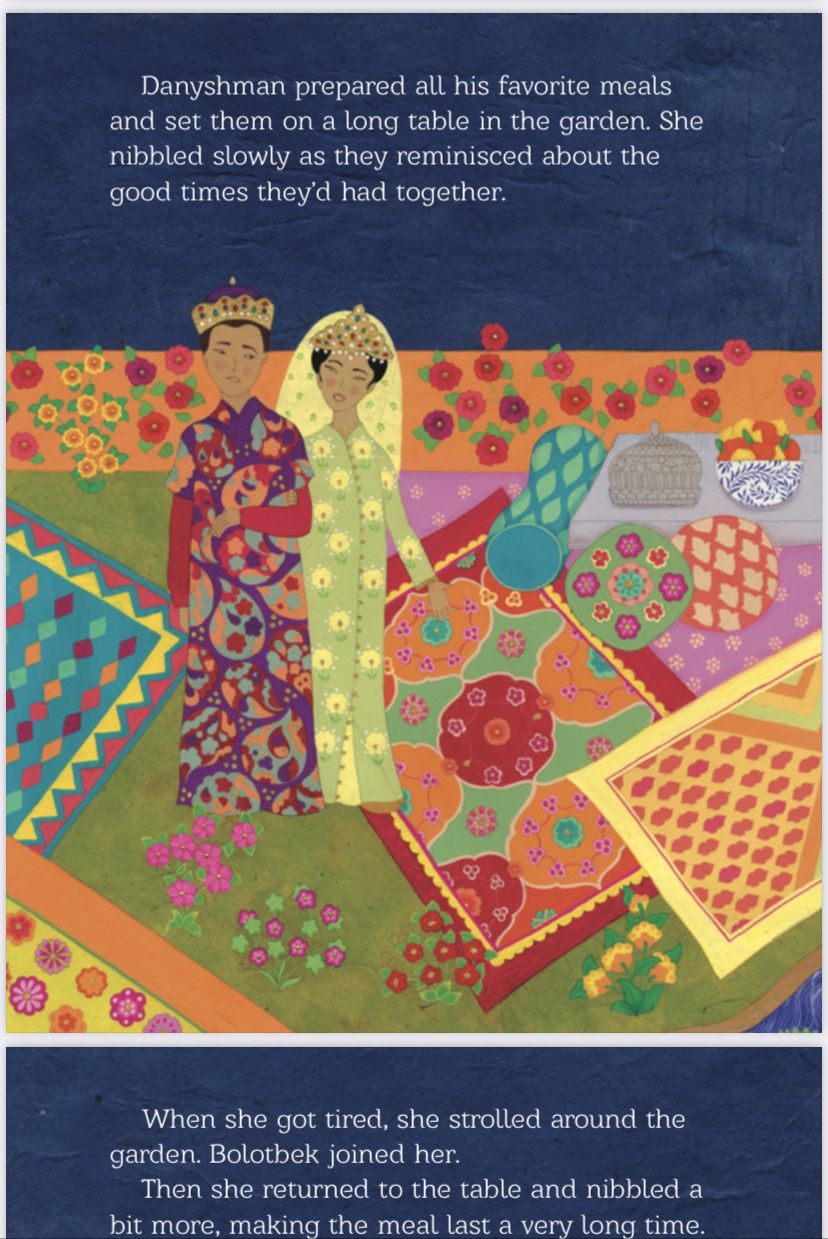
It has been nearly 10 years since a new Rukhsana Khan book has been published, and alhumdulillah, she is back with a delightful folktale.  This story starts off like many popular fairy tales, but it doesn’t simply end with a wedding and living happily ever after.  The story is just getting started, once the clever Danyshman and Khan Bolotbek start their lives together.  Over 40 richly illustrated pages brimming with character, culture, and hints of what might happen, the ending will sweep readers aged 5 and up into smiles and giggles and leave them begging to hear the story again and again.

img_7220

When the old Khan is on his deathbed, he leaves the future rule to be decided upon by his beloved white falcon.  The bird lands on the shoulder of a young shepherd and the subjects begrudgingly accept him as their leader.  As his kindness and compassion over the years wins the people over, their only concern is that he hasn’t yet taken a wife.

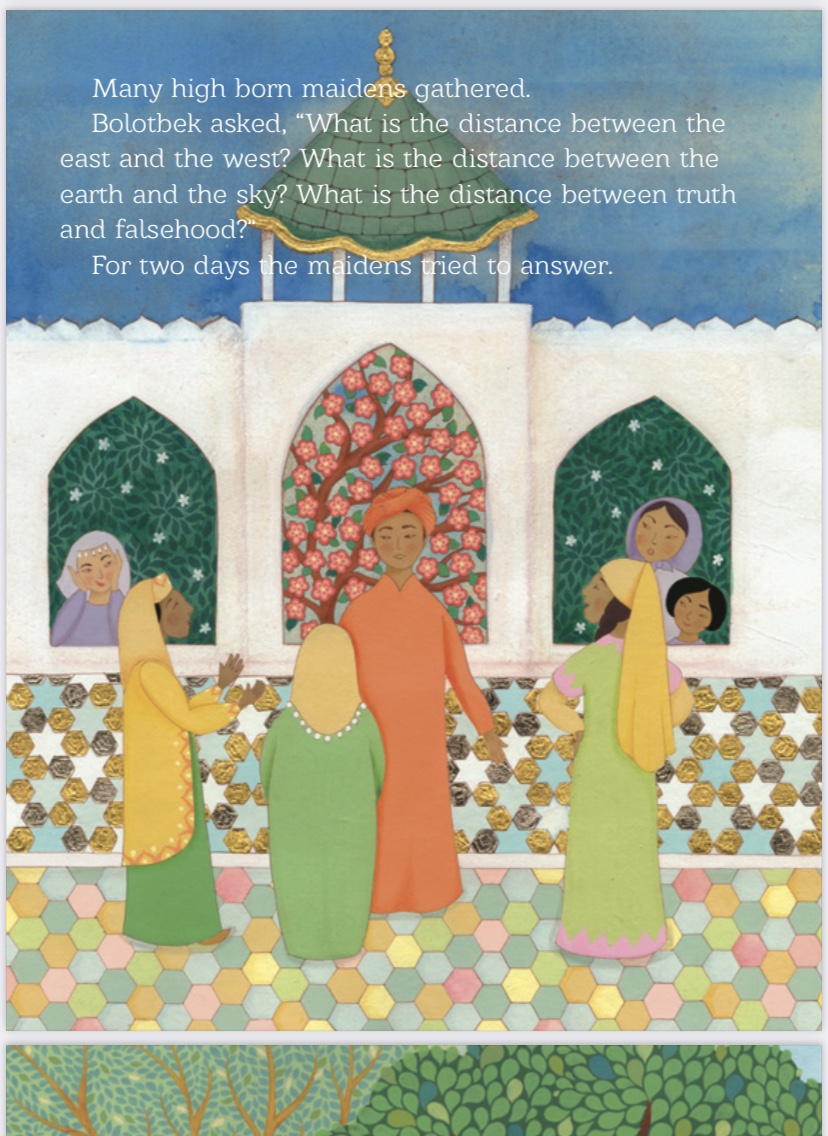
So, many high born maidens gather and try and solve the questions Khan Bolotbek sets before them.  When one poor maiden learns what is happening and accompanies them, they are surprised with her clever answers, and the khan asks her to marry him.

img_7223

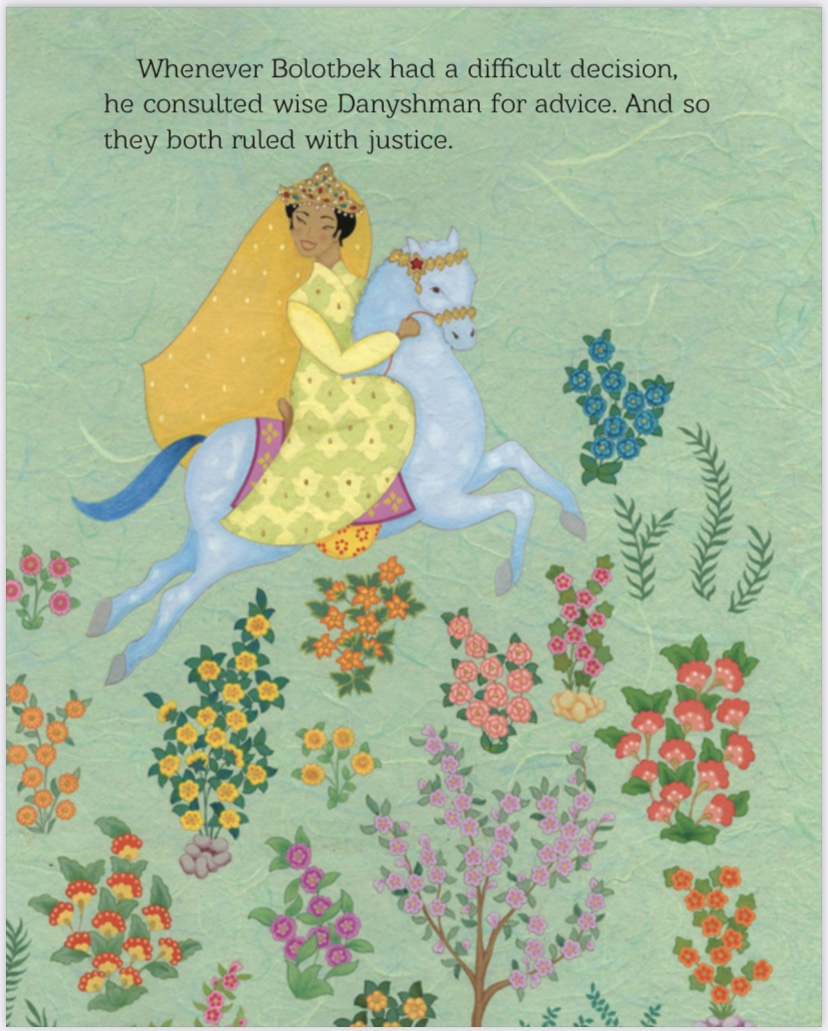
The khan discusses and consults with Danyshman and they essentially rule together.  There is just one promise the khan asked of his bride, and that is to “not share her wisdom with anyone, but him.”  The story continues, but with a clever wife being held to that promise, it is only a matter of time before her wisdom is shared, and it will take true cleverness for her not to lose everything as a result.

I love the strength of Danyshman, the levelheadedness of both her and the khan in ruling, and in remembering their humble roots.  The story is timeless, and this retelling ensures that more families with be familiar with this tale from Kyrgyzstan.

img_7222

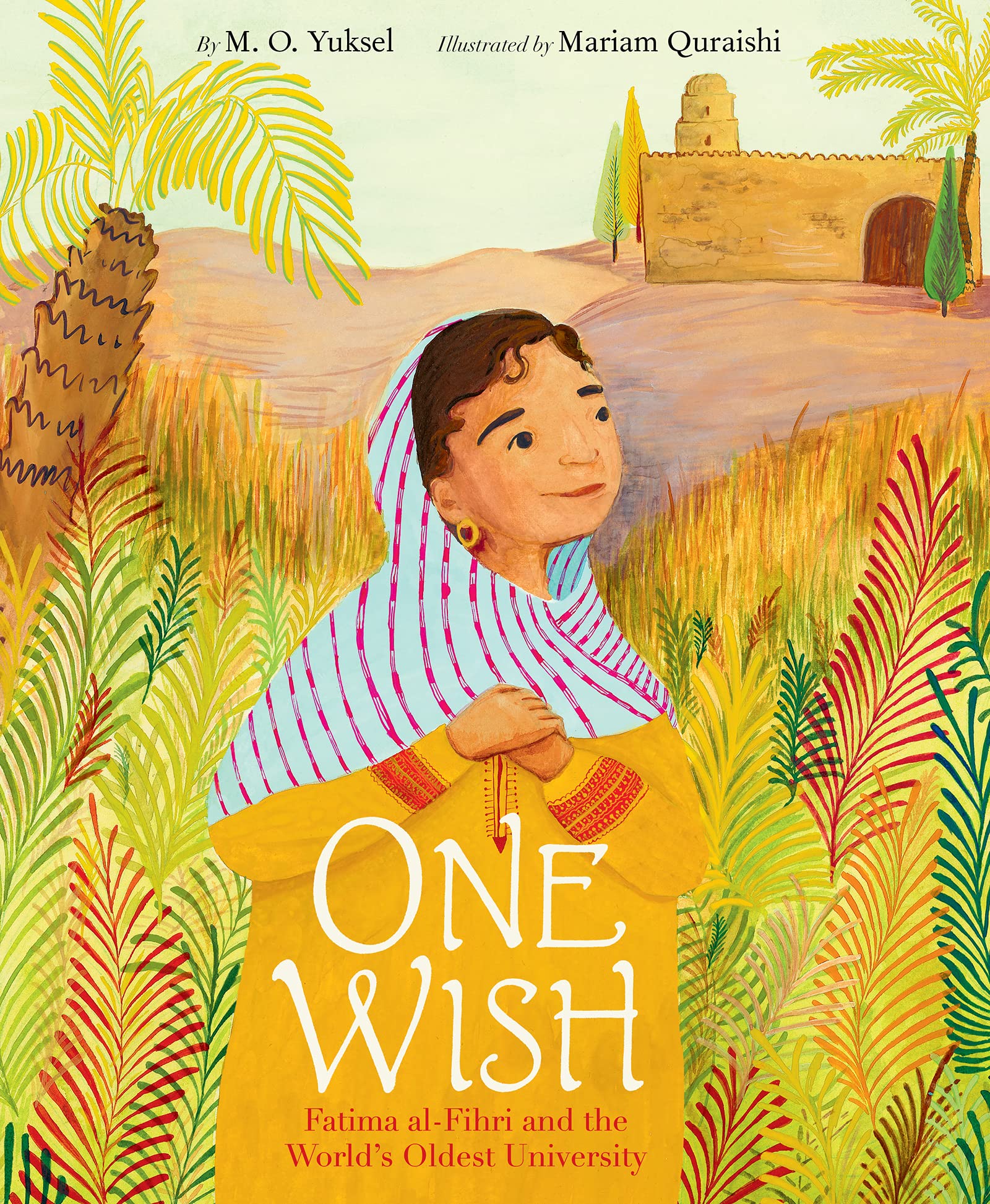
One Wish: Fatima al-Fihri and the World’s Oldest University by M.O. Yuksel illustrated by Mariam Quraishi

Standard
One Wish: Fatima al-Fihri and the World’s Oldest University by M.O. Yuksel illustrated by Mariam Quraishi

one wish

This book is so long overdue, yet at the same time it was worth the wait.  The writing is simply superb: Fatima al Fihri is celebrated, Islam is centered, there are references, and the story compelling.  We, Muslims, as a whole know so little about the beautiful impact fellow Muslims have had on the current world and our way of life, that to see this book being celebrated in public libraries, in Islamic schools, at masjids, and retail bookstores, truly makes you sit up a little straighter, and reach confidently to get this book in your hands to share with those around you.  Thank you Mindy (@moyuksel.author) for these 40 pages of absolute delight, ages 5 and up will read it to learn, read it again to enjoy, and inshaAllah read it repeatedly to be inspired.

img_7723

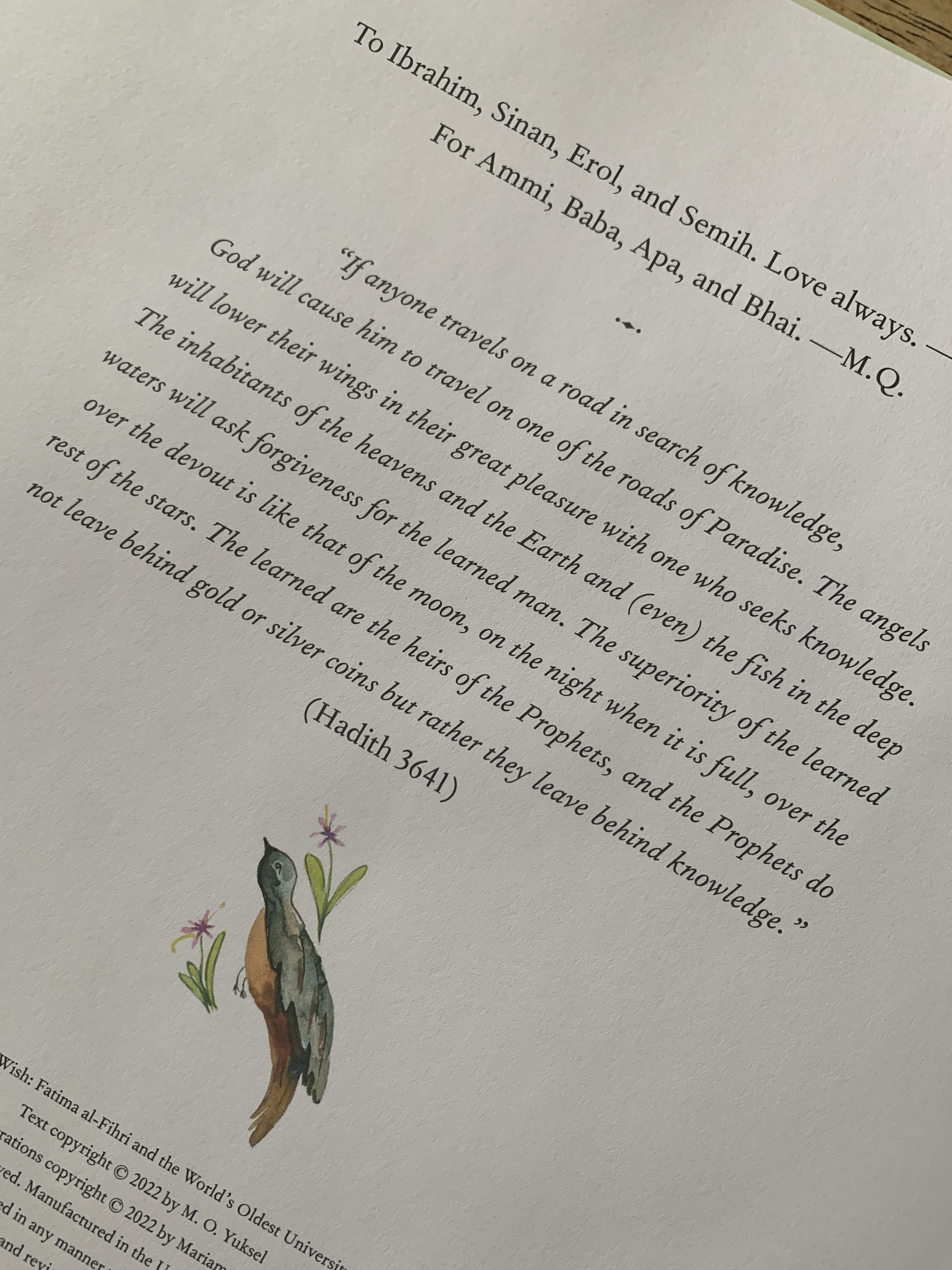
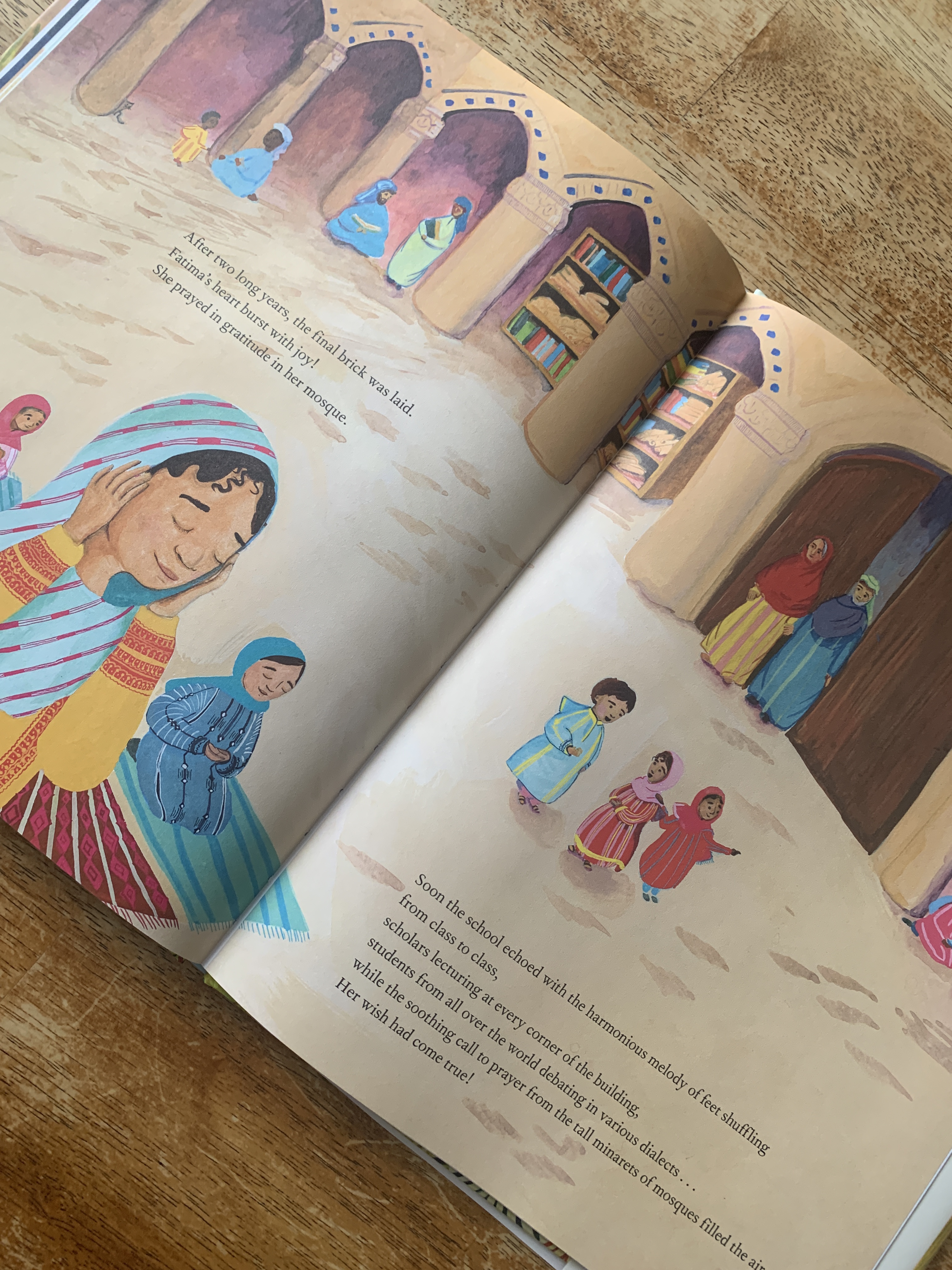
The book begins with a Hadith regarding seeking knowledge and leaving knowledge behind.  It then begins the biography of Fatima as a small girl curious about the world around her starting with the word Iqra, read, from the Qur’an.  It sets the stage of her living in the desert in the early ninth century, a time where some boys went to school and some girls learned at home. Her connection to Islam and it teaching her the value of knowledge caused her wish, to build a school, to grow stronger.

img_7726

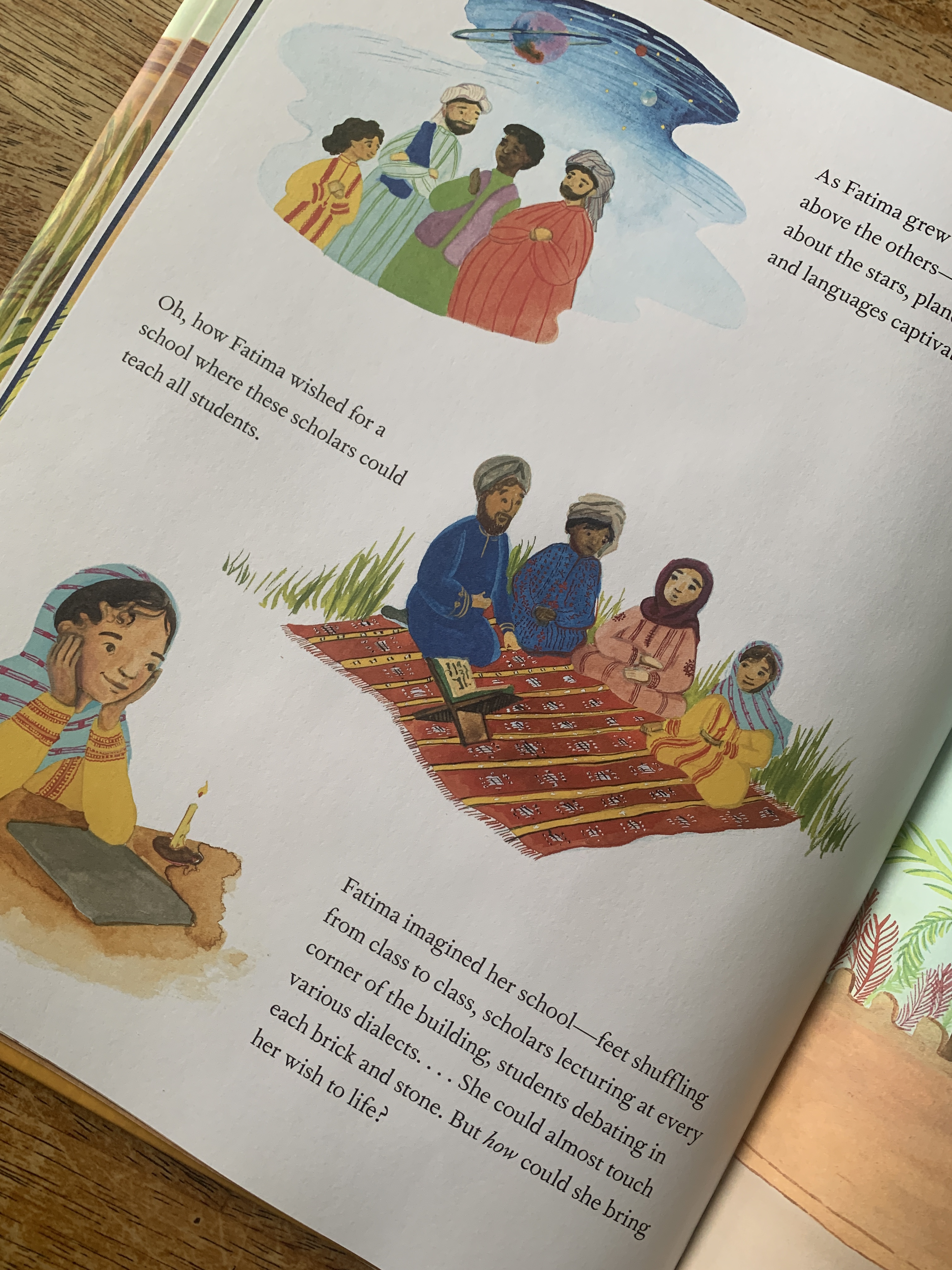
When war destroys her town her family flees to the busy city of Fez, Morocco.  She begins to accompany her father to the souk and enjoys listening to talk of planets, distant lands and different languages and wishes these scholars could educate everyone. She grows and gets married and her and her family become wealthy merchants.

img_7725

Tragically, her father and husband die, and Fatima must decide what to do next for her family.  She decides to help her community as a form of sadaqah jariyah and make her wish a reality.  She sets out to build a school where everyone can live and study for free.  She purchases land, and the building begins.  Fatima oversees each detail and names it the al-Qarawiyyin after her hometown in Tunisia.  It takes two years to build and it still functions today.

The back matter is just as compelling as the story with an Author’s Note, information on The University of Al-Qaryawiyyin, a Glossary, Bibliography, and a Timeline.  The only complaint I have about the book, are the illustrations.  I really don’t understand why half of her hair is showing when based on the time and her connection to her faith, she most likely was a niqabi.  I don’t understand the continuity of the hijab from a young child to adulthood.  I get that it shows her influence moving forward at the end, but it could have been a small print on an outfit for token representation of symbolism, I don’t get it as being a complete outfit her whole life.

img_7724

I absolutely love the role of Islam in both Fatima’s life and in this book.  It is so much a part of her and her wish, that every reader will recognize how connected her faith and the creation of the University were and I’m confident both Muslim and non Muslim readers will be in awe of her devotion and accomplishments, inshaAllah.

The Katha Chest by Radhiah Chowdhury illustrated by Lavanya Naidu

Standard
The Katha Chest by Radhiah Chowdhury illustrated by Lavanya Naidu

katha

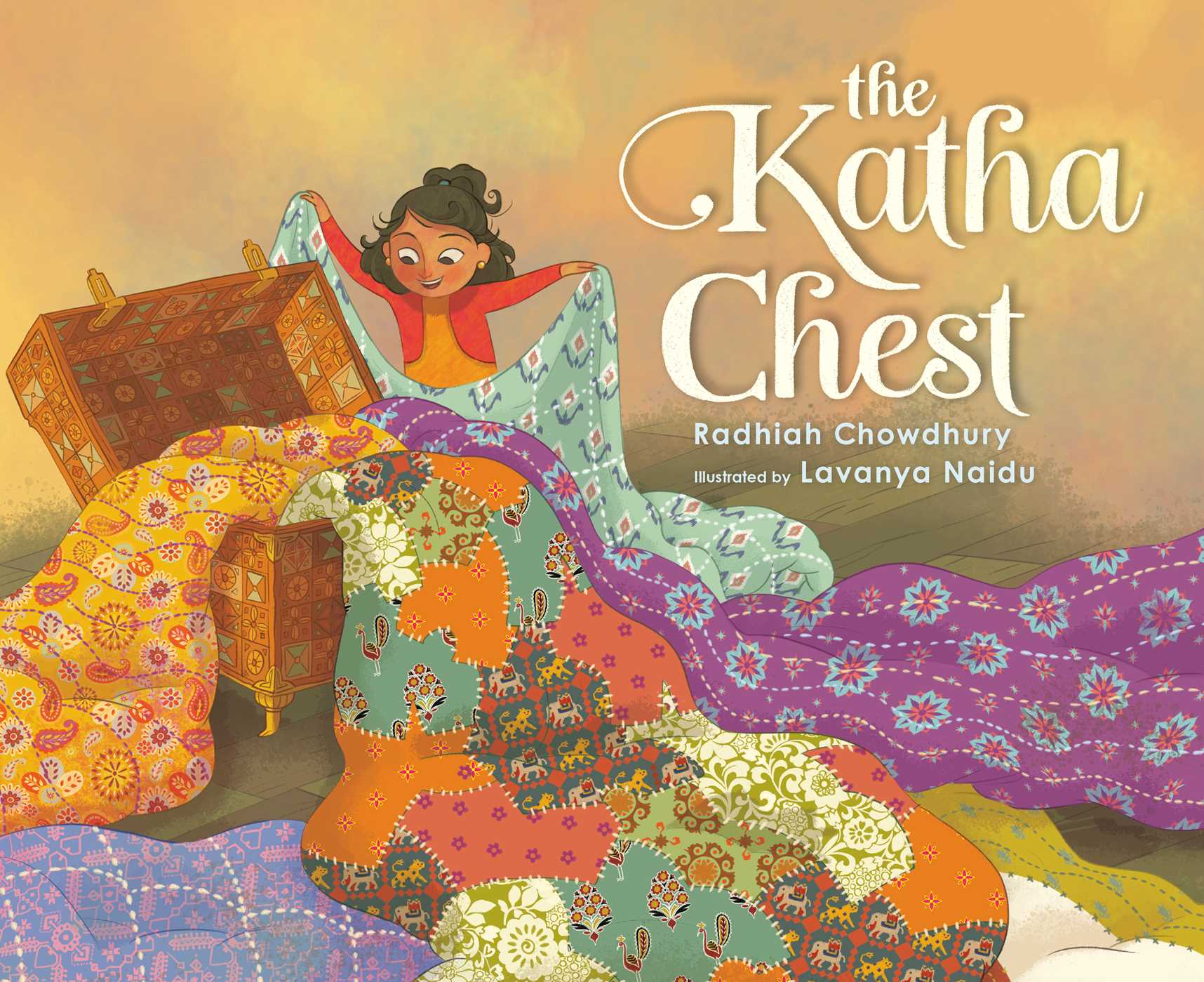
This 40 page picture book for preschoolers and up shows connection to family, memories, and Bangladeshi culture as a little girl explores the quilts made from her Maa and aunts’ worn out saris.  This book has been on my radar for a while and while there is nothing wrong with the slow and thoughtful story, it didn’t sweep me up in a hug and wow me, as I had hoped it would.  The illustrations are as critical as the words in conveying the message, and the illustrations are indeed beautiful, I guess I just needed more.  More connection to the emotion the little girl was feeling recalling the strong women in her life, more impact to the fact that her Nanu is no longer with them, and more understanding about the history of Bangladesh that seems to shape the memories.  I worry that most readers simply won’t get anything other than the surface level of the book, which is ok, the memories woven through generations manifesting in quilts, is tangible and perhaps enough.  I feel like, however, the framing of the story and the textless illustration pages attempted to add more layers to the story, and I think to anyone not Bangladeshi, those layers might not be understood.  I wish their was an afterward with notes about the pictured references, inclusion of such backmatter would really open the book up to a wider audience, and give the book discussion and staying power in my opinion.  If you are Bangladeshi this book will be a treasure I’m sure, and I’d love to hear your thoughts on it.

img_7721

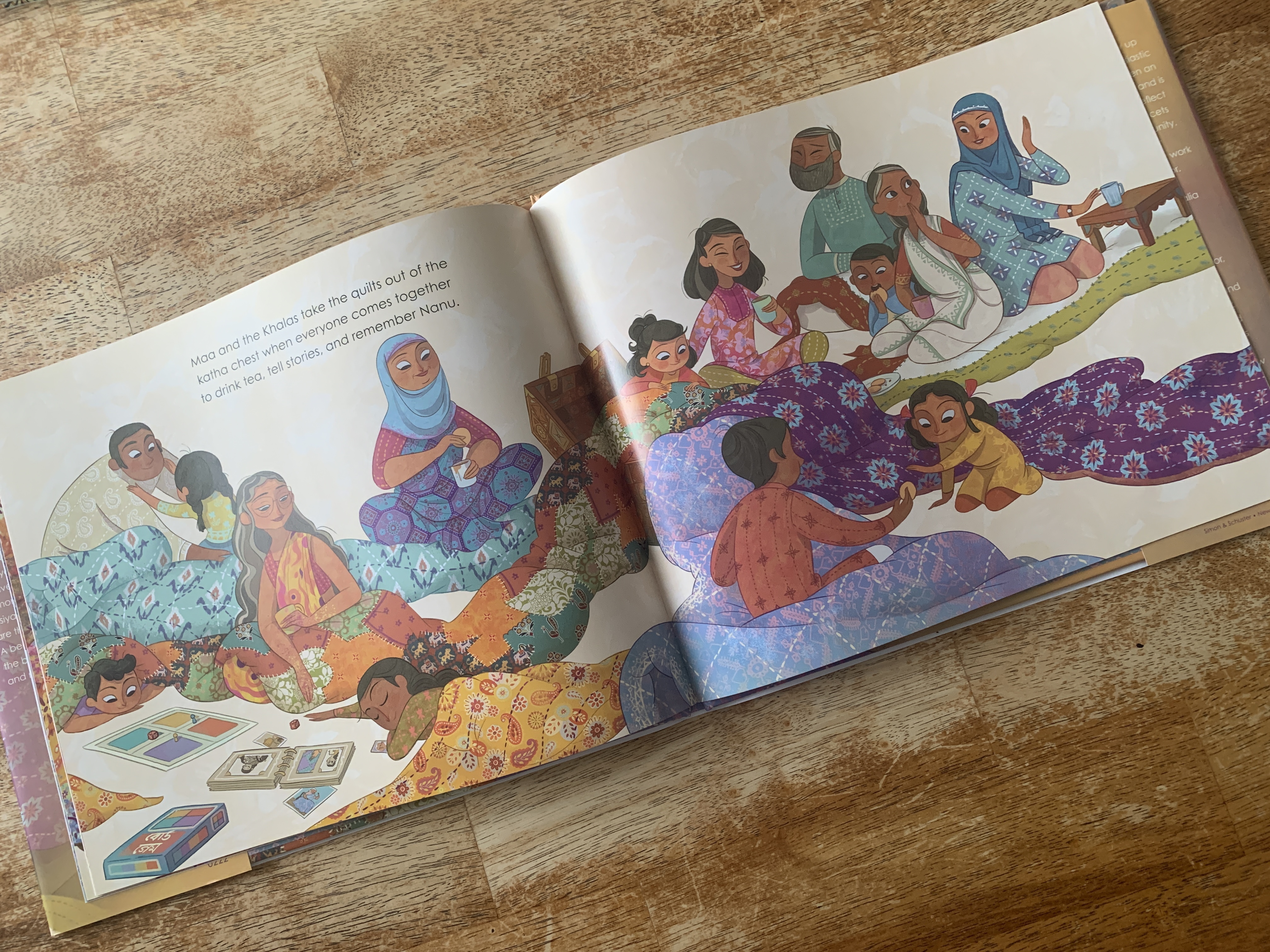
Asiya loves going to her Nanu’s house, there are treasures there.  Her favorite treasure is the katha chest.  An old trunk full of the quilts made from the old worn out saris of her Nanu, Maa, and khalas. She snuggles in their warmth and listens to the stories they tell. Stories of hardship, joy, skills learned, moves made, loss, death, love and family.

img_7720

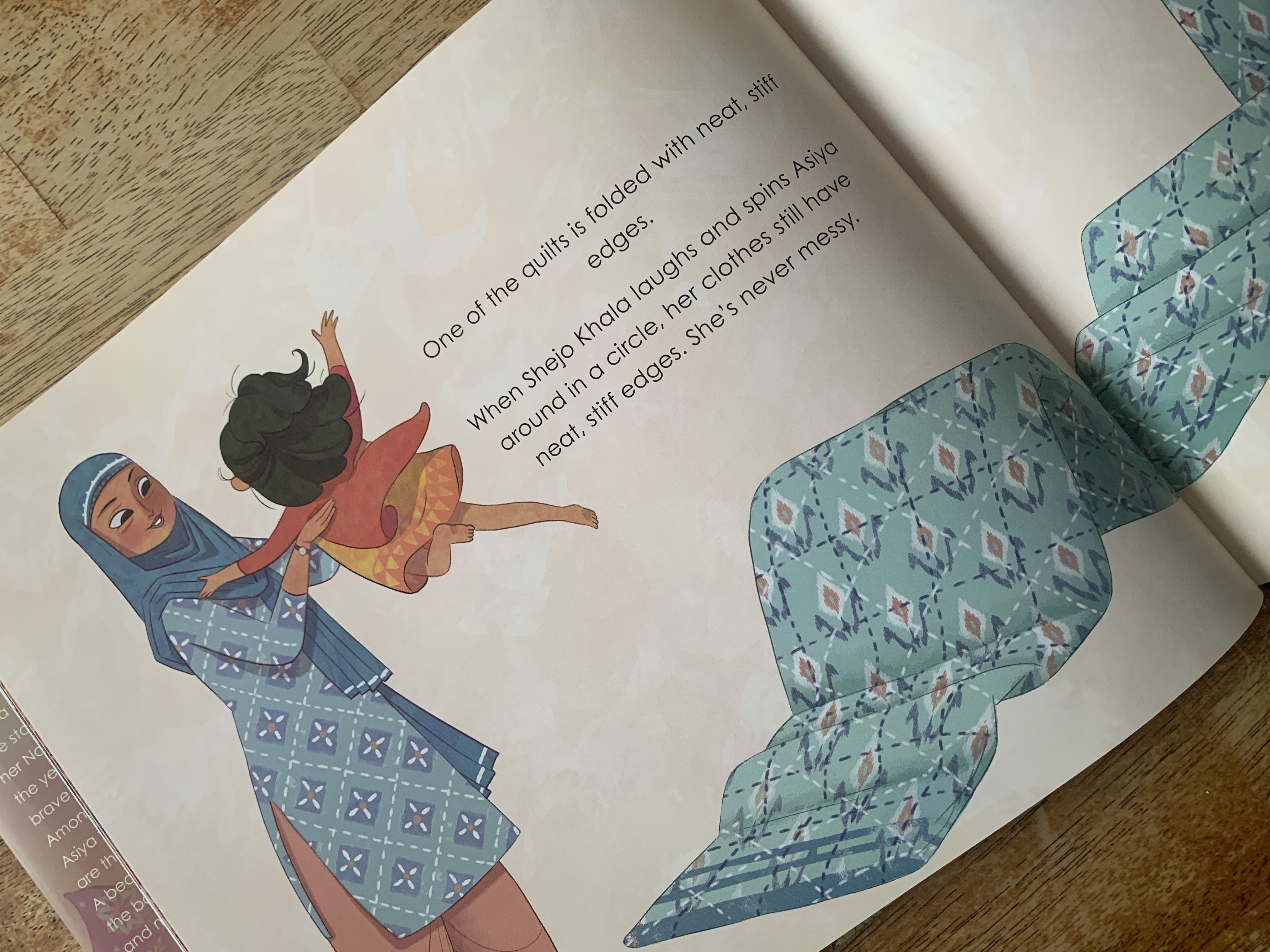
Boro Khala’s looks like Khalu’s medal, from a sad time when he was away.  Mejo Khala bright oranges and yellow like her fingers.  Shejo Khala’s is stiff and neat, she is never messy.  Choto Khala’s has a white streak like the white saris she wears since Khalu died.  Maa’s katha is patchworked and different than the others, and Nanu’s is paper thin and smells of tea, old books, porcelain and wood.

img_7718

There is an author’s note and illustrator’s note detailing the construction and value of kathas, but nothing about Bangladeshi wars, wearing white after a husband’s death, or the textile skills and artistry shown.  The book would read well with context or activities about family heirlooms, connections, and traditions.

img_7719


Wake Up! It’s the Ramadan Drummer by Mariam Hakim and Dalia Awad

Standard
Wake Up! It’s the Ramadan Drummer by Mariam Hakim and Dalia Awad

wake up

The beautiful shimmering cover of this new Ramadan book drew me in from the first few pages with the emotional impact of the father in the story losing his job.  Unfortunately the fun illustrations and overall story are not quite enough to make the book an enjoyable read over multiple readings.  By the time you read the book a second time, the missing punctuation, the assumptions and continuity holes, make the book unravel.  It has merit and highlights, I just really hope that an editor is brought in before a second printing takes place to clean up the sentences, patch the holes, and polish it to make it shine.  It has so much potential, but it is disappointing especially if you have been waiting, perhaps a bit impatiently, to share this with children to get them excited for Ramadan.  Even more so if you had hopes of reading it again and again throughout the month.

img_7075

The book summarizes Ramadan on the first page, presumably making the ideal reader a Muslim already familiar with Ramadan significance, and then jumps into revealing that the Baba has lost his job.  The optimistic mama isn’t deterred and sends the Baba and kids to the store so she can cook up something special.

img_7077

While at the store an elderly woman greets the kids and their father as, “Abu Tabla.” The son dismisses it until later that night when Baba has gone to the mosque and Mama surprises Adam and Anisa with the story of their Baba’s baba walking the streets before dawn to wake people up for suhoor.  She even digs out an old photograph, and with that, Adam is determined to get his father to revive the tradition.

img_7076

I love that Adam and his Baba work together to figure out lyrics and a beat.  I also like that it isn’t an instant success, but rather takes some grit, determination, and perseverance.  I also like that the whole family and eventually neighborhood come together, and that men and women go to the masjid for fajr.

There are some concerns I have though as well.  There are a lot of missing commas, the text uses mosque instead of masjid which reads inauthentic, and the whole old lady character, Hannah, is all sorts of underdeveloped.  She has to introduce herself, yet she knows where Abu Tabla lives, a drum magically appears in her hands, and her prodding is based on the premise that she knows what is going on inside people’s homes, what they are thinking, and what their intentions are.  I get that it is a kid’s story, but by the second or third reading it is hard to unsee how erroneous the logic is.  Especially when fasting like so many acts in Islam, are between a person and Allah swt, not for everyone else to judge.

img_7078

Presumably the story takes place in an Islamic majority setting and the neighbors are all Muslim, which offers a great discussion starter for readers in non Muslim majority places to find ways to maybe share Ramadan or to imagine living where everyone is fasting.

I feel like the last few pages about the drummer going viral is unnecessary, and the story could have, and probably should have, ended with the family and parade entering the masjid.  I particularly found it odd that a line reads, “News of the Ramadan drummer tradition starting up again reached as far as Pakistan, Egypt, Somalia, Turkey and even Indonesia,” why is Indonesia called out like that? Seems off putting somehow, not inclusive. The book concludes by circling back to the Baba getting paid to wake people up and finding jobs through the people also coming to fajr, which seems a bit raw for a children’s book.  A simpler, “even though Baba found another job, being the drummer was still the one he loved most,” would have tied everything up a little better for the demographic.  I’m hoping to include this story during one of my weekly Ramadan story times in my local community, and will probably skip the last few pages and just read the hadith at the end about waking up for suhoor.

Zahra’s Blessing by Shirin Shamsi illustrated by Manal Mirza

Standard
Zahra’s Blessing by Shirin Shamsi illustrated by Manal Mirza

Screen Shot 2021-11-18 at 11.57.45 AM

Just when you think all the Ramadan stories have been told, you flip open a new book, hold your breath as the stage of predictability is set, and alhumdulillah in this case, you squeal with delight when the big reveal in a children’s book swept you up and surprised you too.  This 32 page richly illustrated story for elementary readers is heartfelt, culture rich, informative, and embracing.  The book doesn’t dwell on the details of Ramadan, fasting, and Eid, but intentionally focuses on some of the feelings, blessings, and acts that make the month extra special.

Screen Shot 2021-11-18 at 11.58.04 AM

Zahra looks up at the Ramadan moon as she hugs her teddy bear and sends a prayer up asking for a little sister. The next day Mama is packing up beloved clothes, and ones that the family has out grown to be donated.  They discuss giving without hoping for anything in return and once again Zahra asks her mama for a little sister. To which her mother lovingly replies that she should be patient.

Screen Shot 2021-11-18 at 11.58.11 AM

When Teddy goes missing, Zahra can’t help but think a little sister would help her find it.  Iftar that night are all of Zahra’s favorite desi foods and prayer after is her asking for a sister and Teddy.  The following day Mama and Zahra take the collected donation items to the shelter and Zahra realizes how sad she is about losing Teddy and these refugees have lost everything.

Screen Shot 2021-11-18 at 11.58.28 AM

Zahra spends time with the children at the shelter and gets to know them.  She wishes she could find Teddy to gift to a young girl named Haleema.  Some days Ramadan crawls slow, and other days fast.  The family reads Quran together, fasts during the day and prays at night.  The night before Eid, Zahra’s dad whispers a secret to Zahra, one that she keeps close to her all through Eid prayers the next day.

Not going to spoil it, although I’m sure you can guess what is going to happen.  There are hints in the remaining illustrations, but I think kids will enjoy not having the heads up.  The book concludes with some informational blurbs and details about the Muslim author and Muslim illustrator.

Screen Shot 2021-11-18 at 11.58.35 AM

I enjoyed the illustrations, they are bright and bold and festive and unique.  They compliment the text completely as they show praying, reading Quran, making duas, etc.  The text doesn’t get preachy, it doesn’t even mention Allah swt or God, but talks of prayer and blessings.  The combination of the text and illustrations, however, definitely convey a strong unapologetic Ramadan/Muslim centered story.  Overall, it is universal and warm and sweet, and both Muslim and non Muslim children would benefit from reading it.

Screen Shot 2021-11-18 at 11.58.48 AM

My only concern is the page that the family is making dua together, it seems odd that they are all sitting in a line as if they have just prayed, but not prayed with the dad in front and the mom and Zahra behind. I read an electronic arc of the book and I look forward to purchasing a physical copy to add to my bookshelf.

Spirit of the Cheetah: A Somali Tale by Karen Lynn Williams & Khadra Mohammed illustrated by Julia Cairns

Standard
Spirit of the Cheetah: A Somali Tale by Karen Lynn Williams & Khadra Mohammed illustrated by Julia Cairns

cheetah

This timeless 40 page tale of a young boy as he prepares for his right of passage into adulthood is rich with wisdom, culture, and tradition.  So many gentle lessons can be found in the book, as it leaves deeper understanding and connection to be felt and explored long after the book has been closed and returned to the shelf.  There are seemingly hijab wearing #muslimsintheillustrations, and the author’s name would suggest she is also a Muslim, but with the line, “Called on the spirit of Shabelle,” and talk of the “Spirit of the cheetah,” it is hard to know for sure if the main character is.

The story starts with Roblay running everywhere in preparation for an upcoming race where he hopes to place in the top three, and prove he is a man and no longer a boy.  On the day of the race he races his fastest, but he does not come out at the top.

img_6579

His grandfather, his Awoowo, tells him that to be successful he needs to capture the spirit of their people and leave his thumbprint on a cheetah’s coat.  His grandfather then tells him about the cheetahs long ago and how the river is named after them.  He explains that thumbprints on a cheetah’s fur honor those that have proven themselves.

Roblay trains and searches for many days.  He wonders if it is enough to mark a cub.  But his grandfather asks him if he wants to remain a cub.  This motivates Roblay to work harder.  When a year has passed and the race is about to take place again, he finally touches his cheetah.

img_6580

He lines up for the race strong, proud and sleek, and he has the chance again to prove he is a man and make his family proud.  Nope, not going to tell you how it ends.

img_6583-2

The book starts with an Author’s notes from both authors and concludes with Notes on the Cheetah.

Jamal the Giant and the Largest Lesson by Mariam Hakim illustrated by Nesba Yoosef

Standard
Jamal the Giant and the Largest Lesson by Mariam Hakim illustrated by Nesba Yoosef

jamal

My initial thoughts of this 32 page Islamic fiction, fable-style book, is that it needed to be tested on children, lots and lots of children.  It should have been read aloud to catch all the grammar, syntax, and diction errors, and young readers and listeners should have been asked what they learned or understood from the story, BEFORE, being published.  The message is sweet, the illustrations cute, but it feels unrefined and reads underdeveloped: pictures and concepts are not enough to carry a book if the writing is poor.

I have looked forward to obtaining the book since its launch, so as soon as it was available from a US stockist (@crescentmoonstore), I didn’t even hesitate to purchase it.  I knew the book was available for free online as a read aloud on YouTube, but because I truly love supporting Muslim authors and publishers, I wanted to wait until I had a physical copy in my hand.  These opinions are my own, all my reviews are.  I mean no malicious will to anyone, I’ve spent my money on something, and once I’ve done so, I am completely justified to have an opinion.  You don’t have to like it, or agree with it, but it isn’t personal.  I’ve given reasonings for my opinions, and I stand by them.

Jamal the Giant isn’t necessarily mean, but he is careless, young, and selfish.  He scares the animals in the woods, destroys their homes, ruins farmers’ crops, and steals from the village.  One night, he wants to steal some juice and in the process overhears the community members discussing how different he is from his kind parents, and that he must be forced to leave.  He tries to mend his ways before he is driven from his home, but to no avail.  Unsure how to fix things, it is the advice of a tiny mouse that sets his reform in motion and conveys the message from the Quran, surah 11 ayat 114, “Good deeds cancel out bad deeds.  This is a reminder for the mindful.” He learns he must apologize, make amends and be kind.

The message is accurate, but I have some concerns at how it is conveyed.  Why was the responsibility on the giant to learn how to behave.  Yes if he knew better, he should do better, but it is made clear that he is the last of his kind and his parents died when he was really young.  If the villagers aren’t going to try and teach him, who is?  It isn’t necessarily victim blaming, but if you don’t know better, and have no one to teach you, you definitely are a victim of neglect in some ways.  To have them going from enabling him out of a promise to his parents to threatening to kick him out from his home, is a little abrupt.

Story-wise there are some points that gave me pause.  Why is there an owl flying off in the daytime, sure there are some diurnal owls, but most kids are taught owls are nocturnal, why not change it to a woodland bird that is active in the day, don’t confuse kids.  It doesn’t specify a timeframe that the story takes place in, but it feels like a fable with talking animals a giant and a clear message.  There is a baker, a farmer, an imam, a greengrocery, it is all very quaint, but then the imam is holding a cell-phone, wait what? I do appreciate that the farmer is female though, and that some of the women cover and some do not, it seems representative.

I’m curious who taught the giant to read, and how come he writes his “s” backwards, there seems to be a bit of disjointedness to the upbringing of the giant, his age, even in giant terms.  A lot it seems the author assumes the reader knows about giants or their stereotypes perhaps, because the book doesn’t address them, and the result isn’t a fun moral story, but one that seems to miss things.
The little mouse teaching the big giant, carries some Lion and the Mouse-Aesop fable vibes, but really it is the proof-reading of the book that is disappointing.  When you read it aloud, commas are abundantly missing (even in the online reading pauses are placed where commas are not written).  Why is the B in Baker capitalized, and if it is the Baker’s house, as in last name is Baker, then an apostrophe is missing.  Many of the lines are just awkward and halting, even if not particularly erroneous.  The diction is questionable at times, Jamal “always” thinks about that day at the lake, woah, doesn’t reflect on it, but it haunts him “always.”  Jamal “‘really’ didn’t have to steal,” seems to imply he was justified in stealing a little, this should be a black and white issue in a children’s book, no?

There are questions at the end of the book, and a whole page of information about the author and illustrator as well.  In a case like this I don’t know if the publisher didn’t do justice to the author’s work, or if the author should have refined it more, before coming to the publisher, but it is unfortunate because clearly a lot of effort went in to the illustrations and promoting of the book.