Category Archives: 1st through 3rd

Trouble at Taraweeh by Rosalind Noor illustrated by Rania Hasan

Standard
Trouble at Taraweeh by Rosalind Noor illustrated by Rania Hasan

img_3132-1

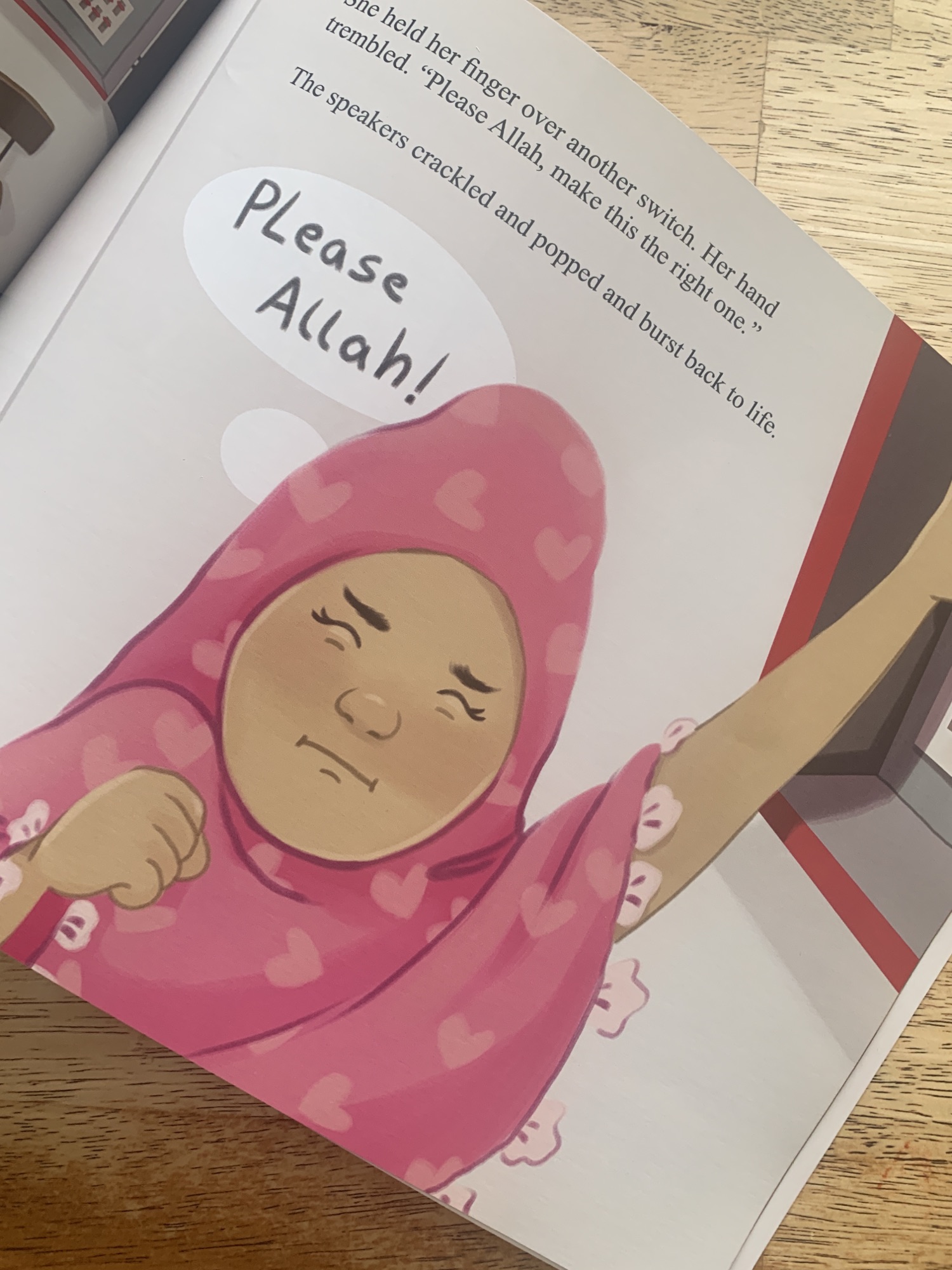
I love funny books that are Islamically accurate, Muslim filled, and informative as well.  Alhumdulliah for this outrageous Ramadan tale, that gets kids laughing and parents horrified.  A frog on the loose at Taraweeh on the 21st night, and a little girl who is a self proclaimed “trouble magnet,” focuses on Laylatul Qadr, good intentions, and Allah swt hearing our prayers.  It is text heavy, so for a read aloud, think slightly older children, seven or up, would be the ideal audience, but in a bedtime story setting the illustrations will keep younger ones engaged.

img_3133-1

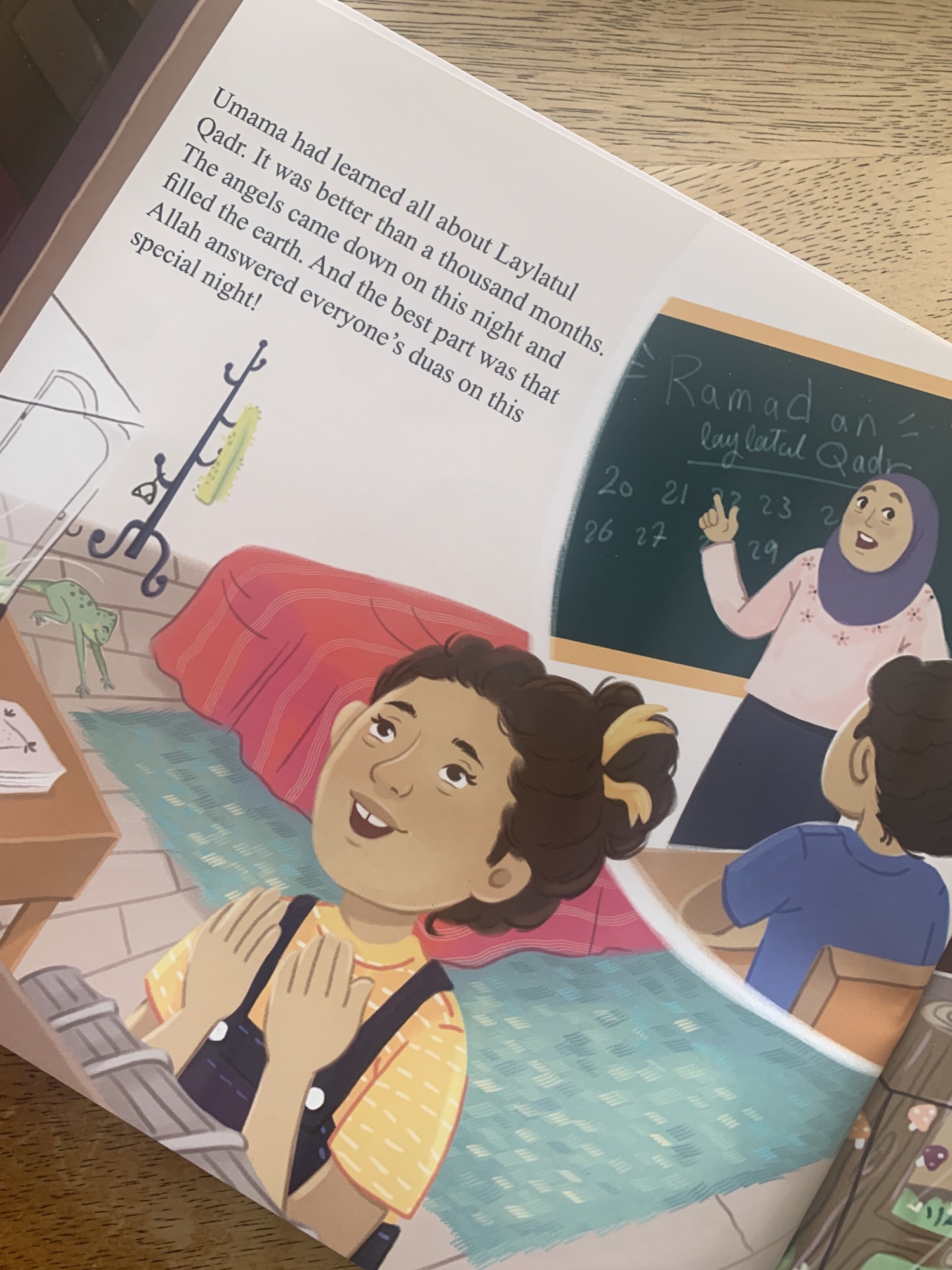
The book starts with Umama looking forward to Laylatul Qadr.  She knows duas are answered that night when the angels come down and fill the earth, and she has a special dua to make, she really wants a little sister.  It is the first odd night of the last ten days and she has had an eventful Ramdan so far.  She accidently flooded the wudu area, she tripped on her prayer skirt and knocked people over, she even tried to organize the shoes, but then no one could find their shoes.

img_3134-1

Tonight she is determined will be trouble free, which naturally means, it won’t be.  Fluffy, her frog, gets loose.  She apologizes to the woman as she scoops him off her head, but then…he gets away from Umama, and the chase is on.

img_3135-1

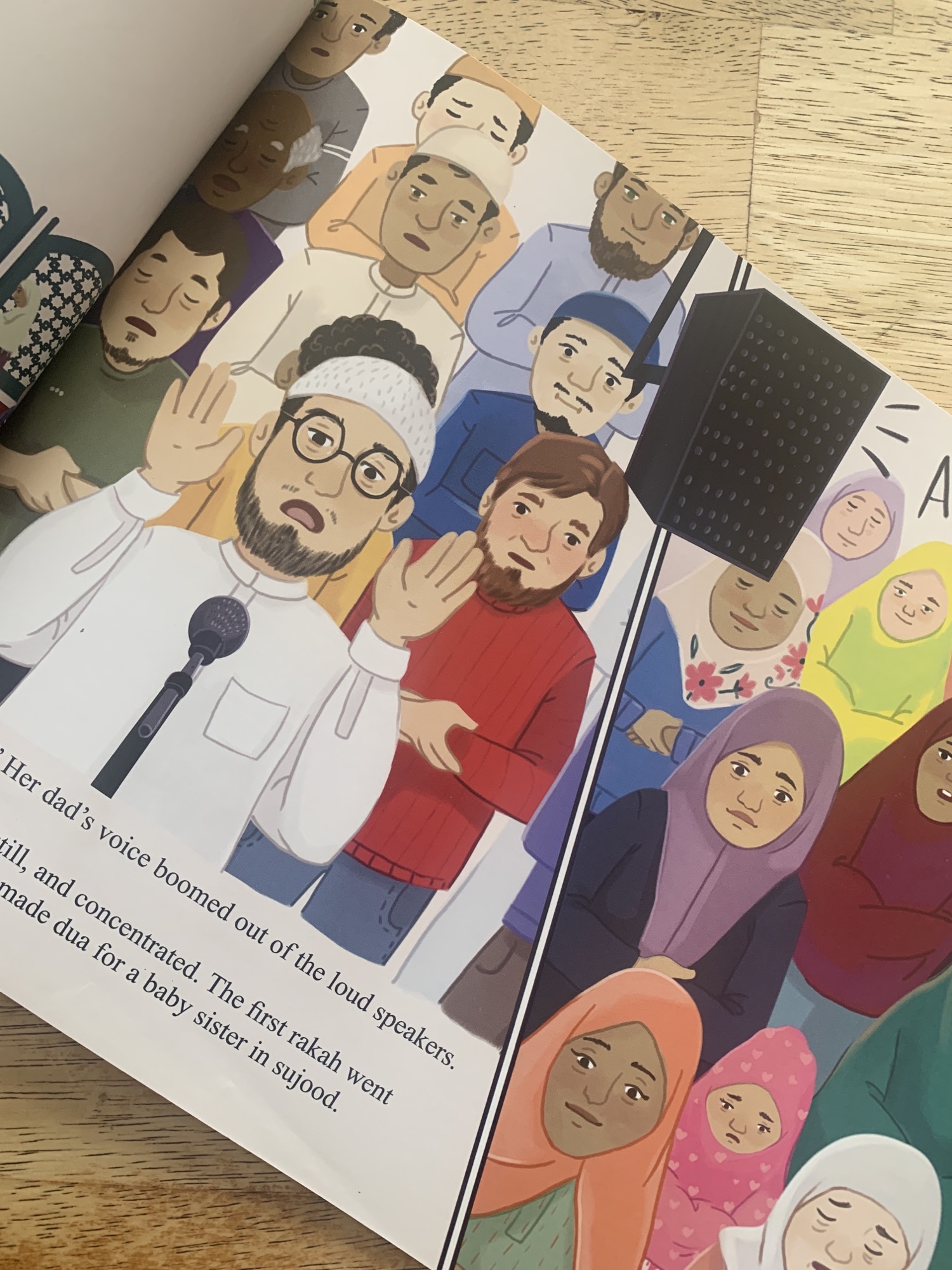
With plugs getting yanked, breakers being flipped, and little Umama asking Allah swt to help her make it right. The imam, her dad, keeps his cool and somehow you find yourself, parents included, feeling bad for Umama and hoping she has a smooth remaining Ramadan.

img_3136-1

The expressive illustrations are  bright and complementary to the story.  Kids enjoy looking at them and they really do help hold the kid’s attention as the story unfolds.  So many of my Ramadan staples come from Ruqaya’s bookshelf, and this is a great addition to the shelf.

The book is available here at Crescent Moon Store

img_3137-1

Ramadan Kareem by M.O. Yuksel illustrated by Hatem Aly

Standard
Ramadan Kareem by M.O. Yuksel illustrated by Hatem Aly

The lyrical text that shows joy, Muslim joy, all over the world during the most wonderful time of the year is felt, truly truly felt in this rich, beautiful book. The illustrations, the text, the sentiment, it all comes together so splendidly, that when you turn the last page you want to start over again. Hundreds of people are wondering what book to read to their children’s public schools this year, what book to start off masjid story times this Ramadan, what book to read every night leading up to the blessed month to get their children excited, what book to hand to your children to look through so they can have a few more minutes of sleep and alhumdulillah to all the above, I whole heartedly suggest, this one. Even with the errors.  The book states “the Night of Power is better than a thousand nights,” and should read, better than a thousand months.  The backmatter says “by not eating or drinking anything from just before sunrise until sunset.”  The story itself though has it correct and says “suhoor is a predawn meal” and notes the “sun is still sleeping.”

A universal story of celebrating Ramadan, with waking up for suhoor, greeting neighbors, having self control, praying, volunteering, iftar, community.  It is a singular story, but each two page spread showing a child in a new country continuing the narrative.  The worship uniting us all as Muslims even while our unique traditions add diversity and layers to the acts that we share.

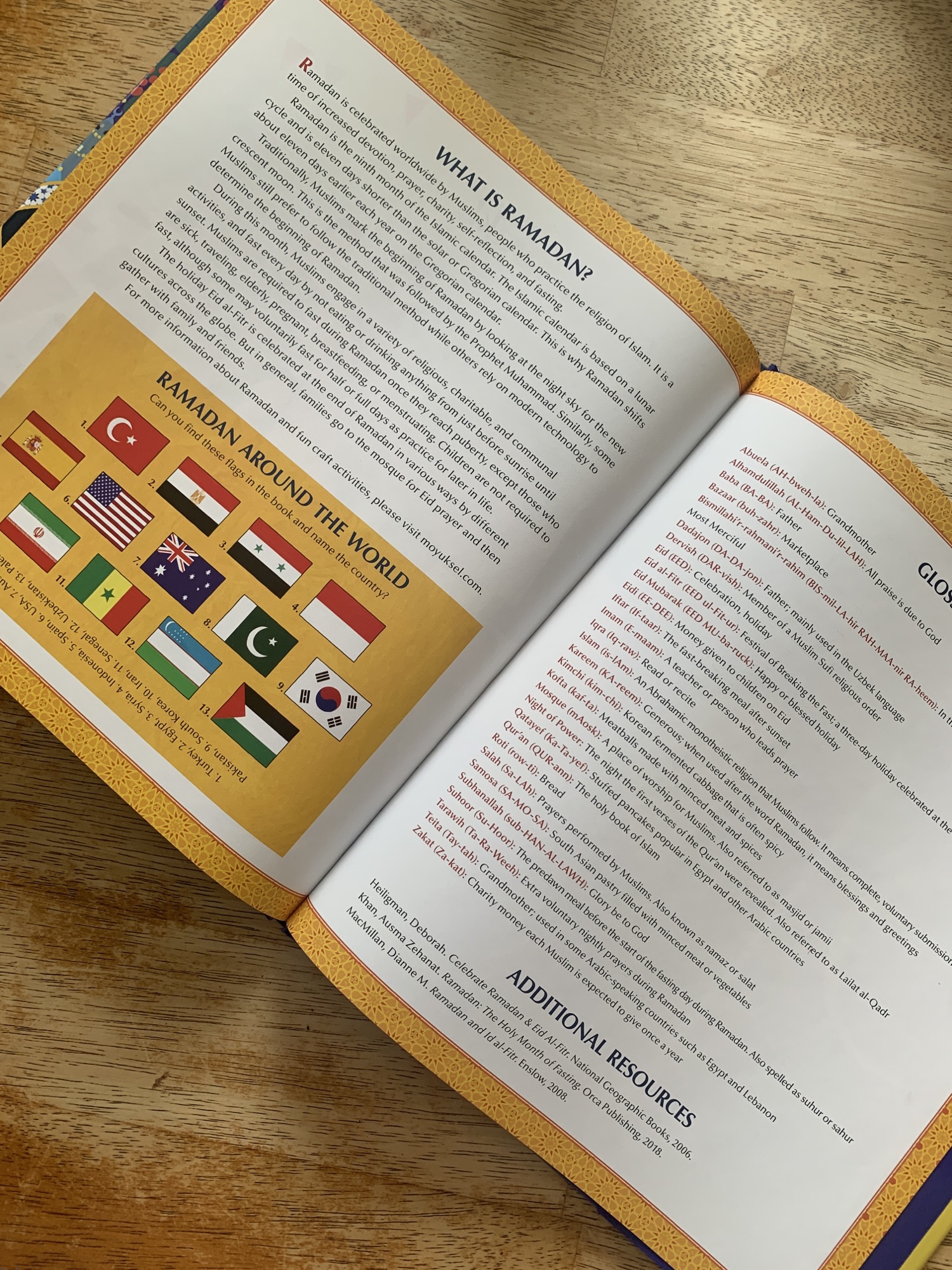
It starts with gazing at the new moon in Turkey and mom saying that the narrator can fast. The drummer than beats her drum and it it time to wake up in Egypt. The call to prayer and remembering you are fasting reaches Syria, and donations are given in Indonesia. In Spain Qur’an is read in abuela’s lap and neighbors are visited in the United States.  Donations are packed in Australia,  friends and family are visited in Pakistan, and kimchi after dates for iftar in South Korea.  It is then off to Iran for prayers, Laylatul Qadr in Senegal, and getting ready for Eid in Uzbekistan.  Palestine is the final stop as Eid joy erupts for Muslims everywhere.

The book is widely available, you can order yours here at Crescent Moon or here on Amazon

Gates and Tales by Sally Zaki illustrated by Arwa Ali

Standard
Gates and Tales by Sally Zaki illustrated by Arwa Ali

This 34 page picture book is adorably illustrated as it focuses on the gates leading to Masjid Al-Aqsa and sprinkles in culture, sights, and history about Palestine along the way.  I love the concept, it is unique, and I love that there are maps throughout of the masjid compound.  I truly learned a lot even though it is for early readers, naturally I wish there was a scannable QR code to learn more, but as an adult, with my kids, or in a classroom it would not be hard to search up Bab Al-Amud, Qubbat Al-Sakhra, Bab Al-Sahira, Salah Al-Din, Masjid Al-Qibli, Bab Al-Khalil, Al-Quds Citadel, Qaitbay’s Fountain, Bab Al-Asbat, or Qubbat Al-Silsilah.  Islam is also woven in, not just in the architecture or history, but also in mentioning the sunnah of fasting on Thursdays, quoting an ayat from the Quran in the text, and the kids meeting up to pray.  The writing isn’t super great,  it breaks down the fourth wall regularly, calling the readers “friends” and asking them to find things in the illustrations, their missing friends, and about foods and the flags of their country.  I’m not sure why the book hopes the readers are “from countries surrounding Palestine,” I found that a little off putting, and I’m not sure why we are supposed to memories the “gates by heart,” or how at the end we are now “victorious heroes.”  Even the defined words at the end, are a bit haphazard: za’atar, falafel and sido, being the only words highlighted, in a book with many Arabic words present. Presumably the reader found all the friends so they did reunite, it seemed to kind of falter, I thought they would show something they all love, or share some snacks, but the book, just kind of ended.  I like that the book is joyful and upbeat, I do appreciate that the last lines do mention that “Palestine is occupied today.  One day, insha’Allah, it’ll be free,” inshaAllah, inshaAllah, inshaAllah.

The book starts with Nidal introducing himself to the reader and letting you know he is going to take you on a special journey through four different gates.  He then asks the reader if they know where we are, before showing us Palestine on the globe.  He is going to “meet his pals at Masjid Al-Aqsa nestled east of the Old City of Al-Quds and includes the entire area inside the wall surrounding the Masjid.”  I love that it explains the area within the walls and the map on the opposite page is helpful.  

His mom has prepared him some snacks to share with his pals, and he puts on his Palestinian flag backpack before heading off.  He goes through Victory Gate.  Then his friend Aisha takes over and tells what gate she is entering through, shares details about the flower carved at Bab Al-Shira, and that her Sido would tell her about Salah Al-Din when they walked down Salah Al-Din street together to get to Masjid Al-Qibli, with its gray dome. Khaled and Jihad follow the same format and the book ends with the kids sitting in front of the Dome of the Rock asking what gate the reader will come through.  

I purchased my copy from Crescent Moon Bookstore here and if you use code ISL at checkout you will save 10%.

Under the Sana’a Skyline by Salwa Mawari illustrated by Mary Charara

Standard
Under the Sana’a Skyline by Salwa Mawari illustrated by Mary Charara

img_2034-1

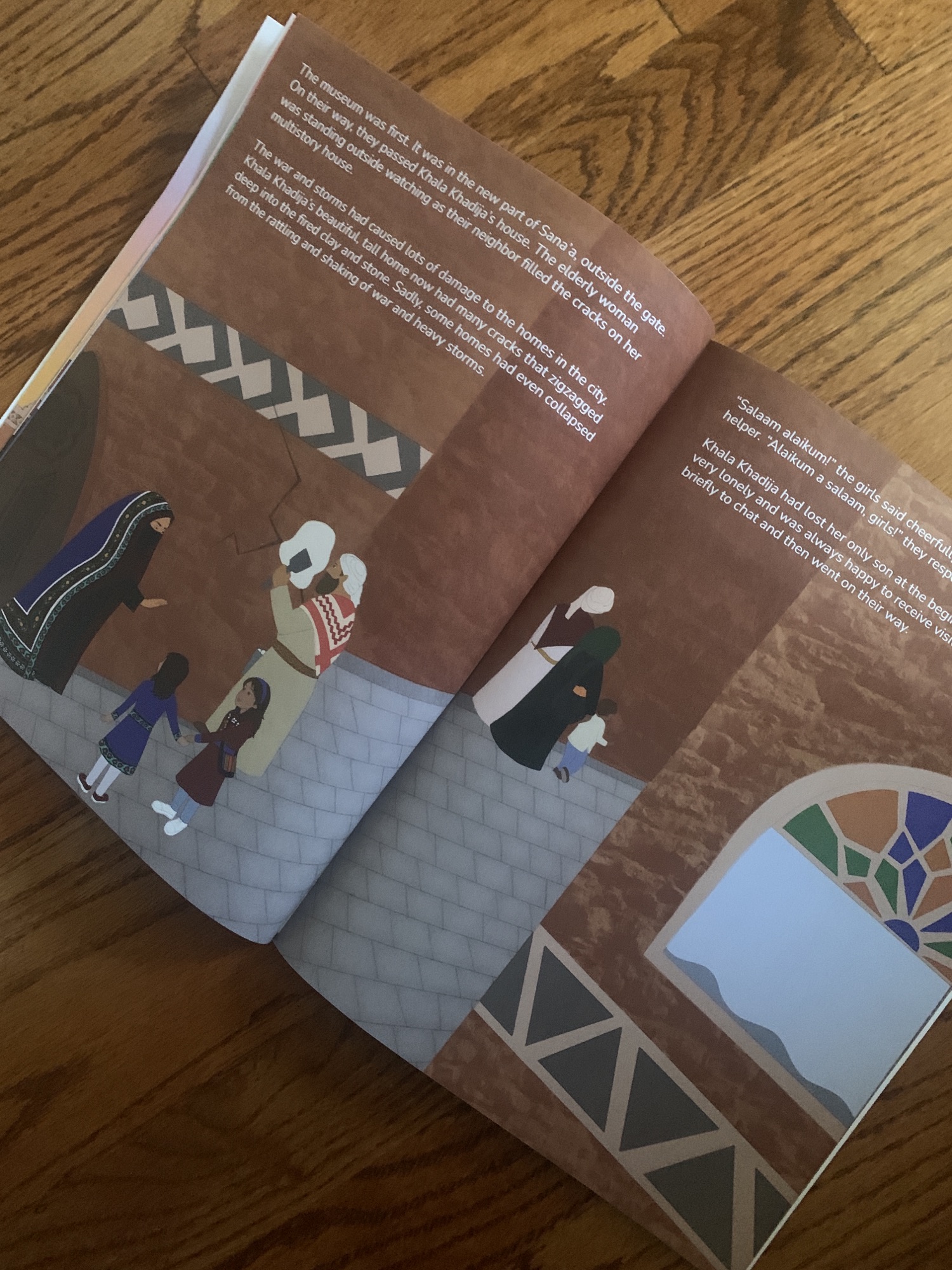
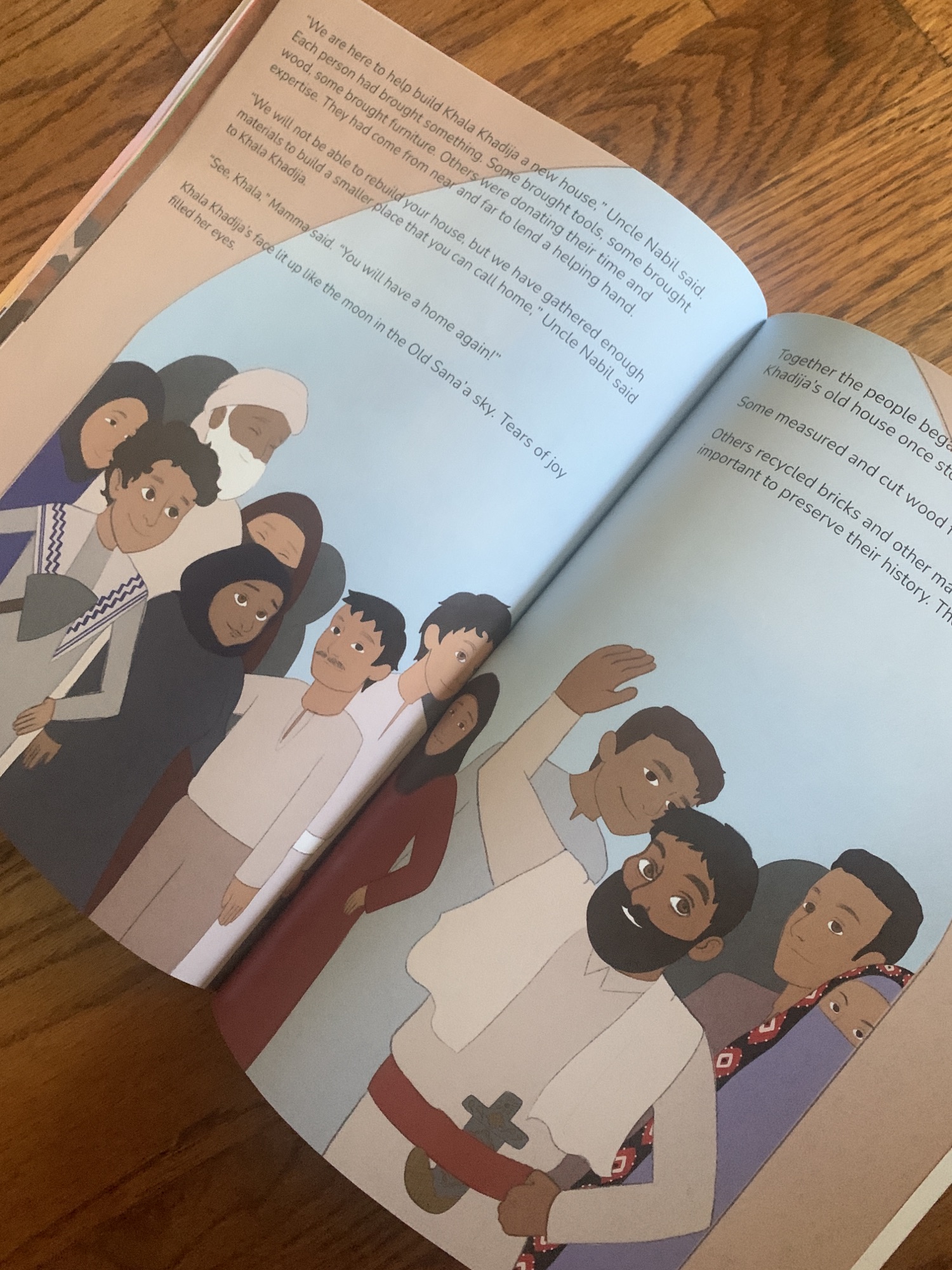
For the last 100 days it seems the only time I truly smile is when I see images of Yemen standing with Palestine.  It is impressive, so very inspiring, and equally humbling as well.  Sadly, there are not many children’s books celebrating Yemeni culture, heritage and joy available to us in the west.  This book published in 2022 is set in the war, with memories of easier times peeking through.  When Belquis is assigned to write an inspirational story about Yemen for a global contest, she is at a loss of what to write about as she is surrounded by “bombings, fighting, blockades, loss, and poverty.” This 38 page picture book is text heavy, admittedly it isn’t particularly literary or memorable, but it shows a culture and traditions that need to be shared with our children.  The media and talking points dismiss the rich history of the countries we are attacking in attempts to dehumanize those affected.  This book does not get political or even name the sides in the conflict, it simple shows a girl and her sister rediscovering their city, their history, and their peoples’ kindness and generosity.  I hope more books about Yemen will enter the marketplace, and I pray for the bombings to stop.

img_2035-1

Set in Old Sana’a Belquis dreams of being a writer, but when assigned to write about something “inspirational” she is at a loss. Her geddah encourages her saying that “Some of the most inspirational stories arise from hardship.” Her father encourages her, and her younger sister Saba, to go to the roof and look out from a “bird’s-eye-view.” At maghrib time as they listen to the athan from the Great Mosque they look out at the 2,500 year old city and the qamariyat sparkling in the changing sunlight, but don’t feel inspired.

img_2036-1

Beliquis briefly laments the looming deadline and the lack of sabaya to eat, but decides to go story hunting by taking Saba and rediscovering their ancient city.  They pass Khala Khadija’s crumbling house as they head to the museum where they are reminded about the Queen of Sheba, Yemen’s original name Arabia Felix, and Queen Arwa.

img_2037-1

As they leave the museum and head to Souk al-Milh they pass lines of people looking for handouts of food and waiting in line for fuel. When the war started, the tourists stopped coming, so the girls are free to browse, and end up using their pocket money to buy bakhoor for their mother before heading back home.  Heavy hearts make them wish they had instead given that money to a hungry family, and when the cracks from the weather and bombs destroy Khala Khadija’s house completely, the girls, their family, and their entire neighborhood will show the inspiring generosity and spirit of the Yemeni people.

img_2038-1

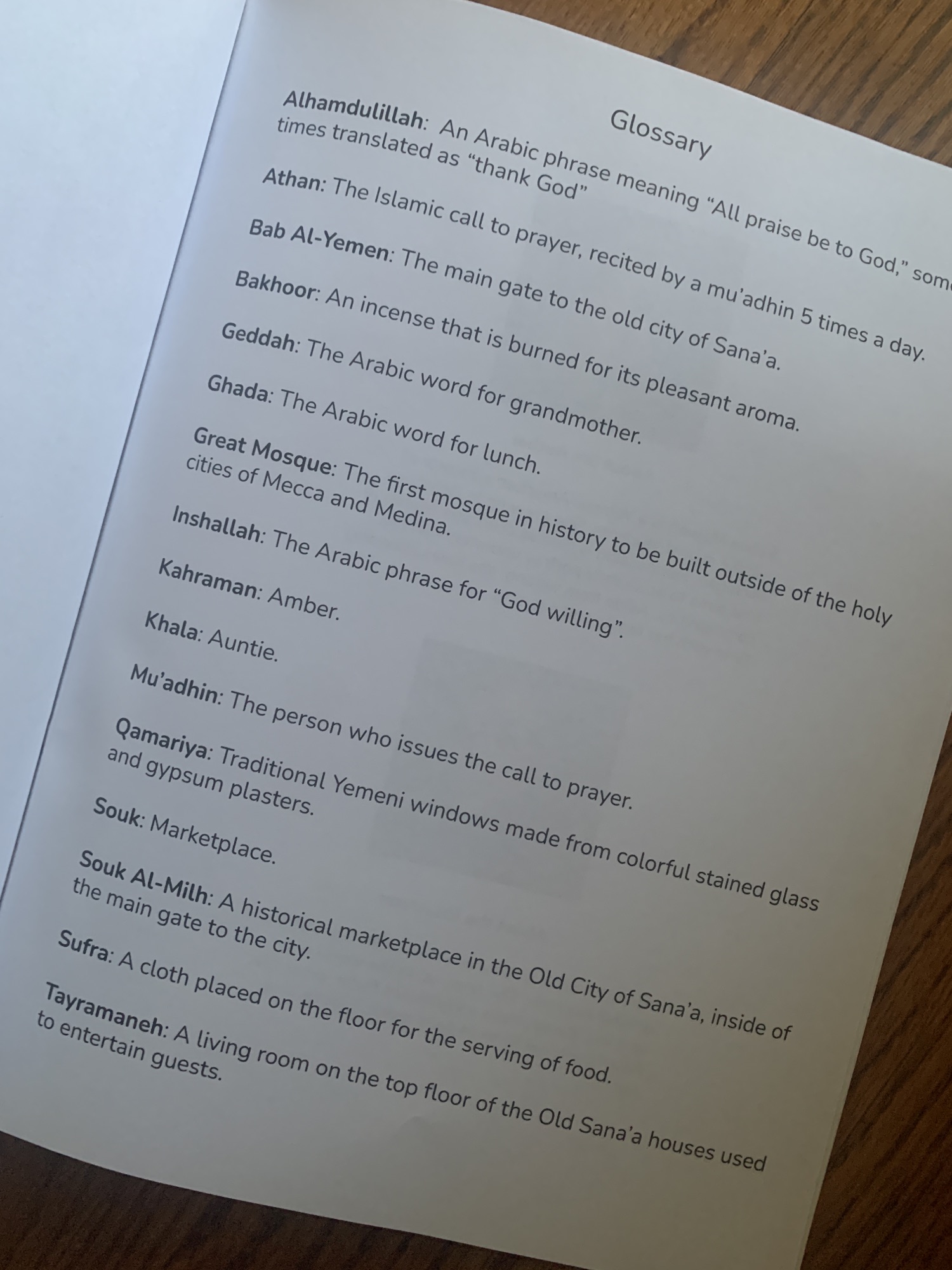
As always, with most every book I read,  I wish there was a map, and while there is a glossary, I wish there was a more robust backmatter section with actual photographs of the many places, foods, items mentioned in the story. This book is important, seek it out, urge your libraries to shelve it. Learn about Yemen, make duas for the people suffering, hurting, and standing up for the oppressed, ameen.

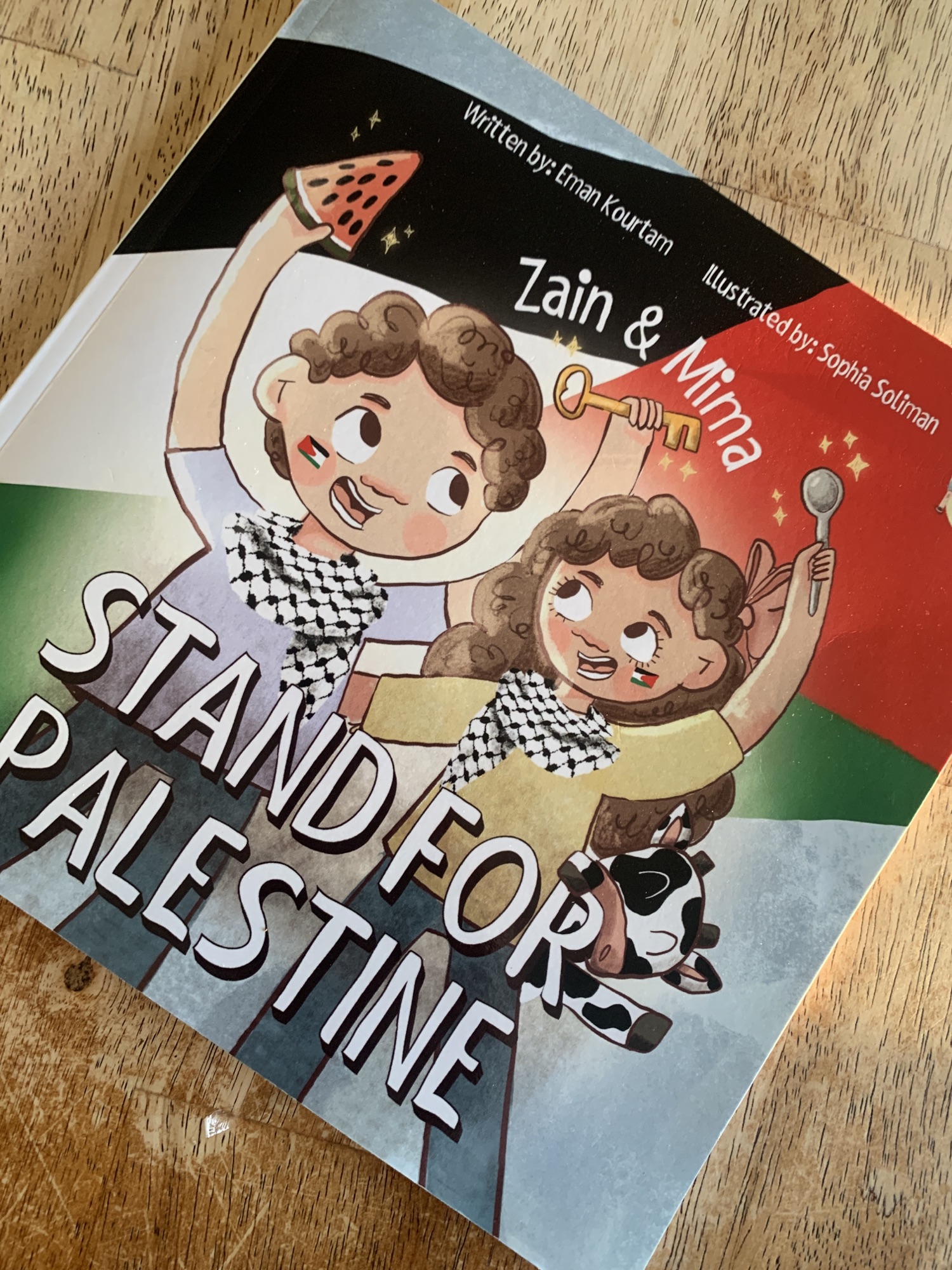
Zain and Mima Stand for Palestine by Eman Kourtam illustrated by Sophia Soliman

Standard

img_1853-1

I love this 57 page rhyming book from the perspective of a non Palestinian family pulling out their Palestine gear and taking to the streets to protest the occupation of Palestine.  Along the way the sibling duo, and thus the reader, learns about the history of Zionism, birth righters kicking people out of their homes, allyship with those on the side of Palestine, the crimes of Hitler, it shows maps of the occupation, details how movement is restricted, and even how to use BDS as a form of resistance from afar. All on an early elementary level.  There is a game at the end with an activity about resistance symbols, as well.

The book starts with Zain and Mima coming home from school tired and hungry.  They notice Mama is upset and glued to her phone, they then here noise outside and are encouraged by their mother to join the march as she hands them keffiyehs and explains that people are losing their homes in Palestine.

img_1855-1

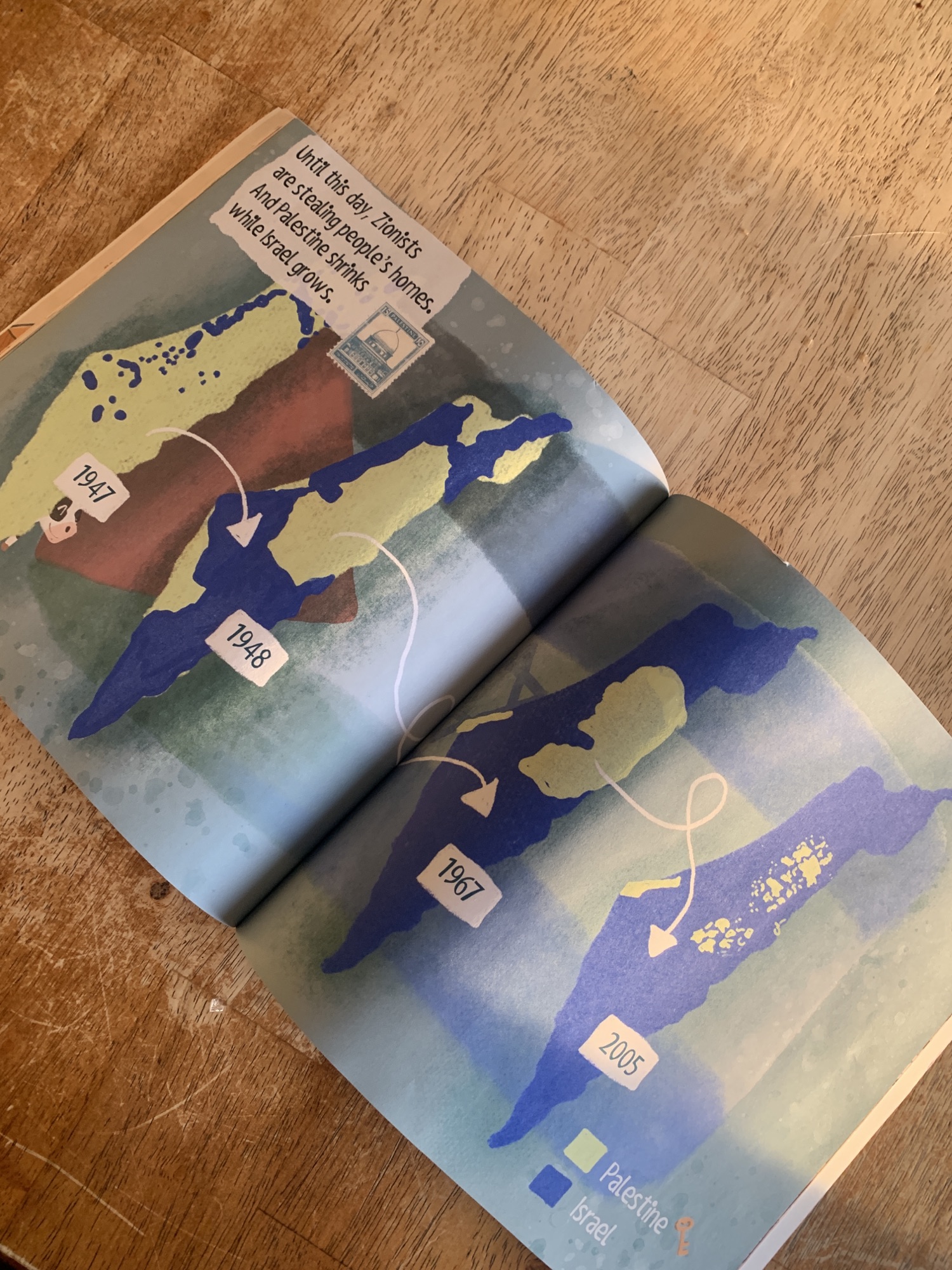
The kids are not sure of what is going on, but notice the chanting and signs and diversity of people coming together to demand freedom for Palestine.  After the protest they head home and Mama explains the history of Palestine and answers their questions.  She explains who Theodore Herzl was and his idea of Zionism.  Why it is dangerous and evil.  She then explains how Hitler’s actions in WWII gave rise to Zionism in the aftermath. A two page spread of maps show 1947 Palestine/Israel, 1948, 1967 and 2005 in easy to understand visuals. Mama then explains, without identifying any specific country, that Israel has the best weapons and Palestinians use rocks and slingshots to defend their homes and families.  It shows walls and checkpoints controlling people’s movements, and the oppression that has resulted.  When Mima asks what we can do in addition to marching and chanting, Mama explains using our money wisely with the BDS movement.  The next day, the children empowered by knowledge, make signs and are ready to stand bravely for Palestine.

img_1858-1

This book was originally written in 2022, and sadly is still so on-point.  It is available again on Amazon after being temporarily blocked, but I hope you will purchase it from a small business such as Crescent Moon Store where my initials ISL will save you 10%.

img_1857-1

The Little War Cat by Hiba Noor Khan illustrated by Laura Chamberlain

Standard
The Little War Cat by Hiba Noor Khan illustrated by Laura Chamberlain

img_0521-1

Even though the book is told from the cat’s perspective, the book never overshadows the human cost of the Syrian war.  The beautiful illustrations and clear text do not shy away from the pain and destruction, but allows for young preschool children and up to see the affects of war through the cat’s eyes, as well as the kindness and hope that prevails. Over 32 pages readers are taken to the streets of Aleppo to see the marble mosques give way to boots and destruction.  The little cat observes the changes, notes the differences and when kindness is shown to her, she finds a way to pay it forward.  I had not intended to post another book by Hiba Noor Khan so close to another book of hers, but as atrocities in Idlib increase I felt it a good time to remind us all, that the war is not “over” in Syria and the destruction and loss of life still requires our awareness, help, prayers, and attention.

The book begins with a warm scene of a little grey cat playing and lounging under the sun in a masjid courtyard. When the boots come, though, it all disappears. The cat begins to notice the changes and the fear becomes real.  

But then one day the cat sees humans that are different than the ones with boots, and she follows one. He cares for her, and she starts to feel like herself again, when she sees someone that also is afraid, the cat is determined to help.

img_0527-1
The book concludes with a note from the author telling about the inspiration for the story, The Cat Man of Aleppo,” and challenging readers to find ways to share kindness.


If You See a Bluebird by Bahram Rahman illustrated by Gabrielle Grimard

Standard
If You See a Bluebird by Bahram Rahman illustrated by Gabrielle Grimard

This cultural picture book shows life of an Afghan family before fleeing the country and after.  In the flashbacks the women are wearing hijab, now in the west they are not.  I debated if I should do a complete review or just a Muslim in the illustration tag, and ultimately decided to do a review so that I might document what I fear is a new trend.  In the last ten years most Afghan books addressed international involvement, the Taliban, and refugees, but seemed to still feature Islam and the characters as Muslim.  This book carries the refugee theme, but Islam is seen in the “before” illustrations only.  Another recently published book, The Carpet: An Afghan Family Story, similarly contained no Islam, but interestingly also kept it out of the illustrations.  Realistically, I know that two books don’t make a trend, but with the change of politics in Afghanistan, I think the OWN voice narratives are important to watch and be aware of.  In the past an Afghan book would be conflated with also being an Islamic rep book, and I don’t know if that will continue to be the case.  I also don’t know what the take away impression would be upon a kid if they were to pick the book off the shelf.  Would they find the head coverings in the unsafe country and the lack of hijabs in the safe country as a message about Islam, would they understand the politics, would they even notice?  The sweet story of a boy picking berries with his grandma involves music, wishing on birds, and reflecting on the violence that forced them to leave Afghanistan.

The book starts with Ali and his Nana waking up early to pick blackberries.  They don’t want to wake his exhausted parents, and quietly pack a lunch and get on their bikes and head out.  The blackberries are not as sweet as the mulberries he remembers from Afghanistan.  Suddenly he misses home.

The family left Kabul after soldiers came to their house and they knew it wasn’t safe anymore.  He couldn’t bring both of his stuffies and the family left on foot at night.  They rode a bus and waited behind a fence before they boarded a plane.


Back in the present the two eat their picnic, when a bluebird arrives, Nana tells Ali to make a wish before it flies away.  Nana says all her wishes have come true: the family is safe and together.  Ali is whisked back to sitting beneath the mulberry tree with his parents laughing and his toys around, he wishes for home.  Nana explains that home is not a place, it is the love you have.  The book concludes with Ali appreciating his loving family and his new “home.”

Yusuf and Yusra’s Spooky Dilemma by A. Dawood illustrated by Fatimah Farooqi

Standard
Yusuf and Yusra’s Spooky Dilemma by A. Dawood illustrated by Fatimah Farooqi

This 54 page early chapter book about a Muslim kid being tempted by Halloween somehow didn’t really center Islam much, it didn’t explain the origins of Halloween, and it meant well, but I didn’t get the messaging, it actually felt othering.  Young Yusra lies to her parents, gets a costume, attends a school Halloween party, and then once caught goes out to lunch and taken to a museum with her brother and friend Fatima. At the museum the vibrant room is the “From Around the World” exhibit, and the depressing room is “The World Around Me.” the dichotomy is stereotypical and presumptuous without sufficient insight.  The book’s concluding lesson being, don’t give in to peer pressure and feel like you have to celebrate something that isn’t right, “think of all the millions of Muslims in the world not celebrating.”  Wait? What? That is the exact same thing- do or not do something because other people are doing or not doing it! Literary wise there were numerous paragraphs and pages I had to reread to know who was talking, the side characters were underdeveloped as they would get mad and storm off and then be chatting shortly after, and at the end, Umar completely ceased to exist.  Having already reviewed the other title in the series Merry Dilemma, I’m going to allow myself a little forgiveness in comparing the two books, as I would imagine many consumers will buy both, and I found the messaging and presentation in the Christmas book, a lot stronger in facilitating conversation and reflecting Muslim kids’ stresses, than this Halloween book was able to do.  The discussion of Isa (A.S.) and the messaging of what Christmas means and why it is problematic for Muslims was more clear and allowed me to overlook some of the literary inconsistencies and weaknesses; I’m glad I read it first.  If you read this with your kids plan to supplement and discuss because the book does not leave you feeling like you really know why Yusra, or Muslims, don’t celebrate Halloween.

SYNOPSIS:

Halloween is here and Cedarcrest Elementary is throwing a huge party.  Yusuf isn’t going, he knows Halloween isn’t for him as a Muslim.  Family friends, Fatima and Umar, aren’t going either.  But Yusra’s best friend Amanda is really excited, and Yusra thinks she can just help Amanda celebrate, it is just for fun any way right? It isn’t like she is celebrating, she will just be there.  She tells her parents she can’t miss school, her dad buys her a costume, not for Halloween, just for dress-up, and now she is at the school party with glitter and candy and a whole lot of guilt.

WHY I LIKE IT:

I like that the parents try and meet the kids where they are.  I think a lot of Muslim parents buy candy and costumes on clearance the day after Halloween so their kids can still have treats without partaking in trick or treating and enjoy imaginative play after the holiday.  The book having the costume being purchased before the holiday, thus is a relatable occurrence.  Yusra wanting to go is also believable.  But, the parent’s letting it play out to their fourth grade daughter actually lying about a quiz and going to school is a bit of a stretch.
I struggled with the lack of explaining why Muslims don’t celebrate Halloween and what the origins of Halloween are.  It said I don’t do it because I’m Muslim, I don’t celebrate because my parents told me not to, and thank you for explaining it aunty- but in fact, there was no explanation.

The writing wasn’t great.  At one point it says, “Let’s go to the frozen food section we need milk and cereal.”  There were multiple places I didn’t know if Yusra or Yusuf were talking, they sound the same age and I don’t think they are twins, but maybe they are, they are family friends with a brother sister: Umar and Fatima at their school, but Fatima is not in Yusra’s class either, the school vibes feel more junior high than elementary. Back to Fatima though, she gets mad when Yusra doesn’t take a firm “Muslim’s don’t celebrate Halloween position” with Amanda and she walks off being labeled a party pooper, but after school everything seems fine. The plan is all four Muslim kids will hang out instead of going to school for the party, but Umar is not with Yusuf and Fatima when they bust Yusra, or at the museum, so where did he go?

The messaging hinges on Yusra’s guilt.  I don’t know that the book explores it enough, doesn’t have her struggling with it a lot, so it comes across that it is more the getting caught that caused the realization.  She remembers Allah swt when caught, she apologizes to her mom, which is good, but not celebrating Halloween then seems more a family expectation not a religious no-no.  Ultimately the book felt a bit like a missed opportunity to explain the origins of Halloween and let the child decide what to do based on their understanding of Islam and the holiday.

FLAGS:

Lying, going to a Halloween party.

TOOLS FOR LEADING THE DISCUSSION:

I have a few teenagers and a 3rd grader and a toddler, I don’t think this book will do much to foster communication and deepen their understanding about Muslims and Halloween.  For my oldest three when they were in early elementary, we would listen to a NoorArt CD Qu’an for Little Muslims it had a track about Halloween that seemed to work when they were young: you can listen to it here.

If you think this book will work for your needsthough, you can order it here.

A Sensational Journey “Medina” by Jenny Molendyk Divleli illustrated by Seda Cubukbi Antli

Standard
A Sensational Journey “Medina” by Jenny Molendyk Divleli illustrated by Seda Cubukbi Antli

img_8808

A journey to and through Medina with a focus on the five senses is a lovely concept for a book and the book is an enjoyable read for young children with the internal map, details about he Rawdah, the inclusion of Masjid Quba, Masjid al-Qiblatian, Mount Uhud, Archers Hill, and ajwa dates. The book is a little text heavy, as a decent amount of information is shared, but the illustrations are enjoyable and will help hold the attention of early elementary children.  The use of sight, smell, taste, feel and sound are woven into the story, they are not highlighted or the organizing format of the book.  Bonus material includes a QR code to listen to “Tala ‘al Badru ‘Alayna,” a glossary, and follow up activities.

The book starts with a little boy headed from Mecca to Medina, “the city of Prophet Muhammed’s (saw) mosque and grave, and a hope to find out why “everyone says Medina feels ‘special.'”  As he sees Bedouins in the desert he wonders what they eat and how they survive.  He then sees a gas station lit up like an amusement part.

img_8809

As they get closer to Medina they listen to “Tala’al Badru ‘Alayna.” When they arrive at the hotel they smell oud and fall asleep.  The next morning he wakes up to the sound of the athan and they walk the streets taking in the sights and smells. The color of the green dome is noted and the rose smell of the carpet when they make sujood included.  

The Rawdah and the umbrellas each get their own two page spread, and then a tour guide takes them to Masjid Quba, Masjid Al-Qiblatayn, and Mount Uhud. The tour finishes with a visit to the date orchards and playing and napping in the mosque.

img_8811

I wish it used the word Masjid every time, it uses both, and I’m not sure why it doesn’t just say Fajr instead of the morning prayer.  I appreciate framing it as a story, but the beginning with the Bedouins and the gas station seemed to slow the story down and my littles wanted answers as to why there were so many lights and how the people in the desert survived.  I also would have liked if the backmatter detailed more about Masjid al Quba and Qiblatayn, and Uhud, ultimately I wish there was more showing the little boy feeling why Medina is special and not just saying he now understands.  

 I’m not sure why I only ordered the Medina book and not the Mecca one as well, they are stand alone reads, but the Medina one references that that they have come after being in Mecca so consider if you are getting one to get both.  I ordered mine here. Use code ISL (Islamic School Librarian initials) at checkout to save 10%.

img_8810

Yusuf and Yusra’s Merry Dilemma by A. Dawood

Standard
Yusuf and Yusra’s Merry Dilemma by A. Dawood

img_8876

We need more books like this. Books that don’t dismiss the pressures of celebrating holidays that don’t belong to us and that facilitate conversation. Is this 36 page early chapter book incredible literature, no it is not, but it is important. And I strongly suggest reading this book with your children and discussing the contents sooner rather than later. Not the first week of December, when holiday music and decorations are already in full force, but when in fact, they are not. Talk to your kids before it is an emotional defensive assertion of power. Talk to them when calm thoughtful conversation can occur without being in response to an invitation to a party, or a school/community event. Equip your children and guide them where they are in their understanding. Yes, that means that you the parent will have to read this book first, and then ask your child to read it, or read it with them. It is not long, it is not deep, or a complex story, it is a relatable scenario of a a practicing Muslim kid who weighs his options, makes a choice, gets caught, and is gently talked to by his father. There is openness, their is dialogue, and yeah, it gets a bit preachy at the end, but that is kind of the point. The book does not come out for a few more months, but I hope you will preorder it, and I hope the author may consider releasing it before October. I’m the daughter of a convert, born and raised in America. We need to talk to our kids about holidays, not just demand avoidance or give in to peer pressure and imitate. It isn’t simply saying they have Christmas we have Eid, it needs to be understood, we are Muslim and we do what we do to please Allah swt. In some ways I wish the book was stronger, but every family is different, and this book gives space for you to tailor the conversation for your family about Islam, in relation to both the religious aspects and commercialization of the Christmas holiday.

SYNOPSIS:
Yusuf and his friends love video games, the book opens with them playing at a friend’s house when the conversation turns to the new Nintendo MAAX that will be out for the holidays. It is on all the boys’ wish list, Yusuf doesn’t celebrate Christmas, and the friends know that, but he feels left out thinking he will have to wait six more months until Eid. When his mom picks him up early to take him to the mall to get boots with his sister Yusra, he see’s a raffle for the gaming station and enters. There is just one catch, you have to take a picture with Santa. Yusuf knows Prophet Isa is important in Islam, and is not the son of God (astugfirallah), he also knows that Santa is a fictious character. He hesitates, but then complies, when his sister sees the proof hanging out of his pocket after he makes wudu, their dad decides to talk to them as they walk to the masjid for maghrib.

WHY I LIKE IT:
I like that the kid and his friends know that he doesn’t celebrate Christmas, that the internal debate is coming from a kid who knows his faith, it is not an identity crisis. He knows what is right and wrong, but yet the debate as to whether a picture with Santa crosses the line or not is still had. I’m sure a lot of Muslims would be fine with it, but a lot wouldn’t, and the conversation about preserving our imaan and imitating others and doing something that stems from a belief we do not share, I think is important to have with kids. Is it ok to do a gift exchange for Christmas if we are Muslim? This family says no, and dad explains it to Yusra and acknowledges that it made her sad to miss out on it. I think these are questions that families wrestle with and often instead of discussing we just ignore. We know gift giving is important and kindness is important, but when it is tied to celebration of God having a child, is that ok? The book does not give fatwas or hadith or get heavy handed, it is a gentle discussion from the father with his young children that is presented in the book and can easily be continued in real life afterward. There isn’t judgement or othering of Muslims and non Muslims, the tone allows for you to think about the concepts both in the fictious scenario, and inshaAllah also in your real life. I think whether you are strong in keeping away from Christmas activities or a little more lenient, you will find this book a benefit and not be offended or annoyed. While I wish the book was a little longer and a bit more polished on the literary side, I appreciate that the book will resonate with families facing similar situations, and that it does so for early elementary kids that are starting to have to make their own decisions when they are at school, with friends, and in front of Allah swt.

I do with the pictures were better and maybe the font a little bigger.

FLAGS:
Christmas and posing with Santa, secrets

TOOLS FOR LEADING THE DISCUSSION:
The book is for younger kids, but I think a weekend school teacher could read it aloud and lead a discussion just as well as a parent doing it at bedtime. Again though, I would present it before December, start the dialogue early so it can be referenced with situations arise.

Preorder/Order here https://amzn.to/3Jrzlsi