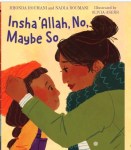
Insha’Allah, No, Maybe So by Rhonda Roumani, Nadia Roumani illustrated by Olivia Aserr

Standard
Insha’Allah, No, Maybe So by Rhonda Roumani, Nadia Roumani illustrated by Olivia Aserr

img_2711-1

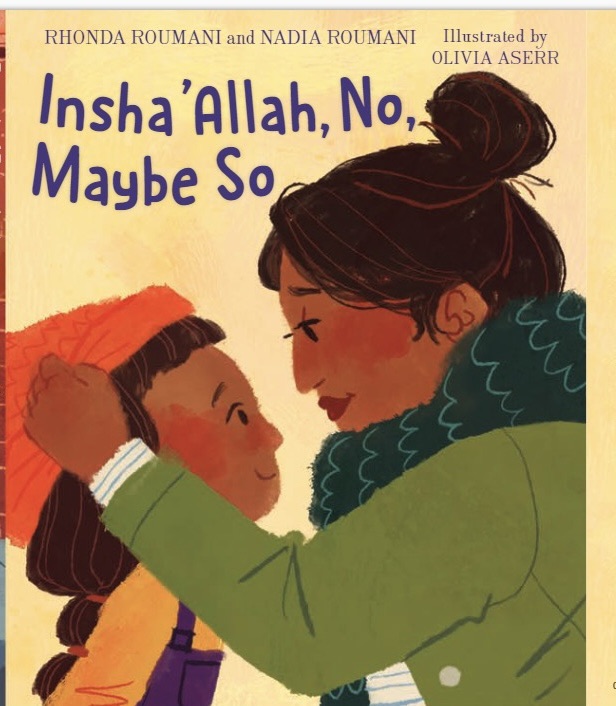
Not every funny thing a child says can be copied and pasted into a children’s book.  And while I have no doubt that this book was edited and revised numerous times, it sure feels like a conversation or 20 that I’ve had as a mom, a teacher and a librarian over the years.  Well, I take that back, the mom in this book, is very articulate, and not nearly as exasperated as I’m sure I always am.  It is so on point that it makes me truly wonder, are you even a Muslim parent if you haven’t been asked what Insha’Allah means? The backmatter articulates that Muslims and Arabs of all faiths use Insha’Allah. The text and illustrations themselves are not Islam specific, but the authors are Muslim, and the term always on the tip of our tongues. It is very relatable and impossible to read without smiling, I can’t wait to share it, insha’Allah. (See what I did there? ya.)

img_2715-1

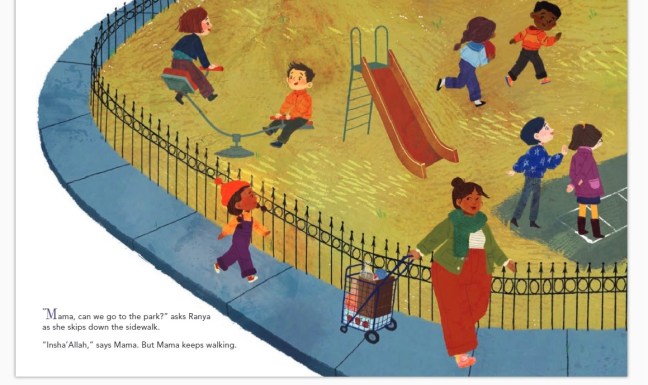
The book starts simple enough, a little girl asks her mom if they can go to the park as they walk near one, and mom says, “Insha’Allah,” and keeps on walking.  Ranya gets upset asking why she said no, and the mom explains that insha’Allah doesn’t mean no, it means God willing.

img_2712-1

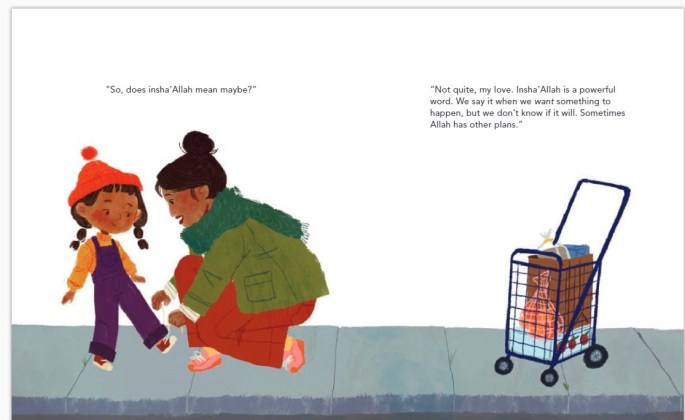
Ranya doesn’t just accept the answer and move on, she tells her mom it always feels like no, until her mother explains that we can want something to happen, but sometimes Allah has other plans.  Ranya presses her mother a little more trying to understand if insha’Allah means, maybe.  A few more examples are shared, and the definition is expanded to also mean, hopes and dreams.

img_2713-1

Ranya wants to pin down her mom on some of the insha’Allahs, making cookies, a sleepover, a trip to Disneyland.  Mom does her best, but Ranya is spunky and makes sure she gets the last word in.

I love the note at the end that ties it all together and shows the universal appeal of the word.

You can preorder your copy here

img_2714-1

Tipu’s Roar: A Freedom Fighter’s Tale by Subia J. Ali illustrated by Gabriel Sorondo

Standard
Tipu’s Roar: A Freedom Fighter’s Tale by Subia J. Ali illustrated by Gabriel Sorondo

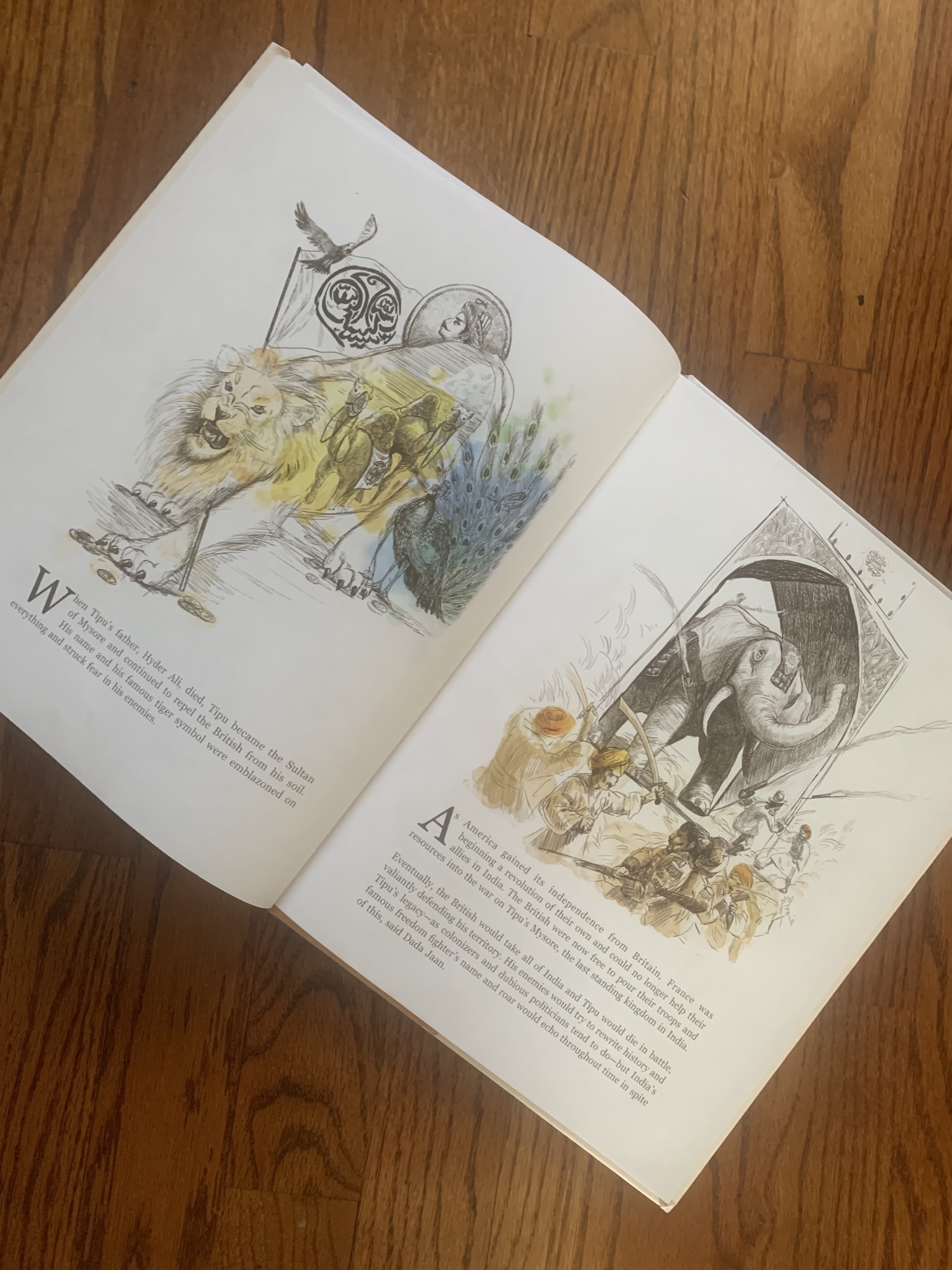
This large (9×11) hardback book is for the most part gorgeously illustrated in sepia tones, but the story is only 11 pages long; a pretty steep price point for 11 pages.  A story nestled with in a story, the premise of bringing to light a not well-known historical figure is admirable, but with no sourcing, it is hard to know what is real, and what is legend.  The concept and angle of being a freedom fighter and resisting colonization is timely, sadly it lacks the inspiration that I feel the author set out to convey.  I read the book a few times, and still had to Google a map of Mysore, Tipu Sultan and the role of the French in the subcontinent in the 1700s.  It would seem a book dedicated to the children of Palestine, defining words of freedom fighter, colonization, and imperialism before the book even begins, would answer the basic questions about the hero at hand.  

The book starts with an old man feeling gentlemanly wearing a bush shirt, chatting with his grand daughter who is being corrected to call him Dada Jaan instead of Grandpa. He then gets lost in thought and begins to tell his grand daughter the power of names to emphasize his point.  Tipu Sultan, known as the Tiger of Mysore, he tells her, “fought the British, who had come to colonize the Indian subcontinent.”

He doesn’t so much as convey the information in an entertaining way, as he lists off details and then pulls out to make sure she is still listening.  He tells her about the British East India Company draining the wealth of the subcontinent by taking tea, cotton, gems and spices.  He tells how Tipu “studied Islam, spoke many languages, and was a pioneer in rocket artillery.”  He credits Tipu’s rockets as revolutionizing warfare all around the world, and connects India, France and America as fighting off their Imperial colonizers, with the French being close allies in India’s struggle against the British.

Once her Dada Jaan’s retelling is through, and Tipu has lost, and Mysore falls, the little girls ponders over the story and years later appreciates her Dada Jaan in his traditional tunic rather than his bush shirt from before.

The book is in many ways needs to be fleshed out, sourced, and the messages articulated for today’s readers. 

A Tempest of Tea by Hafsah Faizal

Standard
A Tempest of Tea by Hafsah Faizal

tempest

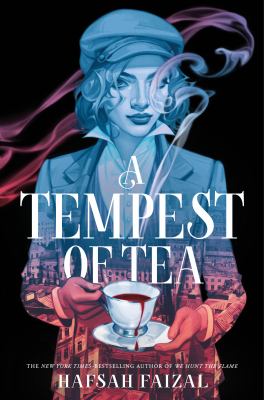
At 352 pages this YA vampire book is remarkably clean, a little slow burn, a few kisses, and some killing, but for the genre, I was quite impressed.  The book is written by a Muslim, but there is no Islam in the book, the closest it gets is a character named Laith Sayaad, but he is from Arawiya, so the fictional world stays in its lane.  The commentary of colonialism, classism, found family, however is very real.  Throw in some tea, some vampires, and a heist with a less than trustworthy crew and I was swept away.  As a Muslim book reviewer, I often schedule in breaks to read books I don’t have to screen shot, annotate, and scrutinize, aka non Islamic books.  So this book was a bit of a surprise for me once I realized I would not have to read it with all the critical lenses in place, but would still feature it because the author is Muslim.  As a result, this review will be a little different from my normal format.

Told in multiple voices, Arthie, Jin, and Flick, the linear story moves along with each characters progression. The story however, twists and in a style that feels a bit slight of hand, we are told what to look at and see, but in an unveiling that makes you want to slow down, flip back, reread, and then carry on.  Honestly at times the book is utter chaos, but again, because I knew this wouldn’t be a typical review, I kept on keeping on.  When plot pieces started to fall into place, about two-thirds of the way into the book, and details in passing started carrying weight, the book was impossible to put down.  I didn’t find many of the “plot twists” super surprising, but I was utterly delighted to know that they connected so many crumbs of the story.  I’m a bit of a sucker for “no loose ends,” and while the ending left a lot for me to desire and grapple with, the story for the most part felt satisfying at its close.

Arthie Casimir and Jin Casimir, siblings by choice, run a tea house by day, a blood bar by night.  Always on the run from the ruling Ram, they have networks of spies, and years of criminal experience, to make it all look rather easy.  When Spindrift is threatened, the two will be tested to pull together a team, enter the dark vampire world of the Athereum and take on the colonizing rulers that hide behind masks.  Things don’t always go according to plan, and their plotting, successes, failures, and backstories make the book a fast-paced read that ends too soon.

FLAGS: Death, attraction, romance, fantasy, colonization, violence, stealing, systemic corruption, spies, etc.  I would be fine with 15 and up reading it.

Daughters of the Lamp by Nedda Lewers

Standard
Daughters of the Lamp by Nedda Lewers

img_2600-1

This 352 page middle grade fantasy grounded in Egypt and America didn’t initially impress me.  In fact the first few chapters felt a little forced, the voice a little off, and the threads of Islam were making me a little bit nervous, but I was advised to keep reading by a trusted friend (@muslimmommyblog), and so I did.  And I really don’t know when it happened, perhaps when Sahara finally got to Egypt, but truly the slow quiet book won me over.  It has a lot of heart and I found myself throughout the day thinking about the story, trying to sneak a few minutes here and there to read just a little bit more, and staying up past my bedtime to finish.  That isn’t to say the book is perfect, but it is a solid read despite some plot holes, and a 12-year-old protagonist who seems to not really practice Islam even though her dad and family do. If you do not feel that Islam allows for fantasy books with magic, then steer clear of this.  If you are fine with it or on the fence, know that the book quite often articulates that Allah swt is always the creator in charge of everything, but there are magical elements, fortunes told, and evil deception.  I’ve never seen anyone read tea leaves or coffee grounds, let alone believe in them, if it is something that culturally you have seen and find reflect sihr, know that it is present in the story, but it absolutely clarifies, that Allah swt is the one who controls the future.  I don’t think any reader of any age would think this story is or could be real.  I would be comfortable with middle graders reading this book.  It is long, and a bit dense for early middle graders, but it is clean, and really centers family, being a good friend, and working together to save the day.

SYNOPSIS:

Sahara Rashid is tired of being teased as being the only kid who hasn’t gone to Merlin’s Crossing, when 6th grade comes to an end, she is hoping the surprise her dad has for her is a trip to the amusement park.  Instead they are going to Egypt, her first trip there ever.  Her maternal uncle is unexpectedly getting married and her dad and her haven’t been back since her mother died giving birth to Sahara.  Shocked by the news and desperately disappointed, Sahara goes to bed and dreams of her mother. When she awakes, her aunt, her father’s sister and mom’s friend, has a necklace for her and a message that matches her dream.  Interspersed with Sahara’s story is Morgana’s.  A girl long ago who is a servant to a mawlay, Ali Baba, who has been tasked to guard treasures: lamps, apples, flying carpets, and the like.

When Sahara gets to Egypt her adventures begin, she meets her cousins, Fanta and Naima, and Sittu, her grandma, who she has always feared blames her for her mother’s death, but finds instead a loving matriarch who welcomes her wholeheartedly.  She also meets the bride-to-be a woman named Magda, a woman the cousins call, El Ghoula, the witch.  When someone tries to break into the family’s grocery store, Sahara’s necklace goes missing, and El Ghoula starts to act suspicious, Sahara and Naima formulate a plan that backfires tremendously and will test their trust, determination, and ability to save the day.

WHY I LIKE IT:
I love that Islam is woven in, but I truly do not understand how Sahara’s dad prays five times a day, her aunt in the USA who lives with them prays, but not regularly, but Sahara doesn’t pray.  Her mom wore hijab, but she doesn’t know much about hijab, yet is incredible self-conscious that she doesn’t wear it, while simultaneously being comfortable in shorts.  She also questions her dad why she needs to cover her head in front of the imam, and she brings it up a lot with her cousin Naima, who does cover.  It feels like it comes from a place of love and respect, and probably real conversations, but it seems stilted and vague which I feel like some sensitivity reading perhaps would have helped with.

The beginning of the book really sounds outdated, but I’m not sure why.  It reads like an older person trying to write a young protagonist contemporary voice and it doesn’t work, it is even cringey at times.  Once the action picks up, the voice and tone and pacing is fine, but truly the first few chapters of Sahara are cumbersome.  I do not understand why Sahara is constantly homesick.  She is on vacation and is not going to be in Egypt for two weeks, and the regular insertion that she is missing home and counting down days, is very odd.  If she was suddenly living there, or staying months, perhaps it would make sense, but truly it initially really makes liking Sahara yet another obstacle in the early chapters, that has to be overcome.  By the end, she is very likeable, but those early chapters don’t connect her to the reader which is unfortunate.

The story and action are fun, the relationship building with the family is very tender and sweet.  Her helping her cousin in a street dance battle and feeling the love from her grandma are cathartic and memorable.  Plot wise there are some holes, like how did all the sleeping victims get home, where is the dad’s family, why didn’t the mom know the family secret, why did the family let Sahara’s mom leave, how did Sahara’s mom and her paternal aunt know each other, and why doesn’t Sahara pray and why hasn’t she ever heard the fajr athan before?

FLAGS:
Magic, lying, music, dancing, evil, plotting, scheming, killing, murder, dying, theft, poisoning, attempted kidnapping, slander.

TOOLS FOR LEADING THE DISCUSSION:

This would be a fun book to read aloud in a classroom setting during lunch when it is too cold to go outside.  I think it would be fun for an upper elementary book club as well.  I think kids will reach for it, and with a recommendation will get through the first few chapters to be swept away on a magic carpet,  enjoying the story.
Tagging Freedom by Rhonda Roumani

Standard
Tagging Freedom by Rhonda Roumani

20801TaggingFreedom

This 282 page OWN voice middle grade book weaves together two points of view that shed light on the recent events in Syria and life as a Syrian American without self-othering or over-explaining.  The characters are Muslim and while yes, I wish there was more Islam woven in,  when it did present itself in more than just a passing “inshaAllah” or “ya rab” it was heartfelt and sincere.  The book has a few plot holes, a plethora of underdeveloped characters, and the religion and cultural components take a backseat to the tropey MG themes of finding your voice, friendships, crushes, fitting in, and having hope. Despite my critiques though, I still found the book focused around graffiti and spirit squad, engaging and hard to put down.  The pacing makes for an easy read, and while the adult reviewer in me wishes there was more depth, insight, consequences, and Islamic references, I definitely appreciated the emotion and framing of this story.  The book does contain a lot of lying, crushes, sneaking out, “vandalism,” breaking laws, and mentions bombings, disappearing, and fear.  The connection though of what has been left behind and experienced in Syria is moving, and I’m glad that a book so relatable to western kids is widely available to be shared with them.

SYNOPSIS:

The chapters alternate between Kareem and his cousin Samira, aka Sam. At the beginning of the book Kareem is in Syria, spending time with his friends graffitiing in protest of Bashar al-Assad and in support of the boys from Dara’a.  They are covering their tracks, sneaking out to join rallies and finding their strength in their art, common goals, and the change that is taking over the country.  Unfortunately, his parents don’t see it that way and decide he needs to be sent to live with his uncle’s family in Massachusetts for his own safety.

Sam is Kareem’s cousin, she is great at reciting Quran, she has a best friend Eleanor who lives across the street, and is an amazing artist.  She sees people as fonts, and dreams of being a part of the school spirit squad.  Her only real problem is Cat, a girl that has bullied her for years and spread rumors about her in the past.  It is never quite articulated what was done and how bad it was, but the fact that Cat is the head of spirit squad, the daughter of influential parents, and the twin sister of Sam’s crush Dylan, has Sam trying desperately to fit in.

When Kareem arrives, he is not happy to be in America.  He calls Sam out for her inability to speak up and with Sam and her bff Ellie on the outs, Sam heads off to her new friends that have allowed her into spirit squad, and Kareem and Ellie start sharing their art around town.

Kareem’s character arc is more subtle, but Sam/Samira, finds herself with the help of her cousin as she channels the yearning of Syrians to set her free in America.

WHY I LIKE IT:
I love that it is Syrian American OWN voice MG, the news cycle has moved on, but stories are so critical to reminding the privileged outsiders what has occurred and continues to endure, so just that this book exists, is a positive for me.  I like that the code switching of being Samira and speaking Arabic at home is so clearly contrasted with Sam at school.  I struggle with the idea of dating not being a religious, but rather a cultural no-no, and her being so obsessed in the beginning with Dylan and then Amari is a bit of flag. By the end they feel like friends, but it is definitely a big part of the first half of the book that could have used some context, same with when she goes out in a tank top.  I wish there was a Muslim conscience that enters the story, to see Sam grappling with who she is from a faith perspective would have been nice.

I love that Kareem comes to America and starts school, it doesn’t have him being meek, or struggling to transition, it really is empowering that he breaks that stereotype just by allowing him to be seen from the very first day as strong and fully fleshed out.  Yes, in real life and in some books the adjustment is a plot point, but in this book it is not, and the author seems to not indulge in it deliberately.

I struggled with a few plot holes. I get that Kareem was frustrated and wanted to educate and be heard, and when Sam can’t stick up for herself and he calls her out, they are both annoyed, but to go from that to graffitiing is a big step.  A few instances of maybe trying to talk about Syria being shut down by teachers, or friends, would have made it a more logical leap.  I worry a little that there wasn’t enough hand holding regarding graffiti as a whole seeing as it is an MG book.  I understand it is expression and art, but there is some element of vandalism to it as well, and because it didn’t connect the dots that street art was the only way to be heard, I bring it up for awareness.

I needed closure on Cat, I didn’t like that we didn’t know more specifics about her torment or her thoughts at the end.  I know the story is not about her, but she was important for much of the story and to have her fade seemed a little short sighted.  I liked Ellie, but her wanting to sticker everything seemed in contradiction to her environmental activism.  Sam’s parents are barely a blip on the radar, and even some details about the supporting cast, really would have made the story that much better.

FLAGS:

Crushes, immodest clothing, lying, sneaking out, boy/girl friendships, boy/girl hugging, vandalism, breaking the law. Hearing about bombings, being taken away by the police, death.

TOOLS FOR LEADING THE DISCUSSION:

I don’t think I would use this for book club, but I would have it on the library and classroom shelf.

Drawing Deena by Hena Khan

Standard
Drawing Deena by Hena Khan

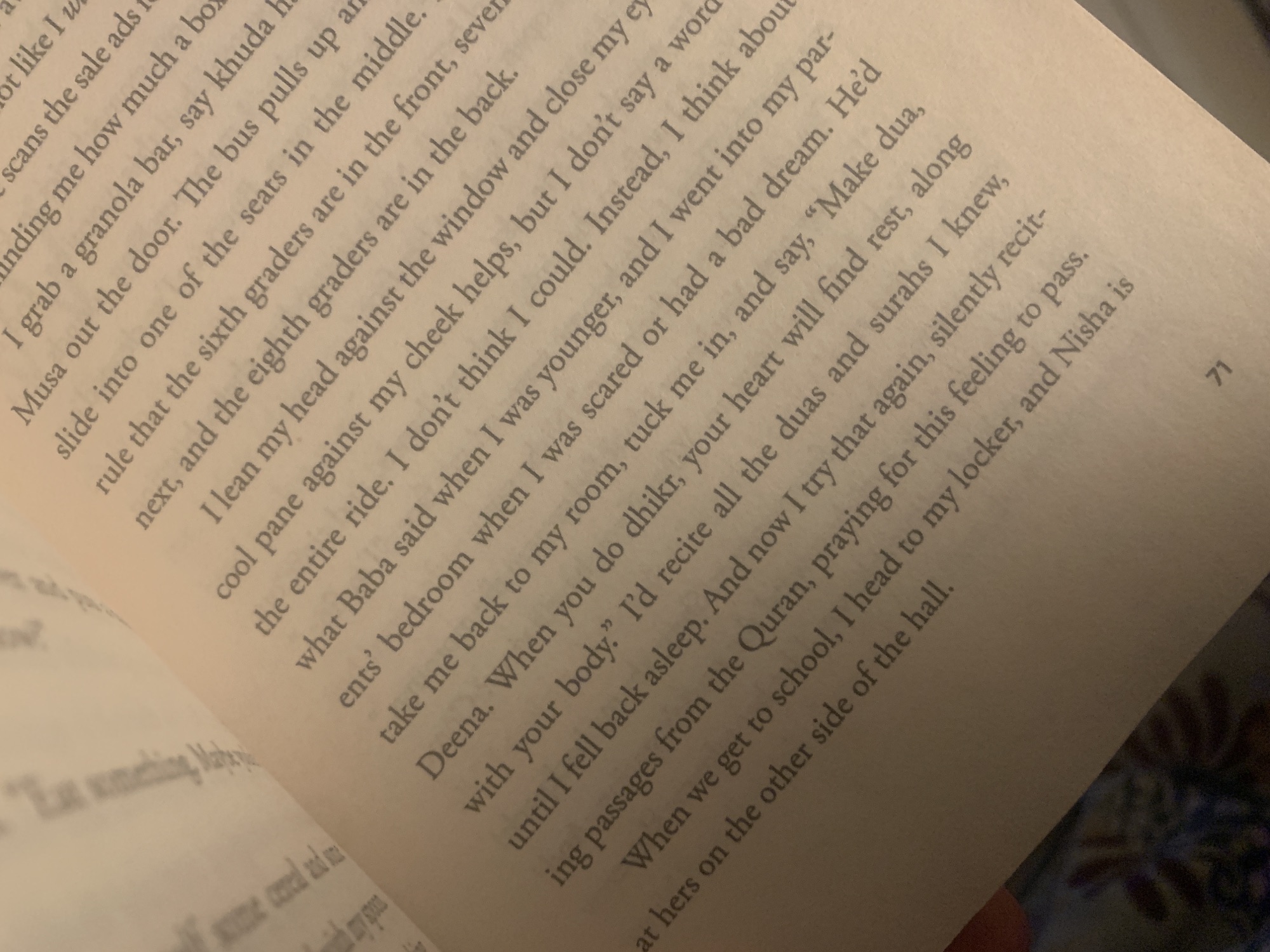
This 232 page middle grade read with a beautiful cover, has a beautiful heart as well.  A Muslim girl in a Muslim family is struggling with anxiety and family financial stresses, remarkably the book avoids tropes of blaming immigrant parents, culture, or religion.  It also doesn’t have any relationship crushes, or catty friends, bullies, or annoying sibling squabbles.  It was refreshing to see a strong character that seemed to not lack a voice, really find her voice,  advocate for herself and those she loves, apologies when in the wrong, and be surrounded by friends and family members that truly love one another.  I also appreciate that a licensed school psychologist was consulted and named in the backmatter.  As with nearly all Hena Khan chapter books, there is Islam and culture, but as an Islamic school librarian, I long for more.  There are a few inshaAllahs, mashaAllahs, salams, and references to praying, there is one solid paragraph that mentions dua, dhikr, and the Quran, but that is about it in a book that focuses a lot on fashion, make-up, social media, drawing portraits and hanging them in the home.  The protagonist is in middle school, but this is a solid middle grade read that teachers and librarians can feel confident having on the shelves and sharing with students.

img_2301-1

SYNOPSIS:

Deena loves art and to draw, she’s also really good at it.  She longs to take extra classes outside of school, but she knows it isn’t a priority with her bite guard already causing a lot of stress on the already financially strapped family.  Overhearing her parents fights about money adds to her anxiety and makes her nauseous every morning before school.  Determined to help her mom grow her basement clothing boutique, and increase the family income, she dabbles in social media, designs a logo, and sets up a website.  One of the new customers is a real life artist, who encourages Deena to look at art differently, and offers to take her under her wing to teach her about the power of art and decolonizing her mind. Things are starting to look up for Deena, but a disagreements with her cousin Parisa, feeling like she let a close friend down, and being overwhelmed at an immersive Van Gogh exhibit culminate with her having a panic attack at school.  The school counselor wants her to attend some therapy sessions at the school, but first Deena will have to convince her parents that this is something she needs and wants.

WHY I LIKE IT:

I mentioned a lot of my likes and loves above, but really it is a solid middle grade read where the character just happens to be Pakistani American and Muslim.  I like that Deena is just a sweet girl.  I think a lot of kids that have the emotional intelligence to know how fortunate and privileged they are, often push down their emotions and troubles, because they know others have it worse, don’t want to worry their parents, and/or seem ungrateful, and that this book can normalize getting help, advocating for yourself, and communicating with your parents, is really quite impressive.  Deena has a diverse group of friends, religion doesn’t come up much or seem to shape her perspective which is unfortunate, but it doesn’t make things harder for her either.  She isn’t bullied, there is no Islamophobia, or self-othering or stereotypes.  Deena is who she is, with a good head on her shoulders, and throughout the book you find yourself cheering for her and her success.

FLAGS:

She does draw faces, and they talk of hanging up the images in the living room.  There isn’t lying, but it kind of skirts the line at times. Anxiety.

TOOLS FOR LEADING THE DISCUSSION:

For even a young middle school book club, I think this book would be a quick read, but open the door for some quality discussion about anxiety that would benefit middle graders and up.  The book on the shelf will tempt readers, and handing it to kids will yield results.

The book goes on sale February 6, 2024 and you can preorder/order it here.

Hope Ablaze by Sarah Mughal Rana

Standard
Hope Ablaze by Sarah Mughal Rana

This young adult book is an intense raw unflinching read, containing  incarceration, assault, politics, Islamophobia, immigrant pressure, and loss throughout the 384 pages that mix poetry and traditional writing.  At times the book is incredibly hard to put down as the commentary on two party politics and Muslims in America is articulated in a way that transcends the fictional constrains and affirms reality.  But unfortunately, it took me a long time to complete the book, because when I did put it down, I didn’t feel that relentless urge to pick it up and see what happens next.  I had been alerted to the fact that there were elements of magical realism, but even with that knowledge, I still felt it misplaced, and truthfully, unnecessary.  The pacing was inconsistent, and many points unnecessarily forced.  It often felt the author was simply trying too hard to tell the story and make sure the reader got all the messages intended.  As a result many characters are flat, many plot holes exist, and the reader is left wishing things were done just a little bit different to make the book what it could have been, not what it is.  I know it is a debut, so I’m not going to be overly detailed in my harshness, I am fairly positive I will read anything this author writes down the road, I took pictures and shared passages that I loved on my socials.  The book is good, it just really could have been great.

SYNOPSIS:

Nida is a poet, her uncle is a poet, and her uncle is in prison.  When Nida is frisked, her hijab removed by a political candidate’s team as she makes salat in a public park, Nida is forced to find her words, her voice, and her place in an unkind Islamophobic world.  High school friendships, immigrant Muslim community pressures and idiosyncrasies persist for Nida as she navigates media manipulation, injustice, slander, and political talking points.  Life was already complicated with her father’s departure, her maternal uncle’s wrongful incarceration, and the goats that her mother brings home to sacrifice, but with the support of the Poet’s Block, her Muslim community, family, and the thread tied to her family through generations, she will find she isn’t alone, and she has support, she just has to take a stand.

WHY I LIKE IT:

I love how much mirrors contemporary reality, the MIST competition, the politics, the media, the dirtiness of it all. I also like that it has a fair amount of humor, the Islamic accuracy, friends getting called out for boys and girls texting each other.  Overall though, it just felt so forced. I think some subtly and nuance and undercurrents would have given the reader the ability to connect the dots for themselves, so the book would have lingered and taken up space long after the last page was read.  It is hard to write a book about how great a writer is, how powerful poems are, so at times it really felt spoon fed that this is powerful, here read it, see it was powerful.  Additionally, I think when the author did try for subtlety, it just came across as lacking.  I still don’t fully understand any of the side characters, their relationships, or their purpose.  From the betrayal of a school friend, to the new friend from MIST, to the little brother, to the friend and his uncle who is imprisoned, there ultimately lacked a lot of emotional heart for minor characters, who remained stagnant, while passionately emphasizing issues at their expense.

The OWN voice Islamic rep is so spot on even if the evil eye passages seemed amplified and repetitive. Islam is centered, it is unapologetic, it is the characters identity, comfort, and soul.   Only one point really stood out as erroneous, but I read a digital ARC so it could have been fixed or it could have been a spacing issue since it was in a poem, but it has sajood in janazah, and I’m really hoping the final book will not have it wrong, as there is no sajood in janazah.

FLAGS:

Assault, frisking, incarceration, death, profanity (not a lot, damn, hell, shit), Islamophobia, racism, systemic abuse, lying, talk of terrorism, stereotypes, gaslighting.

TOOLS FOR LEADING THE DISCUSSION:
I’m on the fence about using this book for a book club read.  I love the Pakistani culture, the Islam, the contemporary relevance, and the political commentary.  I think it would have actually more success in a guided or required reading situation with teens than it would as a pleasure read.  Undoubtedly I will order a copy to put on my library shelf, but I might test it out a bit on a few readers to see how their thoughts before I present it as a book club selection or not.

Dear Muslim Child by Rahma Rodaah illustrated by Aya Ghanameh

Standard
Dear Muslim Child by Rahma Rodaah illustrated by Aya Ghanameh

img_2280-1

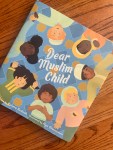
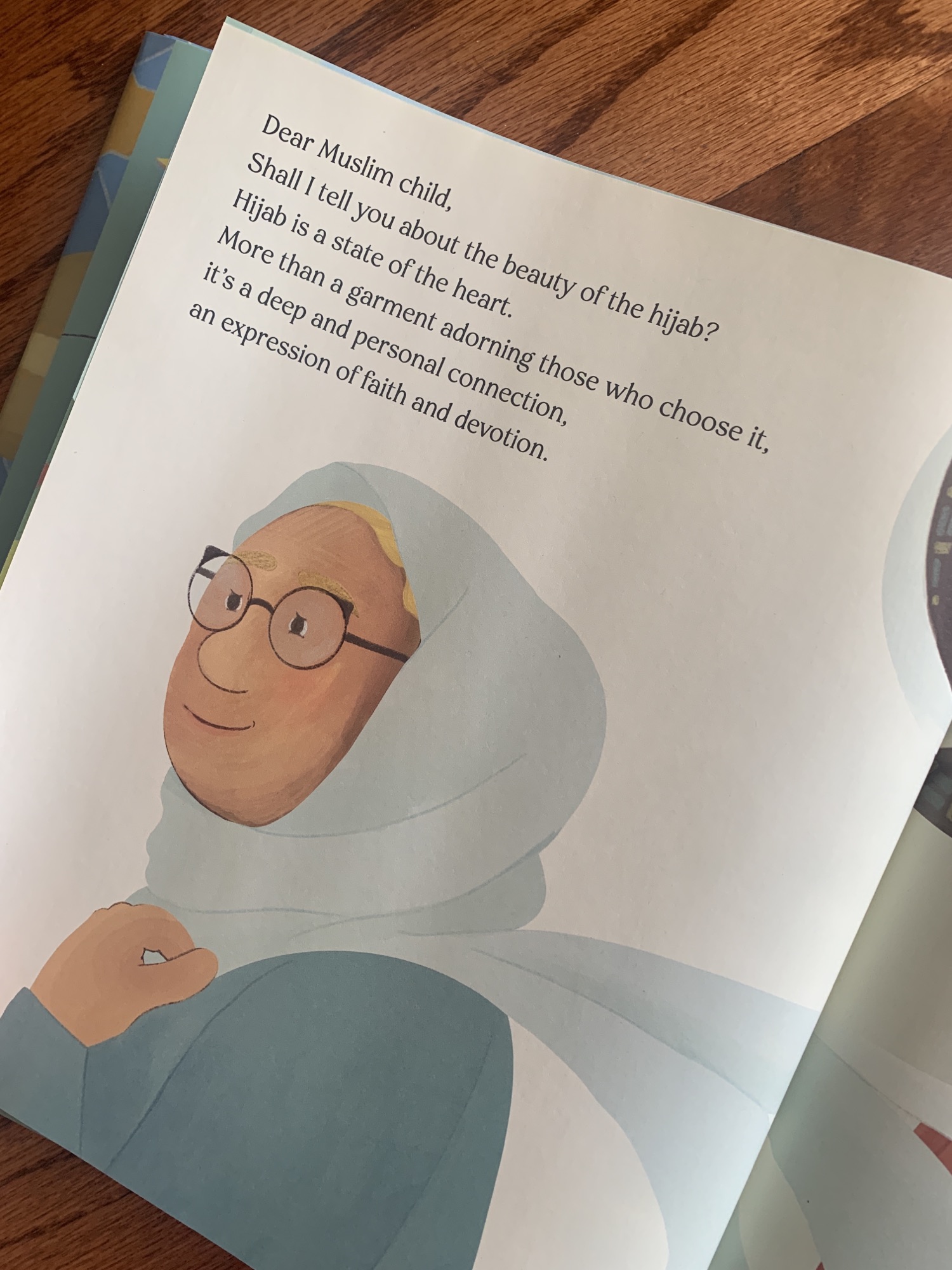
The flow, poignancy, and lyrical verses force you to slow down, take a deep breath, and immerse yourself in the concepts and ideas so beautifully presented in the text, and illustrated on the pages.  Whether you are reading it alone, snuggled up with a little one, or in a boisterous story time, this book pulls you in as it speak directly to the reader (or listener), burrowing inside and inspiring reassurance and confidence.  The tone of the text melds with the illustrations making the book appeal to those looking to understand, be seen, or to be empowered.  The short stanzas with the opening refrain of, “Dear Muslim child,” are a delight to read and share again and again, alhumdulillah.

The book does not have a story or a plot, but has an organization that keeps the pace moving in a poetic way. It starts by mentioning that we were meant to be, even “before Allah spoke the universe into existence.”  It then tells us about Islam, nur, names, the power of words, purifying our hearts (with wudu), listening to the adhan, and praying.  It talks of the beauty of hijab, and community, and purpose and mattering.

img_2282-1

The centering of Allah (swt) is not shied away from, yet the book is not preachy or overly religious.  For example wudu is shown, but not named; adhan is named but not defined.  If you wish to discuss each page, there is a lot to unfold, but if you want to just read the surface it is beautiful just the same.  The book is traditionally published, and a true accomplishment of the author, and the authors that have come before that this book, this type of book, is widely available for us all to enjoy.

img_2284-1

Courting Samira by Amal Awad

Standard
Courting Samira by Amal Awad

img_2245-1

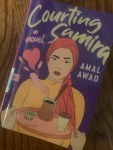
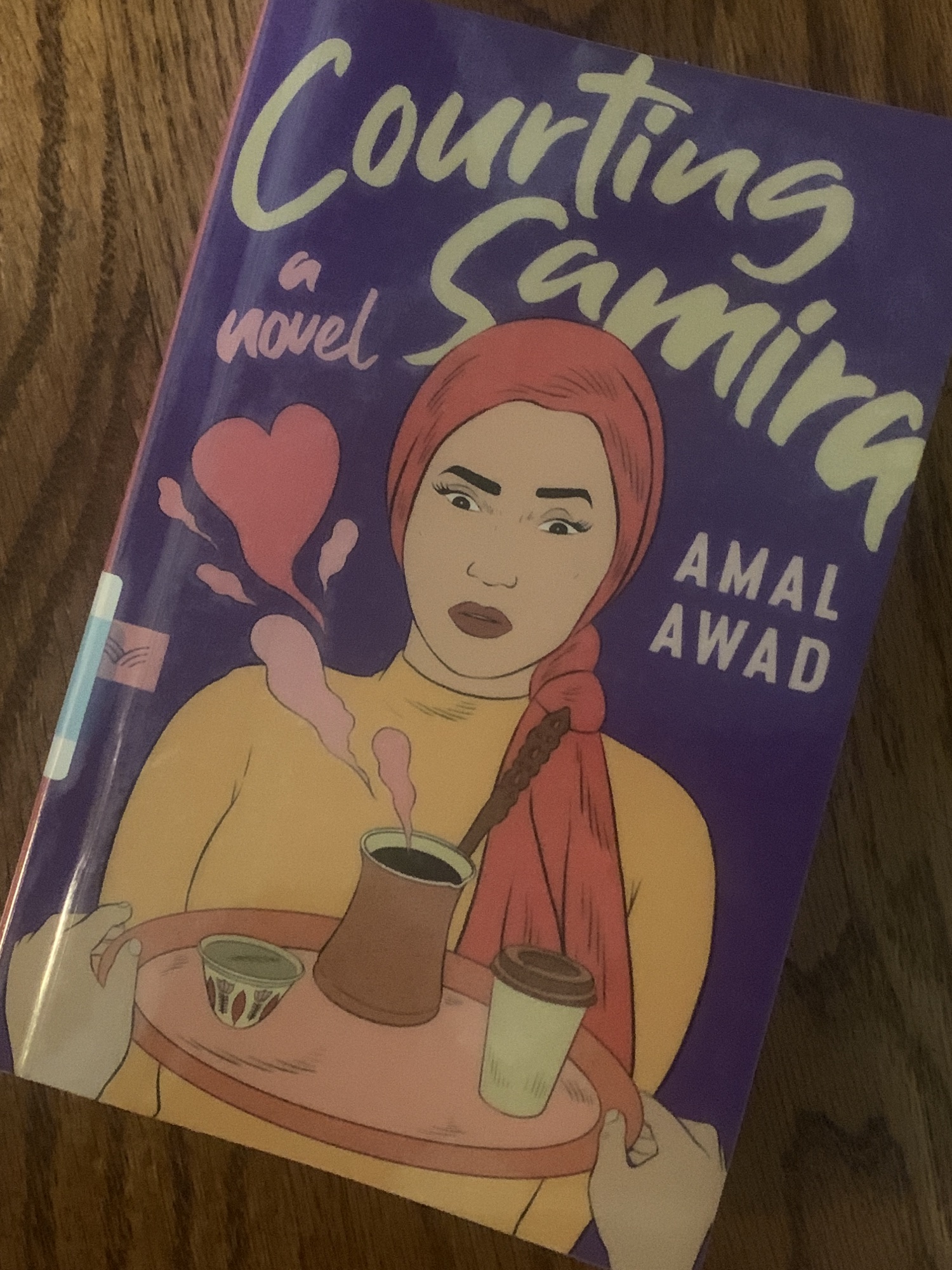
Authored by a Palestinian-Australian and featuring a protagonist of the same background, this adult rom-com, is pretty halal all things considered.  The book is not preachy, hijab and not drinking alcohol are all discussed as being religious decisions, but there is no insight as to how or why they are part of Islam, they just are, and because the characters are Muslim that is what they do.  I found myself reading while cooking, which means I was invested enough to keep reading, but if I missed a line or two, to pull something out of the oven, I didn’t need to go back and find my exact spot.  It reads a lot like a Confessions of a Shopaholic or Bridget Jones Diary, Islamically it is on par with a Hana Khan Carries On or Finding Mr Perfectly Fine, where the characters are Muslim and that sets parameters, their culture adds the flavor, and the love triangle and writing adds the plot, yeah it is tropey, but most people wouldn’t be picking this up for literary insights, it is meant to be fun, and it is.  Three things bothered me with this book that gets a lot right. One, the cover, I find it ugly, additionally it mentions multiple times in the book that her eyes are blue, clearly on the cover they are brown.  Second, the labeling of “moderate,” “conservative,” “liberal,” and “fundy” Muslims.  There isn’t internalized Islamophobia, every one of the main side characters practices Islam in their way, the other characters accept it, and the stereotyping that the religious one is mean or critical is not present at all (alhumdulillah), the labels just bother me.  Finally the kiss at the end before marriage, they are engaged, and it probably is still better than many YA Muslamic romances out there, but as an Islamic school librarian, I have to mention it.

SYNOPSIS:
Samira works at a Bridal magazine, writing on occasion, but mostly getting coffee.  The book opens with her mid door-knock, looking at the manga hair of a yet another prospective husband, come to drink coffee and eat biscuits with his parents to meet her and hers in another meeting that will end with no match made.  Her parents don’t force her, she plays along willingly, venting to her cousin Lara who refuses to humor her parents, and her co-worker Cate who’s own dating dramas show Samira she isn’t really missing out.  When evil cousin Zahra is suddenly getting engaged, Samira is sucked in to familial obligations and involvement.  Menem, a guy she met at a team building activity, works near her, and they keep meeting, the icing on the cake is that his brother is Zahra’s groom. As things start to heat up with Menem, old family friend Hakeem starts acting weird, and Samira finds herself caught in a love triangle.

WHY I LIKE IT:

There are a lot of tropes of being 27 and unmarried, being a disappointment for having a liberal arts degree and the like, but at least there are not mean parents, forced religiosity, or the what will everyone say storylines present. A lot of the fun is found in the references to pop culture, that surprisingly didn’t bother me.  I was, however, annoyed when suddenly 80 pages in the fourth wall was broken.  It broke the tone, but it didn’t become a regular things, so I carried on.  A side character asks if Samira’s actions are Muslim or Arab and I like that, that distinction is presented.  I wish there was more culture, Samira is Palestinian, Menem is Lebanese, but there isn’t a lot of cultural sprinklings throughout that are specific to the two cultures. There are also a lacking of salams/assalamualaikums in their daily interactions.  It does mention Samira praying quite frequently, which I most definitely appreciated though.

Plot and character development was decent for the genre.  The pacing makes this book a quick read, I read it in two days (while cooking).  I never quite felt a connection to Lara, or rather why Samira and her were so close other than for a lack of options.  She just kind of annoyed me throughout, and never seemed to be a great friend (cousin).  A few times the book would seem to hint at something and nothing would come from it, take Zahra touching her stomach while picking out ice cream, or why Hakeem says he knows Samira can’t call her brother when she has car trouble.

FLAGS:

A kiss, a few hugs, hints at haram acts in earlier days, alcohol, music, belly dancing, texting, emailing, chatting freely with opposite gender.

TOOLS FOR LEADING THE DISCUSSION:

I wouldn’t use this as a book club book, but I would be ok having it on the library shelf for high schoolers.

Gates and Tales by Sally Zaki illustrated by Arwa Ali

Standard
Gates and Tales by Sally Zaki illustrated by Arwa Ali

This 34 page picture book is adorably illustrated as it focuses on the gates leading to Masjid Al-Aqsa and sprinkles in culture, sights, and history about Palestine along the way.  I love the concept, it is unique, and I love that there are maps throughout of the masjid compound.  I truly learned a lot even though it is for early readers, naturally I wish there was a scannable QR code to learn more, but as an adult, with my kids, or in a classroom it would not be hard to search up Bab Al-Amud, Qubbat Al-Sakhra, Bab Al-Sahira, Salah Al-Din, Masjid Al-Qibli, Bab Al-Khalil, Al-Quds Citadel, Qaitbay’s Fountain, Bab Al-Asbat, or Qubbat Al-Silsilah.  Islam is also woven in, not just in the architecture or history, but also in mentioning the sunnah of fasting on Thursdays, quoting an ayat from the Quran in the text, and the kids meeting up to pray.  The writing isn’t super great,  it breaks down the fourth wall regularly, calling the readers “friends” and asking them to find things in the illustrations, their missing friends, and about foods and the flags of their country.  I’m not sure why the book hopes the readers are “from countries surrounding Palestine,” I found that a little off putting, and I’m not sure why we are supposed to memories the “gates by heart,” or how at the end we are now “victorious heroes.”  Even the defined words at the end, are a bit haphazard: za’atar, falafel and sido, being the only words highlighted, in a book with many Arabic words present. Presumably the reader found all the friends so they did reunite, it seemed to kind of falter, I thought they would show something they all love, or share some snacks, but the book, just kind of ended.  I like that the book is joyful and upbeat, I do appreciate that the last lines do mention that “Palestine is occupied today.  One day, insha’Allah, it’ll be free,” inshaAllah, inshaAllah, inshaAllah.

The book starts with Nidal introducing himself to the reader and letting you know he is going to take you on a special journey through four different gates.  He then asks the reader if they know where we are, before showing us Palestine on the globe.  He is going to “meet his pals at Masjid Al-Aqsa nestled east of the Old City of Al-Quds and includes the entire area inside the wall surrounding the Masjid.”  I love that it explains the area within the walls and the map on the opposite page is helpful.  

His mom has prepared him some snacks to share with his pals, and he puts on his Palestinian flag backpack before heading off.  He goes through Victory Gate.  Then his friend Aisha takes over and tells what gate she is entering through, shares details about the flower carved at Bab Al-Shira, and that her Sido would tell her about Salah Al-Din when they walked down Salah Al-Din street together to get to Masjid Al-Qibli, with its gray dome. Khaled and Jihad follow the same format and the book ends with the kids sitting in front of the Dome of the Rock asking what gate the reader will come through.  

I purchased my copy from Crescent Moon Bookstore here and if you use code ISL at checkout you will save 10%.