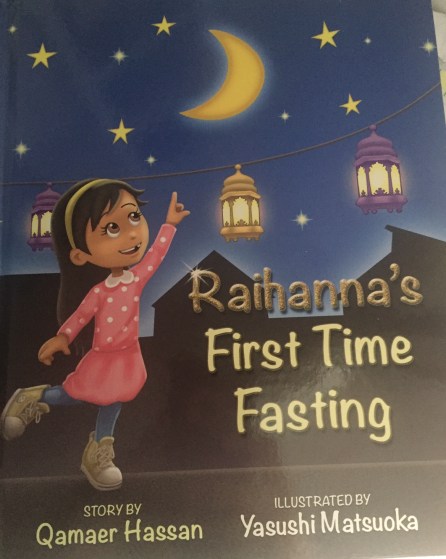
By this time in Ramadan I’ve read a lot of very similar books that all seem to have slightly different takes on presenting the basics with various degrees of turning them into a fictionalized story. Each have their own flavor and approach and this story in many ways is for mature little kids and works to bring a slightly deeper understanding to Ramadan and helping the less fortunate. At 36 pages long, most of the pages are heavy on text, but not overly preachy or dense. Dialogue and emotion fill the paragraphs, and the book works to establish Raihanna as an actual character, not just a foil to move from one Ramadan fact to another. This is also apparent, as a new Riahanna book has just come out, Raihanna’a Jennah, in making her the lead in a series.

Raihanna is excited to be fasting this year, after establishing that the crescent must be sighted and that suhoor is the meal to start the fast, Raihanna puts on her hijab to pray. She asks for forgiveness for being deceitful to get another cookie and asks Allah to make her and her friend able to go ice skating. At bedtime it also mentions that she says her three kuls before going to sleep.
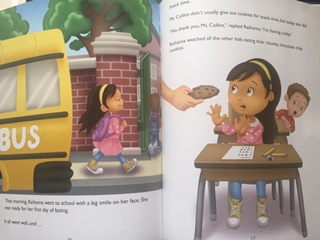
All her excitement starts to falter at school, however, when the teacher hands out chocolate chip cookies for snack and Raihanna has to explain she is fasting. By the time she gets home from school she is not sure she even knows why she is fasting as her stomach rumbles and her mood is pretty sour. Mom jumps in to action and takes her to a soup kitchen where the two of them, along with others, serve food to the homeless.

At iftaar time Raihanna understands how blessed she is to be surrounded by family and food, and makes a more heartfelt dua. The book ends with letting the reader know that Raihanna spends the next 29 days loving Ramadan and being appreciative.
I love that it really picks one specific aspect of Ramadan and focuses on it in a tangible way, the poor and hungry. Yes, she prays and recites Quran and all, but establishes that she probably does that every day out side of Ramadan as well. I like that the author also shows that it is ok that Ramadan is hard. There is a bit more insight and understanding in this book than just the typical list of facts. I think ages kindergarten through 2nd grade, kids that are starting to fast will get the most of it, and relate the most to Raihanna. It could work for non Muslims, with a bit of context of belief or just read a different Ramadan book first, but the target audience is Muslim kids.

The beautiful cartoonish pictures are bright and engaging. I have no idea why it bothered me that the characters wore the same clothes everyday, or at least the two days that the story covers, but it kind of did. I like that the dad sets the table and helps in the food prep and parenting. The list of family members and all the dishes seems unnecessary, but with the glossary at the back it does offer a bit of culture to be conveyed. There is also a little reader response at the end.


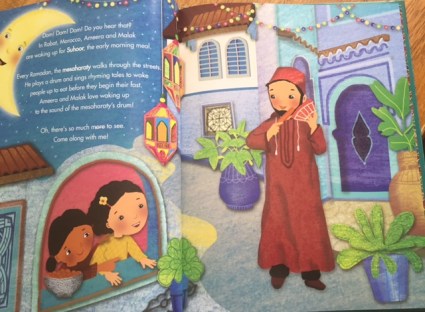





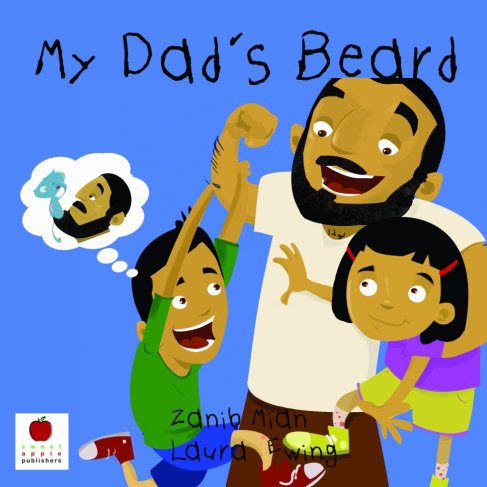


 The large bold pictures and simple words make this story perfect for kids a year old and up. The book definitely deserves a place on every bearded baba’s book shelf. I challenge you to read this book and not smile, I am confident it will win you over, no matter how many times your little one asks you to read it.









 Islamic School Librarian