Tag Archives: mature

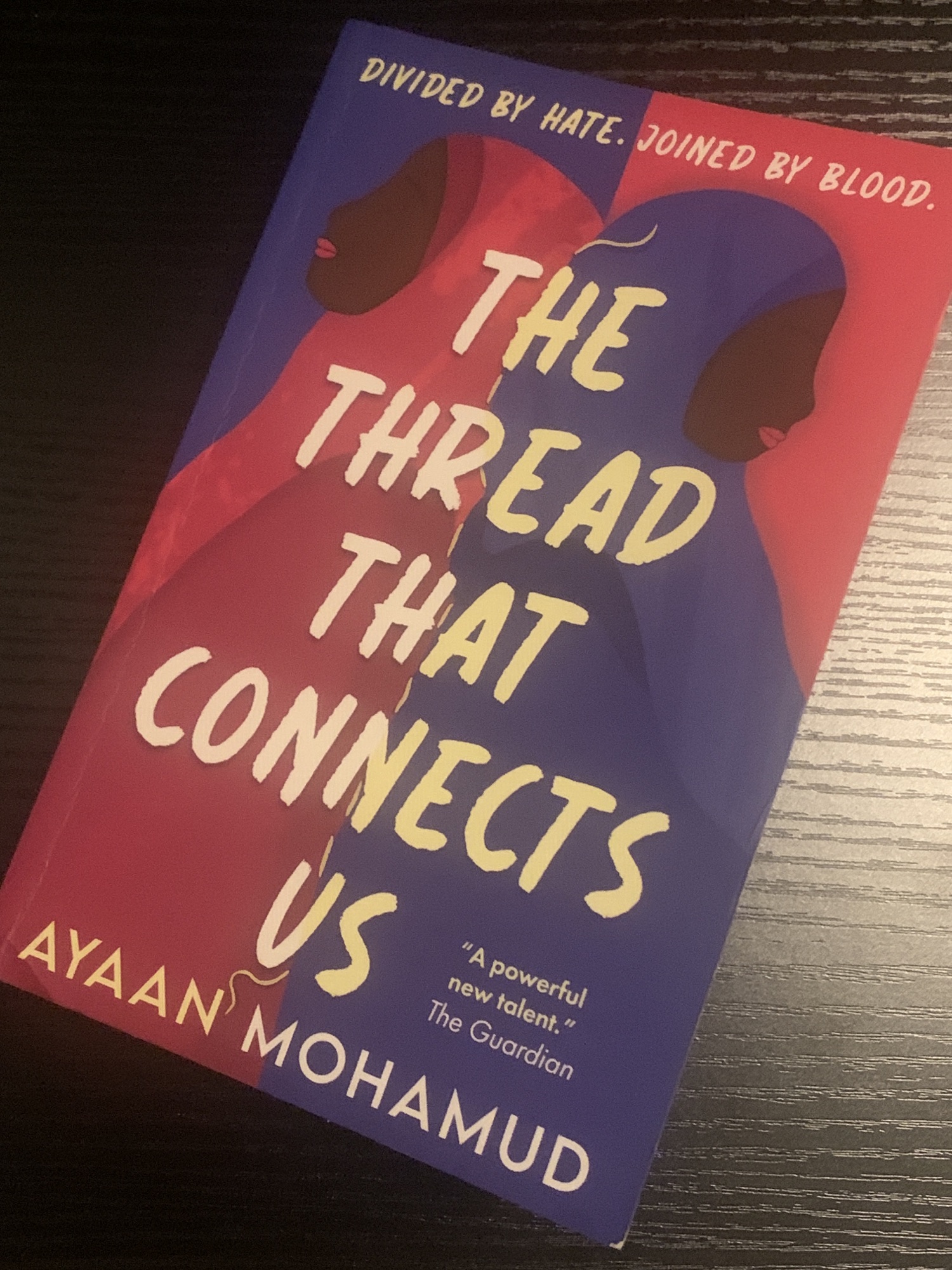
The Thread that Connects Us by Ayaan Mohamud

Standard
The Thread that Connects Us by Ayaan Mohamud


At just over 400 pages this book expertly blends the stresses of school, bullies, and friends in the UK with the twists and secrets of broken families, shattered hearts, and a past that needs to be reckoned with.  Told in dual perspectives from girls thrown together by the actions of their parents, Safiya and Halima maintain distinct voices that are rich with Somali culture, Islam, vulnerability, and ultimately love and hope.  The book is YA, but the premise is a bit mature and is better suited to older teens in my opinion, I think a high school book club would be wise to consider this book, as once you start reading, it is difficult to put the book down. 

SYNOPSIS:

Safiya is mature beyond her years.  Since her father abandoned her and her mother five years prior, she has managed the bills, the upkeep of the home, and for the most part her grades. Hooyo checked out and is rarely more than a silent being curled up unable to care for herself, much less her daughter.  With the the help from the community, particularly her best friends and neighbors Muna and Yusuf, Safiya has a found family that helps her weather the tough times.  When her dad moves back to London with his new family from Somalia, Safiya is forced to deal with not only all the painful memories of her past, but also the very real presence of her family living in her neighborhood, showing up to Eid prayers, and taking over the safe haven that school has often served as when home life has been so cold and lonely.

Halima’s father died when she was young, and life with her Hooyo in Mogadishu was good until her mother remarried, Safiya’s dad.  Her two younger half brothers that came further added to the rift between her and her mother, and now that they are moving to England with the husband, despite her protests, has her plotting a way to return to her home.  The language, the culture, the weather, are all added stresses to finding her way, and are compounded when she gets paired up to have Safiya show her around and help translate for her in school.  

The two girls hate each other, at least they have that in common, but their inability to avoid each other forces them to interact more than either wish to do.  As questions, and secrets are voiced, the two girls realize that they might have to work together to get what they want, and figure out their past.

WHY I LIKE IT:
I really enjoyed the owning of the characters’ language and culture and faith and how easy it was to be invested in their world.  Nothing pulls you out of the story, it is rich and lush and the reader can figure out why even though there is a crush, nothing is going to happen, and why they are wearing hijabs, and waking up to pray fajr, the balance is both inviting and educating, without the reader even realize it is happening, because hello, we are to busy trying to figure out what these two girls’ parents have done. 

The story has layers, and the emotional attachment I feel to both these girls, made me glad the story was over, they deserve some peace, but also desperate to know that they are going to be ok in the future too.  I can’t say too much without the risk of spoiling, but the writing is strong, the plot solid, the details intentional and relatable, and the characters very real.

FLAGS:

Lying, bullying, fighting, assault, crush, drug use, arrest, accusation, gossip, abandonment, relationships, edibles, affairs.

TOOLS FOR LEADING THE DISCUSSION:
This would be such a great upper high school read, the way the story unfolds will keep readers hooked from the first page and motivate those that start, to finish.  Students will see themselves in the characters, and be sleuths themselves trying to uncover what secrets are true and how do the pieces of the puzzle fit together.


The Last Man in Paradise by Syed M. Masood

Standard
The Last Man in Paradise by Syed M. Masood

paradise

I’ll be honest, if I would have read the blurb (see below) about this book from another author, I probably would not have read the book.  From the description alone, I could assume that it will undoubtedly be uncomfortable, it is an adult read, it is going to be irreverent, and I will disagree with probably whatever messaging the impossible situation the characters are placed in, come out with. But, having read his two YA books, and really liking More than Just a Pretty Face, despite the raised eyebrows I get from Muslim book fans when I say that, I felt pretty confident that Islam would not be othered or villainized, and that the writing quality would make the cringey situations worth getting through to hear the commentary that would be forth coming.  I’ve felt with the author’s other work that the Muslim characters, own their flaws as individuals, not as representatives of their faith, so, I was willing to give this book a read.

The first quarter of the book was a little stilted, but by the midpoint, I could not put the book down, as the writing did not disappoint.  Would I recommend this book? No, not to the majority of followers of my platform, much like the satire of Zarqa Nawa’s Jameela Green Ruins Everything, I know that this style of ridiculous situations to reveal humanity, consideration, and introspection, while being entertained by very Islamic concepts, is not for everyone. Did the make-out scenes in the masjid parking lot, child abuse, sleeping around, drinking alcohol, talk of pubic hair and board games, grandpa on masjid grounds watching porn, hate crimes, involuntary manslaughter, and impersonating an imam giving khutbahs and performing ghusl, cross lines? Probably, but it is fiction, it is raising the stakes to show extremes, and let the reader opine on their perspective when faced with it. And no, I won’t write my typical review about Islamic rep, because reviewers like me got called out for that too, about policing representation and confining Muslim experience to looking like one thing.  The author went really meta and called himself out for the ending of his other adult book (that I haven’t read, but probably should), The Bad Muslim Discount, so clearly no one was out of the line of fire.

Suffice it to say, this book literary wise is an easy read, the craft is on point, it flows and is compelling (except for the end, SPOILER, who was going to look after Baba, that thread just dropped), for Muslims though it will be very uncomfortable. For non Muslims, or Muslims that don’t read to see themselves represented with the fervor that I do, I think Islam is not painted in a negative light or insulted by the text.  The characters are messed up, their flaws their own, but because they are Muslim, religion is part of their understanding and view of their existence.  I do wish there was at least one Muslim character that had it together, that might hint that as a whole we are not all one extreme or another.  I don’t like labels of “liberal” or “extreme” and the book provides commentary and nuance to those flawed dichotomies as well. The book is not heavily moral, (SPOILER) the protagonist does not come back to Islam (might not have been an identity to even come back to), but identifies as Muslim, there is no YA or MG revelation or singular take away. The book centers Islam, but somehow is not Islamic rep, it simply has Muslims dealing with the messiness of life, expectation, family, relationships, and honesty.

————————————————

Blurb copied from Goodreads:
A decade ago, Azaan, a rebellious teenager with dreams of becoming an actor, was exiled from Redding, California to a religious academy in Egypt by his imam father. His crime? Getting caught kissing Madison, the girlfriend he isn’t supposed to have.

But while letting his family believe he is studying to become a preacher, Azaan ditched school and embarked on an acting career. Given that he has minimal contact and nonexistent plans to return home, he figured no one would ever know. Now, however, Azaan’s grandfather has a dying he wants to see his grandson one last time. In order to maintain the story he’s told his family for years, Azaan decides to become a fake imam. Playing at being a religious leader, he finds a community in Redding on the brink of a scandal involving his family. It’ll be the most challenging role of his life.

Navigating his new identity and old relationships, Azaan reunites with Madison, connects with old friends, and uncovers a shocking truth about his family history that threatens to expose his father as a fraud. It turns out, Azaan isn’t the only one pretending to be something he isn’t.

Before he can finish weighing the consequences of exposing his father or protecting him, an untimely death shakes Azaan’s priorities. He is forced to grapple with his religion, future, and family in a way that is sure to break hearts, but might heal a few along the way.

Six Truths and a Lie by Ream Shukairy

Standard
Six Truths and a Lie by Ream Shukairy

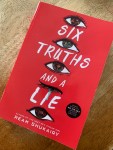
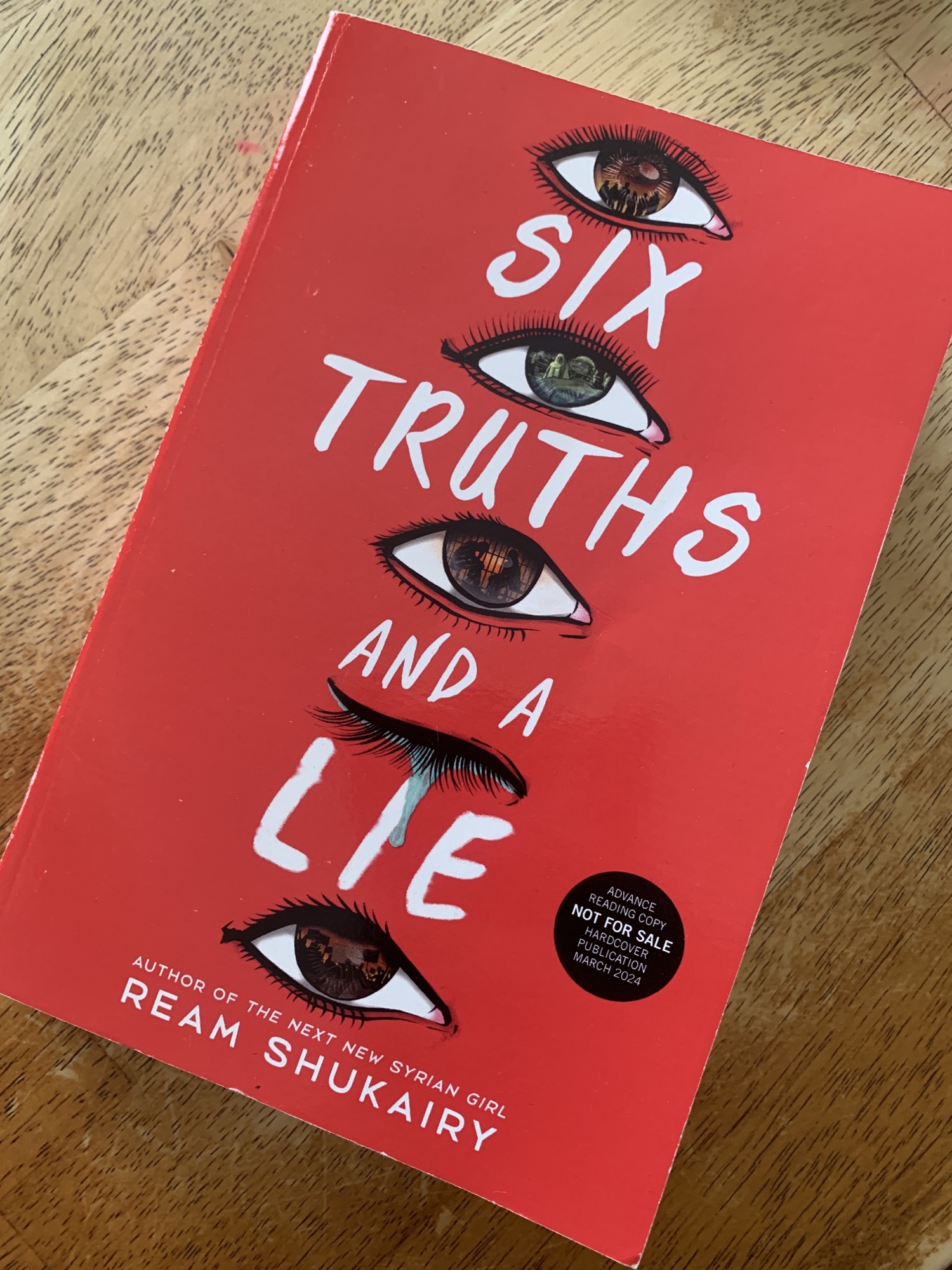
Woah baby, that was a wildly fantastic ride of a read.  The very first page grabs you and makes you sit up and pay attention.  I have never been so happy to sit in a waiting room so that I could read in peace.  This 387 page book is mature YA, I was gifted the knowledge prior to reading that there is a line that is toed, possibly stepped on, but not carelessly crossed, so I will gift that knowledge on to you, so that you might enjoy the story without that anxiety. Told from numerous perspectives, a group of Muslim teens find themselves arrested for an act of terror.  Strangers from different schools, different backgrounds, and different dreams for their future, are fiction, but their stories, their secrets, the broken system that they find themselves in, all feels very real.  The plausibility and commentary from an OWN Muslim author is incredible, I do wish their was more spiritual centering, Islamic framing, or even a more Muslim conscience present. Some of the characters do discuss hijab and one does find solace in prayer, but none of them really pour their heart out to Allah swt in the isolation of their cells, and in the predicament they are placed in, and it seems like they would.  Ultimately though the writing is remarkable, it has been a long time since I was truly tempted to skip ahead and read the last few pages because my heart was racing.  There is just one storyline thread that is so overly emphasized that comes close to a haram line, that I wish was a little down played so that I, as an Islamic school librarian, could encourage younger teens to pick up the book and dive in.

SYNOPSIS:
It is the fourth of July, and the MSA kids from the local different high schools are gathering at the beach for bonfires, fireworks, and socializing.  Everyone present will witness a crime, six teens though will be accused of committing it.  Qays, the Palestinian golden soccer boy who can charm everyone and anyone.  Nasreen, the outcast from a private Catholic school there to meet someone.  Samia the hijab wearing social media star. Muzhda the Afghan refugee with undocumented parents.  Zamzam the girl with a singular dream to be a doctor, and Abdullahi, the quiet EMT in training.  Six strangers whose histories and alibies link them to the outside world, but leave them skeptical of one another as they face charges in a world not concerned with the truth.

WHY I LIKE IT:

I love that the characters are Muslim and feel so real and developed. The characters are not tropes or their families stereotypical.  They know what Islamophobia faces them from others, they know what internalized issues they are dealing with, and they are not having a religious identity crises amidst everything else they are experiencing.  The writing allows each voice to be unique and clear, which is quite impressive as there are a lot of perspectives that move the plot along.  It is really hard to write a review that doesn’t spoil the book, so yes I’m being vague, and you are welcome.

FLAGS:

There are a lot of profanities not just when the stakes are high, but normalized as well throughout.  There are close relationships between boys and girls.  They take about dating.  There is weed, and the legalities of using, being in possession, and being high.  There is lying, death, incarceration, Islamophobia, some physical abuse mentioned.  There is a story line of a girl that doesn’t know if she is attracted to girls, she doesn’t act on it, but it is something that has tangled up her alibi and she choses not to explore it, but it keeps coming back up.

TOOLS FOR LEADING THE DISCUSSION:

This would be an awesome mature YA book club, just like some of the characters are being held in juvie and some being tried as adults, I think for Muslim readers a little older will benefit and be able to process, discuss, and see themselves in the book.  The book mentions that it could happen to anyone, and for a Muslim audience, to recognize and discuss that concept would be beneficial and engaging.

The Grimoire of Grave Fates by Hanna Alkaf and Margaret Owen

Standard
The Grimoire of Grave Fates by Hanna Alkaf and Margaret Owen

I keep saying I won’t read anymore anthologies or collections, but this 464 page YA fantasy mystery intrigued me because each chapter is written by a different author, presenting a different character to unravel a whodunit.  In total there are 18 character perspectives, 18 authors, and one murder that needs to be solved.  With two Muslim authors included and it created by a Muslim writer, I hoped there would be some Islamic representation.  The list of authors is quite diverse, and I think every character presents some minority label to normalize a specific culture or identity.  The Muslim characters both wear hijab, but nothing more about their religion is mentioned and no other faith is included.  There are Black, Asian, Hispanic characters, and every letter of LGBTQ+ is highlighted and seemingly the focus of the book.  At times it is just attempted normalizing that a character is queer or gay, but other times it is central to the plot such as when two girls spending the night together provides an alibi, and a few times it really takes away from the story, for example at one point two boys (one magical, one neutral) kissing and falling in love.  There are gender fluid, non binary, pronoun preferences, trans male-to-female, female-to-male characters as well. I kept reading to get to Hafsah Faizal and Karuna Riazi’s chapters, which were 10 and 12 and by then I was so close to the conclusion, I just finished.  Some chapters are stronger than others, but the resolution was really anticlimactic and didn’t do the buildup justice.  I share this review not just to comment on the story, but to also give a heads-up to the content so that you can decide if the book is suitable for you and your children.  I would not shelve this book in our Islamic school library, which is unfortunate, because I think even with the weak ending, I like the theoretical storytelling concept.

SYNOPSIS:
In moving school for magical students, a murder has been committed, and the students who all feel like they are the “chosen one” are determined to solve the case.  The characters share what they know and add to the “solving” of the case for the reader with their different magical abilities.  Some of the students are werewolves, some necromancers, there are those whose dancing is magical, others whose embroidery is, a few are the same, many are unique.  They don’t compete with one another so much as they are in their own world trying to prove their worth and right to belong.  When a homophobic, racist teacher “dies” secrets are uncovered and dirty administrators are called to account.

WHY I LIKE IT:

I like seeing a glimpse of the action from a character and then not really seeing that character again, it made it seem more puzzle-like in the coming together of the clues.  I also liked it because if I didn’t particularly like a character or writing style, it didn’t last the duration of the book.  I wish it didn’t feel so token representation though.  If the goal was to be inclusive, the mirroring uniqueness was lost when each character seemed to have to tick a box.  It made it read formulaic.

The conclusion just unraveled, and I know mysteries and horror stories tend to fall in to this trap, but I was hoping it would go out with a bang.  The buildup was strong, but then it became a lot more just telling, then sleuthing, and I don’t know if it was a reflection of the individual authors, or the overall arc of the book.  Either way, I felt like it could have concluded with a bigger punch and wrapping up of some of the loose ends.  Hanna Alkaf didn’t have a chapter, presumably she wove it all together and made it flow cohesively with the internal memos and emails and notes.

I wish the two “Muslim chapters” would have had some more representations about Islam or the girls’ cultures influencing their magical style or goals, but with token rep it is often just a label, an identifier, and then nothing more.  The two connect over fear of Islamophobes blaming them for the death of their teacher.

FLAGS:

The focus of the book is largely on relationships, mostly LGBTQ+ but some hetero crushes as well.  Trans, non binary, gender fluid, bullying, racism, prejudice, murder, magic, lying, sneaking. The Muslim characters do not have crushes or romantic relationships mentioned, but one has a close male identifying gay friend that she does have physical contact with, a reassuring hug- so the book does have Muslim girls with close male friends. Fear of Islamophobia, stereotypes.

TOOLS FOR LEADING THE DISCUSSION:

I would not be able to teach this book or shelve it in an Islamic school.

When a Brown Girl Flees By Aamna Qureshi

Standard
When a Brown Girl Flees By Aamna Qureshi

when a brown girl flees

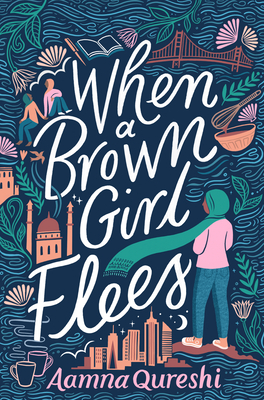
I was both nervous and excited to read this contemporary book having loved the author’s fantasy, but unsure how a Brown Muslim Pakistani American girl running away from home would be presented.  Alhumdulillah, the author approached the story from a place of love.  There is no internalized Islamophobia, self othering, or in broad strokes even an identity crisis. The protagonist has made decisions, drastic ones, and is trying to piece her life back together on her own terms, but the love of culture, family and faith, is always upheld.  It reads like Islamic fiction, with very didactic passages and moral positioning, I’m still quite surprised that it is traditionally published.  The version I read had grammar errors, so I’m hoping that they will be corrected when the book releases in a few weeks.  The story is engaging, but the writing a bit monotone.  Much of the story is telling, not showing, and because of the surface level spoon feeding of so much of the plot, when the catalyst or rationale is not provided, the book seems underdeveloped, or lacking, unfortunately.  I would not recommend this book for the target audience of YA readers (12/13 and up) it contains sex, slut shaming, self harm, depression, suicidal thoughts, physical and emotional abuse, profanity, and mentions drug use.  I do think though, early college age readers will enjoy and benefit from reading the book.  At a time in the reader’s life when they are defining themselves on their own terms, owning up to their own mistakes and laying out a future path, this book will provide relatability amplified by religious and cultural touchstones.  The heart of the story is the connection of a girl with Allah swt after she has sinned, the guilt and regret she feels, and how she finds herself, and returns to try and fix things with her family.  The characters are flawed and the overall messaging beautiful, hopeful and uplifting.  Unfortunately, it just reads like an early draft and I wish it had a bit more refinement.  Keeping that in mind though, it does have a place, and I’m glad to see our “new adults”  can find reflections of  themselves in a piece of literature that amplifies their Islamic identity instead of criticizing or questioning it.

SYNOPSIS:

The book starts with Zahra deciding to run away from home.  She parks her car, leaves her phone and catches a flight to New York from California.  The reader doesn’t exactly know why she is running, only that a few days after high school graduation she is escaping a toxic home life, an impending wedding, and misery.  As the story peels back layers we start to see some of the nuance of what she is running from as characters from her past find her and physical space allows her some perspective to see her own role in her “old” life.  When she arrives in New York, it isn’t the city life that she seeks, but rather the nature and pace of Long Island that offers her a fresh start.  She heads to the masjid, makes a friend, and starts to put her life together without parental obligation, outside interference, and self loathing.  She cannot run forever though and she cannot escape herself.  She must confront her past, own her mistakes, be honest with her new friends, and find peace with her family, not because she has to as a Brown daughter of immigrants, but because she trusts Allah, loves her family, and wants to “fix” things.

WHY I LIKE IT:

I’m a sucker for books that show redemption through the love and mercy of Allah (swt).  Yeah her new friends were idyllic in their family life, relationships and worship, but we all want friends that make us better Muslims, so I let it slide. Islam is centered, she wears hijab, she reconnects with salat, it is her identity even when she is just going through the motions. The author at times conflated culture and faith, but it never issues blanket statements or falls into universal stereotypes for Desi culture or Muslims.  She does a good job of keeping the negatives to the people and the critiques to the failure to push back on dangerous expectations. My issues weren’t the character flaws either, I’m onboard with the messiness of being human and the ability to seek and receive forgiveness from our creator.  I just wanted to feel things more.  So much was just told when it should have been shown.  I wanted to see the stress and anguish of her family life, not simply told it was depressing.  I wanted to see her cutting life long friends out and being isolated, not told she had lost her friends.  The book focuses on her running, and why she ran, but a big plot point for why she ran, having sex, needed more fleshing out.  Why was she driven to such an act? I know that she was depressed, I’m not belittling that, but what pushed her to such a strong stance, when she was already allowed on the school trip, she hadn’t yet been given the ultimatum and over and over the book says “I miss my family,”” I miss my home,” “I miss my mom.”  I didn’t feel the connection or understand what she was feeling, thinking, and it seemed like a huge hole in the book.  For all the themes of mental illness, faith, generational trauma, misogyny, abuse, expectation, depression, lying, culture, life choices, higher education, family dynamics, self harm. the book never quite felt rich with emotion or deeper than the surface level story.  At the beginning the author says she first wrote the book when she was a senior in high school, and while that may have made the main character’s perspective and voice ring true, as a successful author now, I wish she would have added the nuance, the insight, the subtlety that would have drawn the reader in and allowed them to get inside Zahra’s head and heart to see her and perhaps even themselves.

FLAGS:

The author and book identify triggers in the book “please be mindful of TWs: depression, anxiety, emotional abuse, physical abuse, self-harm, suicidal ideation, slut-shaming, PTS.”

There is also music, boys and girls alone in cars together, lying, cursing, generational trauma, misogyny, abuse, expectation, depression, anxiety, guilt, life choices, higher education, family dynamics, cutting, a brother who is often high or smells like weed/pot, it mentions partying, a sexual event, deceit, physically assaulted by a parent.  Nothing haram is glorified, but it is there and it is detailed, and not everything is resolved.

TOOLS FOR LEADING THE DISCUSSION:

I would not be able to shelve or teach this book in an Islamic school library, but in a college MSA book club or a youth group of a similar age this book would be incredible to read and discuss.

Fatima Tate Takes the Cake by Khadijah VanBrakle 

Standard
Fatima Tate Takes the Cake by Khadijah VanBrakle 

fatimatate

I really want to be raging furious and upset by the lying, premarital hetero sex, normalized/celebrated lesbian Muslim, internalized Islamophobia, gaslighting, abuse, and labeling of Muslims as “conservative” and Islamic principles as “ancient and ridiculous” (keep in mind the characters and author are all Muslim). But honestly, the writing is so terrible that to feel that much emotion is just not that warranted for what the story is. I’m so disappointed in the entire writing quality of the book, that I couldn’t appreciate the characters or story as written.  I know elements of the story probably ring true, my privilege and arrogance don’t blind me to recognizing that, and whether I agree or relate or identify with the Islamic representation is subjective, but it is not a good sign when reading- that screen shots are not enough, and I have to break out paper and pens to note the contradictions, plot holes, and inconsistencies.  The cover is the best part, with its beautiful Black Muslim inviting YA readers to crack open the book and spend time with Fatima who dreams of following her culinary dreams despite family and toxic relationship obstacles.  Sadly though, the text does not live up to the expectations the cover sets forth.  It reads like a very early draft where the plot points, the climax, and the conclusion are laid out, but the dialogue, backstories, and relationships are yet to come in this very mature 304 page book.

SYNOPSIS:

Fatima Tate dreams of culinary school, but her mother demands a more practical degree of nursing.  The only child of a nurse and mechanic, Fatima goes to a virtual charter school and has a best friend since 5th grade, Zaynab. who goes to a private school, yet constantly chauffeurs her around, covers for her, and whose relationship with Amber is a major thread in the story.  One day, when Zaynab fails to pick Fatima up from her shift at the soup kitchen, Raheem, her crush who she has never really spoken to, offers to drop her off, he uses the excuse of not wanting to miss Asr salat to get in her house, and by the time the prayer rug is put away the two are kissing and holding hands.  It has been a busy day for Fatima, she was also invited to join a teen cooking competition, and with that, all in the first chapter, the direction of the story is set.  Add in the twist that her parents don’t know about her joining the cooking competition, Raheem being revealed as a narcissistic, controlling, wealthy, manipulator who has his mom properly meet Fatima’s parents resulting in the two quickly become engaged, and Fatima at some point having to finalize her college plans and you have most of the plot and spoilers of the book.

WHY I LIKE IT:

I wish there was more OWN voice Black Muslim culture inclusions.  As with all the potential themes of the book, the writing just feels so superficial.  The only thing quicker than the instant romance, is the reader’s (my) instant disdain for the creep that Raheem is: from his arrogance to his ghosting, his hypocrisy to his gaslighting.  There is no angst, attraction, sympathy, intrigue, nothing in his character makeup or in the relationship he and Fatima have.

The cooking thread is equally lackluster, I think most bakers have heard of refrigerating cookie dough, and where I should have been hungry or had my senses tingling, I found myself annoyed by the almost childish portrayal of the food scenes.  If it was meant to show passion or a divide with her parents, it was all talk and no show.  At times the text says how close Fatima is with her parents, how much she respects her mother’s strength and her father’s kindness, but lie after lie to them and their distance from the heart of the book, definitely do not show a complicated relationship, it once again, yep you guessed it, reads really flat and one dimensional.

Islamically there are concerns with the premarital relations, but even before that with the male and female being alone, the lying, the lgbtq+ relationships.  I never understood why Fatima refuses to pray in congregation and attend Jummah it just says she doesn’t join the community prayer, but she also doesn’t pray with Raheem, which might have actually been sweet.  She is noted to pray fajr late and it is a point of contention, she wears hijab, and says a lot of inshaAllahs, but while the text sprinkles in these touchstones, they don’t seem to shape her identity, it feels like it is just the paradigm that she knows.  She finds the mahr concept to be “ancient” and “ridiculous.” The one character that speaks out against same sex relationships wears abayas, black abayas to be exact. She is also labeled the “haram police.”  Zaynab doesn’t pray, doesn’t cover, but presumably identifies as Muslim.  Raheem says he is fine with her lesbian identity, but fears Fatima’s relationship with her will ruin his future political career.  The book never has any substantial commentary on the Islamic view of queer relationships and labels any one that has a problem with them as being “strict” and “conservative.”  The book says “love is love” and leaves it at that.

Constantly the reader is told that Fatima and Zaynab are best friends since 5th grade, no backstory as to why Fatima left for virtual school and Zaynab for private.  We never see Fatima add anything to the friendship, Zaynab drives Fatima, feeds Fatima, consoles Fatima, it is all very one sided.  So many story lines just fall off the page without resolution or insight.  At one point Fatima is angry at Zaynab and doesn’t want to share her with Amber, but then is mad that Raheem is wanting to take her away but nothing is ever done or explained or internally pondered over, it is just forgotten.  I really despise how we are also told that Zaynab and Amber are the ideal couple, but nothing ever shows it. NOTHING. They are always fighting, Fatima is always on edge to even ask Zaynab about Amber.  Zaynab and Amber fight about their graduation party and it magically all works out.  Amber is shocked to know that Muslims won’t accept them, and they seem to break up, but then they are together at the end so how did that get resolved?

Major plot holes: When Fatima’s mom asks Fatima if she knows Raheem, she says no and four pages later her dad asks her what she thinks about Raheem and she answers him.  This inconsistency mitigates the “reveal” at the end that they knew each other at the soup kitchen.  Speaking of soup kitchen, the reader sees she goes once and then stops for finals and never resumes going, so how is it such and important part of her or Raheem’s life? Does he return? Fatima gets driving lessons and a car, and is then driving alone, time line doesn’t work, nor does what she is driving get articulated if she returned the Lexus.  Extravagant gifts aside, it never fully explains where Raheem’s grandfather made his wealth, it seems lacking because he doesn’t want Fatima to work, but his mother does, in managing her father’s inherited wealth.  At the walimah it is very awkward between Zaynab and Fatima’s mom, almost to the point I thought they might not know each other, or might have issues with her lifestyle, but by the end it is clear they know each other well, so I think the scene is just written poorly.  I went back and read it and the familiarity of the families is definitely unclear and not consistent throughout.  For Fatima’s graduation Raheem gets permission to take her to dinner alone, for someone who is constantly watching money and loves cooking, it felt like it would be a big deal to be able to go out alone with her finance, to a fancy restaurant and savor all the flavors and ambiance.  Nope, the scene is skipped, no details, no nothing.  Lots of little details are skipped quite often, for example five people are qualified for the finals, only three names are given, just throw two more names in there, nope we get dot dot dot- it reads unfinished.  At one point when Zaynab once again saves the day and picks up Fatima, they come back to Zaynab’s house with Starbucks and meet at the fridge to get Pepsi’s out, like three sentences later, Starbucks on the table forgotten.

Zaynab does have a slight character arc, but throughout needs someone to constantly side with her, and I don’t know that she is very independent at the end.   I don’t think there is a decent relationship in the book between any of the characters, which is unfortunate, and religion and the masjid (labeled “patriarchal”) are often portrayed in a negative light. The internalized Islamophobia was hard to swallow.  At one point Fatima shakes a man’s hand and says that she isn’t one of those Muslims that has issues with that.  It seems like this book checked a lot of boxes and for whatever reason didn’t get the polishing it needed.  It is unfortunate because OWN voice Black Muslim books with authentic rep and joy and complexities and nuances are so desperately needed, and this one just felt underdeveloped and raw.

FLAGS:

Language, closed door premarital sex, talk of sex, talk of condoms, child out of wedlock, cheating, lying, hetero and same sex couples, dancing, music, physical abuse, verbal abuse, gaslighting, controlling, stereotypes, internalized Islamophobia, male and female friendships, manipulation, blackmail, judging, deceit, hypocrisy.

TOOLS FOR LEADING THE DISCUSSION:

The cover will tempt younger readers to pick up the book, my only hope is the poor writing will cause it to be abandoned before the haram is glorified, normalized, and celebrated.

The Adventures of Amina Al-Sirafi by Shannon Chakraborty

Standard
The Adventures of Amina Al-Sirafi by Shannon Chakraborty

sirafi

It has been a long time since I have stopped reading a book because I simply do not want it to end.  Clearly I have no self control, so a day later I picked it back up and finished the 496 pages, but oh what a treat to be swept away aboard a magnificent tale with rich history, Muslim characters, Islamic references, developed fantasy world building, complex side characters, excitement, plot, adventure, and everything else you would expect from the author of the Daevabad series.  The book is an adult read, and I really can’t suggest it to YA readers, the protagonist is a middle aged mom with a foul mouth and a bad knee, there is cursing, and killing,  hetero, gay and demon love interests among the main characters, a transgendered character, sex mentioned, drinking, and magic, it is all part of the story, but it isn’t so in your face that older mature Muslim readers will be uncomfortable.  So why am I reviewing it here, I honestly don’t know.  Clearly it is not to be shelved in the Islamic School Library, but there is so much authentic Islamic centering on every single page, that I want to give it space to remind/encourage us all that we don’t have to hide or water down our faith in mainstream books- not if the writing, story, and characters are so incredible.  I really thought a historically set pirate fantasy would be hard to read, that the vocabulary and references would leave me lost and confused, but it is written so beautifully that the pages fly by and you forget you are reading; it is as if you are watching the story unfold in front of you.  Please consider preordering this book so that publishers know support exists for authentic OWN voice Muslim character led books, I have an e-version, but have also preordered a physical hard back copy here.

SYNOPSIS:

It has been a decade since the infamous nakhuda Amina al Sirafi has taken to the Indian Ocean to plunder and sail. The stories of her have grown and traveled in her retirement, but life is now more about protecting her daughter and fixing her leaking roof.  When her previous life finds her and threatens her, however, she must return to her Marawati, call on her old friends, and put together a crew.  Told through a storyteller, with banter between Jamal and Amina, the fourth wall is broken and the reader knows that the hero will survive, yet the adventures of outsmarting Aden’s defenses, peris, demons, Franks, pirates, and marids to prevent the Moon of Saba from being manipulated is a fast paced chaotic adventure that pulls you in from the first page.  The fairly linear story from one point of view (mostly), connects the haunting past to the trials at hand, as the crew and characters are understood through their captain.  I don’t want to give anything away, but the side characters are nuanced and developed in a way that you feel just as close to them as Amina does, and as she becomes frantic to save them, the reader too is invested in their choices and actions.  Pirate adventure, saving the day, a mom as a hero and a missing demon husband refound, yeah, don’t read summaries of this book, just read the book.

WHY I LIKE IT:

I was surprised at the religious redemption arcs and details that were included on truly every page, from the meaning of the translation of Ayat ul Kursi, to acknowledging past sins and striving to not repeat them, Amina al Sirafi practices her Islam in her five daily prayers, regular supplications, regular repentance, and view of the world and her place in it.  She isn’t preachy, and much of what she faces tempts her to drink wine and fornicate again, but her struggles are really refreshing to see.  It isn’t that she is Muslim and that is the framing for the al-ghayb elements alone, it is so part of her and thus of the book, that you can’t help but feel seen.

The gay character’s lover is mentioned, neither are Muslim, but it is only a few lines in the entire book.  The transgendered character starts off uncomfortable with being forced to marry and hints that she doesn’t feel feminine, Amina pieces together what she is saying and then at the end it shows that she is now identifying and carrying herself as a man.  It isn’t a big part of the text, it has a strong effect on the story and it does touch on God’s view of such things, as the character is Muslim.  The demon love interest SLIGHT SPOILER is Amina’s husband that she thought she had killed, she has had a lot of husbands, but when he turns up alive, she realizes technically they are still married.  He asks her quite often to have sex.  It is usually is just that blunt with no romance or longing, and when they do partake in the act, it isn’t overly graphic, it is “closed door.”  There is killing and murder and deceit and lying and drinking, all things assumed would be in a pirate story.  None of it is overly glorified, but it is normalized.

I really just love the characters and the fast paced action, the book leaves off implying there will be more tales to come and I hope there are.  (I keep writing what I love about the book and deleting it, because you know….spoilers, ahh).

FLAGS:

As previously mentioned: cursing, sex, hetero and gay relationships, magic, fantasy, killing, murder, lying, drinking, drugs, jinn, peris, marids, fantasy, occult, demons, death, loss.

TOOLS FOR LEADING THE DISCUSSION:

I would never do this for a school book club, but would do it in a heartbeat for an adult book club!


Free Radicals by Lila Riesen

Standard
Free Radicals by Lila Riesen

radicals

This contemporary 400 page YA book about an American Afghan girl dealing with life and boys and worrying about family in Afghanistan since America’s withdrawal from the country, is written by an Afghan Australian, raised in America, and thus it seemed like a book I should review from an Islamic lens even if the blurb on the back seemed a little stereotypical with the oppressed-can’t-meet-with-boys theme.  Well, suffice it to say the blurb on the back is terribly misleading and this OWN voice book lightly sprinkles in Islam as cultural adoptions and there are flags, oh so many flags.  In the first 20 pages alone there is normalizing and discussion of sex, watching pornography, voyeurism, a females breast being exposed, drinking alcohol, a trans character changing, cheating, gossip of the main character circle jerking three guys, partying, a boy sneaking over, parents vacuuming to cover the sounds of their son and his girlfriend in the bedroom, attempted sexual assault, and the book doesn’t just say it is young adult, it specifies, 7th grade, ages 12 and up! I’m reviewing it as an Islamic School Librarian, but I am not ok with any 12 year olds reading this, and worry the American flag on top, the masjid on the bottom and the young girl on the side, just might entice a young reader to start reading, and that is alarming. The characters do not identify as Muslim, the grandpa known as Baba is a “conditional Muslim” he skips Ramadan, celebrates Christmas, and only prays a few times a week, so the drinking and the dating are really not concerns for the characters. I kept reading to see if there was some religious arc with the family in Afghanistan possibly coming, but SPOILER, I’ll save you the read, there is no Islam, a Quran is mentioned to be stored in a box with old shoes, the dad starts reading the Bible and considers “converting” and there are make-out scenes, a pan sexual character, vandalism, sexual assault rumors, just to name a few.  The writing is entertaining if not chaotic at times, but I cannot recommend this book for Muslim readers, and have reservations about some of the stereotypes for non Muslims, I will stay focused on the Muslim reader in this review, however, since the book is OWN voice, and just because I don’t like or agree with various aspects, does not mean that they are not accurate or real.

SYNOPSIS:

Mafi is 16 and since rumors about what she did at a party with three guys started circulating she finds herself friendless and unseen.  She has become the dealer of vengeance, working to ensure people get what is coming to them when the notes left in a tree are verified.  Living each day in sweats and hoodies she dreams of  Jalen, a basketball player, being more than just her brother’s friend.  When she starts to get sloppy in her justice “ghost” dealings she finds herself emotionally involved and her world changing as a result.  There are numerous side characters and side stories that keep this book buzzing: her parents relationship falling a part, her sister away at college, her grandfather’s dementia, her brother Rafi and his girl friend Bian, Rafi getting signed by a college for basketball that wants to make public his Afghan roots, a father who wants them to always deny their Afghan roots, Jalen’s own drive to be signed with a college, Jalen’s dad’s PTSD, motocross, driver’s license, the kid next door that smells of smoke, piercing noses, Brit, a popular trans activist with no sex drive who befriends Mafi, and rumors and gossip that poke and complicate every aforementioned character and relationship.

WHY I LIKE IT:

I have issues with the blurb on the back, the cultural/religious restraints are really non existent in the book, the SOL tree is only brought in for two acts of vengeance, and the age demographic is just too young to read about the sexual exploits, that are not detailed but are very present and normalized.  I have issues with the religious references that are present anecdotally for the dismissiveness it implies, but it is not an issue for the characters- because religion is not a part of their lives, and honestly- ultimately, I’m glad it was kept at arms length, because with so many “haram” story lines, it would be problematic to see the characters identifying as Muslim.  The writing at times was really engaging and smooth and I was shocked at how fast the pages were flying by.  At other times it seemed too chaotic and underdeveloped.  Keying a car seems such a sad planned act of vengeance, I wanted to know what acts she had done in the past other than the two mentioned in the book, there was a lot of set up to go deep on Bian, or Jalen’s dad or Mafi’s loss of friends, but it all just fizzled.  I never felt emotionally tied to the family in Afghanistan, or the dad on the deck.  I wanted to understand some of the walls the family established so that I could feel what the characters were feeling- and so often it just wasn’t there.  I absolutely loved the grandfather and his quirks and the sibling relationship of Rafi and Mafi as the story progressed.  After the initial shock value, the book really did settle down and have a lot of heart, but those first 20 pages were aggressive, and the last twenty seemed to just unravel.  I would have loved to see some commentary about the hypocrisy or ironies of Mafi’s life, she has insights, they just seemed missing when reflecting on her own family quirks: her family doesn’t want to identify as Afghan, yet all their nicknames are Afghani, she claims she can’t hang out with boys, but she seems to all the time with no problem, they have no Afghan friends and yet there is no acknowledgement of this when the man on the moped shows up, how long Baba has lived with them seems inconsistent, they eat dinner together most nights but seem like strangers.

Politically, the author has her views and thus the characters theirs.  For those not familiar there is enough information about Hazaras, and the Taliban, to understand her point of view, but I don’t know that the books really conveys a lot of the nuance or accounts for why the family would be heading to Pakistan while dropping jabs at Pakistan’s view of the Taliban. There is a bit of othering and we are the good ones not the terrorist ones that seems stereotypical, but the remarks are said in passing and not often.

FLAGS:

Sex, kissing, making out, voyeurism, porn, female breasts exposed, trans character changing, Islamophobic remarks, misogyny, bullying, language, loss, dementia, discrimination, drugs, mental health, rumors, gossip, lying, sexual assault, violence, ptsd, relationships, pan sexual, racism, theft, hate speech, death, fear, threats, sneaking out, Halloween, alcohol, hung over, violence, mention of murder, masturbation word play, a child using a dildo as a sword, pretty much every flag you can think of is present in some form.

TOOLS FOR LEADING THE DISCUSSION:
I would not shelve this book in an Islamic school library or classroom. I would hope that public libraries would not be displaying it near the books for younger YA as well.  It isn’t that I am holding it to a higher standard than other YA books, but it would be naive to think that the Afghan architecture on the bottom right of the cover that looks like a mosque and the light hearted blurb on the back, might excite young Muslim readers, and thus I’ve posted this review as much for my own conscious in making sure parents don’t pick this up for their kids as for warning Muslims that there isn’t Islamic rep in the book.

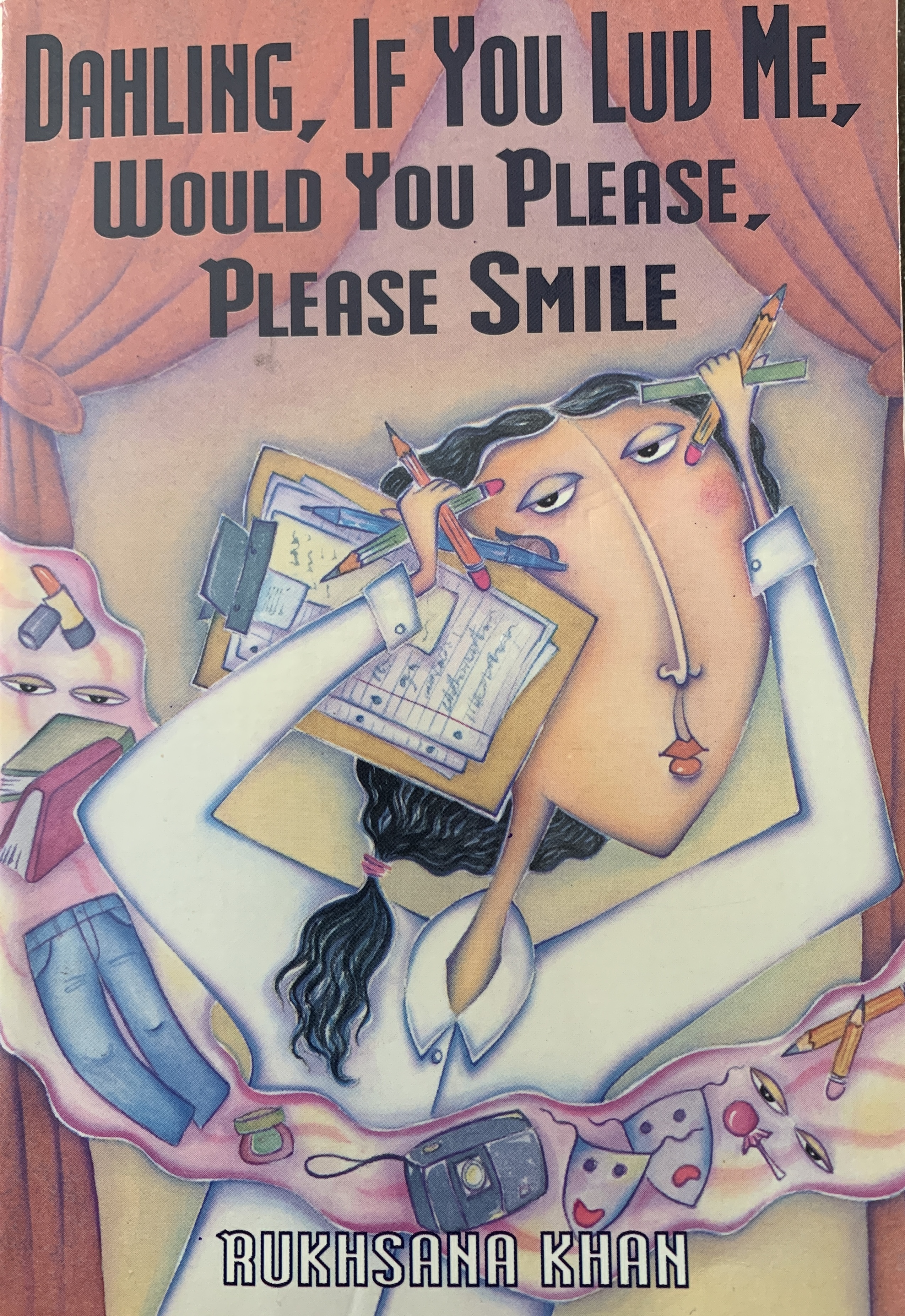
Dahling, If You Luv Me, Would You Please, Please Smile by Rukhsana Khan

Standard
Dahling, If You Luv Me, Would You Please, Please Smile by Rukhsana Khan

img_1788

I’m not sure how I missed this 1999 published YA book by the OG-groundbreaking-industry-changing- Rukhsana Khan, but until @bintyounus mentioned it to me recently I didn’t even know it existed.  The book has so much Islam, ayats, hadith, salat- Islamic fiction self-published often doesn’t have as much as this mainstream book has, but I would be lying if I didn’t say that some of the content was a bit shocking.  Part of my surprise I think comes from the fact that the book is only 206 pages, it takes its title from a game I remember playing in elementary school at recess, the main character is in 8th grade and the cover is soft pinks.  This book is solid YA both now, and nearly 25 years ago, it carries some incredibly heavy themes: attempted suicide, topless photographs, sexual coercion, cigarette smoking, assault, racism, misogyny, toxic relationships, neglect and more (see flags below).  The book is memorable and hard to put down, the Islam is confident and explored, even when weaponized by an older sister, but there is no denying the story telling abilities of the author, and  while I won’t be letting my 11 or 13 year old read it any time soon, I know I benefitted from reading it- reminiscing about wanting Lucky Jeans and standing in awe of how EVERY. MUSLIM. DESI. author making it in mainstream today is benefitting from the path paved by Rukhsana Khan.  On behalf of readers everywhere- thank you.  Thank you for fighting to tell your stories your way, raising the bar, and offering real Muslim characters from a Muslim voice. 

SYNOPSIS:

Zainab has no friends and doesn’t own a pair of Lucky Jeans, she is the only one in 8th grade that doesn’t.  She feels like if she could trade in her polyester pants for the “cool” pants everyone has, she’d be accepted.  When that plan fails and lands her in trouble, she gets tasked with directing her house’s school play.  The teacher convinces her that it will be a way for her to make friends, and earn her classmates respect, but middle school is never that easy.  Everyone is in love with Kevin, including Zainab, but he is a jerk and if he isn’t the lead, no one else will audition.  Jenny is poor, but has a big chest, so even though she is nice to Zainab, she is more in love with Kevin who only wants her for one thing, and takes advantage whenever his girlfriend isn’t around.  Add to the drama Zainab’s very strict older sister who lists off Zainab’s faults every night with Islamic references to try and make Zainab a better person, and this coming of age story will require Zainab to sort through it all and find her own way to be.  There are a lot of subplots that circle around the play, social circles, toxic relationships, and self growth, that while the characters are worried if they will win the competition and break the curse, the readers (at least this 41 year old mama) are hoping that the characters will survive the year unscathed. 

WHY I LIKE IT:

I love that the family is the same family that will become its own story in Big Red Lollipop just grown up, with names changes, and that the story is summarized.  I’m still a little torn if I love the raw grittiness of the way the two sisters interact or if it goes too far and leaves a bitter taste about Islam.  I really am on the fence about how young readers, both Muslim and non Muslim, in 1999 and in 2022, would view the role of Islam in the dynamic.  I think it reads powerfully, but I had a hard time going back to look at it through my 13 year old eyes and it as an adult it is intense.  I still can’t believe that this book was published with how much Islam it contains, even the play put on in a public school was religiously centered.  White privilege is called out and stereotypes about whites are stated, a Hindu character and the Muslim main character work through their baggage, economic privilege is opined on, women’s rights and expectations discussed, comments about “othering” are present-  it really covers a lot. Quite impressive in a lot of ways. 

The relationship and love themes are not shied away from which caught me off guard.  I expected some making-out and heavy petting, but was surprised it went to topless photos, a character’s mom being a nudist, and that there is a lot of forced touching.  I think for most Islamic school 8th graders, this book would be too mature, in fact I genuinely hope it is. Not to say it is not accurate, but it is very critical to the story and I think would need some discussion.  

I love that the characters draw you in, as much as you despise everyone picking on Zainab, you know she isn’t a pushover and you really pull for her.  I didn’t want to put the book down and kept reading because I wanted to make sure she was ok, see what choices she made, and in a fairly short book, that is remarkable story telling.

FLAGS:

The book is for mature readers in my opinion.  There are relationships, assault, cigarettes’, nudists, kissing, spying, sexual assault, coercion, topless nude photographs, attempted suicide, bullying, teasing, cheating, physical assault, language, verbal abuse, stereotypes, talk of female anatomy, and use of Islam to hurt.

TOOLS FOR LEADING THE DISCUSSION:

I don’t know that I would shelve this in the library, I would see if perhaps there is a version with a different cover, one that might signal a more mature reader.  I would worry if an early middle schooler read this, I think it would be a lot for them to take in, process, and reflect on.  It isn’t a light read, and would need some discussion, but ultimately I don’t know that a middle school book club at an Islamic school would be the right place for it. It could be for sure, but not the one I’m currently at.

Hungry Hearts: 13 Tales of Food and Love edited by Elsie Chapman and Caroline Tung Richmond

Standard
Hungry Hearts: 13 Tales of Food and Love edited by Elsie Chapman and Caroline Tung Richmond

hungry hearts

Occasionally I get asked about short story and/or essay from a collection that a college or high school student is hoping to share with a class that doesn’t take long to read, but shows Islamic representation.  And I never have a suggestion.  The middle grade collection Once Upon an Eid is amazing, but for younger readers.  When I learned about this collection that features two known Muslim authors, Karuna Riazi (The Gauntlet series) and S.K. Ali (Saints and Misfits, Love from A to Z), and involves food, I thought to take a look and see if I might finally have a suggestion.  Sadly, no.  None of the 13 stories wowed me, or really impressed.  A few I started then skipped, and none were really memorable.  The premise is unique: all the stories take place in the same neighborhood, feature food, and crossover characters, but some are love stories, others redemption, some have super heroes, others murder and gang violence, some really keep the food central, and others just mention it as being present.  There is familial love, romantic straight, lesbian, and trans love, there is friendship and food from many cultures served up to varying effects.  I admittedly read few short story collections, but even with that taken in to consideration, I think skipping this 353 page YA/Teen book is probably the best option.

SYNOPSIS:

I’ll only summarize the two Muslim authored stories.  A few of the others are culturally Indian, but they eat pork, so I’m assuming they are not Muslim, and the Persian one by Sara Farizan features alcohol and a lesbian romance, so since in a past book of hers I noted that I didn’t know if she or her characters identify as Muslim, I will skip reviewing hers as well.

Hearts a’ la Carte by Karuna Riazi:   Munira works at her families food cart, King of Kuisine and serves up Egyptian food to the people on Hungry Heart Row.  When a guy falls from the sky, she finds her self also falling hard for Hasan, as he regularly starts coming to eat and visit, but when it is revealed that he is a super hero (the Comet) and the reason her families cart is destroyed, Munira is not willing to pursue things further.

A Bountiful Film by S.K. Ali: Hania and her family have recently moved to Hungry Heart Row, where her father grew up and grandma Valimma lives.  Irritated that she had to leave her school, her job at Daily Harvest and friends behind, Hania is hoping to lose herself in putting together her film for the upcoming competition and beating her long time rival Gabrielle Rose.  With no clear idea of what her film should be about she starts with interviewing Valimma and her friends, which turns up a bit of an unsolved mystery involving a missing boy that keeps showing up on the security footage from local businesses.  Hania decides to pursue it, but finds herself being watched, and filmed in the process.

WHY I LIKE IT:

I like that the stories are interconnected, I don’t know that it works, but I like the idea of it.  As for the two Muslim authored stories, I like that Islam and culture are included slightly, but that the story is much more than that, and the characters have more pressing issues to figure out.  I wish in both of these two stories, food was more fleshed out.  They seemed to be lacking the magical food premise that many other stories in the collection had.

img_7244

FLAGS:

See above paragraph for some collection flags.  Riazi’s story has crushes and a budding romance, but nothing overtly “haram.” Ali’s story is clean.

TOOLS FOR LEADING THE DISCUSSION:
I wouldn’t probably even shelve the book in our Islamic school library, it doesn’t offer much in my opinion.