Tag Archives: life

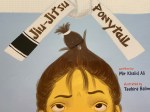
The Jiu-Jitsu Ponytail by Mir Khalid Ali illustrated by Taahira Halim

Standard
The Jiu-Jitsu Ponytail by Mir Khalid Ali illustrated by Taahira Halim

IMG_2909

A determined girl battles her ponytail, her own self-doubt and her opponents on the jiu-jitsu mat in 38 beautifully illustrated pictures and clear every day language.  Perfect for little girls and their dads ages five and up.

IMG_2910

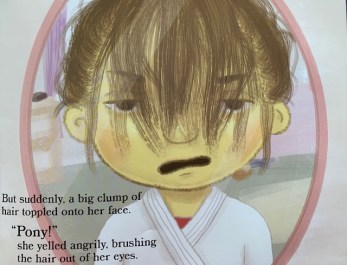
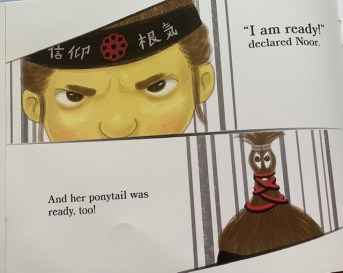
Noor has been counting down the days until her first jiu-jitsu tournament, but the morning of the tournament a battle first takes place between her and her unruly hair.  Determined to tame it on her own, even when her father offers her help, she steps on to the mat for her first fight.

IMG_2911

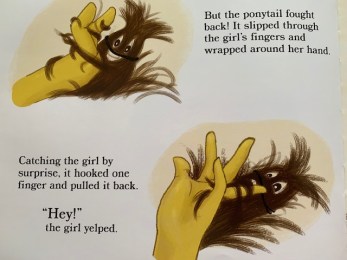
Squirming with nerves, her ponytail breaks free from the desperate tape used to keep it contained and covers Noor’s eyes forcing her to tap out and concede the match.

IMG_2912

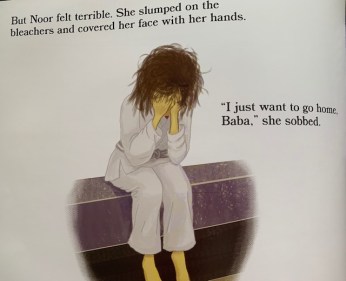
Walking off the mat, Noor’s Baba hugs her and compliments her on her bravery.  Noor is having none of it and just wants to go home.  Rather than argue with her, Baba goes to talk to her coach giving Noor some space to battle her self-doubt on her own.

IMG_2913

Deciding she has worked hard and trained hard, and been supported every step of her way she asks her baba to help her tie up her hair.  Together her and her jiu-jitsu ponytail take on the remaining opponents and persevere.  

IMG_2914

The book shows great heart in the supporting cast each of us have around us, in this case the father takes his cues from his daughter, never wavering in his support, but not forcing her to do anything either.  The little girl is determined, but also learns that it is ok to ask for help and above all to not give up on yourself.

IMG_2915

The personification of the ponytail adds a layer of humor to the story that works well for little kids that might just take the story on face value.  Even they will learn something about jiu-jitsu with the visual displays of the different moves and of martial arts tournaments in general.  Two of my children thought the ponytail hilarious, and two slightly creepy.  The subtlety of its personification allows its role of being a separate entity and just feeling like it has a mind of its own to be determined by the reader.

IMG_2916

There is nothing Islamic in the book, but the author and illustrator are Muslim, and the use of the little girls name, Noor Kareem, and her calling her father Baba will have a special appeal to Muslim children (plus her name written in Arabic on her bedroom wall), just as children who do jiu-jitsu will find themselves in the pages.  The book appeals to all children and reminds them they can overcome and inshaAllah be supported in the process.

IMG_2917

The illustrations in this 8 x 10 horizontal hardback book are beautiful and detailed.  They allow the reader to understand what is going on without the book being overly burdened with text.  The font is clear and well sized making the book ideal for both bedtime and story time, alhumdulillah.

IMG_2918

Lulu and the Very Big Meanies by Mac McGooshie illustrated by Alexis Hogwood

Standard
Lulu and the Very Big Meanies by Mac McGooshie illustrated by Alexis Hogwood

Lulu.jpg

I don’t know what is more frustrating: quality books that are poorly packaged (binding, illustrations, font, spacing, etc.) or beautiful books that miss the mark in storytelling and basic writing skills.  Both are equally annoying, and while yes, a good story should be the basis, this book is really well written that the presentation of it just makes me sad.  At 116 pages, the book is perfect for 3rd graders.  My daughter and son read it a few years ago when I first picked it up.  I made them read it.  And last week when I pulled it out to read myself, both remarked that it was a good story.  The fact that they remembered it and remembered liking it are huge pluses, and made the fact that I had to make them read it all the more disheartening.  I’m certain if you can get your kids to read eight maybe 10 pages they will zoom through the rest of the book.  It is the getting them to pick it up and start, that is the tricky part.  The book is paperback, thick and glossy, but the cover looks homemade almost.  If you thumb through it the font is too small, spaced too tight and the illustrations mean well, but don’t deliver.  Unfortunate, because like my children, I too think the story is fun and I’m disappointed that the book was published in 2013 as #1 in the Lulubug’s Week in the Life Series, and no further books have come out.

SYNOPSIS:

Laila (Lulu), and her family are American Muslims living in Southern Virginia.  Lulu’s mom is a lawyer and a convert, her dad is from Egypt and owns an Italian restaurant, and her older twin brothers are 12 and keep an eye on her.  Being incredibly bright Lulu has skipped third grade and is having trouble with some bullies in her new fourth grade class: Veronica B. and Veronica C.  aka the Veries.  Using help from her brothers, her neighbor and friend Toni, and some friends in class, a trap is set to get the bullies to confess to their evil mischief, but that unfortunately isn’t the only thing Lulu is going through this week.  Throw in her parent’s sudden decision to move closer to the masjid in another city, a litter of kittens abandoned on the side of the road, and some weird noises coming from the woods behind their house, and Lulu has a lot to deal with.

WHY I LIKE IT:

I love that it shows the day-to-day of a typical Muslim family in a normal presentation.  They pray together, they watch what they eat, they know their neighbors and worry about each other.  It doesn’t idolize the family, making them better than anyone or preachy, but makes them very relatable and likable in a realistic way.  When bees are discovered or the kittens need carrying for, sunnahs and ayats are identified, but very seamlessly, that non Muslim kids will learn a bit about Islam and Muslim kids will be excited to see themselves.  My favorite scene regarding this is when the mom finds out there will be a middle-school dance, and even though the boys are not planning to go, know that it isn’t for them, and don’t even seem tempted by it, they still have a family meeting about it, to discuss.  I also like that at one point Lulu meets another Muslim girl and they don’t hit it off right away, the girls work through it, but it is nice to see some diversity in even the way Muslims are presented and possibly misunderstood even amongst one another.

There is a lot going on in the book in terms of action items, but there still is a lot of character development and dimensions to Lulu.  Lulu has to navigate relationships with her family and friends that ring true and aren’t over simplified.  Her friend and neighbor, Toni, expects Lulu to act different at school now that they are in the same class, but returns to her silly self once they are home.  Lulu clashes a lot with her mom, but can smile and get her way super easy with her dad and manipulates that a lot.  She has to balance her sassiness with her teacher and principal, pick her battles with the Veries, and abide by other adults’ rules and expectations.  The book reads in a similar vein as Junie B. Jones, or Clementine, just maybe a more mature and less obnoxious reincarnation.

I wish the adventure involving the backyard noises, was a bit more dramatic, and maybe even the unveiling of the trap involving the dye was more resolved.  At times the book seemed rushed to wrap up all the stories introduced and I think they deserved a little more time to be explored and enjoyed.  If the font and spacing and pictures could be tweaked I think the book would really speak to kids in a fun way.  Third and fourth graders can easily handle a 150-160 page book that has good pacing and is packaged in a tempting, non intimidating way.  I’m holding out hope that maybe the author will write some more, tweak this one, and give it the chance at reaching an audience that would benefit from the smart, fun, grounded life of Lulu.

FLAGS:

Clean, it does mention that Toni likes a boy, but Lulu thinks that boys are trouble.

TOOLS FOR LEADING THE DISCUSSION:

If I still did an elementary book club, I think this book would work.  I think kids need a nudge to give it a try, but once the book gets going, girls and boys alike will enjoy it.  I may read it for a Lunch Bunch choice (I read once a week to 4th and 5th graders while they eat their lunch).  Kids will love seeing themselves, their stresses, their families, and their faith presented well.

Zara and Hakeem Learn ‘Alhumdulillah’ by Shabeena Rehman illustrated by Kevin Payne

Standard
Zara and Hakeem Learn ‘Alhumdulillah’ by Shabeena Rehman illustrated by Kevin Payne

IMG_2686.jpg

Board books from the UK! The glory of a well bound chunky book for toddlers to tote around, chew on and hopefully learn something from, with all the joy of international shipping.  I delayed buying these books for so long, because of it, and finally I gave in and just in the nick of time as I have started a weekly preschool story time, and this series is perfect for three and four year olds with limited attention spans and in need of repetition.

Zara and Hakeem, a brother and sister duo wake up to find their mother not feeling well, and instructions that they will have to help Daddy, Grandad and Grandma with the daily chores.  Then Mummy sneezes and says, Alhumdulillah.

img_2687

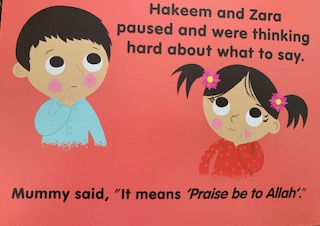
It seems the books  all have a pattern, something happens that sets the stage, then Hakeem and Zara pause and think hard about what to say, there is then an English translation/explanation about the meaning and then a universal, Muslims from all around the world say or do this, before the story resumes.

I don’t mind the break in the story, but the phrasing is a bit cumbersome and slightly off in this book.  Why are the kids thinking hard about what to say, when Mummy had just said it? If they were thinking hard about what she had said or where confused why she said it, I feel like it would make more sense. 

img_2688

I really like that the book shows that all Muslims say something the same, it is a good time to start to show this age bracket that they are connected to something bigger, without overwhelming them.  

The story continues with Hakeem helping daddy vacuum and Hakeem sneezing when some dust flies up.  Then Daddy and Zara mow the lawn when the grass makes Zara sneeze, everyone, Grandad, Grandma, all take a turn sneezing in different scenarios and everyone practicing to say Alhumdulillah.  

img_2690

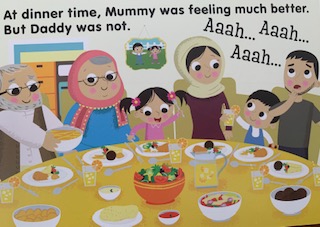
By dinner, Mummy is feeling better, but Daddy has a sneeze attack and takes to laying down as he is not feeling well, and tomorrow the kids will have to help Mummy with the chores.  A humorous full circle, that even toddlers will laugh at.

The kids I read the book to, loved the loud Atchoos and the cute illustrations, a few of the older four year olds, wanted to know why Yar Hamukumallah was not also said.  They also wanted to know why when the dad sneezed four times they only said Alhumdulillah three times.  I read a variety of books about being sick and we talked about using tissues and sneezing into our elbows, washing our hands, and not coming to school when we are sick.  The book was great to explore how mom was sick and dad must have caught her cold.  But that sneezing from pepper and cat hair, didn’t mean you were sick.  The kids also saw that everyone in the house has to help out, sick or not, old or young, male or female, which is always a great lesson to reinforce, Alhumdulillah.

img_2691

The book is 18 pages of text.  The illustrations show the mom and grandma in hijab, they are bright and colorful and engaging.  Children will enjoy getting carried away with the sneezes and the Alhumdulillahs when read aloud and will enjoy looking back at the pictures and details independently afterward.  This is a great story to put on repeat and then watch your own toddler retell the story on their own.

Overall, well worth the shipping! I hope US bookstores will stock the series as our little ones need books that are funny, clever, and well done.

img_2689

Hind’s Hands: A Story about Autism by Umm Jawayriyah and Juwayriyah Ayed illustrated by Emma Apple

Standard
Hind’s Hands: A Story about Autism by Umm Jawayriyah and Juwayriyah Ayed illustrated by Emma Apple

hind

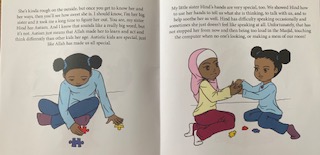
This is an important book to show representation of an underrepresented group, not just those with autism, but also those that love them and live with them.  It is also important to spread awareness so that those that do not have first hand experience can show compassion and patience for the individual and those around them as well.

This 16 page book, only 9 pages of text, is written by a mother and daughter about another daughter.  It is told from the perspective of 9 year old Juwayriyah and how she sees and helps her younger sister Hind.

IMG_2406

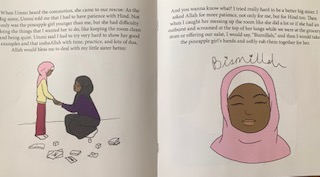
I love that it makes it super clear that children with autism are created this way by Allah swt and made special just as all of us are unique and special. I also like that Juwayriyah has had to learn to slow down and say bismillah before often dealing with Hind.  It also shows that it is a work in progress and there are good days and bad days.  It isn’t smooth sailing, and it isn’t something that needs to be fixed, it is what it is and we must adapt.

IMG_2407

The book is wonderful, for what it does and what it represents, however, in terms of story, it is kind of dry.  It very much is a nine year old, optimistically talking about her sister and how rubbing her hands has proved a coping skills when she is overwhelmed, but you don’t get to know any of the characters.  You don’t feel a bond, or understand what life is like for Hind, or why sometimes she has outbursts or what her triggers are.  I don’t know that kids will even understand concretely what autims is other than that it means people with it learn and act and think differently, as no real examples are given.  

IMG_2408

There is a lot of text on the pages.  I think if you know someone with autism or have maybe seen a child having a melt down, children younger kids will enjoy the explanation and fact giving the book provides.  Otherwise I think 2nd to 4th graders will get the most out of this book as they start to notice different behaviors and other’s reactions to them.

The Victory Boys by Jamal Orme illustrated by Eman Salem

Standard
The Victory Boys by Jamal Orme illustrated by Eman Salem

victory boys.jpg

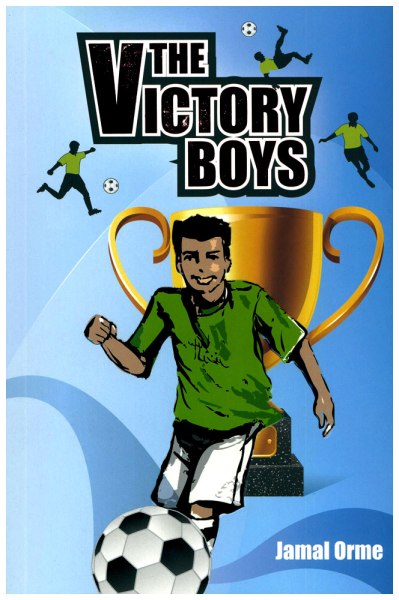
I’m not sure why Amazon states the book is for pre-school and up, when the publisher, Kube, posts this book for ages 7 and up.  I think 3rd or 4th grade soccer/football fans will enjoy the book.  There are some slightly mature ideas presented and worked through, and the soccer lingo assumes the reader knows the sport.  Plus the quality of the illustrations and the small font isn’t going to entice someone not already excited to read the book based on the content within.  My boys, ages 8 and 9, enjoyed the book, as did I, once the story got going.  It doesn’t really grip you from the first sentence, but as the story progresses and the way Islam is woven in makes for some learning experiences in the midst of a few intense football matches.

SYNOPSIS:

The boys at the Sunday Madrasa do not enjoy their time there.  They find the Imam boring and thus are not inspired to learn. When they sneak a football into break time however, they suddenly feel more engaged and present in their lessons.  A change the Imam notices and appreciates, but doesn’t know the reasoning for as he strictly forbids football and finds it a waste of time.  Outside of Madrasa, Junayd is having a hard time at home.  He has to help out a lot at his father’s restaurant and his older brother Saleem has gotten in trouble with the police.  His mom prays for the kids, but is also at a loss as to how to help with the stresses at home.

During a secret game of football in the masjid courtyard, an arrant ball breaks the neighbor’s greenhouse window, and the boys are forced to come clean about their covert game.  The Imam demands the kids stop playing and that they tell their parents what they have done, so that they may earn some money to replace the window.  As the kids come through with the money and the Imam sees the kids resort back to their lackluster attitudes to learning.  He gets an idea to start a football club after madrasa classes.  The only problem is that he knows nothing about the sport and no parents are willing to help.

Saleem by chance comes to collect his brother one day, and as he hollers advice from the sidelines, the Imam recruits him to coach the team.  In response the Imam ever so gently uses football to teach not only the madrasa kids, but Saleem as well.  When the boys learn of an upcoming tournament, the Madrasa enters an A and B squad and the Shabab Al-Nasr, Victory Boys, will be tested not only in their play, but also in their manners, and understanding of what it means to be a team and Muslim.

WHY I LIKE IT:

I love that the Imam grows and changes.  I mean it is a kids book about soccer, but really it is the adult in the story that shows the most heart.  He goes out of his comfort zone, reevaluates his opinions, and admits when he is wrong.  High five Imam!  I also like that he didn’t give up on Saleem, and the way he leads him is with such kindness and compassion, that even youngsters, will be impressed.  

The book does not talk down to the reader, which is nice, but at the same time I think it pushes the age appropriateness a bit with the detail devoted to alcohol being sold at the restaurant, Junayd’s father’s flaws, and even Adam’s dad’s tantrum of sorts.  There really aren’t any nice parents in the book.  We don’t learn much about the moms, but none of the dads seem too supportive.  Really the only nice adults are the Imam and the neighbor who’s window they broke.

The timeline isn’t entirely smooth, the kids come together and play well as a team remarkably fast for how intense the tournament is, and how well they perform. And some of the characters could have used some fleshing out, I couldn’t really tell you much about them.  The font is really small and the spacing often forgotten.  The book is about 95 pages with a glossary and an acknowledgement at the end, fortunately the 2nd book in the series seems to space the words and lines out more and is 155 pages.

The story is solid and for the most part well written.  I read it in one sitting and thoroughly enjoyed the lessons learned and then put into practice.  The book isn’t preachy, but you are glad to see the Imams words given life in the other characters’ actions.  Saleem changes quickly, but the author and story account for it in a way that is believable for the audience and the message of not giving up on one another comes through loud and clear.  There is a lot of technical detail about the sport, but it doesn’t drag on, it adds to the excitement even if you just know the basics.

FLAGS:

The talk of alcohol, of Saleem being with a group of kids and a stolen car, there is some yelling and aggressiveness from the adults.

TOOLS FOR LEADING THE DISCUSSION:

The story is a bit short for a book club selection, but I would definitely consider it for Lunch Bunch (where I read to 4th and 5th graders while they eat lunch).  And I think most Islamic School libraries and classrooms should stock the series.  

https://thevictoryboys.com/

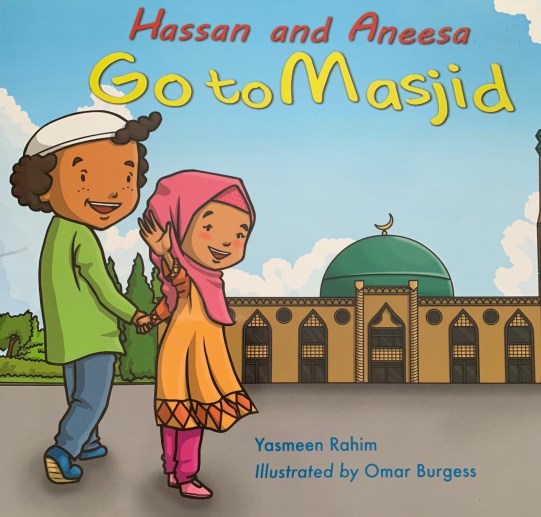
Hassan and Aneesa Go to Masjid by Yasmeen Rahim illustrated by Omar Burgess

Standard
Hassan and Aneesa Go to Masjid by Yasmeen Rahim illustrated by Omar Burgess

IMG_1911

I don’t often do two books in the same series, let alone three, but for as much as I enjoyed Hassan and Aneesa Love Ramadan and Hassan and Aneesa Celebrate Eid, I was a little disappointed in this story.  For starters, the title seems like it should read, Go to “the” Masjid, no? 

IMG_1912

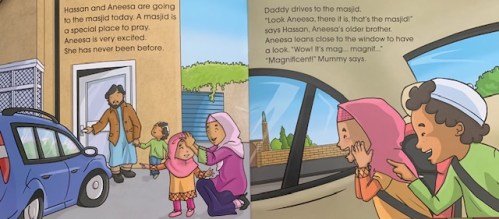
The story starts off with the notion that this is Aneesa’a first time to the masjid, which seems bit off.  Presumably mom and Hassan have been before, but mom’s excitement, and Hassan’s questions through the book, and knowledge about masjid etiquette make you wonder if it is their first time too.  A little odd, if you’ve read their other books, but ok, I’ll accept it and move on.

The family starts by marveling at the exterior architecture.  They enter and separate, Hassan going with his dad and Aneesa going with her mom, as it points out that men and women pray in separate areas.  It is a good tidbit of information, but again, it just seems a bit off in the way it is phrased that Aneesa wouldn’t know this.  

IMG_1913

The tone of the book is almost negative, again, a striking contrast to the other stories.  Aneesa splashes and wastes water when making wudu, doesn’t she make wudu at home? And the mom gets her clothes ruined in the process making her upset.  The illustration shows her to look really mad!

I would think a little context about not wasting water or even sharing the hadith about not wasting even if making wudu in a river, would have been a great lesson to convey, but instead the pictures show a lot of water by others also being wasted, and only mom looking really frustrated.

IMG_1914

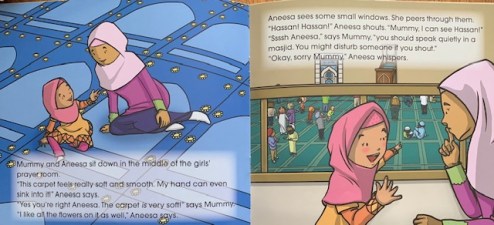
The two of them, put their shoes up and marvel at the dome and the soft carpet.  Aneesa then sees that the ladies prayer area over looks the mens and she begins screaming for Hassan.  Her mom corrects her and points out that “you should speak quietly in a masjid.  You might disturb someone if you shout.”

IMG_1915

Hassan turns and waves, and then rushes off to see a school friend.  But, first he is reproached for nearly walking in front of someone praying.  Again a good tidbit, but the phrasing of how the information is shared is rather negative, and these repetitive reprimands don’t make the book joyful.

IMG_1916

Hassan then learns about he mihrab and the mimbar before the athan is called and they all pray.  After salat they put some sadaqa in a box and the family heads home.

The illustrations are as sweet as ever, and the price very reasonable, but this book, compared to others in the series, is really wordy and there is a lot of text on EVERY one of the 20 pages.

IMG_1917

The framing of the book is awkward, thus making some of the behavior issues come off as negative, it is a minor thing that keeps the book from being great.  If the premise would have been maybe the kids talking about their favorite things about the masjid and reminding themselves to talk quiet and not waste water, the tone overall would have been lighter while still being really informative.

IMG_1918

If this is your first Hassan and Aneesa book, you might not be bothered, but if you find it a little off putting, try the other two.  The books says for ages 2 and up, but I think it would be better for 4 and up.  The younger kids you could tell them the story while showing them the pictures: what to expect at the mosque and how to behave, but there are too many words, and they will probably have a hard time staying focused.  Older four and five year olds, will enjoy seeing things they recognize and maybe learning some of the vocabulary for the architecture and being reminded on proper behavior at the masjid.


Ibrahim Khan and the Mystery of the Haunted Lake by Farheen Khan

Standard
Ibrahim Khan and the Mystery of the Haunted Lake by Farheen Khan

ibrahim-khan-and-the-mystery-of-the-haunted-lake.jpg

It has been over four years since I reviewed the first Ibrahim Khan book, and while I didn’t love The Mystery of the Roaring Lion, it was just ok, this book was more fun and adventurous and stayed relevant even for a book published in 2010.  At 68 pages the book works ideally for 2nd to 4th graders looking for a quick read, or advanced younger kids that will enjoy the short chapters, detailed illustrations and easy to hold book.

SYNOPSIS:

Third grade cousins, Ibrahim and Zayn, are off on a camping trip with their class. Thinking how nice it will be to take a vacation from solving crime, the boys enjoy hearing the story of the haunted lake around the camp fire and not thinking its more than just a story.  But the next morning when they wake up for fajr and hear some weird groaning from the woods, they realize they have a case after all.

The mysterious noise presents itself at different times and at different locations, as the boys and their friends work to unravel the clues.  The climax gets tense as the whole class is on a moonlight hike when the noise sends them all running and screaming “ghost.”  Ibrahim and Zayn, the smart sleuths that they are, find themselves at the culprits tent with the culprits near by.  Saved by a classmate, the boys now must now figure out how to prove that the “ghosts” are not just having fun scaring the campers, but are up to some serious crimes that will require police action and being patient.

WHY I LIKE IT:  

I love that the boys are Muslim and they wake up and pray and eat vegetarian to ensure they keep halal, and I love that they are also just friends and classmates and kids.  There are Muslim and non Muslim kids in the class, at least one girl  wears hijab, but it is a diverse group.  I like that the characters have their own personalities and they do annoy each other and have to apologize.  There does seem to be a lot of characters, and a few times in the short book I had a hard time keeping them all straight, but knowing the real story is the mystery I just keep reading, and figured all the details aside from the clues wouldn’t hold up the story too much.  

I don’t know why the author has only written two books in the Ibrahim Khan series, but I hope eventually more will pop up.  The books are fun little mysteries that show Muslim characters in action.  They learn good manners, cooperation, compromises, prioritizing, and problem solving without the book being in your face about learning all those things.  The kids embody them, by being good Muslims and having to rely on one another to save the day.

The book is written in British English and is set in Canada.  I bring this up because I didn’t know artifact is spelled artefact and I thought it was an error.  

FLAGS:

The book is clean alhumdulillah.

TOOLS FOR LEADING THE DISCUSSION:

The length is too short for a book club book, but I think it would be nice to have in a school or classroom library as the bright well-done cover will entice children to pick it up off the shelf and the short quick paced story will motivate kids that start the book to finish it.  

IMG_1920.jpg


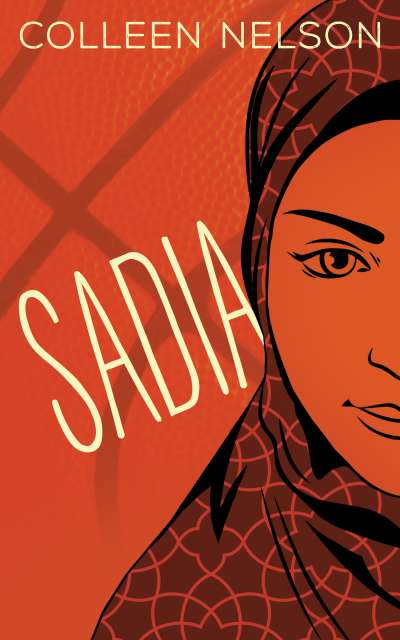
Sadia by Colleen Nelson

Standard
Sadia by Colleen Nelson

sadia.jpg

A middle school sports book with a female lead who wears hijab written by a non muslim.  The book could really go a lot of ways, I held my breath for all 239 pages waiting for something to go totally awry, and thankfully it never did.  In fact I read the book nearly straight through and while meant for ages 12 to 15, I quite enjoyed it.

SYNOPSIS:

Ninth Grader Sadia Ahmadi is an immigrant from Syria, her family left before things got “bad,” and while she has adjusted to life in Canada, High School is testing her in other ways.  Her best friend Mariam, an immigrant from Egypt, has started dejabbing, taking off her hijab to fit in it seems any chance she gets.  This is taken as a betrayal by Sadia and their friendship waxes and wanes throughout the book as each girl has to figure out who she is in relationship to hijab, and how to judge and/or accept each other and their choices.  Throw in a new refugee girl Amira from Syria who doesn’t speak English, a co-ed basketball tournament that doesn’t allow any headgear to be worn during games, a cute boy on the team and an awesome teacher with interesting assignments and you have the book in a nutshell.

WHY I LIKE IT:

I like Sadia, she is believable and strong.  She is well liked, athletic, she has a good relationship with her parents, brother and teachers, she prays and fasts and owns who she is, but she isn’t perfect.  She is hypocritical at times, and acknowledges it, she is tempted by parties, and boys and taking off her own hijab to play ball, and has to confront it about herself.  She doesn’t do things like pray on time, like she knows she should, but there she is and I am so impressed that the author picked up on so many nuances of Muslim life in her research or in her own observations as a teacher.  Yes, Amira has an awkward observation about Miriam being Muslim and not wearing hijab that seems really one dimensional considering large numbers of Muslims in Egypt and Syria don’t cover, but I don’t know if that was the author’s attempt to draw the issue to the light or if it was just a misstep.  

I like that there is a cute boy that accepts Sadia and who she likes as well, but they don’t do anything.  So often, these books become overrun by the romance story line and this one doesn’t, thankfully.  It seems to find a realistic balance, that she has feelings, but isn’t going to act on them, and based on her mom figuring out when she is lying that she won’t try and sneak behind her mom’s back.

Issues of halal food are mentioned in passing and it fleshes out that the girl is Muslim, not just going through the motions.  At times it is hard to know if her choices are based on belief and faith or expectation, but for an early YA/Middle School book, I think it suffices.  She mentions modesty as a reason for hijab, but also a lot of parental and cultural expectation.  One central theme the reader just has to go with, is that Sadia and the rest of the characters in the book, and there are a fair amount of Muslims, don’t know about any other ways to wear hijab for sports.  I get that Mariam and her sewing ability is a huge arc in the story, but they have smart phones, and its a contemporary piece, they have to know about Ibtihaj Muhammad in the Olympics, Bilqis Abdul-Qaadir, and Nike making athletic hijabs.  So, to make the story work you do have to turn a blind eye to the fact Muslima’s have taken to sports in the mainstream and that there is no way they can all be that clueless about her fabric, style, and covering options.

I love that the issue of refugees is addressed in the periphery, and the issues are given a human face.   I love that Sadia’s parents are religious, but not left as simple stereotypes, they deal with Islamaphobia, but aren’t looking for sympathy.

There is always the case, that the hijab becomes a stereotyped item as the story involves characters torn to wear it or not, but I loved how judgements were called in to questions and there wasn’t an easy answer.  The side friends in the story are all way too good to be true, but I think the whole book has a bit of a pollyanna feel to it, and in this case it was ok to error on the side of kindness than become overtly sensationalized and whiney.

The biggest hurdle this book faces is, is it the author’s story to tell. And I don’t know, I review a lot of books, and many are by Muslims and they get stuff wrong in my opinion, or they go so extreme to be accepted.  So, I don’t know, I think the book had heart, I didn’t know if the tournament would let Sadia play, I didn’t know if she would sneak off to the party, I didn’t know if she would cross the line with Josh, and I was curious, and invested and sucked in to it all.  Is it a book to teach others about Muslims or a book for Muslims to see themselves? I think all of the above.  Muslim’s should control their own narrative, but I think when author’s get so much right, we have to take some reassurance in the idea that we are being accepted by the larger society, and our stories are being told with love by other’s too.

FLAGS:

There is romance and lying, but no kissing, just hints at emotions or an errant arm flung over a shoulder during a huddle or photo.  There is mention of drinking at the parties, but Sadia doesn’t end up attending.

TOOLS FOR LEADING THE DISCUSSION:

I don’t know that I would do this as a book club selection, but if I met the right group of kids, I would definitely reconsider.  There is a lot of basketball, which I quite enjoyed, but I could see other’s maybe getting bored by the play-by-play.  I’ll make my daughter read it in a few years, and I look forward to discussing hijab and how she feels about it after.  It does raise the subject, and ask you to check your judgements on yourself and on others.

Author’s Website: http://www.colleennelsonauthor.com/


The Boy at the Back of the Class by Onjali Q. Rauf illustrated by Pipa Curnick

Standard
The Boy at the Back of the Class by Onjali Q. Rauf illustrated by Pipa Curnick

boy at the back.jpg

A perfect introduction to the refugee crisis for upper elementary aged kids.  The story is told from the perspective of an unnamed 9 and 3/4 year old narrator about her friends and how the filling of an empty chair in the back of the room changed their lives.  Ages 7 through 12 will enjoy the plotting and planning of the friends, the awesome climax and the gentle opening of their eyes to the atrocities and bigotry around them.  At 297 pages, with a few pictures and some engaging notes and tidbits at the end, the book is both big, yet completely non intimidating at the same time.  

SYNOPSIS:

Right near the end we learn that the narrator’s name is Alexa, and not too much before that, I learned that she is a girl.  I kind of like that vagueness of it, especially as we also learn that she is half Indonesian and half Austrian.  You realize that it doesn’t matter, that it doesn’t change anything, and that we all bring our own assumptions to the story and learn a bit about our selves as the narrator’s identity is revealed.  But really, thats a tiny bit of the book, the book is really about a group of diverse friends battling bullies, bully teachers, and trying to help the new kid in their class Ahmet.

Ahmet is a refugee from Syria, but the information isn’t easy to establish, he doesn’t talk to anyone, he disappears at lunch and recess, so Alexa, Josie, Tom, and Michael, first have to figure out who he is, and how they can be his friends.  Along the way we learn the Tom is from America, the book takes place in England.  Josie is the best football player and her parents are nervous to have her interacting with Ahmet, Michael is incredibly wealthy and his parents are Nigerian and French, and Alexa lives with her mom a librarian who works really long hours, her dad passed away and money is incredibly tight.

Once friendships are established, Alexa learns that Ahmet’s mom and dad are missing and that his sister and cat died while fleeing Syria.  When she learns that the government is planning to close the borders to immigrants and refugees, the group of kids come up with plans to keep the gates open until Ahmet’s parents can be found and they can come to the United Kingdom.  The kids come up with a variety of plans, but “The Greatest Idea in the World,” is the one they decide to go with.  It involves a lot of danger, but the general gist is to get a message to the Queen of England, who will keep the gates open, find Ahmet’s parents and reunite the family.  

Naturally, there are a lot of moving parts to the plan, and a lot of naivety on the part of the 9 year olds, but they do get the Queen’s attention, and they do have a wonderful support system of parents and teachers and while their are bullies around every corner, they do come together to make the world a bit better for Ahmet and for us all.

WHY I LIKE IT:

I love that it is realistic, with the plotting, and understanding of war, alike.  The war and Ahmet’s journey is very very simplified, but the tone, introduces kids to the intensity without overwhelming them.  Just like the plot to get the Queen’s attention is not celebrated, but appreciated.  What the kids did was wrong and dangerous and they lied, and the kids don’t ever know after if they are in trouble or being praised.  I like that the integrity of both situations is upheld and the book doesn’t get too far fetched.  Similarly, the book is fun and adventurous, and in many ways Ahmet is just a catalyst for the kids to come together to solve a problem and save the day. 

There aren’t a lot of details about his life in Syria, because he doesn’t speak English, there isn’t anything about Islam, except he draws his mom with a scarf on her head.  But there is a lot of learning to accept each other, and stick up for whats right and to not give up on people.  I love the diversity of the friends and how they don’t expect each other to change, they accept each other and move along.  

There is a slight typo on page 3, “…could be half as useful as a Tintin’s dog, Snowy,” that had me afraid that this book was going to be unrefined, but alhumdulillah I was wrong.  The book reads easily and wonderfully, and my children loved it as much as I did.  The author is a first time writer, and I hope she has a bunch more stories in her, because I look forward to reading them.  

FLAGS:

The book is clean and reads believably from a 9 year old’s perspective.

TOOLS FOR LEADING THE DISCUSSION:

I would do this in an elementary book club in a heartbeat. I’ve suggested it to many and I hope to read it aloud to my 4th and 5th grade lunch bunch crew. It is well written, timely, and memorable.

Teacher’s Notes: https://www.hachetteschools.co.uk/wp-content/uploads/2018/07/The-Boy-at-the-Back-of-the-Class-Teachers-Notes.pdf

A bit about the author: http://beingthestory.org.uk/speakers/onjali-q-rauf


A Very Large Expanse of Sea by Tahereh Mafi

Standard
A Very Large Expanse of Sea by Tahereh Mafi

avleos

The book is often marketed as a Muslim coming of age story in a post 9/11 world.  The contemporary work is semi-autobiographical, but really I think the positioning is a bit misleading.  It’s a love story, and the main character is Muslim, and her environment is awful and she is angry. Its an engaging read, I read all 310 pages in one sitting, but I don’t know that the take-away will enlighten anyone about Islam, or really what it was like to be Muslim in the years after 9/11, I think people will remember how sweet the couple is and wonder how much of it mirrors the author and her husband, author Ransom Riggs (Miss Peregrine’s Peculiar Children), but not suddenly become knowledgable about more than what the main character experiences and endures.   I appreciate that the book challenges the stereotypes of Muslim women, there is authenticity as it comes from a writer who lives it, and I do think it shows evolution of attitudes that teens can benefit from.  The book is not yet in the AR database as it just came out, but I would imagine high school and up.  

SYNOPSIS:

Shirin’s Persian-American family moves a lot.  Her and her older brother are incredibly close as their parents are rather aloof to the day-to-day experiences the kids endure.  That isn’t too say her parents aren’t around, they eat two meals a day together and the parent’s are warm, but Shirin’s brother Navid is a much more present.  The story starts with 16-year-old Shirin starting her 12th new school.  Conditioned to not make eye contact, remember faces, or get affected by the trivialities around her, the reader sees how angry she is as she curses at a teacher that assumes she needs ESL not Honors.  Knowing how fleeting her time in any location can be, as her parents are constantly trying to find better jobs, Shirin doesn’t feel compelled to make friends or get attached to anyone or anything.  This intimidating vibe similarly keeps offers at bay, for the most part.  When she gets paired up with Ocean to dissect a cat, he tries to talk to her, and this throws her off her game.  Most every interaction she experiences at school are people making racist comments and being very one dimensional and bigoted.  Ocean tries to be nice, an attitude so foreign to Shirin that it begins to force her to change.  Simultaneously, Navid, who is charismatic and has no problem finding friends wherever they go, decides to put his and his sister’s dream into action and they start a break dancing club at school.  Three other kids join, and start becoming, not just Navid’s friends, but Shirin’s as well.  

Shirin and Ocean fall in love, despite Shirin fearing what the backlash will be for ocean.  She doesn’t really know anything about him, but feels strongly that all the racial slurs thrown at her on a daily bases will effect him and ultimately make them wish they didn’t pursue a relationship. She draws line after line in the sand, and crosses them all.  Only then does she learn how blind she has been, he is in two of her classes, not just one, he is a year older than her, and he is the golden star of the high school basketball team.  Being that the story is told from Shirin’s perspective, this is surprising to the reader as well.  The town turns on the pair and things get really ugly for Ocean who is willing to risk it all for Shirin.  Threats by the basketball coach, pictures of Shirin without her hijab being taken, accusations of terrorist ties and sympathies all challenge the couple and shape Shirin.

WHY I LIKE IT:

I really like the twist of having the relationship be difficult for the non Muslim, rather than going with the assumed Muslim girl having to sneak around.  Not saying that I support it, but interestingly she never mentions that what she is doing is going against anything religious.  She mentions twice that her parents wouldn’t like her with any guy, and that they view her as a child still, but she doesn’t explore Islamically any boundaries regarding their relationship.  She hides talking on the phone to Ocean, because her parents are adamant she gets enough sleep at night.  That is about it.  Shirin discusses that she wears hijab like an armor that she gets to pick who she shows her hair too.  I love the strength in that, but wish there was a bit of doctrine to back it up too.  At one point a Muslim, non hijabi, at school calls her out for wearing hijab and having a boyfriend, but she essential tells her it is none of her business, which it isn’t and who is to say that one sin is worse than another, but still it befuddles what exactly Shirin believes and why.  The book just paints her as a Persian Muslim, but never explores what that means other than the superficial outward appearance.  They do fast in Ramadan, no explanation about why is given, just that they not eat or drink during daylight hours, and right near the end, Shirin remarks how her mom asks her and her brother every morning if they have prayed and they lie and say yes, their mother sighs and tells them to make sure they pray the afternoon one, to which they lie and agree, only to have their mother sigh again.  AstagfirAllah, that is awful lying, and lying about Salat, but it is so real, I audibly chuckled.  

I like that the parents aren’t harsh, they just seem disinterested.  I didn’t want to read another book about the parent’s being the gatekeepers and bad guys, so that was really refreshing.  They mention they don’t celebrate Christmas, but they have an open door policy on Thanksgiving for any friends wanting to come.  I did hope for a bit more about them, why they don’t talk to the kids about moving, what makes them tick, because really they seem to have a solid relationship with the kids, they are just clueless to their social experiences and school environment stresses.

I love the growth and self reflection of Shirin, she holds a mirror to herself and she and readers are better for it.  She has to realize that she is doing so much of what she is accusing others of doing.  I love the support and genuine concern of the breakdancers and her brother.  It resonated to me as a girl with an older brother and the relationship feels very genuine. I just wanted to know more about Navid. 

FLAGS:

There is a lot of cursing. kissing, hand holding, romance, lying, and ditching school.  There is a brief mention of graffiti being sprayed.  There is racial slurs, threats of violence, violent physical outbursts by people of authority.  When a student throws a cinnamon roll at Shirin, Navid and his friends beat the kid up severely, it isn’t detailed, but it is mentioned.  Ocean  also gets suspended for a few games for a fight he engages in, and there is some detail of Shirin getting jumped in a previous city for wearing hijab.

TOOLS FOR LEADING THE DISCUSSION:

I don’t think I could in good conscience present this to a group of Muslim students.  I wouldn’t want them to think I was endorsing the violence and language and romance.  Like so many books of the genre though, if someone found it and read it on their own, I’d love to chat with them about it, as it is well written.

Youtube video about the book by the author: https://www.hypable.com/tahereh-mafi-a-very-large-expanse-of-sea-tour/