Tag Archives: Hadith

Steet Puppy, Masjid Cat by Moniza Hossain illustrated by Wastana Haikal

Standard
Steet Puppy, Masjid Cat by Moniza Hossain illustrated by Wastana Haikal

I was a little nervous opening the book, I didn’t know if it was going to be a “Lady and the Tramp” type retelling, and I was unsure how dogs would be presented, but I sure was not prepared for the absolute adorableness that unfolded.  The simple rhyming lines contrasting the street puppy’s life to that of the pampered cat in the masjid, to their meeting, and the sweet imam leading with kindness warmed my heart.  The real chef’s kiss is the backmatter that doesn’t source, but references the sunnah of “acts of charity to every beast alive,” and notes that dogs, unlike cats, are not allowed in the mosque for religious reasons.  I love that “masjid” is in the title, that the author’s note and glossary explain adhan, imam, and the Quran, and ultimately that friendship amongst differences is the takeaway for all readers.  I don’t love that the adhan in the text is described as ringing and the imam as singing, but I acknowledge my pickiness.  And while I love that Prophet Muhammad saw is mentioned in the author’s note, I do wish salutations were given afterward.  The illustrations on every one of the 32 pages are delightful, and I love that the image on the jacket is different than the one on the book itself.  For ages 3 and up, and even emerging readers, this book has a lot of heart, and my 6 year old has read it aloud so many times, I just might have it memorized.

The book starts with simple rhyming lines showing the contrasting life of the cat and the dog, from their daily activities, to how other’s treat them.  When they meet, the cat is not too welcoming, but the imam shows the puppy kindness and the cat follows suit.  As simple as sharing and giving each other a chance, creates a friendship between the two animals, and a beautiful conclusion even the littlest children will understand.

The book is not didactic, and the role of the imam and setting of the masjid, for Muslim kids will be such a spark of joy, but in no way will it limit non Muslim children from connecting with the story.  The benefit for all is seeing a masjid environment and a Muslim in action, normalizing both, and inshaAllah reminding us all to be a little kinder to our animal friends.

Sunnah and Science: What Modern Research Tells Us about Prophetic Traditions by Aquila Fatima illustrated by Azra Momin

Standard
Sunnah and Science: What Modern Research Tells Us about Prophetic Traditions by Aquila Fatima illustrated by Azra Momin

The title and premise of this hardbound 54 page resource book for children definitely caught my eye.  The contents covered, the two page fully illustrated compelling spreads, and the intext labeling of hadith and Quranic ayats make this book versatile in homes and classrooms for a wide variety of ages.  As the daughter of a convert, the knowledge that science is not in contradiction to Islam is something I grew up hearing about a lot in casual conversation, and I love that this book addresses it head on for children with pull out bubbles, reminders, fun facts, duas, and the like.  My only concern that I truly can’t wrap my head around, is why isn’t their sourcing for the “scientific” information? Nothing is overly scientific, and nothing “feels” off, but none-the-less, the book repeatedly says “Research shows,” and “Science proves,” “Scientists are still,” “Scientific research says,” but never once shares what scientist, or research, or science.  The book has the space for footnotes or sourcing or a bibliography, and in a book trying to give readers the confidence to show how the sunnah and science support one another, to not have the sourcing to back it up, is a glaring admission.  Buried in the author bio it states the author has “a Masters degree in genetics” and worked as a “science teacher for elementary school students,” but to me, the book needs to back up the statements to successfully empower and accomplish what it sets out to do.  I hope future printings will include sufficient backmatter, even without the book is well done, but the standard is the standard for good reason, non fiction needs sourcing.

The book covers 25 topics, dedicating two pages to each topic, with a title heading, and an Islamic source subheading.  The topics include, smiling, rain, sleeping, swimming, wudu, salah, fasting, honey, cleanliness, bathroom etiquette, yawning and hygiene to name a few.

Most pages contain facts, ayats from the Quran, sunnahs, benefits, supporting scientific tie ins, and adorable illustrations.  The book concludes with an author’s note, thoughts by readers on the book, and an author bio.

My First Salah Book: Why and How we Pray by Learning Roots

Standard
My First Salah Book: Why and How we Pray by Learning Roots

Over 91 pages this informative book tells “The Story of Salah” through the miraculous night journey, how to do wudu and its benefits, step by step how to make salah, and then a story style portion of “Life with Salah.” I do not have the digital “kitab” pen that allows readers to have the book read to them and activities made interactive without parental involvement, but even with out it, the book is a pretty solid resource.  The hardback binding, and full color pages are not crowded, they introduce nine characters at the beginning and feature them throughout the pages learning the steps, imagining witnessing the events, and putting the lessons into practice.  Some of the recent Learning Roots books have the characters watching or imagining themselves in story’s of the Sahabas and Prophets, that make me uncomfortable.  The first chapter of this book, is more limited as it illustrates a light in the sky as the Buraq being seen by some children, not the characters in the book, and a silhouetted tree as Sidrat al-Muntaha.  As I am not knowledgeable enough to know if it is “right” or “wrong” to have a child seeing the silhouetted tree and pointing to it, or who it is meant to be, I’ve included pictures for you to decide what is best for your family.  I particularly like that on the pages where Arabic is spoken it is found written in easy to read Arabic with English translation and transliteration.  Within the text there are attributions of hadith and after each chapter there is an activity and questions.  The book concludes with a glossary.

Whether as a tool to learn for the first time, or a book to revise with children already praying, the approach is gentle and easy, inviting children to engage with the pages.  The four chapters are packed full of information, but the illustrations, diagrams, and steps, also allow the book to be referenced, or read cover to cover.

The last chapter, “Life with Salah” shows the character group engaging with salah in a very idyllic way, but given the tone of the book, it works, and will allow readers to see salah as more than just an obligation, which is important.

I got my copy from crescent moon store, if you use my initials (ISL) at checkout you can save 10%.

My First Book about Charity: teachings for Toddlers and Young Children by Sara Khan illustrated by Ali Lodge

Standard
My First Book about Charity: teachings for Toddlers and Young Children by Sara Khan illustrated by Ali Lodge

The newest board book in the My First Book series is a gentle and wonderful introduction to charity, both sadaqah and zakat. Sourced with ayats from the Quran, there is also backmatter that has Facts about Charity and Questions and Answers. I’m always amazed at how much information the series consistently contains in the 26 pages for our littlest Muslims.  With soft illustrations and smiling joyful faces, each page radiates warmth, information and simplicity in a way that grows with toddlers, to preschoolers, to early elementary aged readers, alhumdulillah.

The book starts with affirming that Allah has given us more blessings than we can count, and some of us have more than others.  To help those that have less, Allah wants us to give charity.  The book briefly explains that Zakat is one of the pillars that is required, and sadaqah is an extra reward that is not just money.

It talks about the sunnah of giving charity, and numerous ways that kindness can be carried out.  It shows respect and helping and concludes with Allah’s names of All-Knowing and All-Hearing before the final supplemental spread.

I don’t know how many books are planned for the series, but I love looking at them all lined up.  I share them with my own children and now that there are accompanying puzzles and a boxed set, I’m positive I’ll continue gifting them, not just to new parents as I’ve done in the past, but to toddler and preschoolers as well.

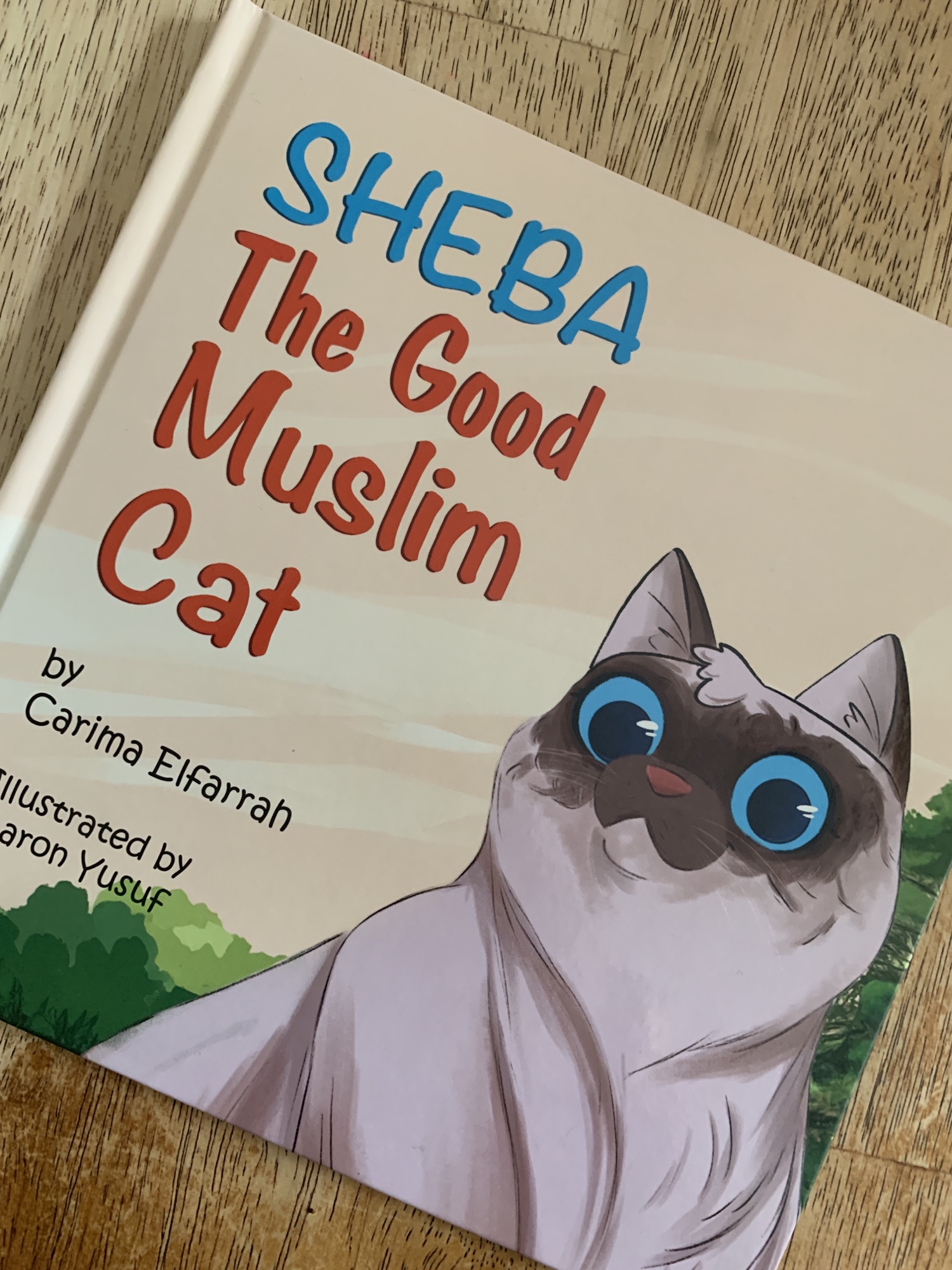
Sheba: The Good Muslim Cat by Carima Elfarrah illustrated by Aaron Yusuf

Standard
Sheba: The Good Muslim Cat by Carima Elfarrah illustrated by Aaron Yusuf

img_4999-1

I was really looking forward to this book about Muslims and cats.  Every masjid seems to have cats all over the world, and while feline friends often sneak into Islamic fiction books about other things, I liked the idea of giving a cat the spotlight.  Alas, the rhyming text, the examples given, the inspiration shared in the backmatter, the angel imagery, and the ambitious glossary made this small 8×8 inch 32 page picture book rather off putting and ultimately forgettable unfortunately. The cat remains at the family home, and basically just hangs out with the family when they read Quran, pray, get up for fajr, and the cat is patient when waiting for food or water.  Sure it makes it a nice cat, but with a title implying this cat is a “Good Muslim,” I really expected more.  I appreciate the hadith at the end, but it is not sourced, and the cat with a halo and wings signals Christian imagery, that doesn’t align with the tone of the book.  Additionally, the idea of the book comes from a story of a Syrian scholar who had a conversation with a cat. I’m not saying it did or did not happen, but it seems a little bit of a stretch for my cynical brain.  The book reads for toddler and preschool Muslims, but the glossary reads copy and pasted from Wikipedia for non Muslim adults.  The small size makes the book impossible for group story times, and it can be hard to read at times because the text often runs over the pictures making it hard to see.  Ultimately though, while my toddler enjoyed it well enough the first time, he has not asked for the book again despite it sitting on my side table for weeks, which is probably more insightful than my review.

The book starts with a young boy introducing his family cat, Sheba, who has sapphire eyes. The family is Muslim and the boy is confident his cat is too because she hangs around his dad when he reads Quran, she comes running when salah time comes, she plays with the imam (the dad) after the last salaam, and she waits patiently for food and water when her bowls are empty.  She cries at fajr to wake the boy up and he hopes that on the day of judgement she will attest to the good the family did for her.

The backmatter includes the story of Shiekh Shukari, a scholar in Damascus that spoke to a cat, then a two page spread glossary, and author and illustrator bios. The illustrations aren’t particularly spectacular, the boy at the beginning seems much older on some of the pages compared to others, although his clothes stay the same.  I didn’t like the angel imagery, perhaps I’m erroneous, but none-the-less it felt off to me.

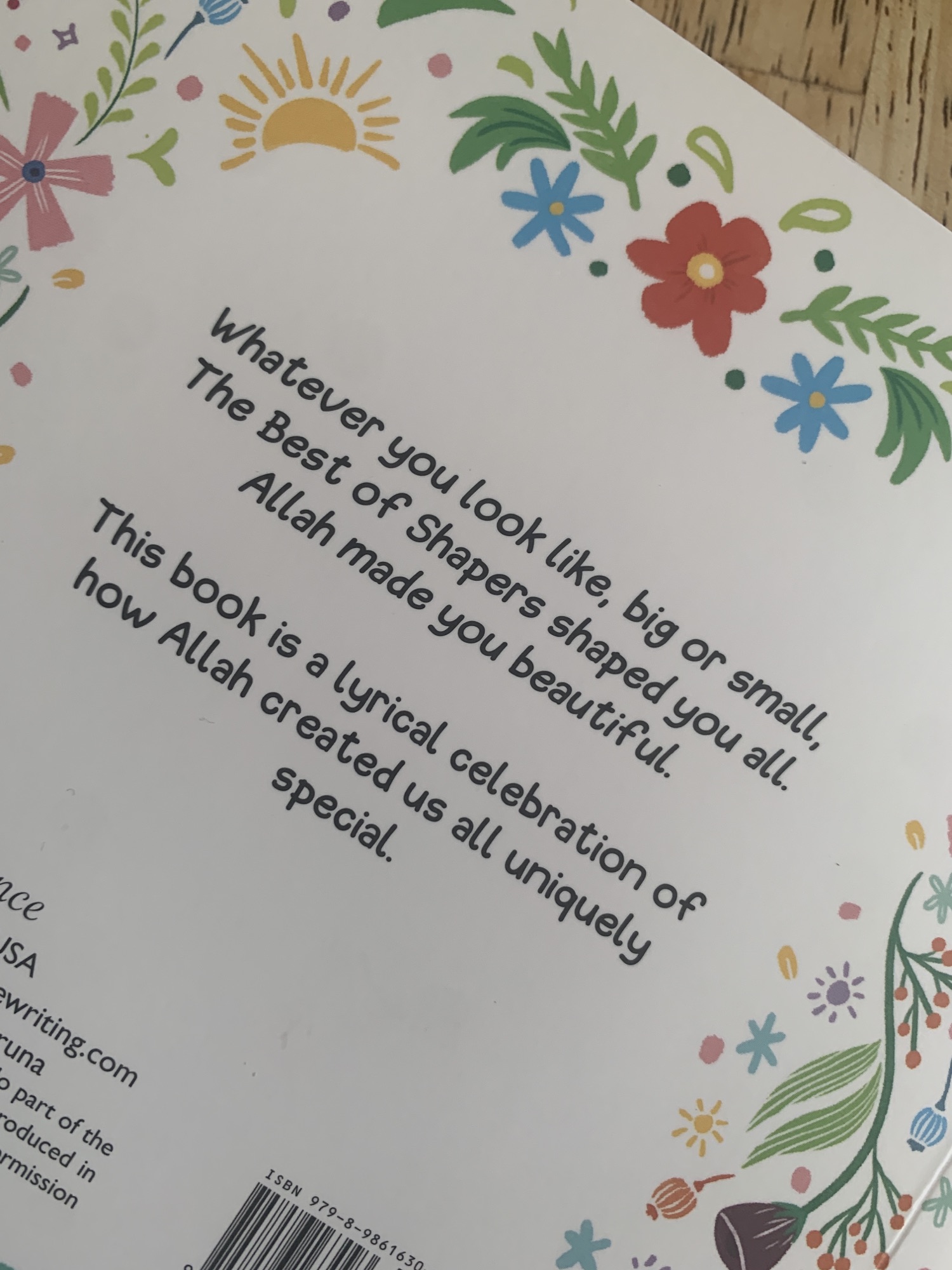
Allah Made Me Beautiful by Layla Izruna illustrated by Laila Radhani

Standard
Allah Made Me Beautiful by Layla Izruna illustrated by Laila Radhani

img_4555-1

This 6×6 board book is 18 pages of affirming and celebrating that no matter what we look like, “the Best of Shapers, shaped us all.” The little size, the rhyming lines, the repetition of the phrase “Allah made me beautiful” on the right page of each spread, is what you would expect from a board book meant for newborns and up.  The rhyme and cadence levels out after the first page, and makes for a sweet easy read.  The mirror on the last page with a hadith in English and Arabic is particularly nice.  The illustrations and text are intentionally diverse and inclusive and with the Islamic centering the book is good for starting discussions as well.

The book is no literary masterpiece, but sometimes it doesn’t need to be, to be a staple read on repeat to our little believers.  This book dives right in on the first page, there are no copyright or dedications that have to be flipped through.  It is numerous pages of examples of how Allah swt made us all different: straight hair, curly hair, twins, larger body size, skin color, mobility, freckles, glasses etc. The end spread, before the mirror, is the conclusion that our “looks have been perfected by Him, tying it all together.

The illustrations are engaging, and simple, but detailed enough to foster dialogue if desired and while the small size would make using it at story time impossible, I think little hands and little hearts will benefit from knowing that we are different, but just as Allah swt intended us to look.

The book is available from the publisher Prolance directly, or here on Amazon 

img_4560-1


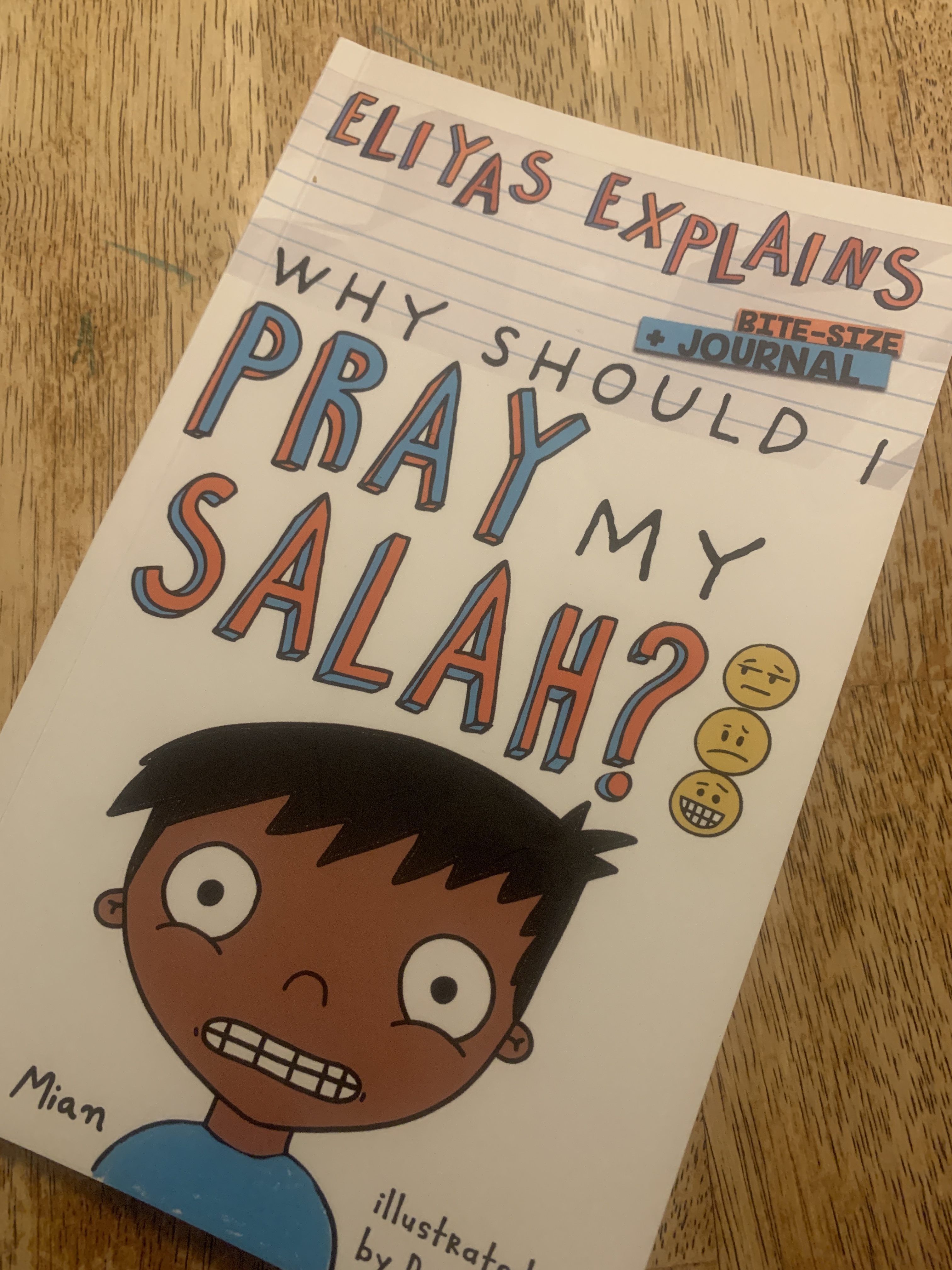
Eliyas Explains Why Should I Pray My Salah? Bite Size Journal by Zanib Mian illustrated by Daniel Hills

Standard
Eliyas Explains Why Should I Pray My Salah? Bite Size Journal by Zanib Mian illustrated by Daniel Hills

img_7821

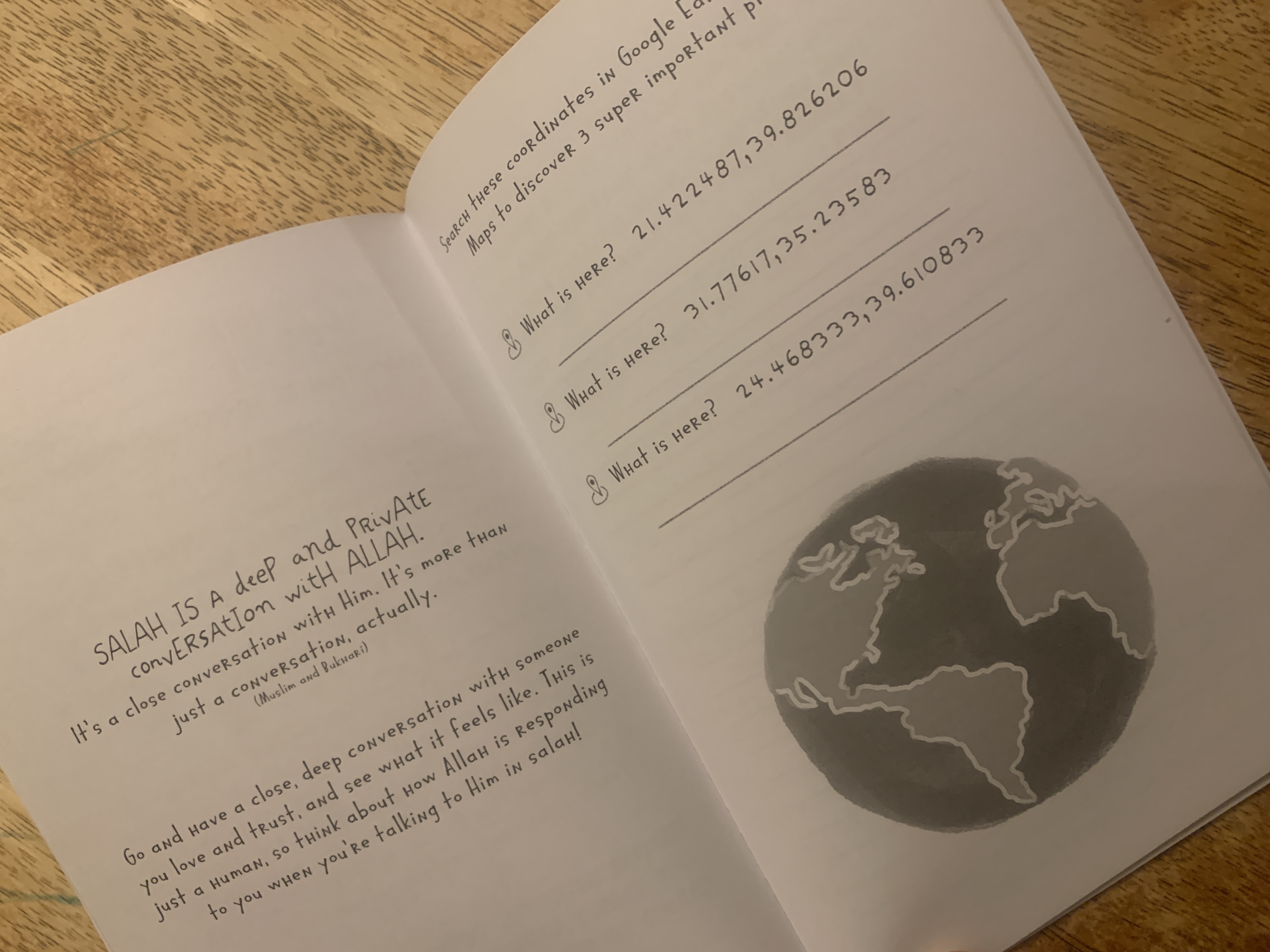
I love the Eliyas Explains books, but was a little curious what a “Bite-Size Journal” version would be, and Alhumdulillah, the silly relatable voice is the same, there just isn’t as much fictional story weaving together as the Angels and Miracles books had.  Instead it has activities and guided prompts for the reader to engage with and space for them to write.  The first 15 pages or so are Eliyas explaining about salah and what he has learned and how he has improved, and some parables through his point of view.  Then the journal pages begin, and while the first few are truly “journalistic” as it progresses to the last of the 60 pages you realize along the way there was a lot of “story” included on the activity pages as well.  The book isn’t blank pages and bound together as a book, it has text, it has hadith, it has games, it has questions, and trackers, and a lot of information.  I love that it states that it has been checked and the Shaykh’s name is included, the positive child framing, and the reasonable price point.  For first through third graders learning about salah, wudu, athan, and inshaAllah becoming more mindful of their actions and behavior, this book will be relatable, funny, and informative.

img_7823

SYNOPSIS:

The book starts with Eliyas remembering when he was too lazy to make wudu and pray his salah, he then offers a story of an orphan and a muffin and a lady who makes the muffin to try and show readers that salah benefits and nourishes us and the maker of the muffin truly loves us.  It is a little random, but it somehow all works and kids will go along with the allegory, it isn’t drawn out.  He then moves to talking about how Allah swt loves him and what his parents told him that helped him to love praying.  There are hadith and Eliyas’s explanation attempts, drawings, and some really powerful points about angels and being accountable on the day of judgement to Allah swt.  The journal pages involve decoding, timing your prayers, writing down all the places you’ve prayed, latitude and longitude decoding and a lot more.  The book also discusses the athan and Surah Fatiha.

img_7824

WHY I LIKE IT:

I love the voice of Eliyas.  It isn’t fear driven, or punishment framed, it stays positive and motivates from a place of love, but the conscience and priorities are highlighted too.  It is such a crucial part of raising young Muslims, to lead with Allah’s love, but as kids get older you want to introduce consequences, and choices, and being accountable, and this book does it seamlessly with out it being overwhelming.

I honestly don’t know if I like the journal format or the other Eliya’s Explains books more, I do like the storytelling of Miracles and Angels and the way the facts are woven in, but I think for the topic of Salah this format works.  I am happy with mine, and you can purchase yours here from Crescent Moon Store.

img_7825

FLAGS:
None

TOOLS FOR LEADING THE DISCUSSION:

I don’t think the book would work for a book club, but in small groups at an Islamic School or Weekend School the teacher could very easily and affordably have a book for each student, or read aloud the story parts and engage the students in the activities without any difficulty at all.

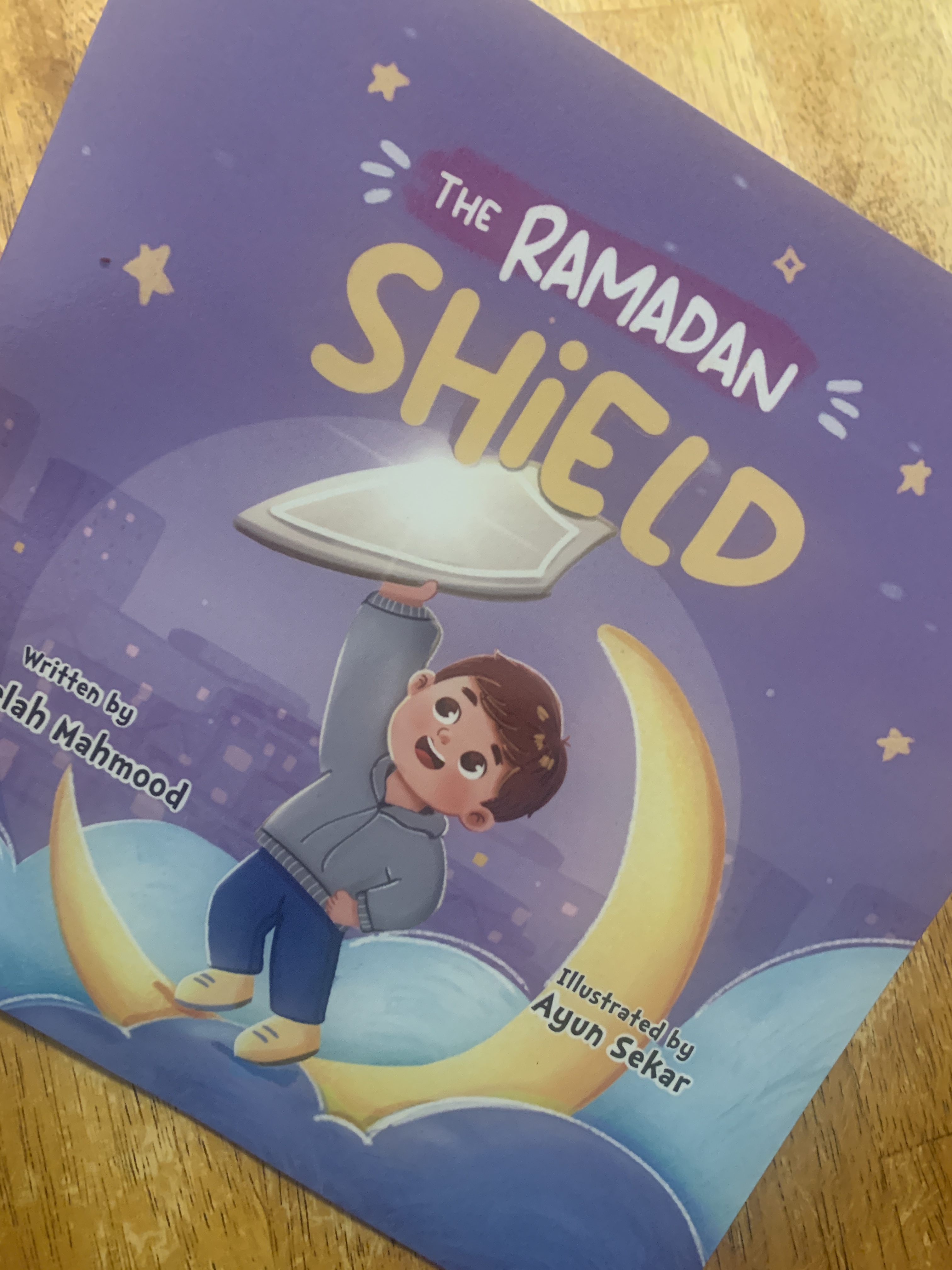
The Ramadan Shield by Fadelah Mahmood illustrated by Ayun Sekar

Standard
The Ramadan Shield by Fadelah Mahmood illustrated by Ayun Sekar

img_7028

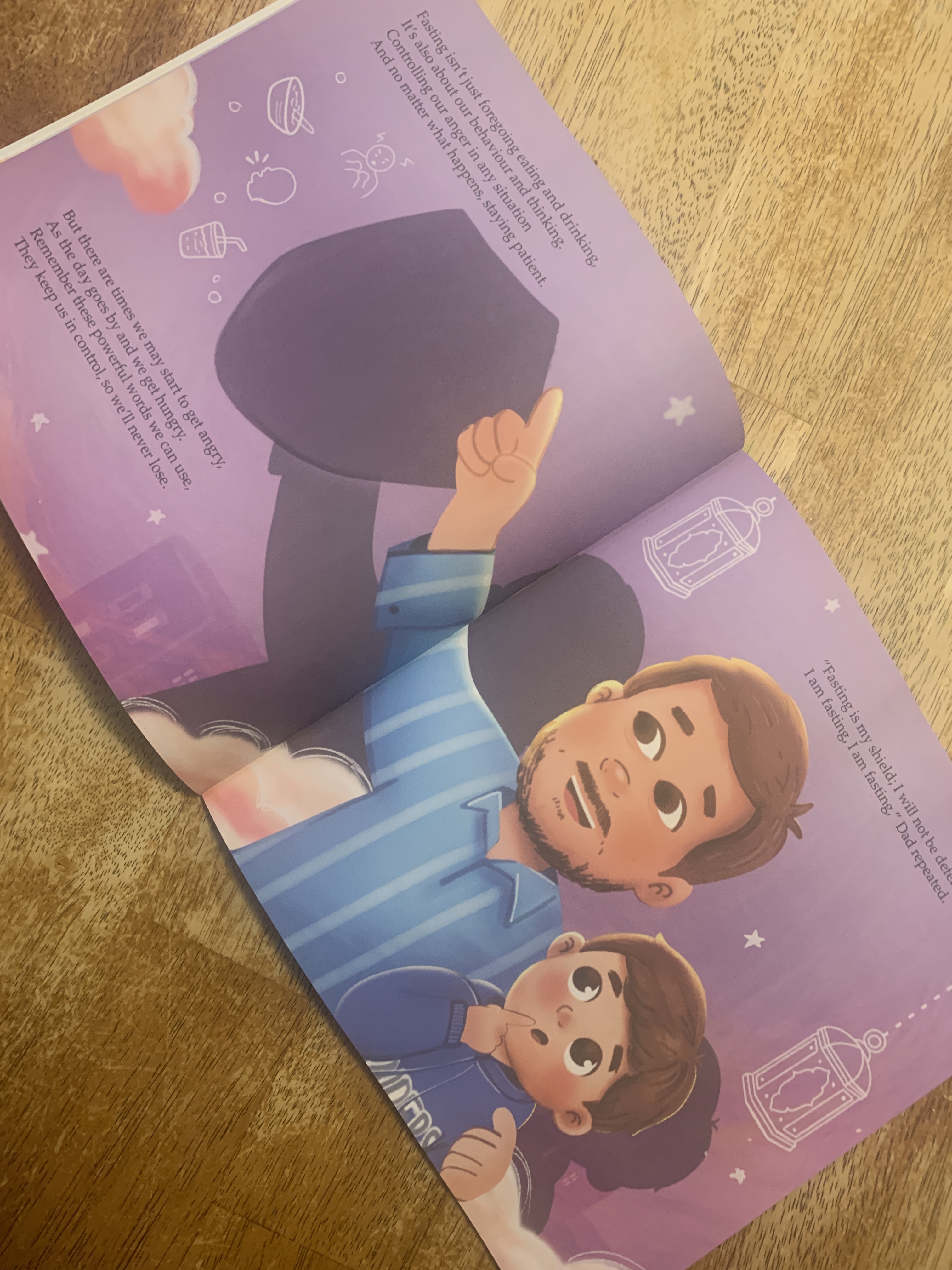
This new 32 page rhyming book focuses on a boy who gets frustrated and often loses his temper and how the onset of Ramadan has his father imparting the lesson that fasting isn’t just staying away from food and drink, but also about behavior and controlling your anger.  He shares the hadith of saying “…I’m fasting, I’m fasting,” which is shared in its entirety and sourced at the end.  The book has a lot of text and scenarios in its moral framed telling that creates a bit of a disconnect between the presentation and the target audience.  The characters are fasting, there is no discussion about why they are fasting or that it is a first time fasting (thank you). the child’s art assignment is pretty advanced, and friends are seen independently out and about, but the rhyming lines and illustrations at the end of the kids on the rug seems aimed at a much younger reader/listener.  For my purpose of story times to children 4-9 it is a great choice, because it can appeal to the large range of relatability and attention spans, but for repeated readings in a home, it might need some shortening or additional explaining to connect as intended.

img_7029

The story starts with Nuh working on an assignment to draw and paint a picture of the Kaba, but it keeps coming out tilted and he crumples and throws page after page.  His dad snuggles him close and explains that Shabaan is over and Ramadan is about to start which means that he needs to go without food and water, but also work on his behavior.  He explains, how to use the advice of saying, “Fasting is my shield; I will not be defeated! I am fasting, I am fasting.”

img_7030

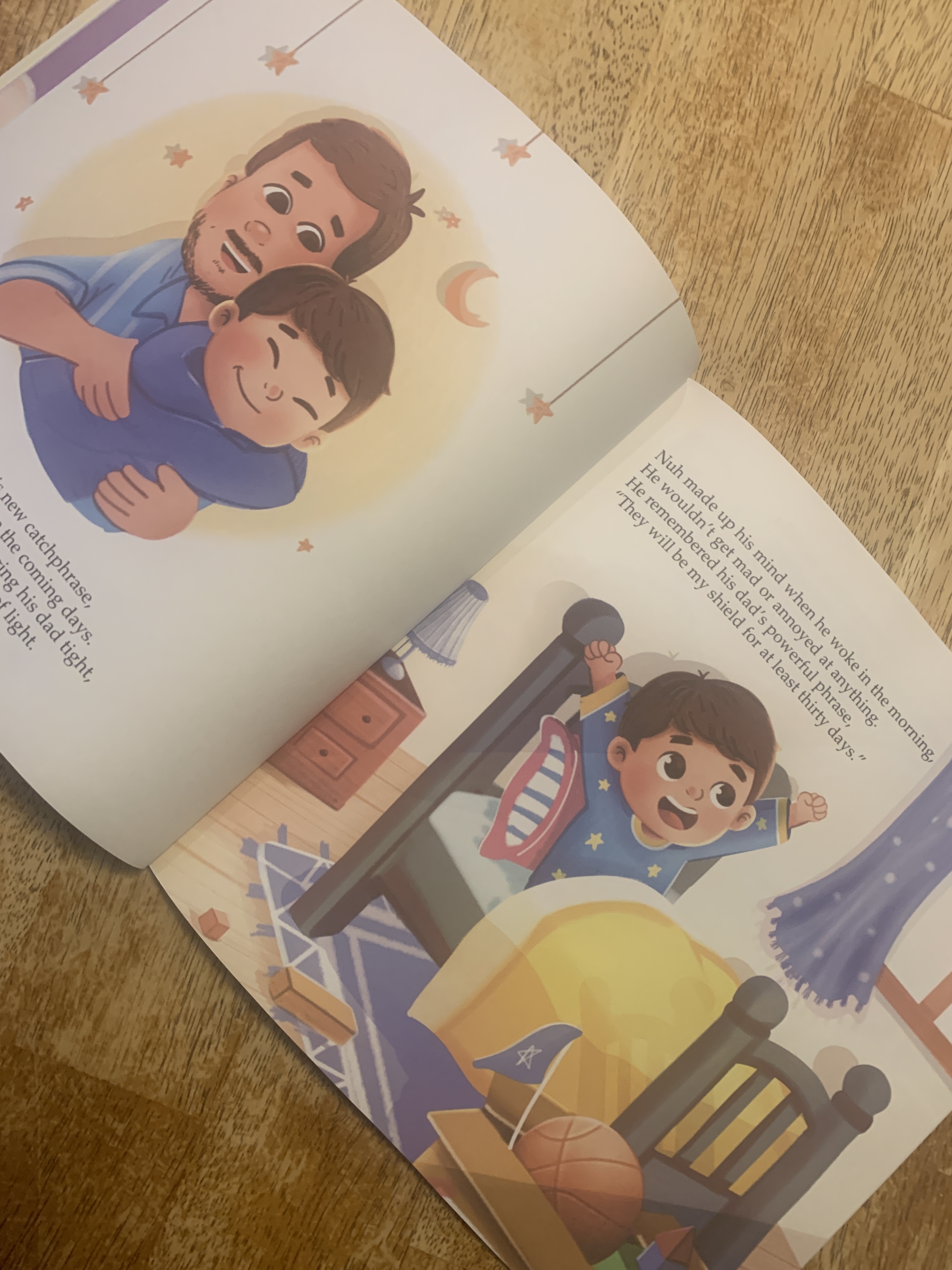
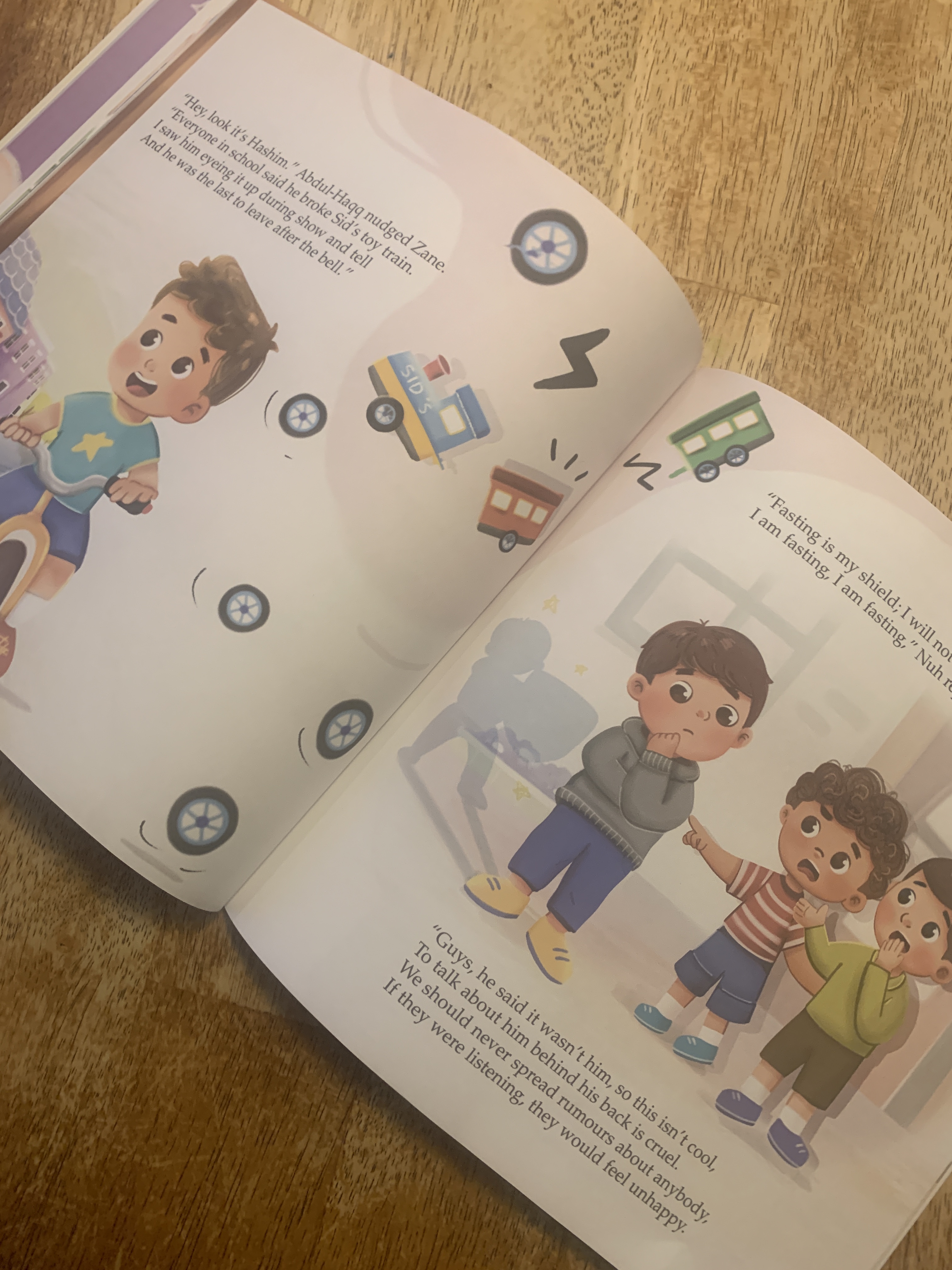
Empowered by the words, Nuh starts his next morning remembering his father’s advice.  When he spills water on his painting he remembers the advice. When a grocery cart collision at the store with his nemesis gets his fist clenching, he remembers his father’s advice.  He even gets a chance to share his knowledge with his friends.

img_7031

When the day is over he is eating iftar with his family and determined to keep his temper at bay throughout he whole month and beyond, inshaAllah, starting with him trying his drawing of the Kaba again.

img_7032

I like that the focus is on behavior, I think that is a good reminder for older kids, and something younger kids that may or may not be fasting need to implement in Ramadan.  I also like that the parents are encouraging and invested, but not controlling the individual situations.  The book is preachy, and when the kid takes the lesson and starts preaching it to him, it is a little heavy handed, but I think it fits with the nature of the book.  I appreciate that the kid knows what Ramadan and fasting is, so that the lesson can go a bit deeper in this Islamic fiction story.

I got my copy from Crescent Moon store, and you can get yours there as well by clicking this link here.  If you use code ISL (Islamic School Librain initials) at checkout you will save 10%,

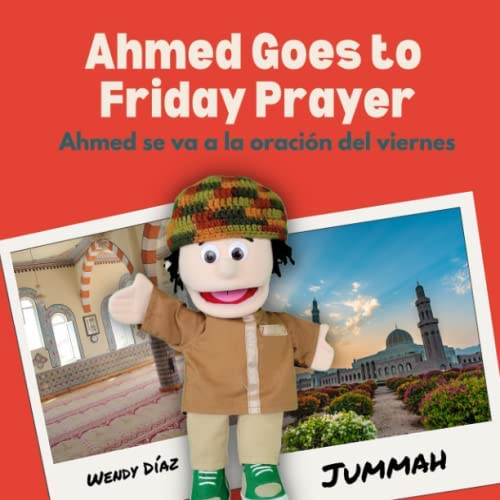
Ahmed Goes to Friday Prayer: Ahmed se va a la oración del viernes by Wendy Díaz illustrated by Muhammad & Mariam Suhaila Guadalupe

Standard
Ahmed Goes to Friday Prayer: Ahmed se va a la oración del viernes by Wendy Díaz illustrated by Muhammad & Mariam Suhaila Guadalupe


ahmed


This dual lingo: English and Spanish is a linear story of Ahmed going for Jummah prayers.  The rhyming text in both languages is fairly consistent and the information framed in an upbeat, fun, positive way.  From waking up early and taking ghusl to reading Surah al-Kahf, the book shows some spiritual aspects, some sunnah reminders, and social Jummah interactions with friends as well.  The 48 pages are good for preschool to early elementary aged readers and with the minimal text on the pages, even younger listeners will enjoy the book.  I wish the religious statements were sourced, and while I didn’t initially love the aesthetics of the puppets when I first saw the cover, I definitely warmed up to Ahmed and absolutely cooed at the adorable (puppet) Imam.  The book starts with a sourced hadith and ayat from the Quran and ends with questions to test your knowledge.

The story begins in a bit of an awkward fashion with Ahmed breaking down the fourth wall, and addressing the reader, and then on the next page, the “narrator” reaching out to the readers to have them pay attention to Ahmed.  Then the story starts with asking if the reader knows what the special day of the week is called.  It then tells us that it is called Friday in English, Jummah in Arabic and that I, Ahmed, is going to tell us about it.  With all the introductions and signposting it makes the book actually start 11 pages in.  I read the first few spreads numerous times trying to see what was going on, and finally just realized it has a lot of framing and set up before diving in.  Alhumdulillah, after the repetitive first few pages, the book reads smooth and clearly.  

Ahmed wakes up, does ghusl, puts on nice clothes, and then waits until midday to go to salatul Jummah.  Muslims read Surah al-Kahf, and then get to the mosque early.  It is noted that we get rewards for every step we take, we are encouraged to praise our Lord, we greet friends with Salam, and after athan we sit calmly and quietly listening to the Imam.  The khutbah talks about our faith and then we pray foot to foot closing the gaps. The last few spreads are about the importance of Jummah.

The illustrations show Ahmed the puppet in different places with other Wendy Diaz books displayed in poster form, books on side tables, and graffitied on a wall. The only other character beside Ahmed and the Imam is Ahmed’s un named friend.  The simple illustrated backgrounds with puppets in the foreground, the minimal rhyming text and the content presentation make this book a great addition to home and school libraries as well as ideal at story time or bedtime where early elementary aged children are able to understand both the excitement and protocols of the blessed day.

img_5601

Over the years I’ve done a few Jummah themed readings and this book would be a great addition at story time.  You can purchase the book here.

Baby’s First Series: Bismillah by Marwa Ahmed illustrated by Natalia Scabuso

Standard
Baby’s First Series: Bismillah by Marwa Ahmed illustrated by Natalia Scabuso

bismillah

Every few years a new Bismillah board book comes out and while after a while they all blur together, this new 2022 version is bright and colorful and at 24 pages a good length to show and teach toddlers when to say Bismillah without boring them.  At this age repetition is key, so while there is no real story, the book highlights familiar activities through the character Maryam and stresses saying Bismillah before you begin them. The book concludes with sourced duas to say when leaving the house, starting a meal, entering a bathroom, and before sleeping, and every morning and evening. I do wish the book would have clearly established that you say Bismillah, before starting anything and everything.  It hints at it at the end saying, “throughout the day, remember to say Bismillah,” but I worry that some kids would take it more literal, that you only say it at the times mentioned in the book, and not that the featured scenarios are just examples.  

img_4954

The book begins with Bismillah in Arabic text and the translation before starting the format of Maryam doing something on the left page spread and the saying of Bismillah on the right. So, “Maryam likes taking walks with her day,  When they leave, they say Bismillah.” In this manner Maryam takes the readers to play at the park, eat a meal with vegetables, drink a drink after her meal, read a book, wash before prayer, and get ready for bed.

img_4955

The faces of Maryam and other people are never shown, the stuffed animals in her room do not have eyes, although the duck bouncy seat at the park does.  The illustrations are blocky and colorful with the text clear and large.  The duas at the end tell when to say the dua, the dua in Arabic, the translation in English, and the source.

img_4956

For where to purchase the book you can visit the publisher’s website: www.litfancyhouse.com

img_4957