Tag Archives: emotional

Hidden Fires by Sairish Hussain

Standard
Hidden Fires by Sairish Hussain

I will not be getting over this book any time soon. It broke my heart, and all my other critical organs, in the most delightfully well-done way possible, and undoubtedly I am better for it. I don’t read a lot of adult fiction these days, and with some diabetic retinopathy concerns, I couldn’t read the 384 page adult book about generational trauma, partition, the Grenfell Tower fire, family dynamics, bullying, self-harm, and resilience, but was pulled in to the audio book version instead. The Desi-British voices of Yusuf, Rubi, and Hassan were refreshing to my American ears.  The multi-perspective book told in parts richly develops the characters, their relationships, and their current, past, and future struggles.  The author is Muslim, as are the characters, and while they all practice in their own way, it is undoubtedly who they are, and their Islamic identity is not questioned, feared, blamed, or apologized for.

SYNOPSIS:
The book weaves three distinct voices. Yusuf, is an 80 year old an immigrant who lived through partition, raised his family in the UK, has lost his wife a year prior, and is struggling with haunting memories of the past, failing health, regular loss of friends, and loneliness.  Hassan, Yusuf’s youngest son is a workaholic who is married to a non Muslim, non Desi who is suffering from fibromyalgia and who’s mother unexpectedly passes away in Spain.  Rubi, is Hassan’s 16 year old girl who is overweight, bullied, lonely and about to take her GCSE exams when she is dumped on her grandfather Yusuf’s door while her parents head to Spain.  The book opens in Ramadan the night of the Grenfell Tower fire and the horrific event affects them all, stirs memories, and shapes futures.  From there the layers of each character slowly unravel as they cope with the swiftly changing present as they desperately work to break free from the past.  As dementia plagues Yusuf, Rubi finds purpose in being needed, and Hassan is forced to re-prioritize his life before it is too late.

WHY I LIKE IT:
The book takes a slow approach to building up the characters and their back stories. It is almost feels like world building as a book would if it were a fantasy, it doesn’t info dump, but at some point the hooks are so deeply embedded that you really cannot leave the characters and their world and you have to finish the book, just to ensure they are ok.  Because I listened to the book, I feel like there might have been some Islamic content that was not completely ok, but again I was having vision issues and couldn’t note where to go back and check.  I think it is fine, and because it is an adult read, I think the audience can discern accuracy, but please know, I’m not 100% green lighting the Islamic rep.  It is undoubtedly well done and fasting and praying are a part of the characters, but their relationship to their faith and their understanding of it, is presented as theirs, it doesn’t get preachy or make broad statements about Muslims everywhere or Islamic doctrine.  

FLAGS:
There is body shaming, self-harm, trauma, death, torture, killing, lying, abuse, fear, guilt, dementia, bullying, assault, physical violence, drug use (mentioned), attempted suicide (mentioned), music, theft, make-up, close male and female relationships, Muslim marrying a non-Muslim, hallucinations.

TOOLS FOR LEADING THE DISCUSSION:
I think mature high school seniors or possibly even juniors could benefit from this book with discussions.  I think Rubi’s voice tied to her father and grandfather, will really open up youngsters perspectives, and provide a great vehicle to hear their thoughts, fears, worries, concerns about body image, self harm, aging grandparents, accessibility to parents, etc..

The Power of Du’a by Aliyah Umm Raiyaan

Standard
The Power of Du’a by Aliyah Umm Raiyaan

img_8062-1

Having not read the author’s first book, Ramadan Reflections, I wasn’t sure what to expect with this non- fiction/memoir/anthology/self help/spiritual focused book. Alhumdulilah the tone is easy to read, the chapters consistent in their format, the quotes and passages sourced, the personal stories relevant, and the information often moving and inspiring.  At times it did feel repetitive, but ultimately the book has staying power, and now that I have read it once cover to cover, I can see myself picking it up and reading a chapter or two at random and being again drawn in again.  While nothing in the book seemed “off” I did find myself wondering though, what qualifications are needed to write a book such as this, and did not find the author’s bio satisfying in providing that information.  Yes, there is a statement of praise by Mufti Menk on the cover, but similarly I don’t know if that means he “checked” and “approved” the book, or just liked the concept of it.  Ultimately, I don’t know that it matters, but I do feel it is worth disclosing, since it did linger in my mind, and I would have appreciated some transparency in the matter.  The 258 page book is meant for adults, but older teens will find it valuable too, even if a number of the stories are related to pregnancy.  I love that this book is traditionally published in the UK, it is for Muslims by a Muslim, but the glossary at the back and the way it is written, would allow even non Muslims to be drawn to the beauty of conversing with our creator, subhanAllah.

The book is divided into four parts: Du’a of Need and Want, Before Du’a, The Du’a, After Du’a, and each of the parts has multiple chapters that explore, develop, and illuminate the concept heading.  Each chapter starts with an ayat, or hadith, or quote, then gives a personal reflection of what the chapter sets out to do, and how the story about to be shared came to the author.  A personal du’a story from a real person is then shared.  The author then uses examples from the story, along with hadith, examples from the Qur’an, and/or guidance from scholars to build the case of the chapter’s intended goal.  Often there are then action items in a pull out box of suggestions the reader can do to “Develop Your Du’a” or strengthen one’s connection.  The final paragraph of the chapter is, “Allah, Transform My Du’a” where an example is given of a how to phrase your du’a.

I love that you can implement every single bit of knowledge into your du’a and your day, immediately.  If you read a chapter, you have something to ponder and act on, if you read multiple chapters you have more.  The implementation is easy and accessible, because of how it is presented.

Many of the stories, and the lessons from them are emotionally humbling.  I often found tears on my cheeks as I saw my own vulnerability, fears, worries, and hopes expressed on the pages.  And the passages that moved me today, I could see having a different effect on me if I reread them in the future.  Similarly, pages I skimmed, I have no doubt could truly grip me in the future as well.

I’m glad I own the book, glad I read it, and can see me recommending it, suggesting it, and gifting copies to others. The importance of du’a and the balm it provides is something we all know, but how to go about it to make the most of it, is often something we need assistance with and can be facilitated by this book, alhumdulillah.

Kicked Out by A.M. Dassu

Standard
Kicked Out by A.M. Dassu

81h06Amch6L._AC_UF1000,1000_QL80_

The first few chapters of this 336 page middle grade book were rough. It is a stand-alone companion novel, and I have read the previous works, so I don’t know if my expectation of myself to know the characters being introduced, was additionally muddled because the memories were faint, or as I actually suspect, the writing at the beginning is just weak. Like really weak, but I’m stubborn, and I kept reading, and I was rewarded, alhumdulillah. The book found its voice, its pacing, its heart, its relatability, its layers and I am so glad that I didn’t dnf it. The characters, their community, their tenacity, the exploration of family really stays on level with providing the reader insight and messaging to make them reflect on their own lives, without feeling preached to. The focus of football (soccer) keeps the book light and hopeful, while the difficult themes of deportation, Islamophobia, refugees, theft, absent parents, self doubt, forgiveness and second chances with adults, thread in and out. Many of the characters are Muslim, halal food is normalized as is saying salam, it isn’t focused on Islam but the kids make duas before they start a sting operation and when life changes are presented, also they consider Qadr of Allah when things occur. It feels authentic, and Muslim kids will enjoy that the focus isn’t a religious or cultural identity crisis, but just part of who they are as they take on this next chapter of their lives, non Muslims will feel the same.

SYNOPSIS:
Ali, Mark, and Sami are living it up since Mark’s mom won the lottery and they move in to a mansion with a pool. Sami’s brother Aadam starts doing the lawns to help pay for his lawyer fees to appeal his deportation, and things are looking up, expect for Mark’s mom’s new boyfriend though, he seems to be a bit of a racist. It all comes pouring down when Aadam is accused of stealing money, the boys are no longer allowed at the house, and Mark is prevented from hang out with his friends. Ali and Sami are not about to take this treatment without a fight, they have an idea to raise some money for Aadam with a charity football match, and Mark knows his mom is being influenced by her boyfriend and doesn’t abandon his friends. Ali though, is preoccupied, his absent father shows back up, and his step-brother has just been enrolled in their school. It is a lot but together Ali, Sami, and Mark support each other, stand up for what they believe in, and find ways to make sure they and Aadam are not “kicked out.”

WHY I LIKE IT:
I love the commentary on refugees, that it isn’t a political issue, but a human one. The exploration of found family and born family, and giving family second chances impressed me in a middle grade book. I also liked the kids hyping up the community and getting creative to solve a problem, rather than wait for the adults to step in. Whether it was to raise money for legal fees, or solve a mystery and clear someone’s name, these kids really have each other’s backs while dealing with a lot of heavy stresses. They mess up and make mistakes, but the book spending time to show them come back from them is a level of emotional intelligence and maturity that I think readers will benefit from.

I was thrown at a passage that mentioned that Ali can’t go to the mosque because he doesn’t have his dad around. Which made no sense to me as the kid goes to restaurants, parks, stores, on buses, on his bike alone throughout the book. Alhumdulillah, I have wiser folks I can ask concerns to, and my Lit Sister Zainab explained that in fact in the UK some masjids don’t allow women all the time and kids are not encouraged to come unsupervised, so if that stands out to you as well for being completely off, recognize it doesn’t mean it is wrong, like I did.

Truly the book is terrible at the beginning. The barrage of character names, the unlikability of Ali because of how he treats his brother, and the stress of how winning the lottery has made Mark’s life better, is all over the place. I must have read the first three chapters at least four times, before I just decided to plow through and see if the pieces fell in to place, which alhumdulillah, they did.

FLAGS:
Lying, stereotypes, racism, Islamophobia, accusations, theft, lottery, Mark has a crush on Grace, but it is subtle, anger, jealousy.

SPOILER: Ali’s dad was in love with a lady before he married Ali’s mom. His parent’s had him marry Ali’s mom to tame their “wild son” and at some point in the marriage, the dad had a nikkah with the first lady and eventually left Ali, his mom, and two siblings for his other family. The focus is how Ali feels about having his dad leave their family, being jealous of his step brother, and dealing with his return. It doesn’t make it a religious issue or judge if this was permissible, it really stays focused on the parent children relationship and the emotions involved in the leaving, not staying in touch, and the returning. I think middle grade can handle it.


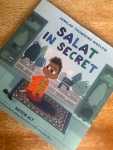
Salat in Secret by Jamilah Thompkins-Bigelow illustrated by Hatem Aly

Standard
Salat in Secret by Jamilah Thompkins-Bigelow illustrated by Hatem Aly

img_8430

It is quite remarkable in the course of 40 pages that so many themes, layers, emotions, windows, mirrors, and relevance can radiate with ease and entertainment for children four and up.  The authenticity of the text and illustrations create tangible feels in this book, that months after reading it for the first time, I am still moved to tears, both inspired by joy and as a cathartic release of being seen.  The true mastery is that even if you are not Muslim and cannot relate to the nervousness of praying publicly, you understand Muhammad’s hesitancy and feel for him as he battles not just finding a place, but watching onlookers reactions to his father, police proximity, and being brave enough to push yourself even when you are scared.  Usually when asked what my favorite book is, I stumble to narrow it down to just one, but truly this book has raised the bar of not just traditional publishing representation, but Islamic/Muslim literature across the board.  It is a gift to read, to share, to enjoy, and a blessing that such an unapologetic book is available so widely for our children to connect with, and our non Muslim friends to see us through.  Please spend time with this book and make it available to your children, your students, your community, it really is that good, alhumdulillah.

img_8431

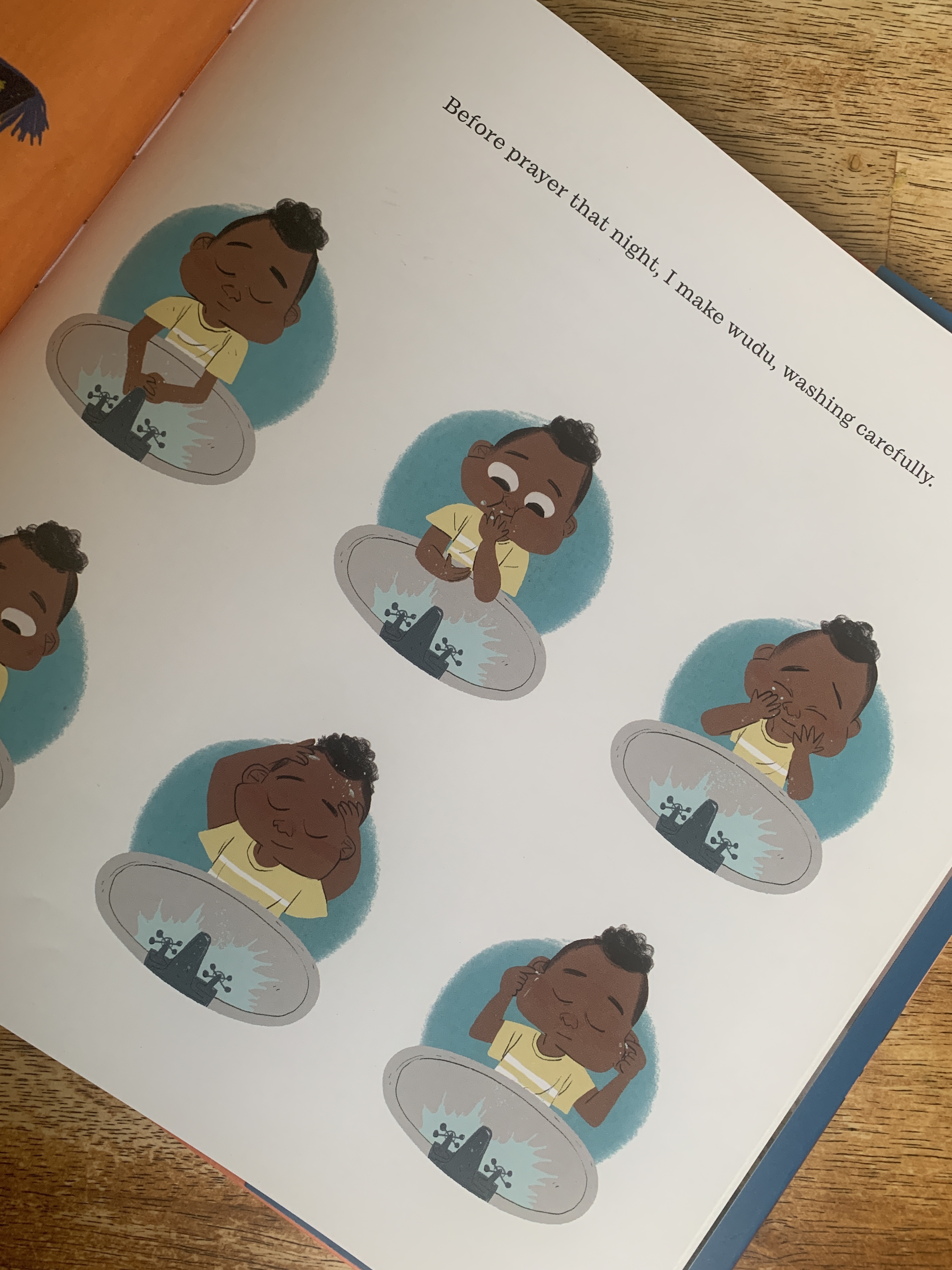
It is Muhammad’s birthday and he is seven, “Old enough to pray five times a day,” his father gifts him a prayer rug, and  Muhammad is ecstatic.  He makes wudu that night and offers salat with full attention.  He says the Sunday school words and shares his most wished for wishes to Allah swt, not even letting little sister, Maryama distract him.

After Fajr the next morning, he is determined to find a secret place at school to pray Dhuhr. Daddy doesn’t need secret places, if prayer time comes he pulls his ice cream truck over and prays on the sidewalk, “never delay salat.”  At school, Muhammad heads to Mrs. Baker to ask for a place to pray, but his confidence waivers and he returns to his seat.

img_8432

Anxiety about where to pray has him looking for spots throughout the morning, but when recess comes he finds he can’t take the prayer rug out from under his jacket.  He lingers when everyone returns to class and rushes through the words and motions in the coat closet.

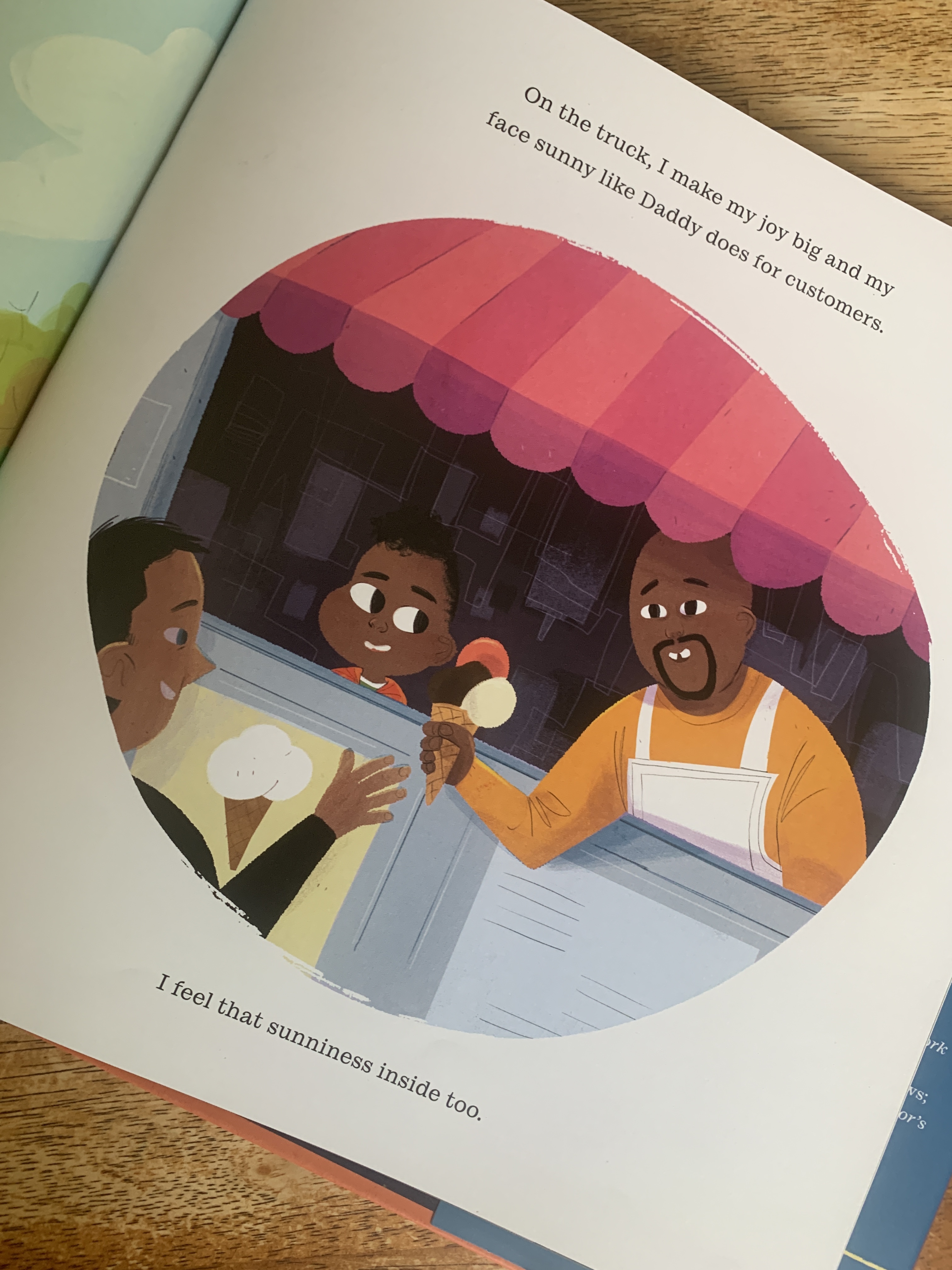
That evening he is with his daddy in the ice cream truck and the sunshine and smiles pour out of the two.  When the sun sets it is Maghrib time and Daddy heads to the sidewalk to pray, reassuring Muhammad that he can pray at home.  Muhammad watches his dad and various events spur him to make his decision.

img_8433

I love love love the way salat is approached with love and excitement and that the dad embodies safety and joy and does not pressure or force Muhammad.  The relationship is beautiful and allows for worship to be seen as both personal, as well as obligatory and merciful.  The duo also show a great parent child dynamic that warms the heart.

img_8434

I like that there really isn’t any “hate” given to anyone praying, it is hinted at, people do not understood, but the focus is not on the outside bystanders- it is what Muhammad thinks and feels.  I’m fairly certain every Muslim who has prayed in public has encountered a wide variety of responses, and this book keeps the gray to reflect and spark conversation.  It is often met with ignorance, with hate, with aggression, but it is also met with respect, apathy, and curiosity which the text and illustrations allow for.

img_8435

There is so much love and joy in the book as well as identity, that I don’t mind one bit that my littles ask me to read it over and over.  It is perfect for groups, one-on-one, and I cannot wait to share it in a story time, there is also an incredibly informative and heartfelt Author’s Note at the end.  If you haven’t preordered it yet, the book releases on June 6, 2023, please pre order it and signal the support for this book and future books that center authentic Muslim joy, Black Muslim representation, and OWN voice author and illustrator accuracy.  Request it at your library, put it on hold at your library, check it out, read it.  If you cannot preorder it, still purchase it when you can, inshaAllah it will be a beloved book in your home as well.

A Bit of Earth by Karuna Riazi

Standard
A Bit of Earth by Karuna Riazi

earth

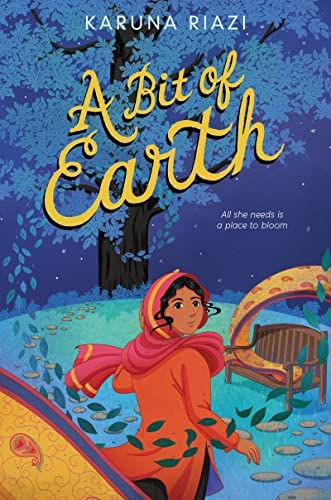
This Secret Garden retelling mixes the heart of the original with a dash of modernity, the flavor of desi culture, and the lyricism of a good writer.  Over 368 pages the slow plot but rich imagery will draw readers in, hold their attention, and leave them thinking about the characters they have been fortunate to spend time with on Long Island.  Islam is practiced and normalized and naturally woven into the Muslim characters’ daily lives without othering or over explaining.  I did struggle a bit trying to keep the relationships of who was supposed to be caring for the protagonist at various points since her parent’s died clear, but once I abandoned stressing about it I was able to be swept away.  I recently reread The Secret Garden with my own children and the original is not plot heavy, nor action packed, but I watched as my own children were drawn to the slower, more grounded (pun intended) nuanced tale, and I think this book, in the same vein, will find its way in to the hearts of middle grade readers.  The book is clean, there is a possible crush hinted very slightly at the end, periods are also endured, and I do have reservations of the terrible marital relationship between Mr. and Mrs. Clayborne, but it establishes that change will occur, so at least it isn’t normalized.  There are sprinkles of magic implied regarding the house, but it is always framed without clarity and in a subtle way to set the tone and the emotions the characters are feeling more than centralizing something rooted (see I did it again) in fantasy.

SYNOPSIS:

The book updates and mirrors the original fairly well with an obstinate orphan arriving at a sprawling house, finding a prickly boy, and setting off to form a tentative toleration of one another with friendly neighbor kids in a garden that is unquestionably off limits.

Maria Latif arrives from Pakistan against her will to be taken in by a distant relative (I’m not sure how she is related), but Asra has been called away and she is forced to stay with Lyndsay, the new wife of Mr. Clayborne.  The first wife was a friend of Maria’s family, but Lyndsay is just as emotionally overwhelmed and lost as the child in her charge.  With Mr. Clayborne away on businesses, his mother Charlotte keeps them all on edge.  When Colin Clayborne is expelled and returns home, more tension erupts and the two children find themselves in an off limits garden trying to make the most of a difficult situation.

WHY I LIKE IT:

I love the mix of poetry and standard novel format.  It is beautifully written and clearly the author does a remarkable job of making her very unlikeable characters worm their way in to the reader’s heart.  Both Maria and Colin are thorny and difficult, stubborn and rude, but you seriously cheer for them, and I did shed a few tears at the end.  With the author’s writing ability apparent, I’m still not sure why the foundation of the relationships and getting Maria to the Clayborne home is so cumbersome.  It is too muddled and it drags the book down every time it is revisited.  The Dadi having the aunt’s phone number was too easy, the inconsistency of the neighbors having no relationship to the Clayborne’s for so long and Lyndsay not even pausing to think another Bangladeshi family living a few houses down might be my husband’s first wife’s friends, seems inconsistent.  Honestly Lyndsey in general needed to read like a competent woman struggling, not a teenager in over her head. I disliked her and Mr. Clayborne’s relationship and I would hate to think any reader would find it ok or normal.

I love the Islam and how it presents when the character has to pray, she goes and prays, it is part of the story and it is seamless.  I don’t think the culture is handled quite as well.  Lyndsay is a foot writer who is always cooking, yet knows nothing of desi foods? If Colin’s mom is desi, wouldn’t she at some point tried to cook familiar foods for him.  Half the neighborhood is Bangledeshi, so it seems everyone has a parent or step parent or distant relative that is desi and I loved the normalizing, but it seemed a bit assuming.  I don’t think kids will wish it was more clear, but as an adult reading it, I felt like it needed to be interjected more without explanation, or if left as is, adding some context. I also wanted to know what Maria’s parents did and a little introspection from Maria.  Again as an adult I see how her anger and grief changes how she remembers them, but from them always being away, to such soft poignant memories at the end, I think kids will need a little hand holding to understand the grief process and her understanding of them.  As it is, they just seem terrible and then all of the sudden great, and the pacing gets thrown off in the process.

FLAGS:

It seems to hint at the end that Maria might have a bit of a crush on Colin, I honestly thought up until a single line that they were making a chosen family with the people who cared for them, but that line seemed to suggest it might be more of a romantic feeling than friend or brotherly.  I read an early copy, so this is subject to change.

Maria gets her period and it is detailed what she is feeling.  I think boys and girls can and should read it.  It is presented on age and appropriately: cramps, achy, dry about blood leakage, having it start young like her mother, etc..

Implied magic (possibly), music and musical instruments being played, milaad, lying, sneaking, being kicked out of school for physical assault, close male and female friendships, ADHD stigma.

TOOLS FOR LEADING THE DISCUSSION

I think this book would work in a classroom and would appeal to readers in an Islamic or public library.  I would consider it for a middle school book club, I think readers will connect and feel empathy for Maria, Colin, and Lyndsay and be better for it.

I preordered my copy HERE and I hope you will do the same

Abdul’s Story by Jamilah Thompkins-Bigelow illustrated by Tiffany Rose

Standard
Abdul’s Story by Jamilah Thompkins-Bigelow illustrated by Tiffany Rose

abduls story

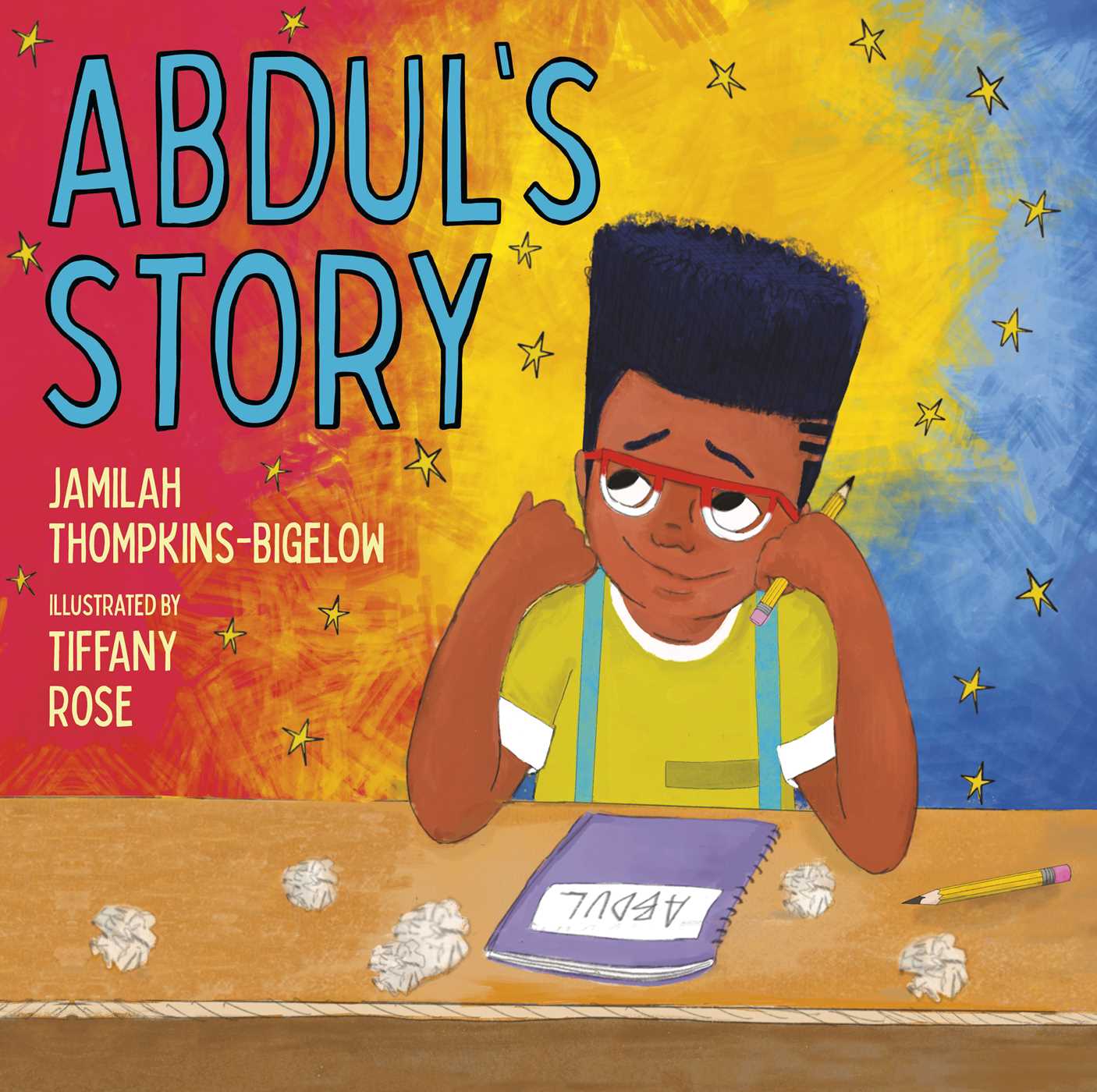
I really don’t know what more you could want from a 40 page brightly illustrated picture book for ages 5 and up.  I felt seen, I got a little emotional, I was inspired, I smiled, I felt compassion and empathy, hope and nervousness.  I was reminded of the power of role models, of getting down on a child’s level, literally.  I was reassured that we all make mistakes, learn differently, and can still thrive. Suffice it to say the book is moving.  The OWN voice lyricism will resonate with children of all colors, but that the messaging is from a Black Muslim boy and is so unapologetic and proud and beautiful, makes the emotions Abdul feels palpable.  Every classroom bookshelf needs this book, every child needs to hear it, read it, and explore the layers contained within.  Alhumdulillah.

img_8766

The book starts out with absolute joy.  Abdul loves to tell stories.  Writing stories, however, is something else.  The letters are tricky, they get turned around, they aren’t straight and crisp like the one’s the barber cuts.   His pages don’t look like the neat lines of his classmates.

He decides that maybe his stories aren’t for books.  It isn’t like he even sees stories like his in books:  stories about the people and places that he knows.

img_8767

Then one day a visitor comes to class, Mr. Muhammad, and he is a writer.  He encourages the children to, “write new stories with new superheroes.”  Abdul tries, but he keeps making mistakes, and then he has to erase, and before long his paper is covered in smudges and holes.

img_8768

Mr. Muhammad encourages Abdul to keep trying and fix the messes later, Abdul has an idea, and with a “bismillah,” he gives it another go.  There is no perfection, there is just determination.  The struggles, success, and support of his peers and Mr. Muhammad, just might change Abdul’s mind about his stories.

img_8769

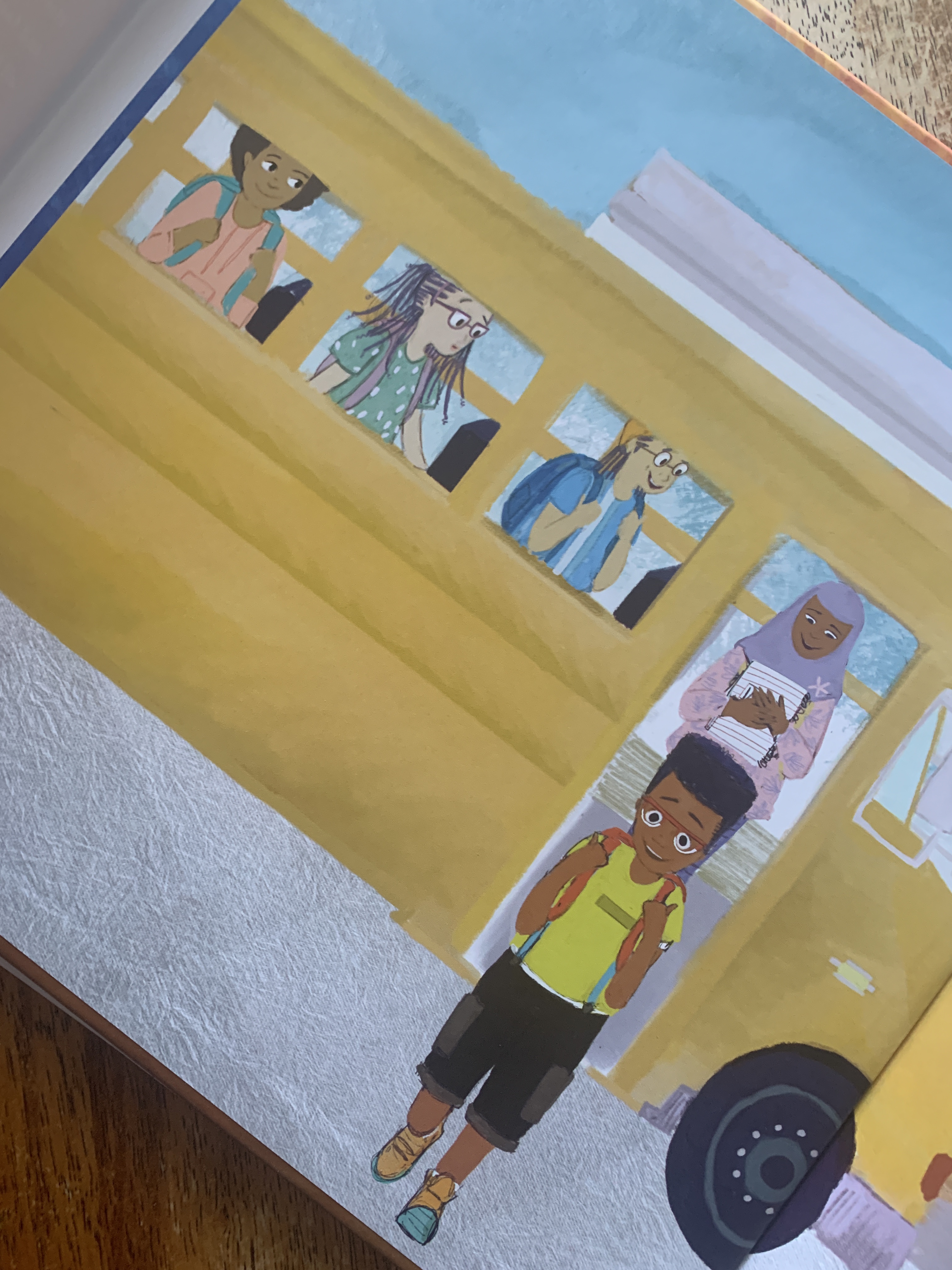
I love that the book is Black centered and Muslim centered.  There is praying salat, mention of bean pies, a classmate in hijab, and saying of Bismillah.  I’ve read the book seven or so times and it has yet to get old.  The characters burst with personality, even the side ones, that I’m positive it will be a favorite at story time and bedtime alike.

img_8770

Can be purchased at Crescent Moon Store or Amazon

When Stars are Scattered by Victoria Jamieson and Omar Mohamed

Standard
When Stars are Scattered by Victoria Jamieson and Omar Mohamed

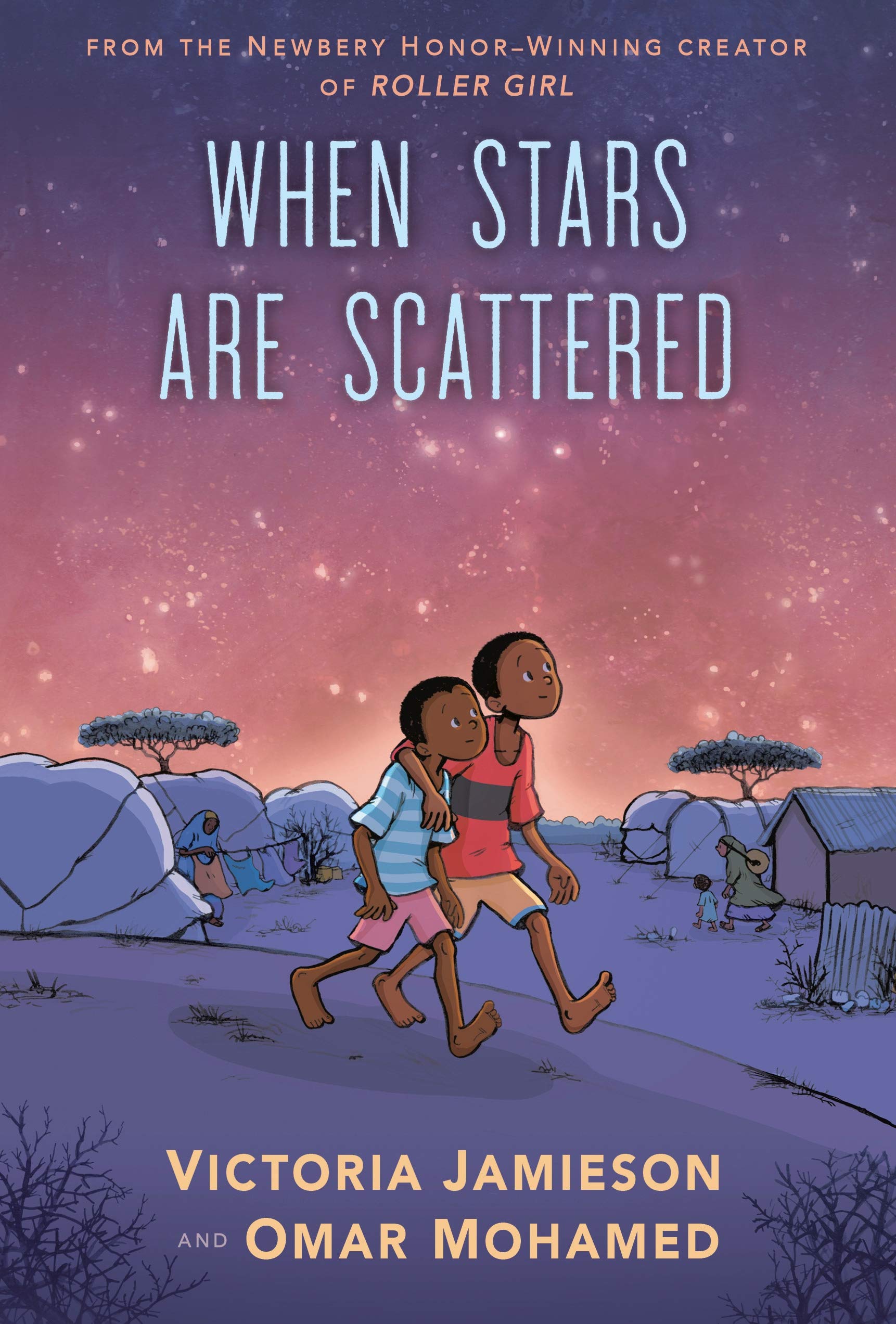
starsThis graphic novel swept me off my feet and left me in tears, not because of the hard life and sadness that life in a refugee camp entails, I had braced myself for that, but because of the hope and humanity and beauty that is so powerfully expressed and conveyed in this 264 page book.  Meant for 3rd graders and up, I think kids through middle school should be encouraged to read it.  The illustrations and colors are incredibly well done and the story is based on a true story that needs to be told and shared.  It is definitely in the top 10 books I’ve read this year and I keep catching my 11 year old re-reading this book repeatedly (like 5 or 6 times).

52BE6C8B-4246-4A92-BA66-004378A21862

SYNOPSIS:

Omar Mohamed lives in Dadaab refugee camp in Kenya.  His father was killed in the Somali war and his mother has not been seen after she sent Omar and his younger brother Hassan to run with the neighbors to escape the violence.  Hasan suffers from seizures and doesn’t speak, save one word, Hooyo, mother in Somali.  The two boys have an adopted mom Fatuma, who looks after the boys in the camp as if they were her own.  Unable to go to school, Omar spends his days looking after his brother, playing soccer with plastic bags, and waiting in lines for water, food, and news of a better opportunity.

When Omar gets the chance to go to school (5th grade) he has to make the difficult decision of pursuing his own opportunities, with the hope of helping Hassan later, or living day to day and taking care of his younger brother.  He is finally convinced that education will help them both, and that if the girls can find a way to do their chores and attend class, he can too.

Each transition from primary, to middle to secondary school requires testing, and only the top get to continue.  Determined to stay in school, Omar studies while dealing with life’s many challenges and the daily additional challenges of living with little food and resources.

When Omar and Hassan’s names finally appear on a UN interview lists for resettlement, hope seeps in, but the wait and the uncertainty prove to be yet another test.  Along the way there are side characters from the United Nations that show compassion, other families that show how generous and loving humans can be, female classmates show him how to take advantage of his privilege and friendships that move friends to family.

D74285FB-CBDC-4C4A-BD7B-070439BB08EF

WHY I LIKE IT:

The book is gripping and has heart.  I don’t know what I expected, but I truly could not put it down.  The character’s stresses are felt and emotions are conveyed so powerfully, that I don’t know that you can read the book and forget it.  The most emotional part for me was his honesty in dealing with his brother, the strength of his friends, particularly female, and the bond to Fatuma.  Truly their living arrangements and loss of family is gut wrenching, but it was the little things that touched me the most.  The honesty of Omar having to decide if he was tempted to not go to school because he was scared. Was he using his brother as an excuse to stay with something he knew.  The emotional tipping point of no return for me was when he realized Fatuma would not be able to go to the second interview with the UN and would not be a part of what came after.  Of course I knew that, but by that point I was so connected to the character, that when Omar realized it, I broke for him.  To feel that connection in a graphic novel was new for me, perhaps a first, and alhumdulillah I am better for it.

The characters are Muslim and behave traditionally with praying and Ramadan and Eid.

F9E64F9D-1722-4CBD-B905-BE754BCE6C77

FLAGS:

There is talk of khat, something the men chew on the side of the road to forget things.  There is some violence, bullying, a young girl getting married before 6th grade and having a baby.

CDD12698-52CE-4FFD-9444-29A666980797

TOOLS FOR LEADING THE DISCUSSION:

Yes! I am hoping if and when we resume school I am starting with this book inshaAllah, for my middle school book club.  There is so much to talk about and understand and empathize with.