Tag Archives: dua

Ramadan Reflections: A Guided Journal by Aliyah Umm Raiyaan

Standard
Ramadan Reflections: A Guided Journal by Aliyah Umm Raiyaan

I had started this book on the first day of Ramadan thinking I could double up some days and finish it early with enough time to offer up a review for those wanting to know if they should acquire the book  and take advantage of it during the blessed month.  But alas, here I am nearly 10 days post Eid, finally finishing, and getting around to sharing my thoughts.  The 277 page book spans 30 days, it is divided into three parts, with each chapter/day covering a theme with the author’s personal connection, outside sourcing illuminating the thought, then moving on to a section entitled, “Let Your Heart Ponder,” followed by a “Dua Invitation” and then a few pages of guided journaling prompts, questions, and considerations.  I did not write in the book, I struggle to mark up pages since leaving school, and even annotate by taking pictures and attaching notes on my phone.  But even not using the journal as intended, the book requires you to slow down, to savor the reflections and insights, and put them in to practice.  To read it in one sitting, or to rush the chapters would not accomplish for the reader what the book sets out to do.  Even the chapters that did not directly resonate with me, I found still offered nuggets of empathy, or consideration, and the short chapter style allows it to not be a burden to spend time with.  The days that hit me the hardest, that taught me something, or reminded me of something long forgotten, or inspired me to be better, more intentional, more forgiving, more present, I look forward to discovering again and again in future Ramadan rereadings.  That isn’t to say that this book can only be read in Ramadan, or that next Ramadan chapters that I found unremarkable, won’t suddenly hit different, but there are some chapters that felt rather repetitive and memoir style anecdotes that were not developed enough to reach the reader beyond surface level understanding.  Had the whole book been like that, perhaps I wouldn’t remark on it as the Islam centered hadith, ayats, and quotes are consistently strong, but when the author’s personal reflections on her own life, and those close to her, were more deeply explored, a deeper resonance to the theme of the chapter emerged.  Perhaps because I read more fiction, but when character development, so to speak, was present, the connection to the message, and the empathy to others and one’s self bloomed very naturally, and thus those chapters became more memorable.  

I felt the latter half of the book was stronger than the beginning, perhaps intentional as the end of Ramadan draws near and our hearts desperate to cling to the closeness of Allah swt.  I love the thorough glossary at the end, I believe it is the same one in the author’s second book, “The Power of Dua” and it is such a benefit to truly understanding the words used that non Arabic speakers might think they know, but can benefit from having clearly articulated. 

It is never fair to compare books, but having read the author’s two books nearly together, I anxiously await and sincerely hope that there is a third.  I read them out of order, and the second is definitely stronger, but I struggled with the “memoir” style in both.  Reflections was the author’s own story, and Power of Dua was other people’s stories, and both felt forced and distracting for me more often than not.  I hope if there is a third book, that disconnect can be resolved and the author’s commentary and Islamic references in her signature palatable style can be expressed without being contingent upon a story that the reader may or may not relate too, or more personal info will be shared so that if the reader can empathize more readily.  The repetition of hearing the name Solace UK and that she started a charity from scratch, started to feel almost promotional, as I still am not sure, two books later, what the day to day work of the charity is, or what topics Honest Tea Talk seeks out to cover, only that they are constantly name dropped.  I would love to know who the author studied with and where.  The little snippets make the reader wanting to Google, but I think it distracts from the connection to the words in the moment.

Overall a solid addition to spend time with in Ramadan, or any time, and to reference when the heart needs to feel connections.  The writing makes for an easy read, the duas and parts to ponder allow you to put in to practice the teachings immediately, alhumdulillah.


Eliyas Explains + Bite-Size Journal: Why Does Allah Let Bad Things Happen? by Zanib Mian illustrated by Daniel Hills

Standard
Eliyas Explains + Bite-Size Journal: Why Does Allah Let Bad Things Happen? by Zanib Mian illustrated by Daniel Hills

img_3601-1

The book stems from the genocide occurring in Gaza, but expands to cover the more general concepts of qadr (destiny), tests, and sabr.  The book assumes that what is happening in Palestine is known and does not discuss specific details, allowing the book to be both timely, yet universal.  As with all the books in the series, the conversational humorous approach appeals to children as foundational Islamic concepts are broken down and explained.  The book is 73 pages with the journal portion starting on page 33. In some of the other books, the journal feels more of a hands on to already shared information, or an accompanying workbook of sorts.  In this book however, I feel like the second half continues to explain the topic at hand, and convey key components in understanding why Allah swt, lets “hard” things happen, how we should view the tests, approach difficulties, and inshaAllah triumph. The book has been checked by a Shaykh, and I highly recommend this important book for elementary, middle grade, and even middle school children. The concept of qadr is difficult, I struggle to truly grasp what we can and cannot change, but this book helps readers focus on what we can change and how to view terrible things that happen to us and to others.

The book starts with Eliyas introducing himself and his family, and then wondering why “Israel is being able to do what they’re doing in Gaza.  Why isn’t Allah stopping it?” As with all Eliyas books, mom and dad are sought out, food is somehow worked in, and time and space are given to Eliyas and his siblings to be given an answer. His parents start by being glad that Eliyas’s heart is soft for the Palestinians and that he is bothered by what is happening to them, before explaining that a lot of understanding is trusting and truly believing that Allah swt knows best.

img_3625-1

The book uses hadith, ayats from the Quran, it even shouts out other Zanib Mian books, The Mindful Book of Wellbeing, for seeing the bigger picture and Eliyas Explains Why Should I Pray my Salat on how to make yourself strong to get through the struggles of this duniya.

The book talks about why Allah swt didn’t make everyone good, and it is clear in saying that being mad and sad are ok too, as long as we are not questioning Allah swt. There are prompts and questions (with answers) and the book is not heavy, despite the subject matter, the tone and approach stay on level and allow readers to connect, alhumdulillah.

You can get your copy here at Crescent Moon Store.

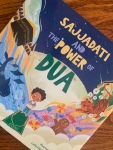
Sajjadati and the Power of Dua by Ayesha N. Rahmaan illustrated by Laila Ramadhani Ritonga

Standard
Sajjadati and the Power of Dua by Ayesha N. Rahmaan illustrated by Laila Ramadhani Ritonga

img_7520

This 38 page large hard back picture book is absolutely beautiful: the illustrations, the tone, the thickness of the pages, all come together to create a child’s wonderment about the power of salah and dua with grounding in the actual parts of prayer.  On my first reading the imaginative “magical” aspects of the prayer rug, “Sajjadati,” was sweet and endearing, but as I thought about the story and then reread it, I had some concerns.  I know the book is meant for children, I know I am a reviewer and thus am over analyzing it, so I point the following out as a “heads up” so to speak, and for you to make your own decisions if the literal text will be misleading or if the overall mood of the book will be taken as loving dua and the closeness prayer brings one to Allah swt.

img_7521

The book starts with a little boy recalling when he got his green prayer rug from his grandma, that has his name on the corner (in the illustration it is centered on the top, not in the corner) and him naming the prayer rug, “Sajjadati.” The following page, same spread, then says,  “When I have Sajjadati with me, I can pray anywhere.  And when I pray on Sajjadati, I can go anywhere.” These lines give me pause, because even if the prayer rug is lost or not with him as he grows up, he is still going to need to pray. The importance of the prayer rug seems over elevated, albeit sweet, religiously a little unsettling.  The second of the two lines, about going anywhere, is also a bit of a gateway to the rest of the book and almost encouraging one’s mind to wander during salah.

img_7522

The next page gets back on track saying that starting to pray and saying “Allahu Akbar” leaves this world behind, the little boy says surahs he has memorized, and knows Allah swt is watching him.  He asks Allah for what he wants, and his imagination takes him on adventures after each salah. He imagines flying, and being a superhero.

img_7524

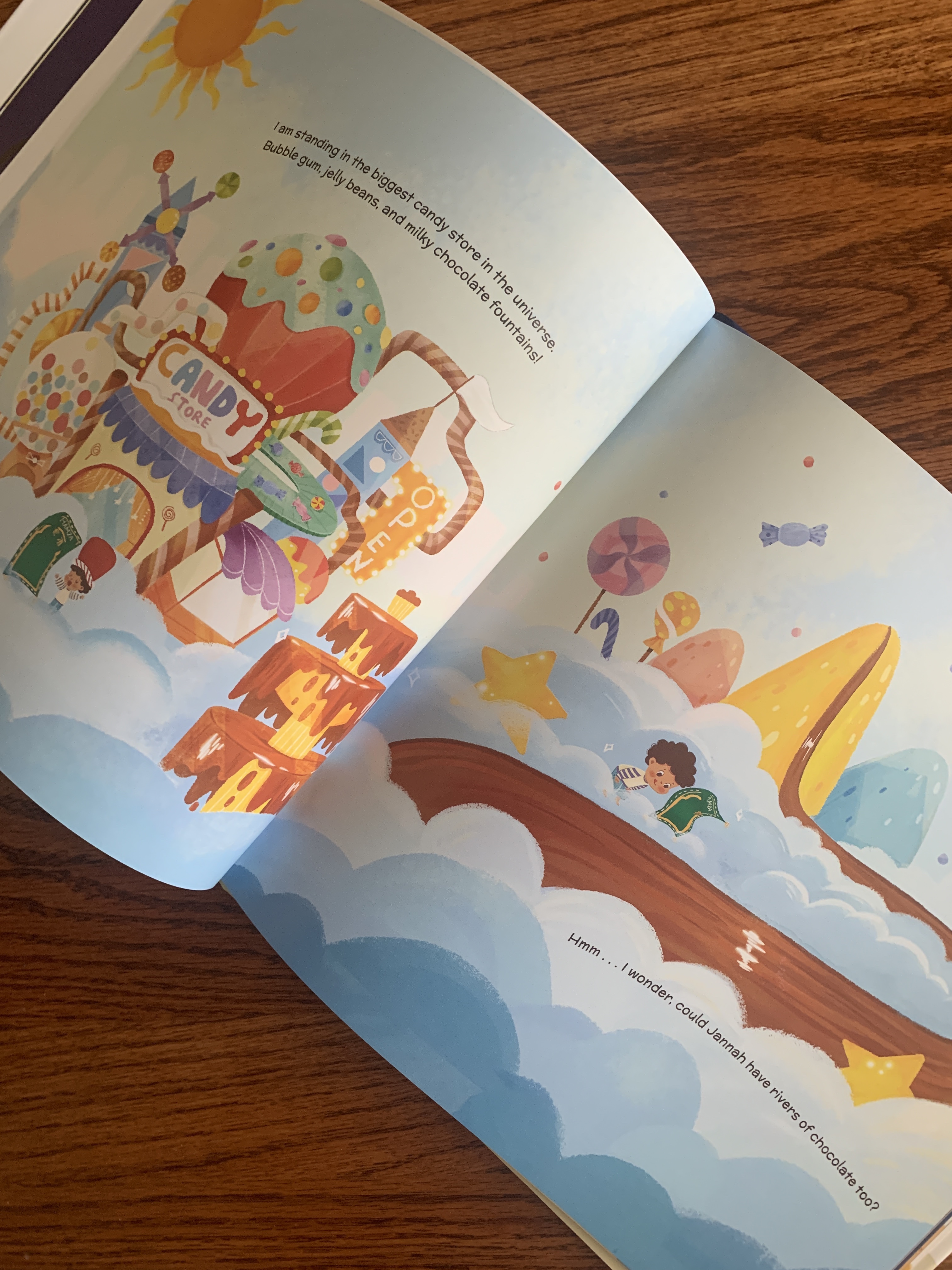
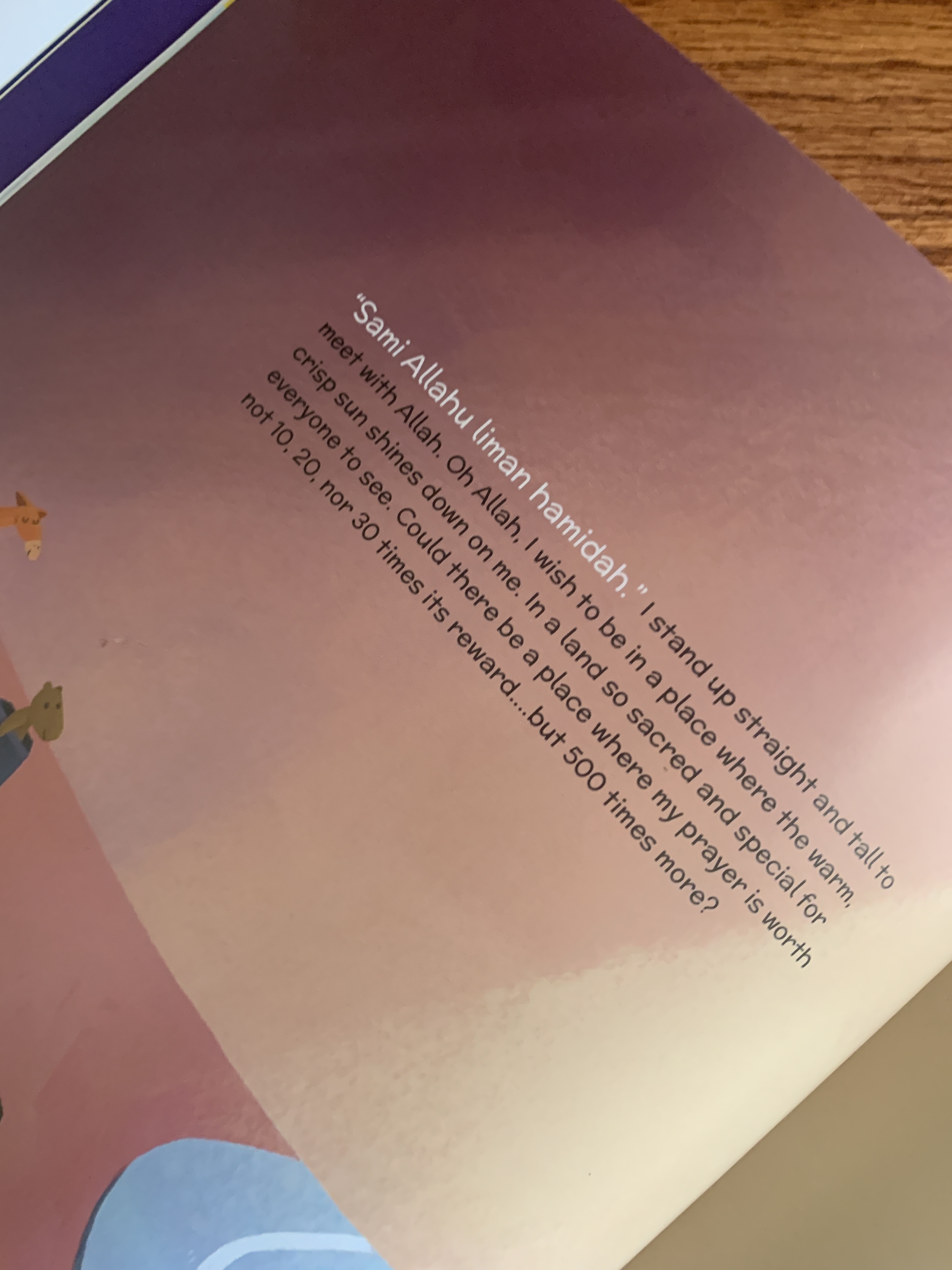
The story then returns to being in prayer, not after, and going in to ruku.  The text has him imagining he is in the “biggest candy store in the universe” wondering if Jannah has rivers of chocolate before standing up straight again saying “Sami Allahu liman hamidah,” and contemplating if there is a place where his prayers would be worth more and Sajjadati taking him to al-Aqsa.

img_7523

In sujud Sajjadati tickles his nose, but he doesn’t mind because he is closest to Allah swt in this position, and while he won’t let his “annoying little sister,” bother him, his mind does drift to being on a boat in the sea with seagulls squawking, “salaam.”

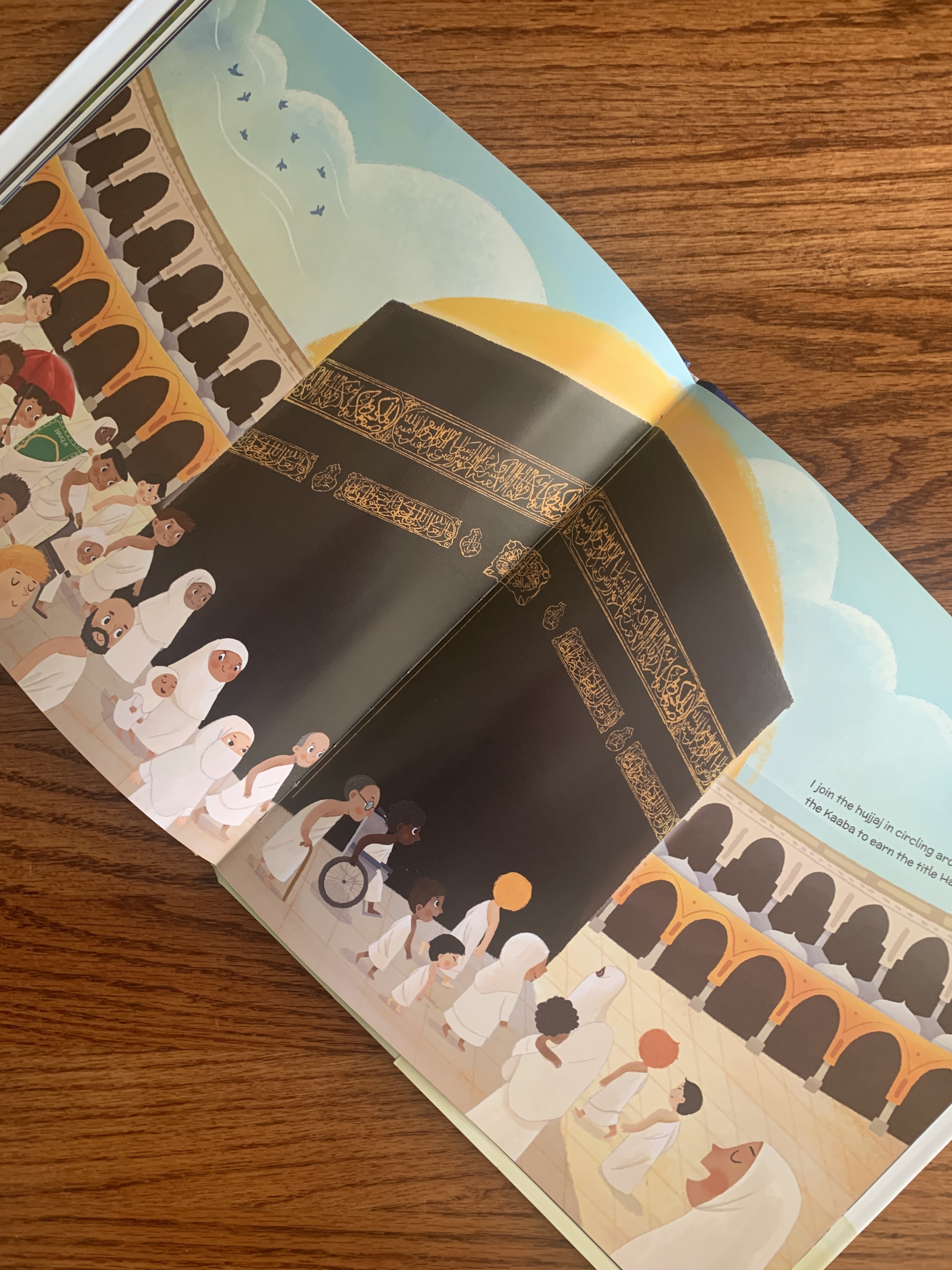
Hamza is then making dua for those suffering.  Since nothing is impossible when making dua, he is also asking for pets from the savanna, but knowing that Allah swt will provide what is best.  He makes duas to go for hajj and concludes his salah by folding up Sajjadati and finding peace in Allah swt being al-Mujeeb.

img_7525

I love the heartfelt framing of salah and the interweaving of both real and whimsical wants, as well as the sprinkling of facts about prayer into the story, but I honestly struggled a bit with the juxtaposition of the parts of prayer with the day dreaming elements.  I also struggled with the tenses, and find myself constantly rewording this review to reflect the book’s timeline.  Hamza is with his family, for example, hearing the current event news, while the next set of pages has him back making dua at the end of the prayer he started at the beginning of the book.  And the hearing the news and the praying for people is all being conveyed in the present tense, not clear if he recalled hearing about strife in the world and then made dua, or paused heard and resumed his prayer, it all seemingly happening at once, but that doesn’t really make sense. The title also says dua, not salah, and so much of the book is about prayer, that I feel like the two get conflated erroneously, and dreaming big during dua is different than having your mind wander during your salah.

img_7526

The book starts with an ayat from the Quran in Arabic text and meaning of the translation in English and concludes with a glossary and space to complete a Dua List.

If this book seems like a good fit for your young child, I ordered mine from Crescent Moon Store and you if you use my initials ISL (Islamic School Librarian) at checkout you’ll save 10%.

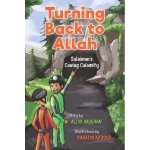
Turning Back to Allah: Sulaiman’s Caving Calamity by Aliya Vaughan illustrated by Rakaiya Azzouz

Standard
Turning Back to Allah: Sulaiman’s Caving Calamity by Aliya Vaughan illustrated by Rakaiya Azzouz

turning back to Allah

Good early elementary books can be tricky: the voice needs to read authentic, the lessons not preachy, and the scenarios relatable, all while not talking down to the reader or talking above their comprehension.  As fabulous middle grade books seem to be popping up at record speed, I find myself reading the same old books with my fourth child who is six.  Alhumdulillah, this book was nominated in the Muslim Bookstagram Awards 2021 competition and I was able to purchase and receive it quickly from Noura at Crescent Moon Store.  My son can read it, although because of the British terminology, he did better when I read it to him, none-the-less, he could explain it, he genuinely understood and related to the main character, and was emotionally connected to the outcome of the story.  The 49 page, color illustrated story is perfect for independent readers first or second grade and up.  The book also contains comprehension questions, etiquettes for du’a, a list of times and places when du’as are answered, and evidence for the story from hadith.  Additionally there are ayats from the Quran at the beginning and end of this well sourced book, alhumdulillah.

img_4985

SYNOPSIS:

Sulaiman is getting ready for an overnight scout trip in some caves.  He is nervous having been stuck in his apartment elevators the summer before and being lost at a park with his family.  His stress has him being mean to his little sister, and his dad tries to mediate, but you can sense that their normal bickering is heightened because this is going to be hard for Sulaiman.  The scouts meet up to board their mini bus and Sulaiman is acting weird, he wants to sit by the window, he wants to read signs, finally he tells Jacob about his worries and the two boys agree to stick together like glue while they are in the caves.  Foreshadowing is set, and when Sulaiman’s batteries roll away and he stops to retrieve them he gets separated from the group and he will have to rely on his faith in Allah swt to feel less alone and brave what is to come.

img_4984

WHY I LIKE IT:

I love that when Sulaiman is arguing with his sister he doesn’t have hadith quoted at him.  Sure it is ideal, but really, as parents we just want the bickering to stop most times and our kids to be nice.  It is often easier to instill morals and lessons in calm times, not in the middle of an emotional kerfuffle.  At the same time, when he is scared, he falls back on the lessons he has been taught from the Quran and sunnah.  I love how it reads realistic.  We want our kids to turn to Allah swt for all things, but sometimes to teach that we encourage them to seek Allah swt in times of happiness and times of hardship.  Sulaiman is scared, really scared, and he turns to Allah swt, and it is heartfelt and emotional.

I’m embarrassed to say, but I was a little confused by the being lost in a park prior story thread.  It either needed more detail, or maybe just more context, but I thought it was the same park they are heading to with scouts, then realized it was a completely separate park and incident, so I would like a bit more framing of that story line.  Also the stress of being stranded in the elevator, doesn’t directly connect to the rest of the story, perhaps bringing up some claustrophobia fears would have helped tie it all together.  As it is, it just seems that Sulaiman seems to be tested a lot and rather traumatically.

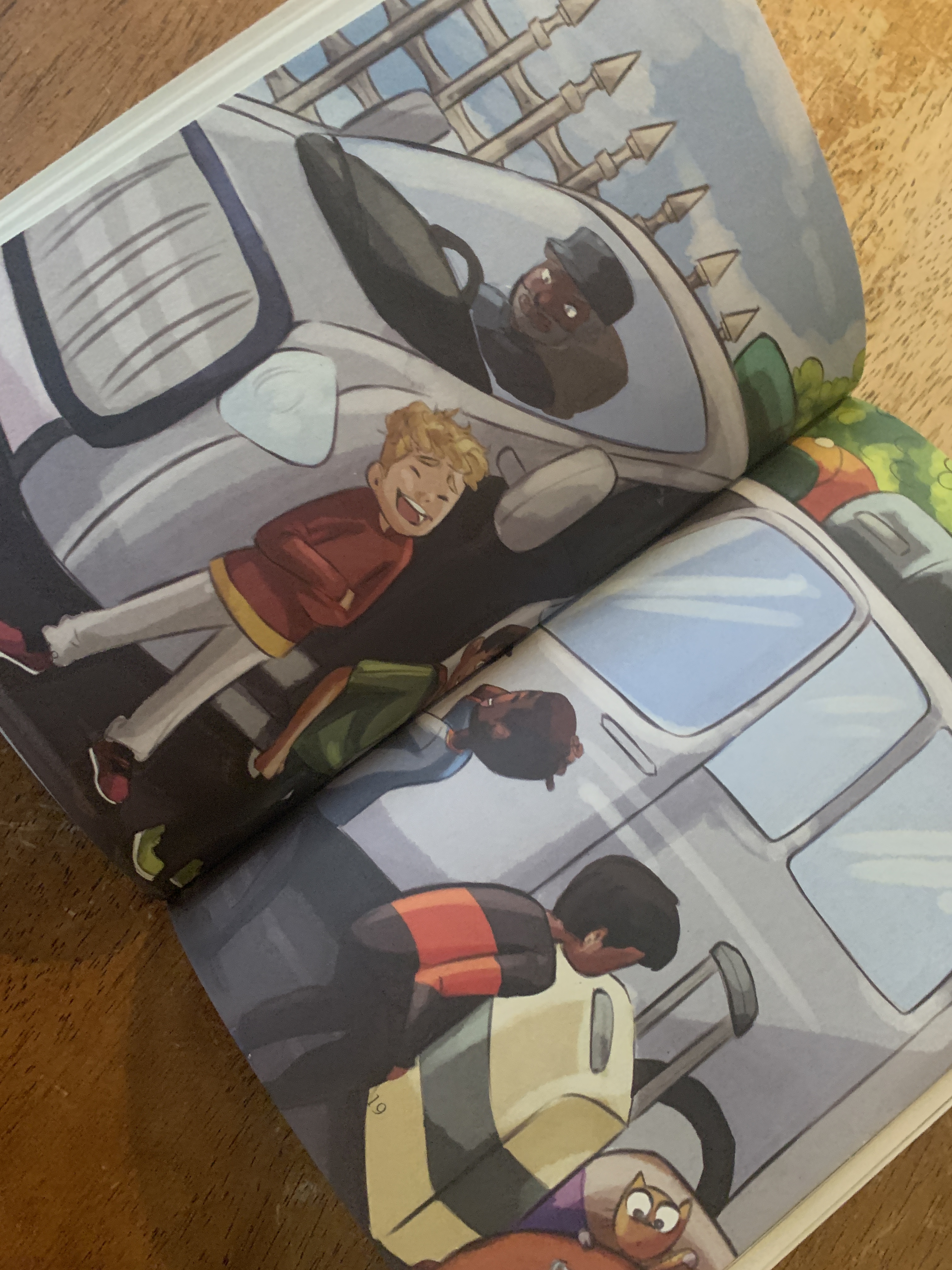
The illustrations being in full color and full page are a welcome surprise in the book.  However, there is one two-page illustration that shows the kids laughing before boarding the minibus, but it isn’t derived directly from the text, and I initially thought Sulaiman was being laughed at for his fears.  I went back, and it doesn’t seem that is the case, but I wonder if I was the only one confused by that illustration.

All-in-all the book physically is appealing to children with the open font, colorful pictures, size, and length.  The story is relevant, and the islamic tie-ins powerful, alhumdulillah.

FLAGS:

Some teasing, possible bullying among siblings.  Some scary moments mentioned and explored: being stuck in an elevator, lost in a park, left alone in a cave.

img_4984

TOOLS FOR LEADING THE DISCUSSION:

This would be a fun read aloud in a second grade class.

Salaam: Mindfulness for Muslims by Humera Malik illustrated by Najwa Awatiff

Standard
Salaam: Mindfulness for Muslims by Humera Malik illustrated by Najwa Awatiff

img_3300

I had planned to wait until the physical book comes out on the 15th to offer up my thoughts, but the Kindle version has released and I want to help put it on everyone’s radar.  My own kids went back to school today and emotions and feelings are all over the place: excitement, nerves, anxiety, worry.  Changes in general cause heightened feelings, throw in Covid cases on the rise, puberty, friends, more open discussions about mental health, etc., and kids need tools to be successful.  Alhumdulillah, the Qur’an and Sunnah offer guidance, reassurance, and direction, and this book helps organize and present coping tools for ages seven to adult.  Thirteen emotions over 85 pages follow a pattern of a title page, a “Remember” page with an ayat from the Qur’an (except in one case it is a hadith), then an affirmation to be said that is either a verse, a dua, or dhikr, followed by an adorably illustrated spread of simple activities to do and try in a checklist manner.  Not only will young Muslims find reassurance and direction in the text provided, but inshaAllah, they will also be comforted knowing that what they are experiencing is very human and that Allah swt and Prophet Muhammad saw have provided insight and acknowledgement of such emotions.

The 13 emotions highlighted are: afraid, angry, disappointed, grief, jealous, lonely, overwhelmed, sad, shy, sorry, upset worried, grateful.  There is an author note to parents at the beginning that mentions that the book is meant to be read “cover to cover in peaceful times and to be dipped into to find specific advice” when needed, and I couldn’t agree more.  There is also a note for the readers normalizing big emotions and reassuring them that Allah swt does not want them to despair.

The diverse character illustrations are absolutely heartwarming and I hope that they will be made in to pictures or charts to be purchased so they can be hung.  They are really well done, and the visual mapping will help kids retain and put the tips in to practice.  I’m not sure what the sizing will be in the physical paper back book, but I hope it is large enough for them to be properly enjoyed.


This is Why We Pray: A Story About Islam, Salah, and Dua by Ameenah Muhammad-Diggins illustrated by Aaliya Jaleel

Standard
This is Why We Pray: A Story About Islam, Salah, and Dua by Ameenah Muhammad-Diggins illustrated by Aaliya Jaleel

this is why we pray

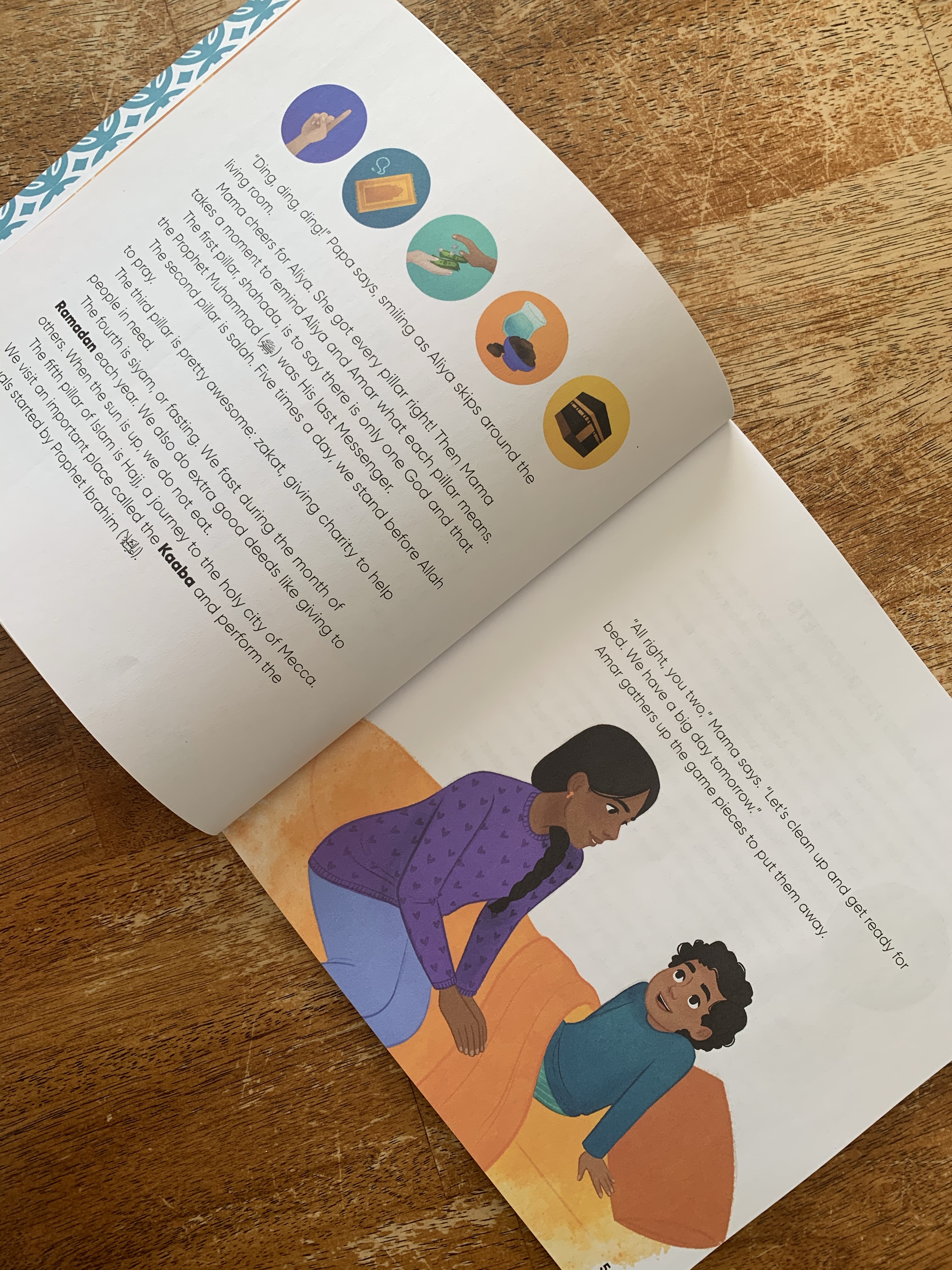
This 8×8 softbound 55 page book for ages 5 to 7 is a great resource for learning the basics about the five pillars, wudu, salah and dua.  It claims that it is a story, but I feel like that is a bit of a stretch.  It has fictionalized framing that is done well, but to call it a story I think is misleading.  It is set up like a children’s Islamic text book, think Islamic School or Sunday School curriculum, where there is a story that highlights Islamic concepts with vocabulary, there are breaks to focus on some specific idea from an outside source, in this case the Quran, there are things to think about, questions to answer, and then the same characters re-emerge in the next chapter to repeat the process. The book has an amazing illustrator, but there are only maybe three full page illustrations, four half page illustrations, and the rest are just small glimpses to compliment the heavily text filled pages.  I can see myself reading the entire book to my five year old, and then it sitting back on the shelf to be pulled out and revised when we need to go over salat, wudu, or need to learn some duas, and understand the five pillars.  I don’t think it will be requested for the “story,” or the pictures, it just isn’t that type of book.  It borders fiction and nonfiction, but I think it is closer to nonfiction, and works well as a tool to engage your children with easy to understand text, quality illustrations to see the steps of salat and wudu, and to see Islam practiced in scenarios that young children will recognize, such as playing games, going to the beach, and losing a favorite toy.

img_0647

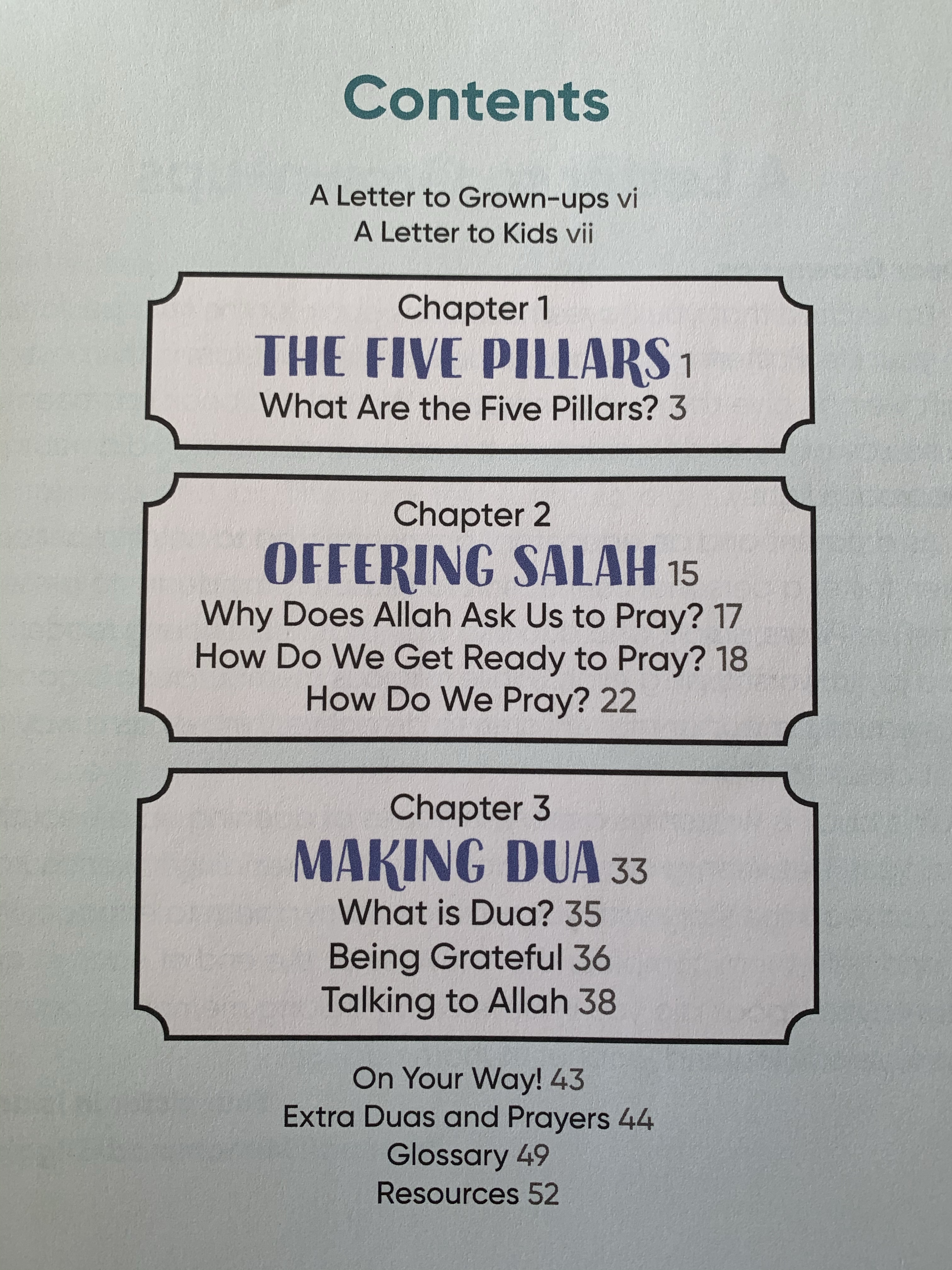
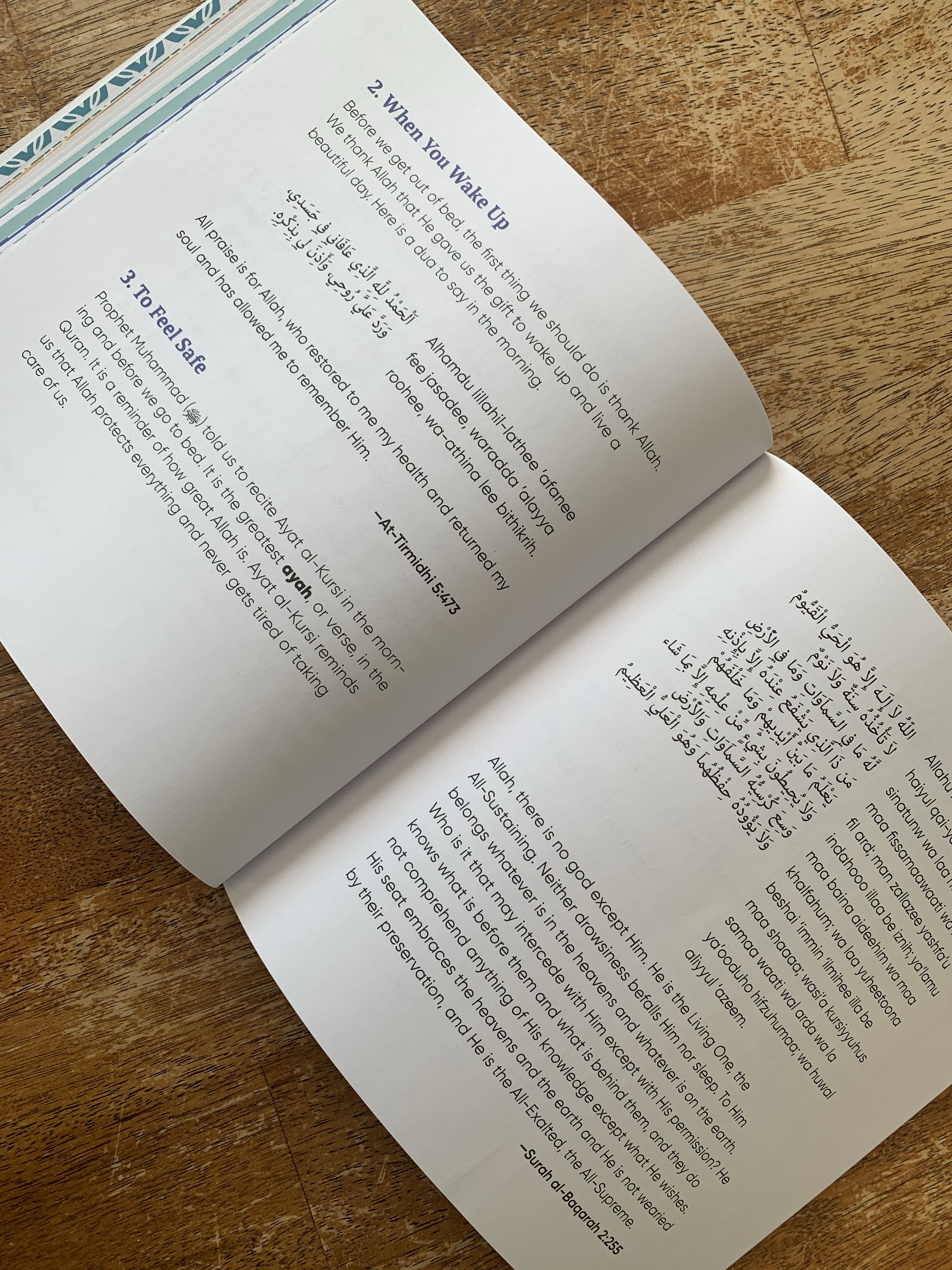
The book is divided in to three chapters: The Five Pillars, Offering Salah, and Making Dua.  Before the chapters there is a letter from the author to grown-ups and then one to kids.  After the final chapter there are reference pages with extra duas and prayers and a glossary.

img_0649

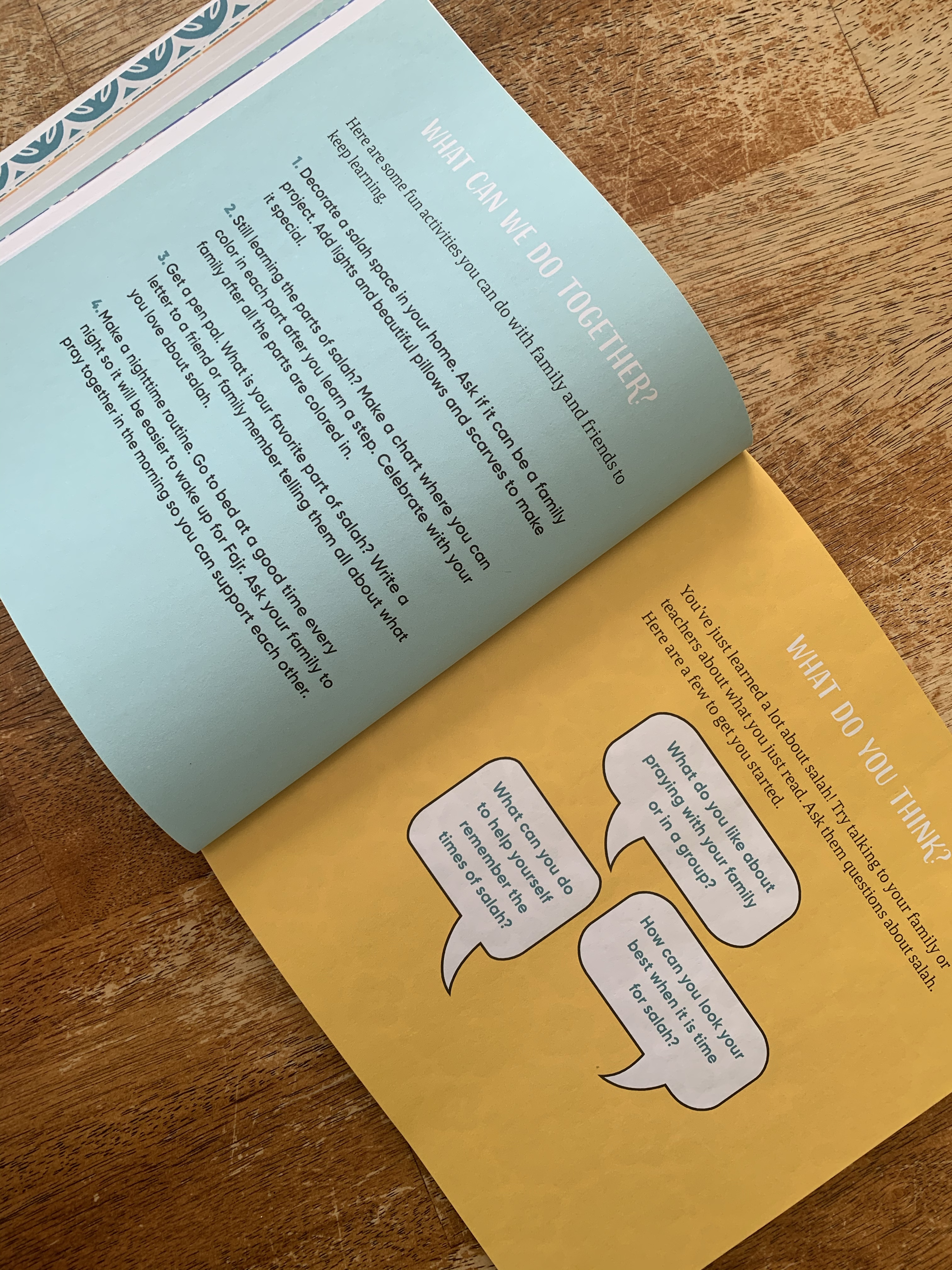
The first chapter opens with the Abdur-Rahman family playing an Islamic question game.  Older sister Aliya knows the five pillars, younger brother Amar needs a little more explaining.  The next morning the kids are heading to the beach, but first they have to get up to pray salah and send some food to the neighbor. As the kids drive they talk about Ramadan and their Uncle Sharif having just gone for Hajj.  There is then a page dedicated to a Quran Story Time that focuses on Allah swt wanting us to ask him for each and everything no matter how big or small. There is an ayat from the Quran as well as a hadith. The next page is a section called, “What We Can Do Together,” to further learn about the five pillars, and then some questions asking the reader, “What Do You Think?”.

img_0654

Chapter two has the family at the beach pausing their fun to pray.  But first they have to make wudu, and the steps are illustrated and detailed with tips and directions.  They then pray, again the steps and words are detailed and illustrated with tips about how to stay focused and the like.  The translation of the Arabic is included and the transliteration is as well.  The Quran Story Time focuses on Fajr and then the questions and ways to further engage with the information concludes the chapter.

img_0648

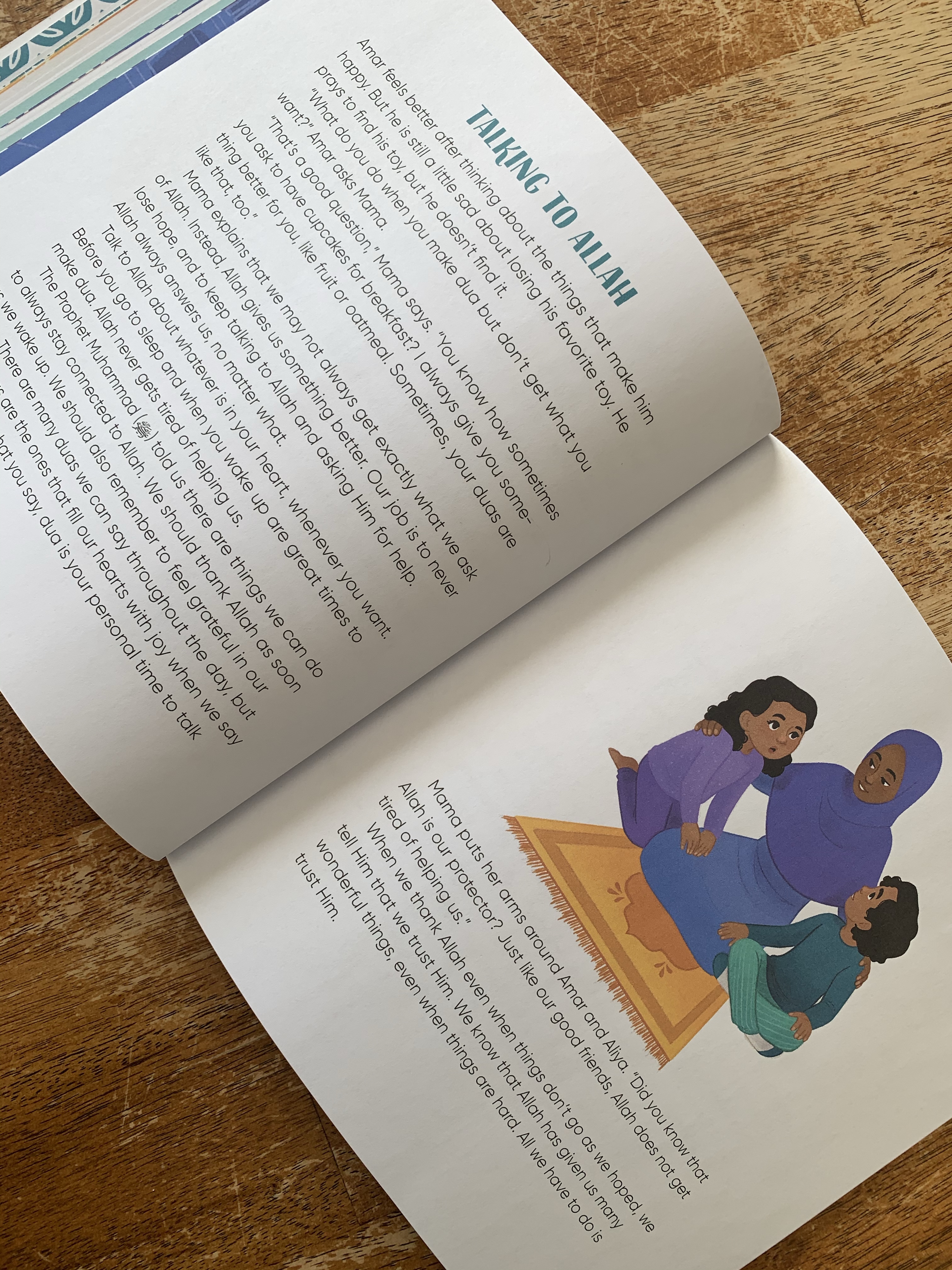
The third chapter is on Dua and has the kids barely making it to Sunday School on time.  Papa says he made dua that they wouldn’t be late, and even in class the lesson is on dua. After class Amar can’t find his toy even after making dua and is encouraged to be grateful for what he does have.  The Quran Story tells the story of Prophet Muhammad (saw) helping the old woman who is talking bad about the Prophet and how after he helps her and he tells her his name, she converts.  I don’t know that, that is in the Quran, I thought it was a hadith?

img_0655


The kids learn that Allah swt may not answer duas, but will inshaAllah give them something better.  There are four additional duas to learn in the moving on section and the bolded words throughout are defined in the glossary.

img_0651

I’m not sure about the title of the book, it is about more than just prayer, so don’t think that it is limited to just that.  It also doesn’t detail the number of rakats or what breaks wudu, it is specific in somethings, but is more a broad overview than an all encompassing handbook on salat.

img_0656

I think the book is well done and will be useful for most, if not all, Muslim families with young children learning the basics, but it isn’t a picture story book in my opinion, it is more of a fun engaging twist on information that might otherwise be presented in a boring manner.

img_0650


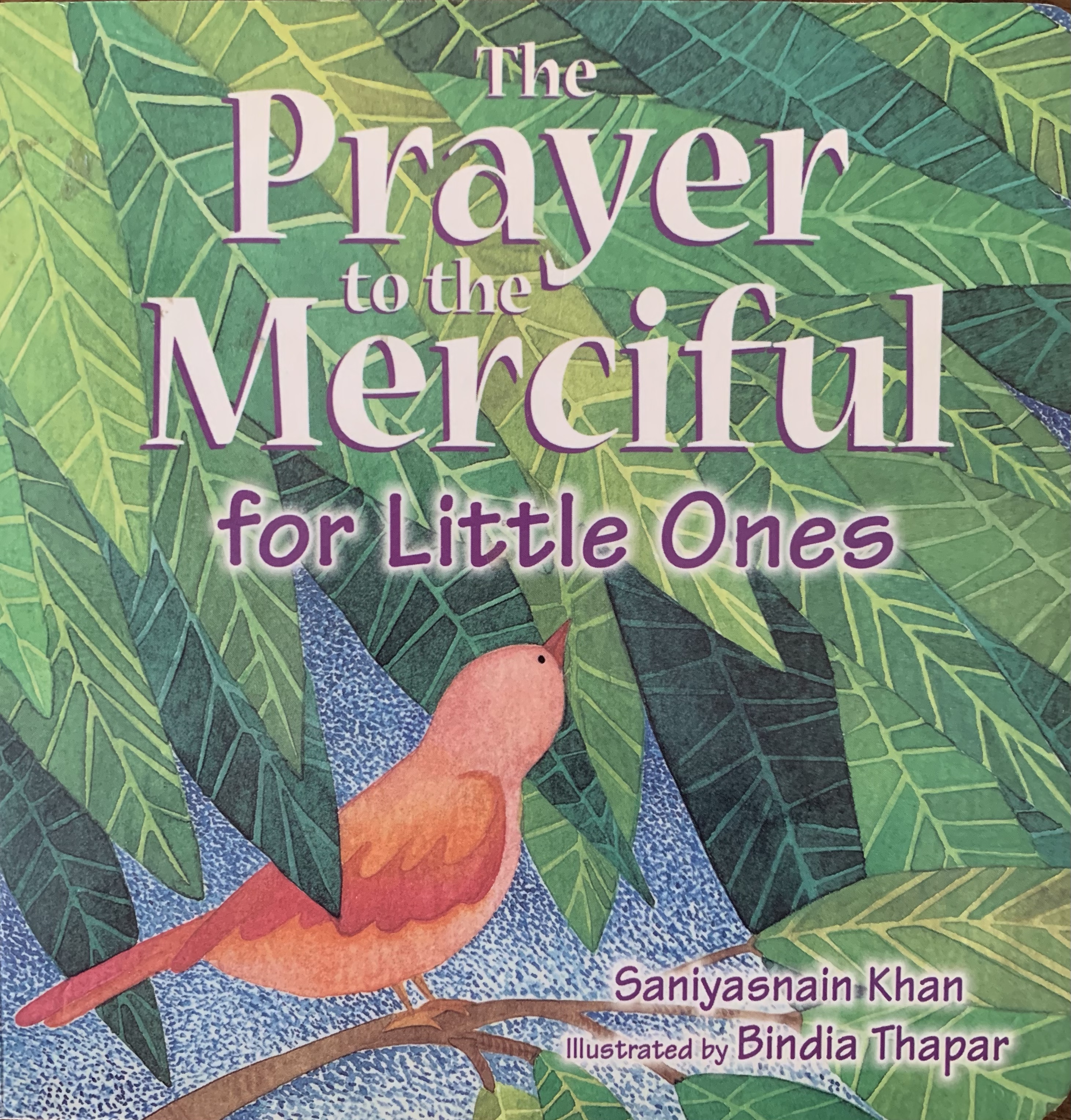
The Prayer to the Merciful for Little Ones by Saniyasnain Khan illustrated by Bindia Thapar

Standard
The Prayer to the Merciful for Little Ones by Saniyasnain Khan illustrated by Bindia Thapar

img_8938

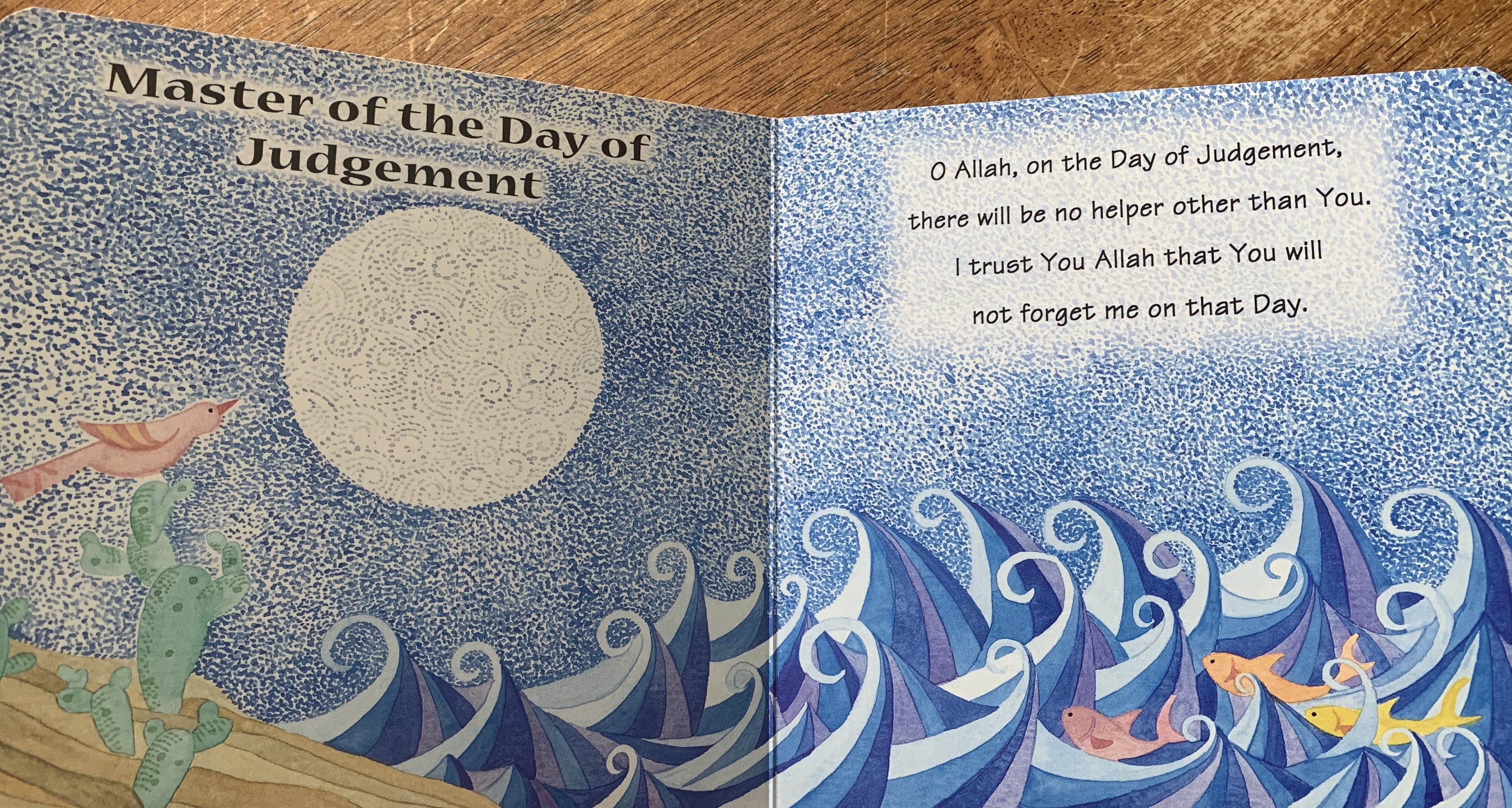
This 14 page board book is a prayer based on Surah Fatiha and explores the first few ayats with reflective and thoughtful duas.  It has soft muted illustrations of birds and nature on small 5 by 5 pages.  The idea of the book is sweet and soft that I can imagine reading it with a child in your lap after salat, or perhaps whispering into them at bedtime, but it really is a prayer for the parents to read.  Children might understand from the text that everything is from Allah swt and He is always with us and helps us, but because it doesn’t repeat those notions, I don’t think the message will stick. The vocabulary is not reflective of toddlers understanding, and really the comfort comes from them listening to a loved one’s voice not the text or pictures.  I have five kids, this book was purchased when I was pregnant with the first one, I don’t think it has ever willingly been picked up by any of them or sat through in the idyllic picturesque manner that a person with no children would imagine spawning from such a heartfelt book.  I hope I’m in the minority and other families have loved and appreciated this book as it was undoubtedly intended.

07F4AB67-2FEB-44B0-A5FF-994F9A884FDE

The book starts with a complete english translation of Surah al Fatiha.  The next two page spread is entitled “Praise be to Allah” which is explored in the text of praising Allah for the blessing given and knowledge of Allah being close. The theme isn’t entirely on point, but follows the rhythm of duas: praising Allah swt and glorifying him mixed in with making your requests.

6377C9F1-53DD-4C0A-84D4-66AD00FB9725

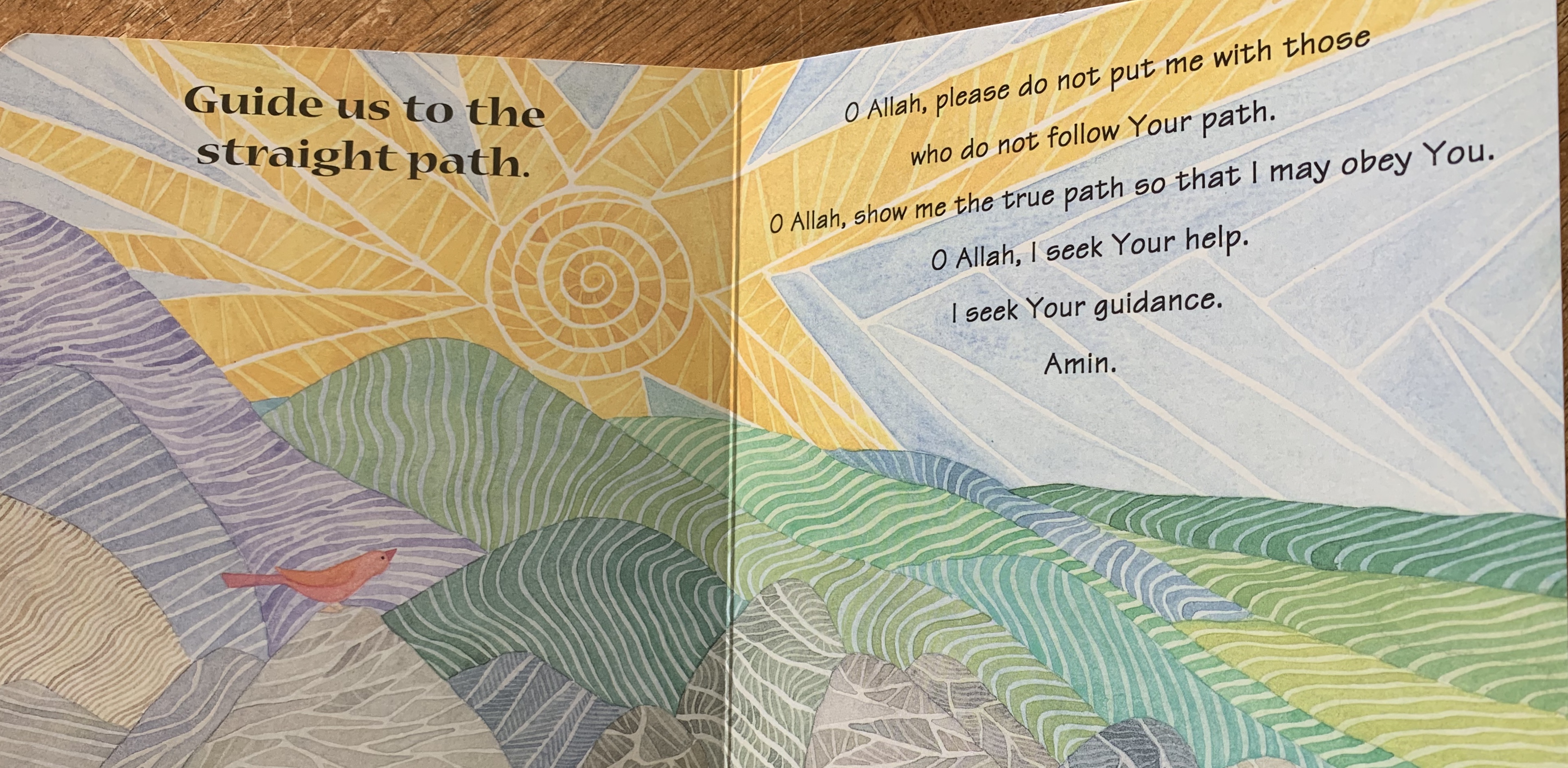
“Lord of the Universe” is the next heading, followed by “The Compassionate, the Merciful,” “Master of the Day of Judgement,” “You alone we worship and to You alone we turn for help.”  The final section is “Guide us to the straight path.”

40595865-EF04-42DC-9A71-B4F09DECE81E

The book came out in 2003, and I was ecstatic to see it available, however, there are now just better and more varied options available, that this one will once again be lost on my shelves.

80351529-FA74-444A-A8CA-7F23A6E3EB4C

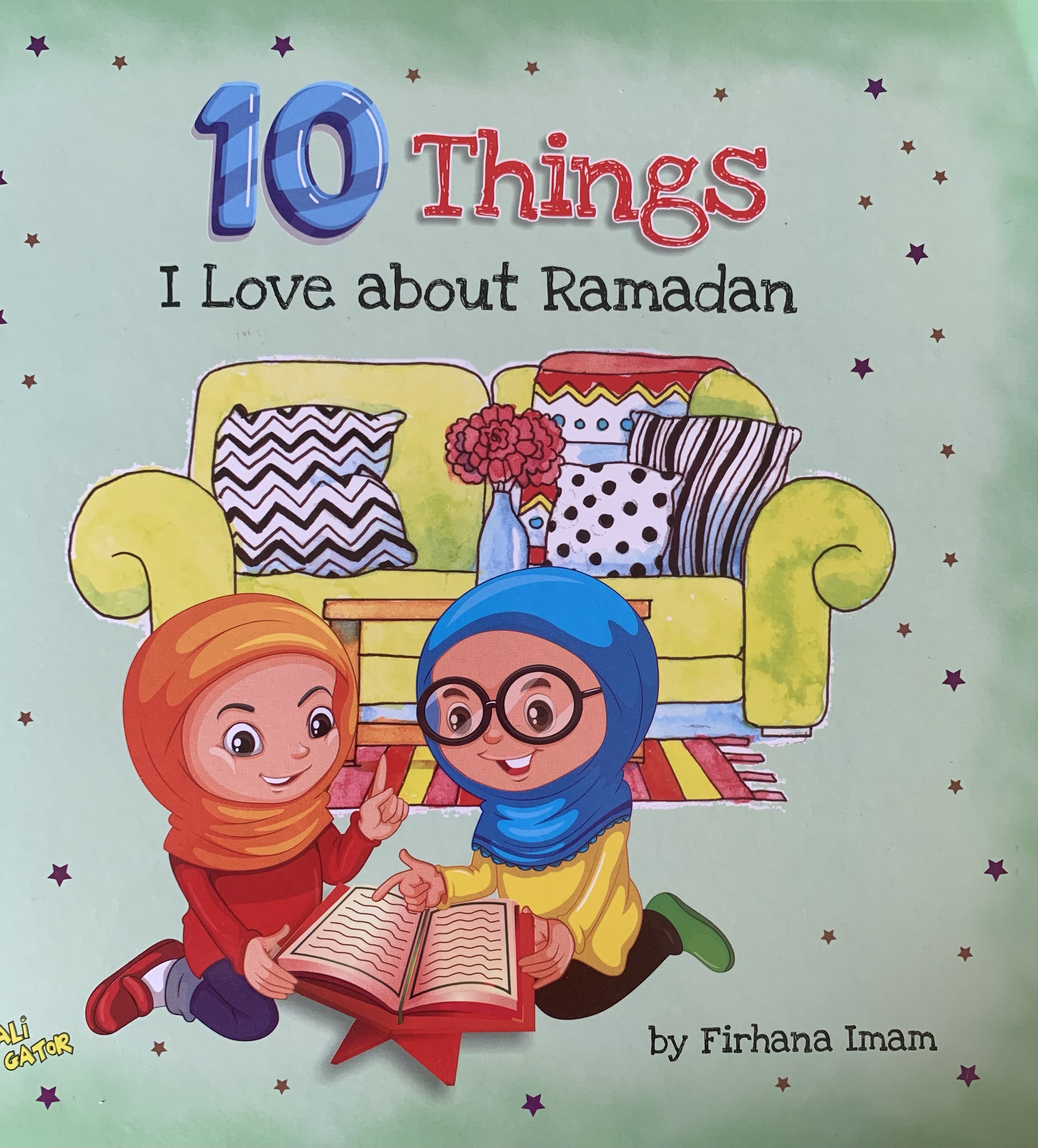
10 Things I Love about Ramadan by Firhana Imam illustrated by Ali Gator

Standard
10 Things I Love about Ramadan by Firhana Imam illustrated by Ali Gator

img_8692

After a while a lot of Ramadan books seem repetitive with the information being more or less the same, this 24 page kindergarten and up book however, manages to present the information in a numbered format that allows for the information to flow without being constrained by an overly forced story.  The result is a fun little read that children will enjoy as they master some of the key concepts of Ramadan.  This book doesn’t have activities at the end, but would lend itself very easily to games, memorization challenges and discussion topics if read frequently for even the littlest Muslims. It would also work as an introduction to the month for non Muslims.  I know I get asked a lot for suggestions of books to be read to children’s classes in public schools, and this would definitely work for that too.

img_8694

The book starts out with an introduction to Nabeela as this is her list of 10 things that she loves about Ramadan.  She starts with Assalamu Alaikum before diving in with some facts and getting started with number one.  Each number is a two page illustrated spread, there are footnotes for any Arabic or religious terms used, and the bright colors and large fonts make the book easy for early readers to follow along with and attempt on their own.

img_8695

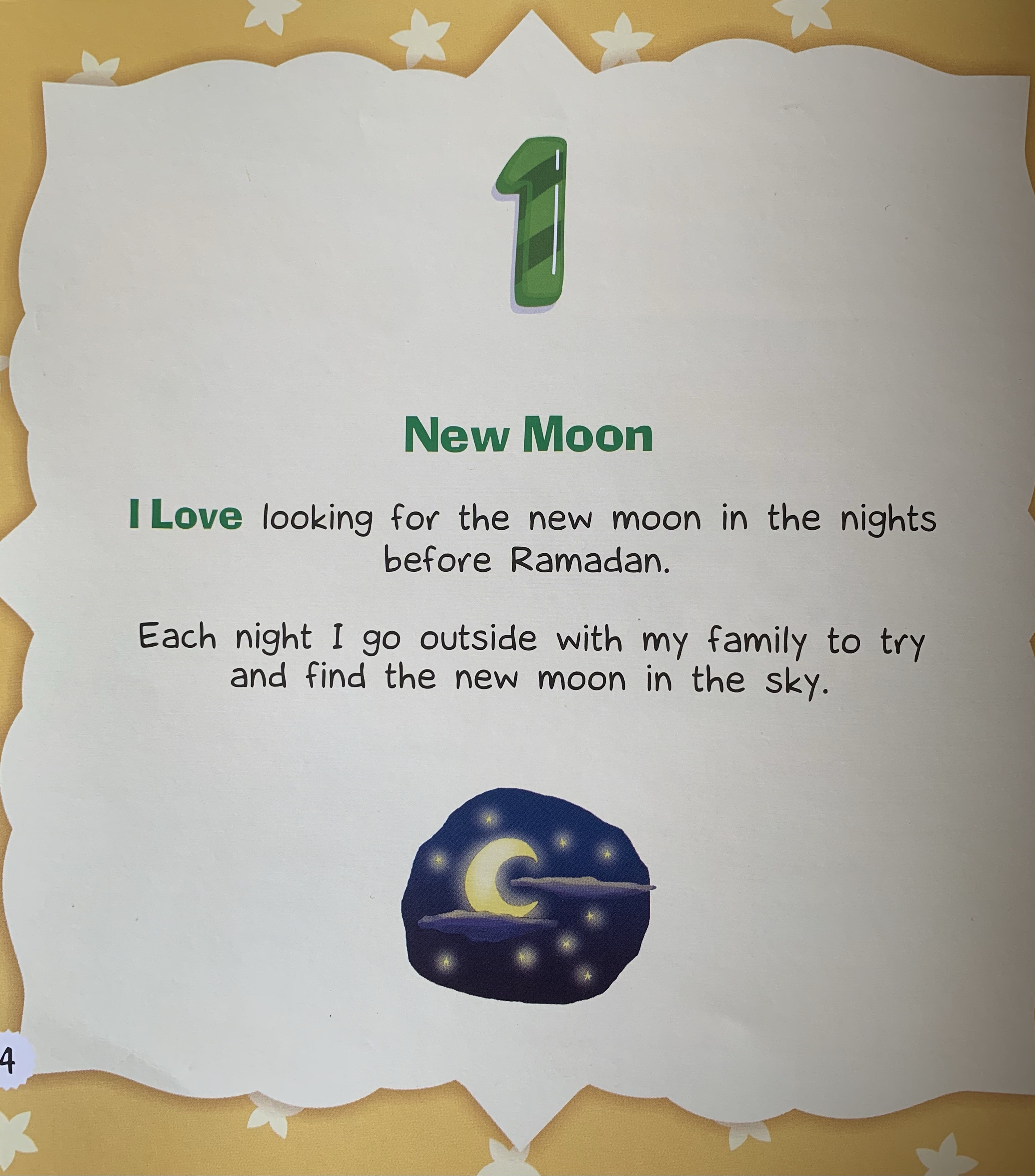
She starts by loving the new moon that her family looks for before the start of Ramadan. She loves Suhur: helping prepare for it the night before and eating her favorite pancakes early in the morning.

img_8696

Number 3 is iftar.  She loves pies and samosas and explains to us that she always has dates and water because that is the Sunnah.  Along the way she shares her love of family, making du’a because a fasting person’s du’as are always accepted, and reading Qur’an even though it is difficult because she knows she will get more rewards for trying so hard.

img_8699

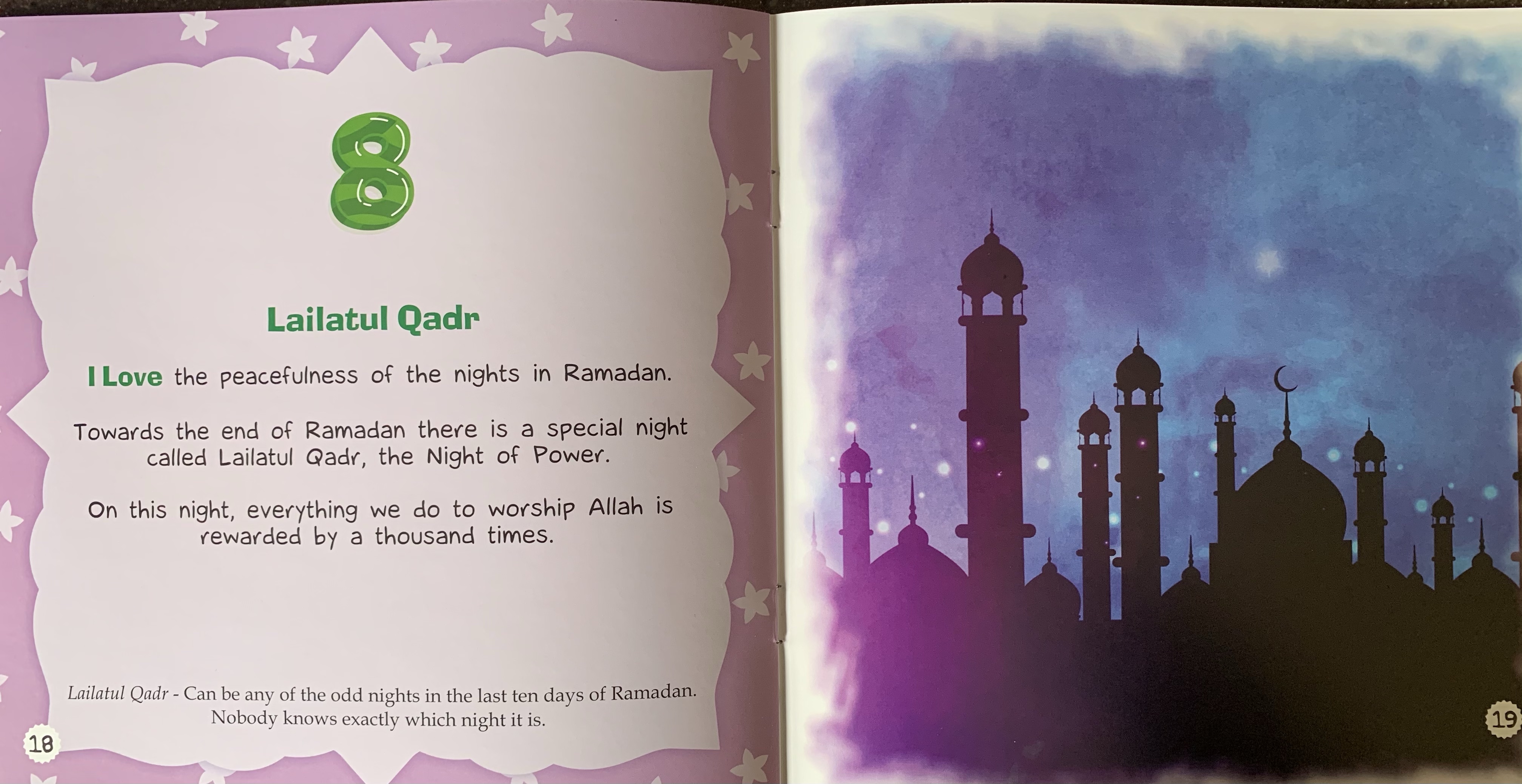
She also loves Tarawih prayer whether at the mosque or at home, and the peacefulness of Lailatul Qadr.  She loves that her father and brother stay at the mosque the last ten nights of Ramadan in Itikaf and finally at number 10 is Eid!

img_8700

The book concludes with some verses from the Qur’an about Ramadan in English.  I thoroughly am impressed at how succinctly so much is conveyed and the adorable manner in which it is done, Alhumdulillah!