Tag Archives: divorce

Odd Girl Out by Tasneem Abdur-Rashid

Standard
Odd Girl Out by Tasneem Abdur-Rashid

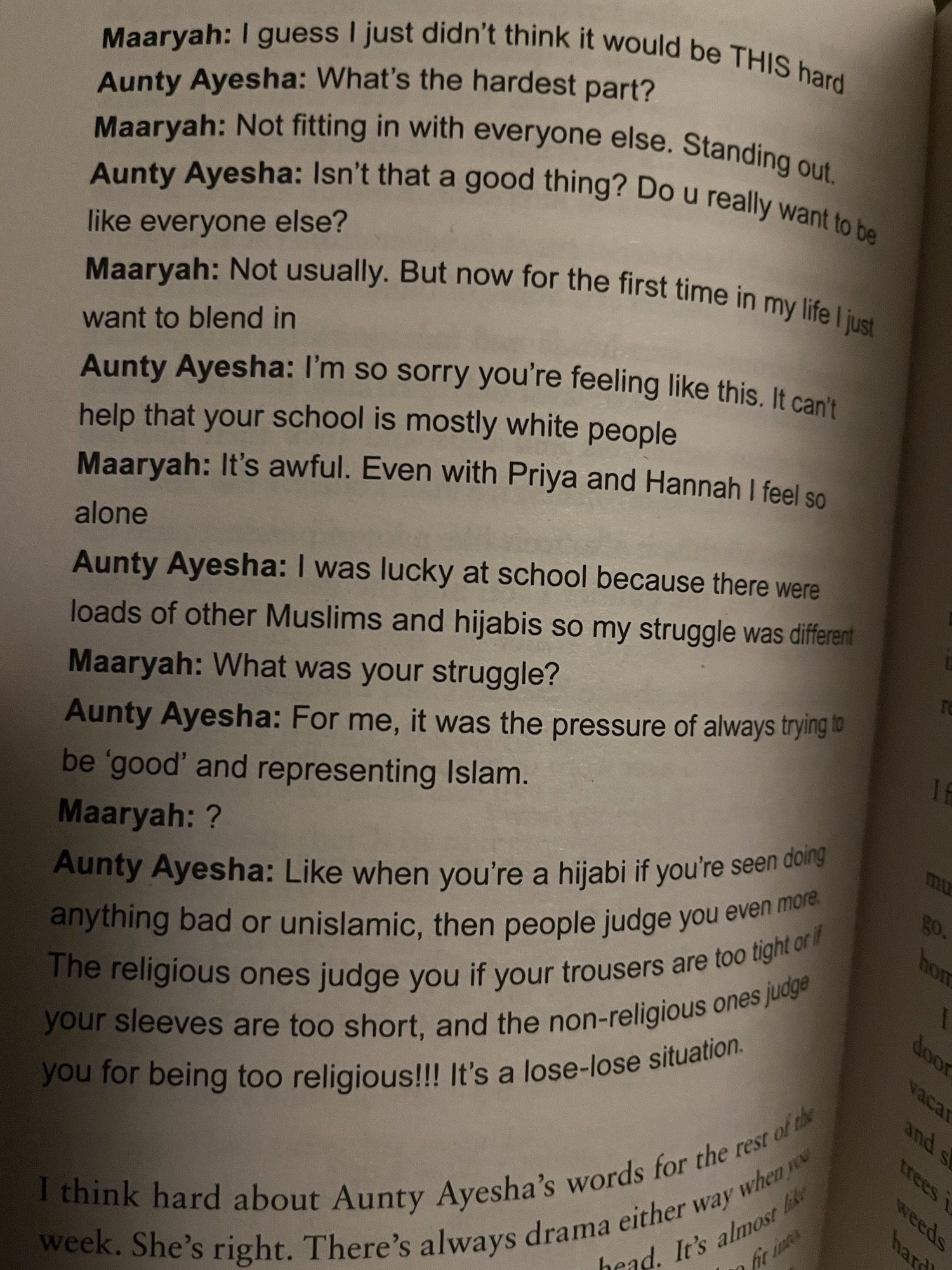
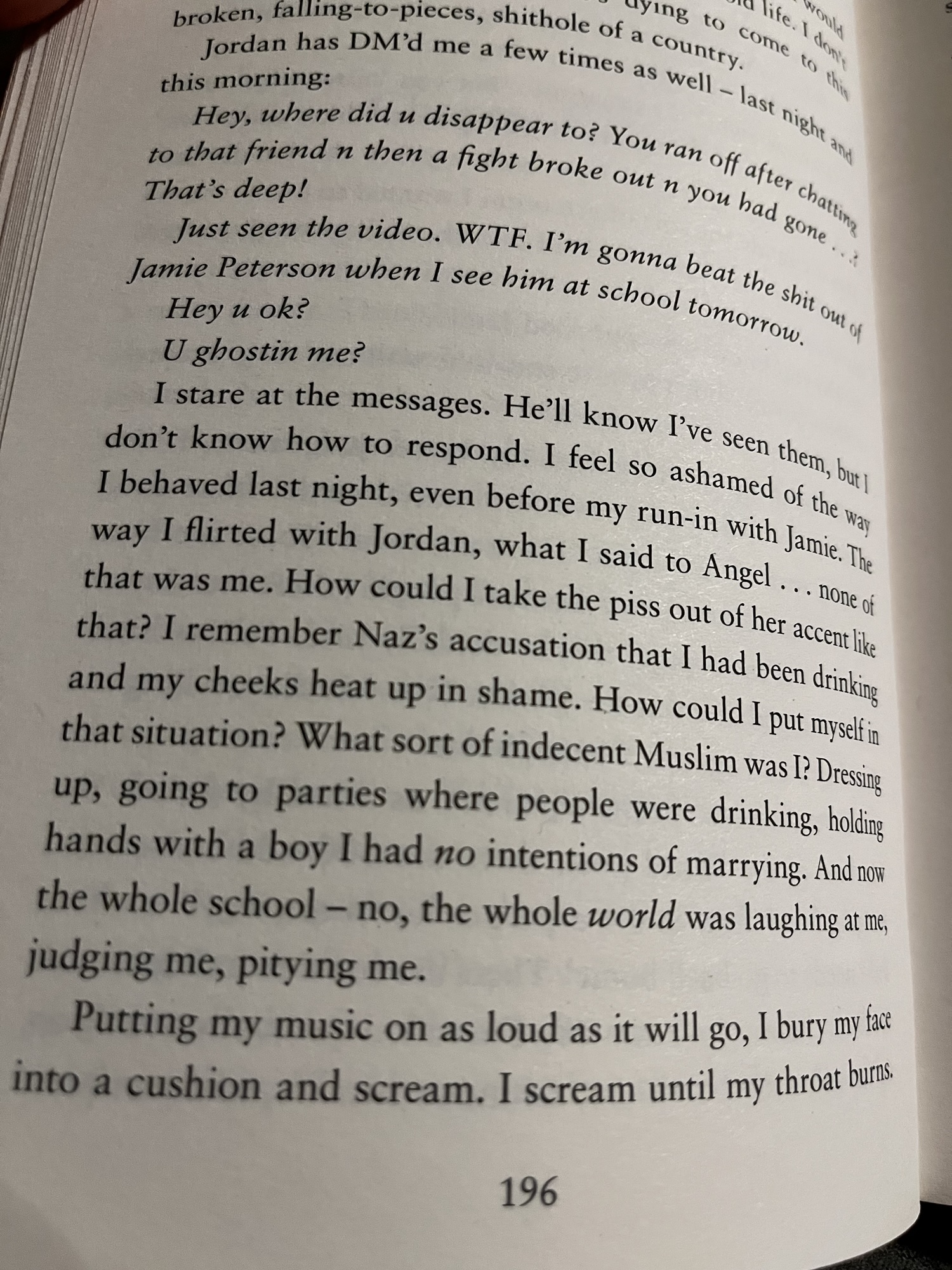
At 368 pages this identity centered mature YA book really hooked me and had me invested, which is impressive because Islamophobia stereotypes and being the new kid in a new place tropes are pretty frequently done, and often after a while, feel repetitive.  For me the charm of this book is actually not Maaryah and her peers/friends/bullies storylines, but the protagonist’s relationship with her parents and what caused her mom and dad to divorce.  Obviously as a mom of teens, I’m not in the target audience, but I feel like I benefited from the Muslim authored, Islam centered book, and think older teens, perhaps 17 and up, will also find the book enjoyable and reflective of views they have, challenges they face, and boundaries they have to establish.  I don’t want to spoil it, but SPOILER, had my dear friends that have read the book clued me in that the book will toe and slightly cross the haram lines, but ultimately show Maaryah deciding to re-establish her boundaries after being tempted not to, i.e. making a poor choice to attend a party with boys and alcohol present, and dressed in a way not typical to her hijabi style, I wouldn’t have read the last hundred and twenty pages or so with my jaw clenched in fear. The book shows a lot of Islam in practice, salat, duas, discussions about hijab, but not everyone will agree with decisions Maaryah makes or the rationale behind them as they vacillate between culture, religion, and family expectations.  I love that Maaryah is fallible and never abandons her faith, and that who we are is more than a singular mistake or instance of poor judgement. The book is not preachy, most will just take it as a girl finding her place in her new family dynamic in a new country, who happens to Muslim.  I think, an assumption really, based on what the author has said about her previous adult books, something along the lines that they are not meant to be Islamic fiction, but are stories with Muslim characters, and I think this book should probably be viewed the same.  There is swearing, hand holding, a side hug, normalized boy girl friendships, lying, running away, deceit, cheating, alcohol, mention of hookups, dating, vaping, music, flirting, hijab questioning, bullying, physical assault.  My biggest concern about the book is that it brings up Palestine, but doesn’t discuss Palestine. A side character is a non practicing Jew that visits Tel Aviv and Maaryah wants to discuss the occupation with her, but hesitates and the moment passes.  It is never revisited which I really wish it would have.  It could have modeled a bit how to have those conversations, I know it isn’t that type of book, but Maaryah mentions repurposing kaffiyehs in her designs and so it hints that it matters to her, but never pulls on that thread.  At one point it also mentions another character posted something pro Isr@*l during the genocide, which I can only assume the author thought that by the time of publication would have ended.  SubhanAllah ya Raab.

SYNOPSIS:
The tag line on the cover “From Dubai Girl to London Nobody…” very succinctly summarizes the plot.  Maaryah had an idyllic life in Dubai with her parents and close friends, spending her holidays with her mom’s family in London, and securing an internship with a famous designer.  All is going well until her parents get divorced, her mom moves her to the UK, not near her extended family, and the lack of Muslims, let alone hijabis, at her high school has her bullied with no friends to have her back.  With her mom in survival mode, their once close relationship is non-existent, and the 15 year old is left to sort through it all on her own.

WHY I LIKE IT:

There is a little pulling of punches so to speak of asserting that the boundaries are Islamic, but for the most part I think Muslim readers will see that Maaryah does view a lot of what she experiences through an Islamic lens which I appreciate. I also like that the protagonist’s connection to salat and faith is hers, it isn’t forced on her and I think for this demographic that is good micro messaging and framing.

I was very grateful that the book answered the questions about Maaryah’s family dynamic, so often parental problems are pushed to the void and let to be resolved or understood off the page. And while in the first half it was teased a little as we aren’t having that conversation right now, I did ultimately by the end feel like it was sufficiently resolved.  I also felt the mom was blaringly absent at weird times and I get that it was a plot device to get her out of the way, but if you are dragging at the 100 page mark, I do encourage you to keep reading, it does pick up.

This book isn’t meant to be didactic, and I recognize I’m putting that on it a bit, but I do think the Gaza framing missed an opportunity to show readers how to navigate that very real scenario through the power of fictional characters.
FLAGS:

Copied from above: There is swearing, hand holding, a side hug, normalized boy girl friendships, lying, running away, deceit, cheating, alcohol, mention of hookups, dating, vaping, music, flirting, hijab questioning, bullying, physical assault.

TOOLS FOR LEADING THE DISCUSSION:

I would shelve this in an upper high school classroom, I think that decision to be at the party is clearly shown to be a mistake, to put herself in that situation is something she regrets, and I think showing that she comes out from it offers a lot to be discussed.

Huda F Wants to Know? by Huda Fahmy

Standard
Huda F Wants to Know? by Huda Fahmy

Huda Fahmy books always make me laugh, but this is the first one that made me cry. Centering mental health and her parents divorce, we see Huda grappling with change, loss, anger, and resolve in a raw vulnerable way. While ever hopeful, and at times comical, the book is also incredibly moving and insightful.  Whether as part of the Huda F series or her two graphic novels prior, her autobiographic books always tackle heavy topics in a joyful, hilarious, honest way that appeal to girls and boys from middle school and up.  I know at 263 pages, this book is a YA read, but in my house my kids (daughter and sons) have loved reading her perspective about hijab, arranged marriages, identity, and sibling relationships. The unapologetic Muslim authenticity is unparalleled, and that non Muslims champion her books as well, truly shows the value of good story telling, and gives me hope in an often bleak world. Huda’s books are staples: new books are anxiously awaited, previous books are regularly reread, and Huda F Wants to Know? continues in that tradition.  This book isn’t just fun, it is important- it normalizes mental health, empowers families shaken up by change, and makes us all feel seen and less alone. SubhanAllah.

The book starts with Huda’s plan for her junior year in high school, her friend Nabz and her are determined to buckle down and get scholarships.  When Huda’s parents call a family meeting, she thinks she just might be getting a car, but instead she and her sisters learn, their parents are getting a divorce. The book then rewinds to show a little lead up before Huda’s world shatters, and junior year’s blue print is tossed aside.  We see her going to the masjid for weekly halaqas where Sr Amal discusses topics like societal pressures, family expectations, gender bias in education, and other relevant topics.  At one such gathering, Dr Haifa came to talk about mental health.  We also see her crushing on a boy at school, fighting with her mom and sisters, and the girls going on a road trip to a Muslim convention.

Every storyline, every twist, every page really, has Islam woven in.  It is the way the characters see themselves, see their world, handle stresses, find peace.  Mental health is not separate from the hadith and sunnah, it is blended and approached in a holistic manner.  Divorce is understood Islamically, and the clarity in which it is articulated will, I imagine, be so reassuring for Muslims who have gone through it, and seen others go through it.  Just as my boys years ago read That Can Be Arranged, and became incredibly curious about marriage in Islam, I have no doubt that this book, will also be a powerful conversation starter for so many.  I don’t know if that is part of why Huda write, but it definitely is a result of her books.  I wish I could ask her, I’d also want to know how she decides what to share of her own life, where the line of reality and fiction for her is and how she sets and maintains those boundaries? I also desperately would like to ask her if she plans to write forever, because the world benefits from her books, needs her books, I know I do.  No pressure or anything.

 There are resources for mental health at the back of the book, some even specifically for Muslims. Please preorder this book and/or request it at your local public library as a show of support, it releases in April.

If You’re Not the One by Farah Naz Rishi

Standard
If You’re Not the One by Farah Naz Rishi

I suggest one reads my ENTIRE review of this book before deciding if it is right for you, because just the first few lines might signal that I liked this book, and honestly it was just ok, but I really liked parts of it. The protagonist is Muslim, it isn’t something that guides her view of the world or dictates her actions, but she is unapologetic, and it is not something she is grappling with. She prays, makes duas, it mentions a hadith, so I appreciate that it is there and always just below the surface. The “romance” might not be halal, halal, but it definitely isn’t raunchy and stays close to the line even when it crosses it. The male and female character are very close friends, and spend a lot of time alone together even before SPOILER there is hugging and a kiss, it is a rom-com after all. I loved the annotations, especially reading an e-version flipping to the protagonists commentary of her thoughts and then flipping back was easy and fun. I think my favorite line in a long time in the book is her translating rice to chawal (see images). My biggest frustration though, with the book is how close it mirrors the author’s biography, Sorry for the Inconvenience, which I read just over a month ago. Truly, it was like the biography was the book and this was the movie adaptation. Sure the younger brother was switched out for a younger sister, and this wasn’t as gritty or traumatic, but the romantic literary beats were all more or less the same: childhood betrothed, falling for a friend who made a bad first impression, dad being sick, parents and their on again off again divorce, medical diagnosis, it really is two versions of the same story, which meant I was never invested in the fictionalized characters, or on the edge of my seat to see what would happen next. When you have seen the behind the scenes inside scoop so to speak, it is hard to get on board with the faded carbon copy. Add in the consistent lack of communication, telling instead of showing, unlikability of the protagonist, and the non existent foundation of any of the relationships, and it made it hard to get lost in the fluff of the moment.


Side note: I had a whole paragraph rant about the cover, but when I went to post my review on Goodreads (still banned from Amazon) I saw that there is a newer cover with Marlow wearing yellow crocs. I have no idea why the illustrator and publisher would have arcs with the male lead in flip flops, but I think by now it is common knowledge there is often a lack of communication between authors and illustrators. sigh.


SYNOPSIS:
Anisa is in college, she has worked hard to get in to the all girl’s school near where her almost fiancé Isaac is already enrolled. When she takes a class on Isaac’s campus she meets Marlow, who makes a poor first impression on the very “perfect” Anisa. When Marlow and Anisa get paired up for a class paper, Marlow also offers his services as a “love coach” to help Anisa reconnect with a drifting away Isaac. The more time Anisa and Marlow spend together, and the more Anisa learns about Isaac , the more she ultimately learns about herself and what she wants out of a partner.


WHY I LIKE IT: (SPOILERS)
I’ve read a few of the author’s books, so I know she can write, which irritated me even more that this book felt so flat. Anisa and Isaac have been “together” for over six years, but know nothing about each other, don’t talk or text, and as much as the book wants to make it seem like it is an all of the sudden thing, it provides no real tangible suggestion that they have ever had any sort of connection. So why did they decide to be potentially engaged???? All the parents are on board, but how did the two of them set this into motion? With the exception of Isaac visiting her one late night before he went to school, there is so little for the reader to be emotionally invested in. Anisa has terrible communication with every character in the book, not just Isaac, even with Marlow and her family, the side characters all keep in touch just fine, and it is never addressed as a quirk, it just is accepted. If your dad was sick, or your parents divorcing, wouldn’t you be texting them periodically, or non stop? And text between characters are shown on the page, so how is Anisa texting Marlow throughout the 352 pages, but then goes MIA the last 20? It didn’t work for me clearly.

Additionally, I was so tired about hearing how perfect Anisa is, when it never seemed to show it, sure the duplicity with her outward appearance and home appearance was well done, but it never really shows up in any other facet of her life. She is unorganized, has few friends, doesn’t seem to be a very present daughter and sister, the repetitive telling and lack of showing, gave the book no foundation. I know romance-y type books often have to fudge common sense at times, but with no foundation at all, it was hard to be invested in any twists or swooning gestures. I think I just didn’t really like Anisa, and I weirdly feel guilty about it, because she so closes mirrors the author, and I liked the author’s self portrayal in her earlier memoir.


FLAGS:
Close male/female friendships, hugging, kissing, lying, “cheating,” talk of titillating role playing video games (otome) not details so much as shaming and teasing about Anisa playing them (the word porn is tossed in a few times).

TOOLS FOR LEADING THE DISCUSSION:
I think I’d shelve this book in an Islamic school library for high school students. I don’t think I would promote it, but I think those romance loving high school girls will enjoy and be able to handle this story. It won’t work for a book club, but it does make clear that Anisa “dates” with intent to marry, there is reassurance that she wants to marry a Muslim, that Marlow has been reading about Islam, but that Anisa isn’t going to force him, and that societal expectations and appearances aren’t impossible to push back on- which I think are good considerations for 16 and up readers to see fleshed out.

The Last Man in Paradise by Syed M. Masood

Standard
The Last Man in Paradise by Syed M. Masood

paradise

I’ll be honest, if I would have read the blurb (see below) about this book from another author, I probably would not have read the book.  From the description alone, I could assume that it will undoubtedly be uncomfortable, it is an adult read, it is going to be irreverent, and I will disagree with probably whatever messaging the impossible situation the characters are placed in, come out with. But, having read his two YA books, and really liking More than Just a Pretty Face, despite the raised eyebrows I get from Muslim book fans when I say that, I felt pretty confident that Islam would not be othered or villainized, and that the writing quality would make the cringey situations worth getting through to hear the commentary that would be forth coming.  I’ve felt with the author’s other work that the Muslim characters, own their flaws as individuals, not as representatives of their faith, so, I was willing to give this book a read.

The first quarter of the book was a little stilted, but by the midpoint, I could not put the book down, as the writing did not disappoint.  Would I recommend this book? No, not to the majority of followers of my platform, much like the satire of Zarqa Nawa’s Jameela Green Ruins Everything, I know that this style of ridiculous situations to reveal humanity, consideration, and introspection, while being entertained by very Islamic concepts, is not for everyone. Did the make-out scenes in the masjid parking lot, child abuse, sleeping around, drinking alcohol, talk of pubic hair and board games, grandpa on masjid grounds watching porn, hate crimes, involuntary manslaughter, and impersonating an imam giving khutbahs and performing ghusl, cross lines? Probably, but it is fiction, it is raising the stakes to show extremes, and let the reader opine on their perspective when faced with it. And no, I won’t write my typical review about Islamic rep, because reviewers like me got called out for that too, about policing representation and confining Muslim experience to looking like one thing.  The author went really meta and called himself out for the ending of his other adult book (that I haven’t read, but probably should), The Bad Muslim Discount, so clearly no one was out of the line of fire.

Suffice it to say, this book literary wise is an easy read, the craft is on point, it flows and is compelling (except for the end, SPOILER, who was going to look after Baba, that thread just dropped), for Muslims though it will be very uncomfortable. For non Muslims, or Muslims that don’t read to see themselves represented with the fervor that I do, I think Islam is not painted in a negative light or insulted by the text.  The characters are messed up, their flaws their own, but because they are Muslim, religion is part of their understanding and view of their existence.  I do wish there was at least one Muslim character that had it together, that might hint that as a whole we are not all one extreme or another.  I don’t like labels of “liberal” or “extreme” and the book provides commentary and nuance to those flawed dichotomies as well. The book is not heavily moral, (SPOILER) the protagonist does not come back to Islam (might not have been an identity to even come back to), but identifies as Muslim, there is no YA or MG revelation or singular take away. The book centers Islam, but somehow is not Islamic rep, it simply has Muslims dealing with the messiness of life, expectation, family, relationships, and honesty.

————————————————

Blurb copied from Goodreads:
A decade ago, Azaan, a rebellious teenager with dreams of becoming an actor, was exiled from Redding, California to a religious academy in Egypt by his imam father. His crime? Getting caught kissing Madison, the girlfriend he isn’t supposed to have.

But while letting his family believe he is studying to become a preacher, Azaan ditched school and embarked on an acting career. Given that he has minimal contact and nonexistent plans to return home, he figured no one would ever know. Now, however, Azaan’s grandfather has a dying he wants to see his grandson one last time. In order to maintain the story he’s told his family for years, Azaan decides to become a fake imam. Playing at being a religious leader, he finds a community in Redding on the brink of a scandal involving his family. It’ll be the most challenging role of his life.

Navigating his new identity and old relationships, Azaan reunites with Madison, connects with old friends, and uncovers a shocking truth about his family history that threatens to expose his father as a fraud. It turns out, Azaan isn’t the only one pretending to be something he isn’t.

Before he can finish weighing the consequences of exposing his father or protecting him, an untimely death shakes Azaan’s priorities. He is forced to grapple with his religion, future, and family in a way that is sure to break hearts, but might heal a few along the way.

Shiny Misfits by Maysoon Zayid and Shadia Amin

Standard
Shiny Misfits by Maysoon Zayid and Shadia Amin

img_4083-1

I admittedly wanted to read this book because the author is of Palestinian descent. I have seen clips of her standup and I’m not a huge fan, although I do appreciate that she doesn’t deny her culture and Islam, doesn’t let her cerebral palsy keep her from working toward her dreams, and that she is successful.  All good messages for a 256 page middle grade graphic novel that is not autobiographical, but draws on her life none-the-less.  I was surprised, though, that there are no Palestinian references in the book, very few Arab cultural touchstones either, and yet swearing on the Quran and not eating pork are presented fairly often, almost as “bits” to be laughed at.  I truly understand that the character is presented as culturally Muslim more than centering Islam in her identity, but perhaps because the protagonist, Bay Ann, is rather unlikeable, it just rubbed me the wrong way.  I love that the people in Bay Ann’s life do not caudle her, and that she is fierce and dramatic and driven, but she is an awful friend, her obsession with Alyee Maq (yes full names are used throughout) gets annoying, and I worry that some of the humor will be missed for the younger target audience and be taken as Muslim or Arab norms.  The presentation of a disability in a well illustrated graphic novel is empowering, an amazing Arab dad is nice to see, a divorced family co-parenting is important, but the foundation for much of the story is Bay Ann’s crush on Alyee Maq, he does kiss her on the cheek for social media likes, the book starts with Halloween Idol, features dancing throughout, and concludes with a Nondenominational Holiday Spectacular.  Bay Ann’s mom is not very kind or involved, and Alyee Maq’s mom, the only hijabi in the book, also is rather rough.  This is a book where I acknowledge my own overthinking, as both an adult reader and reviewer.  If you are ok with the (random) Islamic rep, kids will benefit from seeing Bay Ann as a fully capable person who happens to have a disability.  I’d suggest seeing if your local library has the book and looking through it first to see if you are comfortable passing it on to your kids.

SYNOPSIS:

Bay Ann is a tap dancer and with Halloween Idol coming up, she plans to win.  Her best friend Michelle is going to do her make-up as a zombie bride, and be her zombie bridesmaid with Davey Matt, the third in their trio, being the dead ring-bearer dog.  They can’t be her backup dancers because she is a one woman show, but she needs them to cheer her on.  When she wins, she has the spotlight stolen from her by Alyee Maq kissing her claiming he is making “a sick girls dream come true.” The clip goes viral, as Alyee Maq is a bit of a celebrity and the competition is on.  Whether it is science fair, social media posts, or the class debate, Bay Ann is determined to knock Alyee Maq down, claim the online spotlight, and  prove her talent is more than her disability.  With each attempt failing, her resolve grows stronger and her tunnel vision pushes those closest to her away, as she joins Alyee Maq with the hopes that if she can’t beat him, she will join him and achieve the fame she seeks.

WHY I LIKE IT:

I know the book is rather intentionally ridiculous, but I wanted to cheer for Bay Ann, and I never really liked her.  I don’t like how she treats Davey Matt, or even Michelle.  If she was better to them at the beginning, I think it would have shown how disconnected her mom Malak is as well as the school administrators, and made it more funny, but it truly just makes her seem like she is awful to everyone, and thus you don’t really find yourself invested in her stardom, her friendships, or her defining her own narrative.

I wish their was some Arab rep, not just a few Arabic words tossed in here and there.  I also wish there was more Islamic centering, or honestly even less. The swearing on the Quran really bothered me, Friday prayer is mentioned in passing, but there is no impact on the characters or the story, so it seemed misplaced.

The pacing of the story is rushed, and at times a bit chaotic.  I think it is intentional, but it makes it hard to connect to the characters or to grasp their motivations.  I don’t know that I truly ever understood why Bay Ann wants the spotlight, or why Alyee Maq is famous, or why Davey Matt hangs around Michelle and Bay Ann when they belittle him. It doesn’t need to be thoroughly explained, but when you finish the book, and feel exhausted, but can’t even articulate what the book was really about other than a girl that wants to be famous for her talent not her shaking, and won’t let anything or anyone get in her way, it seems like some opportunities were missed.

FLAGS:

Close male and female friendships with touching, an unwanted kiss, lying, manipulation.  Swearing on a Quran, disrespect. Using people.

TOOLS FOR LEADING THE DISCUSSION:

I don’t know that I would seek this book out to own, but in an Islamic school library if it found its way in, I would probably not object to it being shelved.

Much Ado About Nada by Uzma Jalaluddin

Standard
Much Ado About Nada by Uzma Jalaluddin

much

I get teased a lot by my Lit Sisters for enjoying Hana Khan Carries On so much, so I’m writing this review to convince them why I think this is Uzma Jalaluddin’s best book yet, and why they should preorder here and dive in ASAP! First note that is an adult read, it is not targeted to teens, the protagonist for the majority of the book is nearly 30 years old. It is a romance, it is not a hundred percent halal, but it is definitely halal-ish, and if you feel like you reach a point where it absolutely isn’t, please keep reading (you might be surprised).  The book for being what I thought would be an empty calorie rom-com guilty pleasure snack, tells the story of Nada in spiraling layers that keep the reader hooked.  Just when you think it is predictable and tropey, the next layer peels back a twist and depth that kept me ignoring my kids and glued to the pages for two days straight.  I furiously scribbled notes writing down “haram” deal breakers and most by the end where crossed off, so no this is not Islamic fiction, but there is no internalized Islamophobia, there is no liberal agenda, the author knows the lines and is abiding by them and occasionally breaking them in a fictional entertainment world for Muslim and non Muslim readers alike.  I hate to compare, but in many ways it reads like an adult S.K. Ali book.  There is social commentary on Islamic communities from a place of love and practice from the inside, there are relatable characters, there is humor, there is love, laughter, and warmth. On occasion there is skirting of the halal/haram line a bit here and there, and sure males and females are a little too friendly at times, but it isn’t the oppressive parents and identity crisis, it is joy. Muslim reality and stress, with true mirroring joy as well.

So why am I reviewing this book here? Simple so you can enjoy it.  So often I feel like reviewers particularly, but casual readers as well, become nervous while reading, that the book is going to take a turn and become haram or preachy that we can’t just get lost in the story.  So my gift to you, is that if you enjoy rom-coms and don’t usually go for “Muslamic” ones because of apprehension, you can dive in and enjoy this.  You can laugh when they ask for a doctor at an Islamic convention, you can roll your eyes when hijabi’s bring extra scarves to throw on the stage of the band (there is a guitar player, but mostly daf and vocals), you can be upset at the slight physical touching (keep reading), and you can nod along with the commentary on divorce, misogyny, wheelchair access, and mental health, but you can also just cheer for the protagonist to find her way to happiness and love too.

SYNOPSIS: (Will be brief because other wise there will be too many spoilers, and because of how the book is told, you don’t want spoilers, trust me, you want to enjoy)

The book opens with Nada trying to hide from both her mom who wants discuss her future and her best friend Haleema who is determined to have a girls weekend with her bestie at the Deen & Duniya Islamic conference in Toronto.  Cornered she finds herself at the conference organized by Haleema’s soon to be inlaws and face to face with a variety of characters from her past including past victims of her bullying, past love interest, past business partners, past camp roommates, college friends, startup mentors, and others- it is a very popular and large conference

Yep, that is all you are getting.

WHY I LIKE IT:

Again, to avoid spoilers I’m going to simply point out a few plot concerns I had with the book, because it is who I am, and I need to get them off my chest.

In some of the flashback scenes Nada’s voice reads the same as it does in the present.  Her articulation of Baz’s potential as a daf player at 11 years old is very mature and insightful and not realistic at all that she can opine on his skill and the role his hand size have on his mastery at that moment of the instrument.  She would probably just think, yeah he is good, or wow, he isn’t bad.

I found it odd that Marya’s husband had opinions on Nada’s makeup, it seemed a bit forward.  Also they were in line, then they left, the pacing of the scene was a little off, I read an arc, but I’m hoping it is cleaned up a bit, because it is an important scene.

Haleema is Nada’s college friend, but toward the end in college flashbacks she really disappears, and it was noticeable, because the reader is constantly told Haleema and Nada were good college friends, but never shown.  So in those scenes to not have her there, without note, is suspect.  Nada really isn’t a good friend to here either, at any stage of life save the conclusion, I’m not sure why Haleema does so much for her honestly.

There is a wedding scene without a wali, and there should be a comment as to why the wedding is performed without the religiously mandated staple or how they are getting around it.  It reads off for a book that gets so many details correct.  I am hoping that the final has it corrected! PLEASE!!!!!!

Also for a different wedding Sufyan is noted to have got an invite to help serve chai, but he is the groom’s cousin’s son, introduced earlier as a nephew, before the cultural chain of relation is given, so why wouldn’t he be at the wedding?

FLAGS:

Music, female and male close friendships, sneaking around, bullying, talk of sex, sex, kissing, talk of pregnancy, lying, stealing, theft, there might be a curse word or two, sorry, not sure.  For an adult book it is clean, these days for a YA book it would be considered remarkably clean.

TOOLS FOR LEADING THE DISCUSSION:

I wouldn’t suggest it for a school library or high school book club, but I wouldn’t put up much of a fight if it was on the shelf or schedule.

I Was Their American Dream: A Graphic Memoir by Malaka Gharib

Standard
I Was Their American Dream: A Graphic Memoir by Malaka Gharib

img_7800

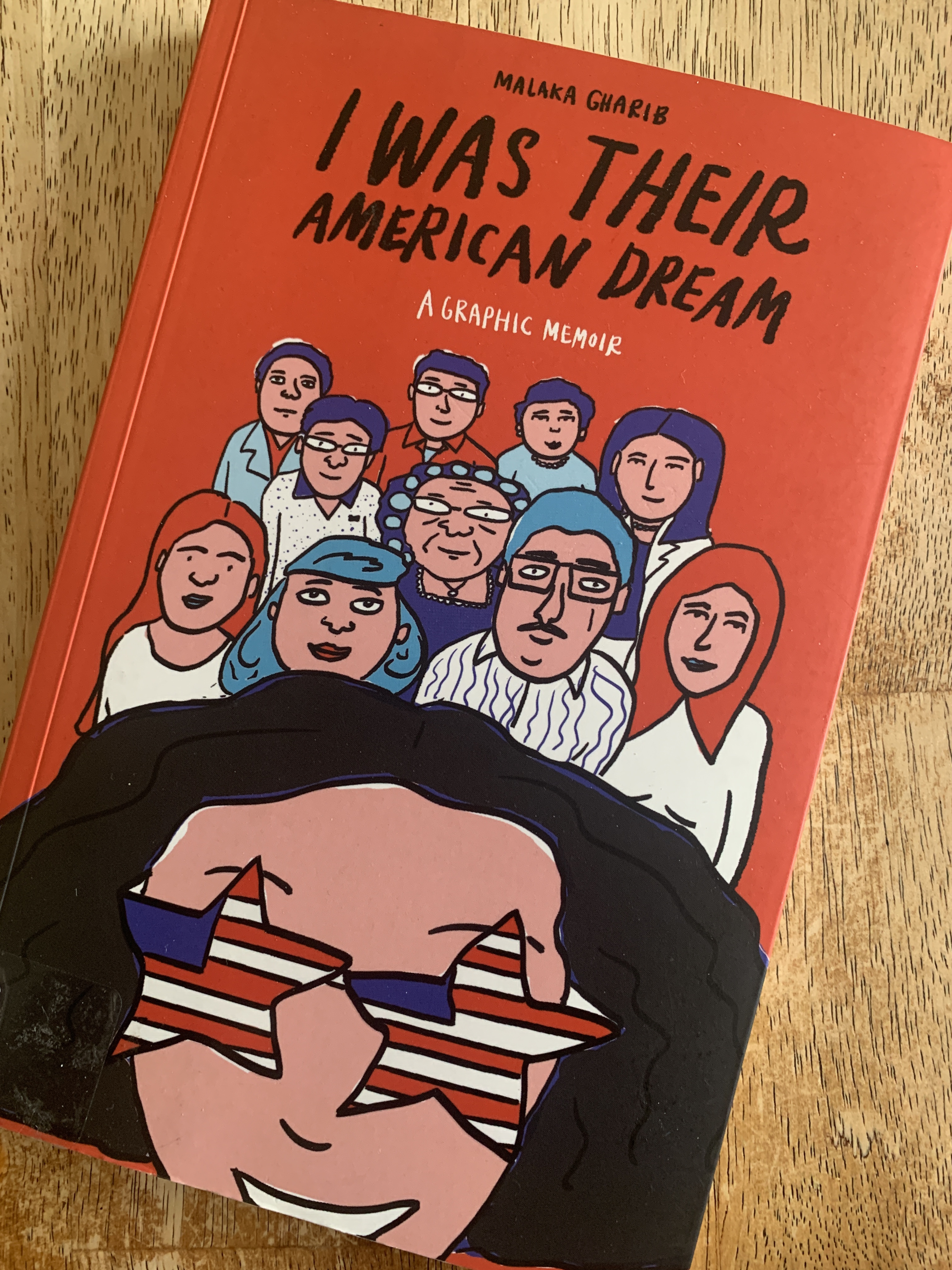
I was hesitant to read the book, afraid it would pit the author’s two cultures (Egyptian and Filipino) and faiths (Catholic and Muslim) that her parents identified with against each other.  Raised as the daughter of immigrants from very different backgrounds in California I was very pleasantly surprised that the book leads with heart and positivity for the unique, yet universal feelings she experienced in her life.  The short 156 page red, white, and blue filled pages are funny, poignant, and reflective, that I think high school readers and up will enjoy spending time in Cerritos and Egypt through the eyes of Malaka.  It is easy to say that you can’t be Muslim and Catholic, but she doesn’t opine on the right or wrong of it in large terms, she discusses her life and her own situation.  As a teacher I would see students that would attend Islamic school five days a week and then go to church on Sundays, whether you agree with the choices this author/character makes is not what I intend to review, it is her life, but rather the manner in which it is shared.  There are many kids out there from “conflicting” backgrounds, and to see someone take the love and benefits offered to forge their own path in creating their own American dream, was a nice twist on the immigrant identity finding narrative.

SYNOPSIS:

The book starts with introductions to the characters, her family members that influence her, and then begins the tales of what brought her Filipino mother and Egyptian father to America, how they met, married, started a family, and divorced. Malaka exists outside her family in school, balancing her heritage and coming of age.  Raised during the school year by her mother and extended Filipino family, she spends summers in Egypt where her father resides with his new wife and children.  Coming of age as an immigrant, balancing cultures, religions, school, and dreams, the book concludes with her marrying a white Southerner and adding to the mix.

WHY I LIKE IT:

Even though she identifies more as Filipino American and goes to Catholic school, there is a fair amount of Islam and Egyptian culture included in the book.  I love that she loves her step mom and step siblings and finds beauty in Islam, learns to pray, read Quran, and mentions her love of Prophet Muhammad saw.  Sure as an Islamic school librarian, I wish she chose Islam, lived it and centered it in her life, but this is not a character, this is a real person, and to see her lovingly showing the goodness in Islam and how it has positively influenced her, is nice to see nonetheless.  There are a few storylines I didn’t quite understand, the skateboarding in Egypt a big one, but the quick pace of her narrative life-story flows well and is easily consumable.  Often stories like this are overly dragged down by dated pop cultural references and over criticizing “othering” paradigms, but this book contains enough to keep it grounded without it alienating contemporary readers.

FLAGS:

Stereotypes, lying, relationships, periods, music, dancing, nothing really stands out, there might have been some language, I read it a few days ago and honestly don’t recall anything overly problematic, but content wise it is a mature teenage read with retrospection and marriage being a part of the narrative.

TOOLS FOR LEADING THE DISCUSSION:
I don’t know that I would shelve or teach this book, but I think it is one to file away in my head for people I might encounter looking for a book about blended faiths and cultures benefitting from the many worlds they have one foot in and one foot out of, and those ultimately looking for a place to see their experiences mirrored.

I found my copy of this book at my local public library and it is also available here from Amazon.

House of Yesterday by Deeba Zargarpur

Standard
House of Yesterday by Deeba Zargarpur

house of yesterday

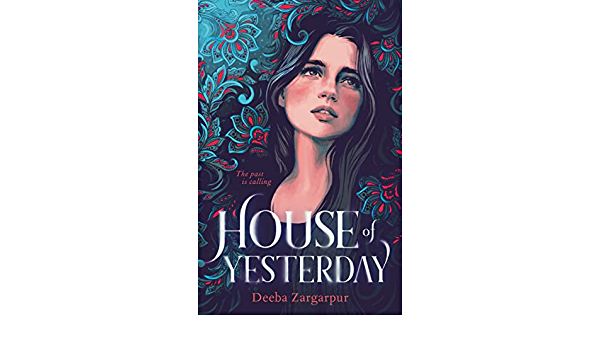
While reading this 320 page YA supernatural/contemporary book-I couldn’t turn the pages fast enough.  When finished- I was bothered that certain threads weren’t resolved, now that I’ve ruminated a bit- I think the vagueness of the author’s prose in sharing her “fever dream” on paper has lingered and the gaps not as troublesome.  The author’s OWN voice Afghan-Uzbek Muslim identity adds layers to a story that is both haunting in the literal sense and familiar in the immigration inter-generational traumas and secrets shared.  Even deeper though, the book pokes at universal themes of regret, holding on to the past, family, friendships, and grief.   The book’s characters identify as Muslim, but the story is not Islamic, nor is there much religion save a few salams and mentions of Eid.  The supernatural elements in the book, whether you understand it to be ghosts, or personified memories, or jinn, are a large part of the book, but are not framed in a belief or spiritual manner, and while some may find it Islamically off-putting, I felt the book explored what the main character was enduring and what the weight of the past was doing to her, didn’t necessarily cross the haram line.  Her father has a girlfriend he is looking to marry, but it isn’t celebrated, and there are close male/female friendships, but the book is relatively clean for the genre and would be a good fit for high school readers and up.

SYNOPSIS:

Summer on Long Island has Sara retreating into herself.  Surrounded by nearly a dozen aunts and uncles and numerous cousins, it is the separation of her parents and trouble with her best friend that makes getting out of bed every morning a challenge.  As a result, her mother ropes her in to helping with her latest remodeling project.  When she enters an old crumbling house one morning to take “before” pictures, she starts seeing things, and feeling things.  Things about her past.  Things about her beloved grandma, Bibi Jan, who is alive and deteriorating from dementia.  What is the house trying to tell her? Why won’t anyone tell the truth?

WHY I LIKE IT:

I love the mystery and the chills of the story.  As the reader you aren’t entirely sure where the story is headed, what you are to do with the bits of the puzzle you are given, but the intrigue to find out pulls you forward.  That being said, the book does reads debut, a few of the side story lines are not fleshed out enough to feel important, satisfying, or resolved and they come across as being abandoned.  I would have liked to see more of Sara and her father’s relationship, the details don’t seem to fit, and the continuity seems halfhearted.  At times so does the “night” it all changed with Sam.  I like the interpretive vagueness of the supernatural threads and that they are up for interpretation amongst readers not just at the end, but throughout the book.  I also like the family’s closeness even when they are disagreeing. For most of the book Sara and her cousins aren’t portrayed as particularly close and I didn’t invest time to differentiate one from another, but by the end, I felt that they were grounded and different and relatable, and I am not sure when that change occurred.  At times the writing seemed a bit repetitive, but the lyrical style would then catapult the story ahead.  There was one place that the fourth wall was broken though, and I was bothered by that slip.

Overall I loved that the Uzben Afghan culture sprinkles showed immigrant nuances, and that the love between the generations countered the trauma being shared as well.  The messaging is subtle but powerful long after the last page has been read.

FLAGS:

For the most part the book stays clean, the father has moved on and has met someone he would like to marry, the mom and aunts briefly recall sneaking out to attend a prom decades earlier.  There is mention of a child bride, and swimsuits, tank tops, and cocktail dresses being worn with no second thought.  For a YA book, the flags are incredibly minimal, save the “ghosts”(?). There are flags of a death that is detailed, the book is “spooky” at times, there is mental health, divorce, pain, dementia, abandonment, theft, running away, and fear.

TOOLS FOR LEADING THE DISCUSSION:

I would love to read this book with some high schoolers.  It is a quick read that would allow for a lot of self reflection, arguments, and entertainment.  The book is available here and releases in a few days, so if planning to purchase, please consider preordering and showing your support.

A Pocketful of Stars by Aisha Bushby

Standard
A Pocketful of Stars by Aisha Bushby

This middle grades magic realism novel draws you in and pulls on your heartstrings pausing only to offer pointed commentary on friendship, self-awareness, and self acceptance.  Oh sure there were parts that seemed a bit repetitive and parts I had to read again because the continuity was just off enough to have me confused, but the book has power, and especially for a debut novel I was blown away.  Well, actually I was in tears, and thats a pretty strong emotion to be felt in 246 pages, so be impressed.  I don’t know if the author identifies as Muslim, she was born in Bahrain and has lived in Kuwait amongst other places.  The main character, Safiya,  experiences her mother’s memories in Kuwait where Eid and the Athan are briefly mentioned and a few characters wear scarves.  There are culture rich Arabic names, but no religion is mentioned outright.  Saff has Christmas money, eats pepperoni, a side character has a boyfriend and they kiss, and there is just a touch of magic to tie it all together.

SYNOPSIS:
Safiya’s parents have been divorced for a few years, and when she chose to live with her dad, her Saturdays became one-on-one time with her mom.  Her mom, Aminah, is a lawyer from Kuwait who can chat with anyone and everyone about anything and everything.  The complete opposite of video game loving Saff who struggles to find her voice, and has nothing in common with her articulate, headstrong, independent, theater loving mother.  The two rarely get along and after a particularly intense fight, Safiya decides to not spend Saturday with her mom, but rather head out with her best friend Elle and new year eight friends at the mall.  When her dad tells her to come home asap, she knows something is up, but could never have imagined how life altering the days events are about to become.

Aminah is in a coma, and Safiya is full of regret and fear.  As she sits next to her mother’s hospital bed and drinks in her perfume, she is drifted to a far away land filled with a crumbling house and a magic like quality.  Approaching this oddity like her favorite video game, she explores her mother’s memories, and finds a girl not so different from herself.  As reality and magic merge in young Saff, she begins to sort through her feelings toward her mother and come to peace with what she has to do and endure and overcome.

In the process of handling her life-changing home situation, Saff, also finds the strength to call out cruel acts from classmates, find her voice, and cut out toxic friendships while cultivating supportive ones.  The journey on both fronts will have readers cheering for Saff while wiping away tears.

WHY I LIKE IT:

I love the quick pace and rawness of the characters.  Grandma, mom, and Safiya all say and do things they regret while hot and angry and have to learn the consequences and humbling that needs to occur to fix what their words have broken.  No character is completely good, nor completely bad, and in a middle grade book that is powerful. Each one has relatable qualities that really make the book memorable.  

Safiya has to really work out what is going on with her best friend, Elle, and what she is willing to accept and what lines she is not willing to cross.  The character’s maturity is inspiring, and I love it.  She doesn’t fancy boys (yet), and doesn’t see liking boys a sign of maturity.  She doesn’t want it forced on her, and she doesn’t want to give up things that she enjoys just to “fit in.” The fact that she can articulate how Elle is a chameleon blending in to her surroundings where she is just a plain old lizard is wonderful.

I enjoy the magical trips to Kuwait.  They don’t show much of the culture, but what is revealed is lovingly conveyed.  I like that it did acknowledge that Aisha knows Arabic, but struggles a bit to read it.  I would have loved more Arabic words sprinkled in, but at least it accounted for the linguistic abilities as it jumped between countries.  The book is set in England, so some of the concepts or phrases might need a bit of explanation for younger American readers.

I wanted more information about the backstories just beneath the main story line.  How did Safiya’s parents meet? Was the divorce amicable? Did her dad have any family around? How did Aminah leave for England at such a young age alone? How come Saff never visited Kuwait? How come Saff didn’t know about Aminah’s friends? How did the friends take Aminah leaving? Why didn’t they just email her the invitation? Why did they still have it? How did the girls meet in the middle of the night? I know that the book is middle grades, but just a bit more would have helped some of the holes feel shallower, and the overall story details more polished.

FLAGS:

Teasing, death, boyfriend, kissing, illness, verbal fighting. Nothing middle graders can’t handle, although the mom is kind of terrible to Aminah at the beginning.

TOOLS FOR LEADING THE DISCUSSION:

I think this would be an awesome fourth or fifth grade book to read and discuss. I don’t do a book club for that age, nor do I have children in that age group at the moment, but I am planning to suggest it to teacher friends I know.  The book would appeal to boys and girls, but I think girls especially those going through friend dramas and girls butting heads with their moms will really benefit from this quick memorable read.

Running Overload by Jake Maddox illustrated by Tina Francisco

Standard
Running Overload by Jake Maddox illustrated by Tina Francisco

5870B613-F406-493B-8203-FAB9869DE555

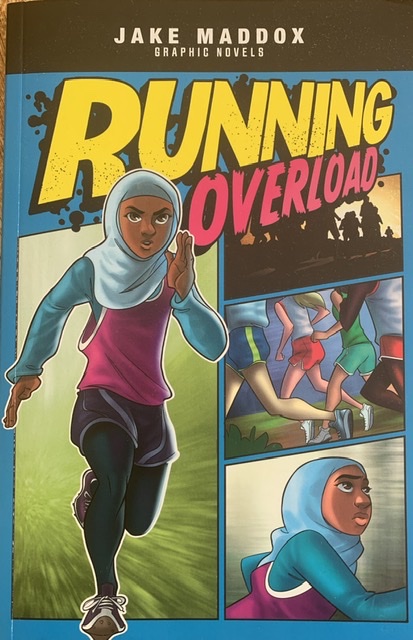
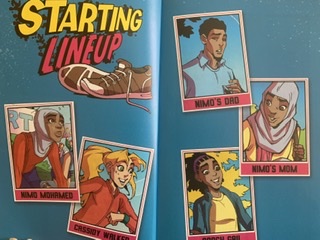
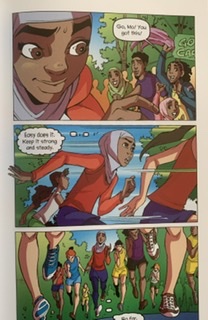
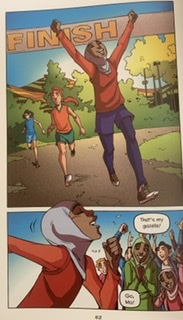
This 72  page graphic novel features a female Muslim protagonist trying to balance her desire to be a great cross country runner and the rest of her life.  Meant for 3rd graders, the lessons are applicable and relevant for readers in middle school as well.

6B290892-6842-45D4-88FE-7FE4D82BAEC6

SYNOPSIS:

Nimo Mohamed has made the varsity track team, and is determined to keep up with the older girls.  She is training too hard which her coaches and parents warn her against, but she doesn’t listen.  As a result she is lying to her family about what she is doing, her grades are suffering, and her body is exhausted to say the least.  After coming dead last in a meet, getting a D on an English test, and injuring her knee, the truth comes out and her dad has her quit the team.  Can she convince him to give her one more chance? Can she learn to pace herself?

253551C1-18E4-4A86-8BD2-315C79A685DA

WHY I LIKE IT:

There is nothing Islamic in the book except for the main character’s family.  The women wear hijab when out, not at home and they have Islamic sounding names.  I like that she is modestly dressed when she runs and that no one seems to care that she is Muslim.  This story is not about her faith, it is a universal story of balance, and the character highlighting the moral is Muslim.  Her parents are divorced, but are on the same page regarding her running and school balancing act, and they come together to support her.  I also like that the book is a sports book and has a female girl of color as the lead.  There is a lot of very intentional diversity in the book and it is refreshing to see.

There are questions at the end, and running vocabulary and tips for running as well.

B555F927-C2E0-433B-8F6B-ED1E58486CD3

FLAGS:

None

F050C711-00AF-4581-93AB-C0E440C1FDD8

TOOLS FOR LEADING THE DISCUSSION:

The book wouldn’t lend itself well to a book club, but would definitely provide one-on-one discussion opportunities.  The short linear story is all about imparting teachable moments on the reader, which isn’t a bad thing, but I think the real strength is that the book is one of a larger series that should really be in every classroom and library to show how balance and integrity and strength and diversity are values that we need to hear over and over, not just in one running book, but from a lot of different sources.