Category Archives: strong women

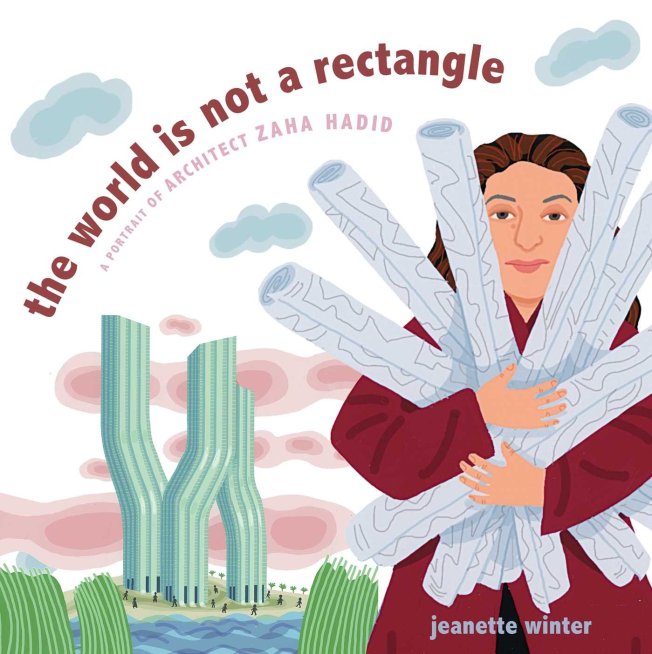
The World is Not a Rectangle: A Portrait of Architect Zaha Hadid by Jeanette Winter

Standard
The World is Not a Rectangle: A Portrait of Architect Zaha Hadid by Jeanette Winter

rectangle

This non fiction book spread over 56 pages on an AR 4.0 level is the biography of the famed Iraqi architect’s inspiration, triumph over obstacles and accomplishments.  It doesn’t go in to great detail of her life, but gives enough information for children to become familiar with her and be inspired by all that she accomplished not only as an Arab, Muslim woman, but as an architect and trail blazer of design and structure.  The pages are beautifully illustrated and the simple text flows and dances around the pages like her buildings in real life.

0BE54CFC-BBDB-4507-9DDA-FDA54576B014

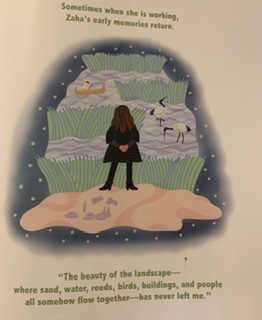
Born in Iraq where rivers flow, wind swoops across sand dunes, and cities existed thousands of years ago, Zaha finds designs and shapes throughout her home and the city of Baghdad.  She has ideas about arrangements of furniture and designs of clothing, she loves that dunes and rivers and marshes don’t have corners.

CEE97AF8-91A3-46AC-A63E-E3484F1790B1

She is a Muslim that attends Catholic school and loves math.  She goes to London for college to study to be an architect. She is relentless in her passion and fills notebooks with plans, paintings with what she sees in her mind and graduates with honors.

94EC3F0A-2584-4786-9FF8-9FE173CB04A5

She opens her own office and with a few friends, she designs buildings that swoosh and zoom and flow and fly.  The world is not a rectangle, but unfortunately no one wants to build her designs.  She keeps entering competitions, and winning, but they refuse to build her buildings.

FE2B9584-E1C6-4B19-94B8-9684A9F6BC0C

She designs buildings that come from her memory of grasses swaying, and wind blowing over dunes, and shells being cradled.  She designs an opera house like a pebble in the water, with the singer the pearl.  A ski jump that reaches the sky like a mountain.

91BAFF18-340B-4334-B856-5984A4CF1060

One by one, Zaha’s designs become buildings all over the world.  She has over 400 employees and designs buildings, shoes, doll houses, furniture, she does what she likes and urges others to do so as well.  Zaha passed away in 2016, but her visions are still carried out.


The Girl and the Ghost by Hanna Alkaf

Standard
The Girl and the Ghost by Hanna Alkaf

ghost

A book meant for middle grades, 8-12 year olds, that has depth and layers and culture and strength is not something you find very often.  Over 275 pages, the book is at times dark and haunting, but what is truly remarkable is that it doesn’t talk down to young readers and with its pop cultural references and relate-ability,  the book is not dreary.  In fact, the true “haunting” occurs after the book is finished and the concepts of friendship, being alive, and forgiveness stick around and require thought and consideration.  The book is based on a Malyasian folktale, how much is a fleshing out, or simply a starting point, I do not know, but I do know that the characters are memorable, the concept thought provoking, the writing flawless, and the intertwining of Malay culture, Muslim characters and the supernatural, a combination that makes for an enjoyable read.

SYNOPSIS:

When an old witch dies, her pelesit, her ghostly demon, is passed on to her granddaughter Suraya.  Suraya lives with her mother, a teacher, and is lonely and emotionally neglected.  An adventurous girl, the pelesit, keeps the small girl safe, but waits to reveal himself to her in the form of a grasshopper when she is older.  When he does reveal himself to her, she asks him his name, and he doesn’t know it, so she names him Pink.

Suraya and Pink become best friends, and he provides company for her as she receives very little from her mother and has no friends.  Suraya had no knowledge of her grandmother and Pink modifies the stories to leave out how evil, cruel and vindictive she was through him.  As an evil being with no heart these acts never bothered him, although he stopped enjoying them long before she died.  With Suraya however, he feels things.  He is sad that she is unloved by her mother, teased by the other children, and that she doesn’t have the things other kids have.  Suraya is kind, and forgiving, and tries so hard not to let things bother her.  Pink however, with a twitch of his antenna can make things happen.  Bad things.  Things that might at first seem like a part of life, but when Suraya catches on, she scolds Pink.  She makes him promise never to use his magic to hurt people, ever.  He reluctantly agrees, she is his master after all.  Unfortunately he doesn’t keep his promise.

On Pink’s prodding, Suraya makes friends with a new girl at school, Jing, and their friendship makes Pink jealous.  He harms Jing and Suraya decides she no longer wants to be his master.  As a result Pink is determined to make Suraya’s life miserable.  As desperation mounts, Suraya tells her mom about Pink and a pawang is called in to separate the spirit from Suraya.  Something seems off about the pawang, and when Suraya investigates, she realizes that she must save Pink from him.  Together with Jing, Pink and Suraya are off on an adventure against the pawang and might just learn more than Pink’s backstory in their efforts along the way.

WHY I LIKE IT:

I love that Suraya and her family are Muslim and that Jing is not and they are best friends.  Suraya and her family pray, celebrate Eid, give salams when at the graveyard, but obviously also believe in magic and ghosts, and somehow in the story it doesn’t seem to be contradictory or odd.  I love Suraya’s strength.  None of the relationships in her life are good.  Yet, she is good, and she forgives and fights to make those close to her better.  Pink is manipulative and controlling and abusive, but she still fights for him to be treated better and that says more about her, than whatever he is.  Suraya’s mom is distant and neglectful, but yet, there is still realistic hope that their future can be and will be better.  I love that all these layers are there and yet are subtle too.  Kids are smart and they will bring their own experiences, understanding, and expectations to decipher these relationships, and that is amazing.  I love that the characters in the story may be so different than the typical western reader, but they will still see themselves in this poor Malay girl from a small village, in her best friend Jing who lives and breathes Star Wars, or even in the religions pawang who is a power hungry charlatan; toxic friendships and family secrets make the book universal.

FLAGS:

Pink makes it look like blood is on a girls back side, implying a girls fear of leaking, but it isn’t explicit or named.  There is death and dying and supernatural and lying.

TOOLS FOR LEADING THE DISCUSSION:

I am thinking strongly about using this as a book club book, as the discussion would be delicious and varied among the participants.

Interview with the author: https://thequietpond.com/2020/08/20/our-friend-is-here-an-interview-with-hanna-alkaf-author-of-the-girl-and-the-ghost-on-writing-friendship-malaysian-childhoods-being-true-to-your-stories/


Your Name is a Song by Jamilah Thompkins-Bigelow illustrated by Luisa Uribe

Standard
Your Name is a Song by Jamilah Thompkins-Bigelow illustrated by Luisa Uribe

song

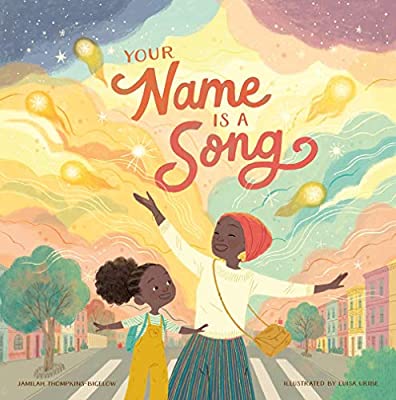
An amazingly empowering simple story that breathes pride and beauty in to names and our identities.  The 40 pages are a celebration of the rhythm of our names and the dreams and hopes that they contain for us.  Perfect for kindergarten to second graders, readers of all ages will find something valuable in this book.  Those with “common” names might reevaluate what their names mean or why they were so named, children with “unique” names will find the music and confidence to ask others to learn their name correctly, older kids might reconsider shortened nick names, and we all inshaAllah will make more of an effort to get people’s names pronounced right.

3A20341F-991D-4929-9A52-D9794E284880

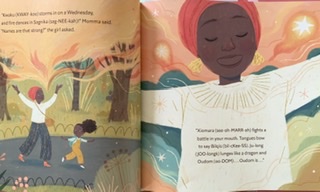
A little girl has had an awful first day of school.  As she stomps toward her mom at dismissal.  No one could say her name.  Not even the teacher, it got stuck in her throat.  Her mom gently reminds her stomping is only for dancing, and tells her that her name is a song.

034DED6F-D931-4FB1-ADC0-15006AC8EAC2

The little girl is skeptical, but as they say people’s names on their way home, and find the magic and rhythm and beat in each one, they address the horrible things that have happened to the girl that day regarding her name.  At lunch girls pretended to choke on her name, and later one boy said her name was scary, some even tell her, her name sounds made up.

86E8B8E7-5336-4D72-BAC3-174F2B5B9AA2

Her mother explains that some names come from deep in the heart, not the throat and cannot be choked on, that names are fire and strong, and that names are made from the sky when our real names were stolen and so new ones have to be dreamed.

8D42050F-B9BA-4813-8BD6-CB543566748A

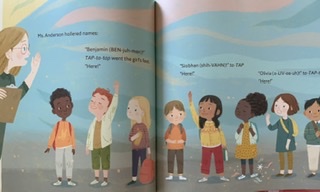
All the way home they go through names, diverse names, beautiful names.  The next day she doesn’t want to go to school, but she has a song to teach.  When her teacher starts calling  out names, the little girl starts tapping the rhythm, when Ms. Anderson starts to struggle on the little girl’s name, she starts to sing it.  She explains that her name is a song, and that she will teach it to them.  The other children then ask her to sing their names. And with a smile on her face, it is music to Kora-Jalimuso’s ears.

58B39FE0-63CA-4196-9452-4C64B517BAAA

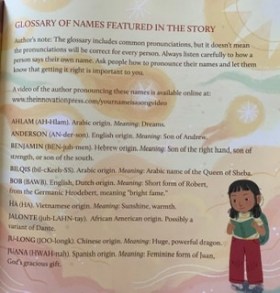
I love that there are three pages of the names mentioned in the story and their origins and meanings listed.  I also like that the little girl’s name is not revealed until the end.  The pronunciation of the names is in the text, all of them, even Bob.   And when I read the name Trayvon, I felt an added weight of saying people’s names, breathing them into our lives and not forgetting them.

74247213-AEE1-464E-A8C4-DE0ECB824335

The family could be Muslim based on the mom’s head wrap.  The author is Muslim and there are Arabic and Islamic names included in the story.

Leila and the Sands of Time by Shirin Shamsi

Standard
Leila and the Sands of Time by Shirin Shamsi

shirin shamsi

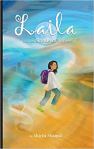
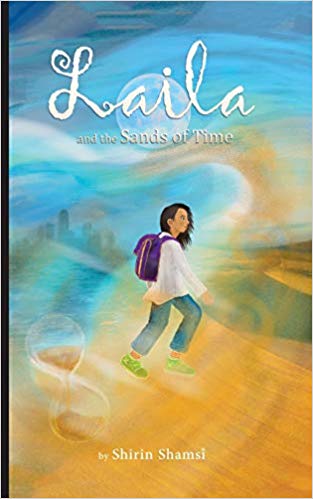
This 127 page book has a lot of potential, but ultimately didn’t win me over.  It is one of those that needs a good editor to encourage the author to flesh out the characters, take advantage of a potentially cathartic resolution, and fill the gaping holes in the story.  Meant for ages 8-12 the tiny font, and tight spacing, make the book really dense and intimidating to look at and read.  The book, as written, should be well over 200 pages, if spaced appropriately for the target audience.  Once you accept the presentation and get in to the story, it isn’t an awful read, it just could have and should have been so much more.  I hope the author revisits it and polishes it up- the time travel, the science DNA component, and the death of the protagonist’s parents, offer a lot for Muslim and non Muslim readers to sink their teeth in and be swept away by, but ultimately, I don’t know that most readers will be motivated to finish the book, and those that do, won’t remember anything about it.

SYNOPSIS:

Laila’s dad has recently died, and with her mother having died years earlier, Laila is now 13 and an orphan living with her stepmom and baby sister.  Feeling resentful that her dad remarried and had a child that took time away from her in his final span of life, doesn’t make Laila a very kind person at home.  Her best friend Beth, even points out how cold she is to her family.  With school vacations approaching, Laila is headed for Umrah with her dad’s brother, her uncle, and his wife.  While making tawaf, Laila loses her aunt and uncle in the crowd and finds herself transported to 7th century Arabia.  She hears a baby crying and learns that the baby’s life is in danger.  To save her, she must get the baby, the baby’s mom and baby’s sister from Makkah to Yathrib.  The only way to do that is to join a caravan, and they can only join a caravan if they have a male escort.  So Laila chops off her hair, acts like a boy, and gets them in the caravan.  They meet bandits along the way, but nothing too scary, they arrive in Medina and right before they meet RasulAllah, Laila finds herself back in the present.  She is in a hospital, but the doctors do not know what is wrong with her so they release her.  She returns to the US, relays the story to Beth, and decides that at an upcoming field trip to study DNA, she is going to submit the baby’s hair that she still has for dating.  The results show it is from 1400 years ago and a family heirloom of her step moms reveals that the baby is a great great great great… grandmother of her’s.  Resolved to open her heart to her family, Laila is a changed person, alhumdulillah.

WHY I LIKE IT:

I love the premise, it is like Sophia’s Journal and When Wings Expand  thrown together and scrambled.  Laila is struggling with her faith and is trying to find it, while also finding a way to move forward after losing her father.  There are just a lot of things that aren’t answered, are contradictory, or don’t make sense.  It says she learned Arabic because her mother spoke it, her dad is desi, but really no hiccups speaking in 7th century Arabia other than forgetting the word for scissors?  She at one point said she was a cousin from the north, but while on the caravan mentioned that she had never travelled through the desert.  There really should have been more action with the thieves and the regrouping when the men came back.  Similarly, her gender reveal should have been a bigger deal than it was.  I was hoping there would be a mention of if her hair was long or short when she awoke in the hospital, I don’t think I missed it, but maybe, or maybe it wasn’t there.  Once back home, there really needed to be a reunion scene with Laila and her stepmom and half sister, I mean the whole point of the time travel was to save a baby. Really? Nothing? I was disappointed that it was glossed over and mentioned as a retelling to Beth and pushed aside.  The second climax is when the DNA testing is being questioned, but I didn’t get the need for the babysitter and everything to be rearranged for a two second conversation with the principal accusing Laila of theft, a phone call should have sufficed, plus when Laila and Beth mention it to the scientist, it seems everyone was questioned, but Beth wasn’t, something wasn’t consistent there either.  Overall, the book needed more action for a book that involves time travel and more emotional attachment and character connection for a book that involves a newly orphaned young teen girl.

I like the conveying of Islamic facts and information and history in a fairly smooth way.  At the beginning, Umrah being explained was a little text bookish, but it smoothed out as the book progressed.  I love the little flashbacks at the beginning of each chapter, I wish there would have been some information about the remarriage of her father and her emotions on the matter at that time.  It is one thing to be grieving, but really she is a brat to her step mom, and if the uncle and aunt live right there, not sure where they live, someone should really be working on getting them all some family therapy, not a quality situation for anyone.

FLAGS:

none

TOOLS FOR LEADING THE DISCUSSION:

I wouldn’t use the book as a book club selection, nor would I think it would get read if on a classroom shelf.  I might use the premise of going back in time to meet Prophet Muhammad, as a writing prompt though.  Would be a good assignment with factual and Islamic references to get kids stretching their imagination to make it all come together and work.


Thorn by Intisar Khanani

Standard
Thorn by Intisar Khanani

thorn

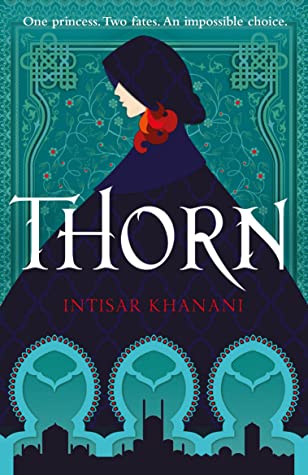
I finished this book, all 512 pages, and before closing it at 12:44 am, I picked up my phone and sent the author a thank you message on instagram.  Yes, it was that good and that fun, and so well written and so encompassing that I don’t feel like I read a book, I feel like I got to know a friend.  There is abuse, and death and sexual assault, but I think thirteen and up can handle and appreciate the crimes and the severity of them, as they are not taken lightly.  The book has magic and royalty, but is so much more about choice and justice and making life meaningful, that Thorn will stay with you as you imagine her life, long after you turn the last page.  ***I did not know it was a retelling of Goose Girl by the Brothers Grimm prior to reading the book, and only read it after writing this review, so forgive me for being so swept away by Falada and Kestrin and loathsome to Corbe’ and Valka, if it so irks you that I am.***

SYNOPSIS:

Princess Alyrra is set to marry Prince Kestrin in a neighboring country.  Unloved and unwanted by her own mother and abused by her brother, none of the royal family can figure out why the King of Menaiya would be coming to see her and appraise the match.  One possibility is because the royal Menaiyan family tends to disappear at alarming rates, and Alyrra might just be a princess that no one will miss.  When a Menaiyan mage comes to warn her and is pushed aside by a magic Lady, Alyrra may be leaving an abusive brother, but getting herself a much bigger nightmare to manage.

Alyrra is known for her honesty.  She stood up for a servant against a Lord’s daughter and prospective wife for her brother, and since then, the royals despise her and the servants adore her.  She spends her time with the holsters and cooks and they keep her aware of her cruel brother’s locations.  When the visiting entourage comes, they see her tormentor and give her a security detail, as well as see how she is beloved by the staff.

Once the match is arranged she is off to Menaiya with Valka, the girl she revealed to be a thief.  Along the way, the Lady presents herself again and switches Valka and Alyrra’s bodies, to give Valka another chance to be queen and to use the real Valka as a tool to destroy the royal family.  The only person in the traveling group aware of the switch, and that can see through it, is Falada a white talking horse, that only speaks to the real Alyrra and refuses to be ridden.

When the girls arrive at the palace, the pretend princess dismisses Alyrra, who has decided to rename herself Thoreena, Thorn.  She asks the king if there are any available positions and thus becomes the Goose Girl.

Thorn is still summoned to the castle to write letters home for the imposter and the prince and former security quad find something off with a former lady of the court finding such contentment in manual labor.  As she settles in to life with the other employees she finds laughter and companionship and only Falada prods her to reclaim her position as princess and save Prince Kestrin from the Lady.

When Falada is killed, and street justice is called on to avenge the brutal rape and killing of a friend, Thorn must decide to enjoy her quiet life or step up and be the change the people and royals of Menaiya need.

WHY I LIKE IT:

I love that it isn’t a sappy love story, it really could have been, but Thorn is calling the shots and she is enough without anyone or with everyone.  I love that she is secure in any role and that her sense of loyalty and obligation comes from within.  The writing is seamless, so often things are repeated and forced upon in a first person present tense story, but this read easily and held my interest.  I love the titles and some of the sprinkling of made up words, it gave depth and richness, as well as the struggle that Thorn had to go through to speak the language.  I loved that she had to work to acquire the skills to communicate and that it was a part of the story, it didn’t just happen, nor did it get swept aside.

Thorn is religious, but no idea what religion or what it means, she seeks going to the temple for peace and clarity, and we know she takes off her shoes, but that is about it.  The author is Muslim and the book is superb.  I had my daughter read it before I read it, and she in turn made me read it, even watching her younger siblings so I could sneak away.

FLAGS:

Death, murder, public execution, hanging, sexual assault, rape, abuse, violence.

TOOLS FOR LEADING THE DISCUSSION:

I am thinking to do it as a book club book if and when we return to school.  It would depend a bit on the group, but I think older middle school could handle it toward the end of the year.  There is a lot to discuss, a lot that readers could understand differently regarding the Lady, when her secret identity was blown, the value of love and choice, that I am confident that the conversation would be rich and enlightening.

A Girl Called Genghis Khan: How Maria Toorpakai Wazir Pretended to Be a Boy, Defied the Taliban, and Became a World Famous Squash Player by Michelle Lord illustrated by Shehzil Malik

Standard
A Girl Called Genghis Khan: How Maria Toorpakai Wazir Pretended to Be a Boy, Defied the Taliban, and Became a World Famous Squash Player by Michelle Lord illustrated by Shehzil Malik

maria

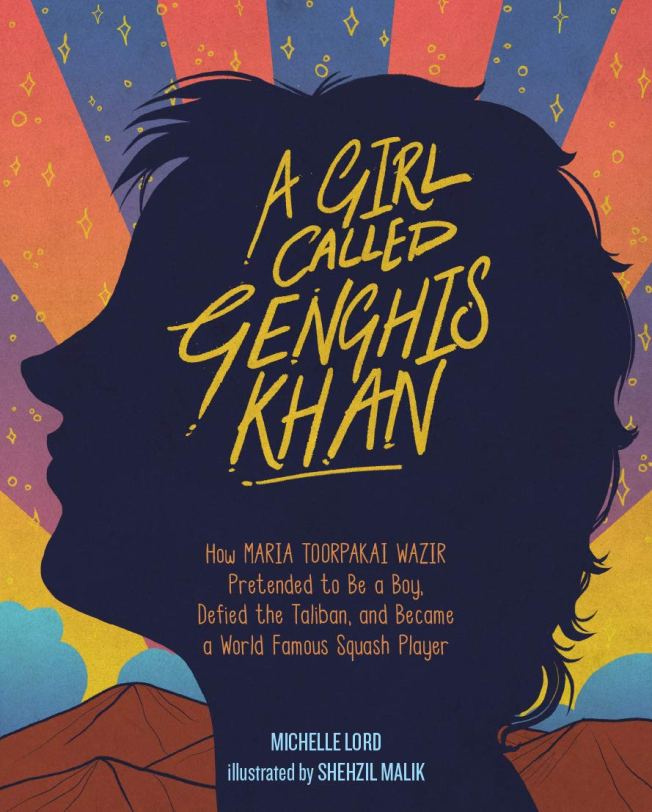
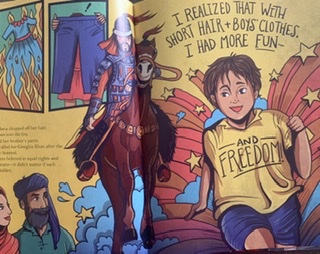
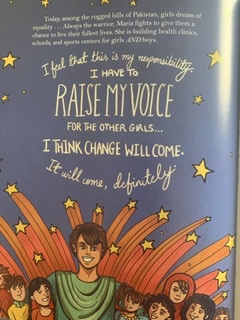
This children’s biography of Maria Toorpakai Wazir, Pakistan’s world famous squash player, is simplified and suitable for children 2nd grade and up.  At 42 pages with bright illustrations older kids will understand a little bit more about the cultural norms that were being oppressive and the strength and risks Maria took to play a sport she loved and defy the Taliban while disguising herself as a boy. Younger children will probably only get her determination and perseverance, which is impressive in its own right.

C9A2CED0-B2A4-43F9-942A-B5A32B0B7E9C

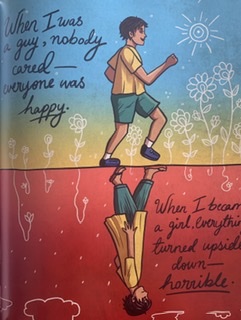
In 1990, Maria was born in the mountains of the Tribal Areas in Pakistan.  Conservative society and strict gender roles amplified by the control of the Taliban in 2001.  Maria’s parents supported rights for their sons and daughters, and allowed Maria to cut her hair, dress like a boy, and play sports.

9C7E2AE9-5668-48C6-8E41-304F1583B644

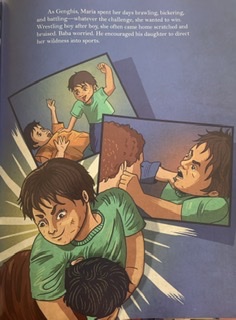
Her father called her Ghenghis Khan after the great warrior and when the family moved to the city of Peshawar he even introduced her as his son to people.  As Ghenghis, Maria was always picking fights and encouraged instead to play sports to channel her wildness.

2FB5AF13-2468-44A6-ACD2-1A118F69F9C6

She fell in love with the game of squash, and when she went to join the Squash Club she had to submit her birth certificate which revealed that she was a girl.  The director let her join the club, as the only girl among 400 boys.  But now her secret was out.

713C71CE-338C-4241-BD6F-05091868E560

She was bullied and her family ridiculed, but she kept playing and kept winning.  The President of Pakistan awarded her honors for her outstanding achievements, but that infuriated the Taliban and they threatened her family.

FF2A709B-F539-44B0-92FB-48C336C2213B

As a result Maria had to hide, and would practice at night, in secret, and for 3 years she played against the wall in her bedroom.  Appealing to squash clubs around the world for help, she finally heard from Jonathon Power in Canada, willing to help her get away from the Taliban and be able to play.

3915AD01-442F-4473-9571-9D798C8B1389

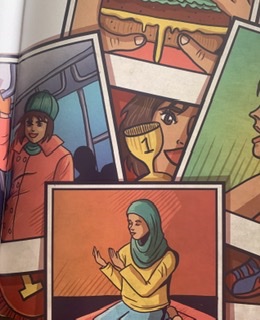
She left behind everything she knew at 20 years old to train in Toronto.  She still represented Pakistan in tournaments.  She studied, she prayed, she succeeded.  She now is back in Pakistan establishing health clinics, sports clubs, and schools for girls and boys.

The story is inspirational, and well told, it shows how culture limited her, not religion, and that in a larger city, culture was a little less conservative.  Muslim and non Muslim children will be inspired by her efforts, her willingness to look like a boy and her determination to excel.  Muslim kids will enjoy that it shows her praying, but might be surprised to see her in shorts and tank tops.  The book would be a great conversation starter about women’s rights and how it isn’t just in Pakistan that women struggle to have equal opportunity and respect.  It also might many children’s first exposure to the sport of squash.

138B3D8B-B868-437B-B7C8-5674879B81DA

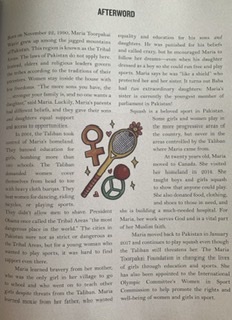
There is an afterward at the end with more information.  A list of additional reading about other inspirational women, a selected bibliography and a highlight timeline of female firsts in sports.


Poe Won’t Go by Kelly DiPucchio illustrated by Zachariah Ohora

Standard
Poe Won’t Go by Kelly DiPucchio illustrated by Zachariah Ohora

poe

This silly book has an abrupt ending, but plenty of giggles along the way that make you forgive the sudden conclusion.  Additionally there is a lot of diversity in the illustrations, a little hijabi girl of color that steals the show, and a lesson about asking and listening that children 4-7 will find sweet and enjoyable.  It is an AR 2.5 and has 36 pages.  Some are text heavy, but my 4 year old had no problem sitting through it with the silly pictures and large 9 x 11.5 size.

383F79FA-EB31-4C0B-B305-BF7F3CDE9759

Poe is an elephant that has planted himself in the middle of the only road in Prickly Valley.  The citizens do everything they can think of to get him to move.  They honk, write him a ticket, bang pots and pans, play trombones, blast megaphones, tickle, beg, and bribe.  They even bring in mice, and magnets, and motivational speakers.  Clowns and copters, cranes and pastors, magicians and the mayor, no one can get him to move.

5376BF1C-4727-4160-8C52-6F360EE19055

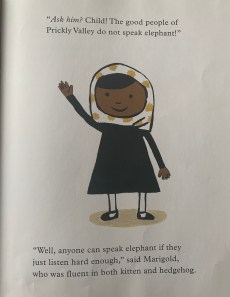
After lots of discussions involving coffee in stryrofoam cups, a little girl named Marigold, asks the mayor if anyone has asked Poe.  Such an obvious suggestion, the Mayor laughs and says she doesn’t speak elephant.  Little hijabi Marigold says, “anyone can speak elephant if they just listen hard enough.”  She is also fluent in kitten and hedgehog.

C34B829A-CA57-4C1F-94B8-ACD7258CE1F0

Marigold discovers that Poe is waiting for a friend that is very late.  A reporter asks if the friend could be wearing a polka-dot-tie, it is determined that it is possible and that also perhaps he is sitting on his friend. At that Poe stands up, finds his friend Mo and the two walk off.

The randomness of Poe sitting on his friend made me have to read the story a few times checking to see if a page was missing or stuck together, but alas no, it just suddenly is resolved and ends with no clues indicating that the elephant is sitting on a monkey.

6FDD18F5-94B3-45FA-9A15-C1299B318EEF

I love that the name in the text for the little girl is Marigold, and that the illustrator chose to depict her as a little Muslim girl of color.  On many of the other pages with the town folk trying to move the elephant, there are people of all colors, body shapes, hairstyles, head gear, eye wear, facial hair, body art, etc shown.  Marigold seems to be at work with her father at their flower shop, and the mayor is a female.

397E7902-B48D-4C1F-982E-F090955F9258

There is nothing religious in the book, save a pastor trying to persuade the elephant to get behind him, and it doesn’t appear that the author or illustrator are Muslim (it is published by Disney Hyperion) which in someways makes the normalizing of a girl in hijab all the more sweeter.  Sure, someone her age wouldn’t be required to cover, but the message and representation is deliberate and appreciated.

The Day Saida Arrived by Susana Gómez Redondo illustrated by Sonja Wimmer translated by Lawrence Schimel

Standard
The Day Saida Arrived by Susana Gómez Redondo illustrated by Sonja Wimmer translated by Lawrence Schimel

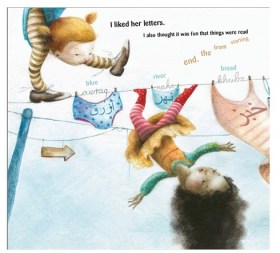
saidaThis absolutely gorgeous lyrical book will sweep you up and hold you tight as you imagine a world where more people take the time to get to know one another through the power and beauty of language.  Over 32 pages that are exquisitely and whimsically illustrated the words dance and come to life in English and Arabic as a friendship is formed.  Perfect for preschool through 3rd graders, older children and adults alike will be softened by the kindness and example shown between two little girls.

saida1

Told from the perspective of a little girl that meets a new girl in school named Saida and decides right away that they are going to be friends.  Unfortunately Saida speaks only Arabic, and the little girl only English.

saida2

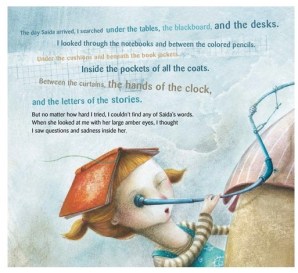
But it is no problem, because the little girl is going to help Saida find her words.  She is going to look everywhere to let her get rid of her tears and throw away her silence.  So that she doesn’t see questions and sadness locked up in her.

saida4

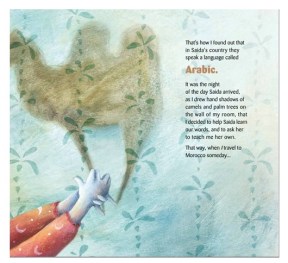
That night at home, the little girl’s parents tell her about Morocco and find it on the globe.  They explain that Saida’s words don’t work here and that her words wouldn’t work in Morocco.

saida5

Undeterred the two girls start teaching each other words in their languages.  Some stick, some float away, but the two learn and communicate and connect. They find friendship in learning each other’s words.

They recite a poem by Jacqueline Woodson and tells stories about Marrakesh. The two girls plan to travel the world together. The book concludes with both alphabets shared and the reader wishing to join the little girls on their adventures.

saida 3

I was blown away by the presentation of the book and the feeling of compassion and cultural appreciation depicted.  Such a beautiful approach to welcoming someone different in to your life.

There is nothing Islamic or religious in the book, or really even cultural, aside from language.
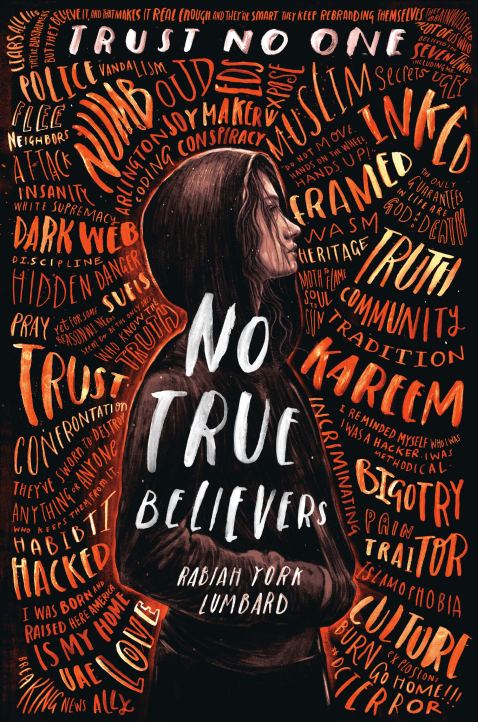
No True Believers by Rabiah York Lumbard

Standard
No True Believers by Rabiah York Lumbard

believers

This YA Fiction book by a Muslim author filled with many Muslim characters has a lot going for it, and while I didn’t love it, and felt that it was trying to do too much in 304 pages, I think most early high school readers will enjoy the cyber hacking plot, the islamaphobia and white supremacy themes that keep the book fast paced, relatable and timely.  The main character is a Muslim and has a Muslim boyfriend and all family members are fine with it, she also gets a tattoo with her mother’s permission and breaks the law, but usually with worthy motives.

SYNOPSIS:

Salma Bakkioui is the high school aged daughter of a North African father and convert mother.  They go to the mosque a few times a year, but don’t really practice, it is more heritage than actual intentional praying five times a day, yet somehow ayats from the Quran and hadith do float in and out of the story.  It is Ramadan, and the Muslims in the book are fasting except for Salma, who suffers from EDS (Ehlers-Danlos Syndrome) a connective tissue disorder, her best friend Mariam, who lived next door has just moved away because her father’s chiropractic business was failing due to racism and Islamaphobia.  Salma tried to use her hacker skills to send him more business, but ultimately they moved to the UAE.  Amir, the supportive boyfriend, oud player, and fellow Edward Norton fan is steady and good and constant.  As are her partying friend Vanessa, her physical therapist and her daughter, unfortunately, things are about to get really crazy, really fast.

When Salma and Amir go over to meet the new neighbors that have moved in to Mariam’s old house the blaring TV broadcasts a terrorist bombing nearby in DC.  The neighbors seem nice, but something is off about them, and Salma can’t quite figure it out.  From the dad and son’s matching number tattoos, the mom’s nervous behavior, and snippets of overheard conversations, it becomes apparent that something infact fishy is going on.  Salma and her younger siblings start getting bullied by classmates, and teachers and administrators turn a blind eye, cops interrogate Salma at school, and illegal snooping on the dark web reveal that the neighbors aren’t as innocent as they claim. As more and more is uncovered about the neighbors, Salma learns that she better have a plan to get out, as she is about to be framed for a lot of destruction as the new face of Islamic extremism.

WHY I LIKE IT:

I like that Salma is relevant and relatable, and while I know a lot about her family and friends, and illness, for some reason I don’t feel invested in her, and I am totally willing to conceded that that is on me, and others would really identify with her, but for some reason as much as I wanted to connect with her, I didn’t.  The supporting cast is fairly fleshed out, I’m not entirely sure why Dora and Boots are highlighted so much and I didn’t feel a tug on the emotional heartstrings of Mariam leaving, of Amir leaving, of Salma possibly saying good-bye.  I felt like even Salma and Amir being a couple and being connected through Edward Norton and Fight Club was a bit forced.  I didn’t feel it was organic or natural, it was almost like the author was trying to make a point of Muslim youth having relationships, and finding imams that were ok with tattoos. Rather than it being a plot point it seemed like it was trying to voice the author’s perspective whether it fit smoothly into the storyline or not.

I do like the tech and and the parallels between extremism whether Islamic or Christian, foreign or domestic, that drove the action of the book.  The unraveling of pieces and connections seemed a bit rushed, with unnecessary tangents affecting the pacing overall of the book, but at least there were answers to help it all make sense at the end, and make the story feel complete.

Having never written a book, I don’t know if some of the hiccups are first novel related, but I really hope the author keeps writing and keeps changing up what the mainstream Muslim protagonist lead consists of.  I love that Salma is smart and level headed and aware of her world, while still growing and owning up to her faults.  It isn’t a coming of age story, but she sets a great precedence for continued growth, loving your family and trusting yourself too. I particularly like the nuances in racism.  Some of the kids at school are jerks and bullies, some staff and teachers are bigoted and prejudice, but the right wing conspiracy groups are actively working, and their level of hatred and intelligence to mask it is great to see in a YA book.

FLAGS:

Relationships, kissing, references to marijuana brownies being consumed, violence, cursing, lying, illegal activity.

TOOLS FOR LEADING THE DISCUSSION:
I can’t use this book as a book club selection since the two main characters are making out in the first chapter, but the book really is more than a relationship story and I would be ok with my young teen reading it.  The illegal hacking is more problematic then helpful in the end, and the language, and other deviant behaviors exhibited aren’t done for shock value alone, I think a discussion after the book would be great: privacy, hate, conspiracy, faith, religion, friendships, etc.


Salma the Syrian Chef by Danny Ramadan illustrated by Anna Bron

Standard
Salma the Syrian Chef by Danny Ramadan illustrated by Anna Bron

salma

This 40 page picture book meant for 4-7 year old children is full of diversity, community and love.  The only thing missing, is a recipe for the dish, foul shami, that Salma recruits everyone at the refugee Welcome Center to help her make to cheer up her mom. Possible flag is there is a gay couple featured in the text and illustrations.

syrian1

Salma and her mom are refugees from Syria living in Vancouver, and desperately missing Salma’s dad who still has not been able to join them.  When Salma shares her sadness with Nancy at the Welcome Center, she is encouraged to draw her good memories.  And then Salma has the idea to cook a dish from home for her mom. The other kids at the center mention foods they miss, Ayman from Egypt, Riya from India, Evan from Venezuela.   Then the translator, Jad, from Jordan helps her find a recipe online.

syria

Convincing herself that she can do this, Salma  draws a picture for each of the ingredients since she doesn’t know the names in English.  She then heads to the market with Ayesha from Somalia, an older girl that helps her cross the street, and get the needed groceries.

syria2

Back at the Welcome Center to cook. Malek and Amir, a gay couple from Lebanon help her chop the vegetables and kiss away each others onion tears.  The spices make Salma sneeze, but she can’t find the sumac.

syria 5

Granny Donya from Iran has the missing spice and reassures Salma that she can do this.  That is until the olive oil bottle slips and falls and shatters.  With no more money and feeling discouraged, it takes Nancy and everyone else to convince Salma not to give up as the dish is made with love and Mama will love it.

syriasad

Everything is set up to surprise Mama with the dish, but once mama comes home and the door bell rings, it is Salma who is surprised with all her friends coming over to bring her olive oil.

Mama laughs and tells Salma her smile is home, and Salma dreams of riding her bike around the Vancouver seawall laughing with her friends and Mama.

syriabike

I love the sense of community that it takes to make the dish and that she finds love and support from so many.  I also like her determination to make her mother smile along with her willingness to accept help when she needs it.

I’m assuming the family is Muslim, the mom appears to remove a scarf when she returns home, Ayesha and Granny Donya also wear hijab.