Category Archives: Story Time

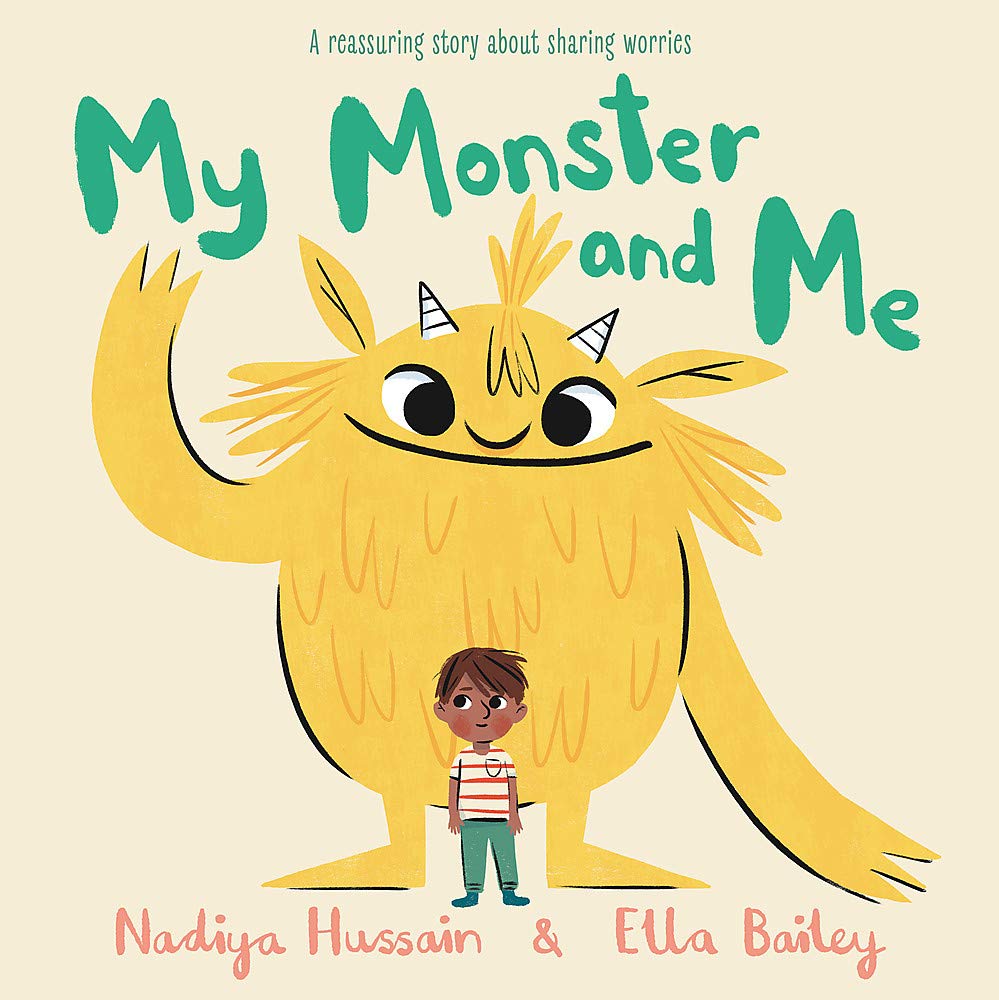
My Monster and Me by Nadiya Hussain and Ella Bailey

Standard
My Monster and Me by Nadiya Hussain and Ella Bailey

This adorable 32 page book about facing worries, anxiety, and fears is told in story format and meant for ages four and up. The personified monster isn’t scary, but he is big, and the little boy learns to talk about him to get him to shrink. The book is engaging, fun, and powerful. I had my teenager who has anxiety read it and she loved it, a few days later as she was forcing herself to get out of the car, she mentioned that she needed to make her monster small. Normalizing mental health, feeling like you aren’t alone, finding the words to explain to others how you feel, having empathy for those that are facing challenges, are all things the book conveys without being preachy or condescending. I think every child, parent, and caregiver, needs to be aware of what children are facing and find ways to be like the gran in the book and listen, so that children suffering aren’t doing so alone. The fact that the author is a Muslim celebrity chef in Britain and the protagonist is a boy with brown skin, makes the message that much more universal.

The book starts out with an unnamed boy introducing himself and his much bigger monster. He doesn’t know when the monster arrived, but it seems he has always been there, and the monster knows all about him.

The monster is big, and when he stands infront of the little boy, the little boy can only see his tummy. At night he snores too. When he asks his mom or dad or brother to take the monster away, the monster hides.

Over time the monster has gotten bossier. When the little boy is getting dressed or brushing his teeth or when he wants to play, the monster is always there, blocking him.

One day after school the monster was there and the little boy tried to lose it, but couldn’t. Gran asked what was wrong when he showed up crying, and the little boy told his grandma all about his monster.

Gran listened quietly and the more the little boy talks, the smaller the monster gets. Pretty soon the boy realizes he can make his monster go away. When he finds the monster later, the little monster is confused, so the boy puts him in his pocket.

The monster is always there, but the little boy can make him behave and he isn’t scary any more. At the end the boy is big, and the monster is little.

I love that the boy finds someone to talk to, and that he accepts that the monster may never leave. Even if you don’t have anxiety or worries, the book is a great metaphor that even little kids can understand to help them cope when stresses do occur. I love the large size of the book, the minimal text and the bright illustrations. Truly a great book that needs to be in classrooms and homes and anywhere kids are.

Solar Story: How One Community Lives Alongside the World’s Biggest Solar Plant by Allan Drummond

Standard
Solar Story: How One Community Lives Alongside the World’s Biggest Solar Plant by Allan Drummond

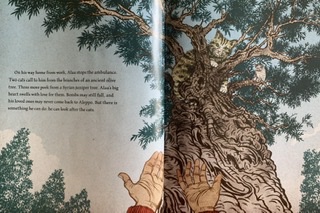
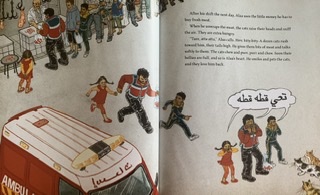
Set in Morrocco, the fictionalized framing of a children’s story about solar energy and sustainability at the the world’s largest solar plant in Ghassate will appeal to curious children in kindergarten and up. Told through the every day life of Jasmine, a little girl living near the plant, the concepts are not technical, but give a broad overview allowing readers to understand how impressive solar energy is, as well as the disparity that exists in the world. Over 40 pages with factual sidebars and an author’s note at the end, children who enjoy the story and are curious about the reality of it all will find an easy opportunity to learn more.

Jasmine and her friend Nadia live in Morocco between the High Atlas mountains and the huge Sahara desert. It is always sunny where they live.

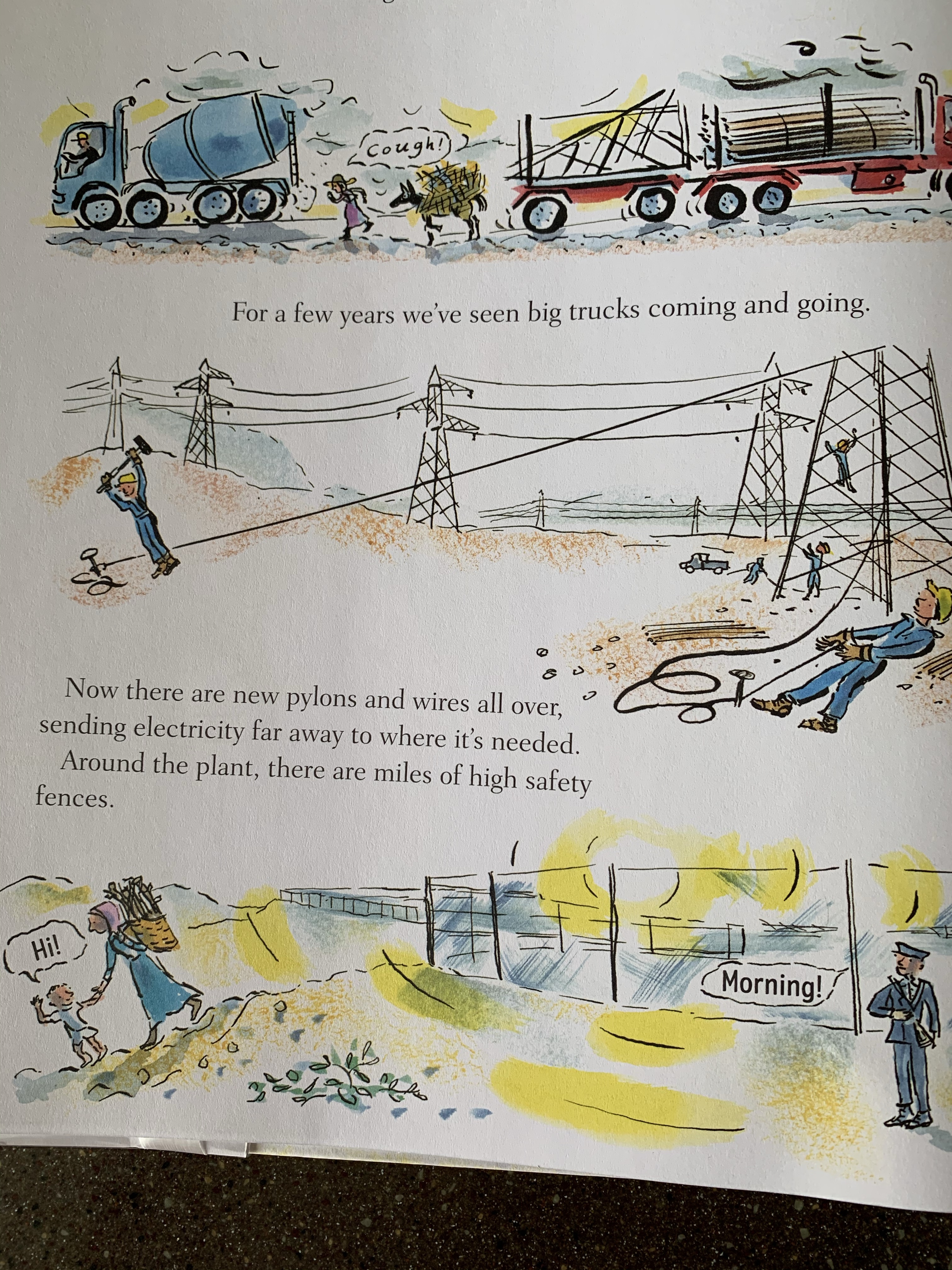
They talk a lot about making energy from sunshine as they watch trucks going and coming from the world’s largest solar plant. Their teacher likes to ask them about the big changes happening in their world.

As the villagers tend to their sheep and cows, they cook on open fires and bake bread in clay ovens all while keeping an eye on the workers making the largest solar tower in the world. Jasmine’s dad rides a mule to work and many classmates parents work at the state of the art plant. The contrast is obvious.

The next day at school Miss Abdellam the teacher asks the students about sustainability. And the book doesn’t define the concept right away. First the class goes on a field trip to the solar plant.

At the plant the size of 3,500 soccer fields they see the 660,000 mirrors that follow the sun like sunflowers and bounce the rays to the 800 ft tower. The tower gets to a thousand degrees on top and heats water whose steam powers turbines and is turned into electricity.

The kids go home to work on their sustainability homework. With no internet or computers even, they have to think for themselves. The remaining pages define and provide examples of how solar power is changing life for the villagers and improving life for people not just in Morrocco or Northern Africa but potentially the entire world.

I love that the concept of sustainability isn’t just a definition it shows how it is in every day things, and those every day things lead to big things that are both tangible and ideological. The author/illustrator acknowledges his own surprise and bias when he learned that the largest solar power plant was in Nothern Africa. I love that some of the females wear hijab, and some do not, and that the teacher and some of the parents at the solar plant are female. There is nothing religious even mentioned in the book, but the visibly Muslim characters are empowering and honest for a story about science and Morocco.

Yeti and the Bird by Nadia Shireen

Standard
Yeti and the Bird by Nadia Shireen

yeti

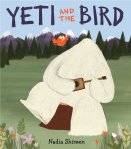
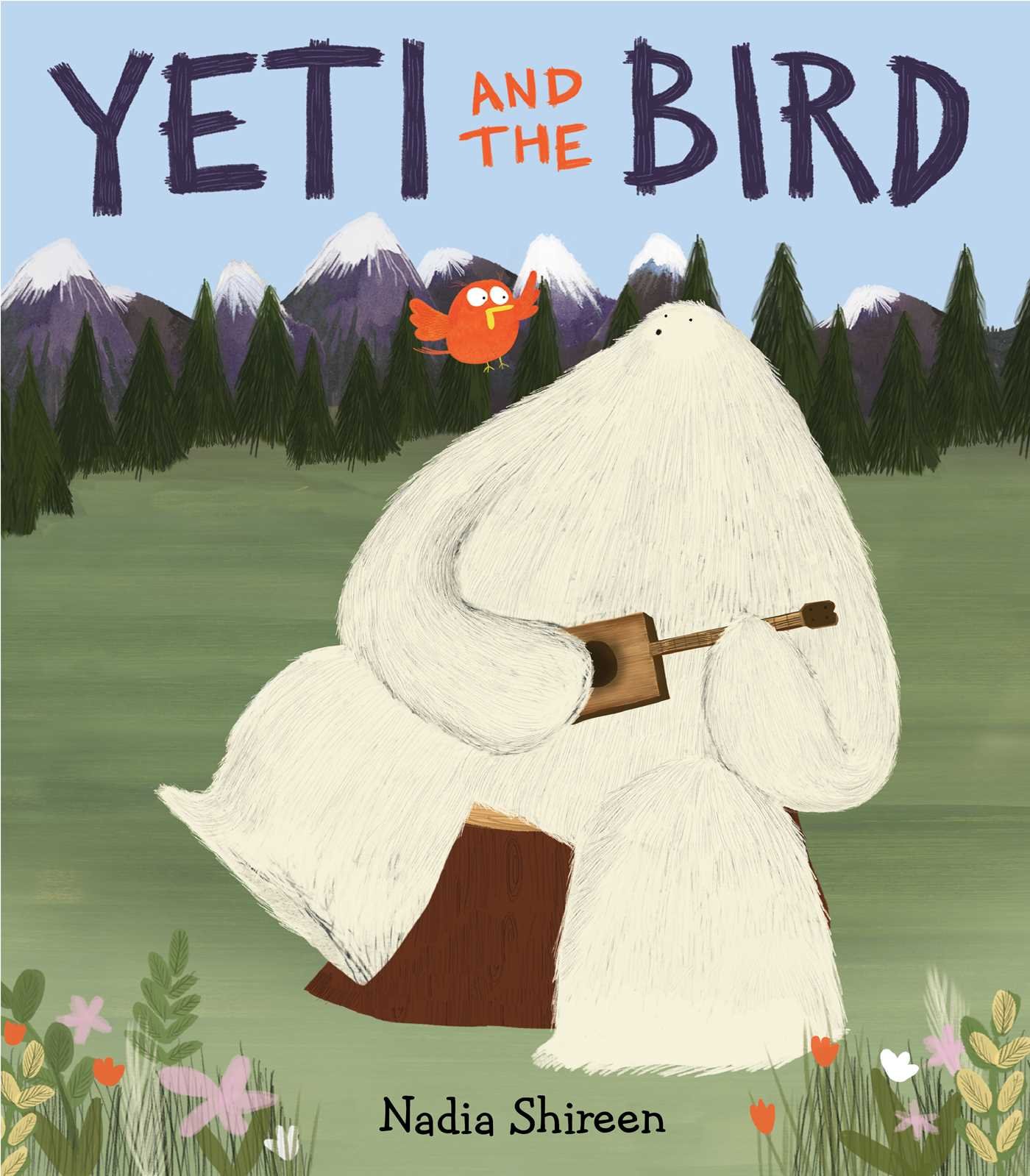
What a sweet story about assumptions, loneliness, friendship and kindness.  An AR 2.0, this 32 page simple picture book tells the story of an accidental meeting, making friends, and the opening of hearts of the forest critters as a result.  Written and illustrated by a Muslim author, the adorable illustrations make the story come to life and provide smiles for kg-2nd graders along the way.

84128316-9DAA-4B13-9391-E41C19804A57

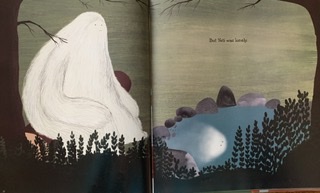
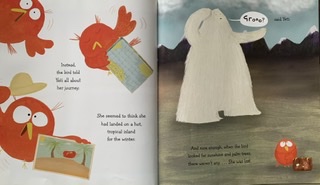
Yeti is the biggest, hairiest, scariest beast anyone has ever seen.  So no one comes near him, making him very lonely.  But one day a lost bird thunks him on the head.  The Yeti growls, but the bird doesn’t get scared. At all. Instead the little bird tells Yeti about her journey and how she was headed to a hot tropical island for the winter.

9794A3B4-1DEF-4183-B784-67190ED94037

Yeti doesn’t know what to do with the sad little bird, so he picks her up and takes her home.  The next day the two play and laugh.  The forest animals look on in surprise and curiosity.

51FA79D6-1ABE-4C09-8E2B-31023FC4E69A

As it gets colder, Yeti knows his new friend will need to leave so he studies the map and helps give her directions for the long journey ahead.  Once she leaves, Yeti is even lonelier than before.

41A015EF-3798-41D6-BEF9-395197E9401B

But, alas, new friends are ready to play and the little bird stops by to play when she can.

587A7DA5-DE9A-4270-B8B4-202C6943F846

Cute and fun and great for littles, to be brave and give a new friend a chance.

The World is Not a Rectangle: A Portrait of Architect Zaha Hadid by Jeanette Winter

Standard
The World is Not a Rectangle: A Portrait of Architect Zaha Hadid by Jeanette Winter

rectangle

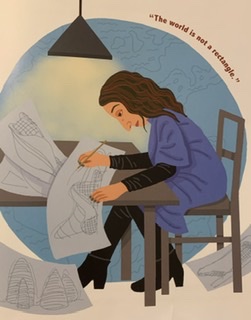
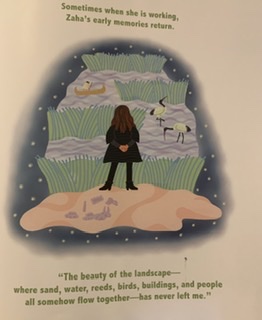
This non fiction book spread over 56 pages on an AR 4.0 level is the biography of the famed Iraqi architect’s inspiration, triumph over obstacles and accomplishments.  It doesn’t go in to great detail of her life, but gives enough information for children to become familiar with her and be inspired by all that she accomplished not only as an Arab, Muslim woman, but as an architect and trail blazer of design and structure.  The pages are beautifully illustrated and the simple text flows and dances around the pages like her buildings in real life.

0BE54CFC-BBDB-4507-9DDA-FDA54576B014

Born in Iraq where rivers flow, wind swoops across sand dunes, and cities existed thousands of years ago, Zaha finds designs and shapes throughout her home and the city of Baghdad.  She has ideas about arrangements of furniture and designs of clothing, she loves that dunes and rivers and marshes don’t have corners.

CEE97AF8-91A3-46AC-A63E-E3484F1790B1

She is a Muslim that attends Catholic school and loves math.  She goes to London for college to study to be an architect. She is relentless in her passion and fills notebooks with plans, paintings with what she sees in her mind and graduates with honors.

94EC3F0A-2584-4786-9FF8-9FE173CB04A5

She opens her own office and with a few friends, she designs buildings that swoosh and zoom and flow and fly.  The world is not a rectangle, but unfortunately no one wants to build her designs.  She keeps entering competitions, and winning, but they refuse to build her buildings.

FE2B9584-E1C6-4B19-94B8-9684A9F6BC0C

She designs buildings that come from her memory of grasses swaying, and wind blowing over dunes, and shells being cradled.  She designs an opera house like a pebble in the water, with the singer the pearl.  A ski jump that reaches the sky like a mountain.

91BAFF18-340B-4334-B856-5984A4CF1060

One by one, Zaha’s designs become buildings all over the world.  She has over 400 employees and designs buildings, shoes, doll houses, furniture, she does what she likes and urges others to do so as well.  Zaha passed away in 2016, but her visions are still carried out.


Your Name is a Song by Jamilah Thompkins-Bigelow illustrated by Luisa Uribe

Standard
Your Name is a Song by Jamilah Thompkins-Bigelow illustrated by Luisa Uribe

song

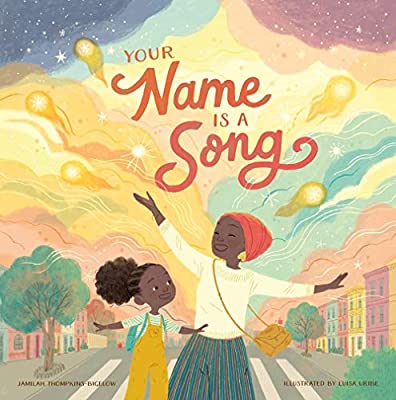
An amazingly empowering simple story that breathes pride and beauty in to names and our identities.  The 40 pages are a celebration of the rhythm of our names and the dreams and hopes that they contain for us.  Perfect for kindergarten to second graders, readers of all ages will find something valuable in this book.  Those with “common” names might reevaluate what their names mean or why they were so named, children with “unique” names will find the music and confidence to ask others to learn their name correctly, older kids might reconsider shortened nick names, and we all inshaAllah will make more of an effort to get people’s names pronounced right.

3A20341F-991D-4929-9A52-D9794E284880

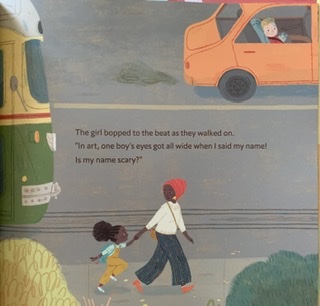
A little girl has had an awful first day of school.  As she stomps toward her mom at dismissal.  No one could say her name.  Not even the teacher, it got stuck in her throat.  Her mom gently reminds her stomping is only for dancing, and tells her that her name is a song.

034DED6F-D931-4FB1-ADC0-15006AC8EAC2

The little girl is skeptical, but as they say people’s names on their way home, and find the magic and rhythm and beat in each one, they address the horrible things that have happened to the girl that day regarding her name.  At lunch girls pretended to choke on her name, and later one boy said her name was scary, some even tell her, her name sounds made up.

86E8B8E7-5336-4D72-BAC3-174F2B5B9AA2

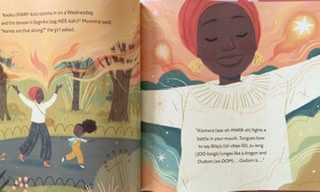
Her mother explains that some names come from deep in the heart, not the throat and cannot be choked on, that names are fire and strong, and that names are made from the sky when our real names were stolen and so new ones have to be dreamed.

8D42050F-B9BA-4813-8BD6-CB543566748A

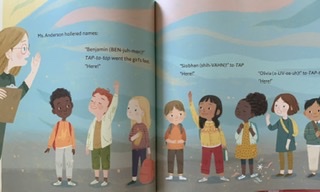
All the way home they go through names, diverse names, beautiful names.  The next day she doesn’t want to go to school, but she has a song to teach.  When her teacher starts calling  out names, the little girl starts tapping the rhythm, when Ms. Anderson starts to struggle on the little girl’s name, she starts to sing it.  She explains that her name is a song, and that she will teach it to them.  The other children then ask her to sing their names. And with a smile on her face, it is music to Kora-Jalimuso’s ears.

58B39FE0-63CA-4196-9452-4C64B517BAAA

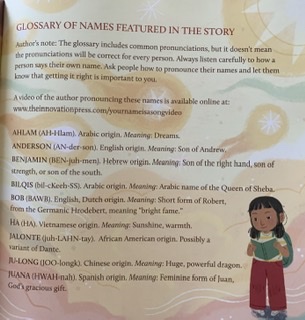
I love that there are three pages of the names mentioned in the story and their origins and meanings listed.  I also like that the little girl’s name is not revealed until the end.  The pronunciation of the names is in the text, all of them, even Bob.   And when I read the name Trayvon, I felt an added weight of saying people’s names, breathing them into our lives and not forgetting them.

74247213-AEE1-464E-A8C4-DE0ECB824335

The family could be Muslim based on the mom’s head wrap.  The author is Muslim and there are Arabic and Islamic names included in the story.

Let it Go: Learning the Lesson of Forgiveness by Na’ima B. Robert and Mufti Menk illustrated by Samantha Chaffey

Standard
Let it Go: Learning the Lesson of Forgiveness by Na’ima B. Robert and Mufti Menk illustrated by Samantha Chaffey

let it go

1AA90D6C-5528-4766-B486-219F31FF7AEC

This 32 page rhyming book follows a little boy around as he is weighed down by a lot of things not going his way.  He doesn’t want to forgive until he is the one that hurts someone else and realizes we all make mistakes, forgiveness is not a weakness, and we all feel angry at times.  The book breaks from the story to ask the reader to think about their emotions in various situations, and encourages the reader to talk about their feelings.  The framework is Islamic and the repenting to Allah swt is part of the message. I found it awkward to read independently, but I read it to a small group of my own kids and their cousins, seven in all, ages four to thirteen, and it worked very well to discuss what the boy was feeling and how they would react.  I think this book would be great in a classroom or as a book an adult reads to a child at bedtime to encourage conversation.  I had to point out to the little ones, that the knapsack was getting bigger with the little boys anger, and explain what it was, but as a tool to foster dialogue it was incredibly powerful.

AF3C685C-9745-42B2-96C3-53F2B28B50B7


The book starts out with a poem/du’a by Mufti Menk that sets the tone for the book.  It makes clear that we are all human and feel things and that this book is a tool to understand and emotionally grow from.  No one is going to get in trouble or be reprimanded.

997B392B-E053-4EB3-AAAE-B40023247F90

The story stats with the little boy waking up happy and ready to have a wonderful day.  But then when he comes down for breakfast, his sister has eaten the last piece of toast.  The book asks the reader, “how do you feel when things don’t go your way?” and asks the little boy to let sorry make it better so that he can let it go.  But the little boy doesn’t want to let it go, he wants to hold on, and as a result it makes his heart feel heavy.

71B6DCC3-5B85-423E-A3F7-6F1F3DC80136

This pattern is followed throughout the book giving examples when the boy doesn’t get included in a game at school with his friends, when his friend kicks his football (soccer ball) in to the road and it gets popped by a passing car, and at dinner when his older brother laughs at him.

5BAA4271-891B-4D25-8451-B1A787D4C1F9

He then picks on his sister at bedtime, and doesn’t even know why he is doing it, and realizes that he too has made a mistake.  He learns that “it takes a strong person to let it go,” and that “forgiving is like taking off a heavy bag that I’ve been carrying all day long.”

4D498CEE-6886-40ED-925B-6D230205CB6C

The book ends with some verses and hadith about forgiveness.  Has some facial expressions with emotions to discuss, and space to write down things that make you feel angry, hurt, or sad as well as a place to share what makes you happy, grateful, and safe.  There is also a glossary of Islamic Arabic terms on the inside back cover.

D5E111E7-2791-466B-9343-B362E7D4EB23


Our Favorite Day of the Year by A.E. Ali illustrated by Rahele Jomepour Bell

Standard
Our Favorite Day of the Year by A.E. Ali illustrated by Rahele Jomepour Bell

favorite day

A great book about inclusion for back to school, except well with Corona, we aren’t doing things how we always have.  None-the-less this book about the first day of kindergarten for Musa and the friendships and celebrations of diversity (Eid al-Fitr, Rosh Hashanah, Las Posadas, Pi Day) that will take place over the school year, connect the kids and their cultures in a beautiful and heartwarming way.  The book is 40 pages with engaging illustrations and text perfect for 5-7 year olds.

EDFC15B2-0A7C-4B7F-ACAD-E019DBDEDEC4

It is the first day of school and Ms. Gupta tells the class it is her favorite day of the year.  She also tells the children that the people around them will become their best friends.  Musa doubts this as he looks around at the strangers at his table.

EFE30123-CA0D-41E9-BAFB-2ADFA7CE811F

He also wonders how the first day of school can be any ones favorite day, clearly Eid al-Fitr is the best holiday.  Luckily, every show-and-tell will be about someone’s favorite day, so that the class can join together in celebrating it.  Moises can’t believe that Christmas isn’t the most fun until he learns that not everyone celebrates it.

011E4F77-4479-412E-AF9E-D37B9B870308

When it is Musa’s turn to teach about Eid, his mom and he bring in food and decorations and teach the kids to say Eid Mubarak.  They learn what Eid is like and can see why it is his favorite.

6B5884B2-A9ED-42D1-A624-B8100CE0D160

Up next is Mo’s turn.  He tells everyone about Jewish New Year and how to say Shanah Tovah.  On Rosh Hashanah they light candles and share food with friends and family.

DAC82C2A-06CC-485B-B589-F34682F0914E

Moises explains how Las Posadas is how his family celebrates Christmas.  It lasts nine days and there are songs and pinatas and presents.

2CECB33E-AFBD-4118-B893-8B9D2B81385C

In the spring it was Kevin’s turn and he shared his love of Pi Day as his family celebrates science.  On March 14 (3.14) they make different pies and learn about scientists and their discoveries.

A657B13B-02A0-4E75-95D0-25513C8788F6

On the last day of school, the children are sad, but their teacher hopes they will remember each other always throughout the year as she hands out calendars for them to keep.

83CC82E2-4045-4F02-8202-D6E6124A0E5F

The book concludes with information about each of the four holidays mentioned. It is possible that on the Rosh Hashanah page the family is two gay men with two children, but it could be just two men as well, and doesn’t say anything in the text that suggests who and how the family is comprised.

731DE17E-FCD5-4B41-9209-3EEB21052101

A Girl Called Genghis Khan: How Maria Toorpakai Wazir Pretended to Be a Boy, Defied the Taliban, and Became a World Famous Squash Player by Michelle Lord illustrated by Shehzil Malik

Standard
A Girl Called Genghis Khan: How Maria Toorpakai Wazir Pretended to Be a Boy, Defied the Taliban, and Became a World Famous Squash Player by Michelle Lord illustrated by Shehzil Malik

maria

This children’s biography of Maria Toorpakai Wazir, Pakistan’s world famous squash player, is simplified and suitable for children 2nd grade and up.  At 42 pages with bright illustrations older kids will understand a little bit more about the cultural norms that were being oppressive and the strength and risks Maria took to play a sport she loved and defy the Taliban while disguising herself as a boy. Younger children will probably only get her determination and perseverance, which is impressive in its own right.

C9A2CED0-B2A4-43F9-942A-B5A32B0B7E9C

In 1990, Maria was born in the mountains of the Tribal Areas in Pakistan.  Conservative society and strict gender roles amplified by the control of the Taliban in 2001.  Maria’s parents supported rights for their sons and daughters, and allowed Maria to cut her hair, dress like a boy, and play sports.

9C7E2AE9-5668-48C6-8E41-304F1583B644

Her father called her Ghenghis Khan after the great warrior and when the family moved to the city of Peshawar he even introduced her as his son to people.  As Ghenghis, Maria was always picking fights and encouraged instead to play sports to channel her wildness.

2FB5AF13-2468-44A6-ACD2-1A118F69F9C6

She fell in love with the game of squash, and when she went to join the Squash Club she had to submit her birth certificate which revealed that she was a girl.  The director let her join the club, as the only girl among 400 boys.  But now her secret was out.

713C71CE-338C-4241-BD6F-05091868E560

She was bullied and her family ridiculed, but she kept playing and kept winning.  The President of Pakistan awarded her honors for her outstanding achievements, but that infuriated the Taliban and they threatened her family.

FF2A709B-F539-44B0-92FB-48C336C2213B

As a result Maria had to hide, and would practice at night, in secret, and for 3 years she played against the wall in her bedroom.  Appealing to squash clubs around the world for help, she finally heard from Jonathon Power in Canada, willing to help her get away from the Taliban and be able to play.

3915AD01-442F-4473-9571-9D798C8B1389

She left behind everything she knew at 20 years old to train in Toronto.  She still represented Pakistan in tournaments.  She studied, she prayed, she succeeded.  She now is back in Pakistan establishing health clinics, sports clubs, and schools for girls and boys.

The story is inspirational, and well told, it shows how culture limited her, not religion, and that in a larger city, culture was a little less conservative.  Muslim and non Muslim children will be inspired by her efforts, her willingness to look like a boy and her determination to excel.  Muslim kids will enjoy that it shows her praying, but might be surprised to see her in shorts and tank tops.  The book would be a great conversation starter about women’s rights and how it isn’t just in Pakistan that women struggle to have equal opportunity and respect.  It also might many children’s first exposure to the sport of squash.

138B3D8B-B868-437B-B7C8-5674879B81DA

There is an afterward at the end with more information.  A list of additional reading about other inspirational women, a selected bibliography and a highlight timeline of female firsts in sports.


Poe Won’t Go by Kelly DiPucchio illustrated by Zachariah Ohora

Standard
Poe Won’t Go by Kelly DiPucchio illustrated by Zachariah Ohora

poe

This silly book has an abrupt ending, but plenty of giggles along the way that make you forgive the sudden conclusion.  Additionally there is a lot of diversity in the illustrations, a little hijabi girl of color that steals the show, and a lesson about asking and listening that children 4-7 will find sweet and enjoyable.  It is an AR 2.5 and has 36 pages.  Some are text heavy, but my 4 year old had no problem sitting through it with the silly pictures and large 9 x 11.5 size.

383F79FA-EB31-4C0B-B305-BF7F3CDE9759

Poe is an elephant that has planted himself in the middle of the only road in Prickly Valley.  The citizens do everything they can think of to get him to move.  They honk, write him a ticket, bang pots and pans, play trombones, blast megaphones, tickle, beg, and bribe.  They even bring in mice, and magnets, and motivational speakers.  Clowns and copters, cranes and pastors, magicians and the mayor, no one can get him to move.

5376BF1C-4727-4160-8C52-6F360EE19055

After lots of discussions involving coffee in stryrofoam cups, a little girl named Marigold, asks the mayor if anyone has asked Poe.  Such an obvious suggestion, the Mayor laughs and says she doesn’t speak elephant.  Little hijabi Marigold says, “anyone can speak elephant if they just listen hard enough.”  She is also fluent in kitten and hedgehog.

C34B829A-CA57-4C1F-94B8-ACD7258CE1F0

Marigold discovers that Poe is waiting for a friend that is very late.  A reporter asks if the friend could be wearing a polka-dot-tie, it is determined that it is possible and that also perhaps he is sitting on his friend. At that Poe stands up, finds his friend Mo and the two walk off.

The randomness of Poe sitting on his friend made me have to read the story a few times checking to see if a page was missing or stuck together, but alas no, it just suddenly is resolved and ends with no clues indicating that the elephant is sitting on a monkey.

6FDD18F5-94B3-45FA-9A15-C1299B318EEF

I love that the name in the text for the little girl is Marigold, and that the illustrator chose to depict her as a little Muslim girl of color.  On many of the other pages with the town folk trying to move the elephant, there are people of all colors, body shapes, hairstyles, head gear, eye wear, facial hair, body art, etc shown.  Marigold seems to be at work with her father at their flower shop, and the mayor is a female.

397E7902-B48D-4C1F-982E-F090955F9258

There is nothing religious in the book, save a pastor trying to persuade the elephant to get behind him, and it doesn’t appear that the author or illustrator are Muslim (it is published by Disney Hyperion) which in someways makes the normalizing of a girl in hijab all the more sweeter.  Sure, someone her age wouldn’t be required to cover, but the message and representation is deliberate and appreciated.