Category Archives: Story Time

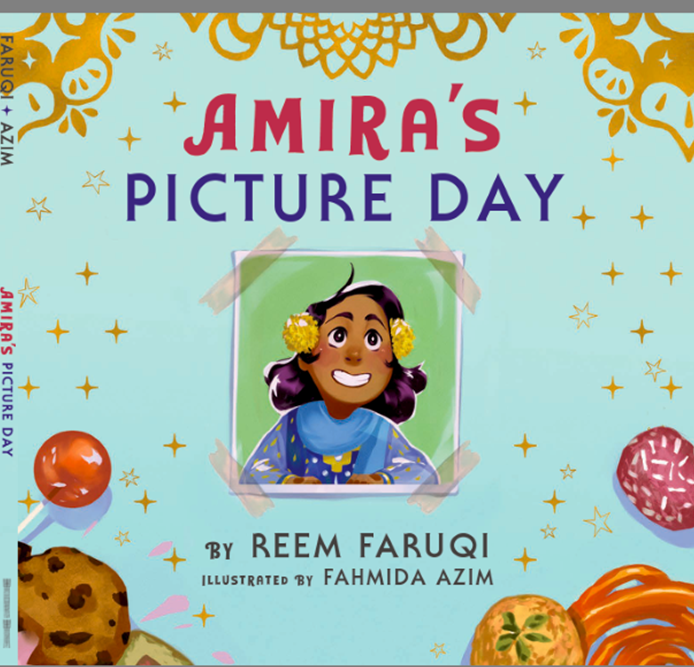
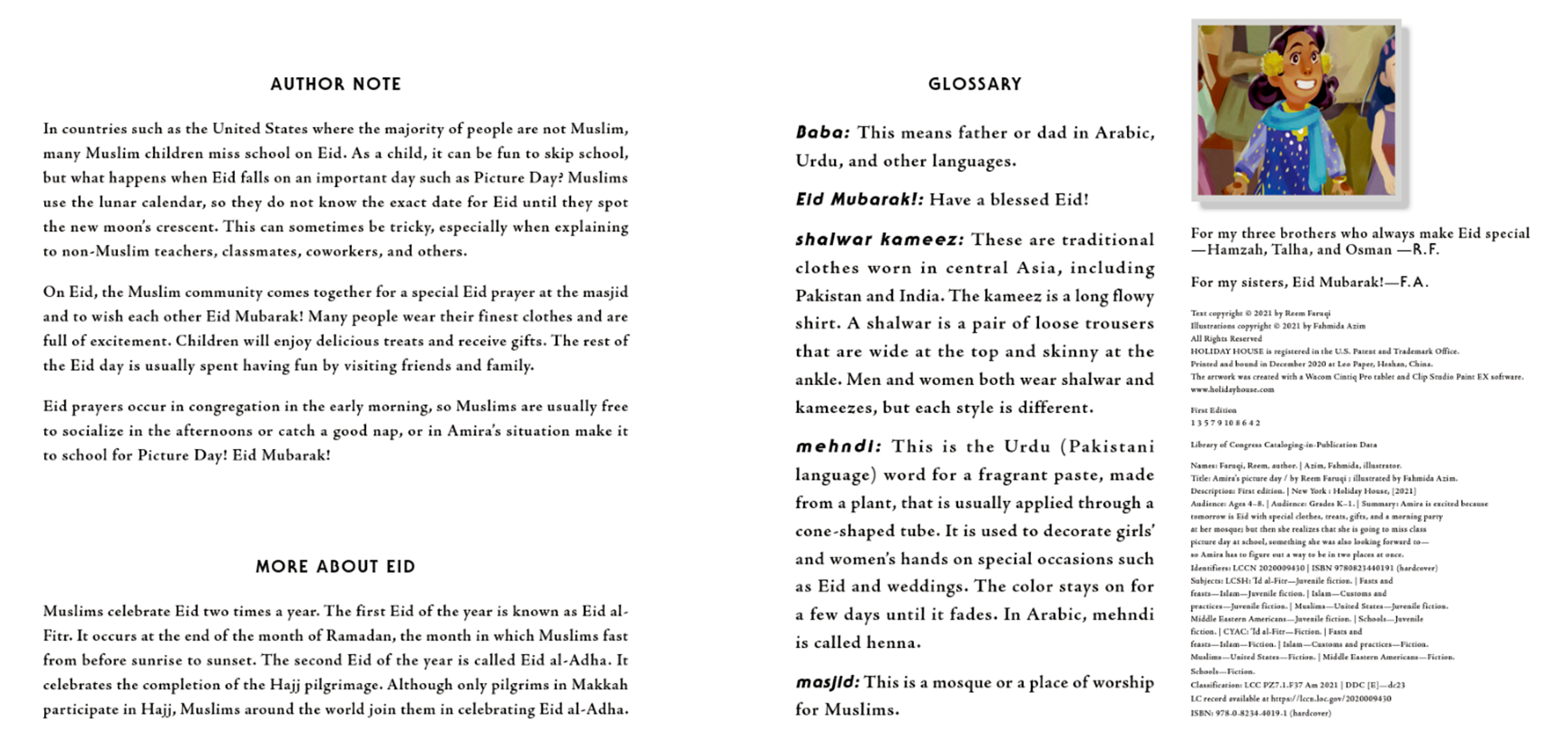
Amira’s Picture Day by Reem Faruqi illustrated by Fahmida Azim

Standard
Amira’s Picture Day by Reem Faruqi illustrated by Fahmida Azim

amira's picture day

This book is the mirror so many kids are desperate to find in literature. A young Muslim girl is excited to celebrate Eid, while at the same time is sad knowing she is missing school picture day with her class. Not knowing what day Eid will be, not having it a scheduled day off in most school districts, and always feeling like you have your foot in two different doors starts early for children in non Muslim majority countries. This early picture book touches on those emotions, and even if you can’t always get a test rescheduled or a project due date moved, at least readers that face these dilemmas at any age and stage in life, will feel seen in this 32 page book perfect for ages 5 and up.

amira4

Amira and her brother Ziyad start the book looking out the window for the moon. They see it, which means Eid is tomorrow and Amira is going to have her mom put decorative Mehndi on her hands. She has her mom include a dolphin in the green swirls and hopes that by morning the color will be dark and beautiful. Ziyad is excited that they get to skip school.

amira1

Mom recruits the two kids to make goody bags and count out lollipops for the kids at the masjid, when the flyer for picture day catches Amira’s attention. Devastated that she will miss the class picture having already picked out a pink-striped dress for the occasion, mom reassures her that she will get to wear her new shalwar kameez, and they will take lots of pictures at the masjid.

amira5

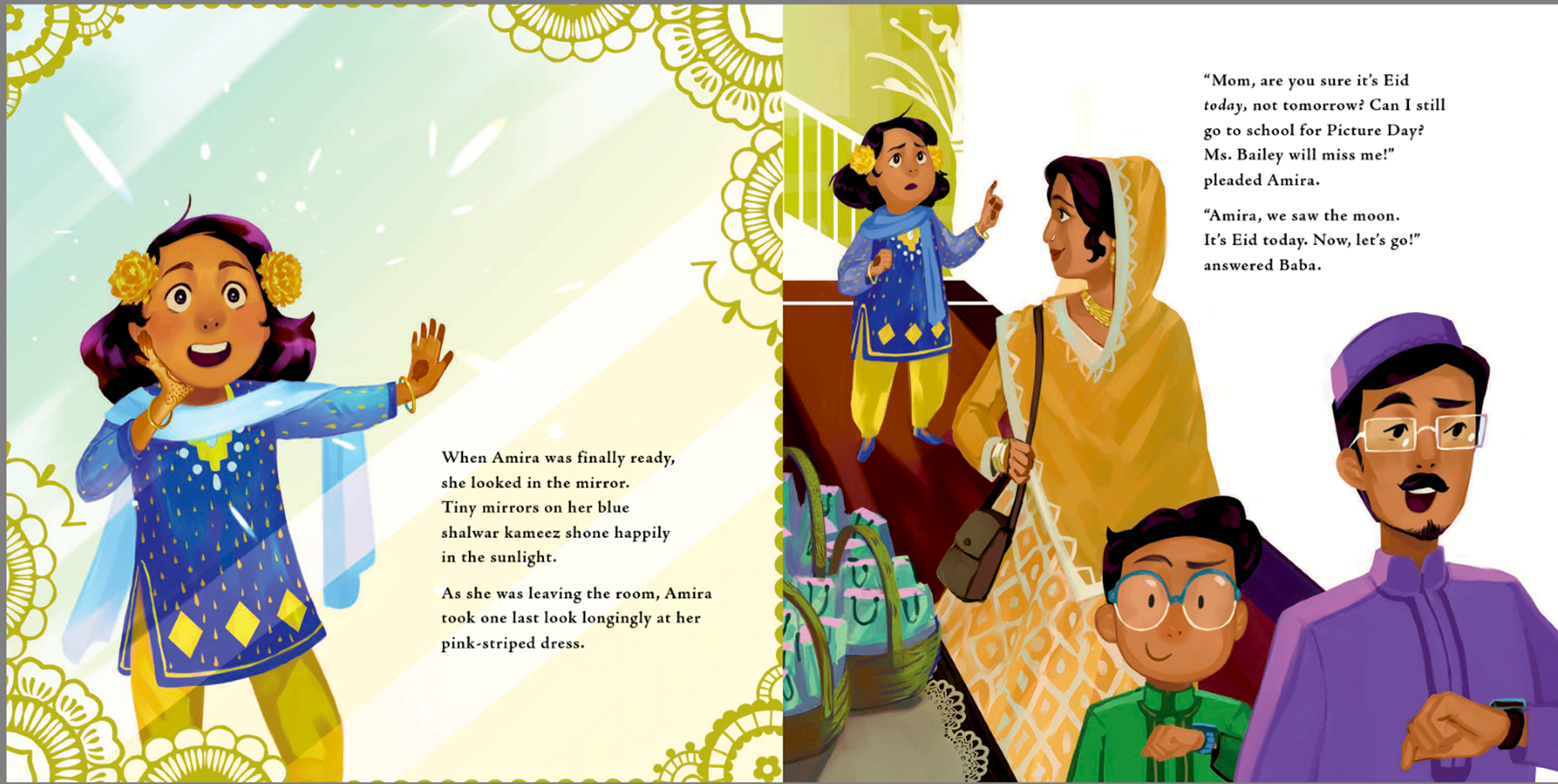
Amira loves going for prayers and the party after, but she is kept awake at night worrying how her classmates will remember her if she isn’t in the picture. The next morning she is excited, it is Eid, but seeing her pink dress hanging next to her blue Eid outfit makes getting dressed a heavy process.

amira6

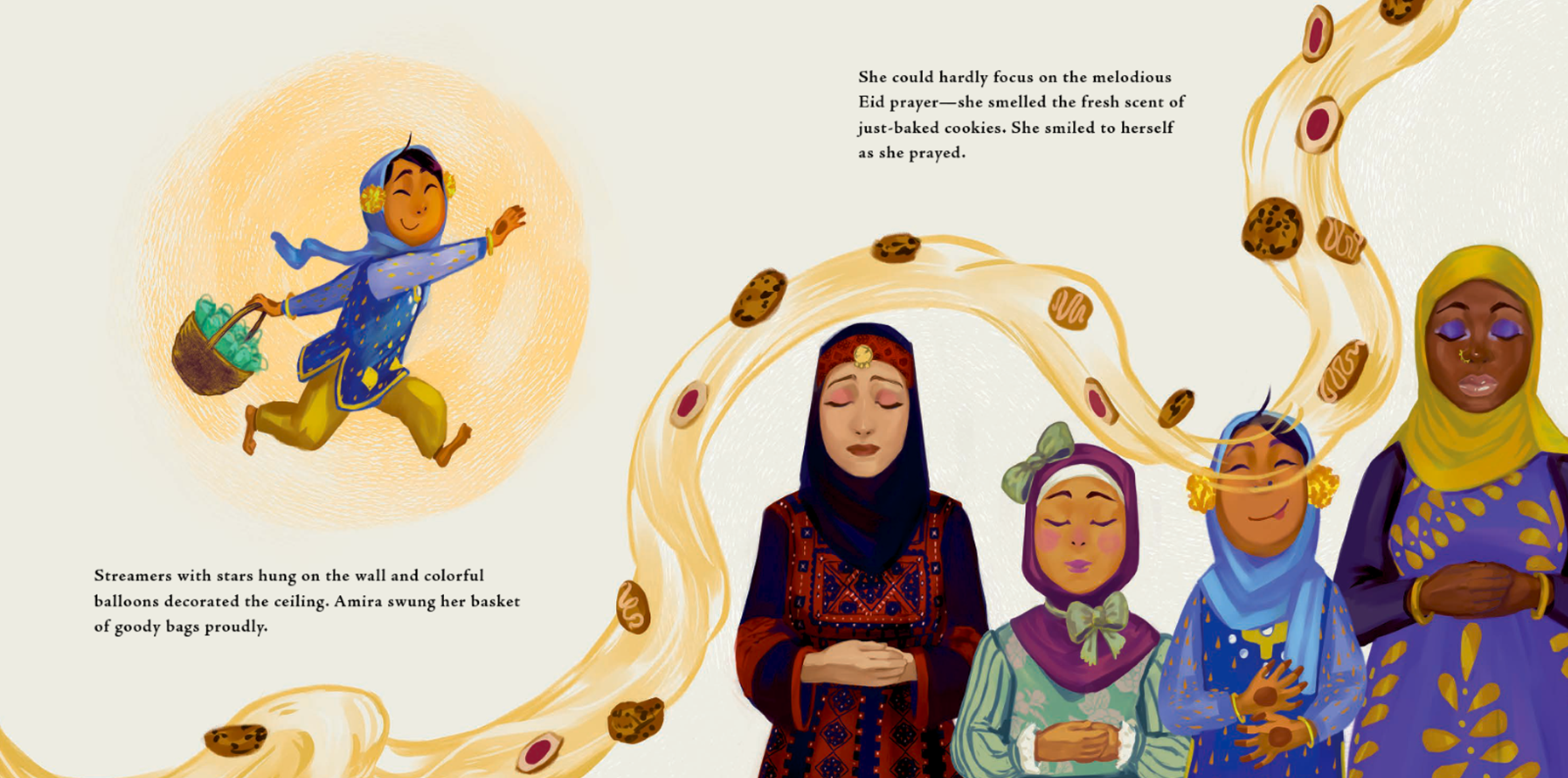
When they get to the masjid, Amira hardly recognizes it, it is all decorated and everyone looks beautiful. The smell of baked goods makes focusing on her prayers difficult, and after when everyone is taking pictures she remembers what she is missing and feels deflated.

amira3

On the way home Amira works to hold back the tears, when she suddenly has an idea to take the remaining goody bags to her classmates, and maybe catch her class pictures. Her parents agree and they stop at the school.

I won’t spoil if she made it in time, but the kids in her class love her clothes, and her mehndi designs. The book concludes with an Author’s Note, More about Eid and a Glossary.

amira2

I absolutely love the illustrations, little Amira is infectious and endearing. I wish the mom would have been a little more in tune with Amira’s feelings though, she definitely is upset and while I’m glad the family stopped after the Eid party, I feel like more could have been done beforehand to acknowledge Amira’s feelings, and see what could be done to accommodate both activities.

amira7

I love the diversity and brightness of the book to convey the absolute joy and happiness of Eid outside of presents. I think the book works for all children of all backgrounds and is a much needed addition to the repetitive Eid books available.

The Adventures of Adam and Anisah: My Brother’s Shield by Zahra Patel illustrated by Reyhana Ismail

Standard
The Adventures of Adam and Anisah: My Brother’s Shield by Zahra Patel illustrated by Reyhana Ismail

img_8580

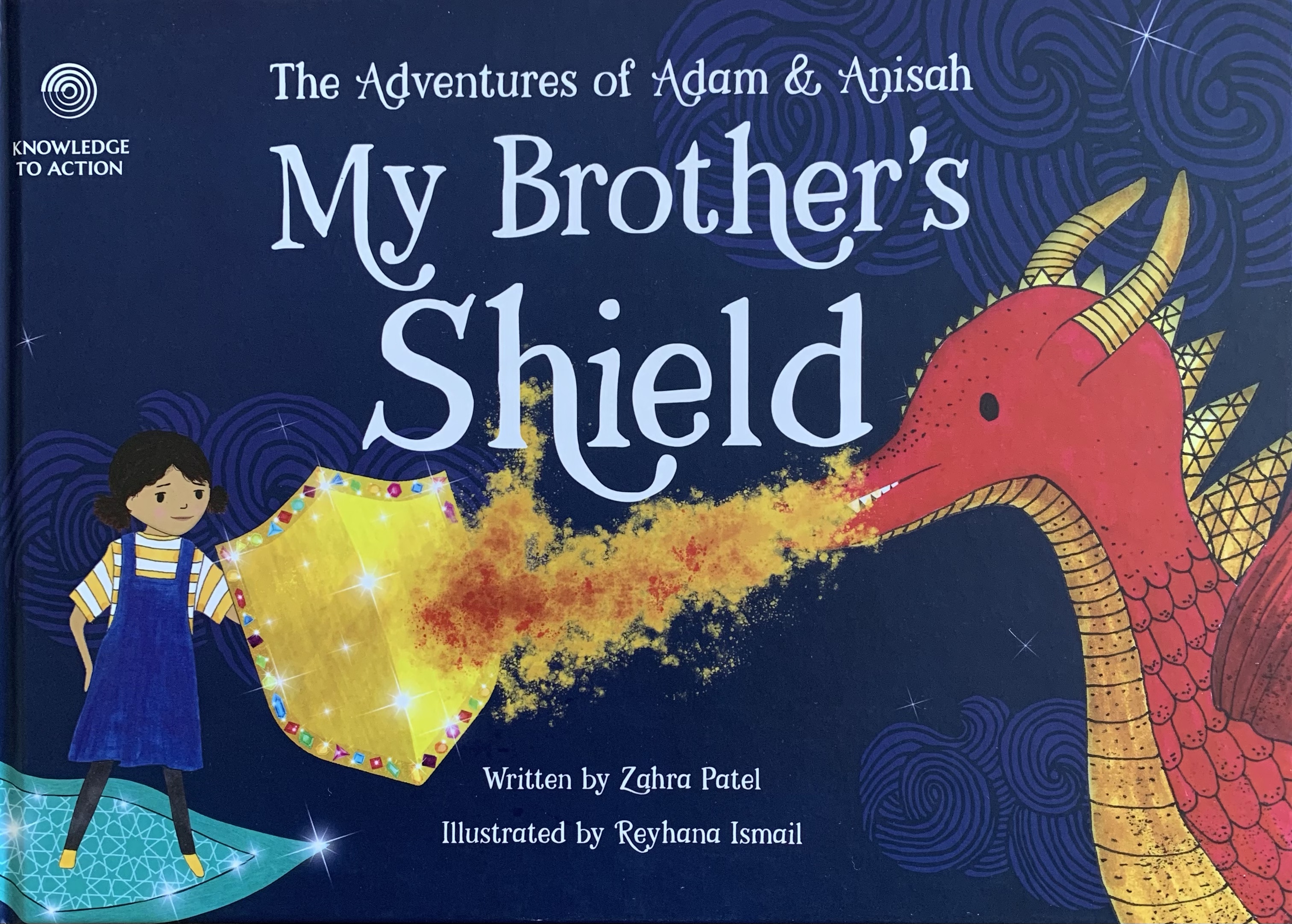
Based on the idea that “Fasting is a Shield (ibn Majah),” this adorable book brings Ramadan not just to life, but makes those that fast into absolute superheroes!  Over 32 pages of simple large rhyming words, little Anisah shares her wonder and amazement toward her brother, and his shield that he wields during Ramadan.  The beauty of her admiration for her older sibling combined with the message, illustrations, and presentation, make this book (there is also an accompanying workbook) perfect for ages three and up.

img_8581

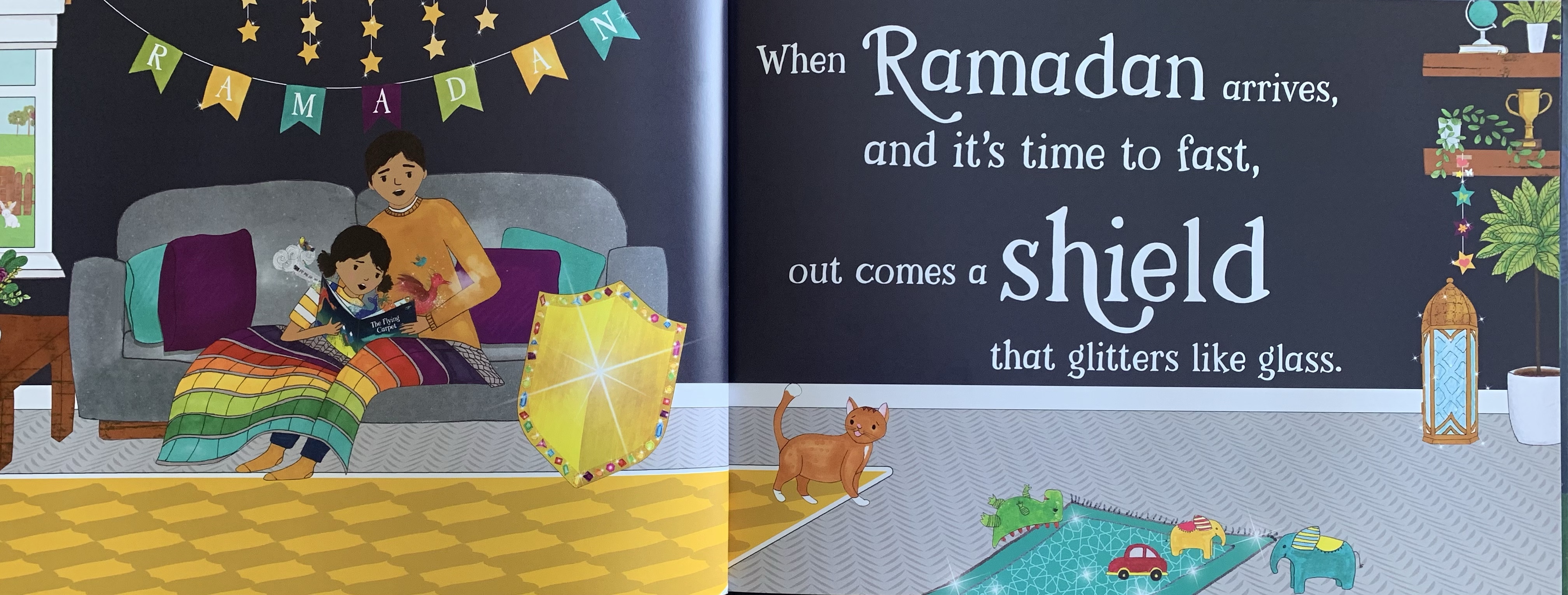
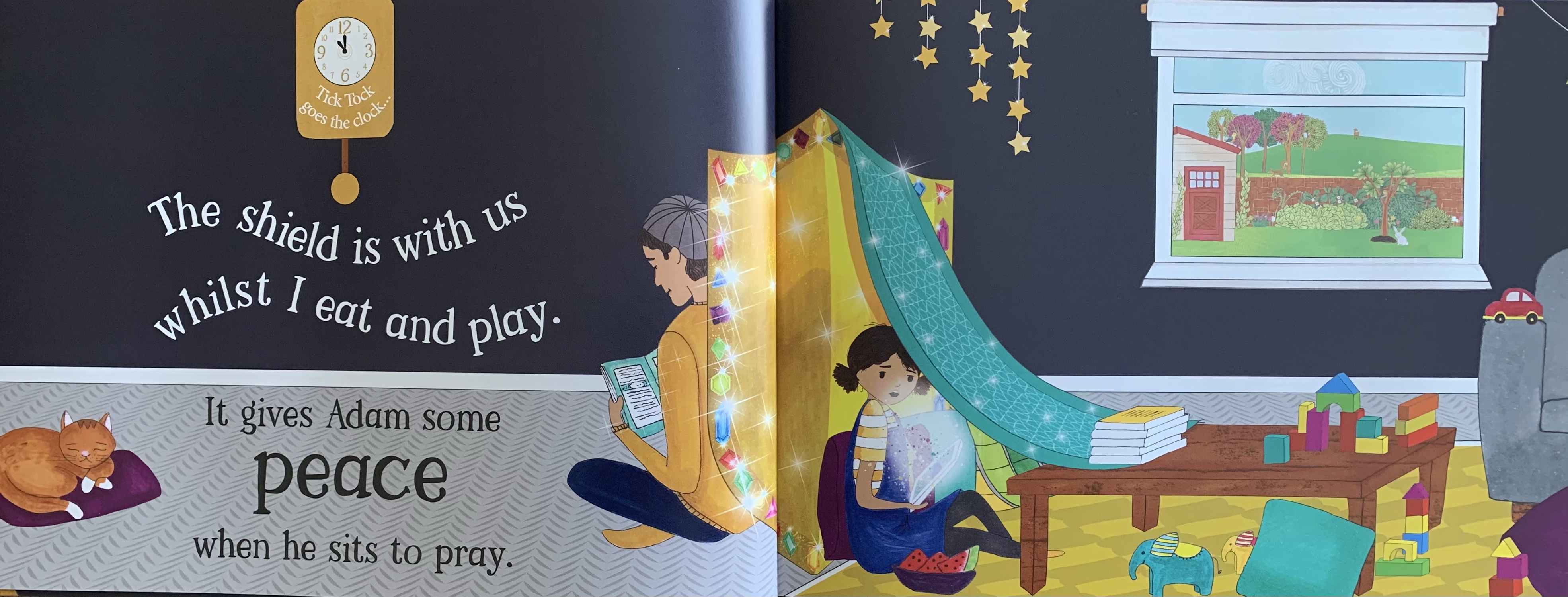
It starts with a secret.  Adam is a superhero.  When Ramadan arrives, the shield comes out and Adam carries it all day.  He doesn’t eat or drink when he has it.  It makes him brave and saves him from tempting biscuits.  It gives him peace when he reads Quran. It keeps him calm when there is a foul during a soccer game. It even keeps him away from gossip at the mosque.

img_8582

When they break their fast, they pull out their magic carpet to fly.  And when Ramadan is over the shield goes away until it is needed again. Anisah patiently marks off the days on the calendar until Ramadan will arrive, because she has another secret.  She is training to be a superhero too.

img_8583

The book concludes with how the story came about, discussion questions and some activities to help learn through practice. The illustrations show diversity and whimsy and toddlers and preschoolers, I’m certain will be begging for this story all year around.

img_8584


Red Shoes by Karen English illustrated by Ebony Glenn

Standard
Red Shoes by Karen English illustrated by Ebony Glenn

img_8529

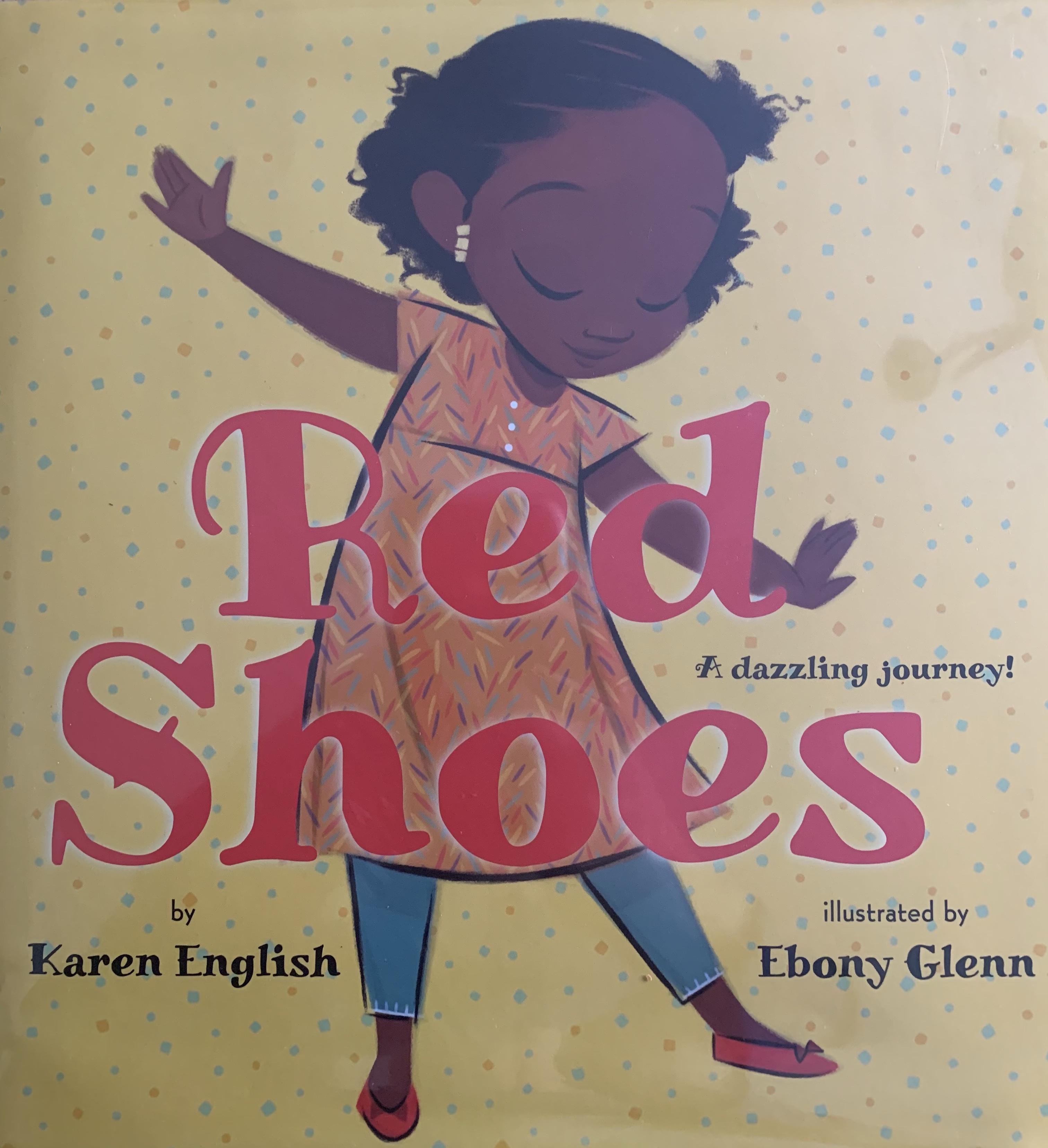
This delightful 32 page picture book links two girls, two ends of the world, two cultures and two stories together with a pair of red shoes.  The short sentences pop with action and the perfectly illustrated two-page spreads convey relatable emotion and joy.  The beloved shoes travel on the feet of one character to a wedding, Christmas dinner, and birthdays, they are then are donated and journey to West Africa to be given as a gift for a little girl who fasted half of Ramadan.   The message I hope children ages three and up will get from the story, is that we are more alike than different, that we should take care of our things (amazingly the shoes weren’t worn out), and that we should donate things of good quality that we ourselves value.  I hope it doesn’t lend itself to perpetuate the stereotype that we can send our castaway items to Africa, being the author comments in her bio on the back flap that her husband is from West Africa and that she frequently visits there, I’m hoping that this is just me being overly cautious in the messaging, and nothing is being implied or negatively taken from a casual reader.

img_8530

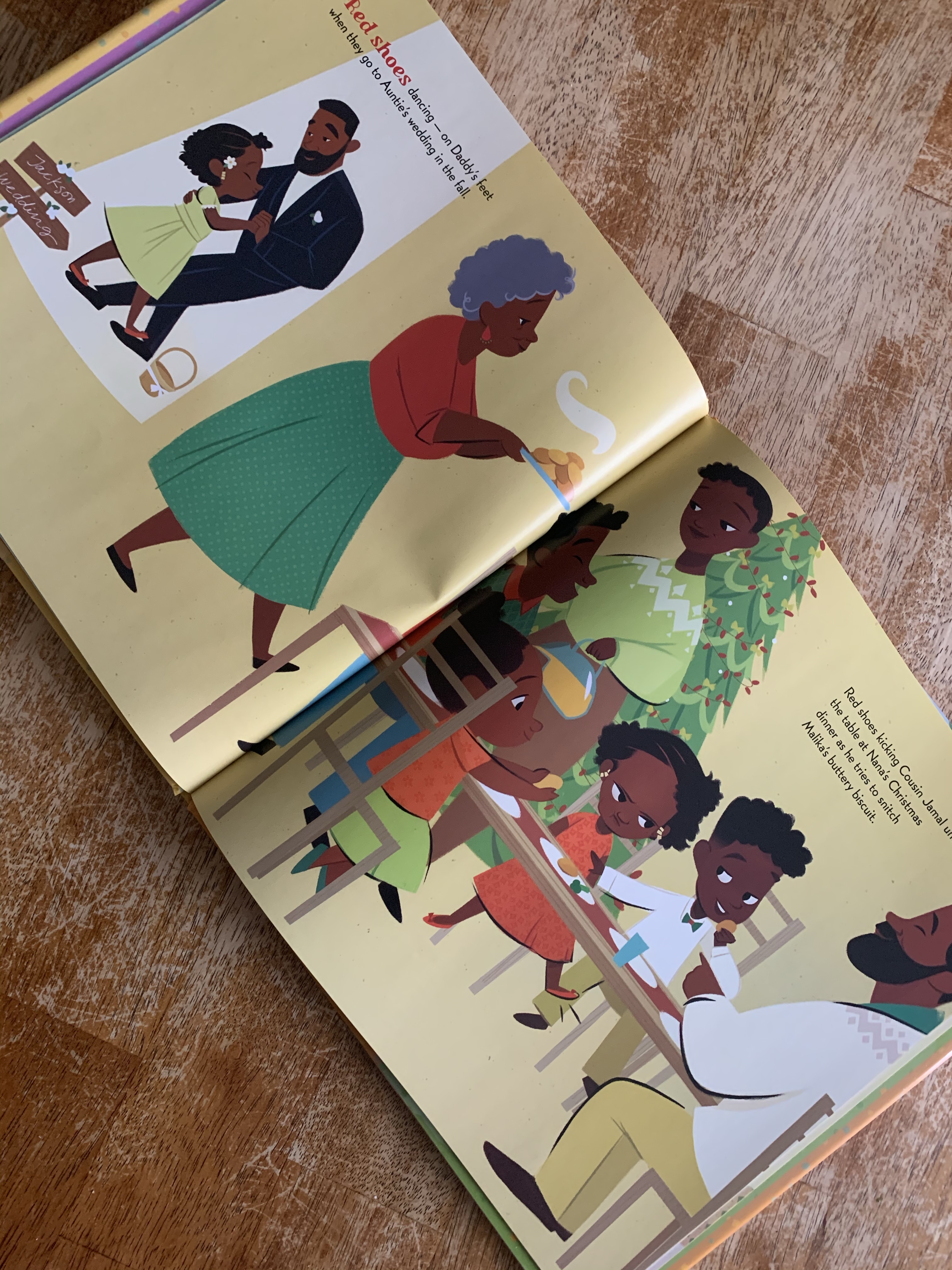
Malika and her Nana see a pair of dazzling shoes perched in the window, and Malika is enamored. Her grandma later surprises Malika with the shoes.  She quickly tries them on and tests them out.  She keeps them safe from the rain and dances with them on at her Auntie’s wedding.  She kicks her cousin Jamal with them on, under the table at Christmas when he tries to steal her biscuit.

img_8531

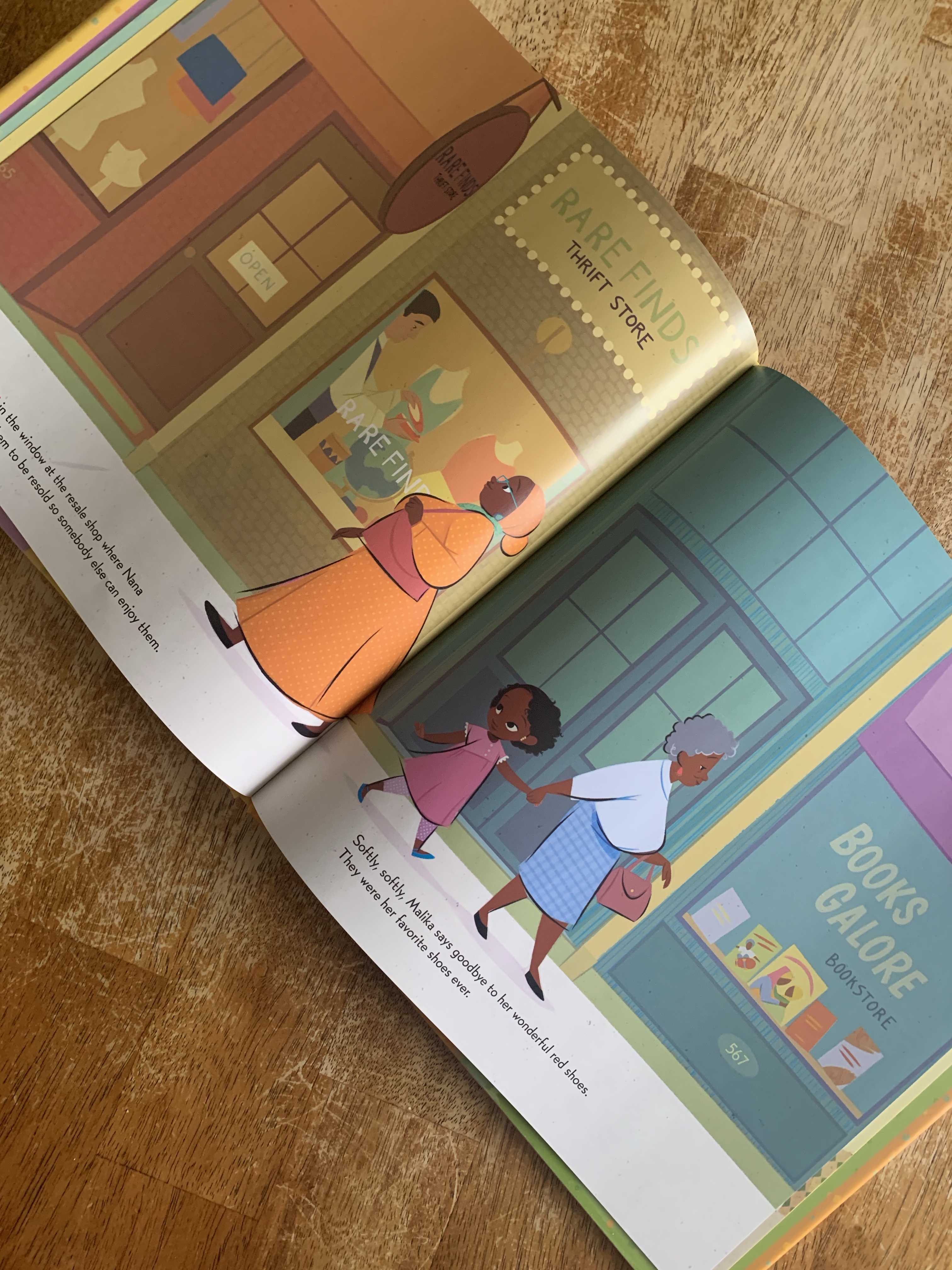
She stomps away from her best friend in her red shoes, and jumps double Dutch with them on when she makes up with her friend at her birthday party. But at Nana’s birthday, “the shoes don’t let her forget that her feet have grown.” Nana and Malika take the shoes to the thrift store to be resold.  A sad Malika says goodbye to them, they were her favorite shoes ever.

img_8532

Inna Ziya sees the shoes in the window and knows just the little girl who will love them.  She squeezes them in to her suitcase and they are off to Africa. They wait under a table selling claypots in a market waiting for the girl who fasted half the month of Ramadan.

img_8534

When Amina comes holding her mother’s hand, Auntie Inna Ziya delivers the promised gift.  Amina thinks they are beautiful and lovingly carries them in the box on her lap as they fide the tro-tro home.  Amina’s little sister Halima, can’t wait to see the gift as she too hopes to one day fast in Ramadan.

img_8535

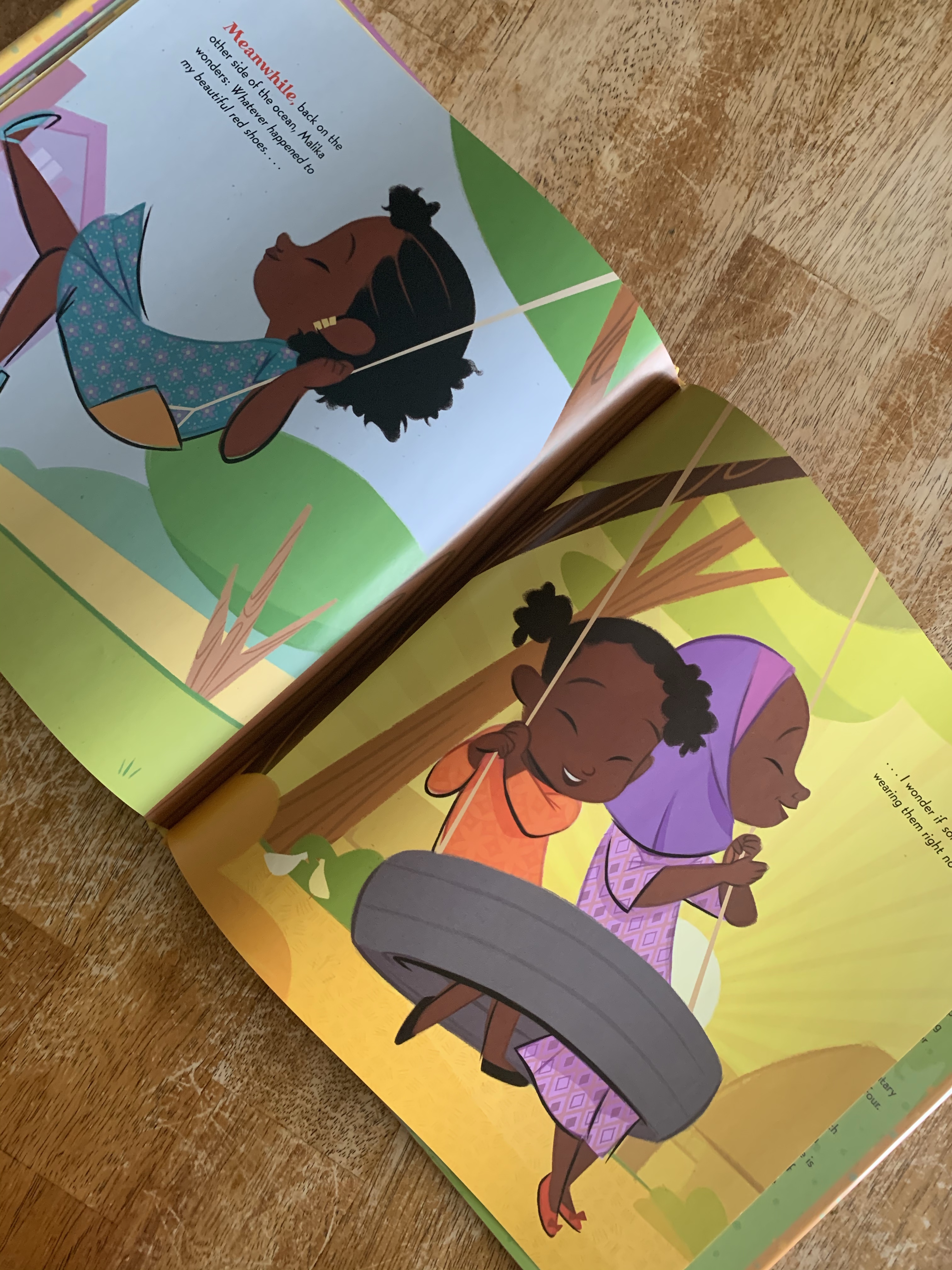
Amina lets her try them on and when she outgrows them she plans to pass them on to her.  Meanwhile, Malika is wondering whatever happened to her beautiful red shoes, and if someone else is wearing them.

img_8536

There is no mention of Islam nor is Ramadan explained.  There are women in hijab in America and in Africa, even in the books in a shop window there is representation.  I particularly love the shout-out in the illustrations to “Mommy’s Khimar.”

img_8533

The front of the book has Malika, and the back, Amira.

img_8537

Samira’s Trip to the Masjid by Yara Kaleemah illustrated by Aveira Cartoon

Standard

img_8520

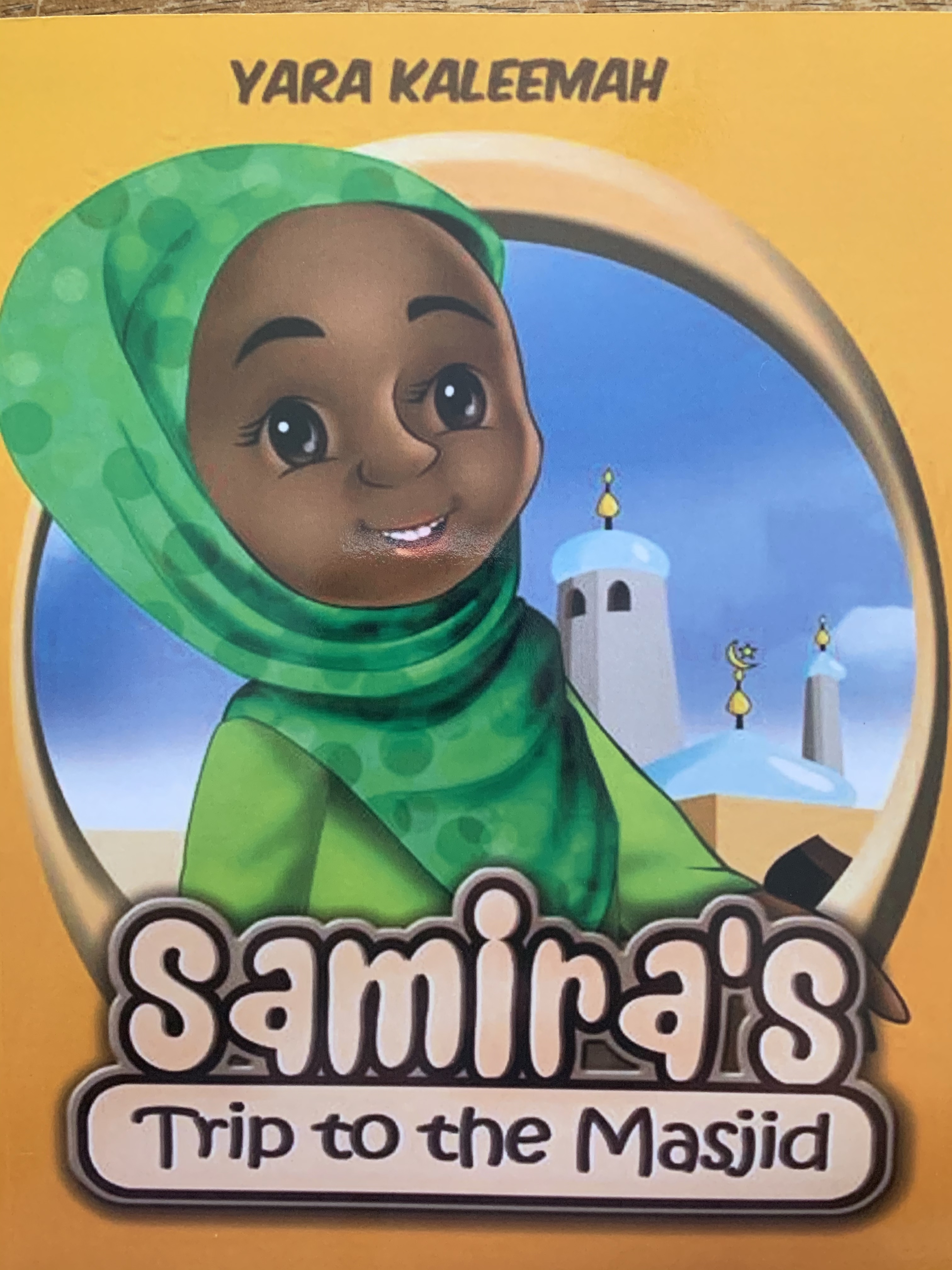
I’m a big fan of books featuring BIPOC leads in everyday situations, but when the quality of the product is subpar, I truly am conflicted if I should mention the book, or just tuck it away and pretend I never read it.  I’ve had this book tucked away for a while now, but I am pulling it out to bring attention to the importance of editors, proofers and revising.  The bar has been raised, Islamic fiction is becoming more and more mainstream.  The quality of many self published books rival and exceed traditionally published options, that to be putting out content that contains grammar errors (missing words, punctuation, random line breaks), spelling errors, voice and point of view inconsistencies, illustration errors, and content mishaps in a 26 page picture book, is not acceptable.  I feel like you are hurting the goal of representation and reflection, more than boosting it, when it is not well done.  I know that is harsh, but sadly minorities always have to do things better, it isn’t right, but it is the way it is.  You can argue my opinion that the story is too wordy or text heavy, but the technical components and final package in a $12 book, really need to be resolved.  The overall concept of the story is lovely: the Islamic details, the reminders about the sunnahs of Jummah, the little girl being excited to wear her favorite scarf and see a friend at the masjid, it really had a lot of potential.

img_8522

Samira greets the reader with As Salaamu Alaikum, as the fourth wall is breached and introduces herself as being a Muslim.  She then explains what being a Muslim is and tells the reader it is Jummah.  She asks her Ummi why we go to the masjid on Friday, before chiming in with all the information she in fact does know about Jummah.

img_8524

The next page details wudu as she prepares to go to the Masjid.  She then explains hijab as she tries to find her favorite green khimar with polka dots.  The words hijab, scarf and khimar are used interchangeable, causing a bit of confusion,  She explains that hijab is required by Allah swt to guard your chastity and that He also requires us to wear a khimar to the masjid.  I wish it would have clarified that we have to be covered when we pray, not necessarily just going to the masjid as she is a child, and many masjids are more than just places to pray, often having community halls and gyms.

img_8525

As the story continues she cannot find her favorite khimar no matter where she looks.  Ummi tries to give her some places to check, but in typical mom fashion, Samira can’t find it anywhere, and mom can find it immediately.  Samira shares some information about wearing your best clothes and they are off to the masjid not wanting to be late and hoping to get to the masjid first as the angels keep a record.  She finds her friend, and settles in to listen to the khutbah (misspelled as “Iman’s lecture” in the book).

img_8527

The conclusion of the book says “that even though Samira couldn’t find her favorite khimar, she was happy to take a trip to the masjid…”.  But she did find her favorite khimar? And on the very last page she is wearing the same shirts as she was at the masjid, but the polka dots have vanished from her green scarf?

img_8526

I’m hoping the author, illustrator, and publisher will clean up the book and someday republish it, we need these voices and images.

The Great Hair Exchange by Asmaa Hussein illustrated by Milton Bazerque

Standard
The Great Hair Exchange by Asmaa Hussein illustrated by Milton Bazerque

img_8398

I don’t know if twins plot and plan to trick people, but I think those of us that are not twins, and don’t have any in our immediate family, all assume that switching places with someone who looks exactly like us, would be a regular prank with hilarious outcomes and convenient benefits. Two twin Muslim girls with different hair and vastly different personalities learn to love themselves, appreciate how God made them, and get reminded that sneaking has consequences, all while evoking giggles from the reader throughout their adventurous day in each other’s shoes (hair?). This 32 page full-color, high-gloss, fantastically illustrated book is filled with silliness and lessons that will appeal to children five and up.

img_8392

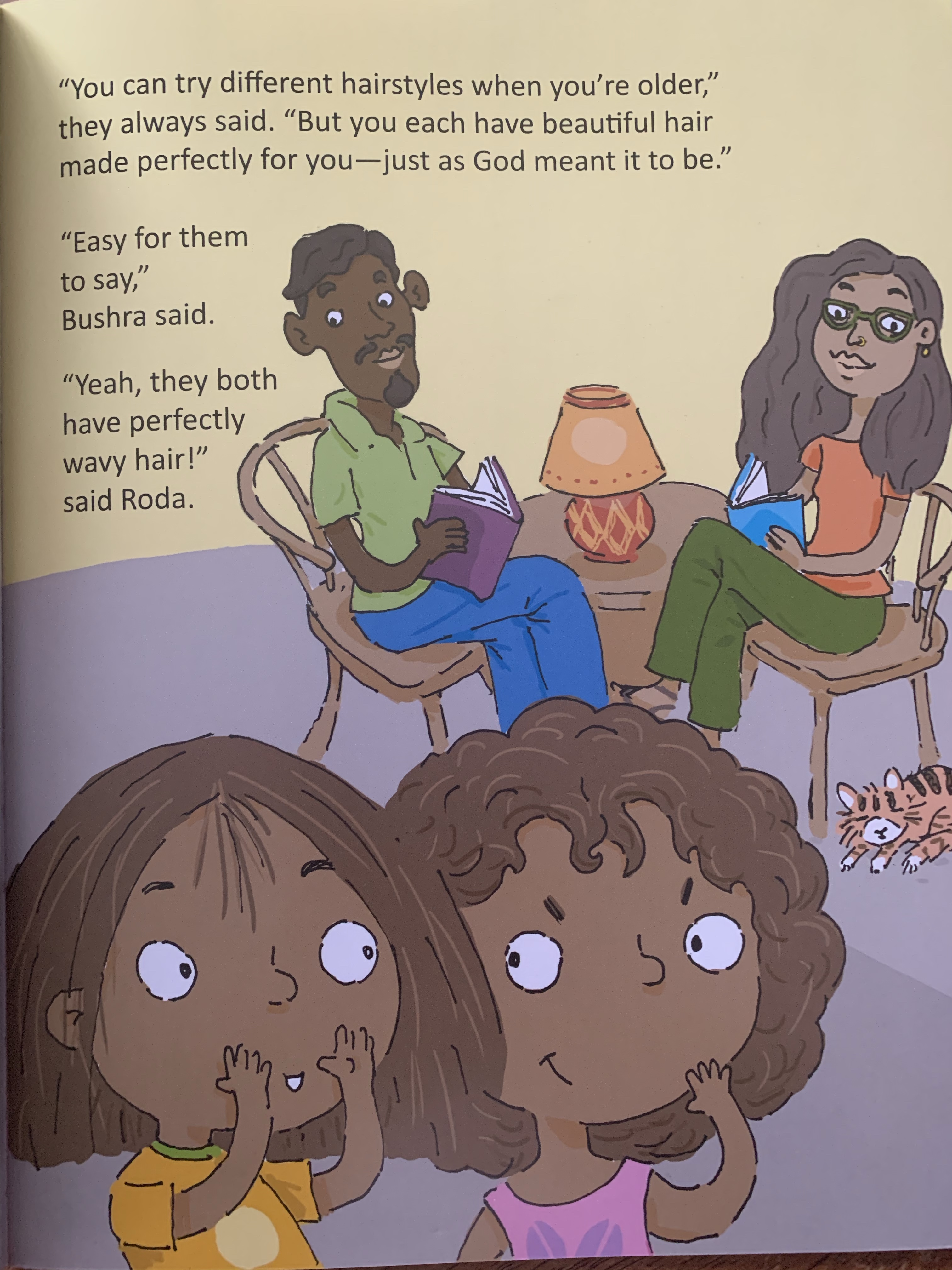
Bushra and Roda, are nearly identical, except Roda has curly hair, and Bushra’s is straight.  They often want to try different hairstyles, but their parents tell them they should appreciate how God made them and they can experiment when they are older.  The girls decide that their parents, with their perfectly wavy hair, just don’t understand and sneak in to their parents’ bathroom before school to straighten and curl their hair accordingly.

img_8393

Surprised at the final results, “You look like me!”The girls realize they are going to get in trouble and decide to switch clothes and backpacks and head off to school.  At school the girls are ushered in to each other’s classes by their teachers despite their protests that they aren’t who they look like.

img_8394

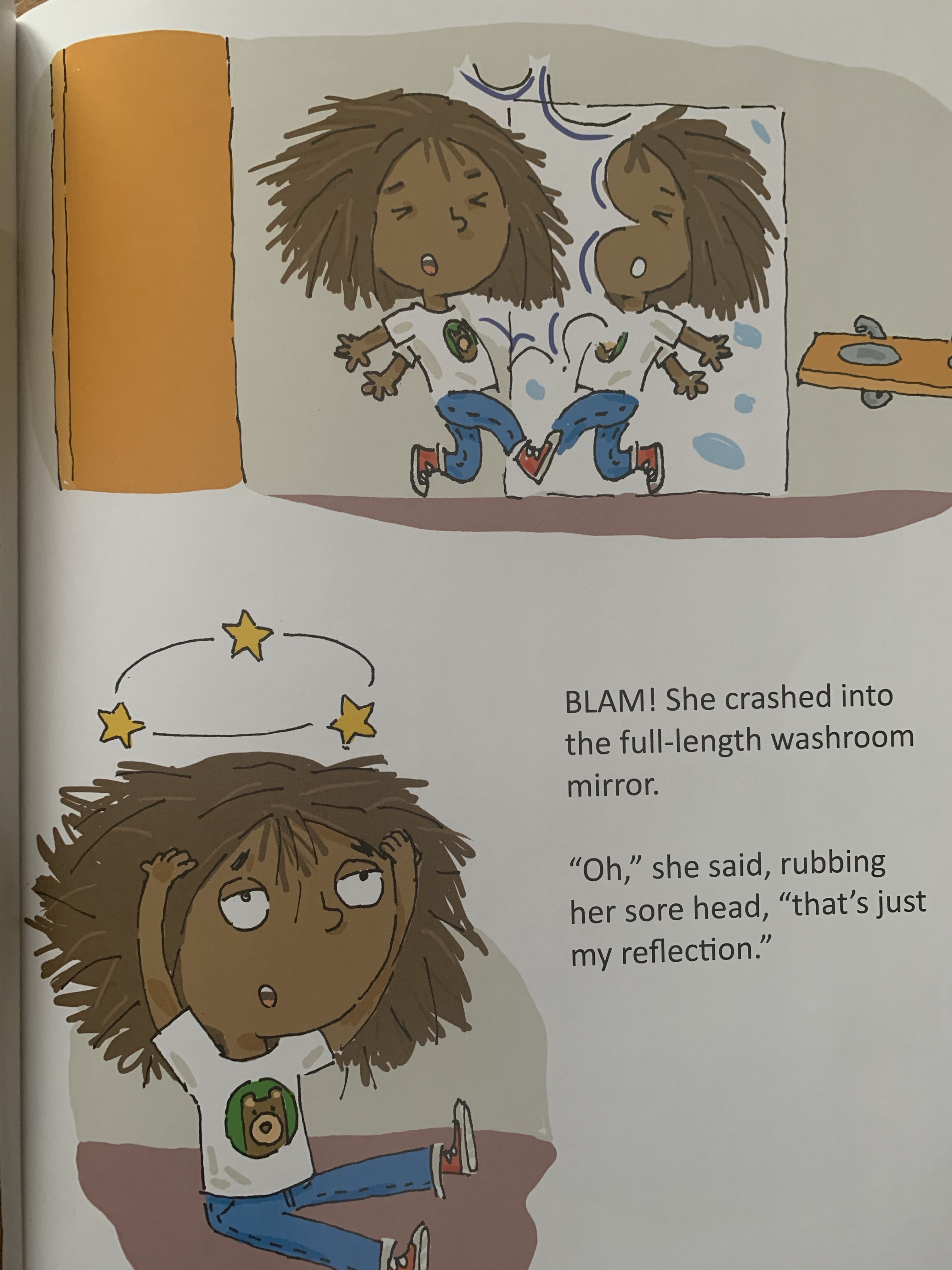
The girls carry on as each other struggling in classes they normally excel in, get annoyed by their hair, and suffer through lunches that they don’t like.  Roda even fools herself as she bumps into a mirror thinking she is going in to hug her sister, and Bushra is startled by a spider that Roda loves.

img_8395

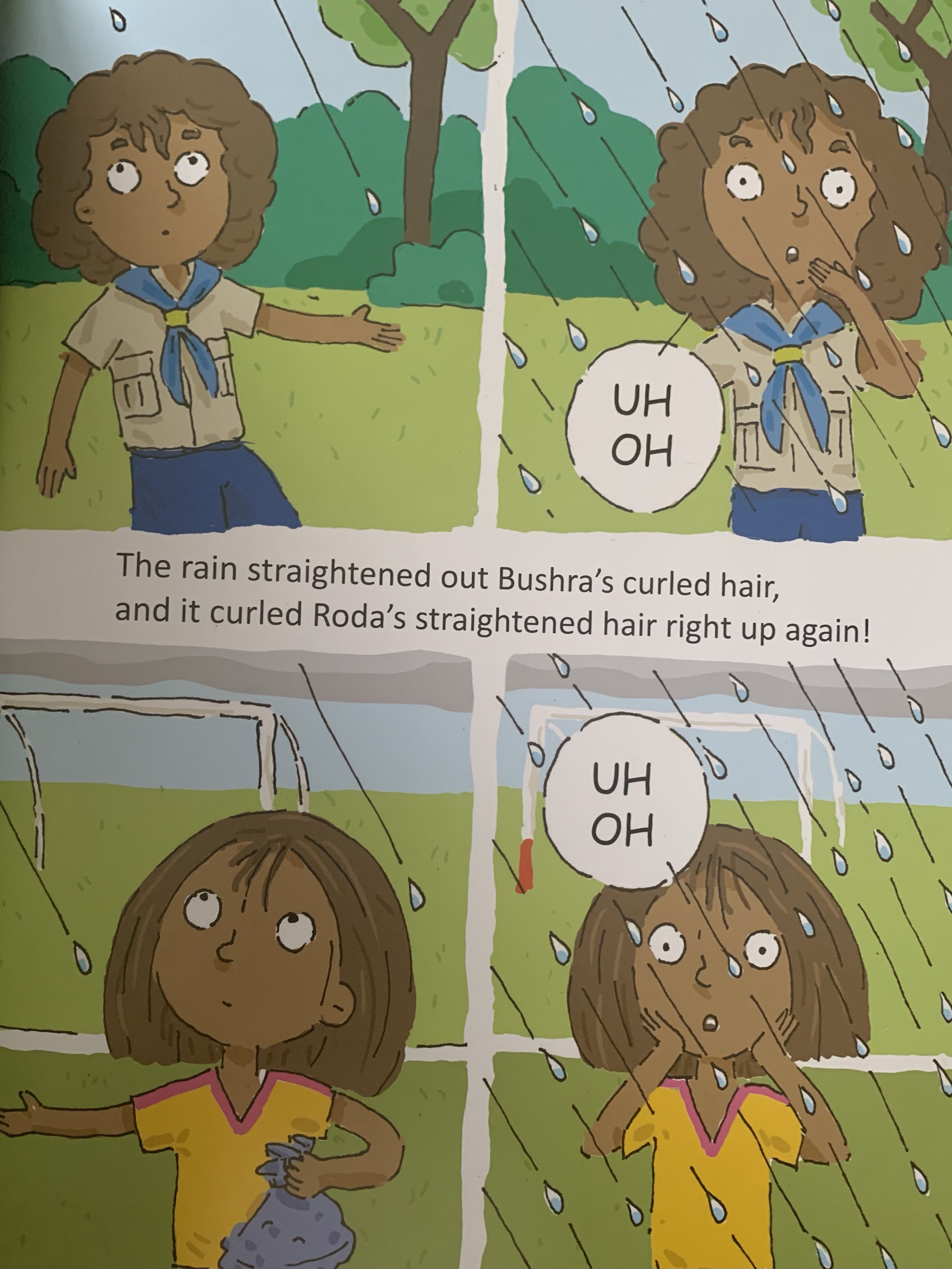
After school their dad drops them off at their after school activities and still doesn’t suspect a thing. Roda goes to Bushra’s soccer game and Bushra to Roda’s girl scout hike.  When it starts to rain, the girls’ hair returns to its natural state and when they get picked up, they have a lot of explaining to do.

img_8396

The girls are reminded that hair gadgets require supervision, that God made us all unique and being dishonest is not ok.  From here on out the girls still prank their friends and teachers, but do so with their parent’s knowledge.

img_8397

The book is fun and silly and for both Muslim and non Muslim’s alike.  It uses the word God, not Allah, and while the mom wears hijab, and the girls do on the last page, there is nothing Islamic or even Islamic specific in the book.  I feel like the grammar on the last page is off, but nothing too major.  The book ends with five discussion questions.

When Mom’s Away by Layla Ahmad illustrated by Farida Zaman

Standard
When Mom’s Away by Layla Ahmad illustrated by Farida Zaman

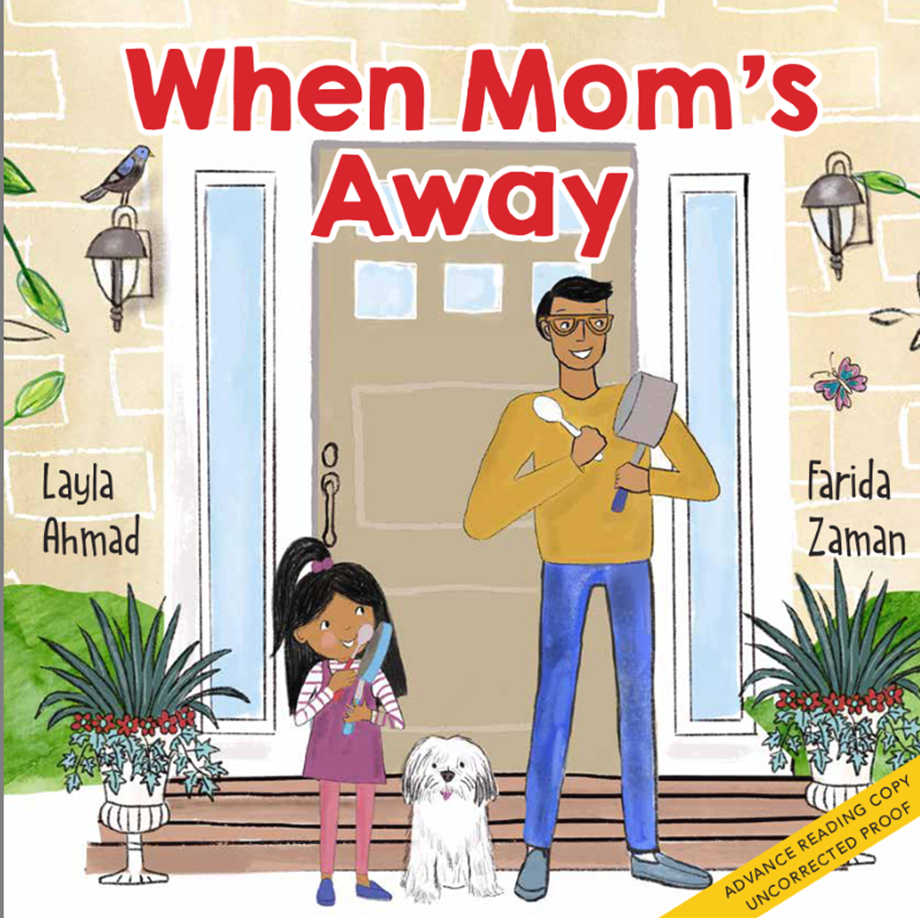
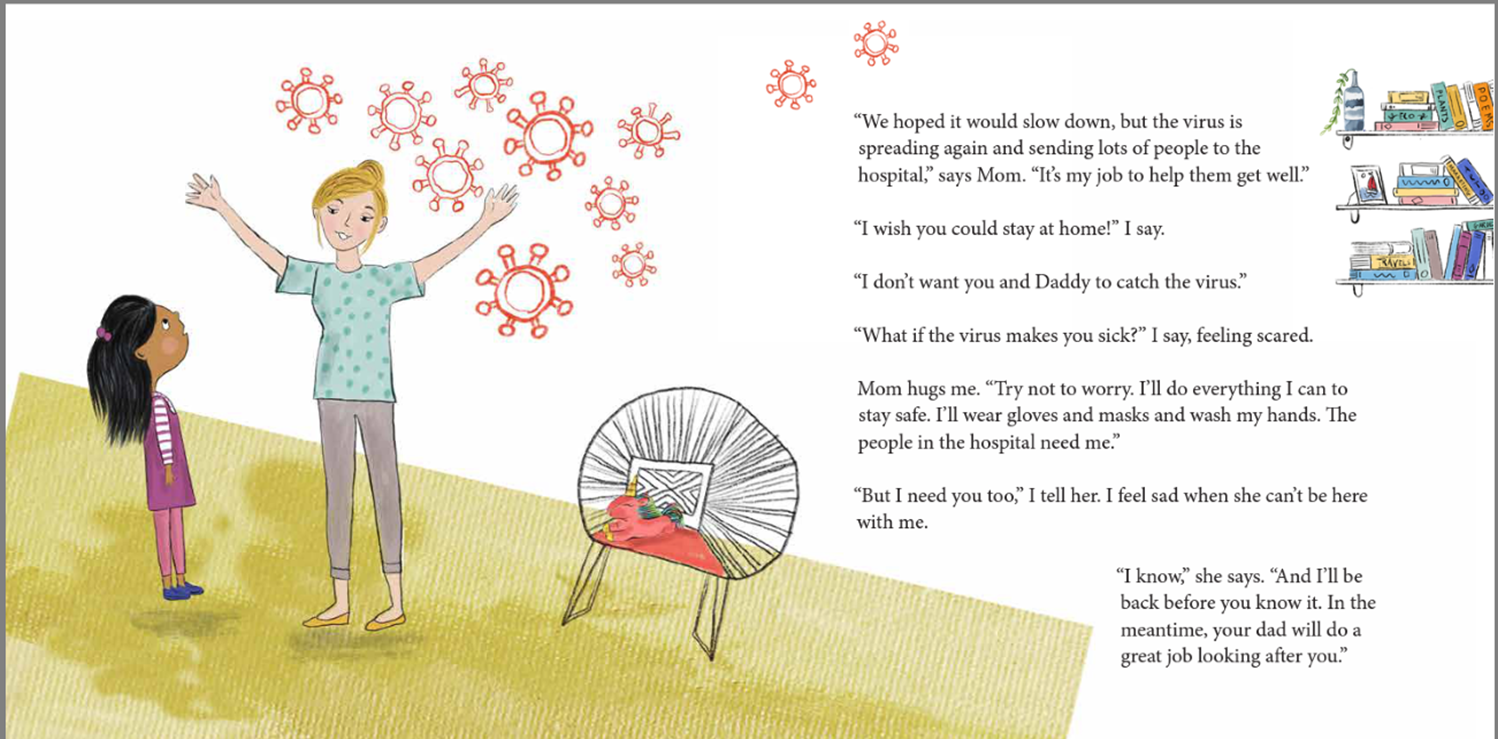
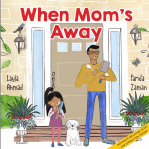
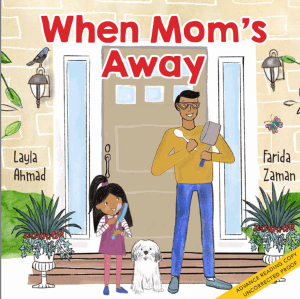
This 24 page, timely children’s book focuses on life with Covid-19 from the point of view of a little girl whose mom is a doctor and must quarantine in the garage to keep her family safe. The reassurance of such a book to remind our children that they are not the only ones going through such disruptions with virtual learning, staying away from grandparents, wearing a mask and not seeing a parent for a few days, is a powerful one. I couldn’t find anything stating if the author or illustrator identify as Muslim (I know, I know, assumptions based on names is rather pathetic), and there is nothing religious in the story, but the book shows a diverse family and as this pandemic rages on, kids and parents will benefit from feeling less alone and sharing this resource I hope is a benefit.

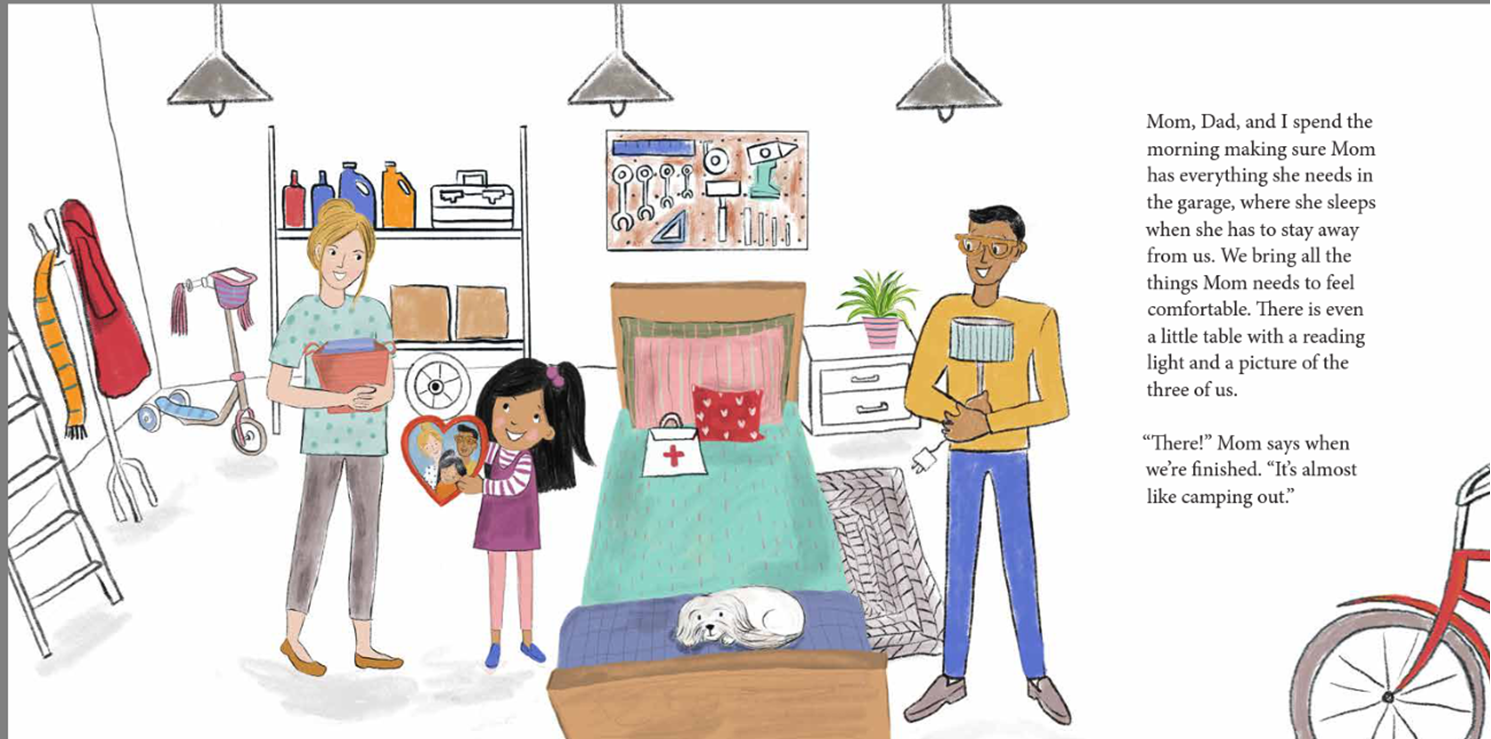
The book starts out with the little girl learning that her mom is going away, well not really away, but will not be in the house with her and her dad. That the virus isn’t slowing down and her mom has to go help people. The family of three then sets up the garage to make sure mom has everything she will need when she comes home from work. A bed, a little table, even a picture of the three of them.

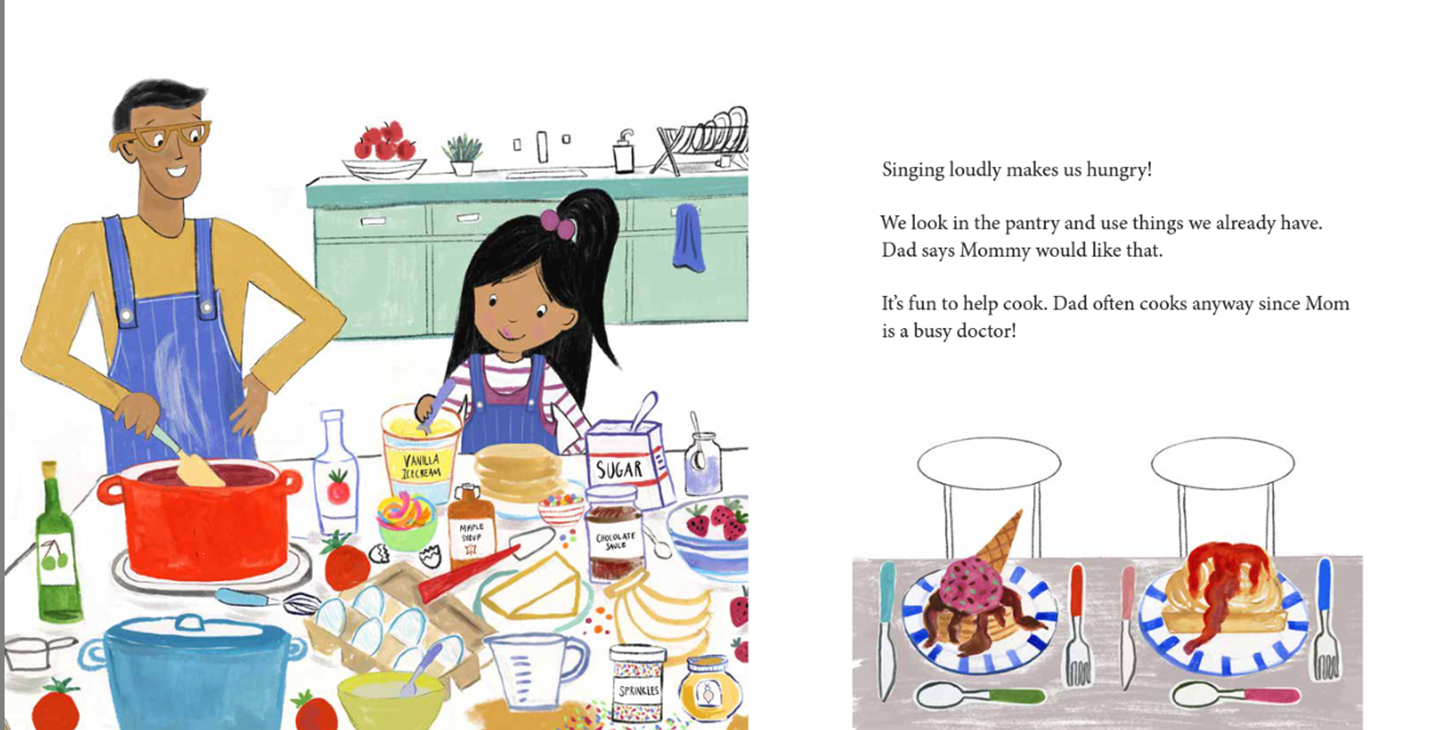
The dad calls the mom a superhero and gets the little girl on board with helping mom as she helps others. They wash their hands to a special song, they wear masks when they go out, they shop for a neighbor, and try to use things to make dinner that they already have.
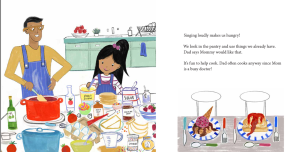
The book then articulates that mom is a busy doctor and dad cooks often. The little girl plays games with her dad and video chats with her mom feeling proud that she is making her mom’s job easier. Every morning the dad does the little girls hair before virtual learning begins, and every evening she waits by the window to wave to her mom. The little girl misses her teacher, friends, and mom.

The little girl and her dad go grocery shopping for Grandma and Grandpa and deliver the groceries to them outside with masks on as they wave from afar. Sometimes before dinner the neighbors all stand outside banging pots and pans cheering for all the heroes coming home.

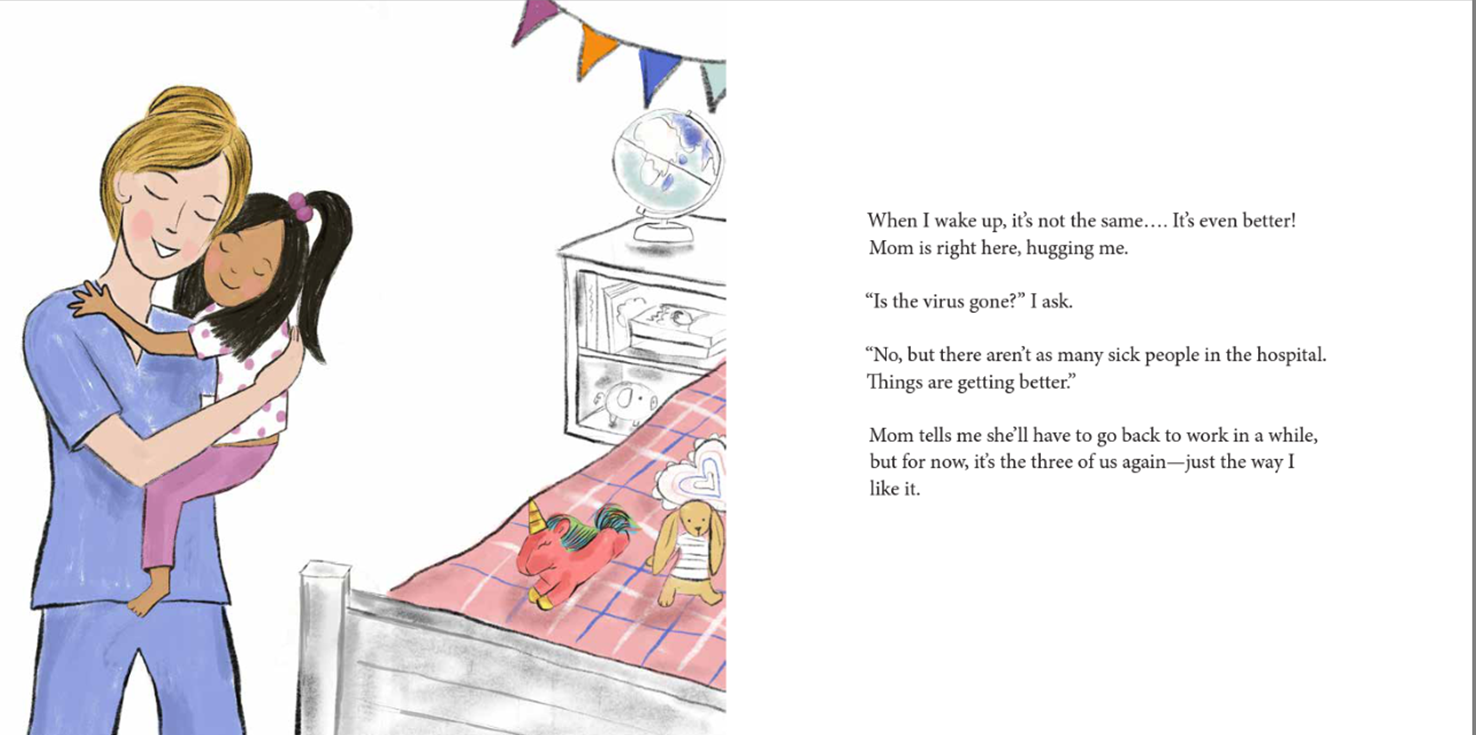
When her mom returns from quarantine, the little girl asks if the virus is gone, and the mother says no, but that things are getting better. When her mom thanks her for doing such a good job while she was away, the little girl says, “No problem, Mom. That’s what superheroes do!”

I love that the concept of super heroes is presented as real people on the front line doing their jobs even when it requires tremendous sacrifice. I also like that all of us working together to curb the pandemic is also heroic work.
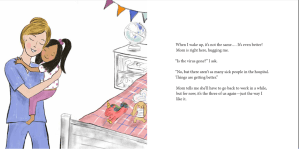
I love that it shows a mom capable and professional and loving, as well as a father loving and capable and supportive. Yes, she likes how mom does her hair better, but it shows competency from both parents, which sometimes in books is lost when it makes one parent the brunt of misguided humor.

I don’t know if years from now the book will be as relevant, but certainly children today are living this story and will relate to the characters. I think children in preschool and up will enjoy the illustrations and storyline.

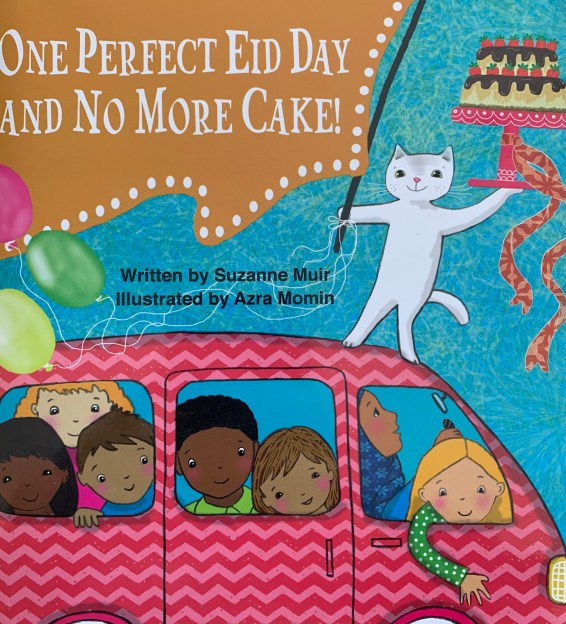
My First Book About Allah: Teachings for Toddlers and Young Children by Sara Khan illustrated by Ali Lodge

Standard
My First Book About Allah: Teachings for Toddlers and Young Children by Sara Khan illustrated by Ali Lodge

img_8046

This 26 page non fiction sturdy board book packs in a lot of information in a really simple way that will keep little one’s attention and hopefully encourage them to ask deeper questions as they grow.  The illustrations are soft and alternate between detailed familiar scenes and simple background style scenes that draw attention to the text on the page. It covers the Shahadah, who Allah (swt) is, it mentions that He has 99 names,  that He sent us the Quran and the final messenger is Prophet Muhammad (saw).  The book at times is wordy, and perhaps the vocabulary a bit above a toddlers level, but the flow is smooth and the tone is warm, inviting, and is requested often by my little ones. (It is reasonably priced by at small bookstores, and double the price on Amazon).

img_8047

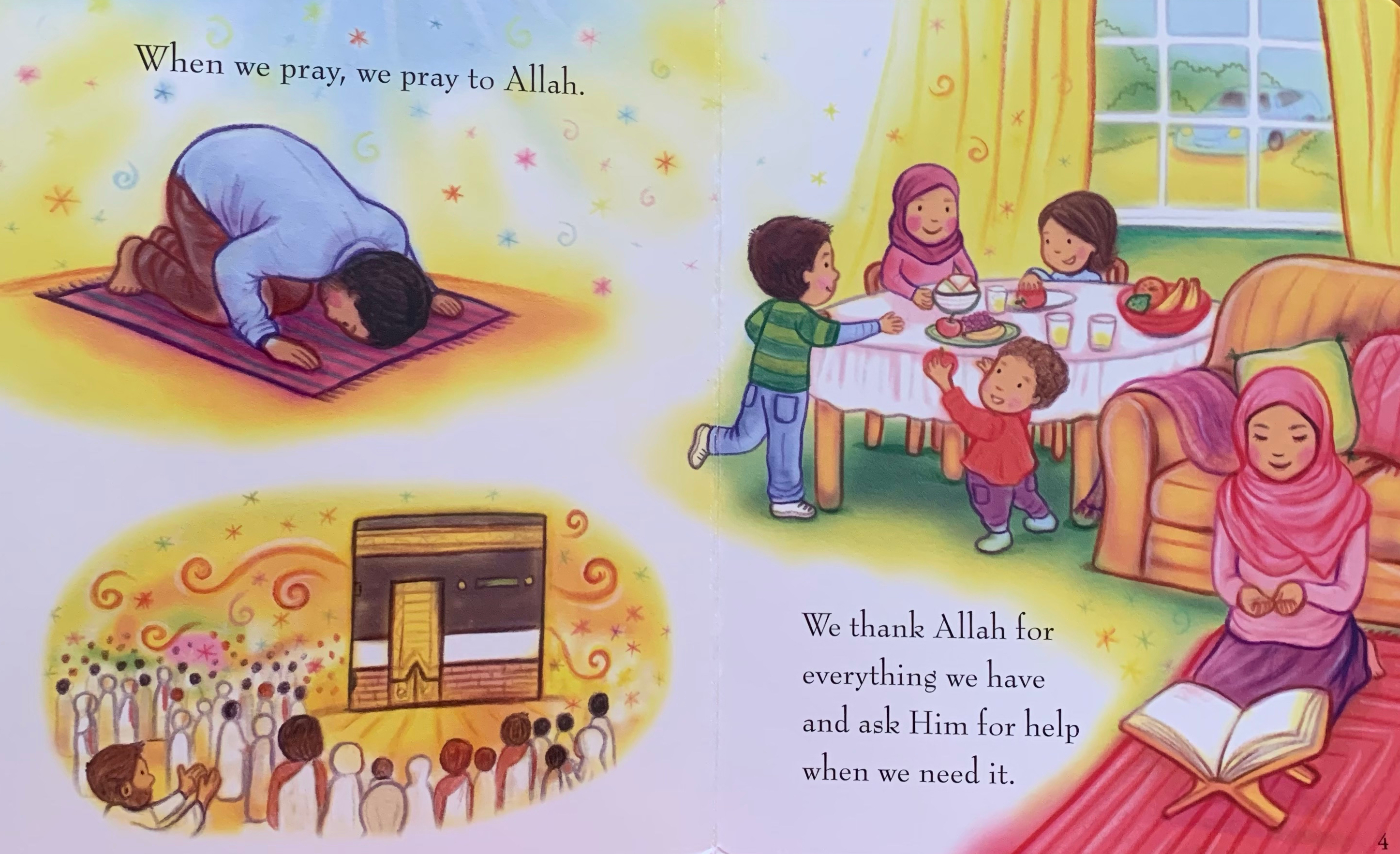
The book starts off by stating that Muslims believe that there is only one God and His name is Allah.  It shows it in Arabic as well on a very muted background.  The next page is much more lively with illustrations showing someone pray, a picture of the ka’aba, a family eating, and a mother reading Quran and making dua.

img_8048

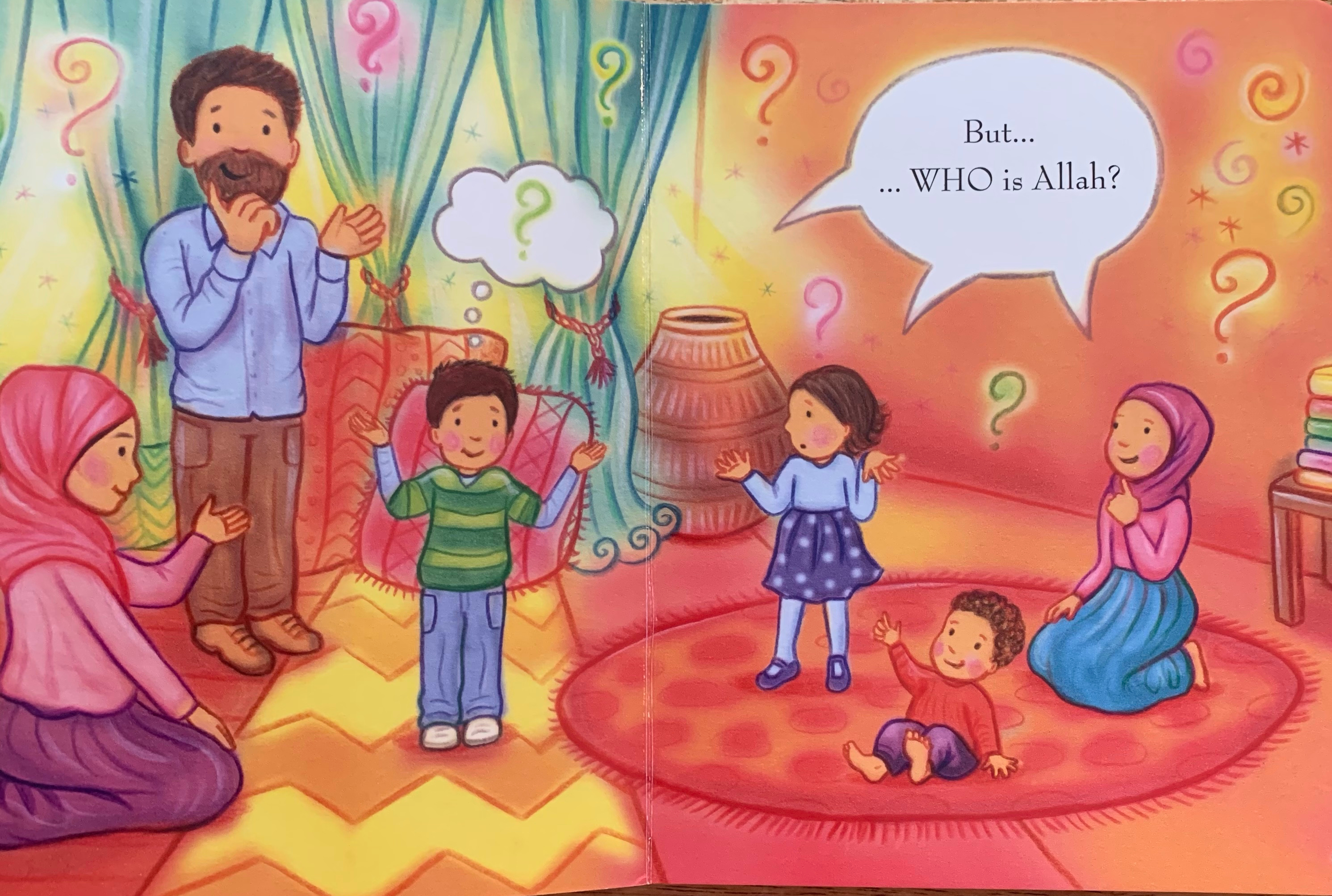
The family is then depicted gathered together with the little children asking “WHO is Allah?” and the book dedicating the next few pages to explaining that Allah swt, is the One who made everything and has power over all. He makes the sun rise and set and everything in the heavens and the earth belong to Him.

img_8049

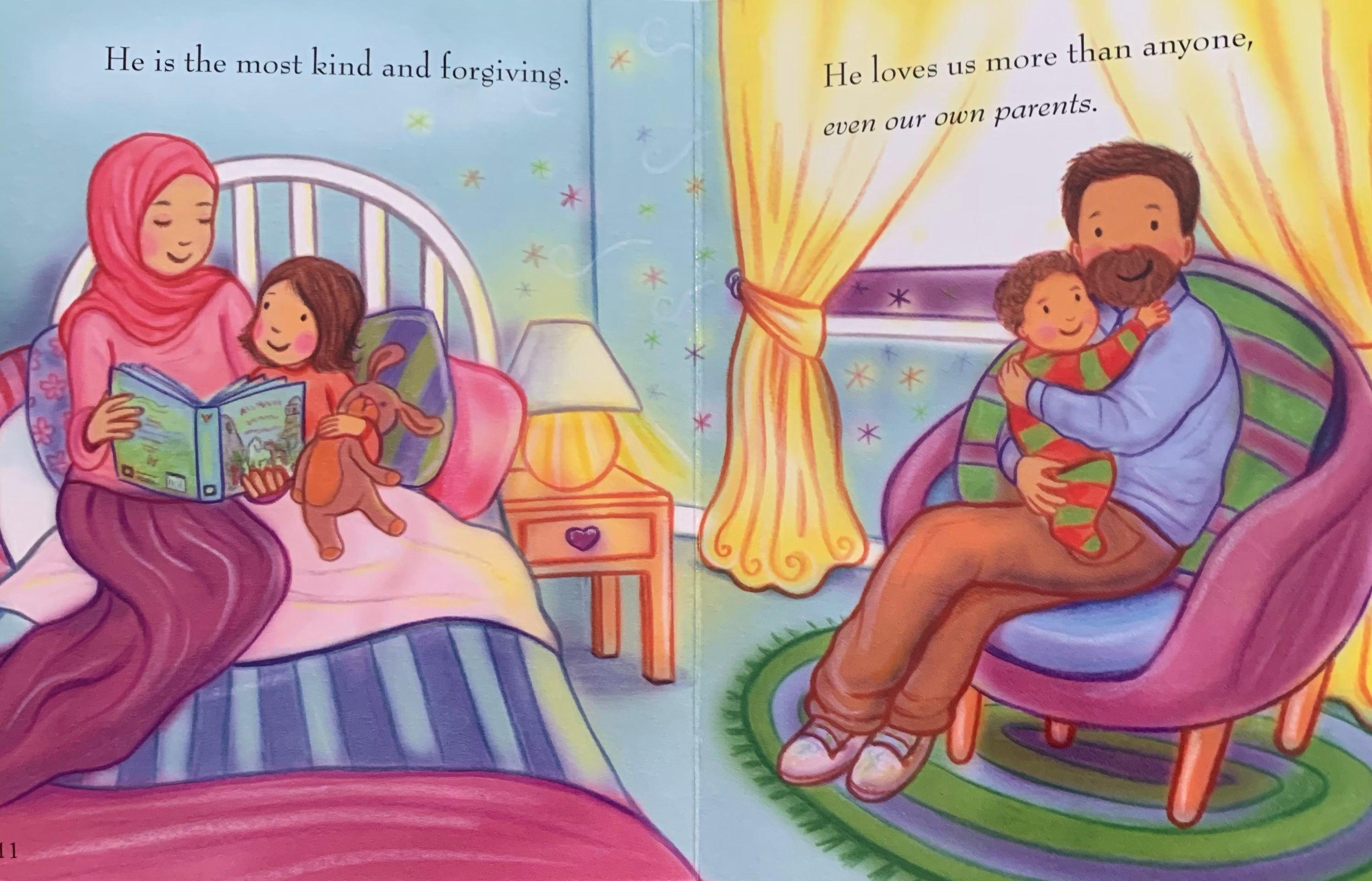
The book explains that Allah even loves us more than our own parents before explaining that Allah has 99 names and Ar-Rahman and Ar-Rahim are the ones we hear the most.  The background has many of the names of Allah written in Arabic.

img_8050

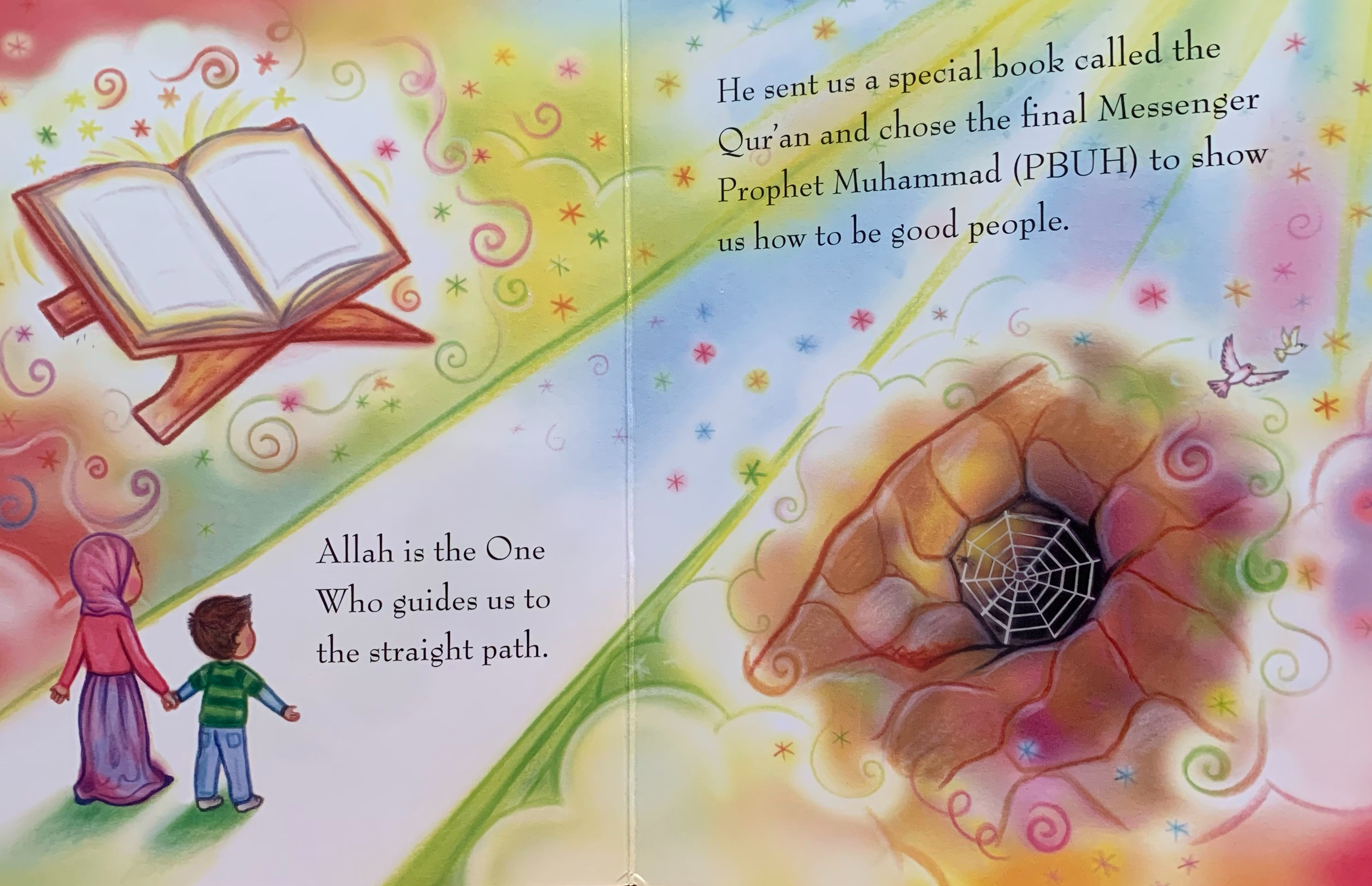
The family prays knowing Allah is All Hearing and All Seeing.  An illustration of a cave with a bird and spiderweb accompany the page that tells us that He sent us the Qur’an and Prophet Muhammad (saw) to show us how to live. InshaAllah if we do as we are supposed to, we are promised paradise and Allah never breaks His promise.

img_8051

The book concludes with Facts about Allah and Questions about Allah (swt). The pages are glossy and 6 x 8 in size.

img_8053

Fatima Al-Fihri by Aaliyah Tar Mahomed illustrated by Winda Lee

Standard
Fatima Al-Fihri by Aaliyah Tar Mahomed illustrated by Winda Lee

img_7927

This adorable simple nonfiction highlight of the founder of the world’s first university still existing, The University of Al-Qarawiyyin, is perfect for preschool/kindergarteners and up.  The brightly illustrated, large minimal text passages spread out over 16 glossy pages breathes life in to a remarkable character and celebrates an accomplishment that every one should be familiar with and inspired by, inshaAllah.

img_7928

The story starts by establishing little Fatima’s love of learning.  She learns from books, her family and from the people in her city.  When her family moves from Tunisia to Fez in Morocco, Fatima is excited to learn new things.

img_7929

Every day she goes to the mosque to read and meet new people. Her father supports her, and when he passes away she is left with his wealth.  She decides to use the money to rebuild the mosque.

img_7930

She recalls that ‘iqra’ is not just about gaining knowledge, but is also sharing what you have learned with others.  She purchases the land around the mosque and builds a university.   It is documented as being the first institution to issue educational degrees.

img_7931

I wish the story was slightly more fleshed out with detailing more about her family and her influences, about her overcoming some obstacles and even how long she lived for.  I know the target audience has a short attention span, but a few details even little ones can relate to will connect them to such an important figure and inspire the readers to dream big and make a difference.

img_7932

This book is the first in the WomanKind series.   A new series to tell stories about Muslim women who made history.

img_7933

Good Little Wolf by Nadia Shireen

Standard
Good Little Wolf by Nadia Shireen

wolf

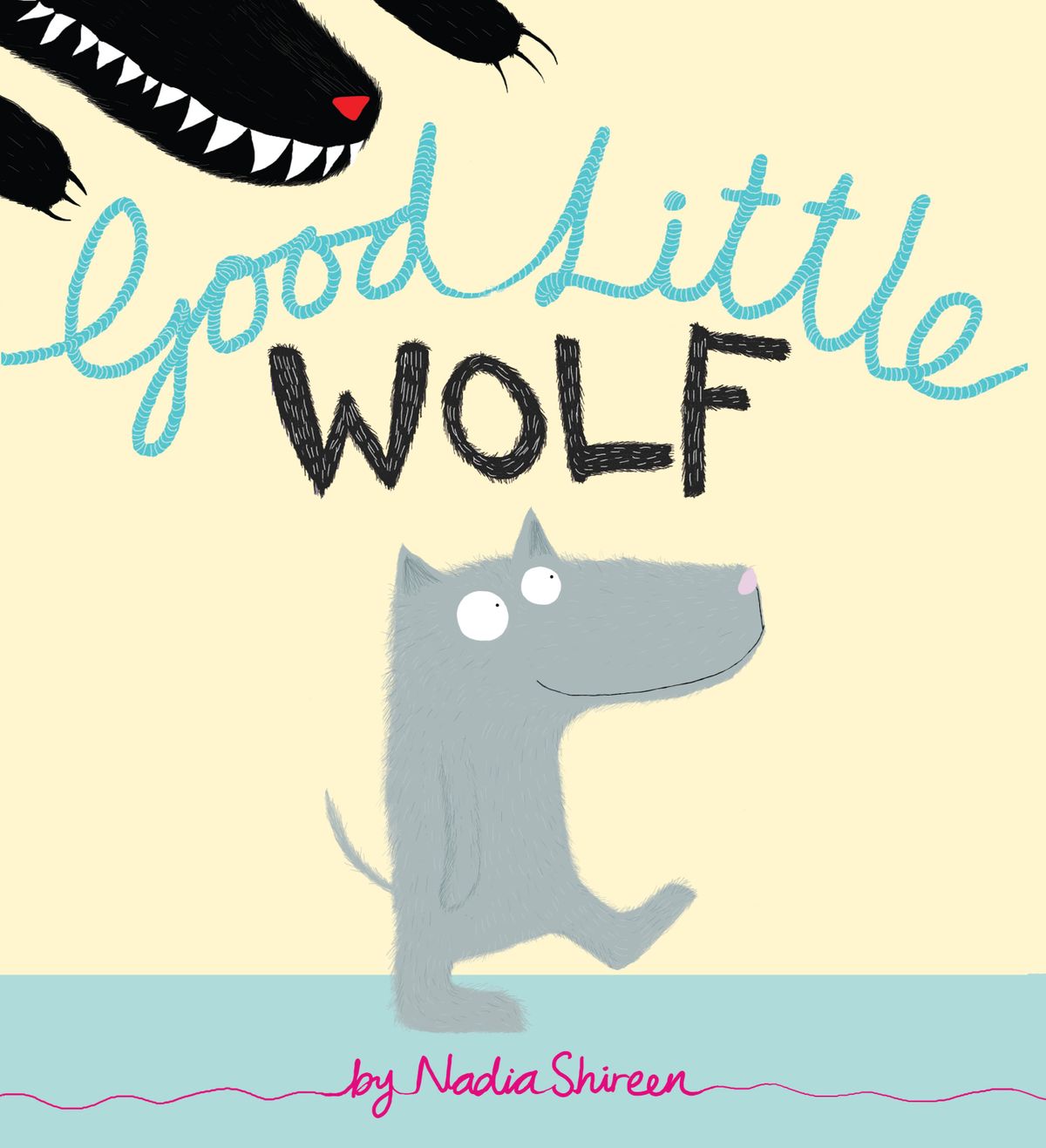
I have way too many conflicting thoughts for this 32 page AR 2.1 Muslim authored picture book.  The good little wolf, with a cast of familiar story book characters getting cameos, is choppy in its simple story telling to the point I thought pages had been skipped more than once, funny in asking the three little pigs permission to blow their houses down, slightly moral in elevating good behavior and having the courage to hold to your goodness, and ultimately, possibly really dark, as the end gives reason to believe that wolves will be wolves and the good little wolf is no more, as in he has been killed along with an old granny too.  

245BE710-2A53-41AF-A01A-6EA9596D3370

Rolf is a good little wolf that likes to bake, eat his vegetable and be nice to his friend.  His best friend Mrs. Boggins has warned him that not all wolves are as nice as he is and Rolf hopes he will never meet a big bad wolf.

D48EE32F-8952-4A52-9F30-F0EC5AF408D5

Alas, he does meet the Big Bad Wolf, and he questions if Rolf is a wolf at all.  To prove that he is a wolf he accepts the big bad wolf’s challenges:  He howls or rather whistles at the moon and he tries to blow his friend pig’s house in.  Eventually he resolves that he isn’t mean enough to be a wolf, then the Big Bad Wolf gives him one more chance as he holds out a fork and knife to the wolf while restraining Mrs. Boggins. D31DC212-C85D-439B-BBCF-2A1CEA6F1FF8

Rolf feels something deeply and ties up the Big Bad Wolf feeling more wolf like than ever.  He just happens to be a good little wolf.  To celebrate they all sit down for a snack and the Big Bad Wolf decides to stop eating people…tomorrow.

FE2D38B5-AA49-4AEE-B111-61FACD9D9436

Yeah, it isn’t clear and could be up for debate, but Rolf and Mrs. Boggins are no longer at the table, and the Big Bad Wolf looks pretty happy.

42DAF30D-66BD-4FA9-A871-F7AC1717DC0F

There is nothing religious in the book, it could be debated if the book is dark or just silly and aside from the choppiness of the transitions, overall the book is a fun turn on classic characters and concepts.

6DDCE0AB-FFBF-471C-9DBB-35B7320425EB

Baba, What Does My Name Mean? A Journey to Palestine by Rifk Ebeid illustrated by Lamaa Jawhari

Standard
Baba, What Does My Name Mean? A Journey to Palestine by Rifk Ebeid illustrated by Lamaa Jawhari

img_7233

This lyrical journey through Palestine’s major cities, shares historical facts, geographical information, cultural richness, and love for a homeland that will inspire and educate all readers. There is a lot of information pressed in to 32 pages and at times the rhyming text, illustrations, and maps are powerful, and at other times overwhelming. The 8.5 x 11 horizontal paperback bound book needs to be bigger to hold all that the pages contain, and hard back to hold up to the details that need to be poured over to be appreciated. The content about the names and places in Palestine is priceless and well done, but I really wanted to love the book a bit more than I ended up feeling for it. I think trying to make it all rhyme was just a bit too much for my liking, but I would buy this book again in a heartbeat to share with my children. Even though we are not Palestinian, I think all Muslims have a piece of Palestine in our hearts and feel a deep need to celebrate the culture, fight for their freedom, and demand a quality of life that they are brutally being denied by their oppressors.

img_7234

The book starts out at bedtime with a little girl, Saamideh asking her baba what her name means. He explains to her that it means “one who is patient, persistent and one who perseveres.” She is named this because she is Palestinian, he explains and then he shows her the key to their ancestral home in Palestine. He asks her to close her eyes and imagine a white dove, named Salam, taking her on tonight’s journey.
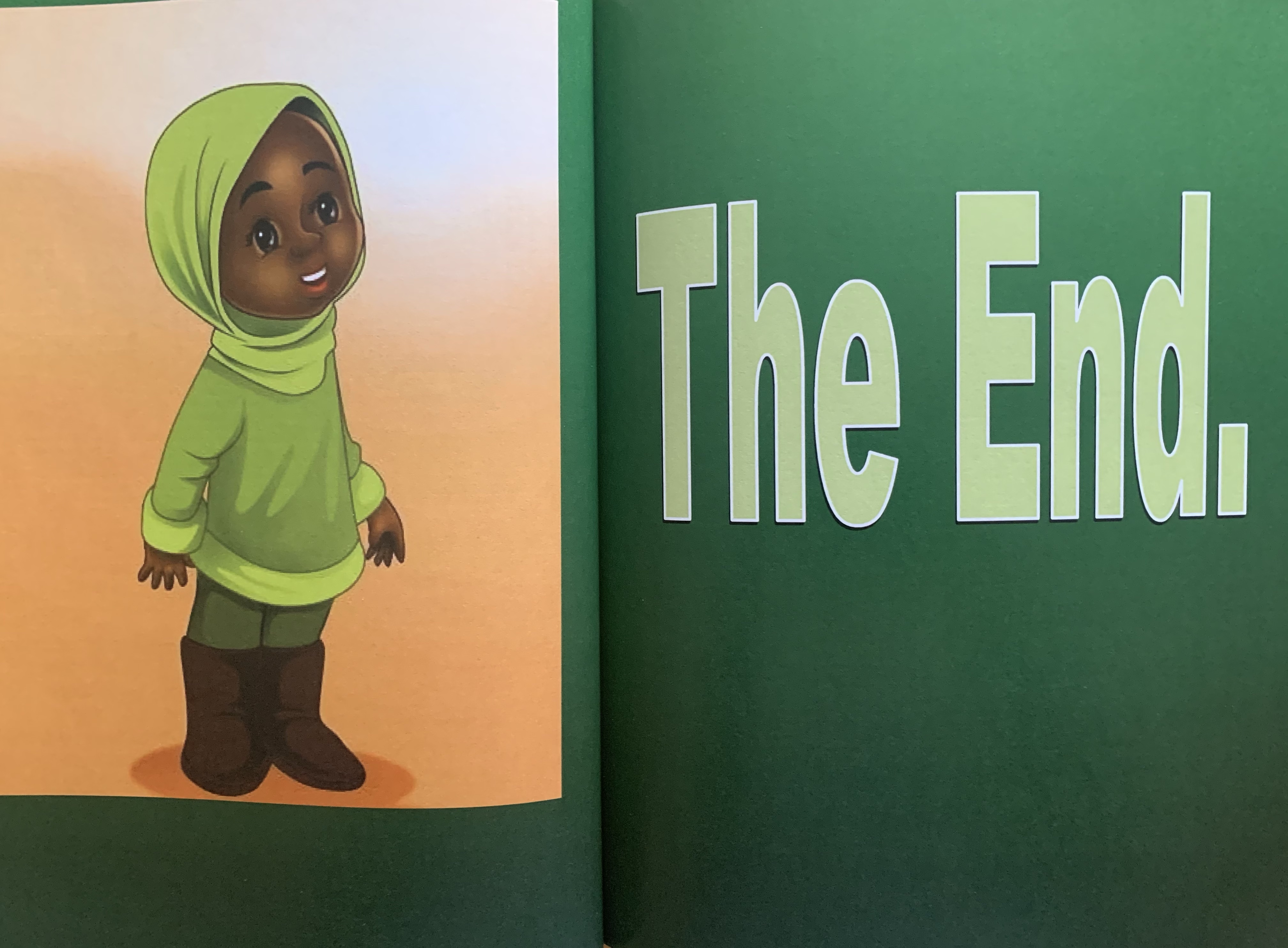
img_7235

Salam and Samamidah prepare to journey across Palestine’s mountains, hills, deserts, and plains. They start in Areeha, one of the oldest cities in the world, and one one of the lowest points on Earth.

img_7236

They journey next to Al-Quds, the capital. They see the old city, Al-Aqsa, and more, before heading off to Nablus, Yafa, Haifa and the Akka. Learning about the cities, the food, and the history of each.

They learn about the dabkah, and the weaving in Gaza and head to Bait Lahem too. They learn about glass blowing in Al-Khalil at the Ibrabhimi Mosque, and finally they conclude their journey with the little girl dreaming of flying around the world to use her key and open people’s hearts and minds.

img_7239

She proudly exclaims her love of Palestine and her and her baba pray that one day they will be able to return. Saamidah then asks her baba why they are refugees, and he promises to save that conversation for tomorrow’s beditme story.

img_7240

The book concludes with a list of the city names in Arabic, trasliterated in English, and then the English names. It then has discussion questions at the end.

The book is not outwardly political, nor critical. It is a celebration of a people, a culture, and land. Happy Reading!