Category Archives: preschool

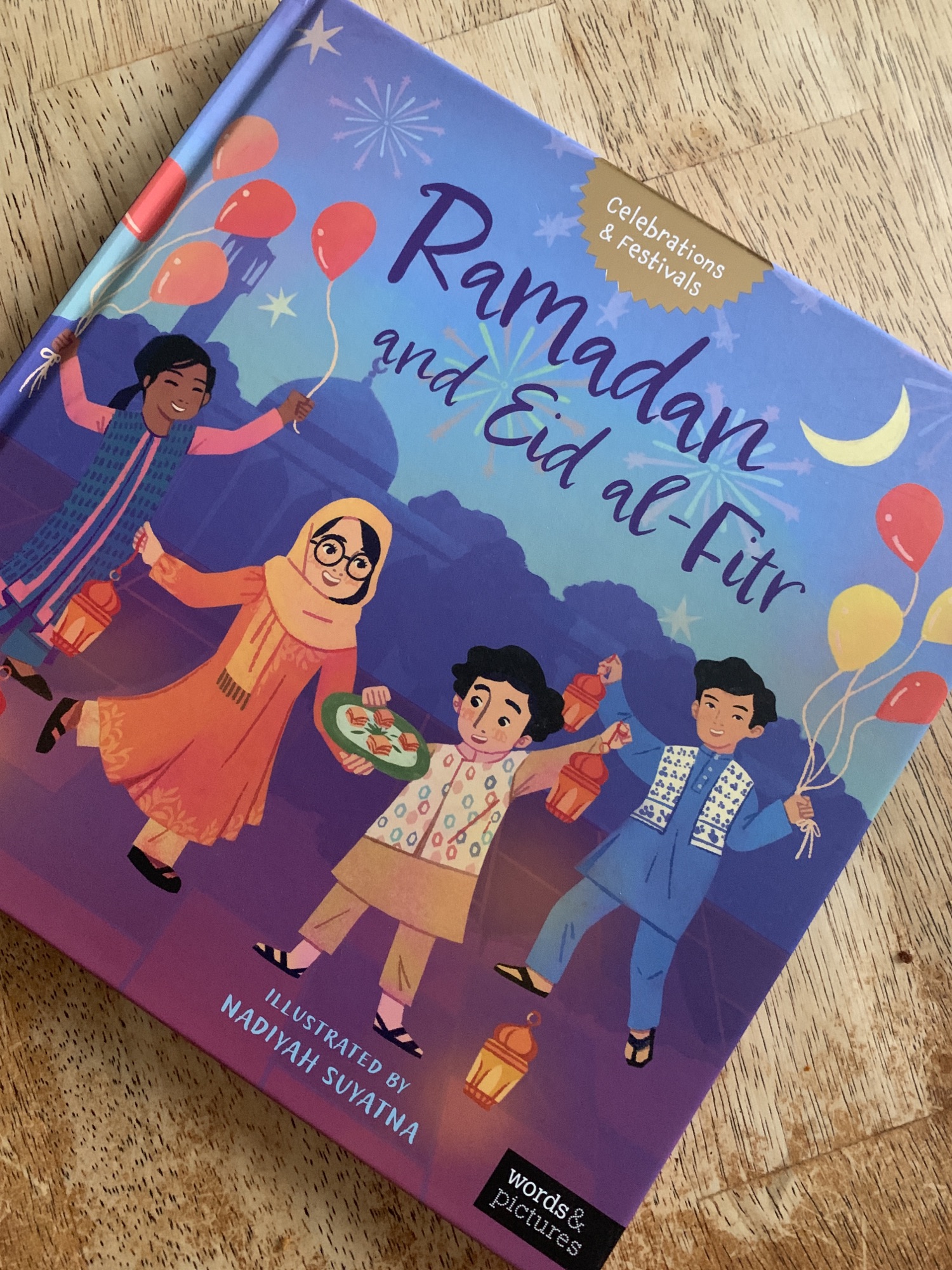
Ramadan Kareem by M.O. Yuksel illustrated by Hatem Aly

Standard
Ramadan Kareem by M.O. Yuksel illustrated by Hatem Aly

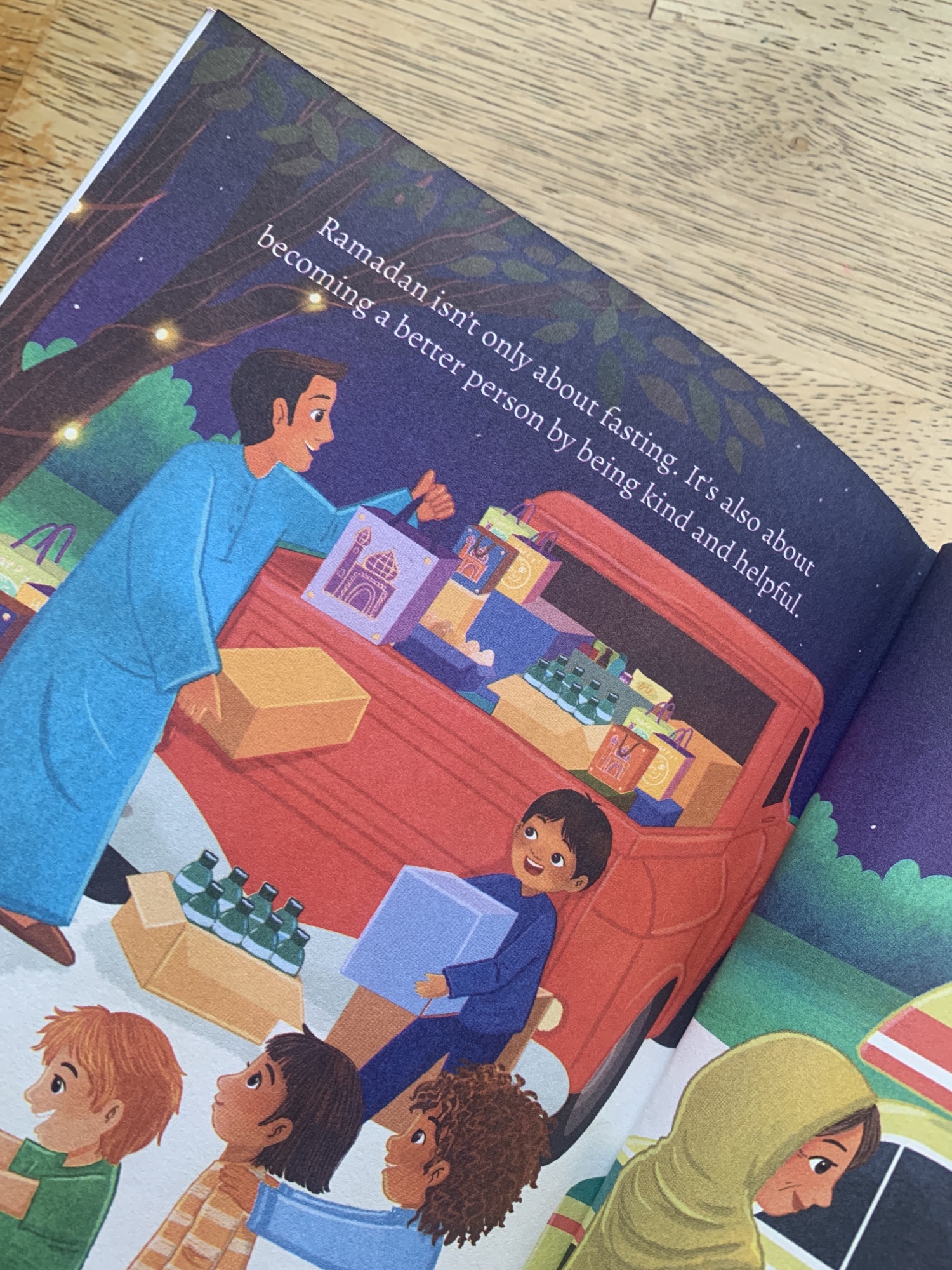
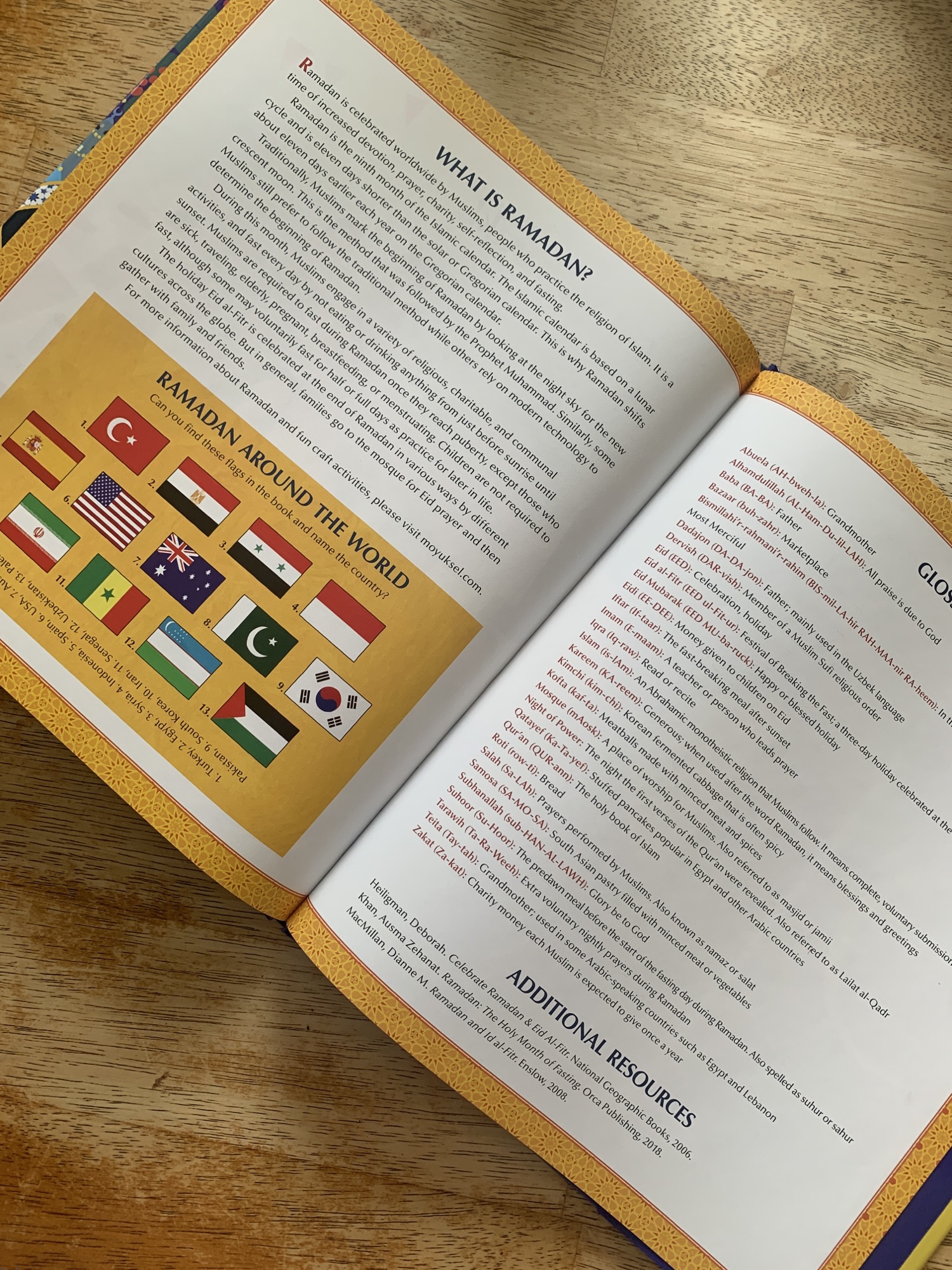
The lyrical text that shows joy, Muslim joy, all over the world during the most wonderful time of the year is felt, truly truly felt in this rich, beautiful book. The illustrations, the text, the sentiment, it all comes together so splendidly, that when you turn the last page you want to start over again. Hundreds of people are wondering what book to read to their children’s public schools this year, what book to start off masjid story times this Ramadan, what book to read every night leading up to the blessed month to get their children excited, what book to hand to your children to look through so they can have a few more minutes of sleep and alhumdulillah to all the above, I whole heartedly suggest, this one. Even with the errors.  The book states “the Night of Power is better than a thousand nights,” and should read, better than a thousand months.  The backmatter says “by not eating or drinking anything from just before sunrise until sunset.”  The story itself though has it correct and says “suhoor is a predawn meal” and notes the “sun is still sleeping.”

A universal story of celebrating Ramadan, with waking up for suhoor, greeting neighbors, having self control, praying, volunteering, iftar, community.  It is a singular story, but each two page spread showing a child in a new country continuing the narrative.  The worship uniting us all as Muslims even while our unique traditions add diversity and layers to the acts that we share.

It starts with gazing at the new moon in Turkey and mom saying that the narrator can fast. The drummer than beats her drum and it it time to wake up in Egypt. The call to prayer and remembering you are fasting reaches Syria, and donations are given in Indonesia. In Spain Qur’an is read in abuela’s lap and neighbors are visited in the United States.  Donations are packed in Australia,  friends and family are visited in Pakistan, and kimchi after dates for iftar in South Korea.  It is then off to Iran for prayers, Laylatul Qadr in Senegal, and getting ready for Eid in Uzbekistan.  Palestine is the final stop as Eid joy erupts for Muslims everywhere.
The book is widely available, you can order yours here at Crescent Moon or here on Amazon

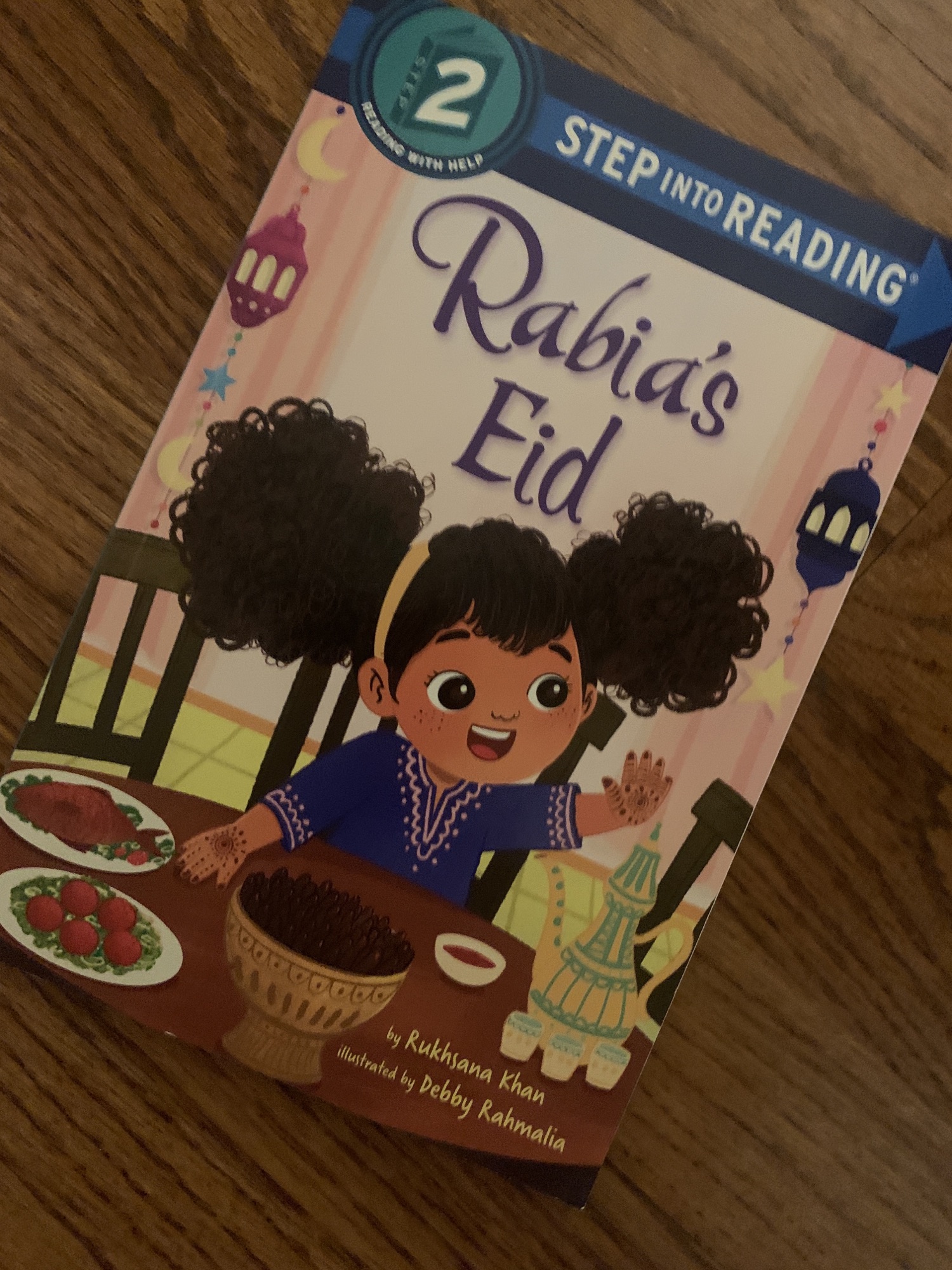
Rabia’s Eid by Rukhsana Khan illustrated by Debby Rahmalia

Standard
Rabia’s Eid by Rukhsana Khan illustrated by Debby Rahmalia

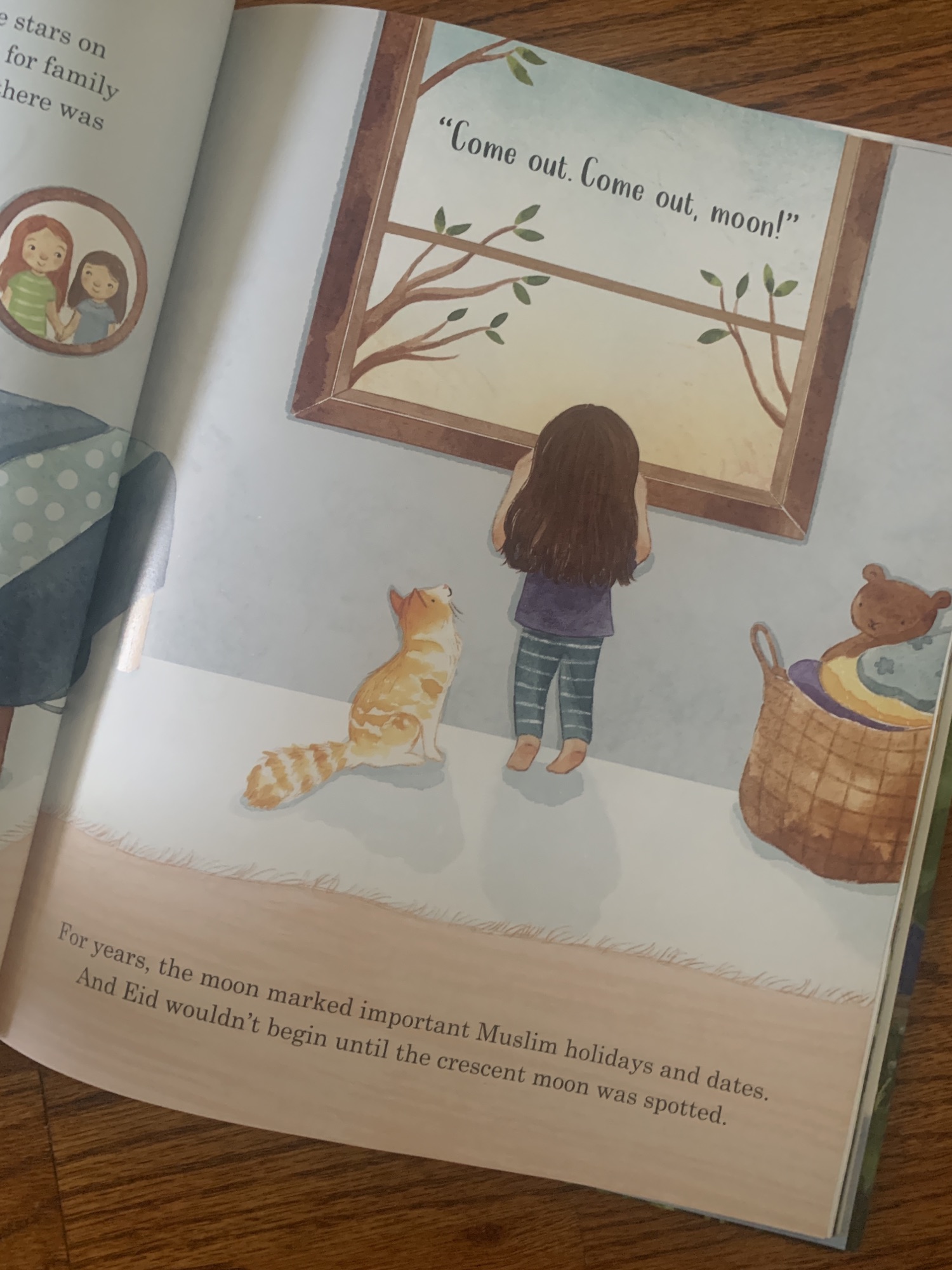
We definitely lack Islam centered leveled readers, so how exciting to see one this year focused on Eid, that contains more about Zakat al Fitr than presents no less.  The book starts on the last day of Ramadan, so there are details about both Ramadan and Eid shown, not dictated, as it stays on a Step 2 reading level.  As with most books meant to be read with help, for preschool to 1st grade, the story is a bit abrupt at times, and by not showing the Eid salat it definitely leaves some confusion as to whether Zakat was actually paid before the prayer started as required (I’m not a scholar, so please look into this), or not.  InshaAllah, if adults are reading this with their children, some basics about Zakat al Fitr would be something wonderful to discuss when you finish.  The book is joyful, the little girl wants to fast and is encouraged to do a half day, the illustrations are adorable as well, alhumdulillah. Oh and for those keeping track, this might be the first Ramadan book I’ve read in a long time that does not mention the moon, not even once.

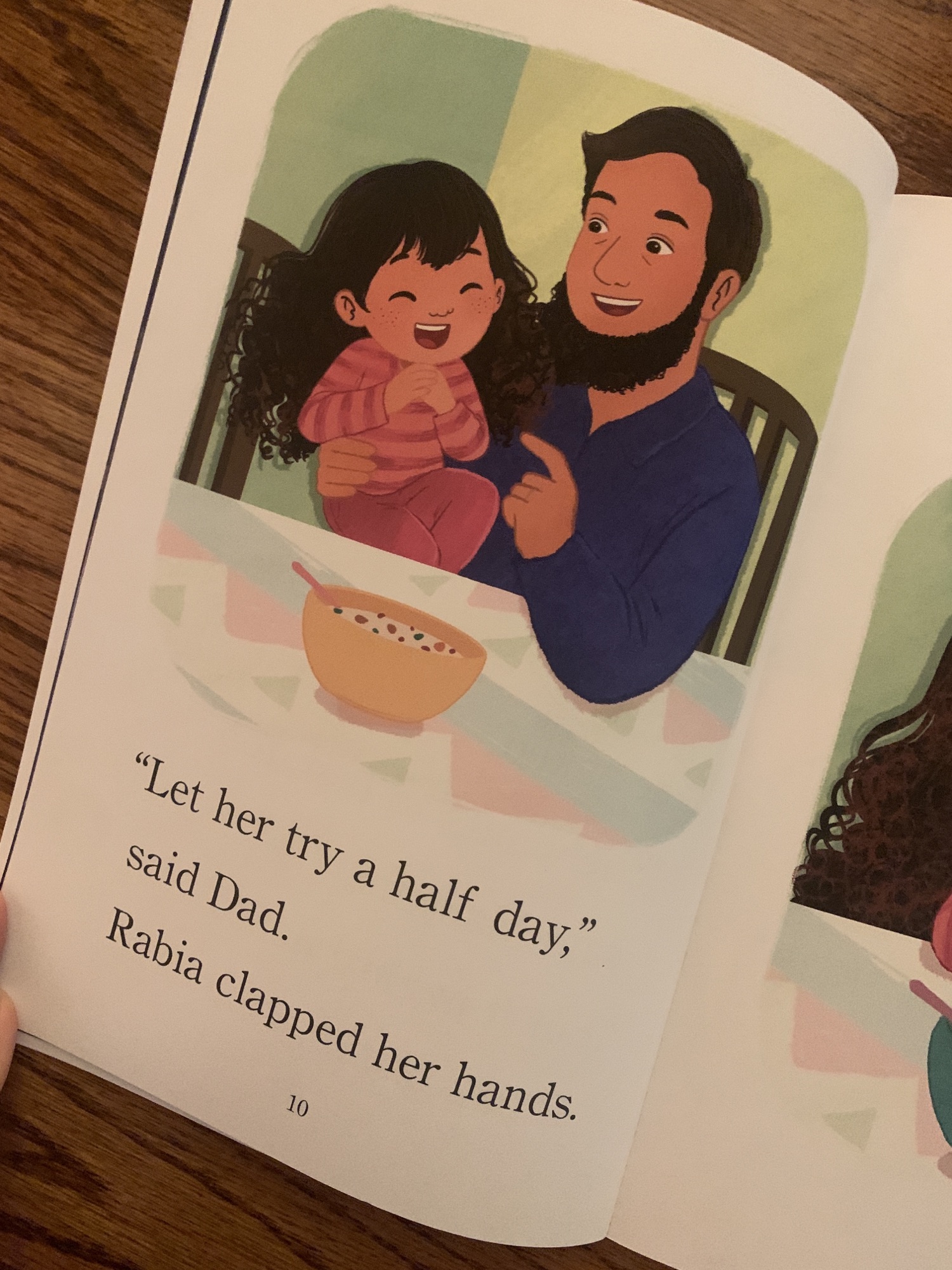
The book starts with Mom waking Maryam up for suhoor on the last day of Ramadan and Rabia wanting to fast as well.  Her sister tells her she is too young, but she joins the family for cereal in the kitchen, and Dad encourages her to try a half day.  The family then prays fajr together and the day is going great.

About lunch time Maryam is getting ready to break her fast. The family praises her on as she settles in with a cheese and tomato sandwich.  Later the rest of the family breaks their fast, and Rabia joins in with starting with a date and making duas.  Then it is time for henna and getting their clothes ready.

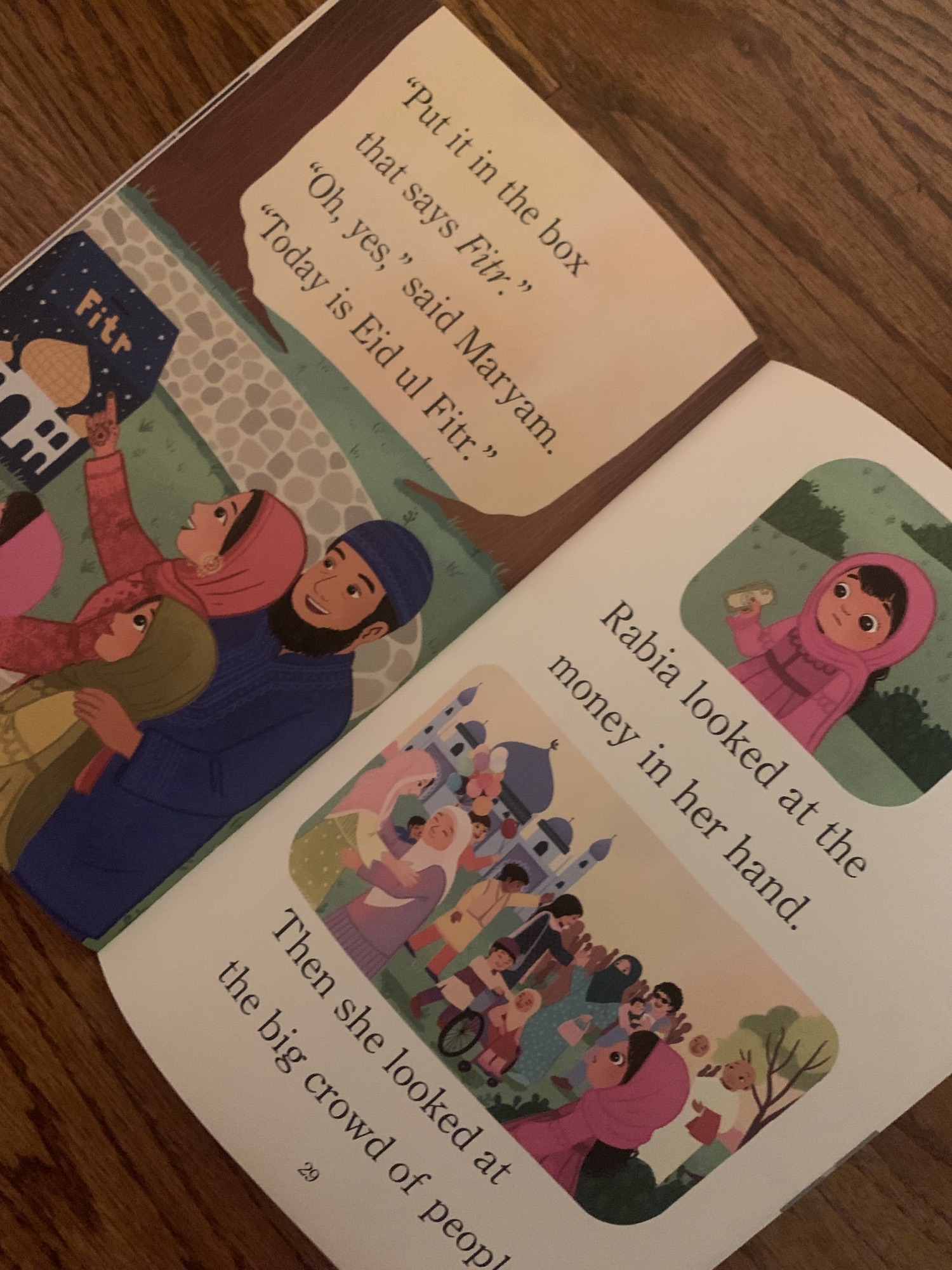
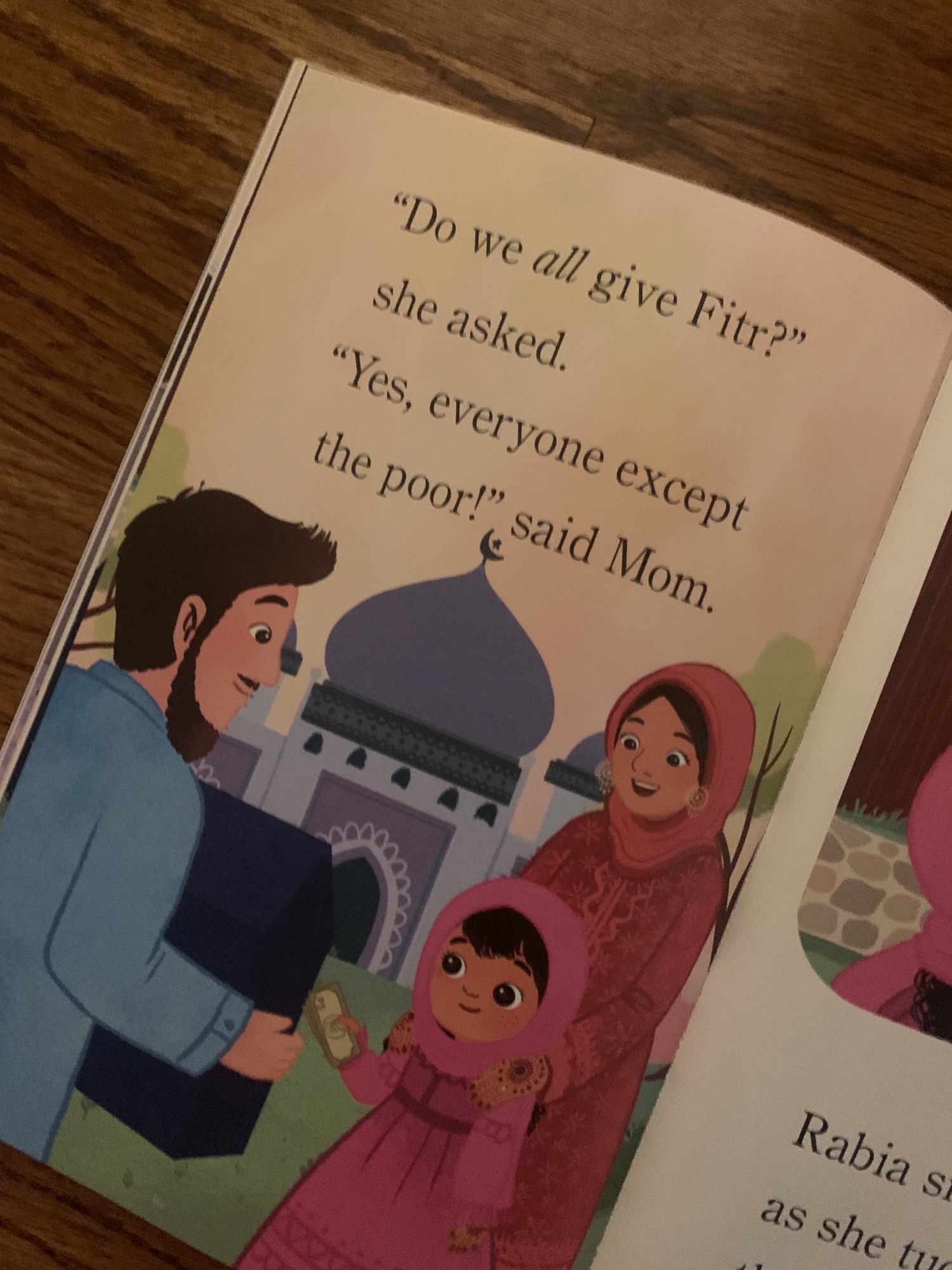
At Eid prayer everyone is dressed up, and Dad gives Rabia some money to put in the box labeled Fitr, for the poor.  Rabia wonders if everyone has to give money, and mom responds that everyone except the poor do.  The book concludes with the family smiling knowing everyone is having a happy Eid.

The book is great for Muslim and non Muslim kids, because of the size though, it isn’t a great choice for story time in big groups, but the price point makes it an awesome addition to gifts, classrooms, and to share with others in general.  I purchased my copy here.

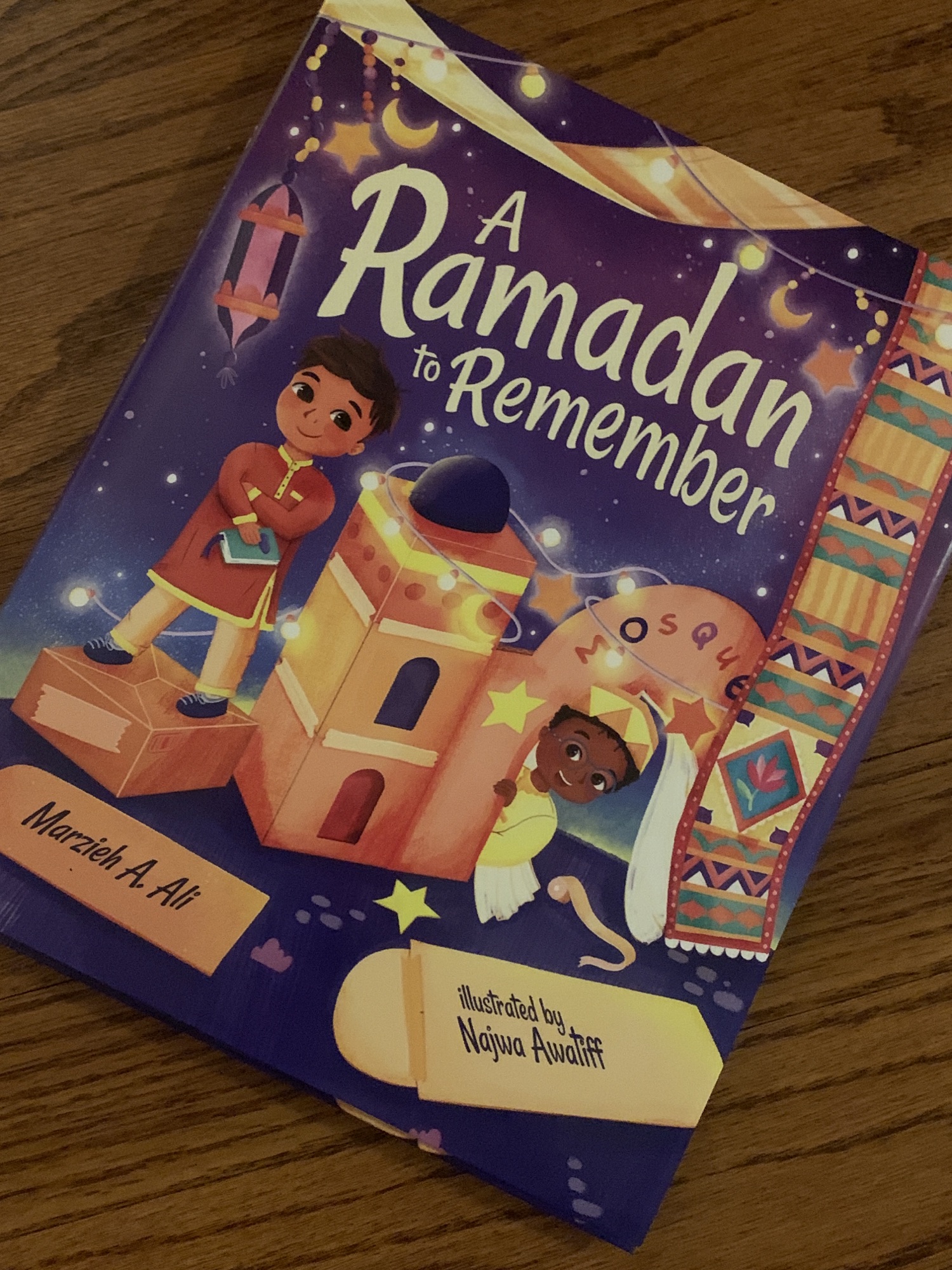
A Ramadan to Remember by Marzieh A. Ali illustrated by Najwa Awatiff

Standard
A Ramadan to Remember by Marzieh A. Ali illustrated by Najwa Awatiff

img_2876-1

A problem solving kid that loves his faith, finds himself in a new neighborhood at the beginning of Ramadan without a mosque or a Muslim community.  I appreciate that this 32 page book actually has a bit of a plot, not just the overly done fictional story crafted around basic Ramadan facts of a child’s first fast.  Sure, it mentions most of the expected concepts in a similar manner, but it also centers acts of ibaada, shows more than tells, is brightly illustrated, and is unapologetic. The kid is a doer, a problem solver, and isn’t unsure about who he is, which is refreshing. That isn’t to say that it gets everything right, it still attributes fasting to feeling compassion for the poor.  Even when a side character challenges the notion, the character doubles down that it makes us more appreciative, which inshaAllah it does, but it isn’t WHY we fast.  Overall though, I think the book still is a benefit in Muslim and non Muslim spaces. The story and illustrations make it appealing at story times and bed times, and the backmatter is equally engaging.

img_2877-1

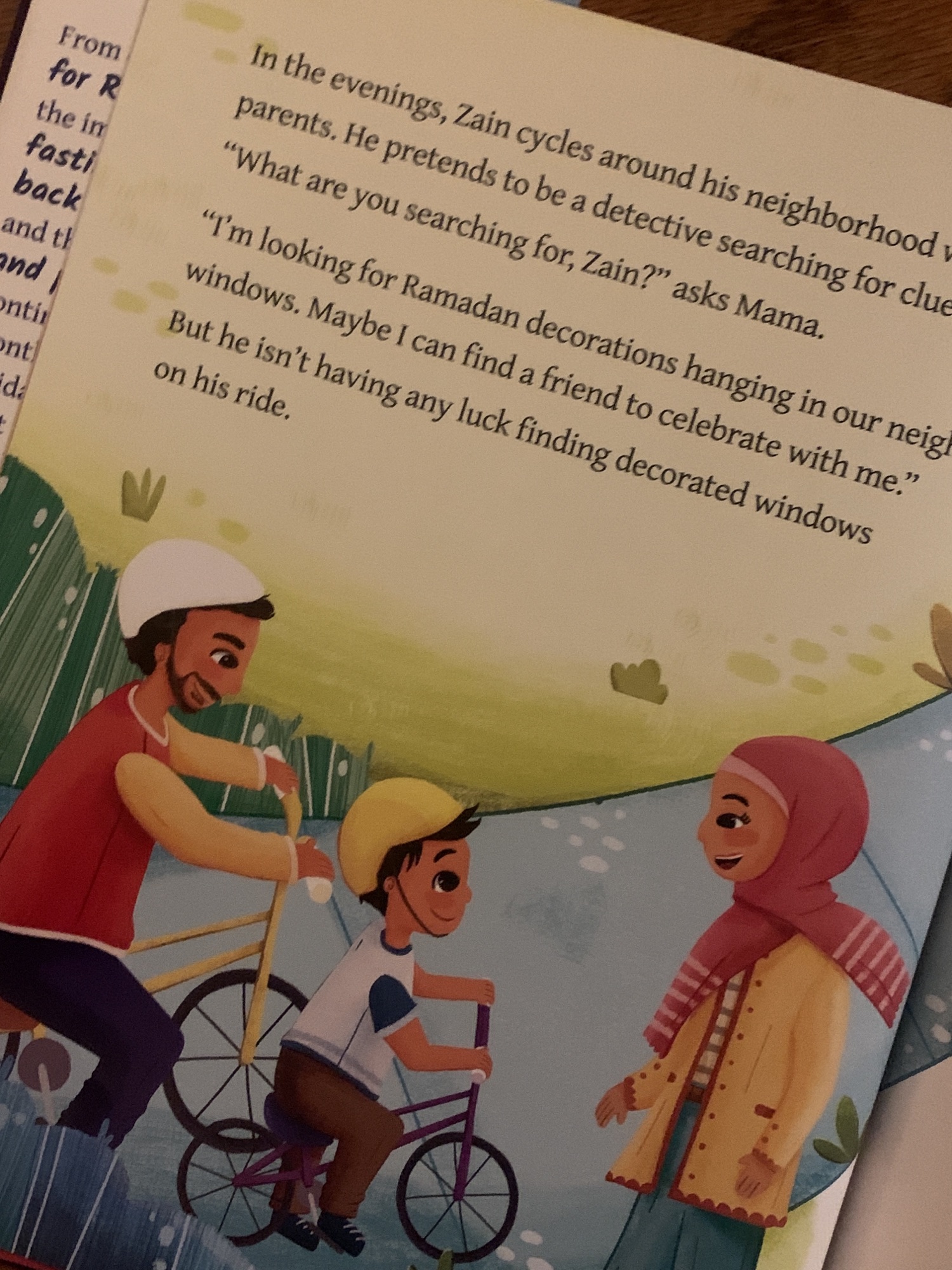
The book starts with Zain getting excited for his favorite time of year, Ramadan.  Only this year the decorations are still in boxes, Mama and Baba are busy with their new jobs, and there is no mosque or Muslims in the neighborhood.  Zain knows, he rides around looking for clues, has even checked the newspaper, and had his dad look on his phone.  It is a big change from the Islamic school he used to go to, and the busy mosque he used to volunteer at.

img_2879-1

Then Zain gets an idea, to build a mosque with all the moving boxes.  Neighbor kids come and ask questions, and Zain is happy to explain as they join in the building.  One night while praying outside under the stars in the cardboard mosque, a friend joins the family, and this Ramadan just might turn out to be pretty wonderful after all.

img_2878-1

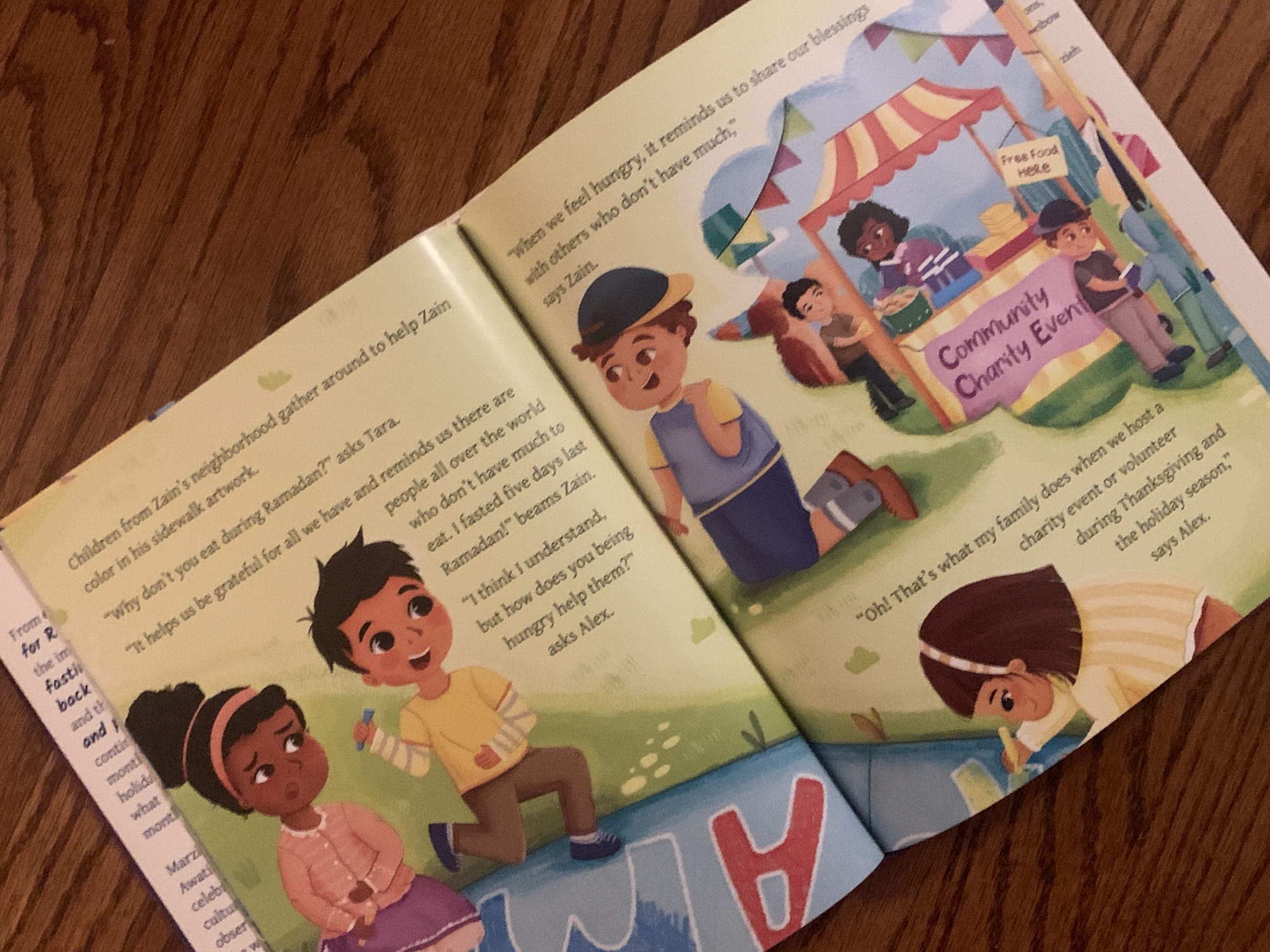
I love that Zain doesn’t wait around for his parents to figure everything out, he is motivated. I also really like that he knows who he is, is comfortable sharing his faith and beliefs, and that the neighbor kids find connections to him, not the other way around.  I wish he would find a place to volunteer at, our charity isn’t restricted to helping only Muslims, though I might be the only one to pick up on that unresolved thread.  I also get that the kid that joins the salat for story purposes, is seen after prayer, but he didn’t join the prayer right and my older kids were sure to point that out.

The backmatter has a glossary, but in a more engaging format that I think kids will actually stick around for, and the Ramadan essentials and crafts make for a nice extension for those wanting to add a craft to the story time activity.

img_2882-1

The book is traditionally published and widely available.  You can find it here at Amazon, or here at my favorite store Crescent Moon.  It is also available in public libraries and would be a great addition to classroom and school library shelves.

Aliya’s Secret: A Story of Ramadan by Farida Zaman

Standard
Aliya’s Secret: A Story of Ramadan by Farida Zaman

img_2838-1

Books like this are honestly a disservice to Muslims. I know the industry means well by having a token holiday book, by an OWN voice writer, ensuring it is joyful and illustrated in a warm way, but when the information is erroneous, it really just perpetuates misinformation. This book will be on shelves everywhere and shared at story times in classrooms and libraries and non Muslims will think they are being inclusive, and Muslim kids will also learn erroneously or doubt if they are in the wrong, or best case scenario (?) have even more to explain to those around them. The book is adorable, yet the information about when we fast and why we fast is wrong, repeated throughout, even in the backmatter.  The book is for young children and pivots around lying, the character lies repeatedly with no consequences…in Ramadan no less.  Sigh, our kids deserve better.

created by photogrid

The book states multiple times, four in fact, that Muslims fast from sunrise until sunset, this is incorrect, Muslim fast from dawn to sunset. Sahoor is not eaten at sunrise, it is eaten before dawn. This is not me being picky, this is wrong. The dad perhaps has his own reasons for fasting, but Islamically we do not fast to feel what those who are hungry feel or to be grateful, those hopefully are results of fasting, but in fact we fast as commanded by Allah swt. Children are required to fast when they hit puberty, not at the age of 13 specific. Many kids fast full and partial days before puberty, and I don’t agree that their growth is stunted as suggested by the book.

created by photogrid

The set up of the story is nice, albeit another first fast book, in that at least the character and her classmates and friends know what Ramadan is and thus there is no othering. It talks about charity and praying and shows the Muslim family living their life unapologetically which on the one hand is great, but then makes the lying seem weird. Why would Aliya keep fasting a secret from her friends at school even if she is keeping it from her parents? Why would she lie about it, why would she lie and have it articulated as lying and there be no repercussions for it, in a picture book? She doesn’t even just do it once, she lies THREE TIMES.  When you do good things from a place of faith and worship, it seems off to me to have it framed in deceit with no other commentary.

Sure to some the time when fasting starts might be a small thing, but seriously is it that hard to get correct? I wish the editorial/publishing/marketing team would have hired beta/sensitivity readers, not all Muslims know Islam, and not checking the facts really is just sloppy.

Insha’Allah, No, Maybe So by Rhonda Roumani, Nadia Roumani illustrated by Olivia Aserr

Standard
Insha’Allah, No, Maybe So by Rhonda Roumani, Nadia Roumani illustrated by Olivia Aserr

img_2711-1

Not every funny thing a child says can be copied and pasted into a children’s book.  And while I have no doubt that this book was edited and revised numerous times, it sure feels like a conversation or 20 that I’ve had as a mom, a teacher and a librarian over the years.  Well, I take that back, the mom in this book, is very articulate, and not nearly as exasperated as I’m sure I always am.  It is so on point that it makes me truly wonder, are you even a Muslim parent if you haven’t been asked what Insha’Allah means? The backmatter articulates that Muslims and Arabs of all faiths use Insha’Allah. The text and illustrations themselves are not Islam specific, but the authors are Muslim, and the term always on the tip of our tongues. It is very relatable and impossible to read without smiling, I can’t wait to share it, insha’Allah. (See what I did there? ya.)

img_2715-1

The book starts simple enough, a little girl asks her mom if they can go to the park as they walk near one, and mom says, “Insha’Allah,” and keeps on walking.  Ranya gets upset asking why she said no, and the mom explains that insha’Allah doesn’t mean no, it means God willing.

img_2712-1

Ranya doesn’t just accept the answer and move on, she tells her mom it always feels like no, until her mother explains that we can want something to happen, but sometimes Allah has other plans.  Ranya presses her mother a little more trying to understand if insha’Allah means, maybe.  A few more examples are shared, and the definition is expanded to also mean, hopes and dreams.

img_2713-1

Ranya wants to pin down her mom on some of the insha’Allahs, making cookies, a sleepover, a trip to Disneyland.  Mom does her best, but Ranya is spunky and makes sure she gets the last word in.

I love the note at the end that ties it all together and shows the universal appeal of the word.

You can preorder your copy here

img_2714-1

Dear Muslim Child by Rahma Rodaah illustrated by Aya Ghanameh

Standard
Dear Muslim Child by Rahma Rodaah illustrated by Aya Ghanameh

img_2280-1

The flow, poignancy, and lyrical verses force you to slow down, take a deep breath, and immerse yourself in the concepts and ideas so beautifully presented in the text, and illustrated on the pages.  Whether you are reading it alone, snuggled up with a little one, or in a boisterous story time, this book pulls you in as it speak directly to the reader (or listener), burrowing inside and inspiring reassurance and confidence.  The tone of the text melds with the illustrations making the book appeal to those looking to understand, be seen, or to be empowered.  The short stanzas with the opening refrain of, “Dear Muslim child,” are a delight to read and share again and again, alhumdulillah.

The book does not have a story or a plot, but has an organization that keeps the pace moving in a poetic way. It starts by mentioning that we were meant to be, even “before Allah spoke the universe into existence.”  It then tells us about Islam, nur, names, the power of words, purifying our hearts (with wudu), listening to the adhan, and praying.  It talks of the beauty of hijab, and community, and purpose and mattering.

img_2282-1

The centering of Allah (swt) is not shied away from, yet the book is not preachy or overly religious.  For example wudu is shown, but not named; adhan is named but not defined.  If you wish to discuss each page, there is a lot to unfold, but if you want to just read the surface it is beautiful just the same.  The book is traditionally published, and a true accomplishment of the author, and the authors that have come before that this book, this type of book, is widely available for us all to enjoy.

img_2284-1

Colours of Al Quds by Jenny Molendyk Divleli illustrated by Merve Ozcan

Standard
Colours of Al Quds by Jenny Molendyk Divleli illustrated by Merve Ozcan

img_0810-1

I have not posted a review since the latest genocidal escalation in Gaza, my heart just cannot carry on as before, but I keep being asked about Palestinian books that I have featured in videos, but not reviewed, so here we are.  This rhyming book is not OWN voice, but I think these days we are all Palestinian, and the tone of this book is accurately love, and beauty, and strength.  It is based around colors with beautiful illustrations for each two page spread focusing on one color.  Meant for toddlers and preschoolers this book works well in small groups and story times alike.

The book starts with an introduction to the narrator, Iman, from the land of Falasteen.  The first page spread talks about olive trees and the color green, then the blue of Dome of the Rock, orange of Quds Ka’ak and brown dates.  Over 32 pates, it also presents the keffiyeh, Masjid al Aqsa, knafeh, kaftan, keys, and Masjid al Qibly. The picture glossary at the end focuses on the Palestinian points, not the colors, keeping the focus on Al Quds.

We Know What to Say: Phrases Commonly Used by Muslims by Sabria Chao

Standard
We Know What to Say: Phrases Commonly Used by Muslims by Sabria Chao

The concept behind this 42 book is really nothing new, but the presentation is wonderful.  The large hardback size, the clear inviting illustrations, and the repetition allow the book to be a delight at story time and bedtime alike.  Each Islamic term is introduced by a diverse character with a common Muslim name being asked if they know what to say in a situation.  The child gives the word, the following two-page spread restates the term and when to use it. All the terms are shown at the end in a two page spread along with a glossary and a Note to Parents.

I love the relatable scenarios: zoom calls, rain, getting sick, etc..  I also like the rhythm of the book, it reminds me a little bit of Brown Bear, Brown Bear.  The bright colors, the simple engaging illustrations and the big size make me ecstatic to share this at story time.  So many of the books that focus on Islamic terms for toddler to preschool level are small board books.  They serve a purpose, but we have long needed a large clear book for groups of children to learn, practice, and review together.

This book was nominated for the 2023 Muslim Bookstagram Awards, but you can purchase a copy here

Raisah and the Boat Trip by Nadia Ali illustrated by Fatma Zehra Köprülü

Standard
Raisah and the Boat Trip by Nadia Ali illustrated by Fatma Zehra Köprülü

img_0124

I’ve seen this book reviewed and promoted on social media.  I’ve even read the reviews.  Yet for some reason I thought the book was a refugee story. It is not.  It is a family’s trip out on a boat interwoven with what they see and ayats from the Quran.  It can be read as a simple straight forward story, or the interspersed ayats can be paused for and discussed.  Honestly the book probably will not be asked for multiple times by young children, but as a teacher, librarian, parent, you are going to reach for this book quite often.  It is a book that can be used in story times about Allah’s creation, the ocean, science, experiences, and the signs that help us know Allah swt.  And for that reason I wish the book was larger.  It is great for bedtime, but the 9 x 9 size makes it cumbersome for story times, even for small groups.  Technology can help, but I really just wish it was a bit bigger to enjoy the simple illustrations and increase the sense of wonder Raisah feels upon the vast ocean.

img_0126

The book starts with Raisah, Mama, and Papa getting on a boat and heading out on the ocean.  They observe the water getting darker the further they go out, the saltiness of sea water compared to river and lake water, and then they turn off the engine and pull out their fishing rods.

img_0125

They joke about what they will catch while dropping the fact for readers about the blue whale being the biggest creature in the ocean, before a cargo ship catches their attention and they marvel at transportation opportunities on the sea.

img_0127

There are seven ayats from the Quran included in the 28 page book and the surah number and ayat are sourced.  The book can be ordered here from Crescent Moon where code ISL saves you 10% at checkout or here from Amazon.

img_0128

A Boy Named Ibrahim by Sitti Aminah “Flexi” Sarte illustrated by Aaron Asis

Standard
A Boy Named Ibrahim by Sitti Aminah “Flexi” Sarte illustrated by Aaron Asis

img_9818

This 24 page Filipino book originally published in 2014 was republished with a new traditional publisher earlier this month and reads and feels like solid Islamic fiction.  The book focuses on the five daily prayers throughout the day of a young boy’s life, with the repetitive refrain being the steps of wudu. Ibrahim leaves his activities to pray, wakes up early to join his parents in salat, loves his mother, and listens to her reminder about prayer being an important way to remember Allah swt.  The book is preachy, religious, and unapologetic.  The timing of fajr is a bit questionable, but roosters do crow at all hours, and the light outside the window might be a street lamp and not the rising sun.  Islamic phrases are used, but it does say “Alaikum Salam” in response to “Assalamu Alaikum” which is a variation of the norm.  Overall, the book is a nice addition to share with young children highlighting the importance of prayer, it also works well to learn and review the steps of wudu, and the names and order of salat, alhumdulillah.

The sun is about to rise, Ibrahim says, “Bismillah,” makes wudu and joins his father for prayer.  It is the first day of school and Ibrahim is excited.  He spends half his day at school, then prays Dhuhr.  He makes wudu and prays.  While playing soccer in the afternoon, he leaves the game to pray his Asr, but first he makes wudu.

Once home he chats with his mother about prayer, and coming closer to Allah swt, while he enjoys a snack and then makes wudu and prays maghrib.  Baba then comes home, they eat and pray isha all together.

I enjoyed the illustrations and the simple story.  The book is straightforward, and the contentment and unapologetic portrayal of prayer in a person’s day is sweet and important to highlight. For preschool to early elementary this book would be a great addition to shelves, story time, and bedtime as well.

The book can be ordered on Amazon here

img_9830