Category Archives: Picture book

The Wooden Sword by Ann Redisch Stampler illustrated by Carol Liddiment

Standard
The Wooden Sword by Ann Redisch Stampler illustrated by Carol Liddiment

wooden sword

A Muslim Afghani Shah tests a poor Jewish man in this “softened” Jewish folktale.  I say softened because the author’s note at the end implies that she is retelling a well-known story in the Jewish tradition that often features mean-spirited characters.  In this version, however, the interaction between the rich Shah and the poor man, the Muslim and the Jew, are framed in contrast to show mutual respect, similar values, and the trust one has in God.  
sword3

This 32 page, AR 4.6 picture book, is beautifully illustrated and would work fabulous in interfaith settings, as well as in any lesson teaching how we should trust God in all things.  For children not of Islamic, or Jewish, or Afghani backgrounds, there is very little preaching and would still work very well as a moral narrative or even as a culture lesson, as it is a folktale.  From a current events standpoint, it would also do well with older children, as it shows that Muslim and Jews co-existed quite nicely once upon a time in Afghanistan as well.  
sword

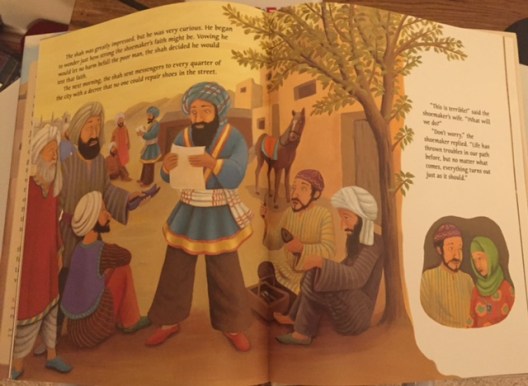
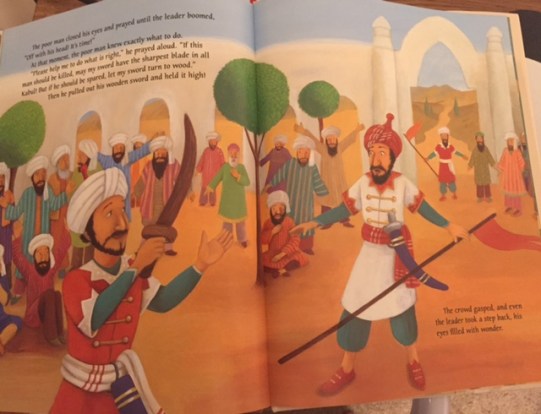
The plot is warm, although the Shah is clearly abusing his power as he meets a poor shoemaker and passes royal decree after royal decree to test the man’s faith that “everything turns out just as it should” and that God will provide.  The Shah decrees no one can repair shoes in the street, followed by banning the selling of water in the streets, and so on, until finally the poor man finds him self in the Shah’s Royal Guard without a sword, ordered to kill someone.  Not wanting to spoil how he handled the prediciment, I’ll suffice to say, in the end the poor man is made the shah’s advisor and presumably all is well. 

sword1

Throughout the tests, we also meet the poor man’s wife, who is supportive and very hospitable as they feed the Shah dressed as a peasant and offer him what little they have.  Her clothing is incredibly similar to what Muslims in Afghanistan wear, and makes me want to research this aspect for accuracy and to satisfy my own curiosity.    

Overall, a sweet interfaith folktale that I hope to share at our next interfaith storytime.
Twenty-Two Cents: Muhammad Yunus and the Village Bank by Paula Yoo illustrated by Jamel Akib

Standard
Twenty-Two Cents: Muhammad Yunus and the Village Bank by Paula Yoo illustrated by Jamel Akib

22CentsCover

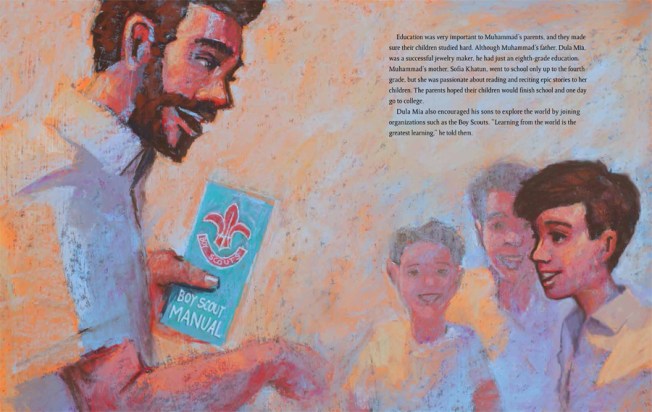
This 40 page biography written on an AR 6.5 level, tells the story of Nobel Prize winner Muhammad Yunus and his microcredit banking initiative.  The book topic is inspiring and for the most part the author does a good job of bringing it down to a middle school level. You can tell the author tries to flesh out Muhammad Yunus by starting the book with him as a boy, and relaying how he was raised and how his parents and boy scouts shaped him.  Despite her efforts however, at times it reads more like a resume, not a children’s picture book.

22_cents_3

Other than his accomplishments, and work history, I didn’t learn anything about him that made him relatable as a person, nor did I learn much about Bangladesh, or Islam.  And yes, I know it is a biography, but it felt like it was a void that needed filling.   I did learn about the program he started, a few of the obstacles that had to be overcome and I particularly liked that those receiving the microloans also had to learn about money, finance, and banking to pass a test before getting approved  And that 94% of those receiving the help have been women.  Grameen Bank is now a global bank, and the help he has given to so many is truly inspiring and something our youth should understand through humanitarian, economic, and compassionate lenses.

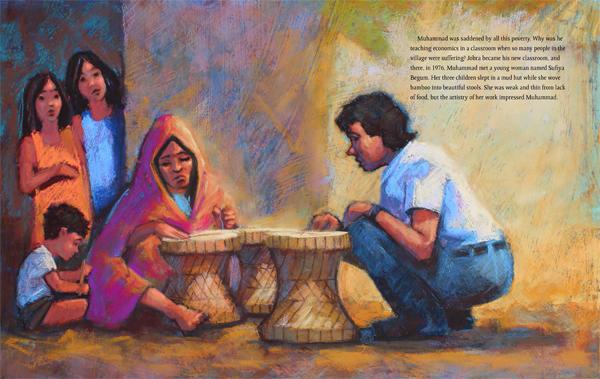
The title comes from the incident that brought Muhammad Yunus’ desire to help to fruition. He saw a woman weaving a beautiful basket, and learned that she could not afford the supplies to weave the basket, to sell in the market and as a result needed a loan.  Banks would not loan the equivilant of 22 cents because it was too small, and money lenders would charge so much interest, that after the basket sold, and the money lender repaid, there was scarce enough funds to purchase enough food for the family, let alone enough to buy new supplies, and thus the cycle was unbreakable.  He wanted to make her and those like her independent, not needing charity or the kindness of others to get her ahead, and thus the seven day course, test, and microcredit system evolved.

22 inside

The illustrations I think are both rich and well done.  The effect of the watercolors flesh out the text heavy pages with detail, but don’t create a distraction from the concepts and accomplishments being presented.  Following the story is a two page afterward telling additional awards and continuing the story of Muhammad Yunus with two real life photographs.


It Must Have Been You! by Zanib Mian illustrated by Fatima Mian

Standard
It Must Have Been You! by Zanib Mian illustrated by Fatima Mian

it must have been you.jpg

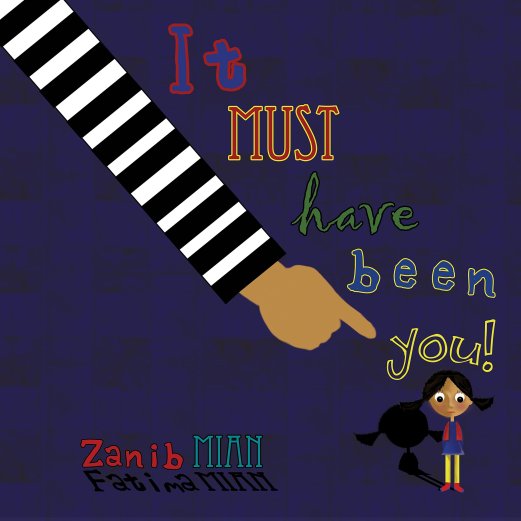
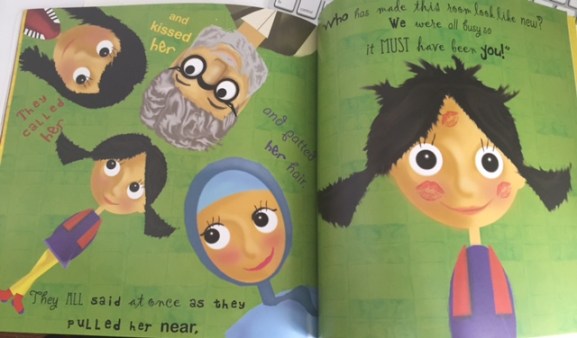
This rhyming 32 page book follows around a small girl, “about the same age as you,” who seems to make a mess every where she goes.  She never lies or even responds to the accusations of her unintentional messes, as she gets caught each time by someone in her family who points their finger and identifies the clues that led them to their answer. Luckily, she uses this pattern to her advantage as she cleans up and makes her family a card resulting in hugs, kisses, and love.

FullSizeRender (34)

Written for younger kids (4-6), the book is bright and colorful and very well done.  Even two and three year olds will enjoy the sing-song rhythm and chunky engaging illustrations.  The pages are thick and the binding solid, especially for a soft back book.  The 10 x 10 square size works well for story time and bedtime alike.  However, because the text is incorporated into the illustrations, if you are reading to a group, you will want to read it a few times before you present.  Looking at it straight on, the word order is much more clear and if you are reading it with emerging readers, I would recommend pointing to the words as you read, so as to help guide your listeners.  The fonts get a little crazy, which is part of the fun, but again may require some assistance to help the younger readers decipher the words.  Older independent readers (up to age 7 perhaps) might like the slight challenge of figuring out what word comes next, so that the story makes sense.

FullSizeRender (33)

The mom wears hijab and that is the only islamic reference or overt implication.  A fun book that thus far with multiple readings has yet to get monotonous and boring, yay!

FullSizeRender (32)

The Silly Chicken by Idries Shah illustrated by Jeff Jackson

Standard

silly-chicken.jpg

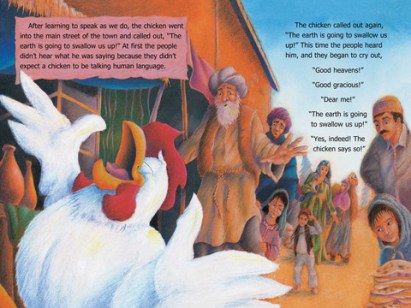
This story reads wonderfully aloud as it is silly, repetitive, and the message is more clear than in some of Idries Shah’s other Sufi inspired teaching books.  Written on an AR 4.0 level with 32 pages.  Some pages are heavily text laden while others just sprinkle a few words across a beautifully illustrated page.  Like his other books, the illustrations are truly spot on.  The lively faces on the characters, and colorful scenes bring the story to life and keep the audience engaged and giggling.

chicken

A man decides to learn how to speak “chicken,” when that doesn’t work, he teaches the chicken to speak our kind of language.  Fluent and conversational, the chicken then tells the villagers that, “The earth is going to swallow us up!”.  Everyone runs in all directions, up the mountain, down the mountain, across the meadow, around the world, but they can never get away from the earth.  When they return, they are upset with the chicken and ask how he knows that the earth is going to swallow them up, to which he replies that he doesn’t.  After they recap all the trouble he has put them through he poignantly laughs at them and asks, ” You think a chicken knows something just because he can talk?” Realizing how foolish they have been the chicken begins telling more outlandish things, just to make the people laugh, and isn’t taken seriously again.

silly chicken1

The message is clear, the characters funny, and the illustrations engaging. I finally found an Idries Shah book that I like! Yay, I guess for me they are hit or miss, and this one was definitely a hit!

chick

The Color of Home by Mary Hoffman illustrated by Karin Littlewood

Standard
The Color of Home by Mary Hoffman illustrated by Karin Littlewood

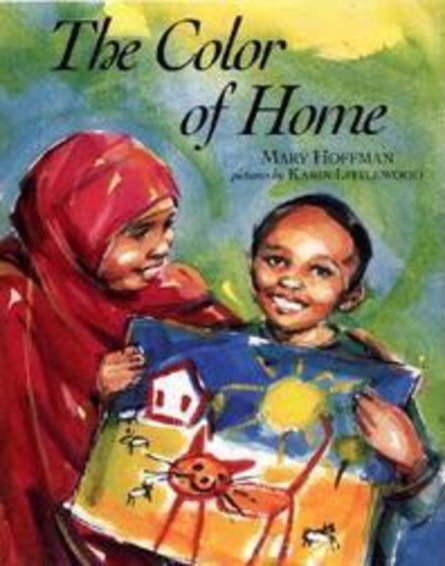
color of home

This powerful book about Hassan’s first day at school is a bit graphic, and incredibly important.  While it is a picture book, it is definitely not meant for small children.  The rich water color illustrations and the impactful text match the AR level 3.6 and would really appeal to thoughtful 2nd through 4th grade students.

A refugee from Somalia, Hassan finds it “tiring remembering even a few English words.”  He misses the color of Somalia, his cat, the warmth of the sun, and the freedom of learning out doors.  He doesn’t miss the violence though.

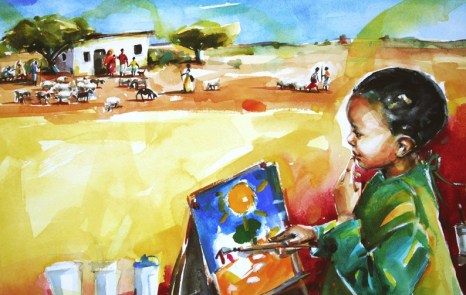
colour3(1)

When it is time to paint, Hassan paints his home and his family, all 9 of them, and his pets, in bright happy hews, much to the delight of his teacher.  But then, Hassan, engulfs his house with the red paint of flames, smudges out his Uncle Ahmed when the black bullets that take him down, and Hassan communicates his sadness to his teacher.

Hassan doesn’t take his picture home, he knows it will upset his mom and little sister, Naima.  The next day, a translator comes to help Hassan.  Fela is Somali and wears a black hijab, like Hassan’s mom, but western clothes, a new concept to the young boy.

color

Through Fela, Hassan opens up to his teacher and explains what it was like when the soldiers came and he had to hide under the bed.  How they had to leave without any of their stuff, including his beloved pet cat Musa.  All they could take was his father’s prayer rug and the Quran, as they set off on foot in the night.  He tells about leaving his grandparents and cousins behind and being scared on the plane.

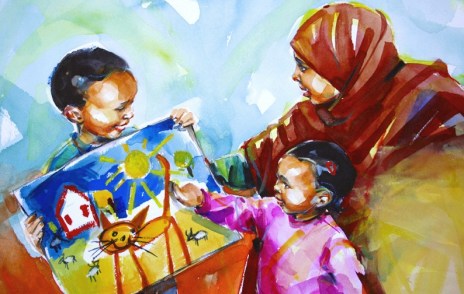
Being able to share his fears, seems to help as he paints a new picture to share with his mom.  This one filled with his animals, and not with fire and bullets.  There is hope for Hassan as he looks forward to adding color to his new life and reminds himself to learn the english word for “home.”

colour2(1)

The book  is great for seeing the experience through Hassan’s eyes, and taking the reader through some of his adult like fears, and childish stresses.  Older kids should appreciate that what he has lived through is horrific, but his understanding as a child is slightly limited.  It should increase empathy, compassion, and kindness.

While the illustrations are rich and detailed they are very realistic.  This adds to the somberness of the book, and keeps this work of fiction a very real reminder of the world and what trials so many go through.

The characters are visibly Muslim, but there is no mention of religious doctrine, and readers may not know what a prayer rug is or a Quran.  They will be able to use context clues to figure out hijab, but there is not a glossary in the back.

Salam Alaikum: A Message of Peace by Harris J illustrated by Ward Jenkins

Standard
Salam Alaikum: A Message of Peace by Harris J illustrated by Ward Jenkins

salam alaikum.jpg

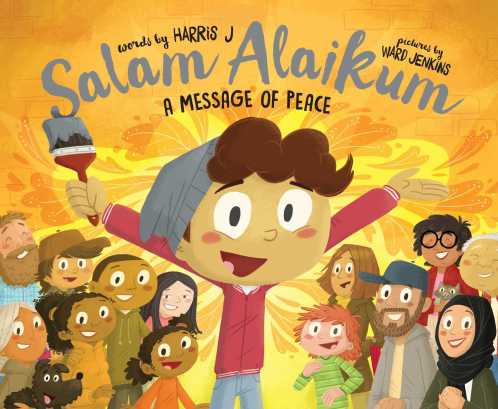
Harris J’s song by the same name gets stuck in my head because it seems like “Salam Alaikum,” is the only words in the song, so when I heard that he had written a book based on the lyrics, I was a little skeptical. But, total credit to the illustrator, the book is adorable, and the lyrics aren’t too bad either.

salam1

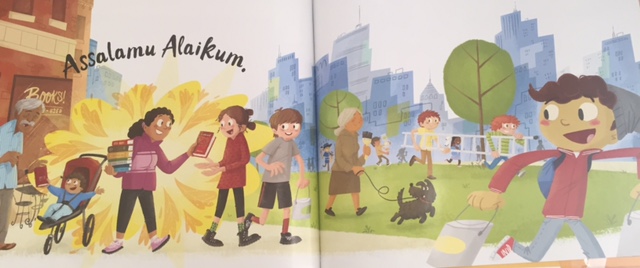
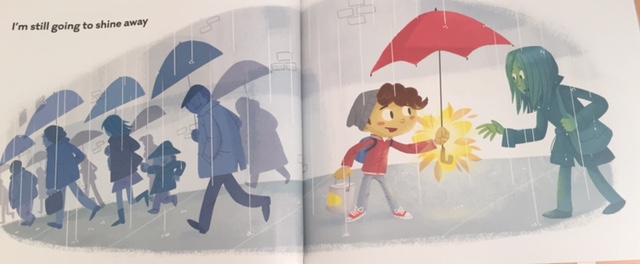
Thirty big pages, that radiate with light and happy faces and a big clear font that celebrates peace, love, and coming together.  The words “Salam Alaikum”  is a Muslim greeting, but there is nothing overtly religious. There is one muhajaba that appears on a few pages, but with the content matter, there is a lot of diversity in the book.  A variety of skin tones, ages, clothing, genders, sizes, all come together to hold hands and work for peace.

salam2

The content isn’t ground breaking, but the number of words on the page are good for 3-6 year olds.  And it does introduce that the world is more fun when we all work together and are kind.  Kids will like the illustrations and return for them undoubtedly.  It is hard to know if the books these days are truly better, or are just done better.  But, while I checked this one out from the library, I think I just might want a copy of my own.

salam3


The Magic Horse by Idries Shah illustrated by Julie Freeman

Standard
The Magic Horse by Idries Shah illustrated by Julie Freeman

the magic horse

I didn’t get it.  I read it to my kids they did’t get it. I know it is written on an AR 5.8, but even with that, we didn’t get it.  I had to google it to see what the deeper meaning of the story was and all I found is that it is a teaching tale of two princes and how one found his heart’s desire in a fish and the other in a horse.  Which, I did get, but didn’t really get more than that.  The details in the story seem to wander and meander around to no point and not in an entertaining way. I never felt a connection to the characters, so their side stories didn’t appeal to me.  It is possible that I would have viewed it more favorably as a short story rather than as a really long picture book, but its hard to say.  I guess I feel like if forced, I could write an essay explaining all the small lessons, and moral guidance, but as a children’s book, I don’t want to dig so deep or spend hours at bed time trying to convince my children that the story made sense.  Ideally the book should have been shorter and more streamlined, or longer and fleshed out.
horse1

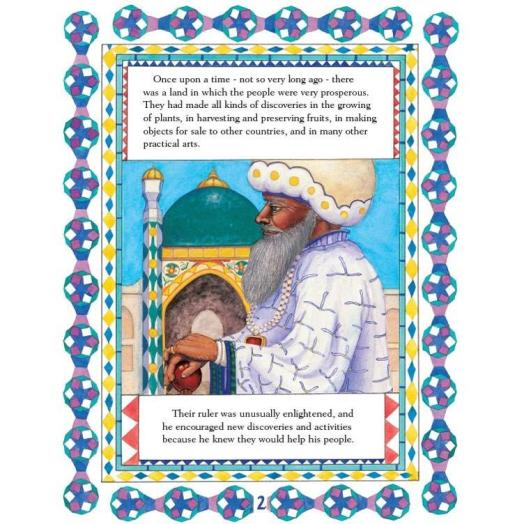
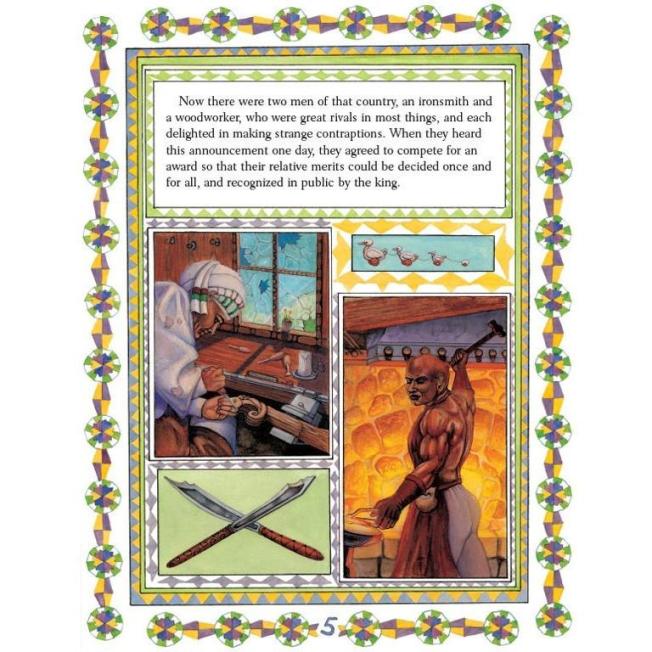
It starts out with an enlightened king encouraging his subjects to make new discoveries to promote quality of life, wealth and knowledge. He has two sons, one is an expert in strange devises and one is a dreamer.  The king puts out a call to have something new made, and an ironsmith makes a fish out of metal than can fly and swim and carry things.  A woodworker makes a magic horse that interprets the desire of the rider and carries the rider toward it.  The king suddenly becomes cruel and finding this a waste of time has the woodworker tied up.

horse

The dreaming Prince Tambal rides the horse on many adventures, which kind of disjoints the story and makes it like a fairy tale about Tambal falling in love and trying to persuade a king to let him marry his daughter, and in turn having to trick the intended suitor instead. Along the way there are poisonous fruits, turning into a beast, and eventually returning home to prove that, “Those who want fish can achieve much through fish, and those who do not know their heart’s desire may first have to hear the story of the wooden horse.” Huh? Exactly.

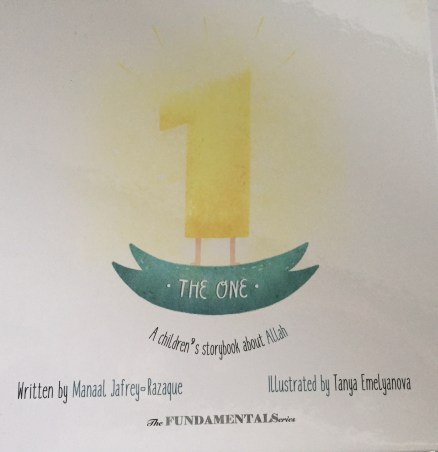
The One: A Children’s Storybook about Allah by Manaal Jafrey-Razaque illustrated by Tanya Emelyanova

Standard
The One: A Children’s Storybook about Allah by Manaal Jafrey-Razaque illustrated by Tanya Emelyanova

one.jpg

This book is beautifully done, with its hard back binding and happy little illustrations.  Everything has a happy face drawn on.  The topic is Allah, and one can predict what the content is, there is nothing surprising in the rhyming pages that stress how Allah created everything and Allah is the one, singular.

the one 2

What I found nice, and in many ways expanded the audience from just being for small toddlers, but to elementary age Muslim children as well, is the reassuring tone in the second half of the book that Allah is always there for you, no matter what.

the one 3

The names of Allah in English are used and highlighted in a different colored text with a list of the Arabic and English meaning in the back.

the one

The book is 32 pages and meanders around in a light lilting manner.  Its simple illustrations and warmth make it fun at both story time and bedtime, and offer plenty of places to organically pause and get your child’s feedback, thoughts, and understanding.

The Boy Without A Name by Idries Shah illustrated by Mona Caron

Standard
The Boy Without A Name by Idries Shah illustrated by Mona Caron

the-boy-without-a-name_orig.jpg

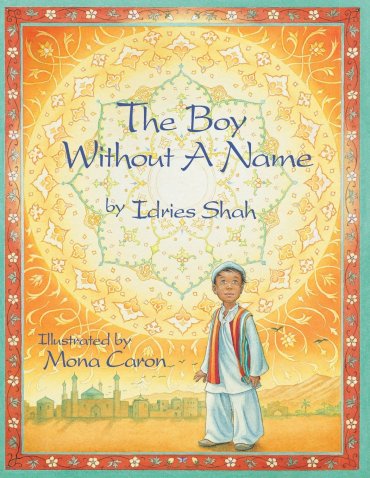
It is hard to know what a child would get out of this 32 page 3.2 AR level, but even if they just get lost in the pictures, and swept away by the idea of a boy searching for his name and a dream, I suppose there is value.  Some, ok most of Idries Shah’s, Sufi teaching stories are beyond my comprehension, but they are lyrical and often silly just the same. He has written over 30 and the libraries have quite a few, and people online seem to love so many of them, so perhaps I’m just not clever enough or philosophical enough to grasp them.  Which is neither here nor there, but maybe don’t buy one until you read one and see what you get out of them.  I keep checking them out and hoping I too will fall in love with one, I’ll keep you posted.

no name1

Before they can name their son an old man comes and tells the parents to not name him and to wait.  The boy grows up searching for a name, hoping someone has one he can have.  At one point he is made aware that he has nothing, even to trade for a name.  He responds that he has an old dream he no longer wants.  He and his friend Anwar then go to the wise man and he receives his name and a new dream.

The synopsis claims that patience and determination is learned, but I couldn’t get over the fact that the parents just didn’t name their child, and I never felt like I learned why he was such an important boy.

boywithoutname2

The pictures are wonderful with the scenic village’s tall minarets and colorful hijab clad women in the market place.  I particularly like the magic spilling out of the boxes in the old man’s house when the boys are finding names and dreams.  There is nothing overtly Islamic in the text, I’m not aware of how strong the Sufi origin is, not being Sufi, or having studied it.  But the illustrations definitely place the book in an Islamic cultural environment and the names reinforce this.


I Will Not Clean My Room by Saharish Arshad illustrated by Elsa Estrada

Standard
I Will Not Clean My Room by Saharish Arshad illustrated by Elsa Estrada

FullSizeRender (22)

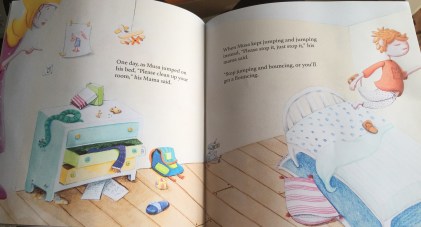
What a great premise for a children’s book, a little boy, Musa,  does not want to clean his room, and imagines all the better things he will get to do in Jannah (heaven) instead. Luckily for his room, his sister comes to help him tidy it up, as well as his mom and dad.  FullSizeRender (25)

The rhyme scheme and the kids’ imaginations at how wonderful Jannah will be, go hand in hand and make the book silly and fun.  The cartoonish illustrations also help sneak in messages of listening to your parents, cleaning your room, being kind to your siblings, helping each other, and ultimately doing things even if they are hard or boring to please Allah swt.  

FullSizeRender (24)

The book is a 28 page, 8×8, paperback.  The price is a little steep, $12, for its structure, in my opinion and is meant for Muslim readers.  The only real issue I had is when the mom threatens to flounce Musa. “Stop jumping and bouncing, or you’ll get a flouncing,”  seems excessive to me, and not consistent with how loving the family is throughout the rest of the book. It was probably included to maintain the rhyme scheme, but I took it to be a threat of violence, which I’m not ok with.

FullSizeRender (26)

The pictures show the mom in hijab, the word Jannah instead of heaven is used, the characters’ names are Islamic and Allah is mentioned throughout.  Musa’s thoughts on the last page are particularly sweet (see picture below).  I plan to read this to a group of kids at story time and will just omit the flouncing line, as it does well in appealing to ages 4 and up.  Three year olds may not understand it, but because of the rhyming, I think they will be equally entertained.

FullSizeRender (23)