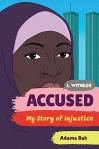

This is the first book in a new middle grades nonfiction series and is Adama Bah telling her own story about being detained as a 16 year old and falsely accused of being a suicide bomber. A story that sounds like a movie plot is painfully real and terrifying and hearing it in her own words is powerful and impactful. The writing is very basic in its linear format and straightforward presentation of the experience through her eyes. It is not sensationalized or overly explanatory about how this situation came to be, how she got out of it, or what the family had to go to to find lawyers and pay for them, for example. It is how she felt, what she understood at the time, and how the experience shaped her. While the writing style is sufficient for middle grades, her story is intense. A big part of her experience is being strip searched, exposed, and seeking asylum to avoid female circumcision. The 128 page book is a great way to show the realities of our world. It took place in the 2000, the recent past, to a New York teenager that enjoyed different colored sneakers, chatting with her friends, and spending time with her family, no different than the readers picking up her story to read.
SYNOPSIS:
Adama was born in Conakry, Guinea in 1988 and moved to America as a child. She attended public school until high school when she was then sent to an Islamic boarding School in Buffalo, New York. Her family was not particularly religious, but Adama become more visibly Muslim returning home after the attacks on September 11, wearing niqab and wondering why she was being treated with such hostility at the airport. As she resumes her education in public school, she slowly makes the choice to take off her niqab, while maintaining her hijab and modest clothing. In 2005 she and her father are taken in to custody early in the morning from their home and detained. During the questioning at 16 years old, Adama learns that she is not a legal US citizen. Her father is separated from her, to be deported, and she is moved to Pennsylvania as the youngest person swept up in a terrorist roundup. She is being accused of being a potential suicide bomber and is detained for six weeks before a plea deal is brokered. She will wear an ankle monitor for three years and have a nightly curfew. During this time she is responsible to care for her family as her father has been returned to Guinea, her mother speaks very little english and she has four younger siblings. Even after the bracelet is removed she finds herself still on no-fly lists and finally after one more time being denied and detained at the airport, she sues the Attorney General, FBI Director, and the Director of the Terrorist Screening Center. When they learn of this they offer to remove her from the no-fly list if she withdraws her case. She is granted asylum and while she had to drop out of school, she dreams of going back. She has since married, her dad has been able to return to America, and she continues to study Islam and believe that things could have been worse.
WHY I LIKE IT:
I love that it is her story, from her eyes and perspective, but I worry that some of the details are misplaced. She details enjoying talking bad about the government with a friend after she is released knowing that they are listening in, but maintains that she is constantly in fear of being returned to jail and that she considers America her home. I’m not saying all of those things can’t be true and co exist, but some additional context would help the choppiness in this example and others. I appreciated that the genital mutilation was clearly attributed to culture and not religion, I think when others tell stories about cultural and religious practices they often conflate the two. I wish there was more information about where this mysterious list came from, what happened to the Bengali girl that was taken, how the Islamic community reacted. The story is powerful and moving, and readers will be drawn in as they see themselves in her. There are also questions at the end that help connect readers to her situation, and the reality that this is the unjust world we live in and can easily be consumed by as she nearly was.
FLAGS:
Detailing a strip search, detailing taking off her clothes, having orifices checked, and using the bathroom in the open. There is talk of female circumcision although it doesn’t define it explicitly.
TOOLS FOR LEADING THE DISCUSSION:
I think in a high school Social Studies class or current events discussion this book would be a great topic to explore and voice to highlight. The book is short and can be read very quickly. It is an important story to know, to learn from, to sympathize with, and be acutely aware of for people of all ages.