Category Archives: High School

Huda F Wants to Know? by Huda Fahmy

Standard
Huda F Wants to Know? by Huda Fahmy

Huda Fahmy books always make me laugh, but this is the first one that made me cry. Centering mental health and her parents divorce, we see Huda grappling with change, loss, anger, and resolve in a raw vulnerable way. While ever hopeful, and at times comical, the book is also incredibly moving and insightful.  Whether as part of the Huda F series or her two graphic novels prior, her autobiographic books always tackle heavy topics in a joyful, hilarious, honest way that appeal to girls and boys from middle school and up.  I know at 263 pages, this book is a YA read, but in my house my kids (daughter and sons) have loved reading her perspective about hijab, arranged marriages, identity, and sibling relationships. The unapologetic Muslim authenticity is unparalleled, and that non Muslims champion her books as well, truly shows the value of good story telling, and gives me hope in an often bleak world. Huda’s books are staples: new books are anxiously awaited, previous books are regularly reread, and Huda F Wants to Know? continues in that tradition.  This book isn’t just fun, it is important- it normalizes mental health, empowers families shaken up by change, and makes us all feel seen and less alone. SubhanAllah.

The book starts with Huda’s plan for her junior year in high school, her friend Nabz and her are determined to buckle down and get scholarships.  When Huda’s parents call a family meeting, she thinks she just might be getting a car, but instead she and her sisters learn, their parents are getting a divorce. The book then rewinds to show a little lead up before Huda’s world shatters, and junior year’s blue print is tossed aside.  We see her going to the masjid for weekly halaqas where Sr Amal discusses topics like societal pressures, family expectations, gender bias in education, and other relevant topics.  At one such gathering, Dr Haifa came to talk about mental health.  We also see her crushing on a boy at school, fighting with her mom and sisters, and the girls going on a road trip to a Muslim convention.

Every storyline, every twist, every page really, has Islam woven in.  It is the way the characters see themselves, see their world, handle stresses, find peace.  Mental health is not separate from the hadith and sunnah, it is blended and approached in a holistic manner.  Divorce is understood Islamically, and the clarity in which it is articulated will, I imagine, be so reassuring for Muslims who have gone through it, and seen others go through it.  Just as my boys years ago read That Can Be Arranged, and became incredibly curious about marriage in Islam, I have no doubt that this book, will also be a powerful conversation starter for so many.  I don’t know if that is part of why Huda write, but it definitely is a result of her books.  I wish I could ask her, I’d also want to know how she decides what to share of her own life, where the line of reality and fiction for her is and how she sets and maintains those boundaries? I also desperately would like to ask her if she plans to write forever, because the world benefits from her books, needs her books, I know I do.  No pressure or anything.

 There are resources for mental health at the back of the book, some even specifically for Muslims. Please preorder this book and/or request it at your local public library as a show of support, it releases in April.

MetalGhost: Kashif and the Echoes from a Past Life by Ali Mohammad Rizwan

Standard
MetalGhost: Kashif and the Echoes from a Past Life by Ali Mohammad Rizwan

img_8377-1

This 350 page YA book (14/15+) does not hit the ground running, but once it finds its stride, it is a lot of fun.  I handed the book to my son, who loves Islamic fiction, and at 30 pages he brought it back saying it was terrible. I upped the ante and bribed him with goalie gear to read to 100 pages, but he couldn’t stop, he finished the book, and returned the favor by encouraging me to move it to the top of my TBR pile.  Like him, I truly wanted to dnf it early on. There are too many names, too many line edit errors (mistakes, repetitive phrases, adverbs), and a little too many forced cheesy (halal) romance scenes. And then the writing gets a little better, the plot strengthens, the Islam is more than just the character’s religion, but something that actively engage with, humor is woven in, twists develop, emotional threads are pulled, and you find yourself absorbed and invested in the story.  The writing at the end unravels as well, it feels  forced, much like the beginning, but perhaps that is the vigilante/superhero genre’s norm to get readers to pick up the next book in the series for answers and clarity. I’m glad the book was nominated for the Muslim Book Awards, I may not have heard about it otherwise, and I love that my son, who is currently re-reading it, found a book that is relevant, appealing, and has an Islamic heart.  Think a mix of Batman and Green Arrow, with a splash of Ironman all wrapped up in a thobe, and being advised by his mother and the local imam to go pray.

SYNOPSIS:

Life is going pretty well for Kashif Razvi, he is about to marry his longtime crush, with both families’ blessings and excitement, he is busy at work but enjoys it, and he hangs out in his free time with his tech friend Samir, developing robotic and cutting edge devices, but then everything falls apart.  When his father dies because of a mysterious power outage in the ICU, Kashif can’t let it go, and starts looking for answers.  He comes up empty following the legal, traditional routes and decides to take matters into his own hands.  He throws on a suit designed by Samir and takes to the streets as MetalGhost, becoming the city’s new hope.  He follows leads to avenge his loss, uncovers corrupt police, cracks down on human trafficking, and seeks to set right other ails of the city.  No matter the crime, a few names always seem to be in the mix, and as the city starts to fall apart, copycat vigilantes start popping up, and MetalGhost finds it won’t be as easy as he thought to hang up his thobe and leave his crime fighting life behind.

WHY I LIKE IT:

Everyone wants a Muslim super hero, but usually they come across as overly juvenile, or their faith and culture performative. This book finds a nice balance of action, contemporary relevance and Islam. The structure feels formulaic, but it works as it seems to track with superhero movies.  You get the emotional tragedy, then the plot, then the resolution. The middle of the story flows and draws in seerah, sahaba inspiration, humor, and action.  The beginning and the end, though are just really stilted.  I’m not going to spoil anything, but the end was not as strong as it should have been, the reveals and twists were not articulated well and they should have been, they were so shocking.  The numerous names and characters at the beginning really need to be edited and simplified, they linger in the middle, but honestly the reader stops caring and just reads for the plot, hoping that it will get sorted.

FLAGS:

I love that the relationship beats are halal, there are a few tinges that might lean into the line, but are gray at most.  There is killing, death, torture, human trafficking, crime, lying, vigilantism.  For teens it is fine.

TOOLS FOR LEADING THE DISCUSSION:

My son and I have chatted about the book, but I think to take to a larger group, I really would want it to have another round of edits.  The idea of the story is wonderful, and to read by yourself I think it excels at what it is.  But to have teens, sitting around picking it apart to discuss and reflect on, will need the writing to be cleaner and stronger.

The Thread that Connects Us by Ayaan Mohamud

Standard
The Thread that Connects Us by Ayaan Mohamud


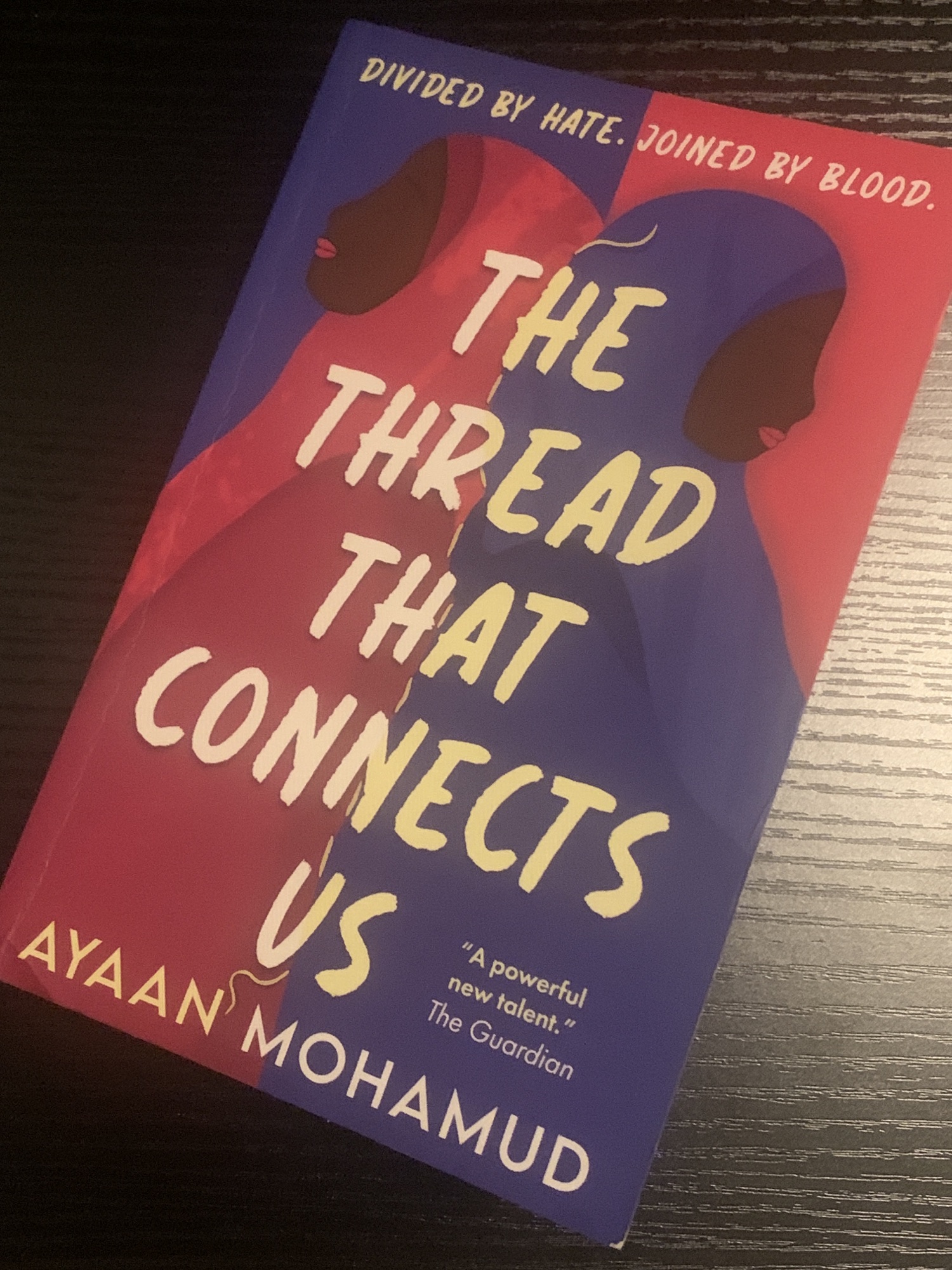
At just over 400 pages this book expertly blends the stresses of school, bullies, and friends in the UK with the twists and secrets of broken families, shattered hearts, and a past that needs to be reckoned with.  Told in dual perspectives from girls thrown together by the actions of their parents, Safiya and Halima maintain distinct voices that are rich with Somali culture, Islam, vulnerability, and ultimately love and hope.  The book is YA, but the premise is a bit mature and is better suited to older teens in my opinion, I think a high school book club would be wise to consider this book, as once you start reading, it is difficult to put the book down. 

SYNOPSIS:

Safiya is mature beyond her years.  Since her father abandoned her and her mother five years prior, she has managed the bills, the upkeep of the home, and for the most part her grades. Hooyo checked out and is rarely more than a silent being curled up unable to care for herself, much less her daughter.  With the the help from the community, particularly her best friends and neighbors Muna and Yusuf, Safiya has a found family that helps her weather the tough times.  When her dad moves back to London with his new family from Somalia, Safiya is forced to deal with not only all the painful memories of her past, but also the very real presence of her family living in her neighborhood, showing up to Eid prayers, and taking over the safe haven that school has often served as when home life has been so cold and lonely.

Halima’s father died when she was young, and life with her Hooyo in Mogadishu was good until her mother remarried, Safiya’s dad.  Her two younger half brothers that came further added to the rift between her and her mother, and now that they are moving to England with the husband, despite her protests, has her plotting a way to return to her home.  The language, the culture, the weather, are all added stresses to finding her way, and are compounded when she gets paired up to have Safiya show her around and help translate for her in school.  

The two girls hate each other, at least they have that in common, but their inability to avoid each other forces them to interact more than either wish to do.  As questions, and secrets are voiced, the two girls realize that they might have to work together to get what they want, and figure out their past.

WHY I LIKE IT:
I really enjoyed the owning of the characters’ language and culture and faith and how easy it was to be invested in their world.  Nothing pulls you out of the story, it is rich and lush and the reader can figure out why even though there is a crush, nothing is going to happen, and why they are wearing hijabs, and waking up to pray fajr, the balance is both inviting and educating, without the reader even realize it is happening, because hello, we are to busy trying to figure out what these two girls’ parents have done. 

The story has layers, and the emotional attachment I feel to both these girls, made me glad the story was over, they deserve some peace, but also desperate to know that they are going to be ok in the future too.  I can’t say too much without the risk of spoiling, but the writing is strong, the plot solid, the details intentional and relatable, and the characters very real.

FLAGS:

Lying, bullying, fighting, assault, crush, drug use, arrest, accusation, gossip, abandonment, relationships, edibles, affairs.

TOOLS FOR LEADING THE DISCUSSION:
This would be such a great upper high school read, the way the story unfolds will keep readers hooked from the first page and motivate those that start, to finish.  Students will see themselves in the characters, and be sleuths themselves trying to uncover what secrets are true and how do the pieces of the puzzle fit together.


Fledgling: The Keepers Records of Revelation by S.K. Ali

Standard
Fledgling: The Keepers Records of Revelation by S.K. Ali

fledgling


This 544 page science fiction dystopian fantasy is in my humble opinion S.K. Ali’s best work, and that is saying something.  A lot actually, especially considering I am a Muslim book reviewer and there is no Islam featured in the book. As my author friend Shifa Safadi articulately put it, “it is Muslim coded,” a much more succinct term to describe my rambling thoughts of how Islam seems to be just below the surface, never breaking through, but making the book seem OWN voice and authentic. The book is for ages 14 and up and stays fairly clean, allowing for complete immersion in to the story, the world, the future, and the characters’ lives, without any fear that something drastically detailed and haram, would suddenly appear and pull me out of the flow of the story.  There is a bride market where women can be bought and mention of lovers being taken, but it isn’t normalized, it is for a purpose, and the acts are not detailed.  From start to finish this book is a gift to readers.  The writing quality is superb. The book is told from nine (?) points of view,  and I never once felt the need to flip back to see who was speaking, as each voice is clear and unique. The twists, the heartache, the triumph is all palpable and griping.  The mix of genres works because the characters have multitudes and incredible storytelling made the lengthy book, not nearly long enough. I can’t wait for the second part of the duology, from the Underground to Upper Earth, the world was not one I left willingly, and I look forward to returning for the conclusion.
SYNOPSIS:

I really am not sure how to summarize the book without giving much away, I’m actually surprised myself that I’m writing a full review for a book by a Muslim author with no Islam present, so here we are.  As with all S.K. Ali books, this book starts with a possible “romantic” relationship, in this case though, it is an arranged couple meeting, and it isn’t going well.  But where comedy and faith might normally then enter the story, this book, veers from her norm, drastically.  Set in a dystopian future where scalplinks and mind control allow the “enlightened” to live a vastly different life than those on Lower Earth who’s resources have been plundered, the union is to be between Raisa, of Upper Earth, and Lein the crown prince of Lower Earth as an attempt at achieving peace.  Politics, greed, loyalties, love, all add in to the mix of a rebellion and the hope that comes from the Fledgling.

WHY I LIKE IT:

The book starts with a character list which is an incredible tool for readers as the first half of the book is forced to simultaneously balances character development, world building, and plot progression with a lot of moving parts. The style of memory records, announcements, current events, flashbacks, and changing povs keep the book’s pacing moving, but it really took about until the midpoint for me to be unable to put the book down. What at times early on could be perceived as cumbersome, became truly what makes the book stand out.  To see each character through their own eyes, through their own lived experiences, and to see their thoughts and feelings grow and change, really pulls you in and brings the humanity to life in a book that could have become more plot than character. It also emotionally ties you to the characters and the twists and revelations and loss, hurt a little more than I would have expected as days later I am unable to stop my head from returning to parts of the story that still have a hold on me.

FLAGS:

Death, torture, abuse, killing, murder, hunting, manipulation, lying, a love scene between a coded married couple, oppression, colonization, bride markets, misogyny, cheating, it is YA dystopian, fantasy, sci fi, romance, adventure, so there is some grit at times, but not for sensational vulgarity, it is always for a point and not taken lightly.

TOOLS FOR LEADING THE DISCUSSION:

This book would be incredible to read in a high school class: Islamic school, home school, public school, private school, you name it.  There is so much to discuss about colonization, oppression, rebellions, politics, and yet none of it comes at the expense of good story telling.  I would love to hear students discuss their favorite characters, opine on their motivations, and argue right vs wrong with citings from the text.  No two people would feel the same, I would almost guarantee it.

My Big Fat Desi Wedding by Prerna Pickett, Aamna Qureshi, Syed M. Masood, Tashie Bhuiyan, Noreen Mughees, Payal Doshi, Sarah Mughal Rana, Anahita Karthik

Standard
My Big Fat Desi Wedding by Prerna Pickett, Aamna Qureshi, Syed M. Masood, Tashie Bhuiyan, Noreen Mughees, Payal Doshi, Sarah Mughal Rana, Anahita Karthik

EDIT: I have been made aware that some/many of the included authors in this anthology have chosen to stay silent or “both side” the ongoing genocide in Palestine. Please be aware and be intentional and informed with your support

This 288 page YA short story anthology features eight stories of Desi weddings threaded together by an auntie with a bob haircut and a mole on her lip that appears and disappears into stories with magical realism, Tamil Brahman vampires, competing food dynasties, high school debate rivals, gorgeous clothes, delicious food, and sparks of romance.  Usually collections are hit or miss with writing quality and interest, but I found this collection enjoyable from start to finish.  My only real critique is that of the YA label and as a result some stories read more juvenile and at least one a bit more mature.  As a whole, the book, particularly for the genre, is fairly clean.  It is YA, it is romance, there are a lot of Muslim characters, with five of the authors being Muslim, but I would not classify any of the relationships or stories as halal.  That being said, I think mature teens 16 and up won’t find anything too alarming in the pages. There is music and dancing, close male female friends, secret relationships, a few kisses, some dances and hand holds, and a few that mention sex, condoms, and LGBTQ+ possibilities in passing, but most focus on weddings, culture, parental relationships, strong women, caste ideology, and hinting at happy every afters.  Many of the stories are simply set during a wedding or wedding prep, others are the bride or groom themselves, I don’t have a favorite or even a least favorite, as each has its own flavor, writing style, and focus.

SYNOPSIS:

Framed from an Auntie embarking on the wedding season, the short stories begin and follow one after another until the Auntie returns to conclude the book.

The Disaster Wedding by Prerna Pickett:  In a family where the words the females speak can come to fruition, an erroneous slip, claiming that her sister’s wedding will be a disaster brings on the challenges for the enemies to lovers side characters trying to not upset the marital couples multicultural Indian/American dream wedding.

A Cynic at a Shaadi by Aamna Qureshi follows a young Muslim girl nursing her broken heart from a recent breakup with her secret boyfriend.  Set during her cousins wedding, an upbeat optimistic boy makes her smile and gives her heart hope.

Sehra by Syed Masood involves a Muslim marrying a non Muslim girl that has the family refusing to attend.  The groom-to-be’s brother is torn and wants to attend, but he never goes against his parents.  His best friend who has grown up with the family and is facing her own community othering because of her “Mickey Mouse” hijab style, is planning to go, and together the two friends help wrap the groom’s turban.

Fates Favorites by Tashie Bhuiyan features magical realism with the words of soul mates appearing on skin.  The words appear and disappear sometimes unseen and possibly even as a result of one’s subconscious, thus the couples don’t always find one another, but when they do, the relationships can be magical.

The Wedding Biryani by Noreen Mughees is possibly the most religious of the short stories with high school debate rivals finding themselves cooking at the masjid for a couple that doesn’t have a family to celebrate the marriage.  Themes of losing a parent to death and simply leaving are present, as well as some internal reflection of boundaries, Allah swt, and body image.  The conclusion is the teens meeting up to dance.

A Confluence of Fates felt like the longest short story, and while many Zoroastrians it notes did come to India, the story focuses on Iranian Zoroastrian culture.  It is almost a story within a story as a couple gets a second chance at their relationship with the backdrop of a marriage play during the wedding unfolding in the background.

A Wedding Recipe for Disaster by Sarah Mughal Rana has competing family businesses: one Punjabi and the other of Pashtun culture, coming to a head when the offspring of the rival companies decide at the girl’s wedding to someone else, that they should be together.  With vibes of a Romeo and Juliet style family feud, the happy ending has readers craving achar and contemplating racism within the community.

And finally, A Very Bloody Kalyanam By Anahita Karthik goes gothic with a Tamil Brahmin vampire wedding occurring when offspring from two enemy cults imprint on each other.  This story is more mature with talk of sex, but has an emotional forgiving between the bride and her parents that makes the vampires lovable.

FLAGS:

It focuses on romance, and none of the stories are “halal.”  Music, relationships, boy girl friendships, Talk of sex, hints at LGBTQ+ identities, mention of condoms, vampires, magic, magical realism.

TOOLS FOR LEADING THE DISCUSSION:

Probably not a book to seek out for an Islamic school shelf, high school can probably handle it and understand it is not halal.

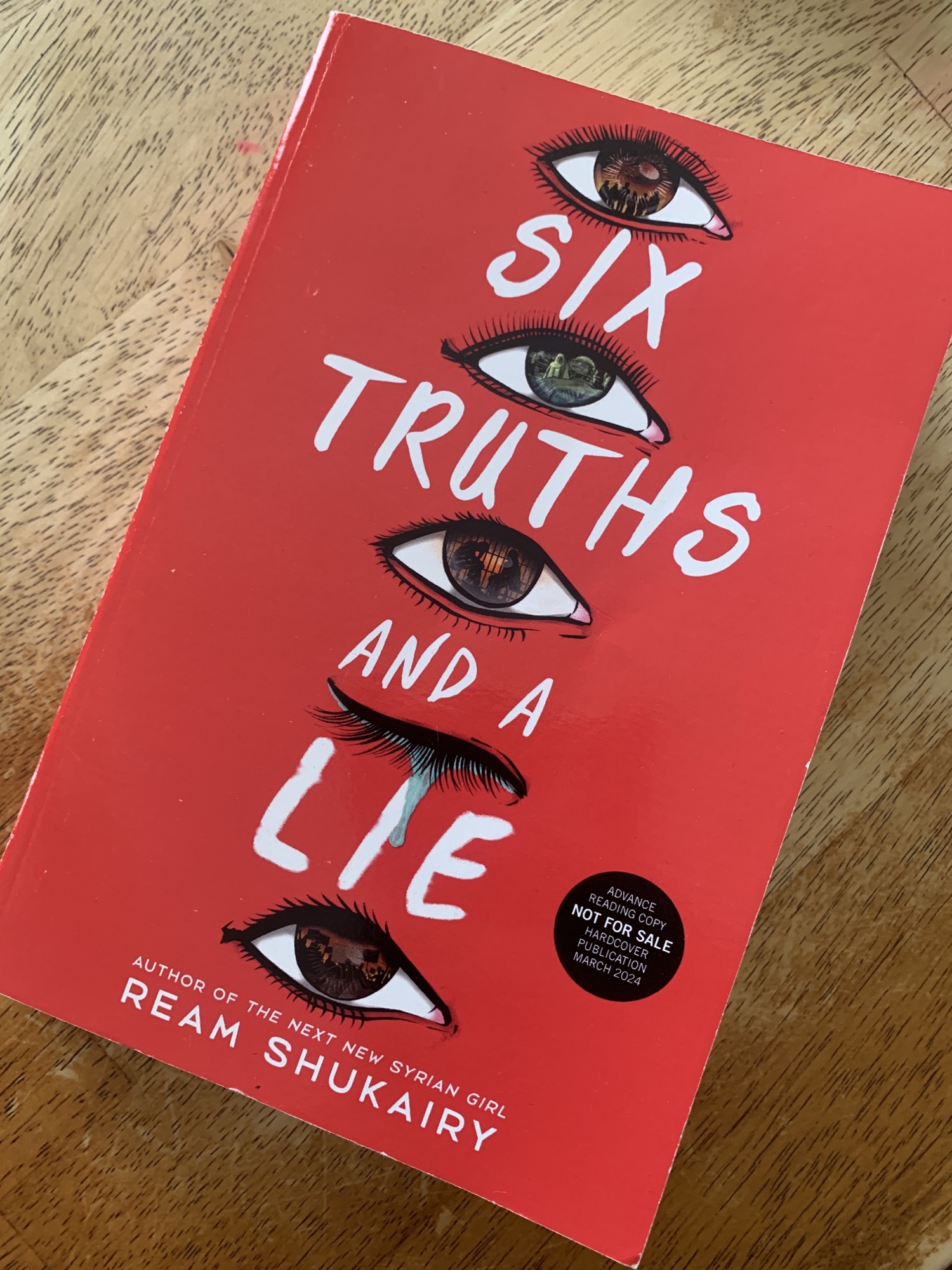
Six Truths and a Lie by Ream Shukairy

Standard
Six Truths and a Lie by Ream Shukairy

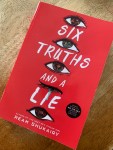
Woah baby, that was a wildly fantastic ride of a read.  The very first page grabs you and makes you sit up and pay attention.  I have never been so happy to sit in a waiting room so that I could read in peace.  This 387 page book is mature YA, I was gifted the knowledge prior to reading that there is a line that is toed, possibly stepped on, but not carelessly crossed, so I will gift that knowledge on to you, so that you might enjoy the story without that anxiety. Told from numerous perspectives, a group of Muslim teens find themselves arrested for an act of terror.  Strangers from different schools, different backgrounds, and different dreams for their future, are fiction, but their stories, their secrets, the broken system that they find themselves in, all feels very real.  The plausibility and commentary from an OWN Muslim author is incredible, I do wish their was more spiritual centering, Islamic framing, or even a more Muslim conscience present. Some of the characters do discuss hijab and one does find solace in prayer, but none of them really pour their heart out to Allah swt in the isolation of their cells, and in the predicament they are placed in, and it seems like they would.  Ultimately though the writing is remarkable, it has been a long time since I was truly tempted to skip ahead and read the last few pages because my heart was racing.  There is just one storyline thread that is so overly emphasized that comes close to a haram line, that I wish was a little down played so that I, as an Islamic school librarian, could encourage younger teens to pick up the book and dive in.

SYNOPSIS:
It is the fourth of July, and the MSA kids from the local different high schools are gathering at the beach for bonfires, fireworks, and socializing.  Everyone present will witness a crime, six teens though will be accused of committing it.  Qays, the Palestinian golden soccer boy who can charm everyone and anyone.  Nasreen, the outcast from a private Catholic school there to meet someone.  Samia the hijab wearing social media star. Muzhda the Afghan refugee with undocumented parents.  Zamzam the girl with a singular dream to be a doctor, and Abdullahi, the quiet EMT in training.  Six strangers whose histories and alibies link them to the outside world, but leave them skeptical of one another as they face charges in a world not concerned with the truth.

WHY I LIKE IT:

I love that the characters are Muslim and feel so real and developed. The characters are not tropes or their families stereotypical.  They know what Islamophobia faces them from others, they know what internalized issues they are dealing with, and they are not having a religious identity crises amidst everything else they are experiencing.  The writing allows each voice to be unique and clear, which is quite impressive as there are a lot of perspectives that move the plot along.  It is really hard to write a review that doesn’t spoil the book, so yes I’m being vague, and you are welcome.

FLAGS:

There are a lot of profanities not just when the stakes are high, but normalized as well throughout.  There are close relationships between boys and girls.  They take about dating.  There is weed, and the legalities of using, being in possession, and being high.  There is lying, death, incarceration, Islamophobia, some physical abuse mentioned.  There is a story line of a girl that doesn’t know if she is attracted to girls, she doesn’t act on it, but it is something that has tangled up her alibi and she choses not to explore it, but it keeps coming back up.

TOOLS FOR LEADING THE DISCUSSION:

This would be an awesome mature YA book club, just like some of the characters are being held in juvie and some being tried as adults, I think for Muslim readers a little older will benefit and be able to process, discuss, and see themselves in the book.  The book mentions that it could happen to anyone, and for a Muslim audience, to recognize and discuss that concept would be beneficial and engaging.

Hope Ablaze by Sarah Mughal Rana

Standard
Hope Ablaze by Sarah Mughal Rana

This young adult book is an intense raw unflinching read, containing  incarceration, assault, politics, Islamophobia, immigrant pressure, and loss throughout the 384 pages that mix poetry and traditional writing.  At times the book is incredibly hard to put down as the commentary on two party politics and Muslims in America is articulated in a way that transcends the fictional constrains and affirms reality.  But unfortunately, it took me a long time to complete the book, because when I did put it down, I didn’t feel that relentless urge to pick it up and see what happens next.  I had been alerted to the fact that there were elements of magical realism, but even with that knowledge, I still felt it misplaced, and truthfully, unnecessary.  The pacing was inconsistent, and many points unnecessarily forced.  It often felt the author was simply trying too hard to tell the story and make sure the reader got all the messages intended.  As a result many characters are flat, many plot holes exist, and the reader is left wishing things were done just a little bit different to make the book what it could have been, not what it is.  I know it is a debut, so I’m not going to be overly detailed in my harshness, I am fairly positive I will read anything this author writes down the road, I took pictures and shared passages that I loved on my socials.  The book is good, it just really could have been great.

SYNOPSIS:

Nida is a poet, her uncle is a poet, and her uncle is in prison.  When Nida is frisked, her hijab removed by a political candidate’s team as she makes salat in a public park, Nida is forced to find her words, her voice, and her place in an unkind Islamophobic world.  High school friendships, immigrant Muslim community pressures and idiosyncrasies persist for Nida as she navigates media manipulation, injustice, slander, and political talking points.  Life was already complicated with her father’s departure, her maternal uncle’s wrongful incarceration, and the goats that her mother brings home to sacrifice, but with the support of the Poet’s Block, her Muslim community, family, and the thread tied to her family through generations, she will find she isn’t alone, and she has support, she just has to take a stand.

WHY I LIKE IT:

I love how much mirrors contemporary reality, the MIST competition, the politics, the media, the dirtiness of it all. I also like that it has a fair amount of humor, the Islamic accuracy, friends getting called out for boys and girls texting each other.  Overall though, it just felt so forced. I think some subtly and nuance and undercurrents would have given the reader the ability to connect the dots for themselves, so the book would have lingered and taken up space long after the last page was read.  It is hard to write a book about how great a writer is, how powerful poems are, so at times it really felt spoon fed that this is powerful, here read it, see it was powerful.  Additionally, I think when the author did try for subtlety, it just came across as lacking.  I still don’t fully understand any of the side characters, their relationships, or their purpose.  From the betrayal of a school friend, to the new friend from MIST, to the little brother, to the friend and his uncle who is imprisoned, there ultimately lacked a lot of emotional heart for minor characters, who remained stagnant, while passionately emphasizing issues at their expense.

The OWN voice Islamic rep is so spot on even if the evil eye passages seemed amplified and repetitive. Islam is centered, it is unapologetic, it is the characters identity, comfort, and soul.   Only one point really stood out as erroneous, but I read a digital ARC so it could have been fixed or it could have been a spacing issue since it was in a poem, but it has sajood in janazah, and I’m really hoping the final book will not have it wrong, as there is no sajood in janazah.

FLAGS:

Assault, frisking, incarceration, death, profanity (not a lot, damn, hell, shit), Islamophobia, racism, systemic abuse, lying, talk of terrorism, stereotypes, gaslighting.

TOOLS FOR LEADING THE DISCUSSION:
I’m on the fence about using this book for a book club read.  I love the Pakistani culture, the Islam, the contemporary relevance, and the political commentary.  I think it would have actually more success in a guided or required reading situation with teens than it would as a pleasure read.  Undoubtedly I will order a copy to put on my library shelf, but I might test it out a bit on a few readers to see how their thoughts before I present it as a book club selection or not.

Messenger: The Legend of Muhammad Ali by Marc Bernardin illustrated by Ron Salas

Standard
Messenger: The Legend of Muhammad Ali by Marc Bernardin illustrated by Ron Salas

img_9626

I’m always curious how books about Muhammad Ali will present his “Islam” and this 240 page graphic novel was no exception.  I was a little hesitant with the title, and with the foreword establishing that this book is akin to the heroic poems of Odysseus and Gilgamesh, and that “inspired by truth, and truth itself, aren’t the same thing.”  I did appreciate that it says if you are going to take a test on Muhammad Ali and this is your only source, you will fail.  It seems to recognize that Ali means a lot of very different things, to different people and this book at times is true and at times just feels true.  Broken into 12 chapters, 12 rounds, the author offers sources in the back, but leaves wiggle room for creative liberty.  I think if you are familiar with Ali’s life the book doesn’t provide anything shocking and you will enjoy seeing it play out in graphic novel form. If you aren’t familiar with him, the book is a little too choppy to paint a comprehensive biography and you will be confused and need outside clarification at times. I looked into the book before diving in, and many reviews say that the story makes his life accessible to middle grade and middle schoolers, the publisher says 10th-12th grade, and I think with the panel of a prostitute trying to talk to him, alcohol being offered to him, the recreation of him being positioned as a saint being martyred for a magazine cover shoot, comments about being with a lot of women, and some of the politics, the book is best suited for high schoolers.  

SYNOPSIS:

Framed around the lighting of the Olympic torch in 1996 the book then goes back and fills in the gaps on some of the big events of Muhammad Ali’s life:

Round One: Schwinn. 1954. Having his bike stolen and being introduced to boxing.

Round Two: Olympian. 1960. Winning Olympic gold.

Round Three: Church. 1961. Meeting Malcolm X.

Round Four: Sonny Liston. 1964. The fight.

Round Five: Media. 1967. Interview with Howard Cosell.

Round Six: Martyr. 1968. Esquire cover shoot.

Round Seven: Defendant. 1971. Draft evasion charges and fight with Joe Frazier.

Round Eight: Candle. 1974. Meeting a child with leukemia.

Round Nine: Rumble. 1974. Rumble in the Jungle.

Round Ten: Patient. 1980. Early signs.

Round Eleven: Shepherd. 1990. Iraq hostage negotiations with Saddam Hussein.

Round Twelve: Survivor. 1996. Lighting the Olympic torch.

WHY I LIKE IT:

It does articulate that he parted ways with Nation of Islam in chapter 11, Elijah Muhammad and Nation of Islam is pretty prominent in the book up until then, and then in Iraq it does show him praying salat, mentioning the blessings of Allah swt in freeing the hostages, and noting he is going as the most recognizable Muslim American.  I always enjoy reading about Ali and Cosell’s relationship, so I particularly enjoyed those scenes and like the premise of the book established, who knows if they are true, but they feel true and in many ways make Ali seem almost fictious with his equal parts arrogance, humility, humor, and insight.  I had to do a bit of outside reading about the Esquire cover shoot, and the Iraq hostage situation, the book did not seem to make it clear, and got me to thinking perhaps some of the other chapters only seemed clear because I had read about those incidents before.  

Normally I like books to be sourced and a book that is biographical to be accurate, but I almost wanted this book to just be extravagant.  To have fun with the persona of Ali and make him into something of legend that the foreword seemed to hint at.  What I thought was going to make him even more so “the greatest” seemed to just provide a safety net of protection to imagine what was going on in Ali’s head during the 12 rounds highlighted.

FLAGS:

There are some offers of alcohol which he refuses, some pointed political positions, a prostitute in a hallway invites him for free, he refuses. He recreates a martyr scene even once he established he was Muslim and wasn’t ok with it, but a phone call to Elijah Muhammad’s son, made it ok because it was for money, there is a lot to unpack there for kids.  He makes a comment about being with a lot of women at one point, not in your face, but in a graphic novel, to dedicate a panel to it, makes it stand out.  Racism, hate, bigotry, prejudice.

TOOLS FOR LEADING THE DISCUSSION:

I am a bit on the fence with this book.  I think it would work for a high school book club, but with a lot of context.  If you are discussing Ali, this would be a suitable supplement in a high school classroom.  If you are an English teacher talking about Homer and heroic poetry, I think this would be a great contemporary example. I don’t know that I would stop mature middle schoolers from reading it, but I don’t know that I would be suggesting it either.

If the book seems like a good fit for you, you can order it here.

Huda F Cares? by Huda Fahmy

Standard
Huda F Cares? by Huda Fahmy

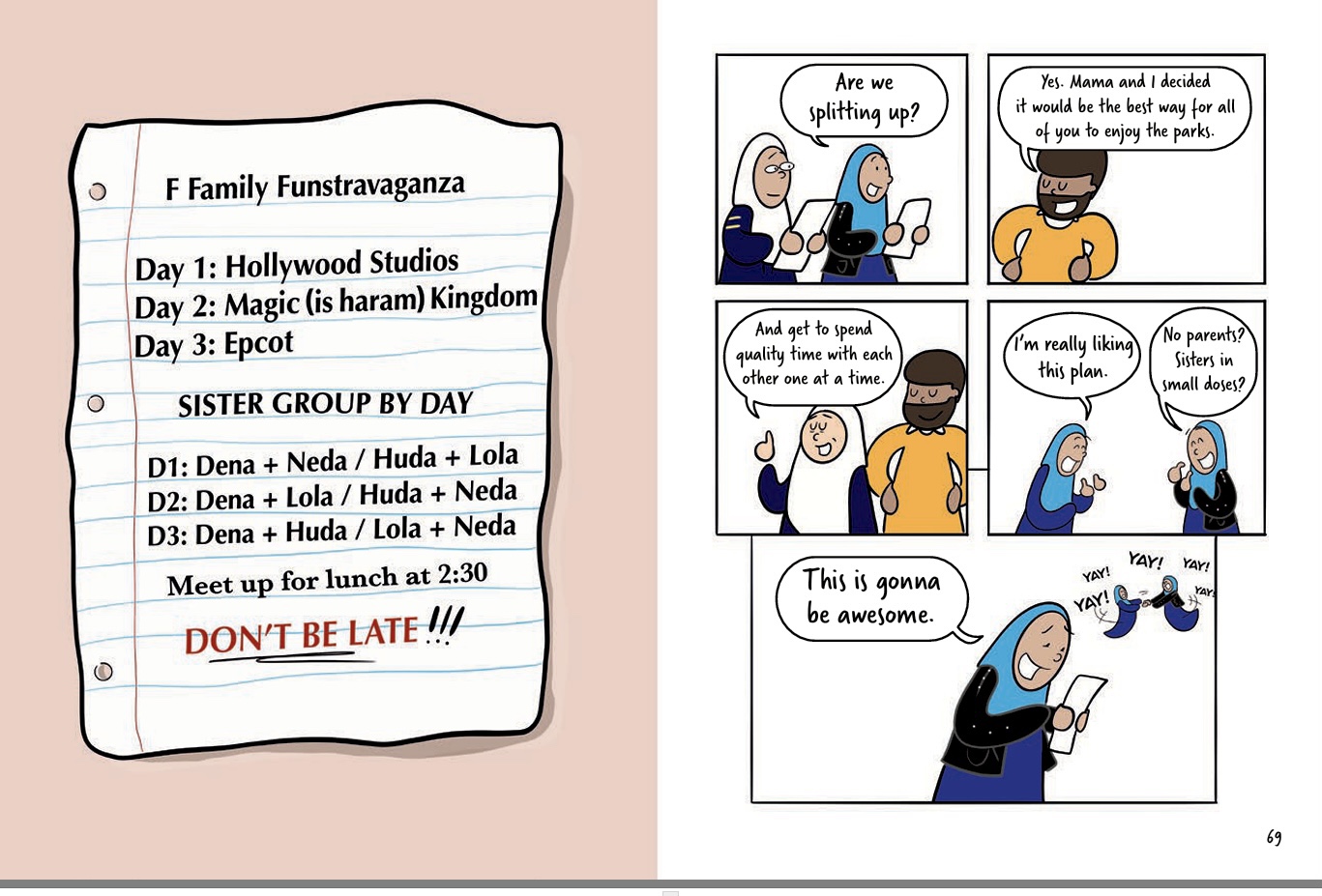
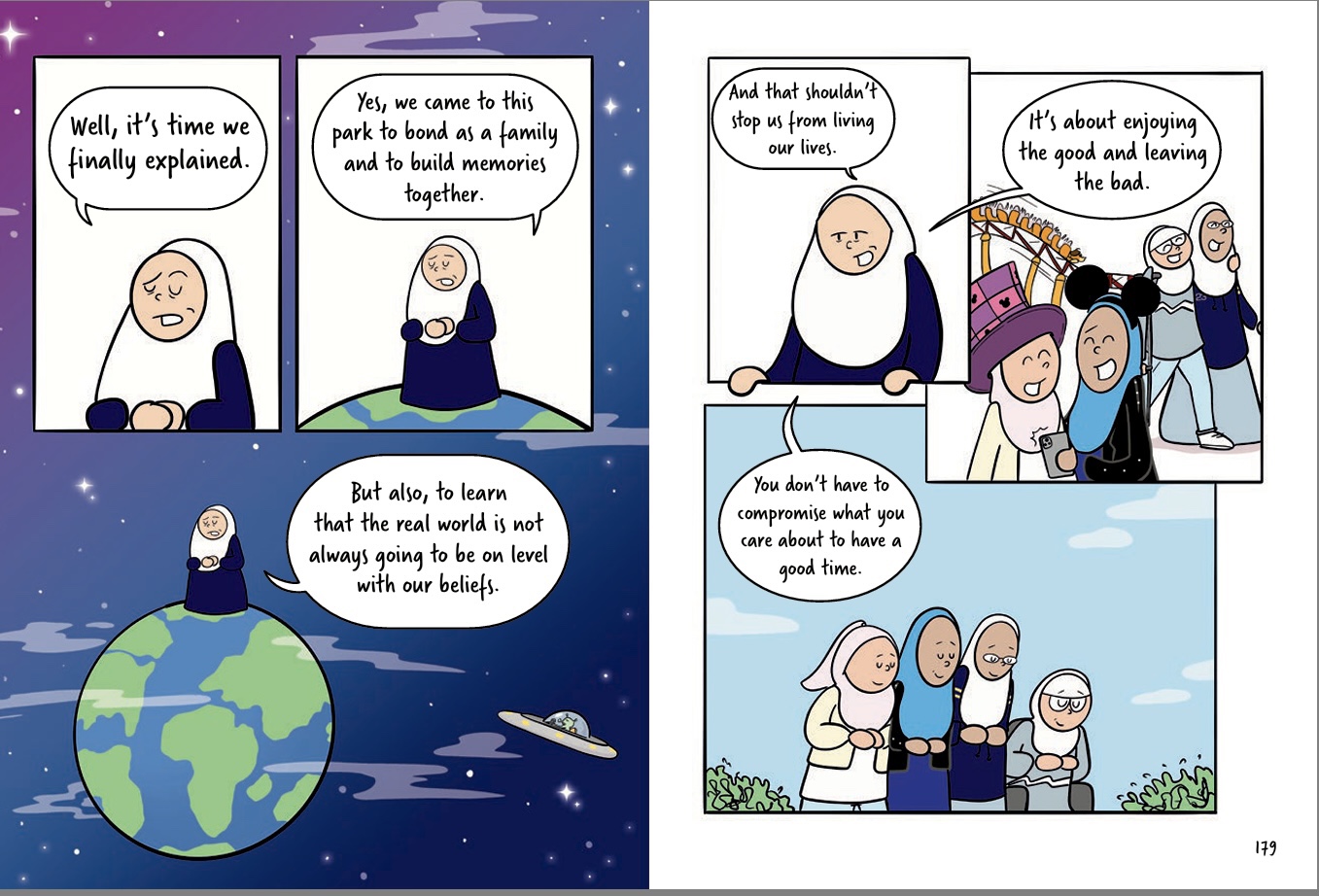
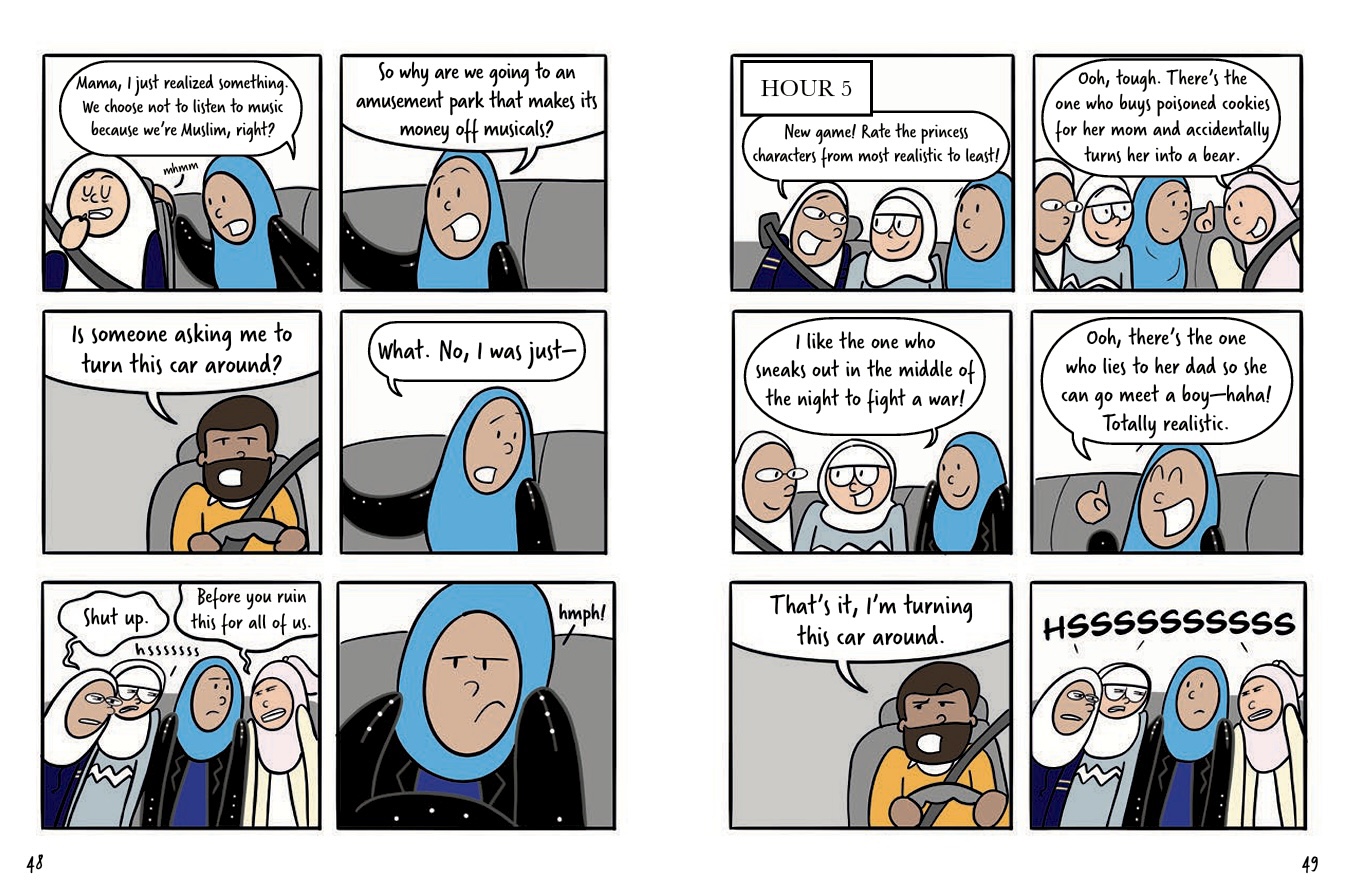
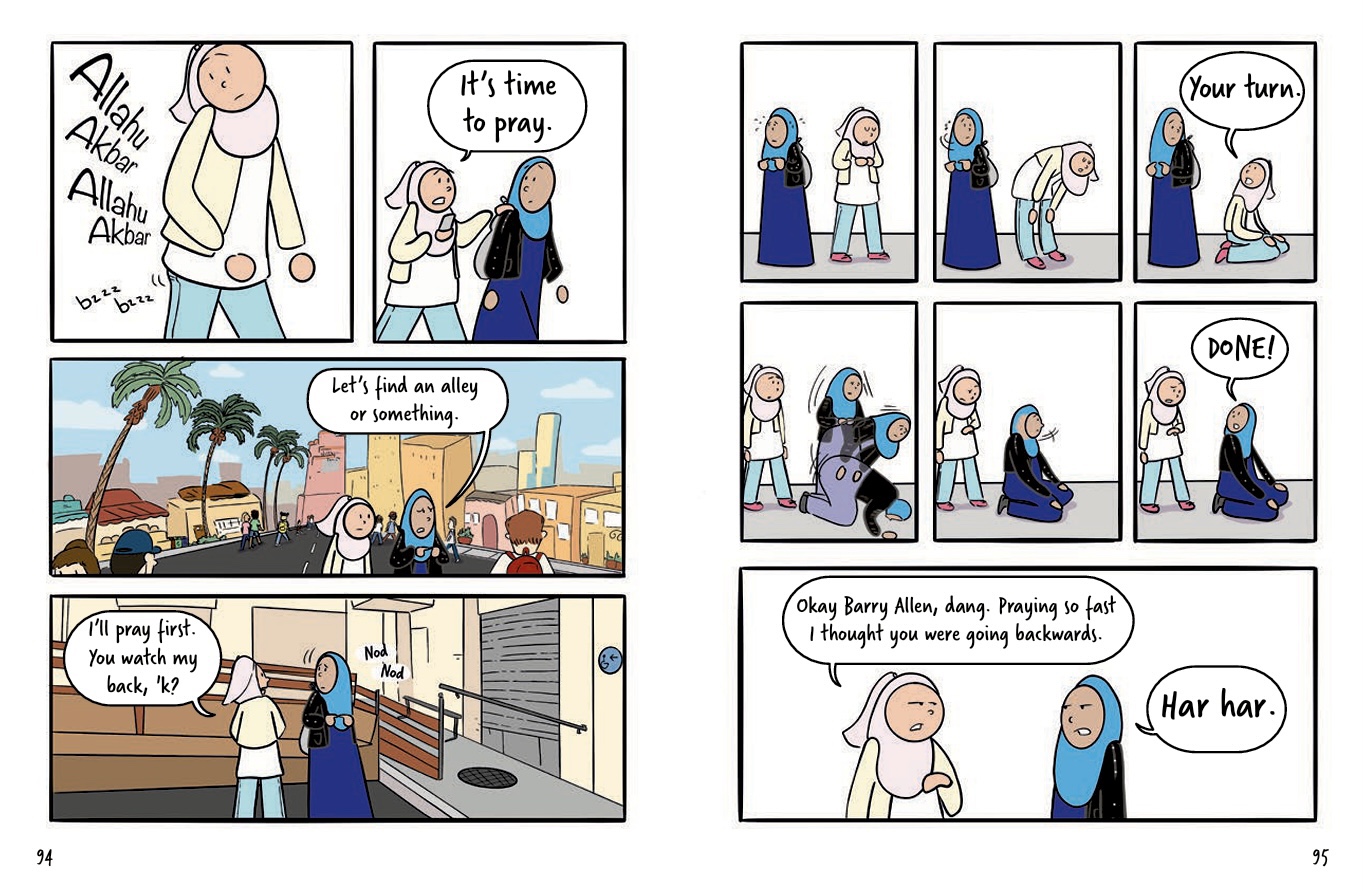
There is nothing quite like reading a YA graphic novel where you feel so completely seen, where you laugh out loud and snort at the shared idiosyncrasies, and where you don’t have to worry that the next page will normalize something haram.  This book, and the entire series, are such a gift to us all that I’m posting this review now, knowing full well that the book does not release until October, with the hopes that you will all preorder it.  This OWN voice authentic rep needs all the support we can offer it to signal to publishers that we want to see books like this published for our kids, ourselves, to share with our Muslim and non Muslim friends and that we want to see similar unapologetic voices in the future.  Huda loves Islam, she is Muslim, but that doesn’t mean she doesn’t feel uneasy at the idea of praying in public, or making wudu at a rest stop.  Her sisters sing Native Deen’s M-U-S-L-I-M to call her out, she fan girls about We Hunt the Flame, and the entire book reads like time spent with friends who can keep you laughing, comfort you when needed, and who are willing to share their very real relatable world with you as they take on Disney World.

SYNOPSIS:

It is summer and Huda and her family are heading on a road trip to Disney World. One sister hangs back for a Quran intensive, the one sister she likes.  Determined to make the best of it she piles in the back seat of the family car with her three other sisters and they hit the road.  The 24 hour one way trip is filled with sibling bickering, rest stop stresses, and parental gems.  Once they get to the park though, their parents have some surprises for them, and Huda finds herself bonding with her sisters despite herself.

FLAGS:

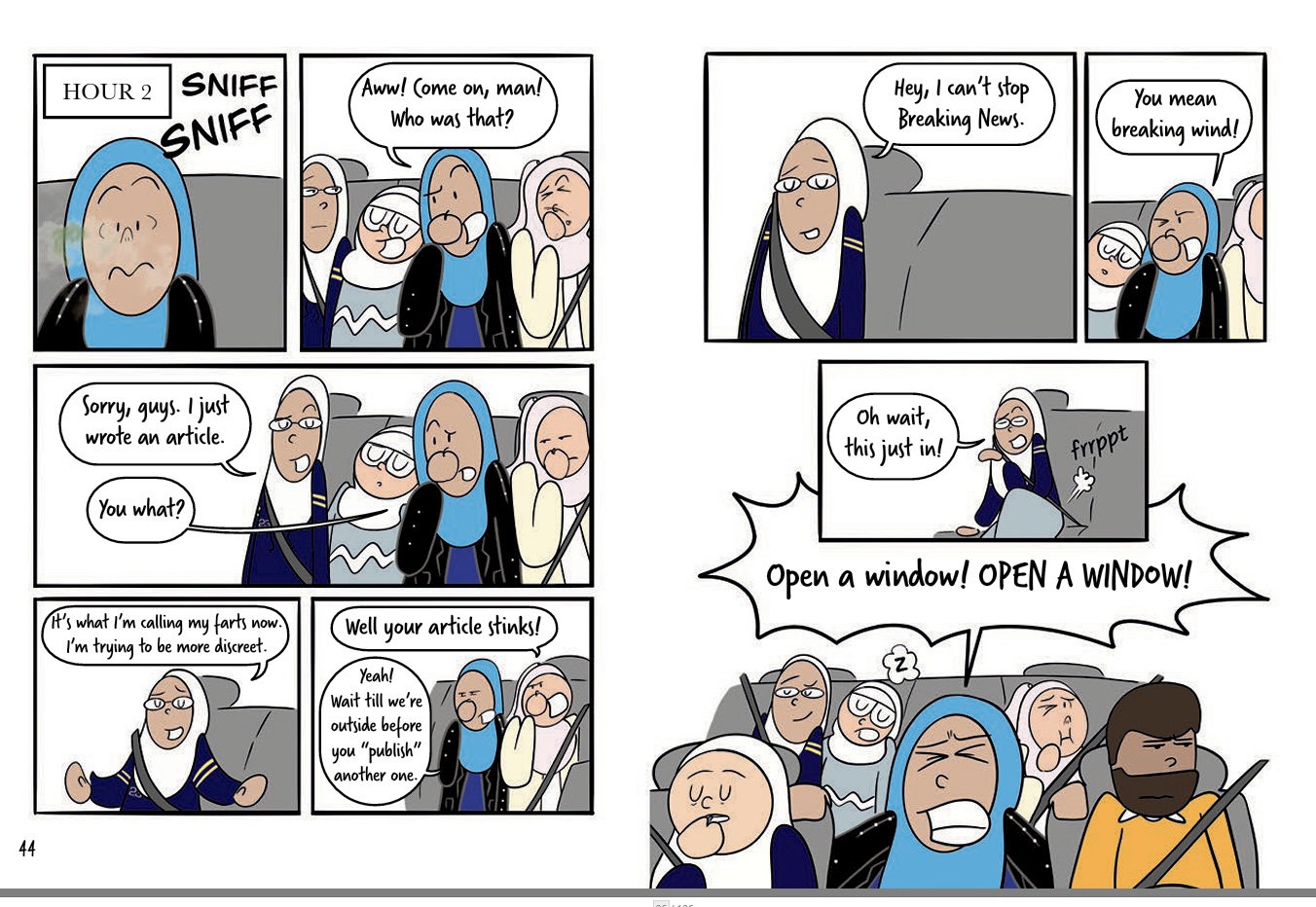
Fart jokes, bullying, punching, self defensive, hitting a boy in the privates for attempting to pull off a hijab, forced physical touch, lying, nothing YA can’t manage.  The title might seem crude to some, I, personally, love the ownership of one’s name, but the book is not offensive.

TOOLS FOR LEADING THE DISCUSSION:

This book won’t work as a book club selection, but I hope it finds its way to every home, middle school and up class and library.  Boys and girls will enjoy the content and I have no doubt, like the other books in the series preteens and teens will be regularly thumbing through the pages giggling and sharing their favorite parts.  You can preorder your copy here https://amzn.to/44Be87O

Please preorder if you can, and if you cannot please request your public library to shelve it, check it out, read, suggest, and enjoy!

Definitely one of my favorite books of the year, decade…..ever?

Free Radicals by Lila Riesen

Standard
Free Radicals by Lila Riesen

radicals

This contemporary 400 page YA book about an American Afghan girl dealing with life and boys and worrying about family in Afghanistan since America’s withdrawal from the country, is written by an Afghan Australian, raised in America, and thus it seemed like a book I should review from an Islamic lens even if the blurb on the back seemed a little stereotypical with the oppressed-can’t-meet-with-boys theme.  Well, suffice it to say the blurb on the back is terribly misleading and this OWN voice book lightly sprinkles in Islam as cultural adoptions and there are flags, oh so many flags.  In the first 20 pages alone there is normalizing and discussion of sex, watching pornography, voyeurism, a females breast being exposed, drinking alcohol, a trans character changing, cheating, gossip of the main character circle jerking three guys, partying, a boy sneaking over, parents vacuuming to cover the sounds of their son and his girlfriend in the bedroom, attempted sexual assault, and the book doesn’t just say it is young adult, it specifies, 7th grade, ages 12 and up! I’m reviewing it as an Islamic School Librarian, but I am not ok with any 12 year olds reading this, and worry the American flag on top, the masjid on the bottom and the young girl on the side, just might entice a young reader to start reading, and that is alarming. The characters do not identify as Muslim, the grandpa known as Baba is a “conditional Muslim” he skips Ramadan, celebrates Christmas, and only prays a few times a week, so the drinking and the dating are really not concerns for the characters. I kept reading to see if there was some religious arc with the family in Afghanistan possibly coming, but SPOILER, I’ll save you the read, there is no Islam, a Quran is mentioned to be stored in a box with old shoes, the dad starts reading the Bible and considers “converting” and there are make-out scenes, a pan sexual character, vandalism, sexual assault rumors, just to name a few.  The writing is entertaining if not chaotic at times, but I cannot recommend this book for Muslim readers, and have reservations about some of the stereotypes for non Muslims, I will stay focused on the Muslim reader in this review, however, since the book is OWN voice, and just because I don’t like or agree with various aspects, does not mean that they are not accurate or real.

SYNOPSIS:

Mafi is 16 and since rumors about what she did at a party with three guys started circulating she finds herself friendless and unseen.  She has become the dealer of vengeance, working to ensure people get what is coming to them when the notes left in a tree are verified.  Living each day in sweats and hoodies she dreams of  Jalen, a basketball player, being more than just her brother’s friend.  When she starts to get sloppy in her justice “ghost” dealings she finds herself emotionally involved and her world changing as a result.  There are numerous side characters and side stories that keep this book buzzing: her parents relationship falling a part, her sister away at college, her grandfather’s dementia, her brother Rafi and his girl friend Bian, Rafi getting signed by a college for basketball that wants to make public his Afghan roots, a father who wants them to always deny their Afghan roots, Jalen’s own drive to be signed with a college, Jalen’s dad’s PTSD, motocross, driver’s license, the kid next door that smells of smoke, piercing noses, Brit, a popular trans activist with no sex drive who befriends Mafi, and rumors and gossip that poke and complicate every aforementioned character and relationship.

WHY I LIKE IT:

I have issues with the blurb on the back, the cultural/religious restraints are really non existent in the book, the SOL tree is only brought in for two acts of vengeance, and the age demographic is just too young to read about the sexual exploits, that are not detailed but are very present and normalized.  I have issues with the religious references that are present anecdotally for the dismissiveness it implies, but it is not an issue for the characters- because religion is not a part of their lives, and honestly- ultimately, I’m glad it was kept at arms length, because with so many “haram” story lines, it would be problematic to see the characters identifying as Muslim.  The writing at times was really engaging and smooth and I was shocked at how fast the pages were flying by.  At other times it seemed too chaotic and underdeveloped.  Keying a car seems such a sad planned act of vengeance, I wanted to know what acts she had done in the past other than the two mentioned in the book, there was a lot of set up to go deep on Bian, or Jalen’s dad or Mafi’s loss of friends, but it all just fizzled.  I never felt emotionally tied to the family in Afghanistan, or the dad on the deck.  I wanted to understand some of the walls the family established so that I could feel what the characters were feeling- and so often it just wasn’t there.  I absolutely loved the grandfather and his quirks and the sibling relationship of Rafi and Mafi as the story progressed.  After the initial shock value, the book really did settle down and have a lot of heart, but those first 20 pages were aggressive, and the last twenty seemed to just unravel.  I would have loved to see some commentary about the hypocrisy or ironies of Mafi’s life, she has insights, they just seemed missing when reflecting on her own family quirks: her family doesn’t want to identify as Afghan, yet all their nicknames are Afghani, she claims she can’t hang out with boys, but she seems to all the time with no problem, they have no Afghan friends and yet there is no acknowledgement of this when the man on the moped shows up, how long Baba has lived with them seems inconsistent, they eat dinner together most nights but seem like strangers.

Politically, the author has her views and thus the characters theirs.  For those not familiar there is enough information about Hazaras, and the Taliban, to understand her point of view, but I don’t know that the books really conveys a lot of the nuance or accounts for why the family would be heading to Pakistan while dropping jabs at Pakistan’s view of the Taliban. There is a bit of othering and we are the good ones not the terrorist ones that seems stereotypical, but the remarks are said in passing and not often.

FLAGS:

Sex, kissing, making out, voyeurism, porn, female breasts exposed, trans character changing, Islamophobic remarks, misogyny, bullying, language, loss, dementia, discrimination, drugs, mental health, rumors, gossip, lying, sexual assault, violence, ptsd, relationships, pan sexual, racism, theft, hate speech, death, fear, threats, sneaking out, Halloween, alcohol, hung over, violence, mention of murder, masturbation word play, a child using a dildo as a sword, pretty much every flag you can think of is present in some form.

TOOLS FOR LEADING THE DISCUSSION:
I would not shelve this book in an Islamic school library or classroom. I would hope that public libraries would not be displaying it near the books for younger YA as well.  It isn’t that I am holding it to a higher standard than other YA books, but it would be naive to think that the Afghan architecture on the bottom right of the cover that looks like a mosque and the light hearted blurb on the back, might excite young Muslim readers, and thus I’ve posted this review as much for my own conscious in making sure parents don’t pick this up for their kids as for warning Muslims that there isn’t Islamic rep in the book.