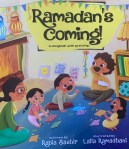
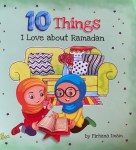
After a while a lot of Ramadan books seem repetitive with the information being more or less the same, this 24 page kindergarten and up book however, manages to present the information in a numbered format that allows for the information to flow without being constrained by an overly forced story. The result is a fun little read that children will enjoy as they master some of the key concepts of Ramadan. This book doesn’t have activities at the end, but would lend itself very easily to games, memorization challenges and discussion topics if read frequently for even the littlest Muslims. It would also work as an introduction to the month for non Muslims. I know I get asked a lot for suggestions of books to be read to children’s classes in public schools, and this would definitely work for that too.
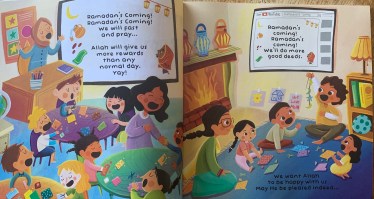
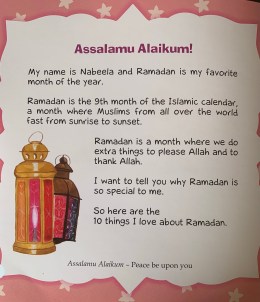
The book starts out with an introduction to Nabeela as this is her list of 10 things that she loves about Ramadan. She starts with Assalamu Alaikum before diving in with some facts and getting started with number one. Each number is a two page illustrated spread, there are footnotes for any Arabic or religious terms used, and the bright colors and large fonts make the book easy for early readers to follow along with and attempt on their own.
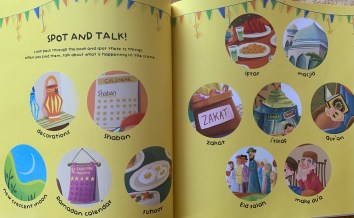
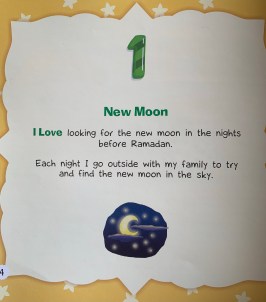
She starts by loving the new moon that her family looks for before the start of Ramadan. She loves Suhur: helping prepare for it the night before and eating her favorite pancakes early in the morning.
Number 3 is iftar. She loves pies and samosas and explains to us that she always has dates and water because that is the Sunnah. Along the way she shares her love of family, making du’a because a fasting person’s du’as are always accepted, and reading Qur’an even though it is difficult because she knows she will get more rewards for trying so hard.
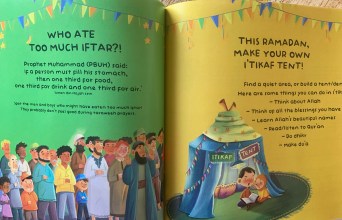
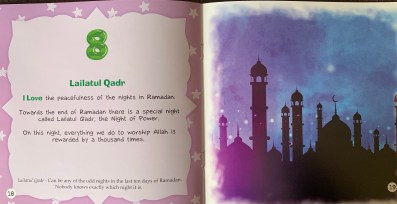
She also loves Tarawih prayer whether at the mosque or at home, and the peacefulness of Lailatul Qadr. She loves that her father and brother stay at the mosque the last ten nights of Ramadan in Itikaf and finally at number 10 is Eid!
The book concludes with some verses from the Qur’an about Ramadan in English. I thoroughly am impressed at how succinctly so much is conveyed and the adorable manner in which it is done, Alhumdulillah!
This 32 page non fiction children’s book uses colors to introduce the very basics of Ramadan and Eid from a non Muslim point of view to a non Muslim audience. The book is done decently and shows diverse Muslims and bright colors interwoven with facts about the month, but by-and-large it is forgetable and just discusses the broader sense of celebration. There is very little that is religious outside of the photographs showing Muslims that are used to illustrate the book. Even the concept of colors in a book by Crayola is a little lacking. Yes, dates are brown, but just to say that “colorful designs cover prayer rugs,” and that “people shop for red and green vegetables, and many orange and brown fruits are used for meals too,” seems really vague and half hearted.
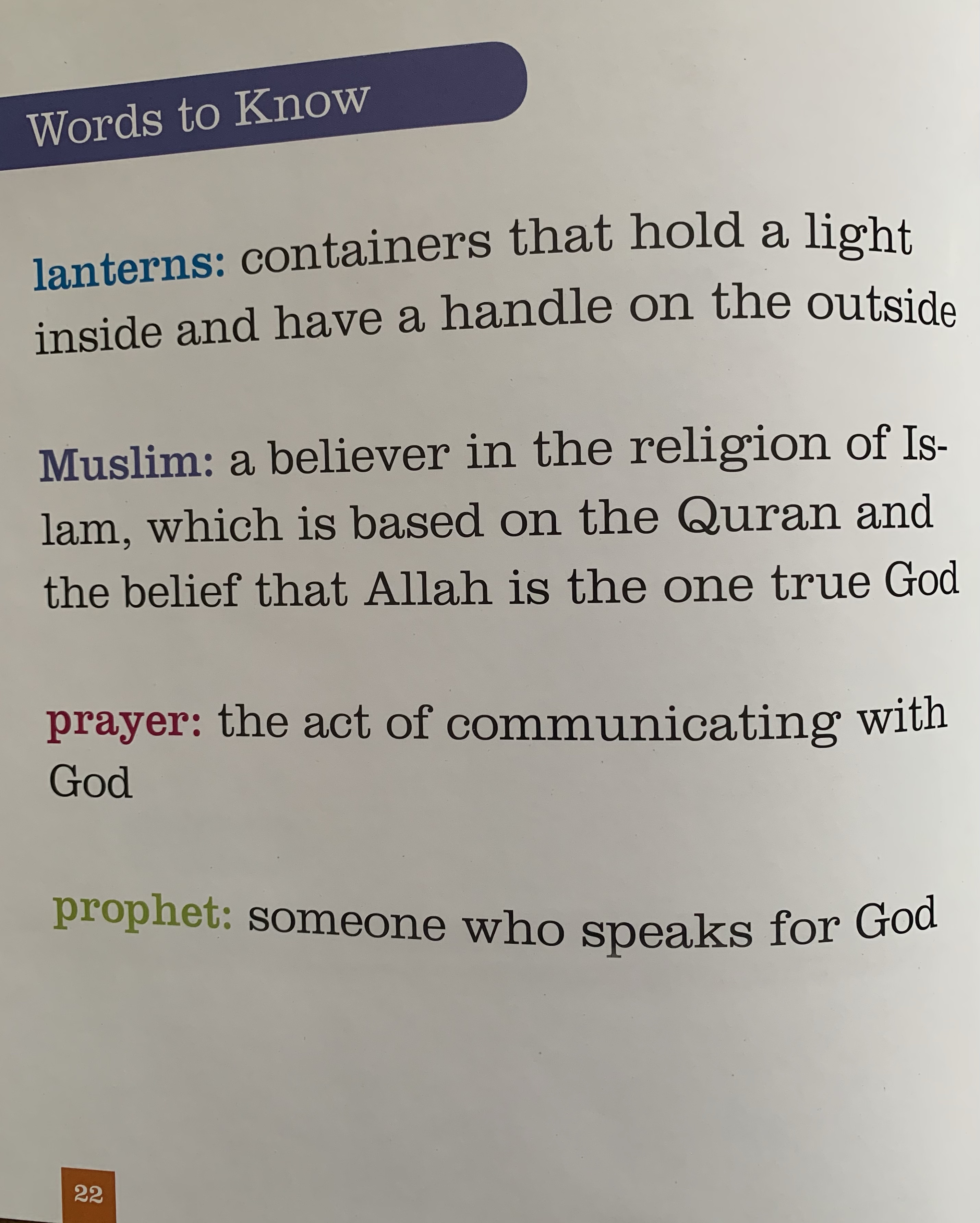
The book starts out with explaining what Ramadan is and defines what a crescent moon is in a blurb under a picture of one. It then explains what happens in Ramadan and dedicates two pages to lanterns that are purple, red, blue and green and used to hang in streets and homes.
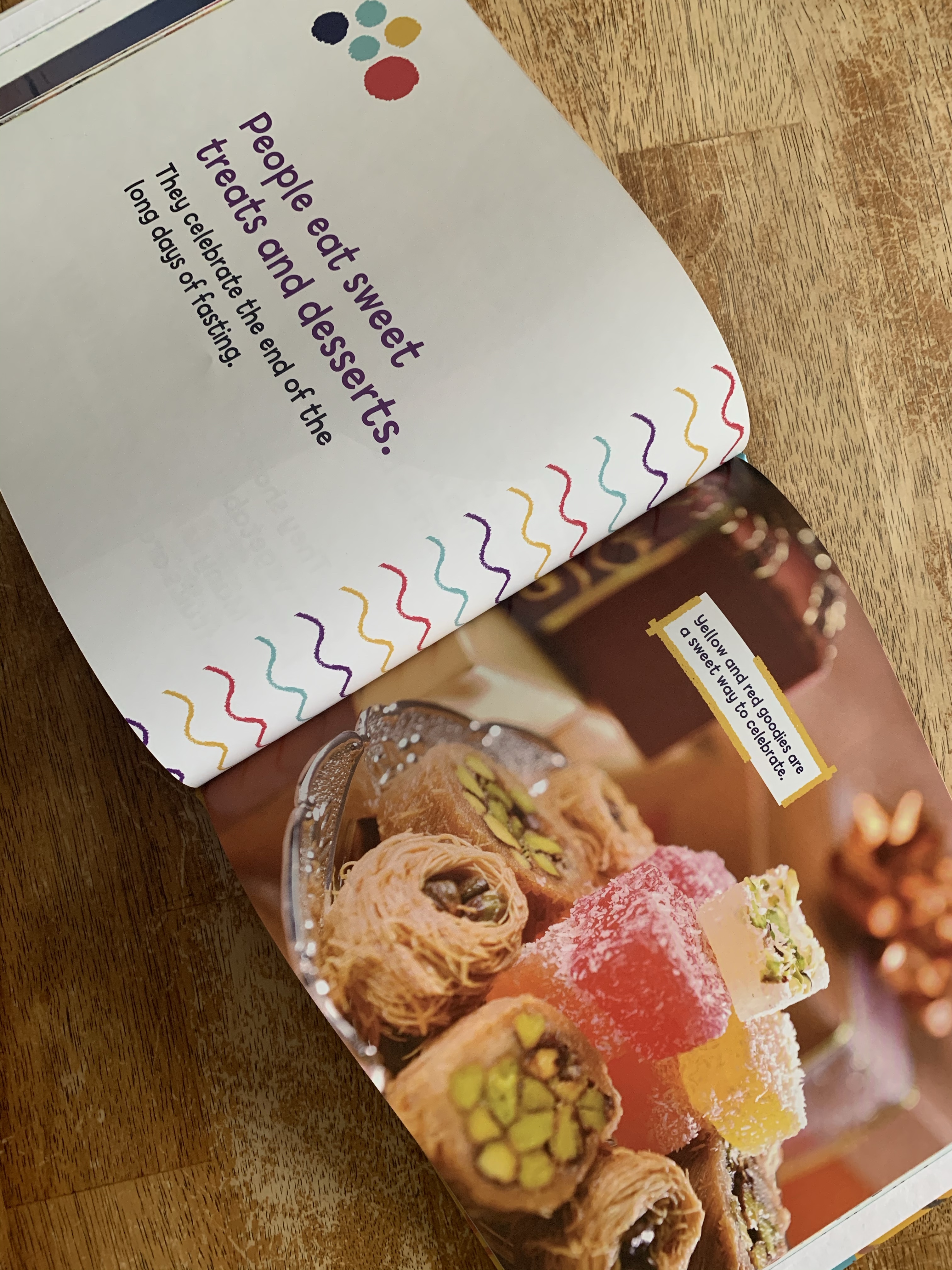
It then moves in to the celebrating of Eid Al-Fitr. It shows children playing and having fun and receiving gifts and toys to celebrate. It talks about the food and mentions colors of the food without naming or describing them, it then does the same for desserts.
When explaining the clothes that people wear on Eid, it says that sometimes they are colorful. It then repeats that gifts and money are given, but adds in that they are also given to those in need.
The book concludes with a page that you can copy and color, a glossary, suggestions to learn more, and an index.
A much better, color driven albeit not Ramadan and Eid specific choice would be Golden Domes and Silver Lanterns: A Muslim Book of Colors by Hena Khan on in my opinion. Both are widely available in public libraries, maybe check them both out and let me know what you and your children think.
This lovely counting book celebrates the end of Ramadan and the festivities of Eid Al-Fitr by counting up to 10 and counting back down. Over 24 pages of rhyming lines, adorable illustrations will bring the holiday to life as a group of children and a little white cat celebrate. Aside from the title that for some reason I don’t love, the rest of the book is happy and festive and perfect for toddlers to preschoolers.
It starts with one month coming to an end, then henna cones and designs take over, before five pots and six trays of cake are prepared, decorations are hung, clothes are made ready and ten eager eyes watch the new moon rise.
Then ten sleepy cousins have to get up early for morning prayers with presents waiting, rotis are prepared before seven family members squeeze in the van. Friends are met at the masjid and coins are jingling as lunch parties are attended and fun-fair rides are riden. Two tired friends can’t stay away on this one perfect day, and no more cake.
I love the flow of the book, I’m not sure what the four henna designs are or what cousin doesn’t get a present and who doesn’t get to go for prayers, but little kids probably won’t over think it. The little cat is delightful on each page and the book sets a marvelous tone of what one can look forward to and enjoy on this splendid holiday with friends, family, festivities, and food.
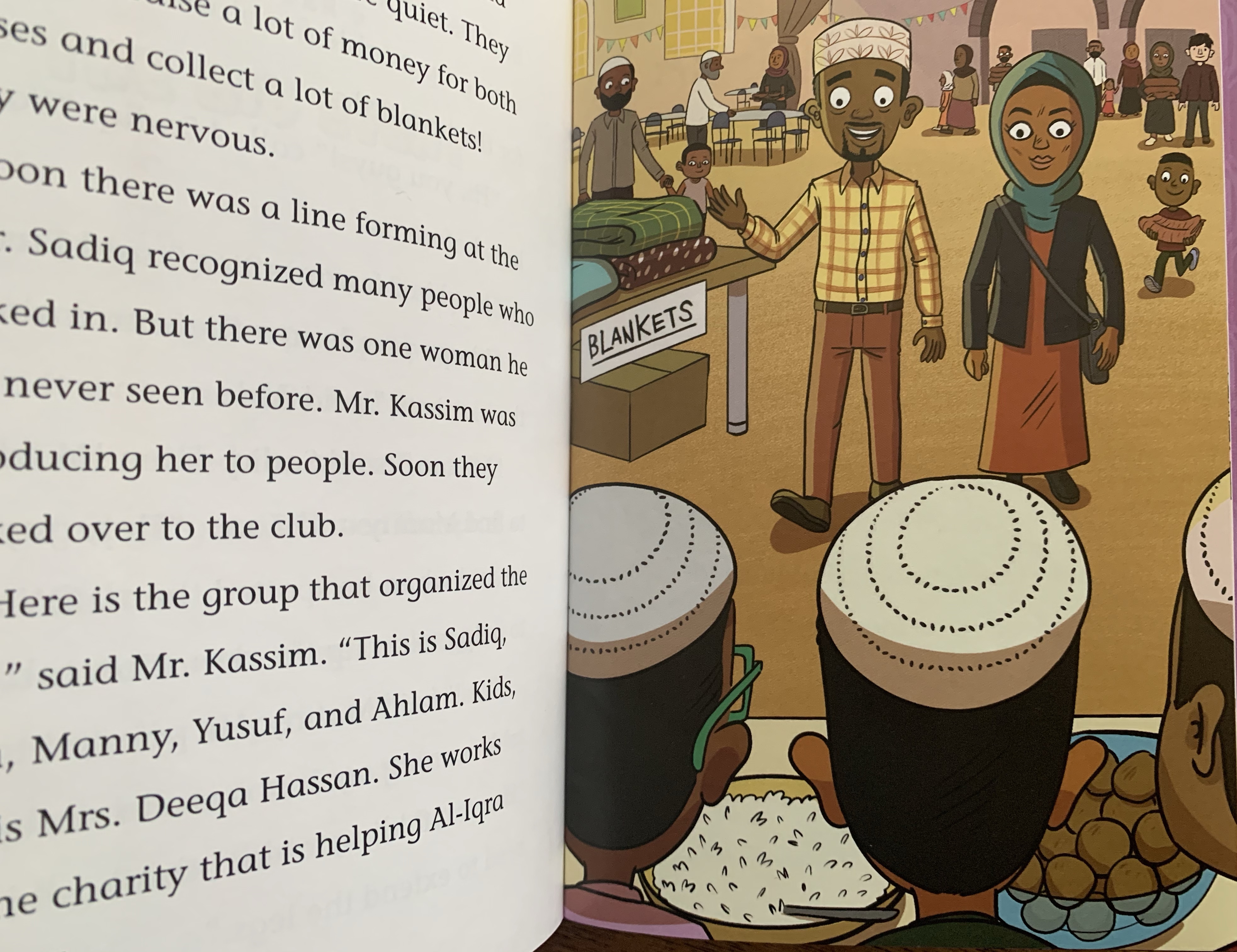
This 65 page early chapter book in the Sadiq Series does a great job of introducing Ramadan, giving a glimpse of Somali culture, and conveying a relatable and engaging story about friends with a lesson/reminder about the values of communication. A group of boys hosting a fundraising iftar to help a school in Somalia have to figure out the logistics, the marketing, the cooking, and the execution, as they become socially aware and active in helping meet the needs of their community, both locally and afar. This OWN voice tale doesn’t shy away from authentically drawing on religion and culture to make characters and a plot that all readers can enjoy. The book is not preachy, but the characters know who they are in their manners, dress, speech, and environment. A great book any time of year for first grade and up.
SYNOPSIS:
With Ramadan starting in a few days, Sadiq and his friends at the Dugsi are reviewing the importance and values of Ramadan. This year the masjid is raising money for a school in Somali and the students are encouraged to help, as sadaqah, or charity, is especially important during Ramadan. The boys decide to host a fundraising iftar at the masjid and with parental help to coordinate with the Imam, the kids have to figure out how to get enough food, get the word out, get set up to take donations and more. They make flyers, set up a website and shoot a small video. The once excited Zaza, however, is no longer very enthusiastic in the Money Makers Club and Sadiq can’t figure out why, but with so much to do and little time to get it done, more friends and family are brought in to help, and things continue on. When Zaza tries to tell Sadiq he wants to do his own fundraiser, Sadiq doesn’t want to listen. I’m not going to spoil if the two friends work it out and how they handle the two ideas, but it is a good lesson in friendship, communication, and charity, Alhumdulillah.
WHY I LIKE IT:
I love that the story starts with information about Somalia and words in Somali as well as a picture of the family. There are activities and questions at the end as well as a glossary of religious, cultural, and English vocabulary words. The book doesn’t assume that the reader knows anything about Islam or Somalia, nor does it assumer that the readers don’t. It strikes a balance of not talking down to the reader or getting too wordy. It simply provides the information needed if you are curious, but allows the story and the boys dilemma to take center stage. The whole series is remarkable in showing diversity and relatability with good quality story telling. I think this is the only book in the series that has a religious theme, I could be mistaken. The illustrations show the boys in kufis and the women in hijab.
FLAGS:
None
TOOLS FOR LEADING THE DISCUSSION:
Every elementary school library and every first through third grade classroom library should have this series. I know my public library has it, and the copies I get from there seem to be worn and loved. The age is too young for a book club, but would be great in small groups or for outside reading with the short chapters and engaging illustrations.
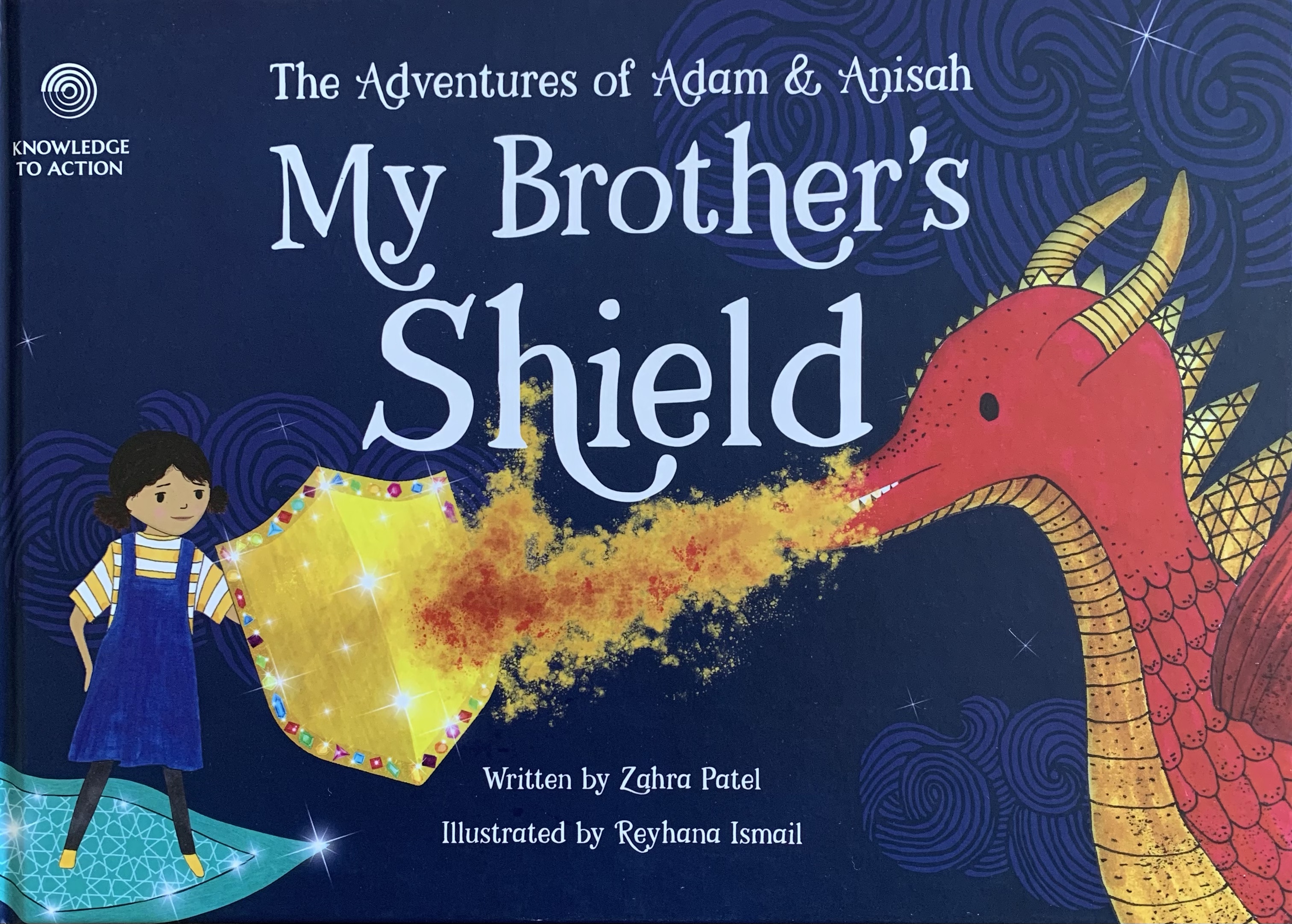
Based on the idea that “Fasting is a Shield (ibn Majah),” this adorable book brings Ramadan not just to life, but makes those that fast into absolute superheroes! Over 32 pages of simple large rhyming words, little Anisah shares her wonder and amazement toward her brother, and his shield that he wields during Ramadan. The beauty of her admiration for her older sibling combined with the message, illustrations, and presentation, make this book (there is also an accompanying workbook) perfect for ages three and up.
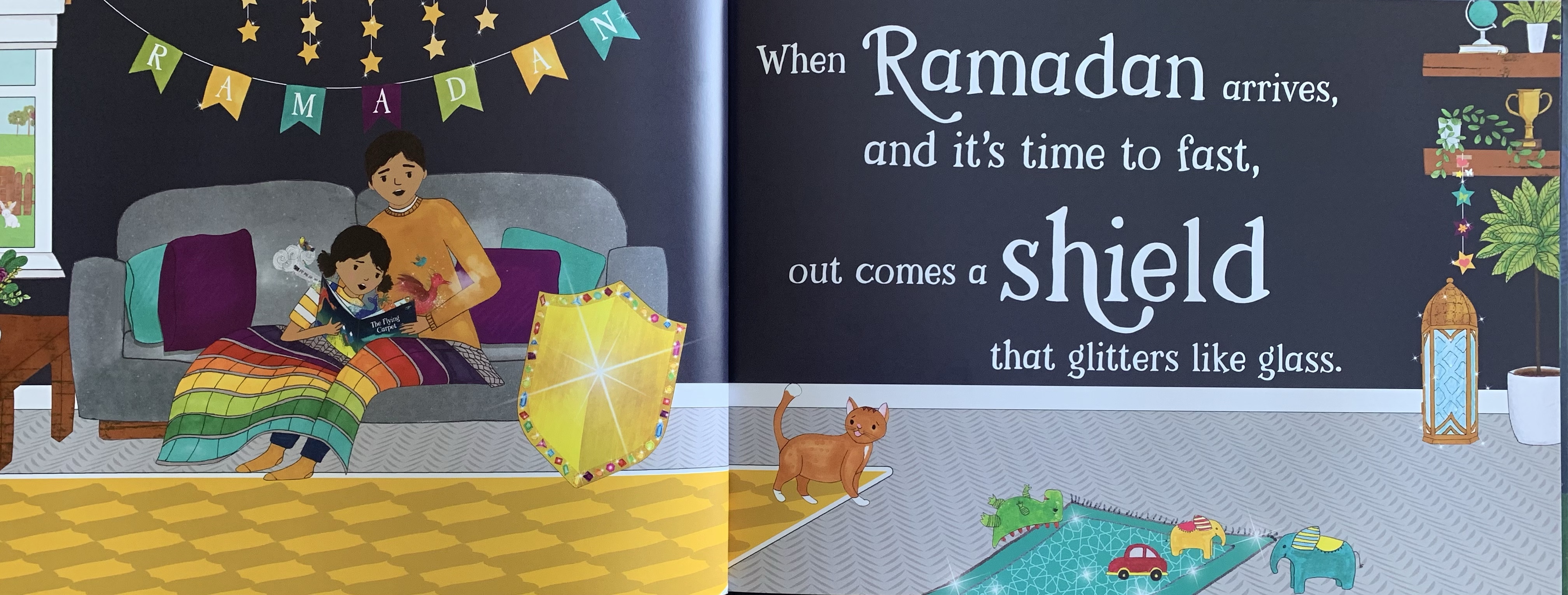
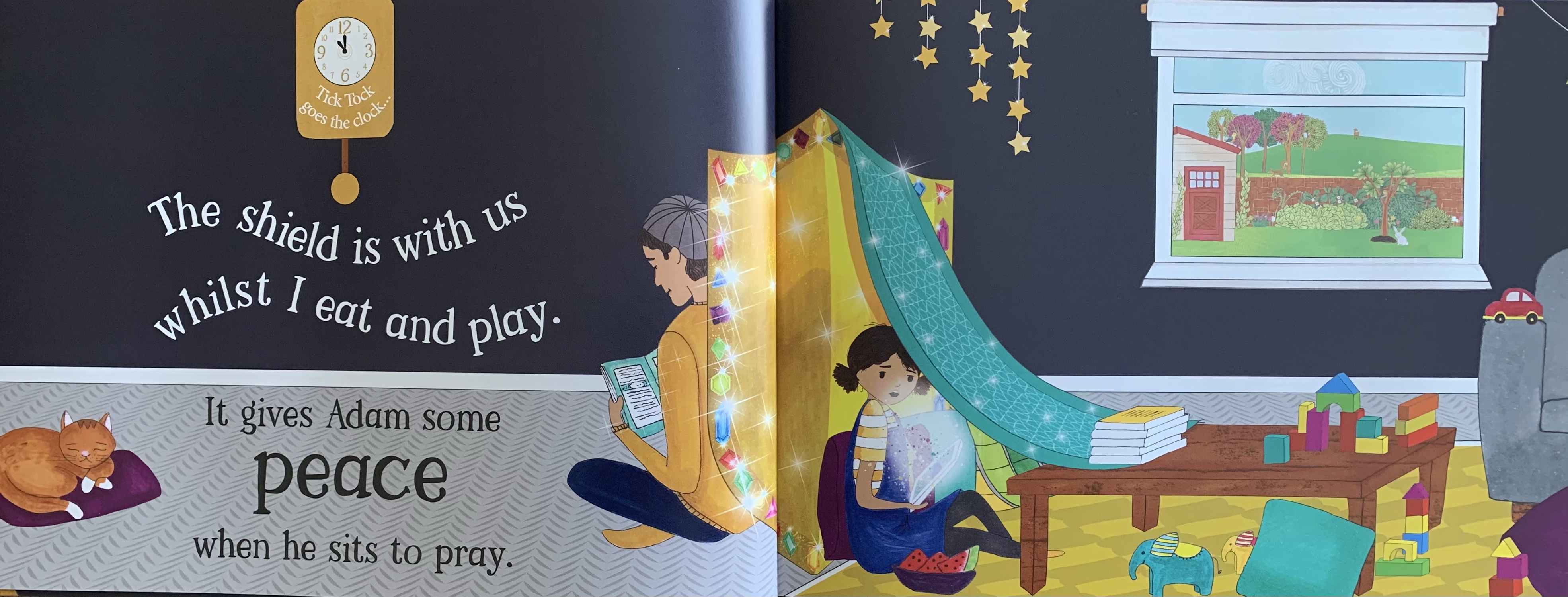
It starts with a secret. Adam is a superhero. When Ramadan arrives, the shield comes out and Adam carries it all day. He doesn’t eat or drink when he has it. It makes him brave and saves him from tempting biscuits. It gives him peace when he reads Quran. It keeps him calm when there is a foul during a soccer game. It even keeps him away from gossip at the mosque.
When they break their fast, they pull out their magic carpet to fly. And when Ramadan is over the shield goes away until it is needed again. Anisah patiently marks off the days on the calendar until Ramadan will arrive, because she has another secret. She is training to be a superhero too.
The book concludes with how the story came about, discussion questions and some activities to help learn through practice. The illustrations show diversity and whimsy and toddlers and preschoolers, I’m certain will be begging for this story all year around.
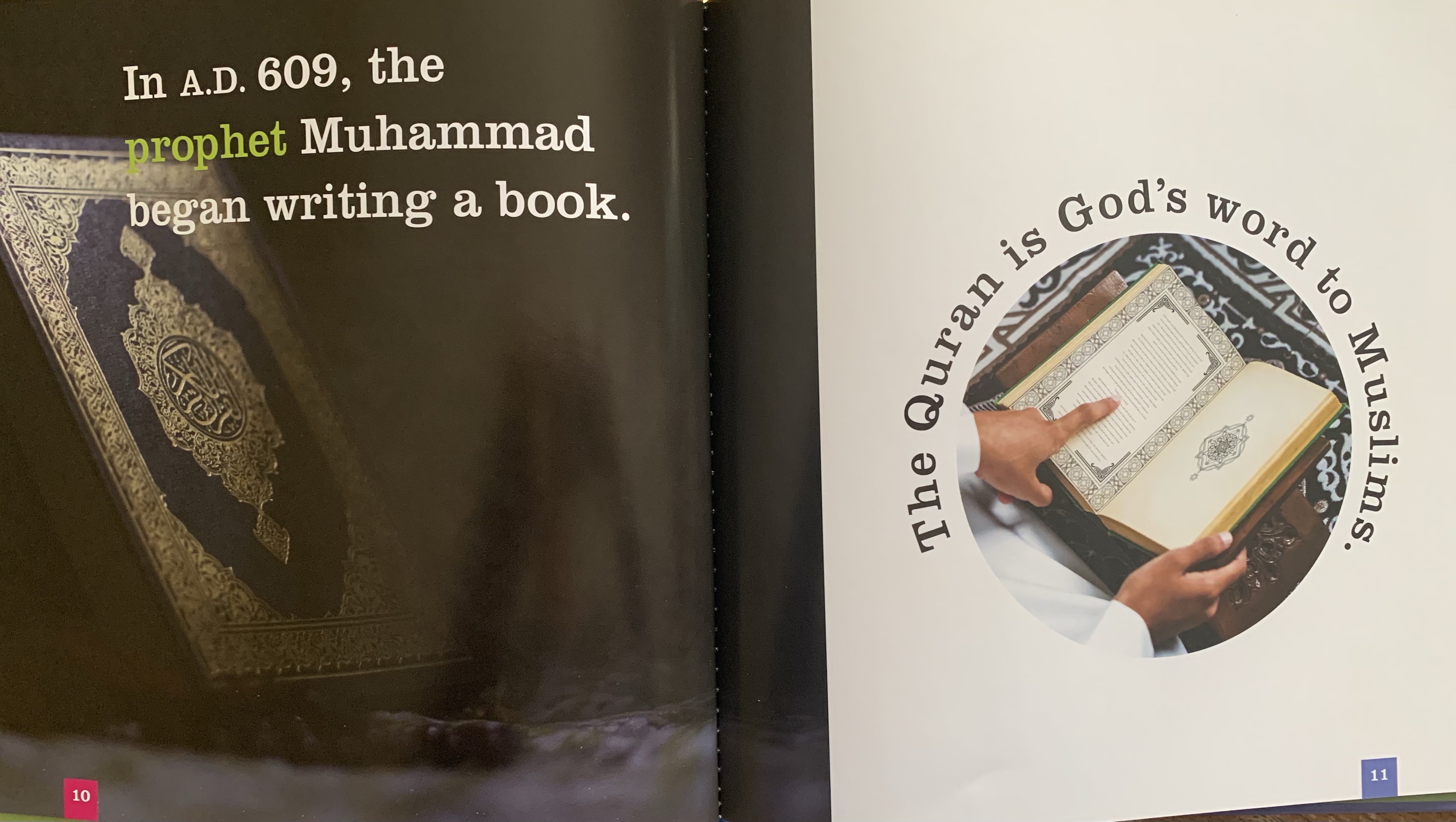
I understand and appreciate that every time a series of holiday books come out Ramadan is bound to be included, but this 2021, 24 page kindergarten geared nonfiction book really offers nothing new. In fact, while the realistic photographs on each two page spread are nice, I take issue with the page that says, “In A.D. 609 the prophet Muhammad began writing a book. The Quran is God’s word to Muslims.” First of all, Prophet Muhammad (capitalize the P please), didn’t write the book and the Quran is for all people.
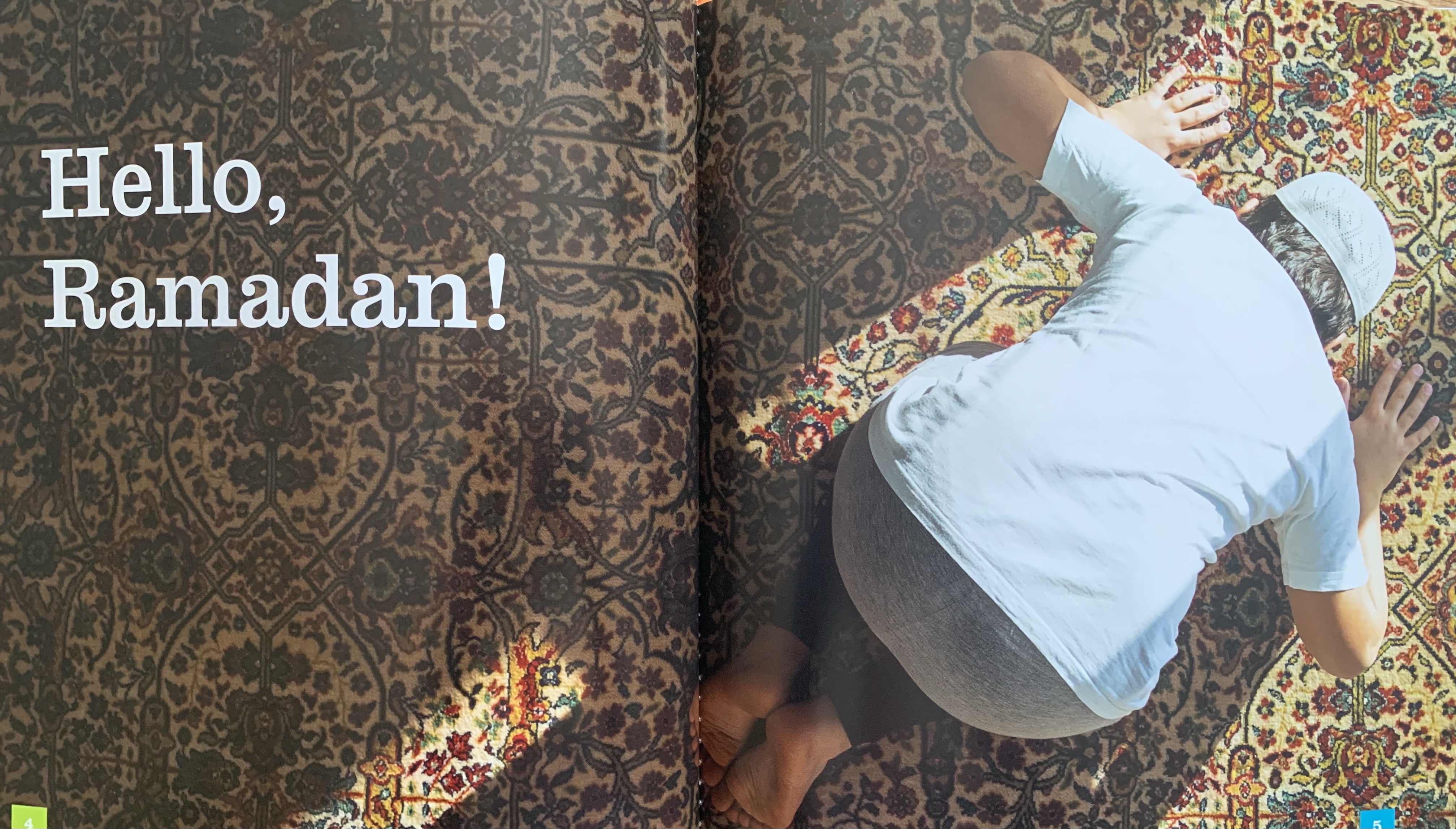
The book starts out welcoming Ramadan and showing a child in sajud, without explanaition, I wonder and worry how a non Muslim child woud understand this act. Would they take it as an act of worship? Not sure.
The next page mentions Ramadan as a time of prayer and thinking of others before explaining that it is the ninth month of the Muslim year and starts with the new moon.
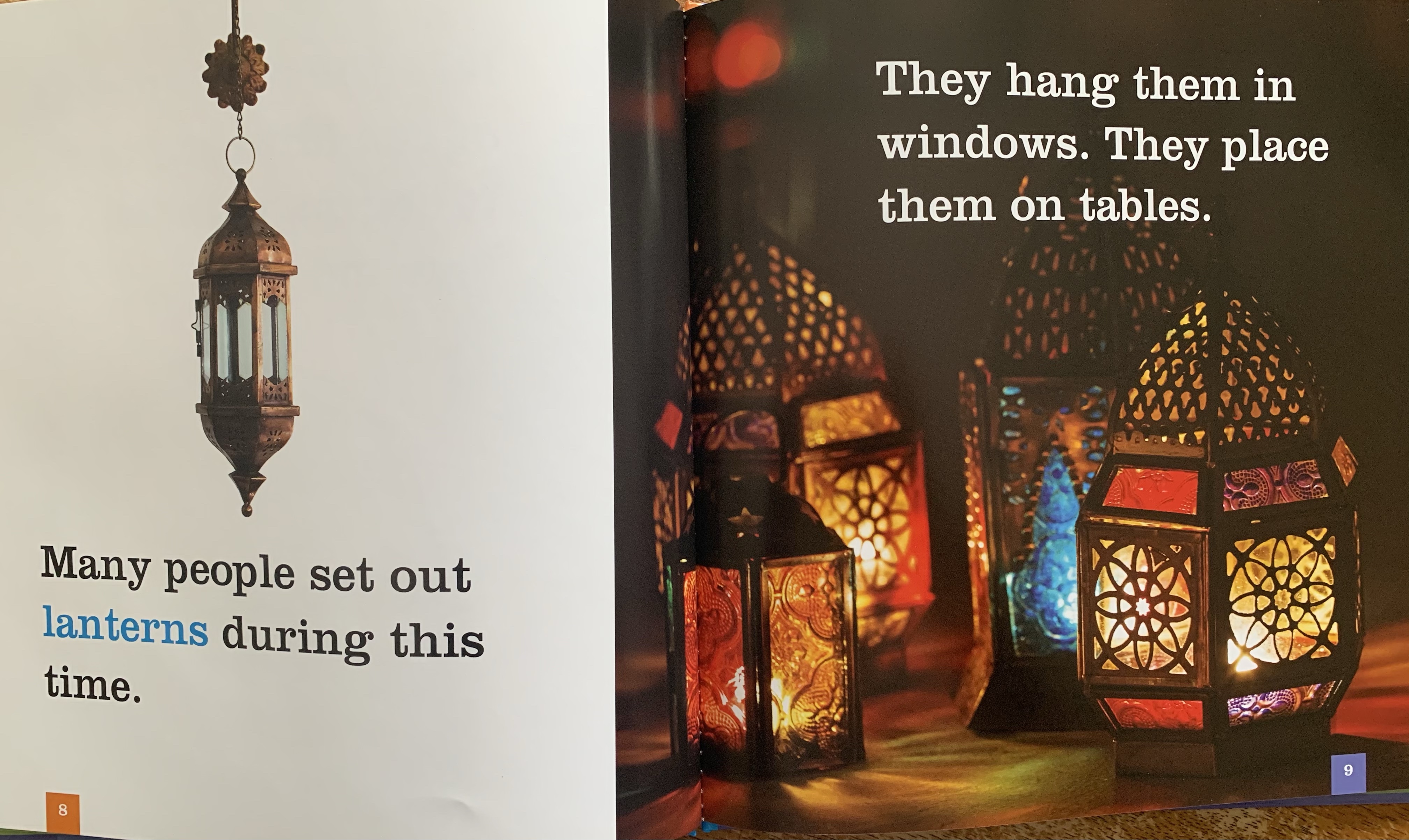
It then details that lanterns are set out and hung in windows by many, but doesn’t tell why or hint at cultural reasoning. The problamatic page follows, and then it shows an older man reading Quran and says that some repeat the whole Quran during the blessed month.
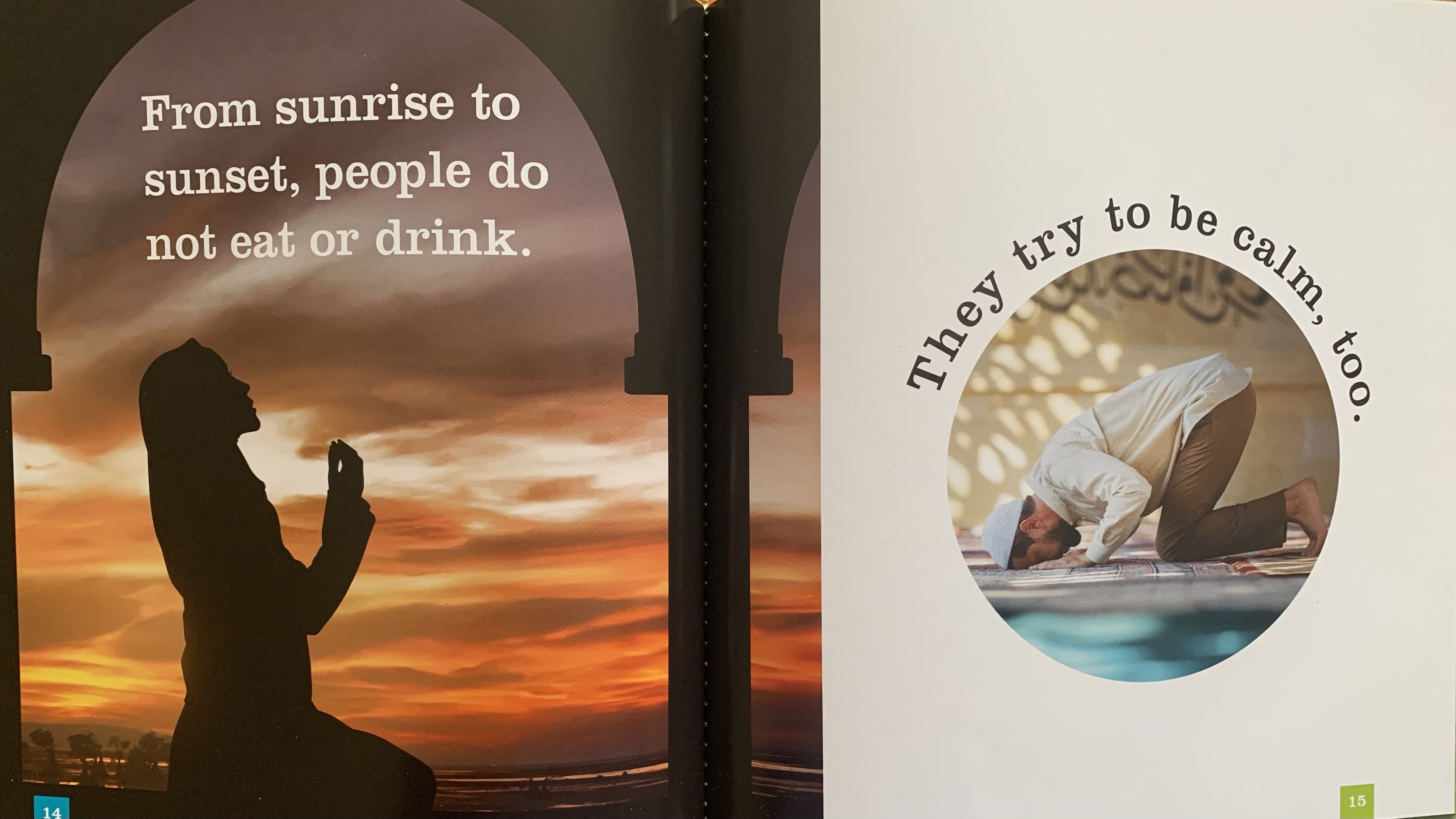
I like that it mentions that from sunrise to sunset people do not eat or drink and that they try to be calm. At night people eat dates and drink water and share a meal called iftar.
There are then pictures of Ramadan, a lantern, iftar, dates and Quran, before a page of vocabulary, further reading suggestions and an index conclude the book. The definition for prophet, seemed a little off for me, “someone who speaks for God.” Why not say someone who spreads God’s message?
I wouldn’t encourage this book be shared with little ones, or in interfaith, like I said, there are much better fiction and nonfiction books about Ramadan for this age level.
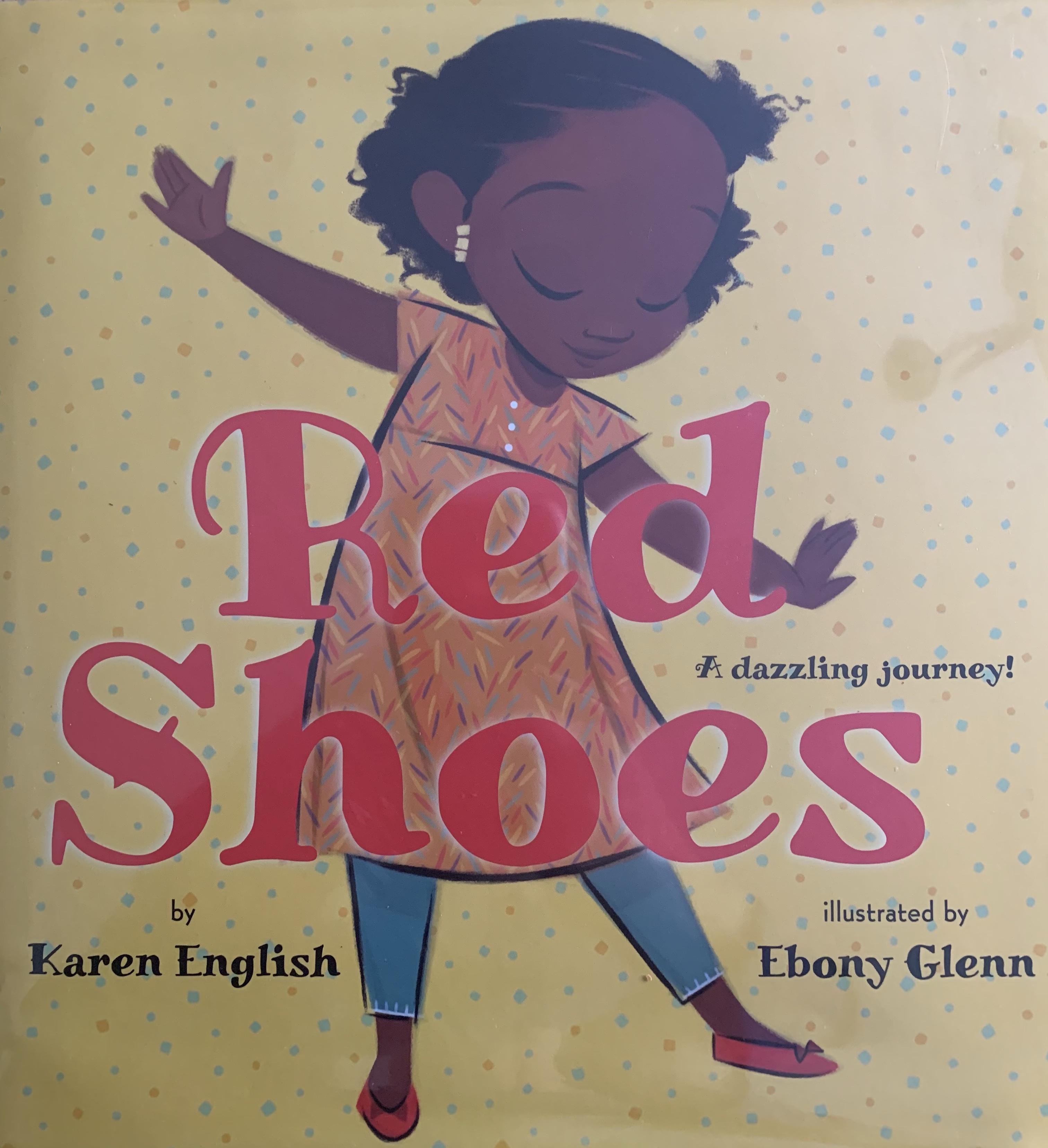
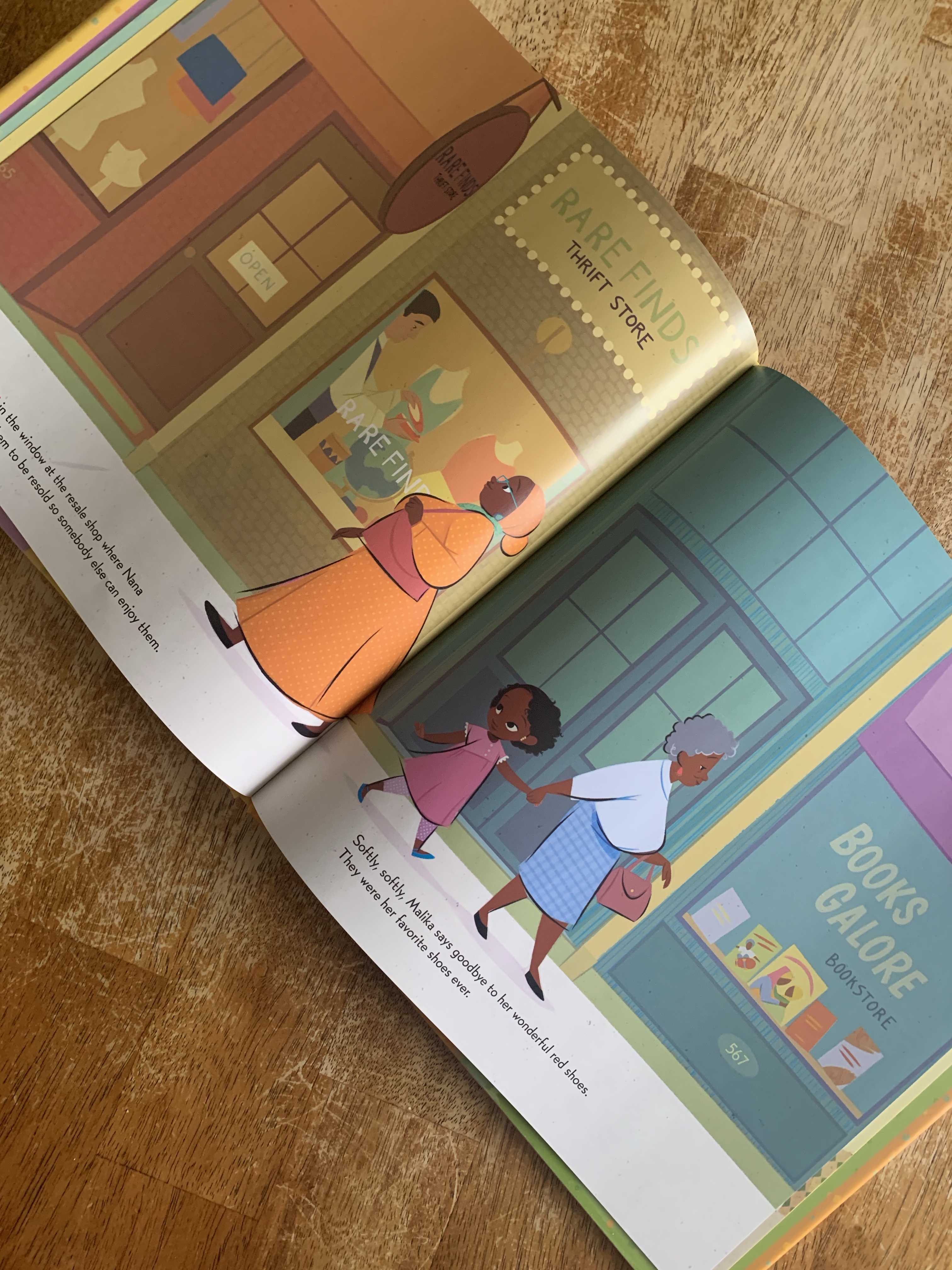
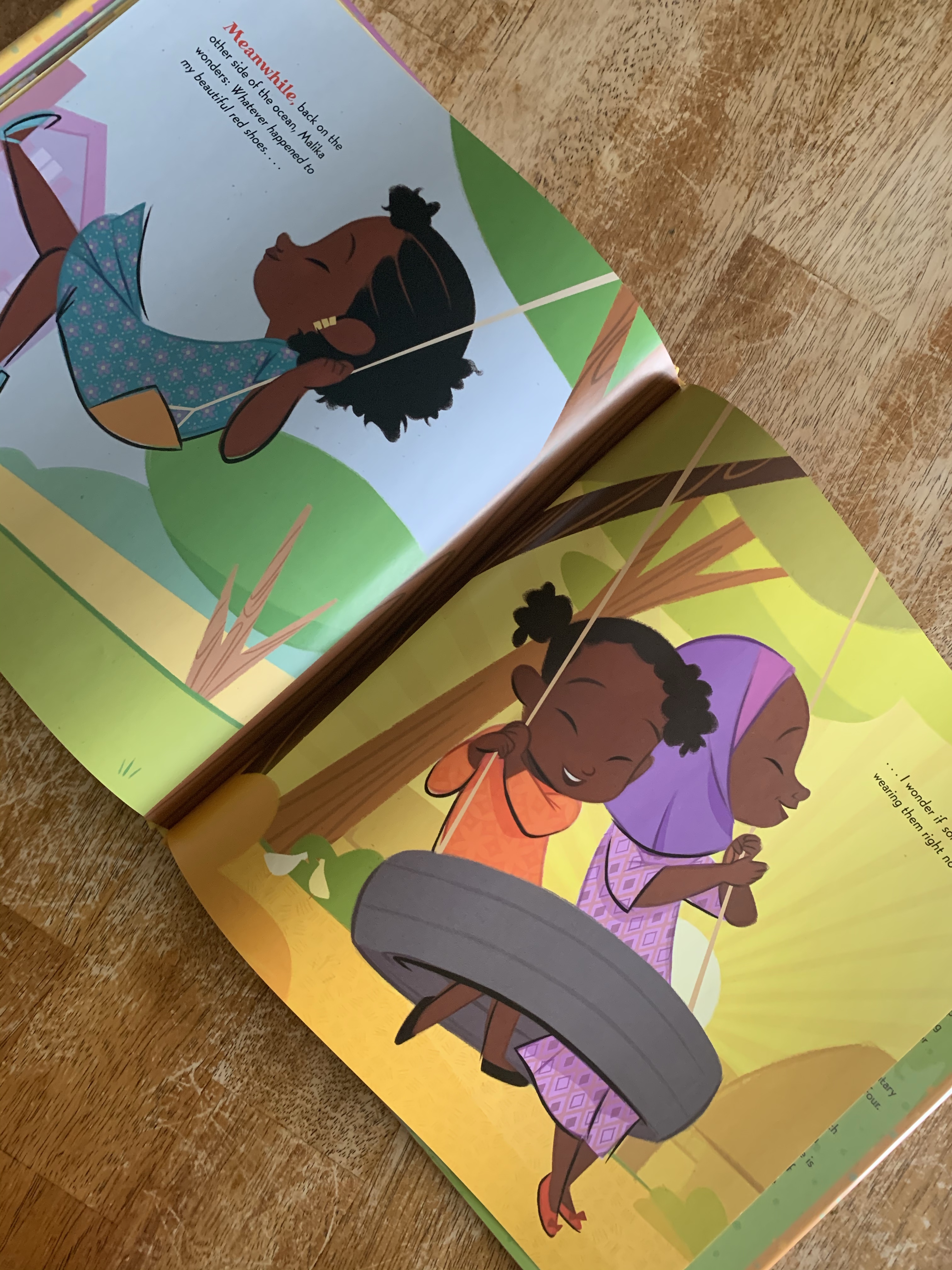
This delightful 32 page picture book links two girls, two ends of the world, two cultures and two stories together with a pair of red shoes. The short sentences pop with action and the perfectly illustrated two-page spreads convey relatable emotion and joy. The beloved shoes travel on the feet of one character to a wedding, Christmas dinner, and birthdays, they are then are donated and journey to West Africa to be given as a gift for a little girl who fasted half of Ramadan. The message I hope children ages three and up will get from the story, is that we are more alike than different, that we should take care of our things (amazingly the shoes weren’t worn out), and that we should donate things of good quality that we ourselves value. I hope it doesn’t lend itself to perpetuate the stereotype that we can send our castaway items to Africa, being the author comments in her bio on the back flap that her husband is from West Africa and that she frequently visits there, I’m hoping that this is just me being overly cautious in the messaging, and nothing is being implied or negatively taken from a casual reader.
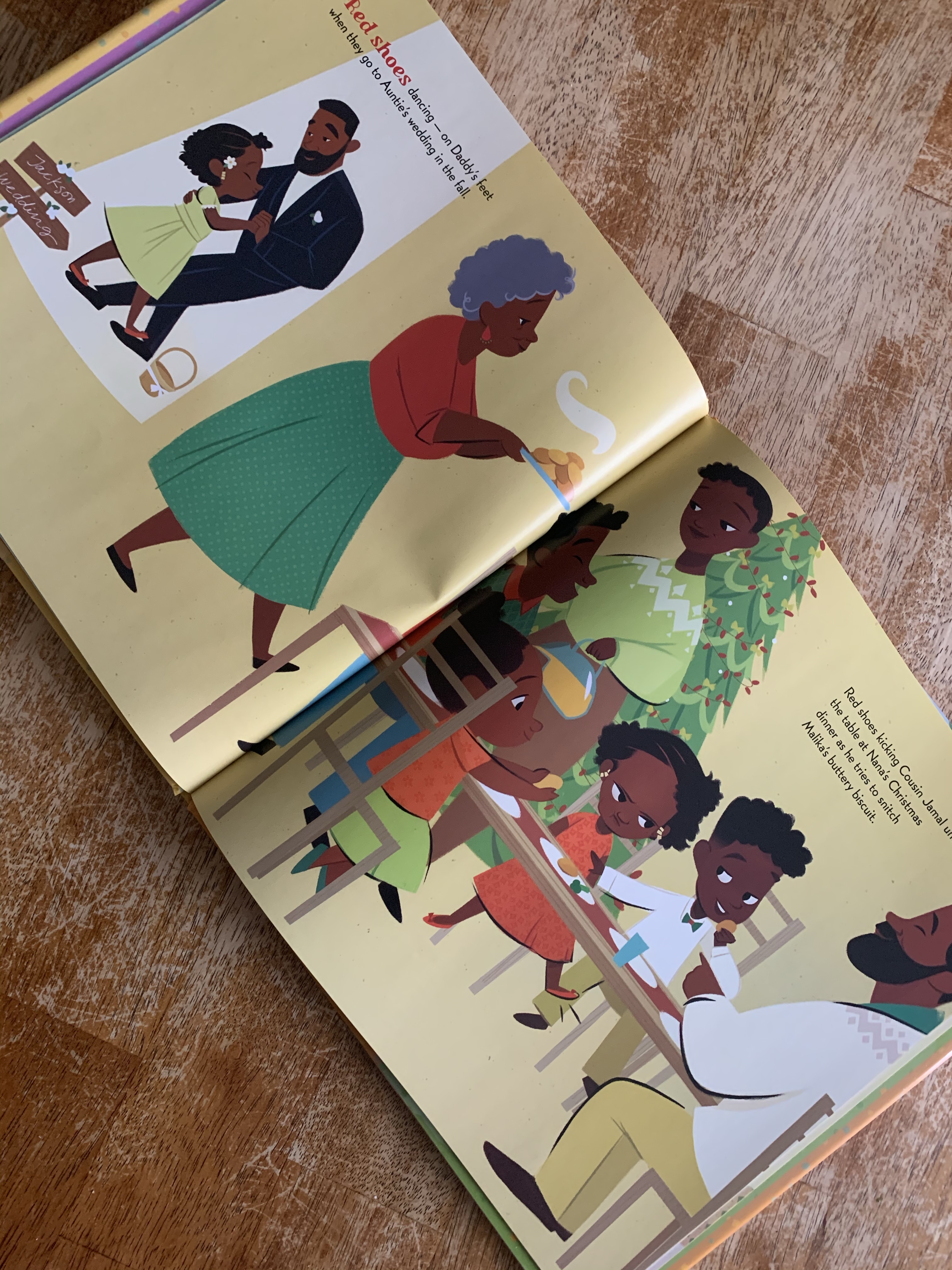
Malika and her Nana see a pair of dazzling shoes perched in the window, and Malika is enamored. Her grandma later surprises Malika with the shoes. She quickly tries them on and tests them out. She keeps them safe from the rain and dances with them on at her Auntie’s wedding. She kicks her cousin Jamal with them on, under the table at Christmas when he tries to steal her biscuit.
She stomps away from her best friend in her red shoes, and jumps double Dutch with them on when she makes up with her friend at her birthday party. But at Nana’s birthday, “the shoes don’t let her forget that her feet have grown.” Nana and Malika take the shoes to the thrift store to be resold. A sad Malika says goodbye to them, they were her favorite shoes ever.
Inna Ziya sees the shoes in the window and knows just the little girl who will love them. She squeezes them in to her suitcase and they are off to Africa. They wait under a table selling claypots in a market waiting for the girl who fasted half the month of Ramadan.
When Amina comes holding her mother’s hand, Auntie Inna Ziya delivers the promised gift. Amina thinks they are beautiful and lovingly carries them in the box on her lap as they fide the tro-tro home. Amina’s little sister Halima, can’t wait to see the gift as she too hopes to one day fast in Ramadan.
Amina lets her try them on and when she outgrows them she plans to pass them on to her. Meanwhile, Malika is wondering whatever happened to her beautiful red shoes, and if someone else is wearing them.
There is no mention of Islam nor is Ramadan explained. There are women in hijab in America and in Africa, even in the books in a shop window there is representation. I particularly love the shout-out in the illustrations to “Mommy’s Khimar.”
The front of the book has Malika, and the back, Amira.
I was excited to see publishing company DK add this Ramadan book to their board book selection, but overall it didn’t wow me, or even really impress me. It has realistic pictures of diverse Muslims celebrating Ramadan, simple text, and bright images, but it read awkward as it switched between first and third person, realistic and stock looking images, and not terribly enticing with slightly faded mehndi and unexplained foods. There are better board books out there for babies and toddlers than this 12 page mainstream published one. If you can find it at the library, sure check it out, but I’d save my money on purchasing it.
The book starts out saying Muslims follow Islam and Ramadan is a special month in Islam. It features a a man holding a little girl and both are people of color. The opposite page is a cartoonish crescent moon saying it is the start of Ramadan.
The next page has a plate of realistic deviled eggs on a bright background stating that many Muslims fast, don’t eat from sunrise to sunset. It also states that the meal before dawn is called suhoor or sehri. I’m not sure why Urdu is included with the traditional Arabic and no other languages are mentioned.
The next page then shows a little girl praying and switches to present tense first person and says “Let’s pray…” followed by a little boy reading Quran and stating that reading Quran helps us learn about Islam. It then switches back to declarative 3rd person saying that people break their fasts before sunset prayers and shows a bowl of dates.
A family is then shown breaking their fast with a meal known as iftar and the reader is urged to pick their favorite sweet to eat from a plate of different shaped baklava. There is no description about the baklava and I don’t know how enticing they would be if you have never tasted it before.
The book concludes with the same cartoonish night sky and silhouetted masjids saying the crescent has been seen, Ramadan is over and tomorrow is Eid. The last page is a girls hand saying , “Let’s celebrate Eid by making henna patterns on our hands.”
I think the idea is good, but I feel like it doesn’t answer many questions about Ramadan and Muslims and probably makes the religion and celebrations seem foreign and odd, presumably the opposite effect. I admittedly haven’t read the other holiday books in the series and am not a baby expert, so perhaps I’m really critical and missing the developmental reasoning behind the presentation. But I don’t know that this book is fun or really informative for any age, it just seems random.
This book did not work for me. Despite the fact that the main character is Muslim and it is Ramadan, no matter how much I wanted to connect with this multicultural lead and her friends, and see myself in her as she navigates high school, I just could not. The writing was choppy 3rd person which distanced the main character for me, the crude language on every page, the drugs and alcohol in every scene, the detailed sexual encounters throughout, the lacking growth of the characters and the muddled point of the book in general made the book difficult to read. The book is an AR 4.9 but content wise is more suited for mature 18 year olds. Even this review might be a little too much, I’ll do my best to keep it clean. Ultimately this book missed the mark for me in showing females defining themselves, celebrating friendships and diversity, or even just creating characters to cheer for as they navigate life.
SYNOPSIS:
Leila is half Iraqi Muslim from her dad’s side and half American Catholic from her mother. She doesn’t know how to pray as her father isn’t religious, but celebrates Ramadan and Christmas and defines the world on her own terms. She is fearless and owns herself, hence she hates her name and goes by Lulu instead. The book opens with her making out with a boy in a closet which she kind of regrets and then goes to join up with her friends at the party to drink and get high and attack one another for their poor choices resulting in drama. In this instance Lulu’s anger pushes a boy in the pool, and then the four friends devise a way to get home and work out the lies they will need to tell to the parents involved. This scenario with only slight variations repeats five or six times in the book.
Lulu is the fearless one, Lo, short for Delores, is the leader, Audrey is an alcoholic math whiz and Emma, not to be underestimated and often is forgotten (literally) is coming out in her first lesbian relationship. Yes these labels are limiting and stereotypical, especially in a book calling for girl power or what not, but sadly that is really the only space they flesh out, not a whole lot more is known about them. The girls defend each other fiercely to outsiders, but are truly awful and angry to one another all the time. They break apart and Lulu doesn’t really know why, so the path back to one another isn’t really cathartic. They pull a prank to get back at a boy that crossed the line with Lulu, but it fizzles when the threat of what the prank could do is enough to keep him away and they don’t have to complete it completely.
Between the parties there are some sub plots that weave in and out. Lulu has to spend time with Iraqi family friends who don’t accept her and are critical, in Arabic, of her mother. This gives some cultural layer to the story, but the characters are pretty flat and petty and hypocritical. The bombings in Paris a few years earlier, and the resulting bullying by classmates hardened Lulu, but there isn’t much info on how awful they treated her or how it defined her, so not much sympathy is garnered by the event nor does it help the reader get inside Lulu’s head. There is also a sweeter love story brewing than the one night stands that define Lulu, but then she goes with her mother to get birth control so she can sleep with him all while making it clear that he isn’t her boyfriend, she just wants to have sex with him- which she does on her seventeenth birthday.
Eventually the girls are back together and gushing with tales of sorrow and personal growth and vows that they will always be like sisters.
WHY I LIKE IT:
I don’t mind the premise so much as the execution of it. I get that people practice Islam differently, but I really don’t get the need to even bring her religion in to such a story. Culture maybe, but even that is a stretch. I don’t know if the story would be better if it was first person, I would like to think so, as not connecting with the main character was such an obstacle for me. I wanted to see her grow and change or at least have clarity in her decisions even if I didn’t agree with them or couldn’t relate to them. I wanted to feel her remorse or the weight of her decisions, but was often just told in passing that something scared her or was hard for her, not shown it. The theme of not belonging anywhere is a legit one, but I don’t know that this book explored it, it just sort of brushed by it almost as a trial to see if the emotions would stick. Which for a character built up to be unapologetic and unafraid to suddenly want a victim label without any real emotional ties, didn’t work for me. There are such holes in the story, that at times things didn’t seem believable or details were so specific with no context that I didn’t get their purpose. I would have loved to know more about her brothers and the tests they went through, or why her family was so loyal to the Arabs around them. I desperately wanted something that showed a different side of Lulu not just the anger and “F everyone who wants to change me” mantra. People are scared of her and she enjoys that power, but I don’t get why they are scared and why she enjoys it. It seems like a big part of her story and of the book in general to miss. Yes she is independent, and I get that can be misread, but she almost seems one dimensional and flat which defies the concept of defining yourself on your own terms and carving out where you want to belong among groups that see you as other, right?
The character is pretty open that she knows little about Islam, she also claims she isn’t interested. She fasts not so much because it is a commandment but more to appreciate poor people. She says this, but actions don’t seem to back it up. She tries not to drink during Ramadan but she still smokes, gets high, makes out, and lies once the sun goes down. At one point she calls a bride and her mother whores, and refuses to apologize, so her dad gets a fatwa issued. Lulu’s mom mentions that something went all Shiite on the situation, so I’m not sure if the fatwa issuing for such a specific thing is a shiite thing or something I’m just not aware of or familiar with as a tool for handling family dramas.
FLAGS:
The whole book really. Sex, drugs, alcohol, sexual assault, lying, cheating, blackout drunk, vaping, talk of orgasms and going down, lesbian relationship, hetero relationships, sexual encounters, language etc etc etc.
TOOLS FOR LEADING THE DISCUSSION:
Would never cross my mind to share or suggest this book. Even religion representation issues aside, I don’t know that there is really a single “healthy” relationship highlighted among the main characters, some of the side characters maybe, but not enough information is given to really make that case. The characters just all seem so angry, not saying teenage years aren’t angry and messy, but this one doesn’t seem to add much perspective to that singular thought unfortunately.
I debated posting about this book for so long that Ramadan is more than half over. But as a reference for years to come, I thought I should go ahead and throw my late support toward this Ramadan tradition and a book deserving of space on your shelf for children 4th grade and up. I’ve seen people praising it for a few years, and finally I ordered it this year, however, I wanted to not only read it, but also test it out first: reading a story a day, discussing and asking the correlating questions with my own children, before reporting back. I cannot and thus won’t comment on the accuracy of authenticity of the book, nothing stood out as erroneous to me and there is a bibliography at the back, but there is a reason I try and steer clear of non fiction, I’m just not qualified to comment.
SYNOPSIS:
The book starts with the birth of Prophet Muhammad (saw) and ends with the selection of Abu Bakr (ra) as the first Khalifah. Each chapter is between one-and-a-half to two-and-a-half pages and the 30 chapters plus one Eid day chapter (so a total of 31), covers 103 pages in all. There are a few pictures of where the Battle of Badr took place, the Cave of Hira, not many. There are three questions at the back of the book for each of the chapters, but no answers. The book is pretty linear, just the second chapter bounces back to Prophet Abraham (as) and Hagar and the story of Zamzam and then the rebuilding of the Ka’bah. It is a glorified timeline, which in this case is a good thing. It doesn’t go off on tangents or provide a ton of outside references, it is concise and general, but hits the key parts: marriage to Khadijah, first revelation, migration to Abyssinia, Taif, Hijrah, treatment of slaves, year of sorrow, Battle of Badr, Battle of Uhud, Treaty of Hudaibiyah, it talks of tensions with various tribes, coming to an agreement about the Khalifah, and more.
I think younger children might possibly be able to have the short chapters read to them and then explained, but really, it would be a lot to process. The words are simplified and the gist of situations are conveyed, but topics aren’t necessarily shied away from. It discusses that Prophet Muhammad (saw) had more than one wife, and that there were slaves, and there were tensions with the Jews, and Bilal was tortured, all things that picture books might skip over.
WHY I LIKE IT:
I like that even my young teen could read and involve herself without feeling like the exercise was childish. Many of the answers are open ended in nature and require more than just a one word answer. It allows for children to add other facts that they know about RasulAllah to the dialogue and make connections to our history with our current life very easily. Even children that know the story of Prophet Muhammad (saw) will find the book engaging and smooth enough to read through again (and hopefully again each Ramadan) and learn new tidbits, understand concepts more clearly and be reminded about the beauty of our Prophet.
FLAGS:
Nothing
TOOLS FOR LEADING THE DISCUSSION:
If I was a teacher, I would definitely start each morning reading a chapter and doing the Q and A, whether it was Ramadan or not. I think we need to be more connected to our Prophet and grow our love and appreciation for him, so books like this are such a great tool in accomplishing that goal.