Tag Archives: prayer

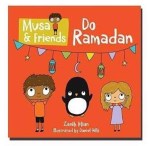
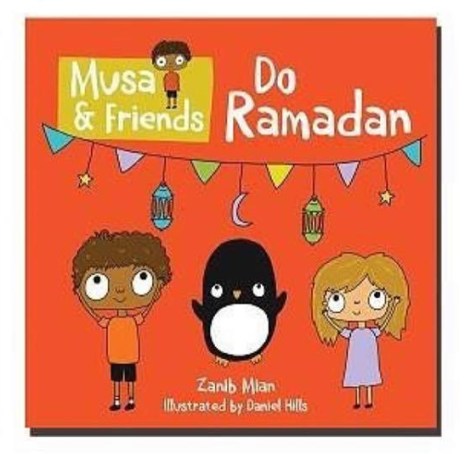
Musa & Friends Do Ramadan by Zanib Mian illustrated by Daniel Hills

Standard
Musa & Friends Do Ramadan by Zanib Mian illustrated by Daniel Hills

musa ramadan

Zanib Mian has really set the standard for quality affordable children’s Islamic books title after title.  So, I really was on pins and needles waiting for these Musa & Friends board books, and then I got one (thank you Crescent Moon Store) and part of me is really disappointed, and part of me is wondering what I’m missing.

They are at cheapest $8 a book, and there are 8 pages.  Yes, the binding and page thickness is awesome, and the 5.5 square size is adorable in a toddler’s hands, but I guess I wanted more.  More pages, more feeling or tone of Ramadan, a little more substance.
IMG_4711

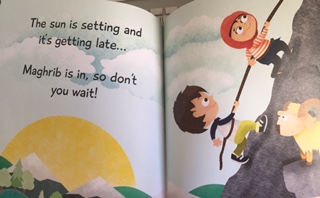
The illustrations are super fun and Zanib Mian has a history of writing toddler and preschool appropriate books, so needless to say I was surprised that I didn’t love this book.  Granted I’ve only seen the Ramadan book, and maybe the others in the series are much more satisfying, or maybe when you have all four together, they round each other out, which I’m really hoping is the case.

The text amount per page is great for littles, but the content is rather random in my opinion. They little diverse family and their penguin love Ramadan, they go to the masjid for taraweeh, they wake up for suhoor, they read Quran, they give money to the poor, they eat too much iftar and they love eid.

IMG_4712

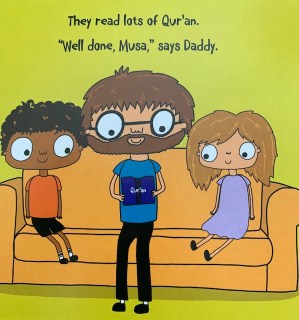
The book is meant for Muslim children as no details are given about what iftar or suhoor mean or that Ramadan involves fasting.  The illustrations won’t help much either in explaining the terms or even teaching concepts as the page on giving to charity has Musa and Penguin putting money in a jar, Musa’s dad is reading Quran, even though the text says, “Well done, Musa,” and even the penguin says “Gobble, gobble, gobble,” when eating(?).

IMG_4713

The books are cute and if you aren’t overly critical and you receive the book as a gift you will probably be very happy.  I just expected more and after the smallness of size of “A Young Muslim’s Mindful Book of Wellbeing” combined with the shortness of these books, I won’t just blindly order a bunch of Muslim Children’s Books without considering if they are worth it anymore, which makes me sad.
 

Yaseen’s Big Dream by Umm Juwariyah illustrated by Azra Momin

Standard
Yaseen’s Big Dream by Umm Juwariyah illustrated by Azra Momin

IMG_3404.jpg

Kids love to stretch their imagination and do the impossible, but for Yaseen Muhammad, his dreams at night are his favorite activity to see just how far his abilities can go.  In this 21 page paperback 8.5 x 8.5 square book, Yaseen Muhammad will imagine his best day ever as the President of the United States and share with kids 1st through 3rd grade exactly what he will make happen, inshaAllah, when he wakes up.

IMG_3401

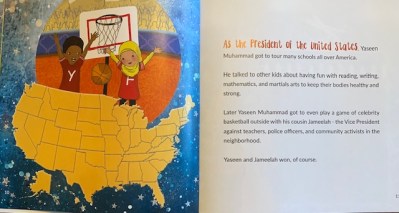
In a very busy day as the first kid president, Yaseen Muhammad dreams of starting the day leading morning prayer in the Oval Office, and then getting his family to help him prepare a special lunch for everyone in every state.  He’ll visit schools all over America and play celebrity basketball with his cousin and vice President Jameelah. He’s Jedda will teach people to start their own gardens, and he’ll give a speech on TV, after all why not, “Nothing is Impossible.”

The pictures are lively and descriptive that the reader and listeners will enjoy looking at them.  The characters are visibly Muslim as the women wear hijab, and in the text it mentions the characters praying, and Yaseen Muhammad dreaming he is the imam.  There is a lot of text on the pages, but the story flows and the information serves a purpose in establishing who Yaseen Muhammad is and connecting him and his dream to the readers.  The text is uniformly on the right with the pictures on the left making the book very convenient if sharing during story time and you are like me and hold the book in your left hand when reading to a group.

IMG_3402

The only thing that struck me as off, was in the illustration of Jameelah and Yaseen playing basketball. Yaseen’s t-shirt has a Y on it and Jameelas an F. Not a J for Jameelah or a Y signaling they are on the same team.  It is minor, but all my kids noticed it too and wondered why.  

A couple of places I stumbled over some of the grammar and wording, but after reading it aloud a hundred times (exaggeration, slightly) to figure out why, I don’t think anything is wrong, it is just a bit awkward, but it is probably me.  For example when Yaseen is speaking to the whole world on TV he says “Every kid can make a difference in your community, in your state, in your country, and even in the world. Dream Big.”  Seems like it should be, Every kid can make a difference in “their” community, in “their” state, no?
IMG_3403

Overall, a good empowering story for all children and one that highlights African American Muslims in text and illustrations.  A great book to have in rotation to encourage kids to dream, make the world better, and believe in themselves.  Alhumdulillah.


Bashirah and the Amazing Bean Pie by Ameenah Muhammad-Diggins illustrated by Amir Doumy

Standard
Bashirah and the Amazing Bean Pie by Ameenah Muhammad-Diggins illustrated by Amir Doumy

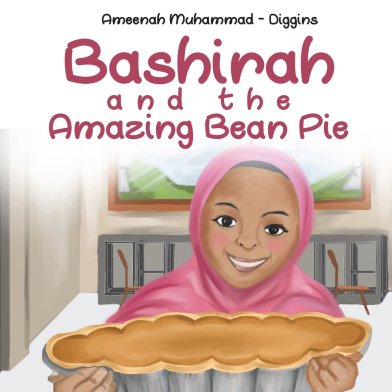
bashirah

Oh, how glorious to learn something new while having things you know presented so well at the same time.  In 42 pages the reader will feel all the excitement of Eid (it doesn’t specify which one, nor does it really matter), sharing your culture with your classmates, participating in a family tradition, cooking with your grandfather, sharing with neighbors, and learning some life lessons about diversity from the Quran.  Ages 5 and up will enjoy the story and seeing Eid being celebrated, and older kids that know about Eid will love learning about bean pies and appreciate the African American Muslim culture, if they don’t already know about it, and those that do will hopefully feel proud to see it represented.  The best part is that there is a recipe at the end, that I can’t wait to try.

IMG_3237

It is the end of the school day and the teacher is reminding the students that Monday is Culture Day and they need to bring a dish to share, over the weekend it is also Eid.  Bashirah is excited that this is the first year she will get to make her own bean Pie with her Pop-pop who is going to teach her the family recipe.

IMG_3238

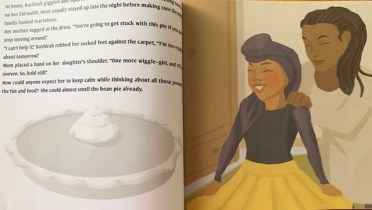
At home Bashirah can’t stay still as her mom puts on the finishing touches of her Eid outfit, she is so excited for all the fun about to happen.

IMG_3239

Early the next morning the family all heads out to the Masjid for Eid Salat in their beautiful clothes.

IMG_3240

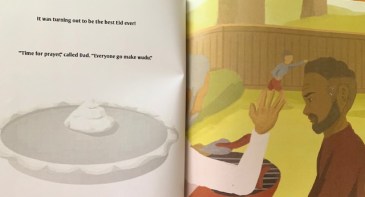
After prayers its cooking and eating time as Bashirah and Pop-pop make the pies and enjoy a big meal as a family.  Three generations make salat together, food is taken to the neighbors, and then the big reveal.  All the desserts, including Bashirah’s are served, and alhumdulillah it is delicious!

IMG_3241

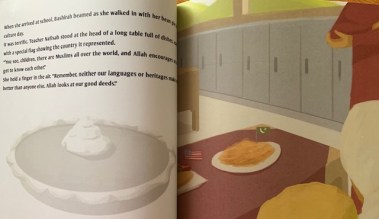
Back at school on Monday the teacher reminds them all that, “neither our languages or heritages make us better than anyone else.  Allah looks at our good deeds.” She quotes Surah Hujurat, ayat 13 “Oh, mankind indeed we have made you into nations and tribes, that you may know one another.  Indeed the noblest of you in the sight of Allah (swt) is the best in conduct.” And they all dive in to the delicious desserts including Bashirah’s wonderful pie.

IMG_3243

My only criticisms of the book are the margins and the amount of text on the pages.  I have a hard time reading the book aloud to small groups as the margins are so small and run in to the binding.  Also, some pages have one sentence on them, some have nearly a half a page of text.  This disparity can be off putting at the start of the book to appeal to younger listeners and early readers.

IMG_3244

The illustrations are warm watercolor complimentary pictures.  There is nothing wrong with them, but I wish they were just a tad more defined and vibrant like the picture on the cover.  I love the warmth they radiate, but a little more detail would give the listeners something more to look at on the text heavy pages.

IMG_3242

All in all a great book that I am glad I own and can share with my own children and those in my community, now if I can convince someone to make me a bean pie I’ll really be set, alhumdulillah!


Purity & Prayer: A Rhyming Picture Book of Sacred Rulings by Ameena Bint Abdir Rahman illustrated by Reyhana Ismail

Standard

IMG_2921

This book is definitely non fiction, and I’m reviewing it because I figure some of you like me, have looked at it online and wondered how it can do everything it claims.  The book is 50 pages, fully illustrated (with faces), meant for children before the age of accountability, written in rhyme about fiqh (wudu and salah) according to the Hanafi madhab, and everything is scholar supervised and checked.  I’ve read it a few times now, and yeah, it does all it claims to, and is a great tool and resource, and book to have around for kids of all ages, plus I think they’ll really enjoy it.

IMG_2922

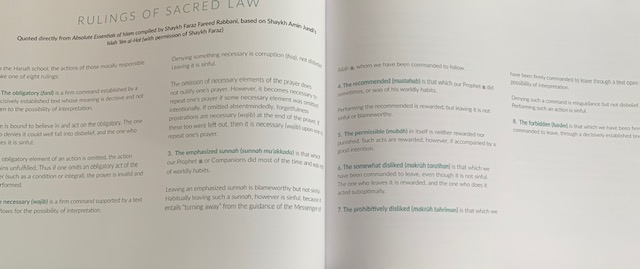
The book has a lot of information and disclaimers about how the author wrote the book and verified the information, there is a dua, preface, and Author’s Note at the beginning, and Rulings of Sacred Law by Shaykh Faraz Fareed Rabbani, an Appendix, References, Glossary of Arabic Terms, messages from the Fiqh Teachers, Author, and Illustrator at the end.

IMG_2925

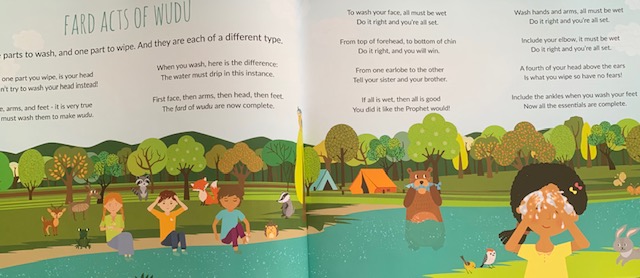
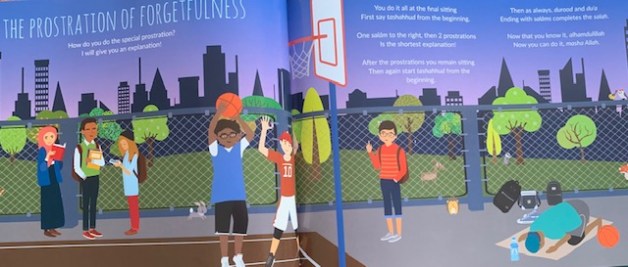
The 8.5 x 11 hard bound horizontal glossy book is divided into sections.  The first section is Du’a and Salah, followed by Purity which covers things like fard parts of wudu, what breaks wudu, etc..  The next section is Prayer and covers the fard conditions and integrals within prayer, wajib things you say, how you recite, postures, what breaks your salah, and incorporated in to the sections are what would need to be redone to make your salah valid.

IMG_2923

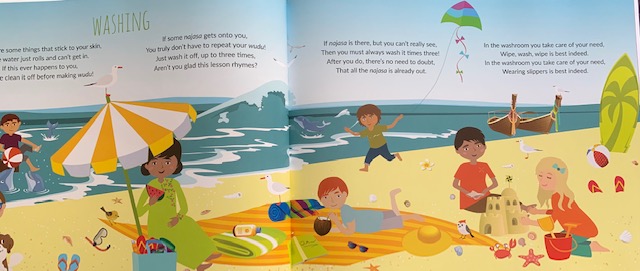
Each subheading is a two page spread with a title and either rhyming couplets or quatrains to convey the information.  While naturally at some parts the rhyme is incredibly forced, but because I found myself learning things, I wasn’t as bothered by it as I thought I would.  The repetition sometimes got jarring, but again, because the complex facts are being brought down to a child’s level ,and yet isn’t belittling, I’m willing to overlook a lot. 

I like that it isn’t just facts, the Appendix is there for that, but also similes and metaphors that will help put the concept in perspective.  Du’as can be made at any time like making a call to Allah.  Prayer is like visiting a friend, you have to go at the time you were invited, dressed nicely, wear appropriate clothing.  

IMG_2924

The breakdown of when you have to repeat the whole salah, or do a special prostration is incredibly helpful.  As is knowing what laughter breaks wudu and what breaks wudu and salah.  It is so great that children will see how detailed our religion is, and how everything has an explanation.  Yes, you shouldn’t laugh while praying, but clearly it happens, so when it does this is what you do.  The approach makes the book grow with children as their knowledge and awareness increases.

IMG_2926

I hope to read a two page spread each night with my kids, and have them discuss.  My kids range in age from 3-12 and while my 3 year old won’t add a lot, he will be entertained by the rhyme, fascinated by the pictures, and be included in the early introduction to fiqh.  InshaAllah the older kids will learn or review something and know how to find such knowledge if they have questions in the future.

IMG_2927

Undoubtedly, such a book, was a huge undertaking, may Allah swt reward all those involved, I was pleasantly surprised and greatly impressed at how the book reads, presents the information, and still connects to younger children, mashaAllah.


A Race to Prayer: Sulaiman’s Rewarding Day by Aliya Vaughan

Standard
A Race to Prayer: Sulaiman’s Rewarding Day by Aliya Vaughan

a race to prayer

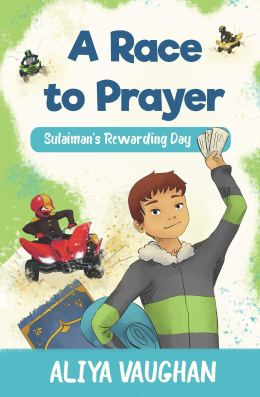
This 56 page (only 38 pages of story) early chapter book is a simple book with a lesson.  For kindergarten to 2nd grade readers the book could be a short story, but the added minuscule details (how he got in the car, slid over, and buckled up) and the illustrations, flesh the book out in to seven chapters with a note for parents/educators at the beginning, and sections of: evidence from the Quran and Sunnah, comprehension questions, inspiration behind the story, glossary and information on the author at the end.  The book isn’t bad, just kind of dry and bare bones.  Satisfactory for young readers that enjoy quad races, and ideal for those that whine whenever it is salat time.

SYNOPSIS:

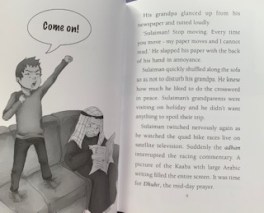
Sulaiman loves watching quad races and playing football (soccer, the book is British), but feels like, “Every time I want to do something exciting, it either rains or it is time to pray.” one afternoon when he is feeling particularly grumpy, his dad offers to take him to watch the quad races at a nearby stadium.  Grandpa joins them and grandma sends them off with lunches and duas.  First the car won’t start, then they take a bus and wait in line.  Once they are inside the day looks up, the races are fun and then it is Thuhr time.  Sulaiman wants to wait until a break, but it is winter and the days are short meaning Asr will be approaching fast.  They go find a place to pray and when they return their seating section is closed.  Part of the roof fell in due to the rain.  Feeling fortunate that they had left to pray, Sulaiman sees the value of praying on time in this duniya.  They later are given better seats and Sulaiman feels blessed that they had gone to pray.

The story was inspired by a real event, according to the “Inspiration Behind the Story” at the end, where the author says that her husband was at a football match in Algeria when an earthquake struck.

IMG_0029

WHY I LIKE IT:

I love that the character is relate-able to most of our young Muslim children.  He is a good kid, but has a hard time stopping what he is doing to pray.  He has to be reminded to make wudu and brush his teeth.  I like that grandpa gets to come along, but I wish he would get to tell some of his stories, rather than just have Sulaiman shush him and be annoyed.  Similarly, I like that the dad is a “fixer” but some character development would have been really great.  I understand the reading age isn’t tempted by back story, but a little investment in the characters would make the climax that much more intense.  I was surprised by the roof falling in, but it snuck up so quick and was resolved equally fast, that I didn’t really feel it.

Also, I am not entirely sure what quad racing is. I mean I get that they are 4 wheelers racing on a stadium track.  But, I didn’t realize it was such a thing to be watching it on tv and then heading to watch it live nearby.  I’m glad I learned that kids dig it in Britain, but I’m thinking that it might be a little foreign .  A soccer match or another race, might have made the story a bit more appealing.

The book is for Muslims by a Muslim despite the glossary at the back. The pictures aren’t great, but they make the page breaks appeal to the younger kids.  The font, binding, and presentation makes for a nice looking and feeling book.

IMG_0030

FLAGS:

None, alhumdulillah.

TOOLS FOR LEADING THE DISCUSSION:

This book would be really great in small groups.  I can see it being used in Sunday schools or in Islamic schools, where Language Arts teachers and Islamic Studies teachers crossover to drive the importance of salat home.  I think this would easily inspire this age group to then write their own copy-cat stories of why salat is important.  The questions at the end could even make it like an extra credit novel study or a read aloud story with the questions used to verify comprehension.

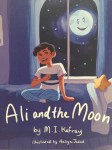
Ali and the Moon by M.I. Kafray illustrated by Aaliya Jaleel

Standard
Ali and the Moon by M.I. Kafray illustrated by Aaliya Jaleel

IMG_1421

I originally bought this book in Ramadan and had hoped to review it so that those looking for Ramadan books could benefit. But it isn’t Ramadan specific, just moon themed, and I really was so disappointed with the binding quality for the amount I paid for it, I didn’t think it was fair to review the story until I could get over the number of blank white pages in the book, and the overall copy-shop self-printed and bound vibe that the book emits as soon as you hold it.

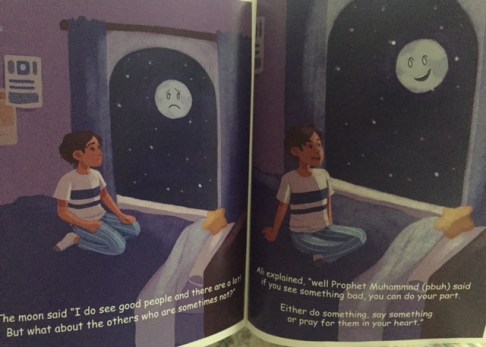
The premise of the book is the hadith that if you see something bad you should change it with our hands, and if you can’t, then change it with your tongue, and if you can’t do that, then pray for them in your heart. 

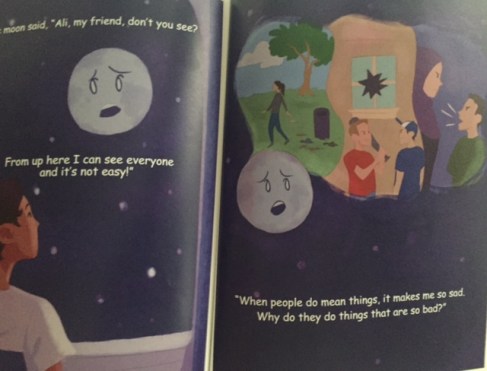
The 16 page book starts off a bit awkward, with the boy just staring at the moon, but by page five, the story hits its stride and is sweet.  The moon dims and is sad about the state of the world.  Ali starts talking to the moon in rhyming lines, and convinces him that there is still good in the world.  The moon and Ali decide that at night they will pray for the world and the people in it.

ali inside2

The end of the book has the hadith and the surahs one should say before going to sleep: Surah al-Ikhlaas, Surah al-Falaq, then Surah an-Nas and lastly, Ayatul Kursi.

The illustrations are cute, they are expressive and the moon and boy sweet.  I just wish the paper had more weight and that the story a bit longer.  A lot could be discussed with the premise of the Muslim boy talking to the moon with a great vantage point.  More specifics and more inspiration would have made this mediocre, albeit expensive book, great.

ali inside


Mustafa and Arwa go on a Prayer Adventure by Mekram Mohammad

Standard
Mustafa and Arwa go on a Prayer Adventure by Mekram Mohammad

mustafa-and-arwa.jpg

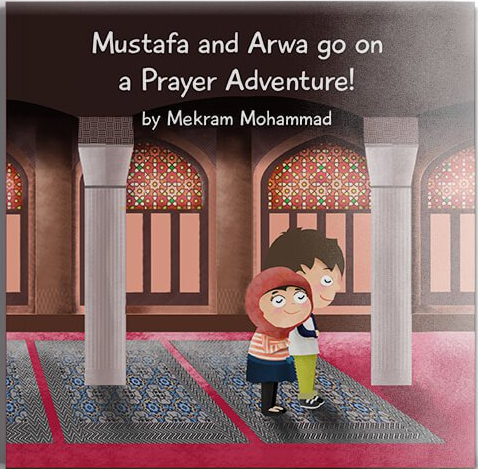
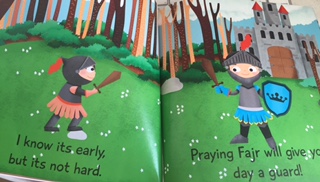
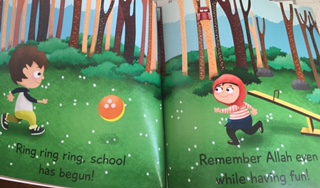
This short rhyming book introduces toddlers and little ones to the five daily prayers as it presents the brother sister duo on a typical day.  Ok, so maybe not a typical day, unless dressing up as knights and battling each other, winning medals, and climbing mountains is typical.  But, it presents the salats in time sequence that little ones can understand, more than as hours on a clock or as the various position of the sun.  Fajr is early, and it guards your day, then you go to school, but the book reminds you to remember Allah, then you take a break for duhr and if you do, inshaAllah Allah will help you pass, then you come home and have a snack and then pray Asr, etcetera.  By combining daily activities like spending time with family and reading Quran with the five prayers makes the routine seem doable and inshaAllah making it regular will truly allow us all to battle, win, and reach new heights, ameen.

FullSizeRender (57)

The book is a great tool to learn the names of the prayers, and their order, while strengthening a child’s Muslim identity.  There is no glossary or further detail about Salah or how it is performed, but I think assumes that that the reader would be able to provide additional information to the listener.  The book is more to get children excited to pray, and get closer to Allah (swt).

FullSizeRender (56)

The illustratrions are adorable and the font and text appealing  to little children.  The book is one in an adventure series by Muslim Pillars, and I look forward to reading Mustafa and Arwa’s other adventures.

FullSizeRender (55)

A Bedtime Prayer for Peace by Akila Dada & Sukaina Dada illustrated by Michael Wagstaffe

Standard
A Bedtime Prayer for Peace by Akila Dada & Sukaina Dada illustrated by Michael Wagstaffe

MKPLC308-Bedtime-Front-Cover_frontzoom

This is a slow, deliberate, thoughtful book, that does a good job or setting a prayerful tone with short rhyming sentences.  Intended for preschool age children, early elementary children also will enjoy this book in rotation at bedtime or nap time.  

FullSizeRender (9)

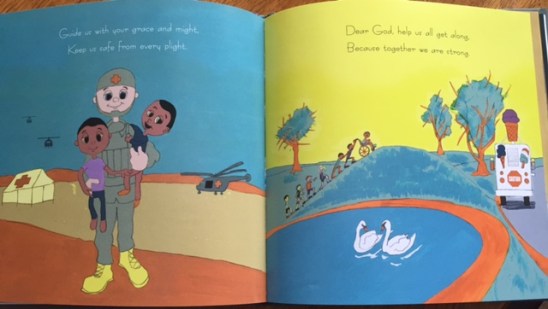
The book thanks the creator and asks for protection for all things small and large, seen and unseen, in a gentle dreamlike manner that really could go on for so much longer than the 32 pages present.  Some items mentioned like the plants and trees a preschooler will know, but some of the concepts introduce little ones to something bigger, “Give shelter to families who need a home, Help all the people who feel alone,” “Guide us with your grace and might, keep us safe from every plight.”  

FullSizeRender (8)

The prayer is voiced by a mom to her young boy, Esa, and the illustrations show traditional subcontinent dress as well as western clothes being worn.  The author’s are Muslim but the book is not overtly Islamic.  Sometimes the mom is in hijab, but when in the home she is not.  More distinctly, the word Allah is not used, only God is, and thus the book and prayer, really would work for any monotheistic child as the book does say, “Dear God, protect my beautiful son, You are the Truth. You are the One.”

FullSizeRender (10)

The true treasure of this book is that the main character is in a wheelchair.  Showing different abled characters is always such a blessing as it normalizes it and inshaAllah makes us more accepting when out and about.  The illustrations don’t wow me, but their quiet simplicity keeps the pace of the book, and don’t scream for attention.  Some of the smaller details are endearing and help sleepy eyes linger on page without feeling rushed.

With a hard 8×8 cover, the book is a good size for little hands to read over and over again, alhumdulillah. 


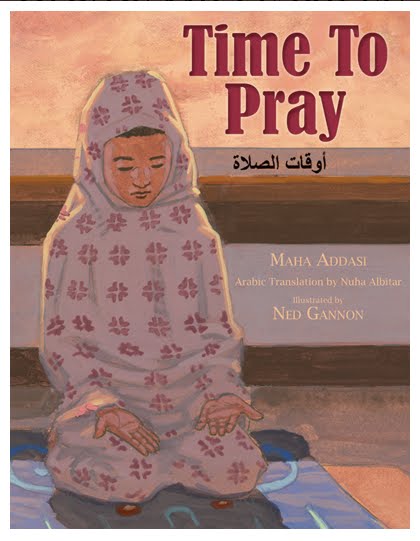
Time to Pray by Maha Addasi, Arabic translation by Nuha Albitar, illustrated by Ned Gannon

Standard

Time to Pray by Maha Addasi

On the surface this book presents itself to be fabulous: the large size, the dual language, the length (32 pages), and concept.  But alas, sadly, I was a little let down with the story, the characters, even the pictures.  The details about the characters are vague, the reader doesn’t know where the story takes place, where the girls parents or the rest of her family are (until the end), why she doesn’t know how to pray, and the climax isn’t really much of a surprise.  After reading this post from the author I appreciate that she left the location vague, to as not be burdened by one specific country, and I can see the origins of why the call to prayer from her own childhood is what the story focuses on.  I can also imagine the wealth of information and details that she had to sort through to decide what is needed to carry the story and what would ultimately repel a young reader.  All that in to consideration however, still didn’t connect me to the story of young Yasmin and her Grandma. Not to mention I didn’t have all the author’s justifications or rationale before reading it.

 IMG_3163

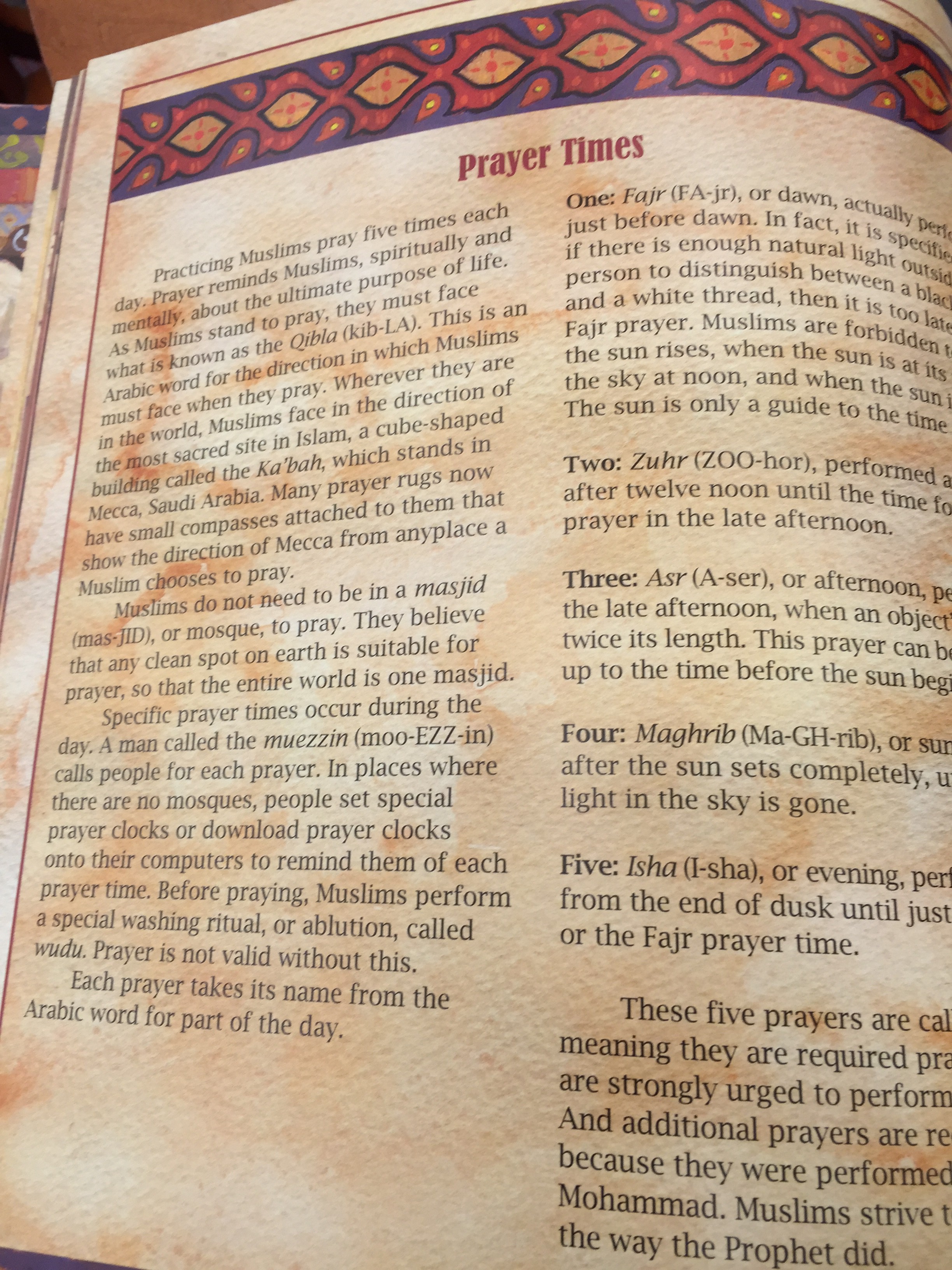
The pages have both English and Arabic text and is written for older children. Despite the initial appearance of being a children’s picture book, it has an AR level of 4.2 and has some Arabic words in the text, an Author’s Note in the back and detail of Prayer Times in the back, as well.

IMG_3164

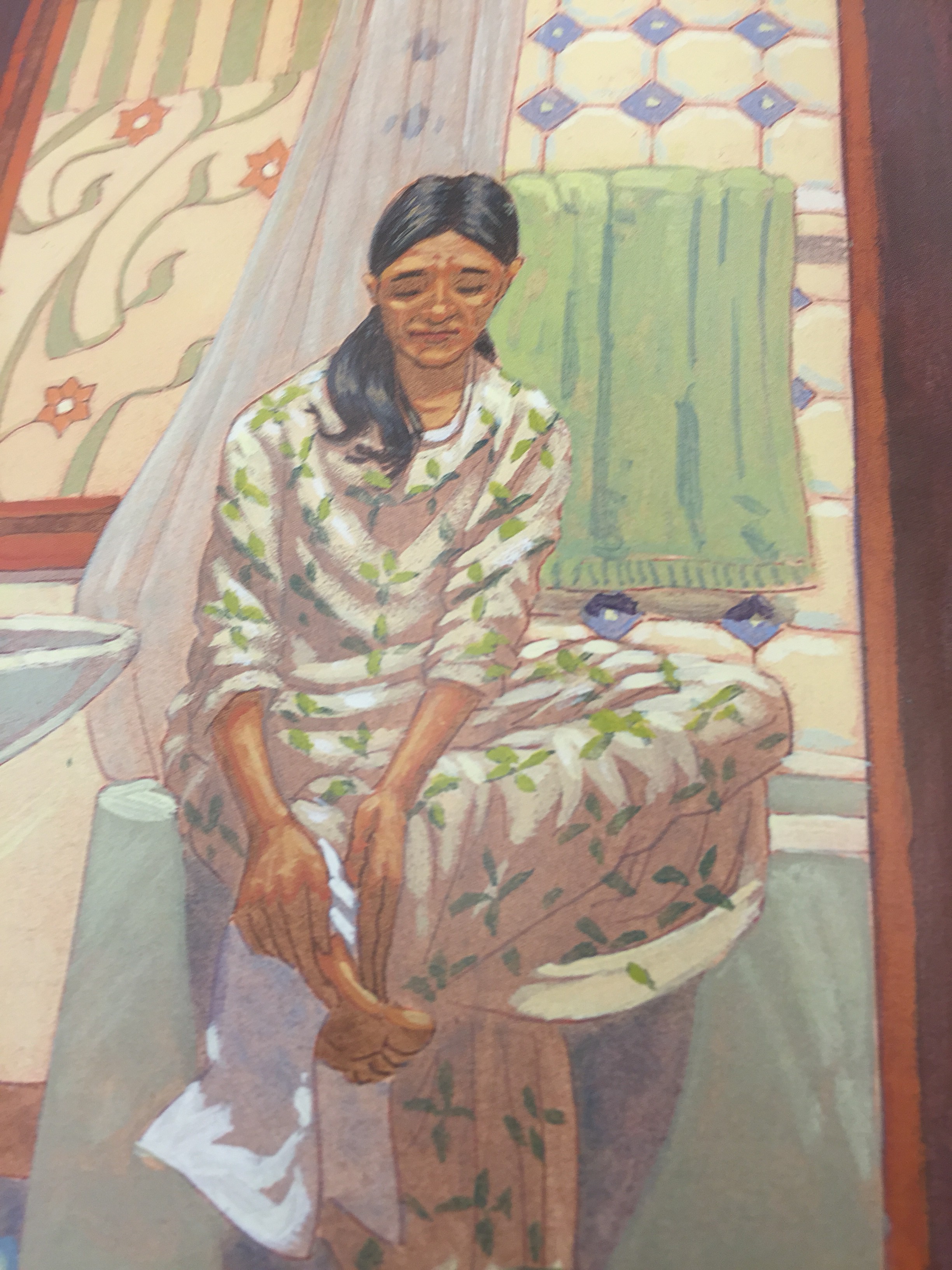
The pictures I want to say are beautiful, but for some reason I didn’t love them.  I am no art critic and they are detailed and large and I should probably ask a child, but here is one for you to decide your thoughts about them on your own.

IMG_3162

Additionally I’m not sure if she is washing her foot her, as part of Wudu, the obligatory cleansing before prayer, which in this case, would be portrayed erroneously, or if she is drying her foot, either way Grandma looks sad to me and not content or excited to prostrate to her creator.

All is not lost though in this book about a girl learning about prayer with her grandma and being surprised by a prayer outfit. prayer rug, and Athan clock when she gets home and finds while unpacking.  But some of the best parts are subtle and might not be gleamed by unassisted readers.  For example how Grandma dresses at home versus when she is out, that because Yasmin is young she is not reprimanded for not praying, or how patient and loving the Grandma is in a slower paced environment.  Overall, the book is unique in that it gives an introduction to Muslim’s prayers to both Muslim and non Muslim readers alike, but for such potential I felt it fell short of being fabulous.