Tag Archives: Non Fiction

Hawa Abdi by Emna Ennaifer illustrated by Anastasiia Bielik

Standard
Hawa Abdi by Emna Ennaifer illustrated by Anastasiia Bielik

This picture book biography starts with Dr. Hawa Abdi being born in Mogadishu, Somalia and shares with readers pivotal moments that helped define her academic and humanitarian journey as Somalia’s first female gynecologist and the founder of the Doctor Hawa Abdi Foundation.  The large horizontal pages with brightly colored illustrations help draw the readers in to the often advanced vocabulary filled text.  According to the publishers, the book is meant for ages 5-9, but I think seven and up, with some assistance, will better understand some of the diction, accomplishments, and what made her such a globally recognized figure.  I was surprised that Islam, and her being a Muslim is not mentioned at all in the book.  I actually doubted my knowledge of her and when I finished the book, I Googled to verify her religious association.  The book starts with a map and concludes with actual photographs that are referenced, but none of the facts about Hawa Abdi or where the information came from are sourced.  While I appreciate that her story is being brought to children through this book, I feel sourcing should have been included, and as a book that is part of a series meant to highlight “inspiring people from the Arab-Muslim world,” I was disappointed that there was no Islam whatsoever articulated in the text.

The story begins by showing little Hawa as an independent girl walking miles alone to get water from the river.  She loved school and often “stayed after school to look at the terrestrial and celestial globes.”  When her mother was in the hospital, Hawa spent months staying with her and observing the doctors.  When her mother passed away she decided she would become a doctor.  She took care of her four little sisters, and studies hard, eventually earning a scholarship to study medicine in Kiev. Her family supported her and she was off to study, promising to return.  When she returned she set up a clinic that soon become a large hospital.  When war broke out her hospital became a village of hope as she took people in, started schools, and kept the inhabitants safe from intruders.

The book really focuses on Hawa becoming a doctor and a humanitarian, thus making any personal remarks about her generalized and lacking.  For example the jump from taking care of her siblings to getting a scholarship is very abrupt, the book doesn’t mention marriage or having children, her daughters are just suddenly there helping run the hospital.  As a result the timeline is non existent and readers don’t know how old she was when her mom died, how old she was when she went to Kiev, when the war started, etc..  With any biography certain facts undoubtedly must be left out, but even a timeline in the backmatter would have been beneficial. 

Game Changers: Stories of Hijabi Athletes from around the World by Charlene Smith illustrated by Natalya Tariq

Standard
Game Changers: Stories of Hijabi Athletes from around the World by Charlene Smith illustrated by Natalya Tariq

This 80 page compilation of hijabi athletes from around the world focuses on 13 women that the author interviewed first hand.  Featuring athletes, sports and even countries that might be relatively unfamiliar to the targeted middle grade audience, the book will appeal to both boys and girls, Muslims and non Muslims.  Many included were the first to play with hijab, or the first female to play in their country, but each journey and experience is unique.  Each hijabi athelete and their sport is introduced to the reader over four pages with beautiful artwork, and pulled quotes.  A common issue I have with these types of books is wondering how those featured were chosen, and while this book doesn’t articulate it clearly, at least it sets some parameters in the forward and introduction, that for me at least, allowed me to appreciate the book that much more.  The book ends with four pages of “More Hijabi Athletes” that could have been included, as well as information on perseverance, hijab, modest sportswear, a glossary, resources, index, and acknowledgements.  There are real photographs included at he beginning and end of the book of various featured athlete in action. 


I can’t really review this non fiction book in my normal style, so I will simply say that the writing is clear and easy, at times details seemed overly vague, but to keep the continuity of the tone, and the reader engaged, I understand why specifics perhaps were not included.  In the first feature, I wish the infamous photograph would have been shared so the reader could see for themselves what the text was discussing.  Overall, this resource to inspire our Muslim girls is much needed and beautifully done.  I absolutely love the artwork. LOVE IT. The women are beautiful, strong, and the artwork conveys that for each of the 13 athletes.

The athletes featured:

Egyptian beach volleyball player Doaa Elghobashy
UAE hockey player Fatima Al Ali
Basketball player Fitriya Muhamed
Afghani soccer player Hajar Abulfazl
Syrian-American runner Rahaf Khatib
Basketball Player Kiandra Browne
Pakistani weightlifter Kulsoom Abdullah
Parkour Sara Mudallal
Downhill Mountain Bike Racer Sumayyah Green 
Iranian Triathlete Shirin Gerami
Kenyan Archer Shehzana Anwar
Wrestler Latifah McBryde
Skateboarder Nadeen Alhamad


Lion on the Inside: How One Girl Changed Basketball by Bilqis Abdul-Qaadir with Judith Henderson illustrated by Katherine Ahmed

Standard
Lion on the Inside: How One Girl Changed Basketball by Bilqis Abdul-Qaadir with Judith Henderson illustrated by Katherine Ahmed

This nonfiction picture book memoir is about Bilqis Abdul-Qaadir’s love of basketball, accomplishments, and ultimate decision to choose her hijab over her career.  For elementary readers the 40 page book reads like a story, and shows what it means to work hard, be talented, stay true to yourself, and be willing to fight for what you believe in.  As the Massachusetts State high school basketball scoring record holder and the first NCAA hijab wearing Muslim basketball player, she was forced to leave the fight on the court and instead fight to change the rules regarding headgear for women playing international professional basketball.  She won the fight, but unfortunately it was too late for her, she now advocates for Muslim girls in sports to not have to choose to cover or play.

The book has a flow as it starts from her being born into a basketball family, and shooting hoops at three.  She plays with her brothers with her grandma, Mudgie, always cheering her on.  Her mother’s strength grounds her and at age 12 she puts on her mother’s hijab and heads out to play ball.

At 14 she is wearing her own hijab and playing on the high school team, her hijab is her super power, and reminder to be fierce, faithful, and kind. When the ref halts the game and says she can’t wear her hijab, her team stands with her, until the game resumes.

She gets a full scholarship to the University of Memphis and plays her final season at Indiana State.  She meets President Obama and beats him in a game.  When she decides to play international though, again she gets told she can’t unless she removes her hijab. She chooses her faith, and when she finally gets the ban overturned, it is too late for her, but not for other Muslim girls.

The book concludes with some photographs, additional information, discussion questions, and places to discover more.  I appreciate that it shows her praying, but I wish it gave just a little insight as to why Muslim women cover, why it is part of our faith.

I found my copy at the library, it is available to purchase here.

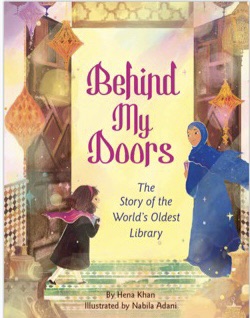
Behind My Doors: The Story of the World’s Oldest Library by Hena Khan illustrated by Nabila Adani

Standard
Behind My Doors: The Story of the World’s Oldest Library by Hena Khan illustrated by Nabila Adani

img_3557-1

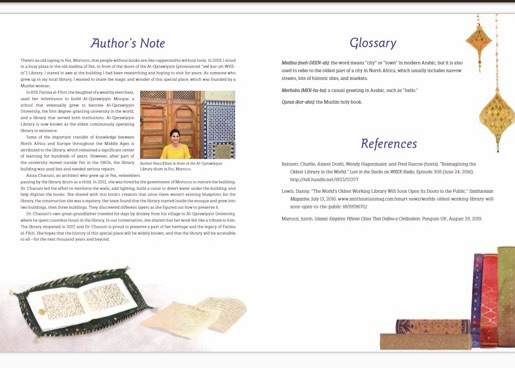
The world’s oldest library proudly stands in Fez, Morocco: started by a Muslim woman, restored by a Muslim woman, and in this 40 page book the library itself tells its own story in a book authored by a Muslim woman.  The personified library shares a few highlights from its early start as a corner in Fatima Al-Fihri’s masjid and university to collections spanning multiple buildings, from a bustling center of learning and knowledge to a place of disrepair and neglect.  Staying on an early elementary level, the informative author’s note and references make the book engaging for older readers as well, and an incredible addition to bookshelves everywhere.

img_3558-1

The book starts with the library introducing itself and welcoming the reader. “Merhaba! I am Al-Qarawiyyin Library–the oldest library in the world.” At over a thousand years old, the library begins at the hands of Fatima Al-Fihri in 859 who dared to dream big and created a space of learning and worship in Morocco.

img_3559-1

As the courtyards and collections grew, seekers of knowledge, from all backgrounds, gathered to discuss, debate, and learn.  Special rooms with special locks kept books safe: a Quran written on camel-leather, a philosophers drawings in gold ink.

img_3561-1

Nearly destroyed once by a fire, the library endured, but over time the rooms were no longer filled with the bustle of people.  One day a small girl, Aziza, paused at the door, but did not enter for many years.  When she did return, she came as an architect with a team to restore the library and invite people back in to read, learn, and dream.

img_3565-1

It delights me that such an important story is available to be widely learned from and appreciated.  You can preorder a copy here from Amazon.

img_3566-1

Letters from a Prophet by Zimarina Sarwar illustrated by Giorgio Bacchin

Standard
Letters from a Prophet by Zimarina Sarwar illustrated by Giorgio Bacchin

I’m not a fan, as a general rule, of lift the flap books for toddlers (they just tear them), so imagine my delight when I was completely captivated with a lift the flap book for middle grade and up! And the flaps are not trivial, they reveal letters from Prophet Muhammad (saw), maps, interesting facts, and make an already impressive, beautiful non fiction picture book, feel interactive and somehow even more enticing.  The book gives context and information for four letters sent by RasulAllah to Emperor Heraclius, Al-Muqawqis, King Chosroes, and Al-Nijashi.  Each section has the story of the letter and then a two page spread that details lessons we can learn.  The book itself starts with an introduction, a section about the seal and where the ideas to send the letters came from.  It concludes with final thoughts and a bibliography.  I do wish the book was perhaps checked by a scholar, but at least it has sources at the end.  Truly, I learned so much from reading this book and discussing it with my kids, I’m even thinking I might need to gift my mom a copy for Eid. It works for adults and kids alike, a few pages at a time at bedtime, in a classroom setting, as a resource.  I hope books like this become the norm for teaching Islamic history to our children, it really has raised the bar, alhumdulillah.

The book starts with the cover, the large 55 page hardback book with raised images, really sets the tone that this is going to be an experience.  The introduction starts with the basics explaining the value of lettering writing in history, it then establishes where the idea came from to reach out to Byzantium, Egypt, Persia, and Abyssinia.

It gives a brief timeline of the life of Prophet Muhammad saw, tells about the value of seals and what the Prophet’s seal looked like before starting the letters.  Then the four sections begin, the first being to Heraclius the Emperor of Byzantium, then Al-Muqawaqis also known as the Ruler of Egypt: Jurayj ibn Mina-Kiolos, Leader of the Copts, then King Chrosroes also known as the Shah of Persia Khosrow al-Parvaiz II, and then finally Al-Najashi also known as King Negus of Abyssinia As’hama Ibn Abjar.

The Final Thoughts discuss the impact even though most did not convert and offer the reader different aspects to consider while looking at the bigger picture.

The book won the Muslim Book Awards 2023 Non Fiction category and is available for purchase here at Crescent Moon Store.

The Muslim Girl’s Pocket Guide to Growing Up by Yasmin El-Husari illustrated by Noon Eltoum

Standard
The Muslim Girl’s Pocket Guide to Growing Up by Yasmin El-Husari illustrated by Noon Eltoum

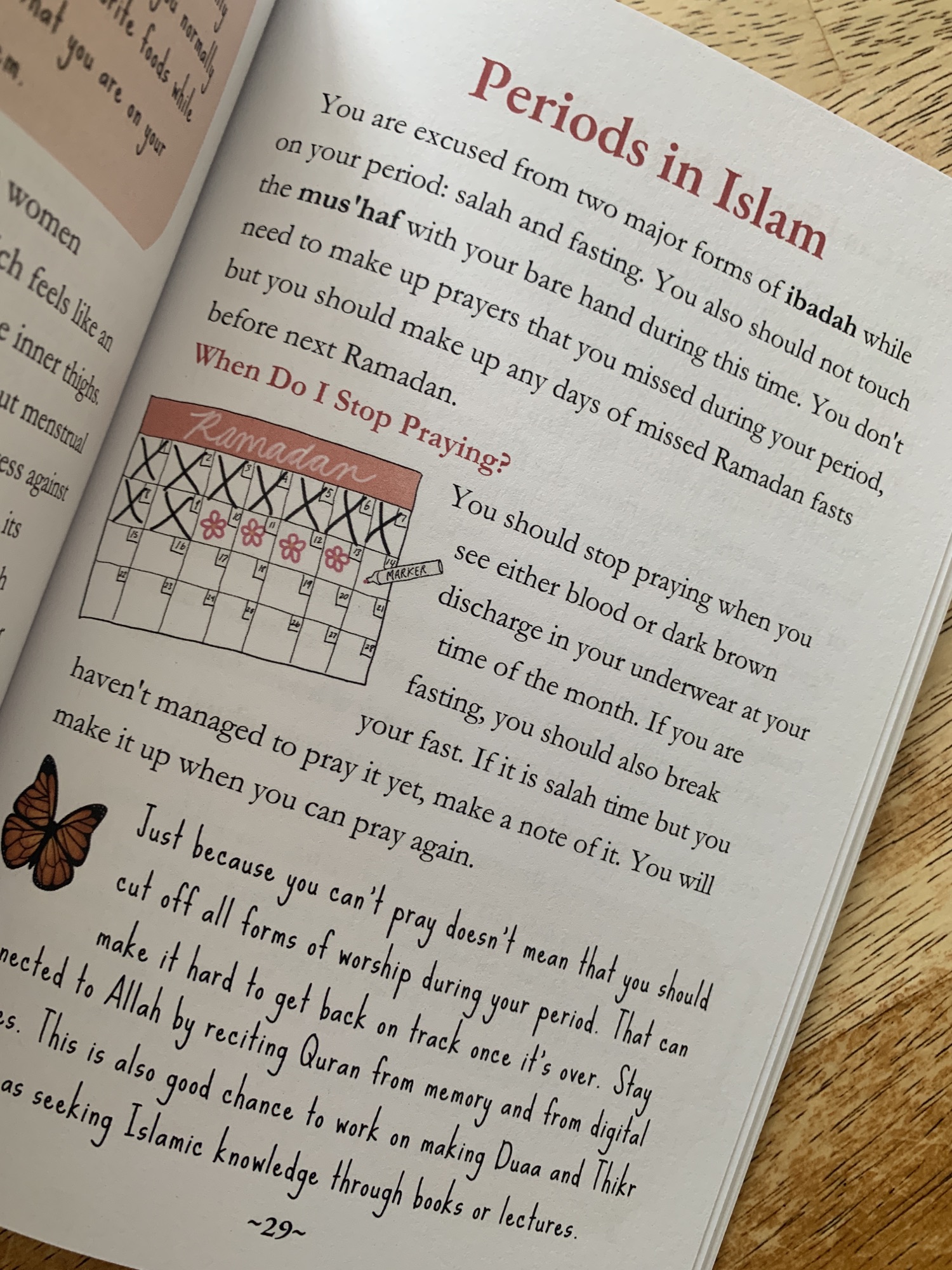
I still get asked fairly frequently about maturation books for Muslim kids. Boys are another story, but for girls, I’ve always had to settle on a non Muslim book that gives an introduction and some conversation starters, bur rely on the adult to provide the Islamic perspective.  Alhumdulillah, those days are over, I can now recommend this 47 page book as a great resource to hand to a young Muslim girl to read independently and/or together with a trusted adult.  The conversational text, the Islamic centering, the complimentary subtle illustrations, allow the book to be informative, but not intimidating.  For girls on the cusp of puberty it shows them what to expect and it normalizes what they are going to experience in terms of body changes and hygiene, all within an Islamic framework.  I do wish that it noted if scholars approved the text.  The author is a teacher and the illustrator an MD, but a statement at the beginning asserting the accuracy would give additional credibility to the contents.  In full disclosure, the author was my daughter’s teacher, but none of my kids are currently in her class, and I purchased the book on my own.  Truly the book is so desperately needed, the fact that it is well done is something I am happy to share, and inshaAllah, inshaAllah a book for boys will be forthcoming.

The book starts with an introduction from the author and then a table of contents.  Growing Up, Seeing Spots, A Hairy Situation, Body Safety, A Sweaty Dilemma, Tahaarah!, Periods: The Big Change, Periods in Islam, Discharge, Feminine Protection, Bra Measuring Guide, and Glossary.  There is not a lot of talk about moods, emotions, friendships (relationships), it really is streamlined to cover the body’s changes and practical tips through an Islamic lens.

The tone is very reassuring that what a girl is experiencing or about to experience is normal, something all women go through, nothing to be embarrassed about, and nothing to feel isolated by.  Even the glossary reinforces this this tone by explaining the medical terms and Islamic terminology used.  If a girl reads it alone, she will get that messaging, and hopefully feel empowered to embrace her changes and reach out if needed.  If one is reading it with an adult, the book lends itself easily to discussions that can be more specifically tailored to the young girl, or even a group of girls.

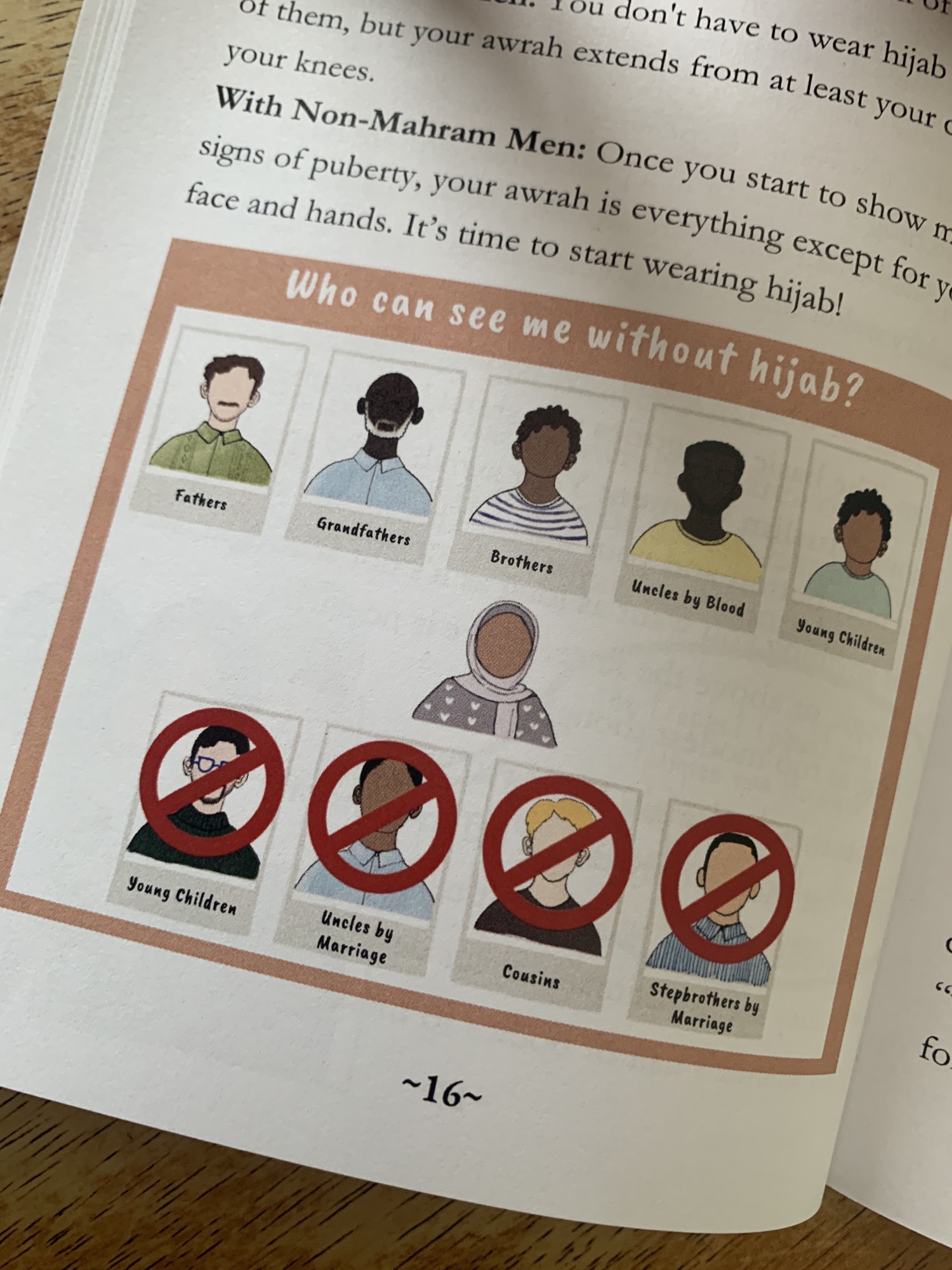
It talks about hijab and provides a chart about who can see you with and without, I’m a bit confused by young children being in both categories, I’m not sure if I am missing something or if it is a mistake.** I also feel like the chapter headings and the section subheadings are not clear as the font, color, and text size are often the same.  The book is small and short, it can be read in one sitting or thumbed through, so the chapters are not particularly necessary, but if it has a table of contents and headings, I feel they should be different in appearance for consistency and ease.

The book is currently available here on Amazon.

**UPDATE FROM AUTHOR:

*Correction Post
Assalamu Alaikum readers both past and present. Jazakum Allahu Khairan for your support and engagement with The Muslim Girl’s Pocket Guide. We had a reader reach out to us pointing out a typo in the text last week. Alhamdulillah that mistake is now corrected. Any book ordered after March 14th should be the correct version of the text. If you bought a copy with the printed mistake it can be returned to Amazon and repurchased inshallah. Again, I appreciate all of your support and Jazakum Allahu Khair 🦋

Craft it Up This Ramadan and Eid by Zayneb Abdullatif photography by Sidoie Djunaedi

Standard
Craft it Up This Ramadan and Eid by Zayneb Abdullatif photography by Sidoie Djunaedi

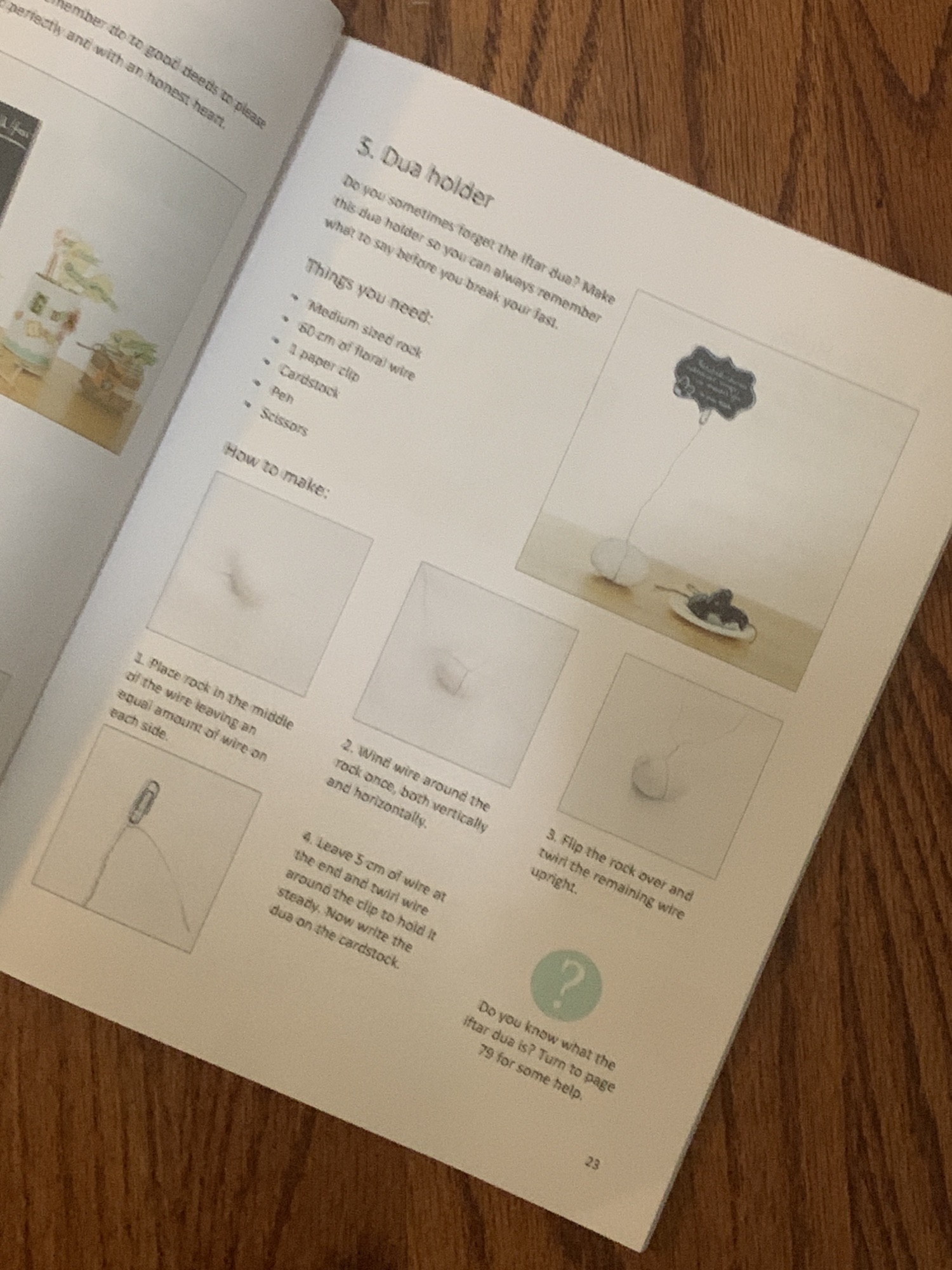
This book is not new, but I saw it at my library and thoroughly enjoyed looking through it.  I’ve hosted, helped, and attended numerous Ramadan craft fairs and story and craft times over the years, and I know everything can be found online.  Yet somehow this 79 page, 2015 published book was kind of fun to look at with my toddler.  It wasn’t overwhelming or super complicated, it was just a nice roundup of simple crafts that you could easily do with items around your home, while dropping little informative bits about Islam, Muslims, Ramadan, and Eid.  I doubt young parents today would even think to look in a library book for Ramadan craft ideas, it is a bit of an antiquated concept in todays day and age.  I highlight it today to remind us that so many have worked very hard to advance Muslim representation in books in all its forms, alhumdulillah, so that we can continue to see ourselves, make strides, and raise the bar.

The book starts with tips for parents and guardians, followed by the basics, crafts for the joyous month, crafts for Eid, a special festival, and concludes with templates, good deeds activity list, and a glossary.

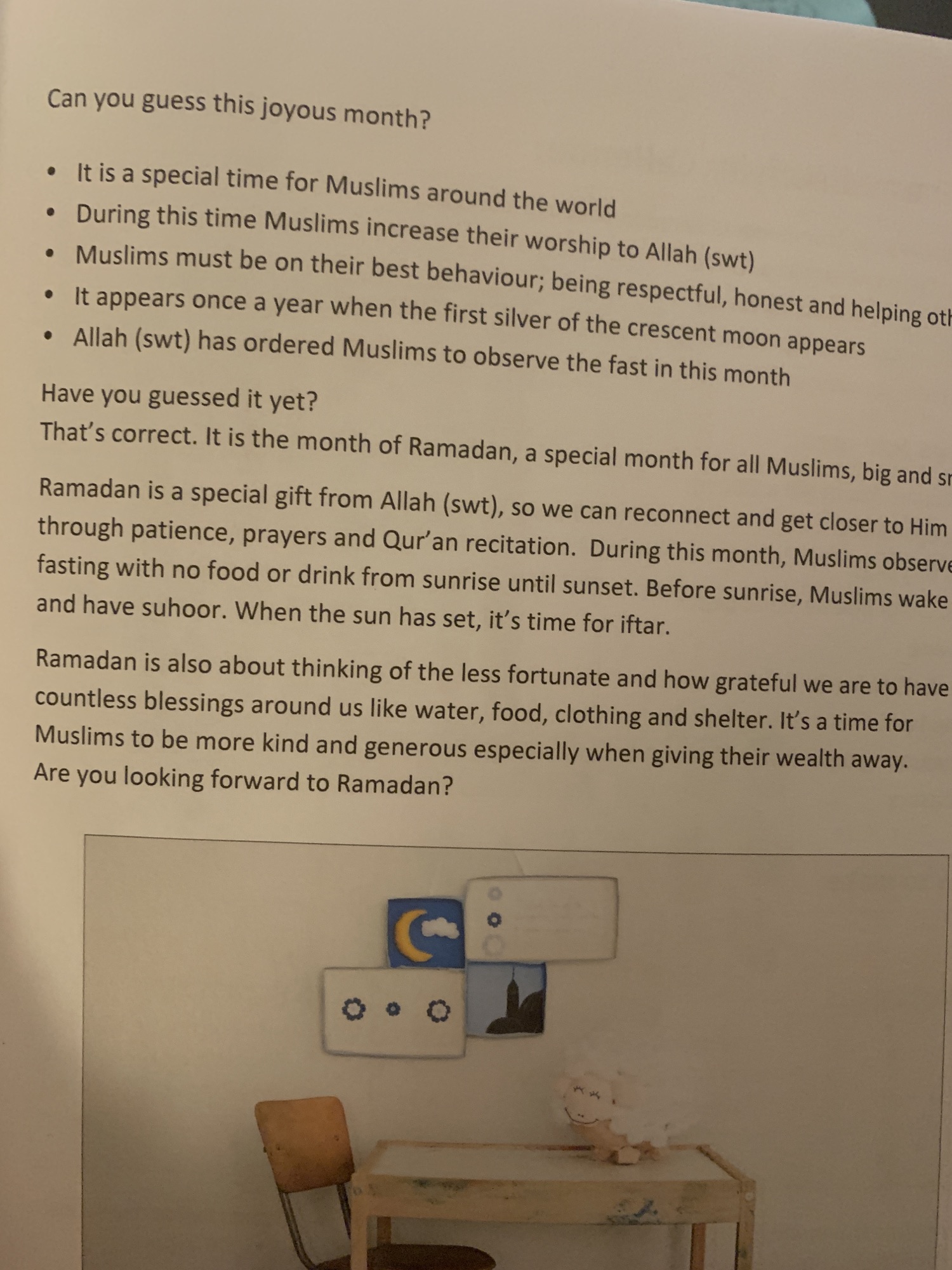
It erroneously says we fast from sunrise to sunset, but does get right that we increase our worship and that fasting was ordered for us by Allah swt.  On the Eid section it discusses the takbirat and gives Eid al Adha a paragraph explanation as well.

A fun library find, that kept us off a screen and able to plan some little activities to do this Ramadan.

Festivals and Celebrations: Eid al-Fitr by Louise Nelson

Standard

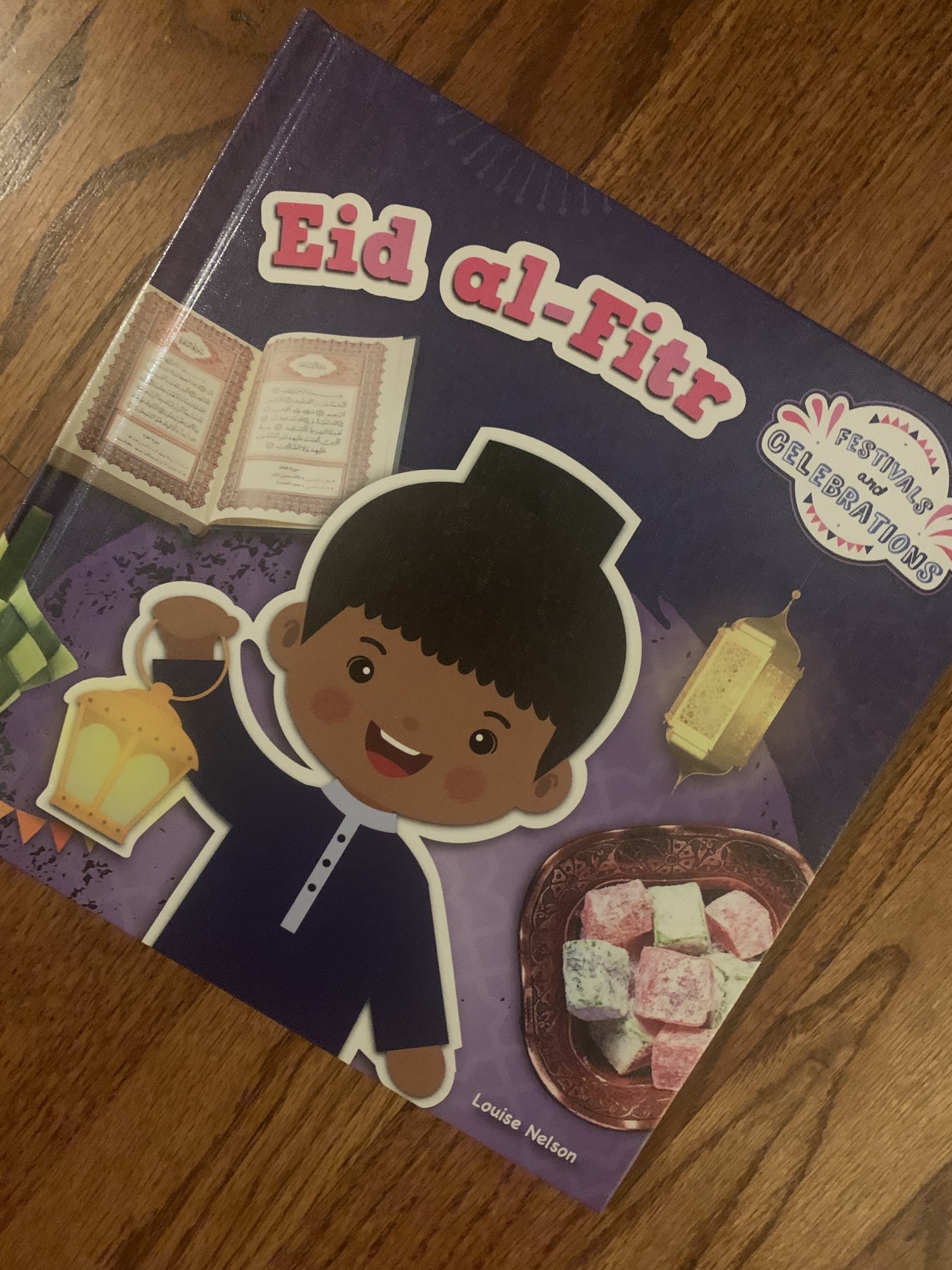
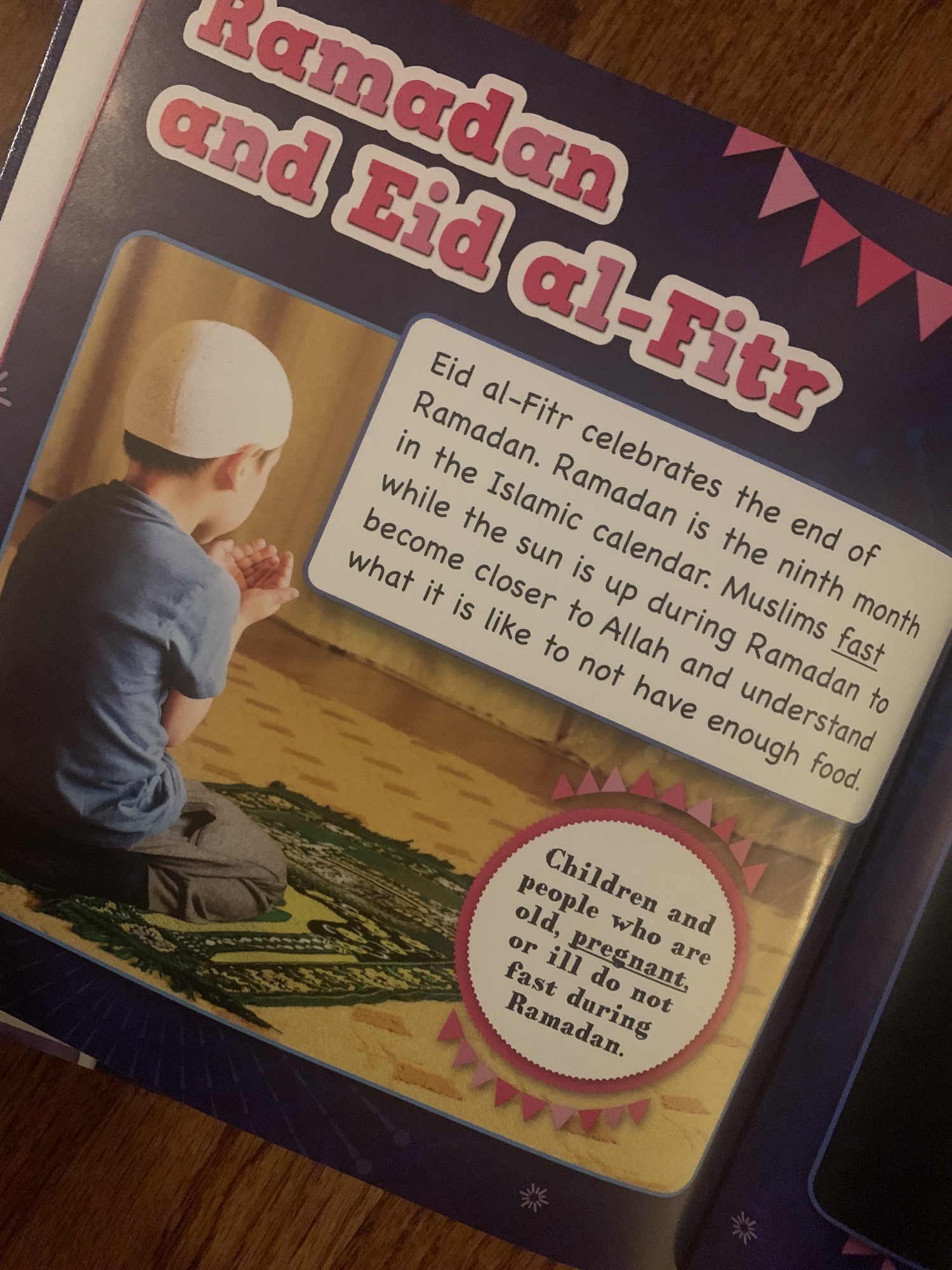
This non fiction Eid book is not accurate, detailed, engaging, or something I would recommend schools or libraries shelve. It used to baffle me, but it now infuriates me that books like this continue to be published as non fiction, when they unfortunately perpetuate many of the same errors of similar earlier books, Muslim beta and sensitivity readers exist, why do publishers not seek them and out? At least Google the subject before you write and publish a book.

Lets begin with my favorite: Muslims fast because Allah swt has commanded it, yes it helps us “become closer to Allah,” but it is not so that we, “understand what it is like to not have enough food.” Sure that might be a resulting lesson, but it is not the reason. It states that “children and people who are old, pregnant or ill do not fast during Ramadan,” which isn’t always true and needs clarifying to say they may not be “required” to fast. Many children do fast, many pregnant women fast, by simplifying it to such a degree, students fasting may feel less seen when presumably reading a book like this in a school, classroom, or library setting. The exact places meant to help provide windows and mirrors and foster understanding and an inclusive environment.

Eid al Fitr is celebrated on the first of Shawwal, some countries, cultures, or families may extend the festivities for three days, but unlike Eid al Adha, Eid al Fitr is only one day. There is nothing about white being a holy color and there are no requirements to wear white on Eid.

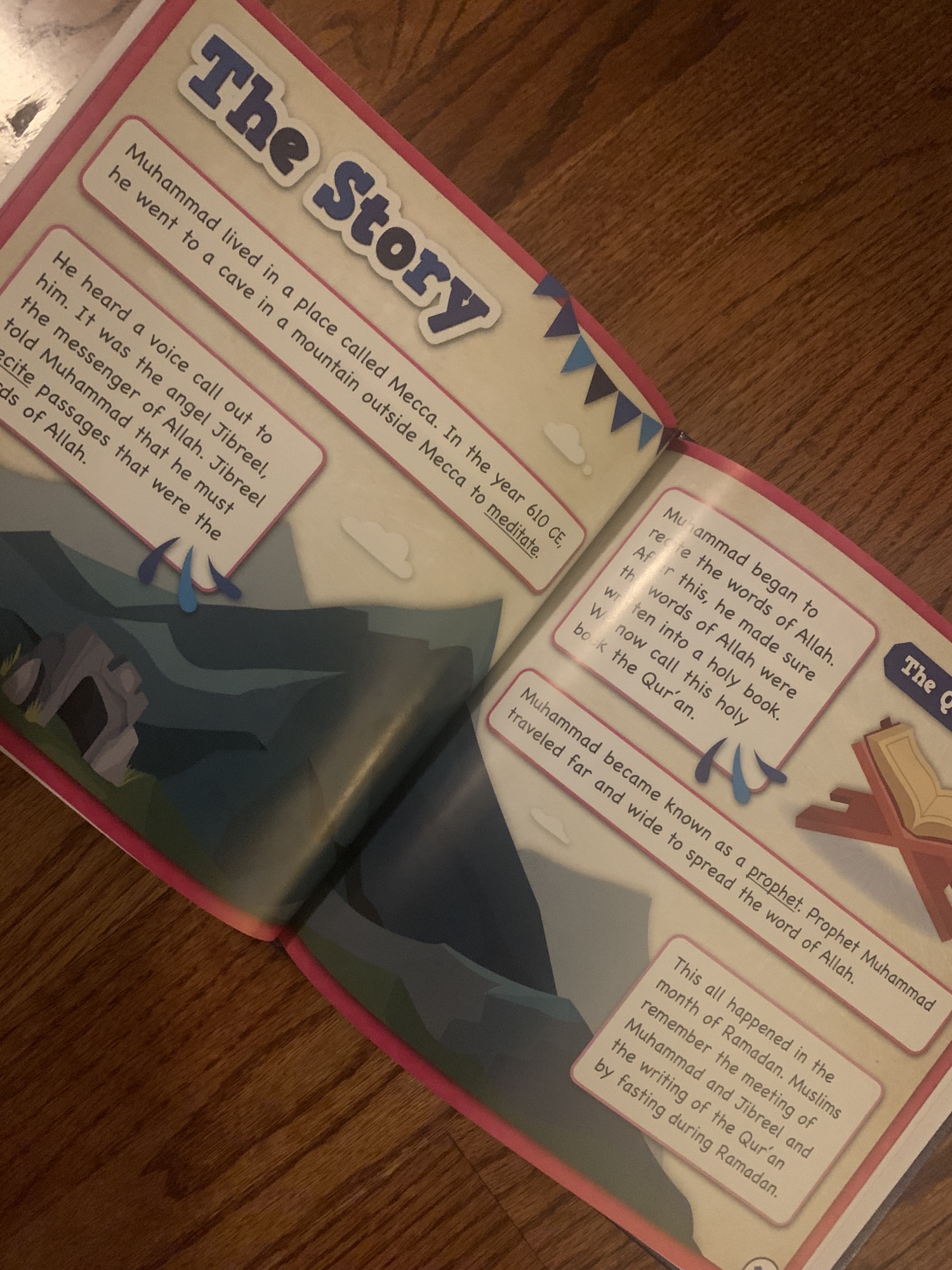
The brief history of Prophet Muhammad ﷺ receiving the revelation from Angel Jibreel would be even better with proper salawat and respect given. It also seems to imply that he traveled far and wide spreading the message and became a Prophet all within the month of Ramadan. It completely erroneously states that “Muslims remember the meeting of Muhammad and Jibreel and the writing of the Qur’an by fasting during Ramadan.” How does remembering translate to fasting? Muslims make an extra effort to read more Qur’an in Ramadan, as blessings are multiplied, but the causation is incorrect.

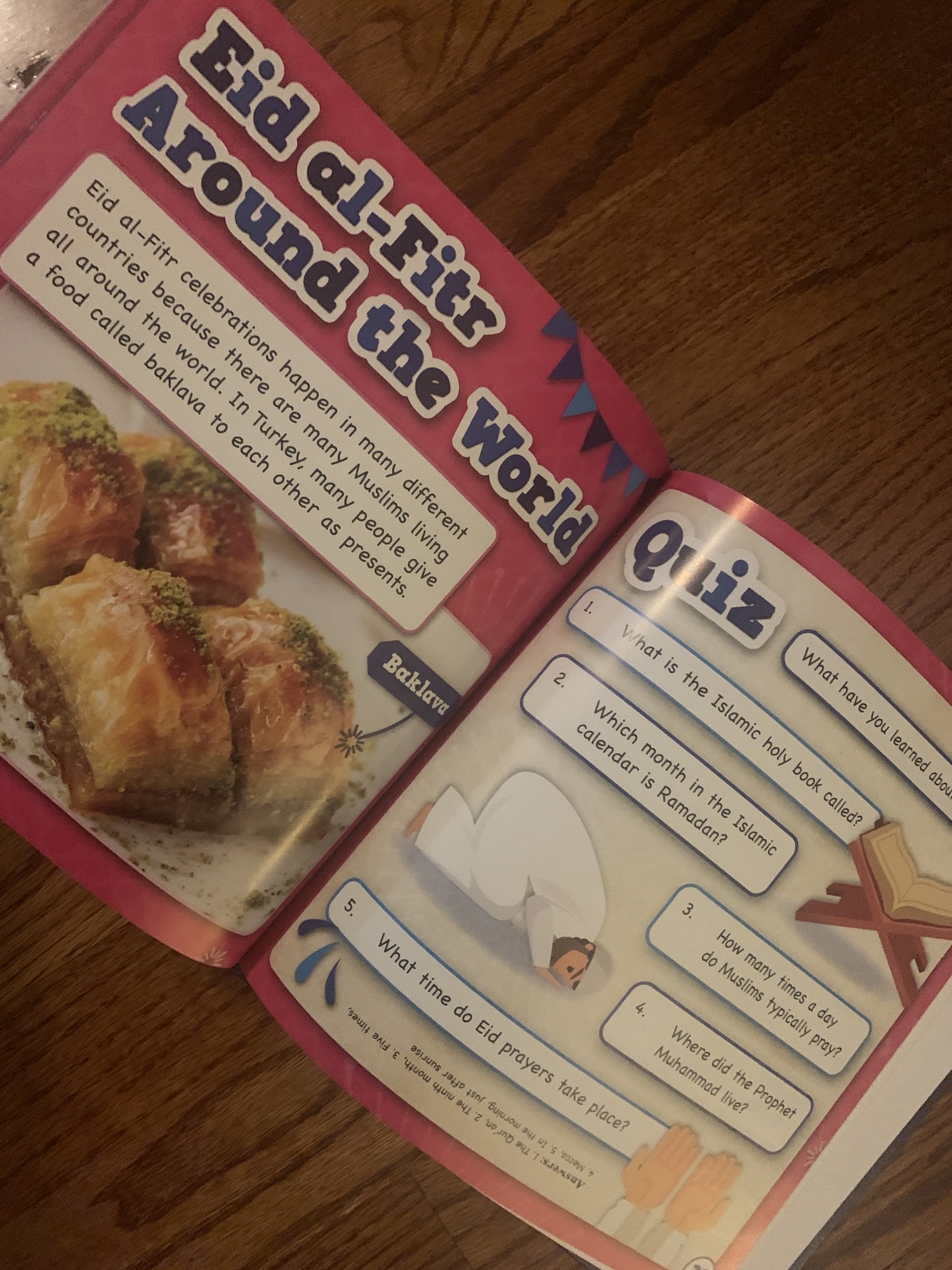
The information about Zakat and charity is vague, not clarifying that Zakat al Fitr is required on all to pay not just adults. Unfortunately it clearly mistakenly states that Eid prayers is prayed, “just after sunrise.” It is not, it is prayed in the morning, but not “just after sunrise.” The phrasing about Muslims reciting prayers together to feel closer to Allah also seems off, why not just say Eid prayers are prayed in congregation. And while sure in some places the community might eat together after the khutbah, it doesn’t happen everywhere and is not required, nor is eating sheer-khurma. That is simply one of many sweet dishes made in the sub continent that has no religious role whatsoever. The remainder of the book is poorly written. “people play games and eat.” It then says that Eid is celebrated in many different countries because Muslims live all around the world, but only gives one example that “in Turkey, baklava is given as presents.” That does not show people in different countries all over the world, the legit, shows one country.

How is this terrible writing making it into a book? I am truly baffled that this is the quality of a book to be published. It is a disservice to anyone seeking information, and the time of Muslims just being happy to be included has long passed. Books written this poorly keep stereotypes about Islam and Muslims as other and backward going. I am very disappointed.

The book is not sourced, and I have sent an email to the publisher asking for corrections in future reprints.

We are Palestinian: A Celebration of Culture and Tradition by Reem Kassis illustrated by Noha Eilouti

Standard

img_1887-1

The book is non fiction, the author not Muslim, but here I am reviewing this book because, we are all Palestinian and my heart enjoyed reading this 112 page book that covers Geography, Cultural Symbols, Creative Minds, Agriculture, Cuisine, Performing Arts, and History and Religion for middle graders and up.  The book is a celebration rooted in information and expressed with beautiful illustrations, fun facts and text blurbs to break up the text.  I do wish it was sourced, and I desperately wanted a map, particularly in the section on geography- it seems odd in fact that it doesn’t have one.  The book contains information about the nakba, but doesn’t let it control the narrative or overshadow the culture that thrives in Palestine and in all Palestinians. Undoubtedly, this is an important book to spend time with and share, especially as the global media is currently working overtime in attempts to erase the richness, joy, and even basic humanity of an entire population.

img_1888-1

The section on Geography covers Jerusalem, Gaza, Jericho, Akka, Haifa, Yaffa, Nazareth, Hebron, Nablus, Bethlehem, and Ramallah.  Some cities are combined and are featured on a full two-page spread after an introductory page for the section.

img_1889-1

Cultural Symbols covers the national anthem and flag, Handala, tatreez, thobes and gold hat, hatta and egal.  I enjoyed learning more about cultural items that have become increasingly familiar, but whose origins, importance, and displays were new.

img_1891-1

The Creative Minds section focuses on people both currently still living and deceased.  I always struggle with books that highlight important people because how they are chosen is always such a mystery, and this book at least acknowledges that this is just a tip of the iceberg cross-section of people influential, talented, and noteworthy.

The Agriculture and Cuisine sections are a celebration of food and resources that most of us who have been privileged to have Palestinian friends sharing their lunch and dinner with will find particularly enjoyable.

img_1892-1

Performing Arts was informative and new to me, and I think further shows the depth and richness of the culture.  It highlights specific people, dances, cinema, and instruments in this section.

The final section of History and Religion starts with ancient history, followed by the Nakba, al Naksa, and then a two page spread on Islam and a two page spread on Christianity.

img_1893-1

Notably not mentioned in the entire book is Israel, and in the religion section there are no other faiths shared except Christianity and Islam.  The author seems to be making a point, by what is included, and what is focused on, and keeping the light shined on Palestine. There is an index, but no sources.

Muhammad Ali and Malcolm X: The Fatal Friendship by Randy Roberts and Johnny Smith adapted by Margeaux Weston (A Young Readers Adaptation of Blood Brothers)

Standard
Muhammad Ali and Malcolm X: The Fatal Friendship by Randy Roberts and Johnny Smith adapted by Margeaux Weston (A Young Readers Adaptation of Blood Brothers)

bloodbrothers

A lot of us Muslims name drop Muhammad Ali and Malcolm X in discussions about civil rights quite often, and at least, speaking for myself, I thought I had the general idea about the relationship between these two iconic figures. I have read a fair amount of books in my quest to identify books that show how Islam shaped the men as opposed to those that tend to gloss over their eventual conversion to Sunni Islam, but I read this book as if it were fiction and I didn’t know what was going to happen next.  I have not read the original Blood Brothers, but this young readers adaptation is well done in conveying the politics, environment, struggles, and humanity of these two men.  Their flaws and growth, their tests, their friendship, it really is a compelling read. The focus on their friendship puts Nation of Islam as the focus, but the book does a good job of identifying it as being different than Islam.  As their friendship falters, Malcolm X goes for Hajj and is seen to change, and choices made by Cassius Clay show the men quite distant at the time of el-Hajj Malik el-Shabazz’s assassination, even though eventually their paths proved quite similar. The 240 page book is MG, but I think middle school readers (in classrooms, book clubs, and on their own) will better appreciate the intersection of these two giants, the events of their time, and the legacy they have left for us all.

SYNOPSIS:

The book is a snapshot in time, sometimes focusing on Malcolm X, sometimes on Cassius Clay, sometimes of their time together.  It starts with background insight and then shares the rise of both of them in their respective worlds, Nation of Islam and boxing.  Threaded through it all is the influence that Elijah Muhammad had on them, and key events they experienced that shaped their thoughts and opinions on race relations, politics, religion, and life.  It shows Malcolm X as the teacher, and leader taking in Clay and believing in him against the Nation’s wishes and thus when Muhammad Ali pushes him away the reader sees the Champ in a different light.  It shows deception and manipulation, as deep and riveting as the best fiction out there, but is very vulnerable in showing regret and both individuals’ ability to keep learning and growing.  The conclusion highlighting Muhammad Ali reaching out to Malcolm X’s daughter Attallah, and the forgiveness that took place in restoring the love between the two men and their families, really was a cathartic release that reminds readers that for as idolized as these two figures are in pop culture and history, they were very real people.  The book has a Biography at the end that breaks down sources by Government Documents, Archival Collections, Newspapers, Magazine Articles, Books, and Websites.  It is a “Selected Biography” that is seven pages long.

FLAGS:

Racism, manipulation, assassination, hate crimes, stereotypes, propaganda, oppressions, abuse, police brutality, assault, bombing, arson, attempted murder, fear, threats, killing.

TOOLS FOR LEADING THE DISCUSSION:

I have preordered a book for my own children to read and one for the school, I really think this book needs to be easily accessible for middle school students in libraries, classrooms, and homes.  I would love to do this as a middle school book club, I think the authentic perspective will give our youth who have heard of Malcolm X and think they know Muhammad Ali some insight into really spending time with what they did, what they faced, and how remarkable their friendship was.