Tag Archives: Non Fiction

All the Ways to be Pretty by Shamaila Khan illustrated by Reyhana Ismail

Standard
All the Ways to be Pretty by Shamaila Khan illustrated by Reyhana Ismail

The premise of this book is fabulous, an Islamic approach to internal beauty to counter the societal emphasis on external appearance, by drawing on the examples of Ai’shah (RA), Khadija (RA), Sumayyah (RA), Maryam (RA), Hajar (RA), and Rufaidah (RA), may Allah swt be pleased with them all.  The illustrations are decent, focusing on the girl understanding what her mother is saying and her imaging herself with those qualities.  The part that I struggled with, is I flipped through it before I started reading it, and the pages are often walls of text.  Additionally, I didn’t realize it is rhyming text over 34 pages.  SubhanAllah though, somehow, it works.  I can see this book being shared at preteen gatherings in masajids, homes, and schools everywhere.  The rhyme at times is forced and lacking, but the flow makes the walls of text zoom by and the information shared is not overwhelming and Alhumdulillah, it doesn’t stray too far from the central messaging. You could share it with younger readers, but I think it works best if the audience knows some of the women and facts highlighted, and the information shared is a mix of reminder and new tidbits urging further exploration. The publisher lists the reading age at 7-10 which is probably a good fit based on the amount of text, but the rhyme, mirrors at the end, and starting point of battling beauty standards on the screen and “Princess” messaging is a bit of a target audience disconnect, which is why I point it out so consumers are aware.

The book starts with a lengthy author’s note before the rhyming scene of a mother and daughter walking to school and discussing what the daughter would like to be.  The girl doesn’t answer a profession, but rather responds that she wants to be pretty, and gives some justifications.  The mother gently then encourages her not to just want to be pretty, but rather pretty smart, pretty wise, pretty brave, pretty pious, pretty resilient, and pretty kind, before concluding with the girl throughout the day thinking of how to be like them, and her mother, to earn Allah’s pleasure.  Each attribute is a two page spread with one of the historical women featured.  The book ends with a hadith and six mirrors with the characteristics beneath them.

I like that the book does not try to give an entire biography about the women featured.  I also like that Islamic references are also brought in, some explained some not. It is “Islamic fictionalized non fiction” it is meant for Muslims with Islamic framing, not just Muslim characters, and it has substance.  Lately so many self published or even Islamic published books seem to not feature Islamic foundational themes, and I realize how much I have missed reading books that do.  Yes, I normally would have a solution to offer as to how to make the pages less text filled and I know I should say that maybe it shouldn’t rhyme, because it makes for some awkward phrasing, over explaining, and useless lines, but alas, I have no suggestions.  We need books that present our Sahabas and Prophets in a manner that allow our kids to know them and think of them and emulate them. Alhumdulillah, I can see this book being read and shared and discussed, and that to me is a “pretty “good thing.

Eliyas Explains: What was Prophet Muhammad (saw) Like? by Zanib Mian illustrated by Daniel Hills

Standard
Eliyas Explains: What was Prophet Muhammad (saw) Like? by Zanib Mian illustrated by Daniel Hills

Zanib Mian once again fills a void in the literary world for our children using her easy to read and relate to protagonist’s voice.  Over 149 pages, filled with illustrated doodles, details about our beloved Prophet Muhammad (saw) flow through the fictional framing of Eliyas and his family heading to the airport to pick up their Mamoo.  It starts with the standard introduction of characters that all Eliyas books have, so while it is part of the series it can be read as a standalone as well. But really if you have children 5-14, you should invest in the entire collection.  Also, as with the rest of the series, the book is checked by a Shaykh who is named at the beginning so that the reader can enjoy the Islamic details that are to follow. I know there is some debate about the cave and the spider, a story shared briefly within the pages, but I will leave it to those more knowledgeable to decide upon.  The book works well read aloud and independently, either way I’m confident children will enjoy the story, learn something new, and grow in their love of our Rasul Allah, alhumdulillah.

SYNOPSIS:

Eliyas’s dad’s uncle, Haroon Mamoo is coming for a visit, and while Mum wants to make sure they leave at a specific time to get to the airport, Dad isn’t stressed, he had a dream about Prophet Muhammad saw the night before and the kids want to hear all about it.  The story progresses weaving in things around them with Mum and Dad tying them to the sunnah.  From a fight at the airport, to a pigeon getting stuck, to Haroon Mamoo seeming to have gotten lost. The book is preachy, in the best way possible, as Eliyas and Aasiya banter, crack jokes, and learn along with the reader.

WHY I LIKE IT:

I love Eliyas’s voice and the weaving of a fictional story to convey the non fictional sunnahs that are truly the heart of the book.  The information presents in an easy way for children to hopefully remember it, and to also see how they should be behaving and acting in their own lives. The fun fonts, illustrations, and layout make it inviting to pick up and keep reading.

FLAGS;

None

TOOLS FOR LEADING THE DISCUSSION:
This book is not a journal, like some in the series are, but provides ample opportunity to discuss points on each page.  

Sunnah and Science: What Modern Research Tells Us about Prophetic Traditions by Aquila Fatima illustrated by Azra Momin

Standard
Sunnah and Science: What Modern Research Tells Us about Prophetic Traditions by Aquila Fatima illustrated by Azra Momin

The title and premise of this hardbound 54 page resource book for children definitely caught my eye.  The contents covered, the two page fully illustrated compelling spreads, and the intext labeling of hadith and Quranic ayats make this book versatile in homes and classrooms for a wide variety of ages.  As the daughter of a convert, the knowledge that science is not in contradiction to Islam is something I grew up hearing about a lot in casual conversation, and I love that this book addresses it head on for children with pull out bubbles, reminders, fun facts, duas, and the like.  My only concern that I truly can’t wrap my head around, is why isn’t their sourcing for the “scientific” information? Nothing is overly scientific, and nothing “feels” off, but none-the-less, the book repeatedly says “Research shows,” and “Science proves,” “Scientists are still,” “Scientific research says,” but never once shares what scientist, or research, or science.  The book has the space for footnotes or sourcing or a bibliography, and in a book trying to give readers the confidence to show how the sunnah and science support one another, to not have the sourcing to back it up, is a glaring admission.  Buried in the author bio it states the author has “a Masters degree in genetics” and worked as a “science teacher for elementary school students,” but to me, the book needs to back up the statements to successfully empower and accomplish what it sets out to do.  I hope future printings will include sufficient backmatter, even without the book is well done, but the standard is the standard for good reason, non fiction needs sourcing.

The book covers 25 topics, dedicating two pages to each topic, with a title heading, and an Islamic source subheading.  The topics include, smiling, rain, sleeping, swimming, wudu, salah, fasting, honey, cleanliness, bathroom etiquette, yawning and hygiene to name a few.

Most pages contain facts, ayats from the Quran, sunnahs, benefits, supporting scientific tie ins, and adorable illustrations.  The book concludes with an author’s note, thoughts by readers on the book, and an author bio.

Ramadan Reflections: A Guided Journal by Aliyah Umm Raiyaan

Standard
Ramadan Reflections: A Guided Journal by Aliyah Umm Raiyaan

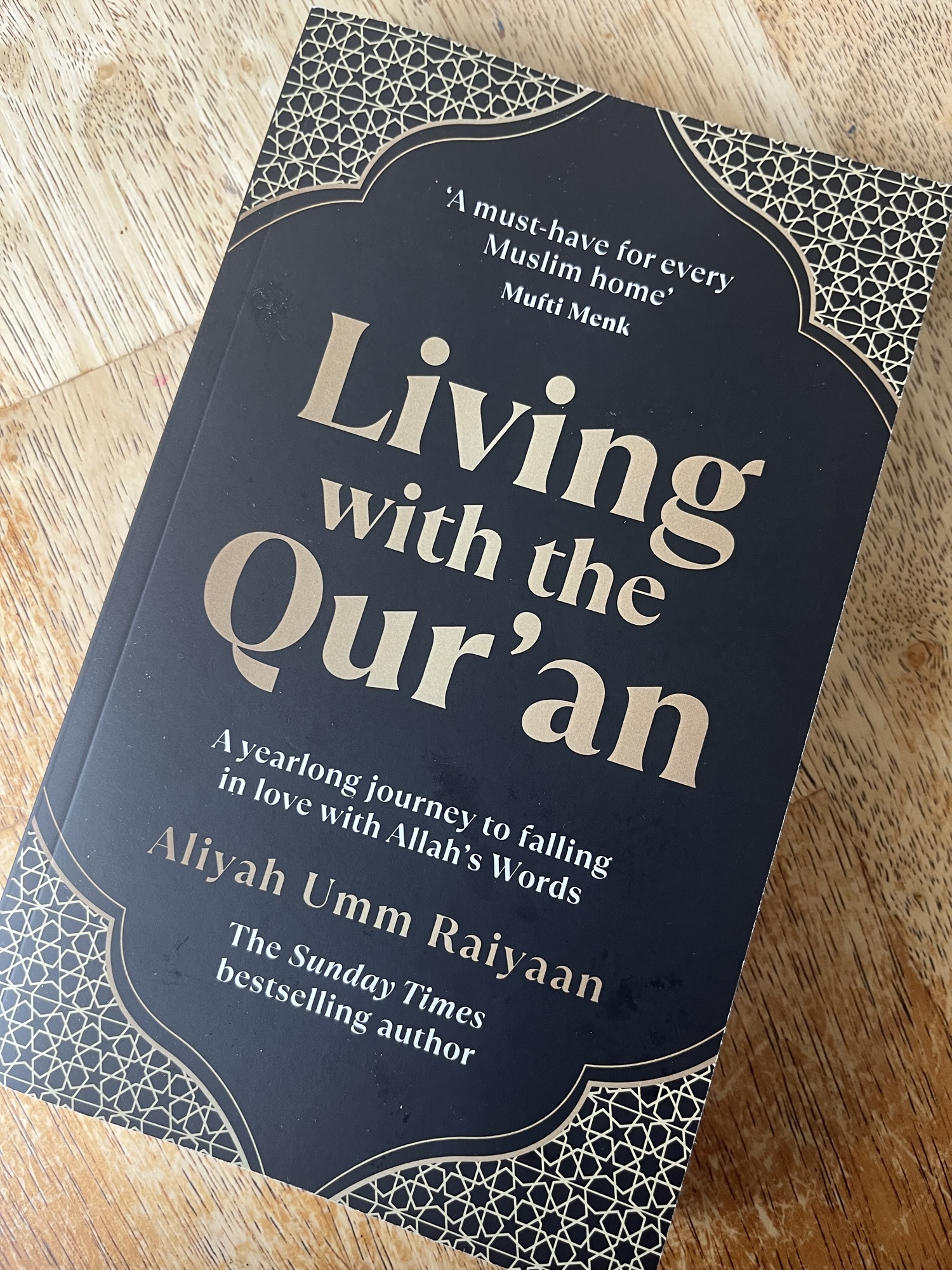
I had started this book on the first day of Ramadan thinking I could double up some days and finish it early with enough time to offer up a review for those wanting to know if they should acquire the book  and take advantage of it during the blessed month.  But alas, here I am nearly 10 days post Eid, finally finishing, and getting around to sharing my thoughts.  The 277 page book spans 30 days, it is divided into three parts, with each chapter/day covering a theme with the author’s personal connection, outside sourcing illuminating the thought, then moving on to a section entitled, “Let Your Heart Ponder,” followed by a “Dua Invitation” and then a few pages of guided journaling prompts, questions, and considerations.  I did not write in the book, I struggle to mark up pages since leaving school, and even annotate by taking pictures and attaching notes on my phone.  But even not using the journal as intended, the book requires you to slow down, to savor the reflections and insights, and put them in to practice.  To read it in one sitting, or to rush the chapters would not accomplish for the reader what the book sets out to do.  Even the chapters that did not directly resonate with me, I found still offered nuggets of empathy, or consideration, and the short chapter style allows it to not be a burden to spend time with.  The days that hit me the hardest, that taught me something, or reminded me of something long forgotten, or inspired me to be better, more intentional, more forgiving, more present, I look forward to discovering again and again in future Ramadan rereadings.  That isn’t to say that this book can only be read in Ramadan, or that next Ramadan chapters that I found unremarkable, won’t suddenly hit different, but there are some chapters that felt rather repetitive and memoir style anecdotes that were not developed enough to reach the reader beyond surface level understanding.  Had the whole book been like that, perhaps I wouldn’t remark on it as the Islam centered hadith, ayats, and quotes are consistently strong, but when the author’s personal reflections on her own life, and those close to her, were more deeply explored, a deeper resonance to the theme of the chapter emerged.  Perhaps because I read more fiction, but when character development, so to speak, was present, the connection to the message, and the empathy to others and one’s self bloomed very naturally, and thus those chapters became more memorable.  

I felt the latter half of the book was stronger than the beginning, perhaps intentional as the end of Ramadan draws near and our hearts desperate to cling to the closeness of Allah swt.  I love the thorough glossary at the end, I believe it is the same one in the author’s second book, “The Power of Dua” and it is such a benefit to truly understanding the words used that non Arabic speakers might think they know, but can benefit from having clearly articulated. 

It is never fair to compare books, but having read the author’s two books nearly together, I anxiously await and sincerely hope that there is a third.  I read them out of order, and the second is definitely stronger, but I struggled with the “memoir” style in both.  Reflections was the author’s own story, and Power of Dua was other people’s stories, and both felt forced and distracting for me more often than not.  I hope if there is a third book, that disconnect can be resolved and the author’s commentary and Islamic references in her signature palatable style can be expressed without being contingent upon a story that the reader may or may not relate too, or more personal info will be shared so that if the reader can empathize more readily.  The repetition of hearing the name Solace UK and that she started a charity from scratch, started to feel almost promotional, as I still am not sure, two books later, what the day to day work of the charity is, or what topics Honest Tea Talk seeks out to cover, only that they are constantly name dropped.  I would love to know who the author studied with and where.  The little snippets make the reader wanting to Google, but I think it distracts from the connection to the words in the moment.

Overall a solid addition to spend time with in Ramadan, or any time, and to reference when the heart needs to feel connections.  The writing makes for an easy read, the duas and parts to ponder allow you to put in to practice the teachings immediately, alhumdulillah.


My First Book about Charity: teachings for Toddlers and Young Children by Sara Khan illustrated by Ali Lodge

Standard
My First Book about Charity: teachings for Toddlers and Young Children by Sara Khan illustrated by Ali Lodge

The newest board book in the My First Book series is a gentle and wonderful introduction to charity, both sadaqah and zakat. Sourced with ayats from the Quran, there is also backmatter that has Facts about Charity and Questions and Answers. I’m always amazed at how much information the series consistently contains in the 26 pages for our littlest Muslims.  With soft illustrations and smiling joyful faces, each page radiates warmth, information and simplicity in a way that grows with toddlers, to preschoolers, to early elementary aged readers, alhumdulillah.

The book starts with affirming that Allah has given us more blessings than we can count, and some of us have more than others.  To help those that have less, Allah wants us to give charity.  The book briefly explains that Zakat is one of the pillars that is required, and sadaqah is an extra reward that is not just money.

It talks about the sunnah of giving charity, and numerous ways that kindness can be carried out.  It shows respect and helping and concludes with Allah’s names of All-Knowing and All-Hearing before the final supplemental spread.

I don’t know how many books are planned for the series, but I love looking at them all lined up.  I share them with my own children and now that there are accompanying puzzles and a boxed set, I’m positive I’ll continue gifting them, not just to new parents as I’ve done in the past, but to toddler and preschoolers as well.

Mariam’s Dream: The Story of Mariam Al-Shaar and her Food Truck of Hope by Leila Boukarim illustrated by Sona Avedikian

Standard
Mariam’s Dream: The Story of Mariam Al-Shaar and her Food Truck of Hope by Leila Boukarim illustrated by Sona Avedikian

This 44 page biographical picture book set in the Palestinian refugee camp, Bourj Al-Barajneh in Lebanon, centers the story of Mariam Al-Shaar and her determination to start a restaurant and food truck despite the restrictions of refugees and women. Her drive and persistence leads to the creation of Soufra, the home of not just good food, but also community, hope, dreams, and change. the The illustrations, the heart of the story, the backmatter, are all well done, yet for some reason, the emotional impact seemed lacking for me.  I didn’t “feel” inspired, or moved.  I didn’t feel her pain, her grit, her joy when it all came to fruition. For a biography, I didn’t feel like I got to know Mariam, or why this was her dream.  The book explains being a refugee, and not having full rights, but it doesn’t show the reader. We are told Mariam wants to do “something,” but the “something” she finds, is what other women want. “We want to cook,” they tell her.  “We are good at it.” The reader though never is shown, why they want to cook, or what is stopping them from cooking, and even if Mariam wants to cook too.  It is clear the struggles Mariam faces when she wants to branch out and start taking the food to those outside of the refugee camp by way of a food truck, but lines such as “They tell her not to risk it,” fall flat when the reader doesn’t know what is at risk.  The absent context makes it hard to cheerlead and understand why this is so revolutionary.  Ultimately, it is a lot of telling, not showing. The story is fine on the surface, but I don’t think it will linger and illuminate refugee struggles, Palestinian struggles, or women’s struggles beyond the page because we are not show what those are, and how inspiring it is that Mariam Al-Shaaar overcame them.

The book starts with prose that describes that Palestinian refugees “live between worlds.”  The camp is not just physical walls, but also walls that keep her from living her dreams. She decides to do something about it, but doesn’t have to do it alone, she reaches out to others and “Soufra is born! A feast.  A table full of food.”  It is a way for women to come together to cook, earn a living, and be among friends.

People around the camp flock to Soufra and the women “have changed.  Their children have changed. Mariam has changed.” Mariam wants to take Soufra beyond the camp, and is determined to buy a truck, learn how to drive, and share their food.  More walls can’t keep Mariam down, after two years, the food truck is a reality. 

The book concludes with an Author’s Note about the author interviewing Mariam Al-Shaar, a beautiful Food Glossary, details about Refugees and Refugee Camps, and a Selected Bibliography.  The author is not Muslim, but Mariam is and she and many of the illustrated women wear hijab and are visibly Muslim. 


Ramadan on Rahma Road: A Recipe Storybook by Razeena Omar Gutta recipes by Faaiza Osman illustrated by Atieh Sohrabi

Standard
Ramadan on Rahma Road: A Recipe Storybook by Razeena Omar Gutta recipes by Faaiza Osman illustrated by Atieh Sohrabi


I would not know where to shelve this 40 page in a library, it has beautiful pictures, it is informative, resourceful, useful, and interesting- I’ve only delayed sharing it because I really have had to think, how best to use this book to its maximum potential, to make it truly effective. It is formatted externally as a picture book, but it reads much like an chapter book anthology with the stories connected by the road the diverse folks live on, Rahma Road, all coming together for a communal iftar, with some fasting and some not.  The spreads feature vignettes on the left of what each house is making, including tidbits of culture, facts about Ramadan, insights about method or ingredients, with the facing page being the recipe.  The book is incredibly meticulous and intentional in appealing to Muslims and non Muslims alike, as well as a variety of ages.  It works as a book for Muslims to see themselves in, non Muslims to get a peek at iftaar excitement through, messages about community and diversity celebrated, foodies to see new recipes that they can try, cultures to explore through food and native words, a story framing to feel connection, I really could go on and on with the layers and inclusions this book provides, alhumdulillah.  I think the best way to use and share the book is going to be for me to read it with my 5 and 9 year old children a week or so before Ramadan.  Where I can read the story portion, getting us excited for Ramadan, slipping in some reminders, appreciating Islam’s global presence, and then talking about the recipes so that they can pick dishes to try in Ramadan and add needed ingredients to the shopping list (I wish I made the effort to be this organized all year long).  I then will plan to leave the book out and have my teens flip through to find any recipes that they think sound good and will commit to making.  The book would work all year long, but as a new release, I’m sharing my plan with hopes that it can help your family as well. 

The book contains 25 globally inspired recipes, featuring 11 with accompanying stories.  I absolutely love that at the bottom of the recipes are page numbers for additional items that would pair nicely, or be condiments or beverages or desserts for the dish.  This allows easy personalization, fusion meals, and more importantly a way for different age groups to be able to help each other in the preparation.  Maybe koshari is a bit advanced for your kid, but the mint lemonade paired with it might be something they can tackle a bit more independently. 

The framing of everyone on the road coming together book ends with the neighbors sharing a meal at the end,  I love the backmatter explaining Ramdan, about the recipes, even about Rahma Road.  The message to the reader and the naming of consultants really is a credit to the time and effort put into this book.

A few of the dishes and countries featured are: Atayef from Palestine, African American Sweet Potato Pie, Nigerian Puff Puff, Japanese Temaki Sushi, Morrocan Harira, Uyghur Lamp Stir-Fry, Guatemalan Dobiadas, Turkish Chicken Gozleme, Malaysian Teh Tarik, Australian Mini Strawberry Pavlovas, South African Bunny Chow, Mexican Elotes  .I can’t wait to report back if my plan was successful, if the dishes prepared were a hit, and ideas for further maximizing the use of the contents it contains.

Owl & Cat Learn about Prophet Muhammad (peace be upon him) by Emma Apple

Standard
Owl & Cat Learn about Prophet Muhammad (peace be upon him) by Emma Apple

img_8455-1I have loved many an Emma Apple book over the years, but it has been a minute since a new one has been published. So imagine my delight and anticipation to see my soft spot for Prophet Muhammad (saw) kids books combined with the silly doodling antics of Owl and Cat? And then I read the first page. “Prophet Muhammad  peace be upon him was born in the city of Mecca in the year 570 on a Monday in April.” I think it is widely understood there is a level of uncertainty as to the date of his birth, and that’s really quite specific for no apparent reason. This is precisely why I’ve recently become a HUGE advocate of sourcing non fiction. Once something rubs you the wrong way in a book, or accuracy is questioned, it is really hard to move past it, even in a book meant for preschoolers.  The rest of the 66 pages read at times like a sentence from a biography and at other times are filled with general characteristics of what RasulAllah taught, how he treated people, and how he lead. The illustrations are cute, more serious than funny in this book, as the topic is a bit more demanding of love and respect. I think for basic information, or to add to the uniform yellow cover collection, this book is a good addition.  With the mix of specifics and generalized vagueness it isn’t going to hold attention of young readers without some embellishment, my nine year old honestly got more out of it than my five year old did.

I haven’t gone back and checked if Ramadan and Hajj and Islam have held up over time, so maybe my standards were lower.  None-the-less there are a lot of really cute spreads, and good information in the book, unfortunately I just found it a little disappointing, that it wasn’t sourced.  Even basic information benefits from the reassurance that it is accurate.  I purchased my copy here from Crescent Moon Bookstore and if you think it will be a good fit, I highly encourage you to shop small as well.

Our Neighborhood: Friday Fun by Marzieh Abbas illustrated by Anoosha Syed

Standard
Our Neighborhood: Friday Fun by Marzieh Abbas illustrated by Anoosha Syed

img_8215-1

At 26 pages and 55 words, this adorable board book conveys Jumu’ah sunnahs, joy, Islam, and community.  The simple rhyming words and bright engaging illustrations are meant for babies to three year olds, but I have a house full of older kids and this book made them all smile.  The book is part of a larger non fiction series, “Our Neighborhood,” that focuses on different communities, and the first of two that celebrate Islam.  “Excited for Eid” will be released before the end of the year.  The 7 x 7 size and thick pages can work in small groups in addition to bedtime.  Whether your audience is Muslim kids learning about Jumu’ah, or non Muslims learning about what Muslims do on Fridays, the book will have a large appeal and be a joy to read over and over.

The book establishes it is Friday and then the characters get ready for Jumu’ah at the masjid.  They shower and groom, and trim, and head to the mosque for a talk before the adhan signals the time to pray.  After duas they give charity, hug their friends, and share a meal.

The little kids, male and female, pray together, but I took it to be realistic as often little kids are with one parent and are not segregated like the adults.  The illustrations show some of the kids in hijabs, others not, some of the adults in duputta style head coverings, others in hijab, and some in niqab.  “Allah” is written in Arabic above the mimbar, and the word “sadaqah” is on a box under donations and above mosque.  All the other words are the English versions of the word, except Adhan is in the text and not defined as the call to prayer.  There is no glossary.  The book really is for Muslims, by Muslim, but as a mainstream published book, it also is an easy window to open for non Muslims to see us in our element on Jumu’ah, alhumdulillah.

img_8222-1

The Power of Du’a by Aliyah Umm Raiyaan

Standard
The Power of Du’a by Aliyah Umm Raiyaan

img_8062-1

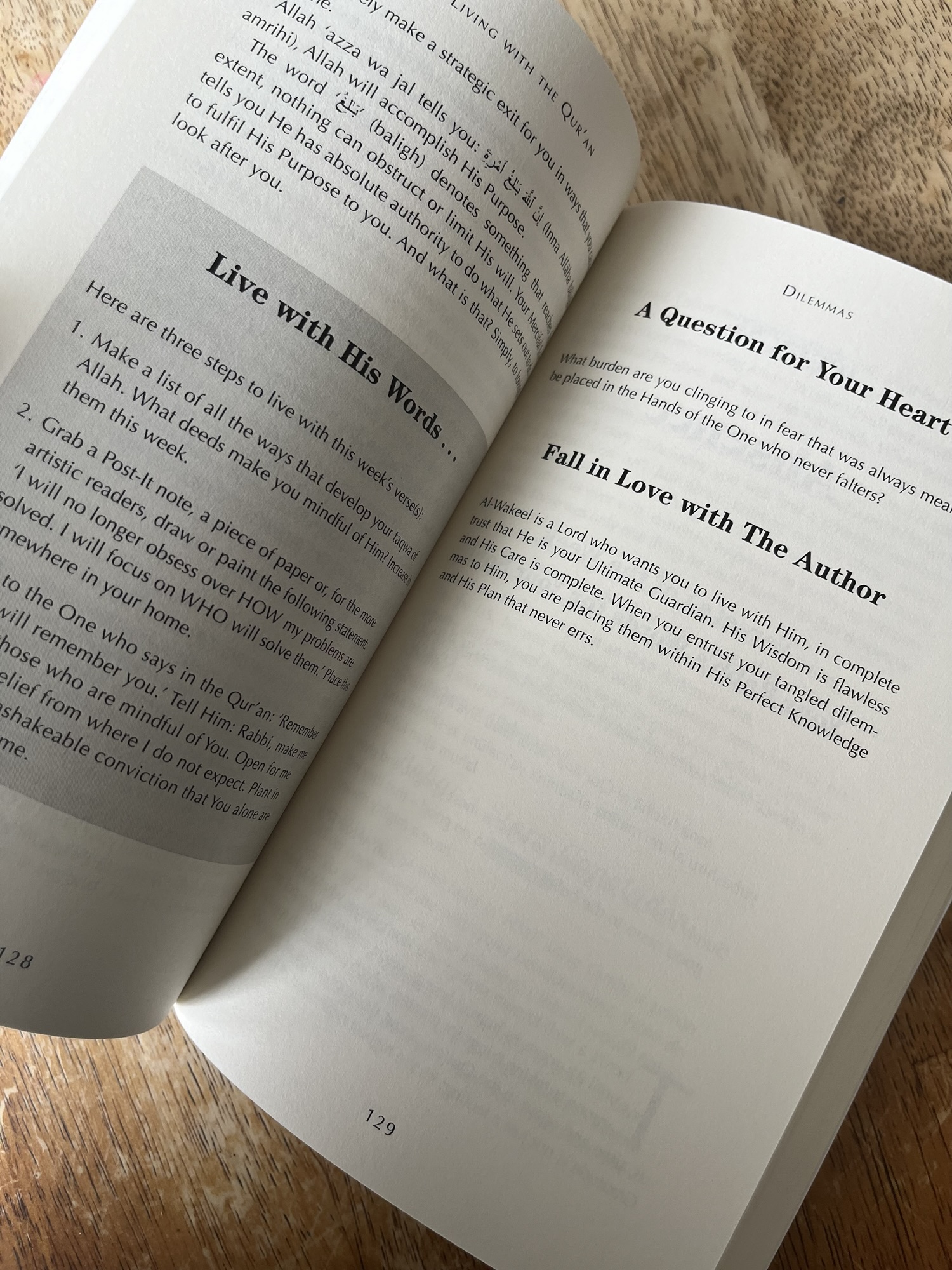
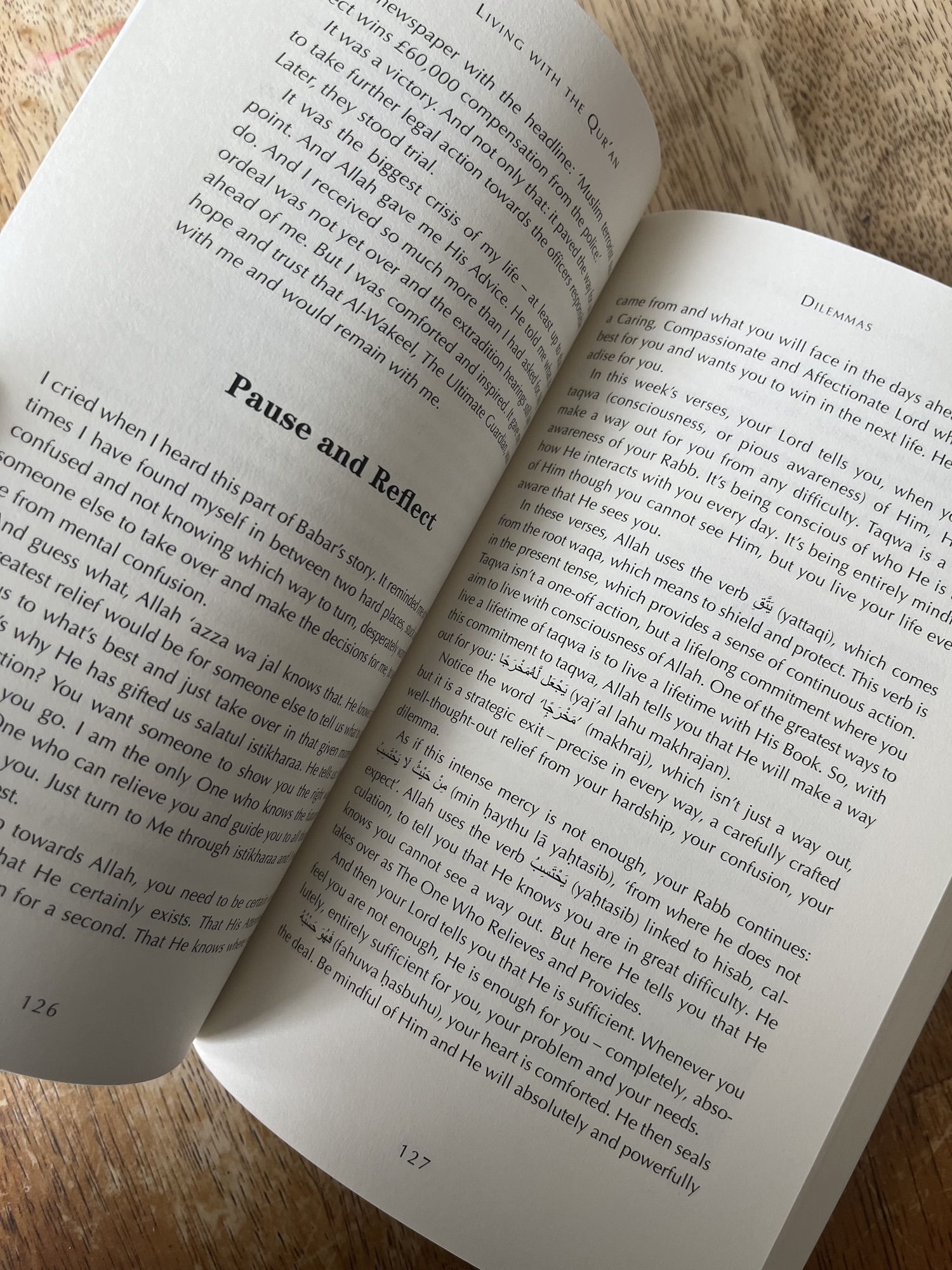
Having not read the author’s first book, Ramadan Reflections, I wasn’t sure what to expect with this non- fiction/memoir/anthology/self help/spiritual focused book. Alhumdulilah the tone is easy to read, the chapters consistent in their format, the quotes and passages sourced, the personal stories relevant, and the information often moving and inspiring.  At times it did feel repetitive, but ultimately the book has staying power, and now that I have read it once cover to cover, I can see myself picking it up and reading a chapter or two at random and being again drawn in again.  While nothing in the book seemed “off” I did find myself wondering though, what qualifications are needed to write a book such as this, and did not find the author’s bio satisfying in providing that information.  Yes, there is a statement of praise by Mufti Menk on the cover, but similarly I don’t know if that means he “checked” and “approved” the book, or just liked the concept of it.  Ultimately, I don’t know that it matters, but I do feel it is worth disclosing, since it did linger in my mind, and I would have appreciated some transparency in the matter.  The 258 page book is meant for adults, but older teens will find it valuable too, even if a number of the stories are related to pregnancy.  I love that this book is traditionally published in the UK, it is for Muslims by a Muslim, but the glossary at the back and the way it is written, would allow even non Muslims to be drawn to the beauty of conversing with our creator, subhanAllah.

The book is divided into four parts: Du’a of Need and Want, Before Du’a, The Du’a, After Du’a, and each of the parts has multiple chapters that explore, develop, and illuminate the concept heading.  Each chapter starts with an ayat, or hadith, or quote, then gives a personal reflection of what the chapter sets out to do, and how the story about to be shared came to the author.  A personal du’a story from a real person is then shared.  The author then uses examples from the story, along with hadith, examples from the Qur’an, and/or guidance from scholars to build the case of the chapter’s intended goal.  Often there are then action items in a pull out box of suggestions the reader can do to “Develop Your Du’a” or strengthen one’s connection.  The final paragraph of the chapter is, “Allah, Transform My Du’a” where an example is given of a how to phrase your du’a.

I love that you can implement every single bit of knowledge into your du’a and your day, immediately.  If you read a chapter, you have something to ponder and act on, if you read multiple chapters you have more.  The implementation is easy and accessible, because of how it is presented.

Many of the stories, and the lessons from them are emotionally humbling.  I often found tears on my cheeks as I saw my own vulnerability, fears, worries, and hopes expressed on the pages.  And the passages that moved me today, I could see having a different effect on me if I reread them in the future.  Similarly, pages I skimmed, I have no doubt could truly grip me in the future as well.

I’m glad I own the book, glad I read it, and can see me recommending it, suggesting it, and gifting copies to others. The importance of du’a and the balm it provides is something we all know, but how to go about it to make the most of it, is often something we need assistance with and can be facilitated by this book, alhumdulillah.