Tag Archives: murder

A Tariq Twins Mystery: Murder for Two by Niyla Farook

Standard
A Tariq Twins Mystery: Murder for Two by Niyla Farook

I don’t know what I was expecting, but woah once the actual crimes started piling up and the sleuthing began, I was invested in Riri and Ani working out their differences, solving the case, and freeing their accused dad.  At 336 pages, a full on murder, attempted murder, arson, thieving, and arrests all taking place, the book is definitely for older middle grade readers. The premise and dual points of view of 11 year old twins being reunited after 3 years apart by their divorced parents, getting to know how their OCD, ADHD, and autism factor in to their personalities, learning about TUSC, the town of Castlewick, and the side characters that will turn suspects, result in it taking the story a while to get going.  But if you can get through it, and can suspend belief, the book is a fun mystery that takes on heavy topics, and crime, but somehow keeps it light and consumable by the intended audience. The twins are Muslim, one wears hijab, and there are Islamic references, but once the identity is established, it really doesn’t play a role, or shape the characters’ view of the world or approach to dealing with their grief, anxiety, and obstacles they face.  There is mention of halal marshmallows and hijab, but they never say a quick dua or pray, and by the end is not really even shown to be a big part of their daily lives.  I have no idea if the neurodivergent rep is accurate, but the tone and approach is very positive and normalizing.  Parents may want to know that the book starts on the last day of school and the teacher is non binary, referred to as Mx Henderson with they/them/theirs pronouns. The character is mentioned a lot in the first nine pages, and then never again.  Pronouns for other characters are listed on their profile cards.  There is teasing of a girl having a crush on a boy, a few couples dating, a character being born out of wedlock, and a male character being in a relationship with someone named Toby that is mentioned a few times, but only on the final mention in the last few pages of the book, does it clarify that it is a boyfriend.  The book seems to be intentionally diverse in ethnicities, religions, identity, and orientation, but the story is a murder mystery, and a family reconnecting, and the mentions in passing are not detailed, or overly explored.  I mention all this for adults to determine what is best for their children.

SYNOPSIS:

Supersleuth Imani Tariq aka Ani lives in Castlewick with her father, Abderrazzak and spends time at Cafe Vivlio with Mrs. Kostas.  The small town is Ani’s stomping grounds for sleuthing and carrying out the cases her TUSC (Tariq Ultrasecret Supersleuth Centre) organization takes on.  She knows everyone, and everyone knows her, and she is not looking forward to spending the summer with her “evil twin” visiting from California.  Riri short for Noori, lives with her mom and is heading to the UK so her mom can set up a new office for her company, and the twins can reconnect after being apart for three years.  There is a lot of animosity in the former family of four, but the girls slowly start to rely on each other when they find Mrs. Kostas’ dead body in the secret garden, alibis not checking out, relationships coming to light and their dad being arrested for the murder.

WHY I LIKE IT:

I naively thought it would be a murder of a distant side character that the girls tried to solve, or maybe a trick and it looked like a murder, but ended up not being one, so I was really kind of shocked that in fact a murder occurred, that the girls found the body, and that the story of lies, deceit, art theft, secret identities, relationships, and webs of coincidences and manipulation was just getting started. The girls’ voices are distinct, but as they pop around doing what they do, the reader is often just expected to go along with it an not over analyze. I kind of liked that the ending spelled it all out, like a good villain in cartoons the culprit gets their moment to detail and confess what they did, how they did it and why.  In full disclosure though, with about 30 pages left in the book, I was genuinely still curious who the guilty person would be.

The book balances very real mirroring threads with absolutely bonkers ones.  The girls get counseling for grief, talk about their OCD and ADHD.  They also run circles around the police, unravel the plot through research, interviews, crime scene analysis and get the murderer to confess to only them.

The Islamic rep at the start really got me excited, but it stopped rather abruptly and there was no longer even any Assalamualaikums or walakumsalams after about the first 40 pages or so. The characters are of Pakistani decent, but I have never heard “hudafiz” as a farewell before, Allah hafiz and KhudaHafiz, yes, but never with an H.  It appears a few times in the book, and even the internet, for whatever it is worth, says it is probably a mistake.

FLAGS: (Things parents might want to know the book contains):

Murder, attempted murder, assault, framing, deceit, lying, arson, teasing, close boy/girl friendships (Muslim characters), hetero and lgbtq+ relationships, romantic interests, child out of wedlock, jealousy, revenge, name calling, parents are divorced, therapy/counseling, ADHD, anxiety, grief, abandonment, loss, OCD, autism, unemployment.

Detective Aunty by Uzma Jalaluddin

Standard
Detective Aunty by Uzma Jalaluddin

The author may have returned to her fictional Golden Crescent neighborhood, but with her best writing yet, the focus is not romance like in her earlier books, it is a murder mystery.  If you think of it, who better to solve a mystery than an unassuming Desi Aunty with a knack for observations, getting people to talk, and prying into other people’s business? I say it with love, this book was such a fun read, I’m sure I should have paid more attention to craft and arcs and writing style, but honestly I devoured the 336 pages in two settings, and genuinely hope that Kausar is just getting started. The adult read isn’t salacious, it does feature a murder, some marital dramas, crime, fraud and the like, I think mature teens that aren’t bothered by a grandmother protagonist will enjoy the read. The first chapter is a bit dry and feels like an info dump, luckily it isn’t a long chapter and I ultimately, appreciated it getting the stage set and then slipping out of the way so the story could get good. The telling and not showing takes a while to flesh out, the author does a good job of threading it through, and by the mid point you really get a feel for the characters and appreciate the early statements that set the tone, and the book’s ability to tie up nearly every thread it presents.  There isn’t a ton of Islam, many of the characters are Muslim; the traditions and cultural expectations are plot beats in the story, even if the action and expectations are not overtly seen through an Islamic lens or with Islamic boundaries.  

SYNOPSIS:

Kausar Khan has always noticed things around her, and when needed, used those observations to position certain outcomes.  When she gets a call from her daughter in Toronto that she needs her mom to come help with the kids as he is wanted for murder, Kausar Khan leaves North Bay and returns to a city filled with memories of tragedy to try and help.  Sana asks her mom not to get involved and to just help with the cooking, cleaning, and childcare, but old friends, new secrets, and the high stakes of a murder are not going to keep this Aunty from unraveling the truth.

WHY I LIKE IT:

I love the concept, the execution, and that it didn’t unravel at the end.  I read the last few pages with the same intensity as the climax, trying to figure out whodunit.  The play on traditions and stereotypes to lure suspects in, and the wit and charm of using the religion and culture to advance the plot were flawless.  Sure, I wish the characters threw in some commentary on men and women being alone together not being ok, or some Islamic insight into marriages and rights.  It seemed intentionally lacking, and that is unfortunate. I also felt the thread with the son coming from the UK was painfully underdeveloped, the heart of the book though was strong.  And I loved the side commentary on marriage and women’s roles.  It was insightful and added depth, it didn’t come across as angry or like the author had an axe to grind, which was refreshing.  

FLAGS: 
Murder, affairs, fraud, pyramid schemes, theft, racism, gentrification.

TOOLS FOR LEADING THE DISCUSSION:
The book won’t work for a school book club, but is a perfect summer read to giggle about and chat about with friends.

The Last Man in Paradise by Syed M. Masood

Standard
The Last Man in Paradise by Syed M. Masood

paradise

I’ll be honest, if I would have read the blurb (see below) about this book from another author, I probably would not have read the book.  From the description alone, I could assume that it will undoubtedly be uncomfortable, it is an adult read, it is going to be irreverent, and I will disagree with probably whatever messaging the impossible situation the characters are placed in, come out with. But, having read his two YA books, and really liking More than Just a Pretty Face, despite the raised eyebrows I get from Muslim book fans when I say that, I felt pretty confident that Islam would not be othered or villainized, and that the writing quality would make the cringey situations worth getting through to hear the commentary that would be forth coming.  I’ve felt with the author’s other work that the Muslim characters, own their flaws as individuals, not as representatives of their faith, so, I was willing to give this book a read.

The first quarter of the book was a little stilted, but by the midpoint, I could not put the book down, as the writing did not disappoint.  Would I recommend this book? No, not to the majority of followers of my platform, much like the satire of Zarqa Nawa’s Jameela Green Ruins Everything, I know that this style of ridiculous situations to reveal humanity, consideration, and introspection, while being entertained by very Islamic concepts, is not for everyone. Did the make-out scenes in the masjid parking lot, child abuse, sleeping around, drinking alcohol, talk of pubic hair and board games, grandpa on masjid grounds watching porn, hate crimes, involuntary manslaughter, and impersonating an imam giving khutbahs and performing ghusl, cross lines? Probably, but it is fiction, it is raising the stakes to show extremes, and let the reader opine on their perspective when faced with it. And no, I won’t write my typical review about Islamic rep, because reviewers like me got called out for that too, about policing representation and confining Muslim experience to looking like one thing.  The author went really meta and called himself out for the ending of his other adult book (that I haven’t read, but probably should), The Bad Muslim Discount, so clearly no one was out of the line of fire.

Suffice it to say, this book literary wise is an easy read, the craft is on point, it flows and is compelling (except for the end, SPOILER, who was going to look after Baba, that thread just dropped), for Muslims though it will be very uncomfortable. For non Muslims, or Muslims that don’t read to see themselves represented with the fervor that I do, I think Islam is not painted in a negative light or insulted by the text.  The characters are messed up, their flaws their own, but because they are Muslim, religion is part of their understanding and view of their existence.  I do wish there was at least one Muslim character that had it together, that might hint that as a whole we are not all one extreme or another.  I don’t like labels of “liberal” or “extreme” and the book provides commentary and nuance to those flawed dichotomies as well. The book is not heavily moral, (SPOILER) the protagonist does not come back to Islam (might not have been an identity to even come back to), but identifies as Muslim, there is no YA or MG revelation or singular take away. The book centers Islam, but somehow is not Islamic rep, it simply has Muslims dealing with the messiness of life, expectation, family, relationships, and honesty.

————————————————

Blurb copied from Goodreads:
A decade ago, Azaan, a rebellious teenager with dreams of becoming an actor, was exiled from Redding, California to a religious academy in Egypt by his imam father. His crime? Getting caught kissing Madison, the girlfriend he isn’t supposed to have.

But while letting his family believe he is studying to become a preacher, Azaan ditched school and embarked on an acting career. Given that he has minimal contact and nonexistent plans to return home, he figured no one would ever know. Now, however, Azaan’s grandfather has a dying he wants to see his grandson one last time. In order to maintain the story he’s told his family for years, Azaan decides to become a fake imam. Playing at being a religious leader, he finds a community in Redding on the brink of a scandal involving his family. It’ll be the most challenging role of his life.

Navigating his new identity and old relationships, Azaan reunites with Madison, connects with old friends, and uncovers a shocking truth about his family history that threatens to expose his father as a fraud. It turns out, Azaan isn’t the only one pretending to be something he isn’t.

Before he can finish weighing the consequences of exposing his father or protecting him, an untimely death shakes Azaan’s priorities. He is forced to grapple with his religion, future, and family in a way that is sure to break hearts, but might heal a few along the way.

The Djinn’s Apple by Djamila Morani translated by Sawad Hussain

Standard
The Djinn’s Apple by Djamila Morani translated by Sawad Hussain

img_4352-1

This short, 160 page YA book is really quite gripping. Admittedly, during the first third of the book, which is primarily world building, I had no idea what was really going on, but I was intrigued and by the half way mark, I was so invested, I truly could not put the book down. I received an early digital copy so I am not sure if the grammar errors, typos, and lacking punctuation is because it had not been through line edits yet, or a result of translation oversights, none-the-less I thoroughly enjoyed this book and read it in a single sitting. I wish this book was 500 pages long, with details about the time and environment, and build up to the conclusion, and angst to the romance, but it is not there, it is short, and rushed, and I don’t really know how to review it, because to point out all that is wrong, doesn’t convey all that was right. I am a self appointed reviewer, so I’m going to break my own standards and just copy and paste the teasing blurb, I can’t say it better, you are welcome: “Historical fiction meets crime fiction in The Djinn’s Apple , an award-winning YA murder mystery set in the Abbasid period—the golden age of Baghdad. A ruthless murder. A magical herb. A mysterious manuscript. When Nardeen’s home is stormed by angry men frantically in search of something—or someone—she is the only one who manages to escape. And after the rest of her family is left behind and murdered, Nardeen sets out on an unyielding mission to bring her family’s killers to justice, regardless of the cost…”

SYNOPSIS:

See above, I know my standards are slacking, but that blurb is what helped guide me when I got lost a little lost with the words on the pages.

WHY I LIKE IT:

I love the map and in this case the glossary and backmatter really helped me to understand the setting because the text assumes the reader knows about Harun Al-Rashid, the Golden Age of Baghdad, and the Abassids. I appreciated the Reader’s Guide and further information about the Bimaristan, as well.

I like that it showed the family as being practicing Muslims, them being accused of being infidel Zoroastrian, and the adopted father and teacher being Jewish, it added a layer that entices the reader to reconsider stereotypes and look further into the society. The book doesn’t offer much commentary about it, but does highlight the different religious groups and show them interacting.

The book really pulls you in and considering that I was lost and there were grammar errors and typos, really speaks to the story and heart of the writing. I am glad I read it, it will stay with me, and I may not be able to pass an AR test on it, but I do plan to get a physical copy for the library and for myself, so that I can read it again.

FLAGS:

Murder, plotting, revenge, poison, romantic feelings.

TOOLS FOR LEADING THE DISCUSSION:
I need to read the book again, but yes, it would be awesome as a book club selection for Middle School or even High School to discuss, pick apart, analyze, research, and enjoy.

Palestine: The Special Edition by Joe Sacco

Standard

img_2164-1

Written between 1993 and 1995, and compiled as a complete set in 2001, this 285 page adult non-fiction graphic novel is not really something I can review, even if I knew how.  As we have passed 100 days of the escalation in Gaza, on top of the ongoing horrors of Israeli occupation, I am hoping to broaden my literary awareness to include not just children’s fiction and non-fiction about Palestine, but also adult works by those living it, those moved by it, and those reporting on it.

This particular “special edition” has a forward by Edward Said, and an introduction by the author and illustrator.  Once I started the actual story, I’ll be honest it took a few attempts to hook me, with the starting being in Cairo and being a little aggressive with alcohol and talk of women, but once I decided to just keep going, the book finds a bit of a rhythm.  It shows the author himself shaping his own opinion as he interviews, and sees, and reports on the events around him.  It is non-fiction, it is written by a journalist, at some points he acknowledges his bias, but the overall picture presented, is heart wrenching.  That the humiliation and torment and occupation of a people has been so well known and documented and ignored, in light of current events, and even in isolation, is devastating.  The exhaustion the writer feels just witnessing it, is palpable, and the complete ignorance of Israeli, former IDF soldiers none-the-less is stark.

The book is both a reflection of the time with internal political factions playing roles differently than they do in todays conflict.  There are also views about Iraq and Saddam Hussein, which might surprise readers today.  But the power of this book is what hasn’t changed, the torture, the imprisonment of children, checkpoints, illegal settlements, humiliation, restrictions from working, from moving, from being treated as equal.

I’m glad I read it, and spent time among the the ink filled pages. I am certain that many of the stories, particularly the ones from inside the prisons will stay with me and haunt me as I read headlines and scroll endlessly through the statistics occurring in real time.  How can we be so blind, for so long, how can a people endure so much and keep fighting, how does any of this make sense?

The Grimoire of Grave Fates by Hanna Alkaf and Margaret Owen

Standard
The Grimoire of Grave Fates by Hanna Alkaf and Margaret Owen

I keep saying I won’t read anymore anthologies or collections, but this 464 page YA fantasy mystery intrigued me because each chapter is written by a different author, presenting a different character to unravel a whodunit.  In total there are 18 character perspectives, 18 authors, and one murder that needs to be solved.  With two Muslim authors included and it created by a Muslim writer, I hoped there would be some Islamic representation.  The list of authors is quite diverse, and I think every character presents some minority label to normalize a specific culture or identity.  The Muslim characters both wear hijab, but nothing more about their religion is mentioned and no other faith is included.  There are Black, Asian, Hispanic characters, and every letter of LGBTQ+ is highlighted and seemingly the focus of the book.  At times it is just attempted normalizing that a character is queer or gay, but other times it is central to the plot such as when two girls spending the night together provides an alibi, and a few times it really takes away from the story, for example at one point two boys (one magical, one neutral) kissing and falling in love.  There are gender fluid, non binary, pronoun preferences, trans male-to-female, female-to-male characters as well. I kept reading to get to Hafsah Faizal and Karuna Riazi’s chapters, which were 10 and 12 and by then I was so close to the conclusion, I just finished.  Some chapters are stronger than others, but the resolution was really anticlimactic and didn’t do the buildup justice.  I share this review not just to comment on the story, but to also give a heads-up to the content so that you can decide if the book is suitable for you and your children.  I would not shelve this book in our Islamic school library, which is unfortunate, because I think even with the weak ending, I like the theoretical storytelling concept.

SYNOPSIS:
In moving school for magical students, a murder has been committed, and the students who all feel like they are the “chosen one” are determined to solve the case.  The characters share what they know and add to the “solving” of the case for the reader with their different magical abilities.  Some of the students are werewolves, some necromancers, there are those whose dancing is magical, others whose embroidery is, a few are the same, many are unique.  They don’t compete with one another so much as they are in their own world trying to prove their worth and right to belong.  When a homophobic, racist teacher “dies” secrets are uncovered and dirty administrators are called to account.

WHY I LIKE IT:

I like seeing a glimpse of the action from a character and then not really seeing that character again, it made it seem more puzzle-like in the coming together of the clues.  I also liked it because if I didn’t particularly like a character or writing style, it didn’t last the duration of the book.  I wish it didn’t feel so token representation though.  If the goal was to be inclusive, the mirroring uniqueness was lost when each character seemed to have to tick a box.  It made it read formulaic.

The conclusion just unraveled, and I know mysteries and horror stories tend to fall in to this trap, but I was hoping it would go out with a bang.  The buildup was strong, but then it became a lot more just telling, then sleuthing, and I don’t know if it was a reflection of the individual authors, or the overall arc of the book.  Either way, I felt like it could have concluded with a bigger punch and wrapping up of some of the loose ends.  Hanna Alkaf didn’t have a chapter, presumably she wove it all together and made it flow cohesively with the internal memos and emails and notes.

I wish the two “Muslim chapters” would have had some more representations about Islam or the girls’ cultures influencing their magical style or goals, but with token rep it is often just a label, an identifier, and then nothing more.  The two connect over fear of Islamophobes blaming them for the death of their teacher.

FLAGS:

The focus of the book is largely on relationships, mostly LGBTQ+ but some hetero crushes as well.  Trans, non binary, gender fluid, bullying, racism, prejudice, murder, magic, lying, sneaking. The Muslim characters do not have crushes or romantic relationships mentioned, but one has a close male identifying gay friend that she does have physical contact with, a reassuring hug- so the book does have Muslim girls with close male friends. Fear of Islamophobia, stereotypes.

TOOLS FOR LEADING THE DISCUSSION:

I would not be able to teach this book or shelve it in an Islamic school.

A Darkness at the Door by Intisar Khanani

Standard
A Darkness at the Door by Intisar Khanani

darkness

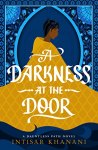
Y’all I was devastated when Theft of Sunlight ended on a cliffhanger, but Alhumdulillah, this conclusion was well worth the wait.  My heart is at ease, even if I am trying to figure out how to get the “Blessing” so that I can forget I read the book, and enjoy it all over again for the “first” time.  I don’t normally review second books in the series, and this won’t be a typical review, but truly if you have not read Thorn or Theft, what are you waiting for, go get those books and start reading.  I don’t know a lot about the publication drama of this fantastic book, but I do know that it was not published in the USA by the same publisher as the first book in the duology, and the thought that we, the readers, could have stepped up the pre-sales and shown our love for the series, the author, and the characters weighs heavy on me.  Thankfully, the UK publisher kept the book and the author found a way to get Darkness to us in the US (it publishes later this summer), but truly we have the power to support good, quality stories, and we must actively show it so that they get published, rather than simply complain about what options are made available to us. This is the author’s website: http://booksbyintisar.com/ if you sign up for her newsletters you can get all the bookishly delicious info.  She is not asking me to promote her or her books, but I happily share and direct support to her, because her stories really are great, and from what I can fangirl find out about the author, so is she.

The book picks up where Theft leaves off, and manages to remind readers what might have been forgotten in the interim.  It had been over a year since I read book one and while I fumbled a little at the beginning, the author caught me up to speed and didn’t let me lose a beat in Rae’s latest and ongoing adventures.  It starts with Rae aboard a slavers ship with children bound for a horrible fate.  More than just her life is at stake, as the information she has recently discovered implicates palace officials, the Circle of Mages, an heir to the throne and so much corruption.  With the help of street thief Bren, Rae gets herself in and out of trouble quicker than most expect.  Her clubfoot, sharp brain, and genuine values, force anyone who underestimates Rae to find themselves scrambling to keep up.  She has grown to love her body and the strengths that it affords her, and in her actions and dedication to changing the world she becomes a formidable river Pirate Queen that you genuinely care for, cheer on, and hope gets a happy ending.

Yes, if you have read Theft and are wondering why I didn’t mention Princess Alyrra, Red Hawk, the Cormorant, Niya, Stonemare, Artemian, and everyone else, fear not, they are all present, and get their story arcs, I just don’t want to risk a single spoiler.  If you’ve waited for this conclusion, you will find yourself desperately dreading the final pages, and wishing the story would never end.  The fantasy, action, characters, world building is all incredible and so hard to put down.  The author is Muslim, but there is no Islam present in the stories, although hints of desi culture do seem to present in the Sweetening atleast. 

The book is YA, but I think 15 and up or so would be a good fit. Like the others in the series, it has magic, murder, killing, lying, thieving, alcohol, corruption, implications of sexual abuse, assault and threat of rape, but this book also has some language, talk of infertility, and some implied banter about marital relations. The romance is very halal and clean, but the violence is graphic as dealing with the implications of murder and slavery are grappled with and thus a thematic element of the story.

Thank you Netgalley UK for the arc, if the book looks interesting and fun for you, please preorder the book wherever you are.

Hungry Hearts: 13 Tales of Food and Love edited by Elsie Chapman and Caroline Tung Richmond

Standard
Hungry Hearts: 13 Tales of Food and Love edited by Elsie Chapman and Caroline Tung Richmond

hungry hearts

Occasionally I get asked about short story and/or essay from a collection that a college or high school student is hoping to share with a class that doesn’t take long to read, but shows Islamic representation.  And I never have a suggestion.  The middle grade collection Once Upon an Eid is amazing, but for younger readers.  When I learned about this collection that features two known Muslim authors, Karuna Riazi (The Gauntlet series) and S.K. Ali (Saints and Misfits, Love from A to Z), and involves food, I thought to take a look and see if I might finally have a suggestion.  Sadly, no.  None of the 13 stories wowed me, or really impressed.  A few I started then skipped, and none were really memorable.  The premise is unique: all the stories take place in the same neighborhood, feature food, and crossover characters, but some are love stories, others redemption, some have super heroes, others murder and gang violence, some really keep the food central, and others just mention it as being present.  There is familial love, romantic straight, lesbian, and trans love, there is friendship and food from many cultures served up to varying effects.  I admittedly read few short story collections, but even with that taken in to consideration, I think skipping this 353 page YA/Teen book is probably the best option.

SYNOPSIS:

I’ll only summarize the two Muslim authored stories.  A few of the others are culturally Indian, but they eat pork, so I’m assuming they are not Muslim, and the Persian one by Sara Farizan features alcohol and a lesbian romance, so since in a past book of hers I noted that I didn’t know if she or her characters identify as Muslim, I will skip reviewing hers as well.

Hearts a’ la Carte by Karuna Riazi:   Munira works at her families food cart, King of Kuisine and serves up Egyptian food to the people on Hungry Heart Row.  When a guy falls from the sky, she finds her self also falling hard for Hasan, as he regularly starts coming to eat and visit, but when it is revealed that he is a super hero (the Comet) and the reason her families cart is destroyed, Munira is not willing to pursue things further.

A Bountiful Film by S.K. Ali: Hania and her family have recently moved to Hungry Heart Row, where her father grew up and grandma Valimma lives.  Irritated that she had to leave her school, her job at Daily Harvest and friends behind, Hania is hoping to lose herself in putting together her film for the upcoming competition and beating her long time rival Gabrielle Rose.  With no clear idea of what her film should be about she starts with interviewing Valimma and her friends, which turns up a bit of an unsolved mystery involving a missing boy that keeps showing up on the security footage from local businesses.  Hania decides to pursue it, but finds herself being watched, and filmed in the process.

WHY I LIKE IT:

I like that the stories are interconnected, I don’t know that it works, but I like the idea of it.  As for the two Muslim authored stories, I like that Islam and culture are included slightly, but that the story is much more than that, and the characters have more pressing issues to figure out.  I wish in both of these two stories, food was more fleshed out.  They seemed to be lacking the magical food premise that many other stories in the collection had.

img_7244

FLAGS:

See above paragraph for some collection flags.  Riazi’s story has crushes and a budding romance, but nothing overtly “haram.” Ali’s story is clean.

TOOLS FOR LEADING THE DISCUSSION:
I wouldn’t probably even shelve the book in our Islamic school library, it doesn’t offer much in my opinion.

Queen of the Tiles by Hanna Alkaf

Standard
Queen of the Tiles by Hanna Alkaf

queen

This 320 page YA book is hard to put down and middle school readers and up that love words, a good mystery, and fantastic writing are in for a treat.  I can’t recall the last whodunit that had me absolutely sure that I knew who was guilty, while simultaneously doubting myself until the reveal.  I mean, maybe there wasn’t even a crime to unravel? And fear not, I’m not going to spoil anything in this review.  Just know that this Muslim authored, Muslim character filled, Malaysian set, Scrabble feast is worth a space on your shelf as it will undoubtedly make a place in your heart and beg to be read again and again to see what you missed.

SYNOPSIS:

It has been one year since Najwa has competed in a Scrabble tournament, one year since her best friend, Trina Low, died playing Scrabble at the very same tournament, at the same hotel, with many of the same participants.  And with Najwa battling her angry negative thoughts, splotchy memory, nerves, and grief, she is walking a fine line of functioning and faltering.  When Instagram posts and messages start popping up from Trina’s account, everyone becomes a suspect in unraveling what really happened and doing it fast enough to prevent it from happening again.

The backdrop is the Scrabble games that are still taking place, the play on words, the scoring, the plotting, the twists, the scrambling, and unraveling of so many characters that are more connected than they first appear.

WHY I LIKE IT:

I love Scrabble, my mom and I used to play weekly when I was in junior high through college, and while the games were “friendly,” and neither us very good, the game holds wonderful memories. Usually chess is referenced for strategies in real world approaches, so to see Scrabble on a competitive level and have it being in many ways a metaphor for the larger storyline truly had me giddy.  I’m still grinning in fact as I write this review.  The mixing of the two story lines is flawless, with the word play, and scoring, and definitions, that I am just beyond impressed with the writing, the clarity, the intensity, and the way it holds the readers attention.

Many of the characters are Muslim and they mention their hijabs, waking- or rather trying to wake each other up for fajr. At one point Najwa and Mark, Trina’s ex-boyfriend are meeting to talk and she acknowledges the halal gap left as they sit down and how they are both always mindful of her Muslimness and his non Muslimness.  Islam is there, but is not a big part of the story. I beamed when it popped up, but if doesn’t influence the story much, for example one night Najwa plans to sleep in her hijab incase she has to run for her life, so you know, she won’t be slowed down by trying to cover her head.  Yeah, the book has some dry humor too.

There is a large mental health role in the book, as it seems in all of the author’s books: The Weight of Our Sky and The Girl and the Ghost.  Najwa is coping with her grief and trauma and working closely with her doctor to improve her situation.  Other characters mention going to therapists and likewise getting professional help.  I love that it isn’t just a character trait, but that it is a big part of the story, and not in a negative way, but in an actively working to manage it way.

I like how the gender neutral character is handled and pronouns are used.  It is not opined upon, it is not in your face, it is a side character, they have a preference of how to be referred to as, a quip is made that if they win they don’t want to be queen of the tiles, but a more less gendered term perhaps monarch, and that is it.  It is not a judgement, it is not a big part of the story, and no one makes it a huge issue, the character isn’t fleshed out much, but they are respected and have more to their personality than this one facet.  I think that provides a great approach in seeing something in literature that can perhaps spark important conversations in real life in need be.

The only slight pauses the book gave me were when it talks about how incredibly wealthy and distant Trina’s parents were, but then for much of her life she lived in a modest town house style house.  Also, despite Mark and Najwa’s awareness of boundaries, and Najwa being called out for crushing on Mark, at one point he hugs her and I don’t know if that is an oversight or was intentional.

FLAGS:

There is death, murder (?), poisoning, deceit, plotting, cheating in multiple ways, kissing, crushes, relationships, multiple mental health threads, intense competition, danger.

TOOLS FOR LEADING THE DISCUSSION:

I would love to do this as a book club selection.  I think as long as no one spoils the outcome there would be so much to chat about: the twists and turns, the way Islam and Malay culture is shown, the influence of western culture, concept of competitive Scrabble, pronoun sensitivities, and healthy friendship.  Girls and boys in middle school will be drawn to the story, and I can’t wait to share.

The Lady or the Lion by Aamina Qureshi

Standard
The Lady or the Lion by Aamina Qureshi

lion

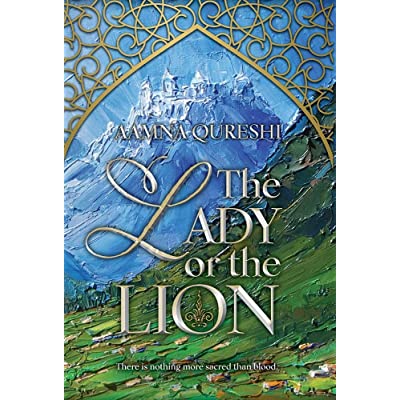
I was kind of surprised how well done this YA culture rich 350 page romance story was in holding my attention.  I don’t know that I had any expectations, but I was genuinely engaged in the growth of the protagonist as she began to emerge from her naive political state, and I look forward to some resolution from the cliffhanger conclusion of this the first book in the Marghazar Trials series.  The characters are practicing Muslims who pray and mention Allah swt regularly, they also acknowledge when they make extreme departures from basic Islamic tenants such as drinking, dancing, murdering, exhibiting racist attitudes, and mixing freely with the opposite gender.  It doesn’t stop any of the characters from behaving as they wish, but at least it is noted. The Urdu words and Pakistani setting in this fictional reimagining is filled with warmth and love, and while there are some steamy scenes and outright cruelties, I think 15 year olds and up can handle the contents, and recognize the suspension of reality and moral laxities for the sake of telling a story.

SYNOPSIS:

The book makes clear from the onset that “In the very olden time, there lived a semi-barbaric king. . . This is not his story.” This is the story of 18 year old Durkhanai, an orphaned princess raised by her grandparents, the King and Queen of Marghazar.  Marghazar is a prosperous country that is waging war on two fronts and does not let outsiders in, ever.  When the book begins it is doing so begrudgingly to avoid war with the neighboring districts that are working to unify and have recently been attacked.  With ambassadors arriving to determine the guilt or innocence of the one district unaffected by the terrorist attacks, the foreigners are seeing the inner workings of the kingdom for the first time.  All the ambassadors are females of various ages and experience, save the one from Jardum.  Asfandyar is young, dark, and handsome, and immediately discriminated against by the Badshah for his complexion.  Additionally Shehzadi has been warned by many to stay away from Asfandyar, which naturally makes him a great character for her to be swept away by.  She holds out for a while, but with her people mysteriously getting ill, her betrothed melting in to the background, and cracks in her country making themselves obvious, Durkhanai will find herself struggling to understand her heart, her country, her family, and her future, and with the cliff hanger ending, no simple answers will be given to her, or the reader.

WHY I LIKE IT:
I love that there is a map at the beginning, and lots of supplemental offerings at the end.  There are a lot of Urdu words and phrases and while I am moving away from feeling like all OWN voice books need to include glossaries, I think non Desi readers will be appreciative in this particular book to have one available.  For someone with some knowledge of the language the inclusion of the titles and relations and phrases between the languages is expertly done and delightful. There is also an author Q & A, as well as reader discussion questions.  There is a content warning at the beginning alerting the readers to physical and sexual assault as well as racist behavior and language and makes clear that it is contained to the characters and the story and is not the reflection of the author and publisher.  I like that it is there, and I like that the princess makes a stance against the racism and the sexual assault that she witnesses.

The high school girls at our Islamic School are always wanting “halal” romance books.  Ok so really they just want romance books, but I try and keep their pickings halal, and so I am forever reading these books trying to find new titles to recommend.  The book is very 1990s Bollywood in terms of romance flags.  There is a lot of proximity and caressing of necks and longing, and familiar obligation.  There is some snuggling and kissing, so maybe 2000s Bollywood, but the characters thus far don’t cross “that” line.

I really appreciated that Durkhanai was fleshed out and relatable.  Even though the setting is long ago, and the genre is romance, she didn’t wait to be rescued, even when she was hurting or pining, she was still maintaining her obligations and moving forward.  I also love that it showed some depth to her emotions.  She recognized that Asfandyar would let her speak and would show his support by being there, but he pushed back on her and challenged her too.  Rashid on the other hand would speak for Durkhanai and would fawn over her in a very superficial way almost.  Sure neither relationship was ideal, but from her perspective at least she was able to see how various presentations made her feel.

I was a little lost in some places, but I was reading quick and had distractions so I’m not entirely sure if it is my carelessness or plot holes or if gaps will be filled in future books.  I needed more reasoning though, for why Durkhanai’s cousins, Zarmina and Saifullah, truly hated Asfandyar as much as they did, or what exactly Saifullah was plotting and how it connected to ratting out the princess.  For all that is seemingly going on, the Badshah and Wali always seem available to chat and are often just lounging around.  I know it is not their story, but the negotiations, the plotting, everything seems to be done very slowly and could really use some fleshing out to show some depth to the side characters.  Other than a few voices, the side details are lacking.

FLAGS:
Lying, killing, racism, sexual assault, physical assault, plotting, murder, kissing, manipulation, touching, caressing, sneaking around, theft, cruelty, cursing, romance.

TOOLS FOR LEADING THE DISCUSSION:

The book is not an Islamic story or even a moral one, it is entertainment and it could possibly be used for a book club if the participants relish in these kind of books, but it probably wouldn’t have wide enough appeal and would alienate nearly all the boys from joining.