Tag Archives: islamic fiction

Dark Nights and Light Hearts: A Muslim Book of Opposites by Hena Khan illustrated by Mehrdokht Amini

Standard
Dark Nights and Light Hearts:  A Muslim Book of Opposites by Hena Khan illustrated by Mehrdokht Amini

Every few years, for the last 13 or so, we get a new title in this series, and each one warms my cynical heart with its unapologetic Islamic representation and vibrancy.  The heartfelt rhyming lines, the Islam centering, and the enveloping illustration make these books timeless, sought after, and beloved.  This installment covers opposites, previous books in the series focused on colors, shapes, and numbers. From the BIG ummah to a SMALL baby’s aqiqah, HOT oud to COLD rain bringing barakah, SLOW honey full of shifa to FAST cars heading to Jummah, the book uses two page spreads per each term in the opposite pair with rhyming couplets in large clear font to introduce/remind, describe, and highlight an Islamic tradition.  As both opposites and Islam are conveyed, the cadence and illustrations pull Muslim and non Muslim children in and make the book delightful at storytime, in small groups, at bedtime, and for kids to look through on their own, over and over again.  Alhumdulillah.

The book is 36 pages with a Glossary of Islamic words at the end with an Author’s Note.  It is available wherever books are sold and a great reminder that well done Islamic books can make it from traditional publishers.


Doctor Bear and Helpful Bunny: The Travelling Dentist by Emma L. Halim & Her Mum Mary Tucker illustrated by Alissa Mutiara

Standard
Doctor Bear and Helpful Bunny: The Travelling Dentist by Emma L. Halim & Her Mum Mary Tucker illustrated by Alissa Mutiara

Sometimes you just need a sweet little story about a traveling (sorry one l I’m not British) dentist going under the sea to help a hammer head shark with a toothache.  This rhyming story for toddlers is perfect for the demographic as duas are said to get through the pain and fear and the reliance on Allah swt that all will be well.  The Muslim animals and the fun illustrations make the story appealing whether your child is afraid of the dentist or not, and the focus on the duas in the backmatter, makes the book a good tool for repetitive use.  It is worth noting that their are 32 pages in the book, but the story is only 20 pages.  There is a glossary, multiple dedications, scanable codes for activities, ads for other books, duas, sources for duas and author bios in the back.

The book starts with Doctor Bear and Helpful Bunny introducing themselves as traveling dentists for all animals, even those under the sea.  When they get a call from Sonny, they set an appointment time, gather their gear on a boat and then head underwater to the shark village.

Sammy is glad they are there, as he is in pain. They clean his teeth, but need to remove the wiggly one, and that scares him.  He says a dua and before he knows it the huge tooth is out, alhumdulillah.

The book then has a two page spread about duas that help when you are “feeling funny inside” in Arabic, English transliteration, and their meanings in English.  A fun book with a great mix of story, silliness, education, and heart.

Vultures in the House of Silence by A.R. Latif

Standard
Vultures in the House of Silence by A.R. Latif

img_7966-1

This 312 page richly imagined Islamic fantasy is both engaging and compelling.  It is too advanced for me to review as it weaves a complex tale based on history, religion, fantasy, and imagination.  I do know that it was for the most part well written, I have some issue when the character’s diction would include words that felt too contemporary slang, but it didn’t happen too often.  The pacing though, unfortunately for me, was definitely off.  Undoubtedly the author has tremendous skill.  The emotional pulls, the world building, the consistent cliffhangers at the end of each chapter, kept me curious to see what would unfold.  The story beats just dragged more often than they should have for no clear reason in developing the plot, defining character arcs, or adding to the rising action.  I don’t think I ever stopped reading at the end of a chapter, those hooks were well placed, but when I stopped in the middle of the chapter, it often took four or five days for me to be motivated enough to open the book back up.  I truly think it just needs a good editor to help cut certain scenes, and smooth out the tempo.  The idea and layers are great, and if I, as someone who struggles with middle grade fantasy, couldn’t walk away from this YA/Adultish read, I’m sure lovers of fantasy, jinn, monsters, Islamic history, found family, gray characters and action, will find this book an enjoyable read, even the slow parts, that  I struggled with.  So no this is not a negative review,  I am hopeful my teenagers will read it and enjoy it, I just really hope the author will consider working with an editor to elevate the text as it truly has potential.

SYNOPSIS:

I don’t know that I can retell the story, it has a lot going on and I’ll probably inadvertently spoil something, so here is the summary from the back of the book:

“A boy wakes up surrounded by corpses. Unable to move, he is assaulted by vultures who stop pecking at him only when he speaks. To survive this nightmarish ordeal, he tells them the story of how he ended up on their menu…

What follows is the wild tale of the young gardener Khurafa, coping with the aftermath of the Mongol invasion of Baghdad and the death of his parents amidst the bloodshed. After a vivid dream and several supernatural encounters, he becomes convinced that an ancient group of nine sorcerers called the Servants are bent on world domination. Accompanied by his scholarly mentor Shaykh Nariman, and the sly, uncannily perceptive Zakiyya, he seeks saintly help against the Servants, but finds mostly monsters instead.”

WHY I LIKE IT:

I love the opening, it really grabs you, the emotion of Khurafa and the loss of his parents and his predicament with the vultures connects you to him and his vulnerabilities.  The twists are also well developed and keep the book interesting.  I feel like the end needed more, and the middle needed less.  SPOILERS: I didn’t get the cat, or the going from village to village.  All the names, and all the drama at each village, dragged for me.

It appears the book is meant to be a series, so I wonder if many of the characters that died will return, but I feel like the final battle was a little disappointing, and anti-climatic.  All the build up and then it went so quick.  I appreciated the full circle on the House of Silence, and the answering of some of the questions, but for all the emotion  at the start, the end didn’t mirror that in the cathartic way I hoped it would.

I say all this with full acknowledgement that I am not drawn to fantasy, I am not well versed in Islamic history, and it is absolutely possible, that I just don’t get it. In brief, I am not the target audience.

TOOLS FOR LEADING THE DISCUSSION:

I think this book could be a good book club selection, with some motivation to get to the end, I think readers will be happy that they did, and I would imagine they would be willing to read the next book in the series. For many I would imagine it would be the first Islamic fantasy they will have read that has the layers, richness, and intrigue that this book does, and inspire them.

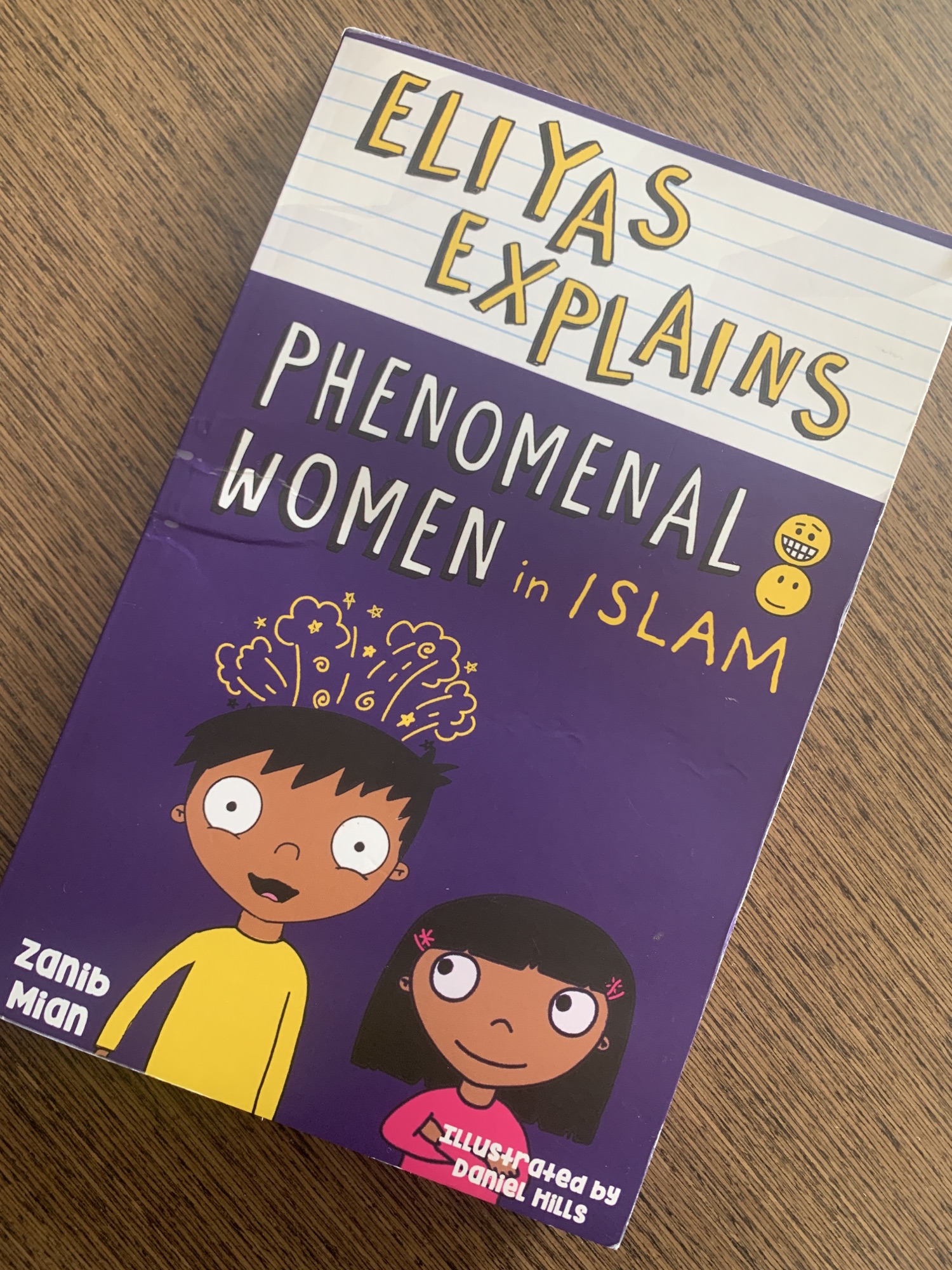
Eliyas Explains Phenomenal Women in Islam by Zanib Mian illustrated by Daniel Hills

Standard
Eliyas Explains Phenomenal Women in Islam by Zanib Mian illustrated by Daniel Hills

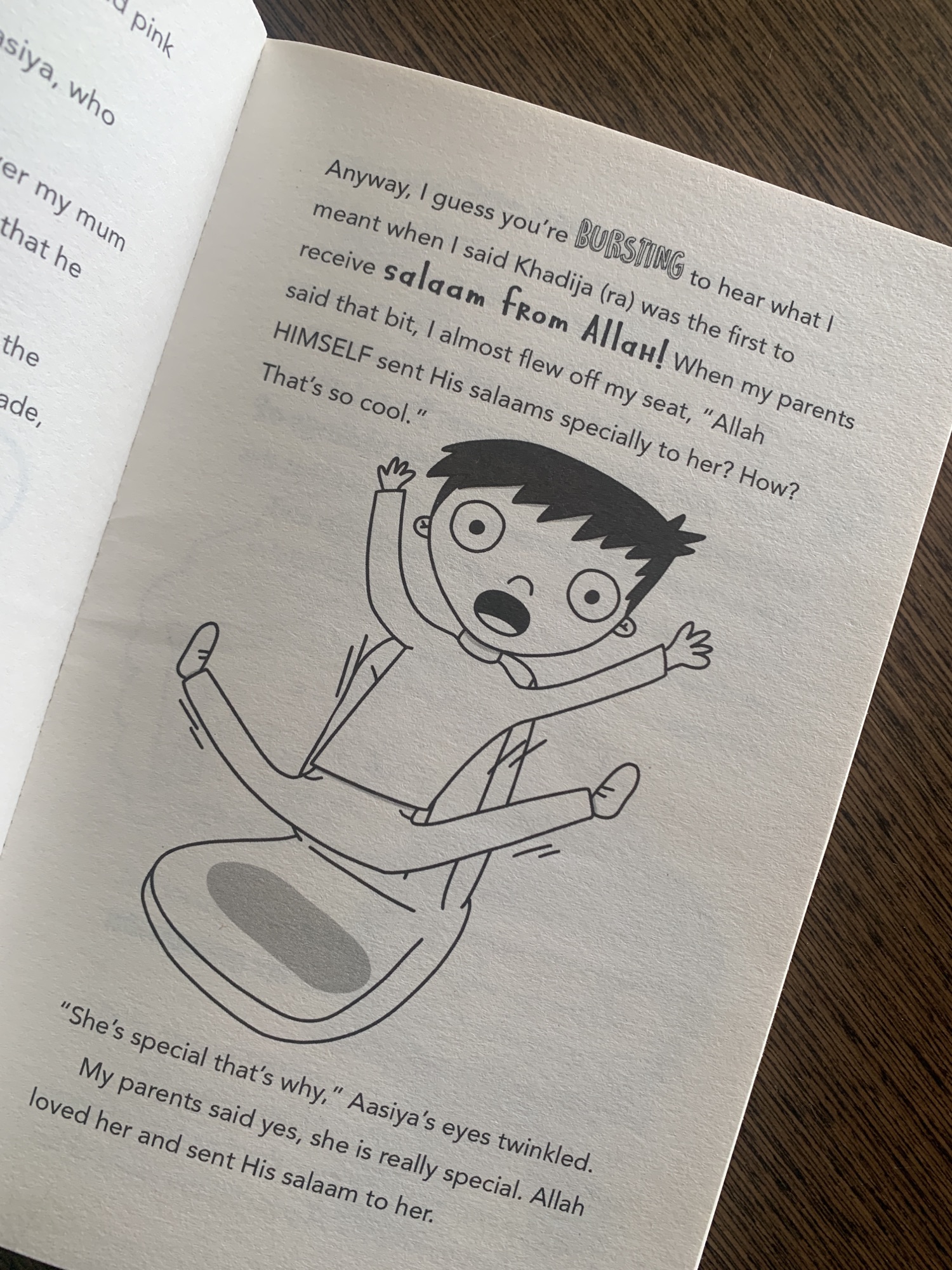
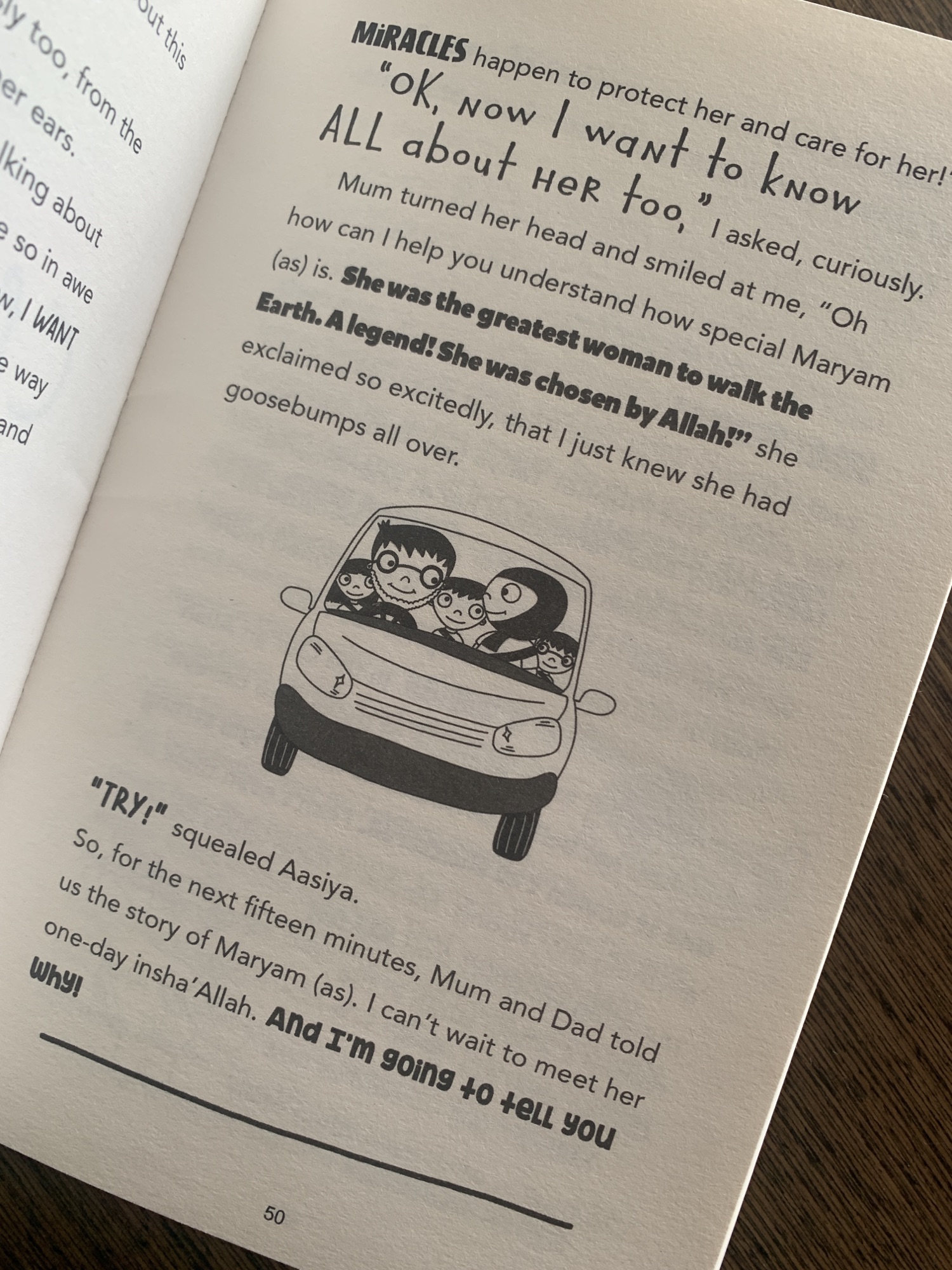
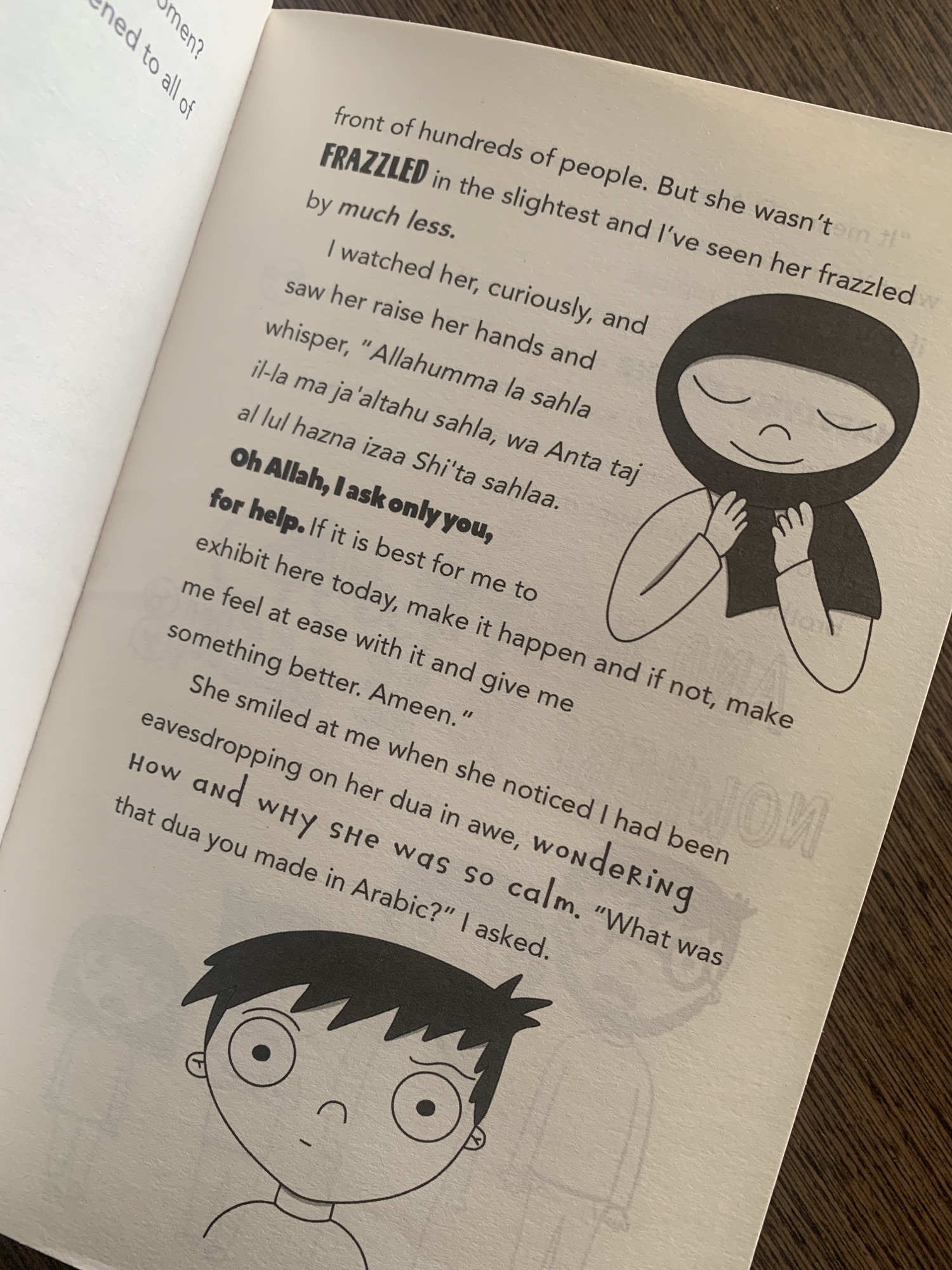
Another wonderful Eliyas Explains book that targets elementary readers with a relatable, funny, likeable voice that weaves in information, heart, faith, and humor in a way that makes them favorites at my house, even after my children have aged out of the target demographic. I particularly enjoyed this 106 page focus on women in Islam, because like the others in the series it is sourced, illustrated, and engaging, but I felt the cover story linking the facts was also compelling. I genuinely didn’t know what the family was going to do about the expo mix-up, and was invested in not just the Islamic role-modeling of how the family would handle the set back, and what historical woman it would be connected to, but also what they were going to do with all the Qur’an Match games, and I assure you, I didn’t see the resolution coming, or the twists that followed.  I always appreciate that the author’s books don’t talk down to the readers and with the information contained, I think both children hearing the stories for the first time or those that know them well, benefit.  The way they are presented serves as a reminder for some or a tease for others to go learn more.  Alhumdulillah for this series and this book that highlights Khadija (ra), Fatima (ra), Aisha (ra), Maryam (as), Hajar (as), and Aasiya. As prices for goods continue to soar, this reasonably priced book should be an auto buy for us all.

SYNOPSIS:

Eliyas and his family are heading to an expo to set up their booth and help their Mum sell her Qur’an Match game.  Mum is a little nervous and the road trip is the perfect setting to talk about phenomenal women in Islam to give her confidence and the kids some teachable moments.  The kids are wowed by the business savvy and status of Khadija bint Khuwaylid (ra), and they want to hear about the other  women promised jannah.  Little sister Aasiya is particularly interested in who she was named after.  Once they get to the expo though, things are not as expected.  The organizers have no record of the stall reservation, tickets are sold out, and Yusuf goes missing.  Alhumdulillah, Mum stays level headed and the family trusts Allah swt to provide them with something better.  The remainder of the book is the family taking what comes at them and making the best of each situation as they make their way home, share more stories, and enjoy each adventure as it comes.

WHY I LIKE IT:
I love the subject and how it is presented.  I always appreciate the sourcing given at the beginning so that the stress of accuracy is abated. The writing quality allows you to be sitting right there with Eliyas in the car taking it all in.  I know that many Eliyas books have workbook style prompts at the end, but I was glad this particular one is just a straight story read.  The illustrations as always are comical, and I can’t wait to see what is up next in the series.

FLAGS:

None

TOOLS FOR LEADING THE DISUSSION:

My kids read it and we talked and laughed, and I recommend it and the whole series for 2nd-4th grade classrooms to have for kids to read, enjoy and learn from, alhumdulillah.

Momo & Bronty’s first book about Prophet Muhammad (saw) by Zanib Mian illustrated by Laila Ramadhani

Standard
Momo & Bronty’s first book about Prophet Muhammad (saw) by Zanib Mian illustrated by Laila Ramadhani

I’ve mentioned it numerous times over the years how few children’s books there are about Prophet Muhammad (saw), and I love that this new book by Zanib Mian is a wonderfully illustrated 14 page board book for toddlers introducing them to some of the basics about our beloved Rasulallah. Momo and his toy dinosaur Bronty are featured in the illustrations, but do not dominate the text, which keeps the focus on Prophet Muhammad (saw) being the last of Allah’s messengers sent to tell us Allah is One, that the salutation is said after his name, and that he is always smiling, truthful, and making duas for us all, his ummah. I read the book a few times to myself and stumbled over some of the short sentences, but oddly enough when I read it aloud to my kindergartner it flowed fine. I always read picture books aloud before writing my reviews, as I was taught to read my essays aloud in school before submitting them, to effectively find errors. So, I’m not sure why for this book, I stumbled when reading to myself, but not aloud, a first for everything I suppose. The last spread though I did benefit from reading beforehand, as the order of what text comes next is not clear on first look. The pictures contain a lot of accessible details and discussion points and even early elementary aged children will find themselves drawn to the book, the reminders, the messaging and the simple text.

The board book is not just a list of facts, but doesn’t have a plot either, it is somewhere in between as it stays on level and flows between ideas, keeping the readers engaged. It starts by explaining that Allah swt sent Prophet Muhammad to us, the Qur’an through him, the message he carried, and why we love him. It shows that he exemplifies what a Muslim is and gives some examples, it then highlights that “His face was more beautiful than the full shining moon” and that “he played with little ones and made them laugh.” It concludes with connecting us, his ummah, as being important to him as he knew “the message he brought from Allah,” would spread.

Academy Story by Naim Hammami

Standard
Academy Story by Naim Hammami

I dnfed this elementary aged book a few months ago, and pulled it back out feeling obligated that the publisher sent it to me and, I ought to read it.  So, I did, and it is not well-written, but since I read it, I’m writing a review, and hopefully sparing y’all the same frustration.  The cover is pretty cool, so is the idea, and the Islam is centralized and prioritized, but the story reads like an introduction, yes a 152 page introduction.  It repeats itself so often, it contradicts itself within the repeated ideas, and then moves forward at a snails place before ending.  I think it wanted to end on a cliff hanger, but because so little is accomplished up until that point, it feels like it doesn’t end at a climax, but rather the start of the action, which is irritating.  It feels like the author started telling a story orally about a family in a kingdom that when they finish primary school either continue to secondary school or find themselves in a secret academy, and no one knows how they are chosen, or what the academy is like; someone heard that much and told the author to write a book, and they did.  There is no character development, drawing the reader in, suspense, imaginative language, or refinement, it reads rough and I don’t know if it is because it is translated, or because there was never much to work with, but if you have seen this book, and were excited to see an Islam centered adventure story, sadly I’d say pass, it misses the mark.

SYNOPSIS:

The book starts with centralizing three siblings, Fatima, Suhayl, and Harun.  Fatima is the oldest and is a second mother serving her family, cooking, and apparently enjoys reading, she was not chosen for the Academy and is still bothered by it.  Suhayl is the protagonist who hates school, and Harun is the little brother who is still in primary school.  The first few chapters are the repetitive circling of anticipation and excitement for finding out who gets in to the Academy at home and talking about what little is known about the Academy, and why it is important as today is the day Suhayl will find out.  Why they had no idea about the Academy before breakfast on the day he is going to find out, is beyond me, the world building was an info dump, repeated in the following chapter when Suhayl is now at school.  His friends all discuss that they are going to find out about the Academy, only then to contradict that whole build up and wonder IF they will find out about the Academy today.  We meet the friends, find out some of them have parents that went to the Academy, but do not talk about, as they are not allowed.  The reader is not told what the benefits of having gone to the academy are either, outside of knowing all educators have been trained there.  The book then says how Suhayl doesn’t have friends and proceeds to discuss how close he and his friends are.  When the assembly starts the class learns there is no Academy announcement and no end of the year field trip, instead they will have to come up with a challenge, that is optional, to do over the school holidays.  After rounds of voting and a weird power flex, a business challenge with rules is established and the winner gets to leave school if they want. Suhayl is determined to win, he and his buddy, Yusuf, decide to make fans using the Venturi Effect to sell at their stall and try and make the most profit and win.

WHY I LIKE IT:

I like the premise, the artwork, the Muslim characters, I even like the business, life-lessons and science explanation of the fan.  I don’t understand how it makes Suhayl’s fan more effective than a regular fan, but the book has bigger problems. I know for many author’s writing is figuring it out or making it up as you go, so I realize the ridiculousness of saying that this book feels like the book is being made up on the spot. It is writing quality that allows readers to get lost in a story, enjoy the words, and connect to the characters knowing that the author has control of a story and taken care of the required elements of a completed book.  The rules of the challenge and how they were to finalize the idea, seemed so scattered, that combined with the weak writing, and repetitive premise building, made the intrigue of a whispered about Academy seem like a completely separate story.

Additionally, I don’t understand the stressing of the three siblings, The book is only about one, Suhayl, and his friends, yet each have a “character profile sheet,” but they are not all together at the start, or even the end.  One profile sheet is at the end of chapter 2, one at the end of chapter 4, and then the third at the end of chapter 6.  If the point is that as the series progresses you will see the sibling more, and it is meant to garner interest, the choice assumed that readers will stick around for a series, and I don’t think the book at hand, will pull readers in to see how the series pans out.

FLAGS:
Secrets, business deception

TOOLS FOR LEADING THE DISCUSSION:

If the book were donated I would shelve it, but I would not seek it out to shelve.
Trains & Trainers by Sarah Musa illustrated by Rania Hasan

Standard
Trains & Trainers by Sarah Musa illustrated by Rania Hasan

img_5804-1

This 36 page picture book about siblings, one with autism, is much needed in the Islamic fiction sphere to shine a light and bring awareness.  My concern, though, which is a big one, is that no where in the story or backmatter or even dedication does it hint that the author has first had experience with an autistic individual.  The lack of transparency makes it hard to feel at ease reading the story.  Is it tokenism, is it assumption based, is it stereotypical, is it accurate?  The take away message shouldn’t be affected, Allah swt has made us all unique and special, but when it states in the back matter so generically, to “ask an adult to help you find out more about autism,” it makes the book feel inauthentic. Now for all I know the author has an autistic child or sibling, but that is kind of the point, I don’t know, and because I don’t know, I don’t know if this book is valid.  Literary wise the book is decent, there are heavy handed speeches from the mom, where it might have been nice to see the main character learn those same lessons on his own, but it is often the nature of Islamic fiction books, and this book handles it better than most.  I did cringe at the illustrations with the children wearing trainers in the house.  I know it is part of the plot, but even my kids noticed right away and felt it was off. Perhaps Muslims taking off their shoes at home is not as universal as it once was, and no it isn’t just the autistic child wearing shoes while sitting on the sofa.

The book starts with a young boy quietly turning on the TV as to not alert his older brother to what he is doing, the blaring music though betrays him, and Badr stands in front of the TV blocking Malik from seeing the outcome of Zymbot and Fungulga’s battle.  In frustration he pushes his autistic, non verbal brother, which makes Badr cry and gets Malik a chat from his Mama.

The mom and sons then head to the store, but on the way there, they stop at a train crossing and watch the railcars pass by.  At the store Malik wants to get a toy train, but Mama reminds him that a toy such as that will not last long in their house.  Once again Malik feels his life is hindered by his brother. He says things in frustration that he doesn’t really mean, and regrets, but again gets him some guidance from his mother.

img_5809-1

At home, his Mama prays and Malik contemplates what his Mama goes through.  Badr, who often plays in his own way, then starts playing and pulls Malik into his fun too.

A Letter to the Beloved: Dear Prophet Muhammad (saw) by Jenny Molendyk Divleli illustrated by Rumeysa Abis

Standard
A Letter to the Beloved: Dear Prophet Muhammad (saw) by Jenny Molendyk Divleli illustrated by Rumeysa Abis

img_5332-1

I was a little skeptical about a 32 page rhyming letter to our beloved Rasullah, illustrated in book format, but it is cute and it won me over.  The rhythm keeps the rhyme from feeling too forced and allows for some forgiveness when it misses the mark, it also makes the book appeal to a wider audience. Even my preschooler could sit through it pretty well.  The book being the letter without any stilted framing, has a lovely authentic voice of a young boy, also named Muhammad, asking the Prophet (saw) questions and chatting in a very stream of conscience sort of way. It blends facts that the young boy knows with his stresses and asking the Prophet for advice.  The font is meant to look like a child wrote it, but it is a little cumbersome for children to read, and even adults (me) during read alouds.  I do wish the book was sourced, nothing really seemed wrong, but having it sourced or approved by a scholar is just a reassurance to the reader, and in my view a responsibility of the author.  The only line I didn’t like was near the end, when the boy hopes “that you will remember me, from this letter I am writing you.”  I feel like it will confuse kids, is the letter being sent? How would he know you when you’ve never met? What will be done with the letter once written? The illustrations are hit or miss, some are absolutely lovely, others a bit off, for example a music book on top of a picture of Masjid an Nabawi and the Kaaba, some also easier for small groups to see than others.  For kids there really aren’t a lot of books about Prophet Muhammad saw that are not textbook like in their portrayal, so I like the approach this takes, I just wish a few things were tweaked.

The book dives right in, with Muhamad introducing himself to our Prophet, he writes that he was named after him, and all about his family.  He then starts to tell what he knows about Prophet Muhammad, and questions he would like to ask.  Its a one sided discussion about siblings, smiles, appearances, kindness, and generosity.

The little boy then wants to know about Buraq, splitting the moon, talking to angels, standing out numbered at Badr.  It then turns to food and the little boy wondering about if RasulAllah would like mustard and relish, and burgers.  

img_5336-1

He imagines the Prophet visiting and leading his family in prayer and the scent that would then linger.  The boy hopes to meet him in Jannah, and promises to do his best to follow Allah’s decree. He signs off and sends salawat upon the Prophet. There is then a place for readers to write their own letters to the Prophet.  

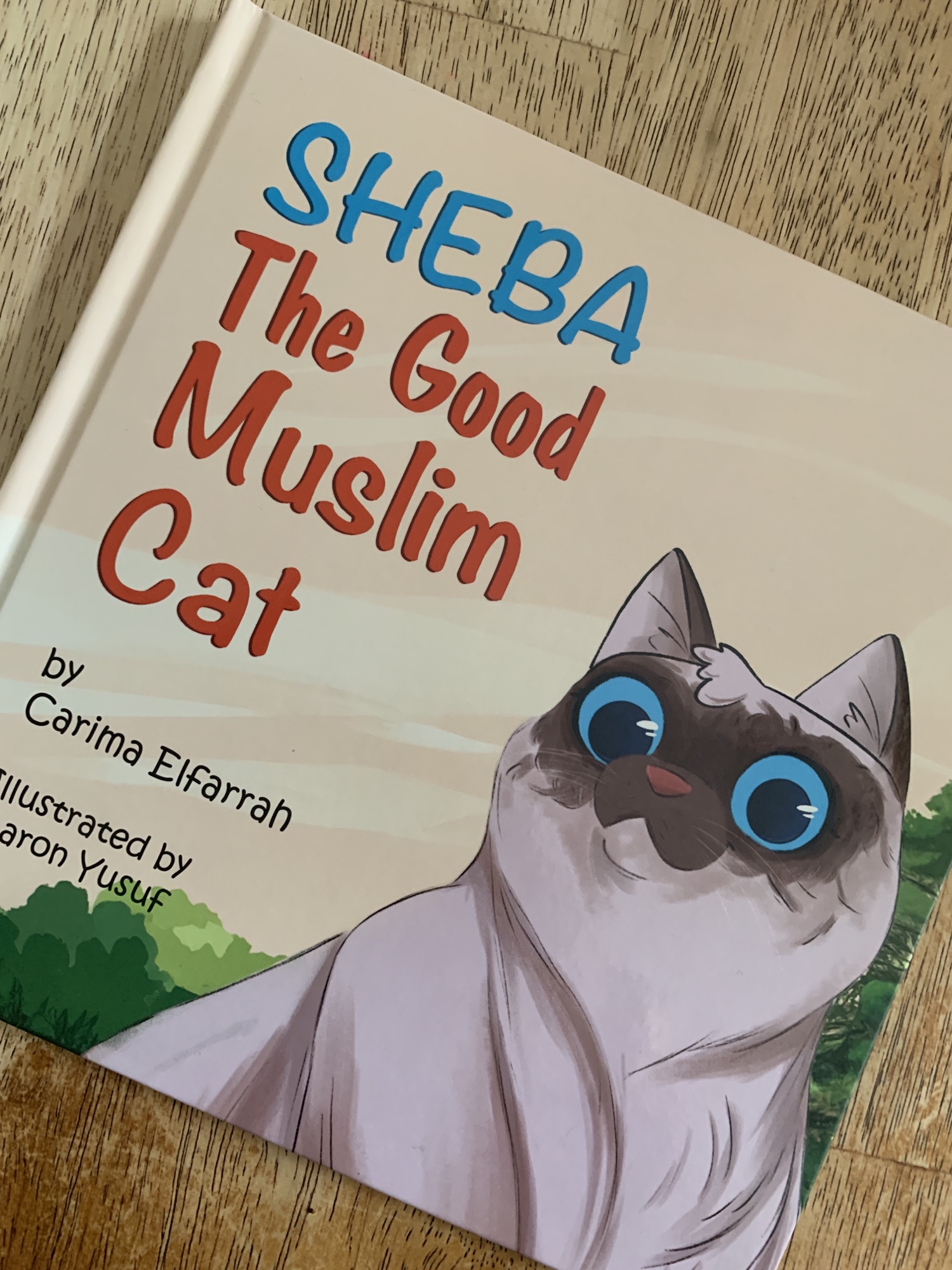
Sheba: The Good Muslim Cat by Carima Elfarrah illustrated by Aaron Yusuf

Standard
Sheba: The Good Muslim Cat by Carima Elfarrah illustrated by Aaron Yusuf

img_4999-1

I was really looking forward to this book about Muslims and cats.  Every masjid seems to have cats all over the world, and while feline friends often sneak into Islamic fiction books about other things, I liked the idea of giving a cat the spotlight.  Alas, the rhyming text, the examples given, the inspiration shared in the backmatter, the angel imagery, and the ambitious glossary made this small 8×8 inch 32 page picture book rather off putting and ultimately forgettable unfortunately. The cat remains at the family home, and basically just hangs out with the family when they read Quran, pray, get up for fajr, and the cat is patient when waiting for food or water.  Sure it makes it a nice cat, but with a title implying this cat is a “Good Muslim,” I really expected more.  I appreciate the hadith at the end, but it is not sourced, and the cat with a halo and wings signals Christian imagery, that doesn’t align with the tone of the book.  Additionally, the idea of the book comes from a story of a Syrian scholar who had a conversation with a cat. I’m not saying it did or did not happen, but it seems a little bit of a stretch for my cynical brain.  The book reads for toddler and preschool Muslims, but the glossary reads copy and pasted from Wikipedia for non Muslim adults.  The small size makes the book impossible for group story times, and it can be hard to read at times because the text often runs over the pictures making it hard to see.  Ultimately though, while my toddler enjoyed it well enough the first time, he has not asked for the book again despite it sitting on my side table for weeks, which is probably more insightful than my review.

The book starts with a young boy introducing his family cat, Sheba, who has sapphire eyes. The family is Muslim and the boy is confident his cat is too because she hangs around his dad when he reads Quran, she comes running when salah time comes, she plays with the imam (the dad) after the last salaam, and she waits patiently for food and water when her bowls are empty.  She cries at fajr to wake the boy up and he hopes that on the day of judgement she will attest to the good the family did for her.

The backmatter includes the story of Shiekh Shukari, a scholar in Damascus that spoke to a cat, then a two page spread glossary, and author and illustrator bios. The illustrations aren’t particularly spectacular, the boy at the beginning seems much older on some of the pages compared to others, although his clothes stay the same.  I didn’t like the angel imagery, perhaps I’m erroneous, but none-the-less it felt off to me.

Eliyas Explains + Bite-Size Journal: Why Does Allah Let Bad Things Happen? by Zanib Mian illustrated by Daniel Hills

Standard
Eliyas Explains + Bite-Size Journal: Why Does Allah Let Bad Things Happen? by Zanib Mian illustrated by Daniel Hills

img_3601-1

The book stems from the genocide occurring in Gaza, but expands to cover the more general concepts of qadr (destiny), tests, and sabr.  The book assumes that what is happening in Palestine is known and does not discuss specific details, allowing the book to be both timely, yet universal.  As with all the books in the series, the conversational humorous approach appeals to children as foundational Islamic concepts are broken down and explained.  The book is 73 pages with the journal portion starting on page 33. In some of the other books, the journal feels more of a hands on to already shared information, or an accompanying workbook of sorts.  In this book however, I feel like the second half continues to explain the topic at hand, and convey key components in understanding why Allah swt, lets “hard” things happen, how we should view the tests, approach difficulties, and inshaAllah triumph. The book has been checked by a Shaykh, and I highly recommend this important book for elementary, middle grade, and even middle school children. The concept of qadr is difficult, I struggle to truly grasp what we can and cannot change, but this book helps readers focus on what we can change and how to view terrible things that happen to us and to others.

The book starts with Eliyas introducing himself and his family, and then wondering why “Israel is being able to do what they’re doing in Gaza.  Why isn’t Allah stopping it?” As with all Eliyas books, mom and dad are sought out, food is somehow worked in, and time and space are given to Eliyas and his siblings to be given an answer. His parents start by being glad that Eliyas’s heart is soft for the Palestinians and that he is bothered by what is happening to them, before explaining that a lot of understanding is trusting and truly believing that Allah swt knows best.

img_3625-1

The book uses hadith, ayats from the Quran, it even shouts out other Zanib Mian books, The Mindful Book of Wellbeing, for seeing the bigger picture and Eliyas Explains Why Should I Pray my Salat on how to make yourself strong to get through the struggles of this duniya.

The book talks about why Allah swt didn’t make everyone good, and it is clear in saying that being mad and sad are ok too, as long as we are not questioning Allah swt. There are prompts and questions (with answers) and the book is not heavy, despite the subject matter, the tone and approach stay on level and allow readers to connect, alhumdulillah.

You can get your copy here at Crescent Moon Store.