Tag Archives: hardback

All the Ways to be Pretty by Shamaila Khan illustrated by Reyhana Ismail

Standard
All the Ways to be Pretty by Shamaila Khan illustrated by Reyhana Ismail

The premise of this book is fabulous, an Islamic approach to internal beauty to counter the societal emphasis on external appearance, by drawing on the examples of Ai’shah (RA), Khadija (RA), Sumayyah (RA), Maryam (RA), Hajar (RA), and Rufaidah (RA), may Allah swt be pleased with them all.  The illustrations are decent, focusing on the girl understanding what her mother is saying and her imaging herself with those qualities.  The part that I struggled with, is I flipped through it before I started reading it, and the pages are often walls of text.  Additionally, I didn’t realize it is rhyming text over 34 pages.  SubhanAllah though, somehow, it works.  I can see this book being shared at preteen gatherings in masajids, homes, and schools everywhere.  The rhyme at times is forced and lacking, but the flow makes the walls of text zoom by and the information shared is not overwhelming and Alhumdulillah, it doesn’t stray too far from the central messaging. You could share it with younger readers, but I think it works best if the audience knows some of the women and facts highlighted, and the information shared is a mix of reminder and new tidbits urging further exploration. The publisher lists the reading age at 7-10 which is probably a good fit based on the amount of text, but the rhyme, mirrors at the end, and starting point of battling beauty standards on the screen and “Princess” messaging is a bit of a target audience disconnect, which is why I point it out so consumers are aware.

The book starts with a lengthy author’s note before the rhyming scene of a mother and daughter walking to school and discussing what the daughter would like to be.  The girl doesn’t answer a profession, but rather responds that she wants to be pretty, and gives some justifications.  The mother gently then encourages her not to just want to be pretty, but rather pretty smart, pretty wise, pretty brave, pretty pious, pretty resilient, and pretty kind, before concluding with the girl throughout the day thinking of how to be like them, and her mother, to earn Allah’s pleasure.  Each attribute is a two page spread with one of the historical women featured.  The book ends with a hadith and six mirrors with the characteristics beneath them.

I like that the book does not try to give an entire biography about the women featured.  I also like that Islamic references are also brought in, some explained some not. It is “Islamic fictionalized non fiction” it is meant for Muslims with Islamic framing, not just Muslim characters, and it has substance.  Lately so many self published or even Islamic published books seem to not feature Islamic foundational themes, and I realize how much I have missed reading books that do.  Yes, I normally would have a solution to offer as to how to make the pages less text filled and I know I should say that maybe it shouldn’t rhyme, because it makes for some awkward phrasing, over explaining, and useless lines, but alas, I have no suggestions.  We need books that present our Sahabas and Prophets in a manner that allow our kids to know them and think of them and emulate them. Alhumdulillah, I can see this book being read and shared and discussed, and that to me is a “pretty “good thing.

Sunnah and Science: What Modern Research Tells Us about Prophetic Traditions by Aquila Fatima illustrated by Azra Momin

Standard
Sunnah and Science: What Modern Research Tells Us about Prophetic Traditions by Aquila Fatima illustrated by Azra Momin

The title and premise of this hardbound 54 page resource book for children definitely caught my eye.  The contents covered, the two page fully illustrated compelling spreads, and the intext labeling of hadith and Quranic ayats make this book versatile in homes and classrooms for a wide variety of ages.  As the daughter of a convert, the knowledge that science is not in contradiction to Islam is something I grew up hearing about a lot in casual conversation, and I love that this book addresses it head on for children with pull out bubbles, reminders, fun facts, duas, and the like.  My only concern that I truly can’t wrap my head around, is why isn’t their sourcing for the “scientific” information? Nothing is overly scientific, and nothing “feels” off, but none-the-less, the book repeatedly says “Research shows,” and “Science proves,” “Scientists are still,” “Scientific research says,” but never once shares what scientist, or research, or science.  The book has the space for footnotes or sourcing or a bibliography, and in a book trying to give readers the confidence to show how the sunnah and science support one another, to not have the sourcing to back it up, is a glaring admission.  Buried in the author bio it states the author has “a Masters degree in genetics” and worked as a “science teacher for elementary school students,” but to me, the book needs to back up the statements to successfully empower and accomplish what it sets out to do.  I hope future printings will include sufficient backmatter, even without the book is well done, but the standard is the standard for good reason, non fiction needs sourcing.

The book covers 25 topics, dedicating two pages to each topic, with a title heading, and an Islamic source subheading.  The topics include, smiling, rain, sleeping, swimming, wudu, salah, fasting, honey, cleanliness, bathroom etiquette, yawning and hygiene to name a few.

Most pages contain facts, ayats from the Quran, sunnahs, benefits, supporting scientific tie ins, and adorable illustrations.  The book concludes with an author’s note, thoughts by readers on the book, and an author bio.

My First Salah Book: Why and How we Pray by Learning Roots

Standard
My First Salah Book: Why and How we Pray by Learning Roots

Over 91 pages this informative book tells “The Story of Salah” through the miraculous night journey, how to do wudu and its benefits, step by step how to make salah, and then a story style portion of “Life with Salah.” I do not have the digital “kitab” pen that allows readers to have the book read to them and activities made interactive without parental involvement, but even with out it, the book is a pretty solid resource.  The hardback binding, and full color pages are not crowded, they introduce nine characters at the beginning and feature them throughout the pages learning the steps, imagining witnessing the events, and putting the lessons into practice.  Some of the recent Learning Roots books have the characters watching or imagining themselves in story’s of the Sahabas and Prophets, that make me uncomfortable.  The first chapter of this book, is more limited as it illustrates a light in the sky as the Buraq being seen by some children, not the characters in the book, and a silhouetted tree as Sidrat al-Muntaha.  As I am not knowledgeable enough to know if it is “right” or “wrong” to have a child seeing the silhouetted tree and pointing to it, or who it is meant to be, I’ve included pictures for you to decide what is best for your family.  I particularly like that on the pages where Arabic is spoken it is found written in easy to read Arabic with English translation and transliteration.  Within the text there are attributions of hadith and after each chapter there is an activity and questions.  The book concludes with a glossary.

Whether as a tool to learn for the first time, or a book to revise with children already praying, the approach is gentle and easy, inviting children to engage with the pages.  The four chapters are packed full of information, but the illustrations, diagrams, and steps, also allow the book to be referenced, or read cover to cover.

The last chapter, “Life with Salah” shows the character group engaging with salah in a very idyllic way, but given the tone of the book, it works, and will allow readers to see salah as more than just an obligation, which is important.

I got my copy from crescent moon store, if you use my initials (ISL) at checkout you can save 10%.

What Color is My Hijab? by Hudda Ibrahim illustrated by Meenal Patel

Standard
What Color is My Hijab? by Hudda Ibrahim illustrated by Meenal Patel

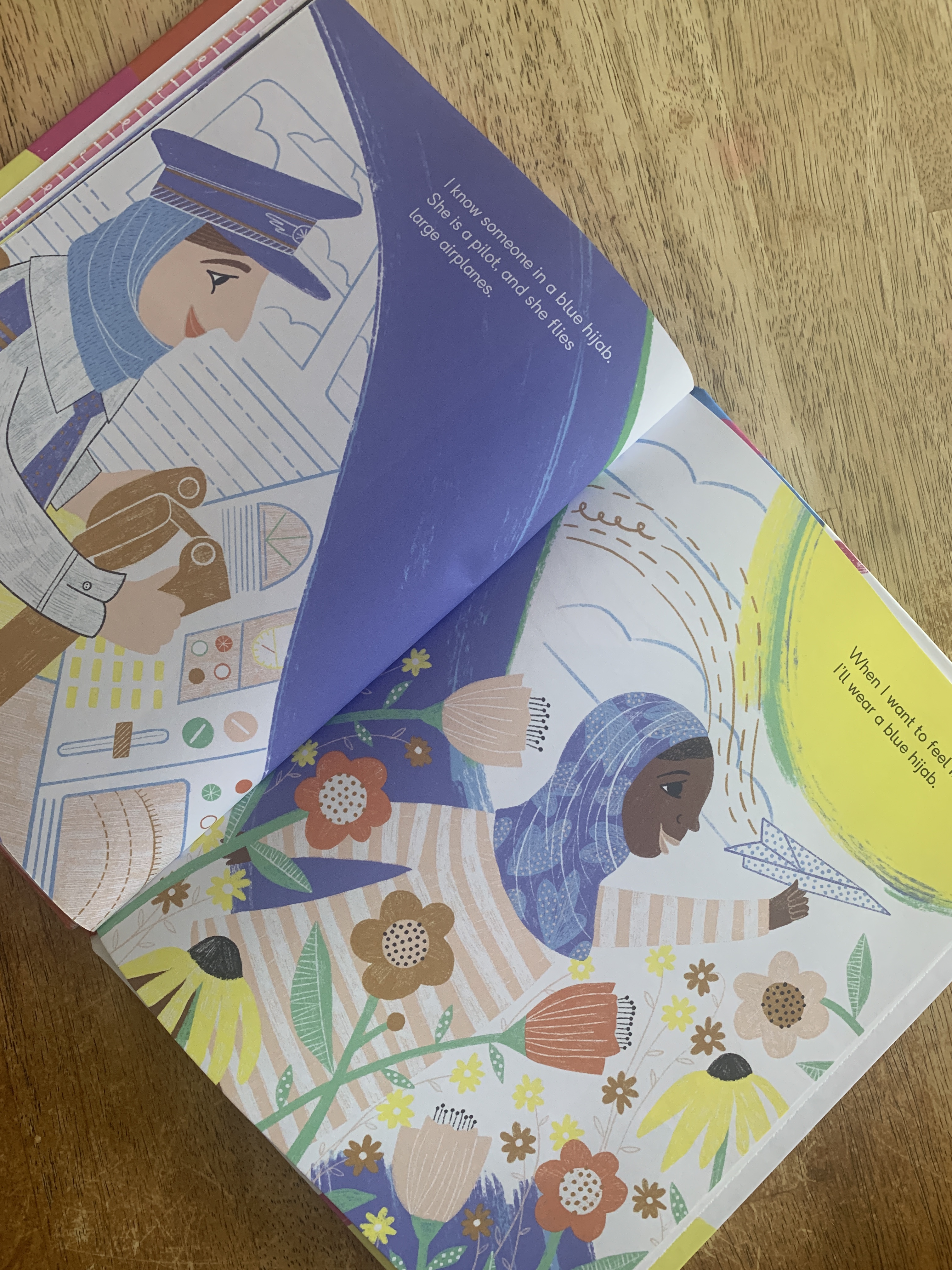
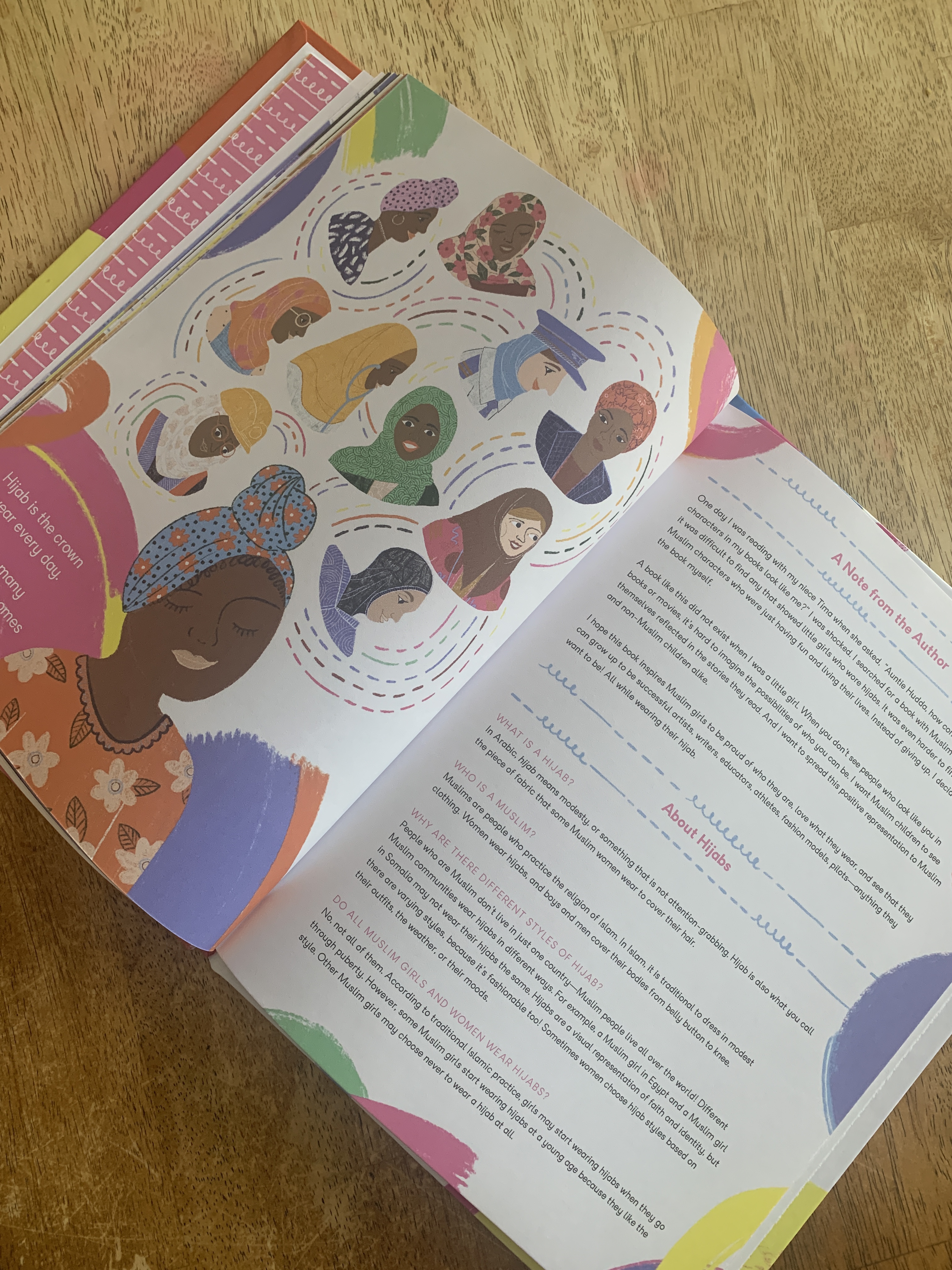
When this book arrived I flipped through it and loved that it tied hijab colors to careers, when I asked my seven your old to read it to my three year old and I overheard snippets, I was impressed that positive characteristics associated with the professions were articulated and embodied by the main character to inspire young girls everywhere.  When I finally sat down to read the book my self, I enjoyed the joy, diversity, and backmatter, but unfortunately felt like a page was missing at the end.  Over 32 pages the book introduces a color as seen on someone the narrator knows hijab, and identifies the woman’s job and a couple of characteristics.  The facing page highlights that when the girl wants to have strength or show kindness she too will wear that color hijab.  The text on the first page and the last page is the same, “Hijab is the crown/I wear every day./It is worn many ways, and it comes in every color.”  I absolutely love the premise of the book, but it seems that the conclusion should perhaps broaden that we can be anything and everything no matter the color we wear.  The blurb on the back of the book actually uses language of wearing “yellow, ‘like’ my doctor’s hijab, brown ‘like’ my teacher’s hijab,” etc.  that allows for a more interpretive and less literal view of I have to wear this color or that to be a leader or athlete or loving. I know I know, I’m probably overthinking it, but I’ve read the book so many times, and each time I just feel like the conclusion tying it together is missing and makes the book primarily a color book and thus preventing it from transcending into being more.
The book text is like a poem with the opening and conclusion reading the same.  The patterned body of the book works very well in establishing the links between hijab, color, occupation, empowerment, characteristics and implementation.  The pictures also allow the reader/listener to broaden their knowledge about various careers and see what they look like in action and what attributes they draw upon.

At times the wording gets a little loose with “give kindness” and “show wisdom” but the overall tone conveys the sentiment and allows for the stronger, “get results” and “be a leader” to balance out the flow of the book.  The illustrations amplify the color being presented, but it is worth pointing out that the hijab’s are all patterned and could be a little confusing to little readers.  Similarly, the yellow hijabs appear more orange and the purple more pink.

I love that the book is authored by a Somali woman and that the illustrations show diversity (skin color, mobility, body shape), but focus on strong black women inspiring the young protagonist.  The backmatter hints that it is the author’s niece and also explains hijab, and hijab styles.

I purchased mine from Book Depository, but they are going out of business, you can also purchase it on Amazon, here.

Elephant’s Makeover by Rukhsana Khan illustrated by Ikram Syed

Standard
Elephant’s Makeover by Rukhsana Khan illustrated by Ikram Syed

img_4325

I absolutely respect and appreciate Rukhsana Khan and even my least favorite Ruqaya’s Bookshelf published book is still a good quality book, so I preordered this with such giddy delight.  And yet, when I read it the first time, I didn’t get it.  I put it away, pulled it out again weeks later and still wasn’t feeling it, I repeated this process over and over, and finally, I’ve resolved what I’ve always known: that it is ok not to love a book.  It doesn’t mean I don’t still love and respect everyone involved, but alas, it just didn’t appeal to me.  So, as always, I’m accountable for my thoughts and my thoughts only and you are free to disagree and argue with me, it isn’t personal, and I will try and point out good and problematic elements so that you can make your own decisions based on your preferences and see if the book would be a good addition to your shelves or not.

img_4326

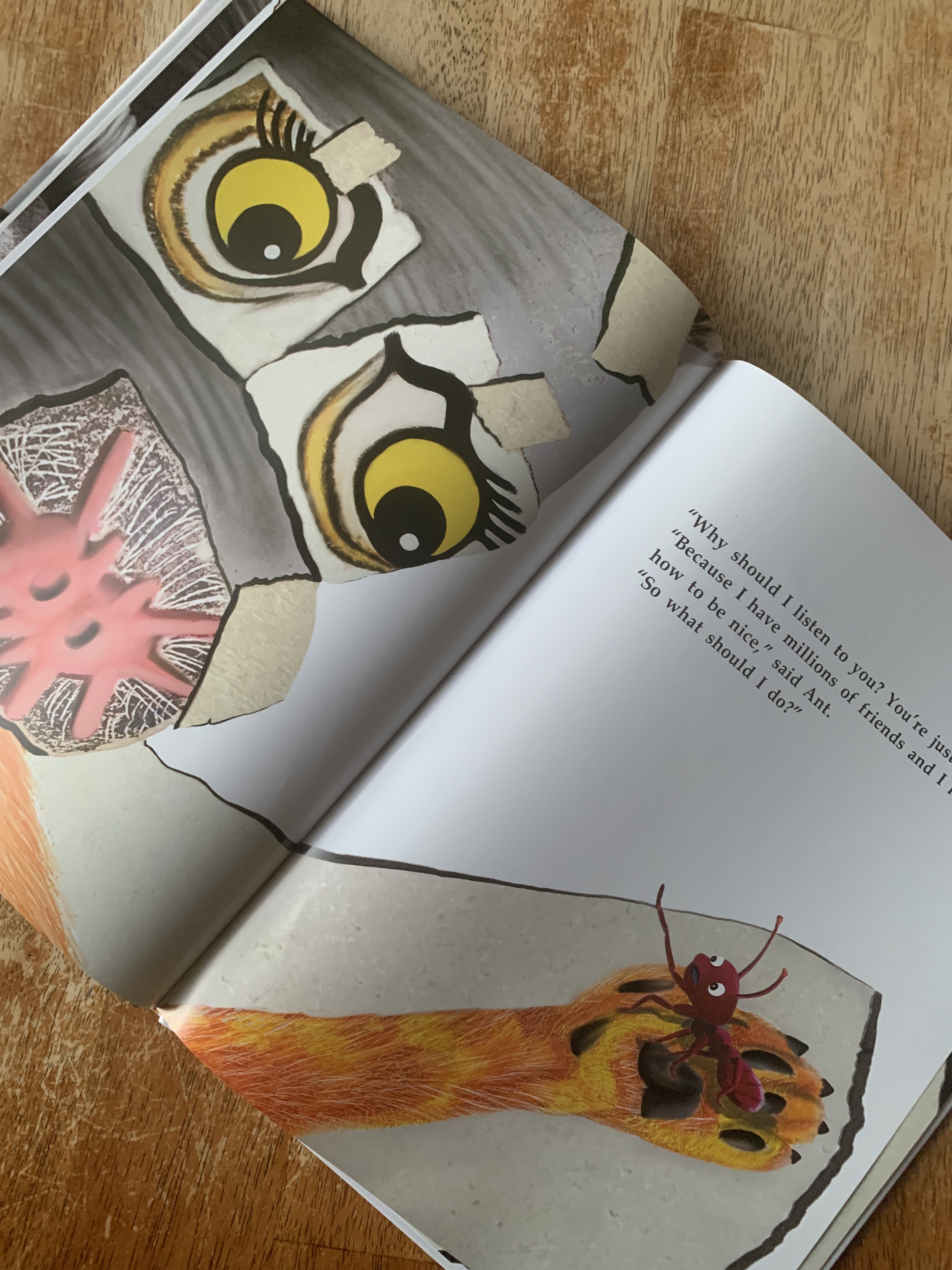
This hardback Muslim authored, Muslim illustrated anthropomorphized book takes the shape of a moral fable in which Elephant has no friends, attributes it to her appearance, forces the insects and animals around her to give her their eyes, waist, nose, arms etc., and then when they still don’t like her is persuaded by ant to return the body parts, apologize and be content to be ant’s friend.

img_4327

My problem I think with the book is that it conflates appearance with friendship without a clear moral, and then Elephant being forced to change by Ant to have a friend seems to reinforce a questionable mindset, even if Ant is more or less in the right.  There is no self reflection on the role of appearance, or what kindness looks and feels like, or even insight into what self confidence, friendship, and body appreciation entails.  It lumps it all together, uses outside influences to get elephant a friend, but doesn’t really articulate any lessons learned or moral to be conveyed.  If I am mistaken and the book is not set to be a moral inspired fable, the climatic joy of the book is simply, what- Do as you are told to have a friend? 

img_4328

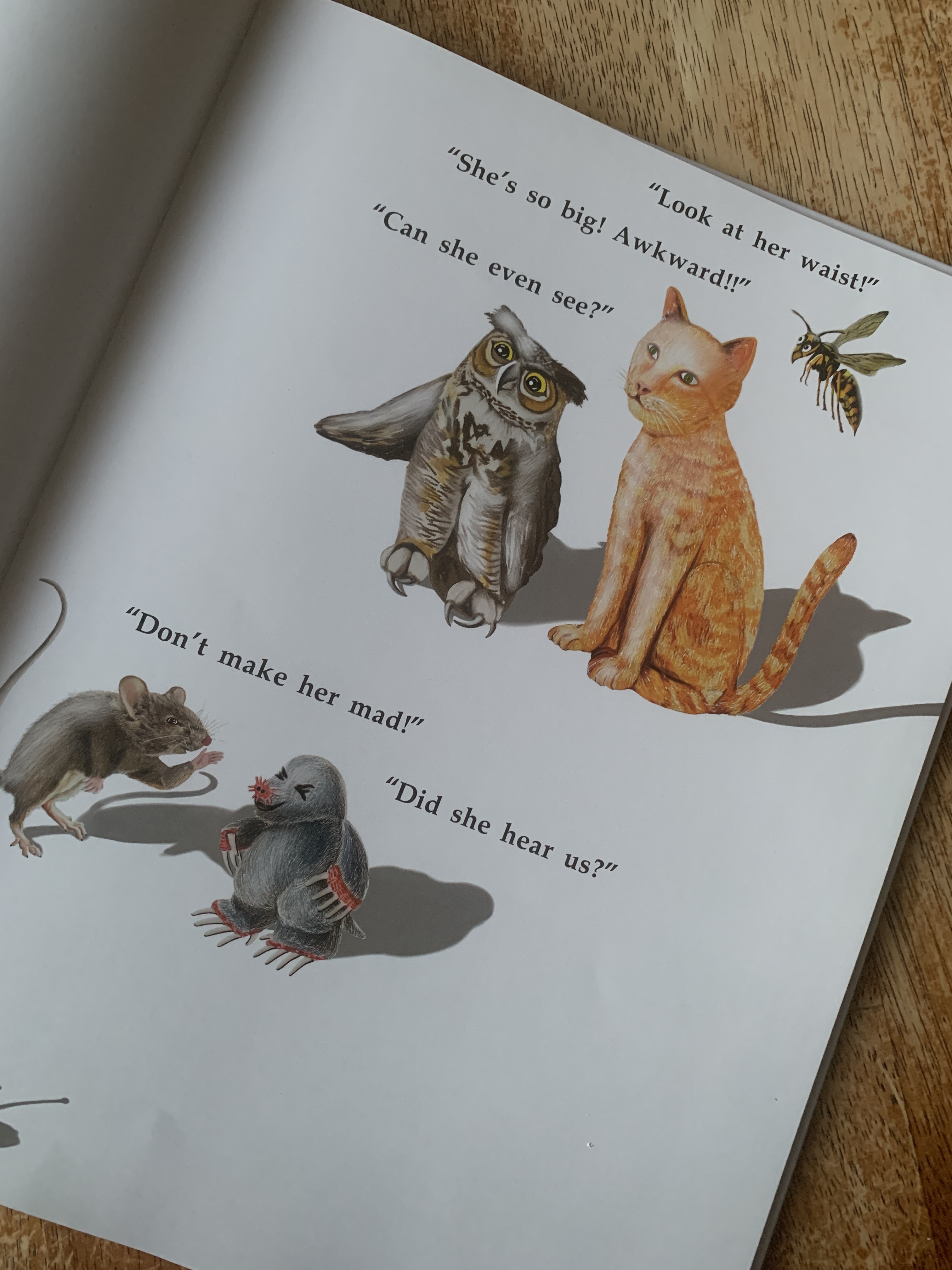
The book starts out with the other animals questioning, but essentially bullying Elephant about her size, calling her big and awkward and wondering if she can even see or hear them.  Elephant then looks in the mirror and picks herself apart, body part by body part. She tells Owl, who has beautiful eyes to switch with her. Owl doesn’t want to, Owl needs eyes to see, but the transaction occurs.  Next up is Wasp, who has a tiny waist, then Mole with a star shaped nose, etc.  The result is a bizarre looking “Elephant” and numerous unhappy, unable to move critters.  Yes, they are all friends, size, nocturnal, predator, prey not brought in to consideration.  The animals leave and Elephant is still friendless and feeling bad.  Ant pipes up that he knows what should be done.  Interestingly Elephant doesn’t want to listen because it is “just an ant.”  Ant responds, “I have a million friends and I know how to be nice.”  So now we are using appearance, having friends, and being nice as synonyms. Elephant agrees to listen, Ant forcefully convinces Elephant to give everything back and apologize. Ant agrees to go with Elephant, once the animals and insects get their body part back they race off in fear.  Elephant is left back to normal but still with no friends when Ant says that he likes her.  So, was Elephant really sorry? Did she learn to be nice? To be a friend? Did she want to give the parts back or did she do it so Ant would be her friend? Did she appreciate the function and beauty of her own body? So many loose ends that don’t show any growth, teach a moral, convey entertainment or joy, or make me get what the purpose was.  It left me, and my children confused.  And again, had we laughed along the way and been entertained, I wouldn’t need a character arc or lesson, but sadly we closed the book having not felt those feels at all.

img_4329

When the cover was revealed I’ll admit I was intrigued by the texture and tone of the elephant, but for some reason the inside pages went from creepy with poignant intent, to a little disturbing, The body parts of the animals are removed and swapped and reaffixed with masking tape.  I’m not opposed to slightly dark humor in children’s books, but I think this could really bother some younger kids that will dwell on the idea of body parts being taken unwillingly.  The text is sparse and presumably the book is for younger readers, so consider this if your children are sensitive.

There is nothing religious or Islamic in the book, nor is their scientific elements to why the animals bodies are the way they are or for what purpose.  It does not discuss environment or relationships in a non fiction manner.  The clear large simple text would suggest the book is for 4-8 year olds.


Mabrook! A World of Muslim Weddings by Na’ima B. Robert illustrated by Shirin Adl

Standard
Mabrook! A World of Muslim Weddings by Na’ima B. Robert illustrated by Shirin Adl

mabrook1

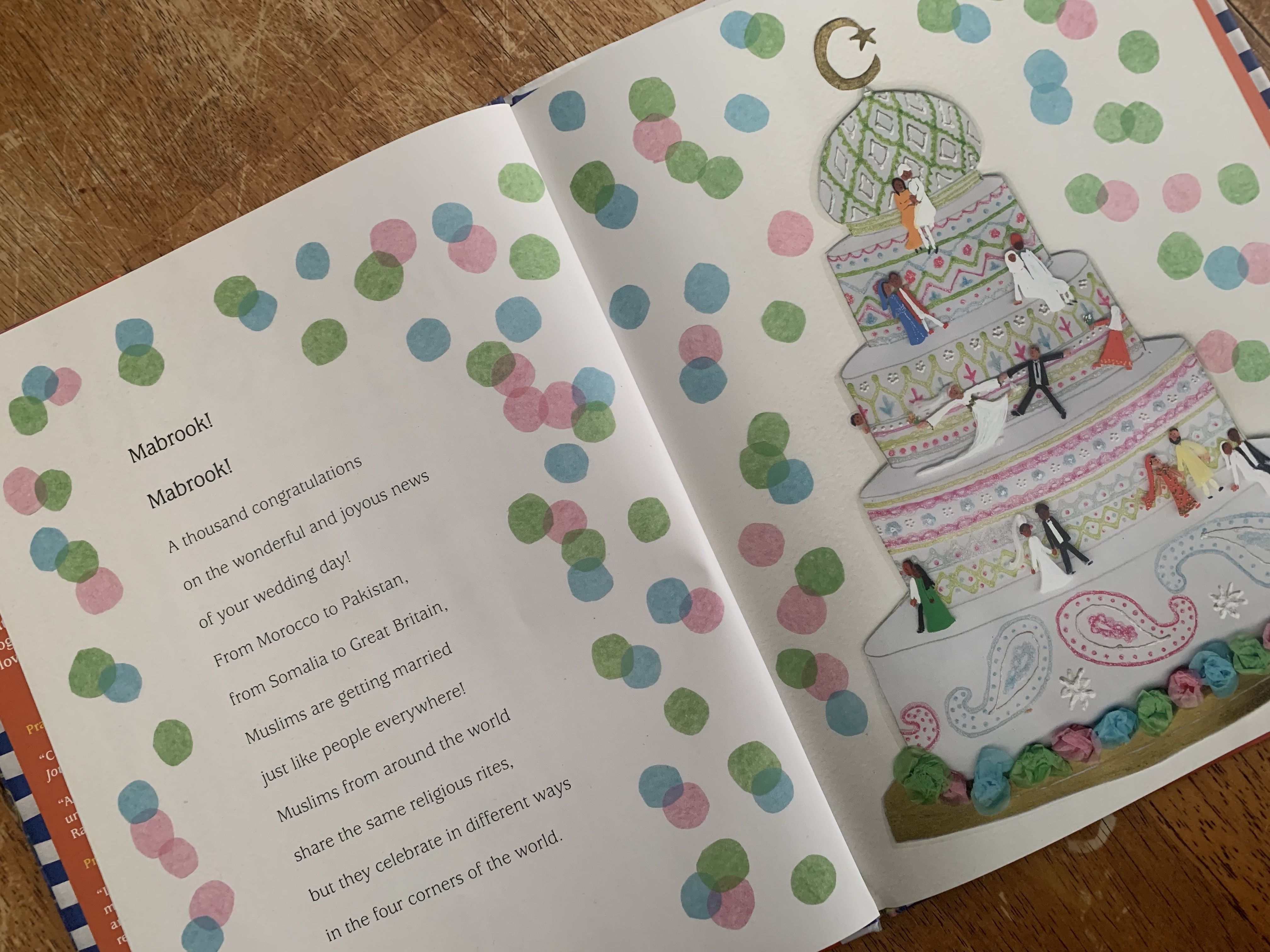
This 32 page lyrical 9 x 11 hardback book with playful illustrations is a celebration on the similarities of all Muslim weddings and the cultural distinctions that make them unique.  Four countries are highlighted: Pakistan, Morocco, Somalia, and Great Britain, and I really wish there were more.  The book is written on an early elementary level, but would make a great wedding present, or even a text to be shared at interfaith gatherings that focus on traditions and women’s rights.  It is joyous and informative complete with a glossary and info blurb at the end.

img_3449

The book starts out with verse 30:21, Chapter ar-Rum in the Holy Qur’an and then jumps in to jubilations of mabrook, congratulations.  It establishes what countries will be explored and that Muslims get married sharing religious rites, but different celebrations.

img_3451

In Pakistan there’s a henna party and the groom rides in on a horse.  The brides are adorned with bangles of gold and guests enjoy biriyani and rasmalai.

img_3450

In Morocco the entire neighborhood helps prepare couscous and roasted lamb with olives and pickled lemons.  At the waleemah the bride is carried in on a chair, and changes outfits seven times.

img_3452

In Somalia, buraanbur is danced and blessings are sung to the mother of the bride.

img_3453

In England the ginger bearded imam marries the groom to his hijab wearing bride in white.  There are people of all faiths and backgrounds there to celebrate and wish them well.

img_3454

But before all of that, there are meetings with families, prayers, important conversations, agreement to the marriage contract, the woman is given a mahr and guidance is sought.

img_3455

‘Tis The Night Before Eid by Yasmin Rashidi illustrated by Mariam Aldacher

Standard
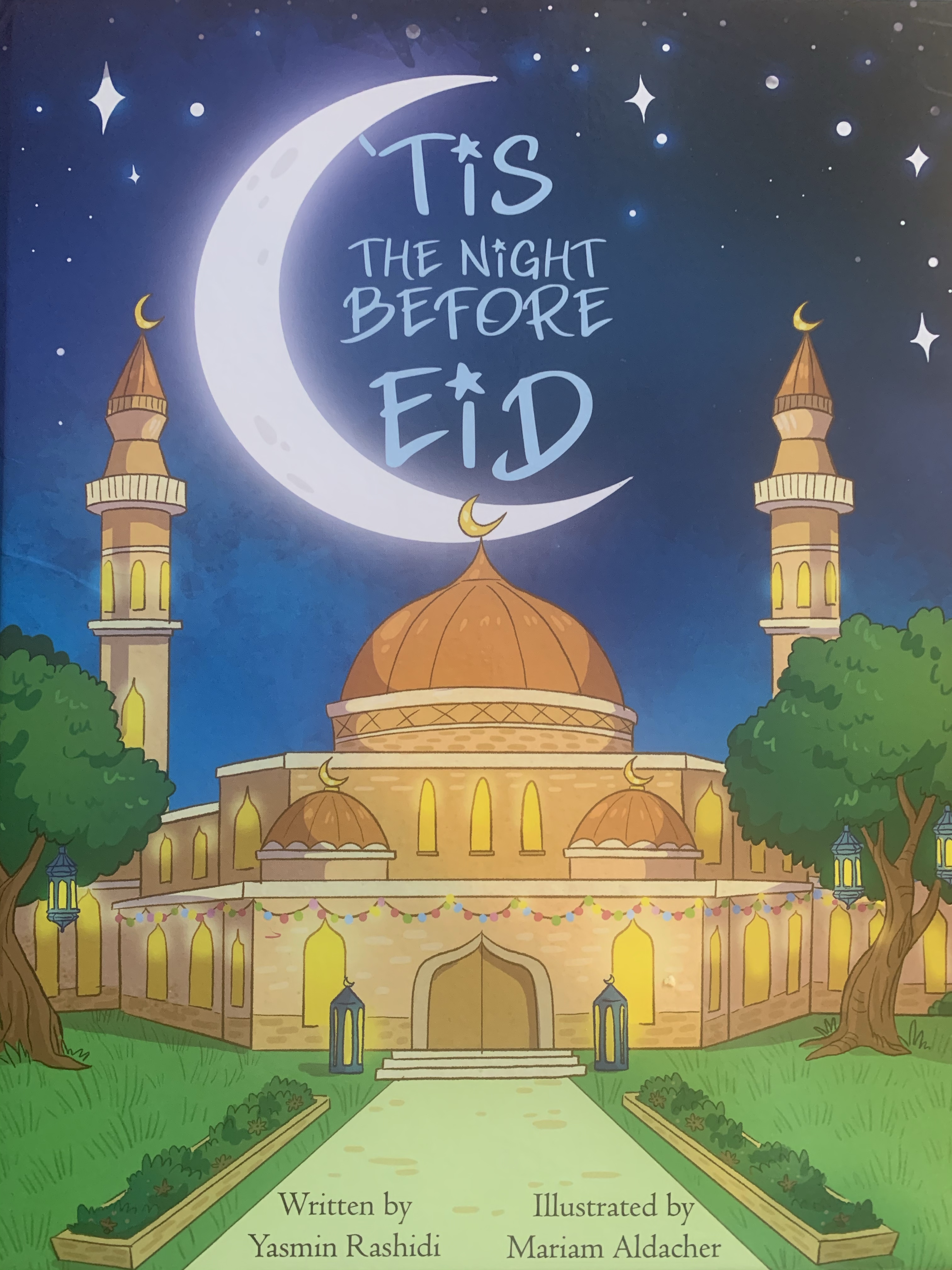
‘Tis The Night Before Eid by Yasmin Rashidi illustrated by Mariam Aldacher

img_8995

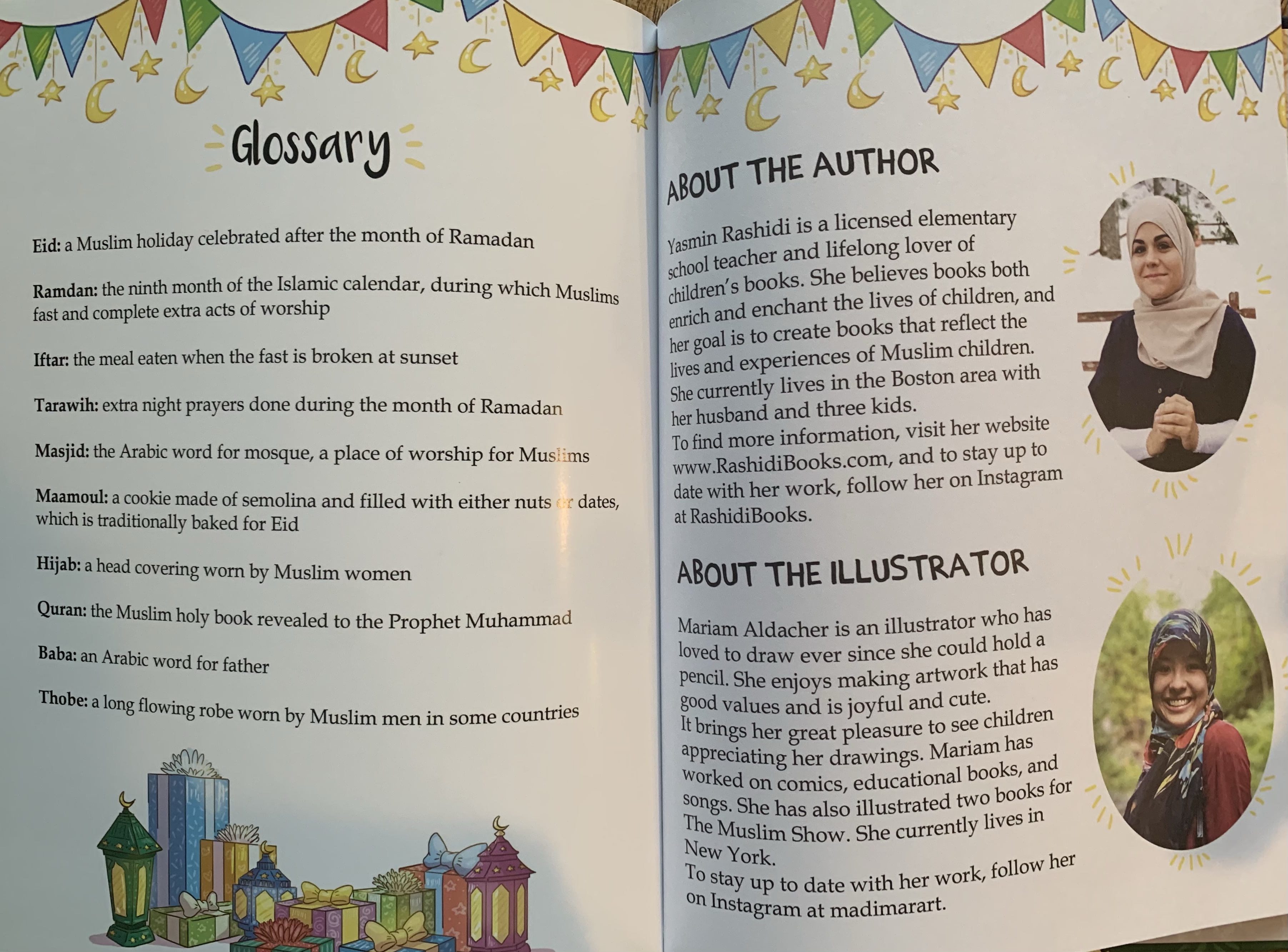
On the surface this 32 page inspired re-imagining of the classic Christmas poem might not seem that impressive, but it is really quite effective in highlighting general key points of Ramadan, the mix of sadness that Ramadan has gone too quickly with the excitement of Eid, and showing the diversity of Muslim families and communities.  The large 8 x 10 hard bound pages showcase fun and relatable illustrations that would help inform those unfamiliar with the holiday, while also mirroring and encouraging Ramadan and Eid excitement.  It is already a favorite at our house and with simple rhyming lines, the book can lend itself easily to more in-depth discussions (there is a glossary at the back) or be kept as a sweet flowing story that you don’t mind reading repeatedly at the prodding of toddlers and preschoolers alike.

img_8997The story starts with it being the night before Eid.   Ramadan has flown by, iftar eaten, dishes are put away, trips to the masjid for Taraweh have concluded and now it is time to prepare for Eid.  The house is cleaned, clothes ironed, sweets prepared and dreams of gifts filling the kids minds.
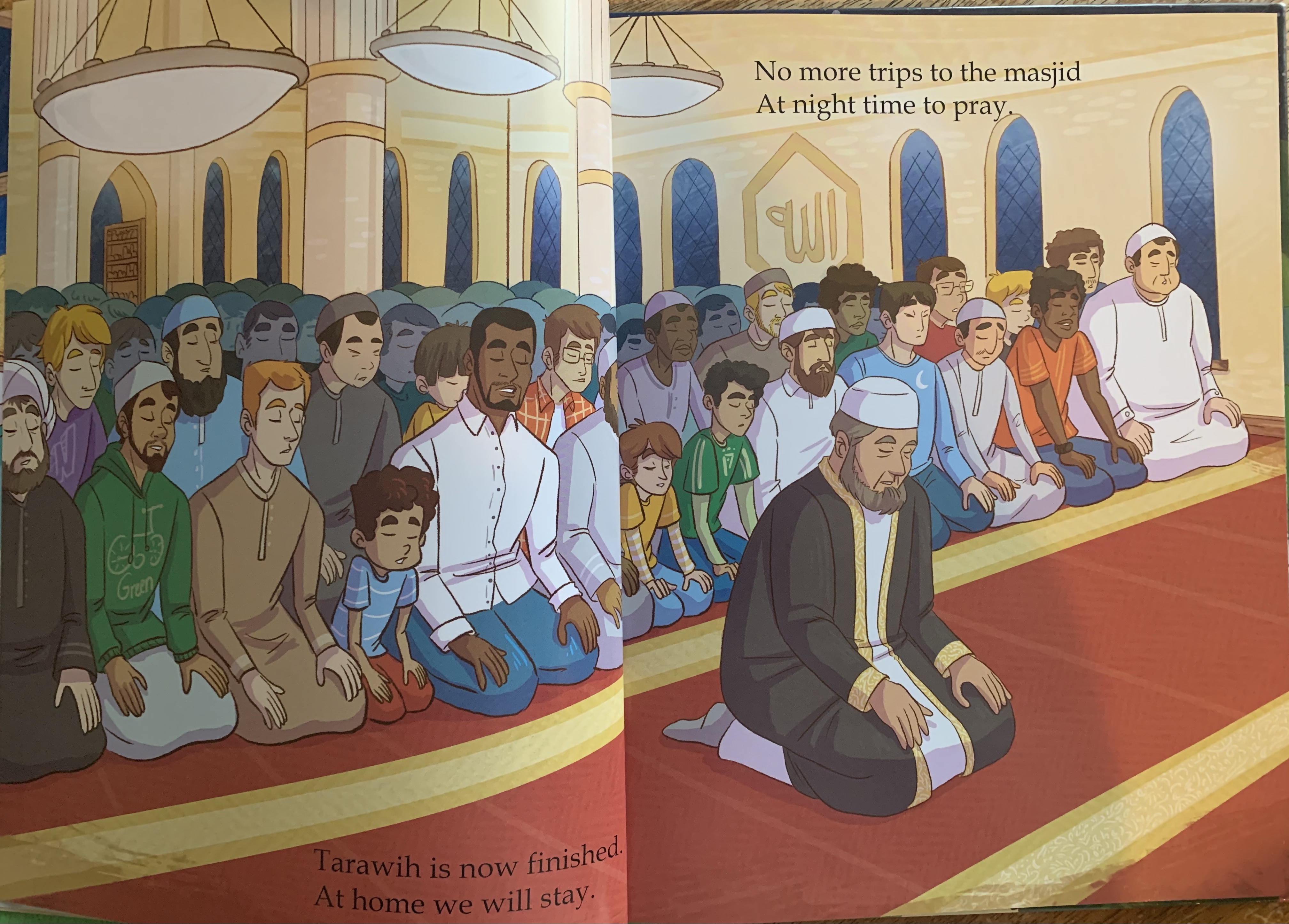
img_8998

The narrative bounces back to Ramadan to explain that fasting is not eating til sundown for 30 days, that Quran was revealed during the blessed month and that we hold on to the lessons of Ramadan all year long.

I pre-ordered mine from the author’s website https://rashidibooks.com/home , but it is also available at Crescent Moon Store https://crescentmoonstore.com/products/twas-the-night-before-eid.  There are also printables on the author’s website.

img_9002

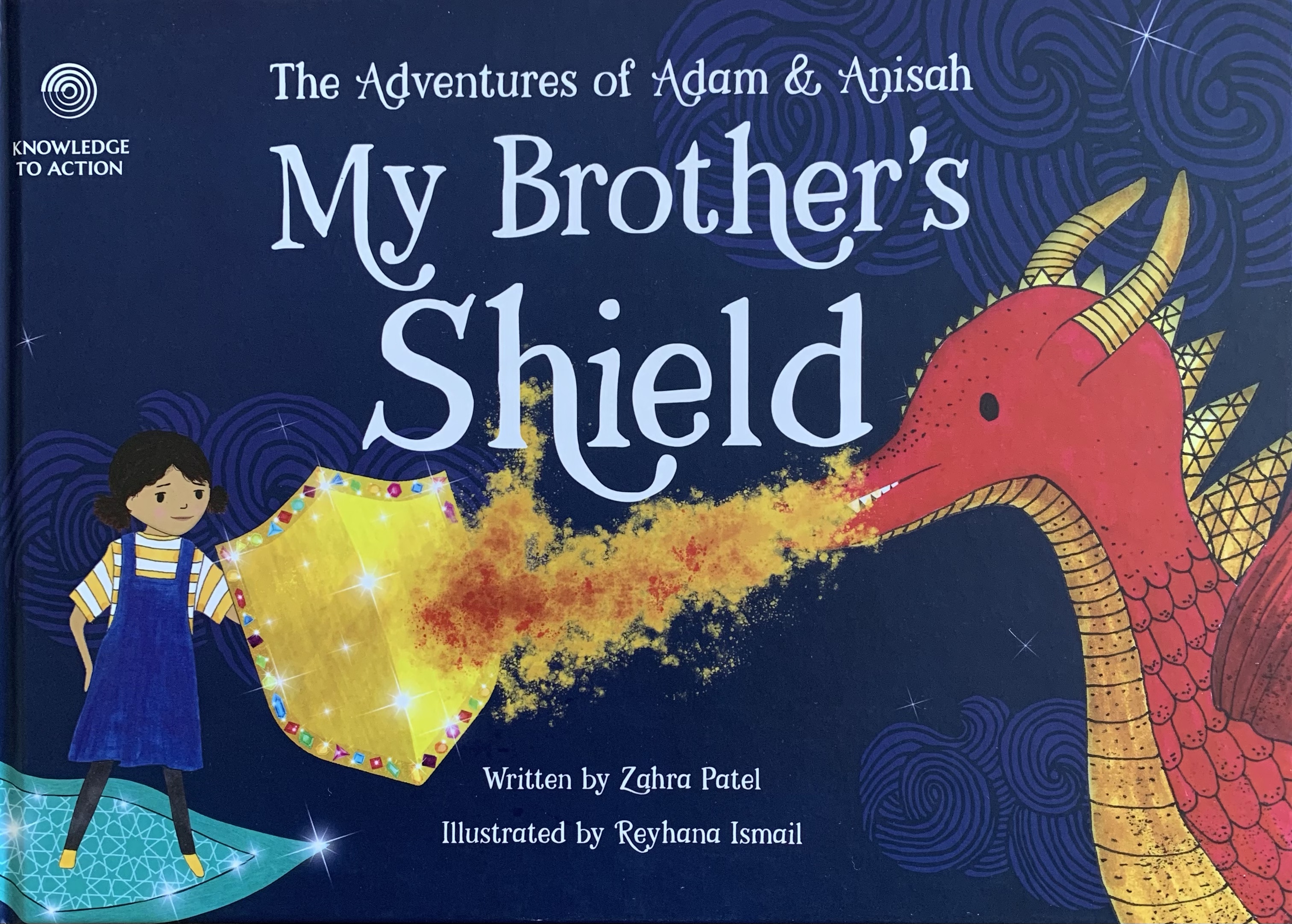
The Adventures of Adam and Anisah: My Brother’s Shield by Zahra Patel illustrated by Reyhana Ismail

Standard
The Adventures of Adam and Anisah: My Brother’s Shield by Zahra Patel illustrated by Reyhana Ismail

img_8580

Based on the idea that “Fasting is a Shield (ibn Majah),” this adorable book brings Ramadan not just to life, but makes those that fast into absolute superheroes!  Over 32 pages of simple large rhyming words, little Anisah shares her wonder and amazement toward her brother, and his shield that he wields during Ramadan.  The beauty of her admiration for her older sibling combined with the message, illustrations, and presentation, make this book (there is also an accompanying workbook) perfect for ages three and up.

img_8581

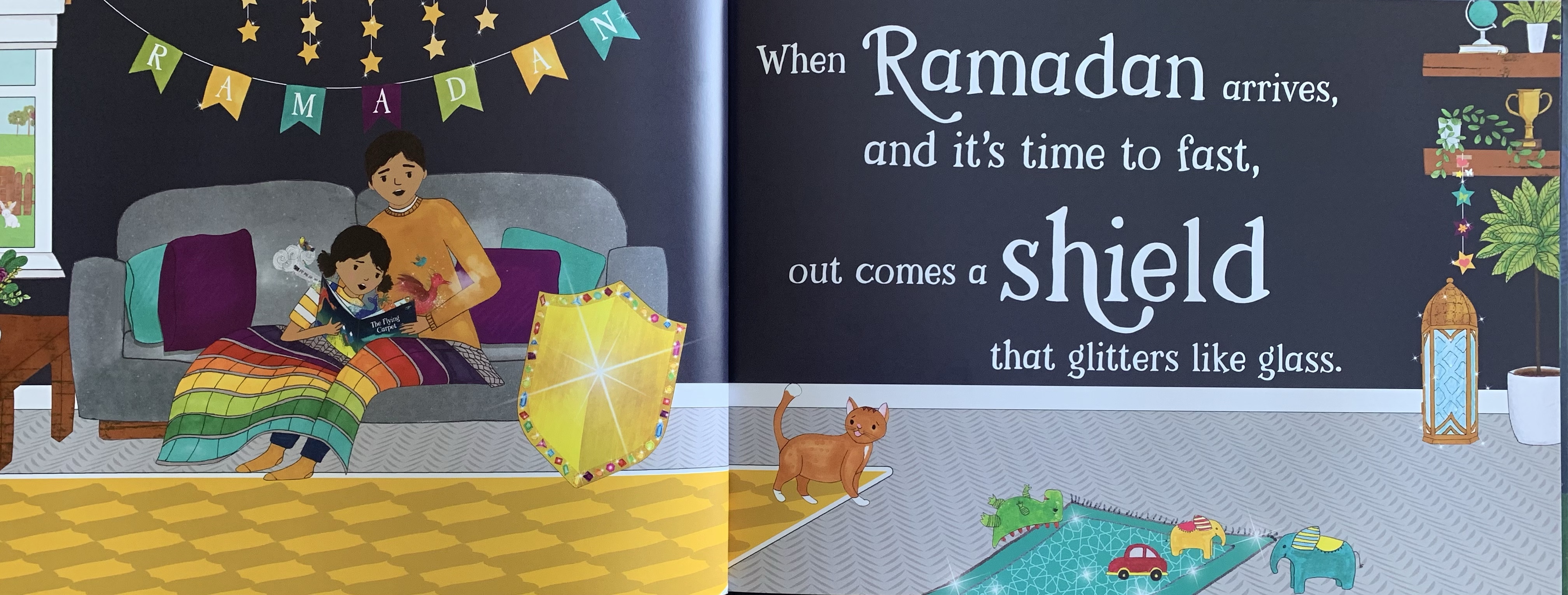
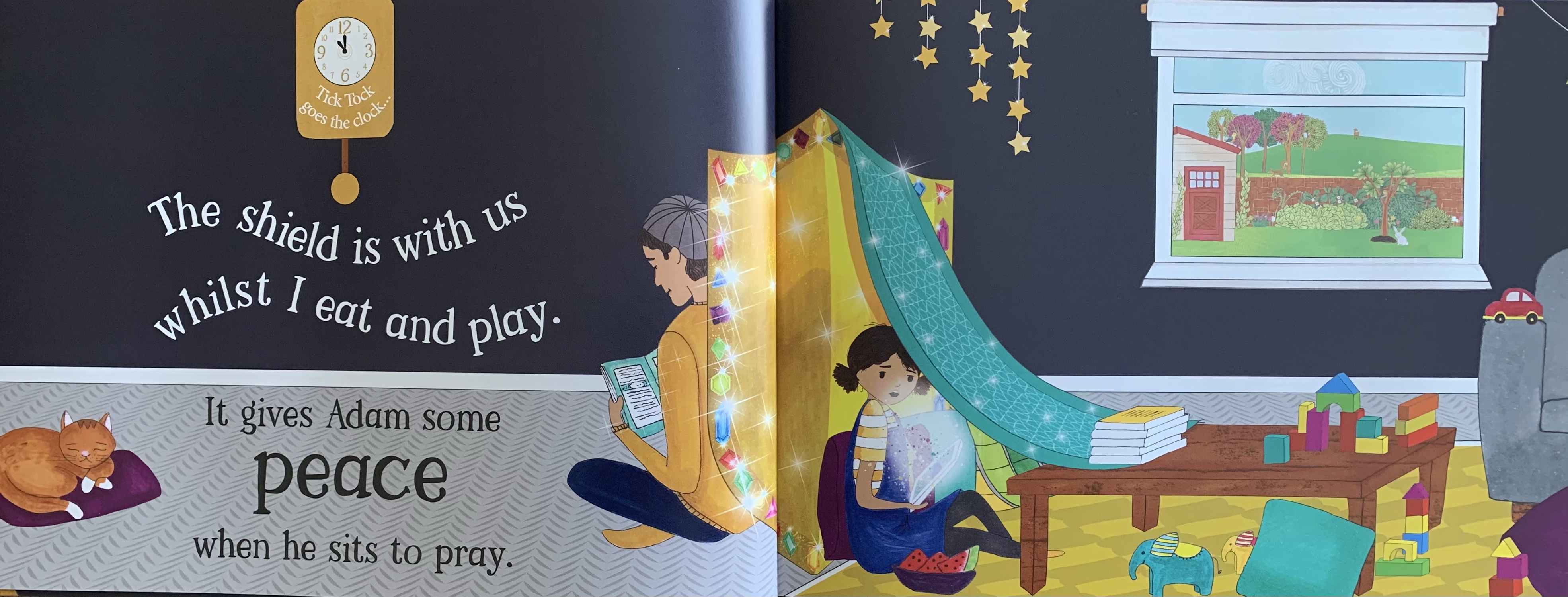
It starts with a secret.  Adam is a superhero.  When Ramadan arrives, the shield comes out and Adam carries it all day.  He doesn’t eat or drink when he has it.  It makes him brave and saves him from tempting biscuits.  It gives him peace when he reads Quran. It keeps him calm when there is a foul during a soccer game. It even keeps him away from gossip at the mosque.

img_8582

When they break their fast, they pull out their magic carpet to fly.  And when Ramadan is over the shield goes away until it is needed again. Anisah patiently marks off the days on the calendar until Ramadan will arrive, because she has another secret.  She is training to be a superhero too.

img_8583

The book concludes with how the story came about, discussion questions and some activities to help learn through practice. The illustrations show diversity and whimsy and toddlers and preschoolers, I’m certain will be begging for this story all year around.

img_8584


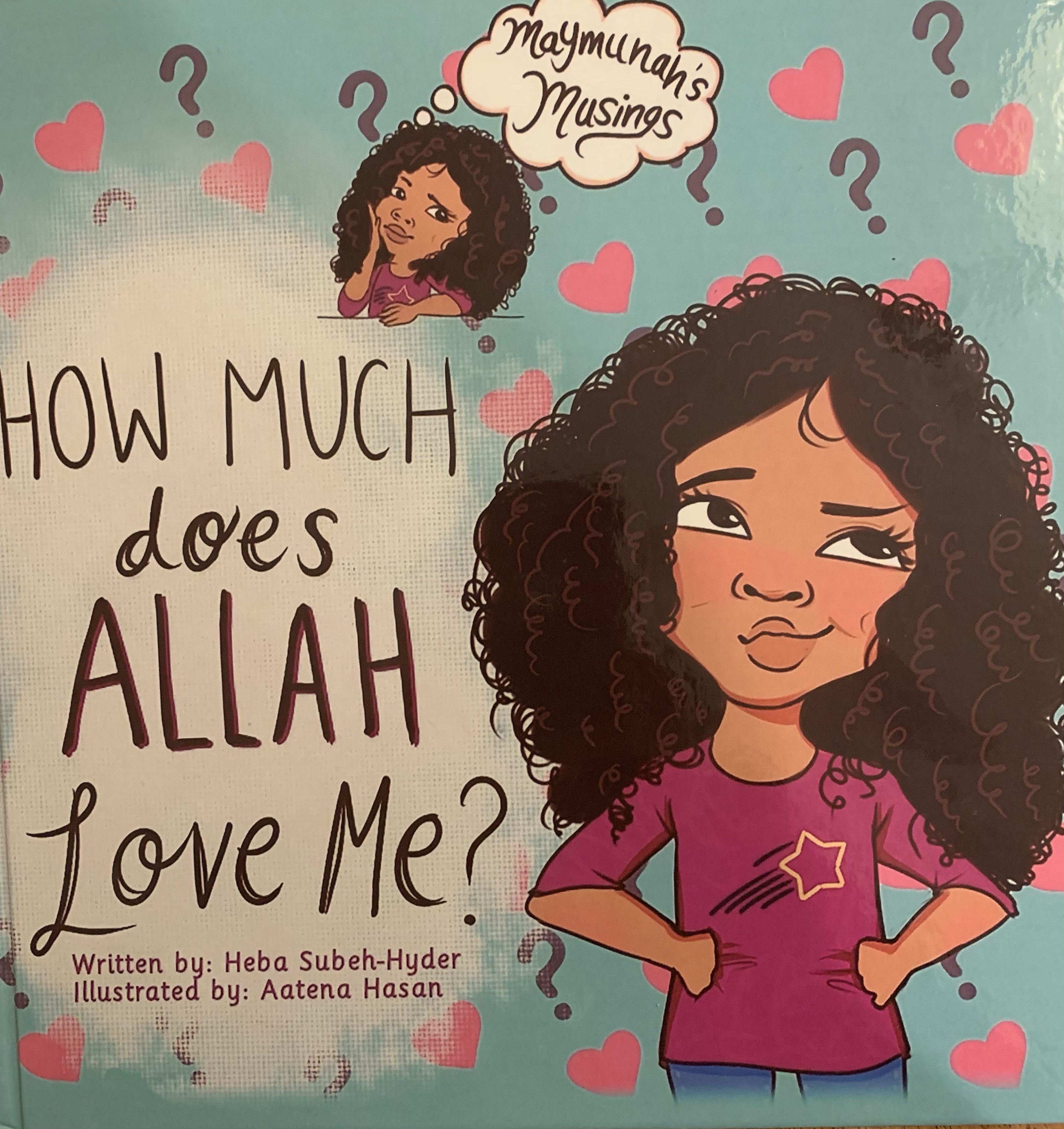
How Much Does Allah Love Me? by Heba Subeh-Hyder illustrated by Aatena Hasan

Standard
How Much Does Allah Love Me? by Heba Subeh-Hyder illustrated by Aatena Hasan

img_6988

I waited to review this book to see if my initial response would change, and before I got around to writing up the review, the second book in the Maymunah’s Musings has come out.   So I am admittedly a bit late and quite a bit behind, and based on other people’s review I’m in the minority on my opinions.  This 40 page book is wonderfully presented with a multicultural girl asking her mother about Allah’s love for her.  I wanted to absolutely love the text as much as the playful illustrations, but I felt like it was a bit wordy in places, a bit out of order in the mom’s explanation to the little girl making it somewhat repetitive, and ultimately I wanted a bit more.  More ayats or references or even specific examples.  There is truly nothing wrong with the book, but at its price point I was a bit disappointed.

img_6989

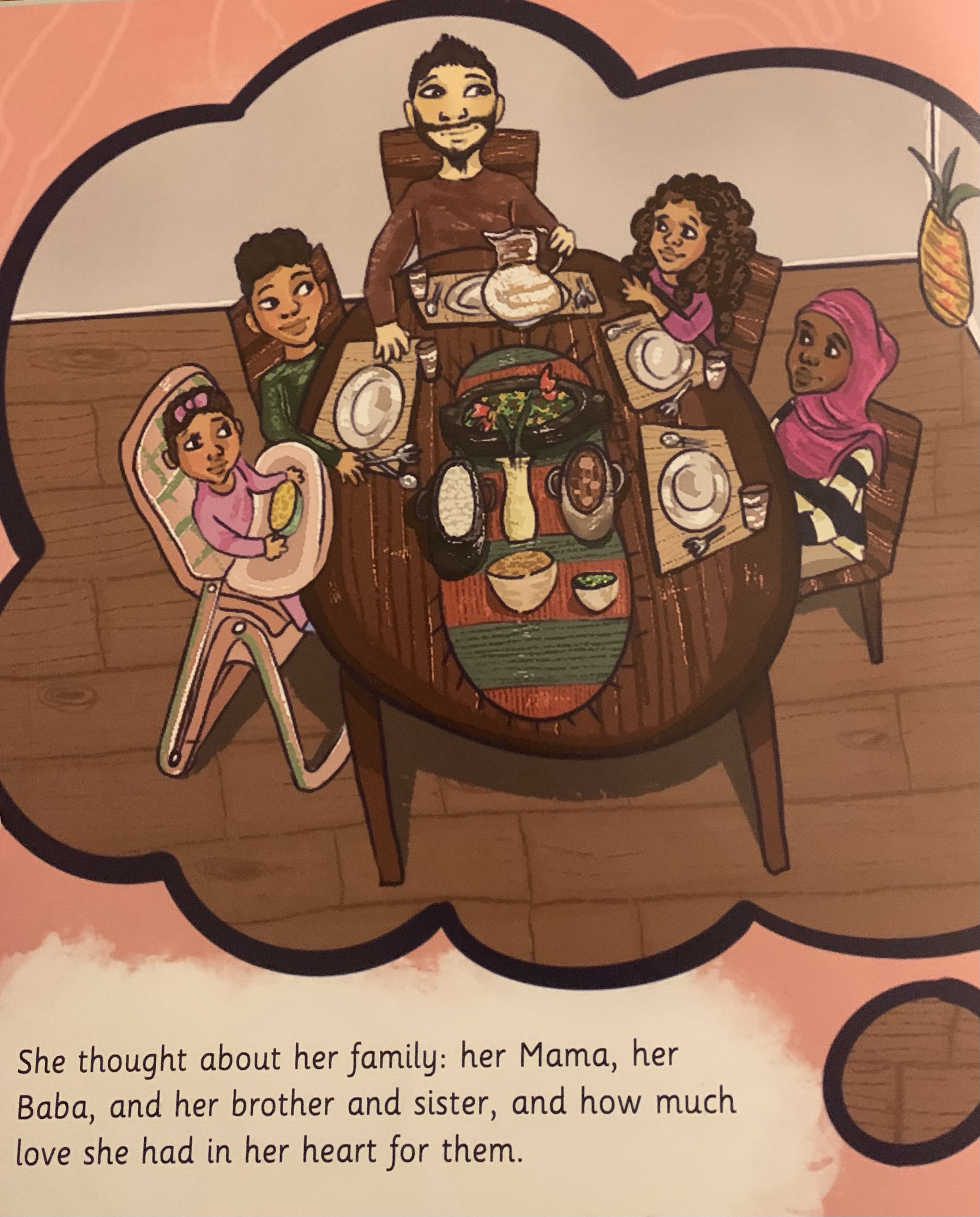
Maymunah is looking out the window and thinking about Allah swt: what she has learned in Sunday school and about His remarkable creations.  She recalls the amazing animals, the vast number of stars in the sky, the different type of trees, and her family.

img_6991

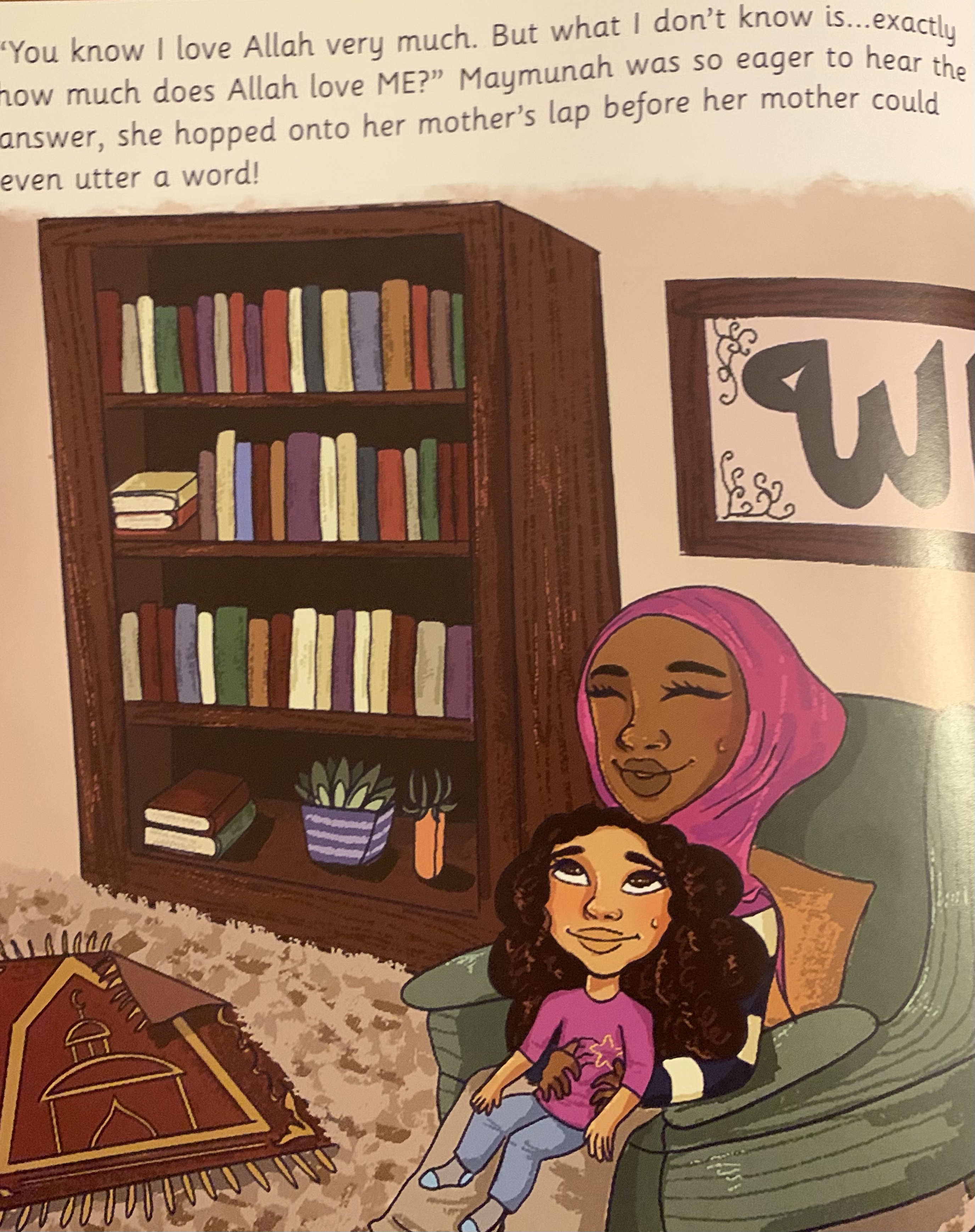
She loves Allah, and wants to know how much He loves her.  So she rushes to find her mother, the only person that can answer that question (I’m not sure why no one else can).  Her mother lovingly and patiently situates herself with Maymunah in her lap to answer the important question.

img_6990

Maymunah’s mom explains that Allah loves her more than the billions of stars in the sky, more than all the fish in the ocean, more than all the raindrops that fall, more than the billions of people in the entire world, more than all grains of sand on the beach, and blades of grass in the meadow.

img_6993

Then Maymunah’s mom asks her if she knows how much Mama loves her. Maymunah repeats back all the examples her mother has just given for how much Allah loves Maymunah.  The mom then says and Allah loves you more than that.  

Maymunah is satisfied and reflects on how much Allah loves her and then remarks that her love for her mother and her mother’s love for her is bigger than the whole wide world. The last page of the book mentions that her love for Allah is more than that and that Allah’s love for her was even bigger, but it seemed muddled to me as it started stressing how big a mother and child’s love is.   

img_6992

I felt like the natural order would be to explain to a child how much a mother loves them, then say Allah loves you even more.  Not tell all the ways Allah loves you, then talk about how much Mama loves you with the exact same examples and then say Allah loves you more.  It doesn’t even say Allah loves you ‘the most.’  

If you don’t read it over and over and take it on the surface it is probably fine, and I realize I might be overly harsh, but with only a single ayat at the end, I really wanted to feel that a child’s curiosity would be satisfied with this book, and I think it ultimately fell short for me and my children.

Ultimately, despite all this, I don’t regret buying the book from the wonderful Crescent Moon Book Store, and I will be buying the new one too inshaAllah.  I hope this review helps you to determine if this book is right for your toddlers and preschoolers.  

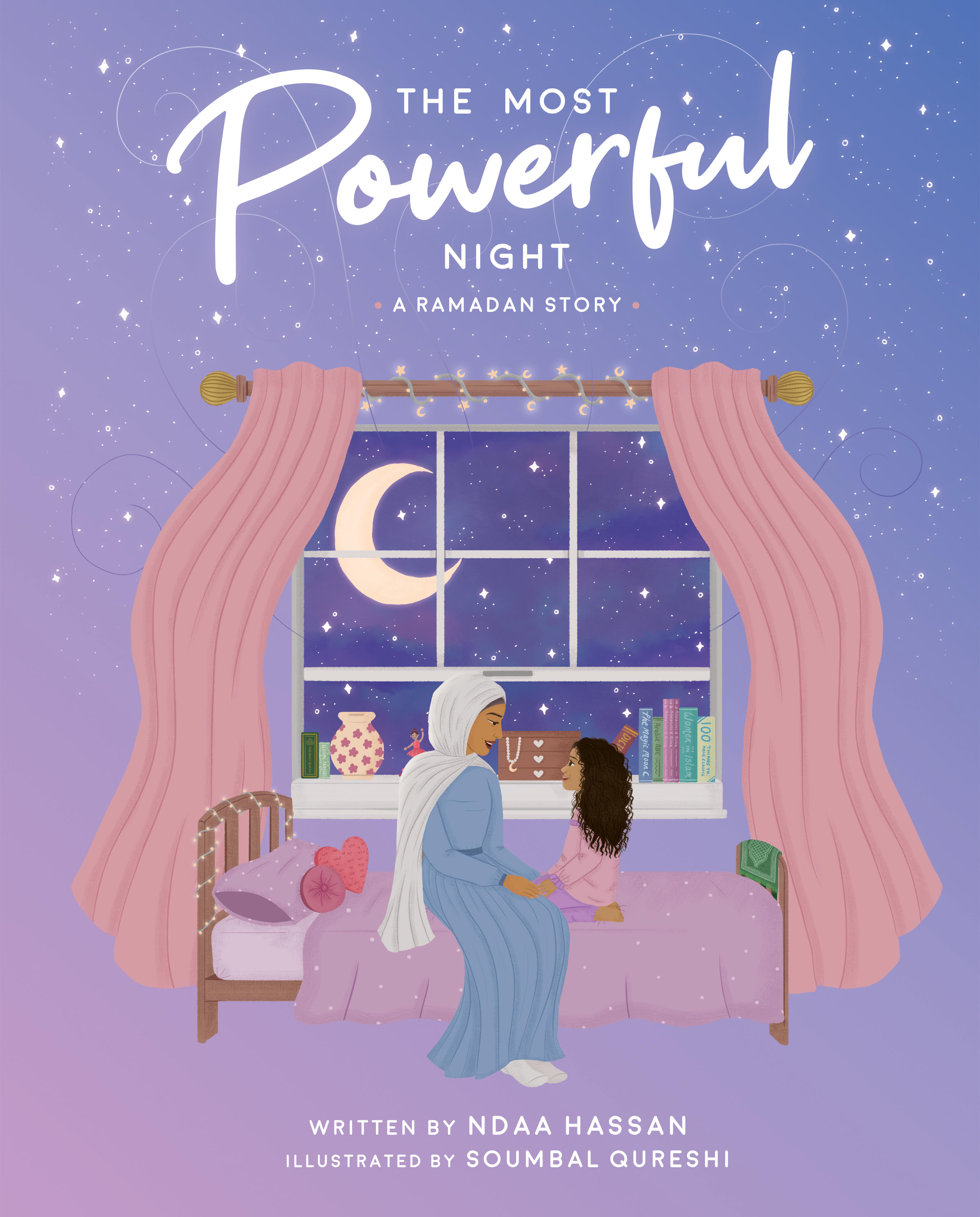
The Most Powerful Night: A Ramadan Story by Nada Hassan illustrated by Soumbal Qureshi

Standard
The Most Powerful Night: A Ramadan Story by Nada Hassan illustrated by Soumbal Qureshi

the most powerful night

This beautiful poetic book about Laylat Al-Qadr explains in detail and wonder the importance of the most blessed night in the blessed month of Ramadan.  The soft purples and pinks of Laila’s room, and the repetitive refrains set the mood and tone of an informative bedtime story that will convey the awe and mercy of the night to seven and eight year olds.

C2080E23-FF92-40D7-A40A-49F53DD85406

The book is 40 pages, and pretty text heavy, but it flows smooth enough, and the details in the pictures are enough to keep little ones engaged. Younger and older children will also enjoy the story as both an introduction to the night the Quran first came down, and as a reminder of the gifts to be had.

816801CB-54C8-4FDE-836D-C9038DB1B538

Laila is sad that Ramadan is leaving as she peers out the window and sees the moon resmembling a crescent again.  Her mother takes the opportunity to tell her about the blessings of the last ten nights, and Laylat Al-Qadr specifically.

DD841DEB-9591-4305-80E6-CC328CAB45E6

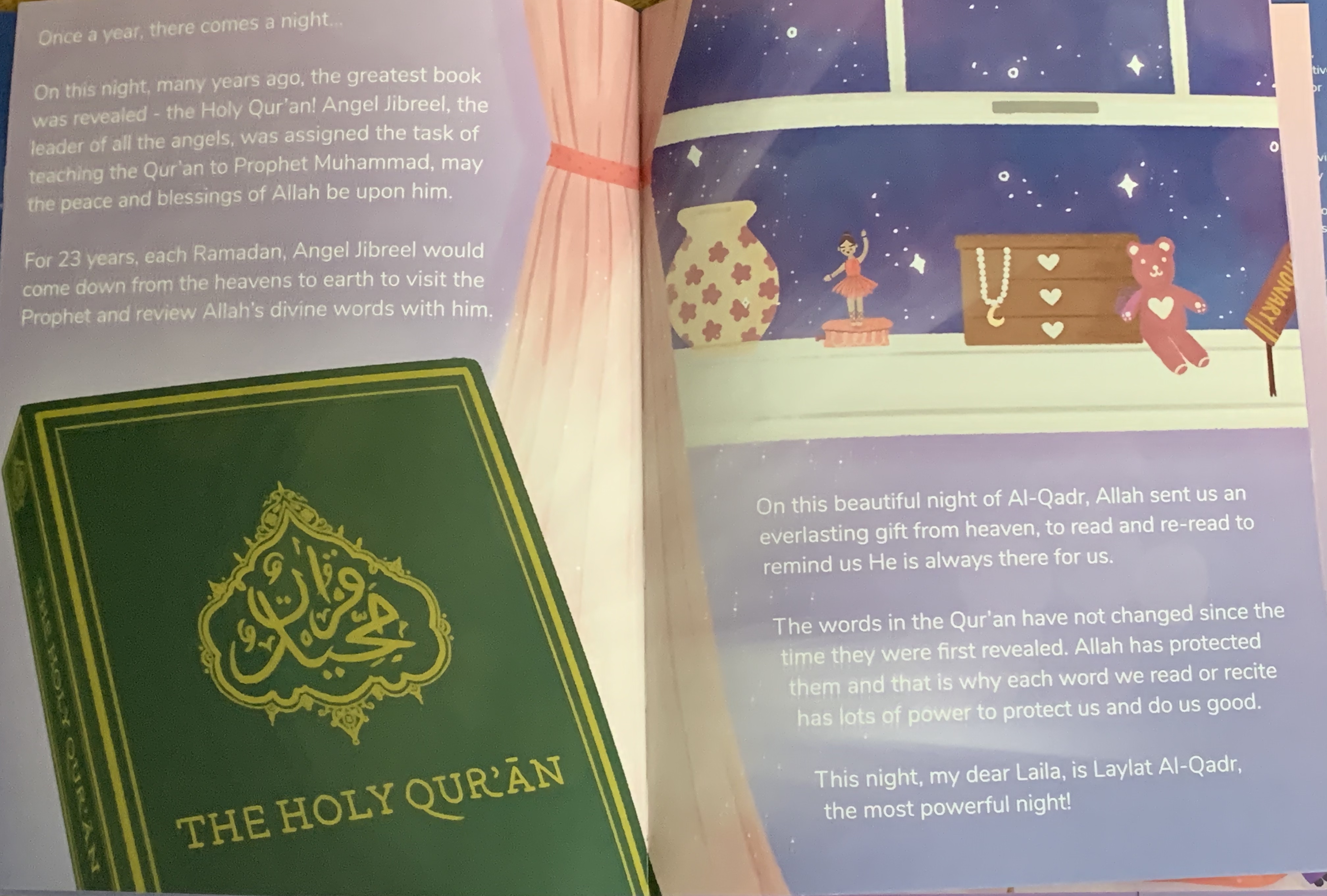
“The Night of Power and Miracles,” Laila’s mother explains is a night like no other, that comes only once a year.  Thousands of angels come down until there isn’t a speck of space that they do not fill.

13B3DC09-7A02-4921-BD9A-9DCBAAAE77D5

The night that is better than a thousand months and all our deeds are multiplied 70 times, the night the Holy Quran was first revealed to Prophet Muhammad (saw).

2F0180A5-B187-4511-A3B8-9DC0F37A55E8

Laila wants to make sure she pronounces it correctly and practices saying Laylat Al-Qadr.  Excited to make sure she is praying and reading Quran that night, she is desperate to know what day it is.  Her mother explains to her that we do not know.  Laila uses this to her advantage to get to stay up past bedtime for each of the last 10 days.

46D932B3-0A00-44AB-B44D-6A9CE84ECD65

The book begins with Surah Al Qadr in Arabic and with the meaning of the translation in English.  It ends with a glossary, more information about Ramadan, and a glimpse of the author’s first book: Ramadan Around the World.

C84423A6-DCE5-4185-ABD7-3F0FF86ED59E

The 9 x 11 hardback binding and font are beautifully done and with there no other books for children that I can think of that discuss Laylat Al-Qadr, I foresee this one being read at least once a year, if not more, for many years to come, alhumduillah.