Tag Archives: Eid Al Fitr

Read for a Better World: Ramadan and Eid Al-Fitr: A First Look by Percy Leed

Standard
Read for a Better World: Ramadan and Eid Al-Fitr: A First Look by Percy Leed

img_3108-1

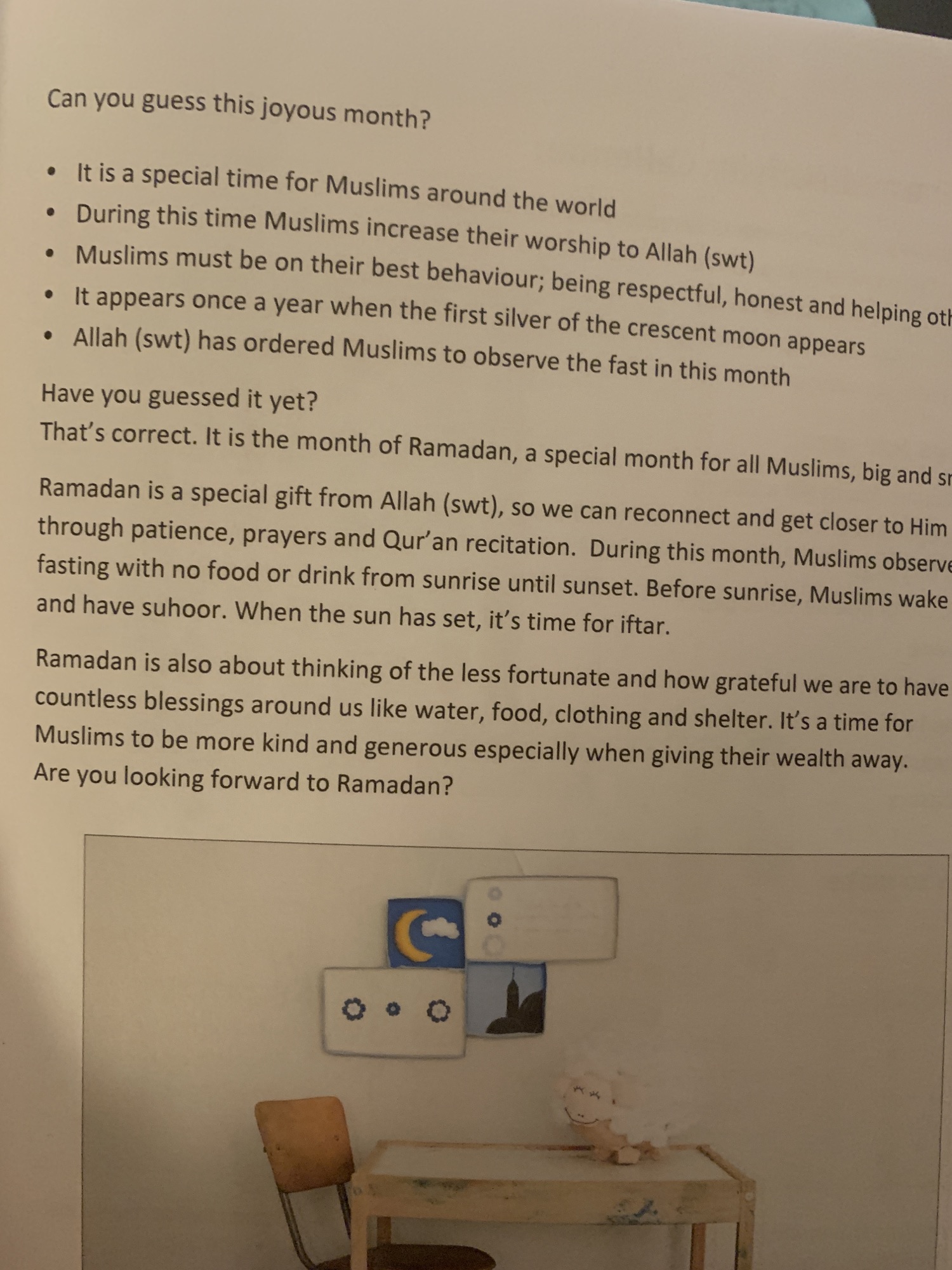
I honestly don’t know who this 24 page book is for and to what purpose it would be read.  It is non fiction, it is listed for 5-7 year olds.  But the sparse text feels toddler-ish, and it is so simplified, that it doesn’t teach, educate, or inform anyone about Muslims or Ramadan, it does an ok job at showing Eid though, for the age level, I will admit that.  I know I struggle with non-fiction, it is a me problem, and I know children can handle more than we credit them for, think dinosaur and construction vehicles, but if the person reading this book with the child knows nothing to add, this book really doesn’t give even the most well-meaning adult, guardian or second grade teacher, much of anything to work with. They would do better with a fiction book and Google.  Sigh. 

img_3109-1

The book starts out with an Educators Toolbox before beginning, it encourages guidance to ask what children think the book will be about, asks them what they already know, and what they would like to learn.  It then encourages sounding out words, looking at pictures for clues, and praising the child.

img_3113-1

The first page of text has the headline of Ramadan and Eid al-Fitr with the line, “Ramadan last for one month,” immediately below, already kind of confusing an early reader, why Eid was mentioned and then not discussed.  The next page says “Muslims have a holy book.  They read it at this time.” Yes, we do, but we read it at all other times, too. The sparse words give extra weight to the words chosen, and in this case, it makes an erroneous assertion.

img_3110-1

I wish it said Muslims pray five times a day instead of “People pray five times a day,” same with when it says that People fast.  It does get it correct that we fast from dawn to sunset, so I do appreciate that.

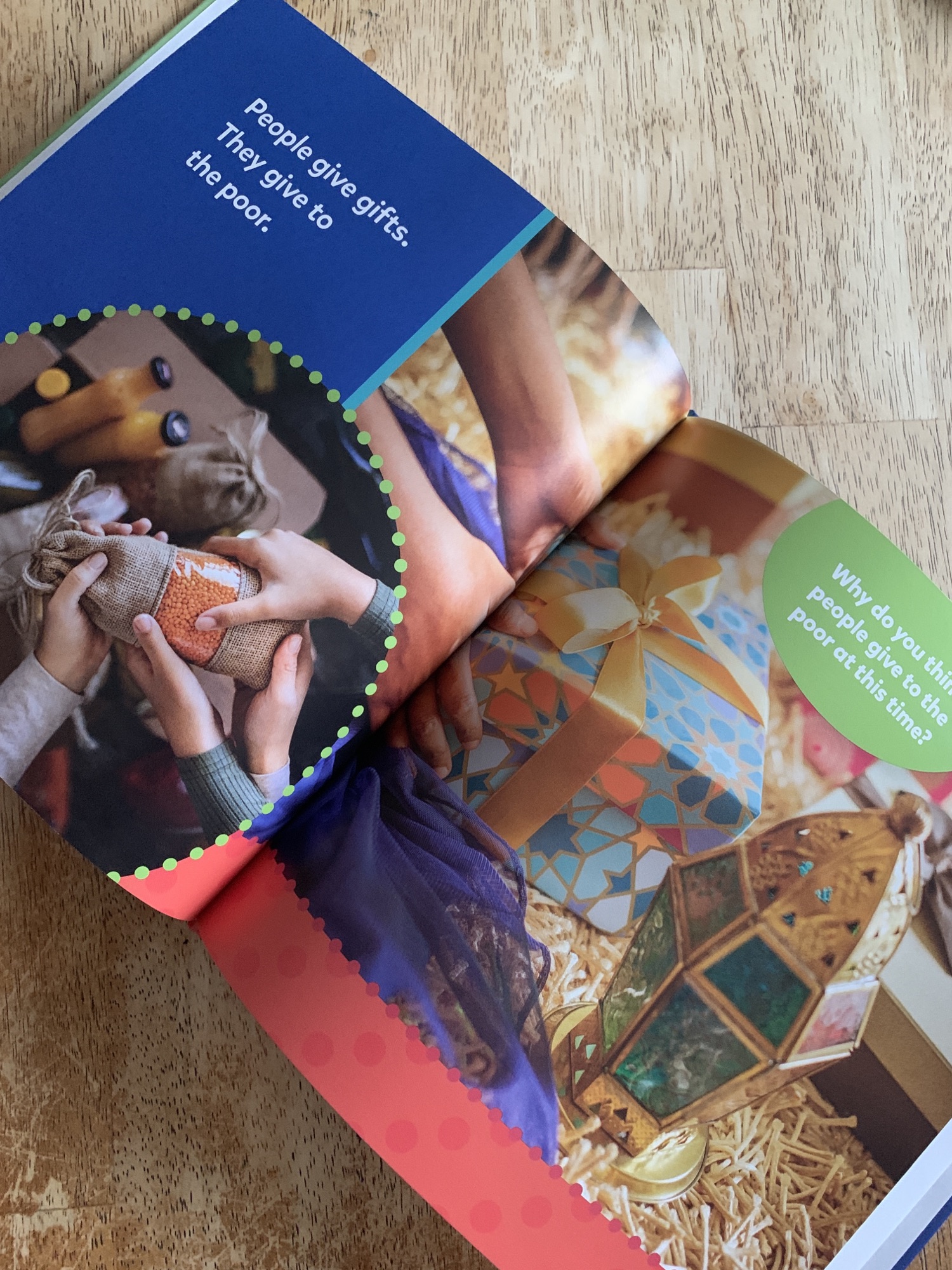
It then moves to Eid al Fitr and does a decent job highlighting that people dress up, pray together, give gifts and give to the poor, which is clear and accurate.  Again I wish it said Muslims dress up, pray together, etc. since the word Muslim is only mentioned once in the book, Islam not at all, I don’t know that the connection will be made. 

img_3111-1

The last page I don’t even know what it means, “Ramadan is for faith.  Eid al-Fitr is for giving thanks.” Faith and thanks are intrinsic to both Ramadan and Eid, so I can’t make sense of the statement.

img_3112-1

The book then has some connection questions, Social and Emotional Snapshot, Photo Glossary, and a Learn More section.  It seems like it is part of a series that ticks checkboxes for inclusion in well funded school and public libraries.  I don’t know where this book would be sought after, useful, or informative unfortunately.

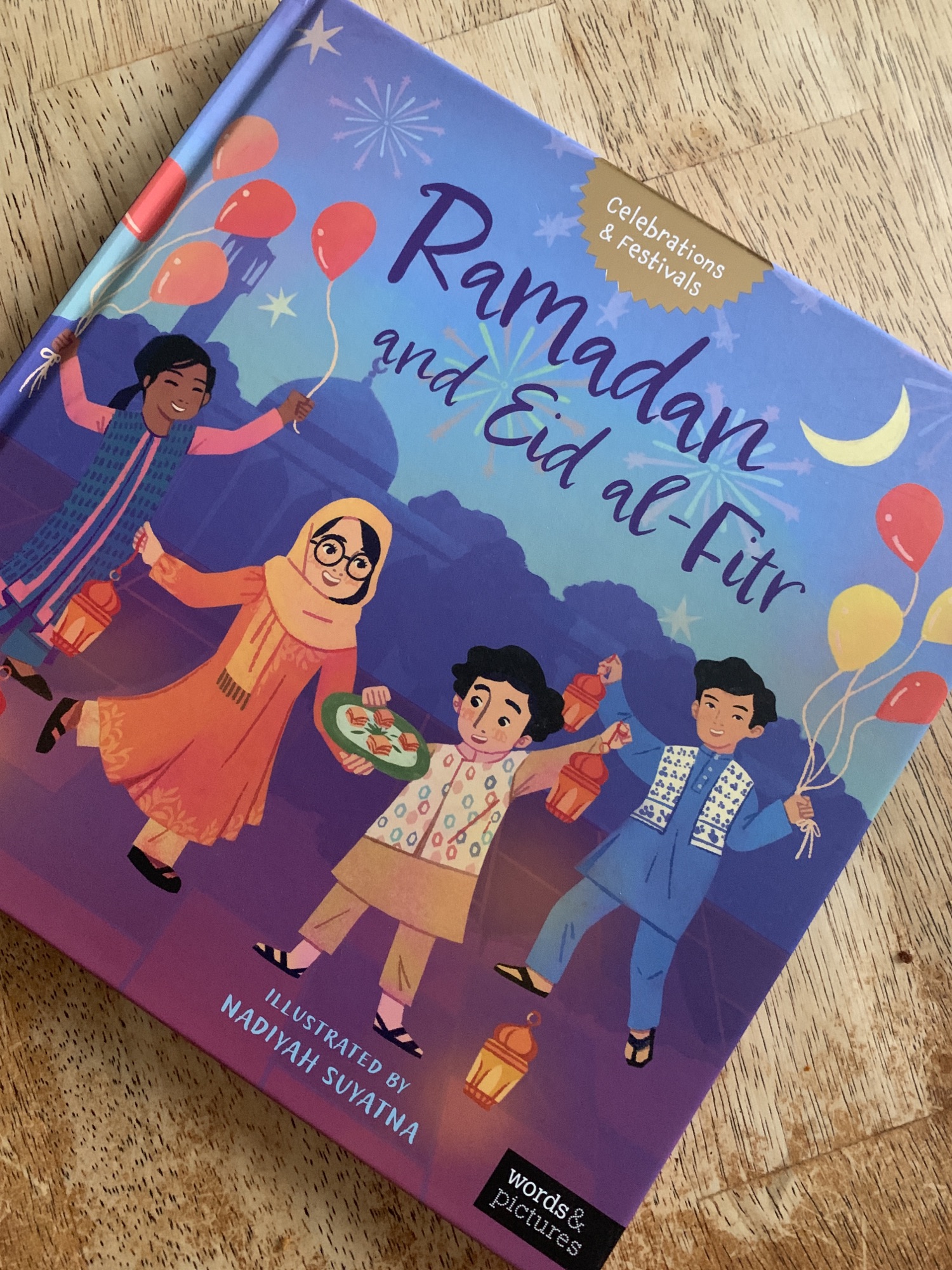
Celebrations and Festivals: Ramadan and Eid al-Fitr by Sara Khan illustrated by Nadiyah Suyatna

Standard
Celebrations and Festivals: Ramadan and Eid al-Fitr by Sara Khan illustrated by Nadiyah Suyatna

img_3101-1

This 48 page, informational based book is told through a little girl explaining her Ramadan and Eid days in a fictionalized story format. The information is not new, nor is the framing, and it has my pet peeve  line of “Ramadan is the ninth month in the lunar calendar,” but aside from that, the book does a good job of showing the joy, the activities, the faith, and the importance without self-othering, unrealistic cluelessness, or watering down. For whatever predictability the story has, the back matter is excellent. The additional information about Islam, the crafts, and even the quiz, make this book a standout in a crowded category. The book does not talk down to readers and thus works for Muslim and non Muslims alike. It also is unapologetic and informative making it a good book to share with non Muslim classrooms wanting to learn about Ramadan without crossing into “preaching.” The illustrations are warm and joyful bringing the lengthy book to life.

The story starts with Raya introducing Ramadan and then herself to the reader. She then details her Ramadan day. From sighting the moon to doing the good deed suggestions on the countdown calendar. It explains Allah swt and that adults are required to fast but kids are not. Raya spends time exploring how hard it is to skip snacks, but remains hopeful that when she is ready to fast she will be able. Her father also reminds her about other aspects of Ramadan and being on your best behavior as Raya helps set the table, donates to charity, and reads Quran. Throughout it all, informative details about Muslims are threaded through. Focusing on Raya herself also breaks some stereotypes as she discusses the joy found in a wide variety of foods from many cultures, Eid prep, looking for the moon, having henna put on, and heading out for Eid prayers and festivities. There are numerous details universal to all Muslims presented, as well as unique highlights specifics to Raya’s family such as showing the family bowling and reflecting on mini golf last year, activities that even her grandparents can participate in.

img_3104-1

The robust back matter starts with Fun Facts about Islam, stats about Muslims, details about the five pillars, etc.. The next two page spread is about the lunar calendar and has a pullout bubble explaining the use of the phrase “peace be upon him.” Then there are directions for a pop-up Ramadan card, Then information about the month of Mercy, Laylat al-Qadr, paradise, a recipe for Ramadan Cookies, info about Masjids, and finally a quiz, with answers.

img_3105-1

I like that the book balances showing joy through Raya’s personal experience, with facts about Ramadan, Eid, and Islam. I also like that Raya knows all this, my hatred of the formulaic child waking up and wondering why her family is up so early eating breakfast or a child wanting to fast and the family not supporting them is not widely realistic, and I appreciate that this book feels very reflective of what our kids feel, experience, and know about the blessed month. I also like that it features food, but does not dwell on it, and yes there are presents for Eid, but again it doesn’t make it the central factor in the joy she is feeling of being with her family.

Noura’s Crescent Moon by Zainab Khan illustrated by Nabila Adani

Standard
Noura’s Crescent Moon by Zainab Khan illustrated by Nabila Adani

img_3075-1

I know, I know, another Ramadan book about the moon and a little girl’s first fast, but this one is slightly different.  The moon they are searching for is the Eid moon and the focus is on whether they will see it and Eid will begin, or if there is one more day of fasting.  The story itself would not make sense if it wasn’t Ramadan and the characters Muslim, but the story only subtly sprinkles in bits of Islam, the backmatter though, is where the Islam really shines.  The tone of the book with the lyrical text and full color illustrations is very relatable to Muslims that both want to see the moon and celebrate, while at the same time being sad the the blessed month of Ramadan is over.  It comes from a Desi centric approach to the foods, and traditions, but their aren’t a lot of Urdu words used either, and those that are, are defined at the end.  The book works for Muslims and non Muslims, and would benefit both groups with a bit of discussion. Overall, not a particularly memorable book, but one that stands out for focusing on the tradition of looking for the moon and being together as a family.

I love that the notes at the end do mention that Muslims fast to “show love and obedience for the Creator,” under the Ramadan header.  The other backmatter headings are Eid ul-Fitr, Suhoor, Iftar, Chaand Raath, Pakora, Gulab Jamun, Sheer Khurma, and The Islamic Calendar and the New Moon.  A lot of space is dedicated to food, explaining those mentioned in the story.  It gets it right that Muslims begin fasting at dawn, it shows mom not wearing hijab at home, but wearing it when they go out, yet, it doesn’t just say the maghrib athan it refers to it as the “call for the twilight prayer.”  And it doesn’t mention or show them praying, which would have been a nice inclusion.

img_3080-1

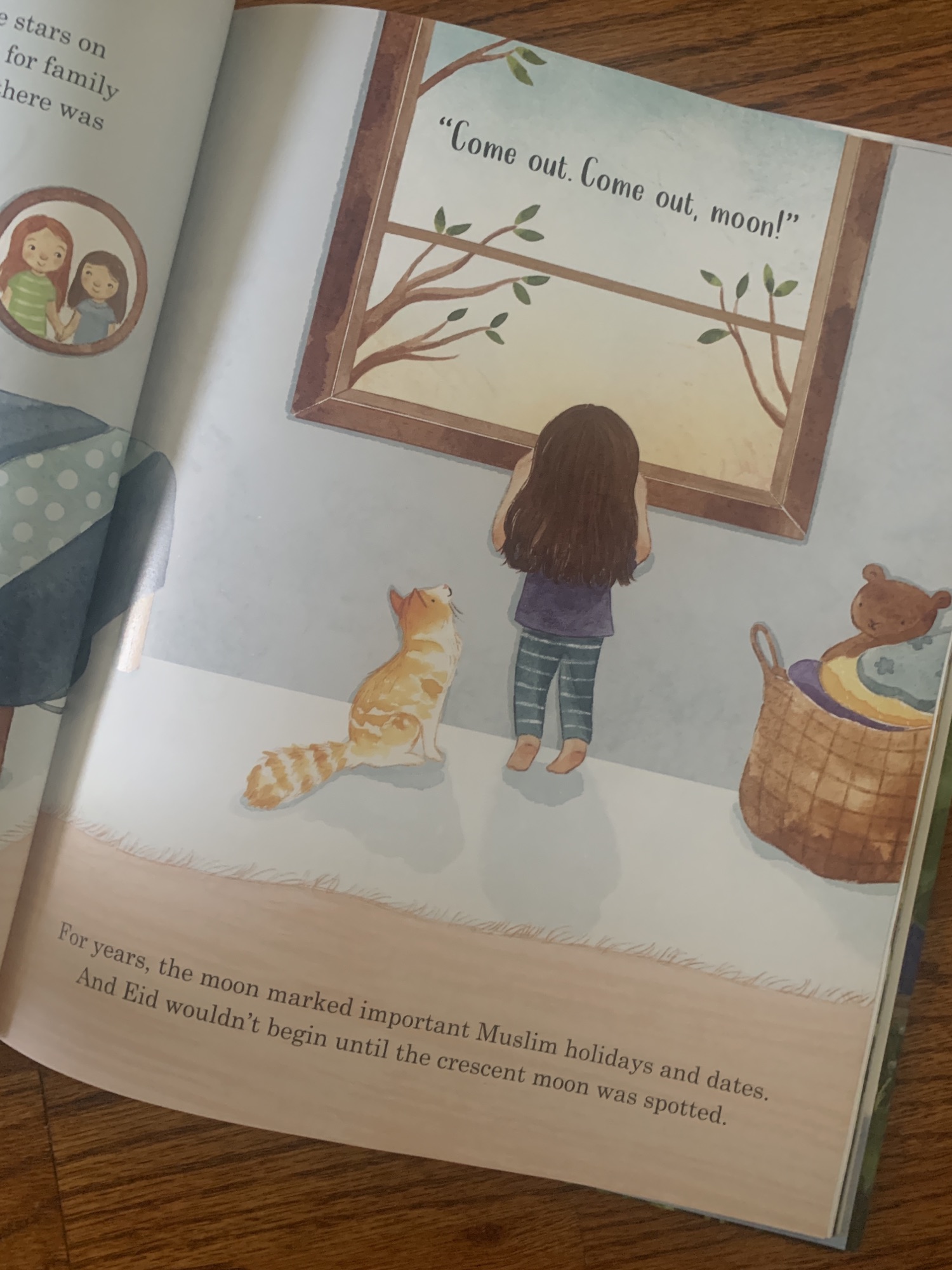
The book starts with Noura playing outside and her tummy rumbling on this 29th day of Ramadan, and her first fast.  Mama, Papa and Noura all help make and pack up iftar, as they get ready to go look for the Eid moon.

img_3079-1

Before they go, Mama shows Noura her new dress, and they add some henna cones to the items they are taking, they then set out to the countryside.  All along, Noura is hoping to see the moon and her parents are reminding her how rare it is to see it.

When they get to the hill there are other families already there, and Noura has done it, completed her first fast.  Unfortunately the moon is not there as hoped, or is it?

img_3078-1

I wish some duaas or Islamic expressions, and salat would have made it into the book, but the large hardback size makes this a good book to read at story times, and a nice way to explain why we don’t know when we will miss school to celebrate Eid, or how many days we will fast.

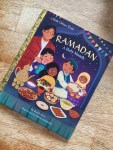
A Little Golden Book: Ramadan: A Holy Month by Malik Amin illustrated by Debby Rahmalia

Standard
A Little Golden Book: Ramadan: A Holy Month by Malik Amin illustrated by Debby Rahmalia

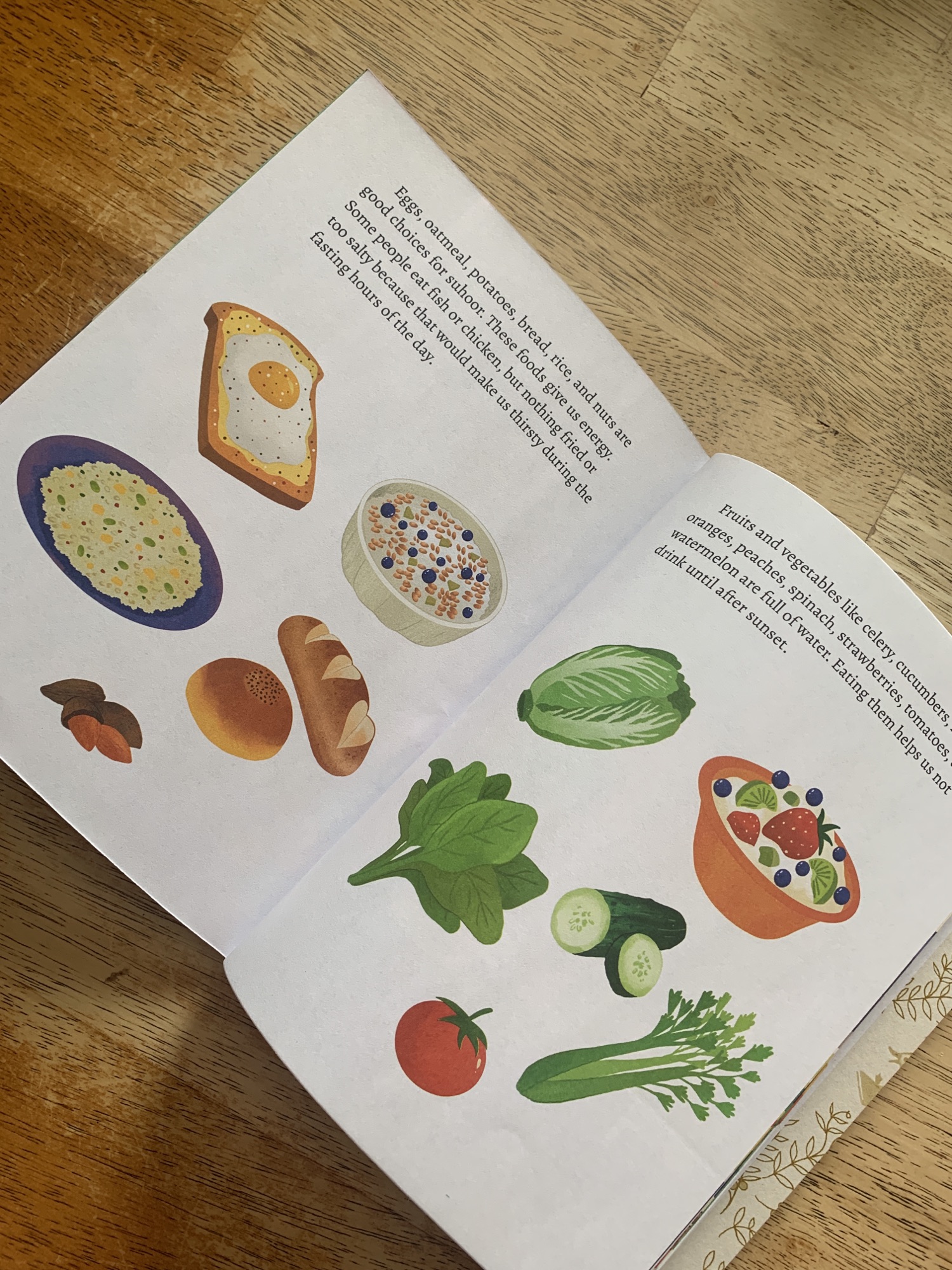
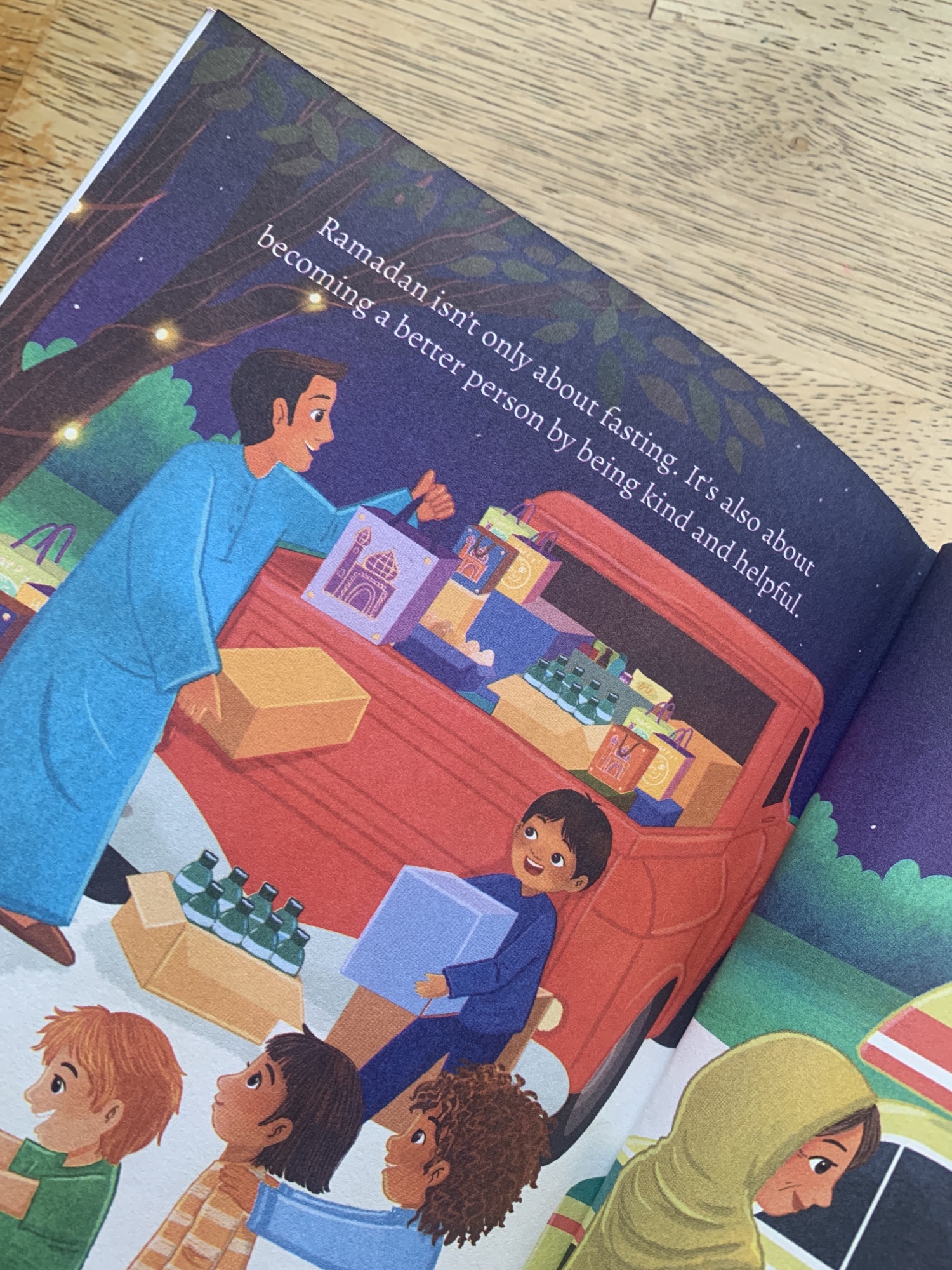
As a child I had a stack of Little Golden Books, my libraries always have a good part of a shelf with Little Golden Books, my own kids have a few dozen of them, but honestly I don’t know that I love any of them, aside from the Monster at the End of the Book.  They are a staple, they have spanned generations, but I always find them a bit abrupt, the text to small and dense, and the vocabulary a little too advanced. So, on the one hand I am thrilled that this timeless brand has a Ramadan title, but on the other hand, some of the food descriptions contain vocabulary a bit advanced for the recommended 2-5 year olds.  If you have been reading my 2024 Ramadan and Eid reviews, you will however be glad to know that this Ramadan book, does pack a lot of information into the pages, and when it asks why do Muslims fast? It says unequivocally “because it is written in the holy book called the Qur’an.” Suhoor is said to be before the sun even rises at one point, and then dawn at another, but then, however, it kind of equates dawn and sunrise, I’ll let it pass, cause it is a little vague with the equating, after saying when we eat clearly. My only real gripe are the food tangents, detailing not to eat fried and salty foods at suhoor, to they hyper specific “creamy curries, fresh soups, and rich stews. Fragrant rice dishes paired with grilled meat or kofta” at iftar.  Yeah it almost seems like the author wrote the book while fasting, with food heavily on his mind.   It does mention doing extra good deeds, more prayers, and it reads as an easy non fiction book.  It doesn’t try and interject the information into a fictionalized framing, it just tells about Ramadan.  It would be nice though, if it was sourced, but with the reasonable price point and accurate information, makes it a solid book to add to gifts and to share.

The story is told in the first person and opens with a family searching the sky for the moon. It then says in a single paragraph on a two page spread that “during Ramadan, Muslims eat and drink only when it is dark.”  It then asks why? Answering on the next spread with, “the Qur’an.”  It says that it is read in many different languages, which technically isn’t wrong, but I wish it would have said that it is written in Arabic. It continues to say that “the Qur’an tells us how to be Muslim.” To care for people, to pray. to fast, but that children and those that are sick aren’t required.

It then details foods to eat and foods to avoid for suhoor before returning to the more spiritual aspects and traditions of being kind and giving charity.  It explains Ramadan Mubarak and then finds its way back to foods, highlighting iftar drinks and foods.

Ramadan is a month, followed by Shawwal and then the celebration of Eid, making sure to note that on Eid we cook our favorite foods.

Overall, a lot of information clearly conveyed, with bright, fun, joyful illustrations.  The final page is a gloassary of words and phrases.  I purchased my copy here on Amazon.

Craft it Up This Ramadan and Eid by Zayneb Abdullatif photography by Sidoie Djunaedi

Standard
Craft it Up This Ramadan and Eid by Zayneb Abdullatif photography by Sidoie Djunaedi

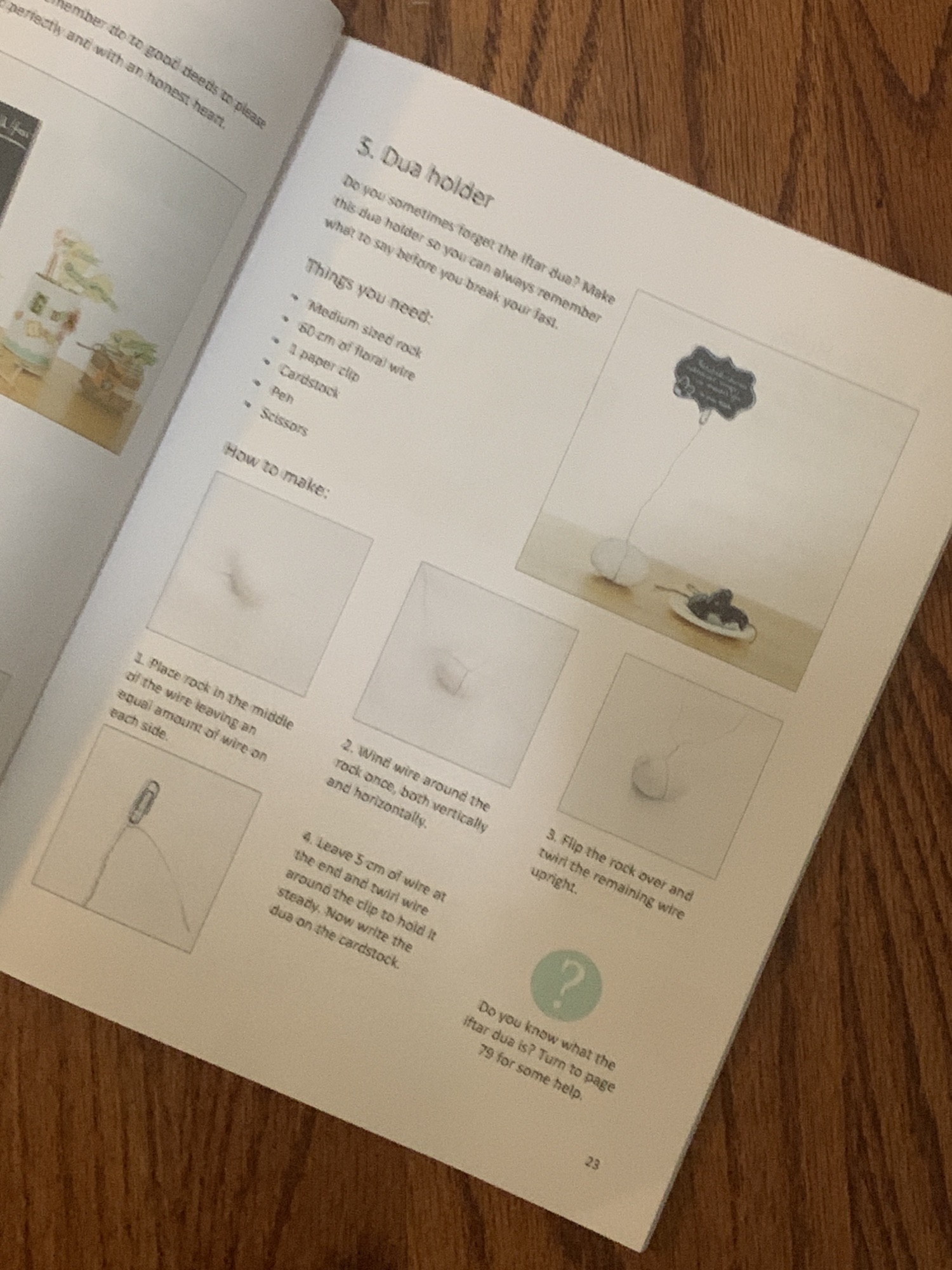
This book is not new, but I saw it at my library and thoroughly enjoyed looking through it.  I’ve hosted, helped, and attended numerous Ramadan craft fairs and story and craft times over the years, and I know everything can be found online.  Yet somehow this 79 page, 2015 published book was kind of fun to look at with my toddler.  It wasn’t overwhelming or super complicated, it was just a nice roundup of simple crafts that you could easily do with items around your home, while dropping little informative bits about Islam, Muslims, Ramadan, and Eid.  I doubt young parents today would even think to look in a library book for Ramadan craft ideas, it is a bit of an antiquated concept in todays day and age.  I highlight it today to remind us that so many have worked very hard to advance Muslim representation in books in all its forms, alhumdulillah, so that we can continue to see ourselves, make strides, and raise the bar.

The book starts with tips for parents and guardians, followed by the basics, crafts for the joyous month, crafts for Eid, a special festival, and concludes with templates, good deeds activity list, and a glossary.

It erroneously says we fast from sunrise to sunset, but does get right that we increase our worship and that fasting was ordered for us by Allah swt.  On the Eid section it discusses the takbirat and gives Eid al Adha a paragraph explanation as well.

A fun library find, that kept us off a screen and able to plan some little activities to do this Ramadan.

Ramadan Kareem by M.O. Yuksel illustrated by Hatem Aly

Standard
Ramadan Kareem by M.O. Yuksel illustrated by Hatem Aly

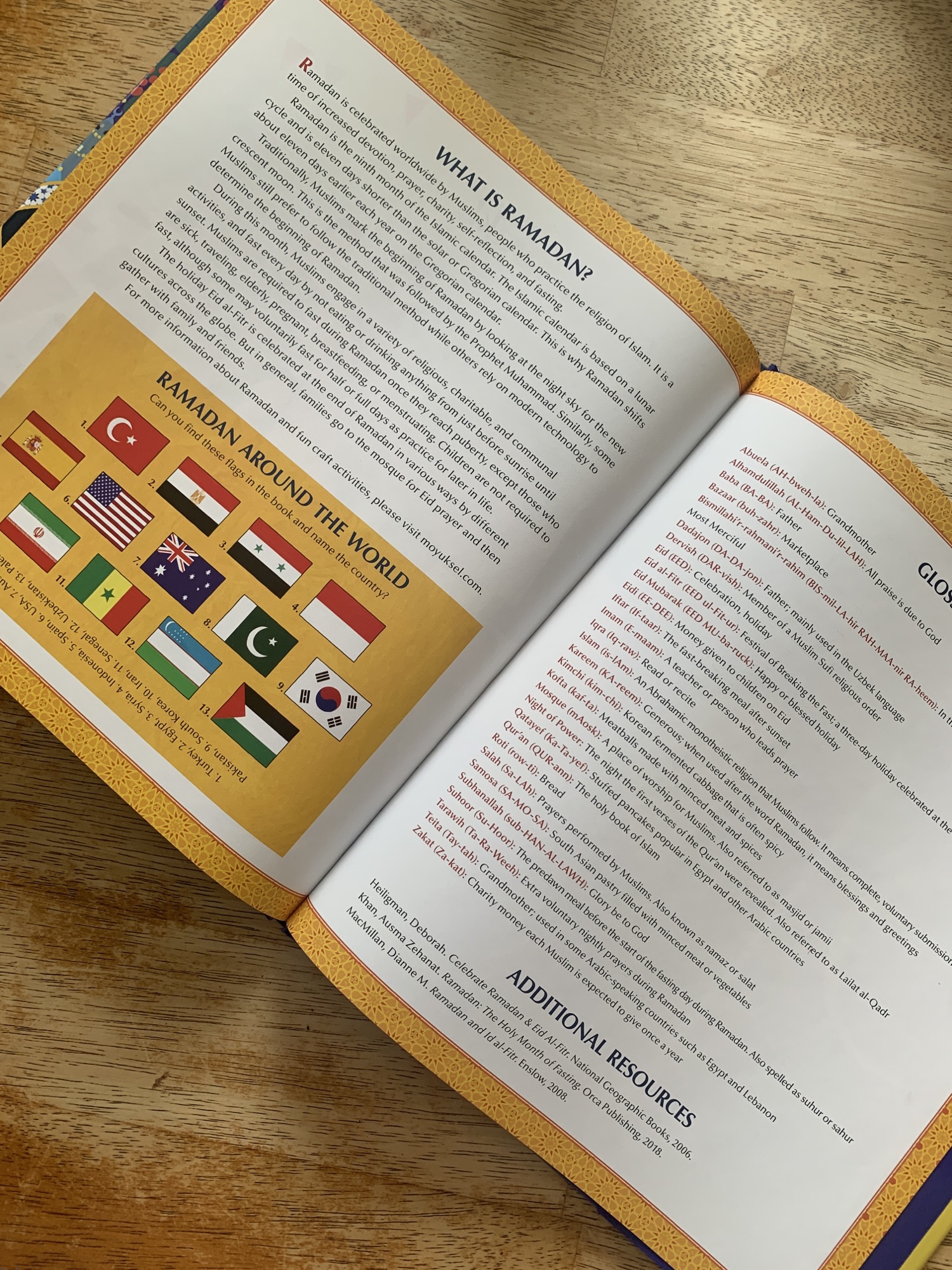
The lyrical text that shows joy, Muslim joy, all over the world during the most wonderful time of the year is felt, truly truly felt in this rich, beautiful book. The illustrations, the text, the sentiment, it all comes together so splendidly, that when you turn the last page you want to start over again. Hundreds of people are wondering what book to read to their children’s public schools this year, what book to start off masjid story times this Ramadan, what book to read every night leading up to the blessed month to get their children excited, what book to hand to your children to look through so they can have a few more minutes of sleep and alhumdulillah to all the above, I whole heartedly suggest, this one. Even with the errors.  The book states “the Night of Power is better than a thousand nights,” and should read, better than a thousand months.  The backmatter says “by not eating or drinking anything from just before sunrise until sunset.”  The story itself though has it correct and says “suhoor is a predawn meal” and notes the “sun is still sleeping.”

A universal story of celebrating Ramadan, with waking up for suhoor, greeting neighbors, having self control, praying, volunteering, iftar, community.  It is a singular story, but each two page spread showing a child in a new country continuing the narrative.  The worship uniting us all as Muslims even while our unique traditions add diversity and layers to the acts that we share.

It starts with gazing at the new moon in Turkey and mom saying that the narrator can fast. The drummer than beats her drum and it it time to wake up in Egypt. The call to prayer and remembering you are fasting reaches Syria, and donations are given in Indonesia. In Spain Qur’an is read in abuela’s lap and neighbors are visited in the United States.  Donations are packed in Australia,  friends and family are visited in Pakistan, and kimchi after dates for iftar in South Korea.  It is then off to Iran for prayers, Laylatul Qadr in Senegal, and getting ready for Eid in Uzbekistan.  Palestine is the final stop as Eid joy erupts for Muslims everywhere.

The book is widely available, you can order yours here at Crescent Moon or here on Amazon

Eliyas Explians Ramadan by Zanib Mian illustrated by Daniel Hills

Standard
Eliyas Explians Ramadan by Zanib Mian illustrated by Daniel Hills

This is the fifth book in the Eliyas Explains series, and it really is what you would expect and hope, a book about Ramadan from Zanib Mian would be.  Eliyas’s voice is funny, relatable, engaging, and yet somehow manages to find a clear way to inform too.  The framing is fictional, but the book is meant to be lesson, moral, and information filled.  The voice did seem to break when Eliya’s didn’t know what “Ramadan Mubarak” meant, but it is clear that the book is meant to teach and remind middle grade kids about Ramadan from moon sighting to Eid, so I don’t think anyone other than an old reviewer would notice.  Parents might notice though that Eliyas loses his cool at one point and starts to presumably call his sister stupid, it stops at “st,” but then says he “started to cuss” which in America would be taken to mean a profanity much stronger than stupid, so just be aware, so you don’t panic if your child asks.  Overall the book is great, it is a solid 80 pages before the guided journaling begins and concludes at 115 pages.  The illustrations, changing font, and humor really make it perfect for the age group.  I gave it to my eight year old to read and I could hear him laughing, saying a few dua’as aloud, and he even came and asked me a few questions making sure he understood new information correctly.  This book would work as an independent read, a read aloud, or even an elementary reading assignment in an Islamic or weekend school.  The book is remarkable for the simple fact that it starts by naming the scholar that proofed the book, truly this is revolutionary, please can we normalize sourcing already.

The book is divided into chapters, with chapter one reintroducing Eliyas and his family to the reader. They are out on a bike ride and Eliya’s wants to know why everyone is so excited for Ramadan and giving up food and water.  Mom and dad explain taqwa and good deeds being multiplied and prayers being answered and big shaytans being locked up and Eliyas is excited (to put it mildly) to get closer to Allah swt and be a better version of himself.

Chapter two explains the moon, making intention, and waking up for suhoor.  With nine chapters before the journaling, the book discusses doing good deeds, fighting, forgiveness, shaytan being locked up, taraweeh, Laylatul Qader, and Eid.

The journaling guides readers through forgiveness, ibadah, goals, duas, kindness, feelings, connecting with Allah swt and more.  The beauty of this book is that it does pack a lot of information, but it shows a lot too, and gives kids a way to see Ramadan in action.

You can order your copy here at Crescent Moon store 

Holiday History Ramadan and Eid Al-Fitr by Marzieh A. Ali

Standard
Holiday History Ramadan and Eid Al-Fitr by Marzieh A. Ali

img_2952-1

Traditionally published non fiction Ramadan and Eid books have more errors than they should.  I was hopeful with this one, the author is a Muslim and accomplished author, and it started out good, but then it hyper fixated on the foods eaten which can never be accurate.  Muslims are everywhere in the world, and no two people like the exact same foods anywhere, not even siblings  So why it would so clearly articulate, without qualifiers, what Muslims eat for suhoor or iftar is beyond me.  I do not eat eggs, bread, and kebabs for suhoor, we tend to enjoy brownie sundaes and pizza, and dates, broth, and fruit for iftar, sure makes me wonder if my nachos or pesto, rendered my fasts invalid?  Snark aside, it takes away from the quality information in the book that highlights that while fasting Muslim kids go to school and adults to work.  I also don’t like the suggestion that Ramadan is a time to reflect, pray, cook for others, and help those in need. It truly reads that this is when we do it, as if it is the only time we do it, and not that we do these acts all year, but do it MORE in Ramadan.  I know, I’m being picky, but these types of books are standards in public and school libraries, and in a world where Muslims are by-and-large having to prove their humanity, words have power, and need to be conveying that we pray five times a day, and more in Ramadan.  That we help those in need all year long, and more in Ramadan. The book is only 23 pages long, so when it spends so much space on these items worded in this way, it really becomes the takeaway message.

img_2953-1

The book starts pretty well, with clear precise sentences telling that “Islam is a religion practiced by Muslims” and that “they believe in one God” (note in the book God is not capitalized). It has that “Ramadan is the ninth month in the Islamic lunar calendar,” which I am ok with in non fiction books. And tells that “more that 1,400 years ago, the Prophet Muhammad received the first verses of the Quran” and that “they were sent by Allah through angel Gabriel.” 

img_2954-1

We then get two pages about specific foods, and told “Ramadan is a time to help.”  “It is also a time to pray and reflect.  People go to mosques.  They read the Quran.  They talk about Islam.” Stated just like that.  Making it seem that only in Ramadan are these things done. The unqualified statements make it seem that just as “They read the Quran” “Children make paper lanterns.” Apparently it isn’t optional, or a fun craft, it is just what is done.

I like that the five pillars are included, I wish it gave the terms of shahada, and sawm, and salat, and zakat and hajj, “journeying to Mecca” is a bit vague, and not at all sufficient.  I don’t know about they weight of the symbols either.  Dates show the “importance of fasting.” No they are the sunnah.  The star on the crescent symbolizes “the night of Ramadan spent in worship.” I think the symbols are a stretch to be honest.

img_2957-1

Eid al Fitr is one day not three as the book states.  The next spread then revisits the food, as if Biriyani is only eaten on Eid and all Egyptians make baklava.  The end is a one page Quick Facts and Tools and a glossary.  I have once again sent an email to the publisher asking them to edit future reprints of the book. 

img_2958-1


Festivals and Celebrations: Eid al-Fitr by Louise Nelson

Standard

This non fiction Eid book is not accurate, detailed, engaging, or something I would recommend schools or libraries shelve. It used to baffle me, but it now infuriates me that books like this continue to be published as non fiction, when they unfortunately perpetuate many of the same errors of similar earlier books, Muslim beta and sensitivity readers exist, why do publishers not seek them and out? At least Google the subject before you write and publish a book.

Lets begin with my favorite: Muslims fast because Allah swt has commanded it, yes it helps us “become closer to Allah,” but it is not so that we, “understand what it is like to not have enough food.” Sure that might be a resulting lesson, but it is not the reason. It states that “children and people who are old, pregnant or ill do not fast during Ramadan,” which isn’t always true and needs clarifying to say they may not be “required” to fast. Many children do fast, many pregnant women fast, by simplifying it to such a degree, students fasting may feel less seen when presumably reading a book like this in a school, classroom, or library setting. The exact places meant to help provide windows and mirrors and foster understanding and an inclusive environment.

Eid al Fitr is celebrated on the first of Shawwal, some countries, cultures, or families may extend the festivities for three days, but unlike Eid al Adha, Eid al Fitr is only one day. There is nothing about white being a holy color and there are no requirements to wear white on Eid.

The brief history of Prophet Muhammad ﷺ receiving the revelation from Angel Jibreel would be even better with proper salawat and respect given. It also seems to imply that he traveled far and wide spreading the message and became a Prophet all within the month of Ramadan. It completely erroneously states that “Muslims remember the meeting of Muhammad and Jibreel and the writing of the Qur’an by fasting during Ramadan.” How does remembering translate to fasting? Muslims make an extra effort to read more Qur’an in Ramadan, as blessings are multiplied, but the causation is incorrect.

The information about Zakat and charity is vague, not clarifying that Zakat al Fitr is required on all to pay not just adults. Unfortunately it clearly mistakenly states that Eid prayers is prayed, “just after sunrise.” It is not, it is prayed in the morning, but not “just after sunrise.” The phrasing about Muslims reciting prayers together to feel closer to Allah also seems off, why not just say Eid prayers are prayed in congregation. And while sure in some places the community might eat together after the khutbah, it doesn’t happen everywhere and is not required, nor is eating sheer-khurma. That is simply one of many sweet dishes made in the sub continent that has no religious role whatsoever. The remainder of the book is poorly written. “people play games and eat.” It then says that Eid is celebrated in many different countries because Muslims live all around the world, but only gives one example that “in Turkey, baklava is given as presents.” That does not show people in different countries all over the world, the legit, shows one country.

How is this terrible writing making it into a book? I am truly baffled that this is the quality of a book to be published. It is a disservice to anyone seeking information, and the time of Muslims just being happy to be included has long passed. Books written this poorly keep stereotypes about Islam and Muslims as other and backward going. I am very disappointed.

The book is not sourced, and I have sent an email to the publisher asking for corrections in future reprints.

Rabia’s Eid by Rukhsana Khan illustrated by Debby Rahmalia

Standard
Rabia’s Eid by Rukhsana Khan illustrated by Debby Rahmalia

We definitely lack Islam centered leveled readers, so how exciting to see one this year focused on Eid, that contains more about Zakat al Fitr than presents no less.  The book starts on the last day of Ramadan, so there are details about both Ramadan and Eid shown, not dictated, as it stays on a Step 2 reading level.  As with most books meant to be read with help, for preschool to 1st grade, the story is a bit abrupt at times, and by not showing the Eid salat it definitely leaves some confusion as to whether Zakat was actually paid before the prayer started as required (I’m not a scholar, so please look into this), or not.  InshaAllah, if adults are reading this with their children, some basics about Zakat al Fitr would be something wonderful to discuss when you finish.  The book is joyful, the little girl wants to fast and is encouraged to do a half day, the illustrations are adorable as well, alhumdulillah. Oh and for those keeping track, this might be the first Ramadan book I’ve read in a long time that does not mention the moon, not even once.

The book starts with Mom waking Maryam up for suhoor on the last day of Ramadan and Rabia wanting to fast as well.  Her sister tells her she is too young, but she joins the family for cereal in the kitchen, and Dad encourages her to try a half day.  The family then prays fajr together and the day is going great.

About lunch time Maryam is getting ready to break her fast. The family praises her on as she settles in with a cheese and tomato sandwich.  Later the rest of the family breaks their fast, and Rabia joins in with starting with a date and making duas.  Then it is time for henna and getting their clothes ready.

At Eid prayer everyone is dressed up, and Dad gives Rabia some money to put in the box labeled Fitr, for the poor.  Rabia wonders if everyone has to give money, and mom responds that everyone except the poor do.  The book concludes with the family smiling knowing everyone is having a happy Eid.

The book is great for Muslim and non Muslim kids, because of the size though, it isn’t a great choice for story time in big groups, but the price point makes it an awesome addition to gifts, classrooms, and to share with others in general.  I purchased my copy here.