Tag Archives: clean

Sabrena Swept Away by Karuna Riazi

Standard
Sabrena Swept Away by Karuna Riazi

The gorgeous cover of this 205 page middle grade fantasy is a great motivation for kids to pick up the book and dive into a story filled with characters from the One Thousand and One Nights. Descendant from Sinbad, Sabrena’s ailing grandma is sometimes present, and sometimes suffering from dementia, but her stories have power, they always have. As Sabrena battles her own self doubt at her new Islamic school, her ability to find her voice and speak up, and her desire to protect her grandma from being taken from her home, she will be swept off to a world far away, where she must be the hero of her own story to help her new friends and find her way back.  I was nervous to embark on an Alice in Wonderland world building framed story, but the short book, the enjoyable characters, and the consistent presence of Islamic representation actually made me forget that I don’t like that style, until the text itself drew the correlation.  In many ways the story and the predictability should also have been a turn off for me, but I absolutely loved the writing of the prologue and the first two chapters, and then I switched to the audio book, and the story just pulled me in and flew by.  The characters pray, call out to Allah swt when scared, greet one another with salaam, discuss qadr, encounter jinn and ifrits, the women wear hijab, there are mentions of Bangladeshi foods and clothes, but the book is for everyone, it isn’t preachy, it is just who Sabrena is, and in the quick paced fairytale like adventure, you will be glad you spent time with her on her adventure in both worlds.

SYNOPSIS:

The Bhuiyan family loves stories, Sabrena’s grandma spins them, and her father studies and teaches them.  Sabrena feels connected to them, but when water keeps appearing, calling out to her, and showing her visions of palaces and gates, she starts to wonder what is truth and what is just family lore about Sinbad the Sailor.  As grandma’s memory slips, Sabrena and her parents move to be closer, the new Islamic school is nice, but Sabrena seems to get tongue tied when her kind classmates try and include her.  When her mom and aunt fight about what to do about grandma, she hides away dreading their arguments.  When the sea sweeps Sabrena to a new world though, she finds herself “so alone” and forced to step up.  With new friends, a longing to return to her family, and her growing confidence, Sabrena is swept away, but determined to find her voice, save the day, and find her way home.

WHY I LIKE IT:

There weren’t really any twists or surprises for me, other than the beautiful Islamic rep inclusion and the cleanliness of the book.  I think I’ve become so cynical that the bar has dropped, and it was nice to read a tale that was decently written, with characters owning their Islam in way that made them just part of who they are and how they view the world.  Sabrena doesn’t have an identity crisis, or internalized Islamophobia, everyone is just Muslim doing their things and living their lives.  I also felt the voice and tone of the grandmother dealing with her dementia was accurate.  Having my father-in-law in our home battling memory issues, I often find rep in children’s books to be performative and saccharine, this felt grounded and used to serve an important plot point in the text, which I appreciated.

The adventure was ok, honestly nothing super memorable, but I really enjoyed the voice actor on the audio book, and was not worried if the holes were big, or adequately overcome, or probable. I was just enjoying being in the story.

FLAGS:

Mention of music, there is magic, jinn, ifrit, a talking head, some trickery and deceit, and it uses the word harem a few time without going into detail.  Disclaimer with audio books I may have missed something, but I think for the genre there is nothing too ,red flag, it is a fantasy adventure.

TOOLS FOR LEADING THE DISCUSSION:

I think discussion and maybe reading of the original One Thousand and One Nights, and then talking reading, and discussing some of the retellings, and character inspirations of Aladdin, Ali Baba, Scheherazade, Sinbad, Marjana, Duban, etc would be a delightful class or book club plan.  This book is solid middle grade, but depending on the framing, could be used for discussion in broader conversations and enjoyed by readers of all ages.

With All My Heart by Aasia Khan (Book One in the Exciting New Maren Springs Series)

Standard
With All My Heart by Aasia Khan (Book One in the Exciting New Maren Springs Series)

img_6993-1

I would assume this 185 page book sets out primarily to be a wholesome halal romance and to that end it probably meets its goal and gives teen Muslim girls a sweet idyllic fluffy love story within the bounds of Islamic rules. The main couple are hinted at as being alone a few times, but they are aware of it, and there is no touching, the intent is always to marry, it is worth noting there are birthdays celebrated, females singing in front of males, some element of threat, murder, criminal activity and hinted at (not described) obscene images. So for what it is, it is a fine, but for anyone not clamoring for any and all clean halal romance books, the plot is very, very weak, the climax none existent, the lacking rising action incredibly frustrating given the premise and thus potential of the book. Even the plot holes are a bit hard to overcome, even given their propensity in the genre. Written in third person omniscient keeps the book at arms length, and further prevented me from connecting with any of the characters.  The entire path the book will take is established in the first few pages, and with no twists or turns, or emotional connection, the book drags.  The perfect wealthy family of hafizes, that have no flaws, fix and provide everything and make no mistakes, are too unrealistic for me, and I found it off-putting, which isn’t to say your 14 year old dreamy eyed daughter won’t absolutely love it, but for me it is rather forgettable.

SYNOPSIS:

Two brothers, married two sisters and each have a son, the boys are raised as brothers.  At some point a family friend’s daughter, Layla, drinks from a bottle that contains the breast milk of Asad’s mom, and thus Layla becomes his “foster” sister, but not Usmans.  The baby the milk was intended for passed away early on, and through it all the families stay in touch, but never again meet.  The children, Usman and Layla have not met since Usman was 5 and Layla 1, yet they think of each other often and don’t know why the families keep apart.   Both can sense each other, identify what they have touched, and where they have been.  When Layla’s parents are killed and Layla turns up at the family’s estate in Maren Springs, Usman knows he will marry Layla, as the family welcomes their missing foster daughter/niece home.

WHY I LIKE IT:

I honestly had to read the prologue five times, and I flipped back to it while reading at least that many more times, and the book is not long.  The term “foster” threw me off which is my own ignorance, but alhumdulillah the book does eventually explain it and my Lit Sisters helped me to understand that in Arabic it is Radhaa’a which translates to “foster” to describe when mother’s milk is shared and the relationships that result.  I don’t know that the family tree is necessary, I suppose it helps since the parents are called by their first names, but it should have been in the front if included, it was a bit odd at the end.  Similarly odd is the book claiming itself “exciting” on the cover.  Blurbs are usually from others describing their thoughts or excitement about the book, not part of the title from the author, I also don’t understand why the fictional location is Maren Springs is in the title, when the four main characters work and live 4 or so hours away in Orkney. They should just live and work in Maren Springs, I didn’t see the benefit of them commuting every other chapter for no reason, and taking up unnecessary page space detailing if they were here or there, coming or going.

I feel like the book would be better in dual point of view, the characters as written don’t stand out, and there is too much telling and not enough showing.  Layla is shown to be helpless, but told to be strong, and the brothers too overly good, there needs to be more backstory of the characters, to ground them, flesh them out, and make them more interesting.  As for the plot, (SPOILERS) had the cause of why Layla was running, the murder of her parents been a looming threat, the blackmail emails with doctored images, the witness protective program been woven in, the book would have had readers intrigued, and on the edge of their seats.  Sadly it is all glaringly absent, and thus it becomes so dry just to read page after page about everything being perfect and then when it isn’t, the brothers just take care of everything in a few sentences to resume it to being, you guessed it, perfect.  The idea of Layla being on the run after her parents’ death and finding refuge in old family friends, is a great set up, but there is absolutely zero follow through. Layla doesn’t even know where the boys work, the name of the company, the reader is never really sure what they do, what anyone’s skill or academic background is, it is very vague.  At times it is downright juvenile that the heads of the company are called “big bosses,” the magical realism connection between the couple, referred to as the “alien” or “Martian” connection. Clearly the premise of the relationships and the positioning of bringing everyone together was thought through by the author, but the execution on the page sadly doesn’t reflect it.

I know in the romance genre the plot holes are always present, but to have them so early before any character development has occurred provides little incentive for the reader to overlook them because they are invested in the story.  A love connection between a 1 and 5 year old is a pretty big leap the reader is expected to be ok with, no backstory showing how close the families were, no phone calls or Facetime sessions, just letter writing, doesn’t convince the reader that there is a foundation to revisit when tragedy strikes.  The ease in which the “climax” is resolved and minimized feels dismissive and will highlight the missed opportunity even to younger readers.

I know this reads as a harsh review, but I wouldn’t have bothered writing my thoughts up if I didn’t think there was some potential for revisions to be made. The book isn’t awful, it just really is close to being a lot better than it currently is, and I hope the author will consider revisiting the story and elevating it (the benefit of Amazon print on demand) to a book that our Muslim teens can fall in love with.

FLAGS:

Some threat, birthday celebrations, singing in the car in mixed company, murder referenced, fear

TOOLS FOR LEADING THE DISCUSSION:

I purchased the book and will get it to the Islamic school library, but it isn’t a candidate for a book club selection as there is nothing really to discuss.

The Djinn’s Apple by Djamila Morani translated by Sawad Hussain

Standard
The Djinn’s Apple by Djamila Morani translated by Sawad Hussain

img_4352-1

This short, 160 page YA book is really quite gripping. Admittedly, during the first third of the book, which is primarily world building, I had no idea what was really going on, but I was intrigued and by the half way mark, I was so invested, I truly could not put the book down. I received an early digital copy so I am not sure if the grammar errors, typos, and lacking punctuation is because it had not been through line edits yet, or a result of translation oversights, none-the-less I thoroughly enjoyed this book and read it in a single sitting. I wish this book was 500 pages long, with details about the time and environment, and build up to the conclusion, and angst to the romance, but it is not there, it is short, and rushed, and I don’t really know how to review it, because to point out all that is wrong, doesn’t convey all that was right. I am a self appointed reviewer, so I’m going to break my own standards and just copy and paste the teasing blurb, I can’t say it better, you are welcome: “Historical fiction meets crime fiction in The Djinn’s Apple , an award-winning YA murder mystery set in the Abbasid period—the golden age of Baghdad. A ruthless murder. A magical herb. A mysterious manuscript. When Nardeen’s home is stormed by angry men frantically in search of something—or someone—she is the only one who manages to escape. And after the rest of her family is left behind and murdered, Nardeen sets out on an unyielding mission to bring her family’s killers to justice, regardless of the cost…”

SYNOPSIS:

See above, I know my standards are slacking, but that blurb is what helped guide me when I got lost a little lost with the words on the pages.

WHY I LIKE IT:

I love the map and in this case the glossary and backmatter really helped me to understand the setting because the text assumes the reader knows about Harun Al-Rashid, the Golden Age of Baghdad, and the Abassids. I appreciated the Reader’s Guide and further information about the Bimaristan, as well.

I like that it showed the family as being practicing Muslims, them being accused of being infidel Zoroastrian, and the adopted father and teacher being Jewish, it added a layer that entices the reader to reconsider stereotypes and look further into the society. The book doesn’t offer much commentary about it, but does highlight the different religious groups and show them interacting.

The book really pulls you in and considering that I was lost and there were grammar errors and typos, really speaks to the story and heart of the writing. I am glad I read it, it will stay with me, and I may not be able to pass an AR test on it, but I do plan to get a physical copy for the library and for myself, so that I can read it again.

FLAGS:

Murder, plotting, revenge, poison, romantic feelings.

TOOLS FOR LEADING THE DISCUSSION:
I need to read the book again, but yes, it would be awesome as a book club selection for Middle School or even High School to discuss, pick apart, analyze, research, and enjoy.

Daughters of the Lamp by Nedda Lewers

Standard
Daughters of the Lamp by Nedda Lewers

img_2600-1

This 352 page middle grade fantasy grounded in Egypt and America didn’t initially impress me.  In fact the first few chapters felt a little forced, the voice a little off, and the threads of Islam were making me a little bit nervous, but I was advised to keep reading by a trusted friend (@muslimmommyblog), and so I did.  And I really don’t know when it happened, perhaps when Sahara finally got to Egypt, but truly the slow quiet book won me over.  It has a lot of heart and I found myself throughout the day thinking about the story, trying to sneak a few minutes here and there to read just a little bit more, and staying up past my bedtime to finish.  That isn’t to say the book is perfect, but it is a solid read despite some plot holes, and a 12-year-old protagonist who seems to not really practice Islam even though her dad and family do. If you do not feel that Islam allows for fantasy books with magic, then steer clear of this.  If you are fine with it or on the fence, know that the book quite often articulates that Allah swt is always the creator in charge of everything, but there are magical elements, fortunes told, and evil deception.  I’ve never seen anyone read tea leaves or coffee grounds, let alone believe in them, if it is something that culturally you have seen and find reflect sihr, know that it is present in the story, but it absolutely clarifies, that Allah swt is the one who controls the future.  I don’t think any reader of any age would think this story is or could be real.  I would be comfortable with middle graders reading this book.  It is long, and a bit dense for early middle graders, but it is clean, and really centers family, being a good friend, and working together to save the day.

SYNOPSIS:

Sahara Rashid is tired of being teased as being the only kid who hasn’t gone to Merlin’s Crossing, when 6th grade comes to an end, she is hoping the surprise her dad has for her is a trip to the amusement park.  Instead they are going to Egypt, her first trip there ever.  Her maternal uncle is unexpectedly getting married and her dad and her haven’t been back since her mother died giving birth to Sahara.  Shocked by the news and desperately disappointed, Sahara goes to bed and dreams of her mother. When she awakes, her aunt, her father’s sister and mom’s friend, has a necklace for her and a message that matches her dream.  Interspersed with Sahara’s story is Morgana’s.  A girl long ago who is a servant to a mawlay, Ali Baba, who has been tasked to guard treasures: lamps, apples, flying carpets, and the like.

When Sahara gets to Egypt her adventures begin, she meets her cousins, Fanta and Naima, and Sittu, her grandma, who she has always feared blames her for her mother’s death, but finds instead a loving matriarch who welcomes her wholeheartedly.  She also meets the bride-to-be a woman named Magda, a woman the cousins call, El Ghoula, the witch.  When someone tries to break into the family’s grocery store, Sahara’s necklace goes missing, and El Ghoula starts to act suspicious, Sahara and Naima formulate a plan that backfires tremendously and will test their trust, determination, and ability to save the day.

WHY I LIKE IT:
I love that Islam is woven in, but I truly do not understand how Sahara’s dad prays five times a day, her aunt in the USA who lives with them prays, but not regularly, but Sahara doesn’t pray.  Her mom wore hijab, but she doesn’t know much about hijab, yet is incredible self-conscious that she doesn’t wear it, while simultaneously being comfortable in shorts.  She also questions her dad why she needs to cover her head in front of the imam, and she brings it up a lot with her cousin Naima, who does cover.  It feels like it comes from a place of love and respect, and probably real conversations, but it seems stilted and vague which I feel like some sensitivity reading perhaps would have helped with.

The beginning of the book really sounds outdated, but I’m not sure why.  It reads like an older person trying to write a young protagonist contemporary voice and it doesn’t work, it is even cringey at times.  Once the action picks up, the voice and tone and pacing is fine, but truly the first few chapters of Sahara are cumbersome.  I do not understand why Sahara is constantly homesick.  She is on vacation and is not going to be in Egypt for two weeks, and the regular insertion that she is missing home and counting down days, is very odd.  If she was suddenly living there, or staying months, perhaps it would make sense, but truly it initially really makes liking Sahara yet another obstacle in the early chapters, that has to be overcome.  By the end, she is very likeable, but those early chapters don’t connect her to the reader which is unfortunate.

The story and action are fun, the relationship building with the family is very tender and sweet.  Her helping her cousin in a street dance battle and feeling the love from her grandma are cathartic and memorable.  Plot wise there are some holes, like how did all the sleeping victims get home, where is the dad’s family, why didn’t the mom know the family secret, why did the family let Sahara’s mom leave, how did Sahara’s mom and her paternal aunt know each other, and why doesn’t Sahara pray and why hasn’t she ever heard the fajr athan before?

FLAGS:
Magic, lying, music, dancing, evil, plotting, scheming, killing, murder, dying, theft, poisoning, attempted kidnapping, slander.

TOOLS FOR LEADING THE DISCUSSION:

This would be a fun book to read aloud in a classroom setting during lunch when it is too cold to go outside.  I think it would be fun for an upper elementary book club as well.  I think kids will reach for it, and with a recommendation will get through the first few chapters to be swept away on a magic carpet,  enjoying the story.

Three Holidays and a Wedding by Uzma Jalaluddin and Marissa Stapley

Standard
Three Holidays and a Wedding by Uzma Jalaluddin and Marissa Stapley

3 holidays

I don’t think I have ever sat down and watched a complete Hallmark Channel holiday movie, but I know the stereotypes and I’ve caught enough scenes while hanging out with my grandma to know that reality has to be suspended, there will be a happy ending, and the snow and small town charm is going to be laid on pretty heavy as the wholesome romance plays out.  This book is the literary equivalent of such a movie. So with that in mind, there are somethings I will concede can be overlooked, but religiously there are some things that need to be noted (see below).  I also have to admit that I couldn’t put the book down and read the entire 384 page Adult book in two sittings. The book is told in alternating perspectives: Maryam and Anna.  Maryam and her family are Muslim, the book takes place in 2000 when Ramadan/Eid, Christmas and Hanukkah all took place within days of each other.  Anna celebrates Christmas, but grew up celebrating Hanukkah too.  Even if a romance that has Muslims ok with adopting “Christmas-y” celebrations during the last ten nights of Ramadan no less. is not a book that appeals to you, it is worth noting that this book does an incredible job of not becoming performative.  There is no internalized Islamophobia, self-othering, no over explaining, convincing, justifying or religious or cultural identity crisis. For a book co authored by a Muslim and a non Muslim and traditionally published, I am excited for the precedence this book sets.

SYNOPSIS:

Anna is in a perfect relationship, with the perfect guy, and accidently sees the perfect ring in her boyfriend’s luggage.  With Christmas plans in Toronto to meet Nicks wealthy parents, it is clear that the perfect proposal is also going to happen.  But Anna is not perfect, and who she seems to be to Nick is not who she is or wants to be.  It feels so fake.  With separate flights from Denver to Toronto, getting redirected and stranded in Snow Falls, Ontario gives her the pause she needs to decide what she wants.  She meets Josh, someone in town visiting, which complicates things, and she sorts through her grief of loosing her father and the speed in which her ex step mother moved on, all why becoming good friends with Maryam and her family in this idyllic town that she doesn’t want to leave.

Maryam is the oldest daughter who shoulders the expectation so that her younger sister can live her best life.  She became a pharmacist to carry on the family business, so Saima could be a physician with Doctors Without Borders.  Now Saima has decided that she wants a wedding in Ramadan and Maryam has to plan it. The flight being diverted and the wedding party being stuck in Snow Falls has long ago crush Saif and Maryam sorting through their past and a possible future together.  

The two protagonists, their past, future, love interests are all multiplied by a town full of love and holiday activities, a wedding that might be missed, a Holiday Hoopla show, a movie being filmed, fasting in Ramadan, and wise old Dadu, a former Bollywood director guiding the characters to a happy ending.

WHY I LIKE IT:

The book is an easy read, it really is a guilty pleasure escape from reality and that it comes from a place of- we are Muslim, we fast, we pray, we don’t/shouldn’t date without marriage in mind, and everyone in the book already knows all this makes you feel ok about indulging.  It even has a thread of analyzing parental expectation and peeling back some of the assumptions regarding the disconnect worked in throughout the story.  

It took a few chapters for me to stop fighting and accept that the snow is so bad that the airport is closed, but every store, restaurant, and the roads in the town are open.  That the phones are out, no one has a charger, but the payphone works and food can be ordered and delivered.  That Anna is strolling around in a cocktail dress and can find a sweater, but she can’t find pants, and holiday gifts for everyone were not a problem to obtain.  The book notes the idyllic diversity and amazing payphone, but you really just have to let it go if you are to enjoy the book.

Some things I couldn’t let go though are the Islamic religious portrayals.  The characters note that a wedding in Ramadan is a terrible idea, but for as authentic as the waking up for suhoor and fajr are every day and iftar is every evening, the Muslim wedding party spend the last 10 days and nights of Ramadan watching Bollywood movies, dancing at a music filled mehndi party, planning and performing in an interfaith holiday show, and listening to Christmas music.  I know Ramadan staples of reading Quran, doing thikr, and praying, don’t fit the genre, but there are enough people to make jammat, one night it mentions they go to the musallah for taraweeh salat, but I really wish it was every night, and that more traditional Ramadan foundations were shared.  I did love that why Dadu couldn’t fast was explored, and that when Saima was stressed she went to the musallah, but really Bollywood marathons and parties in Ramadan are uncomfortable even in fiction.

FLAGS:

For Adults and New Adults the book is remarkably clean.  The romance is tame even for YA, the characters are all adults and it is more the Ramadan non worship and Christmas normalization that is more flag worthy to me if a Muslim teen were to read it, than the relationships.  So take what you will from the flags: Anna and Nick seem to live together at the beginning, Anna and Josh hold hands, kiss.  Maryam and Saif hold hands and hug.  Saima and Miraj hug.  There are some other hetero couples that kiss. Mention of Maryam’s prior relationship features her husbands infidelity, and Saif admits to having a girlfriend.  There are a few LGBTQ+ couples in the town that own stores and the inn, but don’t seem to be Muslim, and their relationships are not significant plot points.   Muslims joining in Christmas activities. Alcohol and a pub are mentioned, but Anna partakes, no Muslim characters.

TOOLS FOR LEADING THE DISCUSSION:

I don’t think I could do this as an Islamic school book club choice for middle or high school.  But I do want to gush about it with my Lit Sisters.  You can preorder it here https://amzn.to/3L7K9wQ

Forty Words for Love by Aisha Saeed

Standard
Forty Words for Love by Aisha Saeed

fourty

This YA magical realism book by a Muslim author contains no Islam, and while it is a love story of sorts, and there is a kiss, it remains clean for the demographic.  It is a snapshot of daily life for a few characters in a small magical town.  There is no real understanding of the premise, or the magic, nor resolution to what happens or why any of it matters, there aren’t even forty words for love provided, yet the author is good at writing, so I kept reading, even when the plot holes and rationale for the “point” of the book clearly were not coming.  The ethereal lilting tone was lovely and lyrical at times, but honestly, I was left with more confusion about the leaves, the tree, the pastel waters and the cause of blame and bigotry at the end, than when I started.  It is an easy read, I don’t regret it, but it is hard to suggest others invest in a 304 page book that doesn’t really leave you feeling satisfied.  I wouldn’t object to it on a shelf, and others might absolutely love the infusion of other worlds into a grounded reality to tell a story of industry leaving a town, and two kids moving from friendship to romance, but I just wanted more: more world building, more tension, more resolution, more backstory, more detail, more magic, more understanding, more character development and connection.

SYNOPSIS:

In the vey first chapter, a small child drowns.  The child had wandered off from his nanny and died in the ocean.  That is the day that the pink and purple waters of Moonlight Bay turned angry and black.  Eighteen year old Raf, a Golub, blames himself because he was about to tell his childhood friend Yasmine that he was in love with her.  A rule that he has been told for the last decade will mean that his leaf on his arm will fade and he will have to leave his community.  When he is about to approach Yas he sees that she is cozying up with Moses, and he stops.  When the body is then found, a scream breaks loose and  everyone runs to the little boy. Later that night the Golub tree opens and two kids, a brother and sister emerge, and the tourist rich city is no longer beautiful.  The candy factory that relies on the healing waters closes up shop and most of the townsfolk move away.  Many of those that remain blame the Golub for the town’s misfortune.  The Golub arrived by tree a decade before when their own homeland froze over.  They live in the forest and eagerly await the tree to thaw signaling that it is safe for them to return home.

Yas and Raf carry on, Raf working in the diner, and Yas gathering shells for her mother to shape into stars that heal.  Both dream of leaving the confining town, pursuing their passions: Yas art and Raf architecture, but rules, family, and obligation keep them from leaving and keep them from being more than just friends.

WHY I LIKE IT: (SPOILERS):

I like the tone of the book.  It is like a dreamy lullaby that floats around, but I really needed answers.  If certain threads were unresolved, I could take it as being left up to interpretation, but this was more than a literary devices, this reads underdeveloped.  So much happens in the first chapter, and the rest of the book really doesn’t keep up.  The reader never learns why the leaves fade or pulse or why Uncle came to the conclusions he did even if safety was his motivation, we don’t know how Kot and Nara got through the tree or survived for 10 more years in Golub.  It is hard to believe that in a decade so few Golub tested out their leaves? And what purpose do they even have? They allow them to return, that is it? That is their rumored, untested magical ability? Were the waters healing before the Golub came, the confusion of what Yas and her mom do and the arrival of the tree seem a bit inconsistent. Yas feels electricity when Raf is around it is mentioned a few times, but never explored.  We are told that Jake hates Golub, but does anyone else really?  How can a city that reads like 10 people have its own high school? It doesn’t feel fleshed out, it reads like there are a few families is all, and doesn’t contrast it to when the town was thriving, it is rather stagnant.  I get that bigotry and hate are illogical and the story is perhaps a bit of an allegory for that, but the town has pink and purple waters with healing properties that changed overnight and a group of people arrived through a tree with leaves tattooed on their arms, I don’t see how the magic or the leaf on their inner arm is what is being blamed for Sammy’s death or the water changing.  It is a weak premise.  Even when we learn that Uncle lied, no one seems to get any truth out of him or be determined to figure stuff out. It is a bit hard to believe no one ever looked at the beach at night, and what exactly are the Weepers doing?  Some history or back story about Moonlight would be great to explore. Are Golub and humans different in any way? What was the cause of death of Raf’s dad? Absolutely nothing set out by the book is resolved, nothing is learned, no characters grow, the only closure is that Raf and Yas have told each other how they feel, and the Golub have learned that they can travel further than 40 miles from their tree, that is it.

I do like the mix of names of the characters coming from different cultures all existing without othering or explanation. I like that the slow burn angst is clean, it is nothing a 14 and up couldn’t handle, even if it is a bit obvious.

FLAGS:

Magic, a gay couple own the movie theater, there is some angst, a couple of kisses between Yas and Raf, bullying, premonitions, family fighting, lying, sneaking, romantic hetero affection.

TOOLS FOR LEADING THE DISCUSSION:

There is no Islam and the plot is centered around two teens’ feelings for one another so I would not host this as a book club, nor would I really want to do so.  But, if I knew there was a a group of people gathering to discuss this book, I would totally join in to see if any insight to all the unanswered threads could be resolved.

Much Ado About Nada by Uzma Jalaluddin

Standard
Much Ado About Nada by Uzma Jalaluddin

much

I get teased a lot by my Lit Sisters for enjoying Hana Khan Carries On so much, so I’m writing this review to convince them why I think this is Uzma Jalaluddin’s best book yet, and why they should preorder here and dive in ASAP! First note that is an adult read, it is not targeted to teens, the protagonist for the majority of the book is nearly 30 years old. It is a romance, it is not a hundred percent halal, but it is definitely halal-ish, and if you feel like you reach a point where it absolutely isn’t, please keep reading (you might be surprised).  The book for being what I thought would be an empty calorie rom-com guilty pleasure snack, tells the story of Nada in spiraling layers that keep the reader hooked.  Just when you think it is predictable and tropey, the next layer peels back a twist and depth that kept me ignoring my kids and glued to the pages for two days straight.  I furiously scribbled notes writing down “haram” deal breakers and most by the end where crossed off, so no this is not Islamic fiction, but there is no internalized Islamophobia, there is no liberal agenda, the author knows the lines and is abiding by them and occasionally breaking them in a fictional entertainment world for Muslim and non Muslim readers alike.  I hate to compare, but in many ways it reads like an adult S.K. Ali book.  There is social commentary on Islamic communities from a place of love and practice from the inside, there are relatable characters, there is humor, there is love, laughter, and warmth. On occasion there is skirting of the halal/haram line a bit here and there, and sure males and females are a little too friendly at times, but it isn’t the oppressive parents and identity crisis, it is joy. Muslim reality and stress, with true mirroring joy as well.

So why am I reviewing this book here? Simple so you can enjoy it.  So often I feel like reviewers particularly, but casual readers as well, become nervous while reading, that the book is going to take a turn and become haram or preachy that we can’t just get lost in the story.  So my gift to you, is that if you enjoy rom-coms and don’t usually go for “Muslamic” ones because of apprehension, you can dive in and enjoy this.  You can laugh when they ask for a doctor at an Islamic convention, you can roll your eyes when hijabi’s bring extra scarves to throw on the stage of the band (there is a guitar player, but mostly daf and vocals), you can be upset at the slight physical touching (keep reading), and you can nod along with the commentary on divorce, misogyny, wheelchair access, and mental health, but you can also just cheer for the protagonist to find her way to happiness and love too.

SYNOPSIS: (Will be brief because other wise there will be too many spoilers, and because of how the book is told, you don’t want spoilers, trust me, you want to enjoy)

The book opens with Nada trying to hide from both her mom who wants discuss her future and her best friend Haleema who is determined to have a girls weekend with her bestie at the Deen & Duniya Islamic conference in Toronto.  Cornered she finds herself at the conference organized by Haleema’s soon to be inlaws and face to face with a variety of characters from her past including past victims of her bullying, past love interest, past business partners, past camp roommates, college friends, startup mentors, and others- it is a very popular and large conference

Yep, that is all you are getting.

WHY I LIKE IT:

Again, to avoid spoilers I’m going to simply point out a few plot concerns I had with the book, because it is who I am, and I need to get them off my chest.

In some of the flashback scenes Nada’s voice reads the same as it does in the present.  Her articulation of Baz’s potential as a daf player at 11 years old is very mature and insightful and not realistic at all that she can opine on his skill and the role his hand size have on his mastery at that moment of the instrument.  She would probably just think, yeah he is good, or wow, he isn’t bad.

I found it odd that Marya’s husband had opinions on Nada’s makeup, it seemed a bit forward.  Also they were in line, then they left, the pacing of the scene was a little off, I read an arc, but I’m hoping it is cleaned up a bit, because it is an important scene.

Haleema is Nada’s college friend, but toward the end in college flashbacks she really disappears, and it was noticeable, because the reader is constantly told Haleema and Nada were good college friends, but never shown.  So in those scenes to not have her there, without note, is suspect.  Nada really isn’t a good friend to here either, at any stage of life save the conclusion, I’m not sure why Haleema does so much for her honestly.

There is a wedding scene without a wali, and there should be a comment as to why the wedding is performed without the religiously mandated staple or how they are getting around it.  It reads off for a book that gets so many details correct.  I am hoping that the final has it corrected! PLEASE!!!!!!

Also for a different wedding Sufyan is noted to have got an invite to help serve chai, but he is the groom’s cousin’s son, introduced earlier as a nephew, before the cultural chain of relation is given, so why wouldn’t he be at the wedding?

FLAGS:

Music, female and male close friendships, sneaking around, bullying, talk of sex, sex, kissing, talk of pregnancy, lying, stealing, theft, there might be a curse word or two, sorry, not sure.  For an adult book it is clean, these days for a YA book it would be considered remarkably clean.

TOOLS FOR LEADING THE DISCUSSION:

I wouldn’t suggest it for a school library or high school book club, but I wouldn’t put up much of a fight if it was on the shelf or schedule.

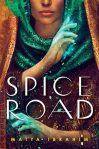
Spice Road by Maiya Ibrahim

Standard
Spice Road by Maiya Ibrahim

spice

I have no idea if the author identifies as Muslim. I saw the 2023 YA book described as a Middle Eastern fantasy, characters with Arabic names,  djinn representation and possibly a hijab wearing protagonist on the cover, so I requested an advanced reader’s copy, squealed with delight when I got approved, and happily fell into the 464 page world of The Sahir and Kingdom of Alqibah.  Their is no Islam in the book, it is not a hijab, but I’m sharing it here, not just to let readers know it isn’t Islamic rep, but to let them know that for the genre it is pretty clean, and the story is an engaging easy read.  At times Imani is whiney and annoying, but she has a developed arc, and the book has a few slow patches, but nothing that lasted long enough to tempt me to give up on it.  I think 14 year olds and up can handle the three brief kisses, the sexual assault that is thwarted, the lusting glances, the killing, the potential addiction, and the commentary on colonizers and oppressors.  It is the first book in a series, so this review is only for this book and not an evaluation of the rest of the books that perhaps are not even written yet.

SYNOPSIS:

In Qalia, the Shields protect their community from monsters with the Spice entrusted to them, misra, that magically empowers affinities in them.  The top Shield, Imani, has an affinity for iron, and with the support of her powerful clan she exists in a world of privilege and opportunity.  When her powerful brother, Atheer, is assumed dead after stealing misra and suffering from magical obsession, the family’s reputation is not as pristine as it once was.  Imani’s younger sister, Amira, is also keeping secrets as she is caught stealing, skipping school, and refusing to follow family orders and country laws.  When the two girls find themselves following Atheer’s horse into the forbidden waste, they learn that their brother might not be dead and that there is more to their world than they ever were allowed to know.  With desperation to learn more about her brother’s location clouding her judgement, the Djinni Slayer, Imani, bonds with Qayn, a djinni who claims to not only know Atheer, but to have been his close friend.  Imani scrambles to know what to do, and seeks out answers and permission from Council, that results in her and three other’s heading off on a rescue mission to the Kingdom of Alqibah.  Everyone’s orders, however, are not the same, and first they must survive the desert, the monsters, and each other if they are to find Atheer.

WHY I LIKE IT:

I love  that the world building is not at the expense of character development.  The single linear story line does mean that at times side characters are seemingly forgotten, but the focus of the world through Imani’s eyes allows the gaps to be overlooked as her concerns and priorities take center stage.  I love the emphasis on family, it is sibling love that is motivating the protagonist and closeness to an aunt that allows for privilege and opportunity. The romantic threads and tangents never overshadow the familial importance- it isn’t a forced obligation it is very warm and it is nice to see and feel the truth in the characters approach to family.  I love the Arabic names, foods, and while my electronic version did not have a map, the author has one on her Instagram page that suggests the physical book will have a map.

I love that the book discusses colonizers and oppressors.  It may be fiction and fantasy, but there are some very real themes included in fleshed out way that would allow for a lot of deeper discussion and connections to be made. The book is well polished, I don’t know that it reads like a debut, which is always a good thing I suppose.  At times Imani is really unlikeable, but fortunately it doesn’t last too long, same goes for Amira and her bouts of childishness juxtaposed with her glimpses of maturity. Taha, is noted to be very different depending on the company he keeps, so while frustrating- it seems to be intentional. The only real hiccup I felt in the book was understanding how at times the language differences were such an obstacle and how at other times Imani could read the graffiti and be understood.

FLAGS:

Magic, romance, lust, kisses, flirting, attempted sexual assault, lying, killing, addiction, alcohol, drinking, murder, abuse, physical abuse, bullying, oppression, colonizing.

TOOLS FOR LEADING THE DISCUSSION:

I don’t know that I would pick this as a book club read, but I would definitely shelve it in a class, school, or home library.  I think it is a fun read for teens and up and I look forward to the rest of the series.  The book releases in January 2023 and as always presales are the biggest way to show support to authors and titles.  You can find the book here.


An Andalus Adventure by S.N. Jalali

Standard
An Andalus Adventure by S.N. Jalali

andalus

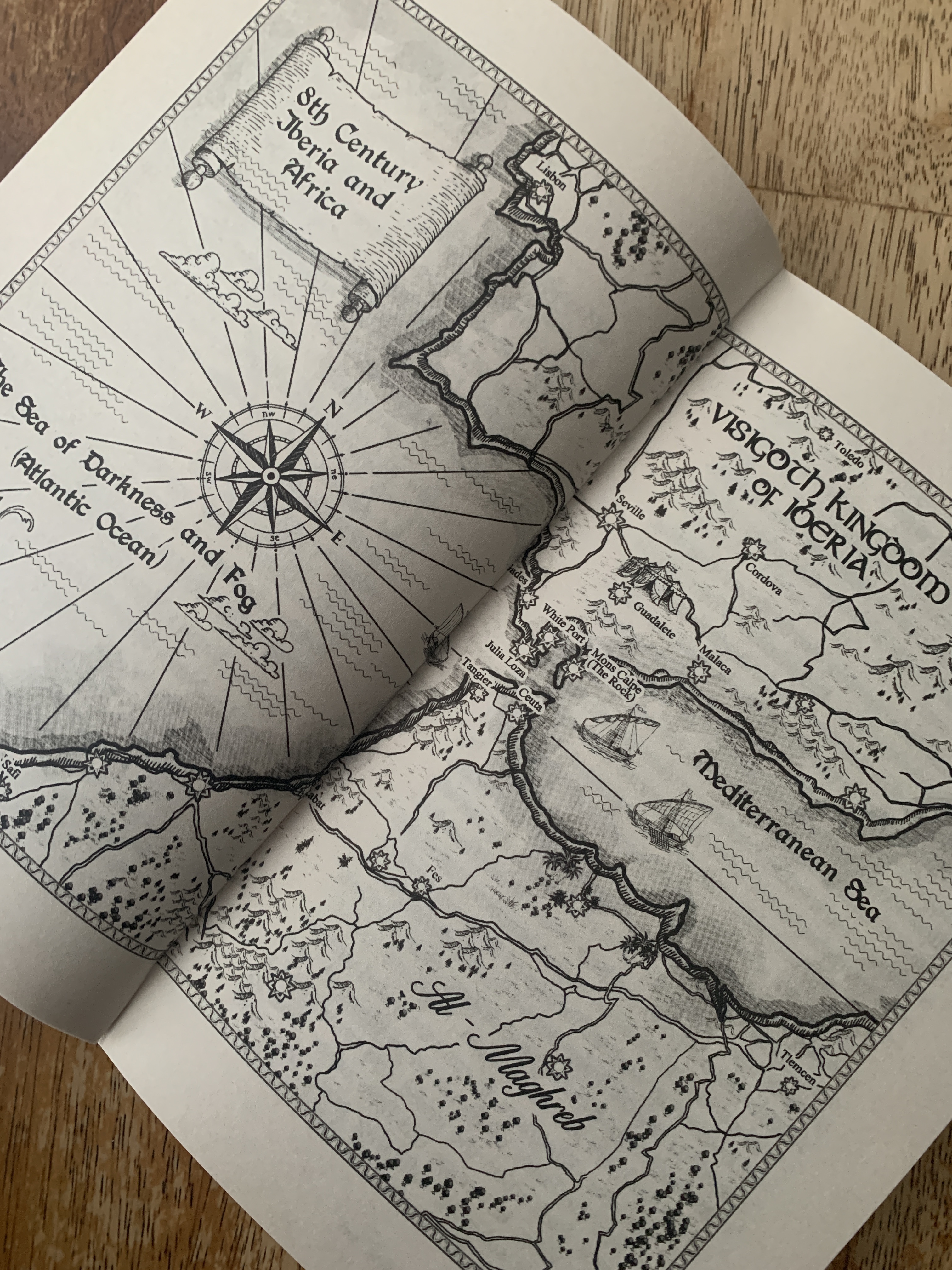
I truly am glad I read this book. I love historical fiction, visiting Spain is on my bucket list, this book has a map, details about what is historical what is fiction, has Islam woven in to the heart and soul of the story and characters, and yet it was a hard read.  The first few pages grip you, the last 50 bring it all together, but the middle 250 were hit and miss in this lower YA/upper MG book.  I honestly had to force myself to keep reading.  My teen and tween son couldn’t get past 38 pages or so, and I’ve asked around and no one I know that started the book, finished it.  I think ultimately there are just too many characters, too many points of view, that even though the history is rich, the literary points all in order, their isn’t enough character connection to hold the readers through the wandering details.  This author’s style is a bit more slow, but I think in the House of Ibn Kathir series, the setting of being in school and having friend problems is relatable to readers; boarding horses on to a boat, deciding to wage war, and going in to battle are not familiar concepts, and without the emotional connection it loses momentum.  The climax is nice but ultimately rather lackluster, and the beauty of characters taking shahada, Jews being freed, Solomon’s table, an old lady with a premonition, and a character dying are just not enough to keep the story in reader’s hands, unfortunately. 

img_4397

SYNOPSIS:

The summary might make the book seem fast paced, and while it does constantly move forward to a clear destination, it isn’t a “buckle your seatbelt and hang on” type of story.  The setting is Northern Africa and the Iberian Peninsula in 711 CE, 92 years after the Hijrah.  The book opens with two young siblings Ben and Bella, overlooking the coast, dreading their lives under Visigoth oppression, and hiding their Jewish culture and faith.  It then jumps to the Governor of Ceuta, Count Julian (Ilyan), awaiting to meet with Umayyad leader Tariq ibn-Ziyad.  He is hoping to rescue his daughter from the court of King Roderick and convince the Muslim General to enter Iberia, restore the rightful king, and free the people essentially.  Add in voices from Qasim, a young Berber, and Jacob a captured Iberian, and the stage is set to get everything in order to cross the straights, survey the enemy, take on the King, and introduce Islam to the new land.

WHY I LIKE IT:

I absolutely love the Islam and the history and the fictional liberties.  I love that the book is clean, although, I do wonder if more information about Lady Florinda would have helped the reader understand her father’s desperation, I do understand the vagueness, but it is a glaring omission that keeps the reader curious.  Ultimately I wanted more backstory.  The little given about the characters was engaging.  I loved the teasing about being a shepherd, Jacob coming to love Islam, Bella not wanting to marry, but it seemed to always stop short of sweeping me away.  I didn’t cry (SPOILER) when Hisham died, I barely knew him.  I didn’t feel the urgency to hide and escape from Leander’s proposal.  It set up to add depth regarding Old Mother Magda, the Cave of Secrets, and the unverified death of the king, but after being stated it was never mentioned again or resolved for any real purpose. 

All that aside, I think the book has value, it is just really dry in spots, a lot of spots, and given the vocabulary, the changing narrators, the choppiness between chapters, and the history, it is hard to keep reading or be anxious to pick up once you have put it down.  So with all that in mind, I think the book would be great to use in a classroom setting.  You could read a chapter Monday, and then pick it back up on Thursday and not worry that no one remembers anything because it is focusing on new characters anyway.  In a middle school, or upper elementary the book would be a great crossover between History, English, and Islam classes. The book would naturally lend itself to the students keeping character journals, the supplements and backmatter would allow for references and insight in to real history, and I think the book would do really well in this set up to connect with the audience. 

The Epilogue was nice, but a little disjointed.  I appreciated the updates on the characters and it showing Muslims and people of other faiths coexisting and being accepting even within families, but the connection to the story was a little lost.  Similarly, I love that it mentioned  Abbas Ibn Firnas, but I don’t know that most kids know enough about him to know what is being hinted at and what the outcome was of his flight at the end.

FLAGS:

Death, war, battles, killing, nothing graphic, very tame, not graphic or detailed gore.

TOOLS FOR LEADING THE DISCUSSION:

I don’t know that I could get middle school students to read the book for a book club, it would have to be motivated by a grade to get through it in a classroom setting I’m afraid.  See above to read my thoughts on how to present it.

I purchased my book on Amazon and will receive a few pennies if you decide to purchase a copy using this link.

The Stardust Thief by Chelsea Abdullah

Standard
The Stardust Thief by Chelsea Abdullah

I was a little nervous to read an adult fantasy book with jinns, both in terms of length and knowing I would undoubtedly compare it to the Daevabad trilogy, but I got an ARC and dove in.  I was put off by the use of gods, and that there was no Islam present at all.  I’m not sure if the author identifies as Muslim, or what her background is, so I told myself I’d read at least 25% and then state I didn’t finish it because I primarily review juvenile fiction with Islamic content or by Muslim authors.  Well, lets suffice it to say that arbitrary percentage came and went and I had no intention of putting the book down.  So why am I featuring it? Simple, it is clean and I liked it.  Aside from the plural little g gods, the book is Arab culture rich as a retelling of the Arabian Nights, according to @muslimmommyblog the Arabic is accurate, the story is engaging, and really my only question is, why isn’t it YA?  I have a handful of reasons why I focus on children and teen lit, but one very strong one is that the books are “cleaner” in theory.  Lately though, it has been hard finding YA that followers of my reviews can confidently share with teen readers.  I think this one, although it isn’t a religious mirror, the salaams, culture, Arabic, and storyline, tinge the framing and make it a fun “safe” read to suggest to our kids.  At 480 pages, it probably is best for ages 15 and up, and it ends on a cliff hanger, so I’m not sure what the next book might introduce, just be aware this review is for this book alone.

SYNOPSIS:

Layla aka Loulie aka The Midnight Merchant hunts and sells magic jinn relics that she locates with the help of her jinn bodyguard Qadir.  After her tribe was slaughtered by a mysterious army, and she the only survivor, Qadir and her have been a team.  When her skills align with the needs of a powerful sultan she is forced to go on a journey with his son, the prince and one of his 40 thieves, to find a magic lamp that will lead her to answers about her past, offer her chances of revenge, test her abilities, plague her with loss, and fill the pages with adventure.  Stories of the One Thousand and One Nights are weaved in through oral storytelling, world building is built and explored through the characters’ understanding their world and the jinn, and the non stop action keeps the story moving forward with minimal dialogue and a lot of high energy showing.  Clearly if I say too much, the excitement will be lost, and I don’t want to spoil the characters’ arcs, their foibles, their illusions, and the climax- seeing as it is a linear story and if the motivation to move forward is lost, the book will lose its charm.

WHY I LIKE IT:

The book keeps pace pretty well, a lot of the spoilers are not dragged out and I appreciate that they are not used to dangle the reader’s interest.  The story has depth, the characters are fleshed out, and the truth and illusion reveals are done without insulting the reader.  I’m still undecided about the (SPOILER) comic book quality of death for the main characters, but it keeps it interesting, so for now at least, I’ll play along.

There aren’t a lot of characters, but there are a lot of names for each character and at times in the thick of fast paced action sequences, I did get a little confused as to what was happening to whom and who was saying what.

I don’t truly understand why the divinity is plural or why they say salaam, but nothing else “Islamic” is remotely present save the concept of jinn.  I suppose though for all the fantasy books that use Islamic terms and imagery and then present them horribly, I should be glad that this one really doesn’t conflate the two, but an athan in the background or a few inshaAllahs, sigh I suppose a girl can dream.

FLAGS:

Language, violence, murder, killing, deceit, minor seduction, betrayal.  Very clean not just for an adult fantasy, clean for most any YA or Teen book.

TOOLS FOR LEADING THE DISCUSSION:

It would be a bit of a pivot for me to feature this book as a book club selection because there is plural deities and NO Islam, but it is very tempting to suggest it to the high school advisor.  The book comes out May 17, 2022, you can preorder it which helps show support, or order after it releases on Amazon.