Tag Archives: alcohol

Odd Girl Out by Tasneem Abdur-Rashid

Standard
Odd Girl Out by Tasneem Abdur-Rashid

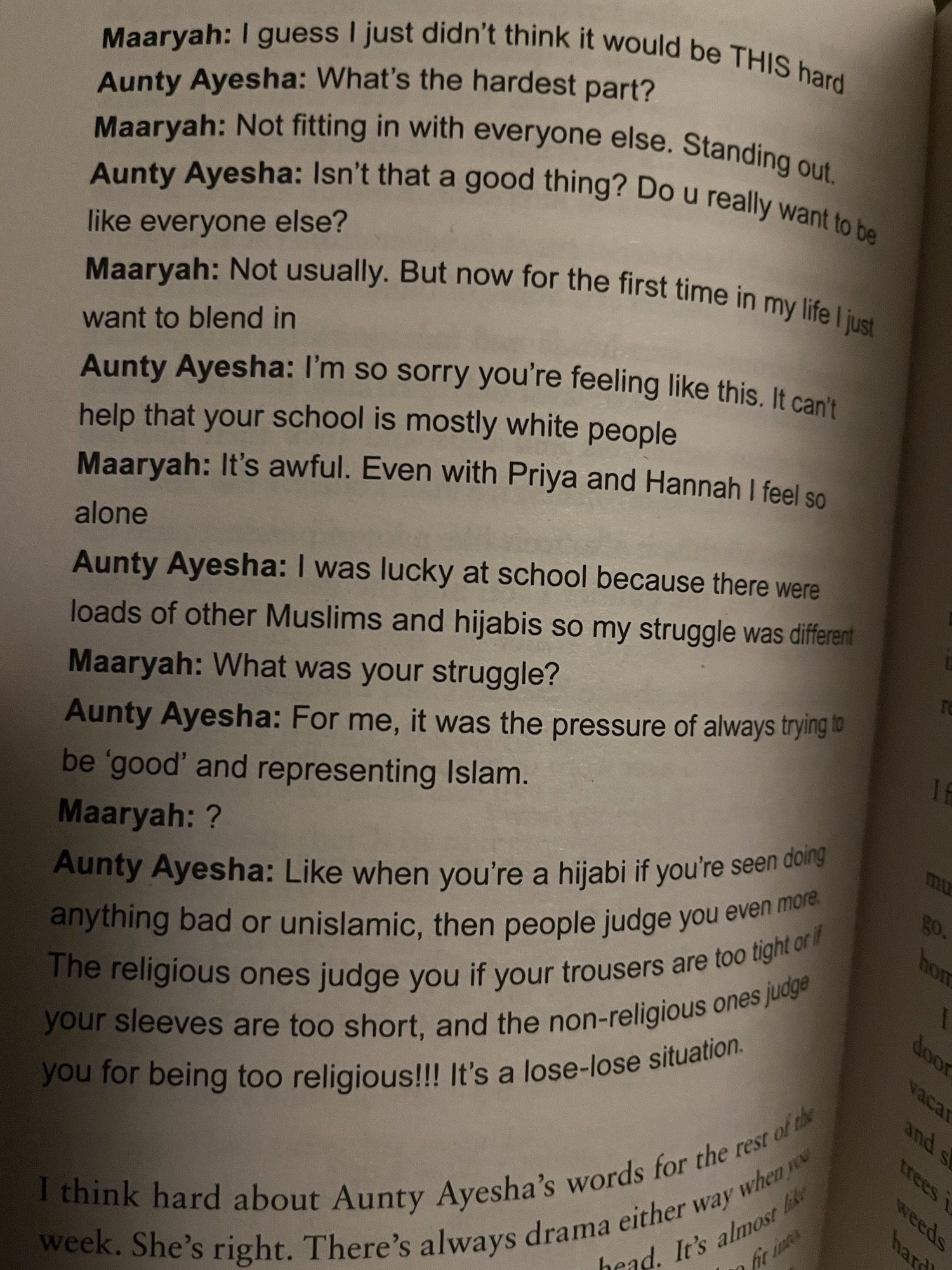
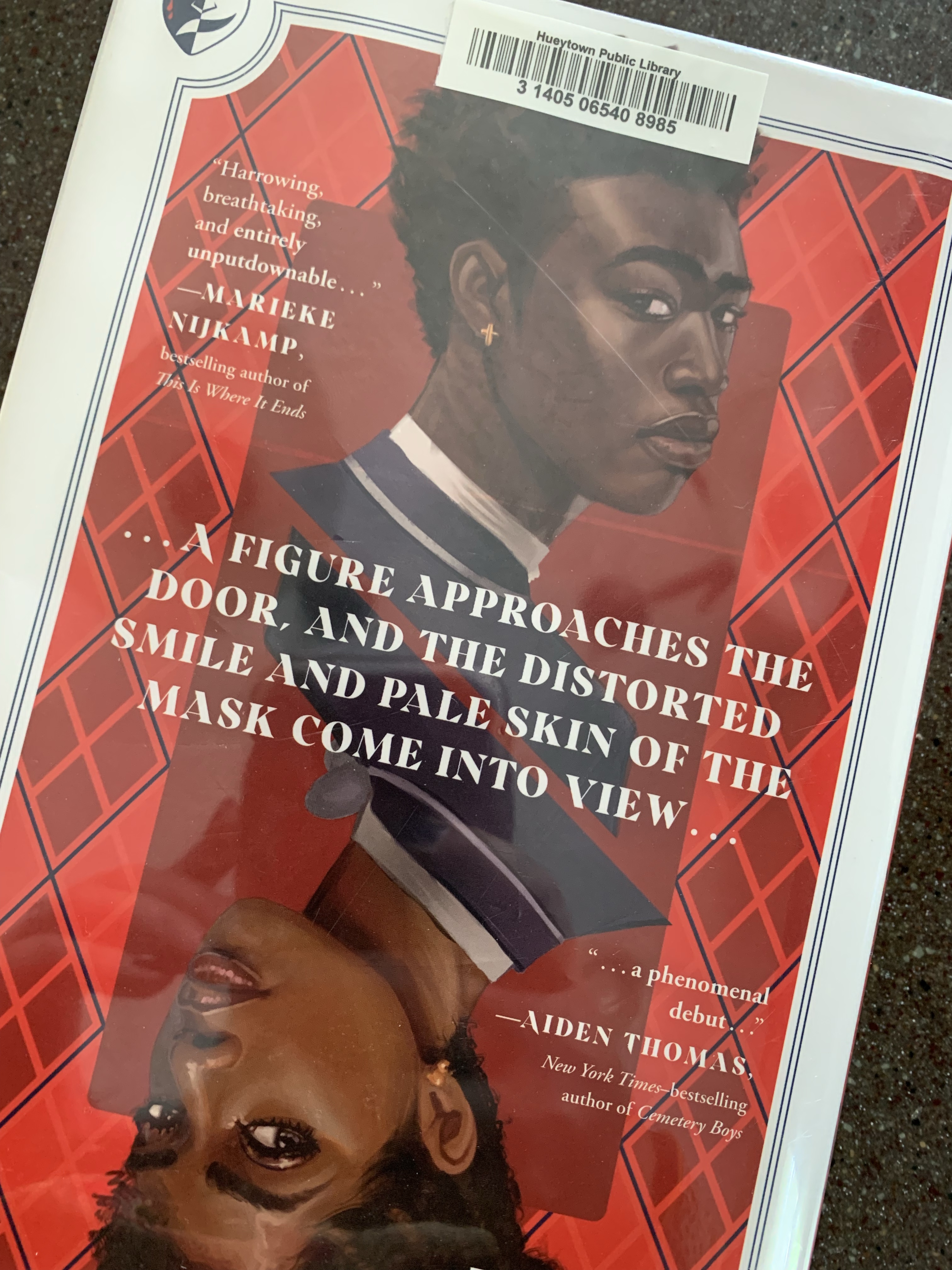
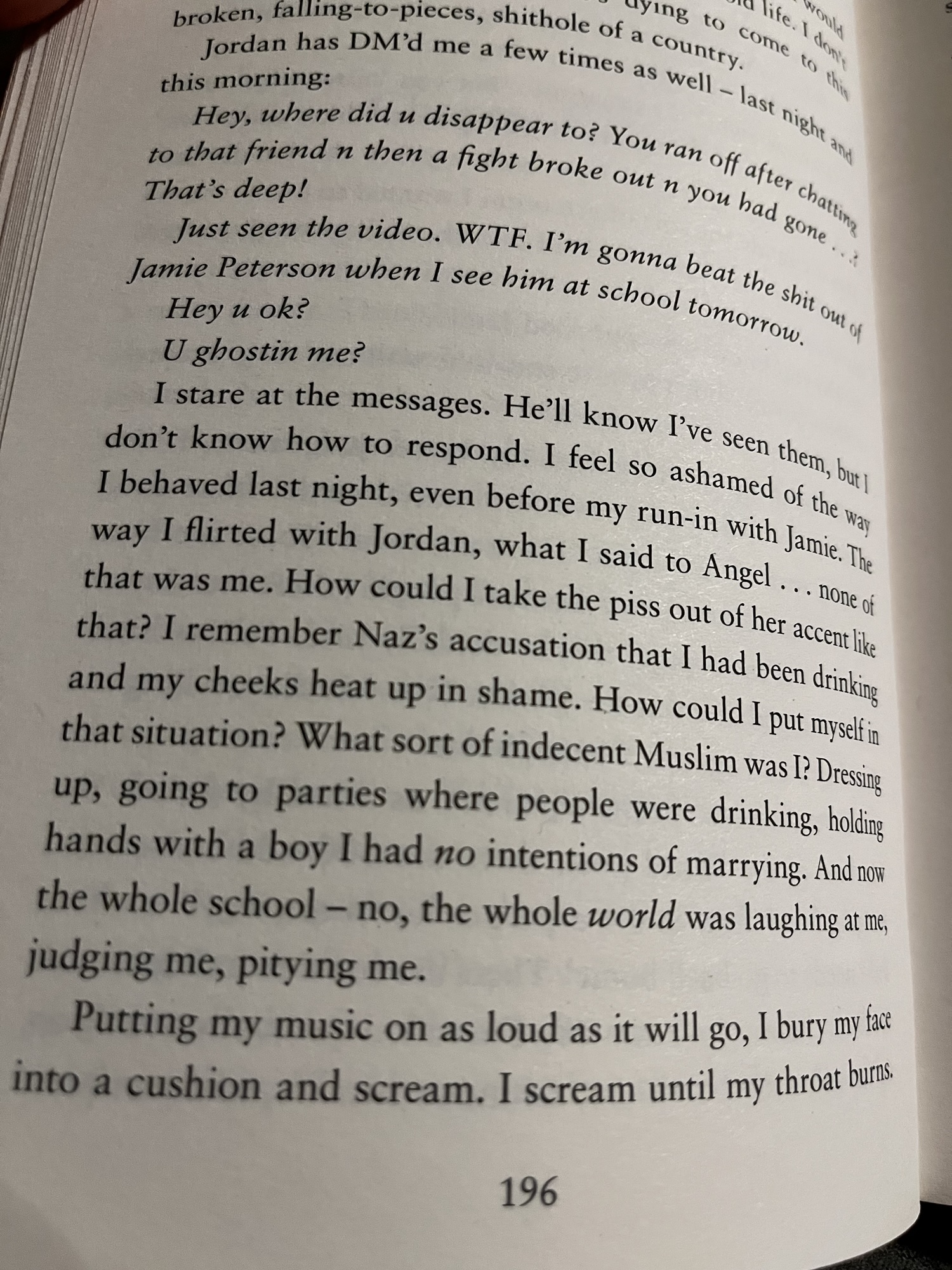
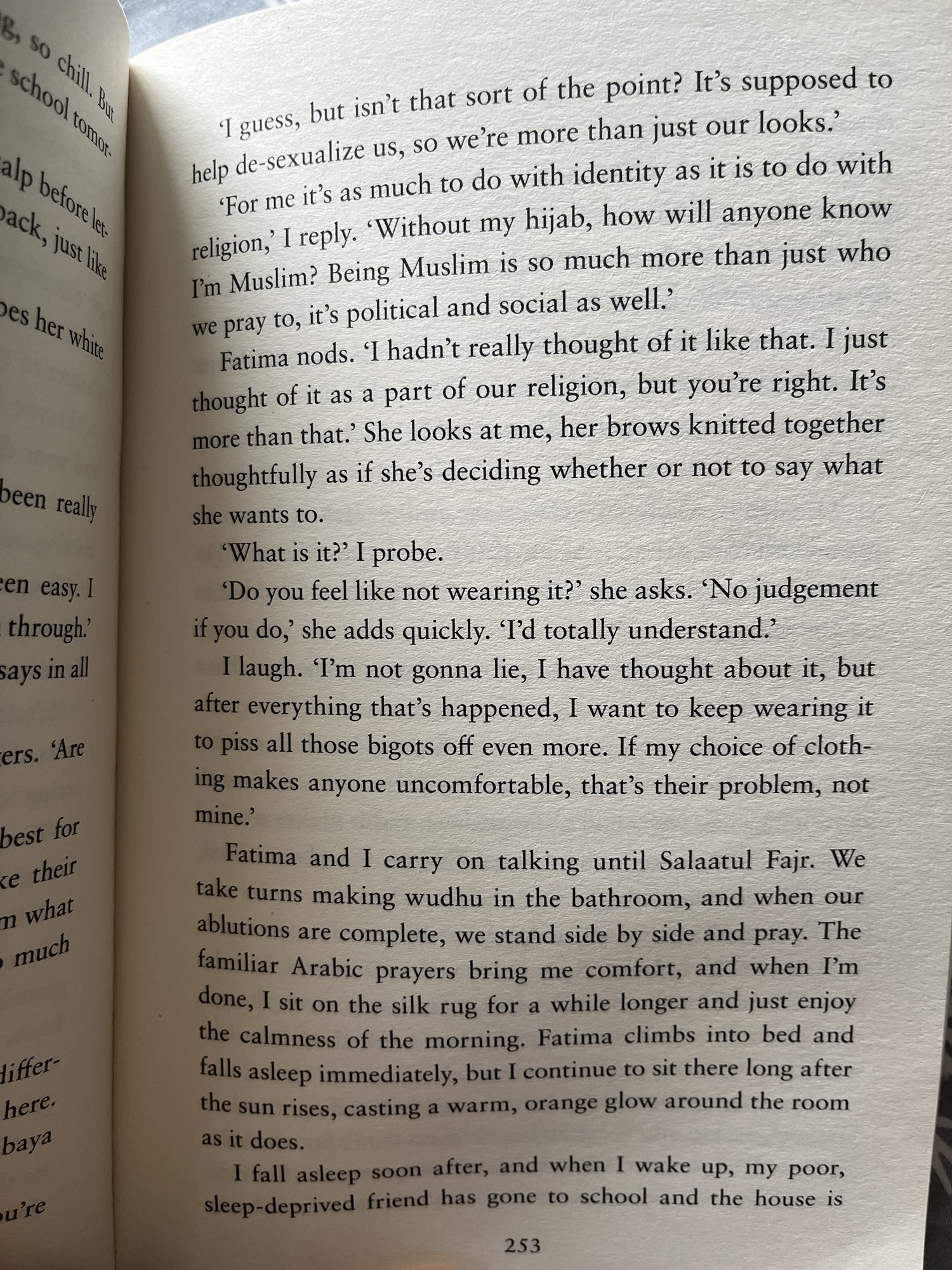
At 368 pages this identity centered mature YA book really hooked me and had me invested, which is impressive because Islamophobia stereotypes and being the new kid in a new place tropes are pretty frequently done, and often after a while, feel repetitive.  For me the charm of this book is actually not Maaryah and her peers/friends/bullies storylines, but the protagonist’s relationship with her parents and what caused her mom and dad to divorce.  Obviously as a mom of teens, I’m not in the target audience, but I feel like I benefited from the Muslim authored, Islam centered book, and think older teens, perhaps 17 and up, will also find the book enjoyable and reflective of views they have, challenges they face, and boundaries they have to establish.  I don’t want to spoil it, but SPOILER, had my dear friends that have read the book clued me in that the book will toe and slightly cross the haram lines, but ultimately show Maaryah deciding to re-establish her boundaries after being tempted not to, i.e. making a poor choice to attend a party with boys and alcohol present, and dressed in a way not typical to her hijabi style, I wouldn’t have read the last hundred and twenty pages or so with my jaw clenched in fear. The book shows a lot of Islam in practice, salat, duas, discussions about hijab, but not everyone will agree with decisions Maaryah makes or the rationale behind them as they vacillate between culture, religion, and family expectations.  I love that Maaryah is fallible and never abandons her faith, and that who we are is more than a singular mistake or instance of poor judgement. The book is not preachy, most will just take it as a girl finding her place in her new family dynamic in a new country, who happens to Muslim.  I think, an assumption really, based on what the author has said about her previous adult books, something along the lines that they are not meant to be Islamic fiction, but are stories with Muslim characters, and I think this book should probably be viewed the same.  There is swearing, hand holding, a side hug, normalized boy girl friendships, lying, running away, deceit, cheating, alcohol, mention of hookups, dating, vaping, music, flirting, hijab questioning, bullying, physical assault.  My biggest concern about the book is that it brings up Palestine, but doesn’t discuss Palestine. A side character is a non practicing Jew that visits Tel Aviv and Maaryah wants to discuss the occupation with her, but hesitates and the moment passes.  It is never revisited which I really wish it would have.  It could have modeled a bit how to have those conversations, I know it isn’t that type of book, but Maaryah mentions repurposing kaffiyehs in her designs and so it hints that it matters to her, but never pulls on that thread.  At one point it also mentions another character posted something pro Isr@*l during the genocide, which I can only assume the author thought that by the time of publication would have ended.  SubhanAllah ya Raab.

SYNOPSIS:
The tag line on the cover “From Dubai Girl to London Nobody…” very succinctly summarizes the plot.  Maaryah had an idyllic life in Dubai with her parents and close friends, spending her holidays with her mom’s family in London, and securing an internship with a famous designer.  All is going well until her parents get divorced, her mom moves her to the UK, not near her extended family, and the lack of Muslims, let alone hijabis, at her high school has her bullied with no friends to have her back.  With her mom in survival mode, their once close relationship is non-existent, and the 15 year old is left to sort through it all on her own.

WHY I LIKE IT:

There is a little pulling of punches so to speak of asserting that the boundaries are Islamic, but for the most part I think Muslim readers will see that Maaryah does view a lot of what she experiences through an Islamic lens which I appreciate. I also like that the protagonist’s connection to salat and faith is hers, it isn’t forced on her and I think for this demographic that is good micro messaging and framing.

I was very grateful that the book answered the questions about Maaryah’s family dynamic, so often parental problems are pushed to the void and let to be resolved or understood off the page. And while in the first half it was teased a little as we aren’t having that conversation right now, I did ultimately by the end feel like it was sufficiently resolved.  I also felt the mom was blaringly absent at weird times and I get that it was a plot device to get her out of the way, but if you are dragging at the 100 page mark, I do encourage you to keep reading, it does pick up.

This book isn’t meant to be didactic, and I recognize I’m putting that on it a bit, but I do think the Gaza framing missed an opportunity to show readers how to navigate that very real scenario through the power of fictional characters.
FLAGS:

Copied from above: There is swearing, hand holding, a side hug, normalized boy girl friendships, lying, running away, deceit, cheating, alcohol, mention of hookups, dating, vaping, music, flirting, hijab questioning, bullying, physical assault.

TOOLS FOR LEADING THE DISCUSSION:

I would shelve this in an upper high school classroom, I think that decision to be at the party is clearly shown to be a mistake, to put herself in that situation is something she regrets, and I think showing that she comes out from it offers a lot to be discussed.

All Mixed Up by Raj Tawney

Standard
All Mixed Up by Raj Tawney

all mixed up

The premise of this slightly biographical middle grade book is that of a very multicultural boy, Kamal, finding his voice, with the help of a Pakistani Muslim friend, Jaz, a year after the 9/11 attacks.  It brings in themes of Islamophobia, terrorism, bullying, friendship, alcoholism, immigration, refugees, “legal” and “illegal” citizens, Pakistan and India’s partition, and growing up and feeling alone over 208 pages.  The writing style seems deliberately loose in touching on very complex themes, but not preaching on them, and instead letting the reader draw on their own thoughts and experiences to form their own opinions. It is debatable if enough information is even provider for the reader to ruminate on the themes, or care to, or feel enough of a connection to the characters to want to know how all the dots connect, but none-none-the less it seems to have been done with intent, and with the middle grade POV for some it might get away with key information and the resolution going unexplored.  For me though, honesty I just couldn’t get past one line, one line tossed out with no explanation, no arc, no real purpose, never revisited even, at 16% it says “Allah is stupid.”  Yes, I debated tying the phrase out.  I don’t know why it has this line, it has no real impact on the story and could have easily been replaced for another reason Jaz received a purple nurple from a bully in Pakistan.  Later in the book there is a scene where Jaz has brought a prayer rug to school, he states he doesn’t always pray, but clearly he does practice Islam, not just maintain the label in name only.  I am not saying that the scene is not based on the author’s real life, or that people don’t say stuff of this nature, but it is hard to read in black in white in a book with no discussion.  I don’t know what the author’s intent was in including it, but I think it is a disservice to so many of the themes in the book and does not serve the target audience as a mirror, or a respectable takeaway either. For this one line, I truly don’t feel like I could have this book on my shelf, which is unfortunate.

SYNOPSIS:

Kamal Rao is half Indian, a quarter Puerto Rican, and a quarter Italian living in New York, he is relentlessly bullied at school, has no friends anywhere, and is dealing with a father that drinks a little too much most nights since he lost his job.  When a new boy, Jaz shows up at school, that can pronounce his name, a friend just might be what Kamal needs to find his voice, confidence, and place in the world.  Except Jaz has his own issues, and remains pretty mysterious about his past, his home life, even his name.  When a Halloween terrorist attack occurs, Jaz makes a run for it and Kamal has to decide what his friendship means.

WHY I LIKE IT:

I really can’t decide if I like the writing style or not. I recognize that to stay on a middle grade point of view the banter between Kamala and Jaz is often done when it is just the two of them in a scene, making sense of a world they might not know much about. Unfortunately, that also means a lot of erroneous statements, perspectives, and facts get unchecked, and possibly perpetuated.  It also means that at times the boys seem really worldly and competent: riding across town on their bikes, living pretty independently, but also being really naive about being a brown Muslim kid waving around a gun in public, even if it is pretend.  The inconsistencies often are in relation to Islam, so they particularly stood out to me, for example Kamal knows what a hijab is, but not that Muslim’s pray five times a day.  I think when a book is OWN voice and based on lived experiences, but so much of the plot pivots around someone who is so different from you, some of the details just seem inauthentic.  Admittedly, I was turned off early by that one statement, and I am not the target audience, but it was hard to relate to Jaz because it seemed so forcefully trying to present him in an almost performative way. A place of love no doubt, but overly polished to make the reader accept him and feel a kinship to him as Kamal did.

FLAGS:

Halloween, lying, terrorism, bullying, abuse, alcohol, sneaking

TOOLS FOR LEADING THE DISCUSSION:

I cannot encourage this to be on an Islamic school library or classroom shelf. That line even with discussion can’t really be explained, there is no point to it.  I’d like to assume that as a child he was frustrated with life and was lashing out in fear or grief or desperation even, but there is nothing in the text that would support or suggest that, it is just there.  I read an electronic ARC, and I hope that the line has been removed in the final copy.


The Last Man in Paradise by Syed M. Masood

Standard
The Last Man in Paradise by Syed M. Masood

paradise

I’ll be honest, if I would have read the blurb (see below) about this book from another author, I probably would not have read the book.  From the description alone, I could assume that it will undoubtedly be uncomfortable, it is an adult read, it is going to be irreverent, and I will disagree with probably whatever messaging the impossible situation the characters are placed in, come out with. But, having read his two YA books, and really liking More than Just a Pretty Face, despite the raised eyebrows I get from Muslim book fans when I say that, I felt pretty confident that Islam would not be othered or villainized, and that the writing quality would make the cringey situations worth getting through to hear the commentary that would be forth coming.  I’ve felt with the author’s other work that the Muslim characters, own their flaws as individuals, not as representatives of their faith, so, I was willing to give this book a read.

The first quarter of the book was a little stilted, but by the midpoint, I could not put the book down, as the writing did not disappoint.  Would I recommend this book? No, not to the majority of followers of my platform, much like the satire of Zarqa Nawa’s Jameela Green Ruins Everything, I know that this style of ridiculous situations to reveal humanity, consideration, and introspection, while being entertained by very Islamic concepts, is not for everyone. Did the make-out scenes in the masjid parking lot, child abuse, sleeping around, drinking alcohol, talk of pubic hair and board games, grandpa on masjid grounds watching porn, hate crimes, involuntary manslaughter, and impersonating an imam giving khutbahs and performing ghusl, cross lines? Probably, but it is fiction, it is raising the stakes to show extremes, and let the reader opine on their perspective when faced with it. And no, I won’t write my typical review about Islamic rep, because reviewers like me got called out for that too, about policing representation and confining Muslim experience to looking like one thing.  The author went really meta and called himself out for the ending of his other adult book (that I haven’t read, but probably should), The Bad Muslim Discount, so clearly no one was out of the line of fire.

Suffice it to say, this book literary wise is an easy read, the craft is on point, it flows and is compelling (except for the end, SPOILER, who was going to look after Baba, that thread just dropped), for Muslims though it will be very uncomfortable. For non Muslims, or Muslims that don’t read to see themselves represented with the fervor that I do, I think Islam is not painted in a negative light or insulted by the text.  The characters are messed up, their flaws their own, but because they are Muslim, religion is part of their understanding and view of their existence.  I do wish there was at least one Muslim character that had it together, that might hint that as a whole we are not all one extreme or another.  I don’t like labels of “liberal” or “extreme” and the book provides commentary and nuance to those flawed dichotomies as well. The book is not heavily moral, (SPOILER) the protagonist does not come back to Islam (might not have been an identity to even come back to), but identifies as Muslim, there is no YA or MG revelation or singular take away. The book centers Islam, but somehow is not Islamic rep, it simply has Muslims dealing with the messiness of life, expectation, family, relationships, and honesty.

————————————————

Blurb copied from Goodreads:
A decade ago, Azaan, a rebellious teenager with dreams of becoming an actor, was exiled from Redding, California to a religious academy in Egypt by his imam father. His crime? Getting caught kissing Madison, the girlfriend he isn’t supposed to have.

But while letting his family believe he is studying to become a preacher, Azaan ditched school and embarked on an acting career. Given that he has minimal contact and nonexistent plans to return home, he figured no one would ever know. Now, however, Azaan’s grandfather has a dying he wants to see his grandson one last time. In order to maintain the story he’s told his family for years, Azaan decides to become a fake imam. Playing at being a religious leader, he finds a community in Redding on the brink of a scandal involving his family. It’ll be the most challenging role of his life.

Navigating his new identity and old relationships, Azaan reunites with Madison, connects with old friends, and uncovers a shocking truth about his family history that threatens to expose his father as a fraud. It turns out, Azaan isn’t the only one pretending to be something he isn’t.

Before he can finish weighing the consequences of exposing his father or protecting him, an untimely death shakes Azaan’s priorities. He is forced to grapple with his religion, future, and family in a way that is sure to break hearts, but might heal a few along the way.

Hungry Hearts: 13 Tales of Food and Love edited by Elsie Chapman and Caroline Tung Richmond

Standard
Hungry Hearts: 13 Tales of Food and Love edited by Elsie Chapman and Caroline Tung Richmond

hungry hearts

Occasionally I get asked about short story and/or essay from a collection that a college or high school student is hoping to share with a class that doesn’t take long to read, but shows Islamic representation.  And I never have a suggestion.  The middle grade collection Once Upon an Eid is amazing, but for younger readers.  When I learned about this collection that features two known Muslim authors, Karuna Riazi (The Gauntlet series) and S.K. Ali (Saints and Misfits, Love from A to Z), and involves food, I thought to take a look and see if I might finally have a suggestion.  Sadly, no.  None of the 13 stories wowed me, or really impressed.  A few I started then skipped, and none were really memorable.  The premise is unique: all the stories take place in the same neighborhood, feature food, and crossover characters, but some are love stories, others redemption, some have super heroes, others murder and gang violence, some really keep the food central, and others just mention it as being present.  There is familial love, romantic straight, lesbian, and trans love, there is friendship and food from many cultures served up to varying effects.  I admittedly read few short story collections, but even with that taken in to consideration, I think skipping this 353 page YA/Teen book is probably the best option.

SYNOPSIS:

I’ll only summarize the two Muslim authored stories.  A few of the others are culturally Indian, but they eat pork, so I’m assuming they are not Muslim, and the Persian one by Sara Farizan features alcohol and a lesbian romance, so since in a past book of hers I noted that I didn’t know if she or her characters identify as Muslim, I will skip reviewing hers as well.

Hearts a’ la Carte by Karuna Riazi:   Munira works at her families food cart, King of Kuisine and serves up Egyptian food to the people on Hungry Heart Row.  When a guy falls from the sky, she finds her self also falling hard for Hasan, as he regularly starts coming to eat and visit, but when it is revealed that he is a super hero (the Comet) and the reason her families cart is destroyed, Munira is not willing to pursue things further.

A Bountiful Film by S.K. Ali: Hania and her family have recently moved to Hungry Heart Row, where her father grew up and grandma Valimma lives.  Irritated that she had to leave her school, her job at Daily Harvest and friends behind, Hania is hoping to lose herself in putting together her film for the upcoming competition and beating her long time rival Gabrielle Rose.  With no clear idea of what her film should be about she starts with interviewing Valimma and her friends, which turns up a bit of an unsolved mystery involving a missing boy that keeps showing up on the security footage from local businesses.  Hania decides to pursue it, but finds herself being watched, and filmed in the process.

WHY I LIKE IT:

I like that the stories are interconnected, I don’t know that it works, but I like the idea of it.  As for the two Muslim authored stories, I like that Islam and culture are included slightly, but that the story is much more than that, and the characters have more pressing issues to figure out.  I wish in both of these two stories, food was more fleshed out.  They seemed to be lacking the magical food premise that many other stories in the collection had.

img_7244

FLAGS:

See above paragraph for some collection flags.  Riazi’s story has crushes and a budding romance, but nothing overtly “haram.” Ali’s story is clean.

TOOLS FOR LEADING THE DISCUSSION:
I wouldn’t probably even shelve the book in our Islamic school library, it doesn’t offer much in my opinion.

The Secret Diary of Mona Hasan by Salma Hussain

Standard
The Secret Diary of Mona Hasan by Salma Hussain

mona

I really don’t know how to review this book. Is it funny and engaging, yes at times, but I am a 41 year old, and I can attribute it (hopefully/possibly) to satire, hubris, character voice, and commentary, except it isn’t written for me, it is written for 10-14 year olds.   There is no way would I put this in the hands of a fourth grader, let alone a high schooler.  The book starts on New Year’s eve with a “Muslim” family drinking alcohol, later the 11 year old drinks to get brave enough to meet up with her boyfriend (he wanted to wait until after Ramadan), after a bad haircut she starts wearing hijab and later takes it off, her period starts and she is baffled at which hole it comes out of, she is no longer allowed to be alone in a room with a boy because that is how babies are made, but it is ok to go to a school dance and kiss them, women are rather useless, old people (31 year olds and up)  should know their place and act their age, dark skin is bad, chests need to be big, slut is both something you are and something you can do,  Aisha (RA)’s age of marriage is criticized as is Khadeeja (RA)’s, no one is as good at her, Ramadan is annoying because she has to hide when she eats in public for a whole month, Friday prayers even though they rush through them limit their fun time, the Tablighi Jamaat have to be lied to and hidden from, her mom is pregnant months after coming out of her bedroom smiling, her father claims he will only ever enter a mosque horizontally, you can see the list goes on and on.  Yet at the same time, there are true moments of strength, such as when she fights back against the creepy sexual assault vibes from “uncle annoying” and then protects her sister when her parents dismiss it, when she sticks up to a bully to protect her gay friend in Canada, the dad getting caught one day praying salat, the love of family felt despite her perceived privilege while visiting Pakistan, her constant reference to Allah swt as she asks Him and tries to understand the world around her, and her terrible, terrible poetry.  The diary style is both brilliant in trying to show the world through Mona’s eyes, and irritating as NONE of the aforementioned concerns are given any context, explanation, reflection, anything.  The thoughts pour out of her head, onto the paper, and the reader is left to figure out if this is how things are, is this her naïve view, is she commenting on society, is the author, is this fact, is it satire, is it someone with an axe to grind on culture and religion, is it showing the ridiculousness of so many stereotypes? And to be honest, I have no idea.  Which is why I can’t say that the book is good or bad, I think it is well written, my problem with it is, I don’t know who it is written for.  I think it would be very damaging to young children, the vulgarity, misogyny, racism, arrogance, will hurt both those that see parts of themselves in Mona and those that read it and assume too much about what Mona represents.

SYNOPSIS:

Mona is an 11 year old girl, and this is her diary.  She is arrogant and opinionated, but she grows and mellows as her view of the world moves from privilege in Dubai to immigrant in Canada with a bit of an awakening in Pakistan in between.  It is her view of her life, her place in the world, and the greater society around her.  It is an easy read on the surface of her living through the war without getting any days off of school, friends, maturation, first loves, hoping for a bigger chest, pulling a fire alarm to get time with a boyfriend, feminism, and the annoyance of being better than everyone else in everything she does.  There are side characters that flit in and out and family members that shape her, but the point of view is uniquely hers in all matters regarding leaving the Middle East as a Pakistani living there, spending time with her mother and father’s families in Pakistan and the rift her parents’ love marriage caused on their acceptance of her, their move to Canada to start a more peaceful life that ends up being grueling and difficult and through it all threads of Islam, fitting in, and growing up.  It is a snapshot of so much that the reader is left to connect the pieces, assign them value, and understand the larger message, if one exists.

WHY I LIKE IT:

I still don’t know if I like it or dislike it.  I dislike it for kids.  I like it for adults as a light over the top snarky read, but I think my opening paragraph is sufficient and the 296 page book doesn’t need my concerns and praises rehashed here.

FLAGS:

Misogyny, anti Islam, sexism, racism, ageism, lying, vulgarity, cursing, crude talk, lying, disrespect, lack of religious respect, kissing, sexual assault (attempt), deceit, pulling a fire alarm, physical fighting/assault, family trauma, arrogance, pettiness, stereotypes, bullying, sexual innuendos,

TOOLS FOR LEADING THE DISCUSSION:

I have suggested a few ADULT friends read the book so we can chat, but no kiddos, no teens, no early twenties, old ladies (31 plus according to the main character)!

All My Rage by Sabaa Tahir

Standard
All My Rage by Sabaa Tahir

rage

The hype is correct: this book is moving, impactful, powerful, reflective, all the feels.  The writing superb, the plot gritty, the characters seem real, so real.  One of my all time favorite authors is John Irving because every word seems deliberate in his books, not every plot point or every paragraph, every. single. word.  And it has been a long time since I’ve read a book that strikes me in that same vein of the author being so in control of the story, and my (the reader’s) emotions being so completely at the mercy of the words to come.  I think I could read this book five more times and each time peel back a new layer and see something I hadn’t seen, or understood, or felt before.  I cried, I cheered, I sighed and unclenched my jaw, and I am still haunted by the lives of the characters.  Not just the “main” ones.  All of them, they all are real and fleshed out and have character arcs and live in shades of gray.  There are no checkboxes for skin tone or religion or sexual preference they each are more than a label, they are complex and real.  I could easily be convinced that they are in fact real people and that their world and stories are not fiction at all.  That is how well it reads, that is how hard it is to close the window on the world they let us see.  The book is YA (374 pages) and with the drugs, abuse, alcohol, relationship, complexities of it all, I would think 16 year old’s and up can, strike that, should, read this book.  The characters are Muslim, but it never even goes near being preachy, these are complex characters and stories, and remarkably there is no internalized Islamophobia or watering anything down, each character deals with faith, like everything else, in their own way.

SYNOPSIS:

The story bounces between the past in Lahore, Pakistan and the present in Juniper, California.  In Lahore it is Misbah’s story and in the desert it is her son’s, Salahudin and a girl she has taken under her wing, Noor’s.  When the book starts we see Sal with a drunk father dropping him off at school where his girlfriend is waiting, and his best friend, Noor, not speaking to him for the last few months after she confessed to bein in love with him.  Noor lives with her uncle after her entire village in Pakistan was destroyed when she was 6, and he wants nothing to do with Pakistan, Islam, or Noor going to college.  He owns a liquor store and makes Noor work there.  Sal’s mom is sick and has always been there for Noor, so when she takes a turn for the worse, Noor and Sal are brought back together, Noor’s uncle is enraged that she is missing shifts, and Sal’s father is constantly searching for the bottom of a bottle.  Things are bad, but they are about to get a whole lot worse.  Sal’s mom dies, the motel Sal’s family owns is in severe debt and the options for saving it are less than ideal.  The small town starts to feel familiar as everyone’s stories are fleshed out in Juniper and Lahore and two star-crossed narrators are forced to confront both the stresses of high school and impending adulthood, and deep, dark realities of abuse, loss, and generational trauma.

WHY I LIKE IT:

The book could have been a thousand pages, and it still would have felt too short.  Much like her fantasy writing, the book seems to start with world building and roping the reader in to thinking that they can handle what is about to come, then much like a band-aid being pulled off, the pain hits, and the wound starts bleeding again.  Somehow despite it all, you can’t look away, you can’t stop reading, there is hope.  Hope for the characters, hope for happy endings, hope for survival and peace.

I absolutely love the quality of writing, things dangled early on, come back, often with subtly and restraint that you could easily miss them.  When discussing the book with @muslimmommyblog, I felt like we both were finding threads we had possibly not considered and connections that added nuance and staying power to the plot.

So often, the more religious a character in literature is, the stricter they are presented, the less kind they are seen, but in this book it was the opposite, the loving couple were the imam and his defense attorney wife, the glue that radiated kindness to Sal, Noor, and so much of the town is a hijab wearing strong woman.  So many tropes and stereotypes were uprooted, tossed aside, and reimagined.  There is compassion for a Muslim alcoholic, a liquor store being the employment of a Muslim, consequences for dealing drugs, yet nothing “haram” is really ever glorified, it is gritty and repulsive, but there is no judgement, there is only understanding and sadness.  Palpable despair that rattles your bones and makes you wish the world was different.

I don’t want to spoil the book, I was able to read it largely not knowing what the plot would delve in to. In many ways the trigger warning at the beginning was the only thing that braced me for what was to come. The level of religion and how it was woven is through the gentleness of some of the characters and hatred of others, was expertly done.  There are not ayats in the Quran quoted or speeches given, there is love, and faith and hope that manifest as duas and longing and finding ways to be Muslim in action, not just in appearance. When the characters start to make-out their Islamic conscious is drawn in, when they grapple with their hope and future- trust in something bigger is considered. It is not a Muslim book, not even an Islam centered book, perhaps Muslamic, but really about characters who are Muslim and dealing with the cards they have been dealt.

FLAGS:

Alcohol use, drug use, relationships, kissing, touching, longing, language, physical assault, physical violence, domestic violence, hate, racism, stereotyping, Islamophobia, there are mentions of a lesbian relationship and a bi relationship, a child out of wedlock, death, addiction, sexual assault, repressed trauma, bullying, teasing, lying, music,

TOOLS FOR LEADING THE DISCUSSION:

I have a 15 year old daughter, and I probably will have her read the book this summer, I think there is a lot to discuss and I think in the right hands the book could be used for a high school book club.

Available to purchase here on Amazon or here from Crescent Moon Store

Sway with Me by Syed M. Masood

Standard
Sway with Me by Syed M. Masood

sway

This author won me over with More Than Just a Pretty Face, and his ability to celebrate and show flaws within our desi cultures while simultaneously presenting relatable Islamic experiences in a romantic comedy.   I have been yet to determine if this YA/Teen 328 page book follows in those footsteps, or cuts a little too critically and close on the Islamic presentation.  Undoubtedly the story is hard to put down, culture and Islam are present, but I don’t know what the lingering taste of Islam would be for a non-Muslim reading the book.  Would they see the faith separate from those that practice or actively don’t practice, would Muslim readers?  Literature is quickly showing how Muslims are not a monolith, but I worry that that nuance might be lost in this particular book, and the takeaway would be far more stereotype affirming, than critically thought provoking.  The packaging of the story is memorable characters and quality writing, even if the plot and purpose is a little shaky at times.  I admit for as much as I crave discussions on representation and twists and defined characters, this book has me at a bit of a loss on how to feel about the book overall.  I think it is possibly the first time I just haven’t seen myself and my experiences mirrored at all in a book with this much Islamic content. As a reviewer it makes me feel useless, but as an American born Muslim, I kind of love the uneasiness and challenge that my head is trying to wrap itself around.  The references, the language, lust, plentiful innuendos and physical abuse make the book a solid high school and up read.

SYNOPSIS:
Arsalan lives with his 100 year old Nana in Sacremento.  His mother has passed away, and his father is out of the picture in Arizona as he attempts sobriety.  Homeschooled and isolated from other kids, technology, and the world around him, he suddenly finds himself in a public high school trying to make his way.  Afraid that when his Nana passes he is going to be all alone in the world, he reaches out to the stepdaughter, Beenish, of the community match maker to see if she can help him with an arranged marriage.  She agrees on one condition, he dances with her at an upcoming competition.  He agrees, but first a makeover is required and before you know it a romance is blooming.  Awkward and formal and ever the gentleman, Arsalan uncovers that there is no competition, the dancing is required to break up Beenish’s sister’s wedding.  The girls’ biological mother was a dancer and the shame it brought on them all as it destroyed her career, her marriage, and the family has made her daughters the black sheep of the family and community.  The stepmom wants to get them out of the house as soon as possible and thus dancing of any kind is forbidden at Qirat’s upcoming nuptials.  Beenish despises the groom and hopes her dancing will not only remind the family that the mom has been banned from attending the wedding, but also hopefully prevent the wedding from taking place.  As the story moves forward with learning to dance, relationships must be reconciled, friendships developed, and growing pains felt, with some sass from Nana at every turn, more than one character will have to learn to make hard decisions and accept the outcomes that result.

WHY I LIKE IT:

Right from the start Arsalan makes it known that he is not a practicing Muslim, that he is “nominally one.”  His Nana has raised him to be a skeptic, his abusive father would beat him when feeling religious and guilty for his alcohol consumption, and his deceased mother was more spiritual than disciplined.  So, for the next few chapters, whenever Islam was mentioned I would snap a picture.  Twenty pages later and dozens of pictures of text made me stop and realize that this coming of age book is not a story about Islam, but rather the characters are dealing with their own identities and Islam just happens to be present, for all of them.  Arsalan remarks how our roots shape us as he quotes hadith, ok paraphrases them, and discusses sahaba, eventually having to accept that knowledge and wisdom and truth must be recognized, even when it comes from a source that he doesn’t favor.  Similarly, the most presenting tough guy, music and sports and appearance obsessed character is always hanging around the mosque, at the MSA, and encouraging Arsalan to come and pray.  The love interest calls out Muslims for their fake religiosity saying that her stepmom wears it as a fancy dress, she owns it, but takes it off when she wants.  Her father came to Islam late, and is relatively strict and conservative as a result, she is Muslim, but more culturally as she doesn’t seem to have sorted it out herself.  The characters dance, which involves touching and immodest clothing, at the end they do kiss.  There is language which is noted as being course and vulgar, and there really is no “model Muslim” or any characters that want to be.  So, similarly there are no haram police commenting when the characters, as individuals seemingly step out of line.  The sister character is quote unquote religious, but I don’t know if she covers, she doesn’t seem to be representative of anyone other than herself and she has her own cultural family issues, so her Islam is just stated, but not explored.  Some only eat halal, that gets included but not really opined on.   It really is the first time I feel like I’ve read so many Muslim characters in one place that represent only themselves, which is very much real life, but also a shift in Muslim rep in literature.

The story has some foundational issues which made me laugh when reading the author’s note that says he, “writes in the dark.”  Meaning he doesn’t know where he is going until he gets there.  I think it might show in this book more than he realizes. Aiza Aunty is shamed as scandalous because of her dancing in Lollywood (Pakistan’s version of Bollywood, which is India’s version of Hollywood) films.  She apparently got her sari a bit too wet in a waterfall scene, and it was too much shame to rebound from.  So why did that ruin her life? I mean any production has rehearsals, and blocking, and post editing, and retakes, why does one scene seem to fall squarely on her shoulders, every single decision maker along the way passed it through.  I’m not buying it.  I also don’t buy the whole wedding is hanging on a single thread of dancing, it tries really hard to make it make sense, and by the end the reader really is just prepared to go along with it, but holding auditions, not planning to tell Qirat, really is expecting the reader to suspend reality just a tad more than the genre should be asking one to do.

The book is smart and it expects the reader to be smart.  The references the character’s personas and need to be seen and loved is not always spelled out, it has to be pieced together and I love it.  The Thanksgiving scene, the misfit members of each family coming together and bonding with Nana and Arasalan is sweet, but actually really sad, and I love that it doesn’t say it, it shows it.

Of all the characters I love Diamond the most, I just wish we knew more about what motivates him.  He reads too nice and too puppy doggish and I wish we got just a bit more to see why he is the way he is.  Truly all the characters are memorable, and I’m pretty sure they will stay with me for a while.

FLAGS:

There is kissing, romance, crude language, lots of sexual innuendos, physical violence, physical abuse, child abuse, death, shaming, manipulation, alcohol addiction, religious zealousness, dancing, intimate dancing, body objectification, music, singing.

TOOLS FOR LEADING THE DISCUSSION:

I could never teach this book, but please, please, please, read it and help me to understand how I feel about it.

Ace of Spades by Faridah Àbíké-Íyímídé

Standard
Ace of Spades by Faridah Àbíké-Íyímídé

spades

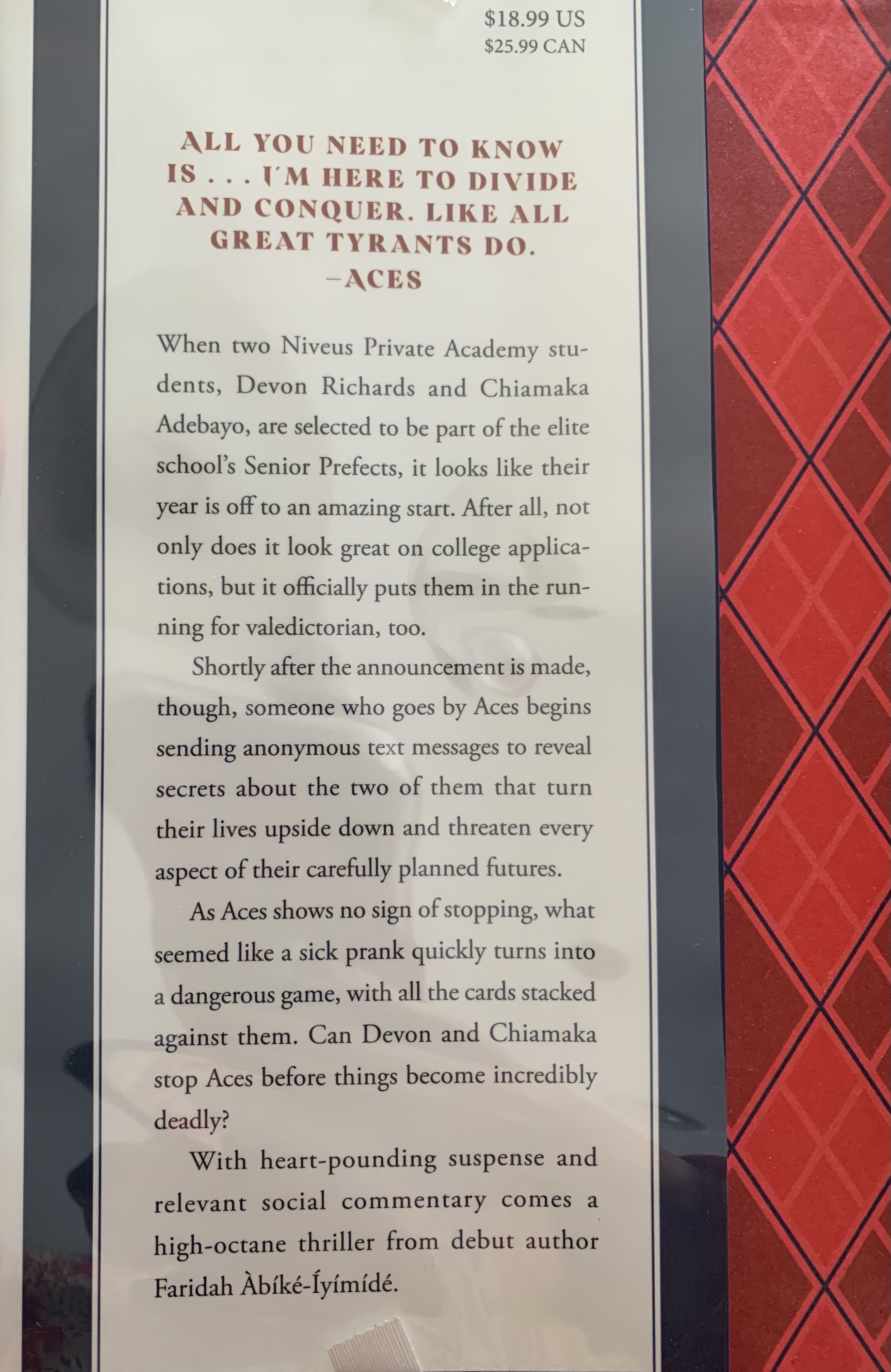
I had heard about this 420 page YA thriller and how it was written by a Muslim student at University and the seven figure book deal that she earned. It is constantly described as a combination of Gossip Girl and Get Out, having never seen either of those, I relied on the back of the book and the inside flap to see if it was something I would like to read and suggest my young teenage daughter, (and followers to read). Based on the suspense teasing and plot involving racism, I figured a contemporary YA book set in high school would have some relationship, sexuality, language and drugs, so at the last minute I decided to read it first. Alhumdulillah, I’m glad I did. The book has sex and relationships and sensual encounters between gay, queer, lesbian, bisexual, and heterosexual characters on EVERY SINGLE PAGE. I considered stopping, it was a over the top, forced, and honestly a little hard to read at times, but I continued because the commentary on racism and suspense storyline was well done that I was genuinely curious to see the climax and resolution. I write this review as a heads-up and to opine on the lack of mention of the amount of romance and sex in the book and in its blurbs. As a reader and someone who recommends books to people a lot, knowing what the majority of the book is about is helpful. To completely not mention something that is such a huge part of the book is frustrating, and so I’m writing this up more as an FYI, than a thorough and in-depth review. There are no Muslim characters, and the only mention of religion is a side character reading the Bible. Coming from an Islamic School Librarian standpoint, without exception this book would be considered inappropriate.

SYNOPSIS:

The book is told in two alternating personalities, Devon and Chiamaka. Two senior black students at a prestigious private high school. The only two black students. Chiamaka is the top of the school hierarchy, head prefect, planning on Yale for pre-med and the girl everyone wants to be. Devon is a scholarship student who plays music and dreams of Julliard. He flies under the radar and has one friend. When the book opens both are named Senior Prefects at the opening assembly of the school year, and no one is more surprised than Devon. The glory of such an honor is short lived however, as anonymous texts start popping up exposing secrets about the two. The two characters have skeletons they would rather not have exposed, and even though they barely know each other, they eventually resolve they must work together to figure out who is out to destroy them.

WHY I LIKE IT:

I like that the whodunit aspect really had me on my toes. I honestly, however, didn’t like either of the characters at all. The book has a lot going on, aside from the texts and secrets being exposed, that I wish would have gotten more page time. The two characters have very different, but very impactful home lives. Devon’s father is absent and it is learned he was executed on death row, his mom works three jobs, he has younger brothers and they struggle financial so that he has a chance at education. He lives in a tough neighborhood and runs drugs to help out with money. He hooks up with multiple guys in the book, and tries to keep it a secret so that he doesn’t get further harassed by the neighborhood guys, but it seems everyone knows he is gay even before the texts start coming. Chiamaka is Nigerian from her mom and Italian from her father. Her father’s family doesn’t accept her and her mom because of their skin color, so they no longer go to Italy to visit. Both parents are physicians and are never around. Chiamaka has no friends, picks boyfriends to further her power agenda, and spent her entire junior year having sex with her best friend, Jamie, with the hopes that he likes her too. She eventually realizes she likes a girl and hooks up with her. By-and-large for both main characters, only their sexual relationships are really explored, and most of them are brief. Thus it kind of limits the relatability to the characters in other facets of their lives. Not that people and characters have to be like-able, but they have a lot of layers, and it would have been nice to get to know them better as people, not just as shell minority representatives in a system built for them to fail.

Only a few side characters are developed, presumably just enough to make them suspect, but to drop information like one of them getting incarcerated and not explored, one diagnosed with diabetes and told without prompting and then dismissed, makes it feel like a lot is crammed in for no real purpose. As a debut novel by a young author, the writing is obviously amazing. I just didn’t connect to the characters, and the parts of the book I did like were overpowered by parts that I felt were overly forced. I will definitely read anything she writes in the future, although I will definitely research the books more thoroughly know what I’m getting in to.

FLAGS:

There is violence, sex (hetero, gay, and lesbian), cursing, drinking, drug use, drug selling, romance, kissing, hit-and-run, conspiracy, making out, drug dealing, physical beatings, passing out drunk, drunk driving, lying, cheating, racism, bigotry, hate speech, gaslighting, privilege, death, gun violence, destruction, murder, attempted murder, crude language, assault, blackmail, misogyny, homophobia, voyeurism, institutionalized racism, and probably more. Mature content.

TOOLS FOR LEADING THE DISCUSSION:

There is no way I would suggest, recommend, or encourage this book to Islamic School high schoolers.

This Is All Your Fault by Aminah Mae Safi

Standard
This Is All Your Fault by Aminah Mae Safi


img_8116I wanted to give the author another chance to win me over after really disliking her first book’s writing style and characters and while this book is an easier read, I was shocked when the Empire Records inspired story really crossed over to me to being almost plagiarism.  I was a huge fan of Empire Records as a teen in the 90s, and can quote the movie, recall with little effort when Rex Manning Day is (it was yesterday), and know what is going to  happen at 1:37 exactly, so I was really excited to see what this Muslim author did with her spin of turning a music store in to an idie bookstore and focusing the story on three high school females. I wasn’t expecting the spin to be so minor though, and to still find an AJ and a Warren in the character list, a girl shaving her head, an employee dance party on the roof, a scummy celebrity, a celebrity assistant hinted at romance, a character deciding that today is the day to tell her crush how she feels, you get the point, it is remarkably similar.  If you haven’t seen the PG 13 movie, the book isn’t terrible, but it is very scattered with three voices, a lot of side characters- often random, and unresolved story threads, the book takes place in one day after all, I don’t know that it is really worth the time to read it.  There is straight and LGBTQ+ romance and break ups mentioned, a kiss, alcohol, vape pens, marijuana, sexual assault, some violence (slapping), a theft, language and one character has Arab parents and mentions Middle Eastern poets as well as likens the book store connecting people to the concept of an Ummah in Islam.  I can’t think of a demographic that I’d really recommend the book to, nor do I think that I’d ever read it again, the author’s writing style for me improved slightly but the characters are forgettable and the story un original. In terms of appropriateness probably high school readers, 14 and up.

SYNOPSIS:

Eli is closing up Wild Nights Bookstore and Emporium and accidentally opens the manager’s computer and accidentally logs in to her accounts and accidentally learns from her emails that the book store is closing in less than two weeks.  He then sees that the bank account is still logged in and finds a petty-cash account that has $9,000 and decides that he for once in his life is going to try and help out the store and invest in something to grow the money and hopefully delay the closing.  Unfortunately he buys nine grand worth of Air Jordan knock-off shoes, and is unable to return them.  The next day when the entire staff rolls in to work, bits of the story come out, some know the store is closing, others are sensing something is amiss when boxes are being unloaded that don’t contain books, and to top it all off a famous author is doing a book signing later in the day.  

Each of the characters has something going on as well on this particular day, Rinn is going to tell AJ she loves him and use her influencer status to try and rally support for Wild Night,  Daniella is going to lift the veil on her secret poetry writing and share it, and Imogen is going to break up with her girlfriend of nine months and shave her head.  None of the girls like each other, and go out of their way to be down right nasty to one another, but eventually they come around, they support one another in the face of them losing their beloved store, and helping each other when one is sexually assaulted by the famous author.  Along the way the reader meets the quirky characters that come to the bookstore regularly, some that never leave, a manager who never seems to be there, and an owner with weird rules about technology in the store.  

The climax is the girls stepping in to their own and becoming vulnerable to who they are to one another, the world, and ultimately themselves.  The book store isn’t saved in it’s entirety, but it isn’t lost either and the direction forward looks infinitely more unified than the crazy day the they all just had.

WHY I LIKE IT:

I like that the wave of nostalgia that hit me as I recalled the regular watching and quoting of Empire Records from my younger days, but that really was about all the book gave me.  I wanted to love the girls coming together to save the day, but they were really crass and rough and while I’m glad they did get to a place of tolerance, the transition wasn’t cathartic because their original irritations with one another didn’t seem justified.  The lack of character connection made it hard to cheer for them when they broke free from what they perceived was holding them back as well.  For example, I wanted to be giddy with nerves when Daniella stepped on that stage, but the emotion just wasn’t there.  There was a lot of telling, not showing, and with three perspectives, it was just stretched too thin.

I kind of like that Islam and the concept of Ummah was referenced at the end, but really only someone like me looking for it and piecing together the poets she mentioned, her one parent being from Lebanon and the other coming to America after the six day war would even take that conversation as being in sync with the character.  She might not be Muslim, she is a lesbian has/had a girlfriend, and it is a non issue.  Religion is otherwise not mentioned in relation to her or any other character.  A French Tunisian customer calls her habibti and says ‘Handulullah.”  I probably am reading to much in to it, old habits die hard and even after writing over 500 reviews, I still get so excited to see someone in literature possibly identifying as Muslim.

One thing that really stood out to me as a hole in the story was that it never said what Danny’s plan was,  just kept hearing that it was a terrible, awful plan.  That bothered me. The pacing is also off, to have all this happen in one day you would think it was all happening so quick, but then there are really long winded tangents about cell phone cases and grape soda.  At times it is such a time crunch and at other times everyone is chilling on the roof or in the alleyway it is no surprise there is not enough business.

FLAGS:

Copied from above: There is straight and LGBTQ+ romance and break ups mentioned, kissing, alcohol consumption, a massive hangover, vape pens, marijuana, sexual assault, some violence (slapping), a theft, language. Nothing is really sensationalized though, the 

TOOLS FOR LEADING THE DISCUSSION:

Not even tempted to use this as a book club, or recommend others to do so.  There is no real literary or representation value, in my opinion.


Not the Girls You’re Looking For by Aminah Mae Safi

Standard
Not the Girls You’re Looking For by Aminah Mae Safi

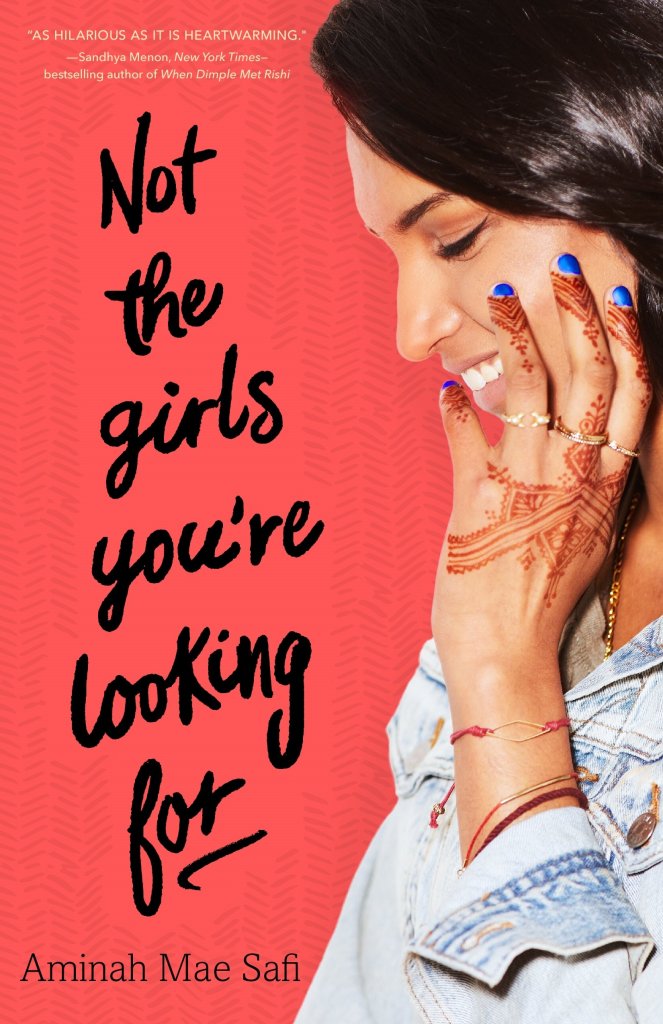
This book did not work for me. Despite the fact that the main character is Muslim and it is Ramadan, no matter how much I wanted to connect with this multicultural lead and her friends, and see myself in her as she navigates high school, I just could not. The writing was choppy 3rd person which distanced the main character for me, the crude language on every page, the drugs and alcohol in every scene, the detailed sexual encounters throughout, the lacking growth of the characters and the muddled point of the book in general made the book difficult to read. The book is an AR 4.9 but content wise is more suited for mature 18 year olds. Even this review might be a little too much, I’ll do my best to keep it clean. Ultimately this book missed the mark for me in showing females defining themselves, celebrating friendships and diversity, or even just creating characters to cheer for as they navigate life.

SYNOPSIS:

Leila is half Iraqi Muslim from her dad’s side and half American Catholic from her mother. She doesn’t know how to pray as her father isn’t religious, but celebrates Ramadan and Christmas and defines the world on her own terms. She is fearless and owns herself, hence she hates her name and goes by Lulu instead. The book opens with her making out with a boy in a closet which she kind of regrets and then goes to join up with her friends at the party to drink and get high and attack one another for their poor choices resulting in drama. In this instance Lulu’s anger pushes a boy in the pool, and then the four friends devise a way to get home and work out the lies they will need to tell to the parents involved. This scenario with only slight variations repeats five or six times in the book.

Lulu is the fearless one, Lo, short for Delores, is the leader, Audrey is an alcoholic math whiz and Emma, not to be underestimated and often is forgotten (literally) is coming out in her first lesbian relationship. Yes these labels are limiting and stereotypical, especially in a book calling for girl power or what not, but sadly that is really the only space they flesh out, not a whole lot more is known about them. The girls defend each other fiercely to outsiders, but are truly awful and angry to one another all the time. They break apart and Lulu doesn’t really know why, so the path back to one another isn’t really cathartic. They pull a prank to get back at a boy that crossed the line with Lulu, but it fizzles when the threat of what the prank could do is enough to keep him away and they don’t have to complete it completely.

Between the parties there are some sub plots that weave in and out. Lulu has to spend time with Iraqi family friends who don’t accept her and are critical, in Arabic, of her mother. This gives some cultural layer to the story, but the characters are pretty flat and petty and hypocritical. The bombings in Paris a few years earlier, and the resulting bullying by classmates hardened Lulu, but there isn’t much info on how awful they treated her or how it defined her, so not much sympathy is garnered by the event nor does it help the reader get inside Lulu’s head. There is also a sweeter love story brewing than the one night stands that define Lulu, but then she goes with her mother to get birth control so she can sleep with him all while making it clear that he isn’t her boyfriend, she just wants to have sex with him- which she does on her seventeenth birthday.

Eventually the girls are back together and gushing with tales of sorrow and personal growth and vows that they will always be like sisters.

WHY I LIKE IT:

I don’t mind the premise so much as the execution of it. I get that people practice Islam differently, but I really don’t get the need to even bring her religion in to such a story. Culture maybe, but even that is a stretch. I don’t know if the story would be better if it was first person, I would like to think so, as not connecting with the main character was such an obstacle for me. I wanted to see her grow and change or at least have clarity in her decisions even if I didn’t agree with them or couldn’t relate to them. I wanted to feel her remorse or the weight of her decisions, but was often just told in passing that something scared her or was hard for her, not shown it. The theme of not belonging anywhere is a legit one, but I don’t know that this book explored it, it just sort of brushed by it almost as a trial to see if the emotions would stick. Which for a character built up to be unapologetic and unafraid to suddenly want a victim label without any real emotional ties, didn’t work for me. There are such holes in the story, that at times things didn’t seem believable or details were so specific with no context that I didn’t get their purpose. I would have loved to know more about her brothers and the tests they went through, or why her family was so loyal to the Arabs around them. I desperately wanted something that showed a different side of Lulu not just the anger and “F everyone who wants to change me” mantra. People are scared of her and she enjoys that power, but I don’t get why they are scared and why she enjoys it. It seems like a big part of her story and of the book in general to miss. Yes she is independent, and I get that can be misread, but she almost seems one dimensional and flat which defies the concept of defining yourself on your own terms and carving out where you want to belong among groups that see you as other, right?

The character is pretty open that she knows little about Islam, she also claims she isn’t interested. She fasts not so much because it is a commandment but more to appreciate poor people. She says this, but actions don’t seem to back it up. She tries not to drink during Ramadan but she still smokes, gets high, makes out, and lies once the sun goes down. At one point she calls a bride and her mother whores, and refuses to apologize, so her dad gets a fatwa issued. Lulu’s mom mentions that something went all Shiite on the situation, so I’m not sure if the fatwa issuing for such a specific thing is a shiite thing or something I’m just not aware of or familiar with as a tool for handling family dramas.

FLAGS:

The whole book really. Sex, drugs, alcohol, sexual assault, lying, cheating, blackout drunk, vaping, talk of orgasms and going down, lesbian relationship, hetero relationships, sexual encounters, language etc etc etc.

TOOLS FOR LEADING THE DISCUSSION:

Would never cross my mind to share or suggest this book. Even religion representation issues aside, I don’t know that there is really a single “healthy” relationship highlighted among the main characters, some of the side characters maybe, but not enough information is given to really make that case. The characters just all seem so angry, not saying teenage years aren’t angry and messy, but this one doesn’t seem to add much perspective to that singular thought unfortunately.