Category Archives: strong women

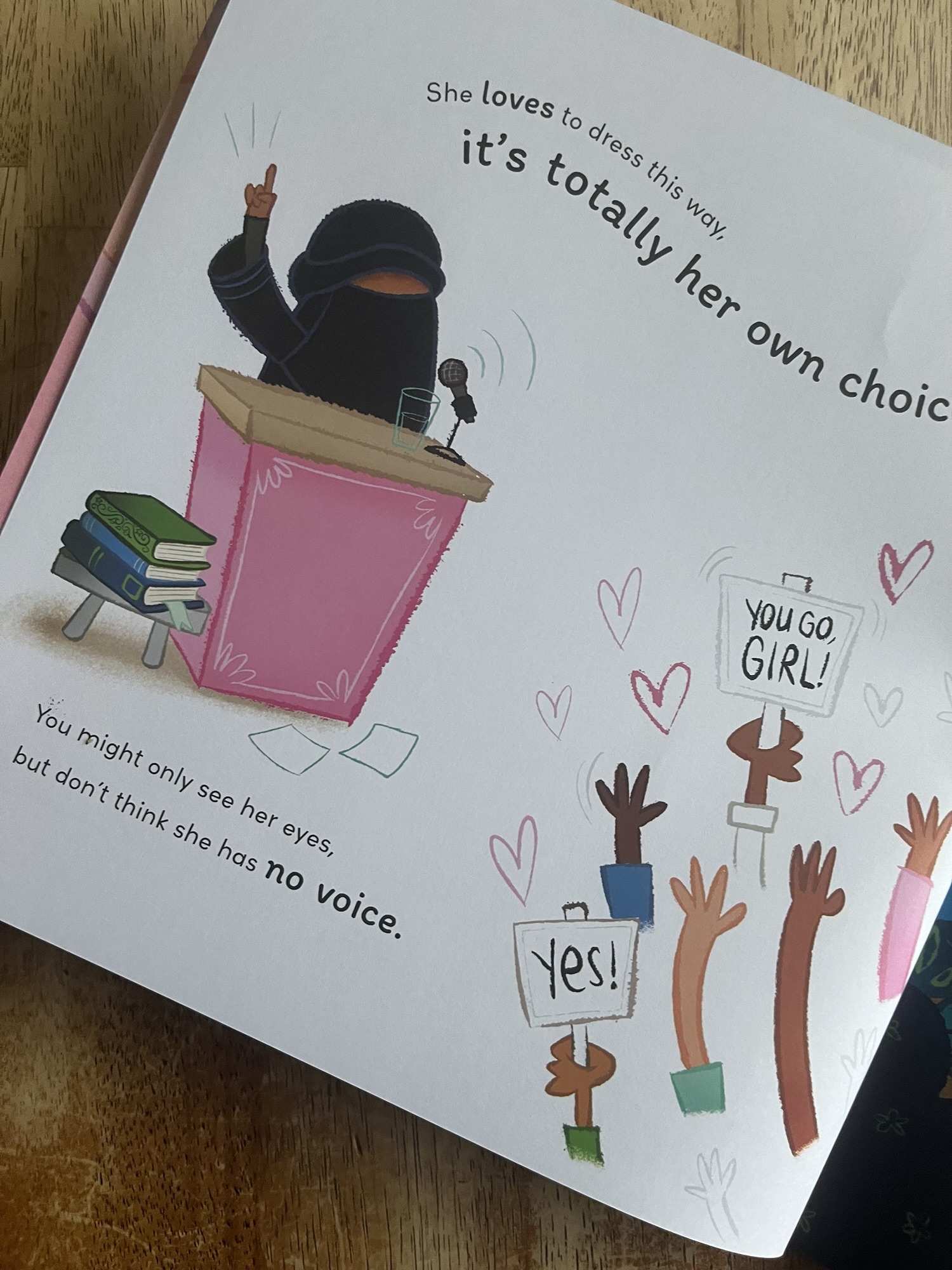
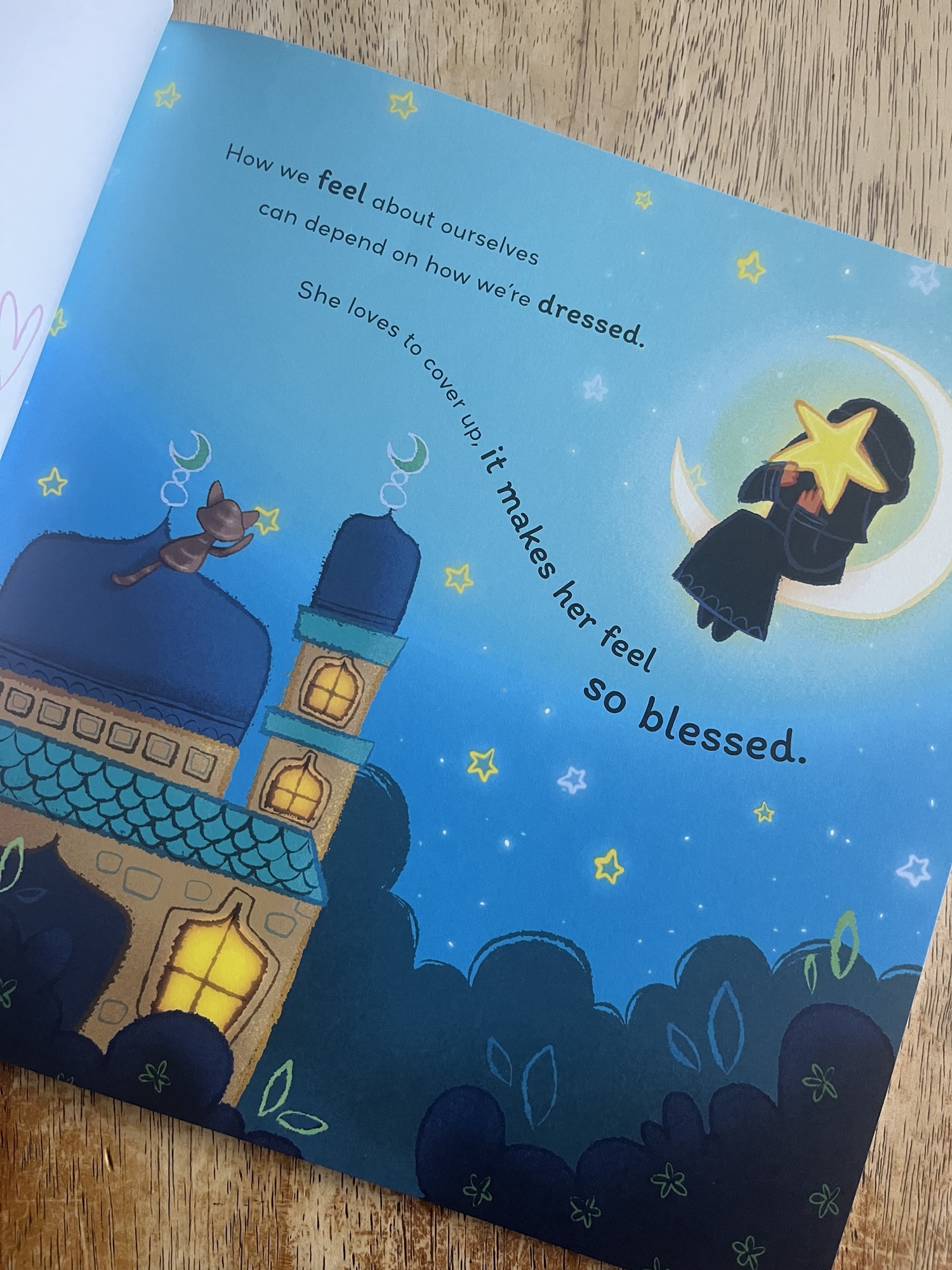
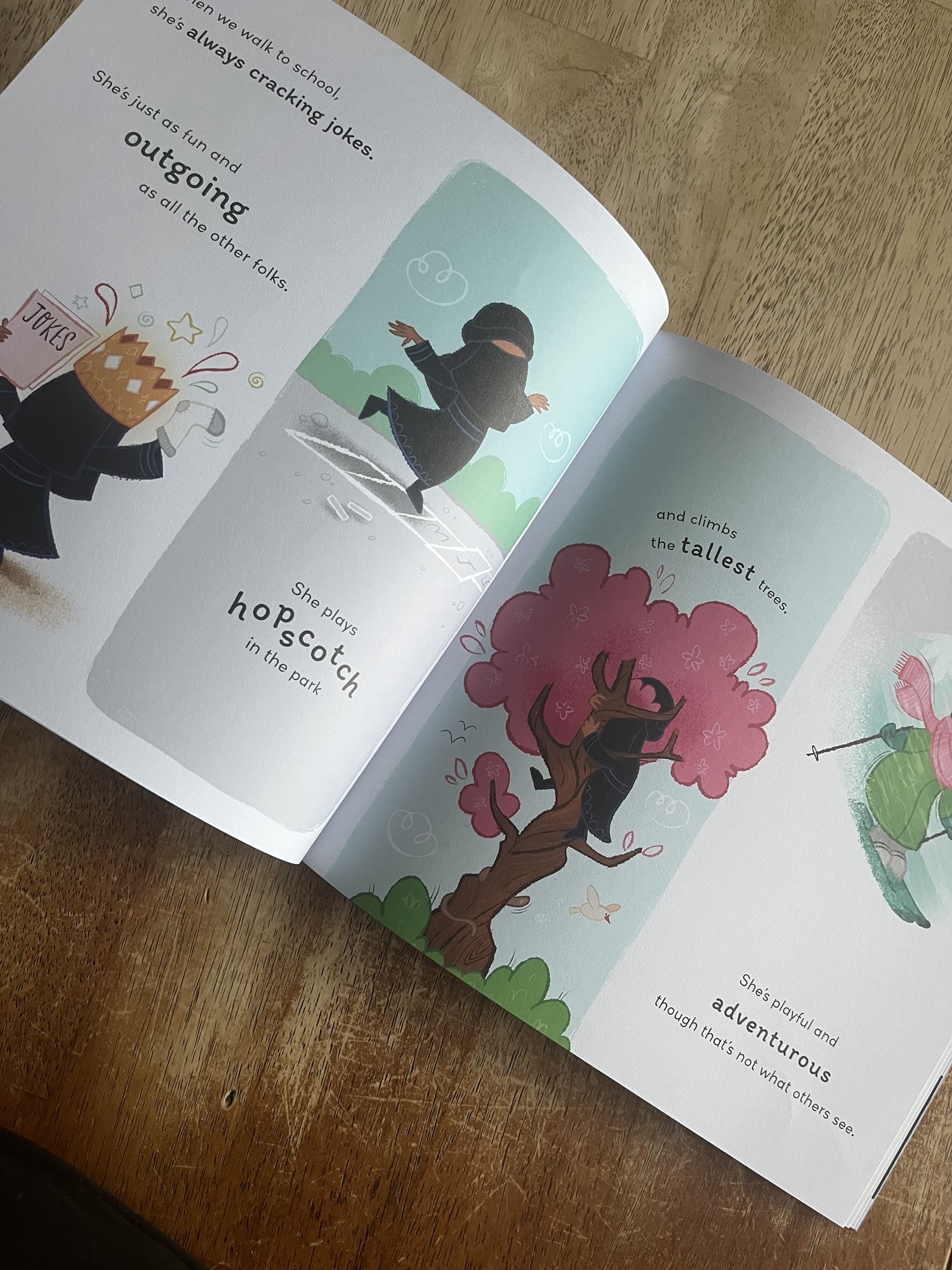
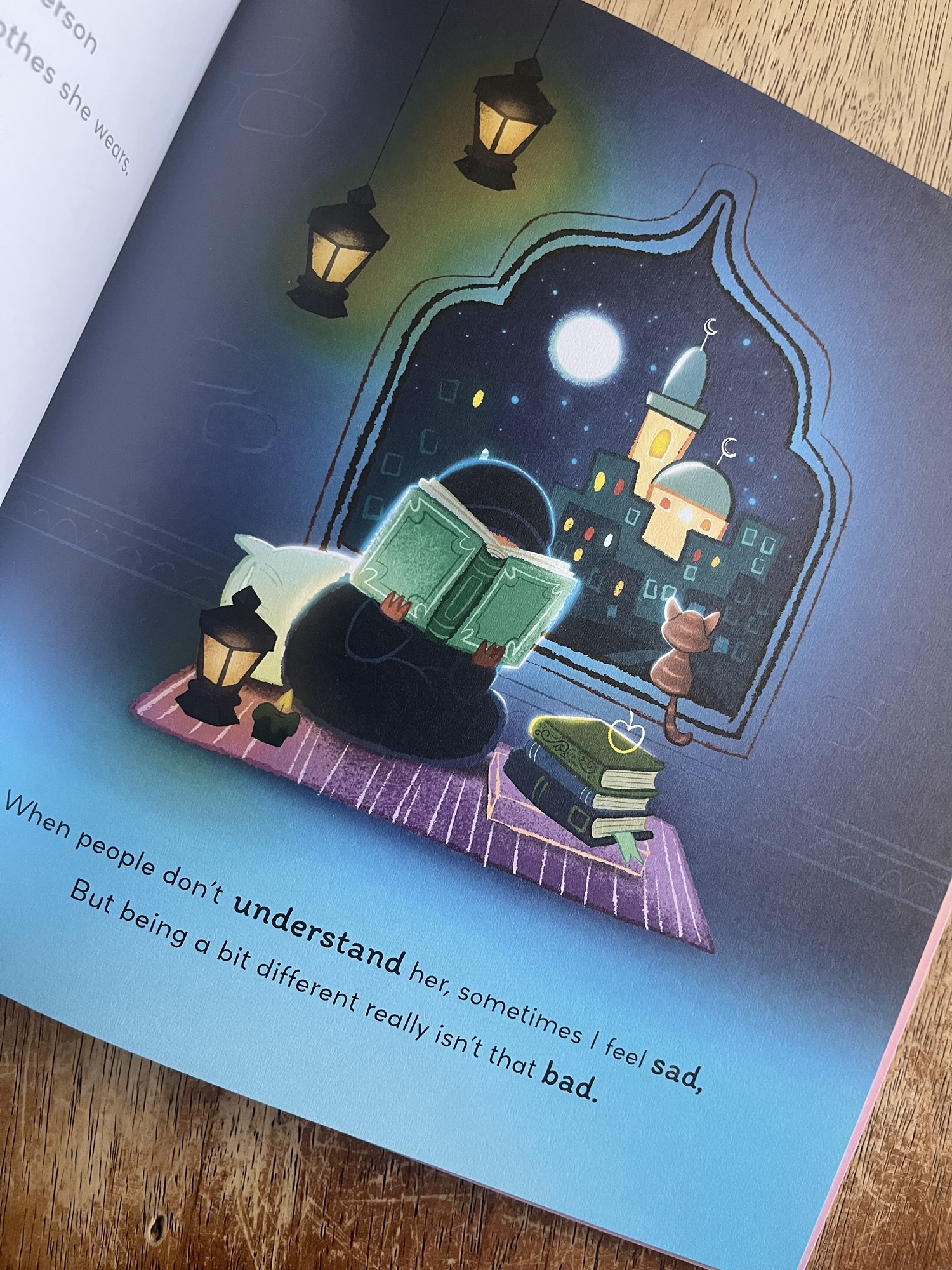
Aya and the Star Chaser by Radiya Hafiza illustrated by Kaley McKean

Standard
Aya and the Star Chaser by Radiya Hafiza illustrated by Kaley McKean

Most people probably don’t read as much Islamic rep fiction as I do. Add in I’m an adult reading MG, who consistently shares thoughts on books that fit a slim criteria, and the result is I’m nitpicky and hard to please.  But, because I read a lot of a very small niche genre, the stark contrast to books with Islamic representation done well, compared to those done poorly or somewhere in the middle is hard to ignore. This 213 page book has an all Muslim cast, but has very little Islam, and what is there is terribly presented. It has one Assalamualaikum, one mention of salat, a reference to shoes worn on eid, and the mother sings Quran.  Yes the characters wear hijab, but it is only ever called a headscarf, so while the pieces are there they don’t add up to much, which I predict leaves Muslim readers disappointed and non Muslim readers chalking it up to more pointless details that serve as filler, and provide no real fleshing out of the characters on the page. I forced myself to read it, the desire at page 12 when stars and meteors are used interchangeably to dnf was strong, and to the book’s credit, I was mildly rewarded with the last 65 pages or so being slightly better written. The plot holes, repetition, inconsistencies, the reliance of the mother simply refusing to answer the daughters questions, and overall surface level of the book makes it regrettable, but can I see young readers that love quirky characters, balls, royalty, and happily ever afters enjoying the read? Yes. And being there is nothing blatant in the book that would warrant you not letting them dive in, you can take my criticisms with a grain of salt, or stardust.

SYNOPSIS:
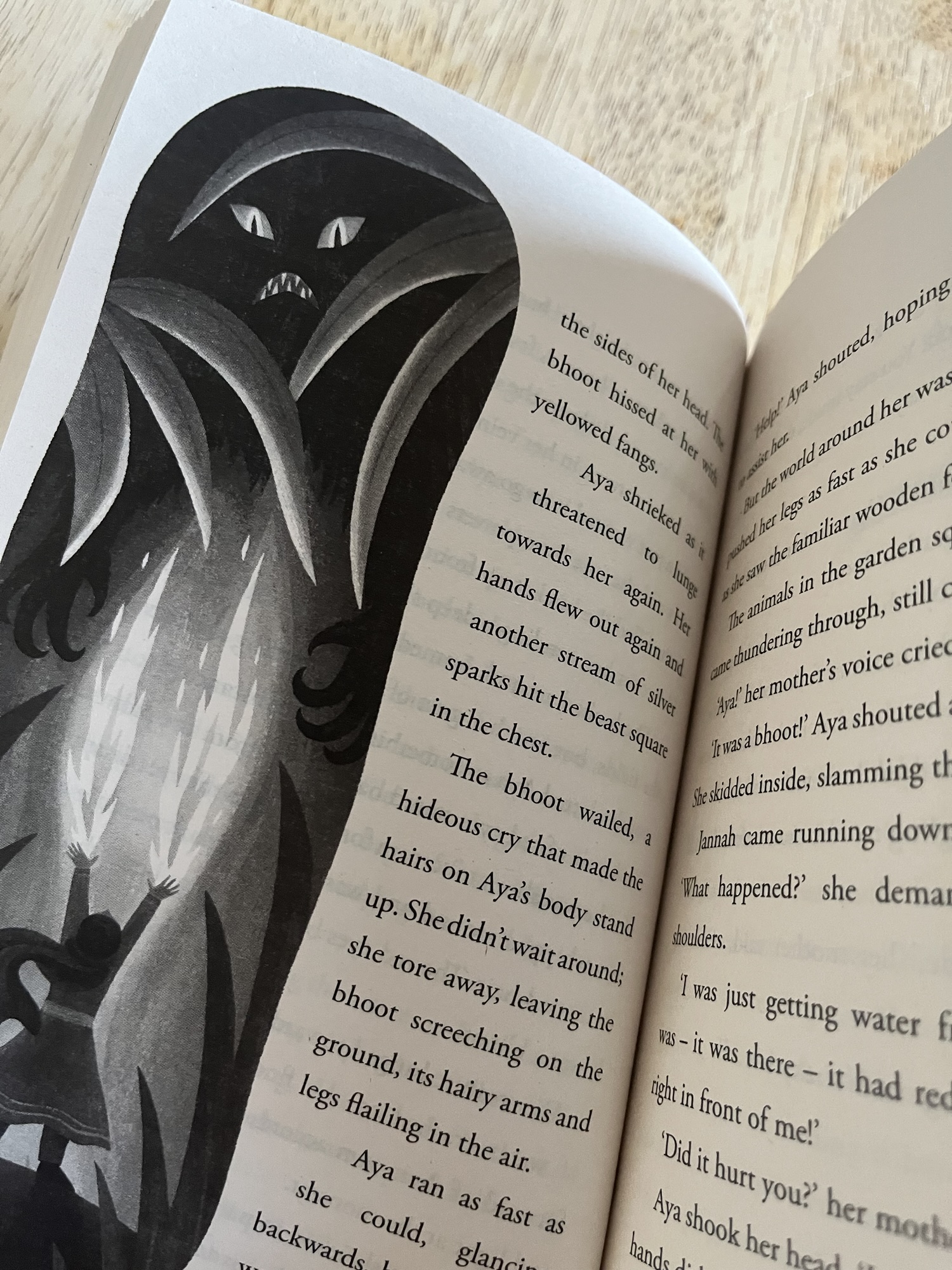
Aya and her mother, who is “stern with a big heart” live in kingdom of Alferra.  Her father has been gone for seven years, she doesn’t even know his name, as Aya and her mother, Jannah, have a strained relationship. Aya loves the ocean and the night sky and dislikes school, the only friend she has is Naznen, and on the night of the Perseids meteor shower the two girls meet in the middle of the night to watch the sky.  One star (is it not a meteor?) hits Aya and give her powers: she can shoot fire and cry flowers. Desperate for answers Aya and Jannah head to the Somerfest Ball at the palace to meet a seer.  When they do they learn of a prophecy and the remainder of the book is Aya and her mother running away to avoid the prophecy, before Aya reluctantly has no choice, but to face the villain, and thus see the prediction through.  I don’t want to spoil spoil it, but there is an Evil queen and demons of sorts with red eyes referred to as bhoots, and a battle that takes place in true fairytale format before the happily ever after occurs.

WHY I LIKE IT:

I do like that Aya is strong and determined, her strength however, is undermined by her sickness, sleepiness, and lack of determination to find the answers her mother refuses to give though, which is unfortunate.  The biggest problem with the book is the writing quality just isn’t great.  Even the religious representation aside.  Why have a whole conversation about wearing matching clothes to the ball between Aya and Naznen for Jannah to gift Aya a gown of a different color and no mention of wanting to match with her friend revisited. Why have Naznen sneak through the window just to have Aya go through the door using the spare key under the mat? Why mention a strange lady at school dismissal, that is never explained? Why is everyone scared to be out because people are missing, just to have Naznen alone, show up with Aya’s homework? I could go on and on, the book brings things up and then dismisses them using them to be page filler it seems. So many details do not provide insight in to the story or the characters or the setting, they are just random fleeting observations.

I didn’t like that the prince is described as having a “lover,” there are better less abrupt identifiers that could have been used, or perhaps in British vernacular it isn’t as pointed as it is in the US.  I also didn’t love that they bowed down to the Evil Queen Abnus. This highlights a place where an Islamic lens would have fleshed out that the characters are Muslim, not wanting to bow, as we bow to Allah swt alone, but perhaps being struck and forced.  Other easy inclusions of Islam would be seeing the meteor shower and saying SubhanAllah, being so sick from the star hitting you and asking Allah swt to heal you, asking Allah swt for strength in a dozen scenarios the book presents.  Duas before leaving the house with people going missing, it really seemed blaringly absent given the nature of the book to not have little sprinkles woven in, yet it halts the story early on to have those labels noted. It definitely could have used some polishing to make it part of the story or characters or taken out all together.

TOOLS FOR LEADING THE DISCUSSION:

I wouldn’t rush out to buy this book for your school, library, or home book shelf, but if you have it, there is no need to remove it.  There is not enough Islam nor literary value.  There is not even enough character development or details to show the change in the mother-daughter relationship to foster conversation.  One page they claim they have no secrets when the mother and her secrets is the bulk of the backstory, to the next page where the mother simply discloses all the letters and answers that Aya needs to move forward.

FLAGS:
Lying, sneaking out, scary evil villains, disowning, abandonment, disobeying parents, death, killing, prophecy, fortune tellers/seers, magical powers, abuse, imprisonment,

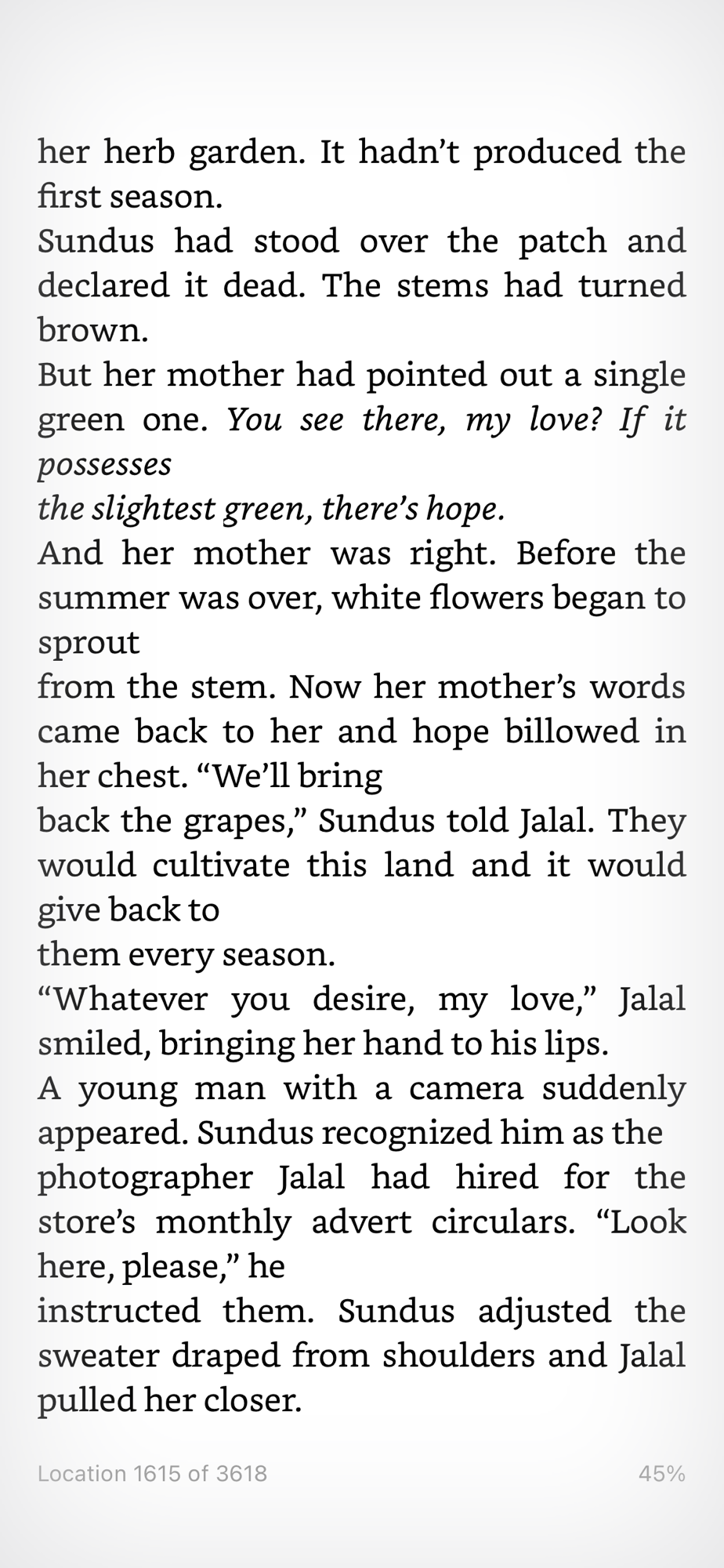
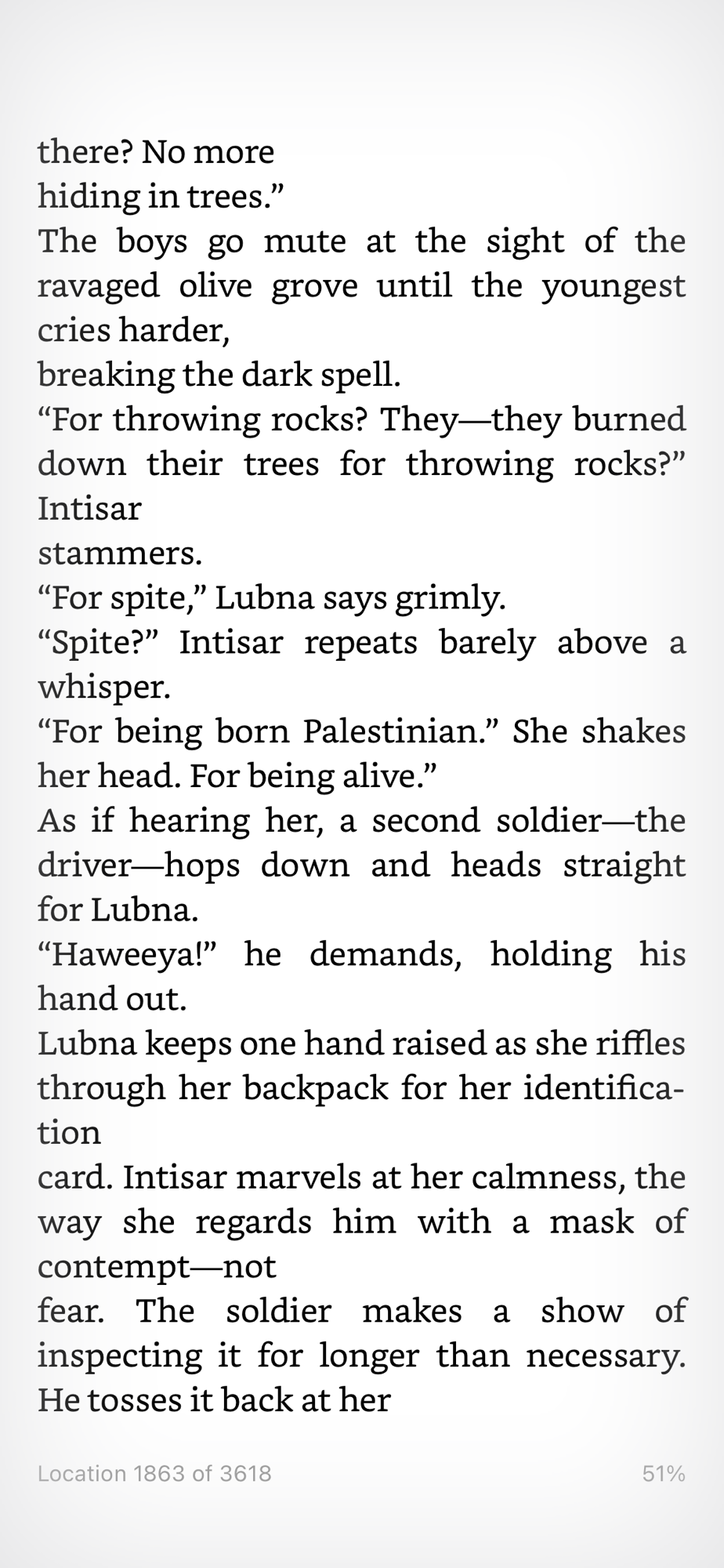
The Slightest Green by Sahar Mustafah

Standard
The Slightest Green by Sahar Mustafah

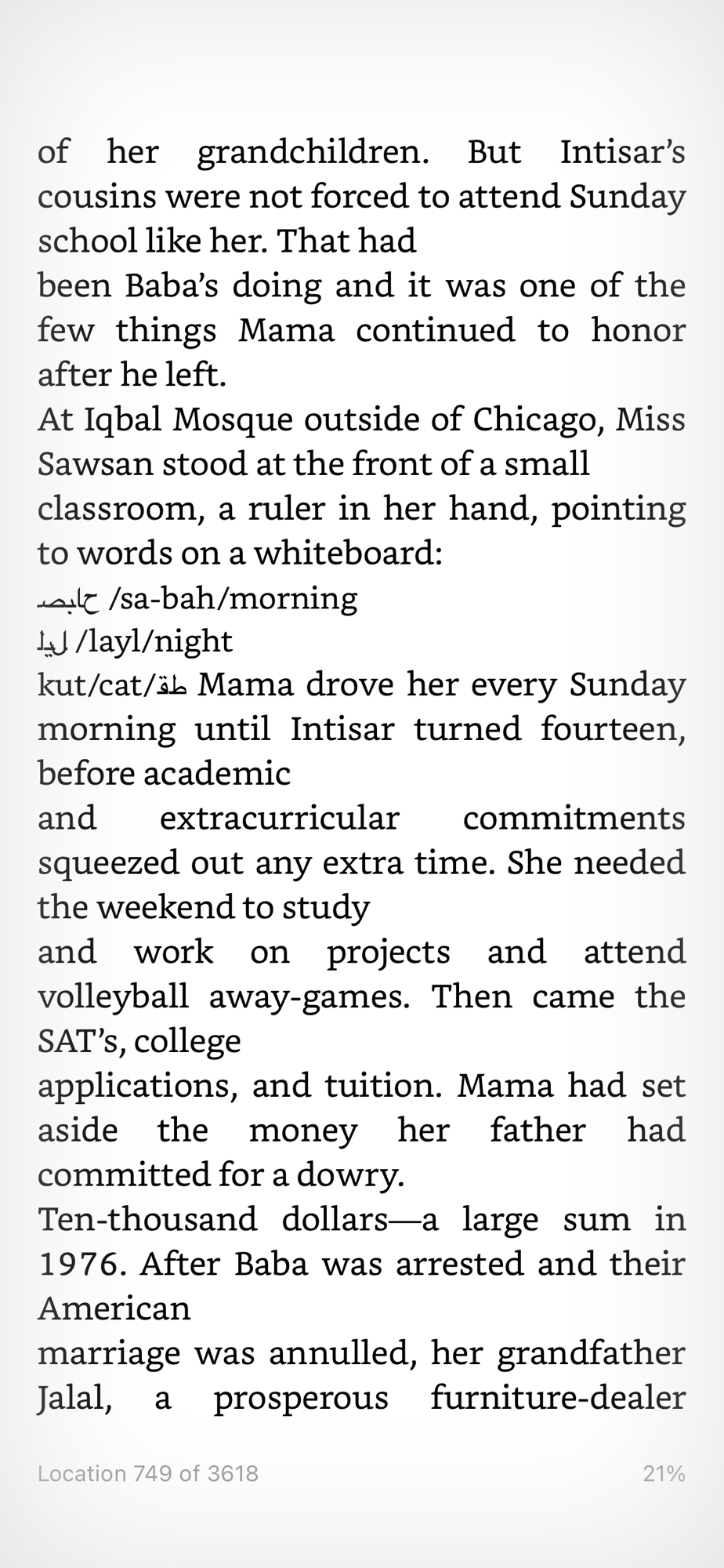
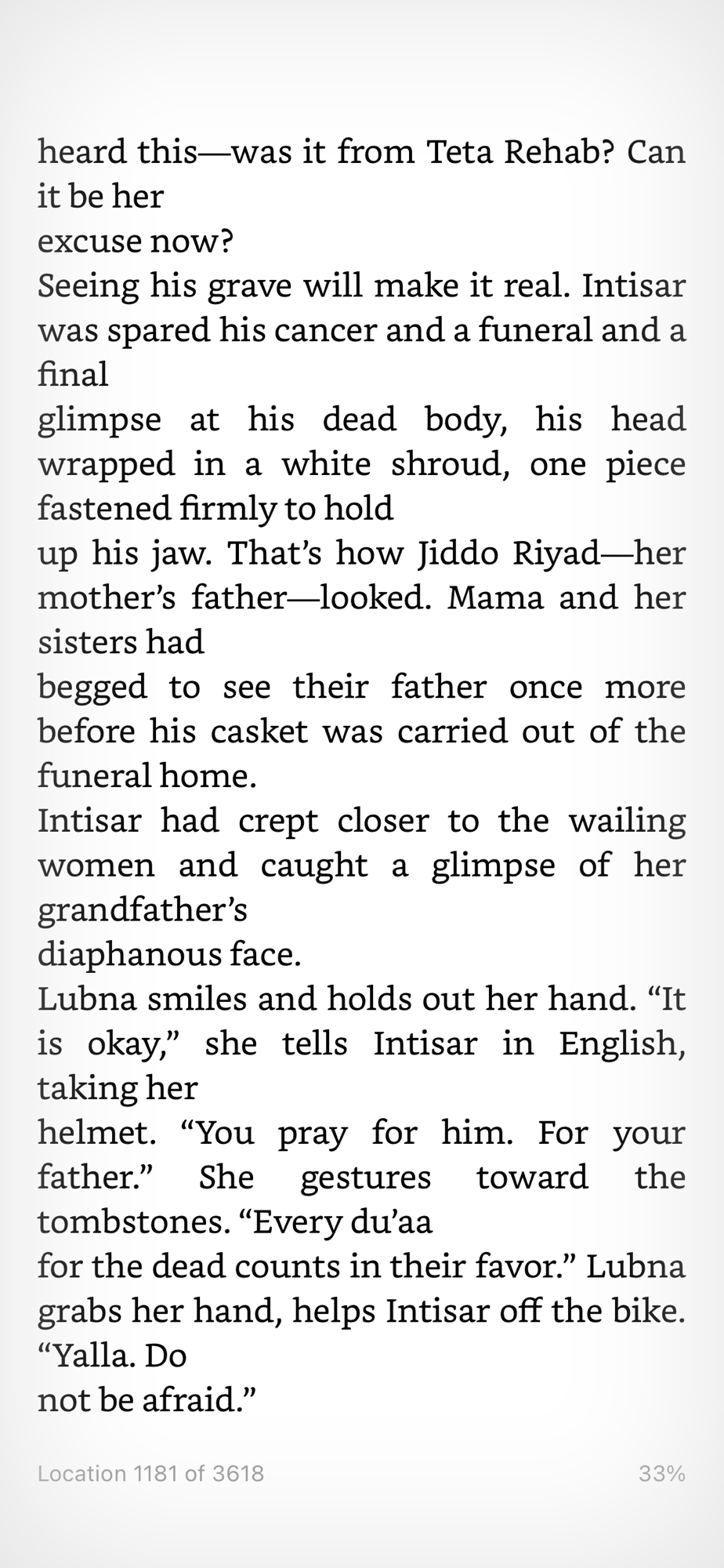
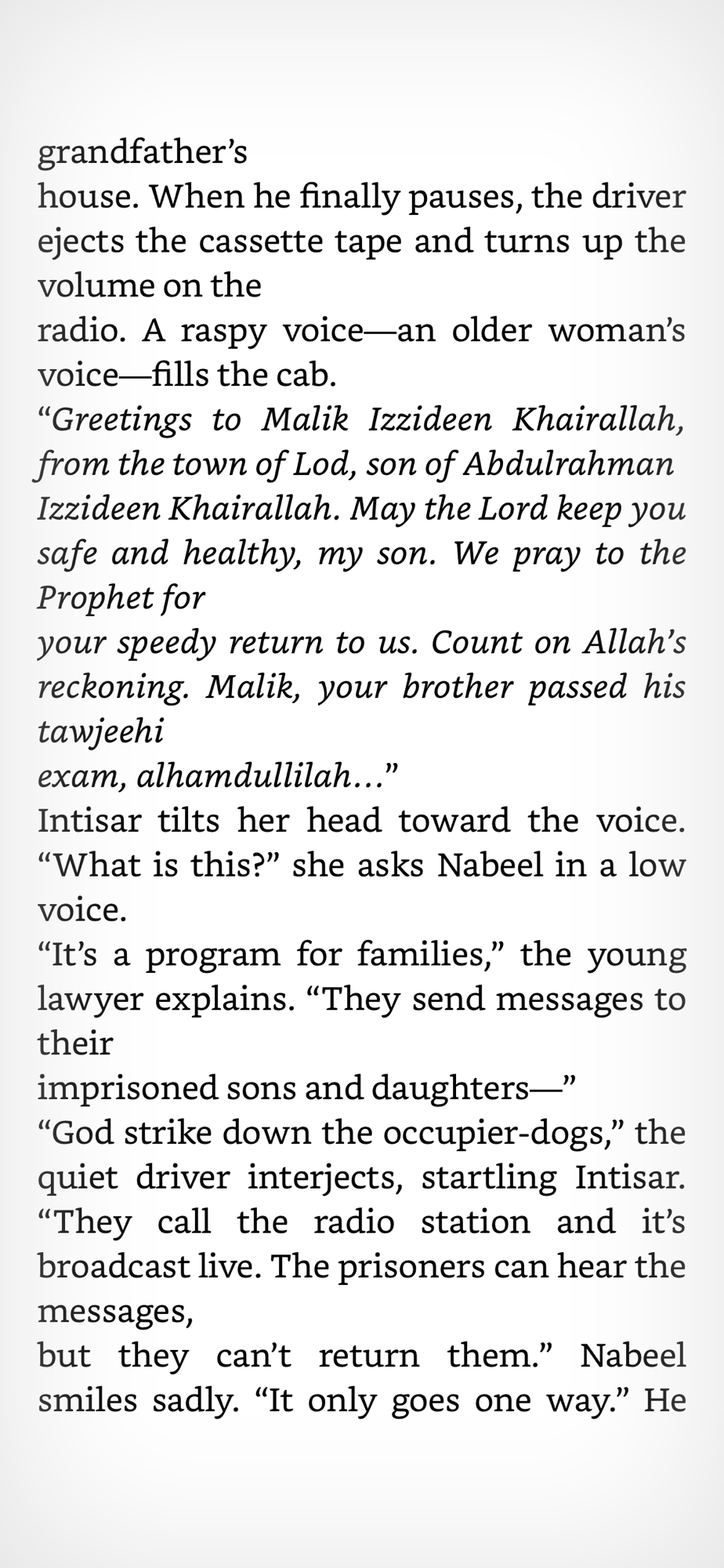
This adult multi generational novel weaves a narrative that will stay with the readers for the warmth and depth it explores of a fictional family that over the course of 248 pages becomes very real, and in many ways familiar through its personal focus. The book is deliberately slow as it glides through different members of the family, their backstories and different points in time. The prose highlights the plight of Palestinians but not in a didactic or call to action sort of way. The characters and their stories, and their trauma and dreams are very tied to Palestine and the occupation, but the focus on the individual and the ripple effects is what will linger. I do not know when the book was written, (it is published in November 2025) as I read a digital arc which had very minimal backmatter, but this book is set before the recent genocide and is all the more important for today’s readers in pushing back against attempted erasure of Palestinian voice, culture, and history.

Intisar is a nurse in Chicago, the only daughter of divorced parents. She lives with her mother and has not seen her father in over 20 years. Not since he left the family to return to his home in Palestine, join the resistance and after a fateful mission is forced to serve a life sentence in Gahana Prison. When he is released to live his final days before he succumbs to cancer, Intisar heads overseas to see him one last time. Her grandmother Sundus additionally needs Intisar, the only heir, to fight for her to keep her land and home, a task that Intisar is not willing to pursue. As family history is shared, daily atrocities witnessed, Intisar starts to see herself differently, and considers if she could feel at home in her father’s homeland.

Again I read an arc, but there are a few sentences that really have me hoping line edits will still occur before the final version. The book is adult, it has a Muslim drinking and serving alcohol, there is assault, sexual and physical mentioned, and yet I didn’t feel like it was sensationalized, actually felt that the author was deliberately holding back to keep the story about the family and not the larger issues. Their is quite a bit of Islam, not from every character, but it is woven in and not an identity issue. Actually one line used frequently is my only real gripe with the book. “Pray to the Prophet,” is regularly said by a few characters, so I though perhaps it is something unique to them, up until about the midpoint, where many characters start to say it and I don’t like it. It makes it clear other places that Allah swt is One and who we pray to, it has the shahada in English and verses from the Quran, so I’m guessing it is a colloquialism perhaps, or maybe a poor translation, I honestly don’t know, but it bothered me, so I am sharing.

Muzoon: From Refugee to Leader by Muzoon Almellehan illustrated by Asma Enayeh

Standard
Muzoon: From Refugee to Leader by Muzoon Almellehan illustrated by Asma Enayeh

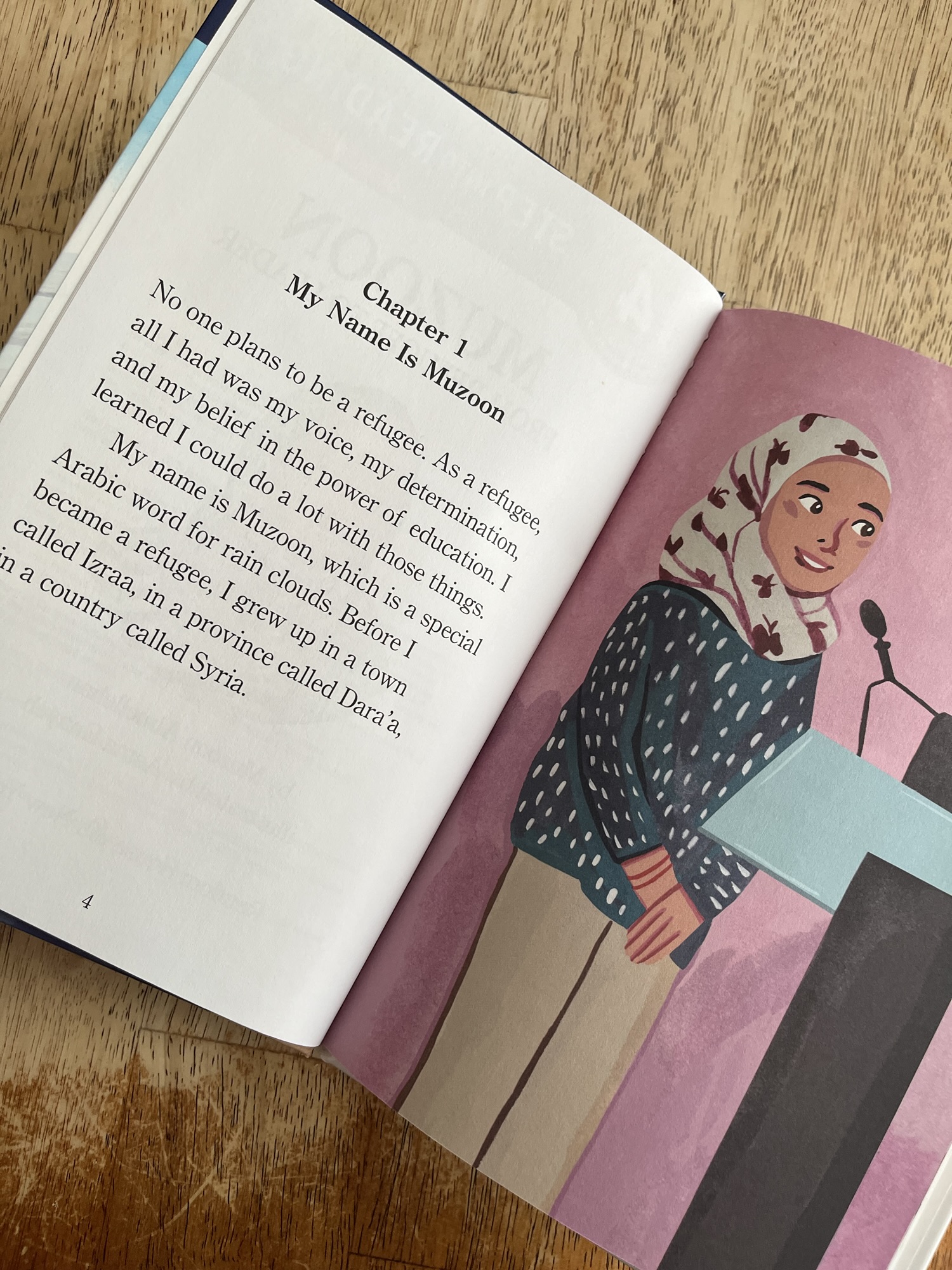
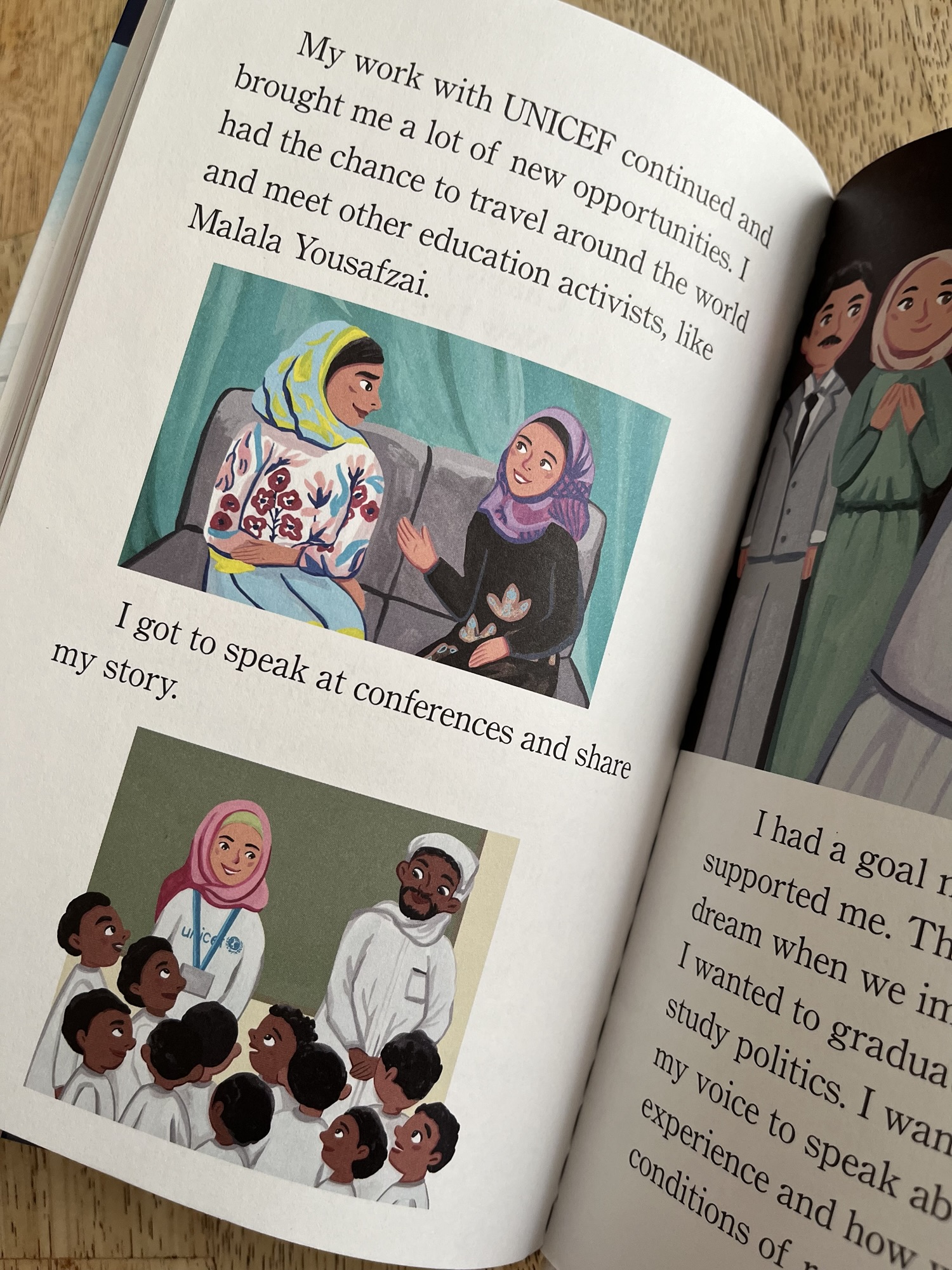
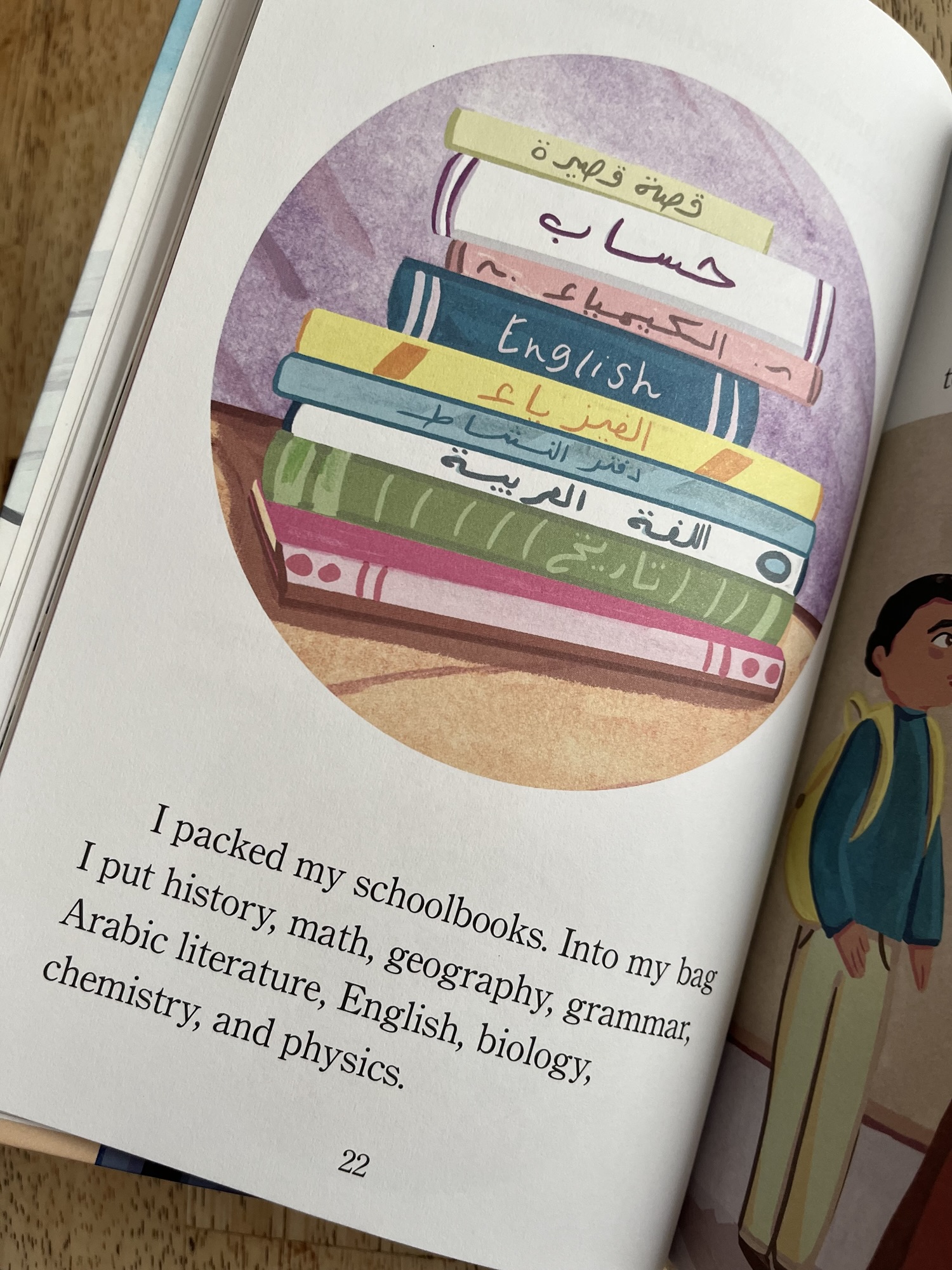
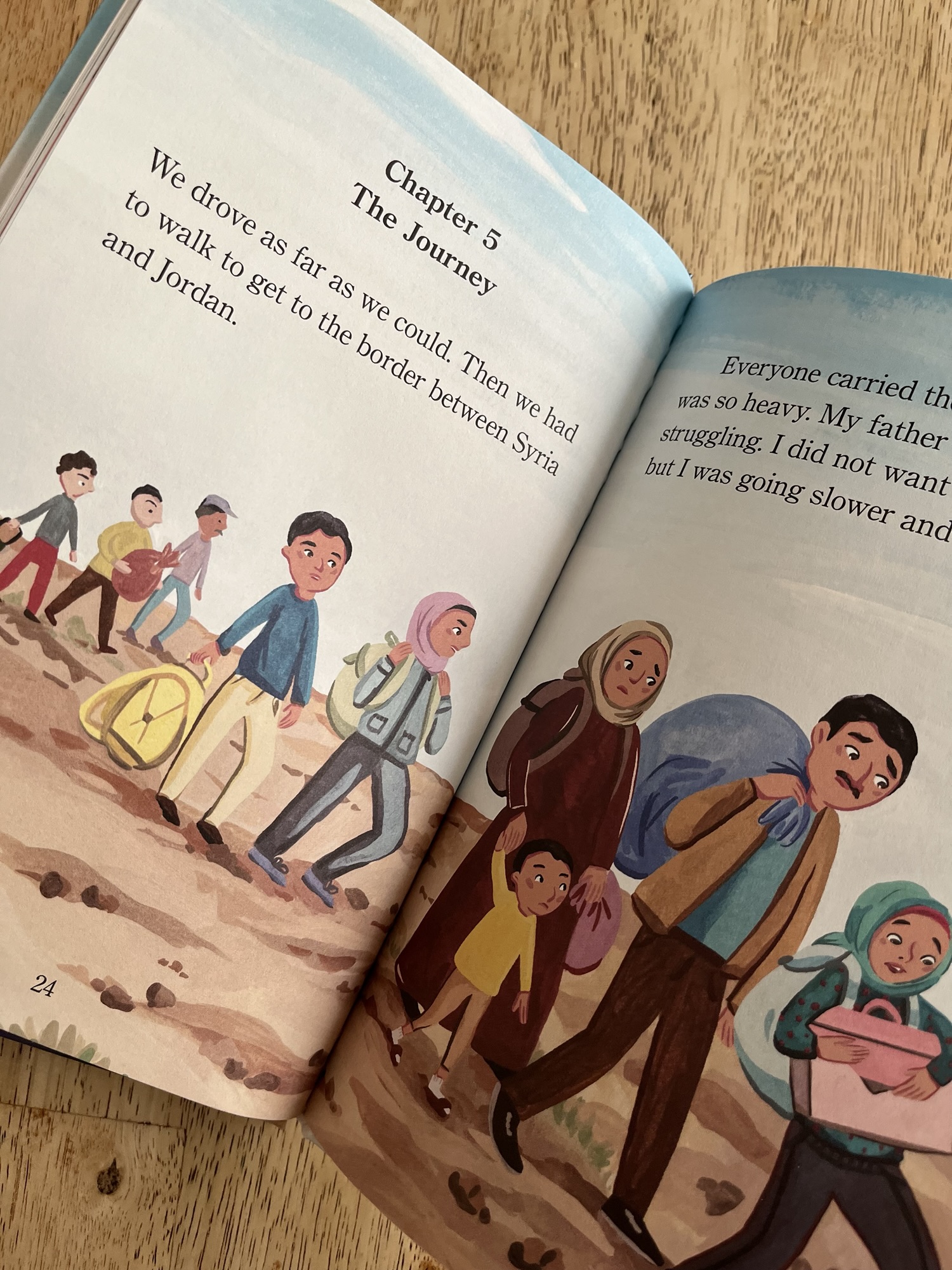
Such a delight to see Muzoon’s story coming to children in the West in the form of a Step into Reading Biography. The approachable format aimed at second and third graders reading paragraphs tells Muzoon’s story with quotations from her middle grade biography, Muzoon: A Syrian Refugee Speaks Out.  From her life with extended family, playing soccer, studying and enjoying Ramadan, to the changes that turned her country unsafe and forced them to become refugees. It follows her to refugee camps trying to find routine and hope and the role education and encouraging other’s to study plays in her life.  Eventually her activism and efforts catch the attention of UNICEF and today she works as a UNICEF Global Goodwill Ambassador and travels the world advocating for education and refugees and rebuilding Syria.

Divided into eight chapters, the 48 page book shows how relatable Muzoon’s life is and how the political events forced her family to abandon all they knew.  The presentation, in both the text and the illustrations, show the unexpected and hardships Muzoon and her family face as they make their way to the refugee camps and work to adjust. The book is not graphic, but the weight is conveyed as readers also see the power education and learning has in providing hope and opportunity. In a fictional story, a protagonist using their voice for the good of society is something to cheer, to see it from a real life person in the middle of a war, is something to admire and be inspired by.

I particularly like the inclusion of Ramadan in the story and the details showing her family joyfully gathering to break their fast together, as well as conveying some details about the Islamic holiday.

Odd Girl Out by Tasneem Abdur-Rashid

Standard
Odd Girl Out by Tasneem Abdur-Rashid

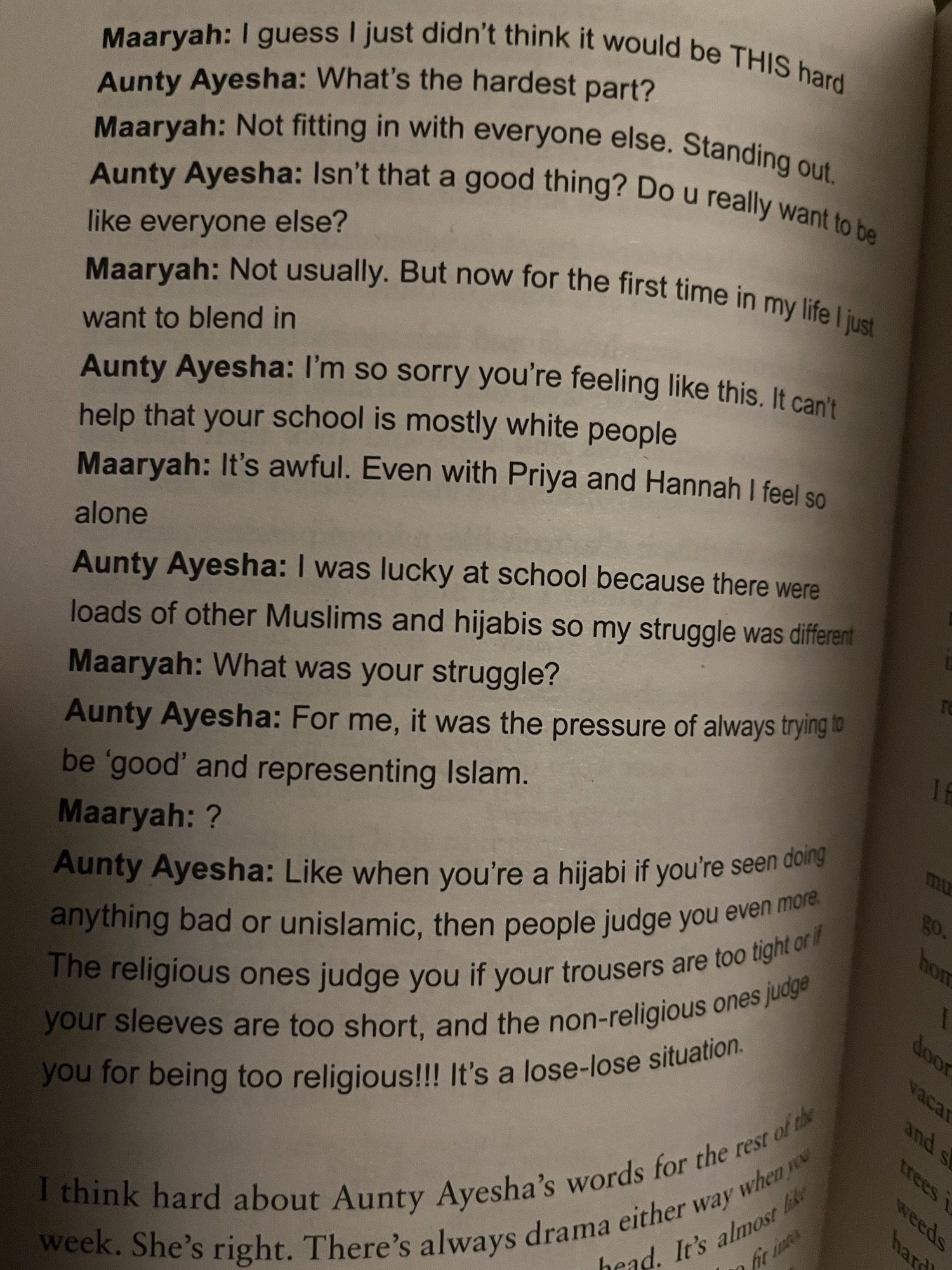
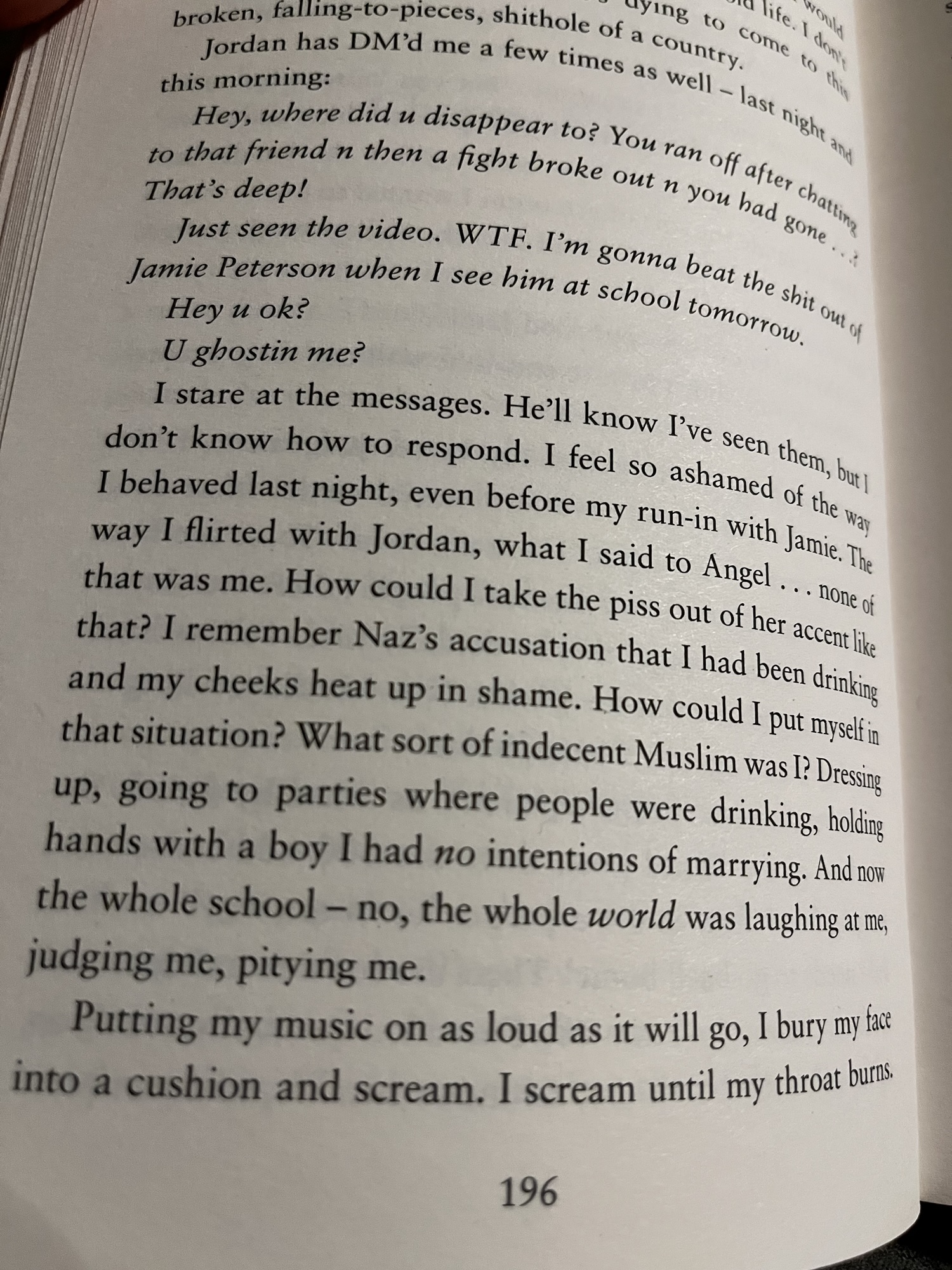
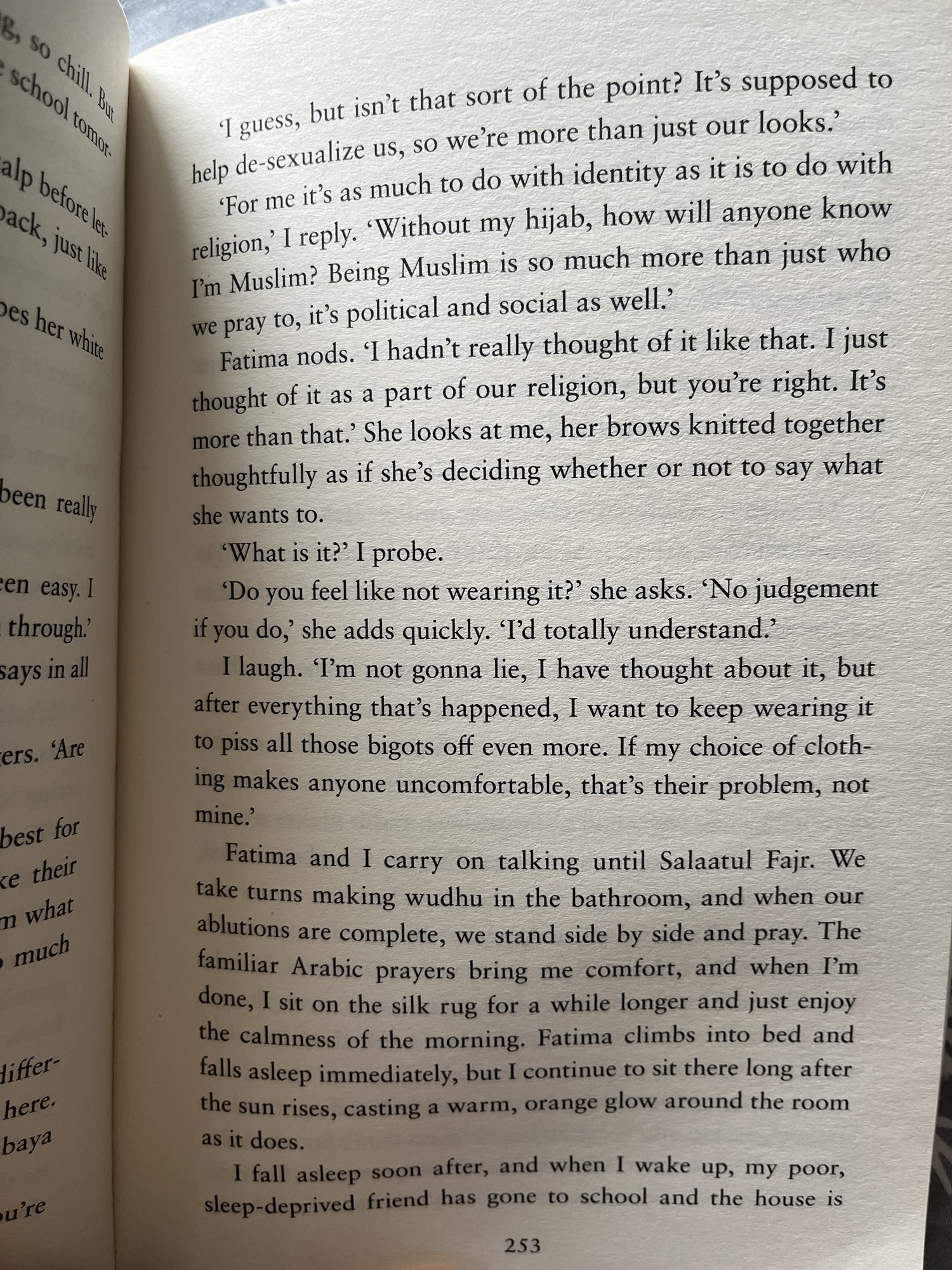
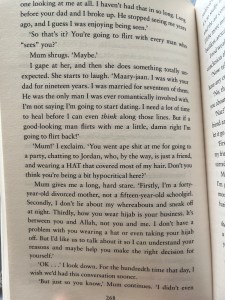
At 368 pages this identity centered mature YA book really hooked me and had me invested, which is impressive because Islamophobia stereotypes and being the new kid in a new place tropes are pretty frequently done, and often after a while, feel repetitive.  For me the charm of this book is actually not Maaryah and her peers/friends/bullies storylines, but the protagonist’s relationship with her parents and what caused her mom and dad to divorce.  Obviously as a mom of teens, I’m not in the target audience, but I feel like I benefited from the Muslim authored, Islam centered book, and think older teens, perhaps 17 and up, will also find the book enjoyable and reflective of views they have, challenges they face, and boundaries they have to establish.  I don’t want to spoil it, but SPOILER, had my dear friends that have read the book clued me in that the book will toe and slightly cross the haram lines, but ultimately show Maaryah deciding to re-establish her boundaries after being tempted not to, i.e. making a poor choice to attend a party with boys and alcohol present, and dressed in a way not typical to her hijabi style, I wouldn’t have read the last hundred and twenty pages or so with my jaw clenched in fear. The book shows a lot of Islam in practice, salat, duas, discussions about hijab, but not everyone will agree with decisions Maaryah makes or the rationale behind them as they vacillate between culture, religion, and family expectations.  I love that Maaryah is fallible and never abandons her faith, and that who we are is more than a singular mistake or instance of poor judgement. The book is not preachy, most will just take it as a girl finding her place in her new family dynamic in a new country, who happens to Muslim.  I think, an assumption really, based on what the author has said about her previous adult books, something along the lines that they are not meant to be Islamic fiction, but are stories with Muslim characters, and I think this book should probably be viewed the same.  There is swearing, hand holding, a side hug, normalized boy girl friendships, lying, running away, deceit, cheating, alcohol, mention of hookups, dating, vaping, music, flirting, hijab questioning, bullying, physical assault.  My biggest concern about the book is that it brings up Palestine, but doesn’t discuss Palestine. A side character is a non practicing Jew that visits Tel Aviv and Maaryah wants to discuss the occupation with her, but hesitates and the moment passes.  It is never revisited which I really wish it would have.  It could have modeled a bit how to have those conversations, I know it isn’t that type of book, but Maaryah mentions repurposing kaffiyehs in her designs and so it hints that it matters to her, but never pulls on that thread.  At one point it also mentions another character posted something pro Isr@*l during the genocide, which I can only assume the author thought that by the time of publication would have ended.  SubhanAllah ya Raab.

SYNOPSIS:
The tag line on the cover “From Dubai Girl to London Nobody…” very succinctly summarizes the plot.  Maaryah had an idyllic life in Dubai with her parents and close friends, spending her holidays with her mom’s family in London, and securing an internship with a famous designer.  All is going well until her parents get divorced, her mom moves her to the UK, not near her extended family, and the lack of Muslims, let alone hijabis, at her high school has her bullied with no friends to have her back.  With her mom in survival mode, their once close relationship is non-existent, and the 15 year old is left to sort through it all on her own.

WHY I LIKE IT:

There is a little pulling of punches so to speak of asserting that the boundaries are Islamic, but for the most part I think Muslim readers will see that Maaryah does view a lot of what she experiences through an Islamic lens which I appreciate. I also like that the protagonist’s connection to salat and faith is hers, it isn’t forced on her and I think for this demographic that is good micro messaging and framing.

I was very grateful that the book answered the questions about Maaryah’s family dynamic, so often parental problems are pushed to the void and let to be resolved or understood off the page. And while in the first half it was teased a little as we aren’t having that conversation right now, I did ultimately by the end feel like it was sufficiently resolved.  I also felt the mom was blaringly absent at weird times and I get that it was a plot device to get her out of the way, but if you are dragging at the 100 page mark, I do encourage you to keep reading, it does pick up.

This book isn’t meant to be didactic, and I recognize I’m putting that on it a bit, but I do think the Gaza framing missed an opportunity to show readers how to navigate that very real scenario through the power of fictional characters.
FLAGS:

Copied from above: There is swearing, hand holding, a side hug, normalized boy girl friendships, lying, running away, deceit, cheating, alcohol, mention of hookups, dating, vaping, music, flirting, hijab questioning, bullying, physical assault.

TOOLS FOR LEADING THE DISCUSSION:

I would shelve this in an upper high school classroom, I think that decision to be at the party is clearly shown to be a mistake, to put herself in that situation is something she regrets, and I think showing that she comes out from it offers a lot to be discussed.
All the Ways to be Pretty by Shamaila Khan illustrated by Reyhana Ismail

Standard
All the Ways to be Pretty by Shamaila Khan illustrated by Reyhana Ismail

The premise of this book is fabulous, an Islamic approach to internal beauty to counter the societal emphasis on external appearance, by drawing on the examples of Ai’shah (RA), Khadija (RA), Sumayyah (RA), Maryam (RA), Hajar (RA), and Rufaidah (RA), may Allah swt be pleased with them all.  The illustrations are decent, focusing on the girl understanding what her mother is saying and her imaging herself with those qualities.  The part that I struggled with, is I flipped through it before I started reading it, and the pages are often walls of text.  Additionally, I didn’t realize it is rhyming text over 34 pages.  SubhanAllah though, somehow, it works.  I can see this book being shared at preteen gatherings in masajids, homes, and schools everywhere.  The rhyme at times is forced and lacking, but the flow makes the walls of text zoom by and the information shared is not overwhelming and Alhumdulillah, it doesn’t stray too far from the central messaging. You could share it with younger readers, but I think it works best if the audience knows some of the women and facts highlighted, and the information shared is a mix of reminder and new tidbits urging further exploration. The publisher lists the reading age at 7-10 which is probably a good fit based on the amount of text, but the rhyme, mirrors at the end, and starting point of battling beauty standards on the screen and “Princess” messaging is a bit of a target audience disconnect, which is why I point it out so consumers are aware.

The book starts with a lengthy author’s note before the rhyming scene of a mother and daughter walking to school and discussing what the daughter would like to be.  The girl doesn’t answer a profession, but rather responds that she wants to be pretty, and gives some justifications.  The mother gently then encourages her not to just want to be pretty, but rather pretty smart, pretty wise, pretty brave, pretty pious, pretty resilient, and pretty kind, before concluding with the girl throughout the day thinking of how to be like them, and her mother, to earn Allah’s pleasure.  Each attribute is a two page spread with one of the historical women featured.  The book ends with a hadith and six mirrors with the characteristics beneath them.
I like that the book does not try to give an entire biography about the women featured.  I also like that Islamic references are also brought in, some explained some not. It is “Islamic fictionalized non fiction” it is meant for Muslims with Islamic framing, not just Muslim characters, and it has substance.  Lately so many self published or even Islamic published books seem to not feature Islamic foundational themes, and I realize how much I have missed reading books that do.  Yes, I normally would have a solution to offer as to how to make the pages less text filled and I know I should say that maybe it shouldn’t rhyme, because it makes for some awkward phrasing, over explaining, and useless lines, but alas, I have no suggestions.  We need books that present our Sahabas and Prophets in a manner that allow our kids to know them and think of them and emulate them. Alhumdulillah, I can see this book being read and shared and discussed, and that to me is a “pretty “good thing.
Sabrena Swept Away by Karuna Riazi

Standard
Sabrena Swept Away by Karuna Riazi

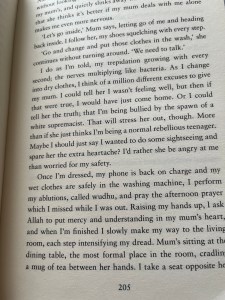
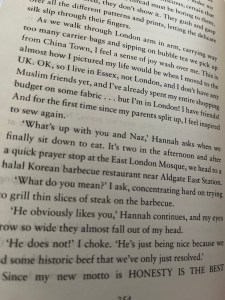
The gorgeous cover of this 205 page middle grade fantasy is a great motivation for kids to pick up the book and dive into a story filled with characters from the One Thousand and One Nights. Descendant from Sinbad, Sabrena’s ailing grandma is sometimes present, and sometimes suffering from dementia, but her stories have power, they always have. As Sabrena battles her own self doubt at her new Islamic school, her ability to find her voice and speak up, and her desire to protect her grandma from being taken from her home, she will be swept off to a world far away, where she must be the hero of her own story to help her new friends and find her way back.  I was nervous to embark on an Alice in Wonderland world building framed story, but the short book, the enjoyable characters, and the consistent presence of Islamic representation actually made me forget that I don’t like that style, until the text itself drew the correlation.  In many ways the story and the predictability should also have been a turn off for me, but I absolutely loved the writing of the prologue and the first two chapters, and then I switched to the audio book, and the story just pulled me in and flew by.  The characters pray, call out to Allah swt when scared, greet one another with salaam, discuss qadr, encounter jinn and ifrits, the women wear hijab, there are mentions of Bangladeshi foods and clothes, but the book is for everyone, it isn’t preachy, it is just who Sabrena is, and in the quick paced fairytale like adventure, you will be glad you spent time with her on her adventure in both worlds.

SYNOPSIS:

The Bhuiyan family loves stories, Sabrena’s grandma spins them, and her father studies and teaches them.  Sabrena feels connected to them, but when water keeps appearing, calling out to her, and showing her visions of palaces and gates, she starts to wonder what is truth and what is just family lore about Sinbad the Sailor.  As grandma’s memory slips, Sabrena and her parents move to be closer, the new Islamic school is nice, but Sabrena seems to get tongue tied when her kind classmates try and include her.  When her mom and aunt fight about what to do about grandma, she hides away dreading their arguments.  When the sea sweeps Sabrena to a new world though, she finds herself “so alone” and forced to step up.  With new friends, a longing to return to her family, and her growing confidence, Sabrena is swept away, but determined to find her voice, save the day, and find her way home.

WHY I LIKE IT:

There weren’t really any twists or surprises for me, other than the beautiful Islamic rep inclusion and the cleanliness of the book.  I think I’ve become so cynical that the bar has dropped, and it was nice to read a tale that was decently written, with characters owning their Islam in way that made them just part of who they are and how they view the world.  Sabrena doesn’t have an identity crisis, or internalized Islamophobia, everyone is just Muslim doing their things and living their lives.  I also felt the voice and tone of the grandmother dealing with her dementia was accurate.  Having my father-in-law in our home battling memory issues, I often find rep in children’s books to be performative and saccharine, this felt grounded and used to serve an important plot point in the text, which I appreciated.

The adventure was ok, honestly nothing super memorable, but I really enjoyed the voice actor on the audio book, and was not worried if the holes were big, or adequately overcome, or probable. I was just enjoying being in the story.

FLAGS:

Mention of music, there is magic, jinn, ifrit, a talking head, some trickery and deceit, and it uses the word harem a few time without going into detail.  Disclaimer with audio books I may have missed something, but I think for the genre there is nothing too ,red flag, it is a fantasy adventure.

TOOLS FOR LEADING THE DISCUSSION:

I think discussion and maybe reading of the original One Thousand and One Nights, and then talking reading, and discussing some of the retellings, and character inspirations of Aladdin, Ali Baba, Scheherazade, Sinbad, Marjana, Duban, etc would be a delightful class or book club plan.  This book is solid middle grade, but depending on the framing, could be used for discussion in broader conversations and enjoyed by readers of all ages.

Mariam’s Dream: The Story of Mariam Al-Shaar and her Food Truck of Hope by Leila Boukarim illustrated by Sona Avedikian

Standard
Mariam’s Dream: The Story of Mariam Al-Shaar and her Food Truck of Hope by Leila Boukarim illustrated by Sona Avedikian

This 44 page biographical picture book set in the Palestinian refugee camp, Bourj Al-Barajneh in Lebanon, centers the story of Mariam Al-Shaar and her determination to start a restaurant and food truck despite the restrictions of refugees and women. Her drive and persistence leads to the creation of Soufra, the home of not just good food, but also community, hope, dreams, and change. the The illustrations, the heart of the story, the backmatter, are all well done, yet for some reason, the emotional impact seemed lacking for me.  I didn’t “feel” inspired, or moved.  I didn’t feel her pain, her grit, her joy when it all came to fruition. For a biography, I didn’t feel like I got to know Mariam, or why this was her dream.  The book explains being a refugee, and not having full rights, but it doesn’t show the reader. We are told Mariam wants to do “something,” but the “something” she finds, is what other women want. “We want to cook,” they tell her.  “We are good at it.” The reader though never is shown, why they want to cook, or what is stopping them from cooking, and even if Mariam wants to cook too.  It is clear the struggles Mariam faces when she wants to branch out and start taking the food to those outside of the refugee camp by way of a food truck, but lines such as “They tell her not to risk it,” fall flat when the reader doesn’t know what is at risk.  The absent context makes it hard to cheerlead and understand why this is so revolutionary.  Ultimately, it is a lot of telling, not showing. The story is fine on the surface, but I don’t think it will linger and illuminate refugee struggles, Palestinian struggles, or women’s struggles beyond the page because we are not show what those are, and how inspiring it is that Mariam Al-Shaaar overcame them.

The book starts with prose that describes that Palestinian refugees “live between worlds.”  The camp is not just physical walls, but also walls that keep her from living her dreams. She decides to do something about it, but doesn’t have to do it alone, she reaches out to others and “Soufra is born! A feast.  A table full of food.”  It is a way for women to come together to cook, earn a living, and be among friends.

People around the camp flock to Soufra and the women “have changed.  Their children have changed. Mariam has changed.” Mariam wants to take Soufra beyond the camp, and is determined to buy a truck, learn how to drive, and share their food.  More walls can’t keep Mariam down, after two years, the food truck is a reality. 

The book concludes with an Author’s Note about the author interviewing Mariam Al-Shaar, a beautiful Food Glossary, details about Refugees and Refugee Camps, and a Selected Bibliography.  The author is not Muslim, but Mariam is and she and many of the illustrated women wear hijab and are visibly Muslim. 


Huda F Wants to Know? by Huda Fahmy

Standard
Huda F Wants to Know? by Huda Fahmy

Huda Fahmy books always make me laugh, but this is the first one that made me cry. Centering mental health and her parents divorce, we see Huda grappling with change, loss, anger, and resolve in a raw vulnerable way. While ever hopeful, and at times comical, the book is also incredibly moving and insightful.  Whether as part of the Huda F series or her two graphic novels prior, her autobiographic books always tackle heavy topics in a joyful, hilarious, honest way that appeal to girls and boys from middle school and up.  I know at 263 pages, this book is a YA read, but in my house my kids (daughter and sons) have loved reading her perspective about hijab, arranged marriages, identity, and sibling relationships. The unapologetic Muslim authenticity is unparalleled, and that non Muslims champion her books as well, truly shows the value of good story telling, and gives me hope in an often bleak world. Huda’s books are staples: new books are anxiously awaited, previous books are regularly reread, and Huda F Wants to Know? continues in that tradition.  This book isn’t just fun, it is important- it normalizes mental health, empowers families shaken up by change, and makes us all feel seen and less alone. SubhanAllah.

The book starts with Huda’s plan for her junior year in high school, her friend Nabz and her are determined to buckle down and get scholarships.  When Huda’s parents call a family meeting, she thinks she just might be getting a car, but instead she and her sisters learn, their parents are getting a divorce. The book then rewinds to show a little lead up before Huda’s world shatters, and junior year’s blue print is tossed aside.  We see her going to the masjid for weekly halaqas where Sr Amal discusses topics like societal pressures, family expectations, gender bias in education, and other relevant topics.  At one such gathering, Dr Haifa came to talk about mental health.  We also see her crushing on a boy at school, fighting with her mom and sisters, and the girls going on a road trip to a Muslim convention.

Every storyline, every twist, every page really, has Islam woven in.  It is the way the characters see themselves, see their world, handle stresses, find peace.  Mental health is not separate from the hadith and sunnah, it is blended and approached in a holistic manner.  Divorce is understood Islamically, and the clarity in which it is articulated will, I imagine, be so reassuring for Muslims who have gone through it, and seen others go through it.  Just as my boys years ago read That Can Be Arranged, and became incredibly curious about marriage in Islam, I have no doubt that this book, will also be a powerful conversation starter for so many.  I don’t know if that is part of why Huda write, but it definitely is a result of her books.  I wish I could ask her, I’d also want to know how she decides what to share of her own life, where the line of reality and fiction for her is and how she sets and maintains those boundaries? I also desperately would like to ask her if she plans to write forever, because the world benefits from her books, needs her books, I know I do.  No pressure or anything.

 There are resources for mental health at the back of the book, some even specifically for Muslims. Please preorder this book and/or request it at your local public library as a show of support, it releases in April.

Amina Banana and the Formula for Friendship by Shifa Saltagi Safadi illustrated by Aaliya Jaleel

Standard
Amina Banana and the Formula for Friendship by Shifa Saltagi Safadi illustrated by Aaliya Jaleel

img_8365-1

I have five children, I have taught second grade, I have shelved, recommended, and read aloud a number of early chapter books for the better part of the last 20 years, so when I say that this book changes the standard of what a book (series) for this demographic can and should be, I do not say it lightly. Yes, I am bias, the author is a dear friend, but Amina has layers, growth, insight, struggles, warmth, heart, and all the other glowing adjectives normally associated with beloved books and characters for older readers. This book is the first in a series of four, and each book is somehow better than the previous. At 126 pages with a robust backmatter that includes scientific extensions, a recipe for ful mdamas, and a note from the author, I am confident that children of all ages, everywhere, caregivers, parents and educators alike will all fall in love with Amina, cheer for her, laugh with her, and be enamored with her attitude, perseverance, and joy.

SYNOPSIS:
Amina loves having a plan, a formula in fact, and when she arrives in Indiana as a refugee from Syria she is determined to make friends in 3rd grade.  Things don’t always go as expected, but alhumdulillah Amina doesn’t stay down: classmates, family, and determination combine to help the clever, yellow-loving protagonist find a way to rework her experiments, accept what she can and cannot control, and succeed in making this new country feel a little bit like home.

WHY I LOVE IT:
I adore the humor, unapologetic Islam, the rich Syrian culture woven in, and Amina’s approach to life.  So often early chapter book protagonists are obnoxious, annoying, crude almost, bratty, arrogant, and repetitive, Amina is none of those things.  She is vulnerable and strong, confident, yet nervous, hopeful, but worried, she is tangibly real in a way that readers will see themselves and relate.  I love the humor of idioms being confusing, and the heart of seeing what the parents have sacrificed and are willing to sacrifice by starting over in a new place.  The illustrations add to the experience of drawing reluctant readers in and will help those transitioning from picture books to chapter books be immersed by the story.  As always the author’s writing is impeccable and the story well-crafted.

FLAGS:

There is some teasing, reflections on why Syria was left, the journey to America, and hardship.

TOOLS FOR LEADING THE DISCUSSION:
This book is ideal for classroom, library, and home shelves.  It would be a wonderful classroom read aloud and works equally as well at bedtime.  My children college to elementary have all read and loved Amina, and I highly encourage preordering so that your children will get a chance to fall in love with her too.


The Thread that Connects Us by Ayaan Mohamud

Standard
The Thread that Connects Us by Ayaan Mohamud


At just over 400 pages this book expertly blends the stresses of school, bullies, and friends in the UK with the twists and secrets of broken families, shattered hearts, and a past that needs to be reckoned with.  Told in dual perspectives from girls thrown together by the actions of their parents, Safiya and Halima maintain distinct voices that are rich with Somali culture, Islam, vulnerability, and ultimately love and hope.  The book is YA, but the premise is a bit mature and is better suited to older teens in my opinion, I think a high school book club would be wise to consider this book, as once you start reading, it is difficult to put the book down. 

SYNOPSIS:

Safiya is mature beyond her years.  Since her father abandoned her and her mother five years prior, she has managed the bills, the upkeep of the home, and for the most part her grades. Hooyo checked out and is rarely more than a silent being curled up unable to care for herself, much less her daughter.  With the the help from the community, particularly her best friends and neighbors Muna and Yusuf, Safiya has a found family that helps her weather the tough times.  When her dad moves back to London with his new family from Somalia, Safiya is forced to deal with not only all the painful memories of her past, but also the very real presence of her family living in her neighborhood, showing up to Eid prayers, and taking over the safe haven that school has often served as when home life has been so cold and lonely.

Halima’s father died when she was young, and life with her Hooyo in Mogadishu was good until her mother remarried, Safiya’s dad.  Her two younger half brothers that came further added to the rift between her and her mother, and now that they are moving to England with the husband, despite her protests, has her plotting a way to return to her home.  The language, the culture, the weather, are all added stresses to finding her way, and are compounded when she gets paired up to have Safiya show her around and help translate for her in school.  

The two girls hate each other, at least they have that in common, but their inability to avoid each other forces them to interact more than either wish to do.  As questions, and secrets are voiced, the two girls realize that they might have to work together to get what they want, and figure out their past.

WHY I LIKE IT:
I really enjoyed the owning of the characters’ language and culture and faith and how easy it was to be invested in their world.  Nothing pulls you out of the story, it is rich and lush and the reader can figure out why even though there is a crush, nothing is going to happen, and why they are wearing hijabs, and waking up to pray fajr, the balance is both inviting and educating, without the reader even realize it is happening, because hello, we are to busy trying to figure out what these two girls’ parents have done. 

The story has layers, and the emotional attachment I feel to both these girls, made me glad the story was over, they deserve some peace, but also desperate to know that they are going to be ok in the future too.  I can’t say too much without the risk of spoiling, but the writing is strong, the plot solid, the details intentional and relatable, and the characters very real.

FLAGS:

Lying, bullying, fighting, assault, crush, drug use, arrest, accusation, gossip, abandonment, relationships, edibles, affairs.

TOOLS FOR LEADING THE DISCUSSION:
This would be such a great upper high school read, the way the story unfolds will keep readers hooked from the first page and motivate those that start, to finish.  Students will see themselves in the characters, and be sleuths themselves trying to uncover what secrets are true and how do the pieces of the puzzle fit together.