Category Archives: Picture book

Behind My Doors: The Story of the World’s Oldest Library by Hena Khan illustrated by Nabila Adani

Standard
Behind My Doors: The Story of the World’s Oldest Library by Hena Khan illustrated by Nabila Adani

img_3557-1

The world’s oldest library proudly stands in Fez, Morocco: started by a Muslim woman, restored by a Muslim woman, and in this 40 page book the library itself tells its own story in a book authored by a Muslim woman.  The personified library shares a few highlights from its early start as a corner in Fatima Al-Fihri’s masjid and university to collections spanning multiple buildings, from a bustling center of learning and knowledge to a place of disrepair and neglect.  Staying on an early elementary level, the informative author’s note and references make the book engaging for older readers as well, and an incredible addition to bookshelves everywhere.

img_3558-1

The book starts with the library introducing itself and welcoming the reader. “Merhaba! I am Al-Qarawiyyin Library–the oldest library in the world.” At over a thousand years old, the library begins at the hands of Fatima Al-Fihri in 859 who dared to dream big and created a space of learning and worship in Morocco.

img_3559-1

As the courtyards and collections grew, seekers of knowledge, from all backgrounds, gathered to discuss, debate, and learn.  Special rooms with special locks kept books safe: a Quran written on camel-leather, a philosophers drawings in gold ink.

img_3561-1

Nearly destroyed once by a fire, the library endured, but over time the rooms were no longer filled with the bustle of people.  One day a small girl, Aziza, paused at the door, but did not enter for many years.  When she did return, she came as an architect with a team to restore the library and invite people back in to read, learn, and dream.

img_3565-1

It delights me that such an important story is available to be widely learned from and appreciated.  You can preorder a copy here from Amazon.

img_3566-1

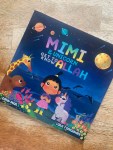
Mimi & Unicorn Get to Know Allah by Zanib Mian illustrated by Laila Ramadhani

Standard
Mimi & Unicorn Get to Know Allah by Zanib Mian illustrated by Laila Ramadhani

img_3480-1

Creating understanding and love of Allah swt is perhaps the most important type of Islamic fiction book available for young children, so I love that we have options to choose from. The framing of this book is nothing new, a child asking various people about Allah swt to learn about Him, is found in numerous books.  But, this 32 page book is particularly engaging because of the large brightly illustrated pages, and the author’s signature style of conveying facts in a simple relatable manner.  The comic relief of the unicorn and the adorable protagonist are great, and the added layer of it being checked by two named scholars really make this one of the best in a very populated category.

The book starts with Mimi wondering about Allah swt after hearing people say things such as, “Allah will take care of it,” and “Allah knows.”  She asks her imaginary friend, Unicorn, but she doesn’t know either, so they head off to ask different family members.

img_3484-1

Summaya, Mimi’s big sister tells her that  “if you know Allah, you love Him, and He loves you.” It is followed up with details that Allah swt knows us, because he made us. From Nana, Mimi and Unicorn learn that Allah swt is One, and he explains why we don’t know what he looks like.  From Nani we learn that “Allah swt has no beginning and no ending.” Baba explains that we turn to Allah swt when we need help, Unicorn wonders if we need a phone or Imam to do that. Finally she talks to her Mama who explains trusting Allah’s plan.

Each stop is beautifully articulated and examples are given, resulting in a Mimi who’s heart becomes light and warm, and who works to know more about Allah swt every single day.

The backmatter includes notes from the author and illustrator and various bookish people sharing their early understanding of Allah swt and his attributes.

img_3487-1

The book is available from muslimchildrensbooks.co.uk in the UK and here from Crescent Moon Store in the USA (she ships globally)

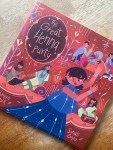
The Great Henna Party by Humera Malik illustrated by Sonali Zohra

Standard
The Great Henna Party by Humera Malik illustrated by Sonali Zohra

img_3465-1

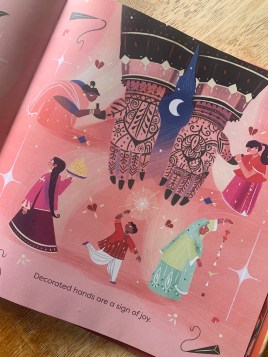
This 32 page story shares a desi family at a henna party before a wedding.  There is nothing Islamic in this book by a Muslim author, it is simply cultural.  The story on its own is fine.  It is sweet and joy filled, as a girl tries to decide who’s name to have hidden in her henna design.  I do wonder though, if the book is meant to be a window into desi culture, why the Urdu word “mehndi” isn’t used instead of henna.  It mentions it in the backmatter, that mehndi is the Urdu word, but it seems a little inauthentic and western gaze presenting throughout the story, and honestly I really struggled to get past it.

img_3466-1

The book starts with Noor entering the henna party, the night before her cousins wedding, to sing with the ladies of the family and have their hands painted.  Her mother asks her if she knows about the name game, where the bride hides the grooms name on her hands, and if he finds it, he wins, and if he does not, the bride wins. Noor asks if she can hide someone’s name and her mom says yes, just tell the artist.

img_3467-1

She watches her dad setting up decorations and wonders if she should have his name hidden.  She then sees her Mama playing the dholki and singing and wonders if she should hide her mother’s name.  She continues through various family members before making her decision.  Along the way the reader learns about the music, the food, the clothes, and how the paste dries and leaves a color.

img_3468-1

The page on food starts with spices, then talks of samosa and then they are eating ladoo, and while I’m glad there is not a glossary, I don’t know that the lacking context clues make any of those scrumptious foods known. I do like that her grandfather helped her pick out her lehenga, and her father is shown decorating to show full family involvement.

Ultimately, though I think the tricky thing about cultural weddings, is that every family has their own traditions, and while in a desi wedding some things might be widespread, when presenting them to readers outside your culture, it is hard to know how they will be perceived.  I almost feel like this book makes it seem that every family hides names in the mehndi as a staple of the festivities. And based on other reviews I’ve read, people seem to feel that this is insightful into the culture, or that hiding and finding names has more weight, a stress even, than just being fun.

img_3469-1

I could be over thinking it, but it feels like even the backmatter is trying to cast a wide net over every religion and culture that uses henna and ends up being oddly vague in this specific example.  Like I said the book is adequate, I like that the little protagonist Noor, loves so many people and solves her dilemma on her own, it has plot, and conflict and resolution, it just seems to lack the exciting tone and thus fails in immersing the reader into the henna party.

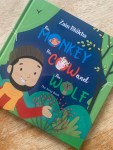
The Monkey, The Cow, and the Wolf (The Song Book) by Zain Bhikha illustrated by Amir Al-Zubi and Azra Momin

Standard
The Monkey, The Cow, and the Wolf (The Song Book) by Zain Bhikha illustrated by Amir Al-Zubi and Azra Momin

I was wondering when the book version of this song was going to be released.  It is a beloved at our house, and when the book arrived, I don’t know if the 4 year old or 13 year old was more excited.  Either way, none of us were able to read the book, we all, by about page two, were singing at full volume the story of the monkey, the cow, and the wolf.  If upon seeing this cover you didn’t immediately start humming the beloved kid’s song, then you are in for a treat with this book as three stories about animals teaching timeless lessons are shared.  The book is simply the lyrics of the song, so a parent might need to explain a bit, but the fun illustrations, and rhyming lines will make it a favorite for toddlers and preschoolers to sing and flip pages to, alhumdulillah.

The song/book is organized with a statement, a chorus highlighting the moral after each story and then repeating the opening framing statement.  The first story is about a business man who would cheat his customers, Allah swt sent him a monkey, and the monkey purified his wealth by disposing of half of it in the sea. The moral being that “Allah hates cheating, Allah hates lies, so give what’s due and receive what’s right.”

The next story is about a farmer and his cow.  The farmer works his animals way too hard, so Allah allows the cow to speak and tell his owner not to abuse him or the other animals.  The moral being that “Allah made animals, Allah made man, to all living creatures be kind and fair.”

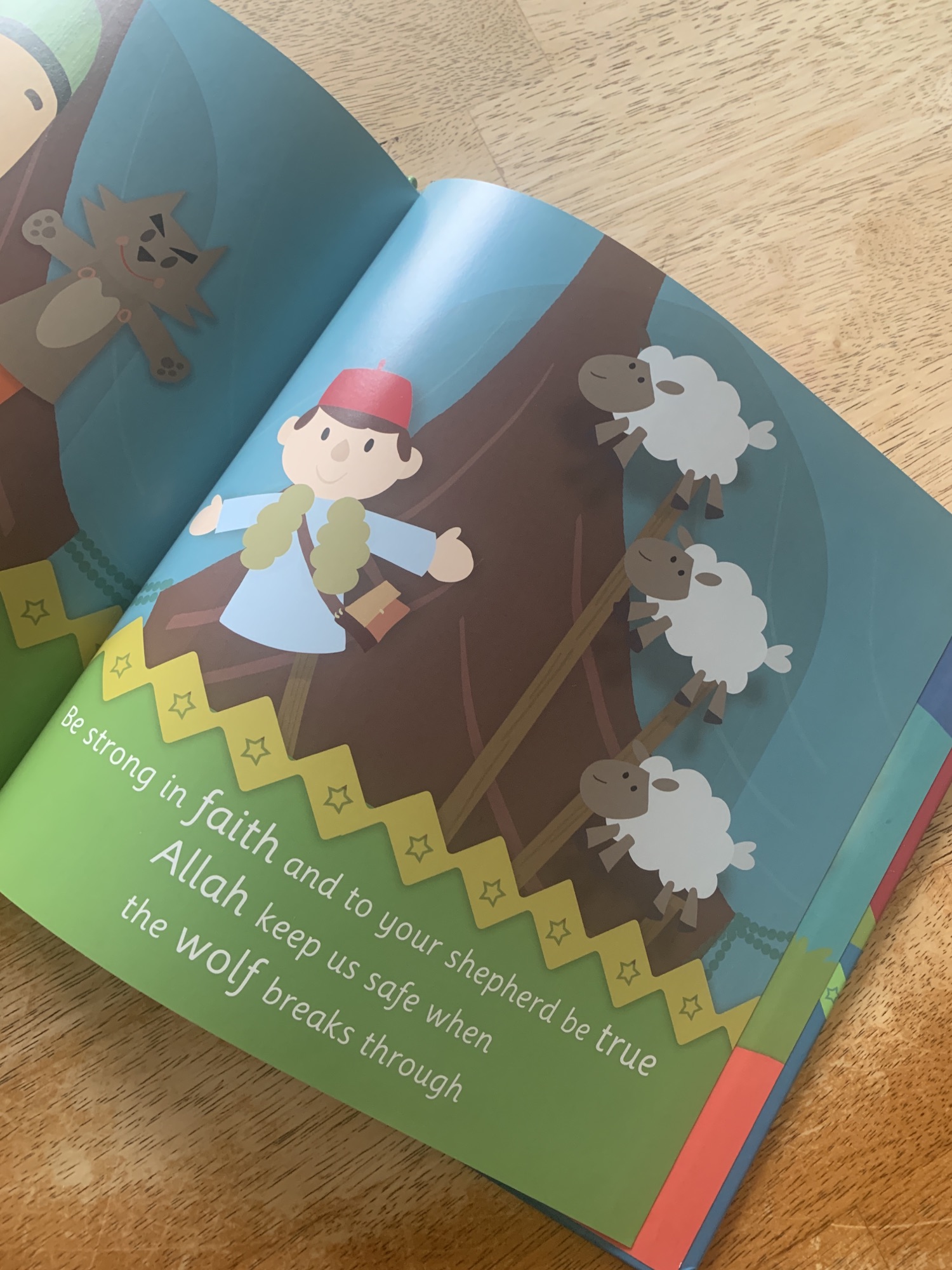
The final story is about the wolf trying to steal the sheep and the shepherd protecting them.  The warning is that the sheep must be strong in faith for the wolf will always be trying to take you.

The book and song are catchy and fun, and provide stories and morals to discuss with kids at story time and bedtime.  The only slightly odd thing about the book is that the last page is the inside back cover.  I’m sure it was a binding decision but it seems it could have balanced the title pages at the beginning to make it feel symmetrical.

Available to order HERE

Not Yet: The Story of an Unstoppable Skater by Zahra Lari and Hadley Davis illustrated by Sara Alfageeh

Standard
Not Yet: The Story of an Unstoppable Skater by Zahra Lari and Hadley Davis illustrated by Sara Alfageeh

img_2890-1

Despite my initial hesitancy, the book really won me over.  The inspiration behind the story is impressive, but even if it was complete fiction, it would still be a cute book.  Over 40 pages, the illustrations and simple text introduce you to Zahra, a young girl in the UAE with big dreams and a lot of determination.  And that is before she even sets foot on the ice.  Four to eight year old kids will enjoy the humor, with the older readers appreciating what she was able to overcome and accomplish.  Adults will appreciate the authors’ and illustrator’s notes at the end and seeing their kids being inspired to pursue their dreams.

The book begins with Zahra watching a movie at a theater and being inspired by the skaters on the screen.  She slides across the floor in her socks that night when she gets home, and declares she is going to be a figure skater.  Her brother points out that she doesn’t know how to skate. When she asks her friend to make her a costume, it is revealed that she isn’t even taking lessons. It seems everyone wants to point out the flaws in Zahra’s plans.  To which she responds, “not yet.”

Luckily her dad supports her, and takes her to the only ice skating rink in the country, where she promptly falls over again and again.  But there is something to be said for not giving up, and the true story of Zahra Lari shows that sometimes you have to be the one to break the barriers and remove the “not yets” on the path to achieving your dreams.

I found this book at my public library, but it can also be purchased here.

Until You Find the Sun by Maryam Hassan illustrated by Anna Wilson

Standard
Until You Find the Sun by Maryam Hassan illustrated by Anna Wilson

I don’t know that this book is particularly unique or mind blowing, but I read a digital copy a few weeks ago and was surprised when some tears fell, I read it when I got the physical copy to my kids and my throat caught again, and here I am writing this review and feeling all vulnerable.  It is as if I too am a little girl in a new place missing her grandfather on the other side of the world, which clearly I’m not.  The book is sweet, and moving, and I find myself emotionally invested every time I read through the 32 pages and get lost in the large sweeping illustrations.  The book is not Islamic, there are a few hijabis in the background and text that articulates friends saying salaam before the girl moves.  Additionally, the main character’s name is Aminah, and the author is of Pakistani decent, and has a Muslim sounding name.  The story though, at its core is universal, heartfelt, reassuring, hopeful, and lovely to share in all spaces. It begs to be read aloud and holds the attention of toddlers to early elementary aged children.

The book starts with a happy little Aminah in a bright sparkly environment of sunshine, mangoes, and salaams.  Every night she listens to Da’s stories of adventure as she snuggles next to her grandfather.  One day she finds out they are moving, going on an adventure.  Only Da won’t be joining them and Aminah is devastated.

The new home is gray, and cold, and no adventure at all.  She wants to go back, but Da reassures her during their nightly conversations that things will get better.  And sure enough, with a bit of bright yellow inspiration, she starts to discover the adventures awaiting in her new home.

Kids will find the end hopeful and resolved, but I somehow found it a little bittersweet.  Da loves his grand daughter and wants her happy, but the adult me, realizes their relationship will never be the same, and Da will miss her in many ways, alone, as she embarks on her own life.  I know I’m projecting, but the ability to see both perspectives adds a nice layer to the book.

The book is available here from Amazon and will be in local libraries in June 2024.

Ilyas & Duck: Spectacular Salah by Omar S. Khawaja illustrated by Mattia Cerato

Standard
Ilyas & Duck: Spectacular Salah by Omar S. Khawaja illustrated by Mattia Cerato

img_3321-1

It has been a minute since we have had a new Ilyas & Duck book to read and share with our kids, and this one focusing on prayer is informative, fun, and was well worth the wait.  It is also long, 48 pages long to be exact.  There is a lot of information and works best for ages six or seven and up.  The clever rhyme and engaging illustrations tell about wudu, the times of the five daily prayers, Surah Al Fatiha, facing the Kabah, having the right intention, connecting with Allah, and not being distracted. I love the framing that salah is not just an obligation, but is an opportunity to talk to Allah swt and should be spectacular.  The author reads his books aloud a lot to kids, so if you have ever seen one of his readings, I highly recommend channeling the voices and energy, to hold the audiences attention if using the book at story time.  If reading at bedtime, or if handing to an independent reader, take the opportunity to discuss the points, check understanding, and reflect upon what Duck is learning.  As always the banter between Duck and Ilyas keeps the kids laughing, the story moving, and the information flowing, alhumdulillah.

The book starts with two verses from the Quran and the hashtag #freepalestine, before entering the world of Ilyas and Duck one summer afternoon,.  An alarm goes off and Ilyas heads off to make wudu and pray.  Duck couldn’t get up though, he prayed earlier, so he thought he was done.  Ilyas explains that there are five prayers in the day, and Duck is seriously worried that Fajr, Dhuhr, Asr, Maghrib, and Isha are going to cut in to his game time, snack time, and movie time.

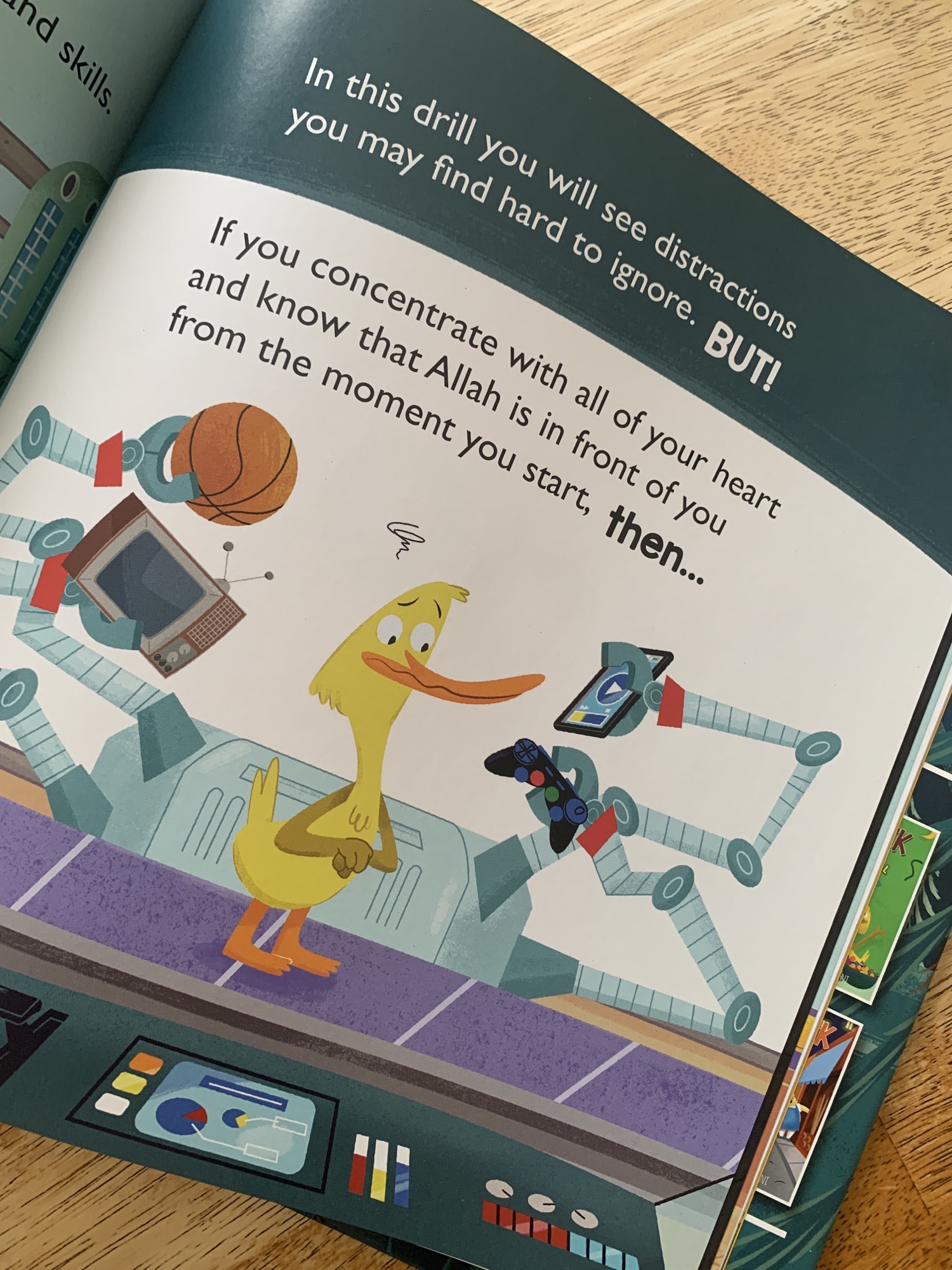
When Ilyas tells Duck that prayers don’t take long and it is when you speak to Allah swt, Duck in his enthusiastic way is determined to make each and every prayer spectacular. He drafts a plan, learns the steps and what to say, finds the direction, makes his intention, says Allahu Akbar and starts training. 

He is praying all over the Earth whenever the time comes, but then he learns he can do more and goes to visit the Professor.  He learns about connection and closeness to Allah.  He also learns about using his heart and staying focused, before rushing back to tell Ilyas all that he has learned.

The book covers a lot of ground, and gets kids excited to pray.  I like that the information is a mix of highly detailed specifics, general knowledge, and humor.  The way the salah times are described and the emphasis on connecting with Allah swt and making your prayers heartfelt is not often seen in books for this age group, and I think it gives the book a wider lasting appeal.  My 8 year old did point out after reading it independently and laughing, that if Duck prayed Fajr didn’t he know a little bit about prayer already?  Also, given the length of the book, a line clarifying that infact not all places on Earth are ok to pray upon, would have been nice. 

img_3327-1

I hope this book signals more books in the series are heading our way.  I notice that the illustrator is not the same, but the pictures are similar enough I doubt most kids will notice. The book is widely available and can be purchased from Amazon here or from Crescent Moon here

Trouble at Taraweeh by Rosalind Noor illustrated by Rania Hasan

Standard
Trouble at Taraweeh by Rosalind Noor illustrated by Rania Hasan

img_3132-1

I love funny books that are Islamically accurate, Muslim filled, and informative as well.  Alhumdulliah for this outrageous Ramadan tale, that gets kids laughing and parents horrified.  A frog on the loose at Taraweeh on the 21st night, and a little girl who is a self proclaimed “trouble magnet,” focuses on Laylatul Qadr, good intentions, and Allah swt hearing our prayers.  It is text heavy, so for a read aloud, think slightly older children, seven or up, would be the ideal audience, but in a bedtime story setting the illustrations will keep younger ones engaged.

img_3133-1

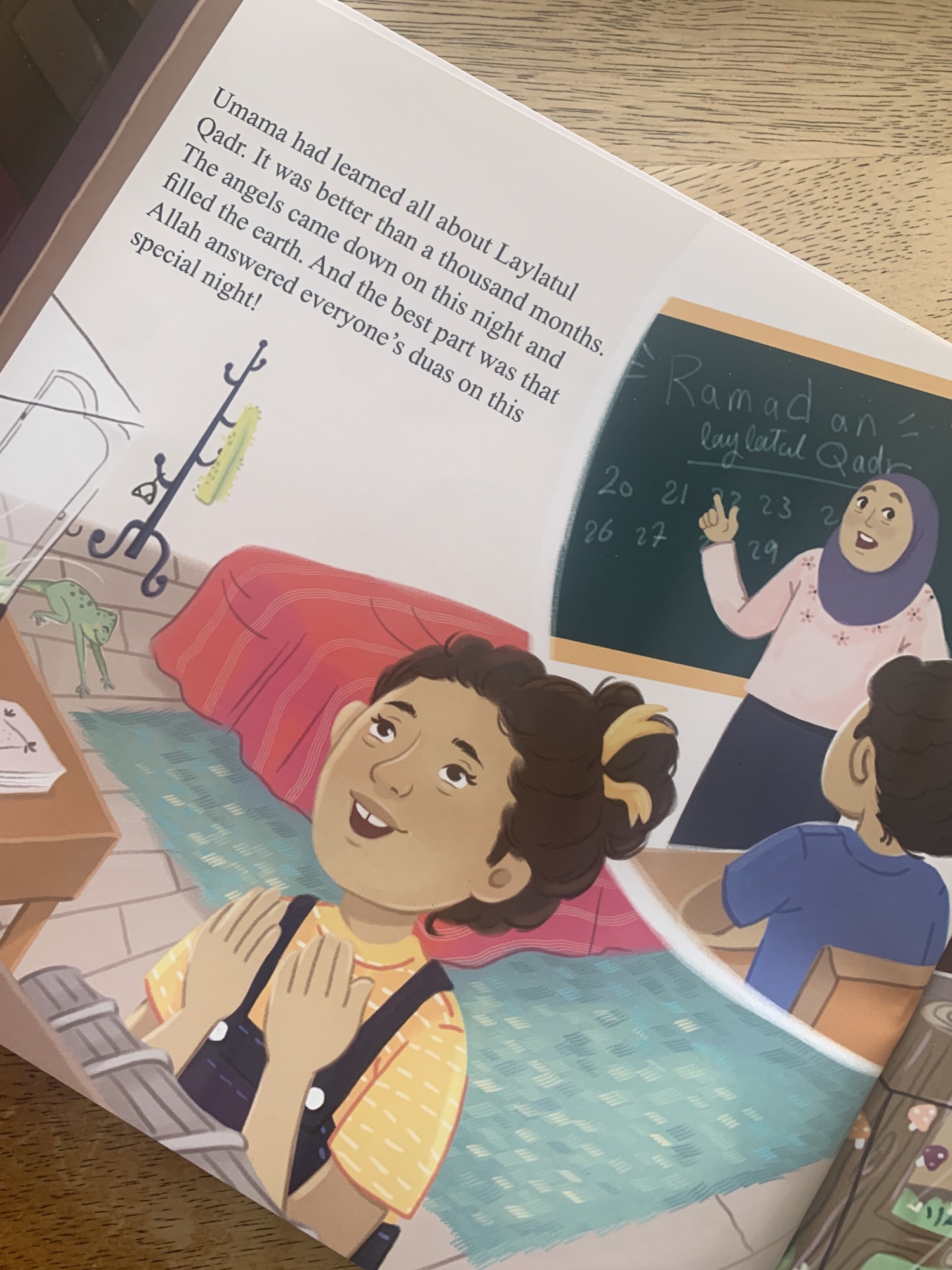
The book starts with Umama looking forward to Laylatul Qadr.  She knows duas are answered that night when the angels come down and fill the earth, and she has a special dua to make, she really wants a little sister.  It is the first odd night of the last ten days and she has had an eventful Ramdan so far.  She accidently flooded the wudu area, she tripped on her prayer skirt and knocked people over, she even tried to organize the shoes, but then no one could find their shoes.

img_3134-1

Tonight she is determined will be trouble free, which naturally means, it won’t be.  Fluffy, her frog, gets loose.  She apologizes to the woman as she scoops him off her head, but then…he gets away from Umama, and the chase is on.

img_3135-1

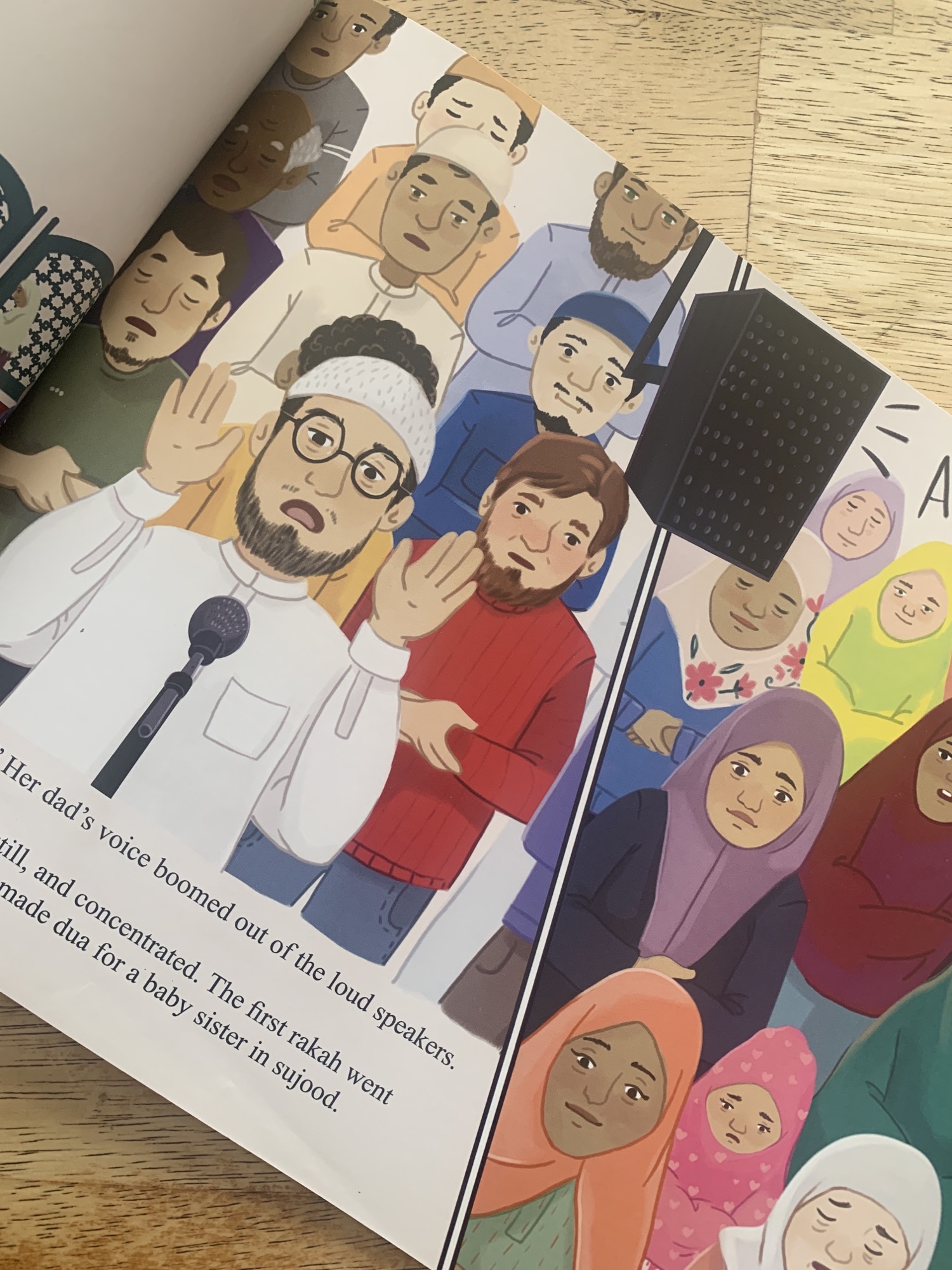
With plugs getting yanked, breakers being flipped, and little Umama asking Allah swt to help her make it right. The imam, her dad, keeps his cool and somehow you find yourself, parents included, feeling bad for Umama and hoping she has a smooth remaining Ramadan.

img_3136-1

The expressive illustrations are  bright and complementary to the story.  Kids enjoy looking at them and they really do help hold the kid’s attention as the story unfolds.  So many of my Ramadan staples come from Ruqaya’s bookshelf, and this is a great addition to the shelf.

The book is available here at Crescent Moon Store

img_3137-1

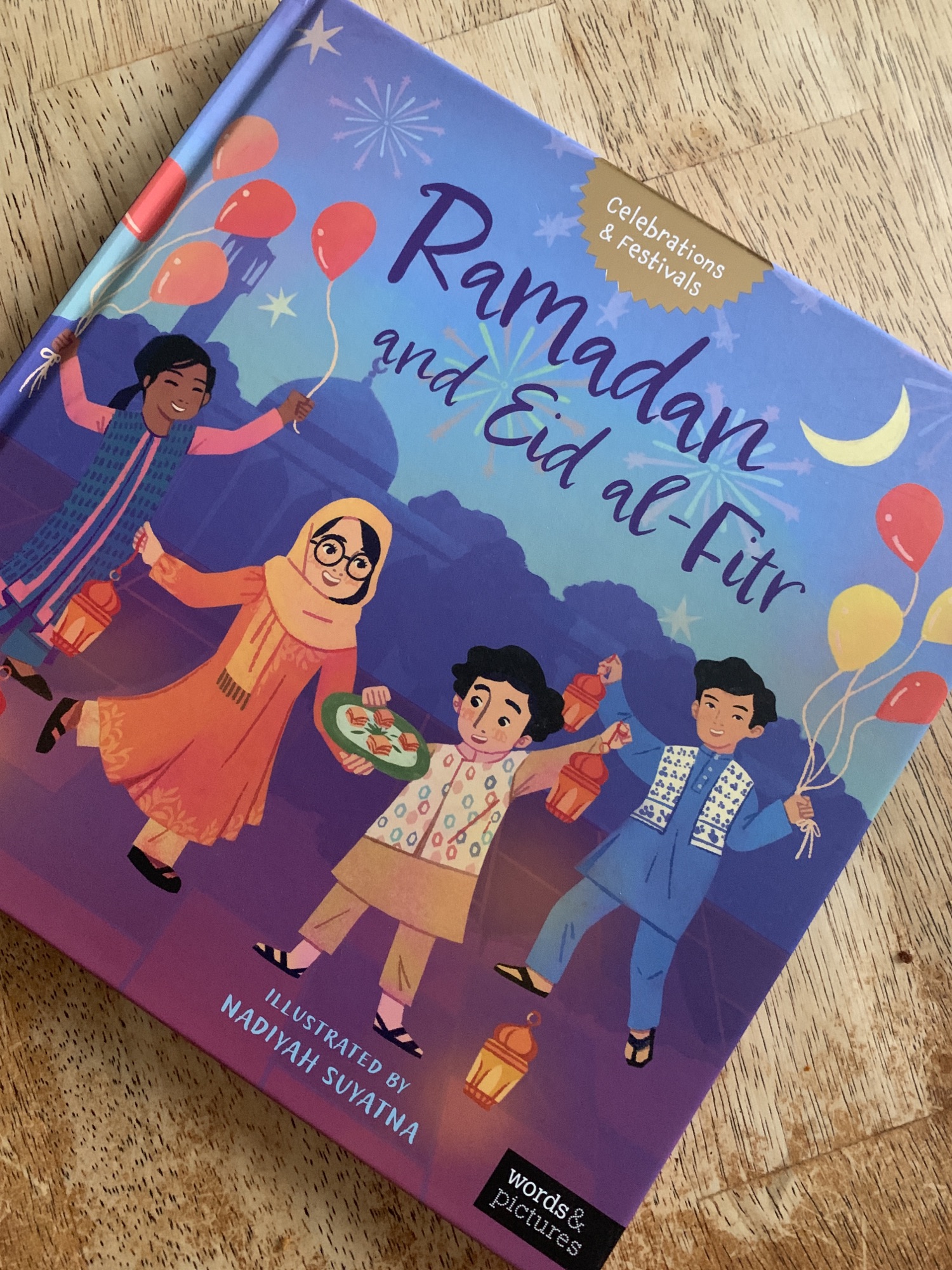
Celebrations and Festivals: Ramadan and Eid al-Fitr by Sara Khan illustrated by Nadiyah Suyatna

Standard
Celebrations and Festivals: Ramadan and Eid al-Fitr by Sara Khan illustrated by Nadiyah Suyatna

img_3101-1

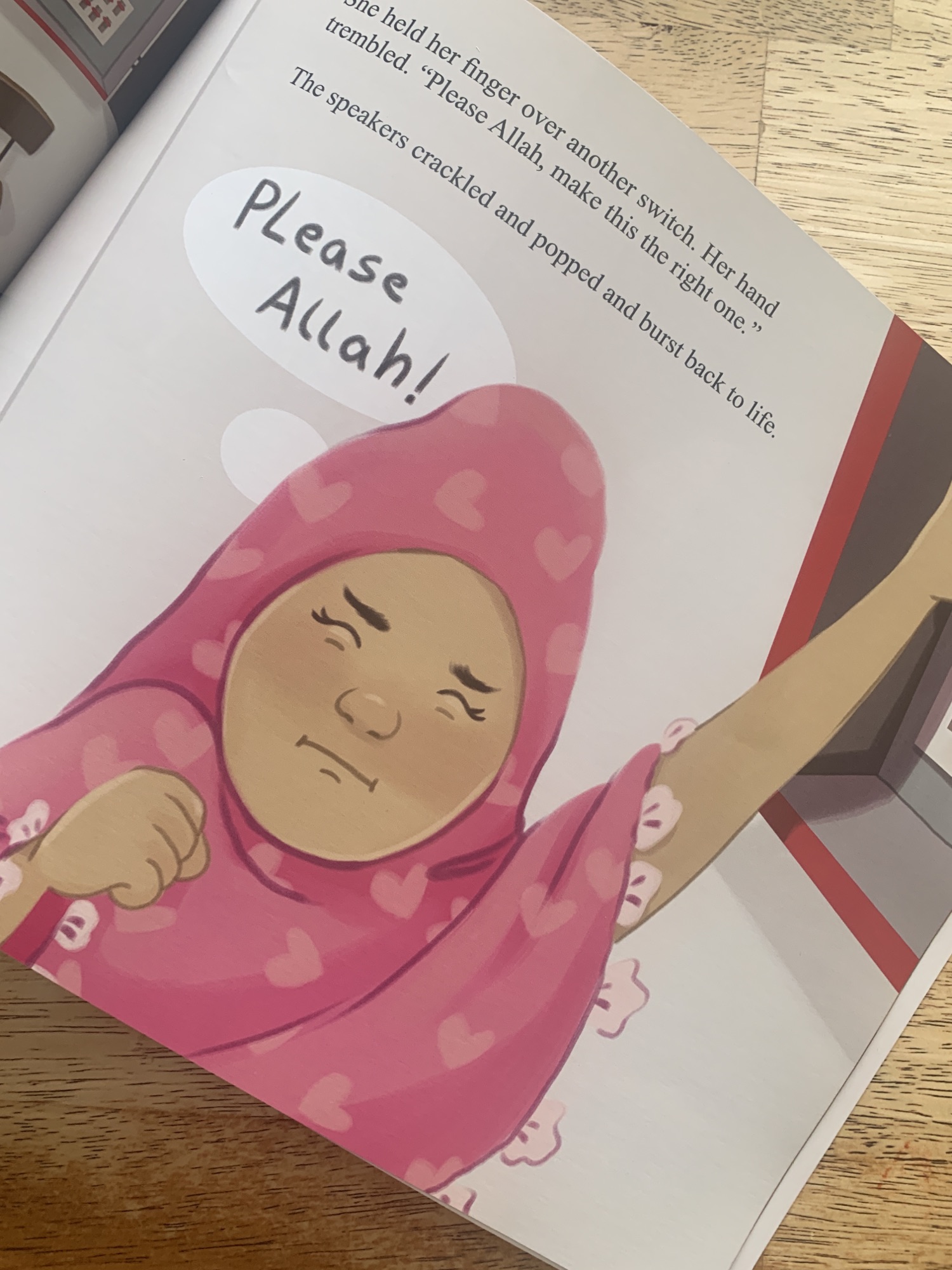
This 48 page, informational based book is told through a little girl explaining her Ramadan and Eid days in a fictionalized story format. The information is not new, nor is the framing, and it has my pet peeve  line of “Ramadan is the ninth month in the lunar calendar,” but aside from that, the book does a good job of showing the joy, the activities, the faith, and the importance without self-othering, unrealistic cluelessness, or watering down. For whatever predictability the story has, the back matter is excellent. The additional information about Islam, the crafts, and even the quiz, make this book a standout in a crowded category. The book does not talk down to readers and thus works for Muslim and non Muslims alike. It also is unapologetic and informative making it a good book to share with non Muslim classrooms wanting to learn about Ramadan without crossing into “preaching.” The illustrations are warm and joyful bringing the lengthy book to life.

The story starts with Raya introducing Ramadan and then herself to the reader. She then details her Ramadan day. From sighting the moon to doing the good deed suggestions on the countdown calendar. It explains Allah swt and that adults are required to fast but kids are not. Raya spends time exploring how hard it is to skip snacks, but remains hopeful that when she is ready to fast she will be able. Her father also reminds her about other aspects of Ramadan and being on your best behavior as Raya helps set the table, donates to charity, and reads Quran. Throughout it all, informative details about Muslims are threaded through. Focusing on Raya herself also breaks some stereotypes as she discusses the joy found in a wide variety of foods from many cultures, Eid prep, looking for the moon, having henna put on, and heading out for Eid prayers and festivities. There are numerous details universal to all Muslims presented, as well as unique highlights specifics to Raya’s family such as showing the family bowling and reflecting on mini golf last year, activities that even her grandparents can participate in.

img_3104-1

The robust back matter starts with Fun Facts about Islam, stats about Muslims, details about the five pillars, etc.. The next two page spread is about the lunar calendar and has a pullout bubble explaining the use of the phrase “peace be upon him.” Then there are directions for a pop-up Ramadan card, Then information about the month of Mercy, Laylat al-Qadr, paradise, a recipe for Ramadan Cookies, info about Masjids, and finally a quiz, with answers.

img_3105-1

I like that the book balances showing joy through Raya’s personal experience, with facts about Ramadan, Eid, and Islam. I also like that Raya knows all this, my hatred of the formulaic child waking up and wondering why her family is up so early eating breakfast or a child wanting to fast and the family not supporting them is not widely realistic, and I appreciate that this book feels very reflective of what our kids feel, experience, and know about the blessed month. I also like that it features food, but does not dwell on it, and yes there are presents for Eid, but again it doesn’t make it the central factor in the joy she is feeling of being with her family.

Noura’s Crescent Moon by Zainab Khan illustrated by Nabila Adani

Standard
Noura’s Crescent Moon by Zainab Khan illustrated by Nabila Adani

img_3075-1

I know, I know, another Ramadan book about the moon and a little girl’s first fast, but this one is slightly different.  The moon they are searching for is the Eid moon and the focus is on whether they will see it and Eid will begin, or if there is one more day of fasting.  The story itself would not make sense if it wasn’t Ramadan and the characters Muslim, but the story only subtly sprinkles in bits of Islam, the backmatter though, is where the Islam really shines.  The tone of the book with the lyrical text and full color illustrations is very relatable to Muslims that both want to see the moon and celebrate, while at the same time being sad the the blessed month of Ramadan is over.  It comes from a Desi centric approach to the foods, and traditions, but their aren’t a lot of Urdu words used either, and those that are, are defined at the end.  The book works for Muslims and non Muslims, and would benefit both groups with a bit of discussion. Overall, not a particularly memorable book, but one that stands out for focusing on the tradition of looking for the moon and being together as a family.

I love that the notes at the end do mention that Muslims fast to “show love and obedience for the Creator,” under the Ramadan header.  The other backmatter headings are Eid ul-Fitr, Suhoor, Iftar, Chaand Raath, Pakora, Gulab Jamun, Sheer Khurma, and The Islamic Calendar and the New Moon.  A lot of space is dedicated to food, explaining those mentioned in the story.  It gets it right that Muslims begin fasting at dawn, it shows mom not wearing hijab at home, but wearing it when they go out, yet, it doesn’t just say the maghrib athan it refers to it as the “call for the twilight prayer.”  And it doesn’t mention or show them praying, which would have been a nice inclusion.

img_3080-1

The book starts with Noura playing outside and her tummy rumbling on this 29th day of Ramadan, and her first fast.  Mama, Papa and Noura all help make and pack up iftar, as they get ready to go look for the Eid moon.

img_3079-1

Before they go, Mama shows Noura her new dress, and they add some henna cones to the items they are taking, they then set out to the countryside.  All along, Noura is hoping to see the moon and her parents are reminding her how rare it is to see it.

When they get to the hill there are other families already there, and Noura has done it, completed her first fast.  Unfortunately the moon is not there as hoped, or is it?

img_3078-1

I wish some duaas or Islamic expressions, and salat would have made it into the book, but the large hardback size makes this a good book to read at story times, and a nice way to explain why we don’t know when we will miss school to celebrate Eid, or how many days we will fast.