Category Archives: Muslim Illustrator

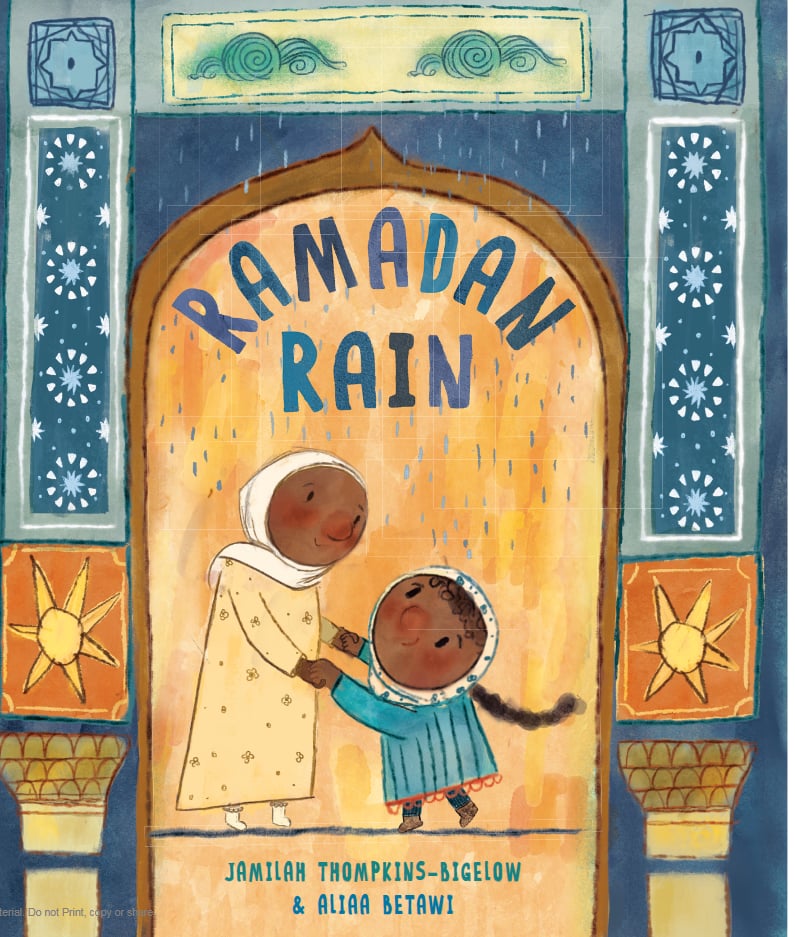
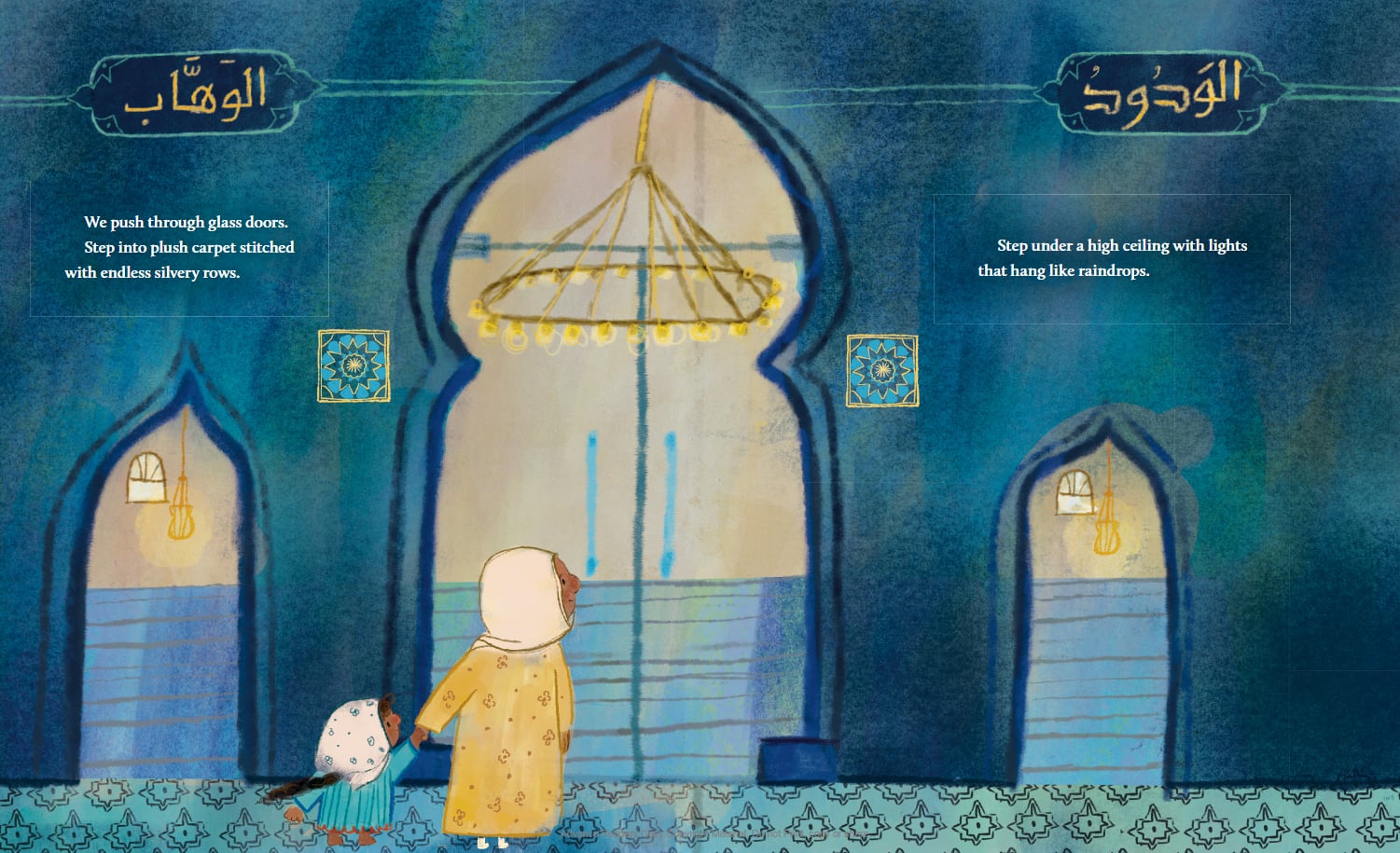
Ramadan Rain by Jamilah Thompkins-Bigelow illustrated by Aliaa Betawi

Standard
Ramadan Rain by Jamilah Thompkins-Bigelow illustrated by Aliaa Betawi

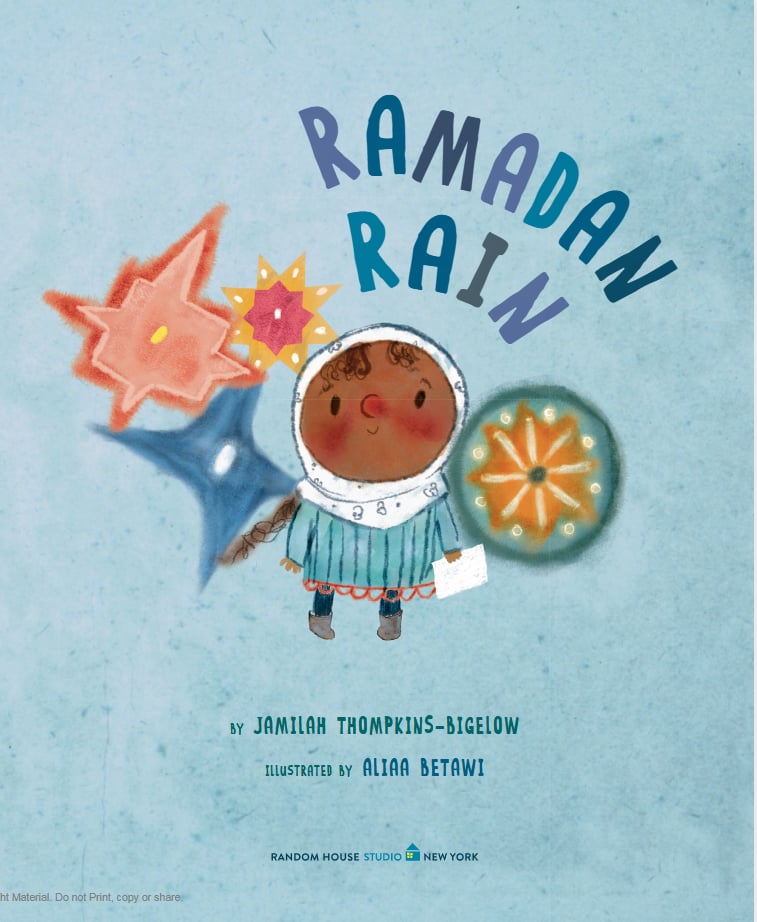
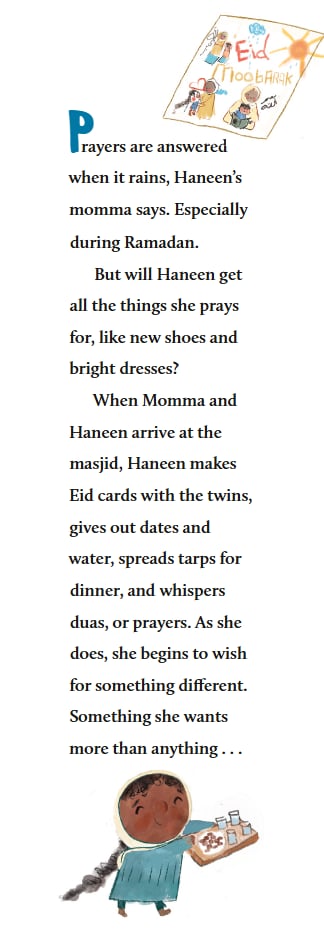
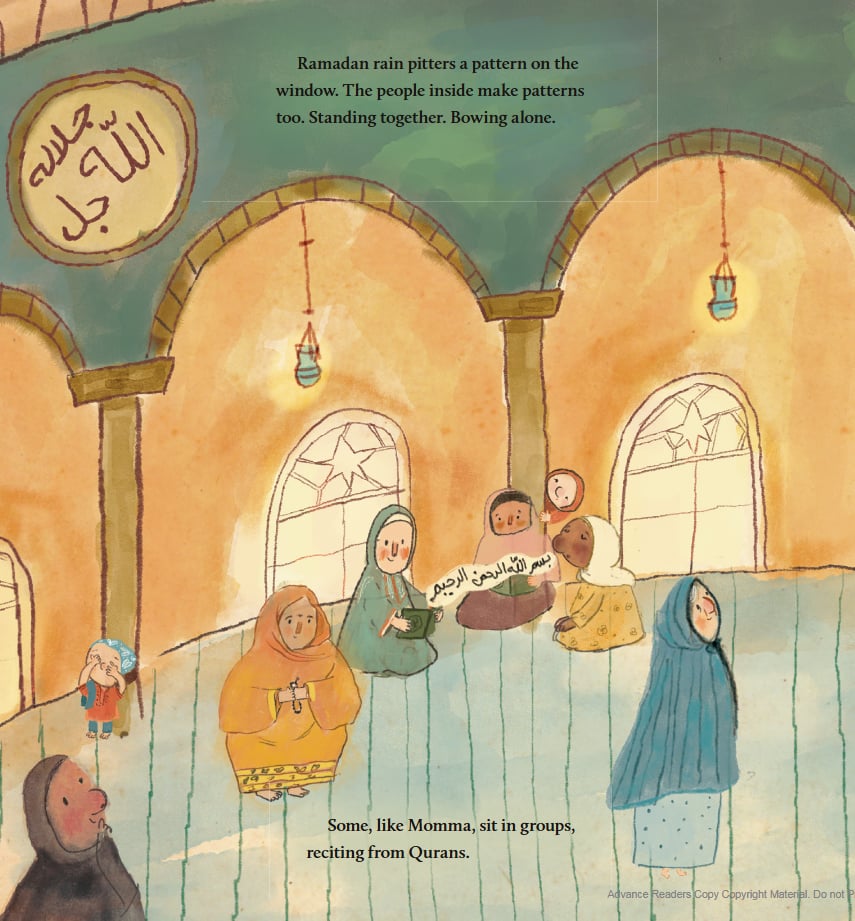
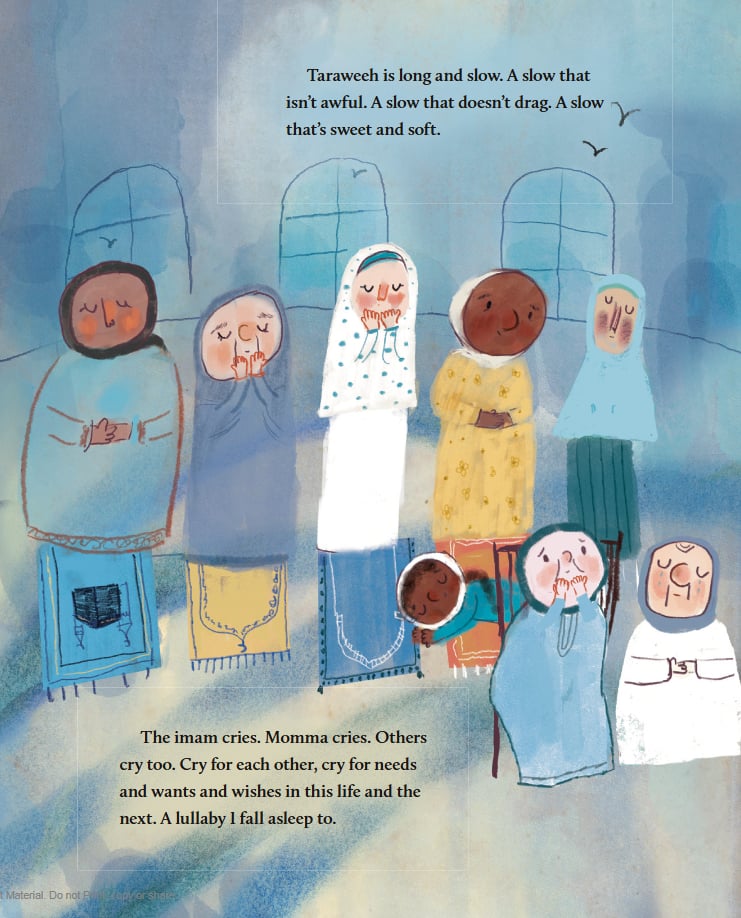
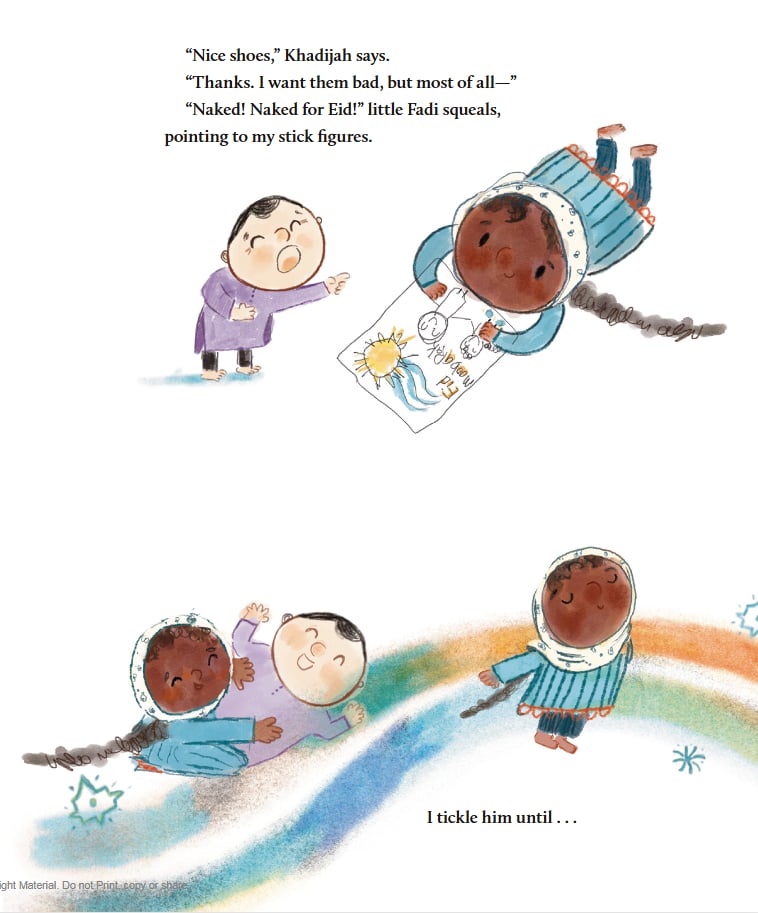
This 40 page book is all the feels as little Haneen’s Ramadan duas change from the material to the heartfelt while the rain pours down, taraweeh prayers are made, fun is had, and hearts are touched.  In true Thompkins-Bigelow fashion the book presents in layers that pull the emotional threads without turning didactic and preachy. The adorable illustrations complement the text and by the page when the characters are crying, I too, found tears in my eyes. I love that praying, duas, and practicing Islam is not sidelined, as current Ramadan and Eid books seem to do, but rather centered and celebrated as a source of comfort and joy. For the most part the external catalyst moving Haneen’s internal change were seamless, but the page with the little boy pointing and calling the drawings on her card naked, seemed a little jarring to the tone, even though I can see the function it served. I also acknowledge that a physical version might not make it as abrupt. Additionally it is worth noting the very nature of reviewing is to over think, so to be completely honest, by about the fifth reading I began to wonder, did her perspective change? There was no pivotal moment that set it in motion, it seemed she just got carried away in making the Eid card and never got to articulate what she really wanted to her mom. The initial dua is for the shoes that the family can’t afford, which I already felt was inconsistent because when asking Allah swt nothing is impossible, and the whole premise is that it is Ramadan and on top of that raining, but that aside, even when she first draws them, she states that it isn’t what “she really wants.”  So now, I’m wondering if anything really changed at all, or she just never clarified and thus the reader as well  her mom are taken along from Ramadan night to Eid day.  Also in the arc I read, it seemed a word was missing on page three that will hopefully be fixed in the final version. I love the tone and the warmth, and I know most won’t read it as deep as me, but the publication is not until March and I wonder, and hope, a few tweaks might still take place.  When my pre order arrives, I will revisit the review if need be, and yes, even with my critiques, I think this is a book that will delight all ages this Ramadan and give plenty to reflect on throughout the year.

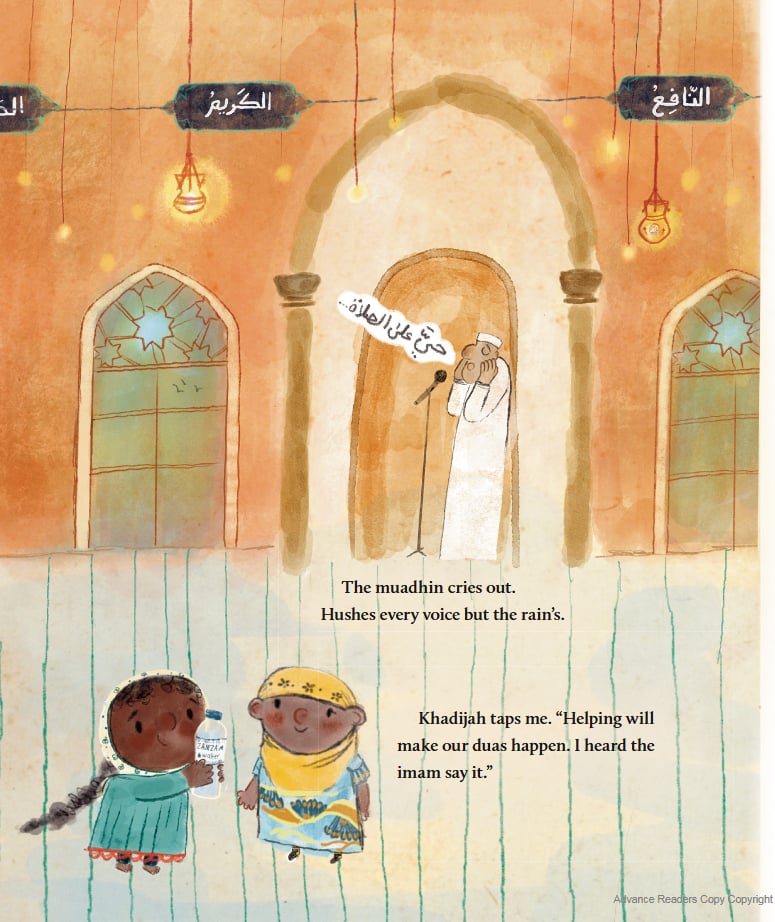
The book starts with a grumpy Haneen sitting on a bus, walking in the rain, and arriving at the masjid a little wet and muddy recalling when they had a car and things were easier.  She starts to complain but catches herself knowing that they can’t afford things, and Momma tells her that, “rain brings blessings.”  She also reminds Haneen that duas said on a rainy day get answered, especially during Ramadan.

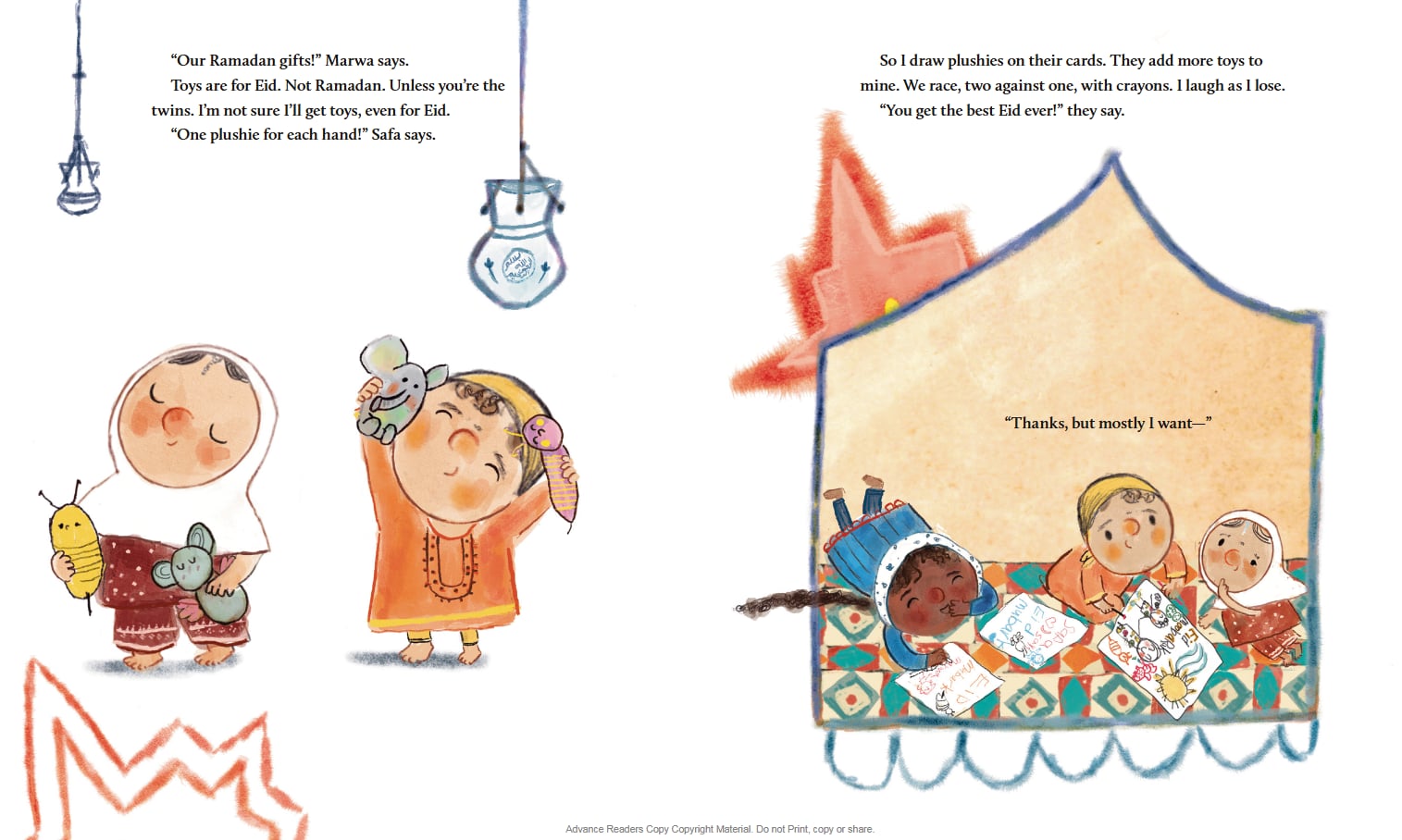
Once in the masjid, Momma reads Quran and Haneen starts to make duas for the shoes she wants but knows they can’t afford when she is distracted by friends, and they start making Eid cards. They children work together, and when it is pointed out that Haneen’s stick figure has shoes, but no cloths, she marvels at the different dressed women around her, before adding her favorite to the picture, wondering if she can get new clothes for Eid.  The pattern continues, she sees the twins with plush toys, and thus plushies are added to her wants, and filled in on her Eid card, as the congregation moves from athan, to iftar, to salat, to taraweeh.

When Eid comes, SPOILER gifts come from unexpected places, and a new card, showing what Haneen really wanted and prayed for that rainy Ramadan night are revealed, alhumdulillah.

40 Hadiths for Children by Yasmin Ayub illustrated Sabahat Hareem

Standard
40 Hadiths for Children by Yasmin Ayub illustrated Sabahat Hareem

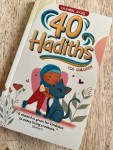
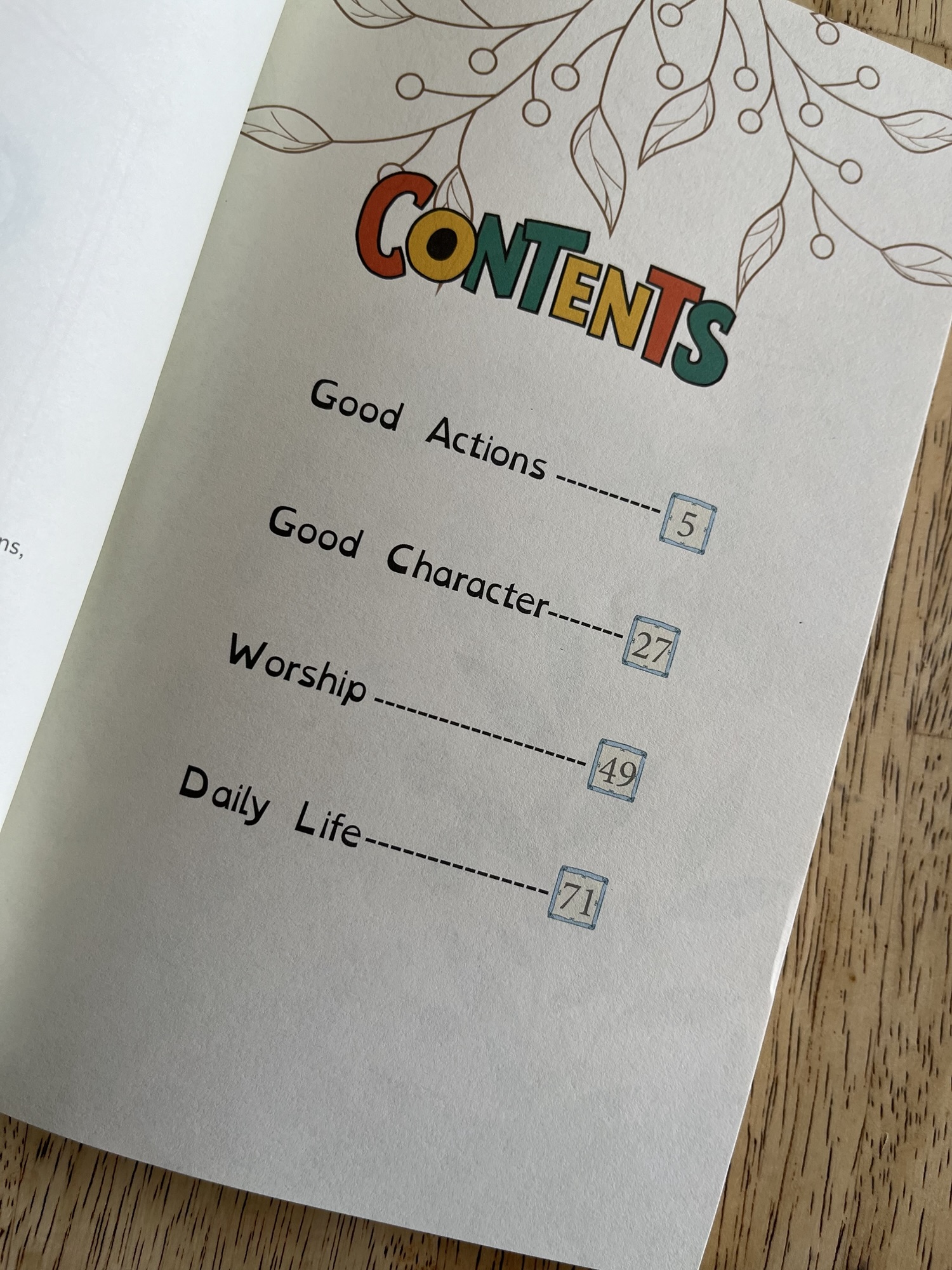
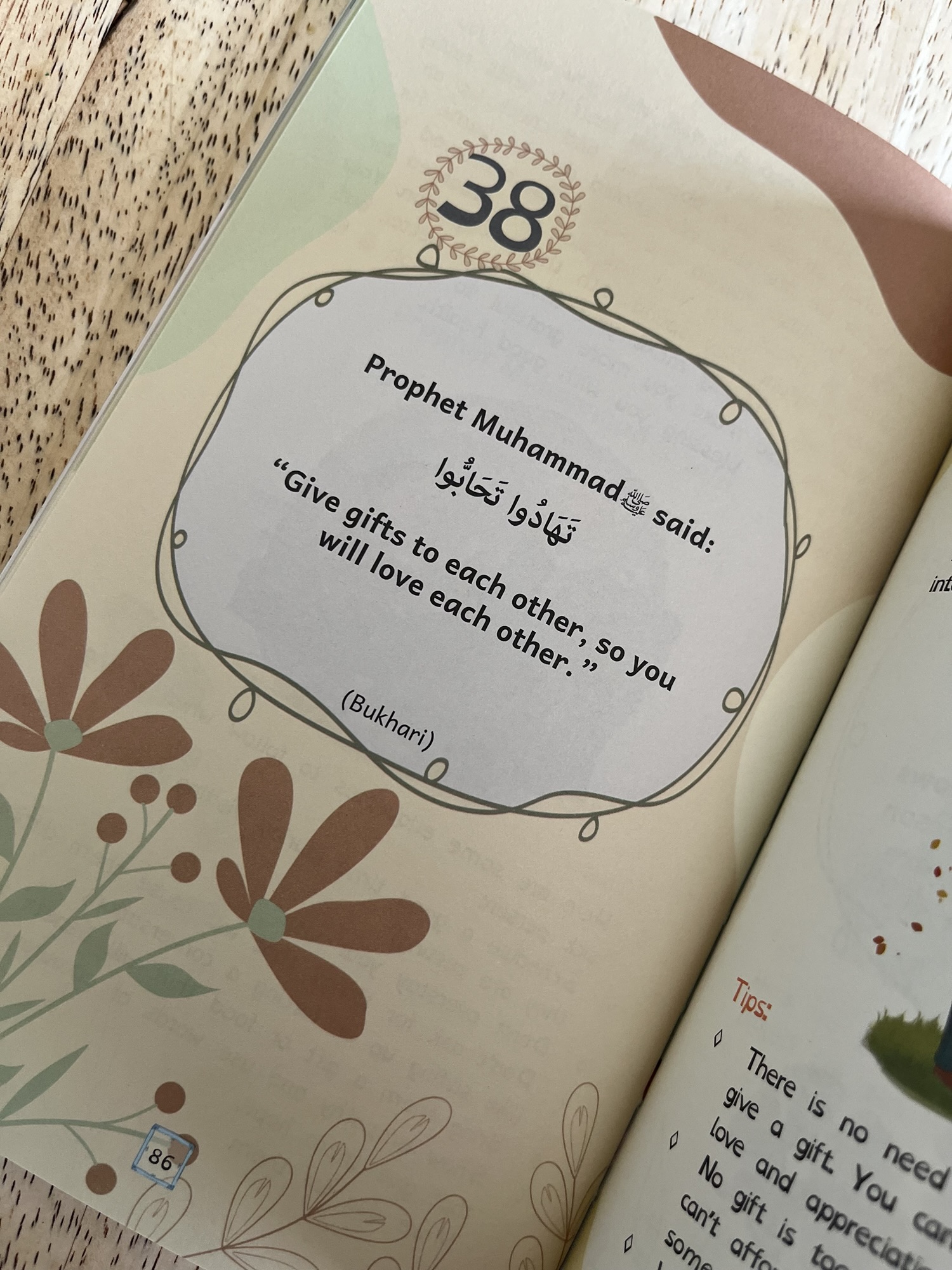
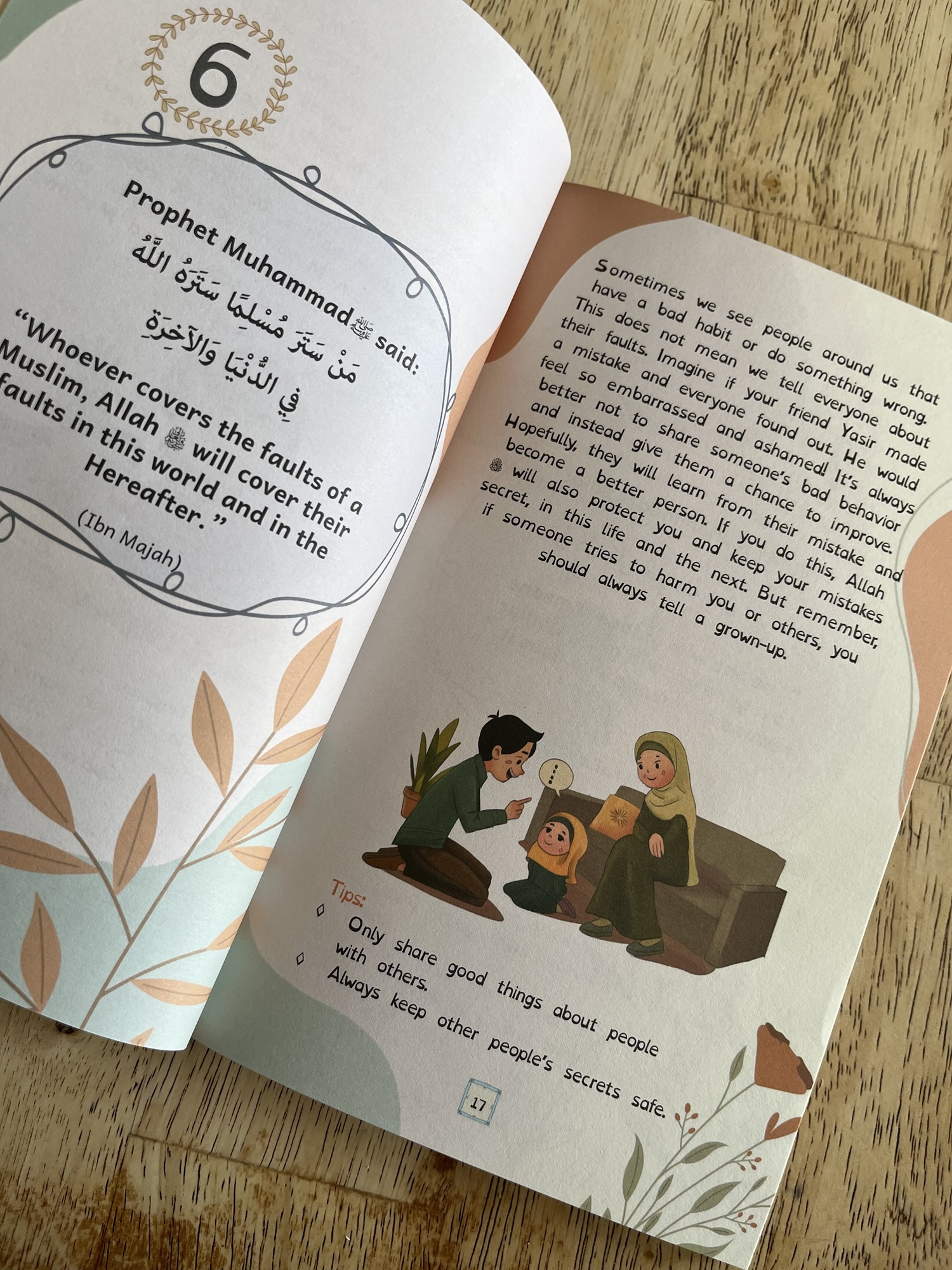
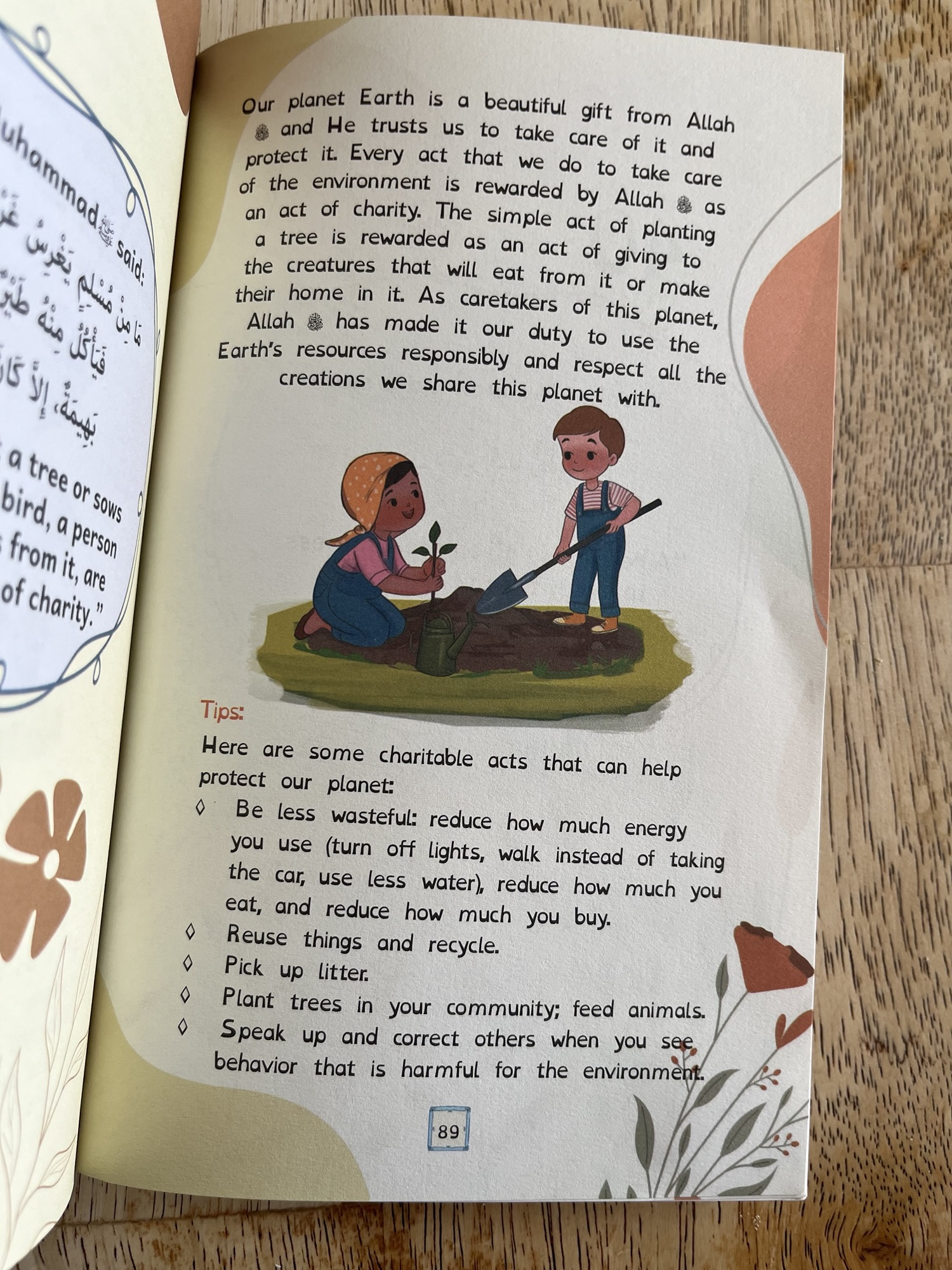
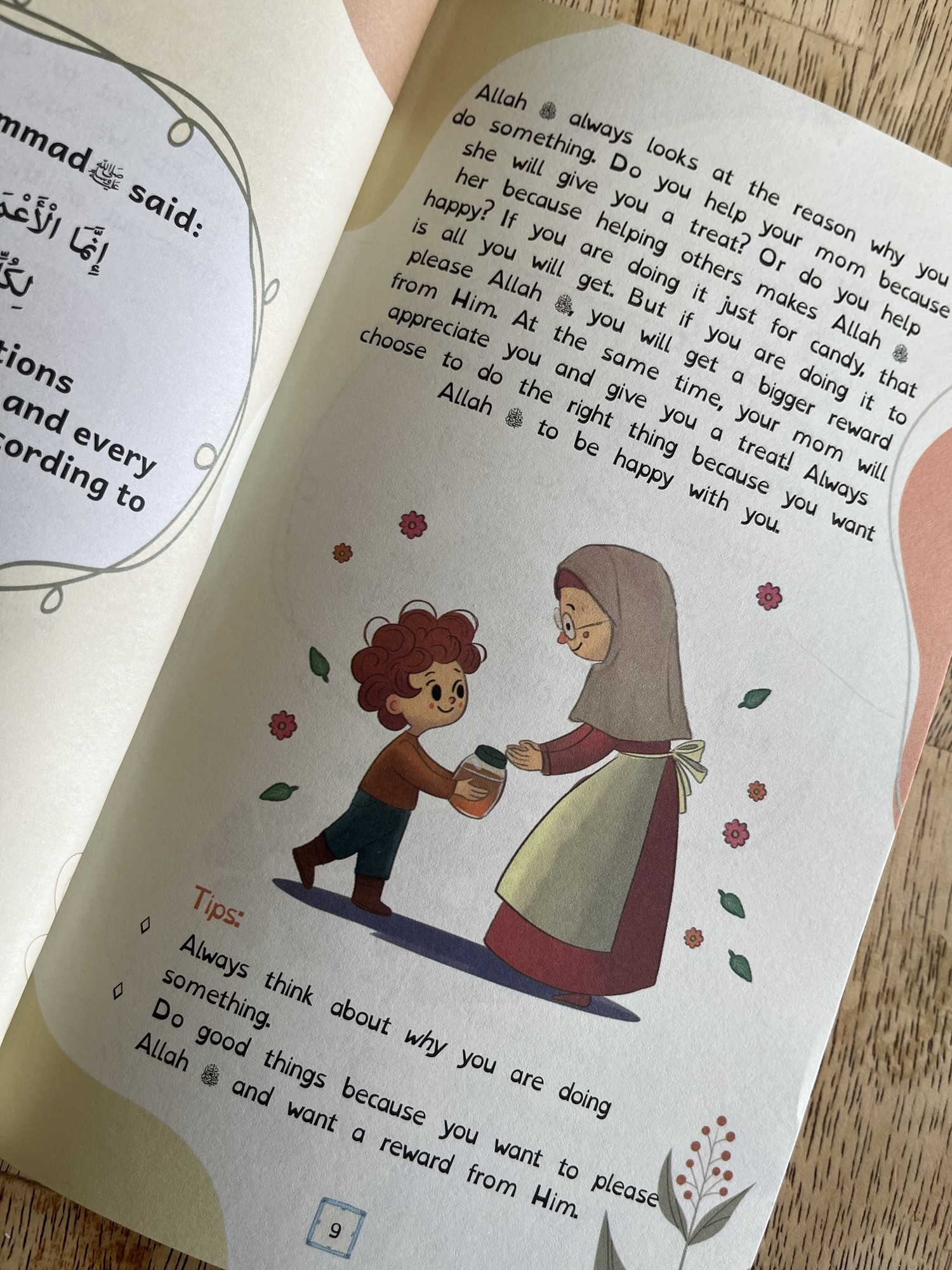
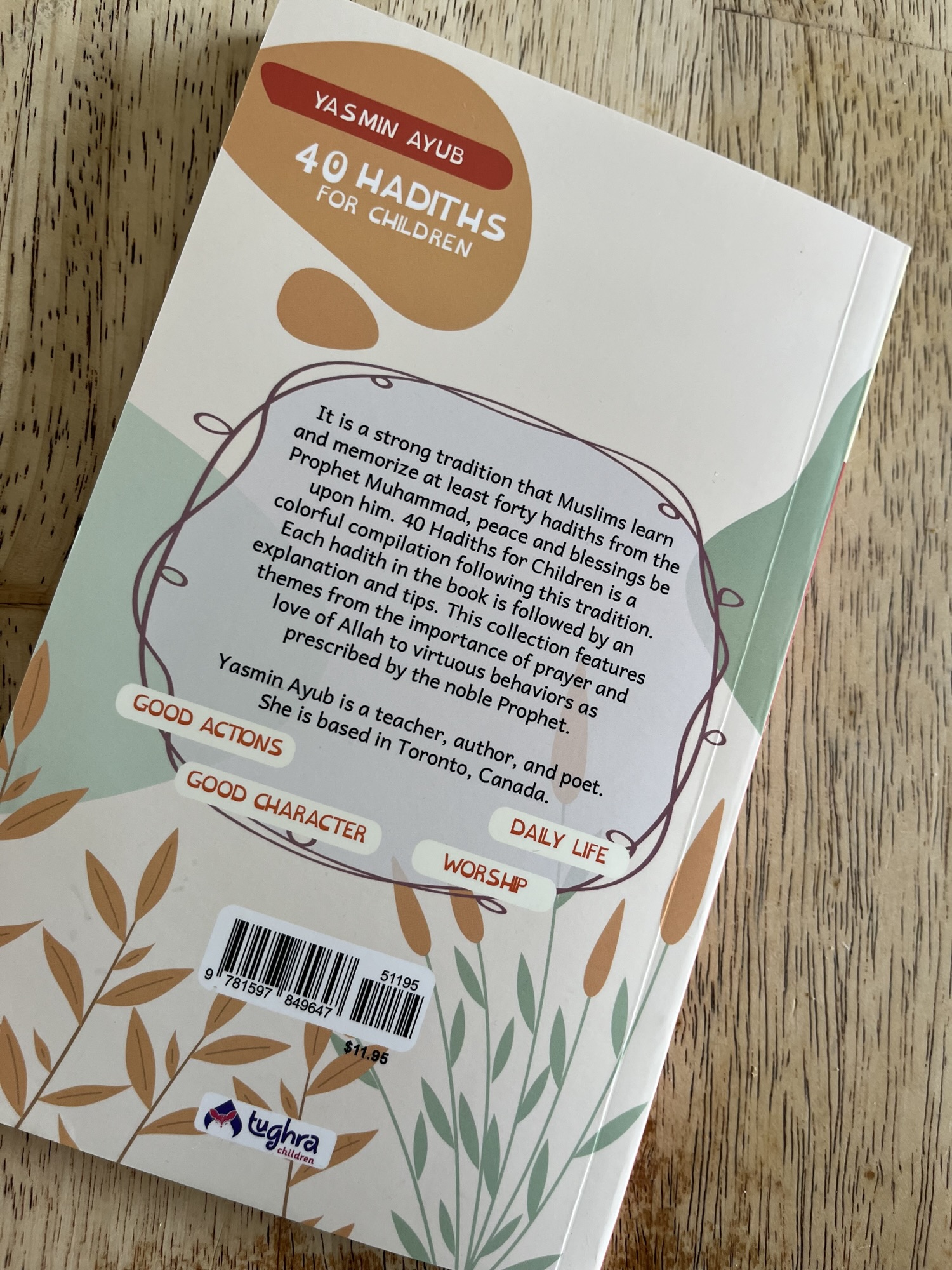
My first thought when I received this book is that it is tiny and will get lost on the shelf, but the prodding of a friend encouraged me to give it a chance, and subhanAllah, it is a delightfully well done book that I now nightly read with my kids, reread myself, and have floating around so that my teenagers also thumb through the contents within.  Divided into four sections: Good Actions, Good Character, Worship, and Daily Life, each two page spread has an attributed hadith in Arabic with English translation opposite a page giving some relatable context, scenarios and further explanation, along with tips to put the hadith into practice.  The sweet illustrations break up the text, making it enticing to read and easy to consume.  The writing is on level for elementary, but not condescending for older readers, and the organization makes the book easy to spend time with in a variety of settings at home, school, or at masjid activities.

I particularly enjoy that the messaging is on level for today’s children in an appropriate and relatable tone.  For example, the page encouraging the covering of faults makes it clear that if someone tries to harm you or others, you should tell and NOT cover that, which is so important.  That the author is a teacher shines through throughout as little tidbits such as that allow the book to be shared independently, and don’t require that an adult provide the context and discussion for the hadith included.  I find that when I read the pages as written, my children speak after, and I get to listen. They don’t seem to have any further questions, but rather want to share what they have done or can be better at, which speaks to a book well done, alhumdulillah.

As for the “tips,” they are a mix of more generic, but on point, and some are very specific such as the visiting the sick allowing the child to immediately put into action certain behaviors, and allowing others to be regularly worked at and contemplated.

Our Neighborhood: Radiant Ramadan by Marzieh Abbas illustrated by Anoosha Syed

Standard
Our Neighborhood: Radiant Ramadan by Marzieh Abbas illustrated by Anoosha Syed

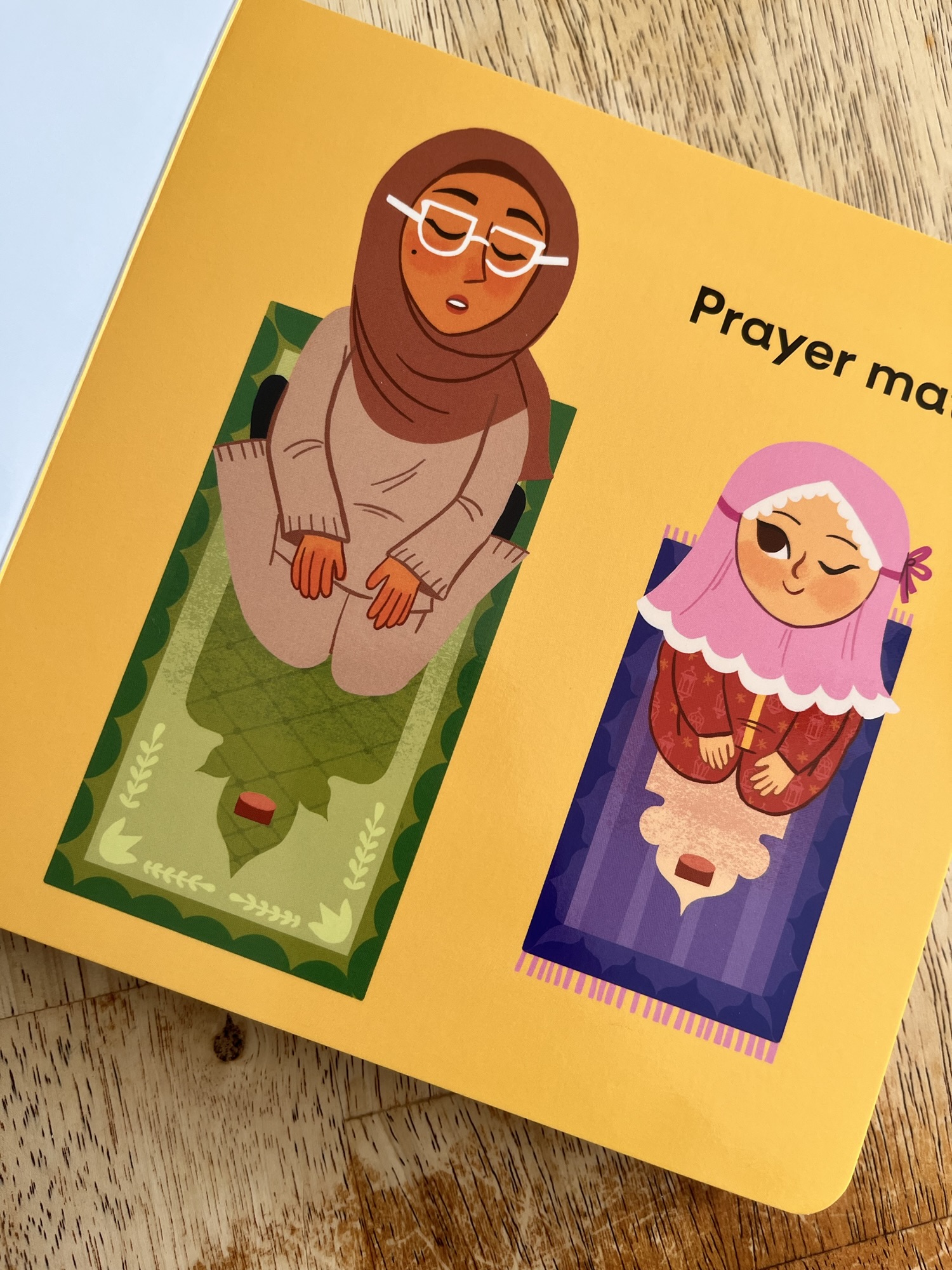
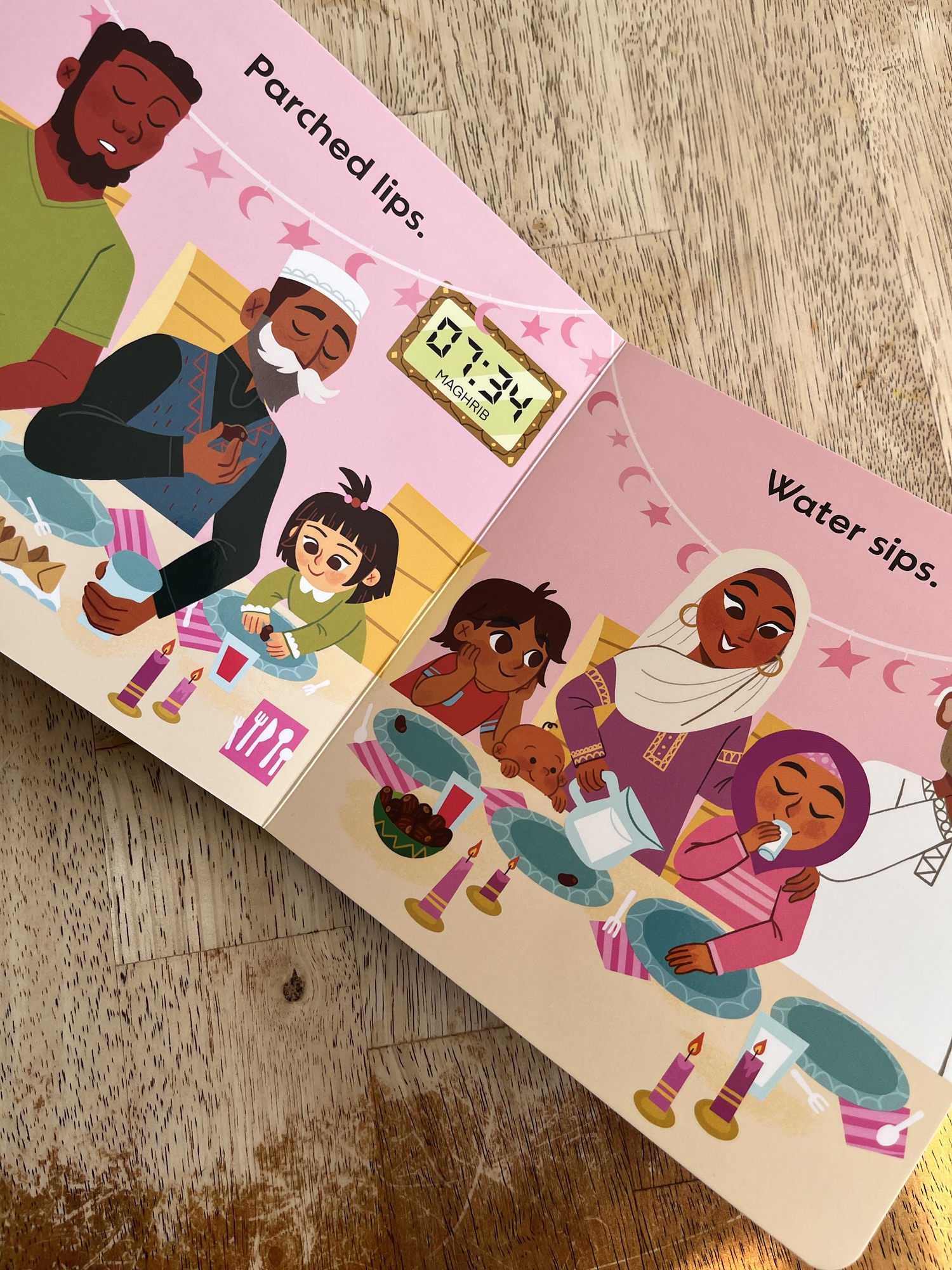
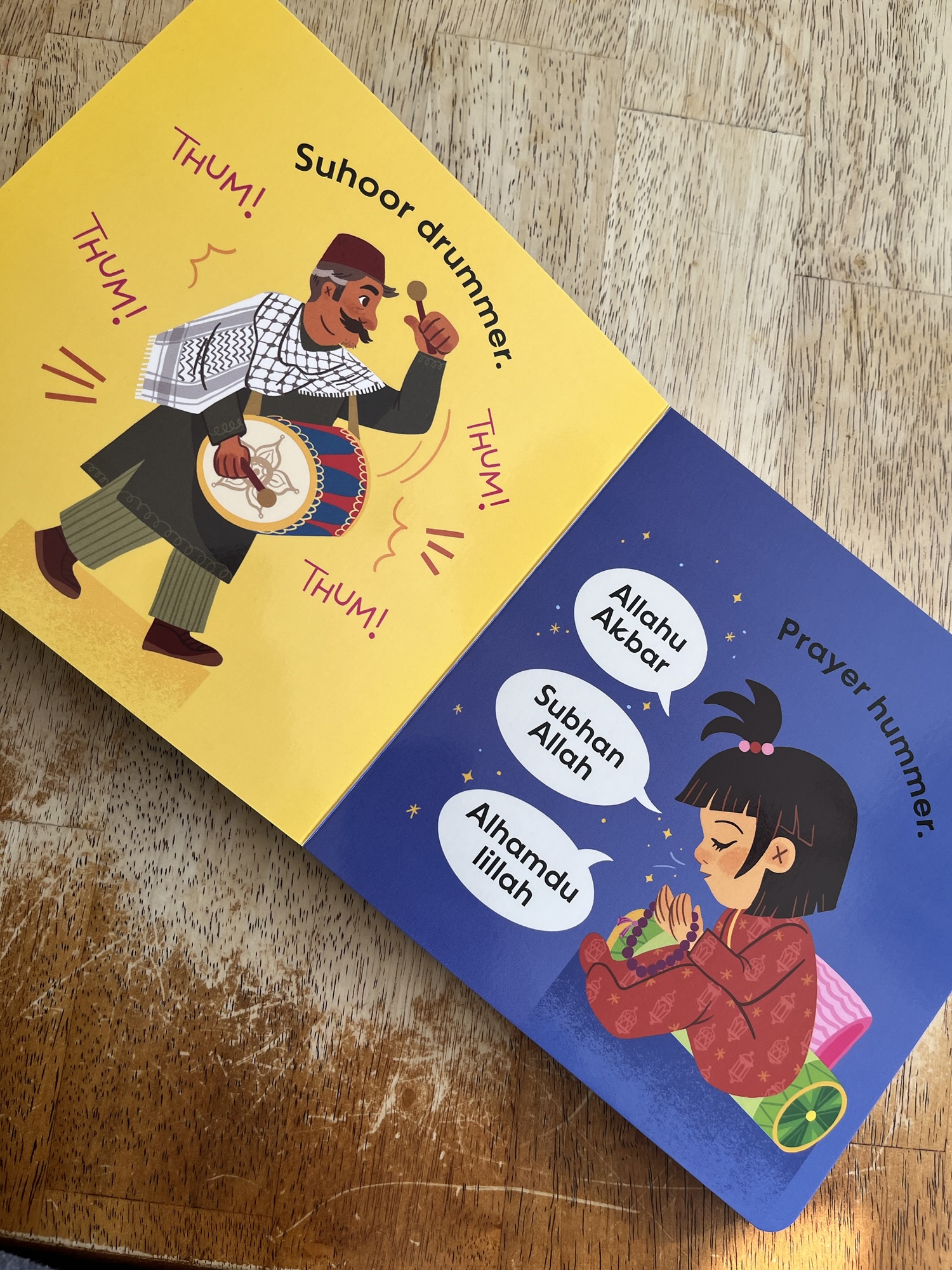
This adorable 26 page board book rounds out the Celebrating Islam representation in the Our Neighborhood Series and the simply rhyming words do an excellent job of conveying the joy, worship, togetherness, and daily aspects of the glorious month. Some of the lines feel a bit forced, but I really enjoyed the size and tone of the book. The illustrations are equally well done with a keffiyeh shown on a drummer, different skin tones on the characters, and smiles throughout. It is perhaps worth noting that the prayer page does seem to have the Shia rock that is used, I missed it initially thinking it was just a design on the prayer mat, but it is hard to unsee once it is pointed out. The other Islamic books in the series by the same author and illustrator are Friday Fun and Excited for Eid.

Muzoon: From Refugee to Leader by Muzoon Almellehan illustrated by Asma Enayeh

Standard
Muzoon: From Refugee to Leader by Muzoon Almellehan illustrated by Asma Enayeh

Such a delight to see Muzoon’s story coming to children in the West in the form of a Step into Reading Biography. The approachable format aimed at second and third graders reading paragraphs tells Muzoon’s story with quotations from her middle grade biography, Muzoon: A Syrian Refugee Speaks Out.  From her life with extended family, playing soccer, studying and enjoying Ramadan, to the changes that turned her country unsafe and forced them to become refugees. It follows her to refugee camps trying to find routine and hope and the role education and encouraging other’s to study plays in her life.  Eventually her activism and efforts catch the attention of UNICEF and today she works as a UNICEF Global Goodwill Ambassador and travels the world advocating for education and refugees and rebuilding Syria.

Divided into eight chapters, the 48 page book shows how relatable Muzoon’s life is and how the political events forced her family to abandon all they knew.  The presentation, in both the text and the illustrations, show the unexpected and hardships Muzoon and her family face as they make their way to the refugee camps and work to adjust. The book is not graphic, but the weight is conveyed as readers also see the power education and learning has in providing hope and opportunity. In a fictional story, a protagonist using their voice for the good of society is something to cheer, to see it from a real life person in the middle of a war, is something to admire and be inspired by.

I particularly like the inclusion of Ramadan in the story and the details showing her family joyfully gathering to break their fast together, as well as conveying some details about the Islamic holiday.

Shining Hearts: Sahabah Stories for Kids by Marium Uqaili illustrated by Mirha Asim

Standard
Shining Hearts: Sahabah Stories for Kids by Marium Uqaili illustrated by Mirha Asim

This book contains ten Sahabah stories, five males and five females, conveyed over 121 large 9×12 pages in an easy engaging manner for elementary aged children.  The stories are told one at a time, with simple illustrations, easy to read font, and pullouts featuring engaging blurbs that increase understanding, connection, or challenge the reader to think about something further.  The conversational tone and breaking of the fourth wall helps keep the readers interested while focusing on engaging bits and not a Sahabah’s entire biography.  Inclusion of hadith and ayats and seeing that a named Shaykh has written the forward really makes this book a great one to have in one’s home to read at story time, and to keep on the shelf as a resource. 

The Sahabahs included are: Mus’ab Bin Umair, Salmaan Al-Faarisiy, Abu Dharr Al-Ghifaariy, Jafar Bin Abi Talib, Bilal Ibn Rabaah, Sumayyah Bint Khayyat, Safiyyah Bint Abdil Muttalib, Asma Bint Abi Bakr, Umm Ayman (Baraka Bint Tha’laba) Lubabah Bint Al-Harith, may Allah swt be pleased with all of them.  The first page of each section has the Sahabahs name and one line description before the story begins.  Each section concludes with a dua to Allah swt to make us like the Sahabah we have just learned about in a specific way.  The pages about the Sahabah contain what they are most known for, some attributes about them, and function as a snapshot for young children to grow familiar with these “super heroes” and how we can emulate them in our own lives.

The tone is similar to the staple Migo and Ali Prophet Stories, and proves how desperate we are for Islamic texts that appeal to our children (and how few quality English resources we have).  The pictures aren’t great, but they are sufficient, and I appreciate that there are no faces or depictions. Even an image that could be seen as Sumayyah (rA) has an arrow saying “your grandmother” so there is no confusion. The binding is a bit weak, I was warned before starting, so I read the first few times for review and picture purposes at a table, before handing to my children and reading to my youngest at bedtime.  I’d encourage wrapping the book in contact paper upon receiving it. I appreciate all the letters of approval at the start, and the simple activities at the end, and am impressed overall with the book and how it engaged my children, alhumdulillah.  

Here’s Our Religion by Jenny Molendyk Divleli illustrated by Dasril Iqbal Al Faruqi

Standard
Here’s Our Religion by Jenny Molendyk Divleli illustrated by Dasril Iqbal Al Faruqi

This HUGE 14 page board book is such an engaging, teachable, and shareable book for toddler to early elementary aged children.  Similar to the author’s First Words in the Qur’an I can see this book being shared at story times and in classrooms regularly.  Each two page spread is literally a board book in and of itself.  With headings of: Ummah, Shahadah/Qur’an, Salah, Ramadan, Zaqat/Sadaqa, Hajj, and Prophet Muhammad (saw)/ Sunnah, kids will be able to deduce from the pictures and simple captions how the details relate to the theme, learn new information, review what they already know, and delight in the illustrations.

I don’t know that I would sit down with a toddler or preschooler and just read the book straight through very often, but when I was doing multiple story times a week, I had planned books for every theme highlighted in this book. I would have loved to be able to pull it out after a few stories had been read and used it as a review, where I could point to a picture and the kids could holler out what the illustration was teaching.  The large size would have saved me from having to make story board pieces, and the critical thinking would encourage comprehension and retention.  Example: learning about salah, and then opening to the salah spread, kids could see the vacuuming child and decode that we pray in clean places, that the picture of four people praying together is to learn/remind/teach that it is better to pray together.  


Zamzam for Everyone: Sharing Water at Hajj by Razeena Omar Gutta illustrated by Bassent Dawoud

Standard
Zamzam for Everyone: Sharing Water at Hajj by Razeena Omar Gutta illustrated by Bassent Dawoud

This joyful 32 page picture book is both adorable and educational. Layers of Hajj and Zamzam threaded through with the global reach of Islam, generosity, food, language, and a little girl with a big smile brightening every encounter, is heartfelt and tender. Each reading has me smiling and marveling at the illustrations, amount of information simply conveyed, and the way it all comes together to offer both a window and a mirror for readers of all ages, particularly 3 and up.  The robust backmatter allows older readers to benefit, and with pronunciation guides, cultural and religious oversight noted, this book will be a favorite at bedtime and story times in Islamic and public schools, libraries, and gatherings.  SubhanAllah, the book is really well done and such a gift to us all to see Hajj and Zamzam unapologetically and proudly presented through little Mariam’s eyes.  It will leave children feeling like they just had a warm hug, and inshaAllah making dua’a that they too will be invited to Hajj soon.  

The book starts with Mariam feeling blessed to be one of the millions of people at Hajj. Her mother encourages her to be good, share, and be grateful all while staying hydrated, as it will be tiring.  She tries to come up with what she can do to get blessings, in addition to smiling, when she realizes sharing her Zamzam water will be the most beneficial. 

She helps an old lady find a seat and gives her some Zamzam, the Pakistani lady says, “shukria” and gives her dates in return. When she shares with some Indonesian sisters and is told “Terimah Kasih” she is handed some pandan cookies in gratitude.  This continues all throughout her Umrah with pilgrims and workers from different countries thanking her in different languages and sharing something back with her.  
It carries on through the steps of her Hajj, even when Makkah is far away. And even when she returns to her home, she shares the Zamzam to bring a part of Hajj to those that stayed at home.
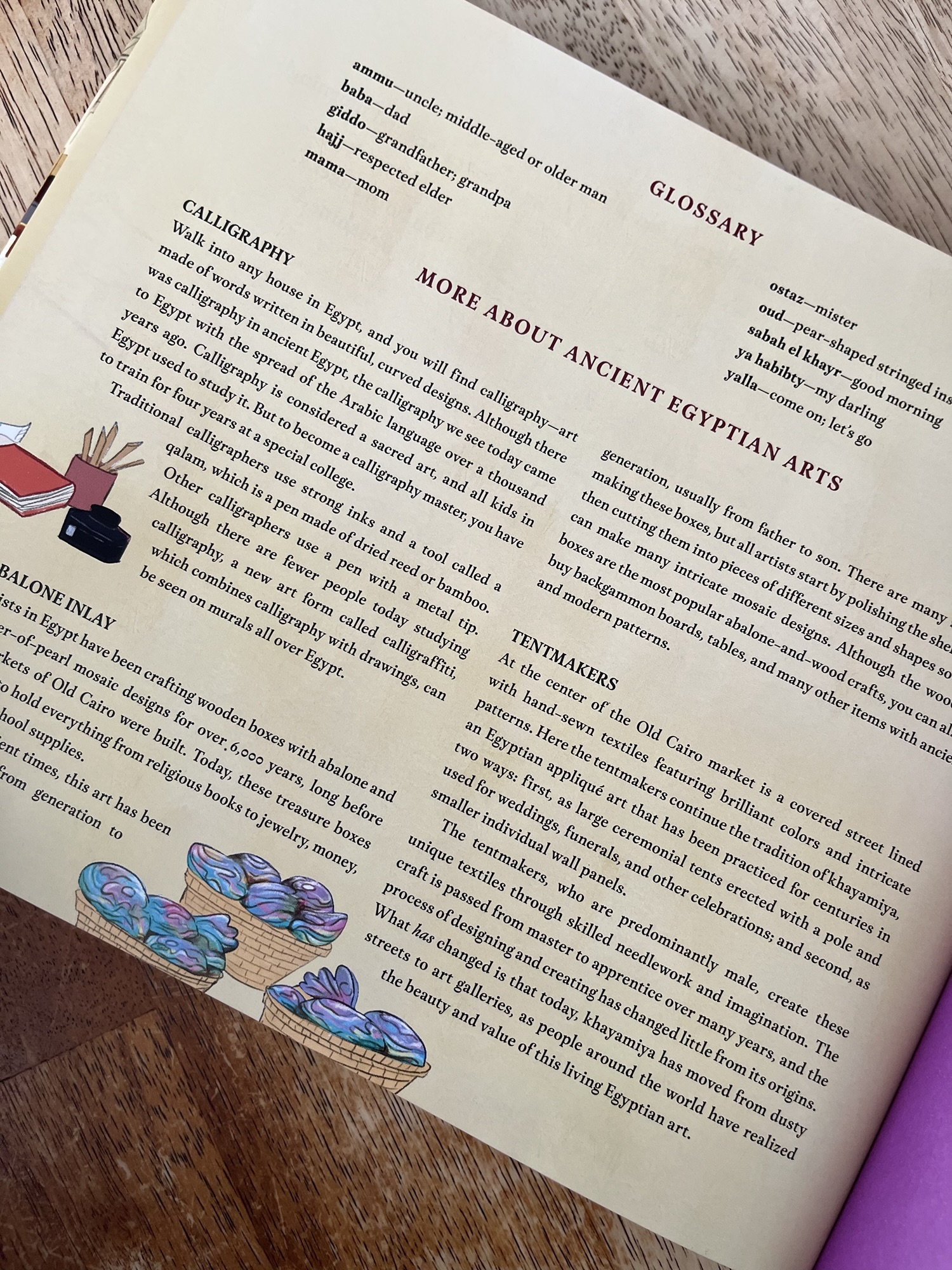
The backmatter tells the story of Zamzam, information about the treats mentioned from around the world, information about Hajj with a glossary as well as the steps of Umrah and Hajj, information about the author and illustrator, and who helped insure accuracy of all the cultural and religious content included.
The book comes out in January 2026, and appears to be available in both hardback and paperback, please preorder to show support.


All the Ways to be Pretty by Shamaila Khan illustrated by Reyhana Ismail

Standard
All the Ways to be Pretty by Shamaila Khan illustrated by Reyhana Ismail

The premise of this book is fabulous, an Islamic approach to internal beauty to counter the societal emphasis on external appearance, by drawing on the examples of Ai’shah (RA), Khadija (RA), Sumayyah (RA), Maryam (RA), Hajar (RA), and Rufaidah (RA), may Allah swt be pleased with them all.  The illustrations are decent, focusing on the girl understanding what her mother is saying and her imaging herself with those qualities.  The part that I struggled with, is I flipped through it before I started reading it, and the pages are often walls of text.  Additionally, I didn’t realize it is rhyming text over 34 pages.  SubhanAllah though, somehow, it works.  I can see this book being shared at preteen gatherings in masajids, homes, and schools everywhere.  The rhyme at times is forced and lacking, but the flow makes the walls of text zoom by and the information shared is not overwhelming and Alhumdulillah, it doesn’t stray too far from the central messaging. You could share it with younger readers, but I think it works best if the audience knows some of the women and facts highlighted, and the information shared is a mix of reminder and new tidbits urging further exploration. The publisher lists the reading age at 7-10 which is probably a good fit based on the amount of text, but the rhyme, mirrors at the end, and starting point of battling beauty standards on the screen and “Princess” messaging is a bit of a target audience disconnect, which is why I point it out so consumers are aware.

The book starts with a lengthy author’s note before the rhyming scene of a mother and daughter walking to school and discussing what the daughter would like to be.  The girl doesn’t answer a profession, but rather responds that she wants to be pretty, and gives some justifications.  The mother gently then encourages her not to just want to be pretty, but rather pretty smart, pretty wise, pretty brave, pretty pious, pretty resilient, and pretty kind, before concluding with the girl throughout the day thinking of how to be like them, and her mother, to earn Allah’s pleasure.  Each attribute is a two page spread with one of the historical women featured.  The book ends with a hadith and six mirrors with the characteristics beneath them.

I like that the book does not try to give an entire biography about the women featured.  I also like that Islamic references are also brought in, some explained some not. It is “Islamic fictionalized non fiction” it is meant for Muslims with Islamic framing, not just Muslim characters, and it has substance.  Lately so many self published or even Islamic published books seem to not feature Islamic foundational themes, and I realize how much I have missed reading books that do.  Yes, I normally would have a solution to offer as to how to make the pages less text filled and I know I should say that maybe it shouldn’t rhyme, because it makes for some awkward phrasing, over explaining, and useless lines, but alas, I have no suggestions.  We need books that present our Sahabas and Prophets in a manner that allow our kids to know them and think of them and emulate them. Alhumdulillah, I can see this book being read and shared and discussed, and that to me is a “pretty “good thing.

Dark Nights and Light Hearts: A Muslim Book of Opposites by Hena Khan illustrated by Mehrdokht Amini

Standard
Dark Nights and Light Hearts:  A Muslim Book of Opposites by Hena Khan illustrated by Mehrdokht Amini

Every few years, for the last 13 or so, we get a new title in this series, and each one warms my cynical heart with its unapologetic Islamic representation and vibrancy.  The heartfelt rhyming lines, the Islam centering, and the enveloping illustration make these books timeless, sought after, and beloved.  This installment covers opposites, previous books in the series focused on colors, shapes, and numbers. From the BIG ummah to a SMALL baby’s aqiqah, HOT oud to COLD rain bringing barakah, SLOW honey full of shifa to FAST cars heading to Jummah, the book uses two page spreads per each term in the opposite pair with rhyming couplets in large clear font to introduce/remind, describe, and highlight an Islamic tradition.  As both opposites and Islam are conveyed, the cadence and illustrations pull Muslim and non Muslim children in and make the book delightful at storytime, in small groups, at bedtime, and for kids to look through on their own, over and over again.  Alhumdulillah.

The book is 36 pages with a Glossary of Islamic words at the end with an Author’s Note.  It is available wherever books are sold and a great reminder that well done Islamic books can make it from traditional publishers.


Music of the Mountains: A Story in Pakistan by Sabrina Shah illustrated by Manal Mirza

Standard
Music of the Mountains: A Story in Pakistan by Sabrina Shah illustrated by Manal Mirza

Set around an Eid concert in the North-West Frontier in Pakistan, a young girl must find her courage to play the rabab in front of an audience, even though she is still learning her first song. The beautiful illustrations of Manal Mirza and focusing on an under represented population, made me hopeful that this book would transcend the musical focus and weave in Islam and culture. Sadly, though, the book falls victim to cliche lines that mean nothing, and a story that doesn’t make a lot of sense once you move past the superficial attraction. The backmatter infographics about the rabab, where it can be heard, details about the Pathan/Pashtun people, What Eid is, the traditional clothing, and a Pashto Glossary, add to the vibe of the book, but still fail to offer any specific “hospitality, courage, and rich traditions,” that are only ever referenced in generalized terms and statements.

The book starts with Roohi’s favorite time of day, the sun is settling behind the snow capped mountains and her family is gathering around to listen to her grandfather, Neeka Baba, play the rabab. No they aren’t praying maghrib, or breaking their fast, so presumably it is not Ramadan.  When Neeka Baba plays, “songs full of rhythm echo through the cherry blossom hills.  Songs from long ago tell stories of folklore, heroes, and love. . . songs of Roohi’s ancestors.” A beautiful sentiment, but it is not a thesis statement or main idea of the book as we, the reader, never learn about her ancestors, or folklore, or about the culture.” We are just told they all had courage, and she needs to channel that strength.

She will need strength to play the rabab at her school concert, except remember “she hasn’t even learned a whole song yet.” She also worries she won’t be as good as her grandfather, but presumably he has been playing longer and she is just starting, so I never connected why she felt she should be as good as him.  No one in the story compares them, or says she should be as good as him, or even strive to be as good as him.  There is nothing that hints that this is even a part of the characters development other than the repetitive refrain that she must “play with the courage of those who came before her.” So the cathartic release of being told “to play like yourself” also seems forcefully contrived and not a natural arc of growth and understanding.

As Eid creeps closer, Roohi has lessons with her grandfather on the rabab, and then Neeka Baba coughs and is in the hospital. The reader has no idea how this man falls ill, or recovers, if it was sudden or a known affliction, but he is no longer the focus, the rabab is, and so the story continues.

At the school concert, Roohi is introduced as playing music from the North-West Frontier Province.  Hold up, yes I thought I skipped a page.  They live in the North-West Frontier, don’t they, this is a school concert? What an odd introduction, did they travel? At the end there is a “smile as wide as the lush valleys back home.”  When did they leave home? And why a silent prayer, why not a “bismillah.” Isn’t the point of OWN voice to have the little details and the voice that can’t be imitated by researched work?

I am going to spoil the ending, she freezes, Mama and Neeka Baba help her find her beat in the audience and she steals the show so to speak. The ending is sweet, but not anywhere near as heartfelt as it should have been if the audience would have been shown the strength and courage of the Pashtun culture, not just repeatedly told it, felt the warmth of their hospitality, the rich ancestral values that would be threads that manifest in the music that she is hoping to share with others. Sadly we are just expected to know that they all exist and cheer for Roohi to succeed.

Disappointing, considering how fantastic the illustrations are, sigh.